













![[LIVE] Can the President Shut Down the Department of Education?](https://i.ytimg.com/vi/96zfBFYvDXs/maxresdefault.jpg)











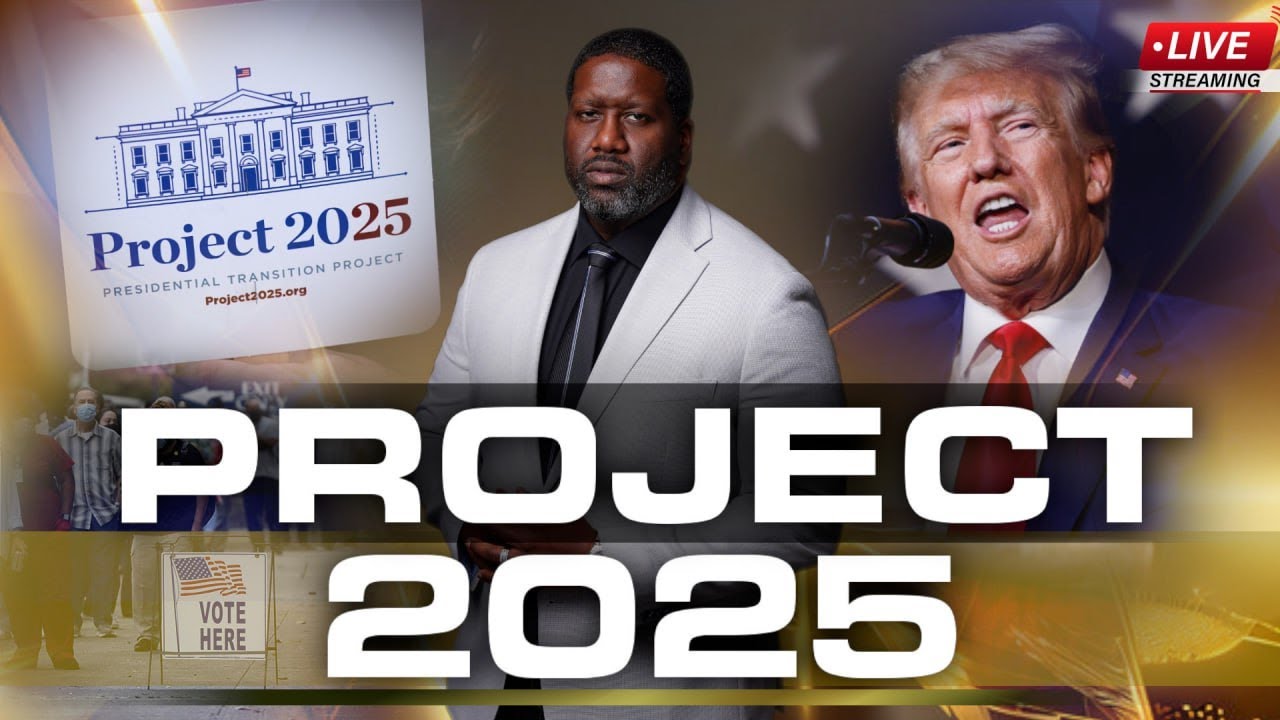
Project 2025 is a conservative initiative launched by the Heritage Foundation to reform the federal bureaucracy, which has grown into what some describe as a 'fourth branch of government' with nearly 2.7 million employees and 95% of federal employees donating to Democratic candidates. The initiative operates through four pillars: a policy book outlining conservative success at each agency, a presidential personnel database recruiting conservatives ahead of time, an online training academy, and a transition playbook for each federal agency. The goal is to increase political appointees from the current 3,000-4,000 to 10,000-20,000 people, reassert presidential control over the bureaucracy, and reform the civil service to operate more like the private sector where poor performers can be dismissed rather than having lifetime tenure.
Project 2025: Dismantling the Administrative State
Added:unbeknownst to most people outside of all these different talking points well right now there is a real serious initiative being pushed forward to help dismantle the administrative State this initiative is known as project 2025 and if it actually comes to fruition it'll have massive consequences on the type of country that our kids will actually inherit although to explain why that is I need to back up for a quick moment and set the stage free properly right now with the presidential election starting to really kick into high gear we're beginning to see the Front Runners of the Republican party coales around a certain type of Promise that's because whether it's president Trump Governor D santis or RC ramaswami the current three Front Runners they have all in some way shape or form promised to gut the Deep State otherwise known as the administrative State and as a campaign promise that's all well and good many people across the country support it however let's just assume for a super quick moment that a republican candidate does go on to win the general election and becomes the 47th president of the country then what simply winning the White House does not necessarily mean that there will be broad changes to administrative policies especially when you have an entrenched bureaucracy numbering in the hundreds of thousands that has formed over the last 100 plus years and this administrative state it has a clear liberal slant in fact according to data from the federal elections commission quote a stunning 95% of political donations from Federal employees went to democratic liberal candidates 95% and so with the massive growth of the federal government over the past 100 plus years this has resulted in what some people refer to as the fourth branch of government the bureaucratic branch which is now dominated by liberal ideology and this branch is large here's in fact how it's described over in the pages of the national Affairs magazine quote it is fitting that we refer to the administrative State as a state for it has become a sovereign power onto itself an Imperium an imperial regulating virtually every dimension of Our Lives it's nearly 450 agencies are manned by Legions of bureaucrats now numbering almost 2.7 million and so millions of liberal bureaucrats entrenched within the federal government irrespective of who actually resides in the white house and it's exactly this scenario which has led to the birth of something called the project 2025 initiative this is a very very large scale project that was launched by the Heritage Foundation which for reference is a conservative policy Think Tank and project 2025 otherwise known as the presidential transition project it aims to gut the federal government of its current Progressive bureaucrats and replace them with conservative bureaucrats and this initiative which just for your reference is already well into full swing it aims to do most of the heavy lifting prior to the actual election such that if a republican were to in fact get elected into the White House they would have a database of conservative Personnel to essentially deconstruct the administrative State starting on day one as well as have in place a training program in order to recruit ever more people and so in order to get a better idea of how project 2025 will work in practice we took the opportunity to speak with Mr Spencer Cadian who is the associate director of the project over at the Heritage Foundation and he broke down for us exactly what they're doing to dismantle the administrative State as well as what people across America can do if they wish to get involved and so take a super quick moment to smash those like And subscribe buttons and take a Lista Spencer thank you so much for joining us uh maybe to start with for the audience members who aren't aware of what it is can you give um sort of a highlevel overview of what project 2025 is sure so project 2025 or the 2025 presidential transition project that's the full name it really is the conservative movement's effort to get ready for the next conservative president it feels like in Washington DC we're always playing in a away game we are always at at a deficit to com compared to how the left uh is so good at going into government so what this project is it's four pillars uh the first pillar is our policy book called mandate for leadership this outlines what a conservative success looks like at each Federal agency we have a second pillar which is our presidential Personnel database we're doing the work ahead of time in recruiting people ahead of time to come to Washington and work for the next conservative president the Third pillar is our presidential Administration Academy that is training people up ahead of time so that we are ready to hit the ground running when we come to Washington with the next conservative president in 2025 and then the fourth pillar is what we call the Playbook that's a transition plan for each Federal agency so that we'll be uh ready to hit the ground running and all of these are available at project 2025.
org that's how folks can get involved I should mention that project 2025 is organized by the Heritage Foundation But it includes more than 70 partner organizations on our Advisory Board all of whom are working together to get ready for the next president Spencer let me ask you this out of the uh current republican nominees and let's say out of the let's say three or four Front Runners have any of them signaled support for this project yes we are working uh with various presidential C candidates and their staff and I think what has been heartening to us at project 2025 is to see so many of the candidates talking about the importance of deconstructing the administrative State and defeating the permanent bureaucracy that exists in Washington DC you see the various candidates talking about that we've made it the number one issue in this race uh and it's not just Republicans either you know we'll work with anybody uh who who is any candidate who wants to deconstruct the administrative state is welcome uh at project 2025 so Spencer my next question is sorry hello oh it's a sponsor of today's episode Patriot mobile which for the past 10 years has been America's only Christian conservative wireless provider and when I say only I really do mean the only one they're an awesome company that values informing the public about what's really happening in this world which is why they sponsor Sher like hours and also they have phenomenal coverage they offer Nationwide cover which is actually dependable and best of all they give you the ability to access all three of the major networks using your one phone this means that essentially you can get the same coverage that you've been accustomed to just without funding all these different companies whose values are very likely completely at odds with yours and best of all Patriot mobile has 100% of their customer service staff based right here in the good old us OFA and this makes the switch extremely easy you can keep your phone number you can keep your phone or you can even upgrade your phone you just give them a call and they will walk you through the entire process and make it super simple for you find the best plan that suits all your needs so heading over to Patriot mobile.com Roman or you can just call 878 Patriot and best of all if you use promo code Roman you can get free activation so check out Patriot mobile the link will be down there in the description box below I think a lot of the people watching this interview are probably of the mindset that getting rid of the bureaucrats who exist from Administration to administ ation to Administration and are really running things and can really hamper an Administration if they so choose to is a good thing but in the flip side I imagine that it would be difficult to do away with let's say tens of thousands 50,000 uh positions um let's say in the department of energy for instance if you're going to have a huge amount of turnover I imagine a lot of institutional knowledge will just go away and maybe you'll have a transition process where the lights maybe have a pro have a hard time staying on um how how how would you respond to that sort of criticism where some of the institutional knowledge might be lost in this transition process it's a good question so what people need to remember is that you have 2.2 million full-time non-military federal employees you have between 16 million and 20 million Federal contractors and traditionally only between three and 4,000 people work for the president those are the political appointees who can be hired and fired by the president and we need need more political appointees we need more who come from outside Washington DC with respect uh to the number that you mentioned you know what the vision is of project 2025 and you see various presidential candidates talking about this as well is that for those federal employees who hold policymaking positions those positions should be reportable to the president we're not necessarily uh planning to get rid of one person uh what this is is a is to reassert political control of the bureaucracy and the president is entitled to a supportive staff uh the president is the commander-in-chief he's a chief executive officer and the executive branch should be working to implement the president's Vision so that's what this is about um and folks should know that that the conservative movement is ready and determined uh to bring about political control of the bureaucracy in addition to reforming the Civil Service making sure that um you know the the federal Workforce operates uh more like the private sector where you can dismiss poor performers rather than giving them uh you know basically lifetime tenure that they have now uh just to Circle back to that question though I mean in terms of the institutional knowledge you're saying that you would be focusing more on the policy makers within a department versus that the individual people who are like at at the more ground level who are making who who have the actual technical knowledge is that correct that's right I mean we need uh institutional knowledge within the bureaucracy in fact we've had many federal employees current federal employees reach out to project 2025 to help us which we really appreciate and we appreciate the good work that many uh federal civil servants do each day schedule F uh which has been talked about a lot in the media is something that would make it so that if you hold a policymaking position that becomes a position that is reportable to the president that's the way it was always supposed to be um and what we have now what the bureaucracy has become is an unaccountable fourth branch of the government that is uh impervious to election results and conservative presidents have a tough time navigating it so that's what we're trying to to address so uh you mentioned earlier that you have a presidential Personnel database uh how many people do you already have we have more than the traditional number of political appointees in Washington that's that 3 to 4,000 that I mentioned we're getting more every day we have said we want not just 3 to 4,000 but 10 or 20,000 people uh to come into this database and get ready to come to Washington and work for the next conservative president and it continues to grow every day we're taking our project on the road you know we're visiting people where they are last month we were at the Iowa State Fair we've been to a couple colleges and universities uh speak spoke uh participated in conservative events spoken at conservative meetings we're going to continue to do that and really Branch out uh from outside Washington to to get people into this system are you seeing any um any difficulty in the sense that people who are more conservative are not as keen on moving to Washington DC which is you know at least according to the voting record something like 94 95% uh Democrat you have identified a significant problem and that is that uh the politics of the DC area are not favorable to us that's why it always feels like we're playing in a way game uh and that's why the federal Workforce you can look at how uh Federal employees make their political contributions go look it up on the Federal Election Commission website and it's pretty staggering the number that are going to Progressive candidates um but we at the same time we need conservatives to come to Washington and we're seeing a real interest in Project 2025 not only because the conservative movement has never done this before but also because people are beginning to understand just how big the Deep state is just how big the bureaucracy is and they want want to be a part of something that can come help the next president uh fight and win battles on behalf of the American people um who who put him or her there and in terms of the uh the academy that you have this is something that you do online you don't have to travel to Washington DC it's something that you're sort of preemptively doing is it sort of an online Academy yes it is it's a project 202.org you can click on training and apply it only takes a few minutes and what we're doing is is we're hosting lectures online courses for people who want to come to Washington or who are just interested in what it's like to work for the president what the political hiring process is like um where are your kids going to go to school in Washington DC you know we've got 17 uh lectures 17 courses that are currently live we have more than 40 that will be live by the end of 2023 uh and then we do hope to to move to to hosting some in-person ones in 202 for but anyone is welcome it's project 202.org and this is you know this is our attempt to demystify serving in government for conservatives and get people ready ahead of time so that we're ready to hit the ground running on day one and we don't spend our first year in office you know trying to find the bathroom at the federal agencies but that's interesting so the Academy I was thinking it's more technical but I guess the people already need to have those technical skills to fill that position this is more like practical like you know this is where your kids would go to school like you mentioned this is the neighborhoods to avoid this is how the political process works right it's it's more like technical like that it's all of the above really it is um everything from how to work with the media to what to expect uh when you when you start working for the president uh security clearances Financial disclosures all of the things that you need to be thinking about if you're going to be a political appointee who works for the president of the United States on your uh you have a section in the guide book and and you mentioned in there that the Trump Administration appointed fewer political appointees in their first few months of office than any other recent president uh that left career employees in charge of wound up leaving career employees in charge of many different um uh sections of the of the bureaucracy can you actually give any examples of how this negatively impacted Trump's presidency in a concrete way sure well that's a good question um so one thing is uh it took the Trump Administration longer to get the cabinet confirmed by the US Senate uh the last Trump Cabinet member was confirmed by the Senate at the end of April 2017 by contrast the Biden administration had their entire cabinet confirmed by the middle of March of 2021 and that was with fewer Senators than Republicans had during the Trump Administration so um some of the some of the problem is we uh you know we need to work better with the Senate to confirm our people uh on time the other thing I would say is that yes president Trump was uh was an outsider he he did many great things for the country but one of the things that we left on the table during the Trump Administration was really to to uh get a hold of of how to run the bureaucracy how to manage the bureaucracy um and so you did have in in the various different context you had either Obama holdovers or you had career federal employees running entire agencies or offices and that did uh hamstring the president's ability to uh to implement his agenda throughout the executive branch so that's one of the things that we are looking at through project 2025 so that we're uh we're able to get our our folks in more quickly with with those holdovers from the Obama Administration and just career bureaucrats uh do you have like a concrete example of of Trump's agenda end up being being Styer or stifled sure well you could look at the first 10 days of the Trump Administration when uh Sally Yates was the acting attorney general she was the Obama Deputy attorney general and uh she publicly humiliated the president and refused to defend a lawful executive order in court um and that was an early sign of how tough the resistance was going to be uh within the Deep state if you'd like to learn more about project 2025 I'll throw some resources down into the description box below this video for you to peruse at your own Leisure otherwise lastly if you are sick and tired of all the censorship on this platform with or without the federal government's involvement well you're in luck because the Epic times has recently extended its awesome sale and subscriptions just 25 cents a week for the whole year which if you do the math Works itself out to just be a single dollar a month and so if you're looking for a plethora of phenomenal content including I myself publish anywhere between 1 to three exclusive episodes of facts matter over on Epic TV and so if you'd like to watch some extra episodes every single week including a huge backlog from the last last two or three so odd years well it's all over on the website I'll throw a link to the sale page it'll be right there at the top of the description box below you can just click on that link and heading over to The Epic Times sale page where again you can try The Epic Times yourself for just a single dollar a month you can cancel any time but I'm sure that you won't I'm sure that you love it and be a subscriber for a long long long time to come and so again that link is right there at the top of the description box I hope you click on it and I hope that you join us over at The Epic Times and then until next time I'm your host Roman from The Epic Times stay informed most importantly Stay [Music] Free
Up Next
Civil Service Reform and US Governance: An Expert Analysis
@ffukuyam
203 views•2026-06-12

BRICS Pay and de-dollarization: A New Financial Order Emerges? | 55 chars
@DannyHaiphongYT
164.6K views•2024-10-22
Government Surveillance Methods: 10 Ways You May Be Watched
@BeAmazed
1.6M views•2017-04-09

Explaining the Saudi-Iranian Proxy Conflict in the Middle East
@Vox
18.2M views•2017-07-17
Related Study Plans & Knowledge Roadmaps
Structured learning paths in Political Science