














![PHILOSOPHY - Language: Gricean Pragmatics [HD]](https://i.ytimg.com/vi_webp/we6uSVf4qss/maxresdefault.webp)










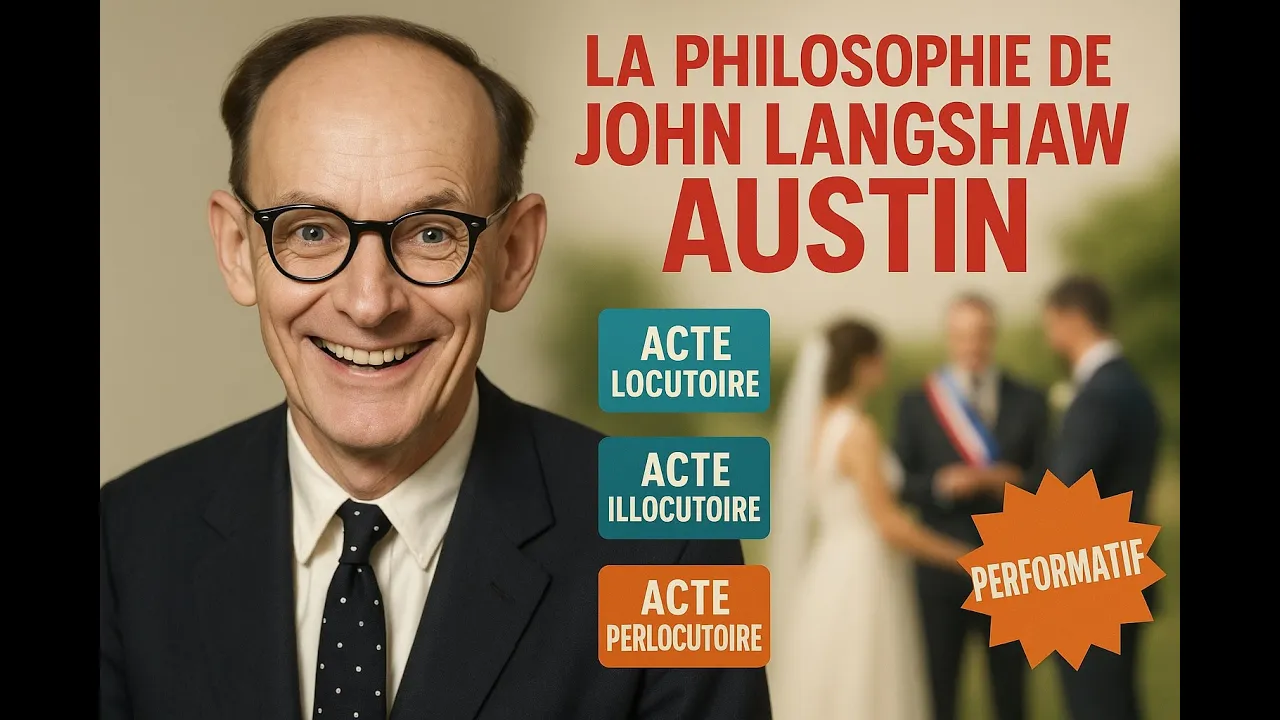
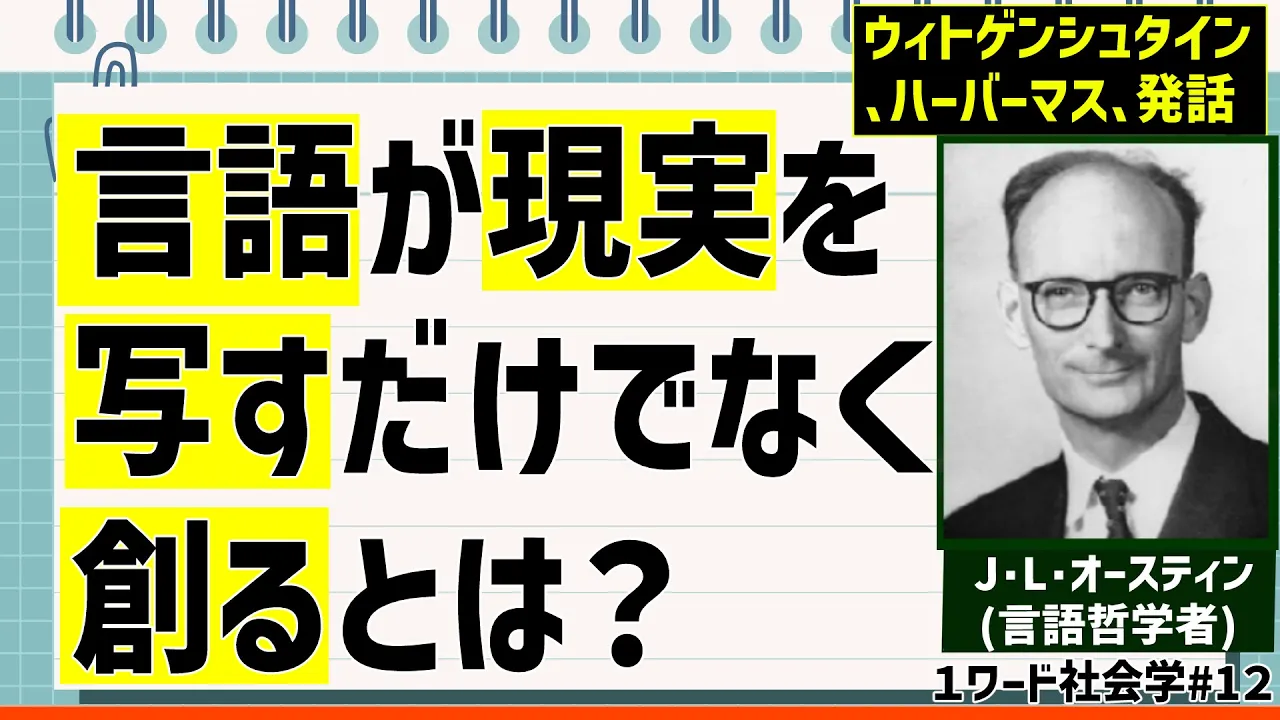
J.L. Austin's theory of speech acts proposes a three-level model for understanding language: (1) Locution - the literal meaning and reference of words; (2) Illocution - the force or action performed by the speech, such as warning, promising, or apologizing; and (3) Perlocution - the consequences or effects that result from the speech. Austin argues that traditional distinctions between constitutive (descriptive, true/false) and performative utterances are insufficient because these levels overlap in practice. He concludes that even truth and falsity are conventional and context-dependent, not absolute categories, and that all speech acts share common features including felicity conditions, sincerity requirements, and potential consequences.
How to Do Things With Words by J.L. Austin: Speech Act Theory Explained
Added:welcome to our last video in our series on how to do things with words which is the book on linguistics by JL Austin and in this video we're going to talk about chapters 10 through 12 but we're actually really gonna focus on chapter 11 and I'll give you a brief introduction to the other chapters first but the main focus is going to be on chapter 11 so chapter 10 is very detailed and very specific and it deals with one particular issue and the issue is whether we can use these phrases in saying X and by saying X in order to distinguish between illocutionary and / locution area ax you'll remember that illocutionary refers to the force of a particular location or speech act and particularly refers to a kind of future act or some kind of consequence or result now Austin ultimately ends up concluding that these two phrases are useful but they're not foolproof and he says on page 124 of my addition at most it might be claimed that the formula in saying X will not suit the Purusha nary act while the by formula will not suit the illocutionary act so there is somewhat useful but we also of course have straightforward locutions and these formulas can often apply to locutions as well so interesting chapter but very detailed and perhaps not super useful if you're just trying to get the basic sense of the argument then we have chapter 12 and I like to think of this as a kind of final summary as well as a type of appendix because in Chapter 12 Austin spends a lot of time going through various types of speech acts types of verbs and he does a lot of listing of different verbs and how you might categorize them so just going through them very quickly he gives us five categories he gives us see here verdict off' if you're giving a verdict you might say something like i assess or I rule I rule that you should go to prison for so many years right you're giving a verdict then we have exertive or exercies sitov which sounds more awkward I think so exertive where you're exercising your power you could say I name something or I appoint you as provincial governor they're kind of thing we have Cammisa --vs this is where you commit yourself to an action so you could say I promise or undertake we have B habitus sounds kind of awkward and these kinds of verbs Express a type of attitude or say something about how we behave in public and these might be things like I apologize or I think and then the last one here is expositors which has to do with how you expound your views how you argue how you convey particular ideas and this very much has to do with with speech so I argue or I affirm we often present our opinions in a way that require these kinds of speech acts that's chapter 12 then and you can see that it's it's quite specific it's particularly useful if you want to follow up on speech acts and study it in more detail but but for now I think we're really just going to focus on chapter 11 which is at the core of these final three chapters all right so to sum up the book roughly speaking in terms of what we've seen is we've we've seen that Austin started with a distinction between constitutes constitutes which are descriptive statements and performative so performative and these are actions when we do an action with a word such as I pronounce you husband and wife we found that these two distinctions they they overlap they don't always work well and in the end Austin's seemed to abandon them for a different model and I didn't abandon them completely because these terms can still be applied to a new model as we'll see the new version of of the way in which Austin is thinking is that we have three levels and these three levels can all apply to the very same speech act so the first level is the locution and the location has sense and reference in other words it's similar to a concert if it describes something it has meaning but it doesn't seem like we're necessarily doing anything with it so almost any kind of statement can be a locution and you might say something like there is a bowl to use one of Austin's favorite examples there is a bowl all right you can see that there's a bowl in the field and we have some kind of idea of reference here now if I want to add force to this then we are talking about an elocution or an illocutionary act and that would be something like saying I warn but we're gonna put this in brackets because this could actually be part of the very same statement in other words these are not different acts or statements it's rather that I can say there is a bowl and I mean I'm warning you to get out all right this is the illocutionary level we don't have tons of time here to go into detail about all these things I suggest you watch the previous videos again just to remind yourself if if you need some help with this the last level is the per locution airy level so the per locution airy level and a per locution a per locution is a kind of follow up act or a consequence of the location and the illocutionary force in this case it might be that you actually run I say there is a bowl I warn you and the consequence is you run you take my hint so I'm kind of simplifying the idea here but I hope that you can see what's going on here that instead of saying these these things are distinct constitutes and performative we've seen that they overlap a locution may seem like a constant but there's often these extra layers of meaning and that's the basic gist of Austin's argument so what we see then is at this first level which might be described as simply stating something and I'm stating something stating itself is even a speech act and one of the crucial quotations in Austin's work goes as follows he writes once we realize that what we have to study is not the sentence but the issuing of an utterance in a speech situation there can hardly be any longer possibility of not seeing that stating is performing an act stating is performing an act and you can see here then that instead of looking at language abstractly where we only have one sentence at a time we got to look at the whole context right we got to look at what what is going on here and that's the total speech situation as Austin likes to call it all right so that is what Austin has concluded in his book in Chapter 11 he flashes out some of these ideas and if we go back to our two distinctions here between concepts and performative x' we can see how the requirements for each of these can now also be applied to the the other one so let's go through this very quickly okay so constitutes we're meant to be either true or false and if you think of this this statement there is a bowl you could say well there either is a bowl or there is not a bowl okay and then if we think of performative performative ZAR not so much about true or false but they are supposed to be conventional so they have particular conventions I have to be the right person to warn you or to marry you there are conventions about the situation if I'm in a field it's hard for me to marry you unless it's a hippie wedding perhaps maybe I should be in a church or in some some kind of hall maybe not the best example there but I think you get my point we also need performative x' to be happy or unhappy so this refers to in Felicity's and what that means is that the performative is not so much to or false but it works or it doesn't work if I say I pronounce you husband and wife there's not much of a true or false factor it seems but it's more about whether the situation is right and whether the act succeeds or not we saw that performative x' have to do with sincerity so I have to be sincere I cannot just say I promise you five dollars tomorrow and not being sincere about it and they these performances require some kind of uptake so you have to respond to it and allow the performative to succeed okay we saw that most of these distinctions seem to break down and we can now see this with particular examples so let's just take a couple of statements here let's first look at the concept of side imagine that somebody says the cat is on the mat and we have seen this one before the cat is on the mat now that seems like it's very much just about being true or false but Austin says wait a second there is an element of sincerity to this okay so that's number one and there's also some kind of binding quality to this in other words by saying the cat is on the mat I'm committing myself to particular future statements so I cannot for instance later say well the cat is underneath the mat and in that sense the cat is not saying the cat is on the mat is a little bit like upon making a promise a promise is of course a performative but there are similar conventions at work they're similar implications there's obviously a lot of overlap similarly if I say for instance the King of France is bald then this is subject to the unhappy or happy distinction for one thing there might not even be a present King of France okay maybe we should just add that the present King of France the present King of France is bald there may not be a King of France at the moment and so this statement is really null and void it's not so much about being true or false necessarily although there's an element of that but it's not even a statement we can make because there is no King of France so what you can see there then is that we have some examples that really show how these things start to overlap we can see it on the other side as well so if I say for instance I pronounce you I pronounce you guilty then we can say well wait a second this implies some kind of true or false element because either I am or I am guilty or I'm not guilty and one of these will have to apply another example would be something if I say I congratulate you on your 40th wedding anniversary but it's really your 39th that's a performative and you can see that true or false does apply let's look at a couple more examples here and we need a bit more space so let's say that I say there are 50 people in the next room the next room there we go seems like a constitutive seems like a descriptive statement but there may be conventions present in other words I may need to be the right speaker to say this if if I'm not aware of what else is going on in the rest of the building you might say well I don't think you know I think you're just guessing so their conventions here as well and there may even be some kind of per locution Airy level as also maybe I'm trying to intimidate you you're going to do a speech and I'm saying there are 50 people in the next room right you should be nervous there could be some kind of persecution arey level there - what we see then is that if we go back to our distinction here for a moment we can really see that concept of and performative these kinds of things overlap and the terms are still useful but it's it's more about seeing how one particular statement can have multiple levels as we have seen and these overlap and they have this rich interplay and and they make sense in a kind of context that we have to study for each speech act individually we cannot come up with general rules all the time we have to really look at each speech act specifically in terms of how it's being used now one of the fascinating things that Austen says at the end of chapter 11 is that even this distinction in turn this distinction of true or false itself may need some revision and I found this part of the argument really fascinating because he gives this example here where he says let's say somebody says France is hexagonal exact and all okay so we can imagine a hexagon alright there's our hexagon and we can say yeah that looks like the shape of France there is Paris and this is France fair enough but even though this is a concept of is this really a true or false statement it seems rather rough and Austen ends up concluding that yes this is a very rough description it's not really quite true or false now he goes on from this to it to basically conclude something that seems quite radical he writes it is essential to realize that true and false do not stand for anything simple at all but only for a general dimension of being a right or proper thing to say as opposed to a wrong thing in these circumstances to this audience for these purposes and with these intentions in other words and this is perhaps the most radical thing he says in his book true or false are themselves conventional true or false are conventional and I think you can kind of see the influence of somebody like Nietzsche in the background here and he doesn't mention Nietzsche but I think this is a fascinating connection if true or false are themselves conventional then the whole distinction between a constitutive and a performative really falls apart and everything depends on context because to a geographer saying Frances exam is hexagonal this statement is completely false but to as Austan points out to a general this is good enough right this is true or to somebody who really cares about shapes this is absolutely true so context depend or determines almost everything and I hope you can see just how radical this really is all right so what have we found out then about speech acts well Austin gives us the following summary at the beginning of chapter 12 and he says that all speech acts now have fought a number of things in common basically all utterances have this in common except perhaps things like swearing and a few exceptions the first thing is that all occurrences are either happy or unhappy okay it's not just performative all utterances happy or unhappy second thing all occurrences have some kind of illocutionary force illocutionary force we tend to do things even with simple statements third thing all audiences are either true or false and again this does not apply just to constitutes four four things fourth a thing all occurrences have some kind of locution Airi reference and what that means is simply this notion that if we say something there's meaning to those words there that were referring to particular things there there are dictionary definitions you can associate with the words there's meaning that people can understand and then we can add one more which Austin doesn't actually list in Chapter 12 and doesn't talk about too much but there may be there may be per locution Airy force right or per locution airy effects let's call them future actions that can come out of this all of this together is what we call the speech act or that sorry the total speech act or the speech act situation it's a couple of ways to describe that let's give one final example very briefly so you can see how this all plays out and then you can also think about how useful this might be if you are applying these linguistic ideas to let's say literary analysis imagine that somebody says I am so stressed out about the exam now again a lot depends on who is saying this but let's imagine that this is a student who is saying this locution so this is a student and the intended target is the teacher it could even be that the student is talking to other students but is hoping that the this teacher will overhear this okay could be multiple audiences which makes it a richer speech Act so we have this and we can see that there is a locution Airy level this is simply the location we haven't interpreted for other levels or other meanings but at the location Airy level these words have particular reference points presumably there is some exam that we're talking about we have some idea of what stress is we have some reference point of in terms of who the eye is we can also think about this then in terms of true or false right true or false so is it true that I am stressed is the exam something that can induce stress right these are questions but notice that the true or false question here is not a simple one because it's very subjective your sense of stress may not be the same as my sense of stress I may say you know if I'm the teacher I might say that's nothing to be stressed stressed out about doesn't stress me out other students don't seem stressed so the true or false distinction then is is quite interesting and quite complicated at the illocutionary level I might actually be saying this to have some kind of force as a speech act I'm a first of all of course be stating it but I may also be asking why ask I may be asking for help please help me out teacher or to other students please help me and give me your notes so this would be the illocutionary level right there's some kind of force to this and then we can also see that there may be some purl acute / locution Airy level to this maybe there's an act that comes out of this maybe the teacher gives an extension for the exam well we'll do the exam later or give some extra help or does different things or just refers the student to counseling so as you can see then there then we have all these levels in the very same statement and Austin's ideas even though they're they're somewhat muddled at times even though muddled in a good way even though he often says well we have to study this in more detail this is provisional we can go back over this despite all these caveats Austin's ideas are so rich for analyzing language and seeing how there are different registers to every speech act and we have to become more aware of how those different registers interact with each other and that's why I love Austin that's why I think he's really exciting and interesting and so valuable especially for things like literary analysis where you have to be attuned to the way in which speech speech acts work in multiple ways so hopefully you have enjoyed this series on jail Austin and if you have other people in the world of literary theory that you'd like to see videos about by all means leave a comment at the bottom and let us know thank you very much
Up Next

John Searle: The Logical Structure of Human Civilization | Social Ontology Explained
@Philosophy_Overdose
201.4K views•2022-07-27

John of Damascus on Holy Images: A Theological Defense
@BannedBooks
139 views•2026-04-25

Should We Destroy the Machines? Big Tech Surveillance Critique
@TheStoriesWeTell303
167.9K views•2025-11-30
The Myth of Sisyphus: A Greek Legend of Eternal Punishment
@TEDEd
8.6M views•2018-11-13
Related Study Plans & Knowledge Roadmaps
Structured learning paths in Philosophy