![Spanish Civil war [Every day]](https://i.ytimg.com/vi_webp/L_sqgrz5IaM/maxresdefault.webp)
![🇪🇸 La Guerra Civil [1936-1939] 🌐 HISTORIA de ESPAÑA](https://i.ytimg.com/vi_webp/eOB_WsRTm1E/maxresdefault.webp)


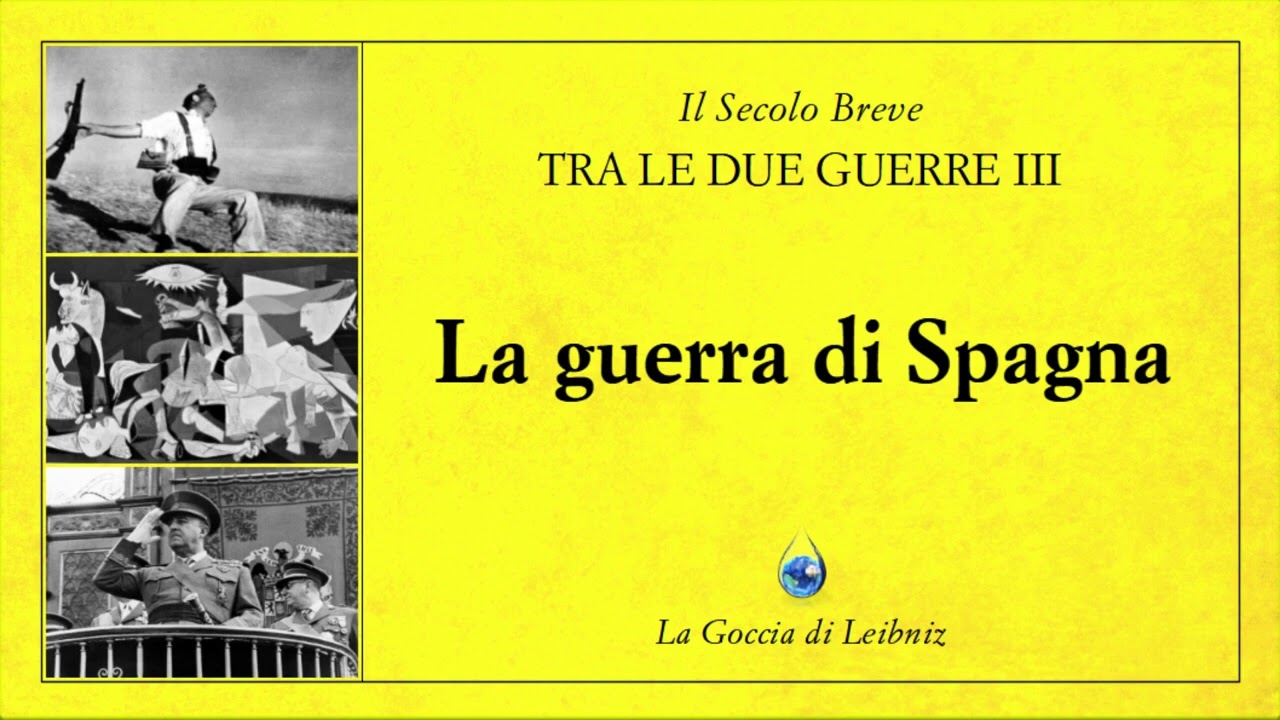
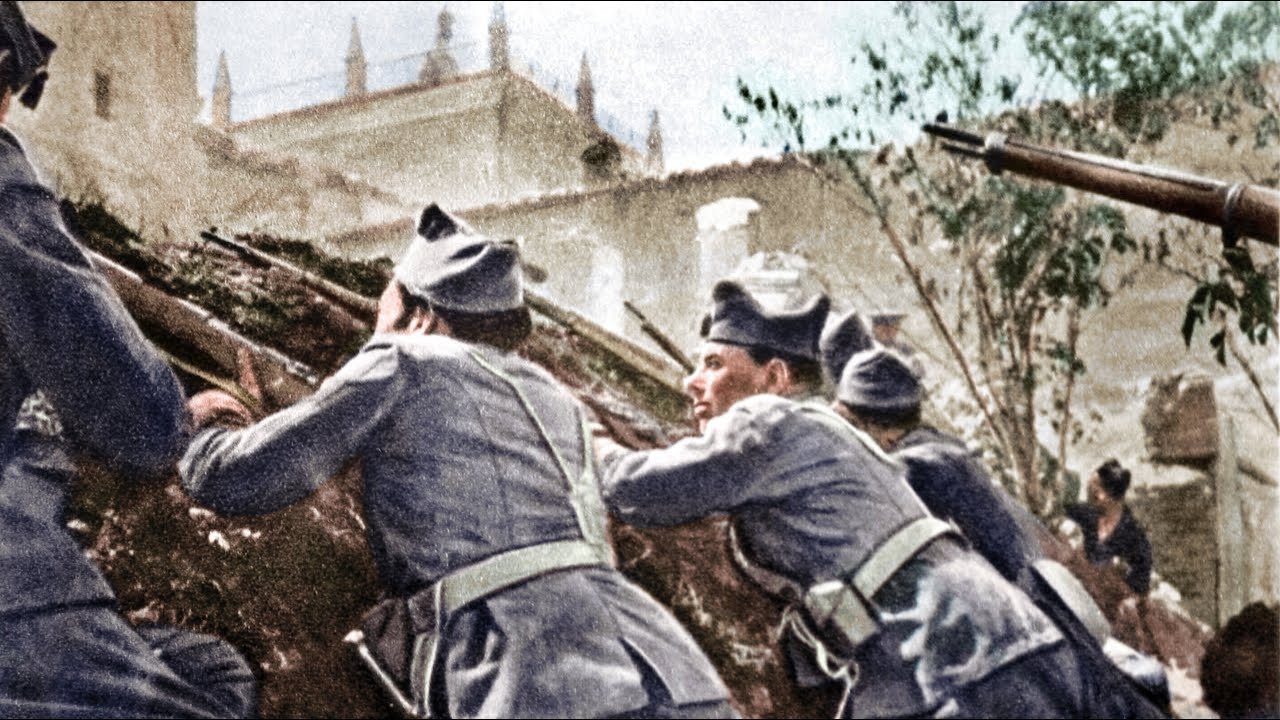
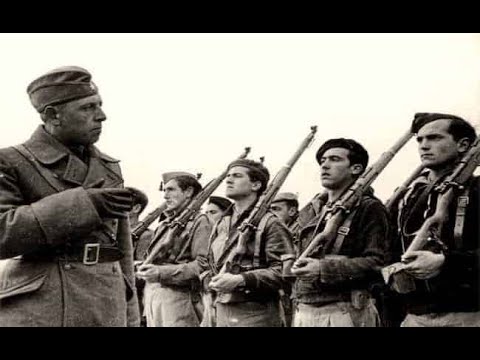




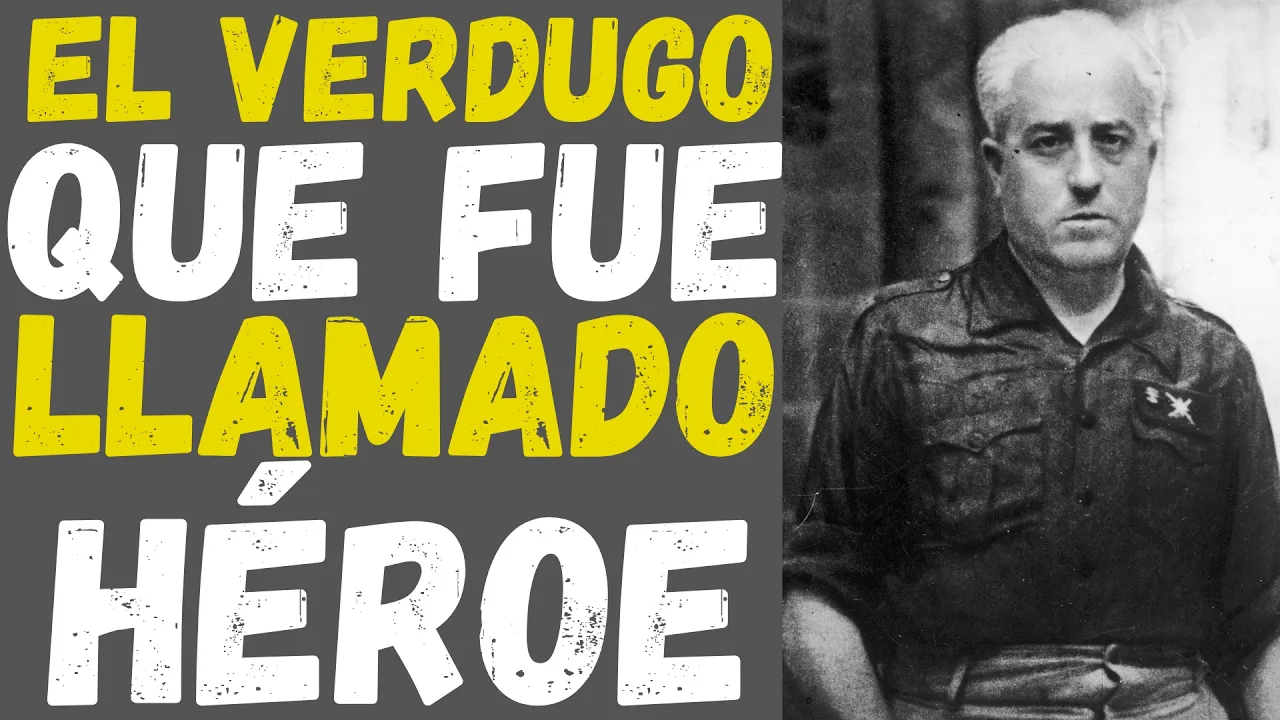


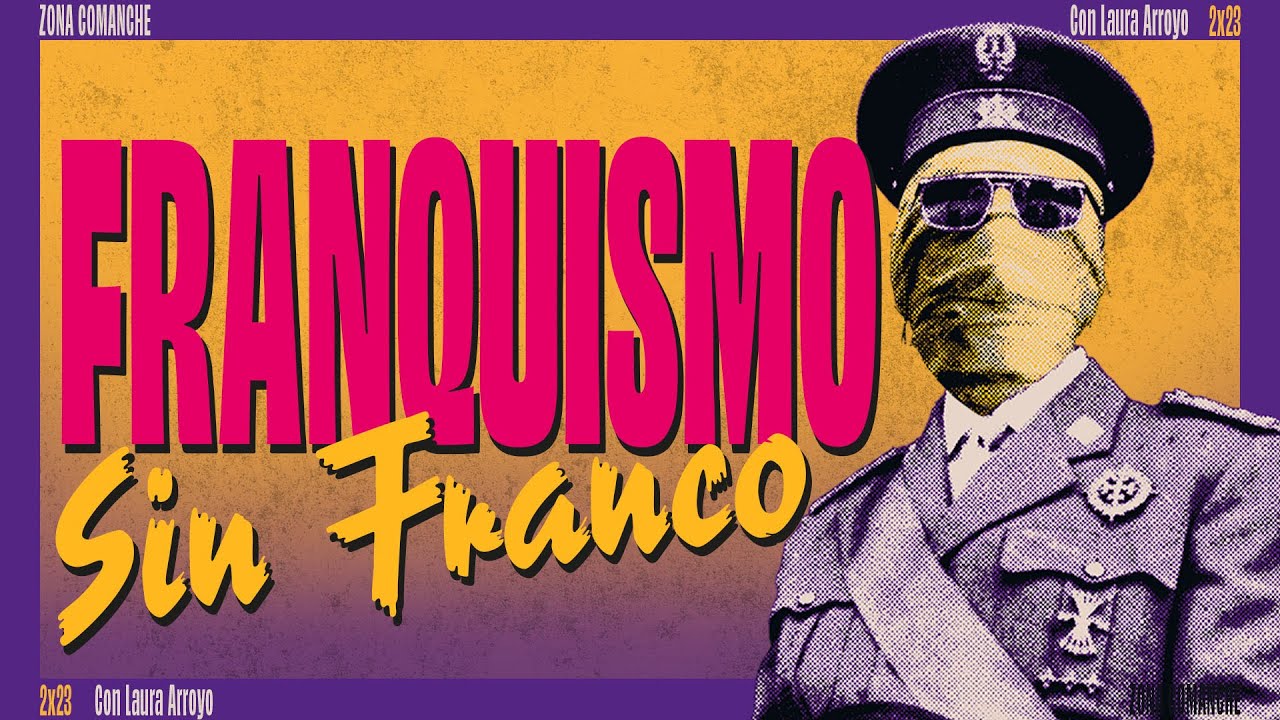



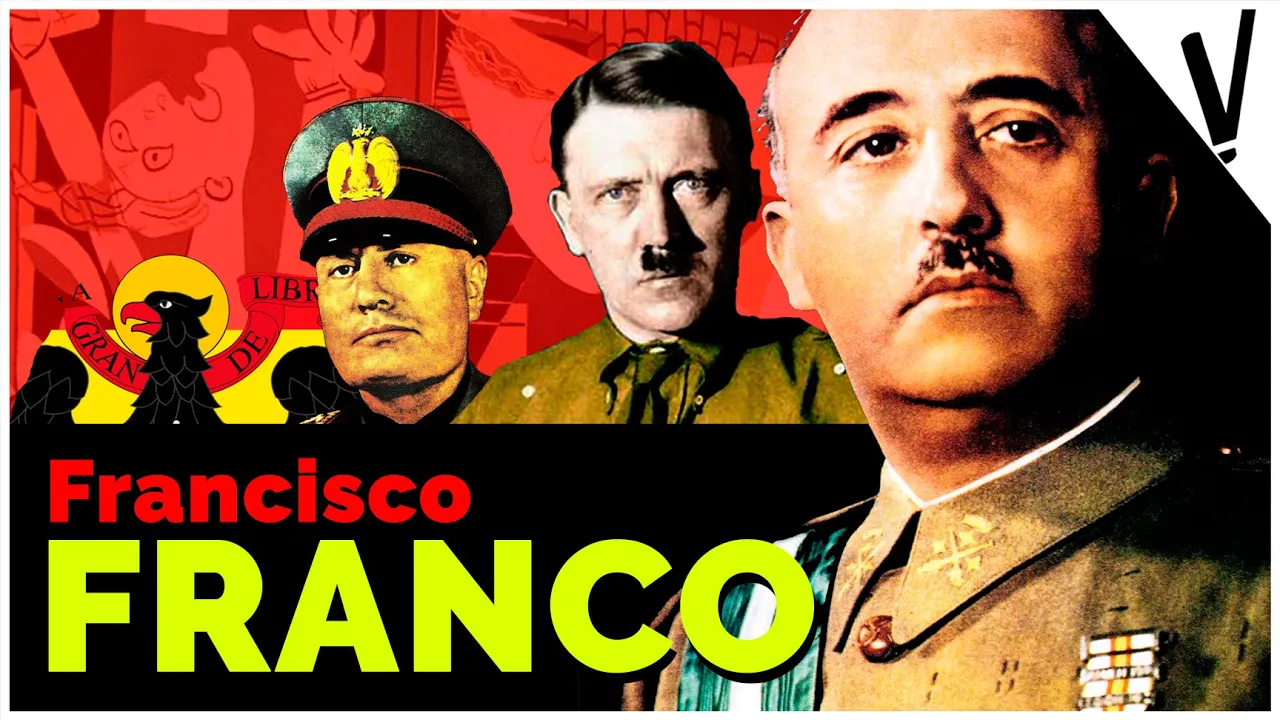
Francisco Franco, Europe's longest-serving dictator, rose to power in 1939 with German support during the Spanish Civil War, establishing a brutal 40-year regime characterized by political repression, cultural suppression, and systematic persecution of dissidents. Despite his oppressive rule, Franco navigated complex international relations, initially aligning with fascist powers but later securing economic aid from the United States through strategic military agreements. His regime's brutal tactics, including the bombing of Guernica and the establishment of over 170 concentration camps, left deep scars on Spanish society. However, Franco's eventual death in 1975 led to a remarkable democratic transition under King Juan Carlos, who courageously dismantled the dictatorship despite initial public skepticism, demonstrating how even deeply entrenched authoritarian systems can be overcome through determined political will.
Franco's Spain: Legacy of a Forgotten Dictatorship | History Documentary
Added:[Music] Francisco Franco was Europe's longest serving dictator. He came to power in 1939 thanks to help from Adolf Hitler in the Spanish Civil War. Franco established an oppressive regime which flourished even as Spain was becoming a holiday paradise for millions of tourists. A reign of terror that had lasted 40 years only came to an end when Franco's successor, Prince Juan Carlos, ascended the Spanish throne. But the young monarch inherited a country that is still deeply divided even today. Who was this Francisco Franco who had Spain in his grip for so long? How did a shy youth from the provinces become the most durable of all dictators?
[Music] For more than a century, Spain had ruled the waves as the first superpower of the modern era. But in 1898, in the war against the emerging United States, the Spanish fleet was almost totally destroyed. Spain's naval supremacy was over. The empire crumbled as more and more Spanish colonies fought for independence.
A once so proud country of discoverers and conquerors slid into military and economic insignificance, a humiliating decline for Spanish self-esteem.
It was a traumatic experience for Spanish society, for its elites, and above all for the establishment, for the armed forces, too, especially the navy.
[Music] Today, the Galacian town of El Ferrell on the Atlantic is a surface paradise.
Up until 1898, El Ferrell was an important naval base. It was here, 7 years before the Spanish fleet was annihilated, that Francisco Franco Bahamande was born, the second of two children in an officer's family.
[Music] So as a child on the the dock side at El Ferrell, he would have seen the boats arrive. He would have seen the the dead being taken off the boats. He would have seen the wounded and the cripples coming off. And this had a tremendous impact on the rest of his life. The boy grew up in the everyday life of a garrison town where members of the navy were a natural part of the scene.
Franco Franco lived in a small secluded millure in this garrison town on the naval base at El Feron. Prior to the defeat in 1898, it was still possible for members of a naval family to believe that they belong to a great nation with a great navy that was important in the world. And after 1898, it was no longer possible to think that.
A shy boy, Francisco was just an average pupil. He had a strict Catholic upbringing, but his father earned a reputation for being a man about town.
He had a very doineering mother, and he also had a father who was not very present. So I think it's reasonable to suppose that his his was not already a happy childhood.
Spain was faced with huge problems.
Whereas other countries had long since placed their faith in industrialization, Spain was left lagging behind the modern era. Whole regions were still farmland and most of it belonged to powerful land owners. The gap between rich and poor was growing ever wider.
[Music] A large proportion of the Spanish population lived on the land, but under the miserable conditions of day laborers. Tensions were rising. King Alfonso I 13th was unable to get the economic and social problems under control. Corruption flourished while strikes and revolts paralyzed the country.
In Catalonia and the Basque country in particular, calls for independence grew [Music] louder. The decline of the Spanish Navy shattered Franco's career dream. It now required very few recruits and took only the best. Franco was turned down. All that remained open to him was the infantry in the form of the military academy in Toledo where at first he remained an outsider.
You know, he was a child when he went to and he was in a way younger than his age. You know, he was tiny. Uh I think he must have been very unhappy in the military academy.
But the young man had a quality that was ideal for the army. He was fearless.
Franco's sister, for instance, once told how he had pressed a red hot needle down on his wrist. His only comment was that burnt flesh smells abominably.
In Morocco, Spain's last colony, Franco fought against rebellious Berbers. and at the age of 22 became the army's youngest captain.
One of the things I think that distinguished him at this time is precisely because he had virtually no interest in sex. He didn't drink. And so while a lot of his colleagues and companions and comrades were coming to terms with the very harsh conditions with drink, with gambling, with prostitutes, he didn't do any of that. Instead, Franco spent nights studying maps and planning attacks on rebel settlements. And his approach became increasingly ruthless.
[Music] one of his soldiers in fact mocked him um when he gave an order and Franco promptly pulled out his pistol and shot him dead. I think that the war in Morocco, which was a completely ruthless war and a very savage one, um underlined the fact that Franco was a very cold-hearted killer. The Africanistas, as they were, as they were called, the officers who who had had their main experience in Africa were ruthless.
Their main job was to terrorize a a colonial population. And this was um an attitude that they would later bring back to the Spanish Peninsula. So that very much um affected Franco. And of course, it was where he made what passed for his friendships.
After being seriously wounded on the battlefield, Franco was sent back to Spain to recover. It was there that he met Carman Paulo. In 1923, they got married. He was looking for an advantageous marriage. She was from a rich family.
uh her family were outraged that she would um hook up with with a soldier because the soldier's life in those days with these battlefield promotions was very dangerous. Her father is alleged to say, you know, you can't you can't marry him. It's worse than marrying a bull fighter.
At the same time, the armed forces took control of the country. But 9 years later, during the world economic crisis, Spain became a republic. The new government planned to dispossess the large land owners and sever the link between church and state. The deposed king went into exile, and the military feared for its hold on power.
One of the first things that the republic had to deal with was the fact that it had an army that was bigger than it could afford. Spain was a poor country and yet it had an army which had a hugely inflated officer core and a disproportionate amount of of the military budget went on salaries for officers. And the consequence of that was that there was not enough money left for fuel, for vehicles, for modernization, for often they couldn't do maneuvers because there wasn't enough money for petrol. Uh soldiers often had to drill with wooden rifles.
The new political goal was for Spain to become a democratic society. Up to that point, conservative Catholics like the Franos had benefited from the old order. The church feared for its power and the military even more so.
This also strengthened the realization among the armed forces that unless they intervened, there was a risk of the country drifting into a regime which the military argued would be socialist or communist. An initial coup by the army ended in failure, but Franco sensed a great opportunity to make his mark. By now he was a general and with his foreign legion he put down a minor revolt in Atorias. Nearly 30,000 civilians were arrested, tortured or executed as a result of the Atorias rising. Franco of course was almost enemy number one as far as the left was concerned. Um but of course as far as the right was concerned uh he was seen as their potential savior even from that particular moment. uh that is the reason why he was appointed chief of the general staff, the most important position in the whole of the army.
But the political wind in Spain turned once again. New elections in 1936 saw a left-wing liberal alliance win a slight majority. Spain's military leaders now realized that they finally had to take action. And the riots in the capital and the murder of a right-wing politician provided them with a welcome excuse to attempt a coup once again. Franco was given a key role. He was instructed to direct troops to Spain from Morocco. And when the republic blocked the straits of Gibraltar, Franco knew how to solve the problem.
Franco's first contact came before uh the civil war, particularly with Admiral Canares, the head of the Ab uh who he'd met on numerous occasions. Uh Canares used to travel frequently to Spain. Uh he was very much of a a Hispanophile and uh he certainly was keeping contact and realized that Franco was obviously the rising power within the Spanish army and must have sought him out.
That summer, like every year, Adolf Hitler was staying in Broit. A fervent admirer of Vagnner, the German dictator attended every Broit festival. Franco asked two German friends for help. Johannes Bernhard and Adolf Langenheim. The two were businessmen from Morocco and members of the National Socialist Party.
They traveled to Broit, met Hitler in the villa Vanfried and handed him a personal letter from Franco.
It's certainly true that it was shall we say a good moment uh for them to have gone to see Hitler by because of course Hitler was very emotional uh during the period of the Vagnner season um and by and of course it was typical that uh Guring immediately wanted to call the operation uh Zafoya um purely because of the the final act.
Hitler acted immediately. He sent transport aircraft to Morocco and six fighter planes as an escort.
[Music] Without that airbridge, the coup would have collapsed, so Germany must bear much of the responsibility for the civil war ever erupting.
[Music] By now, Franco was commanderin-chief of the rebels. His troops were fighting in more and more provinces against the supporters of the republic and their allies. Now Franco's forces were also supported by a radical fascist militia known as the Falah Espanola. Franco realized how useful this ultraright-wing group and its armed fighters could be to him. He declared the Falahange the state party and made himself its leader.
Speaking to the world in halting English, he justified their joint struggle for a conservative Spain.
Thank to the thousands of souls who follow our movement in defense of civilization.
Thank to all those country who passed through or some troubles and are now offering to us their sympathy country religion family. This is our a and strength in their campaign against supporters of the republic. Franco's troops destroyed everything in their path even if it was of no military importance.
He once said, "I'd have no problem killing half of Spain just to stop it becoming Marxist." He really said that. I mean, even the Germans were shocked and the Italians were shocked uh at times by the cruelty he showed.
There's one point where he says to the Italian ambassador uh Mussolini's ambassador, I have to conquer Spain square cm by square cm because I have to control the people who live on the land. When Hitler talks of a thousand yard for Franco, that's short-term thinking.
The brutality of the Civil War shocked the world. Its horrors were brought home to them by pictures like those taken by photographer Robert Kappa. His picture of the death of a Republican soldier became a 20th century icon and fueled resistance. Supporters of the republic flocked to Spain from all over the world to form the international brigades. They included prominent intellectuals like American author Ernest Hemingway. But their opponents had long since received military assistance from Adolf Hitler.
[Music] The Condor Legion was a special unit of the German Air Force. In April 1937, it attacked the small town of Ganika, where the Basque struggle for independence had begun.
Every Monday, a popular farmers market was held in Ghana. And that is precisely when it all happened. That is why they chose the Monday for their bombing raid. They knew there would be more people there.
[Music] Hundreds of civilians were killed and thousands of families made homeless.
Later it became clear that Hitler's Luftvafa had regarded the raid as practice for the Second World War. Gana is the first total destruction of um an unprotected town in the history of warfare.
The merciless civil war ravaged the country for three long years. When it ended, the nationalists controlled virtually the whole of Spain.
In nearly every province, the centers of republic resistance lay in ruins.
[Music] The decisive factor in the war was undoubtedly the total air superiority of the Frankistas thanks to the intervention of the Condor Legion.
So it is no exaggeration to say that without German and Italian, but primarily German intervention, Franco would probably not have triumphed in the civil war.
In 1938, only Spain's two major cities still held out against the nationalists.
Franco laid siege to Madrid and Catalan Barcelona for months. Their populations had to starve. And not only because they supported the republic.
Catalonia has always been of great importance to Spain and this was one of the reasons for the coup. In 1931, the region had declared its independence as a Catalan republic within Spain. Ultra-conservative forces in the military feared that Catalonia might separate entirely from Spain because it was one of the richest areas of the country with a lot of industry. But the army also feared Catalonia because the Catalans envisaged a different political order. Franco's troops however had only one vision for Spain, centralism.
[Music] At the end of March 1939, the nationalists also conquered the two bastions of resistance. His troops marched into Barcelona. I can still remember it quite clearly. We could see them coming from a distance. We could still have opened fire, but it would have been pointless.
The Republicans had already left.
[Music] Franco wanted not only to abolish democracy in Spain. Right from the start, he also suppressed regional independence and culture, something the people of Catalonia had fought long and hard for. Children were even forbidden to speak Catalan at school.
I once asked a friend something who was sitting next to me at the table. I didn't notice that a teacher was standing behind us. He immediately threw me out of the classroom and made me stay there.
Here we speak Spanish, he said.
On April the 1st, 1939, Francisco Franco celebrated his victory, but he had already presented himself to the world as a statesman several months before.
[Music] Immediately after Franco's victory, the brutal persecution and punishment began of all those who had opposed him during the civil war.
Initially, there were 3,500 executions.
10,000 people were jailed. In 1939, 30 to 40 sentences a day were passed. Five of them death sentences. All the rest went to prison. There was only one not guilty verdict, and a trial lasted barely 2 hours.
Franco gave himself the title of Caldo the Espa, the political and military leader of Spain. He and his family moved into the Elpardo Palace in Madrid. The models for his new form of government were fascist Italy and Germany, including the saluto romano, the Roman salute. The concept of the fer, the leader was adopted from German national socialism.
Franco Franco was the sole source of law. Like Hitler, his will was law. But like Hitler too, he was not subject to any restrictions. Aluna the Caldo owed his victory and his power to the German dictator. Yet when Hitler declared war on the world in 1939, Franco refused him allegiance. Spain, Franco stressed, would remain neutral.
He did not want to depend too much on the fascist states and on Germany. But at the same time, he had to pay back for the Condor Legion. And this is one of the reasons why again fish then became such an important part of the Spanish diet for protein. Uh because basically the pigs, the sheep and the cattle were all being shipped off to Germany as part payment for the Condor Legion. Spain's alleged neutrality did not help Franco's civil war opponents.
Half a million Spaniards had fled to France. In the wake of Germany's conquest of France, thousands of them were arrested in Paris by the SS.
Branded dangerous communists by the regime, they were sent to Mount concentration camp in Austria. Among them were Jose Marfield and his father.
A highranking officer arrived and made a speech. You came in through this door, he said. But that is how you will leave.
and he pointed to one of the chimneys at the crerematorium which had smoke coming from it.
Before the first Spanish nationals were sent to Mount Housen, the German embassy in Madrid had contacted the Spanish government and asked what should be done with their fellow countrymen. Franco's ministries showed no reaction.
[Music] Franco was totally indifferent to the fate of Spanish exiles who were sent to Maltausen or other concentration camps.
They were reds in his eyes. They were not Spanish, just dirt scabies. They were of no interest to him. Without a second thought, Franco abandoned his dissident fellow citizens to their fate and in doing so avoided a conflict with the Nazis. At his only ever meeting with the German furer in a small French border town, he demanded aid consignments and territory in France. Yet no matter how much Hitler insisted, Franco was not prepared to agree to Spain's participation in the war. Hitler was exasperated with uh Franco as a result of the meeting at Hondai. Uh he realized in fact that uh Franco was not going to do anything for him basically. uh he was going to do at the absolute minimum and yet tried to get as much as he possibly could out of it.
The two dictators conferred for 9 hours.
The stubborn Spaniard infuriated [Music] Hitler. Well, of course, Pal Schmidt, the Hitler's interpreter, um wrote later that that Hitler went off very angry, saying he'd rather have three teeth pulled out without anesthetic than have to spend another hour talking to Franco.
Franco's sole concession was to send Hitler the division Adul, the blue division for his Russian campaign. Young fanatical nationalists with no military experience. Meanwhile, the dictator was quietly shaping his Spanish state.
First and foremost, it was the big land owners who benefited from his new laws, as well as the church, which had already given Franco its loyal support during the Civil War. His subjects were forbidden to engage in any form of political activity. Party and trade union members were already viewed with suspicion.
Franco even saw to it that every Spaniard who had fought for the republic was punished retroactively. When Franco says Spain, and this goes on right till the day he dies, he doesn't mean Spain in the way you mean it or I mean it. He doesn't mean all of the country. He means those who think like we do.
In Spain, mass arrests have become routine. The state dealt swiftly and harshly with anyone who criticized [Music] Franco. Executions were on the daily [Music] agenda. Franka repression meant that every accused was basically guilty unless they could prove their innocence.
just the opposite of how it should be in law. In the eyes of the Francistas, simply being a Catalan or living in Catalonia was already suspicious. Any citizen could denounce his neighbor. He could simply allege that his neighbor was a Republican who had fought against Franco. Or someone might claim that he had once heard his neighbor shout, "Long live the Republic." Such accusations alone could be enough to see someone brought before a military court.
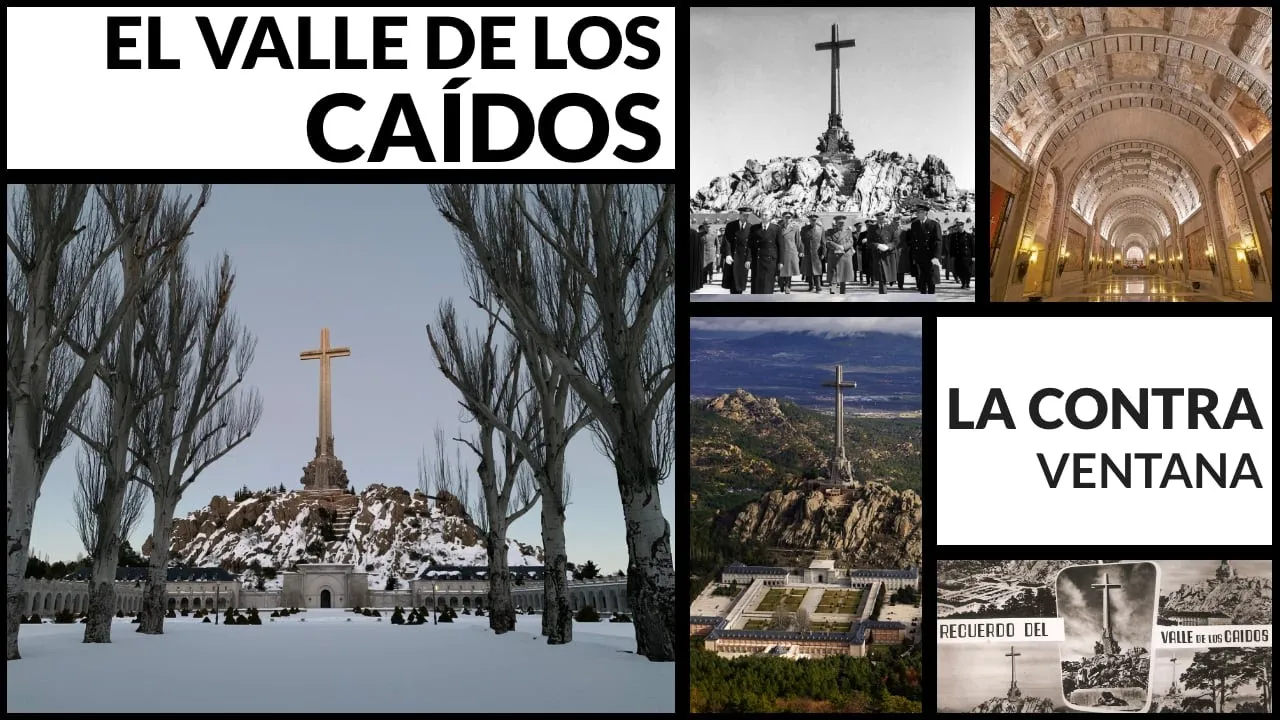
More than 170 concentration camps were established. Near Madrid, tens of thousands of prisoners performed forced labor in the Valley of the Fallen, as it is known. They hued a huge Catholic basilica out of the rock and a shrine for the victims of the civil war who had been loyal to the regime. towered over by a 150 m high stone cross. Franco wanted to make sure that on the surface everything was uh calm and under control. Um even though appalling things might be being done in various sort of you know dungeons and cells um in prisons and in police headquarters. In 1942, the Second World War came threateningly close to the Calo when Allied forces landed in North Africa, also within sight of the Spanish coast. Their aim was to occupy the major ports from Algeria to Morocco. Franco was under pressure. He had to demonstrate detachment from Germany. The division azul in Russia was hastily disbanded and Franco granted transit through his country to former Spanish Jews from all over Europe who were fleeing from their persecutors. In this way, nearly 50,000 escaped certain death. For as far as Franco was concerned, it was quite a good gesture uh to try and show a little bit of humanity without any risk to himself.
In 1945, after the fall of the Hitler regime, Franco thought he was on the safe side. Although he had cooperated intermittently with the Axis powers, he had never actually participated in the war. Now he was hastily striving to eradicate the last traces of fascism in his country. Nevertheless, the Potam Conference emphatically planned postwar Europe without Spain. The western powers were convinced that the Franco problem would soon solve itself.
It was assumed that the regime wouldn't last long, that sooner or later, and probably sooner, Franco Spain would simply disappear.
[Music] The past could not be completely erased.
During the war, with Franco's help, thousands of Nazis had settled in Spain and controlled key industries.
But now the allies wanted to seize their assets as reparation. They even offered Spain a 30% recovery commission. It was a deal the regime could not ignore. In today's money, German companies in Spain had an estimated value of 400 million.
[Music] But the allies also demanded the deportation of well-known Nazis and they included some of Franco's good friends like entrepreneur Johannes Benhhat who had been instrumental in obtaining Hitler's support in the civil war. In return, the Caldo had put him in charge of a paristatal holding for trade with Nazi Germany.
When the allies demanded his deportation, Franco refused.
Instead, he made Bernhard a Spanish citizen and gave him a house in Denya. There, Bernhard led a comfortable life. Far removed from events during the war. Finally, in 1950, he immigrated to Argentina.
Over the next few years, around 500 former high-ranking members of the Nazi party sought refuge in South America, most of them in Argentina with Franco's friend Juan Peron. Their guardian angel had himself fated as a resolute campaigner against intrigues which had unjustly discredited his country and its citizens.
He created the idea that Spain was the victim of a blockade by the western powers. So people rallied to him. He actually said that the Americans and the Brit and the British want to bring down Spain because they are jealous of the fangist regime and people believe that Spain was still a backward agricultural country but in the early 50s Franco initiated change in arid regions he had dams built to ensure a supply of water. Over the course of his regime, more than 500 of these reservoirs were [Music] created. The state also attracted settlers with the promise of a house and land of their own. This resulted in huge, largely infertile areas being farmed. But participation in Franco's land reform was only open to those who declared their loyalty to the Caillou.
More than 50,000 families in Spain tried their luck. 300 colonies were built and the head of state personally attended the inauguration of each one.
[Music] I thought it was great because there were lots of people there and then the general you know Franco he stood up there and spoke to the people as a child of course that really impressed me. I couldn't believe it.
My goodness, what a man.
First and foremost though, it was Spanish high society who benefited from Franco's system. Nepotism flourished. In this way, the dictator secured the loyalty of the upper class. Since he himself was corrupt, he regarded it as perfectly normal for people to be bought off. His wife Da Carmen also savored this power with marked self asssurance. It is said that whenever she went anywhere, you know, in Spain, she'd go to jeweler shops and she'd say, "Oh, you know, that's a nice piece. I like this and whatever." And anyone who claimed for the bill to be paid would suddenly find they were subject to tax inspections.
In Franco, Spain, many decisions were taken not by institutions but by individuals with power. So good contacts were helpful. People's abilities to set up businesses to uh import various items uh all depended on who you knew within the movement or within the uh national bureaucracy. I think in Spain uh the corruption was uh so great particularly at high higher levels uh in the administration that it was actually making any form of economic development almost impossible. In the 1950s the cold war drew Franco out of his defensive position. In the event of a nuclear attack by the Soviet Union, Spain's strategic location could be highly useful to the Western powers as a base of military operations.
When the UN lifted its sanctions in 1950, the regime's reaction was to say they have realized that we were right.
The sanctions were unjustified and Spain did not bow and scrape. The United States established three air force bases in Spain along with Rota in Anderusia as a marine base for nuclear submarines. All the locations were linked by an oil pipeline.
The US also had numerous smaller facilities throughout Spain. In return, Spain received more than $200 million and economic aid on a grand scale. Franco let himself be celebrated for the deal. But had he really had an alternative? Politically, it was important to Franco for survival, but for the Americans, it was a purely military agreement. Naturally, they were well aware of Franco's weak bargaining position and got as much out of it as they could. Franco had made Spain completely available to them.
[Music] Franco needed allies. In 1953, he renewed a contract with the Vatican, which the republic had dissolved 20 years previously. Through the Concordat, Catholicism became the state religion.
It proved to be a fateful alliance. They were given complete control over uh education, over censorship, uh and above all over the orphanages. Um so from that point of view, Franco knew perfectly well that these children would be uh brainwashed into becoming you know basically loyal uh nationalist Frankish supporters in the future.
[Music] Since the 1940s under the Franco regime, dissident had had their newborn children taken away from them. The mothers were arrested or murdered and their offspring brought up as pious Christians in church institutions and passed on to families loyal to the system. In this way, 30,000 children disappeared, a lucrative business which flourished long after Franco's dictatorship had come to an end.
I gave birth to my child in a private clinic run by the Sisters of Charity.
She lay at my breast, but they took her away from me straight away. I was told that she had respiratory problems and needed to be put in an incubator. Less than 24 hours after the birth, they came to us once again to say that our daughter had died. We didn't have any worries, they said, because everything had already been taken care of. She had even been baptized, they claimed.
It's believed that some 300,000 children were sold to other families. But even today, the true number of victims can only be estimated. It was not until this century that the scandal came to light.
Since then, many people in Spain have been searching for their natural parents.
After the king of Spain had passed away in exile, his family reminded Franco of an old promise. Franco never intended to restore the monarchy because it would have diminished his own power. However, to keep the monarchists happy, in 1947, he passed a law which was called the law of succession which declared that Spain was a kingdom, but that it was a kingdom without a king that would have a regent in the person of Francisco Franco Balandi.
Franco at least came to an agreement with Don Juan de Borbon that Don Juan's son Juan Carlos would be prepared as a possible successor to the throne. Could he perhaps continue the regime one day along the same lines as Franco? At the age of 10, the young prince set foot on Spanish soil for the first time under the Caldo supervision. Juan Carlos received a firstass education at elite schools and militarymies.
He suffered terribly from the tensions.
His father wanted the throne, but Franco was not prepared to give it to him. Juan Carlos stood between the two men. It was a difficult constellation.
Franco had to abandon his policy of isolation. In the late 1950s, with Spain on the brink of bankruptcy, he approved the economic opening of the country for trade and foreign investment. As a result, Spain also discovered a new export commodity, its surplus workers.
Because elsewhere in Europe, in Germany for example, an economic miracle was in full swing.
To bind the guest workers to their homeland, they were offered holiday trips to Spain. Franco's regime also treated them in many other ways. The Spanish government sent show groups on Christmas Eve, for example, to places in Germany where lots of Spanish people lived. It was like a small Spanish celebration. They did it to ingratiate themselves with the Spanish guest workers who sent a lot of money home and in doing so helped Spain out of its economic [Music] crisis. The changes paid off. Foreign investment flowed into Spain along with streams of tourists. First and foremost, it was the Germans who discovered the beaches in this land of sunshine. Morca became their favorite island. In a few years, tourism had grown into an indispensable source of revenue for Spain. But to Franco's concern, the tourists also brought a dangerously liberal culture with them.
He was extremely uneasy uh about what effect this would have on Spanish youth.
Um the idea that other people could travel, the pop music that was coming in, the uh uh clothing and all the rest of it. Uh all of this completely undermined in his view um the basis of what Spanish society should be. Indeed, in the mid 1960s, resistance to the regime germinated throughout the country. Spanish students protested long before their counterparts in Western democracies. More and more young Spaniards took to the streets to demonstrate for their rights and against oppression. And now, Catalonia was again calling for the autonomy it had enjoyed in the pre-Franco era.
[Music] The struggle for Basque independence was becoming more and more radical. The underground organization ITA no longer shrank from violence in the form of bomb attacks and even political murder. The movement had become a nightmare for Franco.
Uh I don't think people necessarily um sympathize with it but um they perhaps had uh certainly if they were very much anti-fankist they certainly probably had quite a bit more admiration. In 1970 the eyes of the world turned to Spain where 16 it fighters faced a military court. Franco wanted them all executed. The case made many people realize that in Western Europe, there was still a country being ruled by an unscrupulous despot.
International protests put the regime under pressure until reluctantly Franco commuted the death sentences. For more than 30 years, he had been used to his decisions being accepted without question. Franco was not a clever strategist in that particular way. But the point was that having achieved total power in Spain, uh, he imposed everything and nobody could actually disagree. Franco benefited from the fact that by now at least, foreign trade was booming and the country was experiencing a massive upswing. At last, Spain, too, had its own economic miracle.
Living standards were rising. I mean huge building projects took place of very low quality but people no longer in the south lived in caves. They lived in apartments. Of course the Franco regime gave all the credit to Franco. This is the benevolent grandfather of his people making Spaniards happy. By 1960 affordable package deals were already attracting 6 million holiday makers a year to Spain. Tourism was changing the face of many coastlines as mass building projects were implemented. In the years that followed, the number of visitors from abroad even hit 30 million a year.
Very few were probably aware that they were spending their holidays in a ruthless dictatorship. How much longer did Franco still want to cling to power? aged 75, he was leaving day-to-day affairs more and more to his most loyal supporter, Admiral Carrerero Blanco. From that point on, Franco becomes a symbolic head of state. You know, all he does he obviously he spends a lot of time hunting, a lot of time fishing, huge amount of time watching TV. He has 17 televisions.
The man whose power was based on fear and terror was gradually becoming a private gentleman. Franco devoted more and more of his time to his family in the comforting belief that Juan Carlos would prove a worthy successor. He was convinced that as the king of Spain, this Borbon son would carry the heritage of Francoism into the future.
close advisers and particularly the group that gathers around Mrs. Franco that want to make sure that there will be no move to democratization say to Franco and this happens you've a lot of evidence about this say to Franco be careful with this Juan Carlos he's not to be trusted Juan Carlos who played his cards very very cleverly uh of again in a slightly Frankest way of not really revealing what his true feelings were and so therefore gave Franco the encouragement to believe uh that he could actually carry things on in the future.
Juan Carlos already bore the title Prince of Spain and gaining practical experience in various ministries, he was preparing himself for the great task that lay ahead. He knew that his time would soon come because by now the dictator's health was failing. Franco had Parkinson's disease.
His faithful deputy, Admiral Carrero, had been killed by a car bomb in December 1973. Franco felt a deep sense of loss.
To mark the 39th anniversary of his rule, the regime demonstrated its power one last time. The message was that Francoism would live forever. But the split in Spanish society was becoming more and more evident.
There's a total difference between those who are the supporters who are obviously frightened about what's going to happen when Franco is out of the way uh and all of those who are longing for the old bastard to [Music] die. In November 1975, at the age of 83, Francisco Franco succumbed to the last of several heart attacks. Half a million people paid their respects.
Europe's longest standing dictator was laid to rest in the monument to the heroes of the civil war.
Two days later, Juan Carlos took up office as the new head of state.
Many Spaniards regarded the king as a puppet of the hated old regime, the dead dictator's obedient pupil.
[Music] How did we see the new king? The feeling amongst Democrats was one of total mistrust. He was regarded as a successor by the grace of Franco. We left wingers merely referred to him as Juan Carlos Elrevy, the brief one, because we didn't think he'd last long. The figure of a king did not fit the concept of democratic change.
[Applause] But it soon became apparent that Juan Carlos was anything but the tool of his deceased mentor. On the contrary, the king really did want to lead his deeply divided country into democracy. In the summer of 1977, free elections were held in Spain for the first time in more than 40 years.
[Music] The real achievement which grips me in a way I find hard to describe is that this young man broke his word according to his plan. He was brought up with priests and the armed forces by his side. He had always been surrounded by saber rattling and monks cowls. Yet he found his own words for a democratic state. And that is his achievement. It's an enormous achievement. And we should not forget that is one of the greatest lessons of history because there was a huge risk of Spain being plunged once more into a civil war.
In February 1983, that risk was eminently manifest. Parliament was occupied at gunpoint by francistas who wanted to restore the old order. But Juan Carlos demonstratively backed the new government.
Step by step, the king dismantled the Franco system. In Spain, a new era was to dawn.
when the king spoke on television at midnight. It was a historic moment. I can remember quite clearly. And I also remember the sigh of relief because we were afraid of slipping back into a dictatorship, into civil war, into a time we all wanted to leave behind us.
Because the Franco era had deepened the divides in the country and also the old conflict between the central state and regions striving for [Music] independence. The Catalonia conflict makes these divides clearly evident even today. It will take a great effort for Spain to come to terms with the darkest epoch in its history.
Effort and time.
[Music] [Music]
Up Next
The Origins of Writing: Sumerian Cuneiform and the Birth of Recordkeeping
@extrahistory
2.1M views•2016-06-04

The Great Schism of 1054: Causes and Consequences
@SacredCathedrals
113.5K views•2026-02-19
Alan Turing: The Codebreaker Who Shortened WWII | Full Documentary
@SLICEHistory
464.1K views•2023-06-18
Understanding the Cold War: Superpower Conflicts and the Road to Détente
@OverSimplified
46.1M views•2019-01-24
Related Study Plans & Knowledge Roadmaps
Structured learning paths in History