






![[IB Math] Level 7 approach to ace log questions by HKExcel](https://i.ytimg.com/vi/T2la0OGhQ7Y/maxresdefault.jpg)





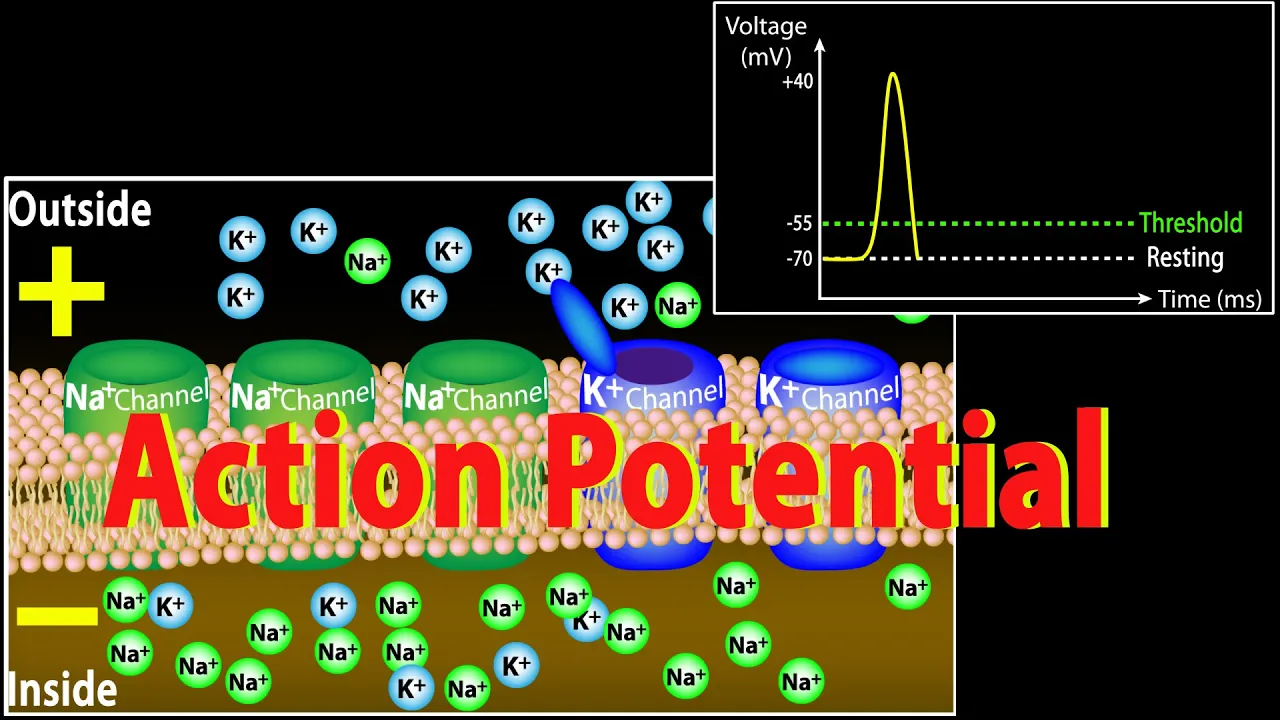
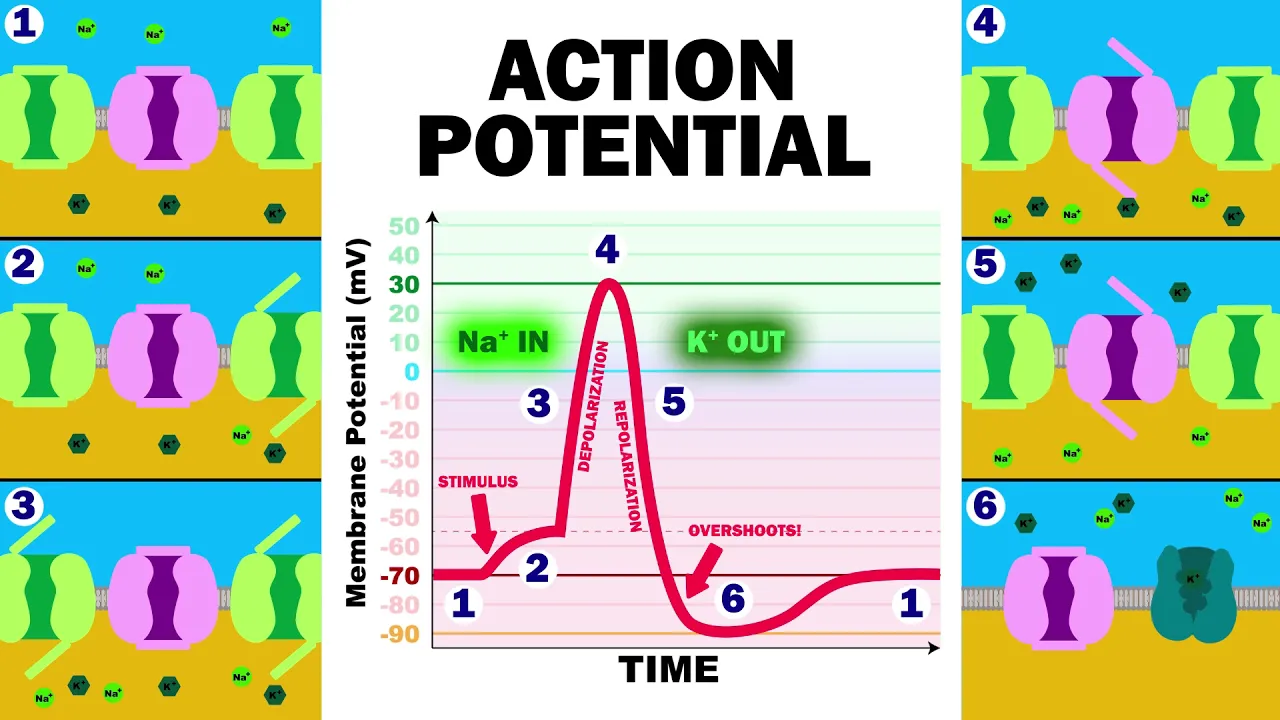
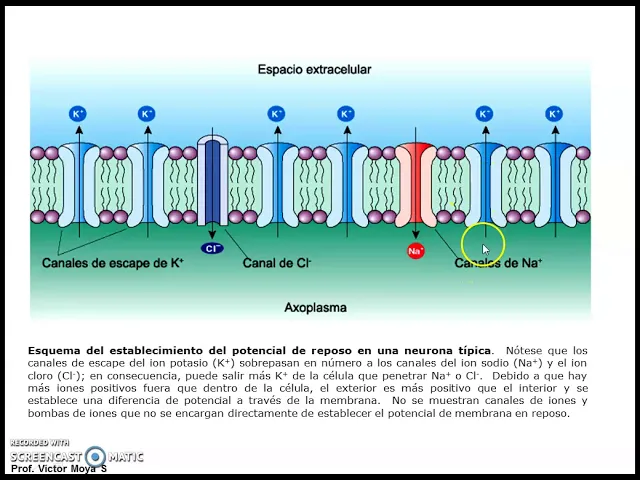




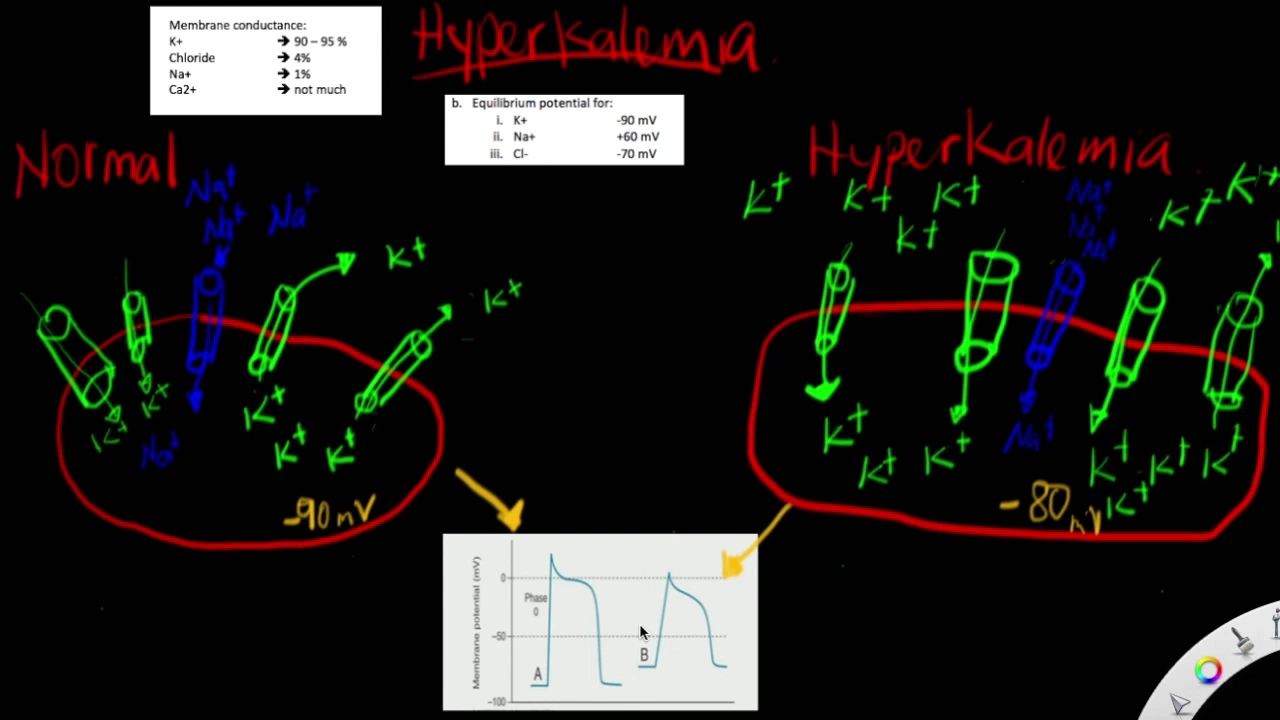





The Nernst equation calculates the equilibrium potential for a single ion using the formula E = -61/z × log([C_inside]/[C_outside]), where z is the ion's charge and C represents concentrations; when multiple ions contribute to membrane potential (as in real cells), the Goldman equation accounts for their combined effect based on concentration gradients and membrane permeability, explaining why resting membrane potential (~-70 mV) closely matches potassium's equilibrium potential (-94 mV) but shifts toward sodium's equilibrium potential (+61 mV) during depolarization.
Nernst and Goldman Equations: Calculating Equilibrium Potential
Added:Basic structure and function of the cell membrane, including the lipid bilayer, selective permeability, and ion channels.
The concepts of diffusion, concentration gradients, and the behavior of charged particles (ions) in an electrical field.
Fundamental definition of membrane potential and how electrical voltage gradients exist across biological membranes.
Basic mathematical proficiency with logarithms (log and ln), which are central to both equations.
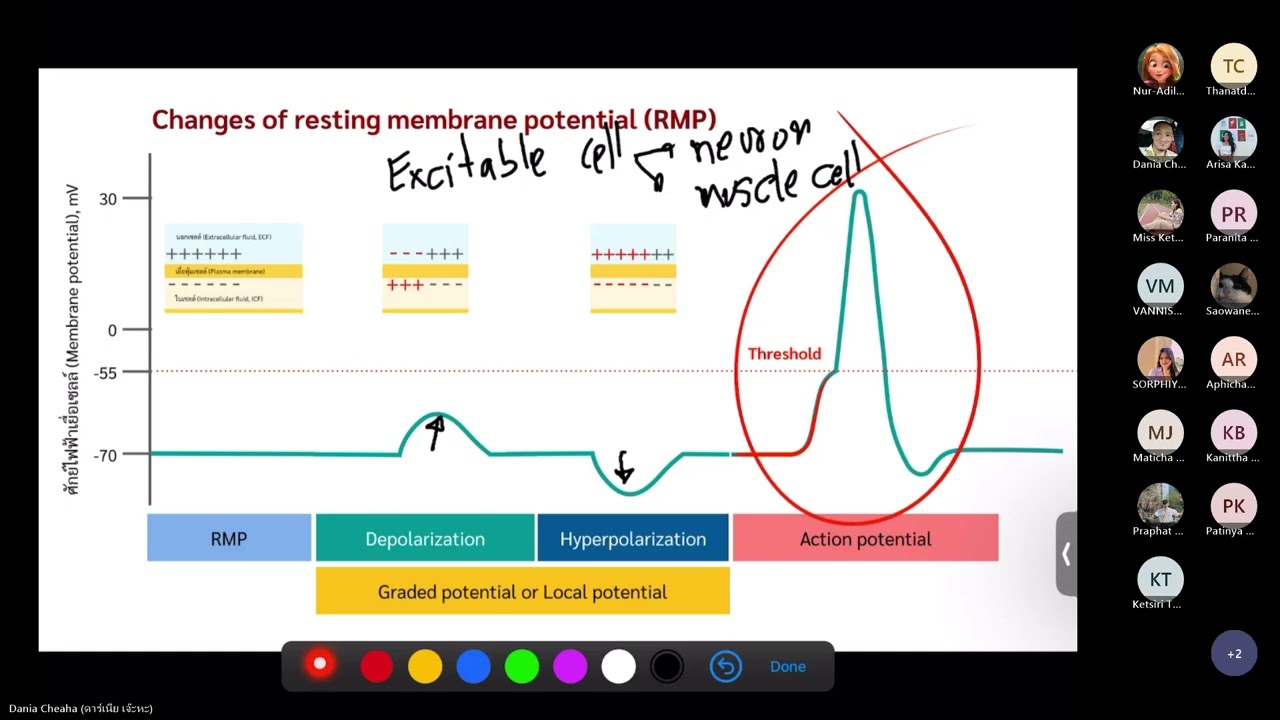
The generation and propagation of action potentials in neurons and muscle cells.
The concept of electrochemical driving force and how it determines the direction of ion movement through channels.
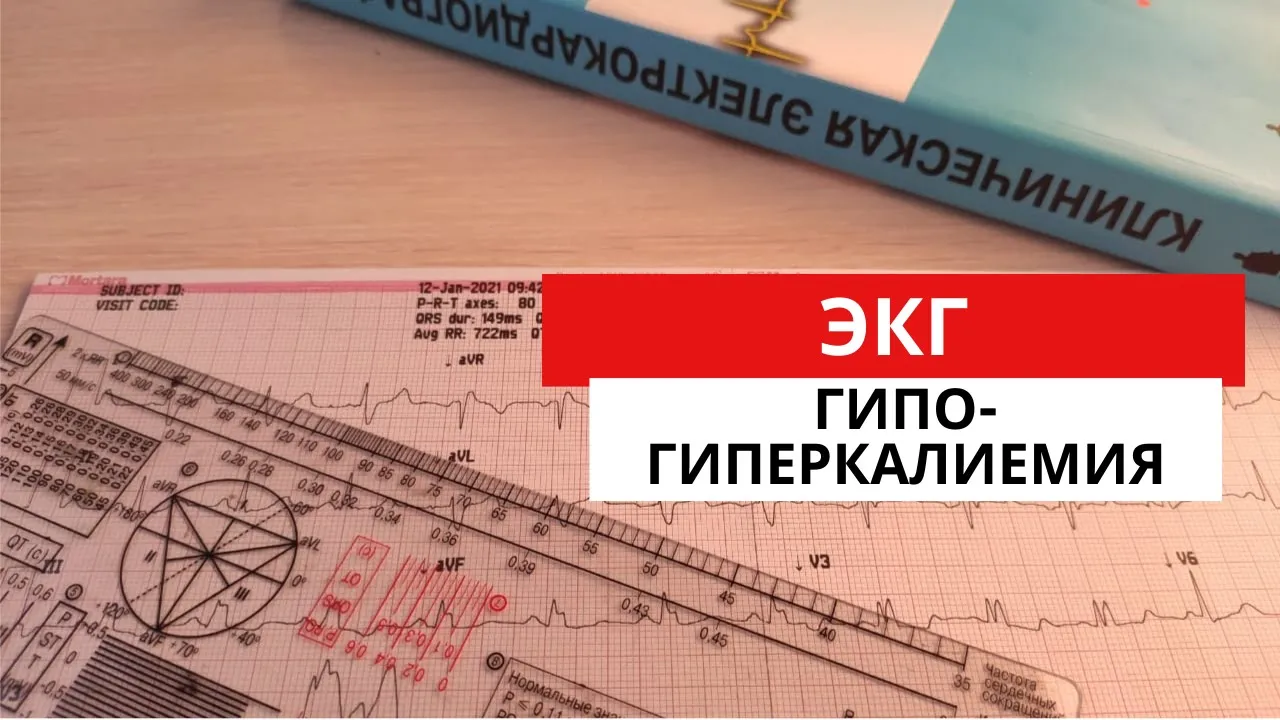
Clinical implications of electrolyte imbalances, such as how hyperkalemia or hypokalemia affects cardiac membrane potential.
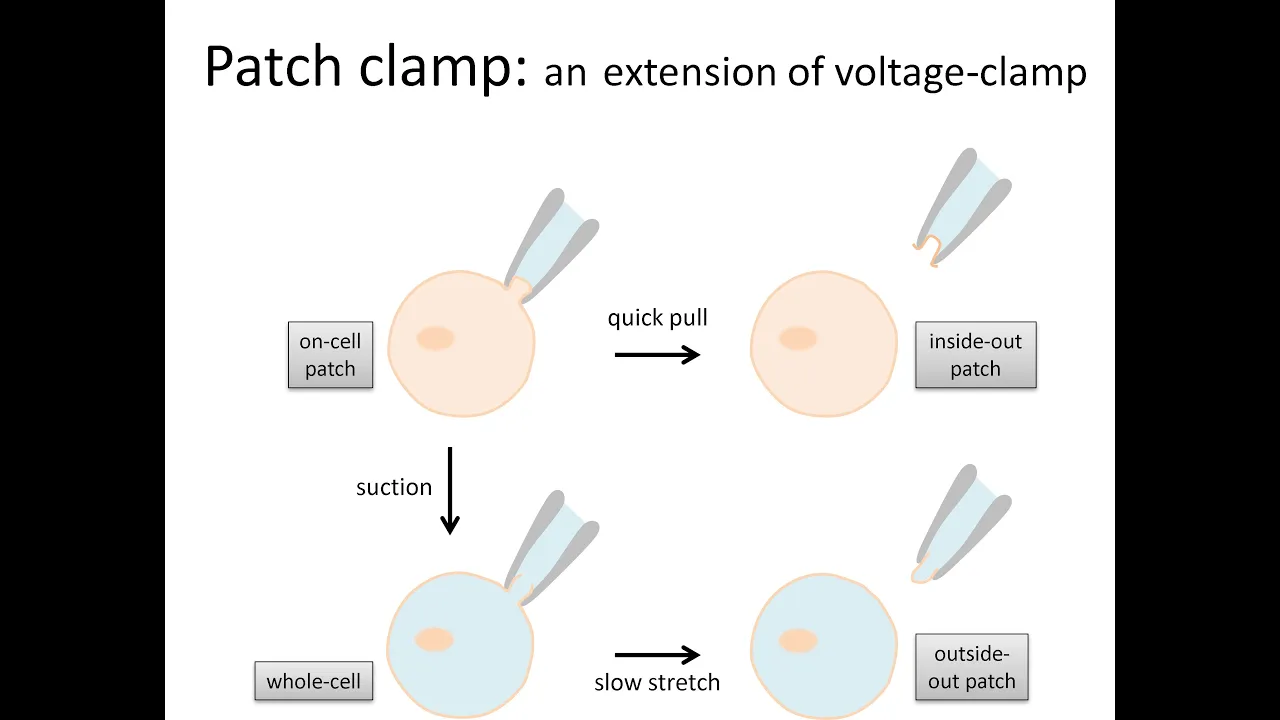
Advanced electrophysiology concepts, such as voltage-clamp and patch-clamp techniques used to measure ionic currents.
41.2K views1.2Klikes6:56Original Release: 2023-08-07
In this video, we will talk about Nernst equation, and Goldman equation. We will start with simple concepts and gradually dive deeper in complex things. So let's get started, with simple concepts. First, let's take a hypothetical cell, that has only potassium channels on the membrane, and no other channels. So it is permeable to potassium only. And the electrical potential difference across the membrane is zero. Now, the concentration of K inside the cell is about 140 mEq/L. And that outside the cell is about 4 mEq/L. Thus there is a concentration gradient, favoring exit of potassium. So potassium ions diffuse out of the cell. As they do so, they carry their positive charge with them. So now, the outside of the cell becomes and positive, and inside of the cell becomes negative. This positivity outside the cell, tends to repel the positively charged potassium ions back into the cell. And the negativity inside the cell, tends to keep the potassium inside. This electrical gradient, is called diffusion potential. As more and more potassium keep diffusing out, this potential gets stronger and stronger. Eventually a point comes when this potential becomes strong enough to block further exit of potassium, in spite of existing concentration gradient. Or in simple words, the diffusion potential, balances concentration gradient, so there is no net movement of potassium. For potassium, this happens at about 94 millivolts, with negativity inside the cell. So this is the equilibrium potential if the cell is permeable to potassium only. Let see one more hypothetical example with sodium. Assume that now the cell has only sodium channels, and no any other channel. So its permeable to only sodium. And again, in the beginning, the electrical potential is zero. The concentration of sodium inside the cell is about 10 mEq/L, and that outside the cell is about 142 mEq/L. Due to the higher concentration outside, the sodium ions diffuse from outside to inside. And as they do so, they carry their positive charge with them. This makes the inside of the cell electropositive, and outside electronegative. This potential, opposes the sodium entry into the cell. And with more and more diffusion of sodium, it becomes strong enough to stop the flow of sodium. For sodium, this happens at about 61 millivolts, with positivity inside the cell. So this would be the equilibrium potential if cell was permeable to sodium only. The exact value of this potential, where the equilibrium is achieved depends on two factors. Concentration gradient, and electrical charge on the ion. The stronger the concentration gradient, the more the potential would be required to oppose the flow. And he more the charge on the ion, the stronger the potential develops by same number of ions. For example calcium ions have plus 2 charge. So it is 2 times more powerful in balancing the same concentration gradient. Thus, the equilibrium potential depends on concentration gradient, which is basically ratio of concentration inside the cell to that outside, and electrical charge on the ion. The exact relationship between factors is this mathematical equation. The equilibrium potential, is equal to minus 61 divided by electrical charge on the ion, multiplied by log concentration inside by concentration outside. If you put the values of concentrations, and electrical charge of any ion, you get the potential required to balance the movement of that ion. The guy who discovered all this, was Walther Nernst. So this equation is called Nernst equation. And the equilibrium potential is also called Nernst potential. Thus, Nernst made finding equilibrium potential for individual ion, simple! But in real life, the things are a bit more complex. First, in body, multiple ions co-exist together. So to find out combined equilibrium potential, we need to take them all into account. The important among these are potassium, sodium, and chloride ions. And second, the permeability of the membrane varies for different ions. If a membrane is not permeable to a particular ion, that ion will not diffuse, and therefore, it will not contribute in development of potential. So when calculating the combined potential, we need to take into account the permeability also. The formula to calculate the exact potential was given by David E Goldman. And it goes like this. Its like Nernst equation only, but more complex. Here, C means concentration, and P means permeability. This portion represents contribution of sodium, this portion represents potassium, and this one is for chloride. Under resting condition, the membrane is permeable to potassium. But its permeability to sodium is very less. So under resting condition, the potential is largely determined diffusion potential of potassium. So resting membrane potential in most cells is about -70 millivolts, which is close to the equilibrium potential of potassium, which is -94 millivolts, as we saw earlier. However, when the cell is stimulated, the sodium channels also open, and they also contribute to the equilibrium potential. As the equilibrium potential for sodium is +61 millivolts, overall there is a shift towards positive direction. And that's the reason why we see depolarization in action potential. So now you know the math behind depolarization also. So this was Goldman equation. Now let's have a quick summary. If charged ions diffuse across the cell membrane, the resultant electrical potential, opposes further diffusion on ions. The exact potential where diffusion stops, depends on concentration gradient, and charge on the ion. And it can be calculated by Nernst equation. In real life, multiple ions contribute to final equilibrium potential, depending on their permeability. In such case, the potential can be calculated using Goldman equation. That's it for this video. Click here, to read the notes on this video at our website! You can also explore our entire physiology animation video library over there! To support my free content creation, first leave a nice comment, and then share the video with all your friends and colleagues. Thanks for watching, see you in the next video!
Up Next
6:35
Neuron Anatomy Explained: Soma, Axon, Myelin Sheath | Nervous System Model
@anatomymasterchen
164.6K views•2013-09-27

50:12
Bacterial Communication: Quorum Sensing and Biofilm Formation Explained
@JHUAAP
12.6K views•2011-06-28

5:35
Enteric Nervous System Explained: The Gut's Brain | Neurobiology Lecture
@alumniu6029
438 views•2018-09-12

7:08
Bacteriophages: Earth's Deadliest Killers and Future Antibiotics
@kurzgesagt
34.6M views•2018-05-13
Related Study Plans & Knowledge Roadmaps
Structured learning paths in Biology
biology
RNAi: Biogenesis, RISC & Gene Silencing
01Molecular Biology Foundations: DNA to Protein
02Introduction to RNA Interference (RNAi)
03Molecular Biogenesis of miRNA and siRNA
+ 2 more learning modules
10h5 modules
Explore Roadmap
biology
Mycorrhizae: Signaling, Biophysics & Ecology
01Foundations of Mycorrhizal Symbiosis
02Molecular Signaling and Root Colonization
03Biophysics and Bioenergetics of Nutrient Exchange
+ 1 more learning modules
11h4 modules
Explore Roadmap
biology
Circadian Clocks: TTFL, SCN & Periphery
01Foundations of Molecular Biology & Gene Expression
02Introduction to Chronobiology and Actograms
03The Core TTFL: Molecular Architecture of the Clock
+ 3 more learning modules
14h6 modules
Explore Roadmap
biology
Population Genetics: Math, Drift & Selection
01Genetic & Probability Foundations
02The Hardy-Weinberg Principle and Baseline Models
03Mathematical Modeling of Natural Selection
+ 3 more learning modules
18h6 modules
Explore Roadmap