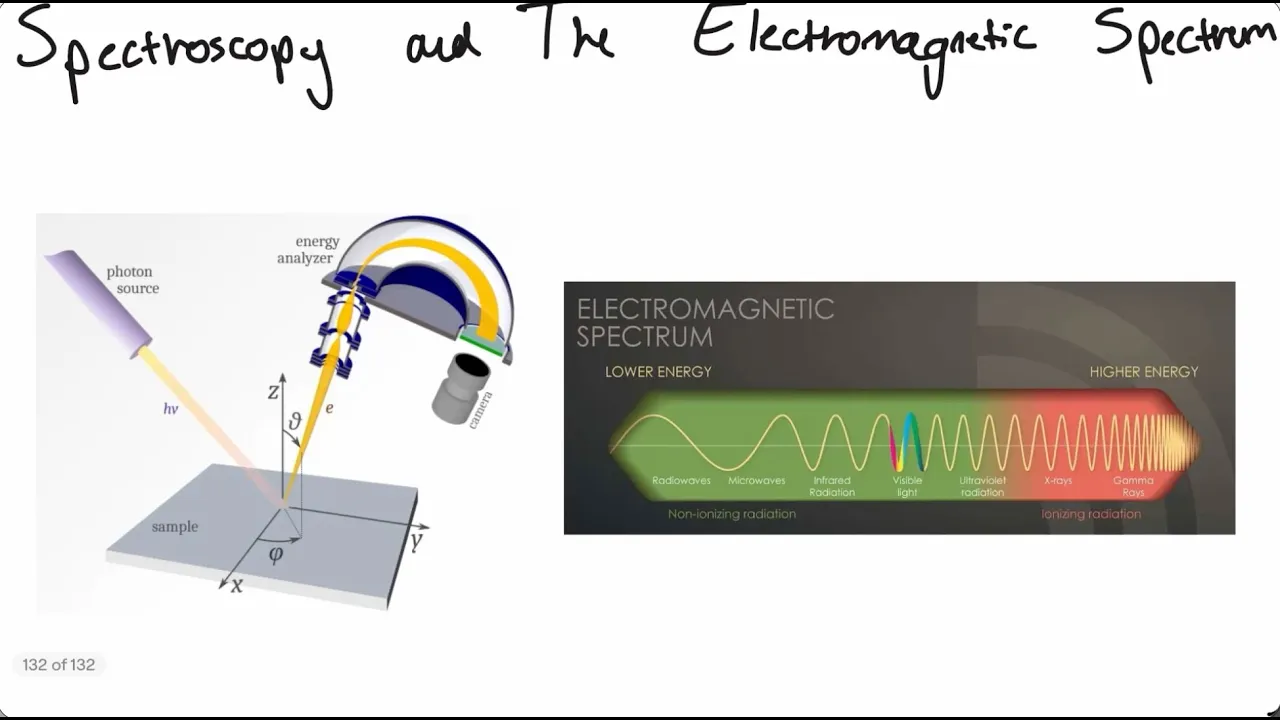


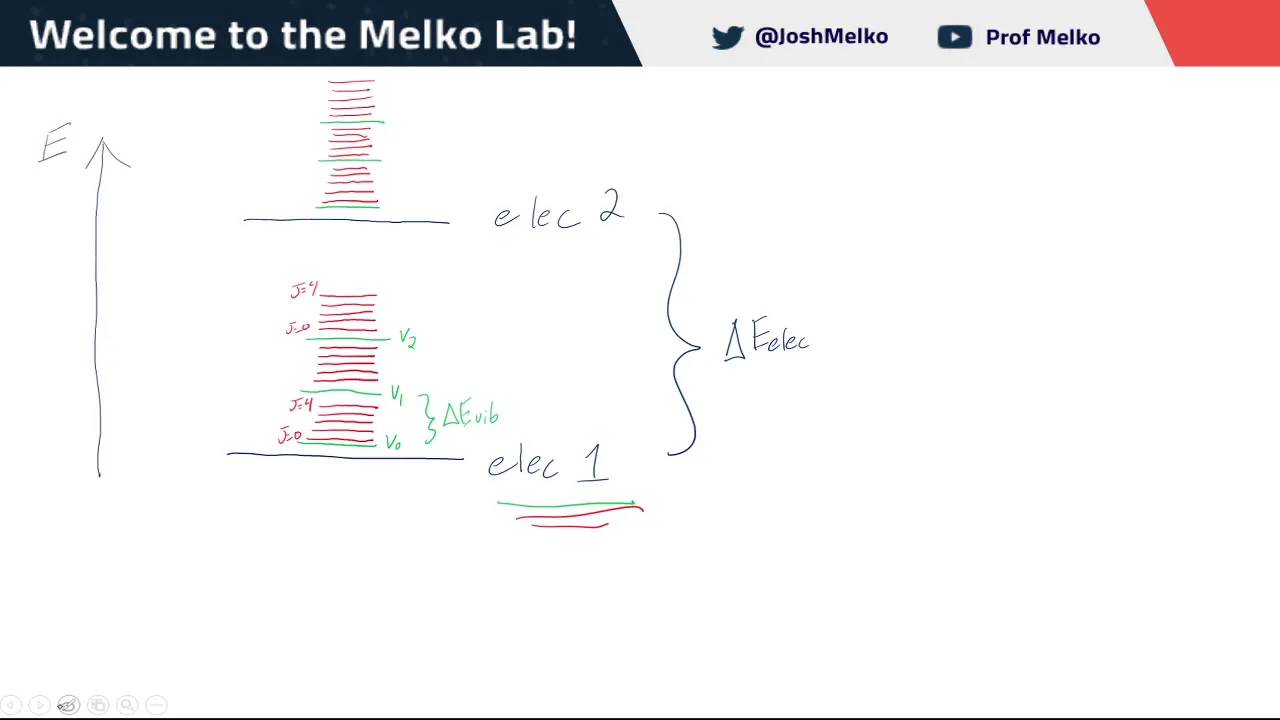


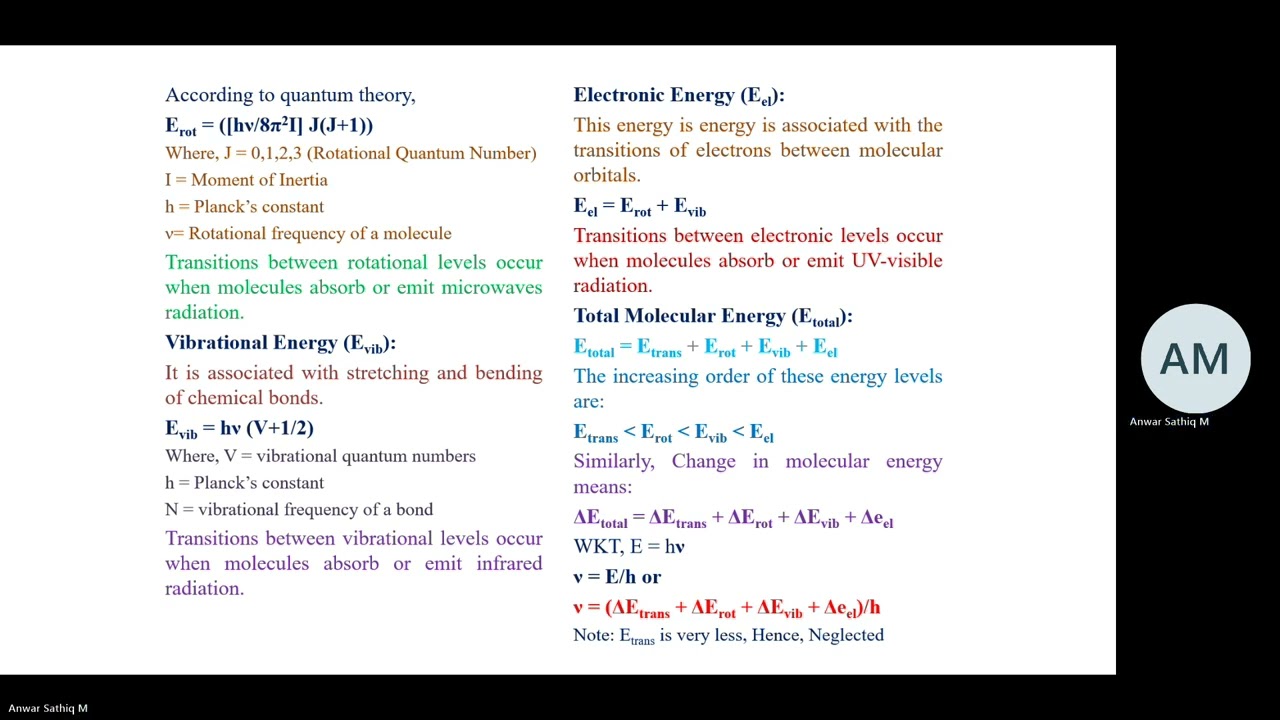


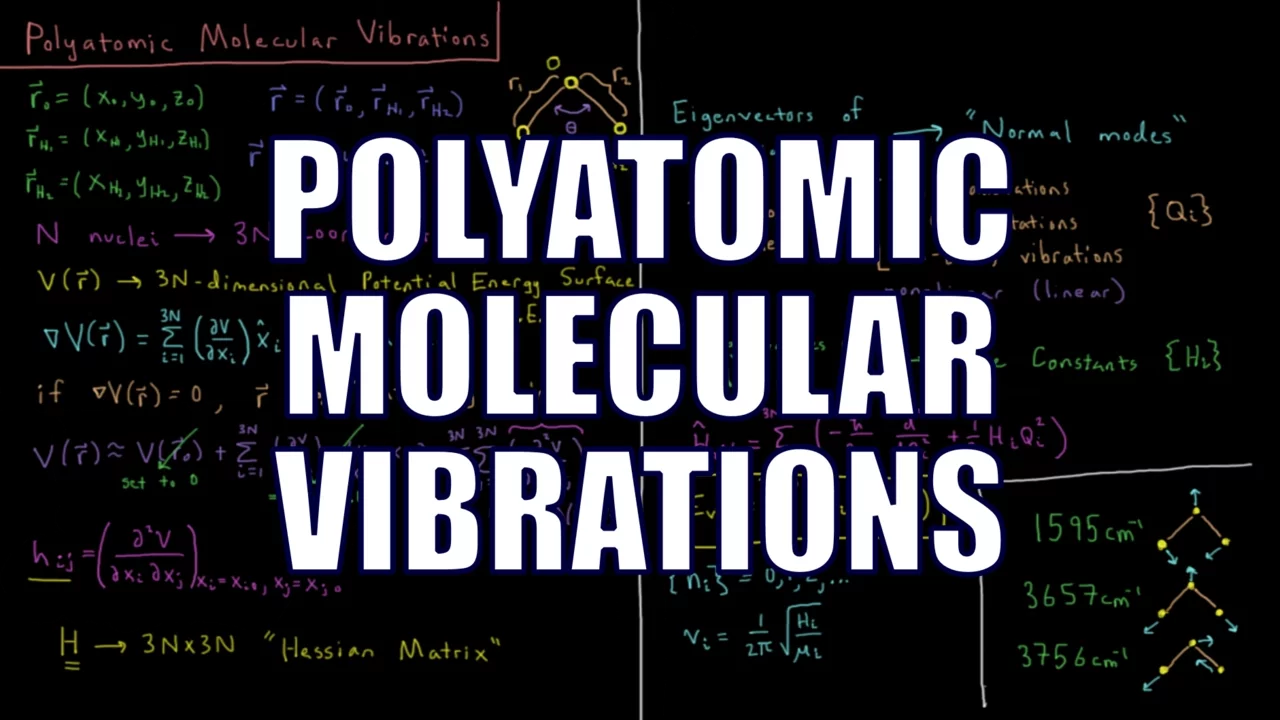











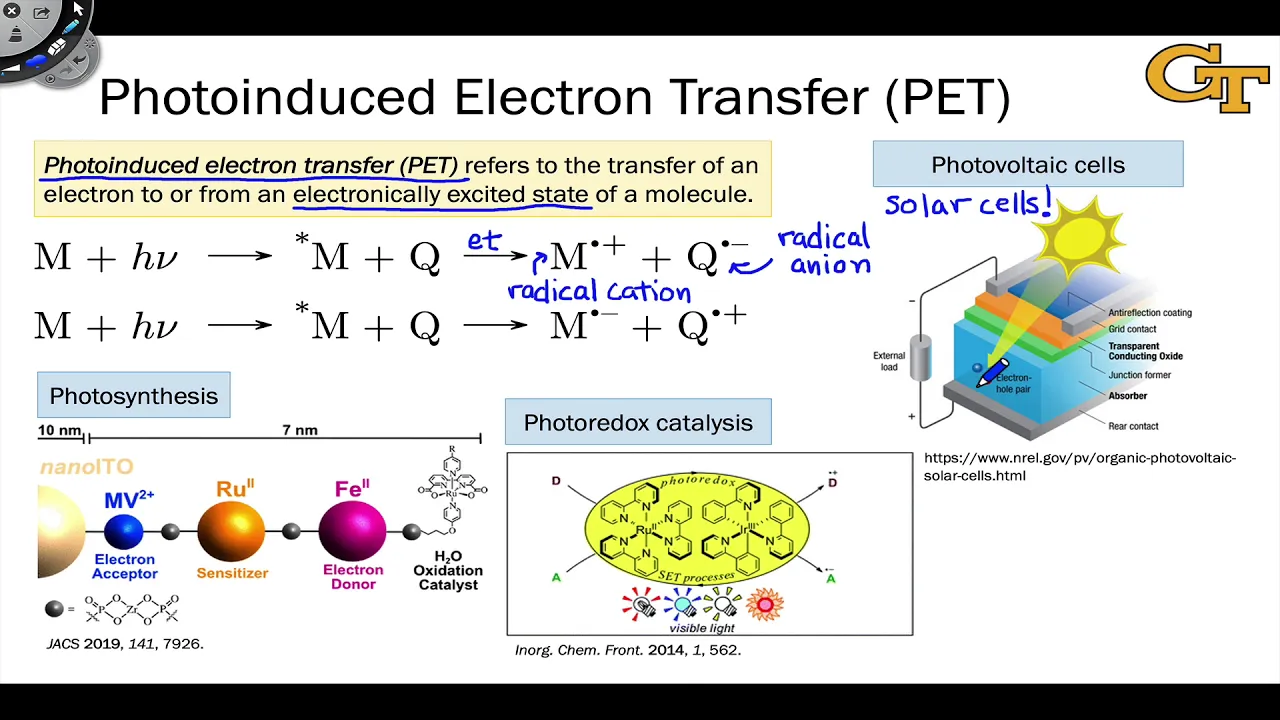
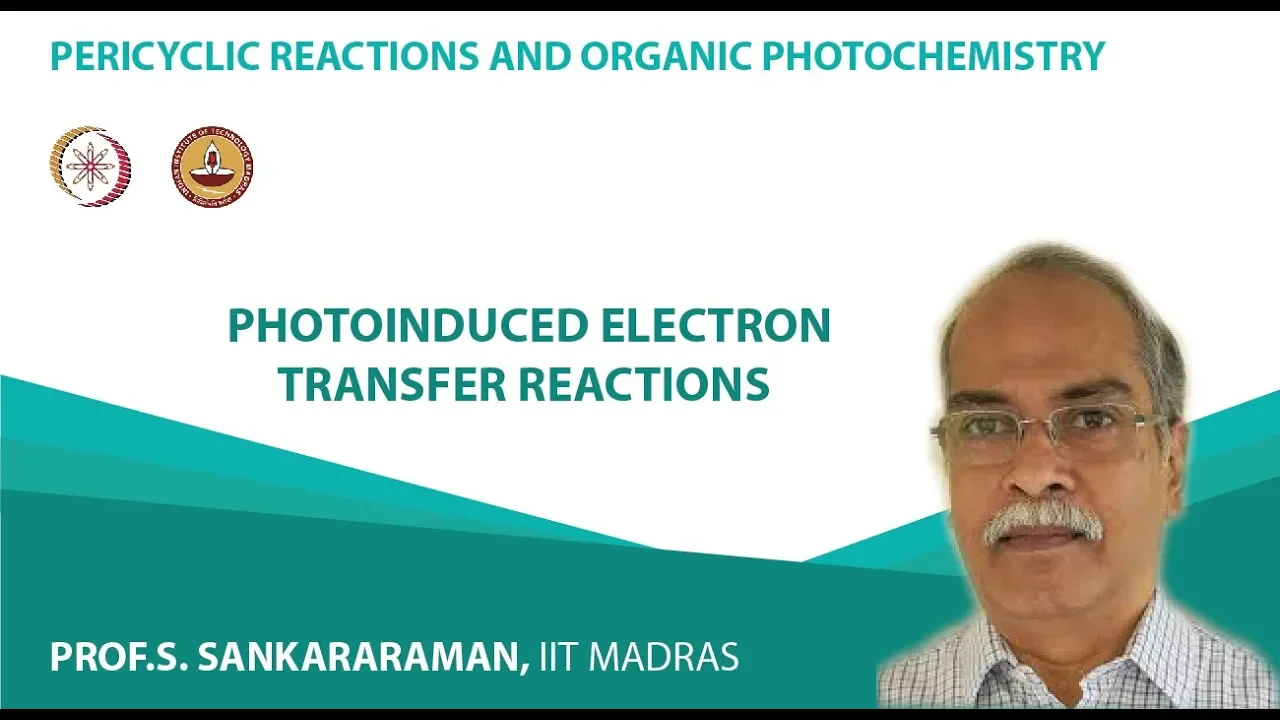
Electronic spectroscopy involves transitions between electronic energy levels separated by tens of thousands of wave numbers, much larger than vibrational differences (around 3,000 cm⁻¹); the Jablonski diagram illustrates these transitions through potential energy surfaces where molecules can undergo internal conversion (non-radiative relaxation within same multiplicity), intersystem crossing (between different multiplicities), fluorescence (radiative decay with same multiplicity), or phosphorescence (radiative decay with different multiplicity), with the Frank-Condon principle governing vibrational overlap intensities and dissociation occurring when molecules reach unbound potential energy surfaces.
Jablonski Diagrams & Electronic Spectroscopy | PES
Added:Fundamental concepts of electromagnetic radiation, photon energy, and the basic mechanisms of light absorption and emission.
The distinction between molecular energy levels, specifically electronic, vibrational, and rotational states.
Basic molecular orbital theory, including concepts of bonding, antibonding, HOMO, LUMO, and electron spin multiplicity (singlet and triplet states).
The quantum mechanical description of diatomic and polyatomic molecules, particularly potential energy curves.
The Franck-Condon Principle and its role in explaining the intensity of vibronic transitions on potential energy surfaces.
Quantitative analysis of photophysical kinetics, including quantum yields, fluorescence lifetimes, and radiative versus non-radiative decay rates.
Advanced practical applications such as Fluorescence Resonance Energy Transfer (FRET), phosphorescence-based sensors, and photovoltaic devices.
Mechanistic photochemistry, focusing on how molecules in excited states undergo chemical reactions like photo-induced electron transfer (PET) or isomerization.
226 views9likes49:26Original Release: 2022-10-26
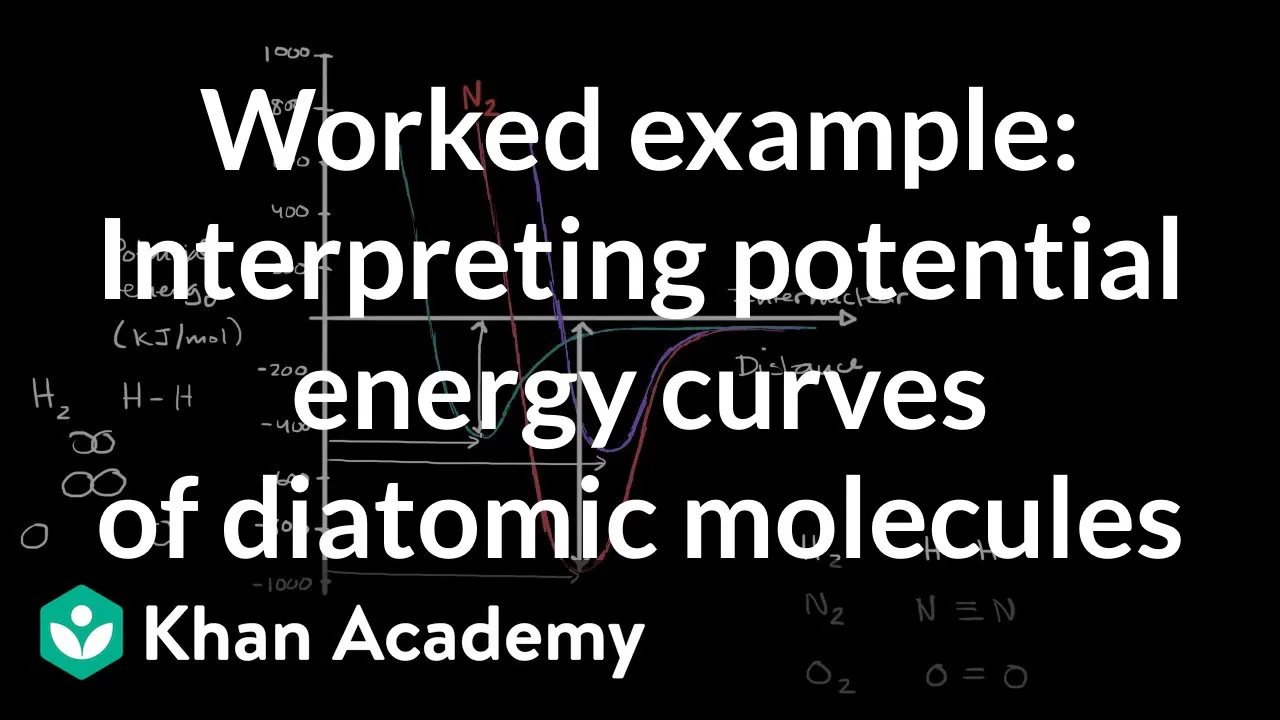
okay so yes it's not up there yet okay yes better all right okay thanks so uh this um electronic spectroscopy um we've gone into the atomic spectroscopy which is electronic spectroscopy the energy levels I don't know if you looked and zoomed in on some of the growth train diagrams but they were in the tens of thousands of wave numbers so think about the vibrational modes remember the highest frequency was like the CH stretch and that was 3 000 wave numbers so for the atomic orbitals and the energies of the atoms um we're talking about twenty thousand thirty thousand wave numbers so huge energy difference so an electronic spectroscopy you know that's I was trying to think this morning of an analogy that would get your mind to really grasp the difference in energy levels so we're here in Huntsville we have lots of pine trees so the height of the pine tree is like the energy level differences so an electronic energy level would be from the ground to the top of the pine tree and the vibrational differences would be the length of the pine needles they help does that help so yeah when you're dealing with vibrational motion or vibrational action that would be like the length of a pine needle on a pine tree um and then rotational levels that would be the thickness of the bark the bumpiness of the bark and so you can just sort of think of the the spectroscopy pine tree brand new today never before heard okay but I was sitting there thinking what could I use to get your mind around the various ranges of energy levels we're dealing with so rotation levels are just bumpy the bumpy bark the the elevation change or the thickness of the bark layer and then the pine needles would be the vibrational change and then the height of the tree is the electronic range and so here we are in uh this is the oxygen atom and sure enough that jablonski diagram I mean this is the Groton diagram the visible range is around um you know 15 18 000 20 000 so you know this is uh this region right here going from zero up to this region right there is going to be all of those visible visible range if you're starting at the ground state you see there's not a lot of energy levels with the difference from the ground state that um would fall into the visible range but if you had excited state oxygen some of these up here would would fit into the visible range and so if you had a if you were able instead of making a neon light you could make say an oxygen vapor light you would see from some of these higher transitions you would see some lines in the visible region I just don't ever see those because our oxygens you know in our atmosphere are not excited like that so if you zoom in on that ground state you see some of these um hyperfine splittings that are based on the spin orbit coupling that we've been talking about and the different term symbols okay and we also um in gaussian we can calculate the various um electron configurations you know I talked about this one what is the electron configuration for the ground state oxygen it's [Music] 1s2 2s2 uh it's going to be 2p 4 but where do you put those those levels and so this is showing you the way gaussian does it is it splits the spin up electrons from the spin down electrons it calls them Alpha and beta molecular orbitals and so these are the the three p orbitals above this line and so you have spin up spin up spin up and the p x y and z and then you start pairing them up and so then you got two in the PX so this would be the ground state electron configuration then you have the spin orbit coupling those term symbols would give you those little hyperfine split levels and you could come up with an electron configuration where you had them spin paired like a if we took this electron here and put it down into this orbital then that's this excited state and you see that's 16 000 wave numbers different so huge difference in just putting that electron from the that Z orbital into the Y orbital made a huge difference so when we're moving electrons around the nucleus and changing the wave functions of those electrons there's huge energy differences in those so let's look at the potential energy diagram which takes into account the vibrations so here's that um triplet P energy level State the ground state oxygen you can bring two of those together and we end up with this Mo diagram this molecular orbital diagram now we will learn how to do this in the next section of the notes they're depending on your gen chem Professor some will cover a little bit of Mo Theory and gen chem 1.
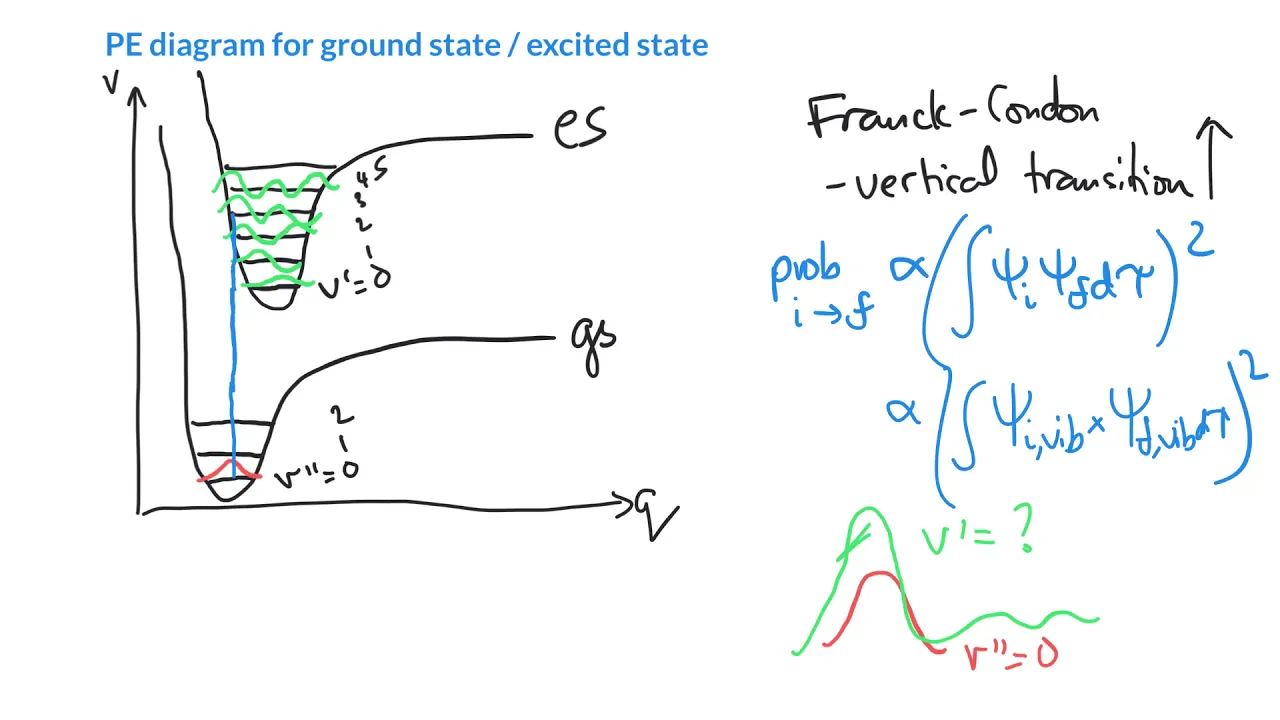
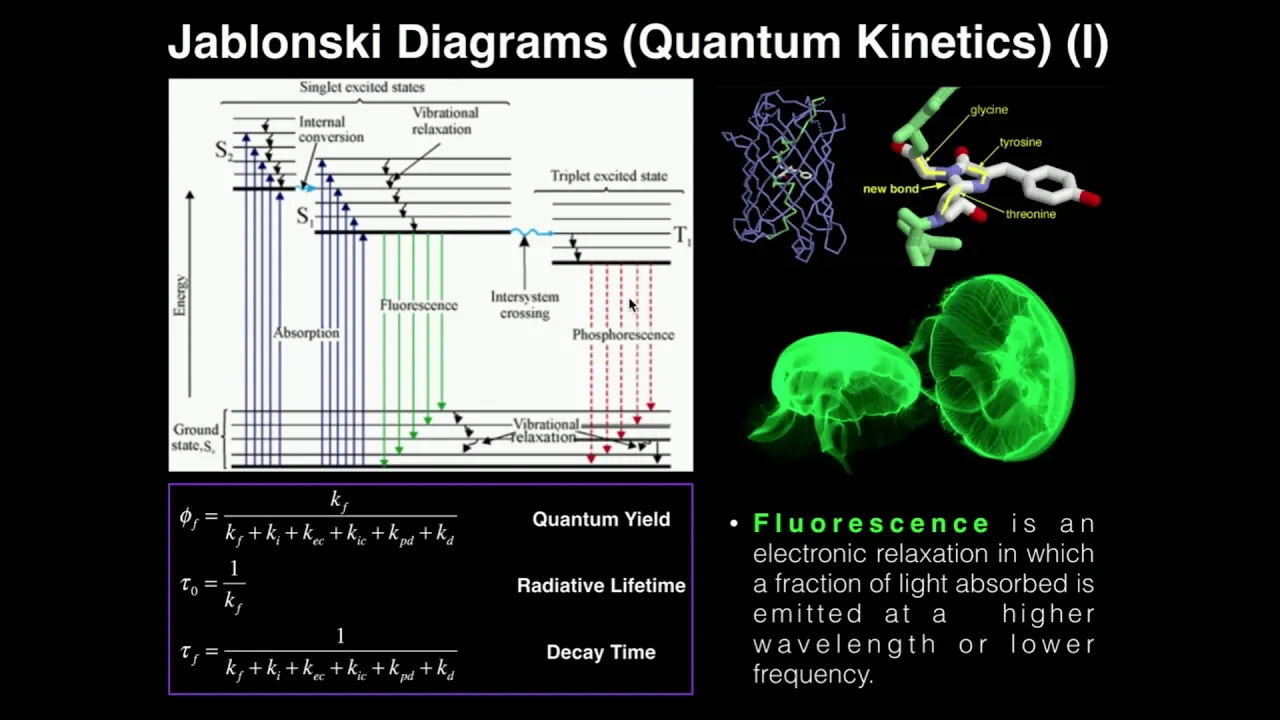
so maybe you had some of that maybe you missed that but anyway we'll review it as if you haven't had any because it was a while ago and you might have forgotten some of it and so then this you bring two oxygen atoms together they make molecular orbitals that go over the whole molecule this is how the electrons are put in those orbitals and then you make a diatomic molecule and this is the right here this is the vibrational these are the vibrational energy levels what are these other potentials like this light blue and dark blue and yellow red those are different electron configurations and so if we in those molecular orbitals instead of having the spins in the triplet state if we put it in a singlet State we have to put both electrons in one of those orbitals then that's not the ground state that's that's the first excited state what if we kept them in different orbitals but we had them still spin paired okay but that would be a different one of these orbitals a different one of these potential energies now notice what's being shown the the curve itself is the potential energy from this electron cloud so these over here these diagrams here are the electron cloud and the electron cloud is what holds the molecule together so if the molecule is going to stretch how hard it is to stretch is based upon the electron cloud so if you change the electron cloud you might be able to stretch it a lot easier you might have a different Bond length in fact you will almost every case these bottom links look very similar let's look at the yellow one okay now we've moved an electron even further away from the two nuclei in energy and so it's going to hold on to the two atoms a lot weaker you know an electron is going to interact with the nucleus a lot better if it's in the Lower State like our our 1s orbital like if the you know the tall the the target ball the ball in front of Target if that's a 1s orbital that electron is in Madisonville um spring Livingston to Navasota okay much closer to the nuclei if I scoot that ball out to Argentina like a 3s orbital then it's going to have less interaction with the nuclei and if that's in a molecule it's gonna if you push those electrons further away it's going to hold that molecule together and with a weaker Force constant and so you have a longer vibration you have a lower frequency and vibration and you have a longer Bond length and so exciting that electron cloud weakens the molecule and so you have noticed these Bond lengths here these are all very similar if you just take this minimum and drop it down then that's the bond length okay but look at these up here this one comes down quite a bit longer and so the bond lengths can change on a percentage basis quite a bit now notice that all of these bottom potentials here when they dissociate they go to this triplet P oxygen the ground state oxygen but then this one up here when we get up into this area of that excited state electron goes with one of the oxygen atoms and we end up having an excited state oxygen atom and so that's why this level here is different they don't come to the same energy level this one dissociates to an excited state oxygen atom and so there's lots of different ways that these uh molecules can dissociate most of the time we have the electrons going with each of the atoms and it's a I I don't like this analogy but it's like an equitable divorce right they each take the same number of oxygen or electrons and they leave and they're in the ground state and and so on this one uh it takes one of the electrons away in an excited manner okay so then it's all at higher energy so for a diatomic this is a potential energy curve for larger molecules it's a potential energy surface but a lot of times we'll still call this a potential energy surface diagram even though it's just a single line curve okay it's easy to show for a diatomic we're going to probably stick to if anytime we show a potential energy diagram it's going to be for a diatomic but don't get in your mind that that's the only kind of potential energy surface there is if you have a couple of geometry um coordinates like in water say you have the two Bond lengths but if you want to hold them to be the same and then you have the angle you could have the angle on one axis the average bond length on the other axis and you can have energy so there you could plot like a three-dimensional surface but you'd have to restrict the bond lengths to be the same length if you let the bond lengths vary in that particular thing then you've got three geometry coordinates and an energy coordinate and it's hard to plot a four-dimensional plot so even with something as simple as water you really can't see the potential energy surface okay but it would have these kinds of features there would be dips and valleys where the vibrations are and so that molecule would be down in a well and it would be oscillating around in this well some of those directions would be the bond stretches and another direction would be the bond angle and the energy would be plotted and then so any of these potential energy surface dips in you know multi-dimensions it's going to be a pit that that molecule is stuck in you excite the molecule it comes out of the pit a little bit you bring it all the way out of the pit and it's falling apart the atoms are coming off the molecule so these pits are the places where all the vibrations happen so let's say we get this molecule excited it can do lots of things and so there's these are all the different fates of the excited state so lights come in it's knocked an electron out further away from the nucleus it's an excited situation um and it can move from one potential energy surface to another so every different electron cloud that you could have with the spin UPS or spin Downs those would give you a different surface just like we saw here every one of these potential energy surfaces is a different electron cloud so if we excite an electron into say this level now we're on this surface here we might be able to move from this surface over to another surface and then over to another surface and then to another one and so we could work our way back down to the ground state and if those surfaces have the same Multiplicity meaning the same net spend same character of all spins up or spin paired then that's called internal conversion it's a multi if the multiplicity is different and those potential energy surfaces then it's called inter-system Crossing so this is the vocabulary of discussing this non-radative relaxation where the molecule is moving from one potential energy surface to another um I don't really have any analogies for this except maybe you have um it's easier to think about it in those two-dimensional potential energy surface diagrams right you see this and we'll see some pictures of these things and then dissociation so if you have a really excited molecule it can move to a potential energy surface that's not bound so it doesn't have a dip in it it just goes downhill to an atom coming off the molecule and so whenever you break a bond or whatever you have dissociation and then pre-dissociation this is a an internal conversion that goes to an Unbound potential energy surface we'll see pictures of all four of these so I'll just describe it with pictures in a little bit so do you understand the difference between a dissociation and pre-dissociation so dissociation you're you're jumping up with an electronic uh excitation so light comes in sends the electron cloud to a particular um potential energy surface where now that electron cloud will not hold on to an atom if it's diatomic it'll break just the single Bond but if it's a multi you know if the polyatomic molecule maybe that just that electron cloud just breaks the molecule in half say you've you've put enough electrons into the antibonding orbitals that now you have the same number of antibonding electrons as bonding electrons and you just weaken this Bond and it vibrates and goes out so that would be with a with a like a photon of light coming in hitting that Unbound potential energy surface and you're breaking a bond pre-dissociation as you go up to a bound state so the molecule could stay together and then it hops onto a different potential energy surface that breaks a bond let's talk about emission of light that's another couple of uh fates of excited States you could emit light in a manner called fluorescence or phosphorescence so these are two more fates of excited States and so single to single emission would be fluorescence it would also be uh also triplet to Triplet the key just being that it's the same at the top and the bottom so when it emits light if they have the same multiplicity then it's going to be fluorescence but if if you're going from uh one to another if you're going from triplet to singlet or the or single to Triplet then you would have phosphorescence thank you and look at this lifetime so what do we mean by lifetime so if we're looking at um a substance that fluoresces versus a substance that phosphoruses if you have the light on you're pumping the molecules up to the excited States and then you turn the light off and turn on your detector so then the detector's looking at that substance and you see that it's emitting light the light turned off and then your substance is emitting light but that light coming out of your substance decays away pretty quickly so that's fluorescence you've seen fluorescent things the fluorescent Post-it nose fluorescent pain fluorescent shirts and so on and if you turn the light out you probably don't notice it but it'll emit like for just a few milliseconds or microseconds after you turn the light out which is pretty cool um we could probably set up an experiment here in the department that would measure that lifetime okay you just fit it to an exponential curve find the T1 half and so on okay but phosphorescence there you've got something in the light and you turn the light off and it glows in the dark and so this is all of our glow-in-the-dark stuff that we're about to see for Halloween using a highly technical term stuff and so that's that's really cool I like phosphorescence that and so you charge it up you're exciting the molecule up into the excited States and then you turn the light off and it has a really long lifetime it can be seconds to minutes before it decays away okay and so this is on the loud transition the fluorescence isn't a loud transition so remember all of our symmetry if it's in a loud transitioned and uh you know the two wave functions overlap and the light is part of it and so you have this integral that that is a non-zero transition moment integral but in phosphorescence it's forbidden so you can't emit light but it does some sort of fluctuation happens some kind of tiny little interaction breaks the Symmetry and then it's allowed so it's just a statistical thing it kind of leaks out so in general it's trapped in that excited state but again if maybe a collision comes along changes the Symmetry and then it's allowed because it's reduced the symmetry so if you have a really symmetric molecule like we had in Benzene but then some molecule bangs it and now it's no longer a d6h molecule just for a Split Second then that transition's allowed and then it'll get that give off its light so let's go through those different fates of excited States based upon the potential energy surfaces how many people have seen the game Pachinko it's the loudest game you've ever seen because these little steel balls and it's like a pinball is really vertical you you hit this lever and it shoots a steel ball up into the top and then it rattles around through these little pins and there's little cups at different levels and they land in the cup and it gives you like a bonus set of balls like a jackpot it might be 50 more or 100 more or a thousand more you know if you hit it big and and so that's the way I think of this process so light comes in a photon of light comes in this is absorbed by the molecule and it's shot up here to this excited potential energy surface and then that molecule bounces around through its energy levels why and how does it do that well it's it's moving you know in that new energy level it's vibrating it's also rotating it's Distributing that energy among its other degrees of freedom this electron cloud has changed and so now everything the molecule feels is changed and so it's going to distribute that energy and its vibrational modes and its rotational modes and those are not visible transitions they are microwave and infrared transitions but because we're dealing in the visible range we call it non-radiative so we don't see that light it's in the infrared or it's in the microwave region so don't get caught up in the technicalities to say yeah but it is rated you know it's radioactive radiation that's coming out of it it's it's in the infrared though when we're talking about a non-radative relaxation in this we're talking about it's not visible it's non-visible radiative so we call it non-radiative and and infrared is very similar to heat so we could just say yeah it just heated the object up so it's not in a visible range so we call it non-radiative and then we get down here to the bottom and it reaches the ground state in the excited electronic state so we're at V equals zero up here and and it's stuck it can't go down any further and it'll sit there until who knows what and it jumps down and spits out a photon of light so this is then fluorescence so it's coming out so that's a radiation Decay a radiative Decay so this happens incredibly fast remember earlier um look how fast it happened so but don't really have a time scale on here but this may be um one millisecond or even less one microsecond so it's it's out of there okay um and so then that is given up as heat here's a an inner system Crossing so we have absorption light comes in and if you if you really zoom in on the notes it hits this um we're at a singlet State here and it hits the singlet potential energy surface here so right above the ground state like the most probable location for the wave function is this vibrational level on this singlet State up here and so it goes the singlet to singlet absorption it's got to be in a loud transition for absorption so it can't go singlet to Triplet for absorption it can go triplet to singlet in in emission because that's phosphorescence but it hits that singlet state it starts to go down through the singlet State Transitions and right here we have two vibrational levels that are very similar in energy notice they have a different width okay but they have the same sort of vertical energy and so here we've got um we've got let's just take two electrons so in the ground state we have a spin up and a spin down electron light hits one of these and takes it to a higher level and so now the molecule has a weaker electron cloud and it starts vibrating in that cloud and changing its vibrational quantum numbers and it gets to a particular vibration that matches the vibration on this state where it's the spin flips and now we have a triplet we have two unpaired electrons and it's there's no energy penalty for that when the vibrational levels are the same you can change the electron cloud and and there's no energetic penalty you're just now on a different surface but now you're on a triplet surface and then you can start rattling down that triplet surface notice the singlet surface ends here with v equals zero but the triplet surface it goes down in a little bit lower energy so every one of these potential energy surfaces has a ground vibrational state so anyway this at that vibrational state where they match you have this inner system Crossing I don't know the little symbol they used in the book of this kind of a circle is just to show something happened right there and now it's on this surface and it rolls downhill until it gets to the V equals zero state in the triplet electronic State and there it's stuck because the transition dipole moment between this wave function you know PSI uh I don't remember what do you want to call it uh let's put a triplet up here and Light and the singlet triplet is equal to zero so when I say it's forbidden if you did that it transition to Apple moment integral you would get zero so it can't emit light but it does something comes along and and changes the Symmetry either the of the Upper State or the Lower State now that for a split second that transition is allowed and some of the molecules spit out some light the rest of them are stuck then something happens to some more of them symmetry changes they're loud it leaks out spits out some light but there's a lot that still haven't experienced that so statistically it takes a long time for them to spit out that light and that's why the phosphorescence time lifetime is so much longer let's look at the arrows notice the absorption arrows are always the longest arrows what does that mean for the energy differences remember a transition is a difference between energy levels so if you have a long Arrow a long Arrow means a big Delta e makes sense okay big Delta e means uh well it's equal to H Nu so big frequency and what's new it's C over Lambda H C over Lambda so small wavelength so that's what I was trying to get to as the arrows get longer the Delta e gets bigger the frequency gets higher and the wavelength gets smaller so this is going to be the short wavelength and this is going to be long Maybelline and I want to really emphasize that same thing over here for phosphorescence notice how much smaller that phosphorescent arrow is so that's going to be a longer wavelength than the absorption so you have the absorption spectrum and then to the red shift or the red side of the spectrum or all of these emission wavelengths okay let's look at dissociation versus predissociation we see this in the iodine Spectrum uh that we'll study in about three weeks so we see from the ground state you see all of these arrows coming up and they hit this is sort of the spectrum that you would see on its side you know you would see a peak associated with that vibrational difference a peak there a peak there so you see each one of those Peaks is going to give you a peek in the Spectrum and they get closer and closer together because of what what's the term that we use to to describe these vibrational levels not being equally spaced it's a big bag and harmonicity so because of an harmonicity the energy levels get closer and closer together until essentially they they seem to merge like the difference between the energy levels tends to go to zero and then you're above this point and you have a continuum of absorption so Continuum of absorption all that means is that notice you don't have discrete lines anymore it's just any wavelength can be absorbed why is that well because it's now kind of what we would call a classical situation think of this um think of this molecule as a particle and you're exciting it and you're putting it up here on on this potential energy surface as if it were a ball on a hill what's going to happen if I raise the ball up this High On That Hill it's going to roll downhill go through all of this vibrational manifold and then leave you ever play the carnival game where you're supposed to roll the bowling ball down the hill get it over the middle Hill and get it stuck in that well anybody see that one it's a great game it's really hard that's one of the few that I've been trapped by it's like ah just move it a few you know millimeters higher or lower and try to get it trapped in that well it's a very difficult game to do but anyway that's what it makes me think of so if you put that ball you can put that ball anywhere essentially quantization is gone at this point you can put that ball anywhere on this hill and that's why any wavelength can be absorbed so when you lose that quantization those discrete transitions now you're you you're dissociating the molecule so if you know this is a way like where that that spacing goes to zero that tells you then the uh something about you know this energy difference here and this energy difference here so that's how we calculate a lot of our bond energies is we'll look to see how much light it takes to break the bond to to reach that dissociation limit and then if we know what this difference is because maybe this went to you know two atoms a plus b and this went to a plus b star if we look at the grocery and diagrams for the energy difference between B and B Star that's this energy difference and so then if we convert this absorption arrow and we subtract out the atomic energy difference then we get the dissociation energy in the ground state so this is how we find our bond Energies there's one way to find them okay and you'll do that in the iodine lab now sometimes you have quantization here so you have quantized energy levels and then you're missing an energy level there's no peak there and then you get your energy levels back and so that's evidence of this thing called pre-dissociation and so you see this nice pattern of vibrational uh differences you see it reappear here in this region where it's missing you've found an intersection and potential energy surfaces and so then for a small space there there's a Continuum of Unbound States just in this nice little region that's grayed out okay so in that region there there's a Continuum of Unbound States and so in the middle of the quantized vibrational transitions there's a little Continuum region where you're dissociating the molecule so that's what pre-dissociation is and so those are just some missing vibronic transitions I don't know it's the first time I've used that word in this lecture so that's vibration vibrational and electronic added together so you have these electronic transitions that are going from vibrational state to vibrational state so it's a combination of both vibrational and electronic changes so we're going say from V uh we'll call it double Prime because it's in the Lower State equals zero and up here let's say this is um 0 1 2 3 4. so this is V Prime equals four and this might be the electronic State X and this might be the electronic State a and so we can say this is an electronic transition from the X to the a state and the vibrational transition from the Z zero to the fourth vibrational state and then there are also rotational lines in there but they're so close together we don't resolve them typically let's focus again on the different wavelengths remember I said the absorption arrows are the longest arrows and so those are going to be the shortest wavelengths sometimes they overlap and and if they overlap the um it's the zero zero transition so where would the zero zero transition be I'll draw it right here so this is an arrow going from P equals zero be double Prime equals zero to B Prime equals zero and then this would be the arrow that comes down so one of these is an absorption Arrow the one with the arrow going up and the one with the arrow going down is an emission arrow and that's shown right here so the black curve that's shown here um is the um absorption zero to zero and then this blue one here is the uh emission zero to zero let's look at this one this was uh going to be V double Prime equals zero to V Prime equals one so it's a longer Arrow since it's a longer Arrow it's going to be a shorter wavelength so that's this one shown right here zero to one and then this one is going to be to the second level up there the Third so we'll draw a line down here three this one for so this is a way to assign this spectrum if I just draw a line down to each of the Peaks we can draw a line across here and I could say these are all from b double Prime equals zero to V Prime equals five four three two one you see how it's labeled so a lot of times these Spectra in the visible region are labeled like this if you can resolve their vibrational um transitions these Peaks so you have a big electronic Peak and then inside the electronic Peak you have some vibrational Transitions and you can label those vibrational transitions we could label the same over here so this would be P Prime equals zero so we've done radiationless Decay now we're here at V Prime equals zero and it's dropping down to the various levels in the in the B Double Prime region and so then this might be well this one is zero here zero if I go from uh B Prime equals zero down to V double Prime equals one you see how that's a shorter Arrow the zero to zero transition was was um you know a certain wavelength if I go from zero down to one it's a shorter Arrow so it's going to be a longer wavelength than the zero zero transition and then if I go down to to 2 that's going to be a shorter arrow and three that's going to be a shorter Arrow so these all March out to the long wavelength side so then this one would be three this one would be four this one would be five so V double Prime is equal to these numbers so they're all starting from V Prime equals zero going down to zero one two three four five so I'm just trying to get you used to looking at the way these are assigned with this little manifold line and the various lines that go down to the transitions if anything I can clarify on this let's let's get to the jablonski diagram because that's the main point for today uh the intensities of these Peaks are based upon the Frank Condon principle which is essentially what we've been teaching this whole time of it's the overlap of the wave functions um the Frank Conan principle doesn't use light in the middle it's just seeing if the wave functions overlap more that'll be a more intense Peak if it's that it over at less it'll be a weaker Peak and so it's the transition moment integral but without the middle piece and so this gets really like I said really complicated once you get above a diatomic and so on the left is a diatomic and then the jablonski diagram here is for all types of molecules you could use it for a diatomic but it it's mostly for for bigger complex molecules you have uh the potential energy surfaces labeled as s0 T1 T2 so this s0 would be the ground state so this would be this one S zero this would be T1 and this would be uh S1 uh the x-axis is is you know it's just um it's not really an axis it's just categorizing things by these um by these different potential energy surfaces so it's really just categories kind of like the grocerian diagrams the x-axis really wasn't numerical it was just categories of different electron configurations same thing here but for a molecule and then we can show all of these different transitions we can go from a singlet to singlet that's fluorescence we can go from a triplet to a singlet that's phosphorescence we could go from a singlet to a singlet that's inner that's internal conversion and if we go from a single to a triplet that changes the multiplicity so that's inner system Crossing so we have all of these things so let's kind of just show this um all together if this absorption here this that vibrational manifold would be given here notice these lines are not accurate these are just lines drawn to show vibration and rotational levels this orange one this upper singlet one would be drawn there the triplet would be drawn there and so again the only thing accurate in this jabonski diagram are these minimal energy levels so this is an accurate Mark and this is an accurate mark okay does that make sense that's the only accuracy so the minimum of those potential energy surfaces is accurate accurately represented so the molecules are pumped up say singlet 0 to singlet one and then the Pachinko game starts the ball starts bouncing through it could give off infrared heat as it relaxes and so this is just walking you through an unrated relaxation is that distribution of the energy and its vibrations and rotations infrared emission collisional Cooling and so on none of that stuff is in the visible region so we call it non-rated too that could have inner system crossing over to a triplet state changes in multiplicity so it's inner system Crossing we also have non-rated relaxation we could do that again and make it all the way to the bottom or we could have done inner system or internal conversion over to the singlet zero State and then just worked our way down through the vibration and rotational levels all the way to the ground state and so this molecule would not necessarily emit light it would uh receive a photon and then be able to make it all the way down but if it does get stuck in those ground States it could give off a fluorescence or phosphorescence so these are visible transitions so we call them radiative Transitions and that would be a visible emission fluorescence would be visible with no change in multiplicity and phosphorescence is visible with publicity change now what absorbs these lights it's uh it's always the electron cloud we're doing electron spectroscopy and there are certain functional groups which you probably learned in organic that absorb light right it's a non-bonding electrons you could have an N to Pi star transition you could have a pi to Pi star transition so we categorize these things we will learn a lot more about these different categories in the next section because some of these things can give color to the molecule they're called chromophore so Chromo again meaning color so these are the things in the molecule that can cause it to be a colored substance uh you in the past they tried to use these to kind of understand what the functional group was but these Peaks are so broad so you've got a spectrum here and you've got to speak this is what it looks like okay Lambda Max is here but look at the plus minus on that thing you know it might be plus or minus 40 or 50 nanometers so it's not really helpful you know you can't really tell that you know much difference between say Benzene and a nitroso compound or or this uh carbon nitrogen double bond and so really intensity might be a little more useful because the intensities are are so much um so drastically different depending upon the the safe and size of the molecule but pretty much structural information from UV Vis is not not that easy to get I did show uh this was some work for a paper that I did on color this week's the Color Lab where you learn about transforming visible Spectra into standard RGB values and so the stuff that you learn in this week's lab I implemented in this spreadsheet that can take a gaussian calculation so we did a gaussian calculation on this molecule here did the UV Vis simulation which is a technique called zendo and it gave me these transition wavelengths and the intensities of those and so then I take this spectrum and I use the um gaussian simulation spreadsheet that you used in the last lab or maybe a couple of labs ago with the chlorobenzene Benzene and simulated the Spectrum based upon this transition wavelength in this intensity and so then that gives me this spectrum right here down at the bottom it's not very strong because look at the intensities 0.01 and 0.19 pretty weak but think about that that's the absorption of a single molecule not going to be very colored if I just have a single molecule that's absorbing a few wavelengths of light it's not going to be very strong absorber and so then I just multiplied that absorption Spectrum by this concentration Factor because absorbance is proportional to concentration so if I double the number of molecules I doubled the absorption if I run it up to a thousand molecules I've increased the absorption by a thousand and these are all of the Spectra that I get from these concentration factors now what you'll learn this week is that the standard method for converting Spectra into RGB values uses transmission so I converted all of these absorption spectra into transmittance curves and now you can see how as you increase the density of the molecules the absorption of those molecules you start to cut out certain regions of light and so this molecule is giving no matter how strong or how many molecules I have I always have red light coming through I take these transmission curves and turn them into RGB values using the very stuff that you're learning in this lab and so from the transmission values I get these RGB values and these are the colors of the different concentrations so as I increase the concentration of the molecule it starts out a little bit yellow and then it goes to kind of a pink color and then a deep red and so this molecule I'm predicting to be red okay it turns out to be accurate so it's pretty cool um here if I take one of those aldehyde groups off it's a it's more purple because I have red over here and I've got a little bit of blue so you mix red and blue you get purple we kind of see that here I take both of those off this is a molecule called azuline okay Azul is blue and so sure enough the molecule is blue and then if I put fluorines on it those have a different character than the aldehydes and so they shift the peak notice what happens to the absorption Peak it's redshifted because it's redshifted I get a little bit more blue light in so um this is just a nice little show and tell of what you can do with the math behind simulating the Spectrum which you learned two Labs ago and then the RGB values which you're learning this week you're converting transmission Spectra into RGB values so hopefully enjoy this week's lab bring a colored object to lab like I don't know find something that you like it could be a picture it could be a ball cap it could be anything so your notebook and and you'll get some color Spectra foreign
Up Next
51:57
Electronic Spectroscopy & the Franck-Condon Principle | Physical Chemistry
@mitocw
9.3K views•2019-01-09
83:56
Biocatalysis and Catalysis in Islatravir Synthesis | Merck Webinar
@SCIwheresciencemeetsbusiness
675 views•2020-10-08

45:42
Electronic Spectroscopy: UV-Visible & Jablonski Diagrams Explained
@dw-pchem
640 views•2020-10-21
17:31
Edible Water Bottles: A DIY Guide to Sodium Alginate Spherification
@ryan
10.5M views•2019-06-21
Related Study Plans & Knowledge Roadmaps
Structured learning paths in Chemistry
chemistry
Nuclear Chemistry: Decay, Meds & Fuel Cycle
01Introduction to Nuclear Structure and Radioactivity
02Decay Dynamics and Kinetics
03Radiation Interaction and Detection
+ 2 more learning modules
24h5 modules
Explore Roadmap
chemistry
Supramolecular Chemistry: Forces & Machines
01Foundations of Chemical Bonding and Intermolecular Forces
02Introduction to Host-Guest Chemistry
03Thermodynamics and Dynamics of Self-Assembly
+ 2 more learning modules
16h5 modules
Explore Roadmap
chemistry
Photochemistry: Excited States & Reactions
01Foundations of Light-Matter Interactions
02Molecular Orbitals and Electronic States
03Photophysical Processes and Jablonski Diagrams
+ 2 more learning modules
18h5 modules
Explore Roadmap
chemistry
Coordination Chemistry: Bonding & Properties
01Introduction to Transition Metals and Ligands
02Crystal Field Theory (CFT) and Geometry
03Magnetic Behavior and Spin States
+ 2 more learning modules
14h5 modules
Explore Roadmap