






















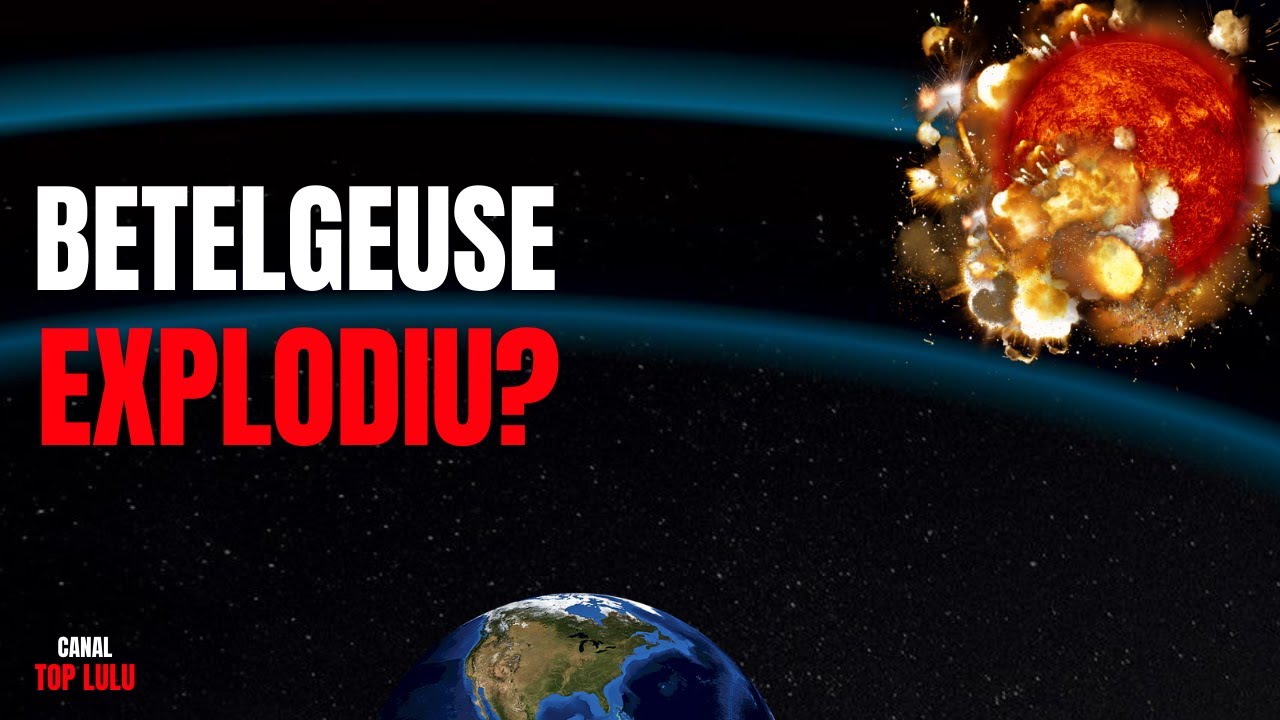
A supernova is a stellar explosion that briefly outshines an entire galaxy, radiating as much energy as the Sun is expected to emit over its entire lifespan before fading over several weeks or months. The explosion expels material at velocities up to 30,000 km/s, driving shock waves into the interstellar medium that create supernova remnants. Supernovae are classified into two main types: Type Ia, resulting from runaway nuclear fusion in degenerate white dwarf stars, and Type II (including Ib and Ic), resulting from the gravitational collapse of massive star cores. These explosions are crucial for cosmic evolution as they produce and distribute heavy elements (including those heavier than iron through the r-process), trigger new star formation, and serve as standard candles for measuring astronomical distances. The term 'supernova' was coined by Walter Baade and Fritz Zwicky in 1931, distinguishing these events from less luminous novae.
Supernova Explosions: Stellar Death & Cosmic Rays Explained
Added:a supernova is a stellar explosion that briefly outshines an entire galaxy radiating as much energy as the sun is expected to emit over its entire lifespan before fading from view over several weeks or months the extremely luminous burst of radiation expels much or all of a Stars material at a velocity of up to 30,000 km/s driving a shock wave into the surrounding interstellar medium this shock wave sweeps up an expanding shell of gas and dust C a supernova Remnant a great proportion of primary cosmic rays comes from supern noi supern noi are more energetic than a Nova Nova means new in Latin referring to what appears to be a very bright new star shining in the celestial sphere the prefix super distinguishes superi from ordinary Novi which are far less luminous the word supera was coined by Walter bord and Fritz swii in 1931 it is pronounced with the plural supern noi or supernovas supern noi can be triggered in one of two ways by the sudden reignition of nuclear fusion in a degenerate star or by the gravitational collapse of the core of a massive star in the first case a degenerate white dwarf May accumulate sufficient material from a companion either through accretion or via a merger to raise its core temperature ignite carbon fusion and Trigger runaway nuclear fusion completely disrupting the star in the second case the core of a massive Star May undergo sudden gravitational collapse releasing gravitational potential energy that can create a supernova explosion although no Supernova has been observed in the Milky Way since Kepler's star of 16004 supernova remnants indicate that on average the event occurs about three times every Century in the Milky Way they play a significant role in enriching the interstellar medium with higher Mass elements further more the expanding shock waves from Supernova explosions can trigger the formation of new stars observation history hip Parker's interest in the fix Stars may have been inspired by the observation of a supernova the earliest recorded Supernova SN 1885 was viewed by Chinese astronomers in 185 ad the brightest recorded Supernova was the sn16 which was described in detail by Chinese and Islamic astronomers the widely observed Supernova SN 1054 produced The Crab Nebula Supernova SN 1572 and sn64 the latest to be observed with the naked eye in the Milky Way galaxy had notable effects on the development of astronomy in Europe because they were used to argue against the Aristotelian idea that the universe beyond the moon and planets was immutable Johannes Kepler began observing sn64 on October 1716 04 it was the second Supernova to be observed in a generation since the development of the telescope the field of supernova Discovery has extended to other galaxies starting with the 1885 observation of supernova s andrd in the Andromeda galaxy American astronomers Rudolph MOSI and Fritz swii developed the modern Supernova classification scheme beginning in 1941 in the 1960s astronomers found that the maximum intensities of supernova explosions could be used as standard candles hence indicators of astronomical distances some of the most distant supern noi recently observed appear dimmer than expected this supports the view that the expansion of the universe is accelerating techniques were developed for reconstructing Supernova explosions that have no written records of being observed the date of the Copan a supernova event was determined from light Echoes off nebuli while the age of supernova Remnant rxj 8520 4622 was estimated from temperature measurements and the gamma ray emissions from the decay of titanium 44 in 2009 nitrates were discovered in Antarctic Ice deposits that match the times of past Supernova events Discovery early work on what was originally believed to be simply a new category of Novi was performed during the 1930s by Walter bord and Fritz swiy at M Wilson Observatory the name supern noi was first used during 1931 lectures held at ctech by bordon wikii then used publicly in 1933 at a meeting of the American physical Society by 1938 The Hyphen had been lost and the modern name was in use because supern noal relatively rare events within a Galaxy occurring about three times a century in the Milky Way obtaining a good sample of supernova to study requires regular mon ing of many galaxies supern noi and other galaxies cannot be predicted with any meaningful accuracy normally when they are discovered they are already in progress most scientific interest in Supernova Euro was standard candles for measuring distance for example Euro require an observation of their Peak Luminosity it is therefore important to discover them well before they reach their maximum amateur astronomers who greatly outnumber professional astronomers have played an important role in finding supern noi typically by looking at some of the closer galaxies through an optical telescope and comparing them to earlier photographs toward the end of the 20th century astronomers increasingly turned to computer controll telescopes and ccds for hunting super noi while such systems are popular with amateurs there are also professional installations such as the catsman automatic Imaging telescope recently the super NOA early warning system project has begun using a network of neutrino detectors to give early warning of a supernova in the Milky Way galaxy neutrinos are particles that are produced in great quantities by a supernova explosion and they are not significantly absorbed by the interstellar gas and dust of the galactic disc Supernova searches fall into two classes those focused on relatively nearby Vents and those looking for explosions farther away because of the expansion of the Universe the distance to a remote object with a known emission spectrum can be estimated by measuring its Doppler shift on average more distant objects recede with greater velocity than those nearby and so have a higher red shift thus the search is split between high red shift and low red shift with the boundary falling around a red shift range of SAR equals a 0.1 a0.3 a Euro where Zed is a dimensionless measure of the spectrum's frequency shift high red shift searches for Supernova usually involve the observation of supernova light curves these are useful for standard or calibrated candles to generate Hubble diagrams and make cosmological predictions Supernova spectroscopy used to study the physics and environments of supern noi is more practical at low than at high red shift low red shift observations also anchor the low distance end of the Hubble curve which is a plot of distance versus red shift for Visible G galaxies naming convention Supernova discoveries are reported to the international astronomical Union Central Bureau for astronomical telegrams which sends out a circular with a name it assigns to that Supernova the name is the marker SN followed by the year of Discovery suffixed with a one or two letter designation the first 26 supern noi of the year are designated with a capital letter from a to zed afterward pairs of lowercase letters are used or ADD and and so on hence for example snow 2003c designates the third Supernova reported in the year 2003 the last Supernova of 2005 was snar 2005 NC indicating that it was the 367th Supernova found in 2005 since 2000 professional and amateur astronomers have been finding several hundreds of supern noi each year historical supern noi are known simply by the year they occurred snar 185 snar 1006 snar 1054 snar 1572 and snar 1604 since 1885 the additional letter notation has been used even if there was only one Supernova discovered that EUR Euro this last happened with snar 1947a SN for Supernova is a standard prefix until 1987 two letter designations were rarely needed since 1988 however they have been needed every year classification as part of the attempt to understand supern noi astronomers have classified them according to their light curves and the absorption lines of different chemical elements that appear in their Spectra the first element for division is the presence or absence of a line caused by hydrogen if a supernova Spectrum contains lines of hydrogen it is classified type E2 otherwise it is type Pi in each of these two types there are subdivisions according to the presence of lines from other elements or the shape of the light curve type I the type I supern noia are subdivided on the basis of their Spectra with type a showing a strong ionized silicon absorption line type I supern noi without this strong lineer classified as type andick with type I showing strong neutral helium lines and typic lacking them the light curves are all similar although typ generally brighter at Peak Luminosity but the light curve is not important for classification of type I supern noi a small number of typ supern noi exhibit unusual features such as non-standard Luminosity or broaden light curves and these are typically classified by referring to the earliest example showing similar features for example the subluminous snar 2008 har is often referred to as snar 2002 CX like or class year 2002 CX type 2 the Supernova of type2 can also be subdivided based on their Spectra While most typ P2 supern noi show very broad emission lines which indicate expansion velocities of many thousands of kilom per second some such as snar 2005 gallons have relatively narrow features in their Spectra these are called type in where the end stands for narrow a few supern noi such as snar 1987 K and snar 1993j appear to change types they show lines of hydrogen at Early times but over a period of weeks to months become dominated by lines of helium the term typ I is used to describe the combination of features normally associated with type is a 2 and Di type 2 super noi with normal Spectra dominated by broad hydrogen lines that remain for the life of the decline are classified on the basis of their light curves the most common type show is a distinctive plateau in the light curve shortly after Peak brightness where the visual Luminosity stays relatively constant for several months before the decline resumés these are called type 2 p referring to the plateau less common a type 2L super noi that lack a distinct Plateau the L signifies linear although the light curve is not actually a straight line supern noi that do not fit into the normal classifications are designated peculia or PEC current models the type codes described above that astronomers give to supern noia are taxonomic in nature the type number describes the light observed from the Supernova not necessarily its cause for example typeia Supernova are produced by runaway Fusion ignited on degenerate white dwarf progenitors while the spectrally similar typ ofy are produced from massive wolf R progenitors by core collapse the following summarizes what astronomers currently believe are the most PL aible explanations for super noi thermal runaway a white dwarf star May accumulate sufficient material from a stellar companion to raise its Coe temperature enough to ignite carbon Fusion at which point it under goes runaway nuclear fusion completely disrupting it there are three Avenues by which this detonation is theorized to happen stable accretion of material from a companion the Collision of two white dwarves or accretion that causes ignition in a shell that then nights the dominant mechanism by which typa Super noia are produced remains unclear despite this uncertainty in how typeia super noi are produced typeia super noi have very uniform properties and are useful as standard candles over Intergalactic distances some calibrations are required to compensate for the gradual change in Properties or different frequences of abnormal Luminosity super noi at high red shift and for small variations in brightness identified by light curve shape or Spectrum normal type here there are several means by which a supernova of this type can form but they share a common underlying mechanism if a carbon oxygen white dwarf accreted enough matter to reach the Chandra limit of about 1.44 solar masses it would no longer be able to support the bulk of its plasma through electron degeneracy pressure and would begin to collapse however the current view is that this limit is not normally attained increasing temperature and density inside the core ignite carbon Fusion as the star approaches the limit before collapse is initiated within a few seconds a substantial fraction of the matter in the white dwarf undergoes nuclear fusion releasing enough energy to unbind the star in a supernova explosion an outwardly expanding shock wave is generated with matter reaching velocities on the order of 5,000 a EUR 20,000 a km/s or roughly 3% of the spe speed of light there is also a significant increase in Luminosity reaching an absolute magnitude of a 19.3 with little variation the model for the formation of this category of supernova is a closed binary star system the larger of the two stars is the first to evolve off the main sequence and it expands to form a red giant the two stars now share a common envelope causing their Mutual orbit to shrink the Giant star then shed most of its envelope losing mass until it can no longer continue nuclear fusion at this point it becomes a white dwarf star composed primarily of carbon and oxygen eventually the secondary star also evolves off the main sequence to form a red giant matter from the giant is accreted by the white dwarf causing the latter to increase in Mass despite widespread acceptance of the basic model the exact details of initiation and of the heavy elements produced and the explosion are still unclear typ a super noi follow a characteristic light Cav Euro the graph of Luminosity is a function of T Euro after the explosion this Luminosity is generated by the radioactive decay of nickel 56 through Cobalt 56 to iron 56 the peak Luminosity of the light curve is extremely consistent across normal typa super noi having a maximum absolute magnitude of about a 19.3 this allows them to be used as a secondary standard candle to measure the distance to their host galaxies non-standard typa another model for the formation of a typan explosion involves the merger of two white dwarf stars with the combined mass momentarily exceeding the Chandra sea limit there is much variation in this type of explosion and in many cases there may be no Supernova at all but it is expected that they will have a broader and less luminous light curve than the more normal typ explosions abnormally bright typa super noia are expected when the white dwarf already has a mass higher than the Chandra Seca limit possibly enhanced further by asymmetry but the ejected material will have less than normal kinetic energy there is no formal subclassification for the non-standard typ beia super noi it has been proposed that a group of subluminous super noi that occur when helium accretes onto a white dwarf should be classified as typ a this type of supernova may not always completely destroy the white dwarf progenitor core collapse very massive stars can undergo core collapse when nuclear fusion suddenly becomes unable to sustain the core against its own gravity this is the cause of all types of supernova except typa the collapse may cause violent expulsion of the outer layers of the star resulting in a supernova or the release of gravitational potential energy may be insufficient and a star May collapse into a black hole or neutron star with little radiated energy core collapse can be caused by several different mechanisms electron capture exceeding the chandraa limit pair instability or photo disintegration when a massive star develops an ion core larger than the Chandra seim acid will no longer be able to support Itself by electron degeneracy pressure and will collapse further to a neutron star or black hole electron cap captur by magnesium in a degenerate OMG core causes gravitational collapse followed by explosive oxygen fusion with very similar results electron positron pair production in a large post helium burning core removes thermodynamic support and causes initial collapse followed by runaway Fusion resulting in a PA instability Supernova a sufficiently large and hot Stellar core May generate gamma rays energetic enough to initiate photo disintegration directly which will cause a complete collapse of the core the table below lists the known reasons for core collapse in massive stars the types of star that they occur in they Associated Supernova type and the remnant produced the metallicity is the proportion of elements other than hydrogen or helium as compared to the Sun the initial mass is the mass of the star prior to the Supernova event given in multiples of the Sun's mass although the mass at the time of the Supernova may be much lower typ and supern noia are not listed in the table they can potentially be produced by various types of core collapse in different progenitor Stars possibly even by typo white dwarf ignitions although it seems that most will be from Iron core collapse in luminous superent or hyperin the narrow spectral lines for which they are named occur because the Supernova is expanding into a small dense cloud of circumstellar material when a stellar core is no longer supported against gravity it collapses in on itself with velocities reaching 70,000 a km/s resulting in a rapid increase in temperature and density what follows next depends on the mass and structure of the collapsing core with low mass degenerate cores forming neutron stars higher Mass degenerate cores mostly collapsing completely to black holes and non- degenerate cores undergoing runaway Fusion the initial collapse of degenerate cause is accelerated by Beta Decay photo disinte ation and electron capture which causes a burst of electron neutrinos as the density increases neutrino emission is cut off as they become trapped in the core the inner core eventually reaches typically 30 akm diameter and a density comparable to that of an atomic nucleus and neutron degeneracy pressure tries to Halt the collapse if the Coe mass is more than about 15 solar masses then Neutron degeneracy is insufficient to stop the collapse and a black hole forms directly with no Supernova explosion in lower Mass cuse the collapse is stopped and the newly formed Neutron core has an initial temperature of about 100 a billion Kelvin 6,000 times the temperature of the sun's core thermal neutrinos form as neutrino onti neutrino pairs of all flavors and total several times the number of electron capture neutrinos about 1046 of Jews approximately 10% of the star's rest mass is converted into a 10c burst of neutrinos which is the main output of the event the suddenly halted core collapse rebounds and produces a shock wave that stalls within milliseconds in the outer core as energy is lost through the dissociation of heavy elements a process that is not clearly understood is necessary to allow the outer layers of the core to reabsorb around 1044 jewles from the neutrino pulse producing the visible explosion although there are also other theories on how to power the explosion some materal material from the outer envelope falls back onto the neutron star and for course Beyond about eight solar masses there is sufficient fallback to form a black hole this fallback will reduce the kinetic energy of the explosion and the mass of expelled radioactive material but in some situations it may also generate relativistic jets that result in a gamma ray burst or an exceptionally luminous Supernova collapse of massive non degenerate cores will ignite further Fusion when the core collapse is initiated ated by pair instability oxygen Fusion begins and the collapse may be halted for cool masses of 40 a 60 solar masses the collapse halts in the star remains intact but core collapse will occur again when a larger core has formed for cause of around 60 a Euro 130 solar masses the fusion of oxygen and heavier elements is so energetic that the entire star is disrupted causing a supernova at the upper end of the mass range the Supernova is unusually luminous and extremely longlived due to many solar masses of ejected knee 56 for even larger cool masses the cool temperature becomes high enough to allow photo disintegration and the cool collapses completely into a black hole type two stars with initial masses less than about eight times the Sun never develop a COR large enough to collapse and they eventually lose their atmospheres to become white dwarves stars with at least nine solar masses of material evolve in a complex fashion progressively burning heavier elements at hotter temperatures in their cause the star becomes layered like an onion with the burning of more easily fused elements occurring in larger shells although popularly described as an onion with an iron core the least massive Supernova progenitors only have oxygen neon magnesium cores these super AGB Stars may form the majority of cor collapse supern noi although less lum so less commonly observed than those from more massive progenitors when core collapse occurs during a superent phase when the star still has a hydrogen envelope the result is a type2 supernova the rate of mass loss voluminous Stars depends on the metallicity and Luminosity extremely luminous stars at near solar metallicity will lose all their hydrogen before they reach core collapse and so will not form a type2 supernova at low metallicity all stars will reach core collapse with a hydrogen envelope but sufficiently massive stars collapse directly to a black hole without producing a visible soup in over stars with an initial Mass up to about 90 times the Sun or a little less at high metallicity are expected to result in a type twopiece Supernova which is the most commonly observed type at moderate to high metallicity Stars near the upper end of that mass range will have lost most of their hydrogen when core collapse occurs and the result will be a ip2 L Supernova at very low metallicity stars of around 140 AO 250 solar masses will reach core Collapse by pair instability while they still have a hydrogen atmosphere and an oxygen core and the result will be a supernova with type P2 characteristics but a very large mass of ejected KNE 56 and high Luminosity type I andic these super noi like those of typ2 are massive stars that undergo core collapse however the Stars which become typos andovi have lost most of their outer envelopes due to strong Stellar winds or else from interaction with a companion these stars are known as wolf rat stars and they occur at moderate to high metallicity where continum driven winds cause sufficiently high mass loss rates observations of typ OBC Supernova do not match the observed or expected occurrence of wolf r at stars and Alternate explanations for this type of core collapse supernova involve Stars stripped of their hydrogen by binary interactions binary models provide a better match for The observed supern noi with the Proviso that no suitable binary helium stars have ever been observed since a supernova explosion can occur whenever the mass of the star at the time of core collapse is low enough not to cause complete fall back to a black hole any massive star may result in a supernova if it loses enough Mass before core collapse occurs typ of super noia the more common and result from Wolf Ray at stars of type WC which still have helium in their atmospheres for a narrow range of masses Stars evolve further before reaching core collapse to become wo stars with very little helium remaining and these are the progenitors of typic supern noi a few percent of the typ ex supern noi are associated with gamma ray bursts though it is also believed that any hydrogen strip typ oric Supernova could produce a grb depending on the geometry of the explosion the mechanism for producing this type of grb is the Jets produced by the magnetic field is a rapidly spinning manter formed at the collapsing core of the star the Jets would also transfer energy into the expanding outer shell of the explosion to produce a super luminous Supernova light curves the visual light curves of the different Supernova types vary in shape and amplitude based on the underlying mechanisms of the explosion the way that visible r radiation is produced and the transparency of the ejected material the light curves can be significantly different at other wav lengths for example at UV in shorter wavelengths there is an extremely luminous Peak lasting just a few hours corresponding to the shock breakout of the initial explosion which is hardly detectable at longer wavelengths the light curves for type are mostly very uniform with a consistent maximum absolute magnitude and a relative ly steep decline in Luminosity the energy output is driven by radioactive decay of nickel 56 which then decays to Radioactive Cobalt 56 these radioisotopes from Material ejected in the explosion excite surrounding material to incandescence the initial phases of the light curve decline steeply as the effective size of the Photosphere decreases and trapped electromagnetic radiation is depleted the light curve continues to de line in the B Band while it may show a small shoulder in the visual at about 40 days but this is only a hint of a secondary maximum that occurs in the infrared as certain ionized heavy elements recombine to produce infrared radiation and the ejector become transparent to it the visual light curve continues to decline at a rate slightly greater than the Decay rate of the radioactive Cobalt because the ejected material becomes more diffuse and less able to convert the high energy radiation into visual radiation after several months the light curve changes its decline rate again as positron emission becomes dominant from the remaining Cobalt 56 although this portion of the light curve has been little studied type andic light curves are basically similar to type although with a lower average Peak Luminosity the visual light outputs is again due to radioactive decay being converted into visual radiation but there is a much lower Mass of nickel 56 produced in these types of explosions the peak Luminosity varies considerably and there are even occasional typ of supern noia orders of magnitude more and less luminous than the norm the most luminous type of supern noia are referred to as hypernova and tend to have broaden light Curves in addition to the increases Peak Luminosity the source of the extra energy is thought to be relativistic Jets driven by the formation of a rotating black hole which also produce gamma ray bursts the light curves for type2 super are characterized by a much slower decline than typi on the order of 0.05 or magnitudes per day excluding the plateau phase the visual light outputs is dominated by kinetic energy rather than radioactive decay for several months due primarily to the existence of hydrogen in the ejector from the atmosphere of the superent progenitor star in the initial explosion this hydrogen becomes heated and ionized the majority of type2 supern noi show a prolonged plateau in their light curves as this hydrogen recombines emitting visible light and becoming more transparent this is Then followed by a declining light curve driven by radioactive decay although slower than in typi super noi due to the efficiency of conversion into light by all the hydrogen in typ e2l the plateau is absent because the progenitor had relatively little hydrogen left in its atmosphere sufficient to appear in the Spectrum but insufficient to produce a noticeable platum in the light output in typei super noi the hydrogen atmosphere of the progenitor is so depleted that the light curv is closer to a typi supernova and the hydrogen even disappears from the Spectrum after several weeks type and Supernova are characterized by additional narrow spectral lines produced in a dense shell of circumstellar material their light curves are generally very Broad and extended occasionally also extremely luminous and referred to as a hypernova these light curves are produced by the highly efficient conversion of kinetic energy of the ejector into electromagnetic radiation by interaction with the dense shell of material this only occurs when the material is sufficiently dense and compact indicating that it has been produced by the progenitor star itself only shortly before the Supernova occurs large numbers of supernova have been cataloged and classified to provide distance candles and test models average characteristics vary somewhat with distance and type of host Galaxy but can broadly be specified for each Supernova type notes asymmetry a long-standing puzzle surrounding type 2 Supernova is why the compact object remaining after the explosion is given a large velocity away from the epicenter pulsar and thus neutron stars are observed to have high velocities and black holes presumably do as well although they are far harder to observe in isolation the initial impetus can be substantial propelling an object of more than a solar mass at a velocity of 500 a kilm per second or greater this indicates an asymmetry in the explosion but the mechanism by which momentum is transferred to the compact object remains a puzzle proposed explanations for this kick include convection in the collapsing star and Jet production during neutron star formation one possible explanation for the asymmetry in the explosion is large scale conve above the core the convection can create variations in the local abundances of elements resulting in uneven nuclear burning during the collapse bounce and resulting explosion another possible explanation is that accretion of gas onto the central neutron star can create a disc that drives highly directional Jets propelling matter at a high velocity out of the star and driving transverse shocks that completely disrupt the star these Jets might play a crucial role in the resulting super Supernova explosion initial asymmetries have also been confirmed in typ Supernova explosions through observation this result May mean that the initial Luminosity of this type of supernova depends on the viewing angle however the explosion becomes more symmetrical with a passage of time early asymmetries are detectable by measuring the polarization of the emitted light energy output although we are used to thinking of supern noi primarily as luminous visible events the electromagnetic radiation they produces almost a minor side effect of the explosion particularly in the case of cor collapse supern noi the emitted electromagnetic radiation is a tiny fraction of the total event energy there is a fundamental difference between the balance of energy production in the different types of supernova in typo white dwarf detonations most of the explosion energy is directed into heavy element synthesis and kinetic energy of the ejector in cor collapse supern noi the vast majority of the energy is directed into neutrino emission and while some of this apparently Powers the main explosion 99% plus of the neutrinos Escape in the first few minutes following the start of the collapse typa super noi derive their energy from Runaway nuclear fusion of a carbon oxygen white dwarf details of the energetics are still not fully modeled but the end result is the ejection of the entire mass of of the original Star with high kinetic energy around half a solar mass of this is KN 56 generated from Silicon burning n56 is radioactive and generates Co 56 by Beta plus Decay with a half life of 6 days plus gamma rays Co 56 itself decays by the beta plus path with a half life of 77 days to stable F 56 these two processes are responsible for the electromagnetic radiation from type the super noi in combination with the changing transparency of the ejected material they produce the rapidly declining light curve core collapse supern noi are on average visually fainter than typa supern noi but the total energy released is far higher this is driven by gravitational potential energy from the core collapse initially producing electron neutrinos from disintegrating nucleons followed by all flavors of thermal neutrinos from the superheated neutron star core around 1% of these neutrinos are thought to deposit sufficient energy into the outer layers of the star to drive the resulting explosion but again the details cannot be reproduced exactly in current models kinetic energies and nickel yields are somewhat lower than typa supern noi hence the reduced visual Luminosity but energy from the ionization of the many solar masses of remaining hydrogen can contribute to a much slower decline in luminosity and produce the plat toas seen in the majority of cor collapse supern noi in some cor collapse supern noi fall back onto a black hole drives relativistic Jets which may produce a brief energetic and directional burst of gamma race and also transfers substantial further energy into the ejected material this is one scenario for producing High Luminosity supern noi and is thought to be the cause of typic hyper noi and long duration gamma ray bursts if the relativistic Jets are too brief and fail to pen trate the Stellar envelope then a low Luminosity gamma ray burst may be produced and the superp NOA may be subluminous when a sup NOA occurs inside a small dense cloud of circumstellar material then it will produce a shock wave that can efficiently convert a high fraction of the kinetic energy into electromagnetic radiation even though the initial explosion energy was entirely normal the resulting Supernova will have high luminosity and extended duration since it does not rely on exponential radioa Ive Decay this type of event may cause typen hypernova although pair instability supern noia core collapse supern noi with Spectra and light curves similar to type 2p the nature of the explosion following core collapse is more like a giant type P with runaway Fusion of carbon oxygen and silicon the total energy released by the highest mass events is comparable to other core collapse supern noi but neutrino production is thought to be very low hence the kinetic and Electro magnetic energy is very high the cores of these stars are much larger than any white dwarf and the amount of radioactive nickel and other heavy elements ejected can be orders of magnitude higher with consequently High visual Luminosity progenitor the Supernova classification type is closely tied to the type of star at the time of the explosion the occurrence of each type of supernova depends dramatically on the metallicity and hence the age of the host Galaxy typ is supern noia are produced from white dwarf stars in binary systems and occur in all Galaxy types cor collapse supern noia are only found in galaxies undergoing current or very recent Star formation since they result from short-lived massive stars they are most commonly found in typ SC spirals but also in the arms of other spiral galaxies and in irregular galaxies especially Starburst galaxies typ C and 2L and possibly most typ in supern noia are only thought to be produced from Stars having near solar metallicity levels that result in high mass loss from massive stars hence they are less common in older more distant galaxies the table shows the expected progenitor for the main types of core collapse Supernova and the approximate proportions of each in the local neighborhood there are a number of difficulties reconciling modeled and observed Stellar Evolution leading up to core collapse supern noi red super gents are the expected progenitors for the vast majority of cor collapse supern noi and these have been observed but only at relatively low masses it is now proposed that higher Mass red superent do not explode a super noi but instead evolve back to Blue superent until just a few decades ago hot superin were not considered likely to explode but observations have shown otherwise blue superent form a high proportion of confirmed Supernova progenitors partly due to their High luminosity while not a single wolf R progenitor has yet been confirmed the expected progenitors of typ of super noi luminous WC stars are not observed at all instead WC stars are found at lower luminosities apparently post red superent stars wo stars are extremely rare and Visually relatively faint so it is difficult to say whether such progenitors are missing or just yet to be observed models have had difficult ulty showing how blue superent lose enough Mass to reach Supernova without progressing to a different evolutionary stage one study has shown a possible route for Low Luminosity Post Red superent luminous blue variables to collapse most likely is a typen supernova very recently a small number of yellow superent Supernova progenitors have been detected again these are difficult to explain requiring unexpectedly high mass loss rates inter are impact source of heavy elements supern noia are a key source of elements heavier than oxygen these elements are produced by nuclear fusion and by nucleosynthesis during the Supernova explosion for elements heavier than iron super noia are the most likely although not Undisputed candidate sites for the process which is a rapid form of nucleosynthesis that occurs under conditions of high temperature and high density of neutrons the reactions produce highly unstable nuclei that are rich in neutrons these forms are unstable and rapidly be to Decay into more stable forms the aprocess reaction which is likely to occur in type 2 super noi produces about half of all the element abundance Beyond iron including plutonium and uranium the only other major competing process for producing elements heavier than iron is the S process in large old red giant Stars which produces these elements much more slowly and which cannot produce elements heavier than lead role in Stellar Evolution the remnant of a supernova explosion consists of a compact object and a rapidly expanding shock wave of material this cloud of material sweeps up the surrounding interstellar medium during a free expansion phase which can last for up to two centuries the wave then gradually under goes a period of adiabatic expansion and will slowly cool and mix with the surrounding Interstellar Med medium over a period of about 10,000 years the Big Bang produced hydrogen helium and traces of lithium while all heavier elements are synthesized in stars and supern noi supern noi tend to enrich the surrounding interstellar medium with metal curo elements other than hydrogen and helium these injected elements ultimately enrich the molecular clouds that are the sites of star formation thus each Stellar generation has a slightly different composition going from an almost pure mixture of hydrogen and helium to a more metal Rich composition supern noia the dominant mechanism for Distributing these heavier Elements which are formed in a star during its period of nuclear fusion the different abundances of elements in the material that forms a star have important influences on the star's life and may decisively influence the possibility of having planets orbiting it the kinetic energy of an expanding Supernova Remnant can trigger star formation due to compression of nearby dense molecular clouds in space the increase in turbulent pressure can also prevent star formation if the cloud is unable to lose the excess energy evidence from daughter products of short-lived radioactive isotopes shows that a nearby Supernova helped determine the composition of the solar system 4.5 a billion years ago and may even have triggered the formation of this system Supernova production of heavy elements over astronomic periods of time time ultimately made the chemistry of life on Earth possible effect on earth a near Earth Supernova is a supernova close enough to the Earth to have noticeable effects on its biosphere depending upon the type and energy of the Supernova it could be as far as 3,000 a light years away gamma raay from a supernova would induce a chemical reaction in the upper atmosphere converting molecular nitrogen into nitrogen oxides depleting the ozone laay enough to expose the surface to harmful solar radiation this has been proposed as the cause of the odishan euroson extinction which resulted in the death of nearly 60% of the oceanic life on Earth in 1996 it was theorized that traces of past Super noi might be detectable on Earth in the form of metal isotope signatures and rock strata iron 60 enrichment was later reported in Deep Sea Rock of the Pacific Ocean in 2009 elevated levels of nitrate ions were found in Antarctic Ice which coincided with the 1,6 and 1054 super noi gamma rays from these supern noi could have boosted levels of nitrogen oxides which became trapped in the ice typ super noia are thought to be potentially the most dangerous if they occur close enough to the Earth because these supern noia arise from dim common white dwarf stars it is likely that a supernova that can affect the Earth will occur unpredictably in in a star system that is not well studied one Theory suggests that a type Supernova would have to be closer than a thousand parks to affect the Earth the closest known candidate is ik pagosi recent estimates predict that a type2 supernova would have to be closer than eight PKS to destroy half of the Earth's ozone laay Milky Way candidates several large Stars within the Milky Way have been suggested as possible super noi within the next million years these include rasop ETA carar RS aiuchi uler VY kis majores battle jar and teras and Spiker many wolf of Euro R Stars such as gamma vorum w14 and those in the quintuplet cluster are also considered possible precursor stars to a supernova explosion in the near future the nearest Supernova candidate is ik pegi located at a distance of 150 a light years this closely orbiting binary star system consists of a main sequence star and a white dwarf 31 a million kilm apart the dwarf has an estimated Mass 1.15 times that of the sun it is thought that several million years will pass before the white dwarf can accrete the critical mass required to become a type Supernova see also list of supernova remnants Quark noova super noi imposter supern noi and fiction timeline of white dwarfs neutron stars and supern noi notes references further reading beev H super noi by what mechanism do massive stars explode physics today 43 2427 bib code 1990 PHT 43i 24b DOI 101063 1.88 1 256 archived from the original on June 11th 2011 Croswell K the Alchemy of the heavens searching for meaning in the Milky Way anchor books ISBN 0- 38547 24-5 a popular science account filipenko AV Optical Spectra of supervi annual review of astronomy and astrophysics 35 309 a yearo 355 bib code 1997 a and A35 309 F DOI 101146 slan vro 35.1 309 an article describing spectral classes of supern noi Takahashi K Sato K Burrows a Thompson ta Supernova neutrinos neutrino oscillations and the mass of the progenitor star phys physical review D68 77 a81 aziv hph 36056 bib code 2003 phrvd 68k 39 DOI 10.11 3/f rev d681 13009 A good review of supernova events hel brand W janker HT Mar one quarter lair e how to blow up a star Scientific American 29542 a49 DOI 101038 Scientific American 1 6-42 woley s janker HT the physics of core collapse supern noi nature physics 1 147 AO 154 aziv astop pH 61261 bi code 2005 nut pH 1147 W doy 101038 NPH y 172 external links RSS Newsfeed the astronomers telegram retrieved November 28th 2006 spov du pavak NN bartunov OS vovka up Sternberg astronomical Institute Supernova Catal L Sternberg astronomical Institute Moscow University retrieved November 28th 2006 a searchable catalog spov du pavak NN bartunov OS vovka up Sternberg astronomical Institute Supernova catalog Sternberg astronomical Institute Moscow University retrieved November 28th 2006 at searchable catalog list of supern noi with IA designations IA Central Bureau for astronomical telegrams retrieved October 25th 2010 overb D scientists see Supernova in action the New York Times retrieved May 21st 2008 Supernova in our neighborhood retrieve 2014a
Up Next
Supernova SN 2024ggi: Observing a Star's Explosion in Real Time
@astrumspace
970.9K views•2026-03-04
First Billion Years of the Universe with the Square Kilometre Array
@iaaudc
121 views•2022-05-26

Kepler's Laws of Planetary Motion Explained (Educational Astronomy Video)
@Peekaboo_Kidz
404.9K views•2023-02-17

Gamma-Ray Bursts: Cosmic Snipers Explained | Astronomy
@kurzgesagt
15M views•2016-07-31
Related Study Plans & Knowledge Roadmaps
Structured learning paths in Astronomy