












![टरबाइन जो बिजली भी पैदा करे, और मछलियों की मदद भी करे [Fish-friendly hydropower]](https://i.ytimg.com/vi/qUEvqy8vAWk/hq2.jpg?sqp=-oaymwFBCNACELwBSFryq4qpAzMIARUAAIhCGADYAQHiAQoIGBACGAY4AUAB8AEB-AHOBYACgAqKAgwIABABGBMgYyh_MA8=&rs=AOn4CLAdfuCabJ5bKo7Ih8K97MdZ1GD0Fg)








Hydropower, the oldest and largest source of renewable energy globally, faces a critical transformation challenge: while it provides reliable, predictable, and cost-effective power that integrates well with grids and can store renewable energy through pumped storage systems, its massive environmental and social impacts—including displacement of 80 million people, destruction of freshwater ecosystems, greenhouse gas emissions from tropical reservoirs, and disruption of river systems—have created a paradox where the very climate crisis driving renewed investment in hydropower threatens its viability through changing precipitation patterns and river flows; however, significant untapped potential exists for expanding capacity by 9% without building new dams through retrofitting existing infrastructure, upgrading facilities, and developing small-scale projects, suggesting that modernizing rather than abandoning hydropower could help achieve climate goals while minimizing harm.
Hydropower's Future Amid Climate and Social Challenges
Added:Deep in western India lies one of the largest and most controversial dams on earth.
Sardar Sarovar - a mega project that was so important to the government, that it inaugurated the world's tallest statue nearby to look over it for eternity.
While it was shrouded in controversy for decades, dams like Sardar Sarovar, the Three Gorges and Itaipú produce hydropower that contribute far more renewable energy to the mix than all other sources combined.
And today, these mega structures are getting more mega.
"Plans for the world's largest hydroelectric project, in Congo, that would be twice the size of the current global biggest".
"It's the largest such project that India has ever commissioned".
A lot is happening with hydropower.
But with younger and sexier renewables hogging the limelight, these old and boring structures don't get much attention.
Behind the scenes though, hydro dams tell us a really interesting story about our quest for energy and global power dynamics over the last century.
Now, with a modern twist and a big irony in the tale.
"If you look at the US, September and October are supposed to be the lowest hydropower output months in six years.
In China, they saw hydropower drop by 30%."
So, let's look at what's actually going down with hydro and whether it can continue to play a role in our energy future.
Somewhere between all the chatter about fossil fuels destroying the planet, and renewables like solar and wind saving us, lies a big - a really big - grey zone.
This is occupied by hydropower.
Which is grey in every sense.
It's kind of sustainable, kind of green and even only kind of renewable.
Let's quickly go over how it all works, before we get into it.
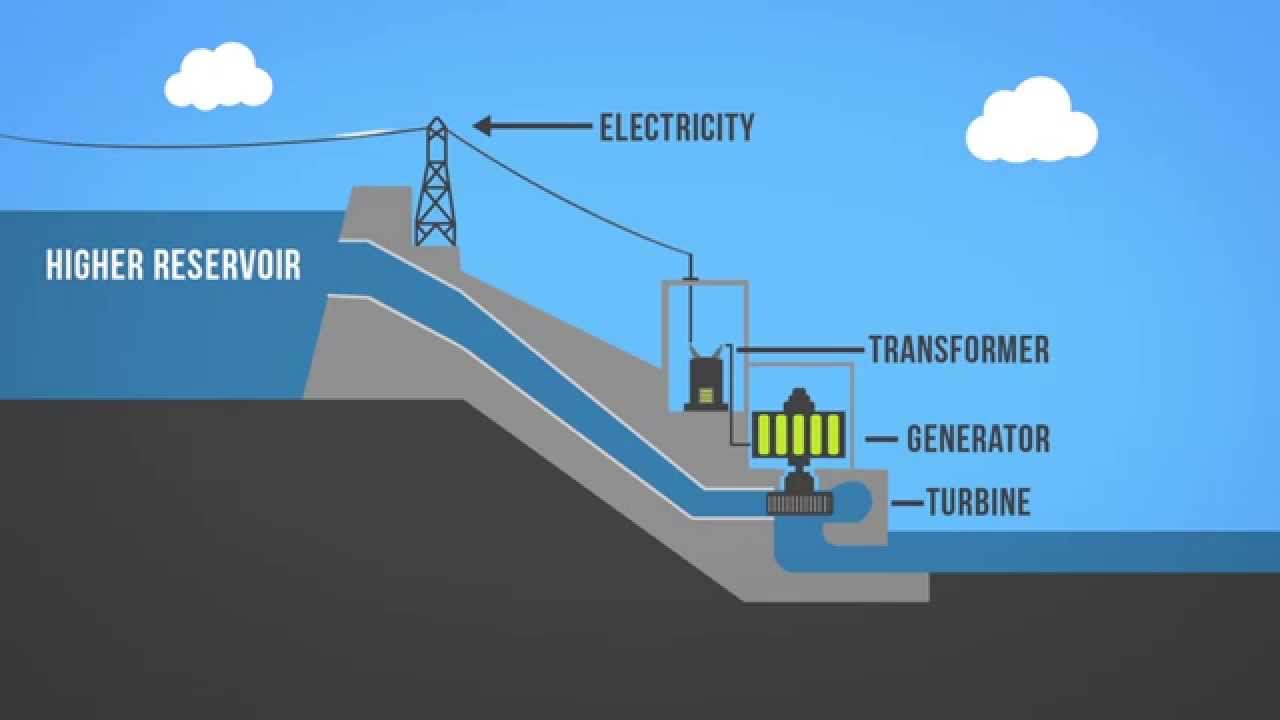
This is the image most linked to hydro, and rightfully so.
Most hydropower comes from dams that are built across rivers.
Water is stored in a reservoir and when we need energy, we let it through turbines, which then run generators.
Of course, not all dams generate hydro and not all hydro comes from dams.
Sometimes, turbines are also stuck in a river diversion less disruption, but less control.
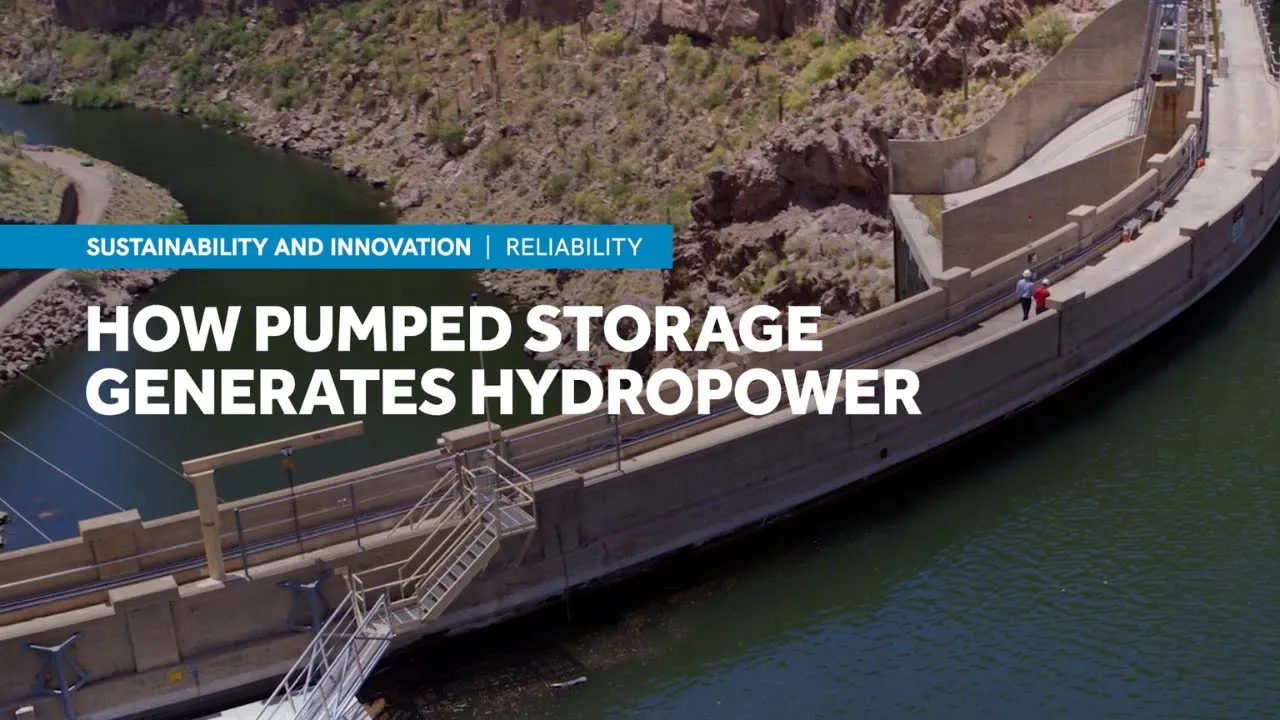
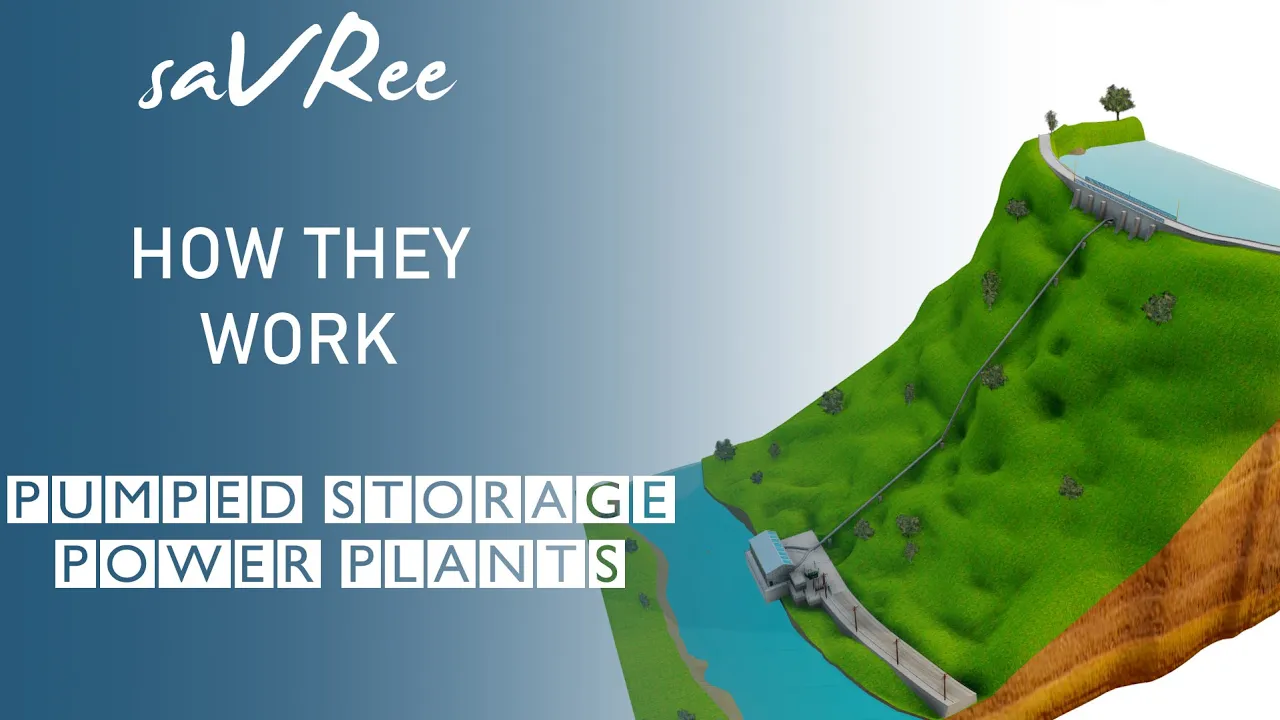
The third kind is pumped storage where the station is split in two - one, physically higher.
Water is pumped up when there's enough energy and allowed to run down through a turbine when energy is needed.
This one especially works really well as a large battery that can counter the intermittency of solar and wind.
Which is a real positive for hydropower.
We've actually been tinkering with the technology for over two millenia.
We have a lot of experience and comfort with this grandfather of renewables.
It's reliable, predictable and available on-demand.
It integrates well into grids and over the long-term, electricity from hydropower is really cheap.
No wonder some countries rely really heavily on it.
But there's one major problem: Free flowing rivers - or rather, what dams do to them.
Fresh water ecosystems have declined faster than all others, including forests affected by deforestation.
And dam construction is the number one reason for this.
That of course is the poster child of this tragedy.
And many projects have come up with way to get the fish past dams.
Some work and some are downright ridiculous.
"But it's not only about fish.
So, it's also about other organisms that are in the river."
Christiane Zarfl looks at the many ways hydropower disrupts entire water systems.
"You have layers within the reservoir.
And so, in summer, the lowest layer is the coldest one.
And so, if you, let's say, at the hydropower dam, from time to time, you open up the gates for the water to produce electricity, and then you usually have a very strong and cold peak of water.
So, that affects other types of organisms in the end."
But dam building is bad in other ways too.
Steel and cement used to build plants are some of the most carbon-intensive materials on earth.
And there's more.
Remember when I said hydro is only kind of green and sustainable?
One big reason that's true is because greenhouse gas emissions from reservoirs in the tropics have proven to be ridiculous.
As submerged trees degrade much faster than normal, they release methane and end up making hydro projects worse for the climate than comparable coal plants.
This NASA graphic shows the more immediate impacts.
The Three Gorges Dam flooded 13 cities, 140 towns, over 1,300 villages upriver.
It's even changed the local weather.
Being so huge, it's even caused earthquakes in the region.
The Atatürk dam, in Turkey has created a huge block to the Tigris.
That has ended up causing severe water shortages downriver in Iraq.
Then, in the Himalayas, where 550 projects are underway, dams have made the impact of landslides worse.
Over the years, Hydro dams have also displaced at least 80 million people from their homes.
You might be thinking a lot of this is old news and you're right, it is!
In the case of Sardar Sarovar, local people were protesting the environmental effects and social costs already back in the 1980s.
Eventually the World Bank, one of the largest funders pulled out under pressure.
And many other banks followed suit.
But now, many are back.
"We are seeing development banks and governments embracing large hydro."
Jocelyn Medallo is the deputy director of the International Accountability Project that looks into corruption and injustices linked to internationally-funded infrastructure.
"We started to get feedback and concerns about specific projects, and many of them were hydropower.
And this does not surprise me at all.
With the climate crisis, there is a push for renewable energy."
That's right.
The big push for hydro today is coming from the climate movement since, compared to fossil fuels, hydro doesn't look so bad.
At COP26 in 2021, many countries pushed for hydropower as a key source of "clean" energy in their mix.
In early 2023, the International Renewable Energy Agency declared that we need to hydropower capacity to double by 2050 to limit global warming to 1.5 °C.
But the thing is, not much has changed in terms of social or environmental impacts since hydro's days with a bad reputation.
"These are old problems that exist that underscore any of these development projects.
And it's you know, it's because there are very deep-seated asymmetries in power between communities and project proponents.
Right? The governments, the development banks, the companies, the investors.
And that hasn't changed.
That hasn't changed at all."
The asymmetries are clear when you look at where most mega projects are planned.
Africa, South America, Eastern Europe and South and South-east Asia.
And most of these are funded by US, European and Chinese-backed banks.
IAP and other organisations have found that these projects leave a lot of scope for corruption.
Often the loaning countries, banks, intermediaries and even local governments take most of the profit.
Especially through infrastructure contracts and by providing technical expertise.
Most of the burden is borne by the local environment and communities, who can lose their livelihood and homes, and are often even left without electricity themselves.
This brings us to the irony in the tale.
Hydro has had its boomer phase.
And today, this tech that's meant to mitigate the climate crisis, is becoming a big victim of the crisis itself.
As rivers either flood, or dry up, the productivity of all kinds of hydropower, big and small, is dramatically dropping.
Water levels in reservoirs in central and south Brazil have fallen by more than half over the last 20 years.
And it looks like the tall statue at Sardar Sarovar won't be looking at a functional dam for eternity.
The climate aspect is rarely being considered in new dam projects, even on the last untapped rivers.
"If we build all these large hydropower dams that are currently planned, 52% of the remaining free flowing rivers, the big ones in the tropics, they would be fragmented."
So, we need hydro.
But do we still need dams?
"There is a potential for a 9% increase in global hydropower capacity without building any new facilities."
Kayla Garett works at a hydro research lab in Texas, where they looked at three ways in which this could be done.
The first category was dams that are used for anything other than hydropower, which have already had an impact on the environment.
"We could put in generators, turbine and maybe some transmission lines.
On a scale of entirely new hydropower development to retrofitting an existing non-powered dam for generation, there is a lot of untapped potential there."
The second category was plants that need upgrading, including generator units or software upgrades.
And then, a third category.
"We know from seeing it in our day-to-day that there is an abundance of dams that are of a smaller scale.
So, this may be a farmer who's got a small dam built in a property to create a pond or small lake for his farming operations.
There's this many additional opportunities for hydropower development at very small scales.
Which, in developing countries, may be a much more palatable, equitable and quick integration for hydropower projects."
That 9% boost isn't what the energy agency says is needed, but it is a significant step in our energy goals.
Kayla also argues it makes far more sense from an economic standpoint.
Some dams might still need to be built but these can be used for more than just hydro.
"In general, and this is kind of a key word, you have to think in a whole system.
And this is also true for thinking in terms of renewables.
It's important to think about how to combine other renewables, so like solar photovoltaic, like wind and so on."
This is already happening in some places.
On Portugal's giant Alqueva reservoir, floating solar panels feed surplus energy directly into dam's hydropower system.
Projects like these have a lot of potential to use existing hydro as giant batteries to store renewable energy.
And then, taking a step back, we need to look at the entire power structure of power.
"We need to open this process up to communities, make them also the leaders in designing their own development.
They have their own expertise.
Many of them have been stewards of the land.
We have to center them in this process.
Any solution to the climate crisis that doesn't do that is just going to reinforce old problems, inequities that we don't want, that we should not be enforcing."
Energy from hydro needs to be a part of our future, but not at the cost of so much else.
When this is considered, we can move towards a truly green future.
Come back to our channel every week for more ideas like this.
Up Next

How Fish Survive Hydro Turbines: Fish Passage at McNary Dam
@PracticalEngineeringChannel
2.6M views•2024-03-05

Ultrasonic Transducers: Resonant Frequency Measurement and Horn Design
@imajeenyus42
229.9K views•2017-02-22

Polymer Environmental Degradation: Mechanisms & Stabilization
@iit
1.8K views•2012-07-10

How a Student's Question Saved a NYC Skyscraper from Collapse
@veritasium
22.8M views•2025-04-26
Related Study Plans & Knowledge Roadmaps
Structured learning paths in Engineering