











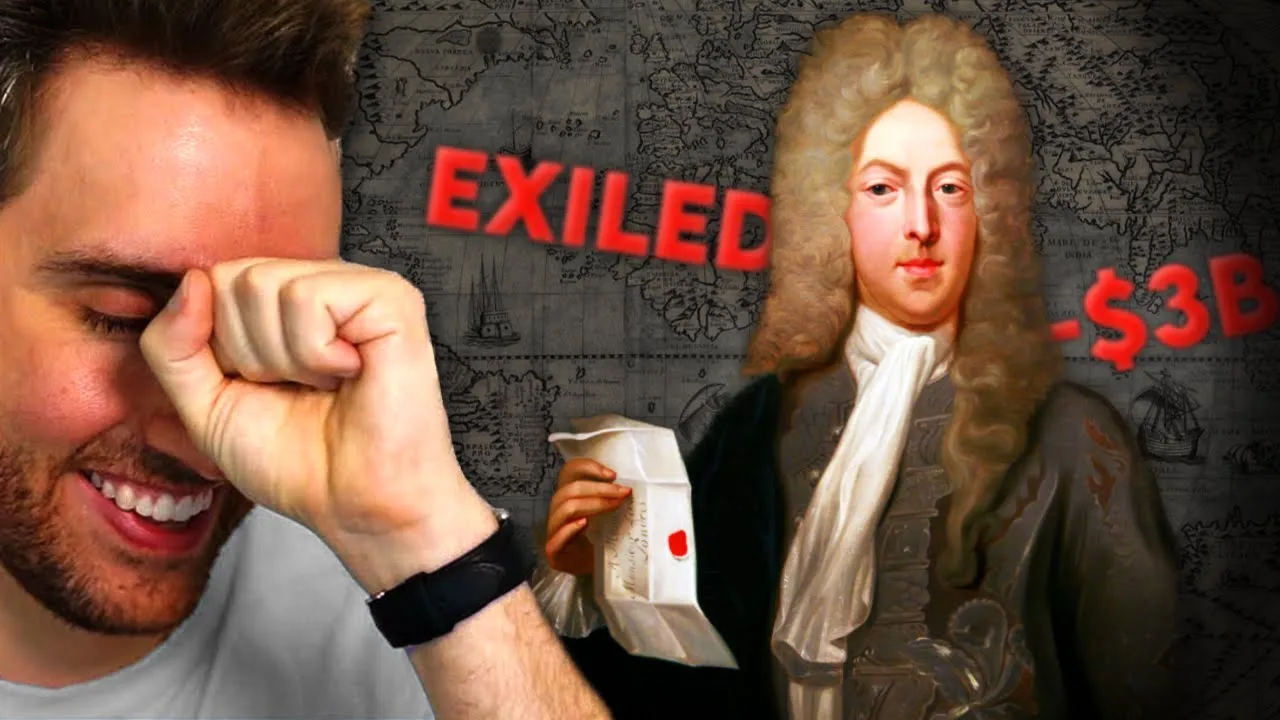




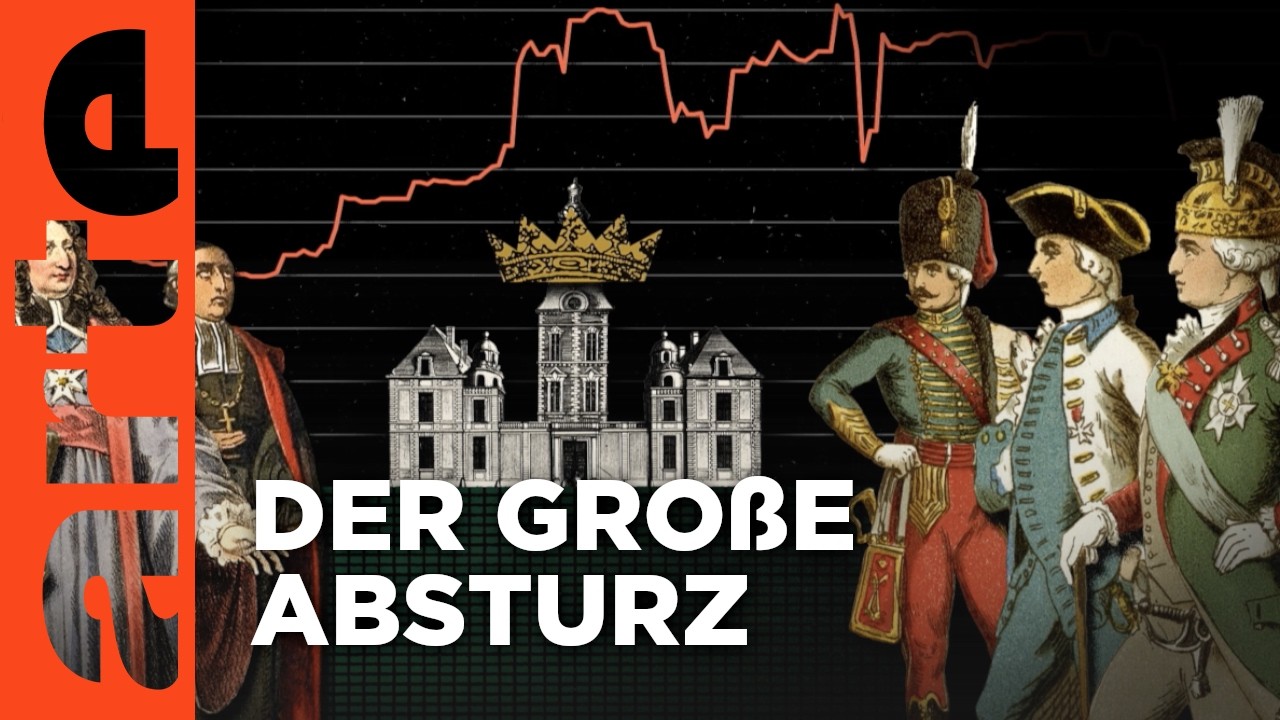













John Law, a Scottish gambler and financier who fled to Amsterdam after killing a man in a duel, revolutionized French monetary policy in the early 18th century by establishing the Bank Générale and the Mississippi Company, creating a paper money system backed by land that initially stimulated economic growth but ultimately collapsed into the famous Mississippi Bubble of 1720, demonstrating how excessive credit expansion, speculative mania, and lack of regulatory oversight can lead to catastrophic financial crises.
John Law and the Mississippi Bubble: History of Paper Money
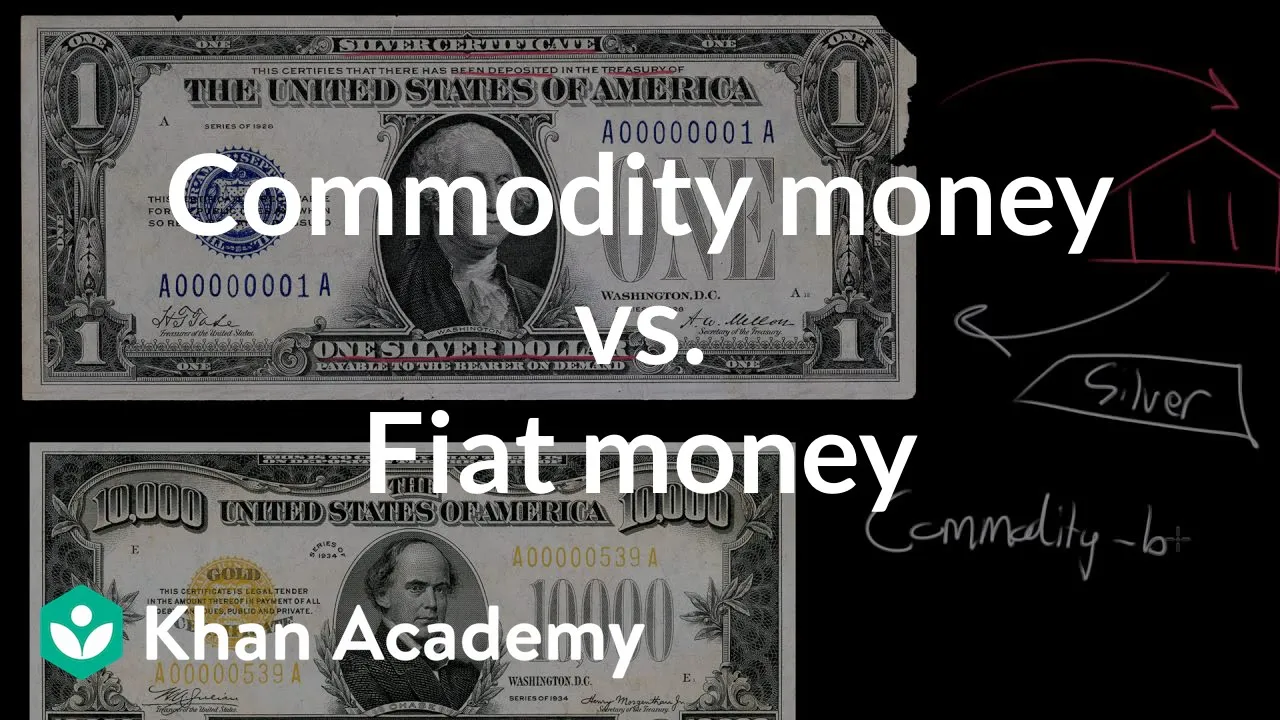
Added:The distinction between commodity money (such as gold and silver specie) and representative paper currency.
The fundamental structure of joint-stock companies and how ownership shares are valued and traded.
The basic relationship between money supply, asset pricing, and monetary inflation.
The historical context of mercantilism and the national debt crisis in France following the reign of Louis XIV.
The South Sea Bubble of 1720 and a comparative analysis of early European financial crises.
The development of modern central banking institutions, fractional reserve banking, and monetary policy.
The psychological and behavioral economics theories behind market manias, speculative bubbles, and herd behavior.
The historical evolution of currency from the gold standard to the contemporary global fiat money system.
487.3K views15.1Klikes44:42Original Release: 2020-12-16
there's not a lot in john law's family history to suggest the professional gambler murderer adventurer financier international celebrity and spy that he would one day become he was born into a family in scotland that had for generations followed careers in the church those not involved in the church had been goldsmith since the early 16th century law was one of 12 children born to a prosperous goldsmith only four of whom survived childhood in the late 17th century goldsmiths enjoyed an elevated status above many other craftsmen they not only made jewelry but like law's father many had developed an even more lucrative sideline business as money dealers john coming from a reasonably prosperous family was raised and educated as a gentleman by the time he was 12 years old his father bought lorriston castle just outside of edinburgh and the land around it but then tragedy struck his father traveled to paris to have a bladder stone removed and died on the operating table law's mother continued to run the family business and sent the children to boarding school law was a rebellious student at school and instead of continuing on to university as would have been expected of him he traveled to london to womanize and to gamble with his inheritance law was not off to a good start there were no signs at this point in his life that he would bring together the economic ideas that would create an economy and monetary system in france that looks much like the one that we have today by his 21st birthday law's inheritance was squandered and he was deep in dead in order to avoid being sent to debtor's prison he wrote to his mother requesting that she sell the family castle to bail him out his mother fortunately for him had enough money set aside and the good business sense that she was able to buy up his debts at a discount and keep him out of prison most people are unable to learn from their mistakes but john was capable of turning himself around he read all of the books and pamphlets he could get his hands on on the new signs of probability he searched for ways to put the odds of various games of chance in his favor he studied up and learned to calculate odds of dice and playing cards he mastered the art of risk and now gambling became a serious business for him large wins came when he adopted the role of banker in many of the popular card games of the time law played the games of faro and bassey fashionable games amongst the elite in europe at the time these were games where the odds were stacked in favor of the banker a role that law adopted whenever he could sometimes he would pay his host for the privilege of taking that role he was known to bet ten thousand to one that his opponent could not roll six sixes in a row on dice the odds of this happening are forty six thousand six hundred and fifty six to one or 6 to the power 6.
law was also known to vary his betting size betting small when the odds were not in his favor gambling was popular amongst london's nobility and given that he was good at it law was able to place himself in influential circles he quickly got to know all of the right people law became interested in the new science of economics he would attend meetings and debates on monetary theory commodities and currencies there was an interest in london at the time where people were trying to understand solve or explain the nation's overwhelming shortage of cash with the goal of making the nation more prosperous law was trying to understand money money might signify to many people ideas like security power luxuries and freedom economists tell us that it's simply a medium of exchange without which we would be forced to barter for anything we could not provide for ourselves money allows us to separate the buying of one thing from the selling of another it means that we don't need to swap eggs for apples or fix a neighbor's car in exchange for him painting our house historically almost anything can and has served as money chickens eggs animal furs and skins or even a pouch full of shells the form of money it turns out matters very little what does matter is that both buyer and seller can trust that if they exchange goods and services for a form of money that the money will hold its value and at some later stage it can be used to buy something else of all of the types of money gold and silver are the most recognizable herodotus claimed that the first coins pieces of precious metal were invented in the 6th century bc in ancient lydia in the 1700s the main form of money was gold and silver coins the disadvantage of such a form of money was that the sources of precious metals were finite and while people may have been willing to trade their goods in labor there was not enough coin to go around which was stifling the economy and forcing people to barter the shortage of coin was not just a problem in england in colonial america the situation was even worse as no stable indigenous supply of silver or gold had yet been found and colonialist settlers had to rely on official british currency or on the numerous foreign coins in circulation to supplement it so drastic was the shortage of coins that numerous alternatives from furs to rice to tobacco and shells were instituted beads made from a clamshell known as wampum was one of the most popular alternatives at the time this was already in widespread use by native americans wampum became the legal tender in several of the us colonies so how did banks work at the time well in early banking coin could be lodged in a bank vault or with a goldsmith for safekeeping the person who owned the gold could take away a piece of paper testifying to his ownership of the psalm these notes could then be used as a form of currency the banker was able to lend out some of the store of coin to others always keeping some reserves to pay those who wanted to withdraw their deposits for whatever reason the banker could profit by charging interest rates on these loans in this way money could be multiplied and the problems of limited supplies of gold and silver overcome the pitfall however was that an outside event might intervene to make everyone want to withdraw their deposits at once then the banker would in such a case find himself unable to repay the depositors because the reserves would be exhausted with much of the money being still out on loan and therefore inaccessible the banker would thus be bankrupt the goldsmiths and bankers of the time understood that political stability and healthy reserves were the key to successful money dealing england at the time was far from enlightened when it came to the idea of credit money lending for profit was known as usury and considered a crime against god perpetrators were hung drawn and quartered during medieval times the trade was thus monopolized by foreigners first by jews and later by entrepreneurial gold merchants from italy known as the lombards in london the early italian financiers were permitted to lend and trade money provided that they confined themselves and their business to a london street that still bears their name lombard street after the relaxation of usury laws in the mid 16th century english goldsmiths began to join the lucrative business when law arrived in london it was an exciting place to be the largest city in europe with a population of 750 000 people many had come from a broad-like law and there was still lots of building going on after the great fire had burned the city to the ground in 1666. king william iii wanted to raise money to fund the ongoing wars in europe but the bad royal record of repayment meant that money lenders would not lend to the crown this was quite a problem for the king and a government organized lottery was introduced which helped to ease some of the king's problems now john law did not approve of lottery says although he made a living as a gambler he felt that government should not encourage the public to engage in gambling the harms of gambling was something he could well relate to having almost ended up in debtors prison a few years earlier law's fascination with money taught him other crucial lessons the crown's checkered track record on repayment was only part of the reason that the king could not raise capital equally to blame was the fact that the nation's coinage was in disarray minting had not changed since the middle ages and much of the currency in circulation was over a century old coins varied hugely in weight and size because shavings of gold or silver had been paired from the middle or edges of the coins this was a crime known as clipping by the late 17th century england's coins contained less than half of the silver or gold of their face value while the penalty for clipping was dead many were desperate enough to try it there was so much dispute at the time as to the actual value of coin that many people returned to bartering or they charged inflated prices to compensate themselves for the dubious value of the money being offered to them fights frequently erupted over disputes of value one remedy was to introduce new coins with a milled clip proof edge at first the treasury circulated these coins without withdrawing the old ones and the shortage grew even worse as the new coins were hoarded or shipped abroad this proved the theory put forth a century earlier known as gresham's law that bad money drives out good the financial pandemonium taught law a valuable lesson he began to see that for a country to prosper and maintain its political status quo sound money was essential the king desperately needed money to equip and pay his soldiers and being unable to borrow authorized a number of harebrained and deceitful schemes law took note of this from the sidelines the ingenious scheme that king william finally sanctioned was proposed by another scotsman william patterson the idea was based on the highly successful national banks of amsterdam and venice it was to form a bank funded by a large number of private investors the money raised would be lent to the king for 11 years at 8 and the government would guarantee repayment of the loan depositors would be given bank notes containing a promise to pay the bearer gold or silver coin at any time by anyone presenting it for payment thus banknotes would circulate in a limited way as paper money this institution founded in 1694 is still in existence today the bank of england if law had wanted to invest in it at the time he would not have been able to however as he was in prison convicted of murder on the 6th of april 1694 john law arrived by carriage to bloomsbury square in london closely followed by edward wilson one of london's most enigmatic flamboyant and talked about dandies the two men had quarreled earlier that day over a woman miss lawrence at the fountain tavern in the strand they agreed to meet up for a duel wilson drew his sword first law quickly drew his and with a single defensive lunge wilson fell mortally wounded to the ground law waited for the police to come he was arrested and appeared before the infamous hanging judge salathia lovell law was not entitled to legal representation the right to testify or to call witnesses the only defense that was allowed was a reading of his written statement the judge and jury were possibly paid off by wilson's family which was common at the time and law was found guilty of murder and sentenced to death now dueling was somewhat common at the time and it was deemed honorable amongst nobility thus duelists were frequently pardoned law through his connections appealed to the king and was eventually reprieved from his death sentence but he was still imprisoned wilson's family appealed the pardon and law following the advice of his friends and with the king's blessing escaped prison and fled to amsterdam there's very little record of what law did over the next 20 years he turned up in places like france as a gambler and was seen in holland in italy it would appear that over this time he grew his wealth quite significantly and he grew his network with europe's nobility while gambling and womanizing all over europe he settled for a while in amsterdam which was at the time the commercial capital of europe its success was mostly due to the bank of amsterdam which brought economic stability boosted trade and made the netherlands the world's commercial superpower the bank of amsterdam operated under simple and prudent principles adulterated coin was as much of a problem in mainland europe as it was in england and around 800 different denominations of gold and silver coins circulated these could be exchanged in most towns throughout europe in amsterdam the bank took deposits in local and foreign coinage weighed and assessed the coin and in return gave depositors bank money which represented the intrinsic value of the metal content of the coins rather than their nominal face value law's notes at the time show his observations of the many benefits of this system the convenience the safety of storage the avoidance of losses due to bad money since the value of the notes was assured the public actually preferred them to conventional coins and the notes usually changed hands for more than face value amsterdam's bank was not the first to use paper money which had been first used in china paper money had also been tried a few places already in europe such as in sweden where they didn't have much gold and silver but they had lots of copper and some massive copper sheets were used as coin which was unwieldy to transport paper money had also been tried in the massachusetts bay colony but amsterdam stood out as a shining example of prudence loans to private individuals were offered only against deposits of silver and gold and were carefully restricted there was no mass circulation of notes without metal reserves the result was that everyone had faith in amsterdam's bank on a trip to paris europe's second largest city at the time law first met catherine knowles a married woman of noble birth a descendant of anne boleyn who was noted for her beauty and intellect gambling was law's route into parisian society but it did sometimes cause problems for him as his knack of winning brought him enemies along with financial gain whispers of his sharpness at cards his dubious past and rumors of his possible involvement in espionage brought him to the attention of authorities the time had come for law to move on and only catherine held him back in the sophisticated world of parisian society discreet infidelities could be forgotten but an elopement was unforgivable it is a mark of law's feelings that he asked catherine to leave with him she agreed and fled with him to italy from then on being known as mrs john law they were never able to become officially married but they lived as a married couple and had two children together the couple traveled around italy where law made his money gambling and spent his free time learning about finance he spent a lot of his time at the rialto the financial and commercial heart of venice he would attend the exchange when it was open observing the exchange of foreign currency the discounting of bills at the bank and the usefulness of paper credit he noted how happily people exchanged their money for paper and how the banks profited from this exchange law's interest in economics was leading him to reflect on the role of the state or of large-scale enterprise in national prosperity he saw money the way a scientist might see lab equipment he viewed it as a substance for experiment and a subject for theory just as the mysteries of mathematics and nature had been explained by scientists law's aim was to take on the challenge of experimenting with a nation's fortune ten years into his travels he returned briefly to scotland with the goal of petitioning the new queen anne for a full pardon he sent queen anne a proposal by mail which was entitled essay on a land bank he proposed a system of paper money backed by the value of land arguing that this was a more stable basis for currency than precious metals as the price of land was less volatile he offered to implement such a system in england for the benefit of the queen in exchange for a royal pardon the queen and her advisors were unimpressed as a notorious gambler and convicted felon law could not be trusted with the nation's purse law paid off wilson's family to cancel their petitions against him but nonetheless the queen rejected his appeal for pardon in the eyes of the queen and her government law's financial genius would never be acknowledged certain that his scheme made sense he rewrote it and adopted it to his home country of scotland scotland desperately needed someone to cure its economic problems as half of scotland's wealth had recently been lost on a scheme to build a colony in panama he wrote a 120-page pamphlet on his plan to revitalize the scottish economy which he published anonymously he organized a poster campaign which clearly explained his main points to members of the public his reason for anonymity was possibly to avoid his bad reputation affecting the scheme's chances in influential circles however law's authorship was common knowledge economic historians still marvel at his extraordinary clarity of expression in this document law begins by explaining that the meaning of value is related not to usefulness but to rarity he points out that diamonds are significantly less useful than water which is required for human life but water is less valuable than diamonds because its availability is in far greater excess than the demand for it he argues that money is not the value for which goods are exchanged but the value by which they are exchanged money he argues is a functional medium with no real value but if backed by something of stable value like land it can work like the way a gambler's chips do because the gambler can if desired exchanged these chips for money he pitched that scotland's problems could be solved by establishing a bank that issues paper notes backed using land as security in 1705 scottish parliament debated both a possible union with england along with law's monetary scheme the scheme was argued so fiercely the two lawmakers ended up in a duel with pistols the scheme was eventually rejected for being impractical and scotland instead chose a union with england as the union drew close law again appealed the queen for clemency was rejected and fled scotland to avoid falling under the laws of england law pitched his plan in vienna was rejected and then focused in on france france at the time was europe's largest most populous but most severely impoverished nation in the famine of 1709 people starved trying to live on boiled grass and roots numerous attempts were made to replenish the treasury new taxes were introduced old ones raised the coinage was constantly being tampered with and devalued by 1715 france was hugely in debt largely to a group of 40 private financiers who also controlled the collection of taxes the government could not even afford to meet the interest payments on its debt law felt that these problems largely related to a lack of available money he argued that trade and money are interdependent when trade decays money lessons and when money lessons trade decays the only way out of the downward spiral was through a viable means of exchange and the availability of credit the answer was he argued to establish a national bank and to issue money made from paper law moved to paris buying an opulent home where he entertained the most influential people in the city he explained his ideas to the minister of finance who did not pass them on to the king he befriended the king's nephew philippe duke of orleans a man with little influence at the time but who was enthralled by law's ideas not long before the king died his three heirs also passed away the throne would now be inherited by a five-year-old child the duke of orleans thus was put in charge as regent until the king came of age law was now to have his bank the regent did not want to cause too much controversy initially so laws bank was founded as a private bank in the style of the bank of england it was granted a charter in 1716 and he named it bank general the bank was not much of a success to begin with and it was roundly mocked in the press much like today's fintech firms bank general provided a number of services for free to the public that others charged high fees for this was problematic for his competitors and so they came up with a method to bring him down they pulled their money and deposited 5 million in his bank waiting a while until a lot of the money had been lent out then they arrived at bank general demanding immediate payment the promise to pay on demand underpins the public's confidence which every bank depends on law obviously didn't have the 5 million available for immediate payment so he told the men that it would take 24 hours for him to have the money counted and available for withdrawal law then went and explained his problem to the regent who bailed out bank general by ordering the finance ministry to provide law with a loan of the necessary coinage once this crisis had passed the regent in a conspicuous display of support sent a carriage filled with a million leave in gold to be deposited in bank general this was deposited at the busiest time of the day for members of the public to see royal patronage was possibly the most potent of marketing tools back then and bank general quickly became a success soon the people of france were more willing to accept law's banknotes than coin this was partially because law guaranteed that the notes would be worth the value of coin at the time it was deposited thus the notes were not subject to devaluations by the crown like coin was in 1717 law convinced the region to put the trading privilege and all mineral rights for the colony of louisiana in his hands for a term of 25 years he structured this as a joint stock trading company called the company of the west it was more commonly known though as the mississippi company he sold shares to the general public law was named chief director of the new company which was granted a trade monopoly of north america by the french government the colony of louisiana was a territory many times larger than france that stretched from the mouth of the mississippi for 3 000 miles north encompassing what is now louisiana mississippi arkansas missouri illinois iowa wisconsin minnesota and parts of canada this worked quite well for the crown because investors would partially pay for their shares in crown debt the bargain for brave investors was that law offered to accept this devalued debt at face value in return for company shares law was now ruling half of america in all but name but in the early days the mississippi company much like bank general struggled to survive in december 1718 bank general was bought out by the crown and became the bank royale law continued to direct it and branches opened all over france to ensure that everyone made use of paper money any transactions of more than 600 libra were ordered to be made in paper notes or gold now since gold was in short supply this essentially obliged nearly everyone to use paper money for all major transactions the nationalization of bank general involved the country buying the bank from the initial private investors shares that a few years earlier had been bought using devalued government bonds were now being paid out in coin so investors ended up doing very well on that deal few at the time recognized the danger signaled by the bank's new royal status up until now law had kept careful control of the number of banknotes issued there had always been coin reserves of around 25 of the circulating paper notes now with royal ownership and no shareholders to ask awkward questions the bank became less controllable the issuing and quality of printed notes and the size of reserves would be decided by the regent and his advisors the temptation to print too much money too quickly would now be virtually unchecked an additional change soon came when notes were no longer redeemable by value at date of issue but now according to their face value which would change along with coins if the currency was devalued the principles that underpinned public confidence in paper money were discarded and one of law's basic tenants breached people did not appear to be too upset by these changes at the time as they were so used to swings in the value of coin in those days concerned that the mississippi company shares were still struggling in 1719 law dealt his company an unbeatable hand he issued new mississippi company shares and used the proceeds to buy up the french east india company and the china company both of which had been badly mismanaged the mississippi company now had a monopoly on all french international trade the price of mississippi company shares had started to rise and law was able to push the price up more with maneuvers that showed his grasp of human psychology knowing that a reduction in supply increases demand the newly issued shares came with the restriction that in order to buy one new share investors had to own four old ones thus those who had bought the original issue enjoyed the pleasure of watching the value of their investment rise over the summer of 1719 france savored her first taste of a bull market in july 1719 law issued even more shares using the proceeds to buy the rights to the royal mint to buy this third issue of shares you had to own shares from the first two issues by now paris was engulfed in speculative madness over three months shares had rallied from 490 to 3500.
this situation was different to tulipmania from 100 years earlier because a selected group were only involved in tulip trading the wider general public of france were involved in the mississippi bubble law's next move was to pay off france's national debt and pay for the right to take over the nation's tax collection the massive sum needed to do this would be paid by a further issue of mississippi company shares the issue was eagerly snapped up by investors and three more share issues followed shares had gone up 20-fold by year-end which is quite incredible as law had struggled to find subscribers for the initial shares seven months earlier by reducing the interest rate paid on debt and depriving the wealthy of their rights to collect taxes in france this hit french nobility hard law now had powerful enemies as the economy boomed law set in place numerous public works bridges were built canals were dug roads were improved and universities were funded tax reforms were put in place that swept away hundreds of small taxes replacing them with a simpler to administrate income tax traders crowded rusenkampo outside the bank royal which was very close to where the pompidou center is today one entrance to the street was reserved for speculators of quality and the other for everyone else aristocrats did business with pickpockets and people came from all over the world to trade mississippi stock the parisian elite were startled by the extraordinary number of people from the lower orders who prospered spectacularly people sold their homes and their farms and they joined in the speculation where you only had to put 10 down to buy stock even voltaire was bemused commenting it's good to come to the country where plutus is turning all heads in the city have you really all gone mad in paris i only hear talk of millions they say that everyone who was comfortably off is now in misery and everyone who was impoverished revels in opulence is this reality is this a chimera has half of the nation found the philosopher's stone in the paper mills is john law a god a rogue or a charlatan who is poisoning himself with the drug he's distributing to everyone newspapers were filled with ranks to riches stories many of the servants who grew wealthy did so when their employers commissioned them to sell shares on their behalf at a certain price by the time the servant would arrive to sell the price was so high so far above their employer's limit price that the servant would be able to pocket the difference and use the excess to trade on their own account there's a lesson in there possibly about always watching out for your broker prices at one end of the street often vary dramatically from those at the other and fortunes made in one hour could be reversed during the next along with the stock trading frenzy came property speculation there were many many ways to get rich a hunchback was said to have earned a fortune by leaning against a mulberry tree and renting out the hump on his back as a writing desk law by now was the wealthiest subject in europe and he bought up vast areas of paris and the surrounding countryside foreigners rushed to paris in order to participate the british worried that the flurry of their citizens investing in mississippi stock would drain england off her coinage so numerous were the private fortunes gained that a new word was coined to describe them millionaire john law exaggerated the wealth of louisiana with a huge marketing scheme in reality the colony was struggling to stay alive of the thousands who made the journey to louisiana over half perished on rude or returned exhausted and disenchanted with what they found even more died from disease and starvation and no great wealth was found law felt that the prosperity of the colony was being hampered by the french reluctance to emigrate in order to tempt people he offered attractive incentives their expenses would be met by the company from the time they took up residence until they were established immigrants would be provided with land and with livestock still unable to tempt people to move new legislation was passed where every criminal vagabond prostitute and any servant unemployed for more than four days was shipped to the colony the poor of france had to go into hiding for fear of being rounded up and shipped abroad at one point prisoners were taken from jail and handcuffed to prostitutes that had been rounded up these couples were then forcibly married to each other in a huge ceremony in the center of paris then they were marched still in their chains to ships and sent to populate the colony this ended up bringing about a huge outbreak of stds at the colony the key that was underpinning the paper fortunes being generated at the time had been dangerously ignored the share price had been boosted by the ease with which money could be borrowed from the bank loans were readily available at an interest rate of two percent and mississippi company shares could even be used as collateral the first sign of trouble came in december 1719 when a sudden 25 decline in mississippi stock price occurred followed by a quick recovery the decline had been caused by law refusing some loans at bank royale in order to tighten up the money supply and reduce the levels of speculation seeing the decline law reversed course and tried to pump the stock price higher by declaring a generous dividend a new financial derivative was launched which was known as primes with primes you could put up a thousand for the right to buy ten thousand worth of shares for delivery in six months investors ended up dumping their regular shares in order to buy primes which caused a thirty percent fall in share prices the south sea company bubble was inflating at the same time in england and many investors were starting to sell their mississippi shares to invest in the south sea company in early 1720 just as the collapse was beginning john law was appointed controller general of finance in france silver and gold was draining rapidly from the bank and leaving the country market vendors began to grow uneasy about accepting paper and started asking for coin again law stepped in outlawing the ownership or export of gold silver and diamonds rewards were offered for turning people in as the shares fell in value crime became rampant in france in order to prevent further share price declines trading of shares in the street was made illegal shares could now only be bought and sold through the company offices at a fixed price riots broke out in paris something needed to be done to restore public confidence law realizing that too much money had been printed organized huge public bonfires where piles of banknotes and share certificates owned by the crown and the company were burned such a display instead of restoring confidence only further reduced the public belief that this paper money was worth nothing paris was now filled with angry mobs hunting john law he was no longer safe outside the royal palace people were dying in the crush outside the bank trying to redeem shares it may have appeared that things could not have gotten worse but then in may an outbreak of bubonic plague struck in the port of marseilles the lockdown prevented the movement of goods in france and shut down all international trade in addition london was now reeling from the collapse of the south sea bubble in september 1720 law announced that high denomination notes would no longer be accepted as currency in addition banknotes could only be used if payment was made 50 in coin bank accounts were quartered in value and mississippi stock was pegged at 2 000. effectively this meant bankruptcy of three-quarters of the bank and five-sixths of the mississippi company huge inflation stockpiling and profiteering followed in december law finally fled the country the only card he had left to play was that the regent and his other allies had an interest in protecting him as john law knew how much money had been printed and where it had gone if he was arrested and tortured into confession they knew that they too could be incriminated law's enemies lied and said that he had fled the country with wagon loads of gold and diamonds in truth he left france with nothing the few coins that he did have as travelling money were confiscated from him at the border under the law that he had passed making the export of gold and silver illegal law now penniless returned to his old life as a gambler he did some art dealing too in order to make money but by 1725 desperate for money he accepted a role as a spy for the british government and returned to mainland europe gathering intelligence for the british crown in 1729 at the age of 57 he died of pneumonia in venice where he is buried so what can we learn from the story of john law well some of his mistakes may seem obvious today but that's really just because we have the benefit of hindsight and we can rely on economic ideas that didn't exist at the time there are many economic lessons to be taken from this story even just the simple ideas around the meaning of money the laws of supply and demand and the economic factors that affect the value of currency we can also learn from the economic and social problems that are caused by speculative bubbles we can see in this story the importance of money as a store of value and as a means of exchange we can see how the availability of credit and the level of interest rates drives asset prices it's interesting to see how a booming stock market combined with low interest rates affected other parts of the economy such as real estate values while law's economic experimentation brought about a huge speculative bubble we can also see in the story the problems caused by too tight a money supply before law's bank people had to resort to barter simply because there was not enough coin in circulation to facilitate simple transactions there are other lessons in here too about how john law lived his life he appears to have been a man who learned from his mistakes after losing everything as a youthful gambler he educated himself about probability and grew wealthy by always aiming to stack the odds in his favor law was also a man who taught big while he was born in scotland he traveled all around europe during a time that not many people did and he moved to the centers where big things were happening at the time places like london amsterdam venice and paris law also made the most of advertising running a poster campaign when pitching his ideas in scotland and getting the regent to conspicuously deposit gold in bank general in the early days wherever law went he also seemed to quickly make influential connections which meant that his ideas were heard by the right people and being well connected was just good for his career let me know in the comment section below what lessons you took from the story now while i relied on a number of books websites and articles to research this piece the book that i enjoyed the most about john law and the mississippi company was called millionaire by janet gleason i'll put a link to that in the video description below if you enjoyed the video do hit the like button and subscribe and hit the bell button if you'd like to see more content like this see you later bye [Music] you
Up Next

11:28
Advanced Costume Design: Transforming Halloween Outfits
@LavenderTowne
525.4K views•2019-10-20

33:02
The Great Schism of 1054: Causes and Consequences
@SacredCathedrals
113.5K views•2026-02-19

91:57
The Geopolitics of the Ukraine War and the Rise of Global Autocracy
@JordanHarbingerShow
468K views•2025-04-19

17:05
Understanding the Cold War: Superpower Conflicts and the Road to Détente
@OverSimplified
46.1M views•2019-01-24
Related Study Plans & Knowledge Roadmaps
Structured learning paths in History
history
Byzantine Iconoclasm: Theology, Art & Politics
01Foundations of Byzantium and Early Christian Images
02The First Iconoclasm: Leo III and the Crisis of Images
03Empress Irene, Nicaea II, and the Second Iconoclasm
+ 2 more learning modules
9h5 modules
Explore Roadmap
history
Iranian Revolution (Causes, Events & Legacy)
01The Pahlavi Dynasty and the Roots of Discontent
02The Spark of Rebellion and the Rise of Khomeini
031979: The Fall of the Shah and the Climax of the Revolution
+ 2 more learning modules
8h5 modules
Explore Roadmap
history
Mali Empire: Mansa Musa, Trade & Timbuktu
01Foundations of the Mali Empire
02The Trans-Saharan Gold and Salt Trade
03The Reign and Pilgrimage of Mansa Musa
+ 1 more learning modules
6h4 modules
Explore Roadmap
history
1947 Partition: Politics, Borders & Legacies
01Foundations of British India and the Divide
02The Political Negotiations and the Mountbatten Plan
03Drawing the Boundary: The Radcliffe Line
+ 2 more learning modules
8h5 modules
Explore Roadmap