


![재판·심리의 구조 [20-006]](https://i.ytimg.com/vi/WM7aTrH4QVc/sddefault.jpg)










Statements of opinion are generally protected under the First Amendment and are not actionable as defamation. Courts examine whether the statement can reasonably be understood as the speaker's personal conclusion rather than a statement of fact. When all sides of an issue and the rationale for the speaker's view are exposed, the assertion is more likely to be understood as opinion.
Johnny Depp Trial Day 21: Motion to Strike Rebuttal Case
Added:Understanding the elements of civil defamation, particularly the higher standard of 'actual malice' required for public figures.
The structure of a civil trial, specifically the progression from the plaintiff's case-in-chief to the defense's case, and the strict legal limitations on what constitutes permissible 'rebuttal' evidence.
The purpose and standard of a 'Motion to Strike' or 'Motion to Dismiss' in civil procedure, which argues that the opposing party has failed to present a legally sufficient prima facie case.
The role of expert witnesses in civil litigation, including how their qualifications, methodology, and assessments of financial damages are evaluated by the court and challenged by opposing counsel.
Analyzing the methods used by forensic accountants and industry experts to quantify reputational harm and lost career earnings in high-profile tort cases.
Evaluating trial advocacy strategies regarding the timing and selection of rebuttal witnesses to effectively discredit the opposing side's expert testimony.
Examining the legal standards for jury instructions in defamation cases and how juries are directed to weigh conflicting expert opinions and witness credibility.
Studying the broader legal and cultural precedents set by televised, high-profile celebrity litigation on the public perception of the justice system and civil law.
979.6K views26.6Klikes1:05Original Release: 2022-05-25
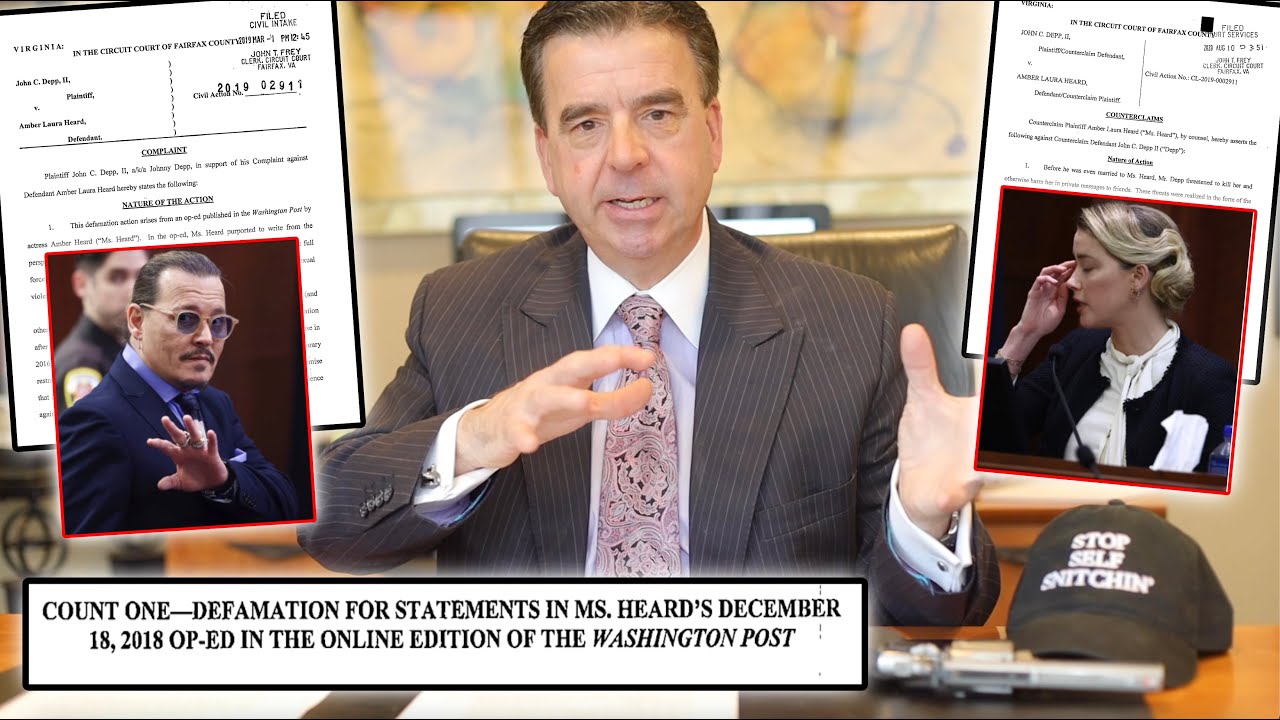
foreign hey what's up guys welcome to late explaining the interwebs I'm your host Nick grigota law the small law firm in central Minnesota and baby I'm cutting it way closer than I wanted to my sincerest and humblest apologies let's get this show started I am going to get the trial pulled up man oh you know when you sleep for like three hours and you wake up three times in that time you know something's wrong you know you didn't get a good night's sleep okay all right uh how are you guys this morning hope you're doing well uh I am doing I don't even know how I'm doing actually I seriously have no idea you need mods to drink some you mods need to drink some milk I think they need some milk uh that's true that's true the mods here uh need some milk very much all right we're going into day 21 Amber Heard is expected to rest today I would think actually that Amber Heard will probably come in and rest right away but the question is will will they call Johnny Depp to the stand first I can't I mean they can't be that dumb they can't do it they can be but they can't be they kind of need to uh but they really like that analysis hasn't changed it didn't change Yesterday by who they called to the stand so they um they really need to call Johnny Depp damn it uh they have to call Johnny Depp probably because they haven't gotten the testimony out of him that they need to keep Adam waldman's statements at issue if the judge goes strict on it now I don't I don't think the Judge is actually gonna back down from it but but we'll see um okay so the what I'm talking about there is they always have to put a fact question to a jury so they have to find something some question for a jury to answer a jury is not a decider of law a jury is a finder of fact and so they need to give the jury a question to decide and that question is on each element of the case effectively do they uh do they have to resolve anything so to do that each claimant has to put forward generally speaking uh each claimant has to put forward um the elements of each claim so in this case defamation statement was published by the defendant or in this case Johnny Depp he's not the defendant but it's a it's a counter claim uh published by the defendant to the public um that is false to the to the public to another person uh that is false with the requisite degree of intent and that it causes damage so right now uh they don't they don't have the publication there's not a fact question there Adam Waldman published the statements we know that but we don't know that Adam Waldman is uh connected to Johnny Depp specifically authorized to act as his agent setting up some links my bad my bad so they come in and rest then it's just uh it'll go straight to Johnny Depp's team my new source does not have it pulled up yet all right they're just getting there on the independent okay please be seated where are you Sky News defense is resting and they're going to motions hold on one second here we go uh sorry I'm getting I'm getting it pulled up here just to take them back in So when they after we finish our emotions and they come out I'll let you say that yeah okay let's just do it that way all right so based on the resting you have a motion and I did receive your memo ahead of time so I have reviewed that yes sir I haven't received anything from them I think it's just gonna be oral arguments yes sir uh good morning your honor may it please is that motion to dismiss Johnny Depp uh Mr Depp hereby moves to strike defend an Amber heard's counter claims because Miss heard has not proven by clear and convincing evidence that Mr Waldman made the three allegedly defamatory statements with actual Mouse we know they're missing is not my motion to strike standards I understood we have cited the standard in our brief thank you uh moreover your honor the court should also strike defendant's claim for immunity and attorney's face based on Virginia's anti-slap statute as she is not entitled to immunity under the statute because we know that the court has carefully reviewed our motion papers I will just hit some of the Salient points thank you sir thank you honor I I would mention however uh your honor that uh because this is not included in our brief that there is no record evidence whatsoever that Mr Depp even saw any of the three statements that Mr Waldman made prior to being served with the counter claims in this action which we believe is relevant to many of the legal standards and Mr honor is aware Ms heard had signaled for the past week that she was planning to call Mr death in her case in Chief and it was our anticipation that she would try to fill what we believe is a gaping hole and with respect to the elements of her proof again there's no record evidence whatsoever that Mr Depp ever saw any of the three statements about which misheard is purportedly suing him for a hundred million dollars as your honor is aware the elements of defamation are as follows one public publication of two an actionable statement with three the requisite intent she thought thought versus Sanders 280 285 Virginia 476 at 2013.
the requisite intent for defamation against a public figure is actual mouse that is the statement must be made with knowledge that it was false or with Reckless disregard of whether it was false or not see Sanders V Harris 213 Virginia 369 at 372 a 1972 case see also Jackson the Hartig 274 Virginia at 2019.
Reckless disregard is your honor is aware quote is not measured by whether a reasonably prudent person would have published or would have investigated before publishing ellipses there must be sufficient evidence to permit the conclusion that the defendant in fact entertain serious doubts as to the truth of the of his publication unquote Saint Ahmad versus Thompson 390 U.S Supreme Court 727 at 7 31.
your honor the evidence shows that misheard cannot Prevail on her claim because she cannot and did not establish that Mr Waldman made the statements with actual malice Mr Waldman testified that he conducted extensive investigation and reasonably reasonably believe that the three statements he made were true Miss heard presented nothing nothing to contradict that Undisputed fact Miss hurt has no evidence of direct liability because obviously your honored we need to talk about direct and vicarious liability but it Bears noting that she has no evidence of direct liability and cannot prove actual malice by Mr wall let me turn you up by making the three statements at issue it is Undisputed that Mr Depp did not make any of the three statements at issue in this Herb's counterclaim moreover uh in order for Mr Depp to be liable for the conduct of his one of his attorneys there must be some showing that he directed participated or otherwise authorized Mr Waldman to make the statements at issue there is no such evidence on the record that Mr Depp directed or otherwise authorized Mr Waldman to make the three allegedly defamatory statements at issue in the counter claims indeed there is no evidence of any communication or coordination between Mr Depp and Mr Waldman regarding the counter claim statements or anything else good for this reason as well your honor misheard cannot meet her burden of proving that Mr Walden was acting within the scope of his employment as our agency on behalf of Mr death again it Bears noting that there's no evidence that Mr Depp even saw the statements by Mr Waldman until he was sued served with the counter claims well into this case it was more than a year after Mr Depp filed his his complaint and misheard lost a series of motions to dismiss that she finally asserted her counter claims most of which have already been dismissed by opinion letter of this court where is here there is no juries of direct liability jury is not president must rely on a theory of vicarious liability to hold Mr Depp liable for the actions or statements rather of his purported agent Mr Walden vicarious liability is by definition quote liability for the tort of another person unquote so to hold Mr Depp liable for Mr Walden's statements misheard must establish that Mr Waldman himself committed all the elements of defamation I know the Court's familiar with this so I'll try to run through it quickly see Parker versus Carillon Clinic 296 Virginia 319 at 332 a 2018 case quote vicarious liability is liability for the tort of another person it necessarily this is neutral for time cannot make out a case for vicarious liability against an employer without first things like a law school argument but it ought to within the scope of his employment this is pure pure technical stuff so routes and Pontiac corporations you're likely to lose on 36 Virginia 152 at page 156.
heard has not met and your honor we cite a string site citation to cases from other jurisdictions which we obviously are not binding on the court but we believe are influential we presented those to the court um for its review it is misheard's burden to prove by clear his tone is that of a lawyer who's not going to win this motion which is unfortunate ultimately uh to prove actual malice by Mr Waldman not Mr dad and while it is well settled law in Virginia you have an expectation of winning that an agent's knowledge can be imputed to a PR a principle and this is the Allen Realty Corp versus Hobart case 227 Virginia 441 at 446.
Ms herd's Council cannot cite any case law stating that a principal's knowledge is imputed to an agent in other words Mr Waldman must have made the statements knowing that they were false or with Reckless disregard as to whether they were false and Mr Depp's knowledge cannot be imputed to him there is no evidence in the record that Mr Waldman knew the counterclaim statements were false indeed Mr Waldman did not even know Mr Depp or misheard this is a weak Theory and thus had no personal knowledge of what transpired and this is reflected in the trial transcript that Mr Waldman met Mr Depp first in October of 2016 long after the fact nor is there any idea that an agent doesn't have the knowledge of the principal is silly any serious doubts about the falsity of the counterclaim statements quite the opposite the evidence shows and it's unrebutted that Mr Waldman had very reasonable grounds to believe and he did believe and will to his dying debt that misheard's claim of abuse were patently false Mr Waldman testified at length about 29 Witnesses he believed disproved Ms hurts false claims of abuse see the transcript at page 6008 through 6012 and it won't run through all of that but his testimony the two trained police officers Officer science and Haddon were called to the penthouse on May 21 2016 and saw no signs of injury the problem is that he's making an argument right now that does exist in various forms there's a fact question that goes to the jury to her face whatsoever between May 21st and May 27 2016 when she walked in to court with her publicist her lawyer uh her former best friend who no longer speaks with her for a no notice ex parte tro some of the witnesses who Mr Waldman has cited they include Laura divinir Melanie inglesis who is your honor recalls is was Miss heard's makeup artist who decided to end any professional or personal association with Ms heard uh Samantha McMillan Hilda Vargas Isaac Bruce Trinity Esparza Cornelius Harrell Alejandro Romero and Brandon Patterson just to name a few no reasonable jury could find that Mr Waldman acted with actual malice in making the allegedly defamatory statements he was not present for the alleged incidents he has no personal knowledge of any of the alleged incidents what Mr Waldman knows is a product of the legal work he did the sleuthing he did on behalf of Mr Depp misheard cannot possibly show that Mr Waldman with acted with actual malice and her defamation claim must fail two Mr Waldman is an independent contractor not an employee it is axiomatic your honor that a person who hires an independent contractor is not liable for the independent contractor's actions see Sanchez versus medicorp Health System 270 Virginia 299 at 344.
an independent contractor is a person who is engaged to produce a specific result but who is not subject to the control of the employer Principle as to the way to bring about that result C Atkinson versus such no 261 Virginia 378 at 284. that's a 2001 case an outside lawyer retained by a client in connection with litigation is an independent contractor C King versus Dalton 895 fsap 831 eastern district of Virginia 1995.
where judge Ellis a legendary jurist known by all Virginia practitioners held that quote a law firm attorney working with a client is nonetheless an independent contractor and is not an employee of the client Corporation in that case the employer was a corporation but the same logic applies when it's an individual like Mr Depp that was Mr waldman's role indeed clients hire lawyers to obtain specific results or to try to obtain specific results but they do not control the means by which the results are are accomplished lawyers as your honor has reminded us are subject to professional obligations to exercise independent professional judgment we are not at the whim of our clients as much as we want to serve them see Virginia State Bar professional guidelines rule 1 colon 2 and 2.1 and just a quote 2.1 in representing a client a lawyer shall exercise independent professional judgment unquote Mr Waldman is as a matter of law an independent contractor and Mr Depp cannot be held responsible for any alleged tort by his attorney particularly for statements about which He was unaware until he was sued for them Mr Waldman testified and it's unrebutted that he has and he has his own Law Firm he's not an employee of Mr Depp Mr Depp and or none of his loan out companies have have issued him a W-2 and Mr Waldman provides legal services to clients other than in addition to Mr death and that's found at the transcript page 6020-21 all of that is unrebutted by misheard Mr waldman's statements the third reason for which we respectfully submit the counterclaim should be stricken is that Mr waldman's statements were protected opinion and I won't run through all of that but very briefly taken in their proper context the counter claim statements are non-actionable expressions of opinion entitled to protection under the First Amendment see Gertz versus Robert welchink 418 U.S 323 at 339 that's a 1974 case from the United States Supreme Court she also shocker be the fault a Virginia Supreme Court case found at 290 Virginia 83 a 2 2015 case noting that where quote all sides of the issue as well as the rationale for the speaker's view were exposed the assertion of Deceit reasonably could be understood only as the speaker's personal conclusion unquote and finding an accusation of Deceit to be opinion in context your honor any reporter or any reasonable reader would understand and expect a lawyer associated with Mr Depp as Mr Waldman was to challenge Miss heard's version of the inherently controversial events of the party's merits just as misheard's lawyers were quoted challenging Mr death and your honor will remember the context of these quotes that were in a British tabloid where Mr waldman's statements were buried well into article in which both points of view were clearly expressed and Mr Waldman was clearly identified not as an independent expert on the U.S Constitution but is one of of Mr Depp's attorneys us see Chavez it doesn't have 90 230 Virginia 112 at page 119 quote the most unsophisticated recipient of such Acclaim I.E any reader of the British tabloid made by a competitor against another could only regard it as a relative statement of opinion grounded upon the speaker's obvious bias unquote Mr Waldman has never done never did anything to hide his support and of and belief in Mr Depp finally your honor and for the rest uh ultimately Mr waldman's statements reflect the existence of two competing narratives and are merely his subjective View about events that he never claims to have witnessed and there was no doubt about that turning to the second part of the argument which will be more abridged misheard is not entitled to anti-slap immunity as a threshold matter Virginia code section 8.01-223.2 which is that your honor well knows is the Virginia anti-slap Statute amended most recently in 2019 provides in relevant part quote the uh the immunity provided by this section shall not apply to any statements made with actual or constructive knowledge that they are false or with Reckless disregard for whether they are false here in addition to Mr Depp's testimony several witnesses have testified that a they never witnessed Mr Depp abuse misheard and B that they observed misheard without any injuries marks bruising swelling Etc during periods when misheard claimed to have injuries Marx bruises Etc such Witnesses include but are not limited to Isaac Bruce Kate James Dr David Kipper nurse Debbie Lloyd officer signs and Haddon Officer William Gatlin and former U.S marine Starling Jenkins Miss Hertz requests for anti-slap immunity should be stricken and even if there were disputing even if there were disputed facts as to fact the anti-slap immunity does not apply because the defamatory implication of misheard statements are not solely relating to a matter of public concern as is required under the statute as has become quite clear your honor Mr Depp is not suing about any of the public policy commentary made by the ACLU when it drafted the op-ed and Miss heard put her name to it this is a failing argument because issues of spousal abuse are three statements always consider matters of public opinion he has no issue with women's rights he supports women's rights in fact he was the one your honor as your honor knows who made that first hundred thousand dollar contribution to the ACLU and he made it also to the CHL your honor at this point I'm going to object Mr two is largely just read his brief and can find his arguments to those directed in the motion but like we saw with the last motion to strike he's now directing his arguments something other than what's at issue here and I would object because I think making an argument not to you but to the cameras it threatens it's disrespectful to the court and everyone's time and it also threatens to undermine wow the Integrity of this process and risk the jury being influenced by outside factors well it's his argument yeah thank you hey rottenborn don't be such a cunt what Mr Depp is suing your honor I don't like this argument it's harmful to my client very clear despite the pious opening statement that about the first impendment that with the testimony of Terence Doherty and the emails that were admitted at exhibits that the ACLU and misheard were conspired to make it very clear that those three statements were related to Mr deck because otherwise nobody had any interest in the article and it's Crystal Clear from that they wanted to time this thing with the release of Aquaman which was her first film of any significance in terms of uh popularity and to do that that's very clear so the sarad that this had something to do with public policy is risible and that is not why the anti-slap protections were enacted they were enacted to protect the rest of the article not what Mr Depp is suing about as generally analyzed by the courts a matter of public concern is one which relates to quote a matter of political social or other concern to the community unquote as opposed to a matter of only quote personal interest unquote that's conic versus Myers 461 U.S 138 at page 146.
instead the defamatory implication at issue in each of the three states statements at bar relate to the personal grievances between Mr Depp and misheard which does not rise to the level of a matter of public concern with broader implications for society beyond the two litigants in this action anymore than Mr waldman's statements I mean the adding the gloss of public policy might immunize the statements that relate to public policy but those are not at issue here Mr Depp agrees with those statements we're talking about the three statements that they vary intentionally and very cleverly put in to make it clear the implication that it was about Mr death they had lawyers from the ACLU working around the clock with Eric George to make to be as clever about this as possible and your honorable my point of this they're allowed to be clever ACLU when they are really trying to make USA today so that everybody else to get anti-slap protection has to be a matter of public concerns you cannot be protected by the anti-slap statute again Senate issues of spouse can't have a private issue that the testimony of Terence Doherty it was not only their corporate representative he was their general counsel he is a brainiac lawyer they knew exactly what they were doing your honor and one of the he referred to testimony of a woman at the ACLU who said she had nightmares about Miss hurt and he's expressed no concern about that now that was either because they knew about was either a reference to this game they were playing with the op-ed or the conspiracy they had to cover up her failure to make the donations the donations became pledges but now but we have evidence that she refused to sign the pledge card so she's caught either way simply stated your honor Mr Depp is not suing misheard for making statements about Society in general I think that's very clear from the record evidence that your death is suing her for publicly naming him as an abuser by implication and forever tarnishing his good name an act that coming from an ex-spouse is fundamentally personal in nature for that reason as well your honor Virginia's anti-slap statute is not clickable and based on the for foregoing your honor Mr Depp respectfully submits that the court should Grant plaintiff's motion to strike the counter claims and also Striker claimed that she is immune under the anti-slap statute thank you very much yes sir I mean he did what he could with the argument uh it's thank you your honor knows the proud court is required to accept is true all the evidence favorable to Amber at this point uh as well as any reasonable inference a jury might draw there from which would sustain the counter claim that's the correct standard here um I'll address the actual malice argument first the agency argument your honor there's plenty of evidence in the record from which the jury could determine that Mr Waldman was Mr Depp's agent he made those statements the statements referred to him as Mr Depp's attorney as your honor ruled on Friday with respect to the jury instruction uh conference an attorney is an agent of his client Mr Waldman testified that he's been Mr Depp's attorney since 2016.
uh he freely admitted speaking to the Press on Mr Depp's behalf and he refused to answer question after question about that agency so we can't use that as a sword now uh Mr Chu puts a lot of emphasis on the fact that Mr Depp uh alleged you can see he absolutely can that were made uh that are the subject of the counter claim but as your honor well knows whether he saw them or not is not the standard for agency um there's also evidence that Mr Depp met with the Daily Mail with Mr Waldman prior to the defamatory statements being made and released I believe that was in February of 2020 just two months prior um Mr Waldman also concocted a story that Amber was being investigated for perjury by filing a perjury complaint against her with the LAPD he disregarded any evidence that he didn't believe would fit in his narrative that would fit in this story that he was speaking about on behalf of Mr Depp and after Mr death lost the UK proceeding after Mr Depp was ruled to be a wife beater by the court in the united in the UK proceeding the court there found him to be a wife beater Mr Waldman then got an overseas tabloid to run a story claiming that Amber was being investigated for perjury which simply wasn't true he walked into the LAPD filed a complaint for perjury against misheard found a media outlet that doesn't follow the two-source rule and then he he had let the world believe that the LAPD was investigating misheard for perjury that's a shameful and a sickening example your honor of the links of Mr death through his agent Mr Waldman would go to to smear and to the fame Amber Heard and that continued in the three statements in the counterclaim your honor has heard evidence I won't go through all the evidence but your honors heard evidence from Ron Schnell who's traced the negative hashtags toward Amber Heard online associated with those defamatory statements and notedly noted the staggeringly high number of them that were associated with Mr Waldman under the principles of the agent principal relationship in Virginia your honor when Mr Waldman made those statements he was standing in the shoes of Mr Depp they are one and the same for the purposes of those statements as your honor discussed at length on Friday Mr Waldman made these statements with actual malice there's plenty of evidence from which the jury could infer that and his own both from the actual malice from Mr Depp and Mr waldman's own Reckless disregard of facts that didn't support Mr Depp and his attempts to manufacture false evidence that did as your honor found in the hearing I believe it was on March 24th after your honor um denied Mr Depp's motion for summary judgment your honor set as to malice a fact finder could reasonably conclude that Mr Walden made the statements with malice because Mr Waldman has no personal knowledge of the party's marriage and still made the statements at issue nothing in this case has changed that if anything the evidence has only made it more clear that that is an inference that the jury can and we believe will find um so your honor there's there's no there's no basis to Grant a motion to strike on this agency argument on the actual malice argument the evidence shows that Not only was Mr Waldman Mr Depp's agent but that the two of them conspired to falsely accuse Amber of creating a hoax and falsify evidence that they believed supported their their Theory and what they wanted to achieve um as your honor well knows too I won't go through all the law but both agency and Malice can be inferred through circumstantial evidence there's plenty of evidence in the record from which the jury could infer those moving on your honor to the independent contractor I disagree on the agency attorney client have a principal agent relationship and as your owner said on Friday there's no evidence in this case of anything otherwise as to these argument that the question is whether they have the relationship statements of opinion whether they have the relationship is already found twice not statements of opinion both on January 4th 2021 in its uh opinion letter denying Mr Depp's demur as to the counter claim statements and at the motion for summary judgment Hearing in March of this year as the anti-slap argument the court again has already ruled at the March 24th 2021 opinion that the statements are as a matter of law regarding matters of public opinion the court has already ruled that therefore the only remaining issue for anti-slap is whether the intent element of immunity is met be as we discussed on Friday the intent element of immunity is substantially the same as the actual malice standard which uh the evidence in this case uh easily allows the jury to uh to to find in favor of misheard on that I won't go through the uh the Litany of evidence that supports uh that Mr Depp is an abuser here but I'll touch on a few things that relate to Mr Chu's argument one Mr Chu was totally misrepresenting uh Mr Doherty's testimony there's not a sill piece of evidence your honor in this case suggesting that misheard and the ACLU Were Somehow conspiring to achieve a defamatory implication to Mr Depp that's simply not what Mr Doherty said Mr Chu's feel free to argue that to the jury but that's not what his testimony reflects yeah jury can determine that there's also that's a fact question plenty of evidence that's been educed both in Mr Depp's claim and in Miss herd's counterclaim that show that absolutely there was that the counter claim statements are 100 false there was no hoax perpetrated Mr Depp is an abuser who abused misheard she did not conspire with her friends to create a hoax she did not create a hoax herself and just very briefly uh some of the evidence that's come up since the last motion to strike your honor that Mr Chu conveniently disregards in this brief or the testimony of Rocky Pennington testimony of Josh Drew he's looking at rottenborn like he's a day old Subway sandwich count of the events of May 21st 2016. maybe maybe it could be testified that she covered misheard uh I left it in the car make up warm after the December 15th incident that provided ample testimony to support that misheard often would cover her bruises that were caused by the plaintiff in this case by Mr death with makeup he ignores the evidence of Christy Sexton he ignores the evidence of Iota right he ignores the evidence of Whitney Enriquez all of these Witnesses and others have testified extensively about Mr Depp's abusive Behavior toward misheard physical abuse emotional abuse psychological abuse verbal abuse your honor Mr Depp's own writings recordings pictures and videos confirm that the list goes on there's abundant evidence in the record your honor from which the jury could and again we believe will find that this herd is not liable for defamation to Mr death and therefore by definition she is she has not acted with actual malice and based on the Court's rulings on March 21st 24th 2021 she would be entitled to anti-slap immunity which would commit permit her to ask the court to award attorneys fees against Mr up so with that your honor I'm happy to answer any questions the court has but thank you sir thank you yes sir rebuttal writer I will be brief in deference to the Court's time and the jury's time what Mr rottenborn said about 100 bullshit Mr waldman's allegedly going to the LAPD about perjury is a complete non-sequitur if they thought that that Were Somehow improper conduct they could have included it in their their counter claims they included everything else but the kitchen sink and most of it was thrown out there was nothing in there about Mr Waldman going to the LAPD so that is a very clear non-sequitur red herring distraction number two argument they should have made right away on summary judgment on the issue of the counter claims your honor was dealing with a different standard and a different evidentiary record at that time Mr Waldman had not testified which is material Mr Waldman has now testified for purposes of trial we have his trial testimony it's very clear that he did not act with actual malice they didn't even argue that so that's pretty clear absolutely clear don't say pretty clear and again this is consistent the third point is that it's it's all about games they didn't sue Mr Waldman on the three statements they didn't try to fill the hole they've been telling us for a week that they're going to call Mr Depp to try to fill the hole and their counter claims they didn't do that that's the biggest one right there very consistent with the game playing let's go into court after the police have found no problem and after witness after witness who had no relationship with each other said there are no visible marks let's not give Mr Depp's lawyer the required 24-hour notice before the tro let's March into court with our publicist with our lawyer with our best friend who no longer talks to her let's get a tri and when the metoo folks say why are you taking seven million dollars from an abuser they said I didn't take money from the abuser I gave it all to Terry well they didn't I don't think anybody should feel bad about them stiffing the ACL yoke given what the ACLU did in this case which is a monstrosity but you did stiff the sick and dying children it is gamesmanship and and that's what she's doing here today but the law is the law and they have not fulfilled their burden with respect to the counter claims there is you brought in the sick and dying children in between Mr dapp and Mr Waldman as to these statements at issue except for the fact that he is an attorney and that is not sufficient in a case where they have not even established that Mr Depp was aware of these statements and they knew that they couldn't do it and they didn't even try and it's more it's like that second dying children line really bothered Amber and she started passing notes around and misheard plays word games oh I didn't punch you Johnny I just hit you imagine if the shoe were on the other foot and this yeah a man was saying to a woman oh woman up I only hit you I didn't punch you and when thank you it was chilling when she warned him on the tape you go tell a judge you go tell a jury that you a man were abused this is all closing argument believe that yeah he's just practicing opportunity for rehearsal dress rehearsal and it's for the campus rottenborn was right cameras makes an excellent point with which I agree which was that with respect to each of the three statements Mr Waldman was clearly identified even by the Tabloid that printed these well within articles that had both sides represented that he was Mr Walden's attorney even the reader of a tabloid understands that when you're getting statements from attorneys it's going to be forwarding their clients point of view Mr Waldman is not the only attorney you're hurting your agency who was Ms hurt second attorney so miss heard started out with Eric George he made comments to the Press objection your honor again this is so much further beyond what your honor is addressing I'm finishing up okay I'm finishing up my point your honor and it's on point is that Mr George made statements supporting Miss heard's position Ms Kaplan made very clear statements uh supporting her client's position on the merits and so did Mr Waldman but everybody knows when reading knows that those are statements bipartisan so for the reasons that we've stated and the reason set forth in the brief we respectfully submit that the court should Grant a motion to strike or in light of the fact that Mr Depp May reappear at the very least take these motions under advisement until the close of all evidence thank you all right thank you sir all right in this matter I've reviewed all the defendant's evidence as to her calendar the arguments of Her counsel and plaintiff's council address a few issues that I believe are outside the motion to strike and that says to the slap defense the slap defense is just that it's a defense so it's really not considered an emotion to strike having said that we we went down that legal Road on Friday as far as the slap defense goes as far as the jury instructions in this particular case if the plaintiff prevails it must be with actual malice therefore if it's with actual malice immunity does not apply under that statute so we will deal with that with jury instructions that we have as to independent uh contractor again I think it's outside the motion to strike however Mr Waldman was plaintiff's attorney since 2016 before the initiation of litigation there's evidence instead Mr Waldman had a certain role during the prior divorce proceedings in the UK case additionally there is evidence that shows his legal representation was broader than just a limited litigation as outlined in all the cases presenting an attorney as an independent contractor so the only evidence in this case to this point is that Mr Waldman was an agent to Mr Depp and that is the basis to weigh the motion to strike as far as the opinions argument again I think that is outside the motion to strike the opinions argument the court has already ruled on this matter as to the three statements that are issued in the counterclaim uh ruled uh that they were not opinion at the demurrent at summary judgment so that argument will not be part of the motion to strike so when assessing a motion to strike the court accepts the favorable evidence induced as true towards the non-moving party the court cannot reject any inference from the evidence favorable to the non-moving party unless it would defy logic and common sense when there is any doubt in question the court should overrule a motion to strike agency may be inferred from the conduct of the parties and from surrounding facts and circumstances when there is no direct evidence circumstances May and usually are relied upon to determine whether an agency relationship exists a principle is liable for the tortious acts of his agent if the agent was performing his principle business and acting within the scope of his agency if an agent's torsis act arises from their agency relationship is enacted in part to serve as the principal the principal can be held liable for the tort here the alleged tort is defamation besides demonstrating the agency relationship the defendant must prove Mr Waldman published an actionable statement meaning a statement that is both false and defamatory with the requisite intent as to agency Mr Walden was plaintiff's attorney at the time of the alleged defamatory statements were made Mr walbin does not deny this and neither does the plaintiff moreover Mr Waldman made the allegedly defamatory statements about the defendant during the proceedings of this action and interacted with the defendant once the statements were made while still representing the plaintiff taking the surrounding circumstances as a whole an agency relationship can be inferred and thus thus a scintilla of evidence regarding agency must be turned over to the jury in addition the jury May infer that Mr Waldman made these specific statements to a third party to service plaintiff by betraying defendant as in a poison an opposing litigant in a negative light it is not disputed that Mr Waldman published statements and that there is a question there is a question as to whether statements are false in both parties disagree and have presented conflicting evidence as such as to actual malice Mr Waldman made the counter claim statements after he met with his client in addition there's evidence the plaintiff was with Mr Waldman at a meeting in February 2020 with a daily mail online further defendant claimed that she met with Mr Waldman where he threw the paper containing the counterclaim statements within them consequently there is more than a evidence that a reasonable juror May infer Mr Waldman made the counterclaim statements while realizing they were false with a reckless disregard for their truth it is not my role to measure the veracity or weight of the evidence the fourth circuit the Virginia Supreme Court have made it crystal clear that actual malice is a question for the fact finder so therefore the plaintiff's motion strike is denied okay boominary matters expected outcome okay I think they should have focused heavier on the agency relationship they maybe should have dealt with that with Adam Waldman on Cross in their deposition but you know uh I would I would have argued and maybe they did in their brief that um they did not make that they did not establish an agency relationship or raise a fact question of the agency relationship specifically it merely said he's he's his lawyer and I do think that there's uh an argument to be made that they need to establish the role of the agent um with particular with particularity because uh mind you the judge still would have struck this because there's no way this judge is going to let this thing do anything other than go to jury um if the judge makes a legal ruling on this it gets appealed immediately if a jury ruling much harder to overturn on appeal so it got this far I mean you know that alone the judge believed it was appropriate for it to get this far she's not going to blow it up now unless there's damn good reason and you know like the unfortunately like hurts team said the the Drake and rely on circumstantial evidence they can make inferences from circumstantial evidence that's a pretty open door folks yep and uh well I personally think that a perfect argument could be made that in an academic setting would uh like done by an algorithmic robot would come out and say yes this should be stricken I don't think that was happening here and I don't think that this judge is going to rule in any other way she was clearly reading the ruling that she wrote last night uh on the matter um so that should that should be no surprise this thing's going to jury uh it's going all the way to jury but you shouldn't be worried about that because if Johnny Depp is going to win this case he's not going to lose Amber's claim uh like Amber's not going to also win that's a hard thing for a jury to do no they're they're both lying against each other you're they're either both gonna lose or one of them will win that's in my opinion that's the outcome that's most likely or the the outcome list I should say that's most likely hey I'm gonna grab more coffee while we gotta pause here yep all right so uh real quick people are asking what an anti-slap was throughout all of this uh throughout all of that argument so a slap an s-l-a-p-p is a strategic lawsuit against public participation Whitney heard has resting unfortunate face I won't call it resting bitch face I'll call it resting unfortunate face oh my gosh DUI guys back there uh chatting up the people around him okay but slap is a strategic lawsuit against public participation that means it's a lawsuit designed to prevent someone from speaking on a matter that is within the public concern that does not mean that the uh that the particulars of the matter are public right a marital relationship is a private relationship what happens in the marital home is private except questions of spousal abuse uh especially contextualized within the metoo movement as these are are clearly a matter of public concern the public is concerned about spousal abuse the public is concerned about me too even if the public were in favor of spousal abuse that would still be a matter of public concern so you don't get to conceal uh and stop people from speaking out about alleged criminal actions because they're within a private type of context fraud is a matter of public concern so if someone is committing fraud even though fraud often happens in private Communications it's still a matter of public concern because someone being defrauded is against the public interest so that's that's what they're claiming is that strategic lawsuit against that public participation Johnny Depp is suing Amber Heard to stop her from speaking or in this case Amber Heard is suing Johnny Depp to stop him from speaking now what the judge laid out uh that is really important here is that for either party to win in this instance uh they have to meet a heightened standard because of their public figure status their public celebrity and that is one of actual malice which means that they acted with knowledge of the falsity or Reckless disregard for the truth such that a reasonable person would upon basically any invest destigation be able to discern the falsity of the statement so you can't just say well I didn't know it was false if anybody could have easily found out it was true or sorry I found out it was false then you don't get to use that as a shield there's all sorts of ways to figure that out we won't go into those right now but but basically the idea is they acted with intent to harm the other person disregarding truth or knowing that it was uh false is that Denison in the gallery there why is he sitting there he just got there oh a few minutes ago he's probably not needed since they're gonna do it's gonna be all cross exams today or it's going to be all all direct today he's and I don't think that they're going to have him right maybe they will but uh but we'll see but yeah so with with that said If either party prevails the other party is not entitled to slap immunity because the party's prevailing necessarily means a finding of actual malice in this case if there were two nobodies screaming at each other and defaming each other then they would have to get to the heightened standard to overcome the anti-slap protections I hope that explained it for the audience uh it's the the anti-slap stuff gets highly technical on defamation and it's why you want a jury because in the legal arguments around a slap uh are very make things very hard as a plaintiff so it's very complex for the legal professionals they're complex I mean you'll see these slap cases drag out for years and years and years it's uh it's awful and you'll see judges consistently overturned on SLAP decisions um because the the slap statutes are written with very broad sort of vague standards then they're applying Federal uh Supreme Court jurisprudence to them and oftentimes you know the the question is well who is a public figure it's hard to discern except when it's Johnny Depp or a government agent or like Tom Cruise but when it's like let's say hypothetically I sue someone for defamation I have 400 000 YouTube subscribers am I a public figure Maybe but am I Johnny Depp no way right so what's the balance there um and and where does that fall down that's a complicated question there's no guidance on what that is really um nothing that's that's concrete and simple to follow so people have to make decisions so yeah the uh the anti-slaps I'm not a big fan of them I think they take I think they take uh the opportunity to get redress away from people I get the intention the problem with anti or the reason anti-slaps exist is because Rich litigants would sue people who could not defend themselves in a lawsuit because they can't afford it and they would suppress speech typically like if you know you know that one rich family in town you say anything about their stupid snot-nosed kid and they they'll sue for defamation stop you from speaking they'll drag you to the courts make you pay a hundred thousand dollars in legal fees because you said that their stupid kid can't read or was cross-eyed or whatever and uh and they know they're gonna they would lose those on the merits but it doesn't matter because you don't want to pay a hundred thousand dollars so instead you'll retract your statements you'll get bullied into submission this is a purpose of the anti-slap personally I don't think it serves the purpose even though the the purpose is one of core efficiency and nobility I don't think they actually get there like Mr branca just said uh oftentimes these things will drag out for years they'll end up costing the parties hundreds of thousands of dollars in motion paperwork in appellate costs uh and and all of that could have been resolved much more quickly by a jury as it ends up happening so uh there we go that's that's my tirade on anti-slamps uh with that let me get some of these super chats while we wait how are you this morning Andrew I'm uh good good hanging in there nice these these like two and three hour sleep nights are there's something oh you're crazy yeah uh nappy Soldier neuro Punk uh uh something says Dr Gatorade was more like drinking the haterade the cross came with a hard face like a can of Twister better yet hashtag faderade yeah that doctor there were uh there were a bunch of people who thought that that doctor did okay on the stand and that um Denison didn't do well on that cross which I disagree with thoroughly yeah I mean that doctor came across a horrendously in my opinion um some people believe Amber there's crazy people everywhere there you go Marta Joy does the four hours and nine minutes include closing statements no I don't see how they can manage this at all um no it does not and that's why they rested today I mean they they wanted to call Johnny because they came into this this hearing they knew this is going to happen this motion to dismiss first of all it was emailed but they knew it was going to happen anyway at the close of a case in Chief it's a motion to dismiss gets filed they know that's coming they have to have like a 10 fear that the judge is going to rule against them they know that the judge probably isn't but they have to have that fear that's why they've been talking about bringing Johnny Depp uh the whole time is he has to well they needed him to fill some holes in their argument and under a purely academic uh look at it I think that would that would still be true and I don't think they filled those holes but this isn't purely academic this is a case involving people with a human judge that also has millions of people watching at home and this judge making a ruling against one of the parties could be highly prejudicial in fact this judge may be concerned that that ruling would affect the jury's decision uh in favor of Johnny Depp as well if the judge ruled as a matter of law that Amber Heard was uh or that that Johnny Depp did not defame Amber Heard then that that tells the jury that there's one party with Clean Hands right I mean that's that's the risk here so um but yeah they they didn't call Johnny Depp though because they only have four hours left they have to deal with cross-examination on these rebuttal uh Witnesses the revital witness list is Beautiful by the way uh someone sent it to me um Johnny Depp is the last witness that they're planning on calling so Johnny Depp's own team is going to recall him at the end I think that's a brilliant move uh personally because I think it leaves the jury with the reminder of who this is all about and uh and he's also I think he plays pretty well um let me see I'm trying to find that witness list uh I don't have it handy uh it doesn't matter so the witness list includes the flight attendant that Johnny Depp allegedly grabbed their wrist on the plane um include someone who is a witness to the other uh incident Kate Moss will be teleconferencing in I think tomorrow um the Jennifer Howell who is there to refute Whitney herds recount of the staircase incident is uh is testifying the chief executive of DC pictures at Warner Brothers is going to be testifying by video deposition he's the one who's going to say that Johnny Depp's statements had no impact on DC's decisions around misheard uh in their in their contracts on Aquaman and also that they would not have renegotiated her contract under any circumstances so uh that's that's good they've got a damages expert they've got a uh they've got his treating physician on the hand who's going to come in that's I think great testimony the guy who actually treated the wound is going to come in and presumably say yeah this is caused by a bottle uh smashing into Johnny Depp they've got um they've got someone else as well uh they they actually have a lot to get through even with their 15 hours uh or 15 hours and 51 minutes but if they if they Hammer through some of these really quickly on the issues uh it'll be it'll be brutal and heard still has four hours yes four hours and nine minutes well you know they're they're bringing Johnny last so they have to reserve a chunk of that for him or maybe they're playing a game and they won't call Johnny um because hey herd's team did it turn around is fair play we we got to the end we decided we didn't need them oh they had two hours left well that's too fucking bad so uh that'll be that'll be great I really wish Kate Moss was going to be there in person because I think Kate Moss on the stand would piss off Amber Heard so much uh Johnny's True Love just having a supermodel on the stand anyone more attractive than her pisses her off oh and Dr muffins is coming back as well awesome and if they play that right having her come back when they don't have sufficient time to to cross could be absolutely devastating uh okay here we go uh Marta Joy read that one Matt Lewis why has it never been mentioned with all the crazy audio recordings there isn't a single one with Amber screaming for help while Johnny Depp is allegedly beating her yeah there's there's no audio recording of physical violence uh or or any sign of it it's always some vague after mention we got into a fight you get like this just reverse the genders yeah if we reverse the genders there would be no question that that would be found to be an abuser yep uh and and if we reverse the genders we'd be asking for a whole lot more evidence that uh that Johnny Depp as a woman was beating Amber Heard right like we'd be the amount of evidence that it would take to show that he was beating her they'd be like where's where's the video where's the video where's the boxing ring built in their house that this must have occurred in for a woman to hit a man like that I love that benchu called that out um that was clearly for the public wasn't for the judge at all but he he called that out if if you reverse these genders there's no way uh that that this would be um that this would be treated the same uh Tom Graw let me know when you do the Whiskey Review on the Bardstown I sent an email as well have a great day oh yeah I uh I owe you Tom uh I heard that tug's internet went down that that sucks uh for tug hopefully he'll get that thing back up uh pretty quickly um grishnock 414 let's all take a shot every time we hear what if any no no eel versus Babyface says late and questionable sexuality yes who barely made it in before they got to court today that was that was not strashivist latent gay but I still platonically love you lurk more 10 000 people watching dead air you shyster lawyer Karen took the kids this time keeping is why you'll never run a big law firm in central Minnesota you shyster lawyer I don't want to run a big law firm in central Minnesota the headaches oh my God the amount of work you have to do until you can hire enough people to do the work for you is really a lot for running a big Law Firm yep Braden Nelson late and heteroflexible the pie baker YouTube Shadow ban unique I had to get the link from locals pitch your locals as unbreaded Elmo no my voice is way too shot uh to do an Elmo voice in the morning probably even right now in the afternoon it's going to be a bit before I can do that effectively but you can follow me on rakatalaw.locals.com you can get access to some exclusive content not as much while the depth trial is running because I just literally don't have the time during the day when I'm streaming 15 hours every day but uh we do all sorts of uh locals exclusive live streams where I sit around smoke cigars drink whiskey talk with the chat and it's way different way more intimate there's no super chatting or anything like that there are um more personal posts on there from time to time you can see what I'm up to also uh it's it's its own Community it's like its own private Facebook group essentially and you can post things have discussions with people and there's more features coming um like live chats that uh that run on on different subjects we'll be hammering those out when this trial is over uh as well as as well as access to the Discord if you are a masochistic monster who wants to have access to a community rooted in toxicity and fat kids um that's how you join the Discord if you want to be around that smelly kid that was always rude that's that's every single person in the Discord they're horrific bunch of mysterians I do not recommend anyone join the Discord ever uh it is full of the worst people on earth uh Matthew Perkins how long do you think defense will take to rest uh no time at all are we ready for the bloodbath Johnny's team is going to unleash with their Witnesses I am my body is ready my body is ready uh John Myers Amber's defamation expert should have used Terence Howard from Iron Man 1 comparison yeah someone brought up the best comparison last night the lead in avatar the highest grossing film of all time has no career to effectively speak of like he he gets he gets basically nothing I mean you wouldn't know the movies he's in he's in one to three Productions of some sort a year and and they're they're nothing burgers and yet that's a movie that's grossed 2.8 billion dollars across the globe uh it almost you know basically two and a half times no two and two-thirds of times of what uh Aquaman made and that guy's still a successful actor yeah I mean most actors are waiters in restaurants yeah Sam Sam Worthington is the guy he led Clash of the Titans movies yeah The Clash of the Titans remakes those were great and those were uh the first one he got by the way at the same time the same release here as Avatar was the release of the first Clash of the Titans movie so uh he played Perseus in 2009 he played the Avatar character in 2009.
um and then uh you know he would go on to do the the sequel to Clash of the Titans I think Terminator Salvation which God oh please uh horrific movies um yeah and and then after that it's it's like nothing it's nothing at all um and that was 2009 I mean so we're talking it's been now uh 13 years and he still just has not gotten anywhere uh so again I think he would have been a good comparison um Terence Howard Terrence Howard had a long-acting career before Iron Man won in my uh I mean Terrence Howard's been in quite a few movies and he's regarded as a d a very good character actor whereas Amber Heard I've never seen her praised for her acting skills anywhere there's Terence Howard uh would go on to do Empire um and make a fortune on Empire but not in movies right I mean didn't he I only remember him from one movie before Iron Man I think he got an Oscar for it but uh that's a pretty good showing but uh what what after that I mean uh in movies of course he had that whole empire Series so I guess that's a huge uh professional success a bunch of stuff on Law and Order okay so he's he's in Crash before Iron Man uh he's in Hustle and Flow before Iron Man that's the one I'm thinking of Hustle and Flow yeah so he's uh let's see he's got a hundred credit filmography Iron Man's 2009 um or 2008. so before that he's in August Rush very good movie he's he's not a main character in that but he's got a decent role uh The Brave One Pride Idlewild which is a weird kind of Niche film Get Rich or Die Tryin Four Brothers which I uh oh that's a Mark Wahlberg film Hustle and Flow was a big one for him uh uh correct looking at IMDb he is a long extensive acting career well before Iron Man first yeah and again Jesus yeah he's he's fairly old uh 18 years he's a character actor so I mean that's uh that's the big thing are you ready for the jury then he's okay he was one of those Hollywood Mainstays you're talking about where it's the rest of Hollywood all the people who actually do struggle to eat and pay a mortgage in La which is near impossible um but yeah the journeyman actors I mean you see them in tons of stuff and yeah they're the people who grind out the work uh Tina a a sent me a sticker that says super effective Daphne lansboro thank you for the donation uh Nick Tucker welcome to lawyers status ravenpro welcome to paralegal status James uh shobani good where'd it go uh shoot where'd that go foreign good morning to the man God introduce your channel because of this trial and I can say I won't stop watching when it's over oh I will find a way uh keep up the good work and don't die in the back of a Honda Civic uh if I do die in the back of a Honda Civic please defile my corpse to make sure I'm dead good morning ladies and gentlemen I apologize we had a few housekeeping matters to take care of but thank you have your seat all right your next witness your honor on behalf of defendant and counter Clayman Amber Heard we rest all right thank you all right rebuttal evidence yes uh your honor Mr Depp calls Walter Warner Brothers all right straight out the gate with Walter Hamada this is going to be by video deposition you want to just clarify this is by deposition so we may know that okay okay I apologize that's all right thank you yeah Warner others back in charge of DC films this testimony will be bad for herds damages claim he's also gonna I believe make fun of Amber heard's uh lack of chemistry with Jason Momoa that was beeping uh oh that's what it is okay sorry I should I should have that fixed by now Ramada um what do you work for a Warner Brothers entertainment thing yes I do in what capacity uh my title is president of dc-based film productions for Warner Brothers what if anything you did to prepare to testify for Warner Brothers as two topics 2 through 18.
um I did not do anything to prepare for this like the meeting that I had with the attorneys did Warner Brothers have a contract with Amber Heard to perform in Aquaman too yes there was a a we had an option agreement for her for Augmentin do you know what it is that looks like a standard contract between uh an actor and in the studio and which actor was involved in this which which actor was a party to this contract now it's contract for Amber Heard for the for the role of Mara in Aquaman and it's equals which studio contracted with uh Amber Heard Warner Brothers when did you uh come to be the president of DC at the beginning of 2018 2018.
Mr Hamada was misheard ever released by Warner Brothers from the Aquaman 2 contract or the what you call the option agreement no was she released from her Aquaman 2 contract honor about February 22 2021.
uh no was Miss heard ever rehired for Aquaman to buy Warner Brothers no why is this not edited out Miss heard received a pay increase for aquaman2 why not uh we and as a rule as a company we make these we go through a lot of trouble when we make our deals with our actors we get option uh we get options on them for subsequent movies and I think traditionally I'm prior to me joining the company every option was renegotiated and one of the things that we were trying to put a reign in on was not renegotiating every deal with the understanding that people come in and make these deals and they have an understanding that there will be options and that there is a deal in place and there was a big part of our philosophy that we were going to hold people to their options moving forward but did Warner Brothers at any point in time reduce her's role in Aquaman 2.
the role in the film that the size of the role in the film that she has was determined in the early development of the script which would have happened in 2018 I would say from there to Beyond normal development the role sort of the characters involvement in the story was sort of what it was from the beginning was her role ever reduced for any reason um no I mean again from the early stages of the development of the script uh the movie was built around uh the character of Arthur and the character form Arthur Dean Jason Momo and Orem being Patrick Wilson so they were always the two Kobe did the movie did Warner Brothers ever plan to portray Ms heard as the co-lead in Aquaman 2.
it was the movie was always pitched as a buddy comedy between uh Jason Momoa and Patrick Wilson was misheard cast in Aquaman she was Miss heard cast in Aquaman too yes she was Miss heard paid for her services in Aquaman one yes was Miss heard paid for her services in Aquaman too yes was her compensation for Aquaman was a pledged in any way anything said by Johnny Depp no well her compensation for Aquaman to affected by anything said by Adam Waldman no was her compensation for Aquaman 2 affected by anything said by anybody representing Johnny Depp no was there any delay in Warner Brothers exercising the option to cast misheard in Aquaman too yes it was how long a delay was there so interestingly um they had an option contract not an actual contract yeah what was the cause of the delay uh there were conversations about potentially recasting oh was the producer who was the director uh James one good Warner Brothers believe that those concerns were legitimate uh yeah I mean I had no reason not to believe the direction producer of the movie and you are testifying today it's a representative of your correct yes I am but if any creative concerns did Warner Brothers have about asking Amber Heard as Mira and Aquaman too what is the concerns that were brought up at the wrap of the first movie production the first movie which is the issue of chemistry did the two have chemistry um you know I think editorially they were able to to make that relationship work in the first movie but there was a concern that it took a lot of effort to get there and would we be better off recasting finding someone who had had a more natural chemistry with his Momoa and move forward right Warner Brothers uh take any steps affirmatively to audition other actresses for the role of Mira in Aquaman [Music] no we did not other than the creative concerns and concerns about chemistry you've testified about was there any other reason Warner Brothers delayed in picking up Miss Herbert's option for Aquaman too no it was all it was all concerns about whether she was the right bit of casting for the living what role if any did misheard's dispute with Johnny Depp have in Warner Brothers delay picking and picking up misheard's option for Aquaman too none there was there was none from orend at any point in time [Music] was Warner Brothers considering pain misheard more money for Aquaman too than to set forth in the option contract you previously identified never no as I said we we were we were determined to hold our activists interopted agreements what Warner Brothers have paid misheard more money on Aquaman too if it had picked up her option earlier no foreign from the beginning of History through today did Warner Brothers ever release Miss heard from the Aquaman 2 contract no at any point in time from the beginning of History to today did Warner Brothers back to the dinosaurs look at that pen going for Aquaman no because we just remember heard scribbling away like crazy [Music] it took them nine minutes to destroy her claim same time that I was having those conversations with Peter Sanford would you speak with Zach Snyder exercising [Music] no I've not had any conversations with this accident do you speak at all with Jason Momoa in preparation for your deposition today why would he talk to him about any issues relating to chemistry in he and referring um yes oh no [Music] it would have been in that same time period where we are prior to obviously Momoa didn't say the chemistry was awesome you were asked questions about about Scripts uh did you review any of the drafts of the script for Aquaman 2. yes literally took depth team nine minutes to the scripts as they come in when was the first script for Aquaman 2 oh boy [Music] [Applause] I cannot tell you probably in 2018 latter part of 2018 would be my guess by the way if she wasn't getting recasts for Aquaman 3 she is now had been written by the beginning of 2021. for Aquaman 2.
I thought there were probably half dozen drafts of the script brought up all right what if anything did Rob Collins say to you about chemistry What specifically about the chemistry between Amber Heard and Jason Momoa just the the fact that they didn't really have a lot of chemistry together um you know the reality is it's not uncommon on movies for for two leads to not have chemistry and that it's sort of movie Magic and editorial the ability to sort of put performances together and with the magic of you know a great score and and how you put the pieces together you can you can fabricate sort of that chemistry um and so I think in in at the end of the day I think if you watch the movie they look like they had great chemistry but I just know that through the course of the post-production that it took a lot of effort to get there sometimes you don't sometimes it's very easy you just put the you know characters on the screen together and they work and sometimes it's harder and so can you give me anything more specific about what it was with Amber Heard and Jason Momoa they didn't like history now because it's it's it's it's like what makes a movie star movie star like you you oh oh no the chemistry wasn't there no you've used the term fabricated and I'm what did you do to fabricate the chemistry between Amber Heard and Jason Momoa editing well those are just it's editorial a good editor and a good filmmaker can pick the right dates can pick the right moments and put scenes together again score it's a big you know the music in the scene makes a big difference happy scene Bill sadder or a sad scene go happier it's like Amica cream but an editorial it's just the magic of post-production um editing sound sound design music Etc what do you mean by fabricating though I mean were they literally falsifying or were they just picking the best let's just finish my question um were they picking the best music and picking the best books because that's their job and that's what you do on everything I think that is what we do in post-correction that's what filmmakers do no yeah they they they this is on any production you're doing that your movies are manipulative sometimes it's even easier than others you have two hours to get someone into very complex emotional states um there's production that happens James one and the editor were able to get it to a place where the end result actually works it's great and in fact that's the job of every filmmaker right is to put all the combinations together to make the most successful production absolutely tell you what has been marked as exhibit number five it's alh18247 and this is a text message exchange between James Juan and Amber Heard and you mentioned James Wan was the director of Aquaman too is that correct and Aquaman the first one correct that's correct all right and uh James is texting to Amber on August 25 2018 you rated really high with the audience exclamation mark you see that yes this is August 25 2018.
what's going on on August 25 2018 that would cause the director to send a text message to Amber say I'm gonna be a test screening we so during our post-production movie we test the movie with an audience and the audience tells us what they liked and what they didn't like and so that's what he's referring to there and they really liked Amber Heard correct [Music] and more specifically did you play any role in the determination to communicate to Amber's Representatives that Warner Brothers was considering not exercising per option um yeah probably in the sense of we had the conversations and I believe I recall we had uh that's where Peter saffron offered to reach out to the agent and express which direction we were leaning have you seen any document any chemistry issues between Amber Heard and Jason Momoa in Aquaman one to say yes documents no I mean those were all conversations but if Jason came back just many many conversations currently playing era correct and Jason Momoa was able to negotiate a different a different compensation structure was he not for Aquaman too that's true he didn't he did renegotiate oh man was the same film ever from Warner Brothers was it not yes it was what if any issues did you have with Amber Heard in Aquaman too very smoothly they have to head off the fact that she injured Jason momoa's eye in delayed production uh that they have to leave that out we call uh Dr colber next but I know we have a preliminary matter that we need to deal with greatly thank you approach sure to those uh in the chat who are here from tug that umbrella guys Channel it got uh his his stream was shut down briefly it is back up and while I love having you here tug is a very good friend of mine and I would not want to take away viewers who would love to see his show but may not be aware that he's back so if you are here from tug's channel uh I bid you all the good grace to to head back over there and know that his stream is up and running so it always sucks when when we get shut down by an internet issue or some other thing I don't know what what the deal was with tug stream but it's very frustrating as a streamer so uh if you're here welcome you're welcome to stay of course but uh but if you're if you're a tug fan you may want to pop back over uh okay next uh zyphen Ave to the nose hashtag me poo hashtag Amber turd I appreciate what you do so much thanks for being a shining example of being yourself while being successful it's making me want to produce videos for YouTube to a brighter future brother back at you buddy look if you want to do it do it do it as a hobby do it because you love it and then if you ever happen to grab the wave grab it by the balls and don't let go and ride it as hard as you can I can tell you um I've never worked as hard on anything in my entire life so uh but it's it's uh it's all good work uh and all rewarding work for me uh Walid al-ghamadi when a jury hopefully says Johnny is on the right what different sentences can the judge make to that effect um we'll get that in a minute I think there's uh uh an issue with maybe um some understanding of the U.S legal system and what's going on here but we'll do that in a second also if the jury says he's not on the right what about Amber's counter claim is that a separate ruling okay so the second one first yes they are two completely independent claims they just have the same Nexus of facts they really don't have the same Nexus of facts but uh they involve a lot of the same characters so for judicial efficiency they have two claims going at the same time because they can just get all these things at once so second uh if he is uh if he is found to be the Victor it's not up to the judge uh this isn't a criminal case so there's no like sentencing that goes on this is a civil case uh what would happen is the jury would determine what award would go in Johnny Depp's favor if he wins or an Amber heard's favor if she wins so in in civil cases it comes down to money money is a representation of the Court's ability to resolve a conflict or an issue and if an issue or conflict cannot be resolved by money it's presumptively not a matter for the court they're not allowed to force people to like make statements or apologize or whatever those can be done in settlements but they can't be awarded by jury or judge so this is just about how much money do you win if you win I hope that answers your questions Darren hobland why is Barney the dinosaur there oh come on now uh sir jdoc 21 with a huge chat thank you so much started reading The Irregular at Magic High School light novel and it has big anti-communism and capitalistic sentiment in the first Arc as Richards explained what doc Spiegel or oh explain what doc Spiegel did with his face and mouth with a reenactment as well please um we we saw that doctor and he was either maybe having the drip from cocaine hit the back of his tongue which looks a little bit like this foreign or he was remembering the first time he had a popsicle as a child which was probably also used as a bludgeon against him by all of the other kids who were noticeably larger uh Jay Lama can you do a law tube screening of Aquaman please I watched it last night it was so bad that it would probably make great content um the only way to do that uh and not like die from copyright and and all of the lawsuits would be to watch it but not display it to the audience which we could do it'd be like a riff tracks type thing but getting everybody together to spend you know two and a half hours of their wonderful time enduring the Aquaman movie is a hard sell hey guys come watch this average film you could pull it off Nick yeah you win are you in for watching Aquaman uh well not at two o'clock in the morning when you would do it that's the other hard part if I do it in the middle of the day my kids will be coming in the room all the time the dragon's treasure why is no one talking about how ugly Amber heard's hair is today this ponytail braid thing doesn't work as a ponytail simp this offends me also by my tea that's at thedragonstrasure.com guys he really does like uh look I joke about him being a piece of garbage but he's actually a really good dude and he makes really great blends of tea it's hand picked loose leaf tea hand selected and Blended um and it's it's honestly phenomenal uh it's best teaser I've ever had uh which may not be saying much but it's better than Lipton by a clear mile and then he has some really great Blends um elixir of the Gods being my absolute favorite uh phenomenal rayona 1868 Whitney heard looks like if Kristen Stewart and Amber Heard had an accident baby oh God uh all right Satan the sir gaming and stuff it's quite unfortunate that just because the trial is so high profile the judge has to bend away from striking an obviously bad counter claim yeah I mean I have no question that the counter claim was made in bad faith I don't think that they've conclude that they've constructively proven damages uh or even tangibly linked the damages to the sentiment I think the much bigger thing is hashtag Justice for Johnny Depp I think that's a much bigger factor in any potential or perceived damages that she has but realistically they haven't shown that she lost anything I mean and that that's that's what's going to be on clothes what did she lose she has her contract she's getting paid for Aquaman Aquaman 2 she has her L'Oreal contract oh and also maybe the reason she didn't get roles between 2019 and uh and now is some what was it it was oh a global pandemic called Corona in which a lot of people didn't get roles Hollywood slowed to a crawl and uh and there was just not much happening and Amber Heard she's a wonderful actress and I'm sure will land on her feet going far into the future right like that's that's the argument but yeah this judge was not gonna knock out the counter claim it would it would carry a heavy implication of perceived bias uh on not appropriate but it would uh Megan Davis look for small munchkin in your Twitter messages for that screenshot I think it's really funny and you'll get a good chuckle out of it I message you again to try and get it to the top again keep it up uh small munchkin oh there it is this is pretty good I'll bring this over this is a YouTube subtitling uh the subtitling algorithm is a troll on this notice we got the subtitle from the doctor yesterday which I peed [Laughter] good job good job to that guy um uh mick123 Mick I missed yesterday but the psychiatrist yesterday talked about Gabapentin it's used for one pain disorder fibromyalgia which is caused by PTSD does not affect normal pain I apologize again we have a few things to take care of we're just gonna go ahead and take our morning recess now for 15 minutes do not discuss it oh man the pace from the outside research sorry that was the same thing the sources this person takes it for fibromyalgia it's also for restless leg syndrome uh I don't know what else it's used for but uh but yeah I know people who take gabapentin as well um yeah so those preliminary matters are not that brief apparently so Dr Culver testifies in is that WebEx okay so I'll get that set up too while we take the break as well WebEx what next aol.com I believe is Dr Culver the hand doctor foreign Johnny Depp's severed finger story has flaws from Maine Manistee news I love the I love finding the like talking points that came out that come out from testimony I don't know who Dr Culver is uh specifically hey what's up Adam Crigler is in the chat how you doing buddy look forward to talking soon uh okay here we go we'll just get rid of that while we wait um all right uh Tara Rainer Johnny Depp rebuttal list that I sent you last night is bound to demolish the smidgen of credibility she thought uh he had okay so it was you who sent me that okay now I know what to look for very helpful uh it was on a completely different app no wonder I couldn't find it I see someone in the comments asking me what I think of uscca which is one of those self-defense insurance companies folks I've written about it extensively it's at lawofselfdefense.com uscca you'll find everything I have to say about it okay uh Dr David colber is yes the hand doctor of Mr Johnny Depp that's who will be testifying next so he's going to come in and annihilate yesterday's witness that's the whole purpose of that here's the rebuttal witness list Dr Richard Shaw I don't know who that is Kimberly Collins who is a forensic pathologist uh candle Davidson gold brune a representative for the Children's Hospital of Los Angeles Walter Hamada who we already had Richard Marks the entertainment lawyer who testified earlier Mike Spindler and economic damages expert Doug Banya social media and internet analytics expert that guy would be there to counter the Q score arguments of the previous witness and the uh and the Poindexter guy uh Spindler the economic damages expert would be for yesterday's Final witness Morgan Knight witness of the Hicksville incident Dr David coolber which is hand doctor for Johnny Depp Jennifer Howell uh that'll be by deposition that's the former friend and boss of Whitney heard henriquez uh and then tomorrow's witness list I mean these are interchangeable still but uh the rest of the list is Kate Moss uh the the supermodel Brian newmeister a metadata expert Morgan Tremaine doesn't say who they are Lydia Philip who is the flight attendant presumably the one who Johnny Depp uh allegedly threatened to break the wrist of after giving her drugs which would be so many federal crimes Dr Shannon Curry uh forensic psychologist coming back and then Johnny Depp himself so that's a hell of a lineup yeah uh whether or not they have time for all of it will be uh a matter to be determined by the pacing of things but they have three days that's not too many witnesses for three days and they've been quick on this I mean his last video deposition was fast 10 minutes to Johnny Depp's time about uh 10 to 11 minutes of Amber heard's time uh so that'll be great there's a Dr Richard Shaw at Stanford who specializes in child psychiatry maybe he's come in to testify about Johnny's lingering effects of Johnny's uh abuse as a child or something I don't know who who knows who knows we'll see when they call them uh and Tara Rainer followed up that it's in her Facebook DMS thank you um B sport 48 can you provide some BTS on how these parts of the trial work behind the scenes oh if judges already ruled had she already written arguments uh seen written arguments she saw Johnny Depp's written arguments um if so why bother with hearing oral arguments Big Time Noob here thank you so much um one you're entitled to an oral argument uh on a lot of these issues two uh you may be able to articulate something that the judge had a question on from your written argument that gets resolved by an oral argument or three you may come up with something in the interim time between the oral argument uh and the uh or between the written argument and the oral argument that you need to include and finally in this case the written arguments were submitted prior to the close of evidence uh in amherd's case because that only happened today so at any point they could have resolved some issues or some evidentiary issue could have come up that they needed to speak to at oral argument so they let oral arguments happen as they are uh timely um they're they're done at the appropriate time and uh and they resolve those those issues I hope that helps the judge had already ruled because the judge had made a determination based on the um one the strong strong preference to let these things go to jury trial at this stage uh or go to the jury at this stage in the trial and we're talking about an 11th Hour removal of of a thing that jurors have been sitting there for weeks for that might just piss off the jury too these people have been uh listening uh as diligently as possible for all this time and then to suddenly say oh yeah by the way this one issue we just wasted your time on it yeah not really great uh so they you know their presumption is to let it go to trial if any scintilla of evidence is entered uh and that that's in the interest of justice so hope that helps answer your questions Timothy Reaper if you've ever dealt with the brain which is before you've seen doctors like smeagle they're always right and how dare you question their word then they uh prescribe medicine that when taken together will cause C seizures sometimes sometimes that's how it goes um really quickly guys uh if just to let people know on the Super Chat thing during these shows with the trials so many chats come in that it's in it's often impossible for me to address them all uh on the stream um so I have a system that I've had in place for three years a little over three years and that is that I read all twenty dollar and up super chats as fast as I can uh in the order that they come in I obviously don't want to be reading chats over the trial uh discussions but I do that as trial management or as time management for um for these things and then I try to get to the rest of them as I'm able so I appreciate all super chats very much but if you really want your thing read um the unfortunately there's economics at play with time for example yesterday 831 chats came in if I spent three uh 30 seconds on each chat on average reading it out and going through it would have been seven hours straight of talking so to give you an idea of why I why I can't possibly get to all of them so I know some of you have questions about like the legal processes uh that's the best way if if that doesn't work for you and you don't have uh like not everybody has 20 bucks to throw at somebody and I fully understand that um there are other ways to get in contact with me and I try to answer things as I'm able some of the best ways are to uh participate in a locals live stream or something like that or to catch me on Twitch if you catch me on a twitch stream um I I tend to try and interact with the chat uh and and there's not 50 000 people watching there's like you know a couple hundred so it becomes a little bit more manageable um Lancelot they didn't bring up the Avatar lead because they forgot he existed to even bring him up yeah yes I I agree uh because I did I forgot he didn't even occur to me that there was an actor playing in in that movie and I think Sigourney Weaver was in that too if I remember right uh yeah Rick nakeda said live chat btfo by the way uh we'll be doing a lot of live chats when this trial is over in the Discord um again these trials put a strain on that type of content unfortunately but that's the way it goes Deccan Johnny had slim tattooed on the four fingers of his right hand he had it covered and changed to scum thought you and the chat might appreciate that wow ouch ouch he did the same thing with uh uh Winona Forever like he changed Winona Forever to wino forever uh so that's good good stuff he should stop tattooing women's uh names and monikers on his body just or just keep dating women with the same name yeah that's that's the handy way you've got a list look you've got three options for names if we're going to enter into a relationship I know your name is Winona but can I call you Karen foreign art welcome to paralegal status Miss Bell welcome to paralegal status thank you for joining as members Ola Kyle could Johnny's team just play a bunch of video depositions to run out Amber's time with pre-recorded cross uh if they did that like if they front loaded all their video depositions and they had calculated out that it had four hours of cross which I don't think they have that many but if they did I'm pretty sure the judge would allow them some live cross time and see that as a dirty play sort of uh tactic I just unless they had really good reason like oh none of your live witnesses can come in Prior you can't break it up at all okay yeah I don't think that would that would not sit well with the judge in my opinion uh uh base chica that's solid of you to say that uh ricada I came here from tug for this one here's a tip for being a stand-up dude oh thank you even though I spent most of my day sitting down Patricia Nolan thank you for hosting us temporarily oh happy to do so Johnny Rivers you got any painting tips for minis oh you don't want them for me brother I'm a novice have you ever thought of doing a tutorial vid for Subs the worst advice on the internet right there um I'm a perfectionist I keep trying to paint end up stripping them and repeat it blows things for all the content uh go pack go well yeah I can say um stop trying to be perfect at painting because uh you won't that's that's the best I can do I'm I'm not a great painter but it doesn't matter you just you put the paint down in the mini and you let it be done and then you paint the next one there's always another one you don't have to strip the same one that's silly paint paint another Joey big play says branca keeps dodging the G word or r word question uh would you rather be the G word or the r word uh gay or retarded all right well I didn't know I was dodging it but I'll take the Dodge right now sure there you go uh riverthill says Dr Spiegel looks like Doc Brown mated with Jordan Peterson and took acting lessons from Jim Carrey Tina Lewis thanks for the clarification concerning Barney the dinosaur I thought that was Grimace the mascot from the old school McDonald's uh Garrett Patrick this entire court hearing reminds me of Bugs Bunny versus Daffy Duck it's Deb's fault it's herd's fault it's step's fault it's herd's fault it's herd's fault guilty lawyer mommy versus cat lady uh ba Crim have you seen the video of former Broncos brawls in New York airport versus Airline employee uh claim of self-defense someone sent that to me I haven't watched it have you watched this thing I saw a little clip of course you know when you only see a clip you don't know the whole story but the clip I saw was the Airline employee punching some other dude in the face and then the other dude knocking him out cold knocking out the Airline employee cold uh you know for one from what I saw the Airline employee was the initial aggressor there there's always minutes before whatever happened that uh that could change that um was the football player as big as I imagined him to be getting punched by a small Airline employee no he didn't look that big and the Airline employee was pretty husky I mean I wouldn't call him fit but he was uh there was poundage there sure sure I always love when I see like someone like little hit an athlete and you're like what are you what are you doing that person's like three of you and muscle uh well people are taught this lie that you know they can learn some fighting technique that lets them beat up bigger people I mean I guess that's true if the bigger person is completely inept but if you have two people and both of them can throw a punch they're bigger dude I mean there's a reason we have weight classes in these Sports yeah yeah I mean there is some level of skill that can overcome other levels of skill oftentimes There Are Rules involved in that uh and and street fights man if if you're not bigger than the other person you should very strongly consider what you're doing uh you should just also not getting street fights because you're older than that no matter who you are listening uh just curious as he's being charged with simple assault um the the Bronco uh the former Broncos get in charge of simple assault I mean punch is normally just going to be a simple a simple battery yeah but there's a New York New York tends to reverse the term so they would call it a simple assault I don't know why they do that but yeah Minnesota we call it assault too which annoys me um but yeah so it but if he's getting you said he was the one throwing the punch back so there must be well there may be some other context there that's missing right um Elite Neo hey Andrew we use WebEx at my workplace for all of our instant messaging and video conferencing needs I feel attacked although some of my although some of my teammates are lead included wish we had Microsoft teams instead take that as you will okay you did you took it as you will perfect uh Catherine Smith uh branca been watching you pre-shoven and Nick pure intellectual gold tie or no tie well that's very kind no Ty branca and rackets is freaking magical watch it Peeps and pledge that like button uh thank you very much Catherine later on for those who like what I do you might sign up for one of our free self-defense law webinars at hardtokonvict.com right there under my picture you do those for free yeah just about every week we cancel this week because I wanted to cover the trial but uh just about every Wednesday we do one is it is it like one of those uh like a timeshare thing it's like oh come to this free thing there's muffins then you get in there and they just lock the door no you can leave anytime you want we don't lock the beer computer they're about an hour and a half of uh what I think is useful content then of course we do pitch stuff at the end but you don't have to stay for the pitch don't worry about the gas hiss that you hear seeping into your office right now as you watch this it locks out your keyboard lady fun thanks for your coverage and awesome streams love it take my money I will thank you uh Jordan Bolduc with all due respect to the judge she looks like Henry Winkler Rick Moranis I mean man that is that is an apt apt comparison uh Adam Young you think Depp's team will try to put Kate Moss on after herds time runs out uh I saw Runkle and Rob talking about it I mean no doubt they're gonna try and strategize but the part you can't strategize around is no matter how you structure your witness order they can reserve the time like they don't have to spend time Crossing anybody if they don't want to so if you try and put garbage Witnesses up to soak up time and they see that they're garbage Witnesses they're just not gonna you know do anything and you'll you'll end up burning your own time and for every hour that they want to bleed out of the other side I would I would say they likely to reliably get uh them to burn time they need to spend at least a two to one ratio of minutes maybe three to one um you know of of getting direct testimony that they will have time countering cross-exam is necessarily shorter you have these directed questions for a reason you have leading questions so you don't have to go through all the nonsense the foundation about who the person is and why they're relevant to the case is already laid on Direct so uh again all you know trying to game it out is is a strategy that could work but it can also backfire on you you could waste a bunch of time with frivolity uh and then they could just reserve it if they recognize what's going on of course one benefit to putting people on the list I mean you don't have to call them and if you put people on the list and the other side has to spend time and resources preparing for that perspective just like just like to hurt people did by saying they were going to call Johnny Depp right and then yeah when Amber is Witnesses I think in general with something like 80 people long they clearly did not call 80 people they they called like nine or something um Sam Curry ceiling fan microwave Cars and Coffee door frame bed bugs 17 across minus 14.
okay I don't know what the hell that is uh what what the hell is that Bowie says all Karen's uh from now on are ambers ooh that would be bad that would actually be like the worst thing that could happen to someone is if like I don't know a president or something renamed Karen's into your name like in honor of so-and-so Karen's are now called uh nuclear codes crossword puzzle time keeping I'm now a spy a riddle what the hell was that foreign there you go I oh here we go Zach Donald FYI Morgan Tremaine on the witness list is an xtmz reporter oh okay well then that would be uh how'd you get the tapes miss her disclosed this to you okay there you go uh did were you tipped off about the divorce proceedings all that stuff just uh going going straight to the credibility of Amber Heard and and anything like that can be absolutely brutal this case is about whether or not people told the truth like that's ultimately what what defamation is prove that you're telling the truth when you want to destroy my reputation and so if you show someone to be a liar based on what they've represented to the jury the jury is going to have a hard time being lied to by someone and then finding that they told the truth in a different place so that's why it's it's such a critical thing to try and get that into the record uh Rick nikatus's breaking news Arby's now sells hamburgers why just eat a roast beef sandwich Jason Grimm if the law teams were swapped how would you predict the trial would be perceived at this point uh due time in the trial this point in time in the trial um I personally believe that one uh I think Elaine would be trying to screw up Johnny's case not trying it would be effectively screwing up his case by being herself I I think she's she's just demonstrated that she whatever competence she may have had in her career as an attorney I don't think she has it anymore and I think now she might be banking on reputation or or marketing on reputation but I I don't see any reason I would ever hire Elaine to do any legal work at all I mean I've never seen her in a case before nor would I expect you I presume you have an either now if someone said that they've pulled transcripts over and that the she's atrocious but I don't you know I mean who knows uh but I mean I think she's it's hard in some sense it's hard to say right because I think I think Depp has the the legal Merit in this case and so it's an easier case to argue when you have the legal Merit that that said I'm I mean certainly Camille uh comes across as way uh better of an attorney than anything Elaine's doing here yes and and one of the things I was going to say is I I think the the crippling thing for Amber heard's team is Amber Heard um I I honestly think this counter claim was uh a very poor choice um I think it exposed way too much of Amber heard's uh I guess issues to be brought in to um uh to the trial that otherwise would not be we wouldn't have psychiatric testimony most likely if if there was no counterclaim so that was court-ordered uh evaluations of Amber Heard by both sides and um and nothing for Johnny Depp because he's not claiming emotional damage only she is so um but yeah I think the big hurdle on on Amber's side is Amber Heard and so I think you'd see a lot of the similar issues that are going on in the case because I think she's directing that um rottenborn as much as I don't like him is is a competent he seems to be a pretty competent attorney and uh I don't think that he's the cause of any problems he hasn't demonstrated anything to lead me to that conclusion he doesn't just shrug in front of the jury and say oh I'm trying right yeah sir can you hear me yes can you count to five for me one two three four five it's like a roadside sobriety test I'm just trying to get you on the big screen we're waiting for the jury the alphabet backwards sir thank you uh don booze says I'm paralyzed and I take gabapentin for my nerve pain hey there you go thank you uh Tara Rayner here in Ontario Canada assault charges are usually laid against the least injured unsure if that's a factor with the Broncos dude but let's talk about the guy that Tyson beat how many can say I pissed off Mike Tyson and walked do you want a pressure just uh no just gonna get a matching face tattoo yeah in the uh are you seated in the U.S witness uh we called Dr Colbert Chargers or if you could raise your right hand so this is the hand doctor this is the guy who actually saw and treated Johnny Depp's hand as opposed to the herd expert who never even saw the injury all right you sure you can put your hand down and any documents you have if you could put them away and just testify from your memory okay sir thank you thank you all right your question it's word he wouldn't know that where could you please State your first record David Allen Colbert and what is your profession I'm a plastic and hand surgeon and how long have you been a plastic enhancer again I've been in practice for 26 years where do you currently work Sinai Medical Center how long have you worked there for the past 26 years do you know the plaintiff in this action Johnny Depp I do and how do you know Mr Depp I taking care of him when he had injured his hand he injured when did Mr death become your patient could have been I put his finger back on when some bitch cut it off with a vodka bottle March of 2015.
and what type of treatment did you provide to Mr Depp he had a fracture of his finger with soft tissue loss and so I'm reconstructed his finger when did you perform perform the first surgery on Mr Depp's finger it was around March 20th 2015. and what was involved in that surgery just briefly to breathing the vitalized tissue putting a hypothene or skin graft store some of the soft tissue loss that he had and then also putting a pin in because you have a displaced distal Phalanx fracture what was the state of Mr Depp's hand immediately after that surgery it was post-surgical I'm sorry I think the audio cut out a little bit could you please repeat your answer he didn't hear the question it was injured and she lost and what type of cast was on Mr Depp's hand after you performed that surgery strong showing for WebEx here it was a plaster splint and can you please describe to the jury what what a plaster splint would look like so it's it's like a cast but you don't want to put everything circumferential on it because of swelling up for surgery so I believe in Mr Depp's case it was like two fingers I think the third finger was the one that was operated on so these two fingers the third and fourth finger together and it's a splint with plaster on the top and on the bottom that goes around the hand uh to protect it how mobile was Mr Depp's hand when it was in that cast well you couldn't move his third and fourth fingers because of the bulkiness of the splint typically post-operatively it's a more bulkier splint right after the surgery so it's uh not very um the kids in the way could Mr Depp grab someone with that cast on his hands foreign I don't know how successful he would be he had his index finger free and his thumb free but the other fingers were um probably not being able to move how long was the pin in Mr Depp's finger about 11 or 12 days and how was the pin removed it was removed under local anesthesia in my office how long did you ultimately treat Mr Depp for his hand injury for several months and why was that it was a bad injury oh my God someone's dying in the courtroom little office procedures to clean up the tissue we had a infection as a result of the injury so he had to be on antibiotics for some time until it finally completely healed do you recall when the infection developed was it a few weeks after the surgery and that's when I took out the pen when was the last time that you saw Mr duck sometime in 2015 I don't recall that and when was the last time that you spoke to Mr Depp around 2015.
thank you Dr Colburn all right cross-examination there you go quick no need to dwell on anything there good morning Dr Culver so you said that this plaster splint was put on on after surgery on March 20th 2015.
yes and a plaster yeah a plaster splint is that sometimes called half a cast sometimes it's called half a cast or a soft cast something like that yeah and it's it's made of plaster of Paris right correct and class repairs hardens like a cast does correct so other than the fact that it's a little smaller than a cast that goes around your whole hand it's just as hard as a cast that would be put on a broken arm or a broken hand correct well it's softer on the side so the fingers can expand for swelling so it's not fully the plaster up here is circumferential around everything so there are areas that are softer allow for swelling but the parts that are covered with plaster of Paris are just as hard as any other cast correct correct and regardless of whether Mr debb could have grabbed someone with the hand with the cast on he he could have grabbed someone with a hand without the cast on correct no no that wouldn't work correct Michelle can you pull up exhibit 400 please this has been admitted your honor all right so this is not his treating doctor from uh Australia this is his U.S plastic surgery doctor which is a shame I wish the Australian doctor would have been called permission to publish yes yes sir downside is this guy can't testify to what caused the Dr colber I'm just going to ask um Michelle here to just scroll through these pictures and I'd ask you to take a look at them you're on I'm going to object for lack of foundation for these photographs they're already in evidence I with respect to the questions to the witness you're noticed thank you go back up to that stop right there is there anything about the cast that was put on Mr Depp's hand on March 20th 2015 that would have prevented him from doing this damage to miss heard's closet on March 23 2015. objection calls for speculation Uber rule I mean he had his other hand failed so no first questions thank you okay it's gonna say if you try to do anything with this you're wasting time yeah Dr Colbert how many fingers were in the plaster portion of the of Mr Depp's cast two or three at least two were and the third one and the fourth one and why did you call it a soft cast because it's not fully posture doesn't go around the entire uh hand because you allow for swelling so there's posture to protect the fracture so there's a little plaster on it but it's on the top and the bottom but it's not completely circumferential Dr Colbert if you had to slap a hoe could you and where are those soft spots located again usually we'd put a piece of plaster underneath the fingers and on top and then the sides of the fingers it sucks so that the fingers can swell after the surgery could Mr Depp have hit someone with the hand that had the cast on it you could have hit someone with it it probably would have broken the cast injured damaged the cast foreign did you ever notice any damage to Mr Depp's cast when you treated him after the surgery good question thank you for finally asking it I don't recall not nothing appears to mind could Mr Depp form a fist with the cast on no this is the stairway answer the questions he was alleged to have held her and punched her repeatedly testimony Thank You by Whitney heard all right your next Witness plaintiff calls Richard Marx your honor oh everybody's getting a turn today Mark she may have been the one to question Richard Marx were you here for Richard Marx's testimony the first time sir just remember that you're still guys okay he's uh entertainment lawyer in LA and he's like so I negotiated this deal you may have heard of it it's called Star Wars every everything he's done he's like yeah help Jesus write the Bible one time you know like he's done everything he's been around forever he knows everybody uh and he's worked on like every project he's like the guy who decided that Indiana Jones should wear a hat and it should fall off and he should have to grab it all the time the Magic Man yeah he's he's a deal maker like this is this is the PowerHouse you want on your team in Hollywood if you're trying to get something made into something Mr you've got to cost a fortune thank you welcome back Mr Marks um you've testified in this case previously but would you just um briefly remind the jury Who You Are I'm Richard Marks I'm the guy a full-time entertainment transactional attorney I make deals uh every day for Productions and for individuals I'm in the trenches negotiating and then making sure the contracts reflect the deals um and I'm very much distinguished from uh the other side's expert who is not an attorney in the church is making deals is not in that day-to-day process it comes out swinging from the other side's bimbo um Catherine Arnold in this matter yes have you been asked to analyze that testimony and provide opinions in response oh yeah and generally what are those opinions it's hot garbage well my my opinions are that um she's very uh slick and smooth oh my God she's not an expert in Deal making uh her assessment of damages is built on nothing and it's wildly speculative I concur familiar with Ms Arnold's opinion that it's customary for an actor to renegotiate the fee for a subsequent picture option in a multi-pixer contract when a film is successful yes I heard that opinion are you also familiar with her testimony that under those circumstances an actor Will renegotiate a 50 to 100 percent increase in their salary for the next optional film yes I heard her say that do you agree with those opinions absolutely not why not sir well what we're dealing with in this case is a test option agreement and that's an agreement uh it's a multi-picture agreement and it's the nightmare for people like me you the test is going to take place let's say for 10 actors the next morning at nine and you have to fully negotiate the contract that might cover four movies and have it signed before they're allowed to test so that if they're chosen for the part we have the full contract there's no renegotiation so you've got a contract for a multi-picture deal it's usually a franchise and you negotiate the first movie and normally if they get the part what they're the chosen one uh they're the stars born moment if you will uh they get to part normally their salary is um uh inflated from their normal salary because now they're going to play a character that could go on for four movies in this case Miss hurt's first salary when she got the part was 450 000 dollars if Warner Brothers and DC Comics decided to make a next movie um they could recast her they had no obligation all they had was an option but if they did Caster up front that they had agreed to more than doubled her salary like two and a quarter times to get to the million dollars uh these are large uh bumps if you will there if an actor is on a series say they go and they have five options they go up in increments of five percent ten percent twenty percent not these multiples that you see in uh a test option agreement and that's one of the reasons that uh they aren't renegotiated normally they are in some instances but not normally the significance of the test part in a test option agreement the test significance is that an established actor usually wouldn't test they'd be offered the role the misheard was in a group of actors that we did needed to be tested to see if the studio wanted to hire them and then if they hired them they would be locked up for potentially for movies at very lucrative increases because after Aquaman won she gets to a million dollars Aquaman two she gets two million dollars and Aquaman for 33 excuse me you get to four million dollars these are unheard of bumps if you're going on a normal career and trying to increase your salary by increments in your experience what is customary for negotiations of multi-picture deals uh well I think what happened in this case was customary for negotiation of multi-picture deals um and by that I mean that you assume success the reason you go from the first Justice League movie where uh misheard played mirror the first time the reason you more than doubled her salary is you assume success so you've already built in uh the bonus that uh Miss Arnold was referring to a renegotiation if you will for the third movie instead of doubling her salary Miss Arnold said it would only be fair to quadruple her salary um and that's just not the way these idiosyncratic contracts work they're a very small portion of the contracts we deal with are you familiar with Ms Arnold's opinion that misheard salary for Aquaman 2 could have been renegotiated to around four million dollars I am do you agree with that opinion no why not well as I said watch Aquaman will be after a healthy First payday it's more than doubled and now it would be quadrupled that's not the way it happens um Walter Hamada who is the president of the that part of the studio said it doesn't happen they're not going to do it um Miss Arnold for some substance says well Jason Momoa got to do it but she doesn't give us any of the details we know that Jason momola was in a movie uh before the Justice League he played Aquaman in a movie not office not with Miss Murray in that movie so he had a history before the first movie with Amber Heard he played Aquaman we don't know what his contract the state of it was when you got to Aquaman 2 and she says unsupported that he renegotiated we're not sure what he renegotiated to but I can say that at the end of the option period when you've only got one option left and you want that star in more movies uh you may renegotiate but it's not a a gratuity it's we'll give you more for the last option if you'll give us three more options uh it's a give and take and unfortunately Miss Arnold didn't give us any of that background uh or those building blocks and then I think yesterday she said and the other actors renegotiated and again we don't know their salary history we don't know their contracts we don't know anything uh except I don't even know if she's asking you who those actors are as what I refer to as a professional expert are you aware that Ms Arnold's opined that but for the alleged inflammatory statements by Mr Waldman misheard would have earned 45 million in the last 18 months and then the next three to five years yes I am are you familiar with her testimony that misheard would continue to make films for approximately four million dollars each following Aquaman 2. yes do you agree with that testimony no why not well again in Aquaman 2 uh Amber Heard has already had this huge increase she worked on Aquaman 2 for 2 million what uh Miss Arnold is saying is oh she should have worked on it for 4 million uh which I disagree with and I I don't I think there's there is reasons to negotiate they weren't here in this case so the 4 million I have a disagreement with but even if it was at 4 million or if it was a 2 million the the four or five movies that uh misheard might get might be independent movies they may might be Standalone Studio movies they might be passion projects every actor has has a quiver full of quotes and their highest quote is for the superhero um fantasy a journey their lowest quote might be for the independent passion project where they'll they'll defer their salary and almost take nothing to work just sag minimum uh and uh to assume that she'd get four or five more movies at this her last fantasy quote would be to assume that those are also those type of movies playing another character and uh Miss Arnold says that that Miss heard's breakout moment her Star is Born moment is Christmas 2018.
if that's true and I don't think it's true those moments know don't normally happen to Supporting Cast but if it's true as a deal maker who would expect if you represent a producers production companies to flock in to take advantage of this hot star and to sign them up and we have from Christmas 2018 to Spring 20 where there is none of this activity the the stars born phenomena didn't happen uh misheard starred in one series of Eight Episodes and she earned a healthy fee two hundred thousand dollars an episode but that's five times less than the million uh Miss Arnold is tossing out supposedly based on Jason momoa's quote she doesn't prove it or give us facts and Jason Momoa is not a comparable actor he's been in a series where they shot 78 episodes 44 episodes 21 episodes he played Conan the Barbarian he was in Game of Thrones all right seeing the objection next question and you're honor this issues in a moment but um quite a few minutes ago that um your understanding is that the last option in a multi-picture deal might be renegotiated under some circumstances do you have an understanding of whether um Aquaman 2 was the last option in Ms Hertz contract with Warner Brothers oh no no uh Aquaman 2 has not even been released and Warner Brothers has a fourth option for Aquaman 3 or another movie where Mira appears that character and they've agreed to double the salary again so it's in success and that assumes that they recast and that they make the movie are you aware of Ms Arnold's testimony that misheard would have made several million dollars on endorsement deals such as the one she had with L'Oreal I'm aware of that testimony do you agree with that no no why not again personalities uh we didn't after the breakout moment that Miss Arnold talked about Christmas 2018 we didn't see endorsement deals flocking to uh misheard uh during that 16-month period before Adam Waldman made a few statements in uh the London Bailey male I believe it was we didn't see those endorsements coming to her we didn't uh what Missouri was already roadkill these non-comparable actors they had endorsement deals but she doesn't show you when she describes the breakout moment and why she's comparing Amber Heard to these what I call uncomfortable actors she's making the comparison she's saying well they had all these deals why wouldn't it shape but for the statements that happen 16 months later and I guess my primary question is what happened in the 16 months even if you believe three statements in the Daily Mail are the state through the heart of this uh stars-born moment [Laughter] oh my gosh do you have an opinion about Ms Arnold's testimony that misheard would have made one million dollars an episode and a couple of streaming series following her A Star is Born moment yes I I heard it I have an opinion I got an opinion well after Aquaman won this was a major coup Amber Heard got that role she tested for it she could have been the other 19 actresses or Ken or whoever else tested didn't get it she got the role and she got her salary doubled for Aquaman one to a million dollars now Miss Arnold wants you to believe that that million dollars would translate into should get that for each episode of the series we know what she got for a series she got a serious uh in that period after Christmas 2018 before uh spring of uh 2020 she got a series it was eight episodes and it was two hundred thousand dollars an episode and Miss Arnold is from somewhere in in a glib way saying she get a couple series and a million each and I can tell you is it someone in the trenches rarely rarely does an actor get a million dollars for a serious episode uh like the cast of Friends and again in those 16 months there were no offers for series at a million dollars an episode in fact her only series is the 200 000 and if you look at her resume the series that misheard we're in I think the longest one ran Eight Episodes Jason momola if you were to believe um somehow Jason momoa's agent wrote their confidentiality in the agreement and he had a series at a million dollars enough so you can't even believe what you're saying Jason Momoa has had a series with 78 episodes with 44 episodes with 21 episodes with 18 episodes of 21 episodes he was an again there's not a comparableness there we spoke a few minutes ago about the test option agreement um what's the significance of the option part of that agreement we got an option A dumper the option part of the agreement uh gives the employer the studio the option they don't have to do anything uh they have an option to either employ you at a very healthy salary to play this role or not they can recast the superhero role you just have to think of how many actors have played Batman or Superman they uh they can do what they want and indeed since there's no contract they only have a choice to exercise their option or not they might say we're not exercising unless you reduce your compensation who knows what the negotiation would be but it's not a contract until the studio exercises the option and they don't have to oh gosh that's brutal what's the alternative to an option agreement well the alternative most agreements in Hollywood you're hired to play the role uh or once you exercise the option then it becomes for that picture of an agreement like others in Hollywood you are now hired to play that role so most contracts are guaranteed you're hired to play the role in an option agreement once they exercise the option for that movie it becomes a guaranteed contract are you aware that Ms Arnold testified that misheard was released from her Aquaman 2 contract and then subsequently rehired I heard that testimony is that consistent with your experience of the film industry in connection with these um multi-option contracts no why not again Studios don't do things they don't have to do as we heard Mr Hamada the president of the studio say uh you either exercise your option or you don't they exercise their option he denied releasing and then rehiring and in my experience in almost five decades in the business doing this type of work not talking about it not Consulting yeah I heard Miss Arnold say she'd been an expert 100 times that's I'm a transactional lawyer I do this occasionally uh basically um uh you know it's it's not a contract till the uh option it and and they pick up their option and at that point it's guaranteed contract and then different different uh rules apply to it in your experience in the industry do Studios typically comment on those types of um actions that they're taking with respect to options no uh just like Mr Hamada said they don't need to comment on it they either exercise the option or they don't in Hollywood silence is the default uh you play no card before it's time and and the cards there were exercise the option or not and I was surprised by Mr Hamada under oath basically saying that there was this discussion of chemistry that objection your honor hearsay in court statement and he's an expert ridiculous they're ridiculous I've heard experts gonna wake up in the morning with a penis Sharpie down her forehead hearsay is an out-of-court statement and even made in court cannot be hearsay overall you think I'm surprised to hear Mr mono say that they they talked about uh chemistry that would normally be behind closed doors uh because it can't help your relationship with the actor you're either gonna exercise or not and um that was um uh quite a bit of Candor from someone at his level and so therefore I he's not getting Aquaman three [Laughter] I think he felt that he was under oath and he was telling the truth but it wouldn't change I'll sustain the objection um chances where a studio would be more likely to say something about not using an actor again in a franchise yes what are those circumstances once they've exercised the option once the contract is guaranteed the studio still has the right to pay the actor but not play them pay or play them and that is a rare condition because you've hired the actor you've got to pay them but you say go home we will we're recasting in that situation after you've exercised the option and the contract is guaranteed if you uh pay off the actor that's normally comment on that becomes a bit of information because it's not normal is that circumstance different from Ms heard's contract with Warner Brothers for the Aquaman movies oh yeah yeah Mr Hertz contract again it was just an option either we exercise it or we don't and if we exercise it she's in the film if we don't she's not until we exercise it we have our right to recast or not make the movie and even after we exercise it we'd still have a right to recast and not make the movie we just have to pay her salary do you understand that Ms Arnold comparison is heard's career trajectory with that of other actors laugh out loud oh my God Thomas this guy should just go far here um comparables for misheard uh even miss heard's agent just K said that for those actors and I believe the same response your honor that it was in testimony it was played in court earlier this week that's not what she testified to I mean he's characterizing testimony that was from days ago and I don't even think she testified to that you know days ago doesn't matter bro so what overall um again yeah go eat it we are not comparable Jason he didn't testify it to that Chris Pine was Captain Kirk boom Gal Gadot was Wonder Woman yeah Zendaya just in Channel since she was 13. uh she's in all the Spider-Man movies she goes by one name uh antidote I would have liked to have seen more of these hits and crossed by Tennessee uh because they would have to be in question form but her breakout uh it was as a nude poster she's been an ensemble piece Knives Out These are not comparables now Miss Arnold stuck to Jason Momoa who's the most non-comparable because of his history and his career but she didn't give us the advantage of telling us what his contracts were what he renegotiated to what he earned she didn't give us any of those building blocks she just created she set him up as a comparable and then said what misheard should earn but she never gave us the salary of Jason Momoa or the other comparables and is she built like this house of cards on nothing you know with her words the beautiful clothing that the emperor was wearing but we could see if you know the business yeah objection your Honors that he wasn't on the scope of the question all right I'll sustain the objection next question okay um you're talking about uh Mr Mamoa is a comparable are you aware that is worth every dollar he reminds me of this partner I'll tell you about later ramoa as an actor with equivalent franchise experience who was able to renegotiate his salary for significant increases in bonus yes what's your response to that opinion again he didn't have comparable franchise experience to to miss heard he was Conan the Barbarian he played Aquaman in a movie that Amber Heard was not in he played Aquaman not a supporting character like Mira it's just not comparable um and you can say the words but but I saw nothing from Miss Arnold to back it up something to build on which if she was a negotiator in the trench uh the the studio negotiator would say okay so show us we have where's the cops let's talk numbers because ultimately that's where we have to get to not just because you say it so we just don't believe you you've got to show us oh my gosh in your experience in the industry what factors influence the negotiation of the terms of a filament film agreement with an actor well well I mean first it depends on the film if the film is a million dollar movie and everybody's deferring their salaries that's one thing if it's a superhero movie that's another but for deal makers and negotiators the best predictor of what the deal should be is past earnings uh precedent comps uh you also look at the budget of the movie what it can bear because if uh uh Jason momoa's comp is 10 million dollars but the budget's 10 million obviously he has another price for that movie but the best predictor of future earnings is past earnings and I didn't see any um Miss Arnold talk about past earnings at all except the earnings in this rarified superhero four picture deal where instead of incremental increases which you normally see uh it was multiples increases and then when you get on a series the big renegotiation is was when the network has no more options until then the actors on the series get 5 10 15.
small percentage of raises they don't get multiples they get the multiples if it's a success and the studio wants to continue making the series and they want to keep these characters that's when the renegotiation happens here even if we believe Miss Arnold after Aquaman tune there was still an option waiting at a big price of uh you know double the previous payday what's the significance of the timing of the Waldman statements to the opportunities Ms Arnold claims Miss heard lost well the argument is I understand it is that uh Miss Arnold says that Miss heard lost all these opportunities because of they that those losses were caused by uh Adam waldman's statements 16 months later so I think the timing sure your honor me we we're getting can we get some lube here she is chewing up chewing up their completely crappy witnessing Catherine Arnold this is glorious this is cruel and unusual punishment prohibited by the U.S Constitution your honor this obviously he reminds me of a partner so I used to represent Universal he reminds me dead on like in terms of look demeanor knowledge experience of the lead partner that was on all the universal deals and just knows everything been has been in the trenches he's done the 24-hour negotiations and like this is spot on for somebody he shared a hooker with Charlie Chaplin so seriously like seriously they've got those jokes right this guy has no problem going and swinging and you can tell because he does this every day so he comes out here yeah I'm sorry swinging more than Fists yep my overall assessment of her opinions is that they're not worth the paper they're not written on she knows nice but not about negotiating deals she may have gotten someone at the more at the Endeavor office to uh he almost said The more confidentiality but she never laid out the building blocks Direction you have to stop talking Mr Marx thank you um be on the scope yeah Mr Marcus can you just one that your um limit your testimony to your opinion about um my opinion if someone who's made deals as a deal maker for almost 50 years is that uh she calls herself an expert but she's not she doesn't have the background she doesn't have the day-to-day knowledge and her testimony that I heard did not back up her bottom line if you want to get those figures you have to show why they're deserved and again it issues constructing a Django without the bottom pieces it does not hold up under scrutiny by someone who makes this case does not hold water no that's it that's all you just you do for them right there and you leave it well she did it's so good yeah yeah so good man this guy better not find himself alone in an elevator with Amber Heard good morning good morning how are you doing so you agreed that Studios use comps to negotiate deals correct with actors sometimes they do and his answers are so much better you have an issue with the comps that um Miss Arnold used correct as you testified to I have an issue with the comps that she says she used that she didn't disclose the comps being the actor is that you just talked about she did this well I mean she disclosed the actors she disclosed the actors and budget figures from their movies she never disclosed their salaries and salary history as comps it you're not offering a different set of comparators that should be used correct I'm saying if you are going to that's not my question are you offering a different sentence answering you asked him what he was saying I I'm I'm not uh here or offering uh comparators I'm saying what she offers that was my question you're not offering comparators correct no I would say that uh motion strike after oh all right I'll strike after that just answer the questions Mr Marks thank you superhero movies well he's worried about that rectal bleeding well recently uh I've acted I've negotiated for um uh Chris Pratt in a superhero series for Amazon I've negotiated a deal for uh Michael Douglas not in a superhero movie but a historical movie I've negotiated recently a deal from Paul Rudd it was a bad question well Farrell on a on an Apple series uh Billy crud up on it I did a deal with Jesus on a resurrection recent Talent deals What actors have you negotiated for a superhero movie said Chris Pratt um as I sit here now I can't remember a superhero movie uh that I've uh negotiated uh I've certainly negotiated over my career um uh franchise movies and fantasy movies your honor so it's no you haven't negotiated with any for any actors for superhero movies correct so you would Define like yeah I find it uh I don't know Jacob defined it uh he isn't a superhero movie it's more of a fantasy okay so so no correct okay all right so as I sit here I can't think of a of a Marvel type superhero movie that I've uh negotiated although I know there's one or two in here now you testified and you agree that Mr Momoa negotiated his multi-picture contract for for Aquaman 2 correct I heard uh Mr Hamada say there was a renegotiation uh but no facts were uh uh pro-offered such as he didn't have an option uh his options were out what he was earning and what he renegotiated to and he is Aquaman man so yes I did hear there was a renegotiation and you understand that his salary went from three to four million to 15 million dollars I haven't seen his contract and I haven't heard any testimony under oath uh that that's where the leap was now myth hurts contract did he get more did they get more options did they get more options yes yes um and you agree that for the if there's an Aquaman 3 misheard would have an option to receive four million dollars correct the studio would have an option well actually you would expect language it Warner Brothers would have the option to write the age sure he got it that's a that's a difference correct yeah she doesn't have the option to refuse yes they have the option to engage her and she would receive four million dollars correct yes four million dollars would you agree that the money Amber was making sure yeah would be her market rate for future Studio movies I would think it would be her rate for future Studio superhero movies uh but not necessarily Studio movies that aren't superheroes that could be Standalone that could be other type of Studio movies but first but for Studio superhero movies it would be four million dollars correct if I was uh Miss Hertz agent that's where I would start assuming everything was equal the budget of the superhero movie that she was uh in The Ensemble there's a lot of ifs to look at but all things being equal you agree that Aquaman was a breakthrough role for Miss hurt wasn't it uh it's it's the first movie of that ilk that she makes but she is not Aquaman she is Mira but it was a breakthrough movie for her it's a breakthrough movie in the in that film and in The Ensemble absolutely and she was the female star of that of that movie correct I believe so you would agree that for all of us their career trajectory went up after their breakthrough correct she didn't give us the raw materials to look at but I'll take your word that all those unrelated actors in unrelated films Jason Momoa there they went up and you're asked did Miss Arnolds when you went from one to two in your experience can you identify an actor or an actress who's not been able to get a new studio movie after a breakthrough performance in a superhero movie uh as I sit here now I haven't been asked to to opine on that but there are lots of supporting characters very conditional questions that Colby smolder don't appear in the next movie that but the but a female star in her breakthrough movie in a superhero movie can you identify any actress who's not gotten another Studio Movie after that uh well after Miss uh herds breakthrough in 2018 she's uh she was already okay had the option for Aquaman all right so she did Monsieur did not get any movies after uh 2018 long before the Battle of Waltman statement yeah the example is your client by any actor or actress who's not gotten another Studio Movie after their breakthrough in a superhero movie yes Amber Heard as I sit here now I haven't been asked to research that and I and I can't that would be a normal uh a thing and you're you're not providing an alternative number for misheard's damages correct for the jury correct I'm not uh providing an alternative number I think uh you know she's been more than uh adequately paid more of them remember that's all I mean if I had a question was you're not providing another the full answer the question your honor it was a it was a yes or no question he said his answer was no I'm not going to strike it okay oh God your honor was non-responsive to my questions it's the way you do that oh and you they're done on that that's all you got buddy oh come on man um Mr Marks uh in response to some questions from Mr native you were um discussing some franchise and fantasy uh movie agreements that you've negotiated with uh actors could you just describe some of those for us yeah let him let him behind on any of them you know I've had such a long career that I mainly forget what I've done but I negotiated all the contracts for uh Pinocchio if you Pinocchio the original uh you know is Coming to America the original is is that a fantasy movie The Golden Child is out of fantasy movie uh uh um by Northwest the film wasn't made uh but as I sit here now uh those are the only ones that come to pass folks Great Train Robbery my resume or going through my files I might think of others but there isn't a deal that I haven't made and I think you also um testified in responsible NATO has questions that you have negotiated some deals for um Chris Pratt and Paul Rudd do you recall that testimony yes these are for a streaming series do you happen to know if both of those actors have played Marvel superheroes I I believe uh uh they they have but don't quote me because I you know that's not my genre okay okay uh no further questions here all right thank you Mr Marks you can uh you're free to stay in the courtroom or or you can leave okay thank you very much thank you all right your next Witness unflappable they were not going to get it because Michael Spindler Michael Spindler Michael Spindler testified previously correct Mr Spindler all right just a reminder that you're still under oath okay sir yes all right thank you isn't a deal I haven't done oh this is the uh forensic accountant something better than a bar napkin good morning Mr Spindler good morning uh can you remind the jury who you are and what you do yes I'm Michael Spindler I'm a forensic accountant I'm a CPA certified fraud examiner amongst some other certifications I'm uh with B Riley advisory Services a national firm that does forensic accounting bankruptcy and restructuring work and business evaluations and appraisals I've got over 40 years of experience are you familiar with the testimony rendered by Miss Arnold in this matter yes I am do you understand that Miss Arnold testified that Ms hurt economic damages resulting from three statements made made by Mr Walt yes I do you have an opinion of that clay I do oh all right oh they're already concerned cheese oh my God your honor can we get a rape kit brought in damages is so speculative that it's it's based on an if if if if if you need to expect that you're gonna get literally spit roasted on rebuttal yeah uh just absolutely everything about her damages claim was based on a series of circumstances that has yet to manifest and I think it was really bad I wish they would have asked a few more questions about those option contracts and just like re-emphasize the jury so wait if the studio doesn't execute the option then they're not in the movie and the studio has no obligation to do so and Amber Heard can't take an option contract and enforce it against the studio in any way right exactly and and what instances have you seen in your long fucking history of Studios not exercising options what is the probability that a studio may never exercise that option may choose to never exercise that option oh is it pretty high oh okay and that's regardless of the fact that you know there's any drama going on okay great no further questions in nine months I think Amber Heard is going to be burying Marx's child I would say rottenborn would be burying the child oh you indicated that you would listen to Miss Arnold and she testified on behalf of um is her relative to economic damages have you formed an opinion as to the testimony and opinion rendered by by Ms Arnold yes I have it is not adequately supported and it is unreasonable oh there were multiple elements to that analysis um damages related to her film career and to endorsements have you analyzed both those issues yes I have what is your opinion of the claims that have been asserted relative to the film career and endorsements okay well first of all with respect to her damages calculation there was no East should you scare quotes um she initially looked at these comparable actors and seemed to use that as a basis for numbers she didn't provide the underlying calculations she didn't provide underlying support and then it appeared as though uh in her testimony she backed away a little bit from that but she still suffers from the issues of not providing detailed calculations or support for where those numbers come from and she still to some extent appears to be using some kind of comparable analysis all right we all know where she's calling him from the type of analysis that you think is appropriate here well I think and as you heard from the last witness I think that something that is anchored in facts uh taking a look at historical compensation as a basis for anticipating future compensation how do you look at Ms heard's prior compensation yes I have I've looked at tax returns that were provided for the period of 2013 through 2019.
why do you want to use historical earnings well once again you want an analysis is anchored in fact I don't believe that Ms Arnold has done that in her analysis oh so here we've got some actual data we've got some historical compensation and as last witness mentioned that often provides somewhat of a basis for future anticipated earnings in addition I believe the Ms Arnold herself said that she had hoped to be able to look at a renegotiated salary for Aquaman 2 and then use that as a basis for future compensation that being the new kind of base if you will all right were there any years in particular that you focused on in your analysis as to Ms Arnold's testimony uh in terms of the the historical compensation well for 2013 through 2019 in total her compensation was around 10 million dollars for all those years combined uh in 2019 the last of those years her compensation was uh somewhere between about 2.6 million and 3 million dollars now that's a good year that's known as a clean year what do you mean by Clean year well you know for example 2019 you had Aquaman was released in December of 2018 and that was a successful film so in 2019 you've got the benefit of that kind of success and you also don't have the any potential impact from the alleged defamatory Walden statements that occurred in April of 2020. so 2019 is clean of all that what did you understand Ms Arnold's methodology to be her methodology initially appeared to be based on these comparable actors that she had identified and theoretically the compensation that they earned although she doesn't identify what that compensation is of providing any support for it or any calculations what is your opinion of that methodology from an accounting perspective uh that methodology was unsound it's just unsupported there are no numbers there's no data that she provided and support for that what methodology did you understand Ms Arnold to adopted trial okay well it looked like somewhat of a mix and match approach she used different approaches I believe for different elements of the damages although it's it's still a little bit unclear to me a little bit vague but there are four basic components that she was looking at and we can go through those in in any order you wish all right with respect to the television series portion of her analysis what do you understand uh that methodology to be okay Jackson your honor may we approach all right they're very scared of any of these experts on Damages because they've actually looked at numbers I mean the lady yesterday her testimony was well you know I've uh I've I've been around a bit and I've seen some of these deals and that that was honestly it uh not very useful so one question for you guys because I gossip congratulations I missed this this part I heard they arguing on the motion but did the is the judge holding out her ruling is she with kind of no okay uh the the ruling was uh rather predictably denied um I wasn't super impressed with the oral argument uh they they left out some stuff that I would have like to see gone into like no evidence of the agency relationship related to the statements particularly um while Mr Waldman had been uh Johnny Depp's council at the beginning uh or before the statements are made and he had consulted with Johnny Depp after the statements were made we don't know the nature of the relationship when the statements were made that's not been offered into evidence they were not able to get that into evidence they've offered no expert testimony that says that his statements would be automatically imputed to Johnny deppert they'd be understood in that way so those are the things I would like to see them do but I think ultimately this judge is going to take this thing to the jury since they've had a jury seated for six weeks yeah I agree with that you should have eliminated yeah just a never mind at the end never mind yeah and I also uh I mentioned this before but I I think that the judge has to be conscious that if she allow if she did did dismiss the case on a technical uh argument it would potentially Prejudice the jury and uh on anything even remotely close uh she was not going to do that because if if she says that uh Johnny Depp comes in here with Clean Hands but Amber Heard doesn't potentially that I mean that could make a jury decision right there um so yeah she's not gonna she's not going to create an appellate issue it's just like with the time you know I I heard the argument that I guess Robin said that there's um a courtesy three minutes that he's seen given and other times in other cases where you know because there's this fundamental right to a cross-examination they get some sort of courtesy time right so I'm sure if the judge realizes it's a it's a fundamental issue they're gonna they're not going to uh rule on it to create an appellate issue yeah uh yeah I'll be curious what what to to see what event what if anything the judge will do with uh with the time um if they if they run out does she just say look you got sorry you got five five minutes on Cross 10 minutes on Cross I mean maybe she does but uh it'll be it'll be weird to see if those things come into conflict yeah I mean and those are giving them some time I mean you can give them like I said three minutes I think and and make them do it just like this right you know they they can do it they have the ability to do a quick quick Cross so yep yep and they they're doing fairly quick stuff today I wonder what this argument is about yeah it's anime it's been getting animated let's see who came out on top I'm feeling rottenborn's habitual bottom oh yeah come on unmute it unmute it it's not me who's muted it guys it's the court oh here we go from television shows what was did you analyze what historical earning um misheard had during the period that you were concerned with relative to television shows well yes during 2019 she entered into a contract in July of 2019 to appear in the television series at two hundred thousand dollars per episode what about endorsement fields did you look at what she had made on endorsement deals during that period uh she did have a contract with L'Oreal uh at one million six hundred and twenty five thousand dollars all right with respect to her movie roles what were her historical earnings during that period well uh certainly for the most recent years you had the um the Warner Brothers deal which was a four picture deal the first film was 450 000 dollars then the first Aquaman was one million dollars fee base fake then two million dollars for Aquaman two and uh presuming that there was an Aquaman 3 that would have been four million dollars okay um why do you look at historical earnings as part of your analysis because you want your analysis to be anchored in facts uh you wanted to have a sound methodology and you want to come up with a reasonable result so if you take a look at for example [Music] um the analysis of Ms Arnold did it didn't appeal to be let's let's just look at the analysis that you're doing um why can't he comment on her analysis what you think is you wanted them anchored in facts why because that provides a sound basis for coming up with something with reasonable certainty there's aicpa or American Institute of certified public accountant Guidance with respect to reasonable certainty and those are the basic elements of it thank you no further questions all right cross-examination so tight I guess he was uh told by the judge not to keep up bringing up the crazy ladies projections yeah but why he's an expert he's allowed to he's allowed to review them good morning I'm going to ask you a few questions that may refer to the statements in Amber's counterclaim against Mr death when I refer to those statements I'm going to refer to them as the Depp Waldman statements do you agree that we can both be on the same page what I'm referring to when I say that uh that's fine you can use your attorney you need to object to this yeah yes can we approach yep okay yep yep yep good job whether or not I just call him the Johnny Depp is is libel statements I mean it's ridiculous yeah the fact that they let them go yesterday was actually embarrassing um these should be objected to they're the Waldman statements statements there's no reason to add if if I just add depth to them would you understand that I know what they mean if they were just Waldman uh and actually if I you know you'd want this guy he's not a lawyer but you'd want him to say actually I understood that Adam Waldman made those statements so why don't we just call him the Waldman statements but uh but yeah this this whole like well I want to characterize them as yeah the Johnny Depp did a libel statement the Johnny Depp is guilty statements let's do that let's do that Denison was smiling there so Mr Spindler when I referred to the depth Waldman statements you understand me to be referring to the statements in oh my gosh how do you lose that correct I'll understand that yes now you're you're here to provide say no you lose it by arguing that well we've been referring to them in front of the jury by that name your honor it would confuse the jurors to change it correct you're not providing an opinion on whether Miss heard suffered defamation by Mr death correct that is true you're not offering an opinion as to what any of the underlying facts relating to whether Mr Depp abused Amber correct that's correct you're not offering an opinion as to the magnitude of Damages that you believe misheard may be entitled to if she proves defamation by Mr Depp you're just reviewing what Miss Arnold has said correct that's correct and you said that you want your analysis to be accurate in the facts right Anchored In fact Anchored In fact you'd agree that what an actor earns in one period isn't necessarily reflective of what he or she may earn in future periods correct correct and that's because there can be some variability yes increase in the number of roles may lead to Greater income correct I'm sorry could you repeat that I was speaking it in here one of the reasons that what urine in one period may not be reflected of or reflective of what an actress May or go up or down there's an increase in the number of roles may lead to Greater income correct the number of roles or the particular project itself yes sure getting better roles may lead to Greater income correct correct and the same is true for an endorsement as an actress's profile grows the amount of money that she may be able to earn from endorsements grows as well correct it can so it depends what misheard earned for that actress falsely defames her husband 19 that you testify to isn't necessarily reflective of what you might earn over the next five years correct not necessarily it is a good indicator though and you'd agree that from 2013 to 2019 in terms of earnings and star power that misheard career trajectory was on the upswing correct there was a a slight increase during that period of time in her earnings from 2013 through 2019. and you'd agree that that was as a result of getting more lucrative roles right yes now you're not a causation expert oh look she's got bruises on her eyes that's correct thanks to whether the deaf Waldman statements caused her to lose any roles correct that's correct and you're not offering any opinion as to whether the depth Waldman statements kept her from being considered for roles that she otherwise would have been considered considered for correct that's correct I'm not testifying on causation issues and you can't speak to what opportunities may never have materialized for Amber as a result of imaginary opportunities yeah I've not done those calculations and you don't have an opinion about whether or not miss her could have renegotiated a contract for Aquaman 2 correct that was not part of my work and you don't have an opinion on the impact that additional exposure or press coverage or magazine there's a good Cross by rottenborn Pat on this Earth's career correct correct I'm just looking at Ms Arnold's calculations you've never served as an expert witness before to calculate damages based on Lost roles by an actress resulting from defamation against that person correct I've been involved in defamation cases but I've not done the calculations as an expert witness and testified thereto you got to give you got to give I think he's the most competent guy you have served as an expert witness that's true in a case to calculate damages based on alleged defamation against an actress correct correct and you're not offering any expert opinion on what impact the alleged defamation by Mr death has had on Miss heard's career correct I'm sorry one more time you're not offering any expert opinion on what impact the Depp Waldman statements by Mr Depp has had on misheard's Career correct Deb Waldman Stevenson Arnold's uh calculations and you're not offering any expert opinion about what impact if any social media coverage of this case or misheard may have had on Miss hurt's career correct you're correct that's other experts can we approach other questions thank you all right turn the mic back on all right thank you Mr Lee you have a seat in the courtroom thank you you're free to go thank you no no they had some quick question on cross it looks like but it was muted by the court plaintiff calls Doug Banya your honor okay I just felt last name gloomy fox says it's literally bottom of the barrel tactics what are you smoking he just cross-examined a witness got him to admit to no facts he won on the argument clearly on the deaf Waldman statements and uh he they shut down his entire line of testimony I mean what do you what do you want out of that he got him to say you're not testifying about any of the stuff uh pertinent to Amber heard's case like but that's not a hamburger yeah I mean but what do you do with this guy other than that I mean if you let him testify he's gonna rip you apart and he he effectively shut down the testimony yeah again you don't have to like Amber heard's team to recognize that rottenborn did an effective cross-examination thank you good afternoon Mr bonya good afternoon can you briefly reintroduce yourself to the jury please uh yes hi Doug Bonia um I am from nevium intellectual property Consultants based in San Diego I value intellectual property I provide litigation support uh in infringement and defamation cases as I'm doing today and I use internet and social media analytics and both of those services since you last testified in this case the jury has heard testimony from Ronald Schnell and Catherine Arnold are you familiar with their testimony yes were you asked to analyze their testimony and provide opinions in response yes I was have you formed opinions in response to the testimony of Mr Schnell and Ms Arnold I have generally what are those opinions generally um you know Mr Schnell provided no evidence of a correlation between the Waldman statements and the hashtags and the spikes of those hashtags on Twitter a second based on my internet and social media analytics uh investigation I've concluded that the alleged comparable actors that Miss Arnold came up with are not comparable with misheard and then thirdly Mr Schnell and Miss Arnold both failed to provide any evidence of a causation as it relates to the Waldman statements uh causing any economic harm to misheard all right let's um let's dig into those opinions a little bit um you're familiar with it I said this guy default to the Walden statements 0.7 million alleged negative tweets related to misheard between January 2018 and Jane and June 2021 yes and what's your understanding of how Mr snow identified those particular 2.7 million tweets yeah so essentially Mr Schnell um shows hashtags that he felt were negative uh towards misheard those hashtags range from of justice for Johnny Depp um Amber Heard is an abuser Amber turd and the hash so then he used those hashtags and he's saying as many times as you can on the Twitter API uh search through various tweets and then came up with any uh tweets that were using those hashtags did you conduct an analysis of those tweets yes I was given that exact uh the data that Mr Schnell used on a hard drive so yes I I dug into that data as well and what was the purpose of your analysis so what I'm trying to do and what's that issue of the case today today at this point is you know were these tweets did they contain the Walden statements that's what we're where we're at right now are the Walden statements so I wanted to analyze those tweets to determine uh which ones and if any uh contain the Walton statements how many times can you say Wellman's statements in one sentence so my understand is they're the three there's three Walton statements that were published always one more uh in the Daily Mail uh The Daily Mail is a a UK tabloid and um nobody believes Arnold um was quoted in the in three of those articles um and those dates were on April 8 2020 uh April 27 2020 came prepared on June 24th 2020 and my understanding that those quotes um those quotes I I sorry I think I said the wrong name but those quotes uh are the only remaining in this case did you analyze the timing of the tweets that we were talking about as compared to the timing of the Waldman statements and that's exactly what I did so I wanted to look at the Walden statements look at the dates that they happened and then analyze those as it compared to the Twitter data that I had have you prepared a demonstrative that reflects that aspect of your analysis yes um your honorable how convenient Council we would show them your honor but they're dicks so this is how you ask non-leading questions Elaine you might want to take notes Here yeah her questioning here is very good very on point it's really Snappy getting right to the details that she wants not getting wrapped up in any extraneous stuff and it's uh did did you do this did you do that uh did you Analyze This did you analyze that lay the foundation for what he's about to do he's about to point out that the statements that are in there and this is the claim the statements that were made by Waldman were in the text that's what the expert claimed that they were in the text of the tweets particularly in the text of the hashtags so he can go through and just show that they're not and and I talk with a data analysts today on my channel and one important thing that their data analysts did not say was whether or not the comments were negative or positive which is material and can be published to the jury Mr Vanya can you explain to the jury what this demonstrative shows yes um so this shows um the total hashtags and tweets uh that Mr Schnell was analyzing uh this is the summary data that uh their tweets that are running from January 2018 uh to June of 2021 and again these are related to four four hashtags that I discussed um whenever I get an assignment such as this when I'm dealing with a defamatory statement that's allegedly gone viral online uh where there's economic damages involved and there's a lot of data involved I like to take the data and I like to do a 30 000 foot view of the data to see what I'm looking at to see if there's anything interesting odd different about the data and and the first thing that I noticed is 35 of the tweets who are prior to the Waldman statements so again remember my assignment is to determine if the Walden statements are part of the the tweets no it's more than 30 traditional analyzed yeah those numbers don't seem right these tweets were prior to the Waldman statements in no way could they have anything to do with the Walden statement so it was that was the first issue um that I noticed then I noticed uh what I like to call kind of the alleged defamatory time frame and as I discussed that's when the um uh waldman's statements were published that's the date down here you know the first one was in the beginning of April and and the last one which is the third one was the end of June but what I found interesting is only two percent of all of the tweets happened during this Walden statement period so really these are just observations and for me there were red flags that I made note of and then I just continued with my analysis um whether the work could be performed in connection with forming your opinions about the purportedly negative tweets yeah so now I realize that 35 are irrelevant and two percent can only happen during this this important period I just continued to dig into the 2.79 million um uh tweets that Mr Schnell provided and Tom can we take that one down and Mr Banya have you prepared another demonstrative that depicts that analysis that you were just describing yes okay what's CBS no just I'll give you time to look at it sir Noah demonstrative uh evidence from the herd expert on comparables right no numbers okay no demonstrations except for the tweets yeah oh yeah there was the one four yeah there were four graphs just demonstrative shows yes this is showing um the various spikes um as it relates to the hashtags that Mr Chanel testified about this is actually an exhibit or a demonstrative that he used in his testimony what this is showing are the large largest spikes related to the hashtag Justice for Johnny Depp I don't know if you remember his testimony or any of his demonstratives the other three hashtags did Spike at the same time but a very small Spike so what I'm showing you here are the six top spikes in Mr schnell's analysis and what's important here again is the very first Spike and the largest Spike again uh happened before the Walden statements so what I'm trying to figure out is what tweets were related to the Waldman statements so this number one Spike which is the biggest bike was prior to the Waltman statements so it's irrelevant to the case and then the second thing I noticed that was I mean it's still relevant here are the data because the subsequent spikes are based on right here um this is the time in which the Walton statements happened and you're going to notice as we discussed before only two percent of the tweets happen during that time but I found it very interesting for such a viral event that has potentially caused such economic harm there's no spikes in this area and actually you're going to see that Mr Waltman you know his uh statement came out here in in the first April 2020 article then the second one came out here and then the third one came out in June there's actually a downward use of the spike uh downward use of the hashtags so I'm not seeing any correlation as it relates to the Waldman statements and and any spikes here as it relates to the hashtags Mr Chanel chose did you analyze each of the spikes that are depicted here yeah so what I did is um I looked at the six different spikes and you're going to notice that each Spike represents a month so the second Spike you know is July of 2020 and so on to the sixth fight going to April 2021 and what I did is I don't know if you remember my last testimony when I went into Google search and I'm able to go into Google search I went in and I typed in Amber Heard and then after you hit search you can use the tool and you can go back in time and I chose each six of these dates to go back in time to see what what was the media talking about back then you know what what was the the general public being fed as it relates to Amber Heard back during those spikes and what I found is none of them well actually I analyzed the top three search results because they represent 50 to 70 percent of what people click on and now I realized that none of of them had anything to do with embolden statements are you aware of Mr schnell's testimony that the tweets using the four hashtags he looked at were mathematically correlated yes what does that mean nothing so what Mr Chanel is saying which is irrelevant to this case is the four hashtags that he randomly chose they tend to go up and down together and that's why he had these spikes here so the correlation there is how those four hashtags work or dance together going up and down but first of all the hashtags have nothing to do with the Waldman statements and the fact that there's a correlation with with the hashtags is irrelevant to this case because we're dealing with the Walden statements which none of that correlation analysis he did had to do with how do you know that the correlation doesn't have anything to do with the Walden statements um can I clear this about all this no oh yeah um well first of all I know because that that would happen right here you know if if if when Mr Walden one of his quotes was published you would see a big spike right here and then you would see maybe a little noise down here and then the third time you might see a big second time a big spike and the third time a big spike that's not here so that's telling me there's no correlation between the wall in statements and in this hashtag use and then I've actually provided evidence that there's no correlation because I analyze each of these spikes and none of them had to do with the Waldman statements is mathematical correlation the same as causation why not I mean correlation is simply a relationship between the two or more variables or two or more things in this case uh the the correlation question is did when when when the Waldman statements were published at the same time did you see a correlation with spikes in these hashtags and again that you can we clear this you've seen none of that right here it's actually a downward Trend there's no spikes there's no correlation so you know again Mr Schnell prove provided no evidence of any correlation what correlation opinion did he provide during his testimony well he provided the correlation that the four hashtags you know spiked together but again this a the hashtags have nothing to do with the Walden statements and the fact that they're correlating or moving together is irrelevant to the case because the case is about the Walton statements so what is causation then so causation is where one thing causes a change in the other so as it relates to this case did the Waldman statements cause misheard to have economic harm in other words did the Waldman statements cause misheard not to make as much money in her career and again Mr Chanel provided no evidence of this Miss Arnold provided no evidence of this and as a matter of fact during Miss Arnold's testimony yesterday she didn't even know what causation was and if she was asking patient and correlation and she said that she's not a semantics expert or we're not talking about the words such a bad answer no when it comes to damages you have to prove causation prior to calculating damages you know so there is no causation that's proven here therefore it damages uh analysis is not appropriate did you hear Mr Schnell testify that he agreed with your opinion in this yes what's your understanding of the opinion that he agreed with well he agreed that he failed to link the spikes in the hashtags on Twitter to the Waldman statements did he try to do that he well he tried to do that but well again his analysis was looking at the word Waldman and looking at the word Walt minion and then trying to say that 25 of the tweets included those two terms but first of all Waldman isn't the issue here it's the Waldman statements and Walt minion I don't even know what that is but it's not relevant to this case we can I think take that one down please Tom Mr Banya what other work have you done in connection with forming your opinions about Mr schnell's testimony again the assignment was to determine if the Waldman statements were part of the the Tweet so I continued to dig in uh you know to the data uh I believe the next step is now that I've excluded you know the 35 percent that was before the Waldman statements because they were irrelevant I wanted to really analyze from this guy is perfectly cast as a numbers nerd see if any of those tweets uh you know did you prepare demonstrative that reflects that analysis that you did I sure did [Laughter] you know it do I look like someone who didn't prepare an analysis and I was asked that is the pronunciation of demonstrative we use in court like that it's specific it's a specific term but that is the correct pronunciation no objection as a democracy all right we'll market for identification as plaintiffs 1295 as demonstrate Marnie coffee says no question just popping in to say I grab a bowl of popcorn and open your live anytime I get a break during my day love the coverage um yes yeah so here I reviewed the Waldman statements again and what I wanted to do uh is I wanted to determine what if any tweets included the Walden statements uh so what I went I went back to the Walden statements oh my God I came up with you know key terms and key themes uh for for those Waltman statements which are listed here uh you know the Waldman statements were about abuse hopes sexual violence hoax and fake sexual violence so what I did is I we're now dealing with a 1.2 million tweets because you know we're starting in April 2020 because that's when the Waldman State uh statements uh started and what I did is I searched the 1.2 million um tweets you know for these uh three uh phrases and I determined that there were 751 tweets that included those key terms out of 1.2 million zero six percent of the 1.2 million and then as I was sifting and sorting and analyzing this data I I realized that a random sample of a thousand exact same language you know it was interesting to see it was exact exact same tweet because I'm analyzing the language to see if it matches uh one of these three I realize that a lot of these tweets were Retreat retweets likes uh or shares so therefore I eliminated uh any of those and I came down uh with 95 unique tweets and then what I did from there is I analyzed those to determine if any of these terms were in there and I identified five tweets that were related to the Waldman statements do any of the hashtags Mr Schnell analyzed include words from the Wellman statements no no they don't and you know because I am rebutting um Miss Arnold you know her testimony yesterday she was saying that the Walden statements caused these hashtags then throughout her testimony she walked that back and admitted no none of these tweets have anything to do with the Waldman statements you know these hashtags are only this is brutal that's the Schnell in his opinion felt that they were negative towards misheard opinions about Mr schnell's testimony and the Twitter hashtag data you know Mr Schnell provided no evidence that any of the tweets uh were related uh to the Waldman statements um Mr Schnell there's no correlation there he also provided no evidence that there's any causation that you know the Walden statements caused any economic harm towards misheard your Runner I'm about to switch to a different topic I don't know if you want to break now or push all right it's going to be a little while I assume a little bit more yes okay yeah let's go ahead and break for lunch ladies and gentlemen okay do not discuss the case and do not do any outside research okay the herd team's going to get transfusions for lunch [Applause] [Laughter] I mean this guy's laying pipe on the uh argument here uh on the analysis he's like well I like that Rob Schnell agreed with me I mean that's that's bad that you have the other expert agreeing with that 140 then all right thank you what do you agree with you on well that he failed to do the thing that he was supposed to do I mean he agreed with me that he failed on that oh God [Laughter] terrible ended up five tweets out of 1.2 million come back with some sort of thing linked to Waldman shows that that's not the defamatory issue unless those tweets were from like you know Vin Diesel or something which uh which purportedly they're not well Nick I think we're going to have another lawsuit to cover and it's going to be the lawsuit that Catherine Arnold brings against Marx in the accountant for ending her career like R.I.P yeah well except uh the problem is she doesn't have any career to speak of outside of being an expert witness so like she's have you seen her website no oh I'm gonna send it to you real quick hold on hold on I'm gonna yeah yeah this is gold this is so gold you are gonna you're gonna love this she's also got like a a dating type page on here which is great of course she does yeah she loves talking about those male superheroes private channels you gave a happy little smirk every time one of them was mentioned the entertainmentexpert.com oh oh yes yes here we go look at this so here Catherine Arnold the entertainment expert here's her cases uh uh sampling of Kasich cases kozyak tropin and thock Morton uh David boys Schiller firm group versus Impala partners for the defendant's unfair Trade Practices promissory estoppel okay Jenner and block for Waverly cafanga and the estate of John Steinbeck versus Thomas Steinbeck Gail Steinbeck and the Paladin group so they were against uh Steinbeck's kids she was for the plaintiff uh let's see attorneys for uh Arco films what else do we have so service go about real quick though go to about real quick this is the one that's like the dating profile page you know oh there you go yeah I've had the pleasure of pursuing a very interesting and diverse career that has straddled the studio in independent film worlds as well and fundraising programs starting out as an executive at the Maltese company so I worked on television and feature film projects financed by Wall Street ad agencies in that capacity I oversaw the production of Pound Puppies the legend of Big Paw an animated feature produced with Kushner lock and was the associate producer on Manhunt live the search for the Green River serial murderer a live television special with Patrick Duffy at the goober Peters entertainment Co I was involved in the production development of feature films with the company that produced Rain Man Batman Tango and cash wait what wait notice how that's worded yeah the company that produced the company yes involved with the development of films with the company that produced those Among Us which comes back strong Nick I mean because she was the associate producer on pizza man it's a man you know what's funny too didn't they ask her about Batman and didn't she like not even uh know who was like starring in Batman and who was anything about that she knew George Clooney she knew George Clooney was Batman she said oh yeah I know that one yeah she had that person I know George yeah so Pizza Man written and directed by John Lawton of Pretty Woman fames it was John Lawton like just a one hit wonder then wrote the illustrious and uh inimitable Pizza Man what is what's he's if I type in Pizza Man movie I'm getting a bunch of porn hits you're gonna get porn yes oh Pizza Man starring Bill Maher from 1991.
was that before or after real ridiculous I think that's before actually two out of 4.4 out of 10 on IMDb uh pizza man is on a quest to get 15.23 when someone orders one he uncovers the plot to rule the world and stops at nothing to get his pay oh God what's the budget on this you have to be confused with the 2015 film from India Pizza Man uh 87 minutes critical reception the Los Angeles Times wrote a review of the film Lawton has a real winner in Mar a hairy chest and macho guy with a great sense of humor and with also the Femme fatalevus plot Annabelle gurwich who has no trouble being glamorous and funny at the same time hey there you go that's a good review uh movie review is pizza man has the right ingredients [Laughter] nobody sounds like a porn I'm sorry like both of those do not sound good let's see uh Pound Puppies definitely sounds like porn yeah oh here we go here we go this is a Rick and Morty movie uh it's too Off the Wall two artless in style and just plain too smart for the mainstream but it does all the ingredients for accruing a cult following yeah just I just never did though pretty sure uh so okay so she did pizza man a big shift in my career occurred with my partnership with Louis Louis venosa wrote and co-produced the Mel Gibson romantic comedy Bird on a Wire as well as this TriStar released the last dragon great movie it's all things other people did we launched vinosta's directing career with the highly acclaimed feature short film the Coriolis effect which won the 1994 Venice film festival in its category well where did his career go after that mm-hmm Nevada Cowboys and Angels Oh I thought it was Cowboys and Aliens that movie was trash that was funny guy hated that movie so much it was but it Nick it's one of those that's so bad it's funny yeah uh okay so here's that what's your services oh you know what she does economic damage whatever you want film Finance film so she's just an expert witness yeah that's all she does that's all she does I have served on over six dozen matters involving loss of wages and economic damage claims ranging from 200 000 to 250 million have provided expert testimony reporting consultation Financial forecasting and referrals for clients in both federal and state courts on cases regarding copyright infringement breach of contract yada yada yada media Chinese cash promises to evaporate from Hollywood oh no we got a SIM for we got a SIM for China again guys that's her last uh thing was 2018 okay um articles how Hollywood joined the global movement to isolate Russia within hours [Laughter] there you go oh my God she's got I mean good on that list you get to the third or fourth one and it's 2014 already yeah here we go that's about it yeah you're right 2014 was quite some time ago folks a case study Guild residual calculation Studio vs independent film Finance models okay well there I mean there you go that's that's Catherine Arnold the entertainment expert and look at our articles it's not even one a year are they even about her or she incidentally mentioned she's not the author of the articles is she uh yeah looks like it oh she is the author the one I collect anyway okay I wouldn't recommend clicking on more than one it could be very dangerous to your health um okay let me uh since we have some lunch time well I guess uh Impressions on the beginning of the day uh from from the panel here I mean all the witnesses they've called so far have been good I mean think that you know everything made from Hamada to Marx to everybody else what's up hey hey hey boys how are you hey good man how are you pretty good man what a fucking day huh yeah what's the uh what's the buzz in the Jury Room are people I've been really curious if jurors were going to start perking up on Johnny Depp's rebuttal so I was actually surprised that they rested this morning um rather than resting yesterday but I guess to not give the plaintiffs time to prepare is my only understanding of the matter I've never seen the defense resting like at nine o'clock in the morning on the following day so that was new to me um but uh after uh Johnny Depp's team started putting on their Witnesses I mean every single witness had something valuable to provide and the jurors if I could just summarize because I'll go into detail later on my stream later tonight but to summarize the jurors are very perked up uh especially number eight and number seven uh and even number nine to an extent those are the most visibly noticeably perked up they're paying attention they're taking notes they're leaning forward I mean that is usually a very huge indicator they were not doing the same when they uh when Amber heard's Witnesses were testifying they're more leaning back and kind of apathetically observing and today they're very alert they're paying attention they are showing interest and not surprisingly yeah I see I was I was wondering if they were in oh my gosh uh if they were entirely checked out during for the trial or if they were just kind of checked out for Amber Heard I think it's very telling that they're basically checked out during Amber heard's uh Witnesses and and her case in Chief now that rebuttal's on Johnny people are back in the stand they seem to be more interested uh I think that indicates that maybe they're I hate to do like make any prediction but that tends to indicate in my opinion that they're at least listening and maybe empathetic to the uh the claims of Johnny Depp's case more than Amber heard's case yeah and we have the privilege like like I said in a majority of my cases they usually last no more than a day on extremely rare occasion two days and any trial lawyer worth their assault will say that it is very difficult even uh if you look at the jury stare at them if you have like somebody staring at them the entire time that may not necessarily be an indicator of where their minds are as to how they're sitting who they're listening to but because of the length of this trial because of our ability I mean this is my second week uh my fourth day total observing this jury so I'm in a unique position to report um a little bit more intimately on it um I can tell you that there is definitely a noticeable difference and I I know I'm biased obviously I'm team Johnny Depp let me just say that right now I am a biased Observer okay I'm already I have an opinion of who I want to win but at the same time I am trying to remain as unbiased as possible able as to what I'm seeing and observing but here's the problem jurors are people too and just like we are people observing this they're on the inside we're on the outside looking in and it's very possible that we might just be of the same opinion uh and so far it's showing that their levels of interest peak more towards uh testimony that is bolstering Johnny's case and hurting Amber's case although I will say this there was one moment this is a very notable moment um when the who was the accountant the accountant said uh it is possible to receive rules I haven't written down something about receiving roles uh like Rittenhouse a written house rottenborn rottenborn tried to like interrupt him uh and he just kept going and but his statement was very very very good for the defense right it was like actresses Supporting Actresses like can receive follow-up roles or whatever the hell he said going forward and I looked at Amber heard's table and she was just like she was like cheering like oh my God like looking at a lane like like we got what we wanted and I'm like you do realize it's like one percent of the case right um I don't know that's but he was that statement did help so I can understand her her excitement she was visibly cheerful but here's the follow-up right this is what you didn't see if you didn't see that this is what you definitely didn't see the jury when she did that they just kind of looked at her like like yeah and then they moved on back to the witness like they were not impressed and especially showing that kind of emotion in a courtroom as the defendant so where's her fucking PR team that's my question they've been absent for well well I mean to be fair to her PR team David grahamash Shane may be looking for asses to grab I mean that might be what's going on it's got his own legal problems yeah attribute to that information I've been stuck in uh in in this courtroom basically so I'm I live and breathe this trial right now yeah no I was I'm just making he said that as long as you're not on Raya DUI guy if you're on Raya be careful you know I'm just saying don't come over to David that's an exclusive dating app uh for celebrities really yes it's like the league yeah you could meet Amber Heard [Laughter] no yeah the uh her PR guy David Shane has some some uh hashtag metoo allegations of his own that he's been dealing with ever since being hired um so uh that's that's the job that's why I call him David the grab ass Shane it's just a joke although he hasn't grabbed my ass technically yeah yeah here's another fun fact so I I apparently I I was wrong I tweeted I think it was yesterday where I was I looked over and it was uh faren actually who pointed it out because I wasn't even thinking in that direction but Farren being a reporter she was sitting right behind me uh she's a staple on Joe logic's Channel farron said uh she pointed to the seat where the court TV uh reporter is supposed to sit uh Miss painter and she was like look it's 11 o'clock and she's not there and on Twitter last night I called her out I was like how the hell is she uh can she report on this trial if she's not here I even joked I made a joke a crack about the uh the sketch artist there's a sketch artist in the courtroom next to the photographer I'm like the sketch artist is doing a better job than her because she's there for a hundred percent of the trial I made that joke and this morning uh well last night in the Stream I I was told uh and I understand now that Miss painter watches this this trial remotely and she's actually working very very hard so I tweeted the retraction uh that uh this is before I had a chance to talk to her this morning I tweeted a retraction of my statement last night's statement and um because she did kind of try to talk to me and today she was very very standoffish for all the rightful reasons and I said look I apologize I already tweeted about it I I had I did not mean any harm and now we um we kind of started chatting a little bit and she really is she's actually pretty cool so maybe we'll have a chance to coordinate I'll find out what court TV is doing on all this she seems cool I imagine she's probably mad at me because I uh I called her out for being a pawn of the uh defense when she was because the court TV exclusive reporting was that they were bringing Johnny Depp and then they didn't bring Johnny Depp of course uh on the defense's case in Chief and I think the you know that was gamesmanship that they played and I think they played the pr angle on that to get eyes on their experts specifically oh we're we're gonna call Johnny Depp right away Monday morning then suddenly uh it's not him but three experts and probably their three best ones so they they got a lot of eyes drawn in and attention and then didn't have to call him and uh I think I think that maybe Chanley got played a little bit uh by their team and for the first time in my life you guys I can tell you I have Intel that I possess right now that I can't even share with the world and that is a very unique feeling uh I've never been in such a position before it will be revealed later but I cannot reveal it at this time no well that's very very cryptic you fed information that's really not DUI guy it's the FBI guy yeah it's the FBI guy that's right did anybody else make it did anybody else make it into court with you today I know James from Court did not did farron make it in while Faron didn't even drive um we only had one line holder well we were supposed to have two uh we had Jamie who's a local and then we had Carla from New Zealand okay all right and when we reached out we were like hey so wait what is going on here are you going to be coming and she's like yeah I'm in New Zealand basically like what do I need to do and we're like I don't think this is happening so we have one person and but nobody else was there I know Rob can't I uh can't do it because I already talked to him a few days ago I know Joe left uh I don't think Nate's coming because he indicated at one point I know that uh Ian is coming tomorrow but not for the trial he'll be there in the trial Thursday and Friday because he's flying in tomorrow morning uh and who who yeah so um James was supposed to make it in but somehow he got bumped from 91 or 93 to like 103 or some bullshit so he barely missed the cut off um Scott Scott was sleeping we didn't have a spot for Scott either so unfortunately it's just me again um I'm on the front lines there you go you're in the trenches but you're Richard Martin the rest of them are Kathleen Arnold let me let me just get the shout out real quick so tomorrow as according to my last conversation with Rob which is a few days old now Rob said he was planning on being there tomorrow do you guys have confirmation of this uh I haven't talked to Rob okay I'll I'll text him later we'll see if uh what he's up to and if he is able to make it so we can save a spot for him and then I know Ian is going to be flying in tomorrow like I said that's all but confirmed because he tweeted about it uh and though you know it's true uh if you tweeted about it of course yeah so if it's Thursday in fact if it's tweeted exactly uh Thursday Friday Thursday Friday he should join us and ideally if this is if this is gonna work out the way I hope it will um Friday is basically going to be getting the band back together because the first day was the three of us and now the last day is going to be the three of us back together again which is going to be a statement of in and of itself yes with with your Triforce Powers combined all of law nerdery will will congeal inside the courtroom and create like a pink Dome like in Ghostbusters 2 preventing all the Heathen Cairns from entering the courthouse I wouldn't go that far Nick I would not go that far the heated Cairns are there hold on though let me it is the sight to behold sorry let me just finish on this real quick because this is another thing you guys don't see it is a sight to behold when Johnny Depp stands so after the judge leaves everybody remains standing like a statue you can't even get out even if you wanted to you can't get out because everybody's still blocking the exit blocking nobody moves from their pews and Johnny as soon as like Johnny starts walking towards the back door um he turns around he gives this little wave to everybody and everybody of course reacts and it sounds like a hen uh like a like uh what do you call that that where you where you hold chickens what's that thing called uh a roost a coop a coop like a chicken coop it sounds like a coop of clucking hand I swear to God it's like like every girl in the room is just going Gaga over him and it's I wish you guys could see I've never seen anything like it uh it's uh It's gotta be a little bit weird it's gonna be a little bit weird so what what was the um did were there any major points today that really stuck with you not like from a jury perspective but in the in the case itself you mentioned the one with the um with the accountant uh but but anything else like really stand out to you uh about any of any particular witness or any testimony or or in the alternative if there's no particular moment what witness do you think has been the most engaging and effective so far uh marks hands down marks they were absolutely enamored with marks they enjoyed listening to the whole Spiel of um well hold on I'm sorry my I have so much information in my head it's hard to sort it out at this time I need to like time to process it all uh Marx was talking about he's the one who helps coordinate getting gigs yeah and when when he started basically annulling well I mean both of them Marx and and uh the other guy uh they were both basically calling Arnold a hack and and the fact that her her uh testimony is not substantiated by any evidence is not uh uh based on any facts or data I mean the jury was just eating it up by the Spoonful I mean you could see they were just like this this was interesting to them they were like I said they were leaning forward they seemed engaged whereas with Arnold yesterday well my notes did say that they were a little bit more aloof they were a little bit more distant to to Arnold and it comes as no surprise so I think whereas yesterday Arnold and uh Spiegel and more they were all detrimental to Amber heard's case well today is the complete opposite um uh Marx and uh the accountant and this this uh uh the other guy uh the the the the tweets guy they were all very helpful not only just helpful for for Johnny they the jury seems to find them interesting they're engaged they're paying attention they're they're listening so uh I think today so far has been a good day and I'm looking forward to seeing what's going to happen later what's been the low point of the day for me it was the hand doctor I thought that was a complete letdown on testimony it was very forgettable he didn't testify to how the injury might have occurred or anything like that it was just like oh I put a cast on him and he had a cast and I was like oh okay it's funny you say that Nick because as soon as you brought it up I was like oh yeah we had a cast doctor yeah that tells you anything yeah that's uh so I'm glad I'm I'm con I'm in good company there because that was like it was like man I was excited for that guy I'm like here's the treating physician he can talk about what his opinion of the injuries were and it was just like nothing it was nothing at all uh so I thought I thought that was a letdown um do you have any indication of what's coming next I mean they're they're still on Cross of the or there's no they're still in direct of this uh the statistics guy yeah how does Captain nerd play out in court like this this guy who's on there right now because this guy like is the he's he's the leader of the math team and the chess team and he wrote a computer algorithm to have both of them he's on the chess team what the fuck I need to like hook up with this guy and then play some chess he probably whoop my ass though yeah people yeah he would that guy would beat you with math he's beating deep blue he wrote deep blue and then beat it so yeah what what's how's he coming across what are you what are you getting out of him um I can tell you right now juror number seven is a nerd uh almost all but guaranteed because he is absolutely in love with the demonstrative okay um can I ask whether that juror is Asian thank you no he's not oh okay just clear number seven is our Irish boy our redhead Irish boy got it okay he seems cool like he's the kind of guy you would grab a beer with I'm not even joking uh is there anything you're looking for out of today like what uh for the rest of the day is there anything you're excited for that you've heard about or or are you uh hoping happens today sorry you're you're getting cut out and I heard what am I expecting the rest of the day are you excited for anything for the rest of the day is there is there any Buzz around there about what uh what might happen uh I don't think so I don't think so not particularly today but uh maybe tomorrow or Thursday we'll time we'll have to tell if Johnny takes a stand I mean that's the that's the big thing because right if he's the Last Stand I mean that's going to be the biggest type of all he's the last guy on there rebuttal witness list if they call him back uh as the last witness and herds teams out of time I think it'll be the mic drop of mic drops on the case well hold up so we have new information from Kirk who has been doing some research on Virginia law have you talked to Kurt about this no no so Kurt said that the rules of procedure in Virginia state that even if one of the sides Runs Out of Time the judge is under obligation otherwise it could potentially be reversible error if the judge does not permit the opposing side who has zero minutes and zero seconds and zero hours left on the clock to at least some reasonable amount of time basically to utilize for cross-examination they can't just leave a witness hanging that I mean that even just logically thinking about it it smells like reversible air and there's Virginia case law on it apparently according to that's uncivil law for all of you guys who don't know Kurt yeah I I haven't talked to Kurt about it but I I believe Rob has addressed that and said that I think a reasonable amount of time is something like three to five minutes courtesy three to five minutes yeah but three to five minutes okay so does it matter if the witness has been on the stand for three hours or ten minutes because that you know three minutes is okay on a ten minute testimony what if somebody's been up there for half a day I don't know we don't know yeah very very curious uh I mean if you ask me the time limits are presumptively unreasonable in general so um like could you imagine doing the O.J Simpson case in in six weeks with time limits like no it's one witness for some for some of these people they could they could I mean the reason they won that trial I think is because they drug it out and the jury was so exhausted they were like anything to get out of here yeah I think so but you know that's uh the way they did that the same thing with Jody Arias I mean this is the case was months long and and so I I think sometimes you need you need significant amount of times uh the Jody or ashra I was just reading about it and like several of the people their testimony was eight nine days of testimony from one witness yeah and it's a and it's it's kind of crazy to think about how much time that is the other side deserves the ability to present the exact same amount of of information right and we've seen some of these cases where it's been clearly unbalanced between defense and prostitution prosecution particularly uh some of the trials we've seen where the prosecution has just been able to ramrod information through even in Rittenhouse we saw I mean essentially they're closing their the substance of their main closing and their rebuttal was almost 2x of the defense so it's it's really manifestly unjust if there's not some sort of parity in the amount of time that's going to both sides yeah I I agree but I I just think time limits in general are are unreasonable uh presumptively and that time limit should be imposed when someone appears to be violating uh some sort of like they when they're when their testimony gets cumulative and and such I think there are other controls so um I would be surprised at at seeing the time limit strictly enforced but Rob has said it's pretty strictly enforced so we'll see maybe how that goes um all right DUI guy uh and anything else you wanna hit before heading out I want to give you time let me ask one question I got one thing for you so DUI guy I've heard some people ask this and I don't know if it was yesterday or today but did anyone get kicked out of the courtroom today uh yesterday not today nothing today okay somebody mentioned it in my chat and and I just wanted to get it and sent me a message about somebody getting kicked out nobody today okay no that was yesterday there was these two really really awkward ladies they look like a mother and daughter who are sitting at the end of my row they have spent a grand total of like what feels like 15 minutes but the problem is it's not the 15 minutes I don't really care about that it's the fact that they keep walking in and out and in and out and in and out and like they're walking past me like 500 times and I'm like what is your deal like they keep like either getting water or snacks are they that hungry I mean do they need to eat every 15 minutes I don't know it's but it's very annoying because I would drive that would drive me nuts like sit down well by the way though you know that Amber is annoyed by the opening and closing of doors so um the opening and closing of doors there's an interview a famous interview where Amber hears doors closing in the background and she flips the fuck out she just goes crazy she just could not concentrate or maintain it if I were Johnny Depp's Team all Deering cross I would have had my front line people just getting up like every every five to ten minutes and going out standing up noticeably walking out walking and then have a different person do it you know every time uh coordinate it with Morse code I have no idea but uh just just to piss her off uh but they didn't really need any help I think on on Amber heard's testimony she she destroyed herself pretty effectively uh okay I guess final question um what was your opinion of the oral argument this morning related to the dismissal oh before it even started I looked at the girl next to me and I was like watch he's he's gonna lose the motion before he like chew even opened his mouth because it's obvious it's one of these things like where again judges are afraid of getting ruled against judges are they understand that the standard is very very low and the evidence has to be like so so insurmountable for them to rule an emotion like God just like an emotion it's basically like a like a motion for summary judgment just like a hiding for one of the claims for the other party she wants to submit it to the jury I I think even the judge based on what I've seen even the judge suspects like who has the the better chance of winning here um which is Johnny of course but uh she has to rule properly she has to rule and she has to let the jury uh decide which reminds me by the way but there's this girl that was sitting that is sitting next to me I don't know if I'm visible on on the stream at all level yeah we can see you you can see me so there's this girl sitting next to me and did you notice what it says on her shirt is it can you is it visible that's not it says I stand with her or I'm with her in capital letters and I I didn't see that shirt at first and I started looking and I don't know if it's a Hillary Clinton or is it an Amber Heard reference I don't know but is it a big blue h uh no it's not well either way it should be banned no I look I started like kind of talking to her and she was very aloof and like very unfriendly and off-putting kind of like why are you talking to me I was just like making comments about the trial like watch this or her dad's an attorney from Minnesota by the way she's from your neck of the woods Nick oh God that is a real estate lawyer in Minnesota and I so I chatted her up a little bit but then like I noticed the more I talked to her the more she was like trying to like I don't know when you start every sentence with uh hey baby let's go Johnny Depp's team and then she would have run out of that Courthouse yeah so you found you found an Amber supporter there I hear they're rare next to me so pay attention to her but she's just so devoid of emotion it's it's really scary she's devoid of like human uh the human element does that remind you of anybody I can't no one comes to mind [Laughter] uh well here let me quote uh let me quote uh what was it Richard Marx when um here let me I'm pulling up the line uh yeah do you agree that Amber Hood would have obtained endorsement deals no why not this is a business of Personality oh my God that's so mean [Laughter] when I heard that I was like yeah when he kept referring to her as ensemble cast like that too I know that just triggered triggered no I was a very important role I'm Mira uh all right DUI guy let me uh let me get you out of here uh Court should be starting back up before too terribly long and that way you can eat and if you haven't did you hear me resuming because I missed it I probably did but I don't remember okay but it doesn't matter we took a break at like 12 35 so I'd say you probably got 20 minutes 130 yeah yeah all right so thanks we'll have a good guys good luck man thanks for reporting in and I hope everything goes well by the way chat DUI guy in the uh description make sure you check out his channel oh we're hearing 140 is what people are saying in the chat pretty uniformly 140. thank you Chad Chad is never wrong did you know that Nick I do know I do know especially mine before ever if you if you want more follow um what's it called uh follow-ups on the happenings and ends and goings of what's inside the courtroom follow me on Twitter follow me on YouTube and Tick Tock those are my three there you go and your YouTube channel is linked in the description people can just click on your name it'll take you right there all right buddy uh catch you soon yep I'll see you soon guys okay so there's our in courtroom reporting he's the only guy there today that uh that we know uh so that's uh that's very cool that he popped on here and was able to give us the inside scoop um on on what's going on yeah I had messaged James from Court uh and he said he was not uh in the courtroom today so I told him to get some rest uh he he mentioned the line Shenanigans and I'm sure everybody who's been standing in those lines all all week has got to be exhausted so hopefully he gets a little bit of shut eye during the trial today so he's you know pumped up and ready to go uh for tomorrow um with that let me hit uh the super chats that are here sheepcidian says you know that confusing Super Chat you got the one that mentioned bed bugs it activated the Winter Soldier I'm now hobbling away from him as he put Ridge wallets in my pockets to use his target practice thanks and send out uh Talus Tails Tails says I heard Amber is an acronym for a mega bitch empty of rectitude [Laughter] wow Aura of rectum I think that would work too she's now empty of rectum as well rze qdw ping me on Discord before you read this so I know when to tune in I failed that uh actual message your boy Soban has found a promising cutie third date on Thursday and if things go well she's coming to Matsuri awesome awesome that'd be great and go get it brother uh he won't have even seen this and that makes it funnier Abyssal structures love the coverage here's my first ever Super Chat hey thank you I play techno DJ sets on Twitch you've inspired me to make subtle nods to this trial by playing tracks named don't trust her speeches and fake tears very good uh Abyssal structures and remember you better count your dub lengths before you touch the turntables because if you run out of big tunes that means your sound is done uh KW op-ed stated that reporting abused by a powerful man hurt her career predictably unlike other victims she knew isn't that evidence that the vicarious liability for the decline in her career is demonstrably hers slash the industries uh that's an interesting potential admission uh sure um they they might include something like that on clothes we'll we'll see I think they're going to stick to the Adam Waldman made the statements Johnny Depp's not responsible for those statements and even in the event that you found that there is some relationship between Adam Waldman and Johnny Depp those statements didn't have any impact on Amber Heard because nobody put forth any effort that they could have in fact the negativity to Amber Heard predates those statements by a good amount and uh and and this guy this this uh well the yeah the data guy who's on there right now he's he's killing it right now I mean literally every Link in the legal chain is broken yeah they only need one to be broken and I know someone in the chat uh commented he put speed lines on that bar graph people were like oh speed lines that's not actually speed lines that's the trajectory of Amber heard's career visualized just a straight plummet downwards um let's see medical grade whiskey Shameless chill for Physicians for patient protection Ivory Tower academics like herds experts are selling out our profession lack integrity and harm medicine I suggest patients at risk for more information great book Thank You medical grade whiskey look uh you know people who are just experts I know they pretend to be experts and purport to be experts but they lose their expertise very quickly expertise it's not matched with some level of of experience isn't expertise it's not credible you can't you can't view somebody as credible unless they've actually done the thing right the whole point is you're supposed to have done the thing if you're just literally LARPing acid or you read about it or you're you know somebody who has maybe done it once or twice you're not as credible as a guy who literally has done the thing for decades and years and that's the difference between Catherine Arnold and Richard Marx it was very clear especially with the minutia you can tell when he's talking specific numbers you can tell by the way he talks with the confidence of his voice that he knew exactly uh what he was talking about and by the way yes he gave kind of longer answers but he didn't really evade the questions like all of the Witnesses on um Amber Heard side where they were just completely evading the question or in the case of uh Dr Nosferatu Dr Spiegel uh trying to answer a different question altogether right and and uh I understand the irony of speaking this way the one thing that you will never find me claiming is to be an expert uh at trial practice or anything like that um before uh before any non-ribbing criticism comes in all the ribbon criticism you want but uh you won't actually find me over inflating or overvaluing my uh courtroom experience or anything like that I'm a guy giving opinions based on what I observe and I have the ability to translate the legal stuff that's going on because I have the education for it but I I prefer to defer to people with lots of trial experience on these trial questions because I I don't have that background and that's uh that's fine there I'm not selling myself as an expert now if you want someone who's an expert at uh streaming social media on social media about trials you know I may be a preeminent scholar in the field I was gonna say you may be a preeminent internet grifter like if you want to do that you know negrekada is top tier it's top tier grift yeah I found out yesterday that I'm the I'm the all-time number two Super Chat earner in the United States so you didn't know that I didn't know I would hit number two uh because I used to be number six so uh so I'm right behind Tim Poole I'm coming for you Timmy boy they're coops you better play guitar for those chickens because when I come there it's gonna be breasts and thighs for days and that chicken city is it's it's insane it's like a chicken Metropolis yeah it's I've I've seen I've I've been in it it's the size of a small house uh it's pretty crazy but uh but yeah so I I could maybe qualify as an expert on something like that but but yeah these people are this lady is charging 650 an hour she's made sixty thousand dollars in her representation so far what did she produce out of it just and I was marveling at this yesterday on my night stream this woman has been in this case for three years she testified that she's been working on this for three years and has been paid sixty thousand dollars and you can presume the bulk of that is recent um as as you get ready for the trial prep coming up she's going to be doing the majority of her work recently so I would imagine something like 35 plus thousand dollars has been paid in in relation to this year's work and she doesn't even know her own sides CV she couldn't tell you Amber heard's movies one of her most recent films she couldn't tell you that she was in it it's like how do you not know this I mean you've been looking at this for three years I know you're doing other stuff and you're hearing other cases but any long-term projects like for me at least I tend to grab a lot of those details as you hit them over and over and over again 100 hours I mean do a legal consult I typically spend something on the order of 10 hours and I have that case memorized right yeah I mean you'd put at least one or two hours of trial prep in which is all it would take to go over your comps right you think okay I cited these as my comps I need to know about them I need to know some facts about them not just know oh I have no idea who they are all of them I the only thing I did was pick them based on attractiveness super subjective in age which by the way they won't even something weren't even close I mean like I said Zendaya like 10 years out some of the men were 10 almost 10 years older really not uh comparable actors and actresses so really ridiculous presentation and age is far less relevant than time spent in meaningful production in Hollywood and uh and television I mean Zendaya yet she's 10 years 10 years younger than Amber Heard but her resume is much more impressive starting when she's 13 years old she starts significantly younger than Amber Heard does and on more meaningful Productions another Factor here too for a for an actress I mean I mentioned this yesterday nobody in court seems to want to talk about it but let's face it an actress at 35 is not the same as an actor at 35. but Andrew that's exactly what I was going to say point is about Zendaya it's a double whammy so it is very relevant it is very relevant for a female actress very relevant for a romantic lead but Zendaya is way ahead because she's already gotten there and she's got 10 more years right 10 years on um Amber Heard who's already at her Zenith and her star is falling rapidly yeah and and uh look I I talked about this a little bit yesterday Hollywood's a lot like Court in this way though it it's not fair uh that that like younger more attractive women have a better Prospect at getting a role but that's the way it is because reality isn't fair Nick right you got millions to hundreds of millions of dollars on the line and you you go with what you think is the best option to capitalize on that investment so uh with with Hollywood women the trajectory of their career is a high arc and then oftentimes a big fall off when they hit those mid 30s to early uh to late 30s years there's not a lot of Helen mirren's out there right but they exist but they're out they exist but there's not many right and when they exist a lot of them have taken that high arc and during that high arc capitalized on refining their acting craft to transition into a completely different style of career I mean you you go with someone like um uh not Sigourney Weaver uh the Jamie Lee Curtis for example of the course who is in in Halloween you know she's uh she's presented as young and attractive and then she her career progresses through attractiveness and now she's older and she's an attractive older lady but Jamie Lee Curtis is being cast because of her acting Acumen she draws people to the screen she's very good at her performance art and that's that's what they need to do Amber Heard hasn't done that she she hasn't had the roles to do that and I don't think she has the talent to do it it's too late I mean frankly it's too late she should have started doing that already and she hasn't done any of the work and because of that she's done what most people do like the Colin Kaepernick's of the world they work on the different grift right they haven't worked on their craft so they work on the grift she clearly has picked a gender identity based violence sort of Griff that's going to be her Griff she's going to work that she's not going to give it up because that is all she's got because her acting chops are uh well chopped now the analogy to Kaepernick is well put yeah healer's saying True Lies though True Lies though True Lies like 19 years ago and yeah Jamie Lee Curtis is looking bad and True Lies and bad in the good way uh but but that was that was a long time ago um yeah almost 30 years folks 1994. oh is that oh my gosh yeah that's that's wow insane uh okay uh next uh Tails says Richard Marx should permanently have the meme sunglasses on in a joint foreign coffee so Amber's Witnesses witness testified she would make 45 million dollars over the last 18 months no I think I think she said In fairness over the next uh uh five years or something like that uh which is the the reason she picks five years is because it's right in this nice Gray Zone for presumptive economic damages that that courts like you project damages 10 years out and they go yeah what if you get hit with a bus buy a bus though like you you can't predict economic damages going forward too far but you can do some speculation on Damages so long as you have a history to back it up her history of backing it up is very short and it's it's related to one deal and Richard Marx's testimony today was very effective at pointing out how attenuated a uh a Marvel or DC superhero movie role is from the regular roles that people are getting you know you show up as Mira in DC that's not translating to uh these individual Standalone Studio pieces you're not even getting into other franchise films necessarily because you're now in in some ways branded in that particular role the actors who have been able to transition either between those types of roles and get repeats uh Chris Evans comes to mind starting first as the uh Human Torch in um The god-awful Fantastic Four movie uh and then becoming the much better role of Captain America uh much better produced movie much more fleshed out role much more important role like he was able to do that um I think Chris Pratt maybe no I don't think he's not had Parks and Rec and he had other things that were going on before um he became I feel like he was in another superhero fantasy Style movie before Guardians of the Galaxy uh but there there aren't a lot of them there are not a lot of uh of people who have moved into a subsequent separate contract for one of these big Productions because that's under the Jurassic Park movies already later okay the the yeah the Jurassic Park movies were after Captain America but the point is is that negotiating those contracts Marx has experienced negotiating for Chris Pratt who already has chops as a superhero so the fact that he that that Marx is not specifically negotiated his Marvel contract is really irrelevant right those negotiations are just as tense for any of these movies it's just numbers on a paper that are different right the actual process and the procedure that those negotiations are all the same for my world of like commercial real estate it was the same for a one million dollars like for a hotel versus we were negotiating for epic Universe the new uh Universal Studios theme park the same process just different numbers right and but in in his testimony today uh Ryan Reynolds yes I saw people are pointing out Ryan reynolds's Deadpool and Green Lantern um and there's there's some uh there's some Gap there because Deadpool is largely in a mask so you're not looking at Green uh you know in a full body masculine and when he's not he looks like Freddy Krueger uh had a bad day with an omelette pan but um so you've got uh you've you've got some some difference you're but you're not seeing a lot of those transitions but my point is that Richard Marx testified specifically that these These are anomaly contracts these are these long-term multi-film option franchise superhero movie contracts and that just because you get a superhero movie contract does not mean that any of your next films are going to be like that at all and someone pointed out Brie Larson is actually a very good example of someone who has pulled in Captain Marvel and she shows up in all these Marvel movies as Captain Marvel and outside of that she's got no irons in the fire that seemed to make any sense probably because she's uh unlikable um okay uh next B sport 48 what are the chances this whole thing is settled between the parties before the jury verdict uh almost zero why would you settle as Johnny Depp at this point you've you've you've gotten the public opinion and if you settle you mitigate the public information no right no way so well I shouldn't say no way I guess there's a theoretical set of circumstances in which it would be smart to settle but uh first of all I don't see Amber Heard buying into those circumstances so if Amber Heard is indemnified by Elon Musk to the tune of 500 million dollars Johnny could settle for 500 million dollars then there you go uh by Long Island right uh but but really they're first of all I'm not sure the judge will let them uh dismiss the case think they I think they can with both parties consent uh dismiss the case um there is no unilateral withdrawal so Amber Heard cannot retract her counter claim Johnny Depp cannot retract his claim at this point they're in it um they're I would assume they could settle at any point uh the likelihood of that is so low zero I think it's zero at this point yeah tank Commando are you going to read the leftover Rittenhouse chats during your 24-hour stream Redemption is only a day of suffering away uh no no that that would be horrible horrible television um Lord Weeble DSP is just David Spiegel and a fat suit changed my mind they sound the same and both fold under being called out for disingenuous Behavior same lukewarm IQ as well thanks Garvey the strange I tried to get in but was put in the Overflow room next to some hipster broad that told a story of our car broke down in the middle of nowhere so she thought she was about to get jumped by hot Maga people what I actually believed that very much uh Penny whitbrought notice I notice Andrew keeps sneezing there's an excellent supplement uh all clear with a Q instead of a C made from quail eggs that suppresses histamine in minutes no drowsiness from nurse penny so there you go Andrew Well I gotta um I have a combination of bronchitis and covid at the moment folks so a little under the weather maybe you should take some all clear and you wouldn't the government doesn't want you to know that that works on bronchitis but it does uh so there um okay where was this one uh here we go next is the sod monster I heard that Hollywood Trump guy negotiated 30 pieces of silver for Judas oh yeah Richard Marx yeah I got you just a deal no big deal that's fine uh we worked it out you know you get these transactions they come in you got to go in aggressively and uh sometimes you get you get a good one and and we got what we were after uh dark Dick's Power Hour says love your channel shout out to Dick's Power Hour on iTunes well there you go guys you can you can check out Dick's Power Hour on iTunes for all your dick power needs in one hour um atien degal uh if you want to have a little nerdy fun Google weird correlations which will show you the correlation between eating organic and autism or how the divorce rate in Maine correlates to margarine consumption yeah I've seen that that website's pretty great and they just lay barg or uh they lay line graphs over each other it's like these should have no connection um ba Crim doesn't this witness look like Chandler from Friends a little bit but not as much as the uh the the hand doctor yesterday did that guy looked a lot like Chandler uh chrysan if he dug any deeper he will soon find a damn mummy uh no guard five people were mean to me on Twitter pledge me a hundred trillion dollars again that that five out of 1.2 million testimony was really golden I think for brushing for Johnny Depp um chuzz Nacho the other expert looked at 1 000 random tweets this Chad looked in essence at all of them since he reached the 95 unique and original tweets and analyzed them Paragon Amber Heard really should try to cut a deal at this point everything just keeps mounting against her Johnny just wants this rep his reputation cleared he won't get his reputation cleared with a deal unless that deal was her going on like every news station in history broadcasting to the world that she lied intentionally what kind of deal would she settle for I mean she has you know some theoretical a low but theoretical Prospect of winning yep if he doesn't win she's done right I mean she's it's not like she's gonna have an acting career she's she's doubled and tripled down too far to back down at this point she's put too much on the table she's going to do this and by the way Amber this is a cell phone you know all of this is her going a place she didn't need to go she had seven million dollars she could have walked away with as she said her pledge was just a just an empty promise right so I mean she could have walked away with that seven million dollars which is you know more than she's made in in most of her film career I heard we heard she's made 10 million total so almost the amount she's made for the total of her acting just from divorce uh if you guys are surprised by that you should look up how most of the wealthiest women in the world have gotten wealthy but that aside she could have walked away with that money but no she wanted to fight Johnny Depp and she wanted to double down by you know saying that she was you know abused horrible I suspect she knew she was not going to be making a a good living in the lifestyle to which he'd become accustomed with her acting skills and she was looking for another ticket Depp was gone it was going to be the ACLU and whatever this other thing was she was going to do being an ambassador of domestic violence yeah and I mean uh I think she gets paid 33 Grand uh per speaking engagement on domestic violence so that's a good grip that's a very good profitable gift I'll take it all day you want me to speak wherever whatever your event is 33 Grand I'm there I'm there twice I'll speak for twice as long as she will 33 Grand I guess Daddy Elon didn't work out in the end right for whatever reason uh one way or another right for all this this talk we have the scuttlebutt of you know elon's sugar daddy or clearly that didn't work out as expected yeah that's why crap that's why I a lot of people talk about him paying her fees and I I don't think that's likely to be the case I I can't see why Elon would be paying herpes at this point maybe he paid early on uh like an initial retainer check or something um because it's literally just play money to him but uh but I can't imagine him maintaining payment for for the publicity portion of it like because if we get to damages it'll probably come out what she's paid and if she's paid nothing where the money's come from although she's already testified this has cost her cost her seven million dollars or something already I think Elon launched uh Space X simply to have a means to escape rods like this yeah I I will maintain that the uh the only Tesla that's in space has a hooker in the trunk I mean I can't see why else you launch a Tesla into space but I can definitely see if you have a dead hooker problem you put her in the trunk of the Tesla and you launch it into space be like look at what we did it's awesome [Laughter] speaking of dead hookers I see directs in the chat so I just wanted to say what's up them no one will ever hear from astalin again uh she was a great dancer though um [Music] what's up Drex uh I think Drex is coming out um of the closet well also to my house [Applause] this weekend this week I think he's coming out uh so that should be fun which means um that uh when when we're outside of closing arguments in the 24-hour stream he'll be welcome to rescue me uh at any at any point so that'll be that'll be crazy I can't believe I'm basically decided to do a 24-hour stream on Friday it's going to be such a disaster um okay but oh following up with that chat everything just keeps mounting against her Johnny just wants his reputation cleared however it is more satisfying for us to see this case go all the way it's it's I would say it's critical for Johnny even if he loses to take the case all the way to jury trial or to the jury verdict I think if he were to settle now and equivocate on his very strong public stance against Amber Heard in the allegations it would look dishonest and I think he would lose a ton of Goodwill with his uh supporters in fan base who have been out there championing him this whole time um for a small scale version of this I'll point to the comicscape issue of Richard Meyer who was um I believe fully defamed by uh by what's what's his name comic book writer super crazy shit uh Mark Wade Mark Wade uh defamed Richard Meyer uh Richard Meyer Sue sued Mark Wade did a long fight over jurisdiction which is a nightmare and then they got past jurisdiction we're going to jury trial and then Richard Meyer settled with Mark Wade and undisclosed uh you know NDA on the settlement agreement but everybody was pissed everybody was mad about it and it's it's like well you know these are these are people who stood by you for a year to two years and and now they're feeling like you have capitulated in some way Johnny Depp would see a massive blowback in his fan base and his fan base is how he will monetize his future whether that's through Hollywood or some other means um if it's if it's the daily wire and you suddenly have 10 million uh Johnny Depp fans joining the daily wire to see his next movie I mean great for the daily wire great for Johnny Depp uh that that may be the case if it's if it's back in traditional Hollywood you know that would be ideal for him maybe he'll become an ambassador for domestic abuse that would be that would be the ultimate move yeah the judge sanctions the ACLU and demands that they named Johnny Depp the Ambassador that Amber Heard was holding uh Lancelot Richard has amazing Charisma I was hooked on everything he was talking about and could just listen to him talk about the industry yeah that guy sounds like he's got a trillion stories uh that are all great Jeff Exodus I guess according to Dr Spiegel every trauma surgeon is an ipv expert as well right yes that's true they deal with trauma an intimate partner violence is trauma therefore uh the last moron hekin says I choked the chicken twice a day unbreaded can I qualify as an expert yes okay sure maybe Amber Heard could lunch an MMA career [Laughter] it's getting old for that too uh Sergeant Schultz numbers nerd looks like Cameron from Ferris Bueller's Day Off uh oh I can see it I can see it yeah a little Fuller with the glasses Felipe Muve says rackets should have known better this wasn't the right Richard Marx didn't don't mean nothing to hold on to these Endless Summer Nights right here waiting for his appearance today there's nobody between Depp and herd there's no human barrier yeah he won't look at her though no did you did you hear that testimony yeah yeah I did good for him you'll never see my eyes again well that's that's uh there you go um oh Penny whitbrought by the way followed up on that uh all clear says the all clear uh alkalar uh would still help since kova triggers mast cells uh leukotrienes and type 1 and 2 uh histamine get well soon Andrew so sorry you're not feeling well way to toughen out I'm not too bad I'm at 90 percent here we go what's up legal vices how you doing buddy I'm I've been extremely breaded for the past five hours so I need to be released I need to be freed from my shackles to speak how have you been breaded oh I I I've been uh visiting legal bites grifting for subscribers so you've been cheating on me I've been slightly tethered oh it's just too bad his connection dropped weird [Laughter] hey we can only have one Korean lawyer out of the time so uh let's get rid of this let's get rid of the Shady guy down here bye Andrew it was nice seeing you we'll see you later I love that my two Korean lawyers are in Whiteface that's uh yeah fantastic it just shows how based and uh well Korea is all the all the yellow is left on that court reporter so oh my God that was a bit much [Laughter] love it so what's what's up legal vices what's the good word on today's coverage I mean coming from uh the other stream plus your own opinions what's uh what's going on wow I I was I was surprised to see uh Miss I've never seen a movie in my life uh being taken to task by by our rebuttal Witness that was like that was that was awesome that was great and and show you how repentant I am I'm dipping into the cigar mall with you oh nice nice very good I'm drinking uh this uh well I haven't had any today this uh kill command you're a man who knows his whiskey uh okay um and by the way Felipe moving I did get your uh Litany of Richard Mark's uh song titles so yes I did understand he did so well today I mean he was a different witness today I thought he did well the first time too personally but uh he was he was great today for sure I mean he may be seated do you need to approach for a moment okay uh that's my takeaway today not worth the paper it's not written on that was that's a good line uh true and honest shop at a bad pressure bad calf care says the Andrews how dare you say women have a shorter window of relevance in Hollywood the truth is so offensive really though if she was actually a good actress that uses talent instead of looks she might have more time but the the the best part about this is that uh women who smartly Market themselves through Hollywood know that they have both next question you have the looks and the talents um before lunch we were talking about your and you you exploit both of you Mr snow did you Meryl Streep Helen mirrenia young Helen Mirren was hot Excalibur in that Ms heard's career would have followed the same trajectory as that of Jason Momoa Gal Gadot Zendaya Anna De armas and Chris Pine if not for the Walden statements yes what's your understanding of Ms Arnold's basis um for her opinion that miss her there was none to that those Miss Arnold stated that when producers or her Industries looking to hire talent and actors that it's important to best understand the The public's perception of um the actors that they're considering and that it's important to you're looking to social media to see what what is happening with the actors they're considering for either a movie or even a uh an endorsement opportunity with companies um so that that was her approach and is that the process she followed in providing her analysis of those purportedly comparable actors no although she stated that she went in and uh brought in these comparable alleged comparable actors and um Without Really reasoning behind that based on your expertise in social media and internet analytics have misheard compared to the actors to whom Ms Arnold um compares her oh it's going to be bright and what did you find well since Miss Arnold stated that the proper approach is looking at the public perspective looking into social media and and she did not do that I felt that was the best approach to do this based on her her words so yes I did go into um you know I actually applied the methodology she merely claimed it's heard in the alleged comparable actors using Q scores then I also went and did some analysis on online and on social media as well can you briefly remind the jury what Q scores are yeah again Q scores a measure how well a celebrity it could be a cartoon character could be a sports person how well they're known how well they're liked and how much they're disliked and it's it's in the industry standard tool that's used uh it's not just focused on the movies that they're in but it's uh focused on them as actors but also what's happening in their personal lives uh come to play as well uh so that's how Q scores are typically used did you prepare a demonstrative that reflects the Q score analysis you completed yes I did your honor may approach again all right thank you let's say let's see waffles mcgallagher Nick when mentioning Chris Evans you failed to mention his starring in the American classic Not Another Teen Movie in 2001 the man was destined for the stars that movie's so great all right we'll identify plano's 1296 for identification and publish to the jury Mr Vanya what what point in time do these Q scores represent that are reflected on your demonstrative so this these are the winter 2019 Q scores that are reflected here and what was important for me is I I wanted to find Q scores uh that represented misheard after Aquaman and you know remember Aquaman is in December of 2018. these Q scores were gathered January in the February of 19 but before the Walden statements and what did you find based on the Q scores that you looked at so as you see here on the left our positive Q scores and you know the higher the number the better uh as you can see uh you know Miss Godot has the highest Q score out of the of the group of actors here uh at a 28 uh but you're a good reason this heard uh has the lowest positive Q score uh she has also for good reasons very interesting that she doesn't appear to fit in as a comparable with these alleged he's got one third the Q score but what's also interesting is the average Q score for All actors being scored at that time which include uh all these terrible actors here you should have the average line there on the chart of 17 and you can see again she is nine well below that and then on the right side you're going to see the negative Q scores so this is how much people winner winner chicken dip so the lower the score is better uh you can see Mr memo is over here with the lowest at an eight this is the only woman on earth who can't even fake being attracted to Jason Momoa uh you know a 20-point difference from Mr Mamoa and also a 10 point difference where's the chart of mamoa's Q score of Amber Heard uh her positive scores her negative score is very high which tells me that she does not fit in as a comparable as it relates to these alleged comparable actors bad chart design by the way he should have had the negative pars going down below the x-axis uh my opinions as it relates to these key scores is um you know Miss Arnold used these actors as allegedly comparable actors um but really listening to her testimony yesterday it appears that she's abandoned this approach I don't think she's using these comparable actors of these alleged comparable actors anymore which is more reliant on her experience and I agree with that did Ms Arnold offer a criticism of your use of the Q scores here you did yes and what's your understanding with that criticism well what I believe she was saying is that I should have ran Q scores for these allegedly comparable actors after each of their Breakout films which um I disagree first of all Q scores doesn't work like that Q scores are available twice a year so it's not that I could pick a month or a different month for each of of Q score actors um so I feel that you know what was important for me and this doesn't always happen when when I'm using Q scores you can get this perfect moment in time as Miss hurt said I'm sorry but as Miss Arnold said that you know Aquaman was Miss heard's breakout moment you know so these scores reflect that that breakout moment and and their terrible Q scores the timing of the Q scores that you looked at I mean if you really think about what uh Miss Arnold was saying is she's saying that she thinks Q scores are the highest for each actor right after their breakout moment so I would think of anything uh these Q scores could have been a bit lower uh because it's not right after their breakout moment but what again what's important for me is the fact that these scores reflect you know who Amber Heard was at the time before the Walden statements but after the Aquaman release um we can take that one down Tom thank you what other work have you done in connection with forming your opinions in this case look at that narcissist I'm again taking the advice from Miss Arnold it's important she says the industry looks into social media uh what their followings are like uh you know with the numbers as it relates to their followers um you know again what is the public perception of them so I I analyzed uh their social media accounts but prior to the bewaldman statement so and how did you do that yeah so what I did I don't know if you're all familiar with the archive.org they have a tool called the Wayback machine what archive.org does is it it archives the internet so you can go back in time to see what websites and web pages used to look like in the past uh not all the time can you actually get celebrities social media accounts to have been archived but we were fortunate that each of the alleged comparable actors social media accounts were in archive.org so I was able to go back in time prior to the Walden statements to see what the following activity was for each of the alleged comparable actors Mr Banya did you prepare a demonstrative um that reflects your social media analysis yes oh no again when we were heard uh scribbling she's playing hangman with herself and the answer is always Johnny Depp when you're when one expert comes in with numbers and the other expert comes in with nothing I mean the the statement is powerful no objections all right we'll mark it for identification purposes plaintiffs 1297 and publish he's going to show their Twitter followers could you tell the jury what you found when you looked at the social media there we go that's what I found again this is prior to the Walden statements you know first thing you're going to notice here is not all you're going to see Mr Pine uh doesn't have Facebook Twitter or Instagram and memo and garmis don't use Facebook or Twitter uh but what's important to look at is um you have misheard prior to the Walden statements with 3.8 um Instagram followers and 142 500 Twitter followers and then you you move down to of Gal Gadot with 37 million Instagram followers compared to 3.8 million uh and you know 2 million 2.3 million uh Twitter followers compared to miss heard's hundred and forty two thousand and you can then even go down to Zendaya with 65 point million point nine and 17.2 million uh Twitter followers what this is Zendaya and even Mr Momoa then misheard on social media it just tells me a lot people are interested in these actors as opposed to misheard more of a following few scores well liked less disliked so it kind of fits into the analysis of determining whether or not these members should be making 20 of what Zendaya's making expertise what are your overall opinions about Ms Arnold's analysis of the so-called comparable actors yes again you know it appears that she's abandoned this approach but and I agree with that I I feel that you know through the Q score analysis and the uh social media analysis that there is not comparable and we can take that one down someone asked if Amazon based on all the analysis you did in this case what are your overall opinions yeah so my overall opinions are that Mr Schnell failed to prove any causal connection with the Waldman statements in the uh search or the hashtag activity those spikes as it relates to Twitter there's no causal connection there um my second opinion is you know based on my uh social media and Hue score analysis uh Miss Arnold's comparable alleged comparable actors are not comparable and then third Miss Arnold and Mr Schmidt Snell both failed to prove any causation as it relates to the Waldman statements causing economic harm to misheard so you know as a damages expert which um Miss Arnold is you need to take into consideration causation before you can calculate damages you look at damages and you look at this allegedly damaging event and not only do you have to prove that a hundred percent of the damages because of these Waltman statements she didn't even consider uh coven it happened at the same time there it is you know a lot of that has probably made a lot less money because of covet maybe films didn't get made and you know when you do do an analysis of Damages you prove realization but you also have to look at everything else that might have caused this alleged economic harm and she didn't look into any of that she didn't even the less proven actors would be the most damage the appropriate Studios would run to safety no further questions your honor all right questions look at how quick and clean that was people are asking if they get to if Amber Heard can call rebuttal I don't believe she gets a sir rebuttal in this case so no these this these will be the last words good afternoon Mr Bank hi yeah you're not a damages expert correct she wouldn't get one because not providing any quantitative damages opinions in this case in this case okay and is it your testimony that only if a person repeats the Waldman death statements could they be related to the defamation no that was yours testimony are you saying that a person literally has to repeat the Waldman debt statements in a in a tweet for them to be related to the defamation just say Yes uh no if you looked at my analysis I did pick the three themes as it relates to the tweets and either analyze those themes and I came up with five examples of one those themes were used and you ran searches for quote abuse hoax sexual violence hoax and fake sexual violence and you ran all those in quotes correct I did so only if a person used a tweet with those words in that order and with that spacing would they hit on your searches correct objection compound overruled yeah so I used them in quotes because you know the hoax could be used in many other contexts so I wanted to make sure I was fitting my search with the theme of the Walden States so if someone tweeted misheard faked sexual violence that wouldn't appear in your that wouldn't appear in your searches correct faked with an ed it would not okay and any and if they use two spaces between abuse and hoax that wouldn't fit in your search that's correct okay did you and the tweets 200 a tweet can only be 280 characters correct that's correct all right so certain of the Walden depth statements a person could not now it's Waldman Depp in one tweet correct the whole statement in one tweet the Walden statement correct um no you could not tweet that into those entire quotes did you make any determination if there was an online bullying campaign against Mr Depp after miss her zapat I didn't look into any uh online billing campaign for misheard from Mr death did you determine if there were tweets harassing Mr depth that quoted from Miss hers I've had no my assignment was to determine if the Walden statements were part of the the tweets that Mr Schnell provided I was I was robot in him and in your analysis of when you when you testified before you never looked to see if the op-ed was quoted anywhere correct objection your honor may we approach it's outside the scope of his uh expert testimony all right questions was drawn next question um now you have no objection to miss Arnold's use of comparables correct just the use of comparables in general I listened to her testimony in my understanding that she abandoned that uh uh that approach but as it relates to my testimony today uh my opinion was related to those specific alleged comparable actors that they were not comparable you're not offering an opinion as to who the appropriate comparables should be to miss her correct just not those yeah and um you you testified just before about the Q scores of misheard and the comp and the comparables that was uh plaintiffs exhibit 1296 correct such a way I don't know what uh 1296 means okay the the demonstrative in front of you mine yes that's correct um and you said that those were all for the winter of 2019 I said Miss herds were from the winter of the 2019. because isn't it true that none of the rest of these people were from the winter of 2019 correct that's correct okay in fact uh Mr momoa's was from the summer of 2020 of 2020. that's great that's all I can confidence comparable actors had Q scores for that date what was important for me to get Miss heard's Q scores right after Aquaman but before the Waldman statements if you weren't comparing Apples to Apples correct I wouldn't say that I'm saying that it's not the exact same years well so in the winter of 2019 that Q score comes out that the field date the field work dates for that is from January 22nd 2019 to February 7th 2019 correct that is correct so that would be started so the field work would be starting almost um immediately after Aquaman just came out correct yeah and her Star is Born moment yes you'd agree that for the winter of 2020 where you took Jason momoa's Q score would have more time to account for the rise and popularity of the film Aquaman correct well actually if I use Miss Arnold's suggestion the the celebrities tend to have you know the the celebrity moment right after they have their breakout film so I disagree with that I think maybe his Q scores could be lower as it relates to when I use them you'd agree that for the winter of 2020 Mr momoa's Q score would have more time to account for the rise and popularity of the film Aquaman no I don't know if it accounts for the rise of popularity again winter 19 winter 2020 the world was a much different place usually a q score will be the highest after right after the film like I did measure misheard all right do you show yeah it's it's why that uh opening day of a movie release is bigger than every other weekend that it's at the peak popularity outside of real aberrations uh that sometimes happen but um sir are you gonna show his Q score being higher at a different point if you look on page 177 of your deposition transcript you see that I don't see a page is that but you handed me four pages four pages per oh yes thank you and I asked you had lines six through ten yeah winter of 2020. scratches himself more time with the account for the rise of the popularity in the film Aquaman and you win color pull at that time as I am a rebuttal expert to Miss Arnold based on her testimony I've learned something new from her you did and you didn't look at Miss hurt's Q score for summer 2020 correct she doesn't have any and Miss de armas had a lower lower familiarity score than miss her correct um if I don't have that in front of me but if you're saying that yes okay and Miss Thomas's career trajectory has gone up since the summer why do they say that all the time I would just say I don't know I I don't know I didn't analyze her there you go there you go Andrew he called it don't say if you say it it must be true I just I don't know yeah you put up planets a trial exhibit 1297.
that was the demonstrative Mr armis has less Instagram followers than miss her correct correct and by Miss heard has more than double the Instagram followers of Mr arms correct yes okay and isn't it true that you get more social media followers the longer you're on social media not for everybody necessarily no it doesn't work that way it depends on many others like on my YouTube subscribers Instagram followers get your testimonies that she would not be a proper comparable to miss her that's correct and you're not offering a different set of people who should be comparables correct that's correct okay thank you Oh I thought he was done I already asked that question now you understand that Mr Waldman has been banned from Twitter for a life for harassing Amber Heard correct I I don't know that uh but if that's the case and you understand that Mr Wallman appealed the decision to Twitter and they have confirmed his ban for Life objection your honor may we approach on this one okay yeah come on um so uh Adam Waldman would be an example of someone who the longer he was on the social media platform uh in fact the less followers he would have all right because now he has zero zero but I guarantee you he still used Twitter in some capacity right I mean Twitter's the moral Authority depending on who they ban or don't ban and it's outside this expert scope Adam waldman's Twitter social media account Center this year's data 65 of the uses of negative hashtags relating to misheard occurred between April 1st 2020 and June 15th 2021 correct correct okay and you would agree that five of the six highest spikes of the negative hashtags were after the Deb Waltman statements correct correct okay and where you talked about the February 2020 Spike and the 65 by the way even includes the February 2020 Spike of tweets correct that's correct well there was no spike in Feb 2020 during the Waldman statements well the spike in February 2020 was before the Waldman statements right for the Waldman statements I would have you can we pull up the chart again if you want to talk about the spikes sure can you put up 1294 why why'd you agree to that you're the lawyer number one you run the show number one you don't remember your own chart before the Waldman Stadium okay and there was hardly any activity in negative hashtags until February 2020 correct still before the statements and you understand that the spike in February 2020 was related to the partial tape that Mr Waldman and Mr Depp lead to the Daily Mail Right and you understand that Mr Waldman testified that Mr death and Mr Waldman met with the Daily Mail in person to provide the partial tape to the Daily Mail objection your honor and she's talking about he talked about what the number one related to what's the objection sorry lack of foundation and I'm asking I'm asking if you don't if you know all right so what's important to me is the fact that this spike is yeah do you know if this if you know if Mr Waldman testified that Mr Depp and he met with the family man I don't know in February of 2020. you don't know one word that's the relevance in my opinion okay thank you and the spike in July of 2020 came right after the last defamatory statement by Mr Depp and Mr Walden correct no uh the July Spike which is number two uh is not related to the Walden statements and it uh there are articles related to abuse between herd and Depp and feces found in depths bed and that's based on Google searches you did that's correct okay in the July but the July spike in time came in after the June 27 2020 defamatory statement by Mr Depp and Mr Waltman correct that's correct okay and as and five of the six spikes came after the defamatory statements correct after the Waldman statements yes okay now you testified before that you eliminated shares and likes of the depth Walden statements from your analysis right repeat that please did you say that you eliminated shares and likes that included the debt Wellman statements that's correct when I was doing my analysis I noticed the exact same text was a part of many of these tweets don't don't share them like disseminate the negative information that's quite possible and you agree right that use of the term Waldman or Walt minion occurred over 25 percent of the time in the negative tweets toward misheard from April 2020 through January 2021 correct although it's irrelevant to this case it has nothing to do with the Walden statements that's what Mr Schnell says you don't disagree with this and you don't want to disagree with the search results correct yeah although has nothing to do with this case or the Waldman statements I do not disagree so if people are tweeting about Adam Waldman or Wald minion at the same time as tweeting negative hashtags hashtags about Amber Heard that has it's your testimony that they have nothing to do with this case the hashtags have nothing to do with this case that's that's what you're saying yes yeah okay and even if they include the negative Hashtags with Walt Mr Waldman 's name and wall minion you're saying they have nothing to do with the defamatory statements all four hashtags that smell used had nothing to do with the Waldman statements Waldman himself has nothing to do with the Waldman statements we're talking about the Wolfman statements here Walt minion I don't even know what that is but again it has nothing to do with this case and it's not related to the the Walden statements that's what's important and the reason you're saying they're not related to the Waldman statements is because someone didn't literally copy what Adam Waldman said in the Daily Mail and tweet it out but you're on this person tweets that included the name Waltman that have nothing to do with anything negative or the Walden statement no they must I mean they had to have the negative hashtags toward misheard because the only way that those would have been in the data you looked at would have had the negative hashtags towards miss her he wasn't look at you he was looking at that Universe correct well first of all I don't agree that the the justice for Johnny Depp is a negative hashtag towards Amber Heard so listen the assignment was to determine if the tweets that Mr Schnell presented were related or included the Waltman statements in your review of the tweets related to miss her you cannot point to any that were positive toward Ms hurt correct again I was not looking for that and you didn't not review the hashtag Johnny Justice for Johnny Depp during the time frame from April 1st 2020 to January 1st 2020 to see if there were any that were not negative toward Missouri boy this guy's really off striving look into anything as it relates to anything other than what relates to the Waltman statements that's what's that issue here what it is how are you going to say those statements had a significant analysis four five and six impact on the hashtags correct correct you did not analyze whether media and press coverage other than the Waldman statements affected Miss hurt's career correct correct okay looking at um the exhibit that's in front of you where you have the numbers here those you said are related to Google Google searches the the one through six correct yes okay and can we put out um plaintiffs 888 I just got a note from the gallery and we could just start at one do you understand that your okay oh thanks and 888 it's page 76 these are the documents you relied upon for your opinion today yes and are these the search the where it has the different letters these are the searches uh that you ran for the various time frames and the articles that came up for numbers one through six correct no I mean obviously document 1A is a herd supplemental expert witness disclosure these are these are documents that I used throughout the time I've been working on this project so these aren't related to those one through six numbers okay these are documents you relied upon for your opinion today these are documents that I relied upon when I presented my my designation for your opinion today that you're offering today yeah these are the documents that yes I've relied on throughout this entire this case okay and actually Michelle could you turn in this designation to um this guy's driving me to drink cheers uh I decided to join you by the way we're we're doing the kilometers oh nice go can you just scroll down yeah I keep scrolling oh this guy's burning time yeah yep like it's free keep going we've made this point okay stop this was the chart you provided with your designation for your opinions in this case correct yes okay and it's it's similar to the chart that we had before we had before with the one through six correct that's correct and where it has the various boxes it's talking about documents 6E through 6h for instance related to debt wanting to have heard replaced on Aquaman yes and you you prepared this chart correct yeah this was part of my designation I'd like to have this page what does it have to do with the Waldman statements the petitioner would have an objection if I might be heard all right forward 99.
uh yeah I know my camera occasionally blanks thank you it's uh it's an issue I'm working on uh it happened with the installation of a new graphics card that's PCI E 4.0 and apparently Elgato uh does not which is my cam link capture card it's not play nice with that so I'm I'm trying out different settings but I don't have a ton of time to just tweak it endlessly unfortunately uh seho look at Dr Spiegel and Dr Heinz Doofenshmirtz and tell me I'm not high for thinking they are brothers tail says which would you cast as a female supervillain first Jada Pinkett Smith Amber Heard or Hillary Clinton uh the only one with demonstrated body count is Hillary Clinton so um that's the one I would pick let's see um cosplays cons and Cuisine Etc what would the chances be that turd goes full re in the courtroom when an if Depp wins leaning for a depth win um I mean I don't know she made storm out of the courtroom like I don't have a reaction she'll have some reaction yeah but what that reaction is I mean that that can literally go either way yeah I don't think you're gonna see like uh I don't think you're gonna see like a full-on like crazy uh screaming I think like like when Trump won or whatever like I don't think she'll follow the ground [Applause] uh I want her to do that but I don't think that's gonna happen will she rise to the twiggly poof uh level Adam [Laughter] if Amber starts an MMA career there will be a line of people uh starving themselves to get into her weight class an emaciated Johnny Depp enters the Octagon I'm here Slim uh Johnny arbor007 got you some Black Bush uh for Houston that's bushmill's Irish whiskey taking mind out of the gutter is a Protestant whiskey is it is Bushmills 10 is a fantastic Irish whiskey by the way the last one I had uh do I have that bottle still down here my wife makes me keep all these freaking liquor bottles because she wants them quote unquote for projects yeah she's gonna show you just how many you've had to drink in the past few years yeah it's like significant yeah where is it um uh nope uh yeah I must not have it down here oh wait I mean Bush Mill's 21-year triple distance oh wow matured in three Woods okay Copo Chico 2022.
foreign 2021 isn't I mean that's just a sweet sweet Appley goodness I'm jealous I'm not fit to unlatch your boot laces um other than uh he lost that objection yeah actually drinking doesn't lead to intimate Parts because I understand it it's the wife's insistence on keeping the bottles that does the way you determines that the tweets were not related to the Waldman statements was that you looked at time and then you ran certain Google searches correct right and then the top three hits came up correct and you were and then you look through the article to see if the Waldman statements were there so as it relates to any trending event any a defamation that's happened online any allegations of of uh economic loss because something went viral going to Google looking at the spikes and time and going back in time to see what was happening on those top three sites will give you an indication of the best results that were being served at that time so something viral that's happening would appear most likely in those top three results and just so the records clear if we could go back to page 76 of this document foreign through 6n going to the next page those are the those are the headlines of the searches that you found correct and you don't disagree that the that negative tweets toward misheard have continued throughout your throughout the analysis of the tweets correct I'm not looking at whether there are negative tweets or those hashtags are negative I'm determining if those tweets are related to the Walden statements okay and you you have they're not there's not you have no so you have no opinion whether the tweets were positive or negative towards Miss herb that's what that's what you're saying yes I'm just analyzing whether or not they're related to the Walden statements okay thank you oh man I don't think he realizes how poorly that went I have no further questions let's witness your honor thank you Mr Vanya and now he does thank you yeah sorry we'll just take a short break foreign be funny if Camille starts getting makeup endorsements oh just just the same page you can have a seat keep standing the whole time and you have time just so we're on the same page with Mr Knight's testimony actually could Mr Knight go back out please get out get out I might or might not be talking about you GTFO all right all right so we're on the same page with Mr Knight's testimony um there's a rule on Witnesses however Mr Knight's a rebuttal witness um the purpose of excluding Witnesses uh from the courtroom usually it's a courtroom is to deprive a later witness of the opportunity to shape testimony to correspond with that of an earlier Witness um the issue we have here obviously if it was a direct witness in the direct testimony you had time to do Rule and Witnesses let them know about the rule on Witnesses with the rebuttal witness it's a little different because um they didn't know they were going to be a witness you didn't know they were going to be a witness I understand that part the problem is the courtroom in this particular case appears to be the world so what we have to do here is I'm going to do a voidir and I'll allow both sides to ask questions as well of Mr Knight to see what he has seen of the case and I'm just going to use the factors that the case law in Virginia uses which uh the factors to consider because the court does have broad discretion to permit or prohibit a witness to testify in this particular circumstance so the factors I'm going to consider is if the impropriety was intentional which we'll find out uh the Prejudice attached to it also if the excluded witness learned about substance substantive aspects of the case from an earlier testifying witness and rather that knowledge had any effect on his or her testimony so those is that the note I'm going to look at in weighing his decision so keep that in mind when you do your Void year and it's by understanding that the evidence that Mr Knight will testify only relates to Hicksville is that correct okay all right now we can have Mr Knight Morgan Knight the witness of the Hicksville incident uh so they didn't know that he would be called for rebuttal but now he's here to testify about this incident but he wasn't noticed as a witness before so he may have been observing uh social media he may have been watching rakaida Law that'd be so funny hilarious Soviet California says what grinds my gears or Network TV shows like 9-1-1 on Fox and my wife watches they make a huge deal about one character and alcoholism but are too cheap to pay licensing and have a scotch named Glenn Callan I'm just waiting for McLovin sure I mean we're doing this I'm just going to ask you a few questions outside the presence of the jury then the attorneys are going to ask you a few questions okay then I'm going to have you step back outside after that okay no problem all right what's your full name sir uh Morgan Hippie Knight I guess I just want to ask you a few questions um have you seen any of the trial that's been going on for the past six weeks um approximately five weeks ago a friend of mine texted me that Hicksville was mentioned and I watched a little clip which was mentioned which clip did you watch um I believe it was uh somebody testifying about I think it was the security guard testifying maybe about hatesville or well have you seen anything how do you keep him in and then he's still justify booting the woman earlier and Phil was mentioned and and it was uh uh about something about a wrist or something like that all right and what did you do after that at some point did you get in contact with attorneys so I didn't reach out to them um I didn't really care or something uh the innkeepers that worked at Hicksville before reach out to them and said we saw some stuff that wasn't true and then they asked is it okay if I give the attorney to your phone number so the attorneys reach out to me okay and when does the difference reach out to you May 3rd May 3rd and you talked to the attorneys at that time yeah yeah I'm becoming a vegetarian with every word okay and then have you seen any other parts of the trial no she instructed me not to watch anything about it regardless of if it was not hateful or not so I haven't I've been since teeping off off the internet and turning off uh anything that seems to be like it's on social media so I just don't watch any of that okay all right and questions oh good Elaine's doing this [Laughter] on May 3rd yes okay and you said it was Carolyn Geralyn Geralyn oh yarelyn I got it okay and no you don't like it's pronounce it okay can you tell us the conversation you had with her at that time yeah she um just asked me my recollection of the evening and I told her and she said okay um would you mind testifying and I said sure and she said uh okay well then we're not sure if we're gonna call you or not but just in case please don't watch anything having to do with the case and I said I will do um no how is it that to your best knowledge how is it that Geralyn was able to get all the how did how did she know that you knew something so like I said two of my innkeepers my Innkeeper my manager had reached out to her team um I think through email and one of them uh texted me and said hey do you mind if we give Carolyn your phone number now you also communicated uh on Twitter did you not about this case yeah two weeks prior to Geralyn reaching out to me um someone had made a comment about something that happened by the fire pit and I said that's all my recollection I didn't see that's not that's not what I saw so who was it that made a comment about something that happened at the fire pit so once um I was told about uh the fact that Hicksville was mentioned I went and did a Twitter search of Hicksville trailer so it was I don't know who it was but I was just like what are they saying about Hicksville and so that was um why I did a search just to see because it was weird and fascinating because the night to me um wasn't that remarkable in the context of all the different experiences I've had at the trailer Palace so explain to me please what you mean by did you say yeah he said trailer trailer if you go to Twitter and you put in keywords and do a search all the um tweets regarding that subject come up or anything with those keywords in it so that is how I found the tweet that I replied to okay and how many tweets did you find that mentioned Hicksville when you did that trailer search probably like five or six I only replied to one of them one of them and what do you recall those tweets saying about Hicksville um the one that I replied to said that uh there was some incident by the fire pit and uh and Johnny was yelling at Amber um and I replied that my that I didn't see that I was there all night and I was you know I was working that night so I didn't see anything like that they're gonna move to exclude this guy so yeah but on what grounds and that one was that somebody said somebody was testifying that Johnny was yelling at Amber yeah and I [Music] put something on my mom do you recall who said Johnny was yelling at Amber and grabbed her I have no idea it was a stranger who's writing it you said that you responded to it how did you respond to it I said that's not what happened I was there all night um on Twitter Elaine yeah basically I'm paraphrasing it was did you say anything about what you thought happened I just said that didn't happen I didn't say well I mean I think I believe I said maybe something along the lines of uh from what I saw Amber was the one acting jealous not Johnny oh shit and you said to one of the tweets yes do you recall whether that was the umbrella man I don't recall that's ridiculous okay so tell me about the other five tug call scene when you ran your trailer search um I think they were similar in nature but I didn't I don't specifically remember the details of them uh that was pretty much the only one I remembered and that's the only one I replied to do you remember anything about the other five and what was said no okay when you said that somebody told you about a security guard what was your understanding of what the security guard said um I just I got a text that uh somebody in the trial had said uh she looks like a concentration camp prison Garden trial and so on Twitter and do a search and did you have any Communications with the two innkeepers about what you knew or what you thought no I hadn't talked to them in years so still haven't regarding the case so how is it that the innkeepers then contacted you and said do you mind if we give you the telephone number to the attorneys because they still have me in their phone and Christy who was the manager at the time was the one that texted me and said um hey do you mind if we pass this along they um Mr def's attorneys want to talk to you do you mind if we pass what along your phone number right but how is it that what is the communication you had with the innkeepers email that even LED them to understand that you believed you had knowledge about Hicksville the Hicksville incident there was no conversation they knew because they were both working that same night um Jenna was The Innkeeper and she was there along with me that night Christy was the one who texted me and she'd come in the following morning for her shift and I slept over I was living in keeper that night so I'm trying to understand so just based on the fact trying to find a basis to exclude they happen to know that you were working that night nine years ago and it's because I was there with them my math well it's it's 20 20. my brain know works so good 2013. you're right okay I love him how is it out of the world nine years ago they have working memories Elaine they're not all Chardonnay yeah um celebrity sometimes but it was the night that Johnny Depp was there oh it's not like it's any other night of the week so I'm sure they remembered the specifics of that night had Mr Depp's attorneys ever attempted to contact you before yeah had you ever attempted to contact Mr Depp's attorneys before no I had no interest all right have you had any conversations with Mr Depp's attorneys other than the one you described with zero one um sense yes well I met with Camille last night all right and what did you what was that conversation please describe I just went through um you know the story again that I had told jeralyn and let's let's hear what that story was you want me to go through yes oh sorry um your honor we would object to an attorney work product um that's okay it's worth a shot but he's not they're not his attorney um that I I describe like them getting to the trailer of Palace uh I should have ejected on hearsay uh me showing them around the interactions I had when I was on duty with Mr Depp and Mr or Miss heard um how in the evening progressed I think the judge wants to hear what he's going to say of drinking and drug use that I witnessed the uh I mean the jury's not present what the state of the damaged trailer the next morning [Music] um and basically just yeah the details that I I I'd only um you know spent total 45 minutes to an hour with Mr death um I miss her throughout the eat throughout the entire course of the night so it was my um recollection of those events during that time and what did Ms Vasquez say to you your honor this is uh Beyond we have jacked on the grounds that it's beyond the scope of the board here which is limited my objection your honor go ahead yes sir the objection is that it's beyond the scope of the wardir your honor enumerated with the three criteria which are relevant here okay and this is a rebuttal witness so you're on a whatever Ms Vasquez shared with him is going to be very important here because they knew by this time he was going to be a witness so well that's last night so how does that fit into one of the three factors of deciding whether or not he's going to test well articulated Elaine well you're on a man well may I approach because they're going to sound freaking retarded on television camera yep she knows she's going to get creamed on this because yeah this is a problem uh one thing what Camille Vasquez says to the witness is irrelevant right unless Camille Vasquez told this guy how to testify but he just testified to what he told her it seems consistent with the statement he made on Twitter uh and and with the events of the night well that was fast yeah Mr Knight yes Miss Vasquez uh provides you with any information that anyone probing question compromise there you go are set at any point no no she didn't talk about anything except for asking me my experience and getting a clear understanding of Camille's not going to jack things up like that scope of what I saw and just athlete for the facts and told me just tell the truth and let me know you know just tell the truth what any of the witnesses said in this trial about I mean outside of what I described earlier with the um a friend of mine texting that someone was talking about a trailer or Palace I do not do you know whether any of the witnesses testified about any jealousy other than a tweet that I replied to no all right thank you your honor may we approached all right but do you have any questions all right sir if you could have a seat back outside the courtroom sure thank you can I leave my water yes you can leave your water oh that indicates that he's probably coming back that's the tell the only thing worse than vocal fry is male vocal fry oh God it's so bad this is crazy he is cringe with his uh it's pretty pattern this is a genuine man ish uh who is that masked man crime sees says I'm still waiting for Karen to object to a question with what if any is an argument it's even rubbing off on rottenborn Cheers from Swedish Dan former Sweden oh uh ever tried mcneera or box whiskey Nick no I've not Mel D welcome to lawyer's status lancelot652 Richard has amazing Charisma and was hooked on everything he was talking about and could just listen to him talk about the industry Jeff Exodus I guess according to Dr Spiegel every trauma surgeon is an expert if you be uh expert as well um oh wait I read some of these uh Sergeant Schultz numbers nerd looks like an old Cameron from Ferris Bueller's uh uh hold on where the hell were we um oh I think we're here we go here we go the script ticket now makes sense why cross was lacking yesterday they had Hollywood marks and super nerd warming up in the bullpen ready to hurl Fireballs at herds experts yeah I mean some of the stuff now that we don't get to they don't get off that easy there were there were some misses yesterday for sure um but some of the stuff you don't want to ask the expert who's gonna just disagree with you you want to ask the expert who's going to agree with you that you're gonna call later yeah um yep so yeah uh Gary Herman is Johnny's team going to recall Dr Curry she's on the list uh Sean Vermillion says rip Miss Arnold's career [Laughter] uh Jeff Exodus Christina Everhart of Iron Man was the comparable of Mira they were in one first and second movie and did a spread on the lead character uh Dean K I wonder if she has more followers because of the see-through clothing hmm well Anna De armas has eclipsed now uh Amber Heard in um in Instagram followers uh it's it's well deserved Maria Espinoza do you think Deb steam is bringing in experts to somewhat Force Amber heard's team to cross thus eating up their little time left I mean yeah I think I think the volume of rebuttal Witnesses has something to do with the time limit because again if the ideal situation would be to bring Johnny Depp as the Final witness and not leave them with much if any time to cross-examine him and then their redirect can be a couple minutes and Johnny Depp It's the final word and that's that's great for everybody yep yep make him beg for time [Music] why Elaine is trying so hard I wonder what what garbage is coming out of that mouth yeah there's the grounds for dismissal of this guy I mean I know they they definitely want to obviously especially if he's going to testify that Amber Heard was the jealous one because it'll be another instance of where she projected her behavior upon Johnny Depp uh seemingly in a in like an UNO reverse card but the you know he didn't reach out to the lawyers he doesn't seem interested in the case he didn't respond to that umbrella man or whatever the umbrella God whatever so it's uh you know he didn't even reach out to the lawyers like he's he's this passive person who happened to be watching and this is a public courtroom and the crazy thing is the judge is talking about while the world is the courtroom this guy talks about five weeks ago that's at the minimum amount of engagement on this trial it's before Johnny Depp takes a stand I believe at that time and and uh or maybe he had just taken the stand five weeks ago so this trial has lasted longer than CNN Plus [Laughter] and any individual stream has more viewers than CNN plus had concurrent subscribers uh so yeah yeah what grounds do you come after this guy where's the Prejudice where's the unfairness where's the bias uh none of those seem to exist here no undue influence from Camille it appears um Soviet California if Amber is bold enough she could now try to sue Warren Walden regardless of the outcomes of the case what are the intricacies of that being entered into this record oh Adam Waldman uh you're beyond the statute of limitations I'm going to allow Mr Knight to testify to get Mr Knight back in yep now if I knew you were going to do a sidebar I wouldn't have made him leave I never know but the second she told him he could keep his water there it was over yeah yeah yeah man what look at his demeanor What a Sad Sack okay sure thank you will the trial end today no Friday is closing Market it's not to beat around the bush or anything but no no we got a full week of Griffin come on guys yeah I mean Friday's closing arguments they have enough people on their witness list there's no way they're letting this thing go to I mean they're gonna get through all of tomorrow for sure Thursday may be a short day we could see that we could see a shorter Thursday but um they could just have a trial by Champions and have a Sumo match right there in the middle of the courtroom all right I gotta go with the girl in purple I think Elaine's Fierce though yeah the other one has like Mass though and you're like if you put a box of Malbec behind the other Sumo competitor I think Elaine wins every time there's a backflip right over yeah she could square off against Ludo from labyrinthians you're going to notice as we get closer to the end of the testimony you're probably gonna have some more interruptions and I for that but there's just some matters we have to take up outside your presence okay all right thank you all right your next Witness foreign to be sworn do I have enough time to put my hands in my pockets sure if you have a seat let me take my mask off I've got one hand in my pocket and the other one is eating some tofu I'm sorry I did the wrong way he's drinking organic water would you please get your full name for the record Morgan Hippie Knight Mr Knight where are you from I live in Los Angeles California and what are you doing so I currently own and run Hicksville Pines bud and breakfast in Idyllwild California and I created and ran uh hatesville trailer Palace in Joshua Tree California starting in 2009 is up in the mountains of Idlewild which is a beautiful like snow Town above Palm Springs and um all the units are A-frames instead of trailers which we have it's obviously a very different climate than Joshua Tree which is a desert area um the rooms which are themed at both places are uh trailers finished trailers from the 50s through the 70s Hicksville trailer Palace so there's also different kind of amenities there's a pool and Joshua Tree there's a rec room up at Hicksville Pines when did you first become the owner of the trailer Palace trailer Palace I started building it in 2009 it took about a year with my shirt and on the trailers in 2010.
did there come a time that you sold the Hicksville trailer Palace yeah I did at the beginning of 2020 I had some health issues and just it was too much to run both at the same time so I chose Idlewild because it was newer and shinier there's a trailer Palace and and what was the Hicksville trailer Palace so um it started out as a artist Retreat I was a filmmaker at the time and wanted a place to get away and work on film projects outside of Los Angeles uh I also put in a recording studio so musicians could record records there I had lived in New Orleans for five years and there was an amazing recording studio there called Kingsway where all the musicians would come and they'd live in this big mansion and record their records and I just thought that was a really neat thing for artists to be able to get away and create their um create whatever they're working on over the course of the uh build out of all the trailers themed trailers which I'm a huge fan of this hotel called Madonna Inn and uh so I wanted to do really detailed themed trailers it became too expensive to just make a living off of an artist Retreat so I decided before I was done to make it a hotel as well and what were your job responsibilities generally speaking when you owned the Hicksville trailer Palace so I would be living managers some nights um a couple nights a week I would also drive out from Los Angeles twice a week and bring supplies that you can't get out in the Yucca Valley area and Joshua Tree um there's just a lot of things like you know cocaine some stuff so I would drive that stuff out um there's also known uh USPS so sometimes I'd have to get things shipped to my house and drive them out as well uh I would also just do um constantly building and creating new stuff okay trailer Palace whether it's new trailers or amenities so I would be working on that stuff as well I'm a big fan of the fact that Disneyland is always making it better and better he's the Disneyland of Joshua at the Hicksville trailer Palace yeah we have a house on site um where the recording studio was and there's a bedroom in there so whoever is live-in manager those nights um stays in the house and and basically with the kitchen and everything have you ever met the plaintiff in this case Mr Depp I had met him really briefly at The Viper Room in the late 90s I worked with some of the people that performed there Lane hadn't drawn that out uh Let's Go Robin from The Pussycat Dolls and some other friends and family and posture so I was there and I met him once how about Miss heard ever met her I had never met her before um they were guests at the hotel when was the first time that you met Mr death and Miss heard together um in late May 2013 when they were guests Mr Jess assistant Nathan had read out the entire place so they could have a night there in privacy and what do you recall if anything about Mr Depp and misheard's arrival to the Hicksville trailer Palace after death got lost uh so um his security guard who arrived early asked me if I could go fetch them because he had an old car that um didn't really fare on the dirt roads out there which are pretty horrible so um I went out and made sure that they got themselves and the car back to Hicksville safely to remember approximately at what time that was it was three to four in the afternoon what was Mr def's demeanor when they first arrived trailer Palace he was super excited about the place really complimentary um just had a lot of questions and um which just seemed like him he was in a really great mood and how about Miss herd's demeanor anything stick out she was pretty quiet um she uh just kind of didn't say that much when I was giving them the tour of the grounds and the trailer and was anyone else with Mr death and Miss heard when they first arrived uh there's people that are arriving throughout the afternoon so um there was uh um I think 10 to 12 people total ended up staying uh the security guard had gotten there earlier and just to check out the place but um but yeah and did I understand your testimony previously that the entire trailer park was rented out by Mr death and Miss heard yeah the whole place left I believe at the time about 25 people but there was only 10 to 12 party and who was part of that party besides Mr death and misheard um I'm really horrible with names but I remember one of them was uh Miss heard sister and the security guard I mentioned before but I honestly forgot his name too his word first came onto the property so um I gave them a tour of we give all guests a tour of their specific trailer and the grounds and show them around the uh when someone rents the whole place they get another trailer called the bar trailer which is basically a place to set up their alcohol and stuff and some people in the group were just putting their beverages in that area and where were you when uh Mr Depp and Miss heard that there come a time when Mr Devin misheard went to the BART trailer um I I didn't notice most of the time that my interactions with them everything's kind of centrally located so there's a fire pit bar trailer and picnic tables all right in the same area so they were generally around that area the entire evening that I saw them what did You observe of Mr Depp and Miss heard as the evening progressed um so Mr Depp was super uh just super curious and really nice um he was also really interested in my Innkeeper because she was a musician so they would talk about music a lot at one point uh The Innkeeper who lived as an extra property went home and grabbed her guitar and made it from a song or two around the campfire uh in the early evening there's another instance where Mr Gap The Innkeeper her name is Jenna and myself were talking about books and music and misheard came over and kind of interjected she seemed a little annoyed that Mr Depp wasn't spending time with her what about Miss heard's demeanor made you think that she was annoyed um I think just generally she uh it's hard like she I think I don't know it was just it was just like a gut reaction like I I can't drive it but um you know how long were you with Mr Depp and Miss heard that evening generally so throughout the course of the evening I was probably 40 mostly with Mr Gap but 45 minutes to an hour total so it was uh yeah that's over the whole course until the end of the night after the check-in and did you have an opportunity to observe Mr that that interact with other people that's on the property that evening yes um I saw him hanging out with his security guard at one point and um outside of the uh time that him and Jenna were singing around the campfire he was off by himself um a lot of the time and his heard was over at the uh at the um campfire with her friends [Music] if you haven't already can you generally describe for the jury your observations have misheard that evening um yeah she was uh she was seemed to be having a really nice time with her friends around the campfire um and I think legal vices yeah oh no there come a time in the evening That You observe Mr death and misheard have a disagreement or an argument yes um I was speaking with Mr Gap I just went online a couple eyes on the top of his head and uh uh Miss heard uh came over and she said that I want to talk to you and seemed really upset about something so I went and um back in the house because it was really um they went off on their own and they she started honestly it was really triggering because I've been in uh emotionally abusive relationship before objections moved astray what's the objection you're offering me every approach okay sure they don't want him talking about being in an emotionally abusive relationship hey legal vices you there buddy yep I'm here oh were you sleeping are you looking down at something I'm just looking down at something oh okay I was like I muted you because I thought you were passed out and I was like I don't want him to start like selling telling uh bedtime stories everyone here in the chat is about to have me take a train to Busan to save you yeah full of zombies uh yeah I like I like this objection uh objection what's the objection uh not quite sure yet Mr Knight will you please just explain for us what you observed when you saw Mr death and misheard having an argument yes so Miss heard asked them to go talk um off to the side and she was upset at him and she was yelling at him um and I personally had that objection all right I'll sustain the objection okay okay you could just explain to the jury um what you observed when you saw Mr Depp and misheard having an argument okay don't testify about your own victim uh victimization kind of cowering and seemed almost afraid and uh it was really like wanted to see because he was older than her obviously so um but I just went back in the house because I didn't object you went to what he did all right that's sustain us too understand so after You observe the argument fair to say you went back to the trait to your house on yes I did yeah okay um what happened after that so when I saw Mr Depp um on my next rounds he apologized profusely and said I'm really sorry about that and she was upset objection your honor hearsay sustained next question what if any type of reaction did Mr Depp have no he can describe the reaction a statement all right if you could make that clear yeah just what type of physical reaction did Mr Deb have after the argument between Mr death and Miss hurt what was your information throughout the rest of the night became a lot more quiet and um and was uh just very more petulant in the beginning of the night he um was a lot more outgoing and extroverted and throughout as the course the night went on he was less and less so and more quiet Did You observe any of the guests consuming alcohol while on the property um I assumed they were I mean people had cups and there was alcohol set up in the bar trailer but I didn't physically see them pour alcohol into their cup and kept going to the mouth for a bit did you witness Mr death drink any alcohol that evening I couldn't say anything about Mr death's demeanor that made you think he was perhaps intoxicated yes um Madison Height went on he uh I am a former bar owner so I'm even though I wasn't drinking that night I'm very familiar with the uh signs so um just as the night went on like I said he became more and more quiet but he also as we would have conversations his uh head would kind of sway a little bit back and forth which was a little you know it was he was much less sharp than he was earlier appear intoxicated to you um she did she seemed I think when she was angry at him it seemed like she was intoxicated but that's just based on my experience and my own personal trauma dealing with abuse I snuck it in not sustained the objection will strike it from the record please disregard that testimony unring that Bell sure they will fake drugs I did not did you witness Mr Depp and misheard interact other than the argument that you previously described for the jury um the at the end of the night I heard a commotion I was inside the house and came out I couldn't tell what was going on um and Mr Jeff and Miss heard were having a discussion about um about I'm not sure what but then they went to their trailer at that point a lot of people had already gone to bed so um it just kind of petered out everyone went to bed including myself and I didn't hear anything else the rest of the night what time did the evening come to an end I'd say it was almost around 3 A.M did you ever see Mr Depp grab anyone leading sustain did you ever see Mr death become physical with anyone objection lady [Music] next question okay did you ever witness Mr death get angry objection leading Sistine what if anything happened the next morning what if anything um at the time before covid and so around 11 o'clock one of my innkeepers let me know that there was some damage objection hearsay um did something happen that caused you to go to Mr Deb and Miss Hertz trailer objection hearsay it's not being offered for the truth your owner I mean maybe we approach on this okay Camille's got an owner on this one no I was just deep diving this place it's kind of a nice little thing I was just kind of looking that they they have it's like about 160 170 dollar like two-person airstreams he's got a little pool Lana Del Rey apparently frequents the place we've got a surprisingly they have a cornhole game set up in the one corner of the place and shuffleboard so it's a luxury so it's like glamping yeah yeah the trailers are all tiny yeah they're very very like one two person little tiny things they're like the massive happening this morning Mr Knight uh the innkeepers let me know that there was some damage in one of the trailers and it happened to be Mr Depp and Miss heard's trailer so I wanted to inspect the uh trailer because I was extremely worried um all those trailers that Steve and I worked on were like my babies and um the one they were staying in was the only one that was mostly original and restored 1950s Style and so I was I was very concerned so what did you observe when you went to the trailer I've served that um there was a light sconce by the bathroom um in the bedroom that had been broken off the wall and a couple pieces were on the floor and they were um and yeah it was basically just broken the light fixture was hanging on the wall still except for the pieces that were on the floor did you come to understand how that happened oh yeah foundation and my Foundation also seen as a foundation how you knew did you ask how the sconce was broken objection hearsay sustained it is a foundational question did you come to understand how often do you like pictures a pretty it's not like a usual thing but things in the trailers generally get broken because it's all finished trailers and um I would say as much as every couple weeks there's some incident of damage in one of the trailers in this case Mr Depp had told me that um so anyway yes beyond the light fixture was anything else in the trailer damaged no everything else something we call a piggy fee uh that we address to Guess that if there's anything what we call inconsiderate or unusually large messes we charge them extra 25 an hour an hour cleaning fee but they did not receive one of those because everything outside of light fixture looks and what was your reaction to seeing the damage very violent encounter then um to be honest I was relieved because it was not a big deal I just talked there was already smiling in the room so I just tucked the wires in the wall until I had a few months later time to buy it was matching sconce with another one in the room so I had to on eBay find a matching pair that would fit there and when I finally got around to it I was able to get that and charge it to uh Nathan who would whose credit card I have and what was your understanding of who Nathan was Mr def's assistant okay and what did you charge Nathan or Mr Depp for replacing that pair of light fixtures the pair came out to 62.
[Laughter] um a literal nothing Burger 62 bucks while you were on site um Mr Knight did you ever wear a mesh shirt of course [Laughter] anytime during Mr death he said I would absolutely never wear that hey Mr dad become physical with anyone leading okay I'm sorry that answer was uh I I never saw Mr death get physical with anyone when I saw him thank you when I go away the way they told that story initially I'm a pretty big fan of that was a big deal I am not to be honest uh throughout the evening I uh sorry I I just asked you one question I I will ask you the rest of that I wanted to participate in this trial didn't you I did not I was asked by the attorney and I wanted to they um you knew this was on camera that it was being broadcast to a lot of people and you saw testimony did you not in this case and you're spreading a thin line here alone when it responded to the umbrella guy the lead person for Mr Depp's Twitter facts not in evidence uh Mr umbrella guy is the lead the lead you know that he is going to lead what the most predominant Pro deck twitters out there I don't maybe never follow the umbrella guy in fact you do follow I follow the umbrella Guys fan don't you absolutely not you don't that's your testimony under oath it is my testimonial Rose all right and on April 21st I have a question Elaine testified in this case about Hicksville didn't I was a year and in fact you tweeted in response to the umbrella guy on April 21 22.
quote that never happened I was with them all night Amber was the one acting all jealous and crazy yeah right in there I do recall writing that Michelle can you bring that up please please we're going to call it defendants 1903. is there replying to tug or is it a reply to a retweet I reply to tweets all the time I don't know who they're from show his Twitter follows you say he's following tug he asked me to redact leaving the umbrella guy and the date and the bringing in the Hicksville yeah but redact everything harmful to our case [Laughter] yeah let's tell you what we're rejecting in front of the jury so it's about 200 miles Southwest of Las Vegas and I'm going to be in Vegas at the end of July so I'm seriously going to try to carve out a night just to go here I was probably in Vegas next month maybe I'll try to swing by while she's working on that did you write and direct a piece called matters of consequence back in 1999. I did digging deep wouldn't Mr Depp's first world lorianne Allison work as a makeup artist on that she absolutely did that's six degrees of separation well was that Five Wives ago four days after you tweeted to Umbrella man that was umbrella guy oh we have this up I'm gonna ask you to take a look what his defendant's exhibit 1903 do you see that where was all this on board here and that's from that umbrella guy on 421 22 correct correct and it says bringing in the Hicksville incident accusations do you see that I do and there's clearly Mr Depp testifying there likely a video right okay and you respond that never happened I was with them all night Amber was the one acting all jealous and crazy do you see that I do you're not going to move the admission of defendants 1903 any objection did Elaine just 40 dress herself into admitting that first part of the um got umbrella guys tweet should decorative completeness unredacted herself she opened the door if it's here yeah how are you introducing it you dummy you just played yourself first of all she just walked herself into this guy saying it wasn't Johnny it was Amber Heard the entire time she had him uh confirm his own hearsay it's a trap did did he had make that admission on testimony on Direct that it was Amber Heard being uh like was that while I was gone did I miss that she was being the the the the the the jealous aggressive yeah oh okay okay I didn't hear that uh I think I was upstairs oh she's she's marching she's upset yeah with that redaction any objection no your honor thank you okay 1903 will be in evidence with as redacted oh well connection yeah yeah so they they included the first part of tug's tweet apparently quick reply to the Tweet get your name in now so you reached out to the umbrella guy in this reached out to the Twitter right no I wouldn't call it reaching out and in fact the umbrella guy is in Mr Mr Adam Waldman do you know who Adam Waldman is I have no idea well he's testified earlier that he talks to the umbrella guy did he what he talks to the umbrella guy yeah were you aware of that I honestly this sounds like a like schizophrenia yeah it's in okay good four days after that you tweeted something pretty nasty about Elon Musk didn't you well how is that relevant I did Elon Musk right objection relevance I don't think he's trying to steal Amber away from that was uh the context of that is that he I didn't ask you for the content I apologize okay um but you texted something that had swear words in it would you oh my god Elon Musk swear words yes okay now let's talk about your under the doctrine of completeness what's his tweet about Elon Musk here 45 minutes to an hour your recollection is that Mr Depp actually drove there yes what type of car was he driving an old one that was a convertible an old convertible I'm not a car guy so I couldn't express it model all right and your recollection was this was May of 2013. yes okay do you recall when in May late May okay now you said that you spent a total of 45 minutes to an hour with Mr Depp and Ms hurt is that correct after the mostly Mr death but that's after the tour and after they were checked in throughout the course of the night okay and you don't recall any of the people that were there other than Ms hurt's sister and the security guard correct I don't recall any of their names do you remember how many of them were female I believe it was predominantly female do you remember how many males were there I don't outside of the security guard do you remember what any of the other people looked like um they honestly just seemed like youngish hipsters like for lack of a better term I know that previously a couple of them had stayed at Hicksville trailer Palace that's how they knew about the place okay so you didn't you don't recall seeing how much anybody had to drink that night correct I did not witness that and you do you recall at the use of drugs at all I did not witness that okay were you sitting at any point with these people at the campfire I was not um and when you said that uh that you saw Miss heard and Mr dab was yelling at Mr Depp where were they they she pulled him uh for a chat and it was off um towards their trailer like a little bit off towards the dirt how many feet were there between the campus the insurance person trying to decide if your kid's gonna get that chemother in their trailer yes approximately 75 okay so where in that 75 feet did Ms heard Paul Mr Depp and yell at him and he cowered 20. okay 27 campfire from the campfire so your testimony is that Ms hurt grab Mr heard halt him 20 feet over him and he coward yes that's that's what I witnessed and then did they go back I I went inside the house so you don't know whether they returned to the campfire or they returned to the trailer I do not okay um and do you know whether and there were any uh disagreements or physical Communications I wonder if this guy's story is going to appear in depth closing do you know whether Mr Depp did anything to anybody else at the campfire I didn't see anything okay do you know whether Mr Depp grabbed anybody's wrist and told them asked them if they knew how many pounds of pressure it took to break their risk I wasn't there the whole time okay do you is it your testimony that Mr Depp and Ms heard went last to their trailer everybody else went before them they all the rest of the people I think about half of them had already gone to bed and they went they went I can't it was all around the same time at the end of the night that the rest kind of scattered there might have been a couple of people that went right after them or right before but it was all around the same time so so your recollection is that when Amber and Johnny Depp went back to their trailer that dissipated everybody then left at that point yes okay now uh how far away was your house that you were staying in from the trailer that Amber and Johnny Depp were staying in I'd say it was about 75 feet away okay um and the next time that you saw or heard anything was when you went there in the morning and saw the broken Scots is that yes I didn't hear anything after went to bed okay and that's the extent of your knowledge yes okay I have no further questions all right redirect yeah Elon Musk tweet do it how did you get involved in this trial um I got a text from one of our old employees who I didn't talk to you actually hearsay no no just how did you get involved I got it I got a text from I got it I'm still here say you're under objection overruled thank you overruled I was asked uh apologize um you received a text okay yes from a former employee and how long had it been since you had heard from this former employee approximately five years to contact Mr Depp or any of his attorneys objection leading overruled that's not a leading question how did you get in touch with Mr Depp's attorneys they got in touch with me I objection hearsay overall gone Mr knight uh they they reached out to me okay okay I think don't leave the tax more it's like Camille is this is your lawyer in Elaine's your lawyer on toxoplasmosis objection relevance extremely relevant Korean that they have accused him thank you yeah how do I feel about it yeah um I'm happy to tell what I saw and that's the extent of it I really don't care outside of that thank you very much Mr Knight that's all right I assume this witness is not subject to recall is that correct all right so you're free to go thank you thank you all right wow surprise witness or Depp apologize thank you uh Dr Shaw okay Dr Shaw okay you think so are you being sarcastic you asking me yeah I thought it was good for them okay I was like I thought he was fine why are you saying terrible am I oh did I say terrible yeah you said terrible surprise witness for depth I was very confused oh sorry uh if I said terrible I'm a misspoke or I'm terrible for the uh for herds team no that was a good witness for Deb yeah I thought so too who's this guy thank you sir Dr Shaw all right yes ma'am good afternoon Dr Shaw can you please state your name for the record my name is Richard John Scholl Dr Shaw can you please describe your educational background um I'm a psychiatrist I went to medical school at the University of London in England I went straight off to high school that's actually the system in the British medical system I did two years of pre-clinical training and then three years of clinical work with with patients um following that I moved to New Zealand to do an internship it was an internship in neurology medicine surgery and psychiatry I spent three years in New Zealand and I um did a year of Psychiatry residency training um excuse me the British doctor version of the trailer guy following that I um excuse me following that I moved back I moved here to the United States for the first time and did a residency in adult psychiatry at the Albert Einstein College of Medicine which is in New York um in the Bronx and um I also did some subspecialty training in family therapy couples and family therapy as in my fourth year and after that I moved to California and I've worked with Stanford I studied at Stanford I did a fellowship in child Netherlands and Psychiatry and I've been at Stanford pretty much since then Dr Shaw what is your current position I'm a professor of psychiatry in the department of Psychiatry at Stanford I'm a destroyer of expert witnesses around What's called the um Psychiatry consult service at the Children's Hospital at Stanford what if any professional certifications have you received um I have um what's called board certification in adults and general Psychiatry I obtained that from the American Board of Psychiatry and Neurology in 1991.
um and then I obtained sub-specialty board certification in childhood lesson psychiatry in 1993.
member of any professional organizations in yes and Psychiatry I'm also a member of the Academy of consultation liaison psychiatry how long have you been practicing psychiatry um if you include my um training in Psychiatry residency in the US that would be since 1985.
she's at approximately 35 years yeah I think so what percentage of your practice um yeah approximately three quarters of my time is working with patients um I work in the Pediatric Hospital treating a combination of um mainly Children and adolescents with severe medical conditions but also working with parents of children who have medical severe medical conditions um I also consult to the pediatric emergency room and we evaluate patients who show up with um suicide attempts and other serious situations what does the remaining quarter of your practice entail um well as a professor I have to do a number of academic activities so I do research I do a lot of teaching I give lectures I supervise residents medical students and fellows in psychiatry I I do some administrative work yeah so it's a pretty diverse you know varied day and week can you tell the jury a little bit about your research and academic work yeah a lot of my research has involved looking at the issue of trauma and PTSD and parents who have medically fragile children a lot of these parents are naturally really affected by the their um their child's illness and develop trauma symptoms um so I've developed some interventions to try to help parents um you know Provide support and treatment to reduce their symptoms of trauma have you published articles or books in your area of expertise yes I have I've I've published approximately 70 or probably closer to 80 peer-reviewed manuscripts in different scientific journals I've also published a number of book chapters on on various topics approximately 30. and I have um published three textbooks um one of which has gone into a second edition on topics that are related to my area of expertise and one of them actually is about the treatment of PTSD and parents of premature infants and one of them is a cookbook of children have you published a book through the APA um actually all of those books were published through the the APA of the American Psychiatric association they have a publishing house and that's been my Publishing Company what is the APA um the APA the American Psychiatric association not to be confused at 4 30 a.m here I need at least two hours of sleep before I have to go see y'all soon thank you um the last time I looked at this I think there's about 37 or 38 some people hear more about the Goldwater rule the AKA has many different roles um one of it is advocacy um in psychiatry in in the US but it also has an important role in terms of education so they they host an annual scientific meeting every year in which psychiatrists will present their research um it publishes a number of journals in the field and um from time well fairly frequently it publishes um guidelines for prep for professional practice or about ethical guidelines that they hope that members will follow as part of their practice what ways are you involved with the APA um well I mentioned my publishing um I um I also presented the scientific meetings I I lost hey Francois this is a commentary Channel don't tell us to shut up I'll tell you to shut up group therapy for parents with trauma symptoms um I you know I follow the APA and the various guidelines I think it's a really influential and important um um Institution going back to your credentials what if any professional Awards have you received um I've several teaching awards at Stanford University and um my the American Academy of child Netherlands and Psychiatry that I mentioned um honored me with an award for service to my specialty um several years ago I don't remember exactly when have you given any public presentations in the field of psychiatry yes I um that's part of our work as a academic psychiatrist is to to lecture to give presentations so I I present fairly frequently at annual scientific meetings as I mentioned um I've been invited to give Grand round presentations at different medical centers um including University of Pennsylvania and Harvard so that's just part of our I think our role is to try to educate our colleagues about our work how do you testified as an expert in the field of Psychiatry before yes I have on how many occasions um I would estimate um in terms of deposition and trial testimony approximately 50 times in the past 15 20 years what type of cases did you testify as an expert in um they're pretty varied so some of them have been medical malpractice I've also done curious why a number of cases evaluating victims who've um been subject to physical or sexual assault or trauma work were you asked to do in this case my role in this case was to give my opinions about the gonna be the rebut all those indications of abuse victims I heard psychiatrist I was talking about basically saying well all those symptoms are in depth yeah I um I was present yesterday in court listening to his testimony I have viewed his depositions he had two depositions earlier this year and I I watched those depositions I've also read a lot of deposition testimony for example testimony by Mr deaf psychiatrist Dr blasting by his physician Dr Kipper yeah he's just here to evaluate cyber view depositions by many of the um the therapists involved in this case including Dr Banks the relationship consultant um Dr um Cohen who was misheard's therapist and I think Dr Anderson who I think provided some couples therapy uh I've also reviewed um the medical records of Dr Kipper and Dr blasting and some various email Communications um I think a lot of the information that has been talked about here thank you your honor at this time we'd like to offer Dr Shaw as an expert in the field of secretary any objection okay he's a child psychiatrist it's a specialty so he doesn't know anything about adults well he said he was providing therapy to parents of sick children who were traumatized by their child's illness yeah that's true I mean frankly like I you're not going to disqualify this guy as a witness but I think you can ask him some interesting questions if you want to waste a bunch of time uh you know how much of your practice like what what actual number of parents are you treating do you treat uh how does how does that interact with intimate partner violence as opposed to are there differences between intimate partner or maybe you you would ask intimate partner violence isn't the same as uh child abuse from a parent um or trauma of a sick child like the different indicators for post-traumatic stress uh I I don't know I I feel like there are questions you could ask to raise some issues here and and to me as a juror I don't know that they're actually thinking this but to me as a juror I immediately want to know why they've got a guy who predominantly specializes in child psychology on to talk about Johnny Depp like that that's one of my opening questions like well in the world of experts there's so many objections thank you possible Dr Shaw um you testify that you observed Dr Spiegel's testimony yesterday yes that's correct what'd you think of it and to reorient the jury can you please generally describe the main areas in which Dr Spiegel testified uh yes yeah objection your honor they heard what he testified to what's his foundation to reorient that's okay do you have an opinion of Dr Spiegel's testimony yes I do and what is your opinion I have a couple of primary opinions um the first is is that I my opinion is that he violated the ethical principles that are outlined in the Goldwater rule when he gave his opinions about uh I guessed it specifically with relationship to personality traits and his cognitive abilities um my second primary opinion would be that um there were that the Dr Spiegel's opinions um were unreliable and that she had insufficient information you don't approach yeah man uh [Laughter] that that came he just came in hot right yeah he violated his ethical rules and his opinions are unreliable oh that's nasty that's uh exactly what you don't want to hear about your expert witness and may God have mercy on his soul so to the to people who are talking to me in chat about what I was saying about this guy again I I said you're not going to disqualify him as an expert but if you wanted to spend some time on vladir to raise questions for the jury about why he's here ask some questions try to raise some doubt now the first impression that these guys get is this guy's CV and then him saying this other guy's testimony is unreliable and he violated his ethical uh obligations maybe and you know strategy question here do you want to try and raise a specter of Doubt as to why he's the guy who's on the stand before that Maybe not maybe they don't have time uh maybe they think they'll get them on Cross but the first testimony elicited that's not about this guy's rather Immaculate qualifications that they left unchallenged is that yeah the the other guy's testimony is unreliable and he's unethical I mean shit it's a bad start they could just say no further questions and leave it if they really wanted to I mean obviously they're going to want to they're going to want him to tell the jury why it was unethical why his opinions are unreliable but oof uh when Amber's side cross-examines it counts against Amber's time I don't have a time counter for today I don't know we we actually had some pretty significant uh pauses in in the time or or well I should say neutral time the um you know the argument for the motion to dismiss took up a good amount of time there's the vladir I think those things might have been neutral on time not quite sure how the judge is counting those so it's hard to even get an estimate as to what each party's timeline is but herd's team came into this uh with four hours and nine minutes so I'm sure they've burned at least I would say at least two hours of that yeah today but I I don't know but uh yeah I mean professor of psychology at Stanford Stanford did he say he was like a like a higher level like a supervisory Professor too of some sort I didn't catch that Albert Einstein's School of Medicine went to medical school right out of high school yeah went to New Zealand trained there came back to the U.S did all the licensing shit here it doesn't come across like Doc Brown yeah wrote wrote three full textbooks over 30 chapters contributed to other textbooks and some ludicrous amount of Publications uh of peer-reviewed manuscripts was like 70 or something um that's a that's a lot of writing and I have a feeling this guy could actually recite them where's the other guy I'm not sure he could recite his address uh so okay let me uh hit some of these super chats HB how does performing as badly as Amber's team have in such a high profile case affect the lawyer's career their final Witnesses were a fan girl for damages in a clinically insane Dr Doofenshmirtz cosplayer um well I mean you know this this is one of the most televised trials in uh most people watching his lifetime um if you were if you're around for OJ that was probably comparable but outside of that I mean legitimately and this is this is a million people minimum watching just on YouTube every single day uh once about two weeks of the trial had gone by and that's that's crazy to think about how many eyes are on them so would you hire Amber heard's team or anyone on it that's the question I Maybe rottenborn I wouldn't hire Elaine I don't know that I I'd hire shaky voice guy who's done a couple crosses today yeah I'm not impressed with him at all Doctor Shaw you mentioned the gold water rule what led up to the publication of the Goldwater rule um the Goldwater rule um came about [Music] in response to an incident that occurred during the 1964 presidential election when Senator Barry Goldwater was running as a republican candidate and there was a magazine called fact magazine that started a campaign to discredit Senator Goldwater and they obtained a mailing list from the AMA and sent out a single survey questionnaire to all to about 12 000 psychiatrists in the US asking if they felt that Senator Goldwater was fit to run for office and about 2 000 psychiatrists responded a thousand of whom expressed very negative opinions about Senator Goldwater and made comments such as for example he was a megalomaniac he was a paranoid schizophrenic that he had narcissistic personality disorder um and as a result of that um he was replaced as a candidate um and then went on to sue fact magazine for defamation of character and he was successful in that lawsuit um and in response to this incident the American Psychiatric association that I think was Jerusalem concerned about how Psychiatry was being represented and statement psychiatrists were making about someone they had never met or evaluated um issued the Goldwater rule and the main premise of the Goldwater rule was that um it was improper for a psychiatrist to render a professional opinion about a public figure unless they had personally and closely evaluated them provide other than the one for an act Ive they wanted to make sure that uh psychiatric illness wasn't being stigmatized they wanted to ensure that individuals weren't defamed by statements made by a psychiatrist that didn't that weren't backed up by medical evidence and they also wanted to preserve the Integrity of the psychiatric profession since I think the public in general and a psychiatrist speaks out publicly and expresses an opinion a psychiatric opinion people generally like to take that seriously in the APA wanted to make sure those opinions were credible and could be relied upon have there been any updates to the Goldwater rule yes since um 1973 which is when the Goldwater rule first came out they have been a number of um revisions and um Publications by the APA they called annotations in psychiatry in which the Goldwater rule has been better defined and expanded in in some to some degree um so for example in 2017 in this this publication they the APA reasserted that it was um not ethical to provide a psychiatric or professional opinion about someone who had not been evaluated personally by that psychiatrist that it was unethical to provide an evaluation without obtaining consent from that individual um they also sort of really kind of defined waterproof what a professional opinion is and that Prof and how they defined it is that an opinion that a psychiatrist expresses about someone's speech Behavior or any characteristic about that person if it's that opinion is made using the expertise experience and knowledge and hear it in the practice of Psychiatry that is considered a professional opinion so it might include making a diagnosis or not making a diagnosis and the other I think a couple of important things about that 2017 document were that the APA specified that if a psychiatrist is to give an opinion about someone about the diagnosis or personality characteristics whatever that they have to follow an appropriate methodology they have to do an evaluation that follows the standard practice of a psychiatrist here in the U.S and if they don't do that they are considered to be um of you know affecting the Integrity of these both a psychiatrist and the psychiatric profession and and this revision of the Goldwater um rule Tiffany received a lot of support the president of the APA at the time stated that breaking the Goldwater rule was um irresponsible um stigmatizing and and definitely unethical so that was a statement very strong statement from the president of the APA what other medical organizations have weighed in on this issue you know the number of organizations have their own sort of version of the Goldwater rule the American Medical Association that represents physicians in the U.S has an annual meeting um and it's they they have what's called a council of ethical and judicial Affairs and they had a meeting in 2017 in Honolulu and they came up with their own statements about the issue of whether Physicians can provide opinions without directly evaluating somebody doctors would have their meeting in Honolulu wouldn't they should refrain from giving a psychiatric diagnosis about any public figure including celebrities and people in the media are there exceptions to the Goldwater rule there are exceptions yeah and I think Dr Spiegel had a lot to say about this yesterday when he was saying that if you couldn't Express an opinion without evaluating someone it sort of made the whole specialty of or role of experts in the court sort of null and void but there are exceptions and situations in which an expert can give testimony in court so one good example would be if there was a medical malpractice case or if there was a case above that involved a patient who had committed suicide and the courts wanted to find out whether the psychiatrist had followed appropriate practice the expert can review medical records and can give an opinion based on those records provided those records have sufficient information for example about the diagnoses about the treatment about how the patient was responding or not responding to treatment did you form an opinion about whether Dr Spiegel complied with the Goldwater rule uh well my opinion is that he did not he expressed a number of professional opinions about Mr dipp um that we heard about yesterday um and again he did so without an evaluation without consent um he did not follow the guidelines of the APA in the 2017 revision where it was considered important that there'd be sufficient information obtained by that expert to give an opinion [Music] so I I would definitely felt that there his conduct unfortunately did violate the Goldwater rule specifically what opinions of um that Dr Spiegel gave yesterday did you do you feel violated difficult yeah I think that well there were sort of two primary ones um the first that you heard about was that Dr Spiegel had professional opinions about Mr Depp's personality and he talked a lot about how he believed that Mr dipp had narcissistic personality traits so um and he also you know talked a lot about narcissistic personality disorder so narcissistic personality disorder is a diagnosis in the diagnostic and statistical manual it's called the DSM-5 for short it's a diagnostic manual published by the APA objection your owner okay we're going to object to the DSM I mean aside from narration and not having a a recent question what's the objection that you need to approach you just say objection uh can we get a question what's the DSM is the question so uh yeah this guy look at him look at that look on his face that's a cobra who's spotted a mouse why is it every time they show the gallery someone is getting up and walking around every single time someone is up walking around leaving their leaving their seat coming back in but yeah this guy's here he's here to lay down Devastation on the testimony from yesterday that's his whole purpose he's already eviscerated it he comes across as imminently credible I mean what's what's the argument against this guy at this point go ahead Dr Shaw please continue sure so I was I was just talking about narcissistic personality disorder in the DSM-5 so the diagnostic criteria for that are um I'm not going to remember every word about this but essentially it's a pattern of grandiosity a need for admiration um a a lack of empathy that's demonstrated by that person since young adulthood and the DSM-5 has nine specific criteria and for someone to meet the diagnosis you have to meet five of those criteria and so when as a psychiatrist we're trying to make a diagnosis of any personality disorder or any diagnosis in general the normal professional guidelines would dictate that we would do a very careful diagnostic interview and there are actually interviews specifically written to assess personality disorders um it's also possible to have um the individual fill out questionnaires there's something called the narcissistic personality inventory this is a 40 item checklist that Taps into various components of narcissistic personality disorder and it's also possible to get psychological testing like the mmpi that I think you've heard about in reference to one of the other experts here so with all of this information including collateral information from um family members work colleagues [Music] information of that sort it is possible to come up with a diagnosis of narcissistic personality disorder so in the case of Dr Spiegel he had none of this information even though he came out and stated with what he described as a degree of medical certainty that after that had narcissistic personality traits and if you remember somewhat towards the end of his testimony yesterday he was asked to since he couldn't provide any documentation from a medical record about narcissistic personality disorder or narcissistic personality traits he was asked about what is referred to a lot in this in his testimony is record evidence so information that he obtained from deposition that was Elaine from yep text messages record evidence your honor emails whatever and um so he was asked to give I think um five examples of record evidence that would make it seem like Mr detmet criteria for specific personality traits make it seem like we'll just learning a couple of them I think I learned it online my opinion is that that testimony was did not really hold together so he stated for example that um one of the criteria for narcissism is narcissistic personality disorder is a sense of entitlement in the example of Dr Spiegel gave is that he believed that misheard married him for his money so clearly a sense of entitlement is a from a Psychiatry perspective that's very different from a belief that someone wanted you for your money um a second example that was given was that he was asked to give an example of how Mr Depp had shown that he was envious of others which is another Criterion for narcissistic personality disorder and the example that Dr Spiegel gave is that Mr Depp was jealous of Miss hurt because he believed she was having an affair with Mr Franco now if we look at these two terms as a psychiatrist there's a big difference between being envious and being jealous as a psychiatrist when I think about Envy I think about somebody wants something that someone else has respect his testimony about narcissistic personality traits he he did but now sustain the objection next question um okay and you mentioned two major examples um what was the second one the second one was confusing being envious from with being jealous oh sorry um Dr Shaw I mean um you mentioned two major examples of ways uh Dr Spiegel violated the Goldwater rule what is the second oh sure um so the other big category had to do with um Dr Spiegel's evaluation of Mr dipp's cognitive abilities and he his General opinion was that Mr dip has Captain Sparrow Baseline deficits in his memory his attention in his processing speed in his he that he had word finding difficulties um again Dr Spiegel did not evaluate Mr dip and the information that he relied upon um there were two two pieces of information the first was that he watched a very long deposition that Mr Depp gave um the day after I think he had flown back from London to the East Coast and um he made observations about Mr death's behavior in that of in that deposition um and felt that he could opine or give an opinion about processing speed and other other cognitive aspects um he also made reference to something you heard about yesterday this thing called the mini mental status examination this is a brief screen for um memory and cognitive functioning that is often done and uh he testified that Dr blastein had administered the mini mental status examination um and although you know from the records all we know is the objection your honor sustain the objection um Dr Shah without going into Dr bloustein's record what information does a mini mental exam provide objection your honor it's beyond the scope of this designation overruled asked to that limited question yeah so the mini mental status is um it's it's a I wonder why he's not allowed to go into blausting stuff questions and tasks that someone completes and you get a score out of 30.
um what doctor Spiegel testified was that Mr Depp could not recall three words after five minutes and he used that as an example of Mr dip having cognitive deficits that he specifically attributed to Mr Depp's alcohol and substance abuse and um he really did not have such information that I I liken a mini mental status exam it's like taking someone's temperature I'll sustain the objection um now it's probably a good time for a break okay sure all right ladies and gentlemen I know you had a break but we didn't so we're gonna go ahead and take our afternoon break for 15 minutes do not discuss the case and do not do the outside research okay you can stay right there doctor you can tell how scared they are of this guy I mean if he goes anywhere beyond what they think the line is uh and I'm I'm not quite clear on where the line is drawn or why it's drawn there uh if the other doctor relied on blaustein's reports as he testified that he did this guy should be able to similarly rebut 15 minutes finish the day okay so I'm I just wish I knew what his line was but that was resolved at sidebar um but this guy this is kind of the difference that we were talking about and I talked about a little bit last night when I kind of ranted um some people were saying we were being too mean to the doctor and what without them opening their mouths which doctor do you prefer this guy who looks put together or the other guy whose hair is sticking up uh off the side of his head like it just just from looks alone this guy's got nice posture he's I mean he's ramrod straight sitting in that chair I don't think his back has ever made contact with a chair back before um and and he comes to him and he sits down his presentation is clean careful collected he's not getting angry I mean he hasn't been crossed yet maybe he'll get maybe he'll get snippy on Cross I highly doubt it am I and he doesn't make those bizarre facial facial gestures that suggests he himself is a psychiatric patient right yeah it's uh so so what's what's gonna happen when they cross-examine this guy it seems like he'll very politely answer every single question thoroughly within the scope of his expertise I mean that's what it seems like is going to happen um and that's that's just the the surface level difference between them so when this guy sits down and says oh yeah uh this this guy's testimony is completely incredible completely just not not good any violated an ethical rule in doing so he had no basis for any of these conversation for any of these conclusions he didn't draw them based off of conversations he didn't do it with consent I mean that it just sounds devastating to me um you gotta wonder is the jury paying attention and uh I would think they probably are at this point but who knows but uh yeah well I mean we'll see where they go I don't know what they're gonna do on cross to try and recover from this but it's going to be messy uh for them um mark 36 ngnt we should all drink more beer maybe BN says I think he's going to highlight Johnny's childhood background of trauma and if uh if he seems like an abuser from that I was kind of wondering if he was going to go that way but it seems like you know though his specialty is uh that he's chosen her in child care um he is just a general Psychiatry Professor uh with with some severe chops and lots of experience so he's just gonna well right now he's talking about the Goldwater Rule and violating it and frankly any any psychologist uh or psychiatrist should be able to do that right that who's a practicing licensed uh psychiatrist with the APA should be able to opine on the rule and and talk about it and then it becomes a credibility question within the the scope of the two competing experts but this guy comes across imminently more credible to me I don't know am I crazy uh certainly my sense um Carrie pellissier peliser pelicher most psychiatrists that treat drug and alcohol abusers have degrees in cold psychology FYI your personality is fully formed by the age of seven you just don't really understand the psychology of drugs and alcohol well I do and did at seven uh Jackson kind I grew up on MDMA no I'm just kidding Jackson Kai I feel like Dr Victor Von Frankenstein from yesterday is actually this guy's evil twin pretending to be a psychologist and this guy has to keep begrudgingly telling people he's not actually an expert well it's like that that David Cronenberg film what's it called with the two identical twin doctors uh yeah and they would they would trade off one was cool and what you say good and evil I say cool and lame you guys like The Ladies Man and the other one's uh cleaning up the seconds um Beth says here's to the British guy that knew more about Goldwater than Dr Crypt Keeper Restless medic says no misheard I expect your case to die [Laughter] Tina Lewis Dr Shaw looks like David Bowie yeah I can see the David Bowie uh references Timothy Reaper Dr Vision versus Dr smeagle oh yeah he kind of he does seem like Paul Bettany doesn't he there was a look uh that he gave where do you remember do you remember that the cartoon Grinch Andrew have you seen that an old cartoon yeah the old cartoon Grinch with the the Dr Seuss yeah sure I think so I mean I've seen one yeah it's the only I think there's only one but remember when he smiles and his smile like goes like yeah your ear yeah this guy looked like that for just a minute it was hearing one of the sidebars and he kind of his neck kind of comes back and is it looked like he smiled all the way to his ears and I felt like his jaw was gonna unhinge and he was just gonna eat someone whole uh in the courtroom uh Dan Camacho says Dr Spiegel's response to Dr Shaw homeless person sounds and yells uh skeleton this guy is a great example of what a psychologist psychiatrist please should act like versus whatever the heck Doc Brown was doing yesterday anti-matter redneck all those Amber Heard experts getting slaughtered by Johnny Depp's actual experts I've received a bunch of professional issues with each of the experts careers forget get what go broke it's go turd get flushed uh so there you go I mean I'm not sure how much professional like if you're talking about disciplinary action I'm not sure how much of that any of them will face but I mean certainly any of these any of these experts but they're again I have to stress a lot of these people are professional experts they're Mercenaries I mean that's they're who you hire to just go to to say the thing I mean that the the one uh the Hollywood certainly get that sense from herds experts yeah that's what I'm talking about yeah oh they're clearly just hired guns I mean they can they become a resistant petulant uh when when they're asked any questions that might be negative towards the client that's paying their bill right uh doctor Dr Hughes from the the very first testimony um she was clearly someone who does not believe that men can be victims of uh intimate partner violence at the hands of a female I mean she all but testified to that uh and it's it's how her practice is run and it's how her presentations are so yeah I mean no matter how bad she looks or how bad her Google reviews get bombed if someone's got a domestic violence issue tomorrow and they need their female to be a domestic violence Victim Because they're going to call that lady call her up right away whether whether the person's a victim or not and then she's going to come in and make the testimony uh the the Doofenshmirtz psychology guy I mean that that guy's a hammer you just swing him you swing him at whatever needs hitting and uh that that seems pretty clear his evaluation of Johnny Depp was based on nothing but he was comfortable saying it he argued that the Goldwater rule invalidates his entire profession of expert witnessing uh so you know but yeah these they're they're Hatchet men and uh they come across that way to me and I think the contrast is is probably resonating with the jury but I can't tell of course um let's see here we go we've got uh I think just GJ says you were talking about Raising Cane by De Palma I was Raising Cane by Brian De Palma no no you had the movie right they're talking about the the twin doctors oh no no that's not the movie it's a Cronenberg film um it's not Raising Cane it's uh hold on yes dead ringers it's not well my internet broke halfway through watching it and I had no desire to go finish that's that's what it was I did not think it was that great uh he did he did Nightbreed oh yeah so he did Nightbreed which is the uh Clyde Barker movie I liked that one quite a bit um but yeah dead ringers was was weird this Cronenberg still alive what that was a weird dude I think he's got to be dead says he's still alive he's old oh my God he looks like this expert witness exactly like them uh I just I've never seen the Naked Lunch but the Simpsons did a bit on it and it's when all of the uh all of our kids yeah they they faked IDs and then they went they like rented a car and we're driving it around it's one of the creepiest movies you'll ever see well they all went to the Naked Lunch and they had come out of it because it's rated R and so they come out of it and Nelson looks up at the Marquee says Naked Lunch he goes I can think of two problems with that title yes uh yeah so uh Cronenberg is a weird guy but yeah this guy this guy has Cronenberg Vibes either he is Cronenberg or uh he's in his movie um by the way uh we we're at about 60 000 people a little bit ago we peaked around 70 000 people if you like the show you like the coverage click that like button it really helps out I haven't chilled it too much today but uh but it is it is very helpful to the stream if you do like it if you don't like it don't click it and screw you uh as Hider Amber's case looks nearly worse than Dr creepy gross hands from yesterday uh verdict is expected when I think the Judge has subtly put it in the minds of the jury that they should be rendering a decision Before Memorial Day uh they're going to get the case on Friday after closing arguments I don't know if the judge is going to keep them until they decide or if she's going to let them go home or or go to hotels I I I'm really opposed to letting juries go home during deliberations especially or or even to hotels like just deliberate the case uh okay if if they could just go to a comfy hotel room and they know there's a bell that or maybe that's the problem when they know that at five o'clock they're all going to the hotel and they get to recharge for tomorrow that seems like that keeps people entrenched yep um so we'll uh well but we'll see how that goes um yeah Sonia Colette says Dr smeagle reminds me of Gargamel who hunted the Smurfs creepy AF yeah that I I would not hire Dr Spiegel for anything I wouldn't hire him as an expert witness because though that's you know one of his jobs and and he to some extent did it I think he may have torched her case uh or he'll he's certainly a contributing flame if her case goes down uh that's not the guy you want testifying but the thing is you know we're surprised by how wacky he is we're seeing him for the first time when he shows up to testify herd's legal team and met with him yeah they'd seen his hair they'd spoken with him they observed his demeanor and they still chose him well when you need uh did you watch Game of Thrones yeah unfortunately I did well okay the but the first the first like season or two is okay right yeah it was it was good okay when Tyrion meets Braun uh right okay yeah that's that's Brawn right like this is uh yeah right Brun is that they have trial by combat right yeah yeah he's the snowstorm kicks that guy through the the moon window or whatever that thing was called right and the lady says that wasn't uh you you you didn't fight honorably he says nope he did though that's that's who you're hiring you're hiring uh an older senile psychiatrist version of Braun uh well except Brian got the job done right yeah well that's but that's what they thought okay correction that's what they thought they were hiring um I I to me it doesn't it doesn't pass the sniff test that they're innocently stumbling upon all of these Hatchet men uh all of these Witnesses who come in with these uh over bloated opinions um clearly designed to cause damage to try and uh it they're they're wrecking balls swinging into the building walls that's that's what they're doing and they're hoping to hit a beam and knock it over um all of their experts are like this the the lady expert from last night who was their best expert she didn't bring anything well I still can't discern what she prepared or what she's done in the case but she just she did come and sit down and talk about how great Amber heard's non-uh non-real career was going to be right absolutely zero figures from anybody except about Amber Heard and those of course are speculative those are like options figures and things that might happen and things that might be negotiated in a movie she might do right and so uh you know that it's it's not a coincidence when it's witness after witness and more and more watching this trial for you know five weeks and a couple days now uh it it just seems more and more clear that Amber heard's team knows they don't have a strong case here uh they know that the facts when they come out are against them and they're desperately trying to keep whatever factual record as clean for them as possible which yes it is a lawyer's job to do so but at some point you know your client has done the thing and I'm getting strong Vibes that they're very concerned about any uh jury decision and they shouldn't be in a defamation case of a public figure they should not be very concerned they should be thinking they have a massive advantage just by the nature of the claim but what is I'm getting so many flipping messages why the next superhero franchise so Marvel will be umbrella man yeah the umbrella man it's it's that umbrella guy you can you almost got it entirely wrong Elaine be like if she would have said the raincoat man that would have been the only way to get it parasol man uh yeah I mean how many damages experts did they talk to before that woman who would talk for two hours without any actual data played by Johnny Depp is this this guy's Dr Shaw right thank you yeah Dr Shaw's the Goldwater rule limited to diagnoses it's not it's it's um which includes all professional opinions do you agree with Scott beagle that I don't agree no how could Dr Spiegel Express an opinion without violating the Goldwater rule um this has actually been a topic that's been written and published about so it is possible for someone to give testimony about a matter without interviewing someone um and there's certain sort of ways that it should be framed so for example when Dr speaker was testifying about um a report that Mr Depp was unable to recall these three objects what he could have done is said that I have not personally examined Mr dip so I can't speculate about his um cognitive state or um ability to to function cognitively however it is possible that someone who's not able to recall three objects could have issues related to substance use which was what his opinion was however what he could what he should have done in expressing his opinion is then have followed up to say that in order to really establish whether these were relevant and significant cognitive deficits Mr Depp should have had psychological testing to establish the nature of these deficits and he should also have added that there are other potential explanations for these findings so for example it's possible that Mr Depp objection your honor no or is responding to Dr Spiegel's testimony yesterday yeah he's applying as to what Dr Spiegel could have said but just passed the no they brought up it could have been lack of sleep he could have been drunk who's qualified to give an opinion about cognitive deficits and processing speed um it would have to be someone who could conduct the type of neuropsychological testing that I was mentioning you can't establish the presence of cognitive deficits without a battery over you can't establish culture deficits without appropriate neuropsychological testing and that can only be done by a psychologist or neuropsychologist so a psychiatrist like Dr Spiegel would be giving an opinion outside of his area of expertise if he gave an opinion about cognitive deficits that required psychological testing to be further evaluated Dr Spiegel yesterday testified about the practice of forensic psychiatry do you recall that testimony yes I do what is forensic psychiatry a forensic psychiatry is a specialty of Psychiatry that relates to matters on the intersection between Psychiatry and the law so for example what we're doing today is forensic psychiatry where a psychiatrist comes into court and gives an opinion about the matter to help the court may come to an opinion are there Professional Standards that govern the practice of forensic psychiatry yes there are and what organizations have issued those standards one of the primary organizations that has issued guidelines about the practice of forensic psychiatry is called the American Academy of Psychiatry and the law this is an organization that represents Forensic psychiatrists and it has published guidelines about what constitutes um an ethical and sound practice of doing a forensic assessment and providing a psychiatric opinion so this guideline I think I think was published in 2015 um actually contains many elements that are consistent with the Goldwater rule so for example it states that for a forensic assessment to be done there has to be informed consent and there should be a very thorough comprehensive evaluation that would include reviewing past records past psychiatric history it would include doing what's called a mental status examination which is a careful evaluation of someone's mood cognition things of that nature and um the guidelines do state that it is reasonable or committed to provide an opinion without an evaluation but if you're going to do that there's some things that you have to really make clear in your opinion when you express that opinion and the first is that you have to acknowledge the limitations of your opinion and not like Dr Spiegel say that his opinion was held with the degree of medical certainty you have to explain what's missing what data you did not have that you were not able to rely upon and come into that opinion you also have to talk about what additional information truth the whole truth and nothing but the truth and even though the these guideline sets it's permissible to do this um that the the text is still um I think um not fully in support of psychiatrists doing this so their statements are that opinions rendered with art a proper database which is what we as psychiatrists rely upon to make diagnoses and and Give opinions professional opinions is questionable and not generally recommended did you form an opinion about Dr Spiegel's testimony with respect to these practice guidelines yes I did and what is your opinion well my opinion is that he did not follow those guidelines so um for example he did not have consent to even a basic evaluation of Mr dipp um when he gave his opinions as I just mentioned he he said they were opinions that he had to a degree of medical certainty and he did not [Music] um make any statements about what other additional information he would have wanted to make that opinion so for example when when asked about shouldn't your psychological testing be performed he said most patients don't have access to that which which is actually not at all true I mean every medical school has neuropsychologists that can do testing so I think that was um an unfortunate statement um so so I think those are the primary ways in which the Goldwater rule was violated and the practice guidelines were not adhered to um Dr Charlotte yesterday Dr Spiegel was talking about correlation and causation what is the difference between correlation and causation objections it's not in this designation it is we can approach and I can show you all right okay so what's going on here uh a Virginia lawyer reached out to help out with this he says uh he's betting the Uhura objections to this rebuttal is due to the rebuttal expert designation that is generally required to be filed before trial usually 45 days from trial if they didn't disclose an opinion in the rebuttal designation the judge can't exclude it even if the opinion is based on observations of testimony at trial that may be why Depp's lawyer was showing the judge the papers when the first objection happened it's a surprisingly strict rule given it's about rebuttal evidence and we do see that this is uh they're they're now objecting to beyond the scope of the designation um a little bit more specifically here so that's that's what's going on so this guy would have had to give his uh designation opinion and they're strictly they're they're trying to strictly hold him to that as the rule of evidence so even though he's on rebuttal it has to be about his what's in his designation um go ahead Dr Shaw yes so the the difference between a correlation and causation um correlation is a statistical analysis of a relationship between two different factors so in Dr Spiegel's testimony he talked about you know there being a correlation between opinions he had about Mr dip his narcissistic personality traits his substance abuse things of that nature um so a correlation doesn't say anything about whether or not these factors caused that you know the behavior he was was discussing um perhaps one of the easiest ways I could describe this difference between correlation causation is if we if we look at the issue of of measles if you bear with me so there's a correlation between being young and catching measles um now we know that measles is not caused by being young measles is caused by a virus but young children have not been exposed to the virus they don't have the immunity so they have a higher rate of measles so the difference statistically is well the differences is between causation and correlation is illustrated by that example so another way I might put this as if you know if we had 100 people in a room just bringing it back to the issue of um ipv that Dr spieger was testifying about let's say we had 70 people who had all the risk factors for ipv and 30 people who had no risk factors for ipv so what can we say about the those 70 people we can't say that any single one of those people has perpetrated ipv even though they may have all the risk factors and if you look at the certain people who have no risk factors we also can't see whether or not they have perpetrated ipv so the actual presence of risk factors for ipv that Dr Spiegel was talking about they say absolutely nothing about what happened in this case yeah thank you Dr Shah nothing further cross-examination another good Witness yep very very good oh look at that little exactly so happy look you're not offering any opinion as to Mr depth cycle look how happy she is yeah that's correct and and good for her she did a good job testified a lot about the Goldwater rule um you no no case where a expert has been excluded from testifying based on the Goldwater rule correct I don't know about the whole universe of cases it's possible but I don't know personally about one and and you most of them are ethical they're offered an opinion on the Goldwater rule before correct that's correct and you've never written an article on the Goldwater roll correct I have not and you've never given a presentation on the Goldwater rule correct I have not and you've never been on any committees regarding the Goldwater rule correct I have not and you you agree that you've testified that there are exceptions to the Goldwater rule about having to interview the subject right yes and you understand that Dr Spiegel requested to meet with Mr Depp twice the Mr depth decline correct I'm aware of that and Mr Mr Dr Spiegel stated in his designation and it at trial yesterday that he did not meet with Mr dapp Right yes okay um can we put up uh defendant's exhibit 1904 they keep going with this uh you didn't Mr Deb did not for sure have you have you seen the I feel like they should uh the Ethics Committee on the principles of medical ethics yes okay and if you could turn to 79 of the Pediatrics yeah it's actually thank you you see where it's highlighted here I mean it can get ridiculous right you've never tasted poopy flavored ice cream have you uh no it's not sound psychiatrists sometimes it has to run objection here say he's an expert without conducting an examination of an individual examples occur in particular in certain forensic cases and consultative roles this objection attempts to subsume the rule with its exceptions what this objection misses however is that the rendering of expertise and or an opinion in these contexts is permissible because there's a court authorization for the examination or an opinion without examination and this work is conducted within an evaluative framework including parameters for how and where the information may be used or disseminated because it hasn't happened here yes and this court authorized Dr Spiegel to testify in this case correct that's on what the authorization means thank you I have nothing further rebuttal redirect the court didn't authorize Dr Spiegel to evaluate which is what the rule said Dr Shaw um Mr needlehoff just asked you about the court or authorization of Mr Depp's evaluation are you aware that the court has twice denied misheard's request for an evaluation of Mr Depp I heard that yesterday and testimony as he is thank you nothing further all right thank you sir you can either literally the opposite thank you that was really conversation intentionally deceptive by that attorney that's the question is not whether or not the expert can Testify the question is whether or not the expert can violate the Goldwater rule thank you yeah what's going on now uh they're raising up a TV either for deposition testimony or for live uh WebEx we'll see I mean that was that was just uh that was just slimy that authorization bit because that was clear deception that's that's all that was Kate Moss is scheduled for tomorrow this could be um Jennifer Howell we'll see we'll see who it is yeah that was a Wheat Cross of a very very powerful uh witness for her for Depp I said powerful Nick not terrible oh yeah powerful okay Jennifer Howell by deposition what is your current occupation I run the art of Elise the CEO of the art of Elysium let me just go back now you've indicated that that Whitney lived with you from January 2015.
I'm sorry May 2015 to April 2016. are you absolutely certain about those dates I am certain yes she came and went at different periods but all of her stuff moved out of my house April 2016.
and I'm sorry did you say you were a hundred percent certain of that could you answer my question yes she did go back to um Amber and Donnie's at different points but she was still living with me during that time the question I asked because you were tracking at the same time this Vasquez was was given an objection was I believe that you said you were a hundred percent certain of those dates is that correct same with me what oh you previously heard of Elysium is that correct that's it wow yes I am and how long have you been the CEO for art of Elysium I am the founder of the organization so um we did our first Workshop in August of 1997.
files Wow real paperwork in February of 98 to set up a 501c3 so I guess since the beginning of the charity when did you first meet Amber Heard at the Pineapple Express premiere is where I met she and her sister Whitney that was the shortest Testament I remember approximately what year that was still reeling from it I believe it was around 2008.
I'm sure that could be pulled it was that La Premiere I think there was probably multiple premieres but it was a Los Angeles premiere of Pineapple Express was Miss heard there with Mr duck no this was long before um I was a guest of James Franco and Amber was in the movie and so on that she and her sister at the I mean to be specific at the after party of the premiere did Miss Enriquez end up working for art of Elysium at some point yes she did what year did Miss henriquez begin working with art of Elysium I believe it was in 2014 I don't have those documents right in front of me um I believe it was leading into the year Amber was receiving the award and what was Miss henriques's position that was Elaine's best performance Salon manager director does Miss formica still work for art Alicia no I hadn't realized she was in Pineapple Express I have to say she looks quite pretty there much better there than she looks here 2015 I believe each time you saw Mr Depp did you ever see him doing any illicit illegal drugs you never of course that was 2008 man that was quite sure did you ever seen Mr death appear intoxicated no did Miss heard ever show you photographs of depicting injuries on her face or body no did Missouri ever tell you that Mr Depp was abusive towards her no Mr death paying your legal fees is how old for this deposition and the testimony you've provided in the UK action he is not who is myself okay do you feel any particular sense of loyalty towards Mr duck none at all do you feel any sense of loyalty towards misheard not at all just how do you recognize this letter check as the check that the art of Elysium received on behalf of Miss heard for a donation an anonymous donation of 250 thousand dollars yes yes completely testified previously that you understood the anonymous donor was Elon Musk not true yes if I could please have exhibit four brought up jh 22-29 TMZ has filed an emergency motion to prevent their employee from testifying in this case tomorrow on First Amendment grounds and Source protection so a journalistic shield so what we're going to get out of Miss Howell in just a second I believe is her letter uh saying that Whitney hurt to Whitney heard that basically nice that basically misheard uh told her that what or that that Whitney told her that what happened in the staircase not like what she's testifying to [Music] [Music] yeah I recognize that what is this that is an email I believe I sent to Whitney it's scrolling up to the first page of this attachment who is Marcel parasol sure Harrison he is one of my oldest friends in Los Angeles who has served as a board member of the art of Elysium and is one of my biggest confidants here in La kind of for the course of my career and going down to the third page of this exhibit thank you [Music] this is an email Miss Howell that you sent to Whitney henriquez honor about Tuesday July 28 2020 at 11 20 excuse me at 11 02 A.M it is this is a true and accurate copy of an email exchange that you sent to miss Enriquez yes I believe I'm the one who gave that yes it is and then did you forward this email exchange and the attachments to Marcel of perisal yeah ask him to keep it for me why did you send this email and letter to miss Enriquez because I struggled very much with what to do in a situation that I love someone who I know is doing something very wrong and I know that they're doing it because they're trying to protect their sister and oh wow I'm trying to protect her and I'm just trying to get her to wake up and do the right thing which is tell the truth that's the only thing that can help everybody involved in this case that's not good submitting a witness statement in the United Kingdom yeah they basically just called to verify the witness statement that was submitted previously and do you recognize this document to be the witness statement and the Declaration that you submitted in the UK and if you want to scroll down to look at it yes I recognize that and at the first page do you see a date on this document January 13th 2021 yeah and is this document a true and accurate copy of the Declaration that you submitted in the UK proceeding on or about January 13 2021 yes and are all the statements in your UK declaration accurate and true I mean yes I signed it yes all right let's pull up I mean yes I believe was depth exhibit nine it's been marked as death exhibit nine I mean again this this is going to come off very badly for Amber Heard here said she loved Whitney Whitney lived with her forever no manifest uh negativity towards her earlier you were showing this document um scrolling to the end of it here mm-hmm did Mr Waldman assist you in drafting this email absolutely not [Music] did you speak with Mr Waldman at all about drafting this email not writing and they don't know I did that on my own did you speak with Mr Waldman at all about contacting the ACLU I do not recall having a conversation with them about that and Miss Howell you testified earlier that you received a check from Fidelity charitable in January of 2018 is that correct um I don't know if I said the date but yes I received an anonymous donation from that check that was submitted whatever it's on there I just don't know the date off the top of my head and you testified that there was a letter sent along with that um that said that uh it was on in honor of Amber Heard yes Richard I was guaranteed 20 minutes with him after being attacked for three and a half hours by your side the last time so I am going to stick by what I was told before entering this and what your side agreed to oh what was that all right your next Witness uh your honor Mr Depp calls candy Davidson goldbron who is the corporate designee of the Children's Hospital of Los Angeles all right that's by deposition is that correct yes Sean okay so I wonder when they're gonna highlight what's in the letter is it your understanding that you're here to testify today on behalf of the Children's Hospital ah yeah so how's that but this may just go to uh amber not paying these people the money she promised right he made buying this herd well also I mean they got that letter to the Children's Hospital with this one yeah aside from the original hundred thousand dollar check from Mr White in August in 2016.
yes there was uh why is she wearing a mask on a web call s and what amount is he I guess I shouldn't assume 250 thousand dollars okay and was that gift made by Miss heard or on misheard's behalf okay and what are you basing that statement on this um from fidelity chair Melody charity that um to Children's Hospital what is this document the letter to Mr White from myself inquiring about further installment on the pledge and that had not been fulfilled and why did you write this to Mr White on June 14th 2019 I wanted my money pledge because we had because Children's Hospital Los Angeles had not received any other correspondence from him and what is this document [Music] a lot of Children's Hospital Los Angeles inquiring about additional um gifts lunch payment installment this letter appears to be directed to Miss Amber Heard care of Jody Gottlieb is that correct um who's Jody gotley was our contact for Miss Amber Heard uh Miss Gold LeBron um why did you send this uh letter to miss heard and Miss Godley I was trying to ease and pledge was going to be fulfilled or not in your experience is it common practice for anonymous donors when making donations to in one paragraph state that they wish to remain anonymous and in the very next paragraph identify themselves yeah that is common it is common for donors to want to remain anonymous publicly but allow the charity to know who they are between June 2018 and the dates on which you've sent the letters to um Miss heard on Mr White in June of 2019 were any additional funds received from this room okay so as of June 2018 a total of 250 000 have been received as far as the Children's Hospital is concerned from this herd and that was the same amount that was that have been doing it a year later in June of 2019. is that accurate correct as of the date of this deposition um March 30th 2021 how much in total has misheard donated to the Children's Hospital zero dollars from 2016 to present three thousand dollars you recall we were speaking about this letter a few minutes ago correct all right and this was a letter that you sent to Mr correct um did you ever get a response to this letter now as of October of 2018 how much money um hadness heard directly donated to the Children's Hospital 250 000.
I'm sorry I didn't hear the end of that sorry I just realized you said October 2018.
correct okay 250 000.
as of March 30th 2019 how much money had miss her directly donated to Children's Hospital 250. what is your understanding of the length of time over which Ms heard pledged the gift of 3.5 million to Children's Hospital there was no date arrangement s if misheard were to pay this the rest of the 3.5 million in two years or five years would see a children's hospital welcome there HLA Wilson every in any donation that comes this way has Amber heard's Pledge of the 3.5 million dollars to Children's Hospital expired to your knowledge not that I'm aware of so that's not expired all right thank you your next witness or your honor I think we've concluded our Witnesses for today we will have more live Witnesses tomorrow okay all right ladies and gentlemen that'll be the end of your day for today again do not do any outside research do not discuss the case with everybody we'll see you tomorrow morning at 9am okay thank you so every day is not 5 30 day yeah no kidding that was the big that was a big to do every day is 5 30 day well except if you're done with Witnesses yeah I'm really curious about that Jennifer Howell testimony I think they got the letter in she authenticated it the email but all right they didn't ask any questions at all because we do have a few propers but maybe they're gonna pop for the record we talked about it earlier I will charge the 30 minutes extra time for today to the plaintiffs team so we can stay on time I understood okay all right and I believe Mr unborn you had some properties you wanted to do um they lost 30 minutes for the recording a few exhibits Mr nadelhoff's actually okay if you want to proper testimony for the record as to the testimony that the court has sustained objections okay why do you have a whole banker's box what the hell are you about to do as long as you stay close to the microphone I appreciate it and your honor um what I was gonna what I will do is I'll explain what we're propering the evidence for and then we have copies um good which I'll provide to you we can I I'll provide we'll provide them to you electronically or I don't have another copy for you right now but I no they're they're not going into closing arguments guys they're just not calling another witness today uh your honor for Laurel Anderson on March 31st 2022 the defendant attempted to designate certain portions of the deposition testimony for trial Dr Laura Anderson a clinical psychologist who worked with Miss heard and Mr death Dr Anderson testified in the therapy session this heard reported to her that she was slapped by Mr def that he hit her in the head had her hair pulled by Mr death kicked her in the leg and then Mr Depp gave miss her bruises Miss heard also recorded that Mr Depp was the first to initiate any violence Mr dad as heard also reported to Dr Anderson that Mr Depp threw a formulator on May 21st 2016 hit her and held her hair is heard also reported to Dr Anderson that she was a victim that she was a victim to Mr def's abuse the testimony is contained in Dr Anderson's deposition transcript like every seven seconds of course like a chronograph also excluded records of Dr Anderson from his herbs and Mr Depp's therapy sessions and a treatment summary which are exhibits B and C three two one after Anderson's testimony is described the medical records stating that they were here saying that they did not fall into any exceptions including statements for purposes of medical treatment the court sustained the objection on the ground of the testimonial exhibits we're hearsay the defendant attempted to designate certain portions of the deposition testimony for trial of Dr David Kipper Mr def's position Dr Kipper testified misheard voice concerns litigate her objection of trying to fight and push misheard while he's attempting detox on his Island and that she found lots of cocaine in February 2016. Dr Kipper also testified he told Mr def to quote bury the dragon which referred to the bad feelings that Mr death has inside him this testimony is contained in Dr Kipper's deposition transcript which is exhibit d Dr Kipper also testified about an email he wrote explaining Mr Depp's detox treatment in the email Dr Kipper wrote to Mr Duff's sister that Mr Depp had fundamental issues with anger romanticized the drug culture and had no patience if his needs were not met this email is Exhibit C Mr exhibit e Mr objected to Dr Kipper's testimony and the email stating it was here so he goes again it's not fall into any exceptions including statements MS Barney next to him is wondering what the hell he's doing on the ground with the testimony and Exhibits we're hearsay uh Deborah loy on March 31st 2022 the defendant attempted to designate the jury's not here no the deposition testimony for trial of Debbie Lloyd Mr Depp's nurse Miss Lloyd testified and misheard voice concerns about Mr Depp's Behavior while on drugs and alcohol and that Mr Depp worked himself up into it this is all hearsay from Amber Heard I mean yeah they're they're offering it a proper trying to get her to reconsider her sustained objections on it but she's not going to do that on these issues that she testified to which is exhibit G I guess just creating a record for appeals testimony in portions of the nursing note stating yes you're saying that did not fall into any exceptions including statements for purposes of medical treatment the court sustained the objection on the ground that the testimonial portions of the nursing notes were hearsay yeah well this is all a bunch of uncorroborated claims opposing party to the defendant attempted to so what they're doing you guys is portions of the deficit We Believe for trial they're trying to preserve matters Miss fellati testified that misheard reported to her these are already ruled on 2015 that Mr death head butted misheard in the forehead this also was contained in Miss Pilates nursing notes which is exhibit h further testified that Miss herb reported being freaked out after the December 2015 incident and tested messages between herself and misheard or misheard reported the incident of abuse none of this is going to lead to a successive appeal folks as well within the judge's discretion too on May 21st 2016 misheard reported that Mr Depp became completely delusional and crazed and hit Miss heard in the face while she was on the phone with IO tell it right Miss fellati testified to text messages reporting this as well which are contained in exhibit n the testimony is contained in Miss filadi's deposition transcript which is exhibit o Mr Depp objected to miss valadi's testimony portions of the nursing notes and the text messages referenced stating it was hearsay that did not fall into any exceptions including statements for purposes of medical treatment the court sustained the objections on the ground so that the testimony and portions of the nursing notes and the text messages we're hearsay Amy Banks Dr Amy banks on April 29 2022 the defendant attempted to designate certain portions of the deposition testimony maybe this is why Amber did all this because she she had cheated so much bullshit claims into what she thought would be an admissible record but she thought she had a lock that she'd rigged the game and she didn't realize none of this would be admitted Dr Banks also testified that miss her she thought she was going to have all these people testify in front of a jury Dr Banks also reported that misheard told her that Mr Depp initiated the violence while in a session with Mr dapp and Mr Depp did not object to the characterization of the violence finally Dr Banks testified that she believed Ms her's accounts of the violence and that misheard was a victim of domestic abuse this testimony is contained in Dr Banks's deposition transcript which is exhibit p Mr Depp objected to Dr Banks's testimony stating it was hearsay it did not fall into any exceptions including statements for purposes of medical treatment and for providing improper expert opinion the courts sustained the objections on the grounds that the testimony about the abuse was hearsay and that Dr Banks's testimony that misheard was a victim of domestic abuse was improper expert opinion Connell Cowan on April 29th man it's gonna be forever the defendant attendants who attempted to designate certain portions of the deposition testimony for trial of Dr Connell Cowan a clinical psychologist who worked with Miss heard Dr Cowan testified that in the therapy session misheard reported abuse by Mr Depp including text messages and medical notes or misheard reported in December 2015 that quote Johnny did a number on me end quote this testimony is contained in Dr Cowan's deposition transcript which is exhibit Q is also contained in Dr Cowan's medical notes in exhibit r at Depp 91 22-23 and is contained in text messages that are exhibits s t Mr objected to Dr Cowan's testimony stating it was hearsay that did not fall into any exceptions including statements for purposes of medical treatment the court sustained the objections on the ground testimony about the abuse is hearsay Alan Blaustein on April 29th this is not taking anyone's time guys certain portions of the deposition testimony yeah Dr Alan steps team forfeited 30 minutes of time today Dr blaustian testified that in the therapy session but this isn't taking time dap reported that he had cut himself as a child and burned himself with cigarettes Dr blastian also testified about the drugs that Mr Depp was on as reported to him by Miss Lloyd this testimony is contained in Dr blaustian's deposition transcript which is exhibit U this information was also contained in emails which are exhibits VW and X Mr Depp objected to Dr blasting's testimony regarding the cutting and burning himself as speculation and the testimony regarding the drugs Mr Depp was taking is hearsay that did not fall into any exceptions including statements for purposes of medical treatment the course of State sustained the objections on these grounds Bonnie Jacobs on May 4th 2022 the defendant attempted to introduce into evidence the treatment notes of Dr Bonnie Jacobs a clinical psychologist who worked with Miss herb the treatment notes show misheard reporting abuse by Mr Depp including sexual violence the treatment notes are exhibit why and based on the Court's ruling the defendant did not call Bonnie Jacobs as a witness Mr Depp objected to Dr Jacob's notes is hearsay they did not fall into any exceptions including statements or purposes of medical treatment the court sustained the objections on those grounds um I have I have some more no thank God you don't just keep turning every page in that book because I'm not staying for that it is not okay so proud of him look that's my grandson That's my boy once we get that rash taken care of so yeah again judgment on April 29th 22.
just preserving the record for an appeal but like you said during the UK even if I said all of these we're admissible for a motion they're not going to find an abusive discretion on the mission of the Judgment by presenting evidence of Damages after the date of the judgment on November 2nd 2020. for example Miss heard observed that Mr Depp had sought damages for losing his role in Pirates of the Caribbean 6 a movie that's not yet been made misheard further observed that Mr Depp testified that the op-ed it caused him and his family irreparable harm there thereby suggesting that his reputational harm had continued to the present Miss heard noted that Mr def's expert designation indicated Michael's Spindler relied on Mr Depp's earnings from 2019 to 2021 when reaching his opinion which resulted in an amendment to the designation um ultimately the court found that Mr Depp had not opened the door to the admission of the UK judgment and overruled the motion which the court did again today with um Mr banyas um opinions finally um oh finally Adam berkovici um on May 19 2022 misheard attempted to call Adam berkovici who was an expert in the policing and Los Angeles Police Department policing of domestic violence calls for for service Mr berkovici would have testified to his qualifications in the field of policing and lap the policing of domestic violence calls for service as follows and further outlined in mishirt's fourth supplemental and rebuttal disclosures dated March 31st 2022. Mr berkovici spent 30 years with the LAPD retiring in 2012 at the rank of Lieutenant he has extensive experience as a patrol officer Field Supervisor uniformed Watch Commander both as sergeant second and Lieutenant one along with multiple assignments as an officer in charge Lieutenant's second of specialized detective units during his tenure with the LAPD Mr berkovici held numerous positions directly responding to an overseeing subordinate officers responses to the domestic violence calls for service including as a control officer supervisor Watch Commander an assistant Watch Commander and actually this your honor um is a what they had them excluded a longer how'd you not get that guy you're gonna say I can is it okay to submit it rather than hearing me read it all any objection to that no objection okay okay please love God make him stop you just give me the size of them I understand okay all right that's fine if you can get Jamie our our copy of it we'll make sure Jamie get a copy of the record all right do you have any profers Mr two that you need to at this point not at this time your honor thank you all right now we haven't tried to introduce any hearsay evidence your honor so we're good tomorrow let me uh by the end of the of the day tomorrow if I could get clean that's the confidence indicator by the way it's on them for the one set of admitted uh and also the verdict forms as well uh that's worked out okay yeah we set revisitory instructions um to them yesterday morning in a revised party form today so just waiting okay coordinate all right thank you um and you're working with Jamie about some exhibits there's some that were both sides noted that we're in in uh evidence that are not so I want to make sure everybody gets everything cleared up they're not reading those for the public they're reading them into the record all right just keep that going so we can get that make sure that's taken care of um as far as time left Sammy today I can give you a rough estimate for two reasons one you had some depositions so make sure you give the the breakdowns to Sammy about those and two Sammy wasn't here today he had a mandatory CLE that he had to do so I just did a rough estimate and I wanted yeah um but it looks like uh the plaintiff has used about five hours today and the defendant used about an hour and 15 minutes so don't expect them to be the same but Sammy's going to get to it this evening and send you an email this evening with the actual accurate times okay anything else no thank you your honor thank you all right no your honor okay thank you have a good evening we'll see you in the morning thank you all right had to use more than an hour 15.
so the did she just read the time I missed it uh oh I I don't know if they read the time they she the person who's the time keeper is going to um update the time by email for them tonight okay but uh she said that she had the plaintiffs down using about five hours and the defense using an hour and 15 minutes which that seems like a more generous spread to the defense than uh than I thought I didn't think that they only use an hour and 15 minutes I thought they used more would you love that mandatory CLE you gotta wonder what he did why do you have a mandatory CLE on a given date no that is crazy yeah one wonders what he did how he got ordered what the hell is that orange thing it's a very bad job oh that's the court reporter yeah that's the lady's been sitting there with those headphones Jesus Christ who makes that chair a reliable company Steelcase um she's using a vinyl School Bus ramp as a jacket uh okay so what uh I mean that last part just again to clarify when we must bring uh amber here yeah no no no we're not fucked it's okay it's all good man it's all good pretty far to the side there yeah she's leaned over she's got her arms crossed that's not a very open uh body position open your arms come on open your arms Elaine's doing that toxoplasmosis all over stop touching my elbows you weirdo you know what's going on what's going on here what what it what is this what is this what is this what's that red-haired is she there to steal someone's child oh I guess uh yeah so she's um she was uh she'd passed a note earlier in the day I'm not I'm not entirely sure what the uh what her role is but I would assume some sort of paralegal or research attorney something like that for the for the team okay so just to clarify for everybody that last bit is probably a little bit confusing um and I see a lot of people is this for the cameras is it what are they doing no uh this is a list of objections that they lost that they found for their opinion to be unfair to take an issue to an appellate court you have to have the preservation of that issue on the record so a quick way to get anything on the record is to just frankly read it into the record so what they did there is they have this list of objections and rather than typing up a document or they probably are submitting an accompanying document with it uh they had a little bit of time today so he proffered for the record their objections to preserve them for appeal so they can go to an appeals court in the event that they lose and say look uh this was an abusive discretion by the judge this should not have been uh this should not have been excluded and therefore it prejudiced our client and made her case more difficult I didn't hear anything in the record nor have I seen anything in this trial on either side that would suggest that the judge has issued a ruling that would uh nullify a jury verdict in the case right um it did feel a little weird though I mean all all these rulings should already be in the record uh it seems weird they have to read it again here I wonder if part of the motivation is not you know for the cameras I know the cameras are still running or maybe in an effort to kind of pre-load bias the judge you know what I mean because a lot of decisions are going to be made now in jury instructions and a variety of things and they may want the judge to have in mind man listen your honor you just ruled against us on this entire binder of stuff give us a break let's see here we go I'm gonna look up the uh proffer rule here we need uh we need Rob yeah no kidding okay submission or exclusion of evidence error may not be predicated upon a mission or exclusion of evidence unless one as to evidence admitted a contemporaneous objection is stated with reasonable certainty as required in rule 525 and 5a.18 or in any continuing objection on the record to a related series of questions answers are exhibits if permitted by the trial court in order to avoid the necessity of repetitious objections or as to evidence excluded the substance of the evidence was made known to the court by profer so they have to under the rules in Virginia make a proffer of the substance of evidence that they objected to that they find wrong and it's probably to clarify because a question can have a you know can have a broader range than what the specific thing that they need to uh include is um especially if it's like a whole document and they just needed a section or whatever so so that's the uh that's a rule there in the um that's from the Virginia rules uh of the Supreme Court which I would assume apply down to uh well that's going to be for or Superior Court not Supreme Court Virginia Superior Court so that would let's see yeah and I I think the I think one of the reasons they do that and they do it outside of the jury's presence of course to prevent them from hearing the tests or the evidence again that's that's excluded but it does seem like they could proffer that by in in writing I don't know that why there's a specific oral uh requirement but if um if that Virginia lawyer is still watching and you want to you know give me some insight I'm happy to take it um other than that though uh someone mentioned earlier that Amber Heard had also been in Zombieland she was the girl in apartment 406 and Zombieland yeah she gets clocked by like the uh you know the not the toilet seat lid but the the thing on the back of a toilet on the tank when she goes zombie yeah she like drags herself and the guy so I had no idea who that chick was I did remember whoever she was she were super hot so I have to concede I don't think much about uh amber heard's looks today but in 2008 2009 she was smoking hot oh yeah yeah she was she was very good looking back then um all right let's see uh people want me to read the TMZ motion let me take a look at it but having said she was smoking she was also obviously completely forgettable as an actress because I had no recollection she was either in that or Pineapple Express this is nine pages um I'm not gonna read the whole thing here but the the substantive issue is uh TMZ submits an emergency emergency motion to intervene for The Limited purpose of asserting Journal journalist privilege pursuant to Supreme Court rule 314 according to a published report TMZ's former employee Morgan Tremaine has been called to testify at trial imminently on behalf of plaintiff Johnny Depp regarding information provided to TMZ by a confidential source and violation of TMZ's and the sources rights under Virginia rule of evidence uh two dash or 2.508 so VA rule evidence thank you uh and wait protected information so the rule says uh where's the rule okay accept this provided in subpart C no news person may be compelled by the Commonwealth or locality in any criminal proceeding uh that doesn't matter a court May compel a news person to testify about disclose or produce protected information only if the court finds after notice an opportunity to be heard by a such news person that the protected information is necessary to the proof of an issue material to administrative or criminal proceeding protected information is not obtainable from any alternative Source Commonwealth or locality exhausted all reasonable methods for obtaining the information from all relevant sources and there's an overriding public interest in the disclosure of protected information including preventing the imminent threat of bodily harm to or death per person ending actual bodily harm being inflicted that was um but that's for a criminal organization or criminal trial publication by a news organization of the dissemination of a news person by a news person of protected information obtained while engaging in journalism does not constitute a waiver of protection from compelled testimony disclosure and production provided by subpart B but that didn't say what they needed to say this they can't compel them in a criminal or administrative proceeding but there's nothing to do with civil here and we don't know that they're actually being compelled okay let me see what else this stupid order says uh according to a published report yeah yeah um Morgan Tremaine called the testified trial uh oh and Brown versus Commonwealth I'm not going to read that recognizing privilege of confidentiality uh of information and identity of the source with this motion they seek a protective order precluding the plaintiff from eliciting or Mr Tremaine from disclosing TMZ's privileged information during the testimony TMZ is uncertain whether Tremaine Mr Tremaine is appearing pursuant to a trial subpoena if he is a likewise requested the court quash The subpoena journalists promise of confidentiality are vital to reporting the news that is why the law strongly protects the ability of journalists to keep their prom promises the court should permit TMZ to keep the promise it made here okay so that's uh that's the gist of it I've got to read through the whole order but effectively they believe that they are the rights holder the holder of the privilege um or maybe that their source is a holder of the privilege and has not waived it and and so they're gonna try and enforce that the rule that they cited does not seem on point here that's criminal or administrative proceedings it's civil civil proceedings are not um mentioned so I guess in their absence it goes to this they may compel them to testify if they meet this four-part test so protected information is necessary to the proof of an issue material to administrative or criminal proceeding no so that's uh that's all it's all Criminal as far as I can tell let's see protected information means information identifying a Source Who provided information to a news person under a promise or agreement of confidence confidentiality made by a news organization or news person while such news organization or news person was engaged in journalism so there's a there's something there I I object to the whole privilege I mean listen if a journalist wants to protect their Source you know sir to assert it yeah yeah then um serve the contempt uh our Supreme Court so this is from the Virginia lawyer uh clarifying the question there he says our Supreme Court will readily bounce appeals for procedural reasons very strict about preserving issues at the trial court very common to lose appeals for not adequately objecting and proffering the proof so they they basically have to uh have to do it so that's fair enough that's what happened um with that and so yeah with this uh I'll look into the journalistic shield thing maybe we can address it tomorrow um or or on a night stream uh I would I would love to know more about the TMZ thing and uh maybe I'll I might also just do it as a short video and trailer for tomorrow's show I've been putting those up uh I hope you guys have been enjoying those little trailer videos that I'm doing for the live streams um with that uh there are super chats to read of course and um I think I'm gonna leave those to you Nick yeah I was I was gonna just ask right before I get into them if you had any final thoughts for the for the day oh for the day on that too but uh the grift must go on anyone who would like a free copy of the law of self-defense principles free Folks at lawself defense.com slash free book I thought the day was great for Deb's team I thought that his Witnesses were very good I thought the cross of them was very weak uh I don't know what the hell was going on with the Jennifer Howell witness uh that seemed very rather pointless to me I mean I I thought the whole point was going to be her uh impeachment of uh the sisters uh claim of the events on top of the stairs or whatever the hell that's all about instead of just mostly mention that letter that email and and then spend about as much time on some check uh that she received I'm not sure what that's about um and then of course the Children's Hospital thing was just about a check too really I think the check is the implication of witness tampering uh Elon Musk sent an anonymous donation on behalf of Amber Heard right before the testimony in the UK trial effectively this is Hush Hush money I I think that's what the uh testimony was there um or or it's meant to elicit that notion I don't think they communicated that very effectively the check was you have to be kind of enmeshed in the lore I think to get that um yeah so how does that get explained to the jury and in terms of the letter how they get the letter in front of the jury now yeah because well if the letters in evidence I guess they could ask someone about the letter uh on the rebuttal list Maybe uh uh I'm not sure who I guess Johnny Depp but overall I thought it was a great day for death I thought herd's legal team came across as uh stumbling ill-prepared uh off-balance just just not a good day for them yeah I agree uh largely I I think I think it's a decent day for depth the time deficit I mean an almost five to one time deficit is not where they need to be they have four they had four times the amount of time going into this of course we'll get more precise numbers uh later but but a a five five to one time deficit for depth is not good you're going in with a big Advantage but don't waste it before you've got Johnny on the stand I can't believe they wasted 30 minutes frankly I think they should have planned that out better use it for something I'm not sure what but get get something going I I wouldn't be sacrificing a minute of my time if I could avoid it no it seems uh yeah some sloppy planning there for sure I mean you'd think you'd have you know a witness or two extra lined up just in case you ended up with some free time at the end of the day just so it didn't go to waste or I guess maybe they just want to uh you know maybe the witnesses they have left they don't want to break them up and they can't do it in half an hour right that's yeah that that is possible so if they're willing to sacrifice the time that's on them all right man well thanks for hanging out today as always my pleasure thanks for having me and uh send me a link in the morning I'll join you again sounds good buddy see you take care folks have a good night you too all right uh and uh Mr Robert Barnes I have sent you a a DM with the link to the show if you have a few minutes and want to pop in and talk about journalistic Shield uh in Virginia or your thoughts on the case welcome uh you're welcome to do so of course um with that as we wait for it I'm going to make sure we get through the uh larger chats for today uh and and uh so we can we can wrap up I'm not 100 sure about doing a night show tonight I'm I'm really really tired so I might need I might need a sleeping night we'll see especially with uh with Friday coming up which is going to be a huge day I can't go in with too big of a sleep deficit before doing a 24-hour show um okay Susannah maggiola uh fedreg welcome to p uh paralegal status very much appreciated thank you for joining the channel radioactive llama pajama says the chat demands an interview of Richard Marx in Mark Richard's voice and an interview of Mark Richards in Richard Mark's voice and maybe throw in some 14-inch objections from Earl Gray don't be tent Binger be a boulder uh tin weasel welcome uh to paralegal status thank you for joining tarkina Meyer Aloha from Maui plan to catch up on the trial on the eight hour flight home well have fun with that the one of the the worst part about going to Hawaii is flying back home uh Kyle Byrd says Dr Spiegel looks like he still prescribes cigarettes yellow Flash 2 why does Amber Heard shop at Men's Warehouse there was the one day where she wore a very nice feminine outfit and she should be wearing it every day I can I just don't get it uh you should have said something to your guest about his comment about the court lady who is a human being nah nah I'm good with it uh hey what's up uh Mr Robert Barnes welcome to the show yeah you can't be uh tired Nick you're the Energizer Bunny go boom boom boom boom boom just keep rolling 24 hours 18 hours 16 hours that is insane you have an insane level of energy to survive this yeah it's uh it is today I'm feeling it though I can imagine I was drifting just a hair at the end I was like okay okay these profits are killing me um all right so uh first of all uh welcome overall impressions of the case and how it's progressing uh I mean I think the moral narrative overwhelmingly favors Johnny Depp I think the court of public opinion overwhelmingly favors uh Johnny Depp uh I think legally there's a you know her the allegations he's suing on I don't think she has any chance of her claim uh her counterclaim but I think as to his claim it's just a thin claim from uh that statement's really vague you know saying I became the public figure of domestic abuse you know was that a true statement I guess it could be right uh that doesn't mean domestic abuse allegations were true but my own view is that most jurors don't get caught up in the legalese um and the uh I think that the jury is going to come in in favor of Johnny Depp I think the money's almost inconsequential it's not like he can ever collect it from her anyway her careers already was going nowhere right um and so that there's not I think he wanted to do it for legacy as much as anything and then secondarily to get back into the game but it seems to me the way he's been very unusually engaged for especially a celebrity kind of playing if our client I mean it's just uh he's he's paying attention to everything processing everything reacting in live time to everything um I think she made a massive Mistake by being here I can't understand how she couldn't have settled this in ways that This Disaster wouldn't unfold publicly in front of the whole world she's people are going to use her as a verb you know it's not like I went and an adjective it's not like I went all Amber Heard on you um obviously Amber turd is an unfair unfortunate other nickname she'll be stuck with uh but that that's how I see it I think a lot of it I'm sure the jury probably has checked out like when they were doing the pr well the prophet the jury wasn't there for but some of today's Witnesses I just checked in here and there I was like I would have already checked out already myself if I I was there so I think uh that's my take on the legal aspect um or at least I mean the how the trial's gone as a whole I thought her depth team's been solid not spectacular but solid but if I'd been paid six seven million I would expect a little more to be honest with you but they've been okay considering herd's team has also been paid seven million dollars according to her but we know that that might not maybe she's just pledged it to them you know yeah that's true we'll see but I mean if that's the case she really has not got her money worth I think she does have a legal malpractice if a lawyer advised her on the crafting of that defamation of that opinion piece to avoid a defamation suit specifically from Johnny Depp they did a poor job of it all she had to do was rephrase that one sentence and to say because of public accusations I became the poster girl for domestic abuse issues that went beyond whatever the you know there's ways to phrase it that would have made it clear it was not I mean re-raising the allegations against death and that was amazing so she might have a legal malpractice claim that uh probably under California law so that may be non-assignable to Johnny as a means of collecting the debt but uh on the legal side the TMZ thing was interesting to me because that's a pure First Amendment issue what they're raising yeah so real quick uh welcome to fair and balanced uh hello and the chat wants me to call you Nikki poo so hi Nikki poo from yesterday well I know who's getting banned from this chat first uh so no welcome good to see you again good to see you and I can tell you exactly I was going through the jury and I was like I know exactly who's sleeping and when because I was going through all of the uh of the testimony I can tell you the only two they were awake for was the first the first witness not just because it was the first day but just because it was you know the president of Film Production there's about five guys that really really like um that really really like movies and Joe can attest to it too we were there yesterday sure one two three seven and nine love movies love Zendaya love Aquaman or at least Jason Momoa um and the other one I think they were awake for was Morgan Knight Mr Hicksville and that was probably about it the rest of it was kind of a mess I if I knowing the jury and studying them yesterday and then for the people who are watching who are expecting that great testimony from the friend of wit uh amber heard's sister that never went anywhere yeah so disappointing yeah I'm trying to figure out where they plan I mean so presumably I I was half spacing in and out of this thing uh by that time um but I can't did they actually get the letter in evidence it kind of seems like they did but it was never published I don't think so I think it was referenced but not an admissive admitted exhibit as far as I could tell I mean I do when you say letter you mean the Declaration is that what you're referring to yeah no her her email okay her declaration I don't think I didn't either I don't know what the hell happened so it's like it must have been excluded or they chose not to I can't believe they chose not to call it not to introduce yeah now arguably I'm sorry you go ahead Nick you want to talk so yeah uh chat while while I talk check the private chat uh okay I got a message for you in there um so uh uh no that's what I said that's when I said the same thing it's it's just uh it was it's like you're calling her to rebut Whitney heard staircase story and she doesn't end up doing anything I mean she just she testified that she was doing this because she saw someone she loves doing something so wrong it's like well okay well let's get specific about what was wrong she's lying she's lying and you know she's lying you have a prior inconsistent statement where the hell is this where's the where's the offer of this is evidence where's the testimony about it and um and uh if this thing was excluded in Lemony don't bother calling her because it was just confusing as to why she's there yes that's what I think happened I think they got brain locked and this happens to attorneys sometimes especially when you're this deep into a case I think they were expecting that they were going to get her testimony in which in case you're unfamiliar with what the testimony we were all expecting from Jennifer Howell it was that when he came running over there after the fight with between on the staircase between Amber and Johnny and that Whitney told Jennifer Howell her boss when she moved into her place that Amber tried to kill Johnny completely the opposite of the testimony that she provided when she was when Whitney related the story from the stand where Johnny's grabbing the back of Amber's head and Punt and punching her one hand being in a cast whatever but whatever story she was telling that it's completely different what what she told a long time ago to Jennifer to Jennifer Howe compared to what you related on the stand now as as Nick pointed out normally you would think this is hearsay it sounds like classic hearsay how can she how can how can Jennifer Howell talk about conversations she had with Whitney it's not a statement from a party opponent and the reason you would get it in is because it's an exception to yourself for a prior inconsistent statement for that for the purposes of impeaching testimony you could say well this is what you told everyone on the stand but this is not what you told people in the past and you would think that that would be a valid exception and that the court would allow it it seems like this morning when they had the pre-trial conferences between all the attorneys that they probably brought this up and the and the defense knew it was coming and they said this is hearsay and they I'm sure this argument was made as to whether or not it should be allowed in as a prior and consistent statement and apparently the judge said no it is hearsay I'm not allowed and this is our speculation we didn't hear it but this is our speculation as to how the conversation must have gone so they sliced that out but when you slice that out that's the whole meat of the freaking testimony the only reason to call her yeah it's the only reason call her suit in your brain you're like oh we're calling her she's part of the thing but you just carved out the entire entree and you're left with like two-thirds of an overcooked appetizer and at the end of the day and everyone's bored and you're like why are we watching this and the jury is confused as to what they get out of it they get nothing from it and you just wasted time for nothing and when you're but when you're the council it's hard to realize what's happening when you carve out such a major chunk of the testimony sometimes maybe that's why I got stuck in there that's that's what I think you're saying and that was my take away the exact same thing when I was watching when I was watching a testimony but it's the only thing I can think of that makes sense is that it was excluded and they they then called her anyway I guess maybe to cast some shade on her truthfulness character so to speak without a chance for her to rehabilitate it but it was completely that and the cross exam from Elaine was completely pointless so I don't even know what the hell that was and then they they had that testimony about the check which is to implicate a payoff but they didn't adequately ask questions to explain it to a jury that what they needed to do was say Okay so this Anonymous check comes in from Elon Musk on this date and what date were you noticed to appear uh or testify in in the you know the UK matter or whatever it is like and and show that that check came in like right at the same time and and that's what they needed to do but they didn't do that so it all just seemed very confusing and and discombobulated but uh Robert can you talk about this TMZ thing a little bit um are you familiar with how strong journalistic Shield is in Virginia and who holds that privilege would it be TMZ the reporter the witness uh who what what's going on here so uh Virginia state law has no Shield law either stats most of those most of the stat stealed law of today in America is passed legislatively by a statute right so DC has a shield law some other ones Virginia interestingly enough does not nor have the Virginia courts adopted one as a matter of common law so it's all a straight old-fashioned First Amendment question which isn't unique to Virginia so the now there's been Virginia courts that have have rather aggressively enforced First Amendment issues and for those wondering you know how is the first amendment implicated anytime the court does anything uh the court is a state actor so that's why defamation can somehow gets caught up in the First Amendment because it's about the court exercising judicial power of the State against a citizen or individual and that is state power that the freedom of speech freedom of press Etc applies to so in this context the question is is a court violating the First Amendment rights of freedom of the press by enforcing a court subpoena for either information documentation or testimony against a member of the press and so it's a straightforward constitutional question so while some people like TMZ did it so misleadingly now I can't be too critical of TMZ they once compared me to Shakespeare and you always have to reward a flatterer and a briber so they referred to me as Shakespeare Gone Wild in a case some years ago there's a whole lot of backstory about TMZ for another day it'd be for the late night version of arcade alive because I know part of one backstory I wonder what you know so I don't know I don't know why they only they limited you to Shakespeare Robert so exactly so the but it was great but I mean there's a lot of let's just say if they really dug down the Epstein list certain people at TMZ might have popped up at some point and there's a reason why TMZ has the power it does in Hollywood uh but putting that aside they they cite the Virginia Supreme Court rule the Supreme Court ruled they cite is the right of intervening it has nothing to do with journalistic Shield or anything else but the way they phrase it sounds like that well according to Virginia Supreme Court rule 3.14 that all it is is the right to file an intervention when your interests are implicated so nothing to do with the First Amendment the other rule that they cited is 2508 which I was reading through which is um a evidence rule but it it looks like it's limited to criminal and uh criminal and administrative courts so not civil and the only Virginia decision that's ever been issued on journalistic privilege is a 1974 Virginia Supreme Court case in a criminal case so the now there are state and federal cases that have dealt with the First Amendment challenge in Virginia and basically it comes down to is it you really have to show its harassment uh in other words if you're subpoenaing a journalist and it's not really that material it's not really necessary it just lifts the discovery standard from it could lead to discoverable evidence to it's guaranteed to lead to critical evidence that's that's all it is in the end um and uh I think they meet that here so you but you get some judges that are more sympathetic than others and expanding because there's a lot of discretion in how you Define relevance how you Define necessity that's where you get a broad range of inter applications of the rule across the entire federal and state judicial landscape even though all they're applying is am I as a judge violating the free freedom of press of this individual by enforcing disappena in this case for these documents or this information I don't think TMZ should win I don't think so either and with that I mean with with that is the standard if we look at it from uh like a strict scrutiny lens so here you have uh a compelling government purpose which is to discern facts within a particular uh civil case but it's exclusively in the realm of the government to do so you have a question of uh whether or not this would be the I guess like a least restrictive means test and limiting that to this one particular subpoena uh that is made with particularity about a specific subject with a specific Target of a fact I think it's got it's got to be hard to it's not a fishing Expedition yeah you're right the journalistic test is a very is an application of strict scrutiny in the First Amendment context and and what you've laid out is exactly what it is and is it relevant is it material is it necessary because if it is then it's that it's a nearly tailored remedy for a compelling public State interest which is accuracy in trials for the truth of the matter uh that is at issue in trial and clearly I think here they meet all of that unless I've missed something I haven't followed the trial anywhere near as much as you guys have but uh really uh that's my understanding is what right the the allegations probably around two specific disclosures to TMZ one I would think would be the source of a video of Johnny Depp slamming some cupboards that uh that appears to have been recorded without his consent and was uh was TMZ claims the rights if you play that video when you we played it at trial they claim the copyright to it which would imply that TMZ has purchased the rights to it from somebody so who is it did they have the authorization to sell the rights since it was an a work created by Amber Heard presumably she's the copyright holder unless she has transferred those right sites in some Express manner because copyrights cannot be transferred by mere implication they don't they don't fade like a like a trademark there's no generic side to it so um copyright has to be transferred expressly so where's the express transfer going from her to whatever to TMZ and then the other disclosure that is at issue in this case is when she filed her initial um restraining order and divorce paperwork against Johnny Depp she showed up to the courthouse with a publicist she was met by Paparazzi outside presumably including TMZ and at her deposition which was played before the jury and entered in trial this this video she said because TMZ had been informed it was it was so bad so now okay you're you're saying she's representing that she was doing this to protect Johnny Depp and to keep him from uh being in the news and all of that stuff that she did it in the most protective way and at the same time it seems very likely that she was responsible for the informing or she knew of the informing so we need to discern that fact for the jury I would think because it goes straight to her credibility I will I'll point this out so um two things on what you just mentioned LEGO Last First on that disclosure to TMZ she made the most inconsistent statement possible which has not really come out in this trial on the one point on the one hand she said I wanted to reach Johnny to let him know that that TMZ had found out about it so he wouldn't learn about divorce from TMZ and later on when she's questioned by Elaine and speculating well how did TMZ know about it you know who would be able to know about this information to leak into TMZ so she points the finger basically at Laura wasser Johnny's attorney well if you think Laura wasser is the one who who gave the scoop to TMZ why are you trying to alert Johnny to it Johnny's own lawyer is the one who's telling TMZ so of course it doesn't make any sense to have you try to reach it so that he would learn from you rather than TMZ if his lawyer is the One releasing TMZ there's completely inconsistent statement the other thing is I'll follow up what you were talking about with the copyright on that slamming cabinets videos this is something Nate mentioned earlier and that is that TMZ is notoriously very scrupless and careful about not violating copyrights and that they're going to want like the provenance of that copyright so there's almost it's almost impossible for the creator of that video which was Amber Heard to not be aware as to who had the authority if she didn't do it herself to not be aware as to who it was that had the authority because teams he wouldn't have aired it or paid money for it unless they knew that the creator of the of the video was okay with it so they wouldn't get a copyright claim themselves and they don't they don't walk into copyright claim issues so it must be that Amber knows because what happened there because if you think logically about this if Amber Heard records Johnny Depp in what should be actually a two-party consent recording state they're in California so that that recording has to and it's within the privacy of their home that recording has to be consented to by both of them but even so uh it's clear clearly evident from the video that the rights holder is Amber Heard she's making the recording she's turning on the video she's the one turning off the video she's looking directly at it she's asking questions in it so they know that Amber Heard is the presumptive rights holder if Joe shows up at TMZ with a video of Amber Heard and Johnny Depp in their private home Johnny Depp smashing things and Amber heard's doing something he says Hey TMZ I'm gonna sell you this I'm going to sell you this video I need 10 grand for it they go well do you have the right to it because if they don't the claim from Amber Heard uh is is big like that's it's it's a large claim um it's an easy copyright win um if they if they air that and they're moneyed and there may be punitive damages involved for what they do and they're going up against celebrities who might be might have their lawyers paid for by Studios uh and and it will look bad for their business model which is to take uh grainy pictures of celebrities getting into and out of SUVs like so uh that that would interfere with it greatly and um they're already close to being litigated on any given day by a celebrity or by a Production Studio so they don't want to give them an easy win uh because somebody got pissed off so I'm I'm very curious about that and uh I it'll be interesting to see how the motion plays out like it's interesting he's in a federal court system uh I could not issue this subpoena if I didn't do it during the discovery process it would be considered a violation of the discovery rules that I have to go through the discovery process to get this I won't mention the case but there might have been a case where recently I was threatening to do that and led to let's just say a resolution but the uh because I was going to test the limits of it but the the it's if like in that case I inherited a case where things didn't weren't as done as well as they could have but uh that's the other part I thought of but I don't see any objections on those grounds so Virginia state rules must allow you to subpoena third-party information even if you didn't subpoena it during the discovery process now maybe their grounds is they didn't know she was going to lie about this I think she lied in the deposition about this uh but maybe they didn't ask her specifically in the deposition uh you guys might know that better than not they didn't know the deposition testimony was going to come in it had to come in by impeachment right so so it had Virginia Virginia a bunch of States now are liberalizing their rules so that you if it's a party you can introduce video depositions for anything it's just totally wacky to me but I don't know if the Virginia that's the California Rule now State Court okay well I I'm not positive on the rule but my my understanding is effectively they had to wait for her to testify in some way because that's what it appeared uh in the course of the testimony that's more normal yeah once once she once she opened the door to be impeached uh with her with her uh with her deposition testimony then they were able to introduce it uh and so that that could be what God I mean didn't she say specifically she'd neither sold nor gave anything to right on the stand in this trial to TMZ the only thing that she has said is that our and it wasn't from her it was from her friend IO who said that Amber had sent her the video that's the only testimony that we've heard and she said that she never gave it to TMZ but to me I feel like Amber may have also said that though I thought she never she didn't give it to TMZ no right that's what I thought yeah I guess you'd have to go back and look at how did how are those questions phrased because it's such a way that yeah I got paid yeah it was my copyright but I didn't physically deliver the video that was the personal assistant you know that that kind of routine right and and the the reason you have to be so careful for the chat the reason you have to be so careful for that is perjury is really hard especially in a civil matter uh between two people they want Candor to the court they want people to show up and testify they don't want people stonewalling with I don't recall everything and so they they rarely ever charge perjury out um even when it's pretty obvious that it's happening and perjury happens a lot usually it's you know enough vague this would not be that vague if the question was asked right right he's the one who gave it to TMZ she sat there and lied to the court in the jury specifically about that issue if she's the one who got paid I mean what yeah usually you get out of a perjury charge because it's an opinion thing a memory issue not like you know like what suspense trial is like where he said one thing opposite was true right in plain language yeah this would be I don't I I wouldn't uh I don't know the politics of the local Virginia area so I wouldn't anticipate a civil a prosecution but a smart political prosecutor that's ambitious might but this would be I mean whatever was left of her case would be over if it turned out she'd so blatantly lied about this oh yeah do you probably know how much a TMZ video how much they'll buy it for so the video with Solange where she beat up Jay-Z in the elevator sold for 250 000 dollars should have paid them 300 000 to not air a video of him being beat up by a female it might happen by the way having been in media I think yes TMZ obviously doesn't want to go on the stand because you know they don't want somebody testifying but I think it's also paying that much money for a video that's going to be blasted everywhere not knowing the ramifications of it it's going to show and this is no offense it's going to show their Shady practices not that we haven't known that TMZ is a little bit Shady but it actually is going to put it into the record and that's what I think for me personally as a media person that's what I would be more afraid of rather than you know having my photographer or producer who bought it or who they bought it through they would like a reputation that they protect their sources but their bigger risk is definitely that it's not a big secret the TM well let's put it this way it's alleged that TMZ is in the extortion business and that uh that that TMZ often offers they buy the copyright in order to go to the other guy would be embarrassed to get a higher price to not publish there's room rumors about their connection to various how should we put it trafficking activities going on in in in in in La so and around the world so uh there's a lot of stuff they would not like to somehow accidentally get out uh in questioning but uh just if it is Amber Heard the source man that that uh that was one Brazen bold Lie from the stand according to the according to the spider in the chat uh the quote is quote I didn't give or sell it to TMZ I wouldn't even know how to do that that gets pretty clear it always adds more when she lies She's Gotta quit doing that it's like your bed's like a six-year-old liar they always add an extra sentence that's the giveaway that okay you were lying I didn't know you were lying until you added that extra sentence she always does that she's a terrible liar the justification for not enforcing perjury would not apply when you're dealing with a party you know who's on this thing so it was so blatant and it's for the whole world it's the recipe that could do it but finding finding criminal she's gonna be the new Orange is the New Black [Laughter] Orange is the New Black the sequel you know the reality TV component the ACLU can hire her as a representative as an ambassador for perjury to Congress it'll be perfect yes the uh the the other thing I mean the likely culprits there there's two very likely culprits that aren't Amber Heard but uh would be seen as at least as linkable as Adam Waldman if not clearly more so because in this case Amber would have had to transfer them no I wouldn't say Whitney I would say the publicist or her divorce attorney uh the divorce attorney is the one who advised her to go get the tro uh advised her likely to not wear makeup that day or to as many would suggest wear makeup to make a bruise on your face um to do it in public uh the the paparazzi just showing up randomly is either the divorce attorney or the publicist who's there uh Rocky Pennington is the one taking pictures of Amber Heard the like photo session that she has waiting for her tro all of this is is nonsensical but but I think yeah the the the publicist or the The Domestic Relations attorney there in California because they're trying to squeeze money out of Johnny Depp uh we we know that there could have been the domestic and a smart lawyer would fall on their sword and say oh we kept Amber in the dark about this now and we just lied to TMZ that we had Authority TMZ would would buy it because we're the lawyer to sell the copyright you know that kind of thing uh following their sword to protect uh heard I could you know there's there's lawyers that have done that in that context it wouldn't surprise me if the divorce lawyers were managing all that if they thought hey this will give us leverage here this will give us leverage here this will give us license so much of the law in LA in these kind of cases is about the court of public opinion not about the actual courtroom right I'm sorry if that was a reputation for falling on the sword that only helps Market them that much further that people are like oh wow that's going to basically stand up for me if I really get caught screwing up they'll even fall in the sword for Amber Heard for anything if someone like Amber but to even dispel all the medium myths as somebody who's been in those newsrooms before there's absolutely and I said this actually before when I was when you were on the stream with Joe and I Rob was um when it was the whole testimony about how you know she didn't realize all the Press was going to be there and all that we all know that's a lie but just from the inside of how the sausage is made in a newsroom um we get those we do those foil requests or we call you know the city manager whatever and we get a lot of that stuff every single morning they wouldn't have known probably until two days later that she was that that was filed I mean they they were clearly tipped off is what I'm saying because oh yeah the way the amount of time it takes for those ledgers to come down it they would have never been able to be there on time days later unless you have an inside source at the core itself now evmz has sources at the police department they have sources I mean they pay off Hollywood Cop well allegedly keep saying that allegedly they pay off Hollywood cops allegedly they pay off a lot of they definitely do not want to Deep dive into their modus operandi um yeah but even in 2022 the electronic docketing and electronic filing systems that are that are out there now there's still a day like you you upload courthouse news is suing because a lot of Courts have made it like 48 Hours 72 hours four day so unless you got a buddy your pal in the courthouse that's now TMZ does have the parts of LA they have Chicago is six months behind because my brother when he was practicing in Chicago he's now in Phoenix but they were like six months behind on stuff and he was like are you kidding me we have court like we have K we have to appear before you and you don't have this it's ridiculous especially during covid too she doesn't show up with the photo photographer and the publicist unless her own people tipped them off to make sure they knew absolutely the uh to the chat uh people keep tagging me yes I am aware that there is a school shooting in Texas uh there is there's very little that we on a legal live stream chat can do obviously condolences and families and publicizing that as little as possible all these that's what motivates these shooters they want the publicity yeah so I I see you uh mentioning it there's just there's not much first of all we have no information second of all there's nothing we can really do about it so what's up no I just got a bust out of here so I appreciate you sending me the link and everything it was very an opportunity we're seeing you Robert and farron I'll see you guys tomorrow take your birds with you [Music] I knew he wasn't gonna stay long I felt bad uh okay okay no it's fine I didn't know he was available I would have sent him the link anyway uh so I I stream with him a little bit during the day um and it's literally me throwing questions at Joe and he's just you're not gonna believe this and no no and he explains everything and it's a blast because like I said he get you get a totally different view from like the new the news anchor perspective but um but I was like I'm going over to ricketta and he was like I didn't get a link and I was like well I did yeah I do not mind having him on I just I figured he was still streaming so uh so there you go we're we're both tired but I actually got more sleep than he did yeah I think I think tonight might be a sleep night for me um okay so yeah today's testimony fair and balanced what was your opinion on the testimony today for more that media perspective honestly well one thing that was interesting is I saw Court TV was in there the whole day today uh I don't know if you saw that they're they're talking about now streaming a little inside scoop Court TV um at least a friend that I have there has been seriously monitoring the law tubers and monitoring streams seeing how people are really shifting over to this type of platform with lawyers that are looking at this objectively and now they're thinking about doing it because for those that haven't watched Court TV one you're not missing anything but two one thing you are really missing is the commercials that they have I mean how they how they time out their commercials to me is insane um but when it comes down to today though meh if I could give it a grade yeah I mean I thought the the first witness Walter Hamada the president of Film Production was pretty good interesting and then Morgan Knight was the only one that really stood out to me and then Richard Marx I like just because you know he has this illustrious CV you know where he worked with Godfather and uh Scarface and you're I'm just like I'm listening to you just to hear stories you know right well what stories do you have um but yeah those were the only two that stuck out and then I think Jennifer Howell we know the Jennifer Howell Story the jury doesn't so as a as the jury in there I'm sure they're thinking like okay so it's like she's trying to protect Whitney but then they heard nothing when and that's how it ended where she's like you know I'm here because I know that Whitney's trying to protect her sister and I'm trying to protect her Fade to Black and it was like what like that's that's all we get so um from the jury perspective I don't know if that had much of an impact because it honestly for the for this jury who's you know you got four out of the five nodding off they need stuff that's really impactful that's going to keep them awake and I don't think Jennifer Howell did it yeah I don't think she did the I thought the hand surgeon was useless um I was hoping for more information about the injury his opinion on the injury to counter the previous uh expert but it turned out to be more about could he have grabbed uh Amber Heard um and and I guess it it goes to the Whitney story could he have hit her because if he's grabbing her and punching her then the plaster cast would shatter it would also severely injure his hand to do that so that would be stupid um but that no so that still fell really flat um I did I like uh Richard Marx um I really like the the the thing that I took out of his testimony I don't know if the jurors took anything but the thing that I took out was he drew a distinction between these um episodic uh superhero movies that are these major Blockbusters is like you know she got one most people don't get two like that yeah you get you get this one option contract he also uh explained the option part of it and again I hope the jury was listening that the option is on the studio the studio has the option to hire you at this price they're buying you uh they're buying your promise to perform if they call you um and you are not actually able to turn around and enforce that option on the studio itself so that was uh that was really interesting testimony coming from him and I think he did a decent job picking apart the uh the worthlessness of the damages expert um the the numbers guy got really numbery and I thought his testimony was good but it was also super boring and nerdy so I I think that was tune out material um but yeah I I think it was still a decent day for depth I just don't think it was particularly super helpful um but uh I think they spent too much time though I mean they five to one uh on hours spent is seems like a bad that's a bad trade uh even though they've got a Time Advantage they had a four to one time Advantage they don't have a five to one time advantage so I think that's a mess that they'll have to clean up tomorrow and for um the chat really quick they're calling me a court TV Insider you have got to be kidding me and then the other Super Chat that's like because trust me one of the things as I do is I read the chat I can read everything you guys are saying the one that said God bless reading Nick yeah it's just about the federal unemployment tax act they got a big obsession with the federal unemployment tax act um but there was one where it was like if Aaron talks about her her media expertise from her dad I'm gonna puke well guess what bitches I'm not this is my I'm the media I was talking about it with my father yesterday and the expert Witnesses and how awful they were what was it Dr bedhead and all them oh that guy was yeah the guy that looked like uh what's his name from Back to the Future Christopher Lloyd if you're gonna have your expert in there at least do something with the hair at least do something with the presentation and then what was up with those mouth gestures what was that those were weird I think I got those off of some of your Clips I think they're either your Clips or whoever's doing your clips for you who are doing a good job plus law is it law nerds well honored Clips yeah loners does Great Clips too the uh but some because I think that was one of either your clip or one of those that had everybody's shock reaction to the yeah well I mean that it was like in and out in and out like some sort of fish thing going on I was like this guy I mean at least he's a character he'll be a memorable character up there with grambo from Rittenhouse and all the rest but just not in a good way um you know he's definitely not tested I hope he got paid hope he got paid well some experts don't get paid in the courtroom at first we all at least I thought at first that maybe like one of his Dentures came out or like the or so because I don't know how it works I don't have them sure but I was like oh my God is something going on with his mouth and his Dentures you know is he pulling like a Nancy Pelosi but then all of a sudden like he got became like really pompous and then we were like oh wait that was actually like he wanted to do that and I think even the judge was like I don't know how to respond to this well when the judge said yes you have to answer the questions you know that was not that was a that guy was just a disaster from beginning to end I don't know why they had someone do that and my view is the judge should have even allowed that analogy you're not supposed to give a psychological expert opinion without an individual evaluation that should not have come in uh that's what the goal the Goldwater rule does have an evidentiary aspect and in order for you to have an expert opinion on someone else's psychological State you have to examine them he could get up and testify to generic principles if someone behaves like this it can mean that if someone behaves but can't say that's Johnny Depp that's not permissible expert opinion in most courts but it's like the writtenhouse case we're seeing some state courts that today I was going a little half crazy at times I mean they're asking these like two paragraph questions that are from court orders and it's like that's not an appropriate question or from an you know they haven't even laid the foundation for trying to establish that they're asking the medical expert questions about legal issues that are impermissible legal opinion questions so the uh but they allow out of that stuff has gotten because that's just State welcome to state court it's uh there's crazier state courts out there but people are seeing in live time in federal court 90 of this would never happen the court is much more disciplined than strict than Queen well you have a lot of lawyers that have the advocate complex you know where you guys are advocates for you know not when I say disenfranchised or you're an advocate for your client whereas doctors many of them out there have a God complex and when the two meet like they actually have a psychological study for Med students there's a neurosurgeon oh yeah well it's true like there was association with football and something else that brain surgeons were the most Godlike in their mindset the people with the least thinking they're God were kids doctors people who wanted to become kids doctors it was a fascinating little psychological survey but I mean they got stuck with this guy because who else is going to get up there and break all the ethics rules and give an impermissible opinion that's going to be embarrass you on national TV you're going to get the guy that looks like a hybrid from Scrooge and the professor from Back to the Future that's what you're stuck with yeah I I was really uh frustrated that the judge was allowing him to offer testimony specific to a fact witness rather than an expert witness um with with factual analysis of Johnny Depp I mean the the moment he starts talking about his cognition and these observations like no there was no evaluation you could not do one you can't make this assessment and you can't represent to the jury that you somehow can make this assessment uh and and he did I I thought the the shredding of him with the the Goldwater rule was really really effective but I I mean personally they didn't they should have just freaking entire testimony oh great my favorite one though we actually had a scene from The Ref re-replicate itself in court with the uh uh how you know why did you call Johnny Depp an idiot uh which is you know the people haven't seen it the ref grade movie I consider it a Christmas movie The he's pretending to be a shrink in a certain part and talks about he he calls his patients idiots and they like it but the uh has to make up an explanation but that guy was trying him trying to weasel out of that why he called a guy an idiot in that whole routine was just memeable but yeah yeah he in a in 90 of courtrooms in America definitely in federal courtrooms what he had testified to he would not have been allowed to testify to that's not permissible psychiatric testimony expert testimony and should have been stricken I mean it should have been clearly stricken in front of the jury um and and they should be they should have been made very aware of that being improper testimony is it just me I've seen a lot of times where they'll object mid answer and it seems like the proper thing to do it at Mid answer is move to strike your honor I is it just you know they do they not do that that often do they just keep saying objection whatever yeah it's it's rare they have not moved to strike a lot of the uh testimony I if I if I'm backseat lawyer analyzing uh which is what I do I guess I would think that they're they're doing that for the purpose of trying to not look evasive to information I think that Depp's team in particular is trying to keep their objections hyper technical so that when they are made it has the appearance that it's coming purely from the rule and not because they're afraid of the answer and that's combined with the posture that Johnny Depp took on the stand right away all I care about is the truth I'm obsessed with the truth and so if they come across as evasive that discredits their whole posture in this case that they want everything open to the whole world to see and so I think that's why they're not moving to strike so often if I had to guess or they're just forgetting I mean one of those two I mean a lot of lawyers get accustomed to just objecting and not moving to strike like I guess today the end they did a proffer I don't know why it had to be verbal all that could have been in writing but uh but otherwise but a lot of lawyers don't really do proffers really well um and also is a weird proper a proper for when you like if if you ask for a certain deposition testimony to be introduced and it's not you don't need to proffer that that's already in the record you need to proffer when there's no evidence of what the evidence was going to be in other words hey judge I'd like to go into this subject matter and the judge says no you can't well if there's no deposition or other testimony you don't know what what would the witness have testified to had he been allowed to that's what a proffer is very underutilized process in my experience by a lot of lawyers in the sense of whenever I pick up an appeal there's almost no profers in there and when there should be and you have to kind of guess what the evidence would have been or could have been also it's a great way to screw with judges judges hate it when you go into a long some judge this judge is fine but hate it when they want to keep evidence out really for because they favor one side and you say here's what my proffer is because in a proper you can say a bunch of stuff that maybe wouldn't have happened but it's what you reasonably believe could have happened uh it's a great way to get oh I would have said this the witness would have said this the way they sort of said this wouldn't have said this um so the it was interesting to see that but yeah a lot I mean I think Johnny Depp should win from a moral narrative perspective legally I don't think it's the strongest case in the world because her statement was so vague uh from what I've seen better lawyering by her depth side than her side now depth site has much better facts it's always you never look like a great lawyer when your facts suck and you're witness and I think a better client yeah you give your bad client bad facts bad wit this is that's really a bad combo I would have been tempted to representing her just because it would seem so impossible for her to win um attempted I didn't say I would do it the uh uh so do you think uh do you think their counter offer like uh assume let's let's take out the assumption that Amber Heard not counter offer their counterclaim let's take out the assumption that Amber Heard is directing specifically that counter claim um if that counter claim was proposed by her lawyers do you think there's a malpractice issue there because I think that counter claim is the source of the overwhelming majority of her problems in this case yeah I mean I think probably the biggest legal malpractice is still whoever advised her on writing that editorial because the language you know that guy is terrible yeah that was a complete disaster that she has I think a very strong claim because if it had been written a different way it would have been impossible to sue her by depth uh at that point because otherwise she had done a good job of making sure anything she said was inside of a court pleading um not otherwise that that's why it was tough for him to sue her you can't sue for anything said in court yeah um so the for the most part there's malicious prosecution but that's very tricky to bring the uh uh but I think her lawyers haven't helped her if they have failed to advise her to take settlements that's usually one of the biggest screw-ups by lawyers is rejecting settlements that later on look reasonable if they if a reasonable lawyer would have recommended the settlement you know the client controls it that's that that's particularly the insurance bad faith context that's where it comes up most often is a form of legal malpractice but um if they propose bringing a counterclaim I mean if they propose it doesn't take long to talk to or look at Amber or talk you know interview her for 10 minutes like the behavior panels broken down their body language to figure out she's nuts and her she's not going to come across a credible witness and so uh it's legal malpractice to encourage someone like her to continue to pursue the case in my view now from a court perspective they likely wouldn't consider that legal malpractice they'll only consider failing to give what a competent lawyer would give I think a competent lawyer would have told her not to bring the counter claim I think a competent lawyer would have told her not to take the stand and testify in the way she did I think a competent lawyer would have advised her to settle and resolve the case now I think in California which is probably going to govern all of this even though maybe Virginia governs uh it's it's some of these cases are not easily assignable so like let's say she Johnny Depp wins a 50 million dollar verdict the question is can he ask Amber to assign her legal malpractice claims to Johnny to prosecute on her behalf as a means of recovery of some of that because the the lawyers with the insurance policies applicable probably have 10 million plus between all of them at least available collectible yeah uh at least reimburse his legal fees um I mean he's got what at least six seven lawyers in court now on a rotating basis so that that he definitely probably did spend six seven mil on this uh you've got to be pushing close to eight yeah and you add in the UK litigation he might be over 10. because he you know a lot of these lawyers are expensive that he's hiring I mean you just look at it on a daily basis he's paying what probably 100 Grand a day uh between lawyers and paralegals time just for the trial day when you added up really expensive uh yes because he's got he's got six to seven lawyers in there uh some of these are going to be a thousand dollar an hour people you're right so even if you get down to an average of 600 bucks uh an hour if you count the associates uh that are that are testifying so then you've got 15 that hour days yeah you got you got six of them at uh 600 bucks an hour so it's 3 600 an hour and then yeah you you start wrapping in uh 15 hour days it's it gets really over 50 60 Grand and then it's however many paralegals investigators service providers other people that are on call plus other other ancillary Services if he's paying for cost he's probably we know they're watching they're watching these streams so some some researchers on the pr some publicist sorry uh yeah lawyer uh but it would have taken if any lawyer that got her off off that's a real that's a real that skill right there because bad facts bad Witnesses bad client and not only that on the other side good client good Witnesses good facts I mean it's just you couldn't be in a in a judge that really clearly kind of leans towards Johnny I think she's a Johnny fan at heart I think there might be a little Johnny Depp poster at home the uh the Game of Thrones fans apparently so she's like her some Jason Momoa but I was like one other thing too that that goes beyond the scope a lot of women of the client and the facts I think the other thing too is Elaine is a terrible lawyer and when you're in person that lady lawyer yeah all you have to do is hear opening statement like please please don't talk please just don't quit talking please her redirect may have been the worst redirect in history I've ever heard it'll go down I quit and I'm gonna sit down but I think also too when you're in the gallery and you see the two legal teams you know when you're looking at them like you know a football team and here benshu is the quarterback and Elaine is the quarterback for the other team you can see Ben truly is a leader because he is not afraid to delegate authority to the other lawyers on his team whereas you can see just even watching them I was right behind them all day yesterday they are always having to look to her for like Miss May I can I ma'am you know queen queen Elaine may I and you can just see there's just a difference in the world of their style and I don't know types of personalities hire those kind of lawyers that are abusive personalities themselves at some level authoritarian and a key structure so they tend not to hire the the really good criminals hire will hire good lawyers they're really good criminal abuse whether they're abused or anything else they know I got to get the best lawyer I know how the system works I'm gonna get a lawyer knows how to work the system or work a jury et cetera they're looking for The Lincoln Lawyer types that's who they're looking for but your everyday abuser it caught up in any kind of initial litigation that's kind of what this is for Amber Heard overwhelmingly will hire a abusive authoritarian type lawyer I used to live in my case is representing victims of domestic abuse whether my client's story was likely true just by who the other the guy hired almost always the guy I had some I had some I didn't have any amber hurts I had a client that right in the middle of the deposition admitted that you know she liked to take a knife and play psycho with her husband in the shower I didn't know that until the deposition I was like I think we'll be resolving this case Floyd did a great job of doing the deposition he was like he just wanted to scare him a little bit right and she's like haha yes yes that's right and I was like oh this goes from bad to worse um but something you should have disclosed to me before the deposition yeah exactly well first ever client I ever had was a kind of client unemployment assistance Clinic I don't know if they had those in Minnesota it was the one thing your first year at a first year law student you could have your own client so to speak I didn't know she was lying to me until the middle of the entire hearing and I was like one thing at the next thing so I learned it early assume your client's scared to tell you the truth figure out what the truth really is anticipate it I've had some you know I've had every big big case I've had the client without something and you just have to guess what mostly they would hold it not because they're trying to lie or lie to the court it's because they're embarrassed or think you're going to judge him for it and it's very hard to get around that now your hardcore criminal people they lie to you because they think it's necessary to win the case for equally um your smart criminals don't you're really smart you're like you're a sociopath type criminal they'll tell you the whole nine yards and because they expect you to weasel them out of it so that you they they know the benefit of you knowing where all the traps may lay um but I think it's uh Amber Heard psychology produced bad lawyering for her uh and Johnny Depp ended up doing pretty solid I mean because sometimes celebrities pick wackos pick imagine if he'd pick Lynnwood what this would look like it would it would not be it would not be good he uh yeah especially especially nowadays it'd be kind of scary uh kind of scary um well let's see I uh you gotta do some Super Chat I've got yeah I've got super chats to do and then I need I need uh Mega sleep um but uh I was I'm trying to see if there's anything else I wanted to ask before I I pop into those I don't think I did want to ask both of you gentlemen something because I'm very interested on this um do you bring Johnny Depp back to the stand yes oh if I'm Johnny Depp's people I mean I think they won this case a long time ago I think there's one they probably won this case after opening statements it's my view just the nature of the facts and the situation if they did a good job in jury selection but at a minimum they won it by the end of Amber heard's cross so my view is don't take a risk when you're already winning so I think Johnny's a great witness I think Johnny would probably close great uh I I wouldn't roll the dice uh just because I think they've already won it unless I knew something about the jury if I was nervous about the jury for because of something I knew or because of something my you know Jerry people said hey we got a problem here then I would uh it'll be worth the risk because I think normally depths are a good he's on the Plus reward risk side but I wouldn't recommend it because I think they're already home I think they have more risk than rewards simply because I think they're so far ahead I would I would do it pretty quick yeah well I would do it uh for for a couple reasons and one big assumption is that they have a significant time Advantage going into calling Johnny Depp still to the point where the cross is effectively um muted or limited to uh a meaningful amount of time as we've kind of discussed which is a couple minutes um if they have the ability to limit their cross through the timeline then I think what you do is you get Johnny Depp up uh he seems to have been imminently likable to the jury he didn't seem to be too rattleable on cross and whatever cross they'd be able to pull out in a couple minutes uh you you get him up there to remind the jury why they're here and I think that's the powerful statement um bookending the whole thing with Johnny Depp at the end saying you know uh this destroyed everything these lies about me destroyed everything I've built all the people I've tried to help all the good I've done everything I've tried to do uh uh I I had to sell my places I had to do all this I I couldn't help my friends anymore um and and it's all because of lies about me and uh you let that be the mic drop at the end that's why I would do it um and again that's that's assuming that they haven't preserved like three hours that they could just cross him over and over if they've got enough time to make a a big cross I think I agree with Robert that you don't call him but but if if they're only going to get five to ten minutes to cross him and then you get to uh redirect after that you say uh Mr Depp what did you lose from this everything and then let that be the last line that the jury hears before you go to closing argument I like the sound of it personally so oh yeah I I definitely like closing down a crescendo who do you think they have uh if not depth for to finish a lot of lawyers don't honestly they don't think to finish on a crescendo but assuming they they did is their family member daughter kid somebody that that could add that emotional climax if it's not Johnny so the list that they have uh let me see the the list of witnesses they've named they've called um they have Kimberly Collins who needs to that's a forensic pathologist that's not a big one uh Children's Hospital representative is going to be boring um let's see I mean they got Kate Moss they could end on Kate Moss but she's not live in the courtroom oh here's the flight attendant from the Russian flight right yeah but I I think that's going to be a quick one the and it's also by video uh I the person you would end on if not Johnny Depp is Dr Curry Dr Shannon uh Shannon Curry um again likable by the jury knowledgeable smart pretty put her on the stand have her talk about what happened to Johnny Depp um have her rip apart the other expert Witnesses uh you know statements about her that Don Hughes that's some unanswered questions for his team I mean they need to call her anyway and she's on the list they're going to but uh to have her talk about how she actually did the tests uh appropriately Don Hughes did not as we saw with her notes being incomplete and then have her talk about the effects of intimate partner violence on a male victim uh who's who's in a perceived position of power or something like that and really relay at home to Johnny Depp I think that that's the other closing option that I would go with um but I I think depth's the stronger one I was going to say when you're in that courtroom and you see him walk in I mean yes you're gonna have your Donnie Johnny Depp fans and stuff and as like DUI guy said you know it's the depth effect but honestly at first I was very much with with Robert and saying ah you don't want to you don't want to risk it but I kind of do agree with you Nick trial a trial is is like is like a movie it's like a theater and I think if you don't have to cross them and on the most powerful most impact statement and the guy definitely knows how to make an impact also clearly's objective is more winning the court of public opinion than it is the trial itself I think it's it's if he were to lose the trial it would undermine a lot of his gains that he made in the court of public opinion but otherwise I think his goal hasn't been actually collecting from Amber Heard it's been I'm gonna leave a legacy and correct the record for the world of witness in live time and I think he did that and whether it's him or Dr muffins uh would but either one of those would be a decent finale Robert I have a I have a question for you on if assuming Johnny Depp were to win uh he's requested 50 million dollars in Damages now I want to preface that I think Johnny Depp has sustained far more than 50 million dollars in Damages uh through the defamation but I also don't think that a jury is likely to award 50 million dollars in Damages from an individual to an individual what is your opinion on a potential damages award based on what you've seen from defamation hype you know you've done high profile defamation cases and I'm and you've been witness to plenty more what do you think's a reasonably possible damage award the only reason why he could even be in that ballpark is because he was making that kind of money so the but for that that that would be you know like when Lynn Woods who's for some nutty amount that it's a Nutty amount um you know I'll give an example in Kentucky when I was researching for the Covington's case the biggest ever verdict in a case with frankly really egregious facts was the equivalent today of a hundred thousand dollars so that gives you an idea of what juries typically do it's only if because Johnny Depp has a number they can say that number because he actually makes it in movies so that gives him a hat that you know a hook to hang their hat on uh and if they really hate Amber Heard then you might see a verdict like that um but I would I think the second problem for him is there's clearly from a legal perspective I think the weakness in this case is legal that her statement is really kind of vague and I could see her meaning or a jury interpreting her statement is not really being Johnny Depp is guilty of domestic abuse does Chloe or at least she thought she was saying that I could see an interpretation in that way it's a very vague statement that a lot of courts by the way would not have allowed to get to a jury trial because of how vague the statement was if this is in California we wouldn't have a trial at all that's correct that's why they that's the way herd's team was begging to try to get it moved to California move somewhere else move Etc um though I think the moral narrative overwhelmingly favors Johnny Depp but I think on the damages side there is an attenuation on the legal side I mean that why did he really not get these deals done was it because of statements heard made or was it because of his own lifestyle or some of these other comments there was some part parts of the Cross whereas the answers weren't sounded like I don't care if I ever get this movie dealer I don't care if we ever do that again or I have my own problems with Disney like I know they kind of cleaned it up on on redirect but they're supposed to do the the the I wouldn't do another Pirates movie for 300 million and 3 000 alpacas or whatever it's a goofy statement it's hyperbolic but he is saying he would turn down a contract and um there there may be an instruction on his duty to mitigate damages and if there is I'm sure there will be yeah that's exactly there is in any defamation case they include it within the it's within the pattern JIS I haven't seen this set of jury instructions but I think uh so from a legal perspective I could see them saying yeah what she did was bad but I'm not sure it's what caused Johnny all the damages now my own view is jurors tend to make moral judgments so they don't sit there and say legally factually does this connect they say do I feel good about issuing this amount of money to Johnny Depp and and you'll find out how much they dislike Amber Heard by how much the amount is I think Johnny's going to win I think she's going to lose but if it's a big amount against her it means they hate Amber hurt and if they could they would uh you know draw in quarter on the Public Square I think whatever amount he gets I think he's going to donate it all right well he's not going to donate anything because she's not gonna pay him and she doesn't have any money no pledge to donate it all yeah one little tidbit intentional defamation of a public figure is often not bankruptible right so he could actually you know make her work at Starbucks and give her the extra two dollars an hour yeah I wouldn't imagine only fans honey the problem is you know she would probably she could make a lot of money on only fans you know that comes up in like the child support context right like in child support context they often Force the man to do certain work and they jail him if he doesn't they say hey you you can do this kind of employment so you're gonna owe this amount and if you don't we're gonna jail you and I've always wondered like what if the reverse was true could uh a husband come in and say judge she'd make a lot of money on only fans she'd make a lot of money as a stripper make her work as a stripper and pay me recording because you hear you hear them selling farts and jars yeah I've been around this chick for a while she can fart in some jars uh but you could oh he's gonna be like I had to go to hospital because I was on a diet of beans and whatever it was yeah you know if if you you almost have to Floyd Mayweather if you're her PR team come up with a way that she could still make money as a villain but that's probably what you have to be like Floyd Mayweather made a lot of money by people paying tons of money just to see him get beat up and then of course he didn't get beat up which drove him crazier so they would pay more money to watch the next fight where once again he didn't get beat up uh but it was genius he he parlayed that exceptionally well and she almost that's her only possible path though I don't think Johnny cares that much yeah uh now I do think Johnny would take some other additional roles uh he may need to because you know his business manager and some other things went a little bit sideways um but the uh Cash Wise I think he he's not quite as wealthy it's not clear to me how much wealth he has I mean there was talk that he was underwater two years ago uh yeah I don't know what happened with that and I think his estimated net worth right now is is 200 million because he did have significant yeah and he's got the assets and he's got the royalty rights on Pirates all the properties and owned free and clear mortgage but uh but that will that will fail with the government because rumor was Johnny wasn't paying a lot of tax yeah well he uh he blamed his um he blamed his business managers for the tax thing too he won what was leaked as a 10 million dollar settlement from them sued them for 25 million won a 10 million dollar settlement I've had I've heard different numbers on the amount of tax that was in arrears I've heard between 1 and 100 million I have no idea what it was but if you're 100 million what was that I heard it was over 100 million it was the biggest one of the biggest tax debts ever yeah if you're over 100 million and you're only getting 10 out of the people who put you over 100 million something's uh than heat so you went ahead you have had a great bad debt deduction though that's the advantage of fiduciary fraud is it creates a bad debt deduction you can carry back seven years carry forward 20. erase a lot of tax with that that's it that is a huge amount of tax that would be uh that would be beneficial if he gets another roll uh but he's gotta he's got to get something big although I mean the real the real deal it won't happen but the real deal would be is if Disney if if he wins the defamation Disney calls and says hey uh Jerry Bruckheimer wants you to do the warm handoff to the new Jack Sparrow in the Pirates movie the the the I think they're doing like a female uh lead Pirates movie coming up so are you serious another one well it's Margot Robbie I watch but I mean it's like the Thor movie I mean why do they got to keep destroying these things by making men into women yeah that no I don't I don't think it's uh they're not making Jack Sparrow into a female but it is a new character or another character in the universe or something but if if he wins and Disney calls him back gives him 20 million or 10 million in a royalty check uh to do that he could make a significant amount of money and I think I think they whoever puts Johnny in the first major movie after this case makes a fortune oh yeah and uncollectible judgments can in certain circumstances be a tax deduction so that's where like the 50 million might save him 15 to 20 million maybe even 25 to 30 depending on the circumstance now Hollywood actors do that leasing agency structure so they have creative taxes put it that way all right but uh but that's where the even if you can't collect there's probably real monetary value either in future films or in uh ways you can use that non-collectibility to get rid of other debts and I think after this Amber Heard won't even be able to get a spot as like a guest spot on Law and Order SVU after this I mean she's gonna be not unless she's a villain now I think she would draw ratings that's where I think I would go the villain route somehow you know I'm trying to think of who's like an actor that really everybody ended up hating that made a bounce back as a villain I was trying to I couldn't think of any to be honest later RDJ became a hero though he didn't come back as a villain yeah exactly but I was trying to think but definitely uh only fans world for it and some other places you know so yeah we'll see how willing the Virginia courts are willing to enforce that judgment when the gender roles are flipped well after after uh hameda came out today she's not getting Aquaman three that should be pretty clear like they're not going to exercise an option contract to have Mira at played by Amber Heard in Aquaman 3 not with the testimony he gave that's uh that was that was a kiss of death we release you and absolve you of any responsibilities you have to us the other possibilities are Redemption Arc somehow you know go rescue people somewhere maybe she'll go fight for Ukraine and they'll make her a hero and uh zielinski uh and crowd something like that but she's got to have a Redemption Arc if it's not going to be the villain otherwise I'm guessing there's some lucrative Eastern European film she star in yes exactly wager the last days off or something yeah yeah exactly exactly exactly all right you need you need some sleep no kidding no kidding uh well thank you for joining me and uh we'll see you guys soon peace uh okay guys uh that was uh fair and balanced who is a uh a a former news anchor turned independent journalist her Channel's in the description Joe's channel is in the description uh Robert Barnes can be found on Viva Fry's YouTube channel but you can most commonly find him on Viva barnslaw.locals.com which is also in the description if you like these people these guests please check out their independent work because I appreciate them coming on here and adding value to my independent work and I I love to reciprocate when possible and I try to bring on great guests with good insight and who are also personable and I think those uh that everybody in the Stream today certainly qualifies and all of their links are there for you to click on nice and easily with that said I am going to finish up the uh 20 plus chats um and then I do have to probably go today I'm I don't know about it tonight a show tonight I have a company coming for dinner which is probably here now so I'll have to cook and then uh and eat dinner and be sociable I I and I'm really dragging so I'm thinking a show tonight is unlikely but stay glued to my locals and Twitter feeds for your uh for your notifications that's where they'll most likely show up they'll always show up on locals and I'll always post it there but it might be tomorrow before I see you guys again thank you for showing up tonight I really really do appreciate it um and with that let's hit these chats Eagles Talon R.I.P the court stenographer fingers this guy needs to slow down deep surface welcome to lawyer status man Drake what is this they're allowed to retry the case and get exceptions WTF now the proper uh again I knew there would be some confusion there the proper is a process by which you informed the court of some evidence that you believe should have come in but was excluded and uh that is a preservation for appeal it does not actually get it into the case so um it's a preservation for appeal um Amber heard's team is anticipating the possibility that they will lose uh and and that does not by the way mean that they think that they will lose uh that it's their duty to anticipate the possibility of a loss and so they are making the proper uh so that the record is clean and clear that these pieces of evidence they believe were critical and were excluded and it could mount a uh an error from the court uh from the court of appeals Matthew self-breaking school shooting in Texas today horrible 16 dead yes uh very very terrible news um it's uh it's it's always awful when we see these things happen and um yeah I I do not have I do not have kind words for the perpetrators of such uh horrific violence Anthony zinc this is for the cameras to help make it look like Johnny Depp has the court rigged or the court has a bias now again I I don't think the profit was for the cameras um I'm not sure that the profit could be done by written uh statement Mr Barnes indicated that it would and I'll defer to his wisdom I think it should be if it's not but I'm just not familiar with the nuanced aspects of that courtroom's you know local rules to to know if profits have to be made orally or something but um but yeah I'm not a big fan of the it's for the cameras thing when there is a legitimate court process uh I called out rottenborn for it during the motion to strike uh earlier Tara Raynor Amber Heard said an audio people think I was a in Fight Club OR b planned this took pictures and sent texts are similar another claim was I worked so hard to get the wedding uh Johnny Depp said he was set up geez what's up man my son's trying to kill me he's trying to give me a heart attack did you guys hear that good Lord uh what's up dude yes I'll be up in just a few minutes all right thank you no you're okay [Laughter] uh so uh if you don't know I broadcast from a literal vault and so that was my my son was knocking on the steel door uh to get my attention and didn't realize that it would sound like the drum beat of the Gods in my office oh my gosh whoo uh so there you go Johnny Depp said he was set up may 2016 in testimony thank you Tara Rayner Charles Bloomer isn't a doctor supposed to report to authorities any claims of abuse um mandated reporting of children is mandated reporting elsewhere they have to get really careful um but I think I think one of the main things we saw is that there really weren't claims of abuse from the doctor's reports from either party uh throughout this case um there there were some with the uh psychologists or psychiatrists that Amber Heard was seeing the the counselors or whatever we well we kind of get some notes that there may have been allegations of some level of abuse but we don't know that it's an ongoing pattern and uh and sometimes these people you know they they take some information and they uh they make a determination that they don't believe they're still in danger then they you don't make the you don't make the report Marnie Coffey are they doing this so the audience outside of the Court hears it all I mean I I this is stuff that we kind of half heard it was just objected to um Allison Salerno thank you for the donation Chris solheim what happened to miss Howell's testimony why did it and so abruptly can you speak to this more um not really I'm not 100 sure what happened to the testimony it seems like maybe the juicy parts were excluded and uh that exclusion was surprising um and maybe even recent and they had to do a quick edit to the video and if that's the case if if they excluded the letter then there's not much to bring um Jennifer hall four so won't really know what happened there uh for a while if ever but it it really did fizzle out just a normal bottle of mustard says thanks for the entertainment for my 10 hour days Nick hey you're welcome thank you for joining at the paralegal level or being a member at the paralegal level Courtney Lynn your video day 18 timestamp 5 hours 43 minutes 25 is her answer to the TMT video and her saying she had nothing to do with it and that she wouldn't know how to do that yeah that that's bad testimony and they if they should be able to impeach her on it uh through TMZ and that is I mean that is something that the court should want to resolve and uh it should overcome the First Amendment objections don't know if it will but it should Gonzalo bergali welcome to lawyer status very much appreciated Kelly little novice question and if there isn't time slash this is old hat feel free to skip it why is it that the prosecution slash defense need to ask to approach the bench in order to deliver copies of what is being entered into evidence uh it's a courtesy thing you you just ask permission to approach a witness or a judge because otherwise why are you going to a judge right some some lawyer may have a hostile intent or something like that so you out of courtesy and respect for the bench you request permission to approach the judge out of respect for the witness in their time coming in and testifying in their honesty you ask for permission to approach a witness also so you're not intimidating Witnesses or or appearing to be uh bullying or or you know puffing up to them and that's that's the main reasons for that yeah again it comes down to controlling the courtroom in a general matter of respect and courtesy uh hockey yaps yeps says what's the likelihood of the judge allowing the former TMZ employee to testify thanks I can't tell you a likelihood like a percentage uh idea I think that there is I think that it's limited in scope enough to provide for the testimony um I think that that is limited in scope uh and and so should Pierce that first amendment protection now some states like Minnesota for example have journalistic shield laws that are specific and those laws can provide Extra Protection but just basic First Amendment uh free speech and free association ideas I think they lose um on the idea that the government is allowed even though I don't think it should be to infringe upon fundamental rights so long as there is a sufficient uh level of scrutiny past and in this case it'd be strict scrutiny most likely and that means it would be the narrowly tailored to achieve the objective so that would be the enforcing a subpoena on just this journalist for just this purpose and that it's the least restrictive means test so that um there's not some other less restrictive to other activities means so having this uh person testify very briefly is uh is probably not that big of a deal uh jerk off Juggernaut but Barnes they hired a lawyer that snatched himself before he lied profusely uh byw that was hilarious and that's all I interpret that as as a dumb I'm not sure exactly what that means Johnny arbor007 says do this tomorrow go be with family and get some sleep uh with that that is the uh that is the totality of the uh 20 plus chats thank you guys for participating and contributing and watching and chatting and all of those things they make these very long shows doable uh on a regular basis and um you know if you're here for Johnny uh that's great and and I will miss you very much when Johnny is over because I think many many people won't have the ability to maintain the same level of time um and investment but if you're here for trials and stuff we will have more trials coming as the year progresses so um to everybody who has newly subscribed to the channel though I I really do appreciate it uh you you guys uh impress me and and make me question life every single day with that thank you for watching let's play the outro I'll see you guys later peace peace [Music] oh he drinks a fair bit but you realize that it just helps get his Noggin jogging along with his Glass by his side and his kids asleep tight we'll hear some lost planing tonight [Music] watch his face [Music] [Music] and she handles herself with the grace of one who has born many children as the wife of Allah man she makes sure that he has the time and the place to provide for them there so foreign [Music] [Music] oh [Music] foreign [Music] [Applause] [Music] [Music] foreign [Music] [Music] foreign [Music]
Up Next

398:54
Johnny Depp vs Amber Heard Trial: Closing Arguments & Verdict Analysis
@theindependent
436.3K views•2022-05-27

12:54
Triumph of Orthodoxy Icon: Byzantine Art & History Explained
@BenCallan
2.1K views•2024-08-06

9:49
FastAPI vs Flask vs Django: Choosing the Right Python Web Framework
@TechWithTim
302.5K views•2024-05-26

1:42
Game of Thrones Opening Credits: A Cinematic Analysis
@gameofthrones
46.3M views•2011-04-18
Related Study Plans & Knowledge Roadmaps
Structured learning paths in General & Interdisciplinary Studies
general-studies
Elevator Engineering: History, Physics & Cities
01From Hoists to Safety Brakes: The Dawn of Vertical Lift
02Hydraulic vs. Traction: The Engineering Physics of Elevators
03Modern Speed, Safety, and Algorithms
+ 2 more learning modules
12h5 modules
Explore Roadmap
general-studies
Rubber: Material Science, History & Geopolitics
01Origins of Natural Rubber & Mesoamerican History
02The Chemistry of Natural Rubber & Vulcanization
03The Geopolitics of the Rubber Boom & Colonization
+ 2 more learning modules
12h5 modules
Explore Roadmap
general-studies
Containerization: Evolution, Logistics & Trade
01Ancient Trade & Bulk Cargo: Amphorae to Barrels
02The Industrial Revolution & Cardboard Packaging
03The Containerization Revolution: Malcom McLean
+ 2 more learning modules
12h5 modules
Explore Roadmap
general-studies
Textile Tech: Evolution, Labor & Global Impact
01Pre-Industrial Textiles: Handloom & Cottage Industry
02Mechanization: The Spinning Jenny to the Power Loom
03The Factory System & Global Labor Transformation
+ 2 more learning modules
10h5 modules
Explore Roadmap