




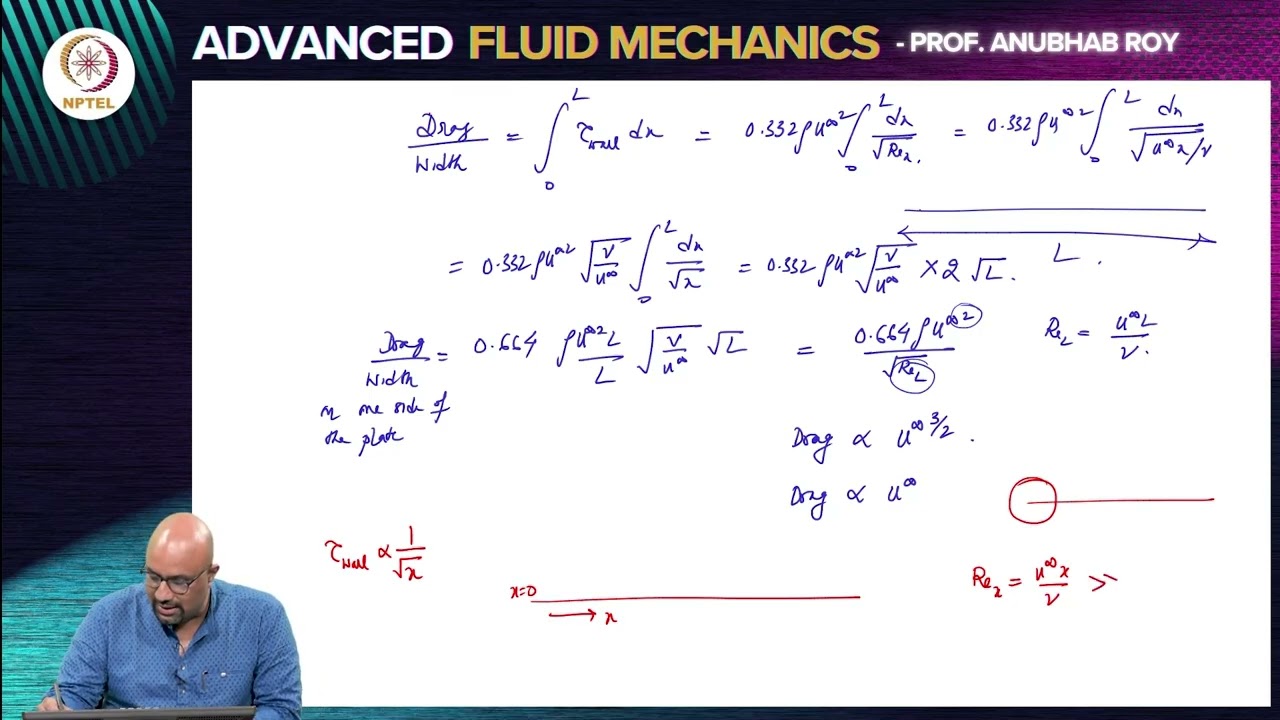


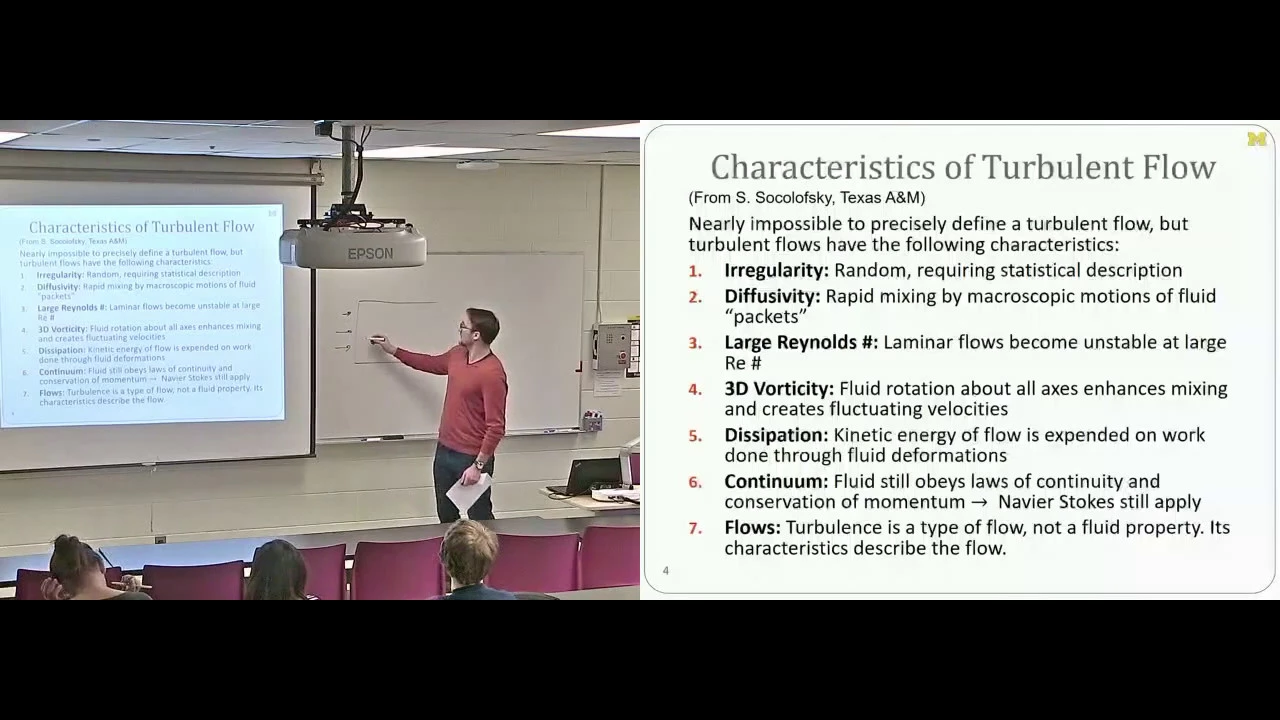

![[Aero Fundamentals #27] Turbulence Intensity](https://i.ytimg.com/vi/GRHkYc5Mx3s/maxresdefault.jpg)


![[Aeronáutica General] Clase Virtual N°13](https://i.ytimg.com/vi/afU7aVIrCyY/maxresdefault.jpg)






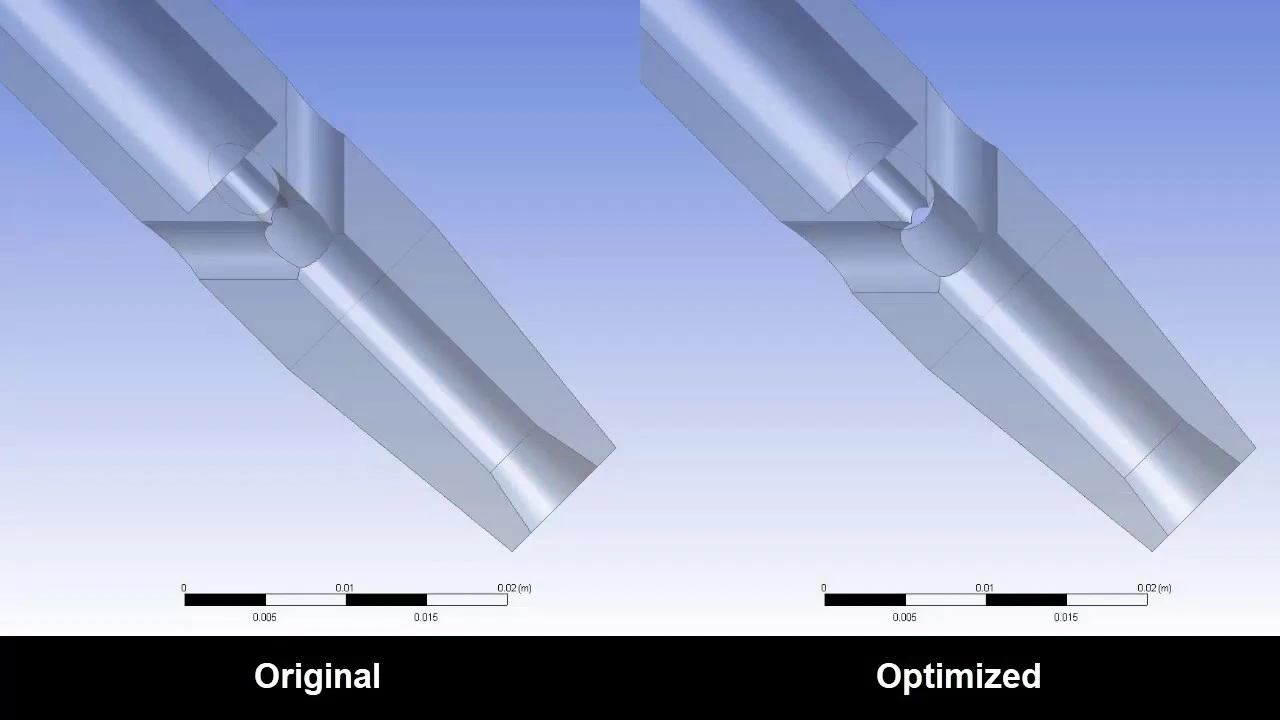

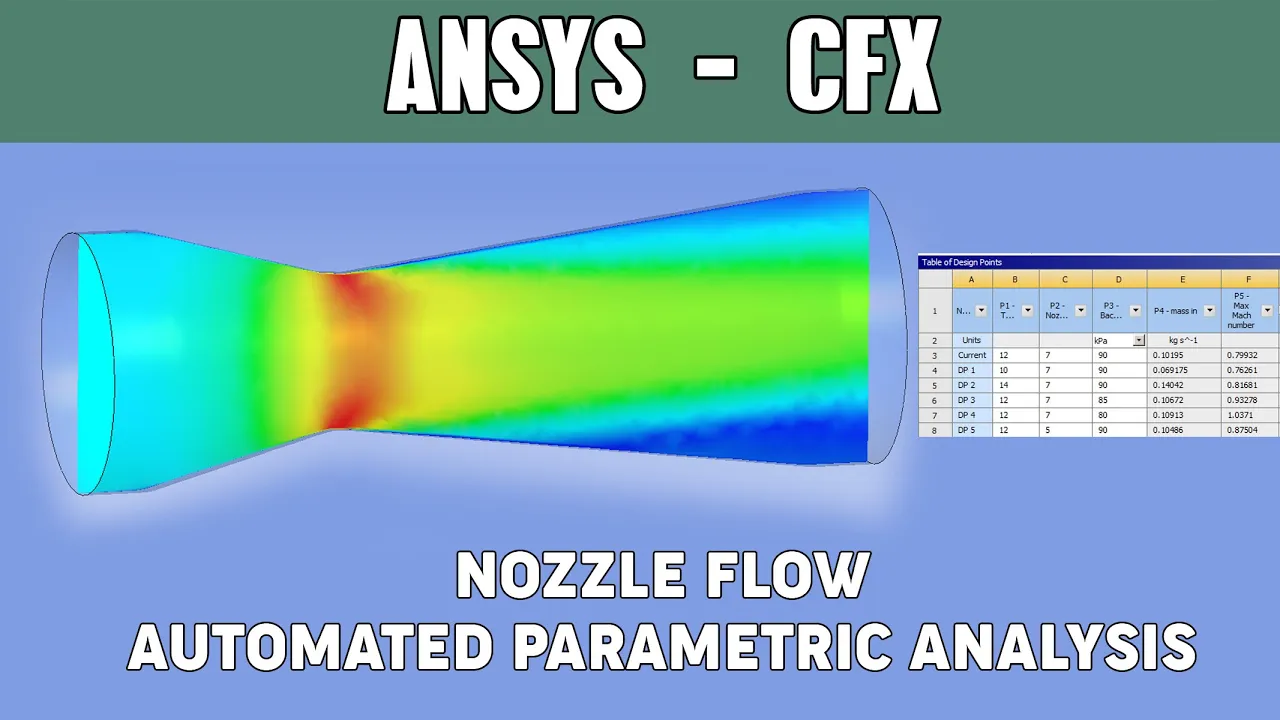








Wind tunnel contractions are essential components that convert large cross-sectional areas to smaller ones, increasing flow velocity through continuity and improving flow quality by straightening the flow; optimal contraction design involves using octagonal cross-sections combined with smooth third-order polynomial wall curves, which provide superior flow uniformity, thinner boundary layers, and lower pressure drops compared to circular or square alternatives, while also offering manufacturing advantages.
Wind Tunnel Contraction Design: Shapes and Performance
Added:Fundamental principles of fluid dynamics, specifically the Continuity Equation and Bernoulli's Principle regarding velocity and pressure changes in converging ducts.
Concepts of boundary layer theory, including boundary layer growth, skin friction, and the risk of flow separation in accelerating or decelerating flows.
Basic definitions of flow quality metrics, such as turbulence intensity, spatial velocity uniformity, and flow angularity.
General wind tunnel architecture, understanding the roles of the settling chamber, contraction cone, test section, and diffuser.
Advanced design methodologies for contraction curves, such as the Bell and Mehta formulation or bicubic polynomial profiles.
Computational Fluid Dynamics (CFD) modeling and shape optimization techniques for aerodynamic nozzles.
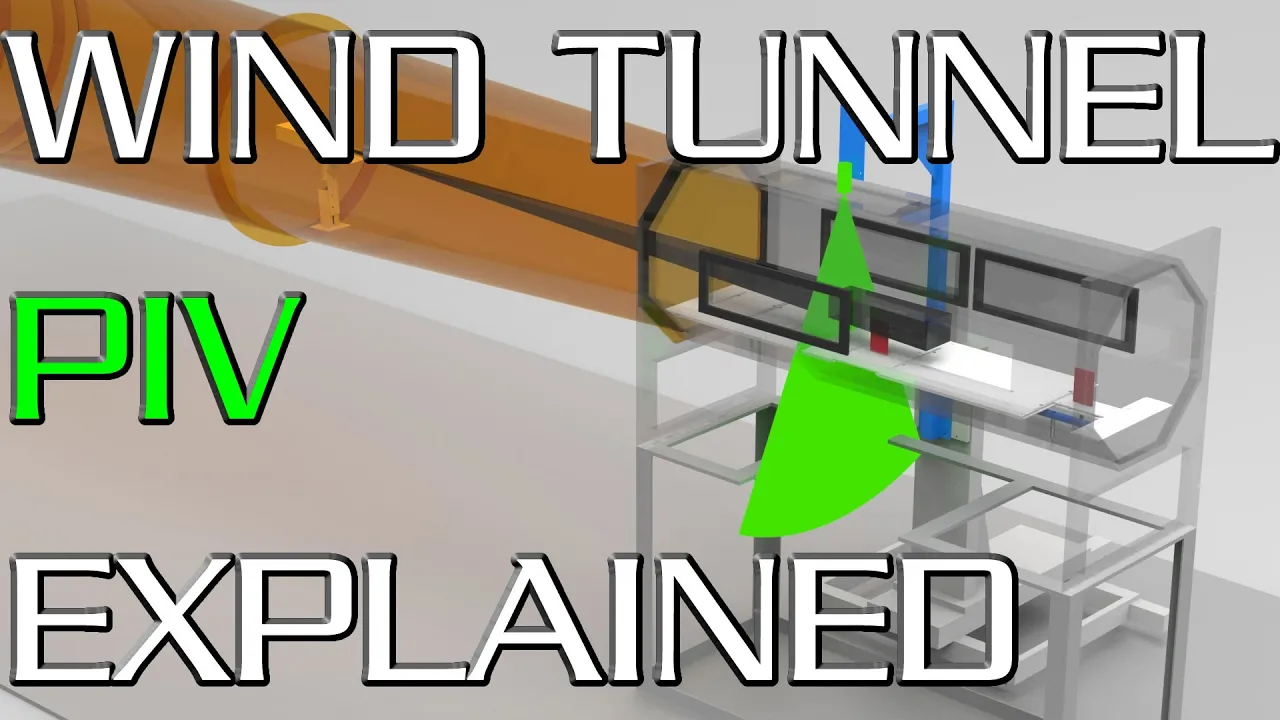
Experimental flow diagnostic methods (e.g., Hot-Wire Anemometry and Particle Image Velocimetry) to calibrate and validate wind tunnel flow quality.
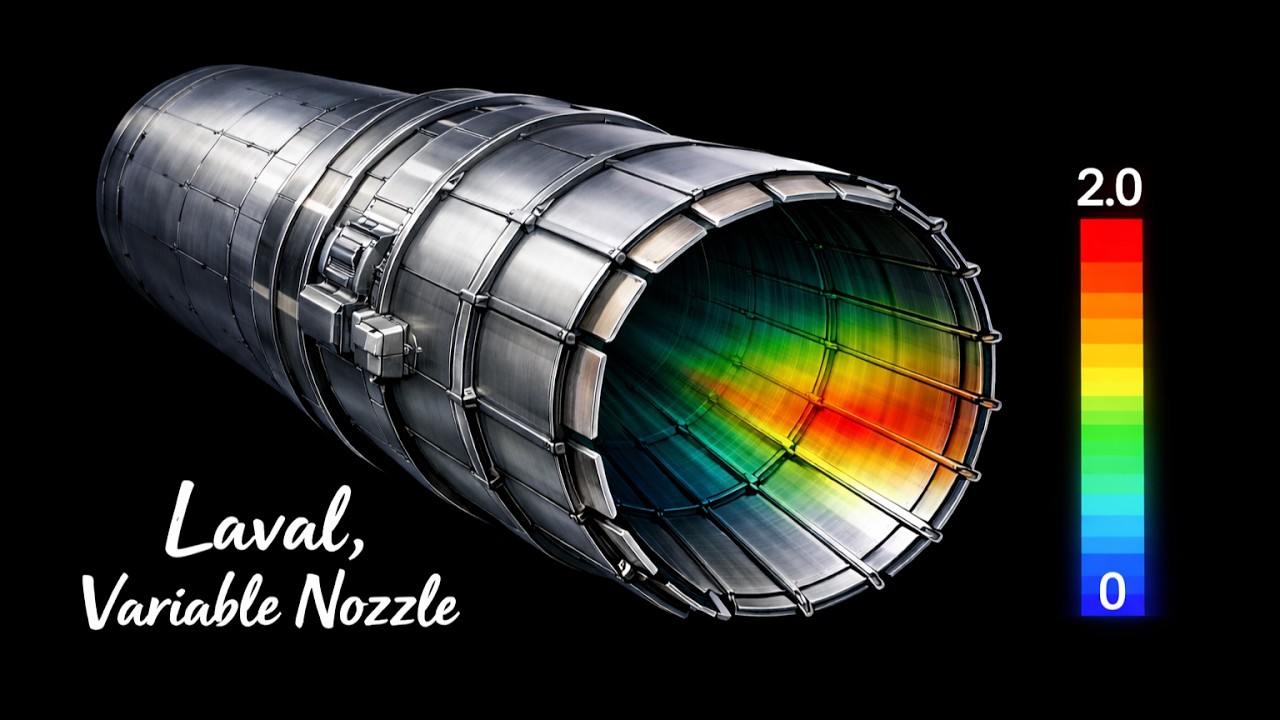
Supersonic nozzle design principles, including the Method of Characteristics for convergent-divergent (de Laval) nozzles.
680 views9likes25:46Original Release: 2022-09-03
this is periodic podcast number 45 and today we're talking about contraction design in wind tunnels the contraction is a very important part in wind tunnels so you have the fan this is pretty much in all wind tunnels you have the fan and then you have the flow conditioning section so you usually have a honeycomb then some meshes and then you have the contraction the contraction links the first half of the wind tunnel to the test section and the contraction is what it says it is it contracts from a very big cross-sectional area to a very small cross-sectional area and the reason why we have contractions there are two main reasons the first is that by reducing the the cross-sectional area we increase the velocity of the flow because you have the same amount of flow that needs to go through the density is the same the area drops so the velocity needs to increase just through continuity so that means we can get a much higher velocity than what the fan is outputting without having to run i found faster the second reason why contractions are very important are because is because the contraction makes the flow a much higher quality so what it does is it squeezes all the flow and it makes it go in the same direction even more so the honeycomb helps straighten the flow but the contraction does this even more so it's a very important part and there are contraction ratios that most people follow usually around a wind tunnel is usually between 5 and 15 depending on how good you want the flow to be with that comes a pressure drop which is a negative effect and you can also have separation and etc so that's why the contraction design is very important and that's what we're talking about today to do that we're going to be looking at a paper called a computational study necessary computational simulation study of fluid mechanics of low speed wind tunnel contractions and this is an open access paper you can find it in the link below and what they looked at were four different contraction wall shapes so you have the slope from so obviously with the contraction you go from high cross sectional area to your local sectional area and with that you have to have a slope because you need to reduce that in that area and you can have very different uh slopes you can have straight you can have a second order third order fifth order polynomial et cetera and they look at four different types they also look at the cross-sectional shape of the contraction so you can not only have a circular cross-sectional shape you can have a square rectangular or octagonal the circular one is obviously a very um desirable one from the point of view that the fan is usually circular so if you have a circular fan it's easy to mesh a circular cross-section with the fan the problem is that the test section is usually not circular it's usually square or rectangular so now you need to somehow mold this second this some circular cross section to this square cross section and then the corners become a very big problem where you have all these dead pockets of air because now you have to like sort of shove air into those corners to make the flow uniform that's very difficult what's more trying to curve a circular cross-section through a contraction so the walls have to curve and move it it's very difficult to manufacture alternatively you can have a square or rectangular cross-section for the contraction that makes it much easier to mesh with the test section and also with the with the corners you can alleviate a lot of the problems that you have with the circular cross-section but then measuring that with the fan becomes a problem so then you can get something called an octagonal one where it's an octagonal shape and that is sort of kind of the best of both worlds it's not perfect still but it's still it's very good in terms of how it performs and i look into these different cross-sectional areas as well so let's move on with the paper and talk about what they did so interestingly they say according to an iso standard and an astm standard so two different standards in the world they request that the flow uniformity and term intensity in a wind tunnel should be less than one percent now the terms density of less than one percent that's not necessarily the case depending on what your application is so for the wind tunnel application for sorry a wind engineering application a term intensity of one percent is quite low usually you want to get maybe five percent maybe even higher that's because it's supposed to replicate the outside conditions and wind is not usually very well behaved usually it's like one percent five percent ten percent then uh consensually not one percent or zero one percent so below one percent is usually for more aerodynamic wind tunnels for cars or for airplanes and stuff like that but a lot of wind tunnels like that like usually like i would say 95 of wind tunnels out there they want to have a temperature less than one percent there's only like five percent who want to have it higher to mimic wind engineering applications they say that in the paper result the contraction is the most critical component of a wind tunnel to influence the flow quality within the test section since it is located just upstream on the test section that is potentially true i mean i would argue that the fan is the most important part because without the fan you don't have anything now they're saying with the flow quality but also with the fan you know that does affect the flow quality so agree to disagree they say that the contraction is more effective in suppressing velocity variations in terms of densities in the longitudinal direction than in the lateral direction so that's really interesting it means that the terms density which is in the u velocity so the free stream velocity that's suppressed better with a contraction than the mu then the v and w velocity so the lateral velocities that's something to keep in mind then they talk about the contraction ratios so how much surface area you want how much cross-sectional area you want to reduce by they say the meta and bradshaw which are two um well-known researchers in aerodynamics i suggested that a contraction ratio between nine six and nine are usually sufficient and that is true most wind tunnels will be around six to nine you can get lower five you can get higher for example one wind tunnel they say the nist has a contraction ratio of around 15 and that's very high what that means is you get a very good quality flow you have very high speeds the problem with that is that you can potentially have worse like some separation but also a higher pressure drop which means that the fan has to work harder to shove all the air through so these are some downsides and also it means you need to might have a much bigger room to put your wind tunnel in if your test section you want a cross-sectional area of one meter one square meter that means you need to have a cross-sectional area for the contraction of 15 times at 15 square meters that's a much bigger structure which means you need to have a much bigger room and that also means it needs to be longer so you can contract in a longer space so you don't have problems with flow separation and with even greater pressure drops so these are trade-offs they say that although a very long contraction can be used to avoid flow separation it usually results in a thicker boundary layer and that's true so the longer that the flow can travel across the surface the thicker the boundary layer will be that's just normal now you can get rid of the boundary layer there are badger layer control devices for example you can have a scoop at the front of your test section what this means is at the bottom you have this raised surface the test section is raised from the contraction exit so the boundary layer actually goes into this group and then the rest of the flow the claim flow hits the test section so that's how you get rid of boundary layer now another way is boundary layer suction so at the front of the test section you have a suction zone where it sucks out all the veloci all the flow um on the surface and that's the boundary layer and you get rid of the boundary layer that way and can have other things like for example the tangential blowers and i'm not going to go into those because they're very specific and they are difficult to hear it right it's usually a boundary layer scoop and suction which are quite common they say that the as we mentioned earlier the curve of the contraction can be anything it can be straight it can be second order polynomial so quadratic or it can be a third order or quartic or whatever they say that here some researcher called hernandez recommend and and another researcher called sue they both recommended a third order polynomial curve because that will give the best exit flow conditions but then bell and meta they came along and they said we'll see your third order and we'll raise your fifth order and they say that it's better for avoiding flow separation giving minimum boundary layer thicknesses and providing better flow uniformity as compared to the third order and even a seventh order so don't try to beat us on that we'll see if that's true or not so is third order better than fifth order or fifth order better than third order this is one of the debates that's brewing in this paper it's quite juicy so they say that their present work aims to establish a benchmark to see what contraction shapes are best and what cross-sectional shapes are good they say that an axisymmetric cross-section with a circular cross-sectional shape is believed to be optimal for achieving a uniform flow however that's not strictly true actually because in the corners you do get worse flow but it's also very hard to manufacture which means that the cost goes up then they say that meta has mentioned that the corner flow for well-designed contraction is localized and does not affect the flow quality over most of the span of the test section that seems a little bit dubious to me like saying that the flow in the corners don't affect your wind tunnel is kind of like it seems like a researcher who doesn't really want to fix this problem so they just say oh yeah it's not not important i would consider that it is important because it does affect the pressure and the boundary layer blew it up and etc so we'll see if that's the case or not and then they say that in fluid mechanics they look at chrome cross-sections uh circular square and octagonal which we mentioned earlier and rectangular which is kind of like circular it's kind of like square sorry then they said that they looked at the circular square and octagonal and the hydraulic diameters were the inlet was 1.1 meters and the exit was 3.5 this gave a contraction ratio of almost 10. so it's quite high this means that you're going to have a very good flow quality and with the contraction shape so the the path that the traction will follow they have four different attraction paths three are third order polynomials and one is fifth order polynomial you know we mentioned earlier how some researchers wanted to raise to the fifth power instead of just third so they want to look at that and they have a graph here in figure one for those of you playing at home and it shows the it shows the um these curves so for the first contraction which is a fifth order it's pretty nice it's pretty nice it's fairly gentle the second order which is third polynomial is probably the worst like i can just see right here that is it's it's not very gentle it's it's got a much steeper gradient and then it has a couple inflection points they're not good third and fourth contractions are even better like they're really the best they're very nice and gentle number four looks really nice and you can actually get a good idea as to how good a contraction will perform just based on this this slope here if it's very gentle it's just going to perform much better you don't want it to be sharp to be a gradual incline and not um have too many infection points so the more smooth and gentle the better and then they looked at their contraction they said they're going to look them at six meters per second and 60 meters per second because you can have different boundary layer formations different uh flow separation formations in the contractions they want to look at both of these and interestingly they say here according to bachelor a contractual ratio of 9.88 which is what they have can reduce the actual the axial velocity fluctuation by a factor of 0.24 therefore the terminus intensity of the axial velocity at the contraction exit will be about 40 times smaller than that of the contraction entrance that's a lot i mean if you think about it if your wind tunnel has a germs density of 0.5 percent then that means at the start of the contraction it's a 20 so if your velocity there is 5 meters per second it can range between 4 and 6 meters per second and that when you think about it actually makes sense because with the wind tunnel what you have is your fan upstream then your honeycomb then your mesh now the fan does not uniformly accelerate the flow depending on the type of fan you have so if you have just an off-the-shelf blade the flow as you go further out from the center of the fan the flow is going to be faster because the blade is moving faster it's doing more work on the flow now if you have blades that are designed well it means they won't because you'll take into account that increase in velocity as you go further out the radial velocity of the tangential velocity sorry but in the middle of the fan regardless of what blade you have the middle of the fan is going to be the center rod and there isn't going to be any flow acceleration at this point because there are no blades so you can have this dead spot in the middle so that does make sense in terms of having a term density of 40 times more you have this fan which doesn't accelerate the flow uniformly that could make sense now let's move on to their results so they look at the effect of the contraction wall shape so remember how we said that there are four different um slopes and they range from being pretty shoddy to really nice and smooth and they say in all four all four investigators contractions deliver barely distinguishable velocity contours the pressure loss of contraction might be a concern about the long-term operating costs so they have first of all this figure which figure 5 for those who play at home it shows the axial velocity and aesthetic pressure contours with the first case so this was the worst slope in my opinion and it shows that as you'd expect as you go further through the contraction the actual velocity increases dramatically and static pressure drops this means that you have a pressure drop and the pressure drop means that the fantastic work harder to push the flow through which means you have to use more energy which isn't a huge deal considering that the fan is using a lot of energy to begin with but over time it can stack up and they plotted the they um reported the pressure drops along the contraction at 60 meters per second exit and what they found was that it's around 60 to 75 or sorry 60 to 80 pascal drops that's not too bad but it is something now interestingly one cool thing they have here is they break down the different components of the wind tunnel and the pressure drops along them so they have the honeycomb and they show that the pressure drop is only 12 pascals compared to five screen meshes which is 160 pascal dropper that's huge now that's not unexpected if you listen to podcast number 32 which is about two instances we go through how mesh screens affect the pressure drop and this is in line with what we would expect it's quite a big drop it does depend on how open these screens are then that also affects the flow quality so this is um really there's a massive knockout effect the contraction that makes up for about one-sixth of the pressure drop in this wind tunnel so that's quite a lot and that's why you want to optimize it now they say that the velocity profiles at the contraction exits are shown in figure 6 and let's look at that it's it they look quite they look very similar but the contraction number four which i mentioned earlier i thought looked the best they have the smallest boundary layer that makes sense they um also have the axial velocity standard deviation of contraction two which was the that was third order order polynomial which was okay it's higher than the other three contractions the other three contractions were very similar and they said that this might result because the higher first second order derivatives of the slope so let's talk about that what they have are the second order derivatives of these two slot of these four slopes and what this means is it shows you how rapidly the slope changes how rapidly this surface changes when you have a very high like a very non-uniform first derivative so for example in here you have a peak on one of them that means that the geometry is changing quite a lot and there's an inflection point the second derivative is even worse so you have some discontinuities and they are disconnected by a long way this means that the contraction ratio the contraction is very quite angular in terms of relatively speaking and that's not what you want you want to be very smooth i mentioned earlier contractions three and four are much better they're much smoother in both the first second derivatives so that's how you know that they're better so we conclude from here that the first and third and fourth derivatives are quite good the sorry the first third and fourth contractions are quite good number four being the best and number three being quite good too which is uh what i mentioned earlier considering that the third and fourth contraction slopes or geometries were much smoother which is what you want so now they talk about the contraction cross-sectional shape actually i forgot to mention this finding also indicates that the fifth order polynomial was not the best the third order was actually better so when meta and bell raised to the fifth that wasn't necessarily the best case scenario and the third would actually win out in the end so that's a bit of an upset there so let's move on and talk about the contraction cross-sectional shape now we've gone through the geometry let's go through the the cross-sectional shape they say for the same cross-sectional the same contraction wall shape the differences in pressure loss among the three different cross-sectional shapes are less than 10 pascals so what that means is they form quite similarly in terms of the pressure drop that's okay and they say that the wall shape is a more dominant factor for the pressure loss along contraction than the cross-sectional shape regarding the pressure loss so that means is the the path that the contraction follows so whether it's third order or fifth order that affects the pressure loss far more than the cross-sectional shape by a long way actually by about double actually now they said that the case with an octagonal cross-sectional shape shows a better performance in terms of mechanics with a thinner boundary layer so let's look at that quickly they have a figure 11 here and they plot the cross-section of a square versus a octagonal cross section and they look at the velocity in this cross section if you look at the corners the boundary layer and the square one in the corners okay it's not bad but it's not as good as the octagonal shape and both of these i suspect are going to be much better than the circular one once you hit the test section because the test section now you have those corners so the octagonal one performs very well in terms of the boundary layer there's always there's very little dead regions they're very little dead regions and evangelii is much thinner so that's good they also say that the octagonal cross-section performed better when it came to the pressure loss it's lower so that's even better again and they also say that their experience shows that the octagonal one has a lower difficulty for manufacturing and a lower cost which is better again so before we move on i just want to say make sure you check out video products check out the information we do so we do an atmosphere hawk which actually measures the temperature barrier pressure and humidity in your wind tunnel which is what you need when you want to accurately measure the density or calculate density the reason why you need to have an accurate density is because the density affects pretty much everything you do i mean it affects the velocity of your internal effects your non-dimensional coefficients such as the lift and drag operation that you will calculate it will affect the cfd that you have when you want to validate it you want to have the right density in your cfd to match your wind tunnels so you need to have the density correct this instrument does that for you and it's really good like it it's very easy to use and it just does it accurately also check out our piv and traverse system we also have a new flowvis method called the rayleigh scattering flavors method we're getting that up online as well so check that out as well check out our courses we do theory like this we also do experiments and we also do cfd to make you better at nemesis we also do the international rx conference which is accomplishment every year so check that out so let's get back to this paper so in conclusion they said that i'll read the conclusion because they break it down into four nice parts they say the different contraction will shape investigating a study result in the pressure difference the pressure loss difference up to 17 pascals rejuvenating to about four percent in the pressure loss of the entire wind tunnel system so what they're saying is depending on the contraction slope that they employ this pressure loss difference could be up to 20 pascals almost which is a four percent change in the pressure loss in the entire wind tunnel now compared to the cross-sectional shape there's only about a 10 pascal drop or tampascal difference so that means that the cross-sectional shape doesn't really affect the pressure loss nearly as much as the contraction slope i also say that the first and second derivatives of the different contraction wall shape equations can provide a hint for the quality comparing the flow characteristics at the contraction exits so what this means is when you have much better behaved first and second derivatives so they're much smoother and and continuous the quality of the flow is usually better that's to be expected because if you have smoother first second derivatives it means that the there are fewer inflection points and that's what you want they also say that the octagonal cross-sectional shape of a wind tunnel shows a better fluid mechanics performance in terms of thinner boundary layer a lower axial velocity standard deviation within the core and a lower pressure drop so that's again what we we kind of expected that because the octagonal one is halfway between the circular and halfway between the square and so it's kind of the best of both worlds it's a good compromise and they're much easier to manufacture as well i mean even the square one i'd like to install a few square contractions and they're much harder than you'd expect because not only are they moving in terms of one dimension but then there also is on the sides they get smaller so you have to make sure you align them properly otherwise if you don't align them properly you lay for example the floor you lay the side one and they don't match up properly so you need to jiggle them around and you're much higher than you expect octagonal is much easier because you don't have to get as much of the surface area right in one go you only have a smaller surface area to worry about so they are easier to install as well i can i can tell you that so finally they say from an engineering application a wind tunnel contraction with octagonal cross-sectional shape not only has better performance in terms of the flow than the circular square but it's also lower in terms of lower difficulty in terms of manufacturing and cost and compared to the cross-sectional circular shape the octagonal cross-sectional shape has a larger cross-sectional area which results in a small blockage ratio so let's quickly touch on this podcast number 39 we're going to blockage ratio so if you want to get more about that listen to that but just quickly here the blockage ratio is very important because it affects how accurately your fluid is being replicated in a wind tunnel compared to real-life conditions if you have a bigger blockage ratio it means that the flow has to accelerate more around your body just to get through and that changes the flow of physics and changes the drag and lift of this object and all the other characteristics as well so technical cross-sectional shape increases the cross-sectional area which reduces the blockage ratio and that's what you want okay so that's the end of this podcast make sure to like and subscribe check out what we're doing is check out the information we do check out the courses we do check out the consulting we do if you've got a problem we can solve it and check out the courses we do that's why the conference we put on every year links in the description peace out amigos [Music] you
Up Next

4:44
Reynolds Number Explained: Laminar vs. Turbulent Flow
@AliyaBurkit
63.1K views•2020-04-23
30:32
Ultrasonic Transducers: Resonant Frequency Measurement and Horn Design
@imajeenyus42
229.9K views•2017-02-22

54:16
Polymer Environmental Degradation: Mechanisms & Stabilization
@iit
1.8K views•2012-07-10

33:39
How a Student's Question Saved a NYC Skyscraper from Collapse
@veritasium
22.8M views•2025-04-26
Related Study Plans & Knowledge Roadmaps
Structured learning paths in Engineering
engineering
Building Acoustic Levitators: Physics & Arduino
01The Physics of Sound and Standing Waves
02Piezoelectric Transducers and H-Bridge Drivers
03Arduino Programming: Generating 40 kHz Signals
+ 2 more learning modules
14h5 modules
Explore Roadmap
engineering
Building Peltier Cloud Chambers: Particle Tracks
01Cosmic Rays & Cloud Chamber Physics
02Thermoelectric Cooling (TEC) Fundamentals
03Custom Liquid-Cooling Loop Design
+ 2 more learning modules
18h5 modules
Explore Roadmap
engineering
Yagi-Uda Antennas: Modeling, Build & VNA Test
01Introduction to RF and Antenna Fundamentals
02Yagi-Uda Antenna Design Principles
03Antenna Modeling and Simulation in 4NEC2
+ 2 more learning modules
18h5 modules
Explore Roadmap
engineering
ECG Monitor Design: Op-Amps, Filters & Noise
01Electronics & Breadboard Basics
02Op-Amps and Instrumentation Amplifiers
03Bioelectricity and ECG Fundamentals
+ 2 more learning modules
18h5 modules
Explore Roadmap