







![Why Triangles Are So Powerful in Construction [ID0818]](https://i.ytimg.com/vi/-3L2lex9OE4/maxresdefault.jpg)











![Bewegliche Lasten [de]](https://i.ytimg.com/vi/ZmmsgZ1bDAg/maxresdefault.jpg)


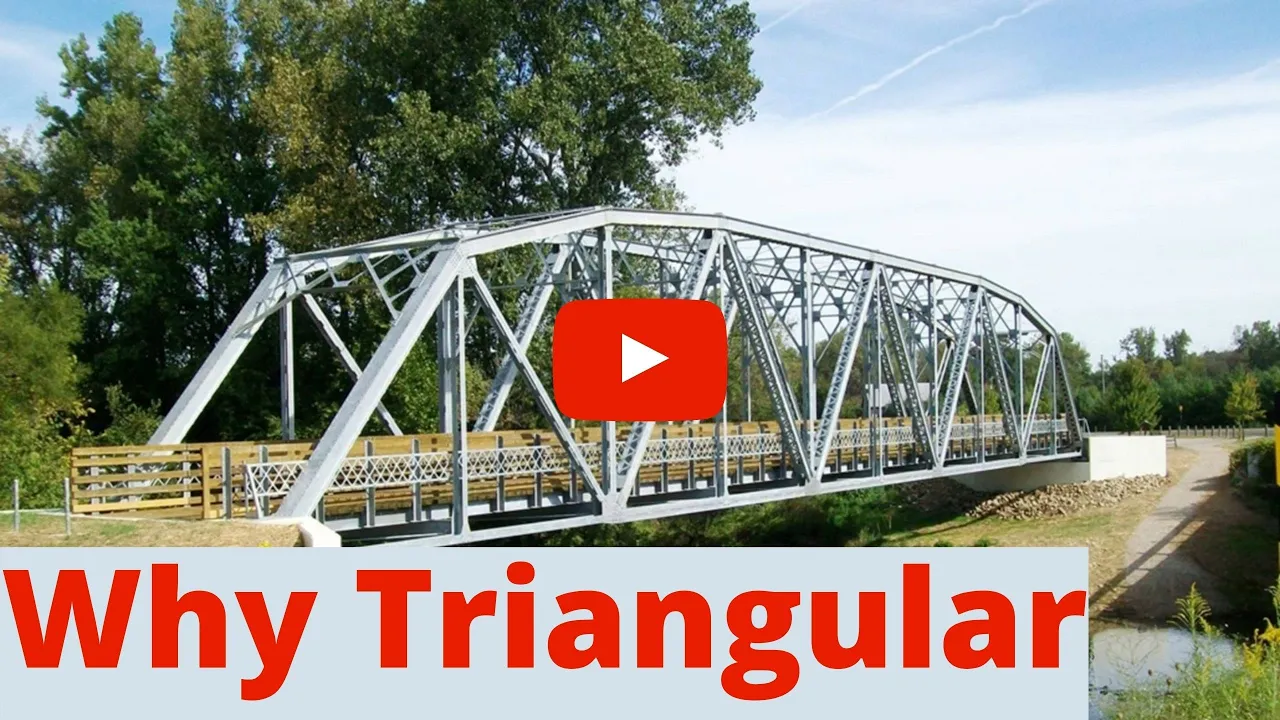
A truss bridge consists of interconnected triangular units formed by top chords (under compression), bottom chords (under tension), and web members (alternating between tension and compression) that work together with abutments, piers, decking, floor beams, and stringers to efficiently distribute loads across long spans using lightweight materials.
Truss Bridge Components Explained: Structural Engineering Guide
Added:Basic concepts of static equilibrium, including forces, moments, and Newton's laws of motion in stationary systems.
An understanding of fundamental mechanical stresses, specifically tension, compression, and shear.
The general definition of a structural truss and why triangles are used as the primary geometric unit for stability.
Vector resolution in physics to understand how forces are decomposed into horizontal and vertical components.
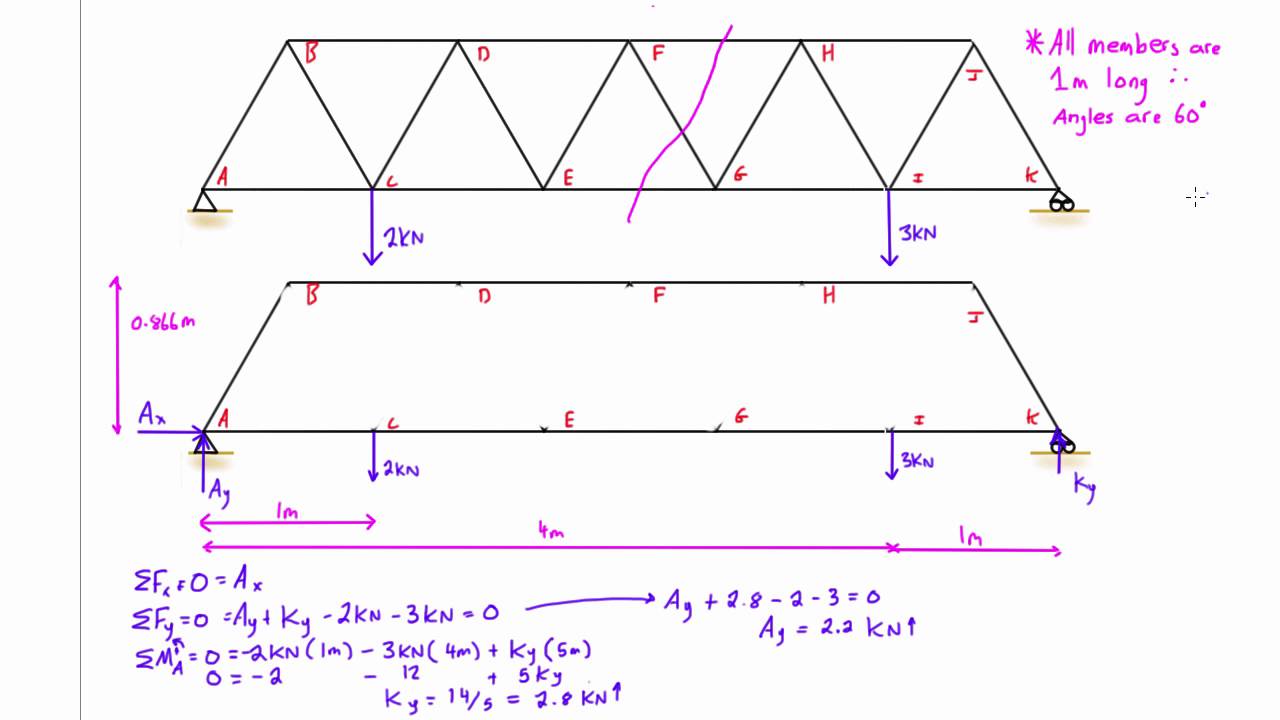
Analytical methods for determining internal member forces, specifically the Method of Joints and the Method of Sections.
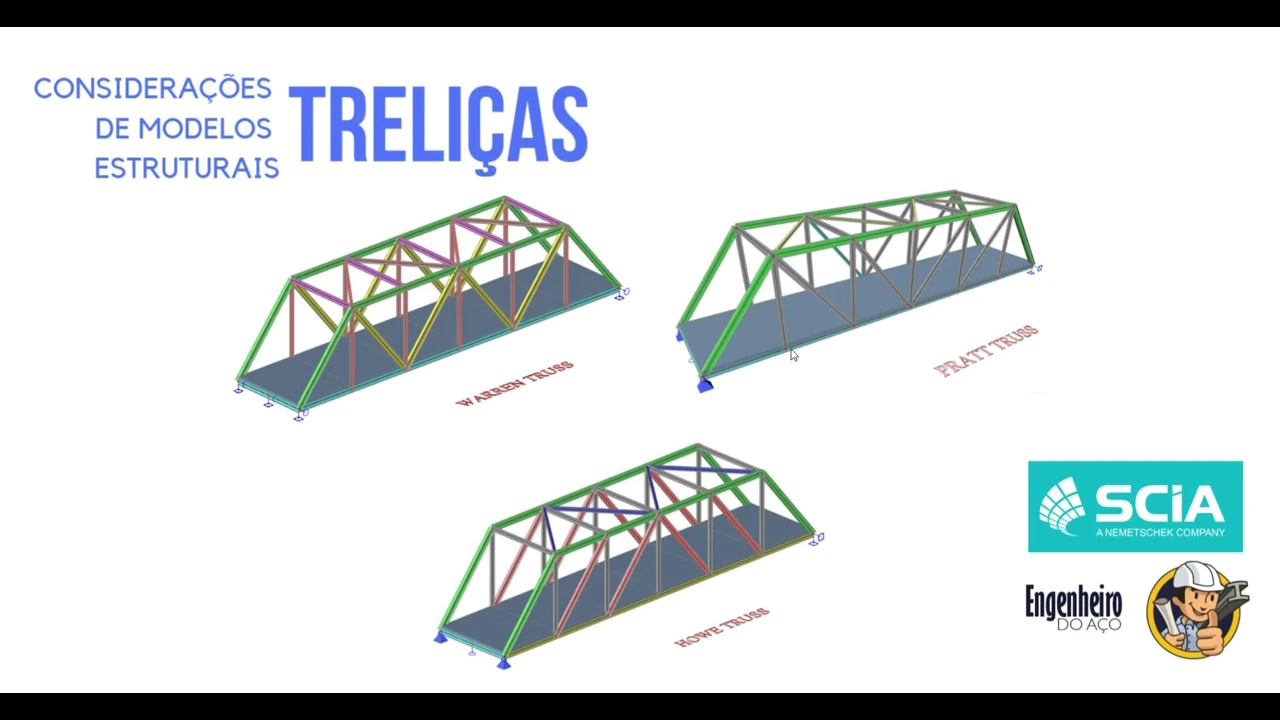
A comparative study of different truss bridge designs, such as Pratt, Howe, Warren, and K-trusses, and their specific structural advantages.
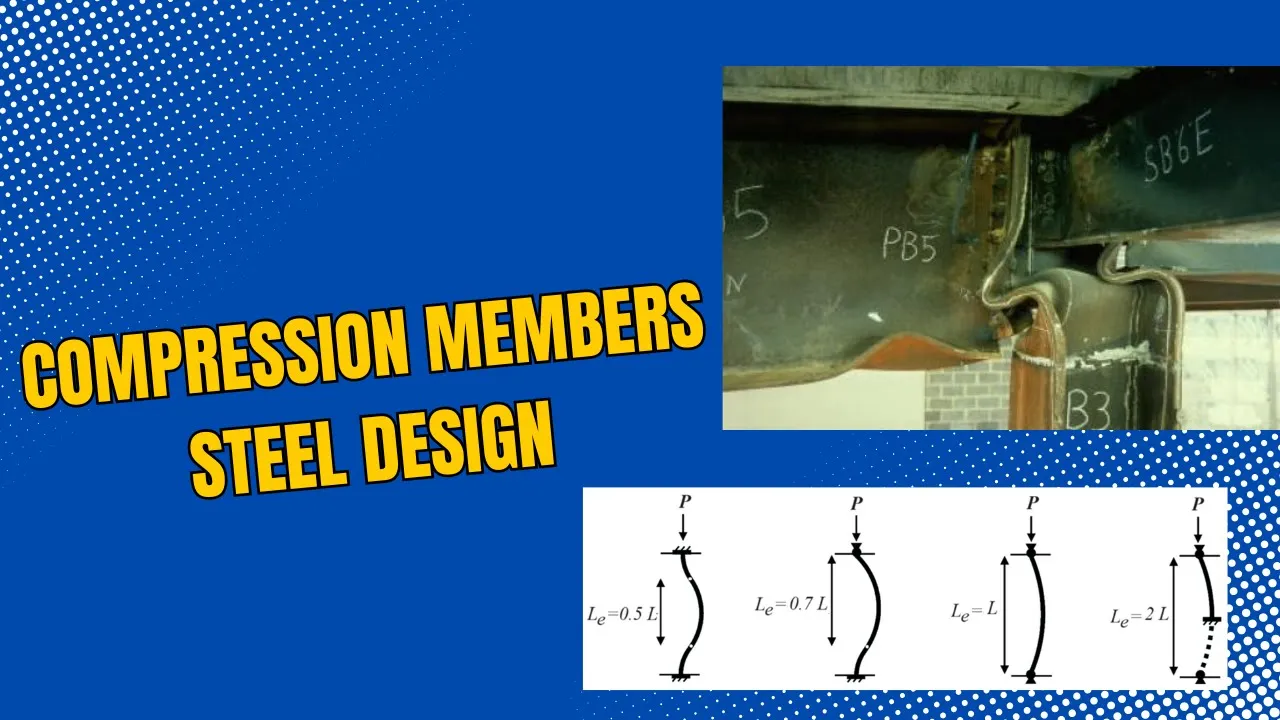
The study of structural failure modes, including member buckling under compression and material yielding under tension.
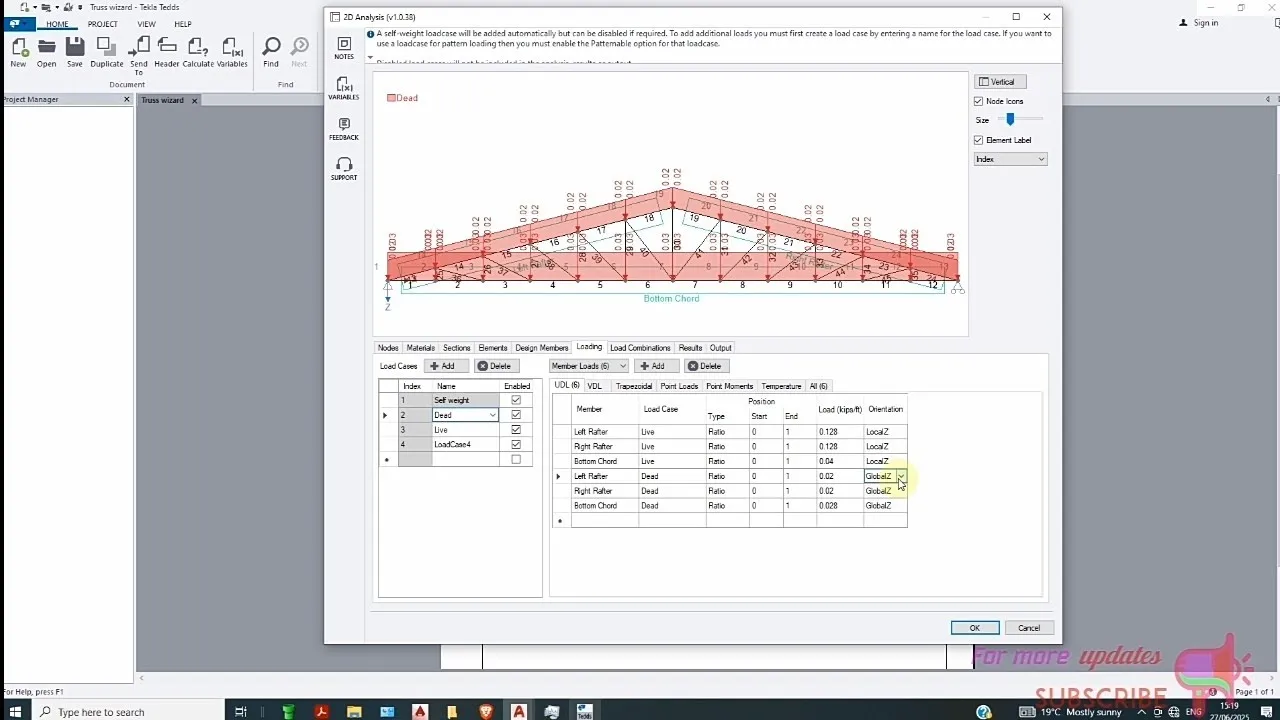
Introduction to structural engineering software for modeling truss deflection and stress distribution under moving loads.
107 views2likes3:26Original Release: 2025-08-15
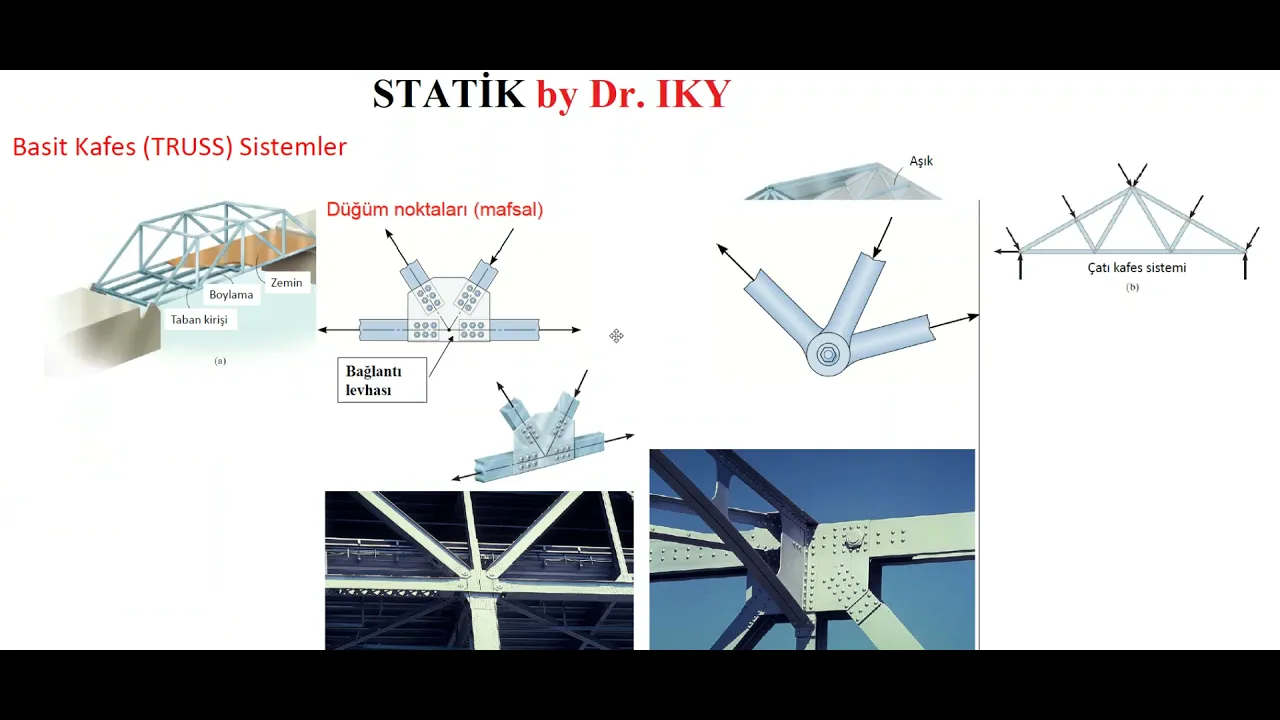
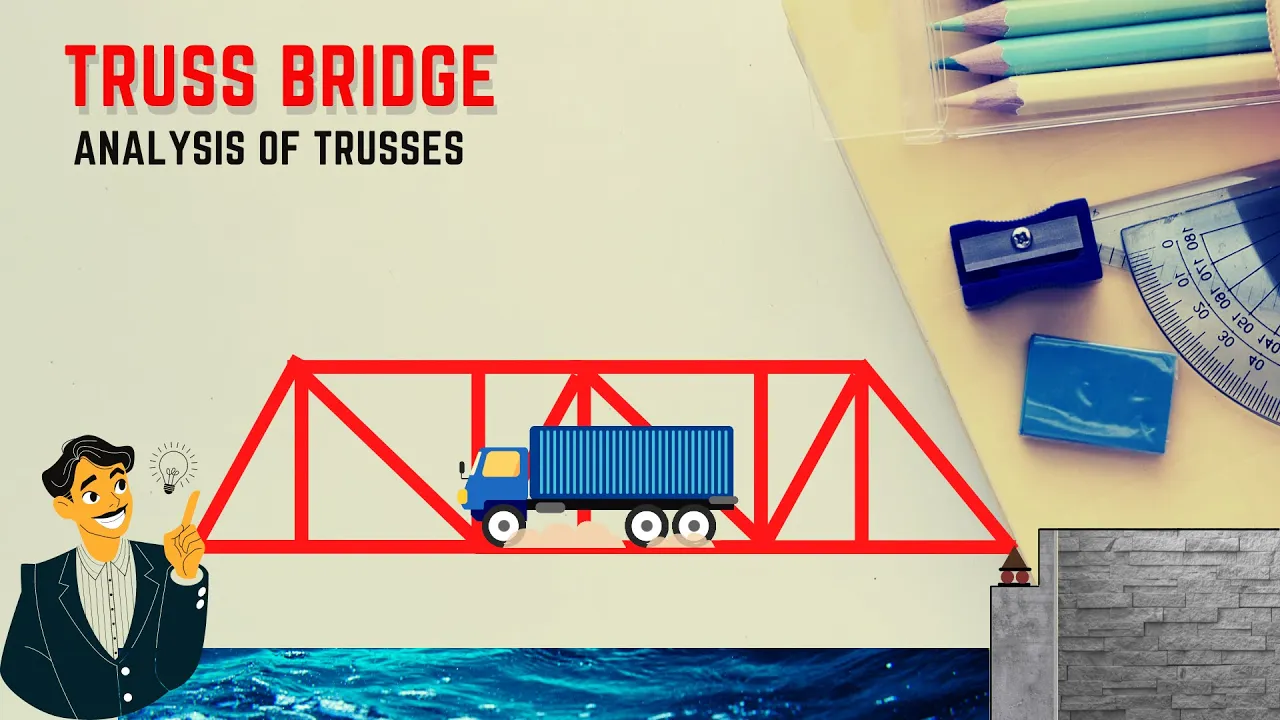
What are the main components of a truss bridge? Have you ever wondered what makes a truss bridge so strong and efficient? Let's break down the main components that come together to create this impressive structure. A truss bridge primarily consists of several key parts that work in harmony to support loads and span distances.
First, we have the top cord. This is the upper longitudinal member that runs along the length of the bridge. It usually experiences compressive forces and forms the upper boundary of the truss structure. Next is the bottom cord which is the lower longitudinal member parallel to the top cord. This part typically carries tensil forces and forms the bottom boundary of the truss.
Now let's talk about the web members.
These are the internal diagonal and vertical members that connect the top and bottom cords. They create a series of triangular units within the truss.
This design is essential for distributing loads efficiently.
Depending on the load and design, web members can be in tension or compression.
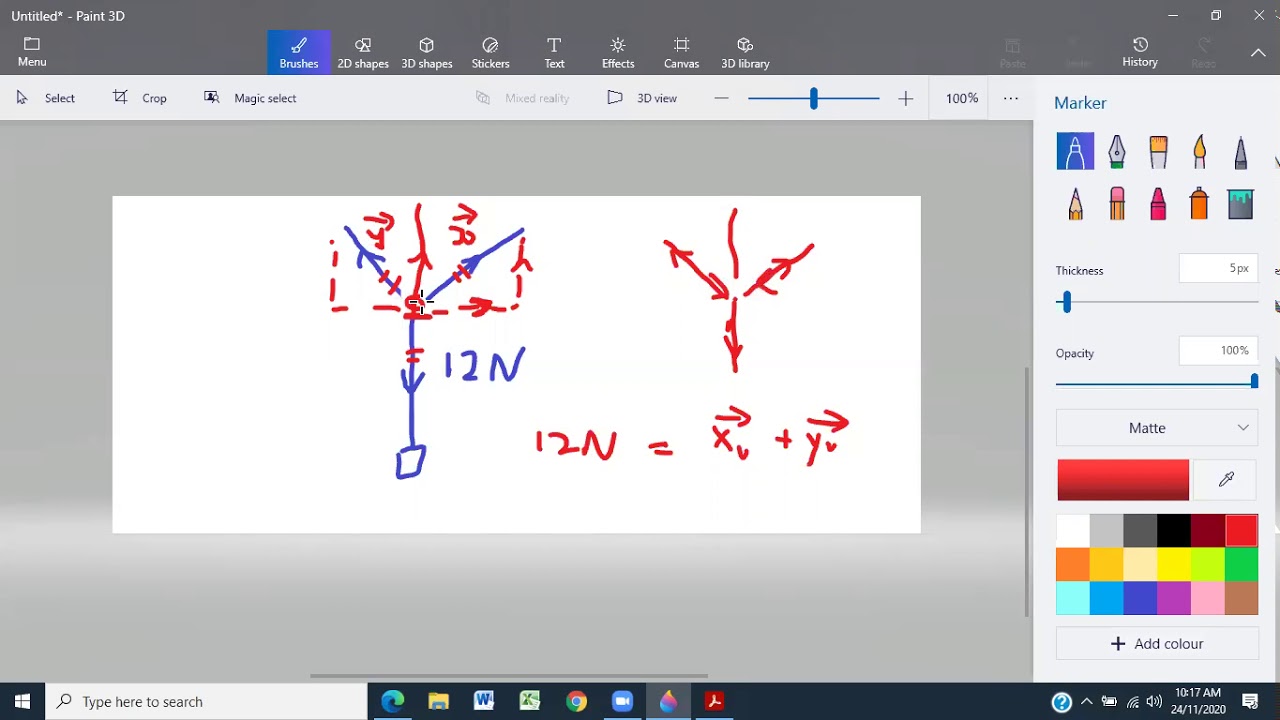
Another important component is the panel points also known as joints. These are the locations where the cords and web members intersect and connect. Panel points play a critical role in transferring forces between members, ensuring the structural integrity of the truss.
Moving on, we have the abutments and peers. The abutments are the supports at the ends of the bridge while peers serve as intermediate supports. These components hold the bridge up and transfer loads to the ground.
The decking is another vital part of a truss bridge. This is the surface on which vehicles or pedestrians travel. It is supported by floor beams and stringers which are connected to the truss.
Speaking of floor beams and stringers, floor beams run transversely between the trusses and support the decking.
Stringers run longitudinally on top of the floor beams, helping to distribute loads from the deck to the floor beams.
From a structural engineering perspective, the design of a truss bridge relies on the geometric stability of triangles formed by these members.
The top cord is generally in compression while the bottom cord is in tension. The web members alternate between tension and compression based on their orientation and the load applied. This efficient force distribution allows truss bridges to span long distances using relatively lightweight materials.
In practical bridge design, engineers consider the type of truss such as Pratt, how or warren. They also take into account the materials used which can include steel, wood or fiber reinforced polymers. Additionally, they assess the expected loads, including live loads like vehicles and pedestrians, as well as dead loads like the bridgeg's own weight.
Overall, the main components of a truss bridge work together to create a stable and efficient structure capable of supporting significant loads over a span. Understanding these components is essential for anyone interested in bridge design and structural engineering.
Up Next
5:20
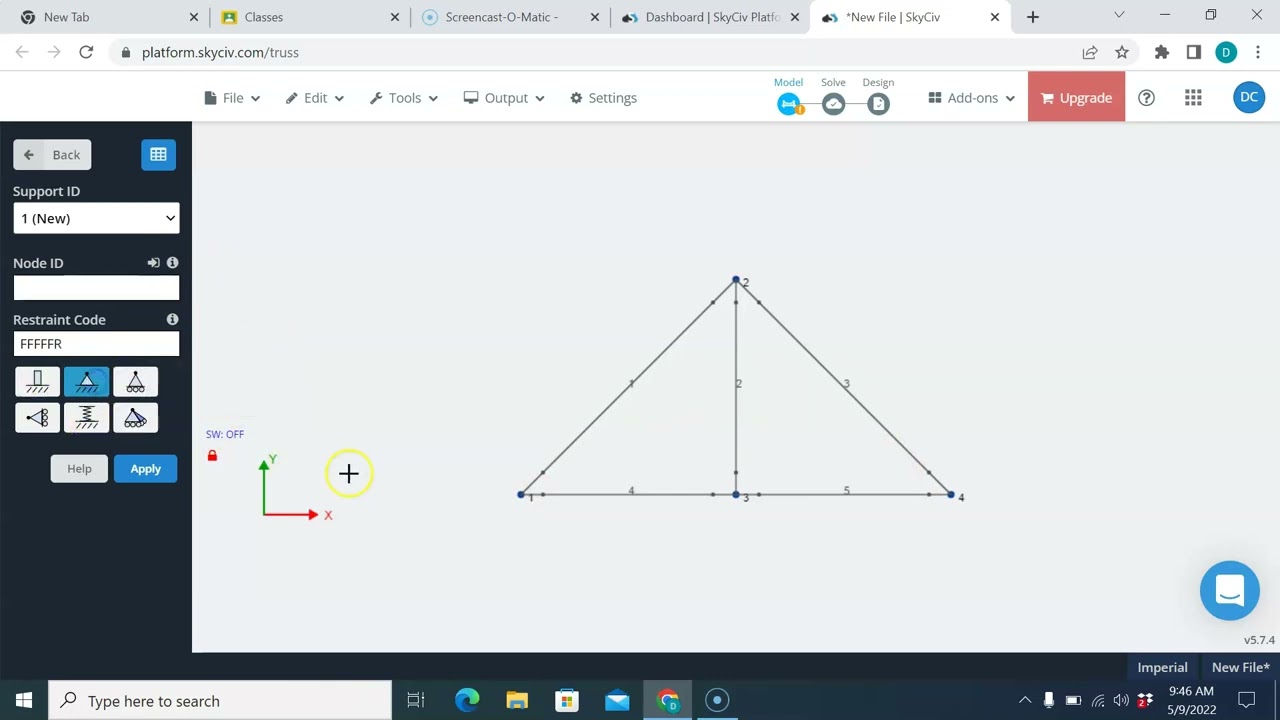
SkyCiv Truss Tutorial: Analyze Structures Step by Step
@coopteaches1560
3.4K views•2022-05-09
30:32
Ultrasonic Transducers: Resonant Frequency Measurement and Horn Design
@imajeenyus42
229.9K views•2017-02-22

54:16
Polymer Environmental Degradation: Mechanisms & Stabilization
@iit
1.8K views•2012-07-10

33:39
How a Student's Question Saved a NYC Skyscraper from Collapse
@veritasium
22.8M views•2025-04-26
Related Study Plans & Knowledge Roadmaps
Structured learning paths in Engineering
engineering
Building Acoustic Levitators: Physics & Arduino
01The Physics of Sound and Standing Waves
02Piezoelectric Transducers and H-Bridge Drivers
03Arduino Programming: Generating 40 kHz Signals
+ 2 more learning modules
14h5 modules
Explore Roadmap
engineering
Building Peltier Cloud Chambers: Particle Tracks
01Cosmic Rays & Cloud Chamber Physics
02Thermoelectric Cooling (TEC) Fundamentals
03Custom Liquid-Cooling Loop Design
+ 2 more learning modules
18h5 modules
Explore Roadmap
engineering
Yagi-Uda Antennas: Modeling, Build & VNA Test
01Introduction to RF and Antenna Fundamentals
02Yagi-Uda Antenna Design Principles
03Antenna Modeling and Simulation in 4NEC2
+ 2 more learning modules
18h5 modules
Explore Roadmap
engineering
ECG Monitor Design: Op-Amps, Filters & Noise
01Electronics & Breadboard Basics
02Op-Amps and Instrumentation Amplifiers
03Bioelectricity and ECG Fundamentals
+ 2 more learning modules
18h5 modules
Explore Roadmap