





















The G-Rex100M device enables efficient, closed-system harvesting of expanded CAR-T cells by using optical sensors to automatically detect air bubbles and stop media drainage at 90% volume, leaving a 10% residual volume (100ml) that can resuspend cells without disturbing the cell pellet, allowing collection of 3 billion cells in under 5 minutes.
Closed-System CAR-T Cell Harvest with G-Rex100M and GatheRex
Added:Fundamentals of CAR-T cell therapy, including how T-cells are genetically engineered to target cancer cells.
Basic principles of cell culture and expansion, particularly the growth requirements and metabolic needs of immune cells in vitro.
The concept of closed-system biomanufacturing and its role in maintaining sterility and meeting Good Manufacturing Practice (GMP) standards.
The operational mechanism of gas-permeable rapid expansion (G-Rex) bioreactors and how passive gas exchange supports high-density cell growth.
Downstream processing steps post-harvest, including cell washing, concentration, and formulation for patient infusion.
Quality control (QC) and release testing protocols to assess cell viability, purity, transduction efficiency, and sterility.
Cryopreservation techniques and cold-chain logistics required to safely store and transport cellular therapies.
Scale-up strategies and the transition from semi-automatic systems to fully automated, closed-loop manufacturing platforms in commercial cell therapy.
5.6K views16likes4:59Original Release: 2015-06-25
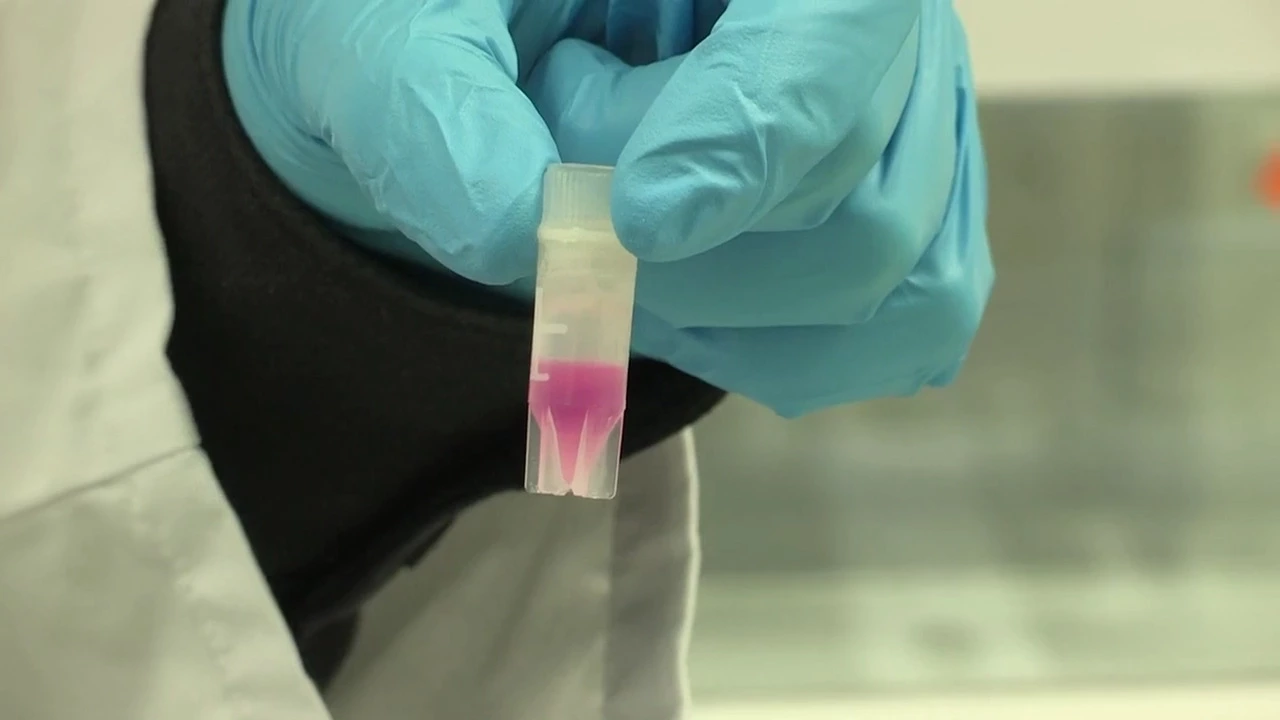
in this video you will demonstrate how to harvest cells that have been expanded in the grx 100m after 10 days of culture using this semi-automatic harvesting device the gather X the gather X delivers pressurized sterile air into the gr x through a gas line first we connect the devices via sterile filter then we identify our excess media collection line orange and the cell collection line blue in order to release both clamps and allow the lines to snap into place we press this button and pass the orange media line through this clamp which will automatically shut off once air bubbles are detected by this optical sensor after 90% of media is drained the media line is connected to a sterile media collection bag here the bag is placed inside an aqua press pouch which we will later use to rinse the G Rex after the cell harvesting stage the cell collection line is set up similarly and connected to a sterile cell collection bag alternatively to harvest the cells in a closed system the lines can be connected to the bags using a welder now we are ready to drain the excess media above the cells by simply pressing the medium collection button this pressurizes the G Rex and allows the culture medium to flow through the line and collect in a medium bag this process stops automatically when the optical detector senses air bubbles in the tubing and shuts off the medium clamp leaving about 10% of the media volume in the G Rex unlike other culture devices in the G Rex these cells grow as a pellet allowing media collection to proceed without disturbing the cells this is the G Rex of nearly 90% of media drained out when the liquid level drops below the media collection line air is drawn into the tubing forming bubbles that are sensed by the optical detector stopping the process automatically this is the collection bag at the end of the process leaving in the grx a residual volume of only 10% in this case 100 milliliters which we can then use to resuspend the cells when we tilt the grx we can see the cells residing undisturbed on the silicon membrane at the bottom of the device forming a loose carpet which can easily be brought into suspension by swirling the flask after Risa spending the cells we are ready to initiate the harvesting process by pressing the cell collection button we allow the cells in suspension to be drawn through the cell collection line the cells are then drained into the collection bag here and this process stops automatically when the cell line optical detector senses air and clamps the line at this point since this is a closed system we can press this button to release the media line clamp and direct some excess media back into the grx using this aqua press you we can use this media to rinse the flask and recover any residual cells in the flask and cell line finally by once again pressing the cell collection button we stopped the flow of media back into the G Rex and drain the residual cells into the cell collection bag this system allows the collection of a large number of cells in a volume as small as 100 milliliters in a completely closed system in well under 5 minutes
Up Next

9:46
Xuri W25 Cell Expansion System: Product Overview and Demo
@Cytiva
11.1K views•2021-01-08

26:22
Walking in the City: Urban Rituals and the Flâneur in Contemporary India
@PSBTIndia
1.9K views•2016-08-02

9:49
FastAPI vs Flask vs Django: Choosing the Right Python Web Framework
@TechWithTim
302.5K views•2024-05-26

1:42
Game of Thrones Opening Credits: A Cinematic Analysis
@gameofthrones
46.3M views•2011-04-18
Related Study Plans & Knowledge Roadmaps
Structured learning paths in General & Interdisciplinary Studies
general-studies
Artificial Light: History, Tech & Human Impact
01The Pre-Electric Era: Fire, Oil, and Gas Lighting
02The Incandescent Revolution and Grid Electrification
03Gas Discharge and Fluorescent Illumination
+ 3 more learning modules
14h6 modules
Explore Roadmap
general-studies
Elevator Engineering: History, Physics & Cities
01From Hoists to Safety Brakes: The Dawn of Vertical Lift
02Hydraulic vs. Traction: The Engineering Physics of Elevators
03Modern Speed, Safety, and Algorithms
+ 2 more learning modules
12h5 modules
Explore Roadmap
general-studies
Rubber: Material Science, History & Geopolitics
01Origins of Natural Rubber & Mesoamerican History
02The Chemistry of Natural Rubber & Vulcanization
03The Geopolitics of the Rubber Boom & Colonization
+ 2 more learning modules
12h5 modules
Explore Roadmap
general-studies
Containerization: Evolution, Logistics & Trade
01Ancient Trade & Bulk Cargo: Amphorae to Barrels
02The Industrial Revolution & Cardboard Packaging
03The Containerization Revolution: Malcom McLean
+ 2 more learning modules
12h5 modules
Explore Roadmap