









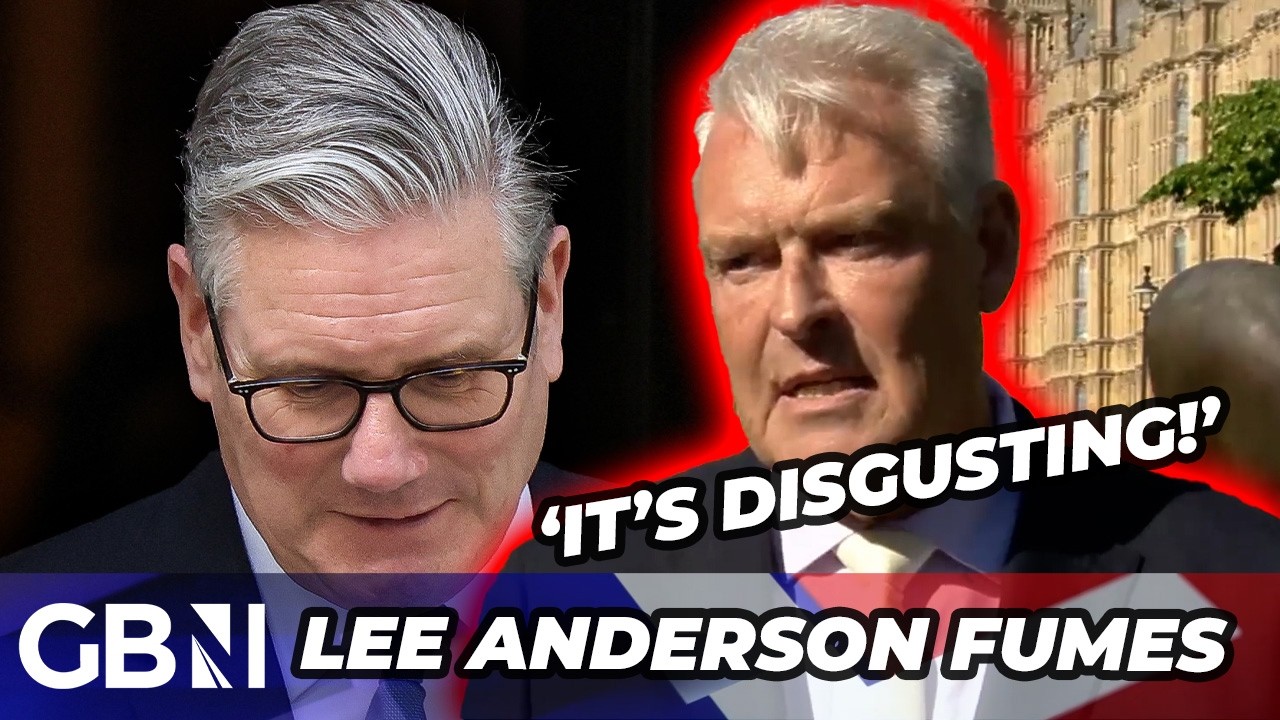












This video analyzes a Prime Minister's Questions (PMQs) exchange where Prime Minister Keir Starmer struggled to answer direct questions about Peter Mandelson's Epstein connections, with opposition members questioning his judgment and leadership. The analysis highlights how political leaders face accountability for their team's actions, and how perceived failures in judgment can lead to calls for resignation. The commentary also draws parallels between the UK's handling of Epstein victims versus domestic rape victims, raising questions about consistency in political accountability and victim support.
PMQs Analysis: Starmer's Political Crisis and Labour's Leadership Challenge
Added:Understanding the format and constitutional role of Prime Minister's Questions (PMQs) in the UK Parliament.
The structure of the UK parliamentary system, specifically the relationship between the Prime Minister, the Leader of the Opposition, and backbench MPs.
The internal factions and ideological divisions within the UK Labour Party (e.g., left-wing vs. centrist factions).
The concept of party discipline and the role of 'whips' in managing backbench dissent.
Analyzing the formal rules and constitutional mechanisms required to trigger a leadership challenge within the Labour Party.
Evaluating the impact of parliamentary performance (like PMQs) on national polling data and electoral viability.
Comparing current Labour leadership tensions with historical precedents of party revolts, such as those faced by Jeremy Corbyn or Margaret Thatcher.
Studying political communication strategies, specifically how leaders handle crisis management and evasive questioning in high-pressure media environments.
26.4K views2.3Klikes10:01Original Release: 2026-02-04
freezing. Um, so Prime Minister's questions happened. Oh my goodness me.
Um, so much to say. So much to say.
Firstly, um, without discussing any of the words that were said just yet, the body language, the visuals, the facials, the tone was very, very telling. Rachel Reeves looks like she was going to cry. Um, she literally looked like she was on the edge at all points. Karma is rattled. He is shaken. He is absolutely on the back foot. He was fighting for his life without having the energy to do so. Um, all of the front bench looked very awkward. Now, obviously, it is their job to nod um when they agree with something, the here, here, all of that kind of stuff.
and they did a little bit of donkey nodding. But given historically when we've been in prime minister's questions, there's been a lot of, you know, all the baying that goes on, there was a lot, but it wasn't coming from Labor. They looked like they'd had everything sucked out of them. Now, audibly, Karma's voice was wobbly. To me, it sounded like he was on the brink of tears. And I'm I'm gonna say, and and this will surprise you, I think he's genuinely hurt by what Mandolson's done.
I I think that for lots of reasons. I don't think he can actually believe that someone's done this to him. He feels as though this is very much to him. Now what he did say he evaded all the questions. We knew he was going to evade all the questions. His responses were weak and and he couldn't bring himself to actually acknowledge what he he said a lot of the time was um as she will understand as he will understand in reference to the opposition. Um he was trying to get them on board. He was trying to say look this is procedure and as you all know with procedure and he was using that as a a smoke screen for I'm not going to do it. So as she will understand infers collaboration. It infers that the opposition are on the same wavelength. They weren't. Now I thought Benuk was very good today because she could have gone in as a real no no. She could have gloated a little bit. She didn't. She was absolutely on the job down the line factual. She she did the one reference point she said was that you know it was only after her saying that he needed to sack him that Mandlesson went. Um but other than that she kept it very focused very on point.
Um but I think Karma's assumption and use of he will understand she will understand in response to his answers to the opposition. No they don't understand. They didn't agree with it.
Alicia Karns. Now, she is somebody to watch. She's our local Conservative MP.
Um, but I was very, very impressed with her in uh the Commons a couple of days ago when she was speaking and today I was very impressed. She is another one that is very firm, straight down the line, factual, nononsense. She rolls her sleeves up, she gets on with it. She doesn't entertain all the the pantoime of this. And today she also was very factual and addressed with uh Selindi Hoy. Can't remember what page I put this on but uh basically everybody left and Selindi Hoy was saying well you've noted this. I've noted this. Um and we will let you know the prime minister respond.
Well, how can the prime minister respond? He's left. And Alicia Karn stood up and and said that and said you you can't say that. You can't say that someone's going to respond when they've just left the comments. So I was impressed with her. I really noted there's been a lot of from everybody a lot of well we must remember the victims. This is the most important thing. We must talk about the victims and we must remember the victims which is spot on. And and what they're saying is they're talking about the victims and the survivors where streeting was talking about them this morning when he was on the radio and how they have to be the front and foremost of our minds which is absolutely correct but it draws a direct parallel to my mind anyway of the victims of the rape gangs in this country.
So, we're calling in America for full transparency, a full investigation into what happened here in support of the victims. Yet, we're not doing that in our own country with the victims of the rape gangs that happened on our own soil. And I take real exception to that.
And I I feel for the victims of the rape gangs in the UK who have suffered unimaginable horrors.
And it is not to take away from the Epstein victims either because they too have suffered unimaginable horrors. That there's women across both sides of the pond who have been treated in the most inhumane, disgusting way. Yet we have different standards for those of Epstein than we do of our own rape victims. And I think I I massively have an issue with that. I have a very very deep to my core issue with that. Um, back to this, we saw Liv Sa Liz Savile Roberts, who I've been impressed with in the past as well, who says, "How can we trust the prime minister's judgment and how we could how can we trust him to be the prime minister?" She was the only one that really addressed you need to resign. Um, but she put it out there and and I can see why Kemmy Bade not didn't because this wasn't the time to be calling for his resignation. I think that will come of its own accord. This was the time to be focusing on getting the facts, getting all the information out in the open by the leader of the opposition, but it was absolutely right and just that another MP did raise the question of we can't trust you. Now, Kier Starmer's words on um Peter Mandlesson were he's betrayed our country. He's lied repeatedly. He's responsible for a litany of deceit. But this moment desa demands not just anger but action.
Now that is true. That is absolutely true of Mandlesson. But those words when you play them back are equally applicable to K star.
He betrayed our country. Chaos just one incident. He lied repeatedly. council tax, chaos, uh, VAT, uh, tax for a litany of deceit, all of the above. But this moment demands not just anger, but action.
Now, I apply that directly to Kier Dharma for his actions, for what he has done and his party has done since they have been in power.
He has repeatedly lied to us and he has repeatedly deceived us. So it cannot be one rule for Mandlesson and not one rule for Stara. And even if you want to take out all of the things that I've just listed there, he is claiming that he did not know about Mandolson's past. He's the only person in the United Kingdom that did not know. You knew it. I knew it. We talked about it. It was out there for everyone to see. And it is documented that he did know. It is documented that we all knew about Mandlesson's response to Epstein when he was being released from prison. We all knew about that. It was reported in public newspapers and on broadcasting channels. So, how did Karma not? Now, he is absolutely I think aware of the gravity of what's happening. I think he's possibly getting his ducks in a row for his exit strategy. But there is no way that we can as Liz Savile Roberts says trust a prime minister whose lack of judgment on its own just on its own just that on its own is enough for him to resign. Everything else that I've lifted listed is also enough for him to resign. But if we want to just take it down to single issue it is his lack of judgment. For me, Prime Minister's questions today exposed another two tiers of how we respond to victims. The injustice to the rape victims in this country makes me sick.
Makes me absolutely sick to my core.
And to hear what feels like complete hypocrisy and degradation towards those victims boils my blood.
young girls, young women, abused at the hands of monsters, and some people who were in positions of authority in our own country are not getting the justice that they deserve.
Yeah. Off the back of some twack Peter Mandlesson, we we shine a light and an absolutely just light on the victims at the hand of Jeffrey Epstein.
As I've said, there's women on both side of the pond. There's girls on both sides of the pond that have been treated in the most medieval fashion.
We need to be shining a light as close to home as we are overseas.
Up Next

12:22
Can Lebanon Disarm Hezbollah? Sovereignty vs. State Within a State
@JamesKerLindsay
88.5K views•2025-08-22

24:30
BRICS Pay and de-dollarization: A New Financial Order Emerges? | 55 chars
@DannyHaiphongYT
164.6K views•2024-10-22
7:33
Government Surveillance Methods: 10 Ways You May Be Watched
@BeAmazed
1.6M views•2017-04-09
10:19
Explaining the Saudi-Iranian Proxy Conflict in the Middle East
@Vox
18.2M views•2017-07-17
Related Study Plans & Knowledge Roadmaps
Structured learning paths in Political Science
political-science
Economic Statecraft: Sanctions & Chokepoints
01Foundations of Geoeconomics and Economic Statecraft
02The Mechanics of Weaponized Interdependence
03International Sanctions: Types, Implementation, and Efficacy
+ 2 more learning modules
12h5 modules
Explore Roadmap
political-science
Central Bank Independence: Politics & Policy
01Foundations of Central Banking and Monetary Policy
02The Time Inconsistency Problem & Inflation Bias
03The Delegation Model and Designing Independence
+ 2 more learning modules
12h5 modules
Explore Roadmap
political-science
Consociationalism: Power-Sharing & Stability
01Democratic Dilemmas in Divided Societies
02Introduction to Consociational Democracy
03The Four Pillars of Consociational Design
+ 2 more learning modules
12h5 modules
Explore Roadmap
political-science
Rebel Governance: Legitimacy, Economy & State
01Foundations of Rebel Governance and Statehood
02Establishing Political Legitimacy and the Rebel Social Contract
03Wartime Economies and Rebel Resource Management
+ 2 more learning modules
14h5 modules
Explore Roadmap