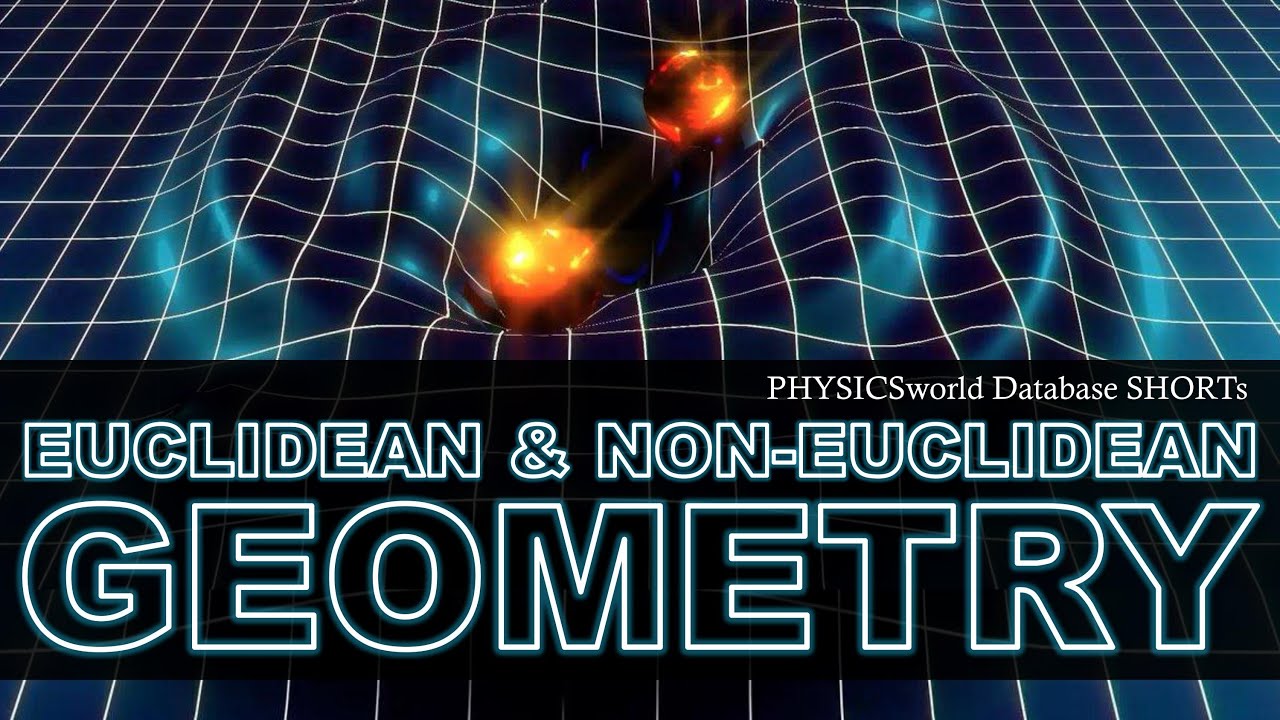




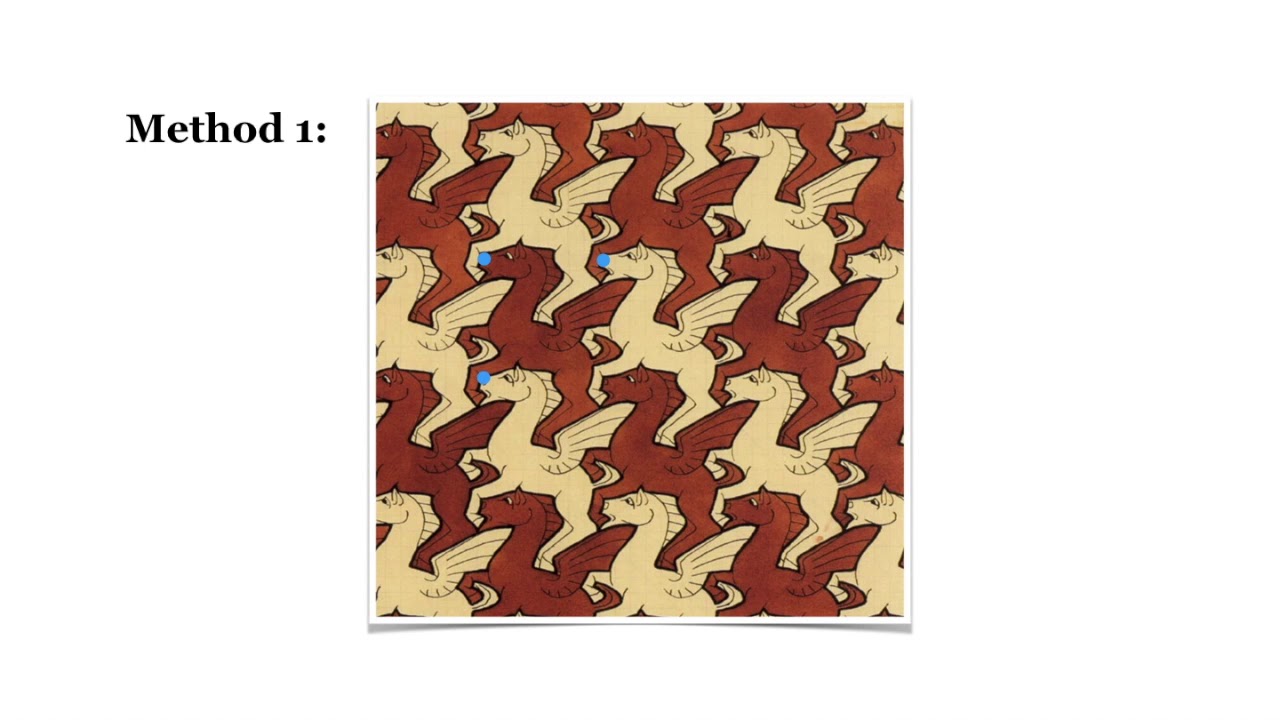








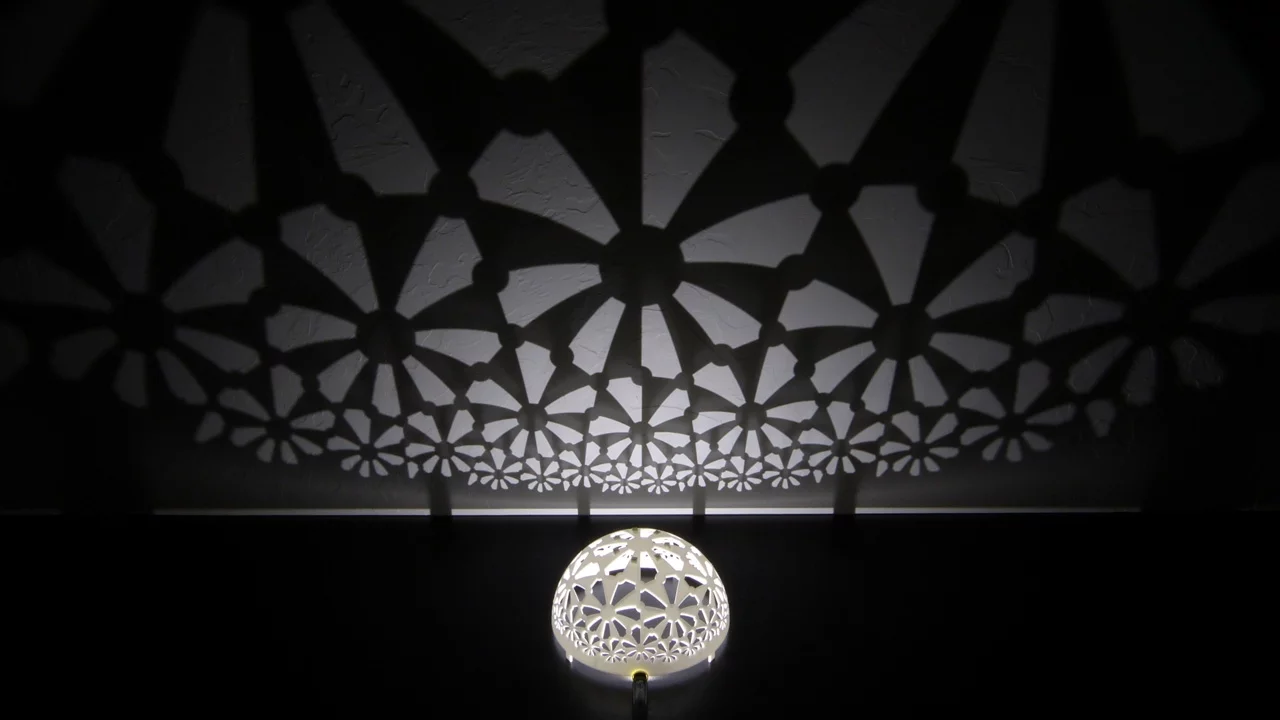






In hyperbolic geometry, the Poincaré disk model represents the infinite hyperbolic plane within a finite circle, where angles are preserved but distances become distorted—shapes closer to the circumference appear smaller even though they are actually the same size; this geometric principle enabled M.C. Escher to create his Circle Limit artworks, where he used circle inversion (a transformation that maps points outside a circle to points inside, with distances becoming reciprocal) to create symmetrical tessellations of fish and other shapes that extend infinitely within the bounded circle, with the inversion of equiangular spirals producing curves with two poles that Escher utilized in his designs.
Coxeter on Hyperbolic Geometry & Escher's Circle Limit
Added:Euclidean vs. Non-Euclidean Geometry: Familiarity with Euclid's parallel postulate and how denying it leads to alternative geometric systems.
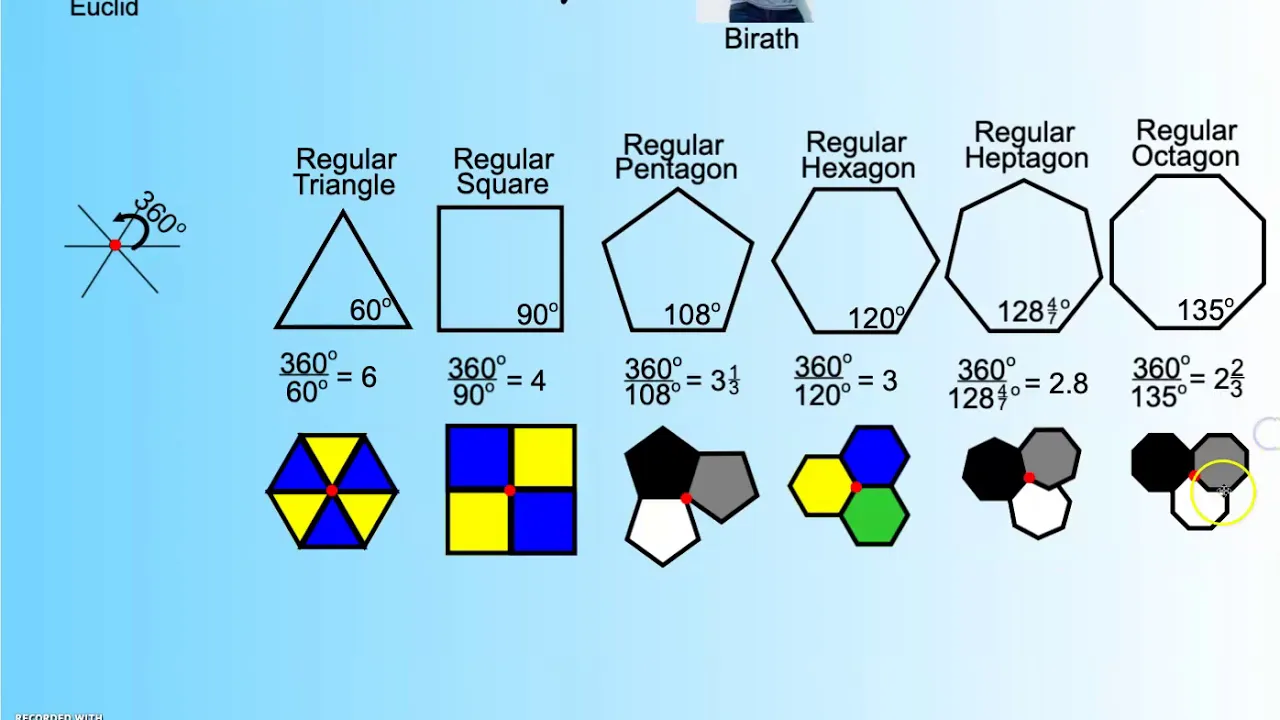
Basic Tessellations: Understanding how regular polygons can tile a flat 2D plane (Euclidean tessellations) without gaps or overlaps.
Geometric Transformations: Conceptual knowledge of reflections, rotations, translations, and especially circle inversion.
The Concept of Symmetry Groups: A basic understanding of how mathematical symmetry is classified and represented.
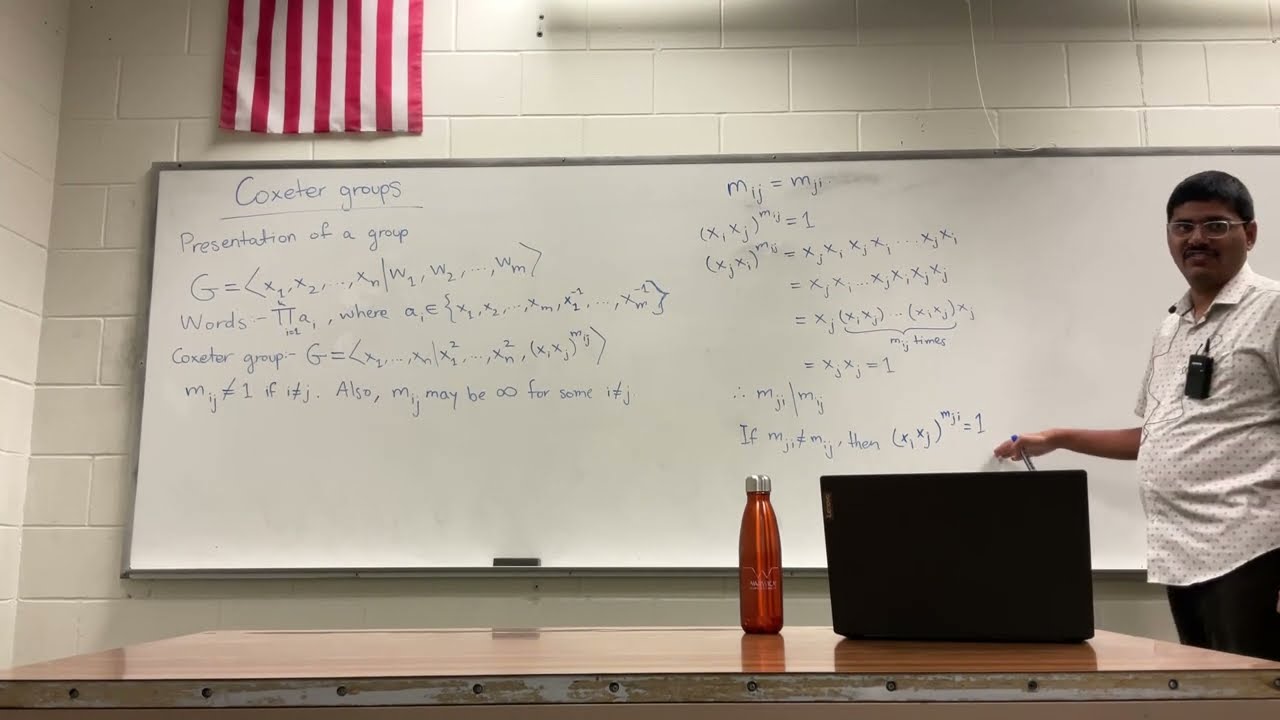
Coxeter Groups: The algebraic study of reflection groups and their presentation via Coxeter-Dynkin diagrams.
Alternative Models of Hyperbolic Geometry: Exploring the Klein model, the Poincaré half-plane model, and the hyperboloid model.
Differential Geometry and Curvature: Investigating Gaussian curvature, Riemannian manifolds, and spaces with constant negative curvature.
Algorithmic Hyperbolic Art: Applying computational geometry and programming to generate digital Escher-like hyperbolic tilings.
42K views797likes7:59Original Release: 2010-12-27
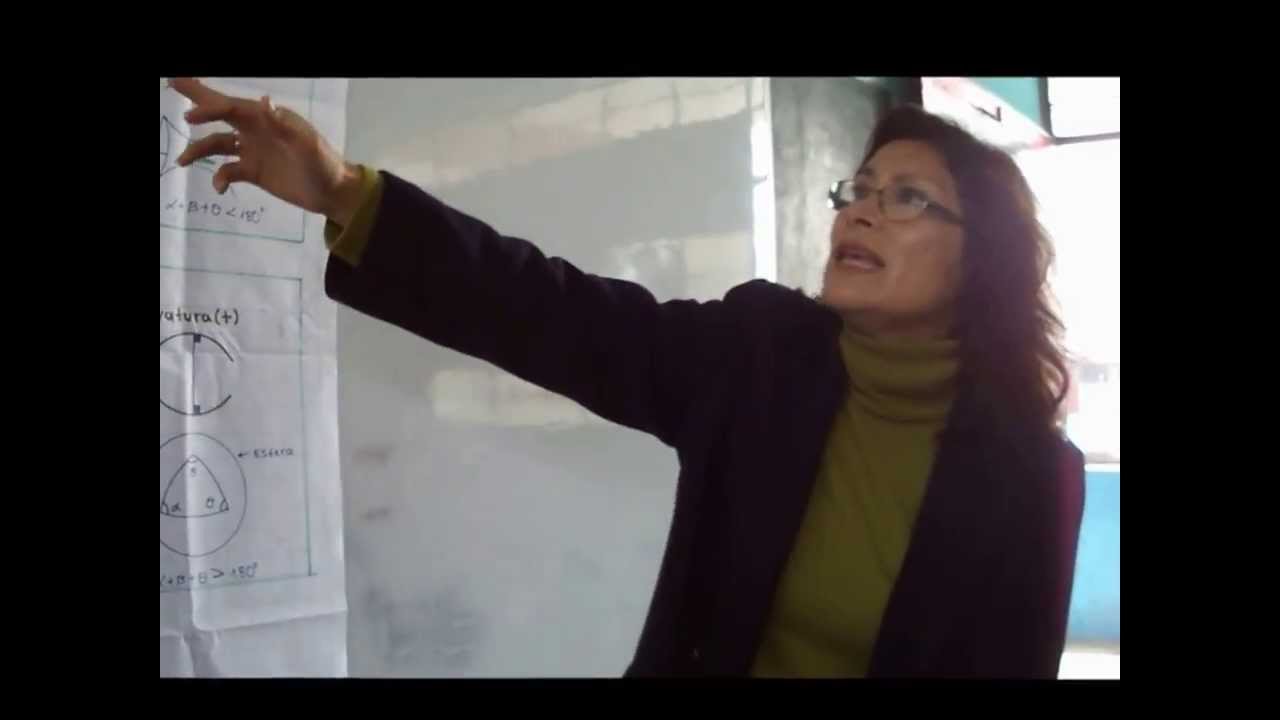
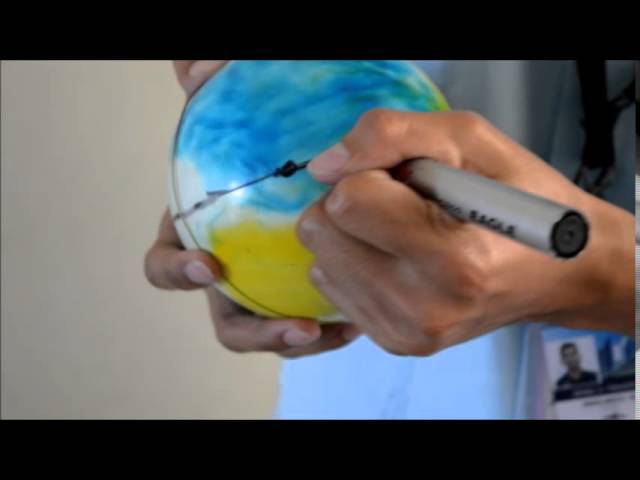
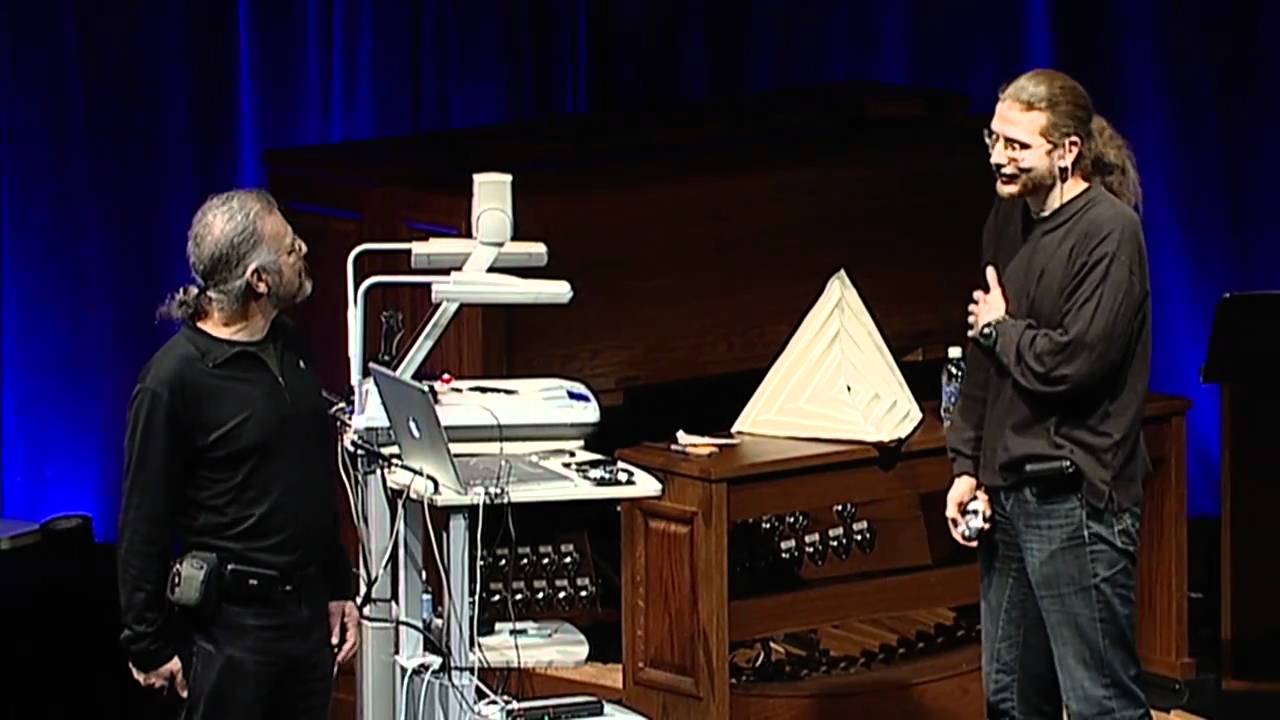
bounded in a nutshell and found myself a king of Infinite Space that was one of the things that Hamlet said in the play aser like Hamlet was fascinated by the idea of infinity trying to bound Infinity in a nutshell and the pictures that he saw of mine gave him exactly that right flavor and with that hint he drew a picture called Circle limit one this was only a first attempt and he was not very well satisfied with it and he wanted me to tell him more about hyperbolic geometry in which the points infinitely far away in the hyperbolic plane I thought of as being represented by a circle and everything inside the circle is the hyperbolic world the effect is then that shapes are represented truly angles are represented without Distortion but distances become distorted the closer one gets to the circumference the greater is the distortion so the points on the circumference are to be thought of as being infinitely far away French mathematician panar described a very clever model for this kind of geometry and in that way he was able to see that all these black and white triangles are really the same size when they move further away even though they don't seem to be it's analogous to the situation on a sphere where if this is a picture of the sphere you see that the triangles in the middle seem to be larger than those near the circumference but that is only perspective for shortening these on the sphere are all the same size similarly in the hyperbolic plane these triangles are to be thought of as being all the same size and so it is when he made green fish is going this way the yellow fish is going this way and so on and this he found a very pleasing pattern as indeed it is and the symmetry of it is very interesting because as a matter of fact there are points of various kinds that be can be distinguished in the figure for instance the points where two yellow fins and two green fins come together and other points where four fins come together are all arranged in a very symmetrical f question the point in the Middle where two yellow and two green fins come together is not essentially different from other points such as this where two green and two blue come together and this where two blue and two yellow and so on Al together an octagon of such points and each side of that octagon forms with the center of the whole figure a triangle which from the hyperbolic standpoint is equilateral so eer in effect saw how the hyperbolic plane could be tesselated with equilateral triangles meeting eight at Each corner one way to bring Infinity to finite terms is by the transformation called inversion inversion in a circle whereby a point outside the circle is trans transformed into a point inside so that it is on the same diameter but the distance from the center is the reciprocal of the distance to the original point in this way if a point moves outside the circle the inverse Point moves inside and even if the point moves infinitely far away its image is still inside the circle as the point moves farther and farther away the image Point gets closer and closer to the center and so if one considers the important curve called an equiangular spiral which is a curve that goes round and round going farther and farther from the center or in the opposite direction gets closer and closer to the center that curve inverted in a circle say a circle in this position will become a new kind of spiral with its pole at the inverse of the original pole and then of course going the opposite way round but the part that goes to Infinity makes a second pole at the center and so you have this curious effect of a curve that has two Po and that is the curve which aser used in his pirl FS we are in the cemetery of the town of utri the site of Asher's only fresco oh
Up Next
7:52
Non-Euclidean Geometry History: Bolyai, Lobachevsky, and Riemann Explained
@extrahistory
994.4K views•2018-06-16
4:43
Elliptic Curve Cryptography Explained: ECC, ECDSA, ECDH
@PracticalNetworking
28.5K views•2024-10-21
10:44
Fourier Series Introduction: The Big Idea Explained
@DrTrefor
387K views•2021-05-03
6:00
The Mathematical Impossibility of Accurate World Maps
@Vox
23.3M views•2016-12-02
Related Study Plans & Knowledge Roadmaps
Structured learning paths in Mathematics
mathematics
Tensor Calculus: Vectors to Riemann Curvature
01Mathematical Foundations: Linear Algebra & Calculus
02Covectors, Dual Spaces, and Tensor Basics
03The Metric Tensor and Index Gymnastics
+ 2 more learning modules
40h5 modules
Explore Roadmap
mathematics
Gödel's Incompleteness: Logic, Proofs & Limits
01Introduction to Formal Systems & Hilbert's Dream
02Set Theory, Cardinality, and Cantor's Diagonal Argument
03Arithmetization and Gödel Numbering
+ 2 more learning modules
14h5 modules
Explore Roadmap
mathematics
Galois Theory: Fields, Groups & Solvability
01Foundations of Abstract Algebra: Groups & Fields
02Polynomials & Field Extensions
03Splitting Fields & Symmetries
+ 2 more learning modules
24h5 modules
Explore Roadmap
mathematics
Non-Euclidean Geometry: Models & Geodesics
01Euclid's Fifth Postulate and the Birth of New Geometries
02Hyperbolic Space and the Poincaré Disk Model
03Geodesics: Defining Straight Lines in Curved Spaces
+ 2 more learning modules
15h5 modules
Explore Roadmap