














In the early 19th century, mathematicians János Bolyai and Nikolay Ivanovich Lobachevsky challenged Euclid's Fifth Postulate by proposing that parallel lines could curve away from each other, creating hyperbolic geometry; later, Bernhard Riemann expanded this concept to show there are infinitely many non-Euclidean geometries, providing a unified mathematical framework for understanding curved spaces that would later become essential for Einstein's theory of general relativity.
Non-Euclidean Geometry History: Bolyai, Lobachevsky, and Riemann Explained
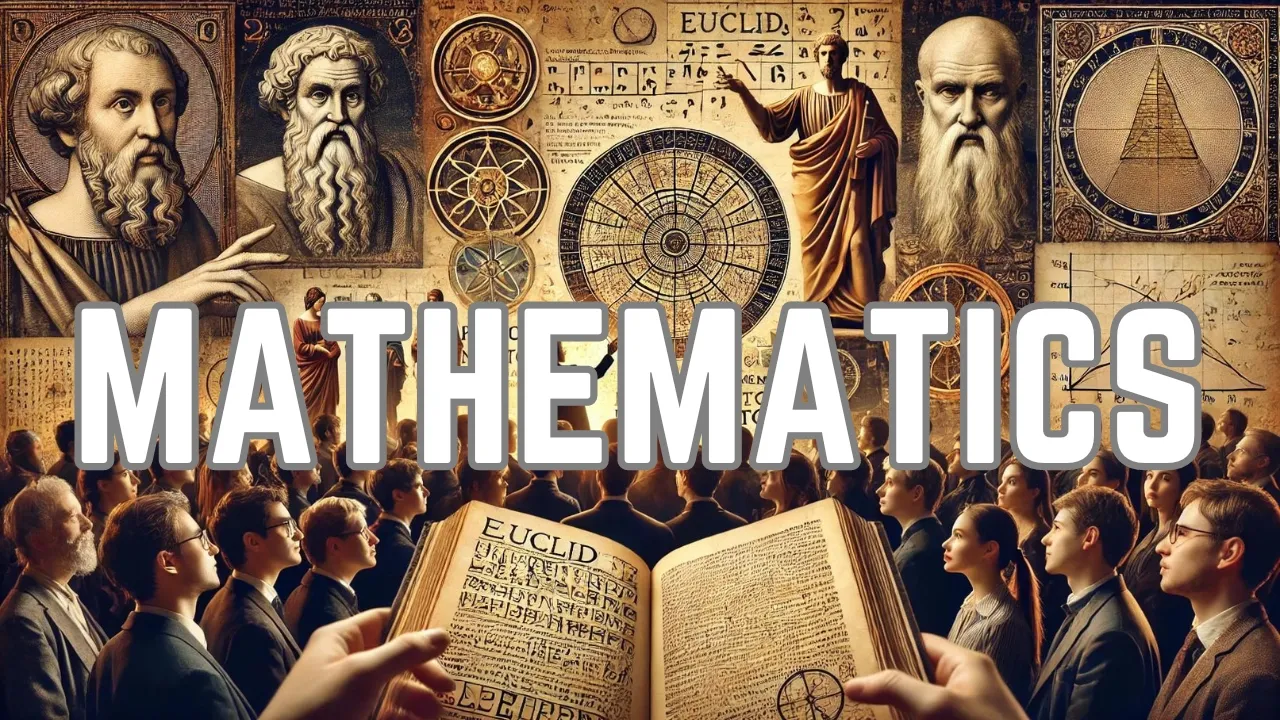
Added:Euclid's Elements and the foundational structure of axiomatic mathematics.
The statement and historical significance of Euclid's Fifth Postulate (the Parallel Postulate).
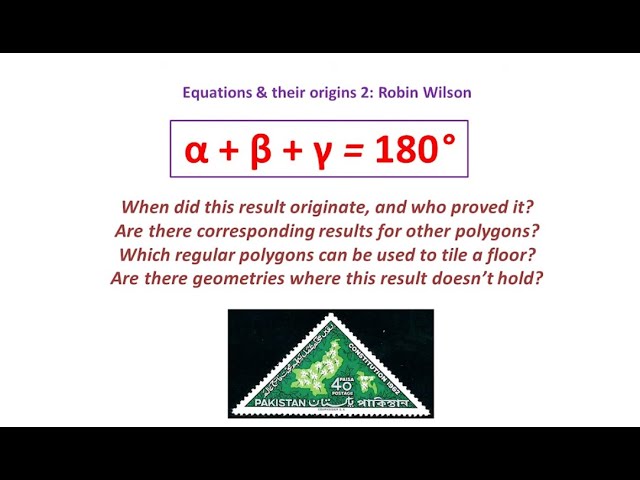
Basic properties of Euclidean space, such as the sum of angles in a triangle equaling 180 degrees.
The concept of mathematical proof, particularly indirect proof or proof by contradiction.
The mathematical formalization of Hyperbolic and Elliptic geometries, including the Poincaré disk and half-plane models.
Differential Geometry, focusing on the concepts of curvature, manifolds, and Riemannian metrics.
Albert Einstein's Theory of General Relativity, which uses pseudo-Riemannian geometry to model the curvature of spacetime.
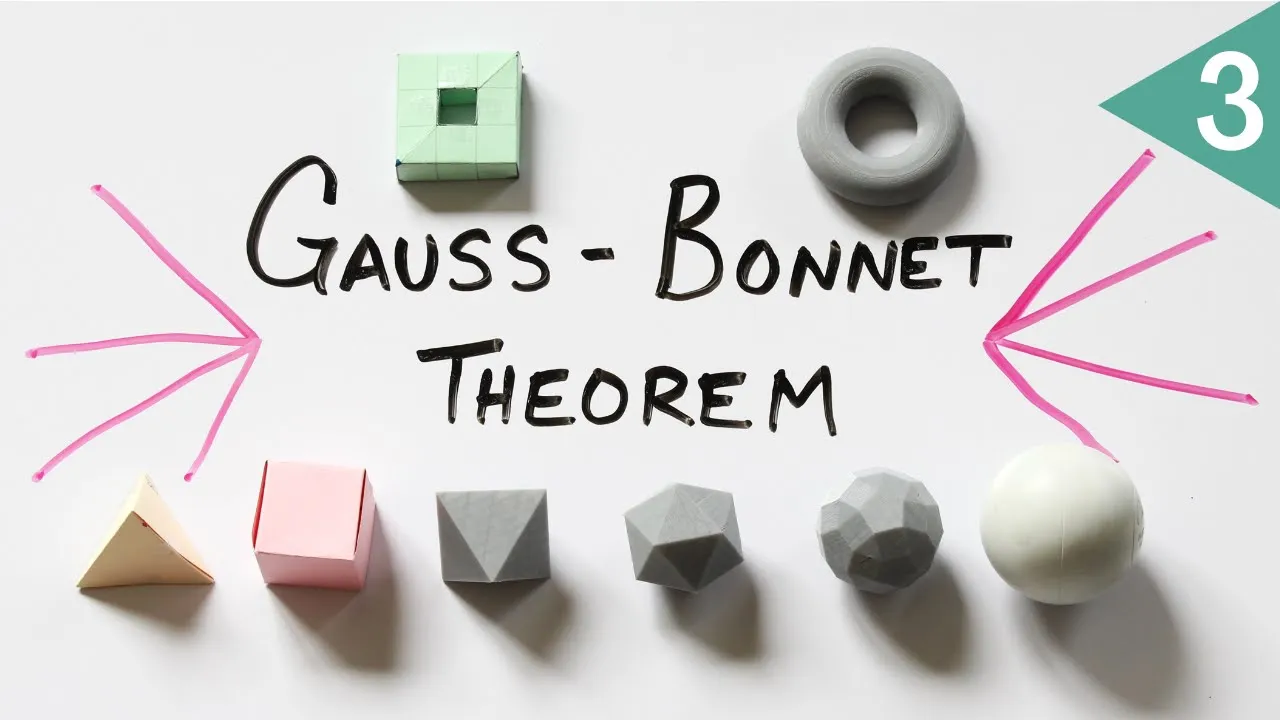
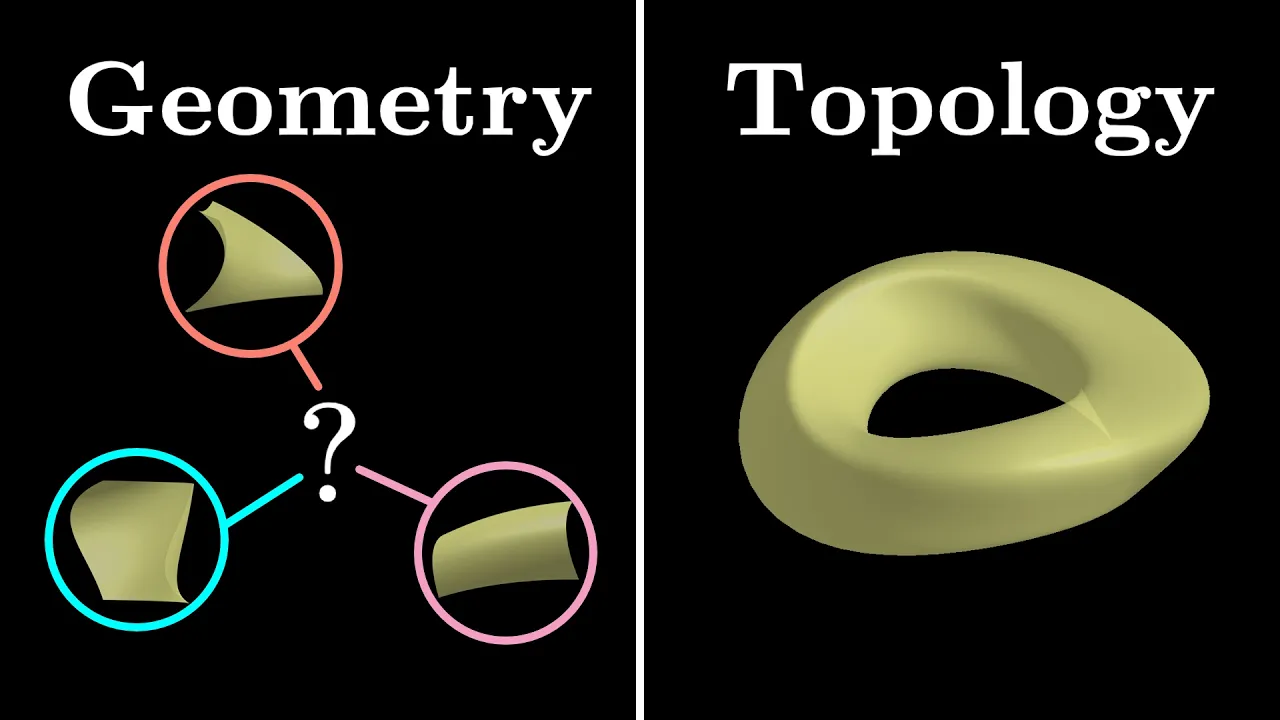
The Gauss-Bonnet Theorem, which establishes a fundamental link between a surface's geometric curvature and its topological properties.
994.4K views23.8Klikes7:52Original Release: 2018-06-16
April 4th, 1820.
A letter from Farcus Bulyai to his son.
"Do not try the parallels in that way. I know that way all along.
I have measured that bottomless night, and all the light and all the joy of my life went out there."
By the early 19th century, mathematics and physics had made huge strides forward.
Superstition and assumption were giving way to scientific understanding.
Formal schooling was becoming widespread, and institutions of higher learning were being established all over to help develop the theoretical work that was spurring industry to ever-greater heights.
More even than that, the idea of being a mathematician or a scientist was becoming respected.
The gentry was forming societies to share and distribute their work, and monarchs were even establishing awards or giving out titles for breakthroughs in these fields.
It was an exciting time, because every day it seemed like new, fundamental discoveries were being made: calculus, the scientific method, the mathematizing of physics.
These had opened the floodgates, and now a wealth of knowledge was pouring out!
This emboldened a few, a daring few, to tackle the most terrible of thoughts, What if Euclid wasn't right?
For centuries people had beaten their heads against the problem of trying to prove Postulate 5... But what if, instead of doing that, what would happen if we just accepted that Postulate 5 couldn't be proven?
It wouldn't make Euclid wrong, but it would mean that Euclid wouldn't be true.
It would mean that the Euclidian view of the world, upon which we had built so much, wouldn't be the only view.
What madness would we unleash if we peered at the world through some other lens?
Well, two figures, at least, were willing to sin boldly and peer past where all other human reason had taken us.
Their names were János Bolyai and Nikolay Ivanovich Lobachevsky.
The differences in their work is a bit esoteric, but, at its heart, both of them delved into alternate possibilities for Postulate 5.
You remember how, in Euclid, we basically said that if you put two lines across another line, and their interior angles add up to 180°, the two lines would never get any closer or further away from each other, thus giving us our traditional definition of parallel lines.
Well, what other options are there?
Those lines either do get closer to each other, or do get farther away.
Bolyai and Lobechevski introduced the case where our parallels could curve away from each other.
And with that one small change, they unleashed a torrent of madness.
And it is all as logically valid as Euclid.
It's all as internally consistent as Euclid.
But to a mind that has been trained to understand the world through a Euclidean model, it is a little bit brain melting.
The stuff that happens to angles and shapes when the lines aren't straight really seems wrong to the Euclidean mind.
And yet, these images are as true, as logically well constructed, as anything we’ve seen in Euclid.
And when this geometry got to three dimensions, it unveiled a horrific revelation.
Why would these parallel lines curve away from each other?
Well, because the planes they were on were not flat.
The very space they existed in was curved. To many, this was mind breaking.
What? No. WHAT?!
130 years later, this would serve as the foundation for parts of MC Escher's art, but this new geometry was good for more than just art.
This new understanding opened up a whole world of formulas to create and theorems to develop.
It expanded what people thought of as possible, and one of those people was a man named Bernhard Riemann.
Riemann saw that there were other possibilities for non-Euclidean geometry.
The simplest was the second case we stated for possible alternatives to Postulate 5: The case in which lines whose interior angles add up to exactly 180° don't stay equidistant, but actually get closer to one another.
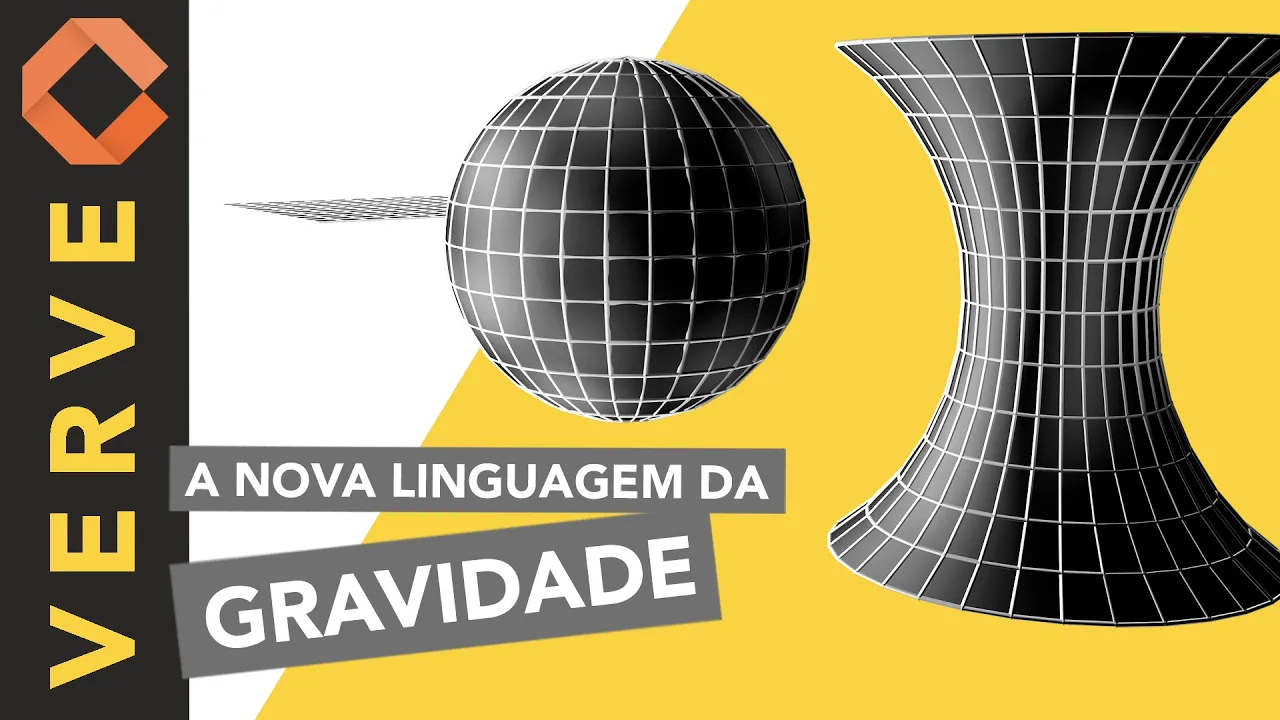
How is this possible, you might ask? Well, here... Imagine a globe. Think about the lines of longitude on a globe.
You can lay a line across them that should make them parallel by our Euclidean postulate, and yet, they all intersect.
Any line of longitude you choose will cross all other lines of longitude at the poles.
In fact, in this context, the very idea of lines starts to break down.
If your flat plane is actually a globe, you simply can't draw a straight line.
As soon as you start to extend that line at all, it has to be curved.
Moreover, some of the things that we had come to understand about lines by this point in history, like the idea that between any two points, you can draw one and only one unique line, completely break down.
I mean, if you take the poles on a globe as our two points, there are infinitely many lines that I can extend from one to the other, and this, like with Bolyai and Lobachevsky's earlier hyperbolic geometry, does strange and unnatural-seeming things to our shapes.
When you add up the angles in a triangle, how many do you get?
Well, on a normal Euclidean plane, you get the sum of two right angles, but here, on our hyperbolic surface?
Here our triangle's angles add up to more than two right angles, and our squares, as much as such a concept is even still possible, all have angles that add up to more than four right angles.
Now this may all seem batty. In fact, to most people at the time, and even to most people today, it feels... uncomfortable, wrong, or just hard to grasp.
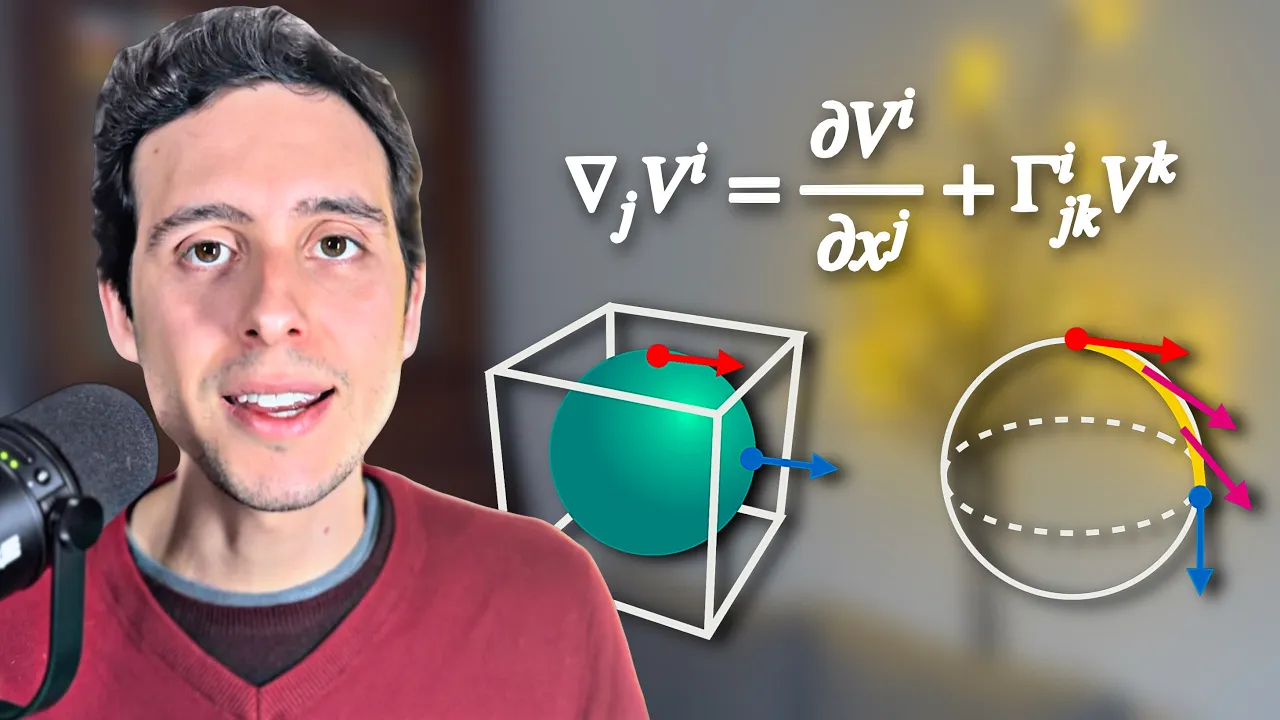
After a lifetime of training your brain to think of objects, like columns or spheres, in Euclidean space, it can be almost impossibly difficult to start thinking of space as spherical, or curved, or bent, and the implications that has on geometry.
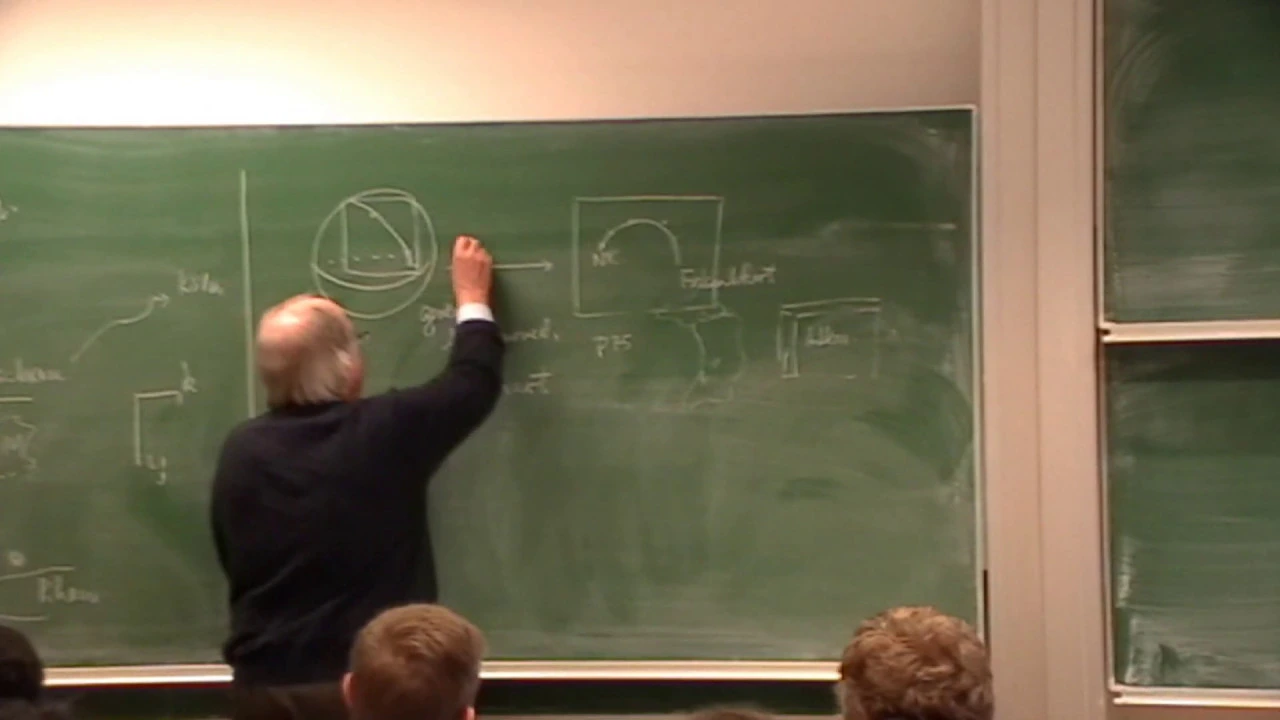
But Riemann did it. In fact, he did it in an extraordinary way: standing in a lecture hall in front of a small crowd at barely 26 years of age, Riemann began to unfold an idea he had, an idea that would change everything.
In this small crowd sat his old teacher, Gauss, one of the foremost minds in mathematics, the person who really laid the foundation for much of the work in non-Euclidean geometry to come.
As Riemann began to chalk out his idea on the blackboard, Gauss began to nod with pride.
He had known what this lecture would be about, but seeing the details, he knew that even his work had been outdone.
Instead of just proposing hyperbolic geometry, or the geometry of spherical space, Riemann proposed that there were infinitely many possible non-Euclidean geometries, and there, on that chalkboard, he began to lay out what would become a system to unite them all.
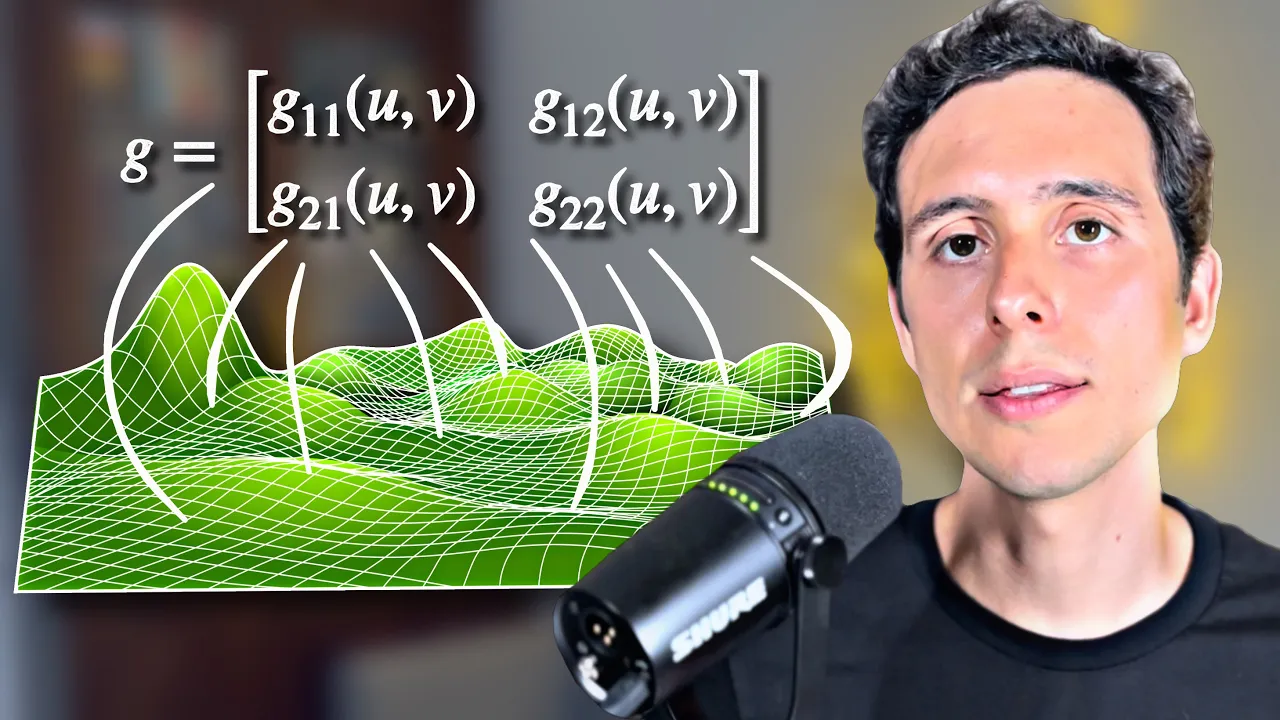
We wouldn't have to explicate a whole new geometry every time we wanted to look at a new type of curved space - instead Riemann suggested that there were mathematical ways of looking at them all, no matter how weird or how complicated.
And this is incredibly important, because, by having a unified theory of non-Euclidean space, regardless of dimensions or shape, it means that non-Euclidean geometry might no longer be just a mathematical curiosity.
It might no longer be an abstract mathematical plaything for the brightest minds to toy with.
Instead, it means that if we were ever to find an area of reality where our Euclidean laws break down, we now have a system for investigating it mathematically, whatever it might be.
And guess what?
Next episode, we are gonna find the place where exactly that happens.
Up Next
4:26
Hyperbolic Geometry Models via Stereographic and Orthogonal Projections
@henryseg
255.6K views•2015-12-14
4:43
Elliptic Curve Cryptography Explained: ECC, ECDSA, ECDH
@PracticalNetworking
28.5K views•2024-10-21
7:16
The History of Non-Euclidean Geometry: Euclid's Fifth Postulate Explained
@extrahistory
1.8M views•2018-05-26
6:00
The Mathematical Impossibility of Accurate World Maps
@Vox
23.3M views•2016-12-02
Related Study Plans & Knowledge Roadmaps
Structured learning paths in Mathematics
mathematics
Tensor Calculus: Vectors to Riemann Curvature
01Mathematical Foundations: Linear Algebra & Calculus
02Covectors, Dual Spaces, and Tensor Basics
03The Metric Tensor and Index Gymnastics
+ 2 more learning modules
40h5 modules
Explore Roadmap
mathematics
Gödel's Incompleteness: Logic, Proofs & Limits
01Introduction to Formal Systems & Hilbert's Dream
02Set Theory, Cardinality, and Cantor's Diagonal Argument
03Arithmetization and Gödel Numbering
+ 2 more learning modules
14h5 modules
Explore Roadmap
mathematics
Galois Theory: Fields, Groups & Solvability
01Foundations of Abstract Algebra: Groups & Fields
02Polynomials & Field Extensions
03Splitting Fields & Symmetries
+ 2 more learning modules
24h5 modules
Explore Roadmap
mathematics
Non-Euclidean Geometry: Models & Geodesics
01Euclid's Fifth Postulate and the Birth of New Geometries
02Hyperbolic Space and the Poincaré Disk Model
03Geodesics: Defining Straight Lines in Curved Spaces
+ 2 more learning modules
15h5 modules
Explore Roadmap