














![The United States v. Lopez, EXPLAINED [AP Gov Required Supreme Court Cases]](https://i.ytimg.com/vi/WnAgQKqc0F0/maxresdefault.jpg)
![AP Government UNIT 1 REVIEW [Everything You NEED to Know!]](https://i.ytimg.com/vi_webp/lxotd_zV1hc/maxresdefault.webp)
![AP Government Unit I Review [Everything You Need to Know For Your Exam]](https://i.ytimg.com/vi/Bltu8nXtL0k/maxresdefault.jpg)



Federalism is a system of government where power is divided between a national (federal) government and state governments, with the U.S. Constitution establishing three categories of powers: delegated powers (expressed, implied, and inherent) granted to the federal government, reserved powers belonging to states via the 10th Amendment, and concurrent powers shared by both; the Supremacy Clause ensures federal laws take precedence over conflicting state or local laws.
Federalism Explained: U.S. Constitution and Government Powers
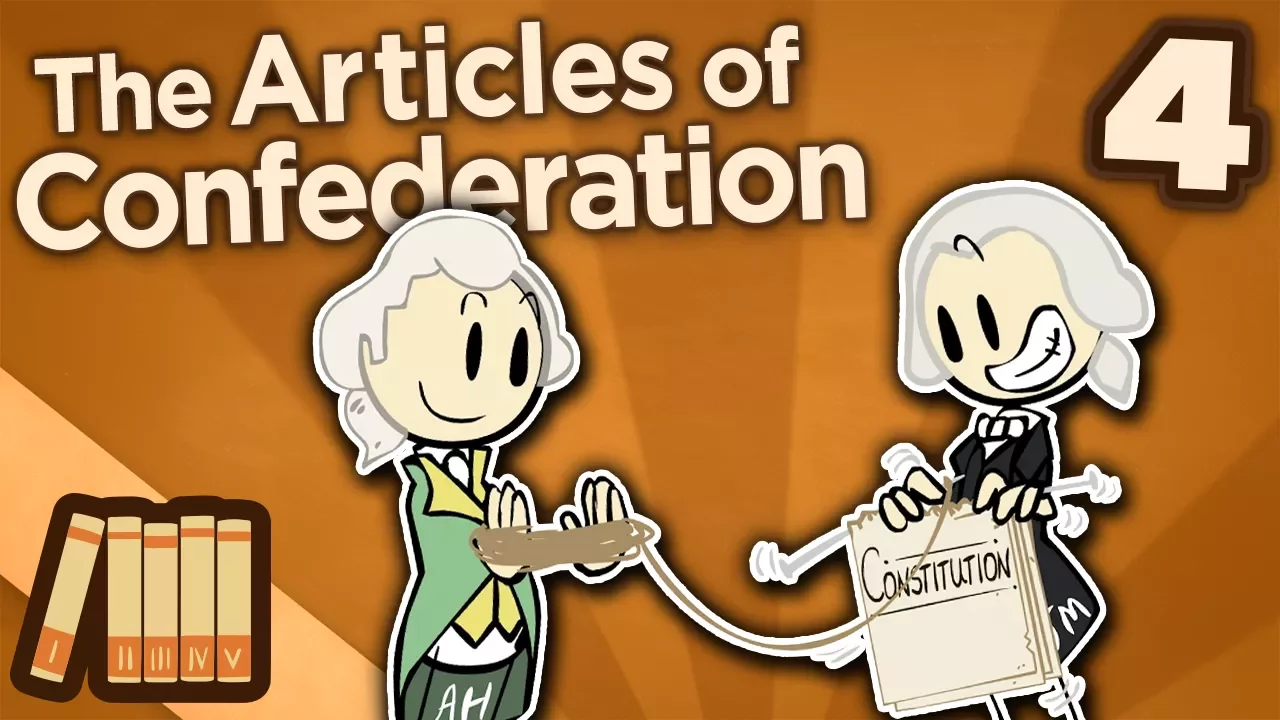
Added:The historical failure of the Articles of Confederation and the subsequent need for a stronger central government at the Constitutional Convention.
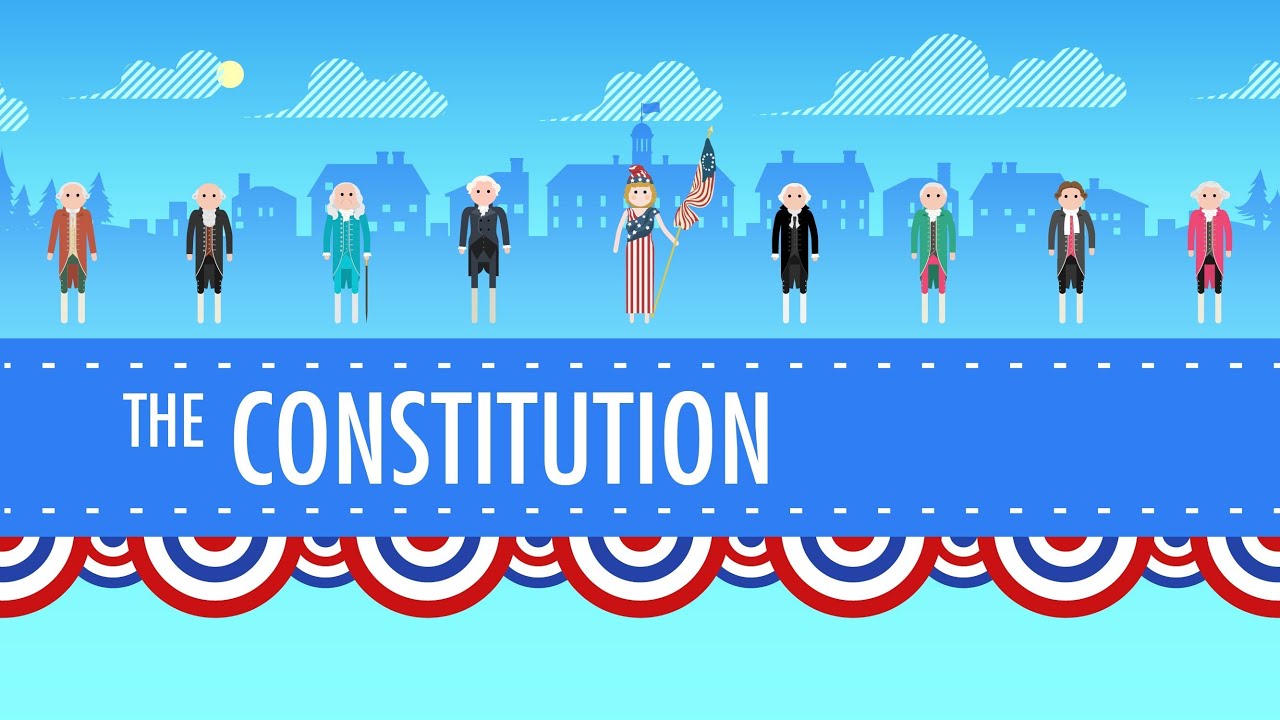
The basic structure and purpose of the U.S. Constitution as the foundational framework of American government.
The concept of 'separation of powers' (horizontal division among legislative, executive, and judicial branches) to contrast with federalism (vertical division).
The definition of political sovereignty and what it means for a government to have legitimate authority to rule.
The evolution of federalism in U.S. history, specifically the transition from Dual Federalism ('layer cake') to Cooperative Federalism ('marble cake').
Key Constitutional clauses that define the boundaries of power, such as the Supremacy Clause, the Tenth Amendment, and the Commerce Clause.
Landmark Supreme Court cases that resolved federal-state power disputes, including McCulloch v. Maryland (1819) and United States v. Lopez (1995).
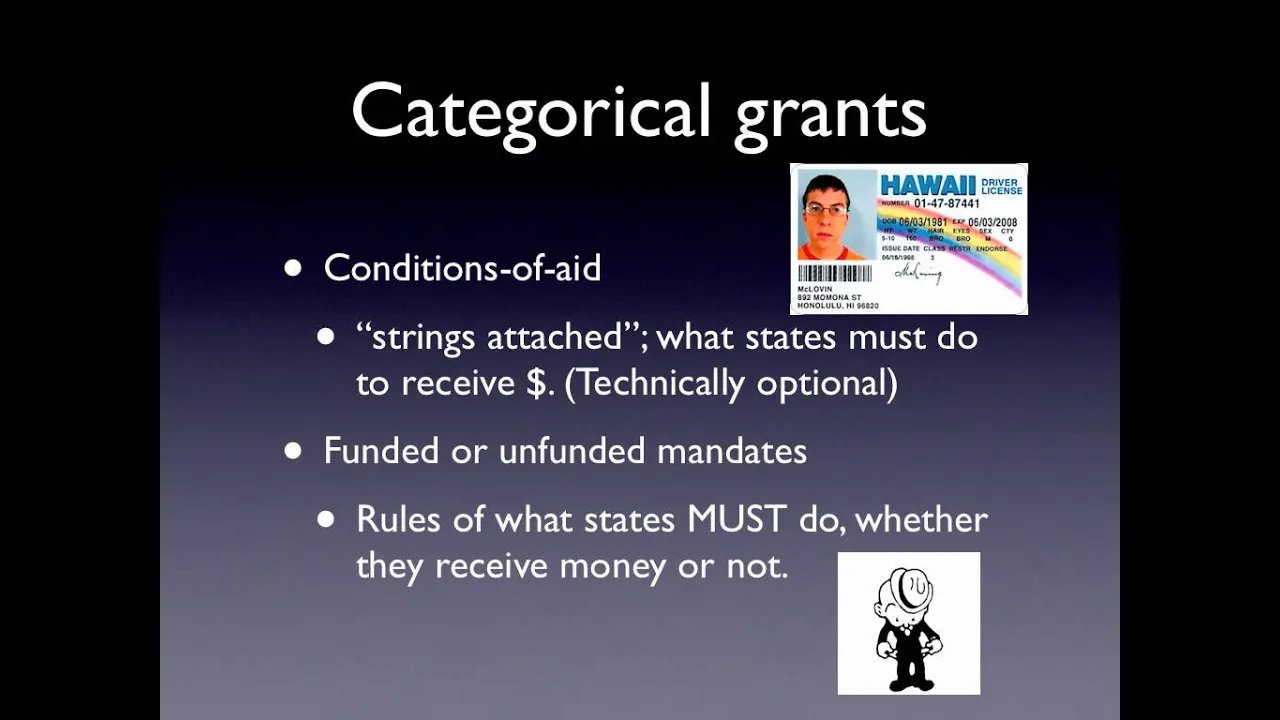
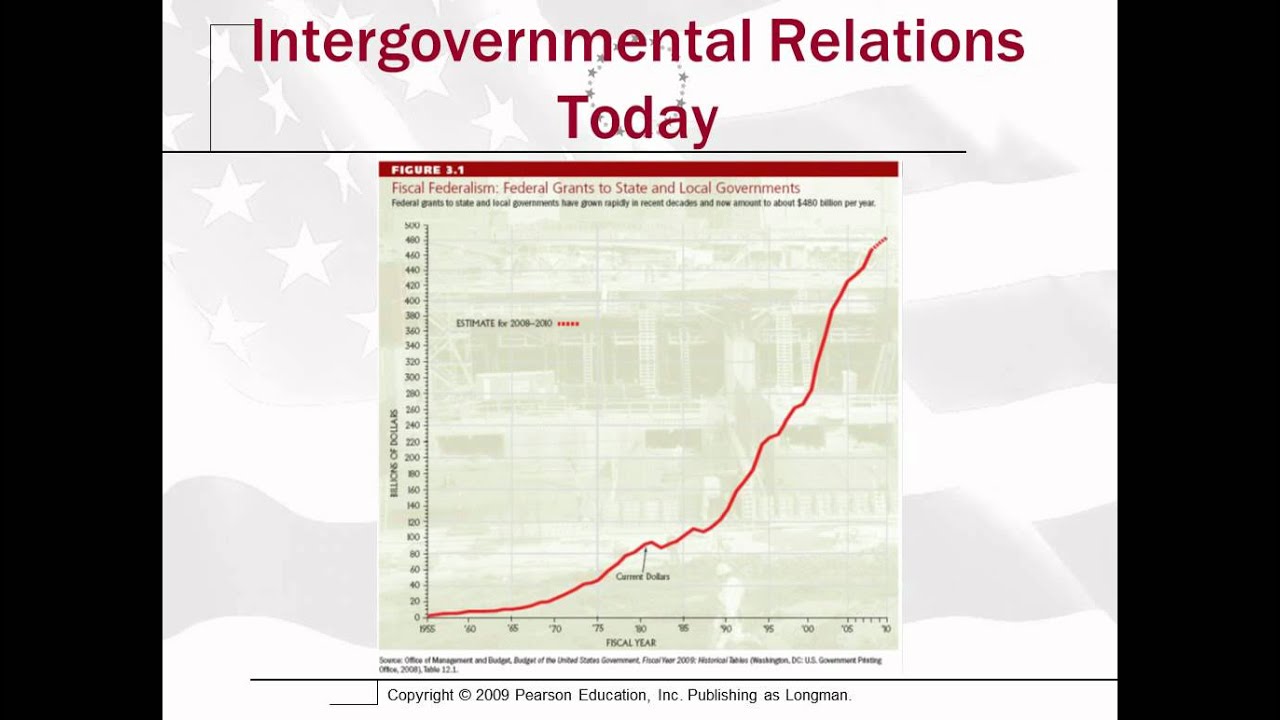
The mechanics of Fiscal Federalism, exploring how the federal government uses grants-in-aid and mandates to influence state-level policies.
Modern policy debates where state and federal laws clash, such as environmental regulations, legalization of controlled substances, and healthcare access.
41.8K views96likes6:07Original Release: 2011-07-02
hello this is Jay benao and today we're going to be learning about federalism we're working off of standard ssc5 the student will demonstrate knowledge of the federal system of government described in the United States Constitution well this begs the question what is federalism unlike a unitary system of government where power is mostly Consolidated in the national government and also unlike a confederal system in which power is most Consolidated in the States a federal system of government is one in which power is separated between the national government and the state governments imagine if you will there's a national government and surrounding it are the state governments the national government has certain powers to itself and the state governments are given the other powers the lines of power go both ways in a sense their sharing power you have the national government and you have the state governments they overlap in certain areas but they have their own spheres of influence the Constitution grants them certain powers but it also denies them certain powers the powers which are granted by the Constitution to the national government are called delegated powers those granted to the state governments are called reserved powers they also have concurrent powers powers which they both may use now the delegated powers are expressed powers those which are spelled out in the Constitution implied powers which are not written in the Constitution but are reasonably suggested by it and inherent powers those which are not written in the Constitution but belong to National governments in general now reserved powers those come from the 10th Amendment there are also Powers which are denied the nation and which are denied the state and those which are denied both of the delegated powers the Express Powers are found in article one section 18 which has 18 Clauses giving 27 Powers which includes but is not limited to the power to tax coin money regulate trade declare war and Grant patents now the implied powers are found in Article 1 Section 18 Clause 18 which is also known as the elastic clause it gives Congress the power to do all things necessary and proper to maintain the government this includes the power to build dams build highways and Roads and determine crimes inherent powers are those which are inherent to a nation those Powers which belong to National governments in general these include the power to regulate trade regulate immigration Grant diplomatic recognition to Nations and protect the nation now the reserved powers those come from the T 10 th Amendment the 10th Amendment says that all powers not granted to the federal government but Den not but not denied to the states belong to the states themselves this includes legal marrying age legal drinking age professional licenses and the confiscation of property there are also Powers which are given concurrently to both the national government and the state governments they may be exercised separately or simultaneously it gives the power to collect taxes Define crimes and condemn or take private property for public use such as with imminent domain now then there are powers which are denied the nation these powers are such as being able to tax the states themselves you can have a national tax but you can't tax individual states more than others because otherwise the nation might try to tax a state out of existence the same goes for powers denied to the states the states are not allowed to tax the federal government there are other powers as well uh things which are denied both of them are things which infringe on individual rights such as those enumerated in the Bill of Rights the freedom of speech freedom of press things of that nature now then the powers which are given in the Constitution to the federal government are exclusive to the federal government this means that the states cannot have the powers which are expressed in the constitution for the federal government they can't coin their own money they can't regulate immigration those are powers for the national government now all of this is backed up by the supremacy clause which is in article 6 section two of the Constitution the US Constitution is the supreme law of the land this means that County and city laws do not supersede state laws state constitutions acts of Congress all the way up to the United States Constitution if there is a conflict between a lower law and a Higher One The Higher One always wins all the way up to the United States Constitution we also aren't the only country to practice federalism we're joined by Canada Mexico Brazil Germany Russia India and Australia just to name a few this this map shows all the countries in the world which practice a federal government while we aren't the most numerous we do hold several positions of importance federalism since its Inception has become one of the major forms of government throughout the world I hope that you've learned something about federalism I would like to take time to give credit to Microsoft PowerPoint and clipart who made this presentation possible and also to Wikipedia and local profil for for the map of the federal stat which is found at this URL thank you very much for listening this has been J benilo signing off
Up Next

12:10
AP Gov Federalism: Grants, Unfunded Mandates & Devolution
@KelseyFalkowski
6.7K views•2016-07-05

24:30
BRICS Pay and de-dollarization: A New Financial Order Emerges? | 55 chars
@DannyHaiphongYT
164.6K views•2024-10-22

7:33
Government Surveillance Methods: 10 Ways You May Be Watched
@BeAmazed
1.6M views•2017-04-09
10:19
Explaining the Saudi-Iranian Proxy Conflict in the Middle East
@Vox
18.2M views•2017-07-17
Related Study Plans & Knowledge Roadmaps
Structured learning paths in Political Science
political-science
Economic Statecraft: Sanctions & Chokepoints
01Foundations of Geoeconomics and Economic Statecraft
02The Mechanics of Weaponized Interdependence
03International Sanctions: Types, Implementation, and Efficacy
+ 2 more learning modules
12h5 modules
Explore Roadmap
political-science
Central Bank Independence: Politics & Policy
01Foundations of Central Banking and Monetary Policy
02The Time Inconsistency Problem & Inflation Bias
03The Delegation Model and Designing Independence
+ 2 more learning modules
12h5 modules
Explore Roadmap
political-science
Consociationalism: Power-Sharing & Stability
01Democratic Dilemmas in Divided Societies
02Introduction to Consociational Democracy
03The Four Pillars of Consociational Design
+ 2 more learning modules
12h5 modules
Explore Roadmap
political-science
Rebel Governance: Legitimacy, Economy & State
01Foundations of Rebel Governance and Statehood
02Establishing Political Legitimacy and the Rebel Social Contract
03Wartime Economies and Rebel Resource Management
+ 2 more learning modules
14h5 modules
Explore Roadmap