


![APUSH Unit 3 REVIEW [Period 3: 1754-1800]—Everything You NEED to Know!](https://i.ytimg.com/vi_webp/1oNumKYNUaE/maxresdefault.webp)





![AP Government Unit I Review [Everything You Need to Know For Your Exam]](https://i.ytimg.com/vi/Bltu8nXtL0k/maxresdefault.jpg)
![AP Government UNIT 1 REVIEW [Everything You NEED to Know!]](https://i.ytimg.com/vi_webp/lxotd_zV1hc/maxresdefault.webp)
![FEDERALISM in ACTION [AP Gov Review Unit 1 Topic 9 (1.9)]](https://i.ytimg.com/vi/2FMCsODKOgI/maxresdefault.jpg)






![The United States v. Lopez, EXPLAINED [AP Gov Required Supreme Court Cases]](https://i.ytimg.com/vi/WnAgQKqc0F0/maxresdefault.jpg)


![FEDERALISM: The Relationship Between STATES and FEDERAL Government [AP Gov Review, Unit 1 Topic 7]](https://i.ytimg.com/vi_webp/vxssM4_PWps/maxresdefault.webp)
Federalism is a system of government where power is divided between national and state governments, with the federal government holding enumerated powers (like coining money and declaring war), states retaining reserved powers under the 10th Amendment (like education), and concurrent powers shared by both levels; this system has evolved from dual federalism (layer cake model) to cooperative federalism (marble cake model) through key Supreme Court cases like McCullock v. Maryland and Gibbons v. Ogden, which expanded federal power via the Elastic Clause and Commerce Clause, while fiscal federalism uses grants and mandates to influence state policies.
AP Gov Chapter 3: Federalism Key Concepts Explained
Added:Understanding the weaknesses of the Articles of Confederation and how they led to the drafting of the U.S. Constitution.
Familiarity with the constitutional principles of separation of powers and checks and balances.
Basic differences between unitary, confederal, and federal systems of government.
An introductory understanding of the Supremacy Clause and the Elastic (Necessary and Proper) Clause in Article I of the Constitution.
Analyzing how federalism influences modern policy-making debates, such as environmental regulations, healthcare, and legalization laws.
Exploring the historical shift from cooperative federalism to 'New Federalism' and the concept of devolution.
Comparing landmark Supreme Court cases on federal power, specifically McCulloch v. Maryland (expanding federal power) versus United States v. Lopez (limiting federal power).
Evaluating the fiscal relationship between federal and state governments, specifically how mandates and categorical versus block grants impact state autonomy.
86.7K views780likes20:29Original Release: 2014-08-13
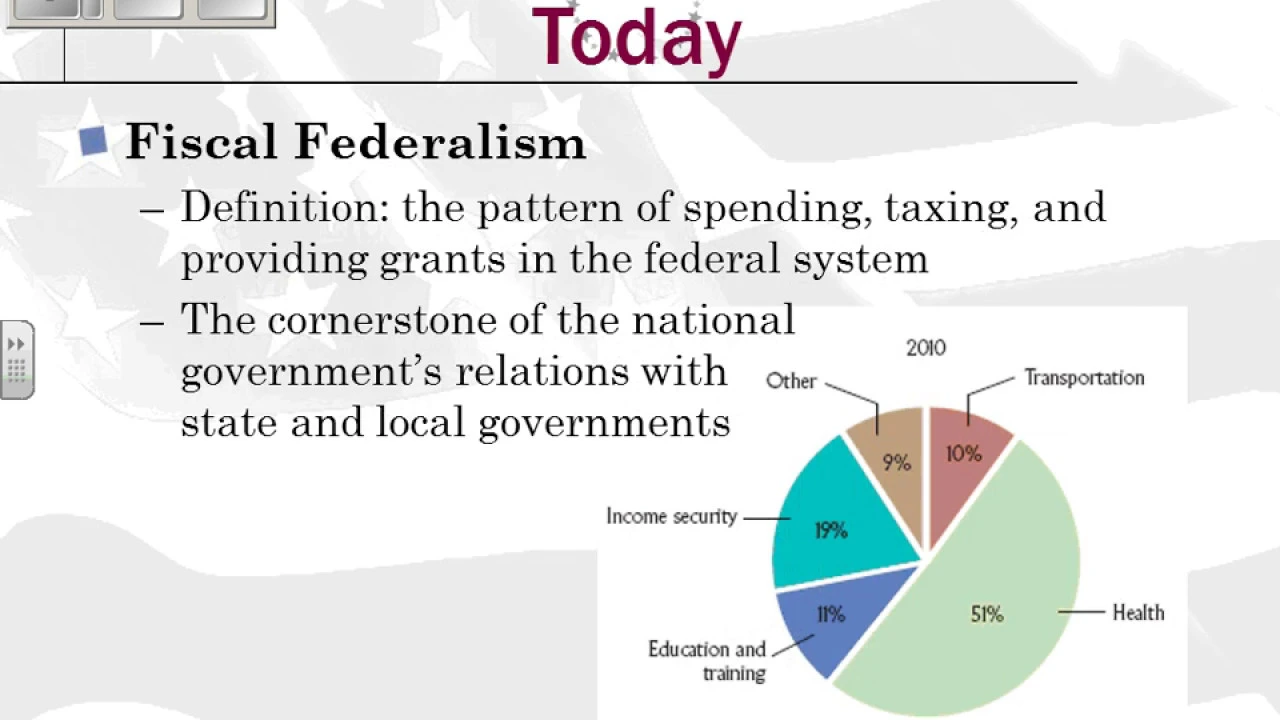
what's going on apgov peeps we have government in America the 15th edition chapter 3 for you today on federalism holdy cow is this important the last chapter was on the Constitution very important this one arguably just as important on federalism so let's get going all right defining federalism what the heck is this term well according to the book it is a way of organizing a nation so that two or more levels of government have formal authority over the same area and people essentially in my words it's going to be the division of power between different levels of government and really it's going to be on the federal and the state government I live in New York state there are the New York state government and the federal government both influence my daily life that is federalism most Nations do not use federalism we are kind of unique and and in the minority of the number of nations that use federalism uh a lot of Nations use a unitary government and this is where the central government has all the power and this is something that France in particular uses another type of government and one that was the America's first government was a Confederation and think about the Articles of Confederation they were a weak federal government and most of the power is in the states or a similar entity or body and here is a flag of the Confederate States of America here's a little uh fact for you this the Confederate flag that most people think of when you see the Confederate flag is not actually the the Confederate States of America flag this is the Confederate States of America flag little uh history fact for you today and intergovernmental relations these are interactions among federal state and local governments and that's what we're going to focus on in this chapter today so let's talk about the importance of federalism well it decentralizes politics in other words it takes it away from one central federal government location so think about that Senators I'm going to use New York State as an example New York state senators are elect to represent New York State not necessarily the nation they do have certain obligations to the nation like ratifying treaties and and other foreign policy things but their main focus is on representing New York State citizens and here is one of the two senators of New York state currently Chuck Schumer this also federalism also strengthens the judicial branch because we need somebody to settle disputes that may arise between the state and federal government so the judicial branch is going to play very important role and the federal government can influence state policies as well and one thing that the book keeps talking about is that the drinking age was raised to 21 that is a state issue it used to be 18 but the federal government tied funding for highways in to States raising their drinking age from 18 to 21 now States didn't have to increase the drinking age but if they didn't the federal government would not have given them money for federal highways states have influenced almost almost all national policy when you look at National policies a lot of them have origins in States so for example child labor minimum wage unemployment all of these things began in States prior to the adoption at a national level so states are like little experments for the national government to decide which policies to adopt so why did federalism develop well in the beginning when it developed on the Constitution it's because there was a large area of land and it was widely and we had a WI dispersed population now here's a very famous early map of the United States now forget all Florida because we didn't have it yet but in 17 883 the United States had all this area here which was the original 13 colonies we had the Appalachian mountains which were a part of the Proclamation L of 1763 and then we had all of this area as well that is a huge area in the 1780s for a government to run with little technology to communicate with all those different areas so a so States played a very important role in the government so what are some powers given to States definitely be able to recognize these um they control intrastate Commerce which is Commerce or trade within the state they also control elections both state elections and the national elections although that's changed slightly with an amendment and a very famous act and they also are given reserved powers which is the 10th Amendment to the Bill of Rights and an example of that is education so what are po given to the federal government well these are called enumerated powers and things that only the federal government can do are coining money declaring war interstate commerce controlling interstate commerce is trade between two or more States and they can also make treaties so New York State cannot go out and make a treaty with a foreign Nation what are powers given to both States and the federal government well they can tax they can borrow money and they can make laws I pay income taxes both to New York State and the federal government that an example of concurrent powers or powers given to both the state and national government then we have something called the supremacy clause in the Constitution which states that the constitution laws of the national government and treaties are the supreme law of the land okay so let's focus on the 10th Amendment which I mentioned earlier is the reserved powers and these are powers reserved for the states so all powers not granted to the federal government in the Constitution are then given to the states an example again is education now the Supreme cour court has ruled since then stating that this amendment does not mean that states are superior to the federal government it simply means if things aren't expressly given to the federal government then it falls to the States but even that isn't exactly how it's worked the 11th Amendment prohibits individual damage suits against State officials so how has National Supremacy been established let's focus on this this is a very important topic for this chapter there are four different ways we have implied powers and this is known as the elastic clause or the necessary and proper clause in the Constitution it says that Congress has the power to make all laws necessary and proper so this was used to uphold the constitutionality of the bus or the bank of the United States in mccullock versus Maryland now this was the Second Bank of the United States the first one was the brainchild of Alexander Hamilton who was somebody who was in favor of the bank of the United States in the 1820s and 30s oh my God it is Henry Clay yes so Henry Clay was in favor of the bus and Alexander Hamilton when he created the first bus pointed to the elastic clause and said that is why the federal government is allowed to create the bank of the United States because of the necessary and proper clause so mccullock versus Maryland is an incredibly important court case and I've and this was a part of John Marshall's tenure as chief justice and I do have a video in the description on John Marshall Court case is very very important court case in the versus Maryland this helped establish the superiority of fed Federal power over state power another way that's very very important that National Supremacy has been increased is the Commerce Clause or commerce power Gibbons versus Ogden another John Marshall Supreme Court case the Supreme Court ruled that congress not individual states could control interstate commerce and again interstate commerce is trade between two or more States and Daniel Webster here was one who argued Gibbons versus Ogden before the the Supreme Court and this is used today by Congress to regulate TVs radios phones Etc so this Commerce Clause is used to expand the role of Congress in the federal government and this is a huge source of power for the federal government so if you ever see an essay on how has the federal government expanded its power since the Inception of the Constitution you should really make sure you include the Commerce Clause the Civil War was another huge turning point because this helped settle the States versus Federal government argu states rights took a huge step back as a result of the Civil War and also especially in 1950s and 60s the struggle for racial equality in other words the Civil Rights Movement so the federal government stepped in during the Civil Rights Movement of the 1950s and 60s and made new laws so when I talked about earlier that voting was left to the states that changed with the Voting Rights Act of 1965 it increased the power of the federal government and in the court case Brown versus the Board of Education the federal government would is used in education which is a state thing the National Guard was used to ensure that students were allowed to attend schools in Little Rock Arkansas all right so what are obligation of states to one another so New York state does it have an obligation to say Pennsylvania's neighbor yeah they do and one of them is the full faith and credit and this means that states must recognize public acts records and other proceedings of other states so marriage and driver's licenses when I drive to Cincinnati and Ohio I leave Buffalo and I go to Ohio my driver my new New York state driver's license is still valid in Ohio Ohio recognizes that also if my wife and I were to move to Ohio our marriage would still be recognized in Ohio now this is where marriage has been in the news with this Full Faith and Credit Clause Congress created in in n in the 1990s something called the Defense of Marriage Act known as Doma and this stated that states did not have to acknowledge gay marriages from other states and they would not allow the federal government to recognize gay marriages well part of this the the latter part of Doma the fact that the federal government could not recognize this was declared unconstitutional in 2013 and I believe very strongly that the issue of gay marriage will go before The Supreme Court very very soon and we will have a final issuance once and for all on whether states can deny gay marriage let's talk about extradition this is not just meant for foreign countries but States regularly ship criminals to other states for crimes committed there privileges and communities prevents a state from discriminating against citizens of another state however this is very complicated it's not always straightforward so think about instate versus out ofate tuition for college if you go to a a public university in New York state and you're resident in New York state you will pay less than somebody from out of state that is a form of discrimination but the Supreme Court has said that is okay when it comes to issues like welfare the Supreme Court ruled that California could not require a waiting period for welfare benefits to new residents so let's talk about intergovernmental relations today dual federalism is the idea that the state and federal government are Supreme in their own sphere this has been described as a layer cake federalism let's look at this cake you'll see two separate layers here so the bottom layer could be obligations that the federal government has and the top layer could be obligations that state governments have the federal government is responsible for foreign policy and states are responsible for Education it is clearcut you have sole control federal government over foreign policy states have sole control over education however and really since the New Deal in the 1930s the government has moved towards the cooperative federalism model or the marble cake Mo model and what this means is that state and federal governments share responsibilities if you think of a marble C cake it's kind of vanilla and chocolate mixed all together it's not their own layers it's all intertwined with each other so think about law enforce post 911 both the police the state police and the federal government share responsibilities with keeping a state or city safe so what are some examples of the transition from dual federalism to cooperative federalism well in 1958 in response to the launching of Sputnik by the Soviet Union the United States passed the National Defense Education Act and what this did was it allowed the federal government to increase grants and loans for college and it also provided money for Science and primary and secondary schools again I keep stressing this but education was originally a state responsibility and this is the beginning of the transition of the federal government getting more involved in education another example would be the interstate highway system also under President Eisenhower in 1956 and this allowed the federal government to give money to states to build roads and cooperative federalism shares costs and shares the administration between state and federal government so there's a lot of crossover between the two definitely be familiar with that and often states must follow federal guidelines to receive the money it's not simply the federal government saying hey here's a billion dollars spend it how you want there are certain ways that the states must spend them we'll talk about that in just a few minutes all right 20th century politics we're going to go into now um most of the time democrats favor increasing the power of the federal government through policies like child labor laws education Etc Republicans for most of the 20th century opposed those programs and favored States taking more of a responsibility and this was seen in Ronald Reagan's inaugural address where he said in this present crisis government is not the solution to our problems government is the problem he was specifically blaming the federal government he thought it was too big and it was too involved in state affairs next we have Devolution which is the transferring the responsibilities of policies from the federal government to the states again this was the idea advocated by Republicans throughout most of the 20th century however since the 1990s Republicans have increased the role and power of the federal government this is seen through George Bush with his No Child Left Behind another program that increased the role of the Federal Government in education fiscal Federalism is defined as spending taxing and providing grants in the federal system so this deals with money in the federal system and the Federal government has enormous influence Over States via money um if States take federal government money again there are certain obligations they have to follow with that money so let's talk about grants and these are things you absolutely positively have to know they do appear on AP Government exams grants are money from the federal government to State and local governments there are different grants you need to know in the first one absolutely positively no ifans or BS about it know the categorical grants and these must be used for specific purposes for State spending this is a way to influence policy so hey States you want this money you can have it but here are specific guidelines you must follow an example this is the Head Start program under President LBJ and the Great Society and this provided money to schools usually lowincome Schools project grants are grants given based on applications and race to the top is an example of this and that is Obama's policy and program to deal with with education formula grants it are grants that are distributed based on a formula there's no applying that is necessary example that is Medicaid and by the way a lot of these programs we're talking about here originated in the Great Society under LBG and I have a video on that in the description as well black grants is the other important grant that you absolutely must know and these are this is money that is given to states with a discretion for states to decide how to spend this money so this is there's a lot more leeway with black grants than categorical grants again categorical grants you have to spend a certain way black grants the government gives you money and allows states to be more open-ended with how they spend it crossover sanctions are a part of Grants and this is influencing policy by using money in what one program again that example of raising the drinking age was attached to Highway money cross cutting requirements are conditions that are required to be B in all activities so for example if a university discriminates in one area it will affect all areas that receives Federal money so let's say the university unfairly discriminates against women or minorities in athletics then that University would lose their funding in every aspect that they get it from from the federal government all right roughly $600 billion doll in federal funds led to many state and local groups that Lobby for money so $600 billion a year are up for grabs universalism is the idea that everyone benefit benefits on some level from Grants mandates I I've alluded to that there are certain requirements that states have to follow with grants and and that is a mandate these are requirements put on States and local governments to provide certain services so if the federal government passes a law requiring something to be met that is a mandate now penalties may arise if requirements are not met it could be most often usually funding would be cut off now within mandates there are unfunded mandates which increased the budget of States so these are requirements from the federal government with no money provided that's why it's called an unfunded mandate the government does not get the federal government does not give States any money so let's look at the Americans with Disabilities Act passed in 1990 this required access to public facilities for disabled individuals things like wheelchair ramps now Congress and the federal government passed this but did not provide any money for that to be met and here is the first George Bush signing this into law and mandates can increase the burden on state budgets all right so with so many levels in federalism there are more opportunities for participation by citizens most citizens have better access to state government officials so really the argu the one of the positives of Federalism is that that your involvement in politics can increase drastically so what are some other positives of federalism while political parties can still have influence in state governments even even if they do not in the national government so let's say that New York state is traditionally a democratic state if on the national level Congress is controlled by Republicans and the presidency is controlled by Republicans the Democrats can still have power within state governments states can also make changes that the national level has not we talked about minimum wage earlier we talk about right now as of today August 13 2014 the federal minimum wage is $725 an hour in New York state it is $8 an hour cannot work currently today in New York state for less than $8 an hour even though the federal minimum wage is $725 so what are some negatives of federalism well States can be discouraged to provide benefits for certain citizens one of these is that states with better welfare benefits can attract people from other states we looked at California earlier with that Core case saying that California could not require a waiting period so this can negatively affect the states budget if lots of citizens are moving into the state for example welfare and there are 8952 American governments and this can be very burdensome and expensive to operate and that 89526 is mostly made up of County local and state governments so one of the questions with Federalism is why is it federal government often asked to solve so many issues and the answer is because states do not have the resources and money that the federal government does all right let's do a quick recap here the supremacy clause says that laws and the Constitution is the supreme law of the land and the federal government uses the Commerce and elastic Clauses to increase its powers definitely know that you saw the Commerce Clause using Gibbons versus Ogden and the elastic clause with the establishment of the bank of the United States or the bus be able to identify specific enumerated reserved and concurrent powers dual federalism is the lay cake whereas cooperative federalism is the marble cake and be familiar with categorical grants this is money used for specific purposes unlike black grants which provides more leeway for states to spend money and federalism helps increase participation in the government all right guys that is everything you need to know about chapter 3 for government of America I thank you guys very much for watching if you have any questions or comments feel free to leave them in the comment section below or ask me on Twitter at Adam Norris AP thank you guys very much and have a good day
Up Next

48:27
America's Democratic Crisis: Lessons from Political History
@heathercoxrichardson
158.5K views•2025-09-09

24:30
BRICS Pay and de-dollarization: A New Financial Order Emerges? | 55 chars
@DannyHaiphongYT
164.6K views•2024-10-22
7:31
Separation of Powers Explained: AP Government Review
@AdamNorrisAPUSH
39K views•2015-09-06
10:19
Explaining the Saudi-Iranian Proxy Conflict in the Middle East
@Vox
18.2M views•2017-07-17
Related Study Plans & Knowledge Roadmaps
Structured learning paths in Political Science
political-science
Economic Statecraft: Sanctions & Chokepoints
01Foundations of Geoeconomics and Economic Statecraft
02The Mechanics of Weaponized Interdependence
03International Sanctions: Types, Implementation, and Efficacy
+ 2 more learning modules
12h5 modules
Explore Roadmap
political-science
Central Bank Independence: Politics & Policy
01Foundations of Central Banking and Monetary Policy
02The Time Inconsistency Problem & Inflation Bias
03The Delegation Model and Designing Independence
+ 2 more learning modules
12h5 modules
Explore Roadmap
political-science
Consociationalism: Power-Sharing & Stability
01Democratic Dilemmas in Divided Societies
02Introduction to Consociational Democracy
03The Four Pillars of Consociational Design
+ 2 more learning modules
12h5 modules
Explore Roadmap
political-science
Rebel Governance: Legitimacy, Economy & State
01Foundations of Rebel Governance and Statehood
02Establishing Political Legitimacy and the Rebel Social Contract
03Wartime Economies and Rebel Resource Management
+ 2 more learning modules
14h5 modules
Explore Roadmap