










![The United States v. Lopez, EXPLAINED [AP Gov Required Supreme Court Cases]](https://i.ytimg.com/vi/WnAgQKqc0F0/maxresdefault.jpg)

![United States v. Lopez [SCOTUSbrief]](https://i.ytimg.com/vi_webp/AjSU2A0wQiA/maxresdefault.webp)





![The Necessary and Proper Clause as a Guard for Federalism [No. 86 LECTURE]](https://i.ytimg.com/vi/6Wa7arBUyec/maxresdefault.jpg)

![AP Government Unit I Review [Everything You Need to Know For Your Exam]](https://i.ytimg.com/vi/Bltu8nXtL0k/maxresdefault.jpg)




In McCulloch v. Maryland (1819), Chief Justice John Marshall established that Congress possesses implied powers through the Necessary and Proper Clause (Article 1, Section 8) to create institutions like the Second Bank of the United States, even when not explicitly mentioned in the Constitution; the Court also affirmed that federal laws supersede conflicting state laws, demonstrating federal supremacy over states in matters of constitutional interpretation.
McCulloch v. Maryland: AP Gov Required Supreme Court Case
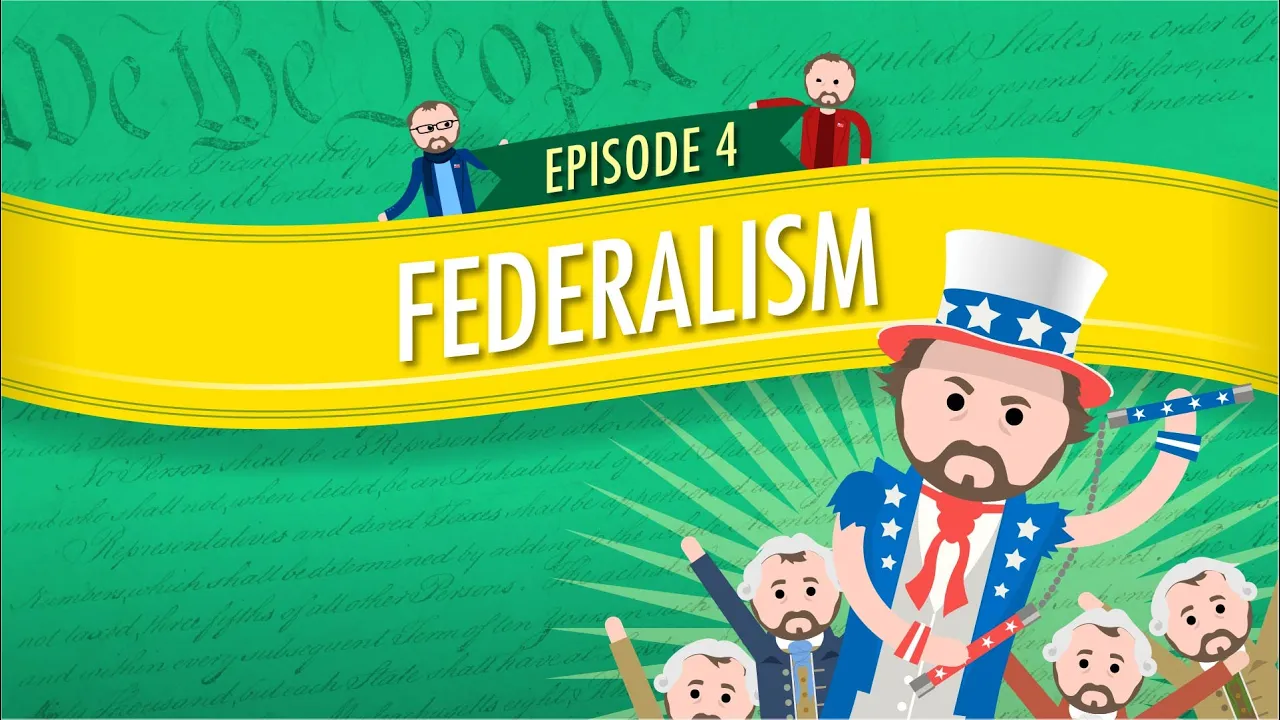
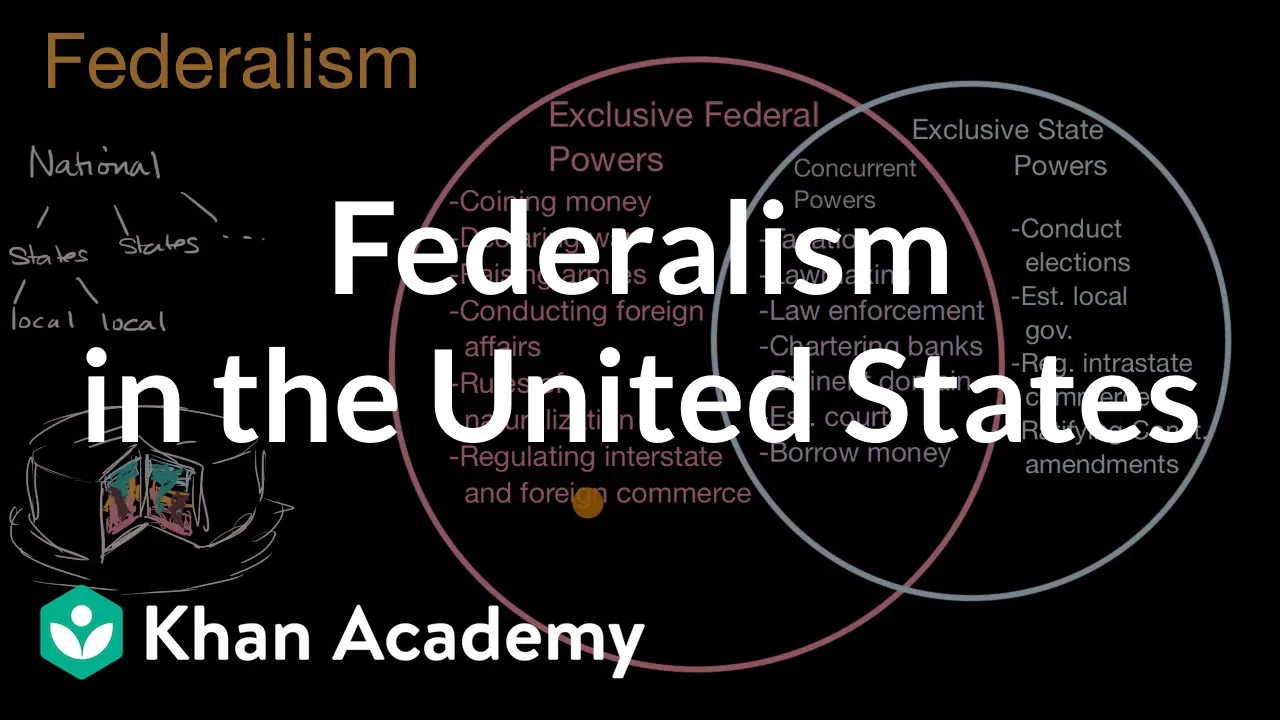
Added:The basic structure of American Federalism, specifically the division of power between national and state governments.
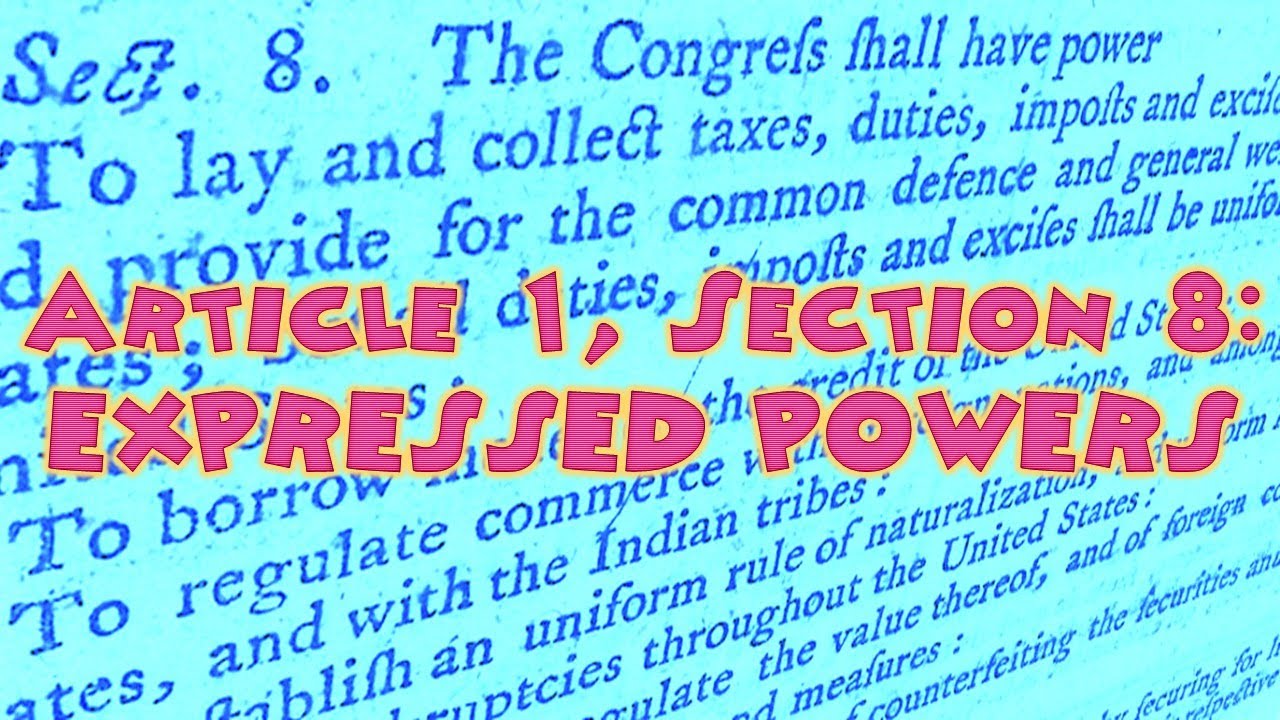
The concept of Enumerated Powers (or expressed powers) granted to Congress in Article I, Section 8 of the U.S. Constitution.
The Supremacy Clause of Article VI, which establishes the Constitution and federal laws as the supreme law of the land.
The role of the Supreme Court as the ultimate arbiter of constitutional interpretation, established in Marbury v. Madison.
The constitutional analysis of United States v. Lopez (1995), which represents a modern counter-balance and limitation on federal power.
The historical transition from Dual Federalism ('layer cake') to Cooperative Federalism ('marble cake') accelerated by this ruling.
How the Necessary and Proper Clause (Elastic Clause) has been used to expand federal authority in modern policy areas like civil rights and environmental regulation.
Contemporary debates surrounding the 10th Amendment and states' rights vs. federal mandates on issues like marijuana legalization and healthcare reform.
663.7K views5.9Klikes3:54Original Release: 2021-08-25
hey there and welcome back to heimler's history in this video we're looking at another one of your required supreme court cases in the ap government curriculum and that means it's time to look at mcculloch versus maryland so if you're ready to get them brain cows milk supremacy style then let's get to it okay first let's get the facts of the case in 1816 congress chartered the second bank of the united states which in case you can't discern from the name was a federal bank furthermore this federal bank attempted to establish branches in several states including baltimore maryland to which the maryland legislature said big mistake so maryland was not too pleased to have this branch of the federal bank in its borders and so the state legislature passed a law saying that any bank in maryland which was not officially chartered by maryland would be subject to a 15 000 a year tax which when being adjusted for inflation is roughly a metric buttload of money so the cashier of the baltimore branch of the national bank could see the injustice in this tax and refused to pay it and the case went all the way up to the supreme court so now let's have a look at the constitutional principle at stake in this case maryland argued that the establishment of a national bank was unconstitutional because nowhere in article 1 section 8 did it say that congress had the power to create a bank and on that count they were right it doesn't say anything about that but mcculloch's lawyers argued that the bank was constitutional on account of the necessary and proper clause which was explicitly stated in article 1 section 8 and it says this the congress shall have power to make all laws which shall be necessary and proper for carrying into execution the foregoing powers and all other powers vested by this constitution in the government of the united states or in any department or officer thereof in other words congress is given explicit powers in article 1 section 8 like the power to declare war or regulate interstate commerce for example and the necessary improper clause gives congress the power to create other laws which are not explicitly named in article 1 section 8 but that need to be passed in order that the explicit powers can be upheld if you want a term for those kinds of non-explicit powers and i know you do these are called implied powers the powers are not named but they are implied so what was the decision well it doesn't appear that there was much of a fight over this one since the decision was unanimous in favor of mcculloch chief justice john marshall argued in his decision that the bank was in fact constitutional on account of the authority of the necessary and proper clause and he said it this way we think that the sound construction of the constitution must allow to the national legislature that discretion with respect to the means by which the powers it confers are to be carried into execution which will enable that body to perform the high duties assigned to it in the manner most beneficial to the people let the end be legitimate let it be within the scope of the constitution and all means which are appropriate which are plainly adapted to that end which are not prohibited but consist with the letter in the spirit of the constitution are constitutional in other words if a power is not prohibited by the constitution and the law in question upholds the spirit of the constitution then it stands furthermore this case established the supremacy of national laws over against state laws and listen to how marshall says it the powers granted to congress are not given by the people of a single state they are given by the people of the united states to a government whose laws made in pursuance of the constitution are declared to be supreme consequently the people of a single state cannot confer sovereignty which will extend over them in other words whenever a state law is in conflict with a federal law federal law wins so why does this decision matter well it matters mostly because of what it demonstrated about federalism the balance of power between the federal government and the states remember that in the united states versus lopez the court tipped the balance in favor of the states in this case the balance is decidedly tipped in favor of the federal government and ever since this decision was handed down mcculloch vs maryland has been a precedent to which later courts would return when deciding on the balance of power between states and the federal government okay that's what you need to know about mcculloch versus maryland for ap government here's a playlist right over here for all the other required cases in case you're into that kind of thing if you want help getting an a in your class and a five on your exam in may then you can click right here and grab my review packet so go ahead and subscribe if you're not already and i will see you in the next one heimler out
Up Next
9:56
Federalist No. 10 Part 1: Madison's Republic vs. Democracy | AP Gov
@khanacademy
117.3K views•2017-11-27

24:30
BRICS Pay and de-dollarization: A New Financial Order Emerges? | 55 chars
@DannyHaiphongYT
164.6K views•2024-10-22

7:33
Government Surveillance Methods: 10 Ways You May Be Watched
@BeAmazed
1.6M views•2017-04-09
10:19
Explaining the Saudi-Iranian Proxy Conflict in the Middle East
@Vox
18.2M views•2017-07-17
Related Study Plans & Knowledge Roadmaps
Structured learning paths in Political Science
political-science
Economic Statecraft: Sanctions & Chokepoints
01Foundations of Geoeconomics and Economic Statecraft
02The Mechanics of Weaponized Interdependence
03International Sanctions: Types, Implementation, and Efficacy
+ 2 more learning modules
12h5 modules
Explore Roadmap
political-science
Central Bank Independence: Politics & Policy
01Foundations of Central Banking and Monetary Policy
02The Time Inconsistency Problem & Inflation Bias
03The Delegation Model and Designing Independence
+ 2 more learning modules
12h5 modules
Explore Roadmap
political-science
Consociationalism: Power-Sharing & Stability
01Democratic Dilemmas in Divided Societies
02Introduction to Consociational Democracy
03The Four Pillars of Consociational Design
+ 2 more learning modules
12h5 modules
Explore Roadmap
political-science
Rebel Governance: Legitimacy, Economy & State
01Foundations of Rebel Governance and Statehood
02Establishing Political Legitimacy and the Rebel Social Contract
03Wartime Economies and Rebel Resource Management
+ 2 more learning modules
14h5 modules
Explore Roadmap