




























This video explains how to measure and understand the mechanical properties of polymeric materials using tensile testing and stress-strain curves. Key properties include: (1) Strength is the maximum stress at break, representing the material's ability to resist failure; (2) Toughness is the total energy absorbed before failure, measured as the area under the stress-strain curve, which differs from strength because a weak but highly elongatable material can be tougher; (3) Stiffness relates to the initial slope of the stress-strain curve, indicating resistance to initial deformation; (4) Brittleness is characterized by low elongation at break (typically less than 5%), showing mostly elastic deformation before failure; (5) Hardness relates to surface resistance to scratching, though it can be distinguished from stiffness by examining the complete stress-strain curve. During tensile testing, polymeric chains undergo molecular mobility changes including orientation, disentanglement, and stress-induced crystallization, which affect these mechanical properties.
Polymer Stress-Strain Curve: Mechanical Properties Explained
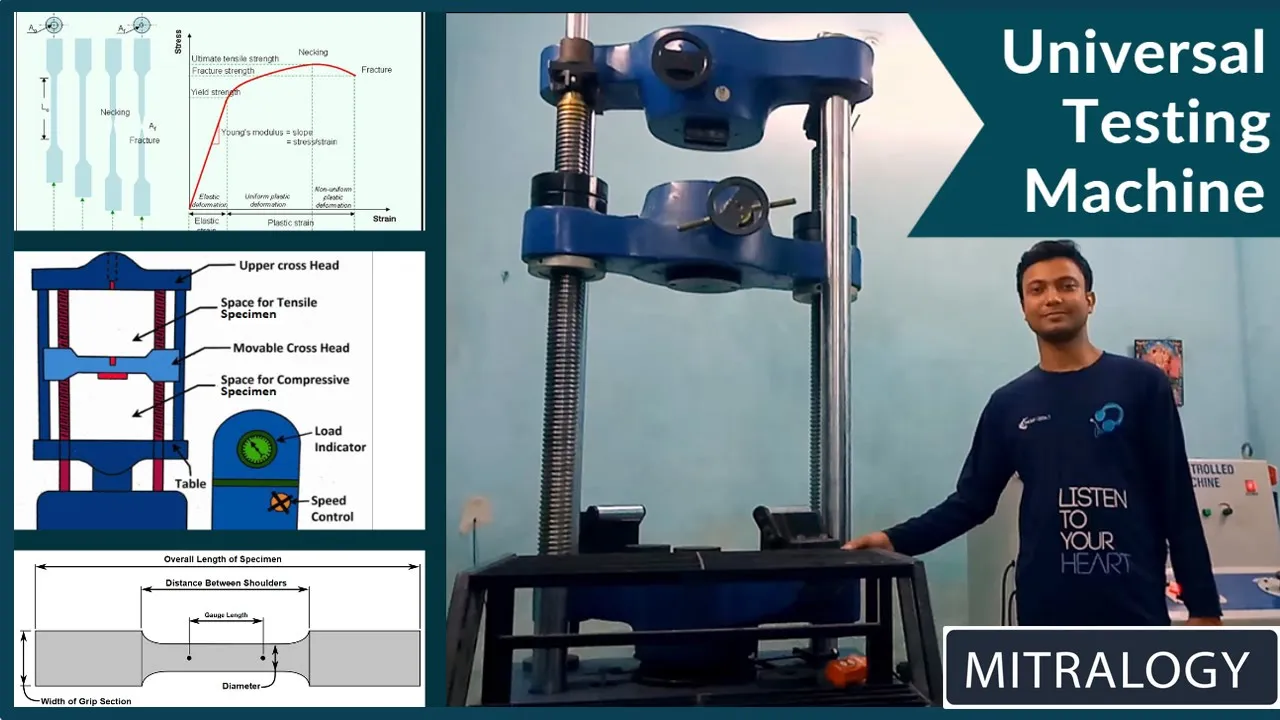
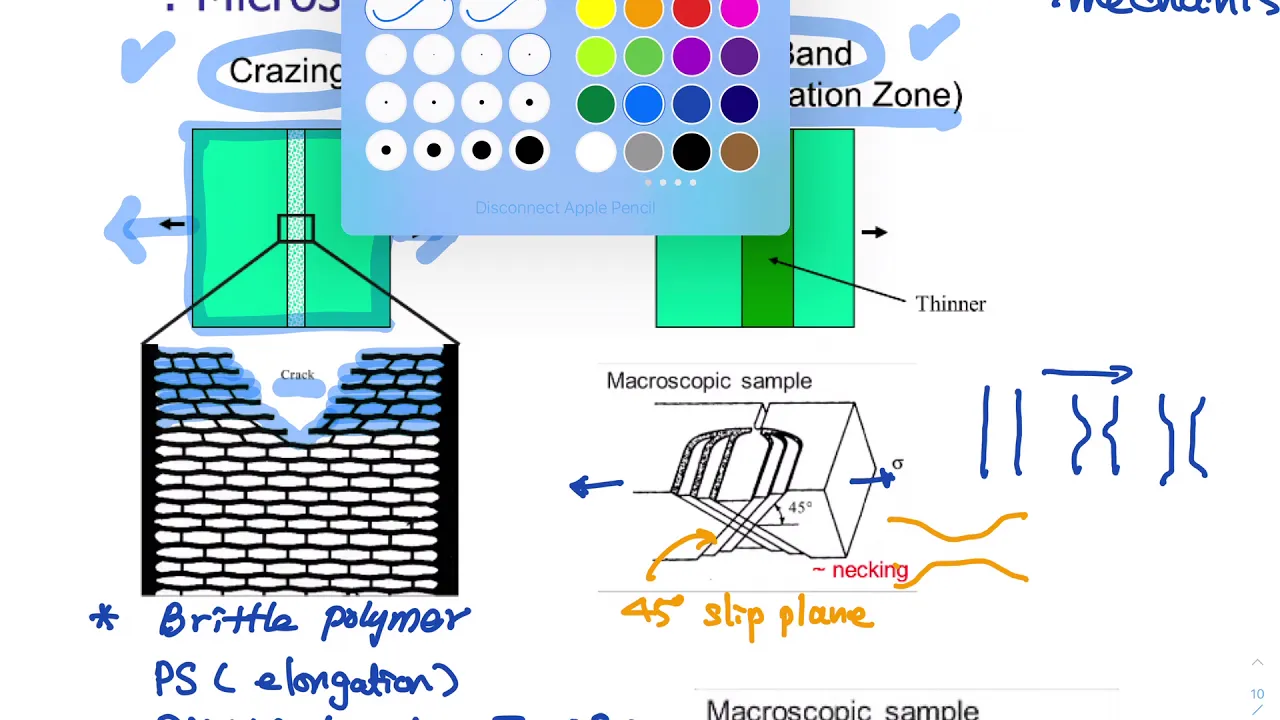
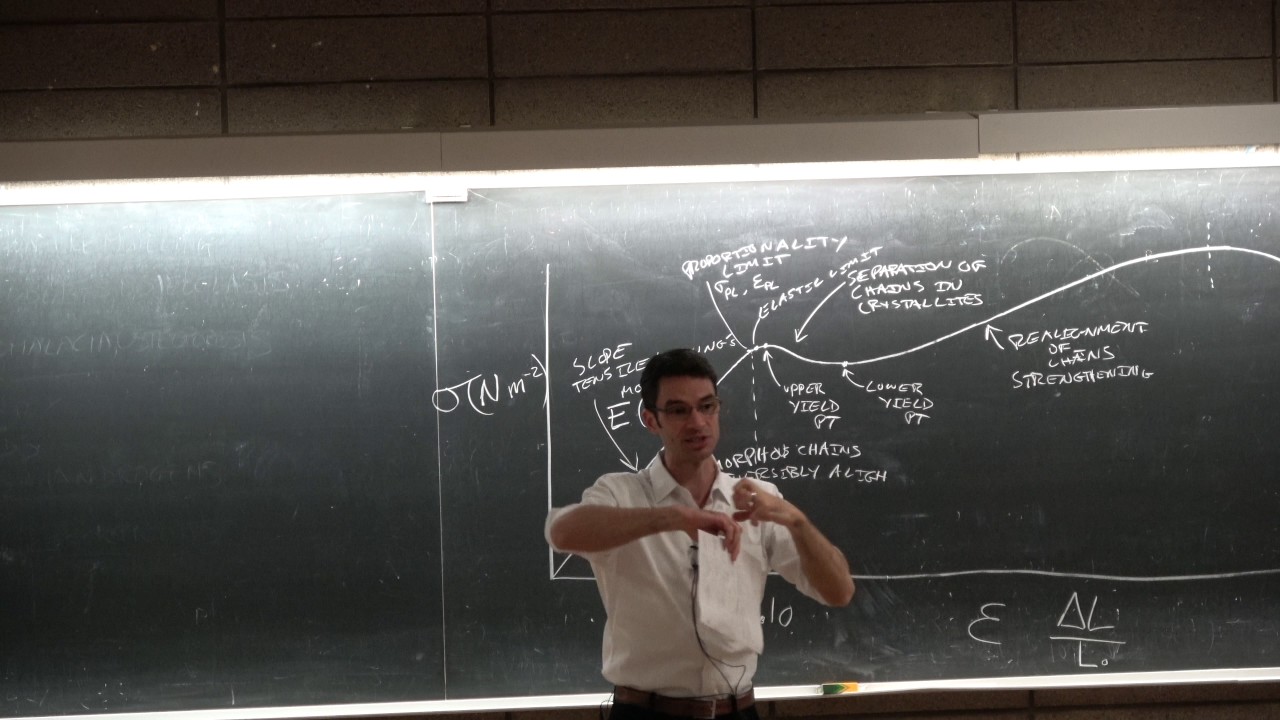
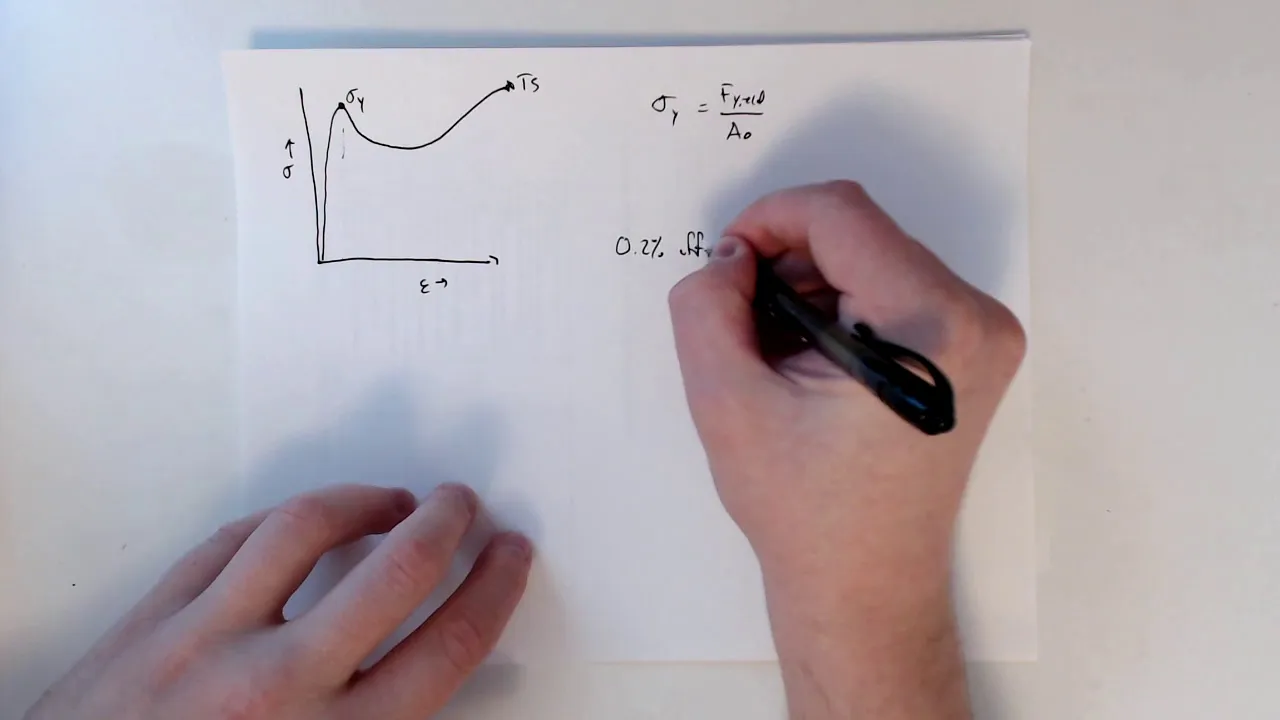
Added:in this video I'm going to talk about typical terms used to express the mechanical property of polymer like strength toughness brittleness and stiffness and also talk about how these terms are related to each other I will also talk about the typical maken a molecular mobility happens in the sample during a tensile test so let's start with the terms when we talk about the mechanical property of polymer we usually say the polymer is strong tough hard brittle Steve or soft it is important that we understand what this term actually means because a better understanding of these terms will help us to understand which is the most important property for a certain application like car body parts need to be much more tougher than strong why let's find out it is also important that we know how to measure these properties so that we can compare different polymers and also modify polymer in such a way that it can be used for certain applications to understand these terms and their relationship we have to first discuss the tensile testing method and the behavior of polymeric material under stress when a load is applied on polymeric material it shows deformation the applied load is called stress and it is represented by force per unit area a very simple way to calculate this is by dividing load by cross sectional area of the sample the deformation is the change in length of the sample during testing the deformation is often expressed as percentage strain which is the ratio between change in length and initial length of the sample now coming to the method of tensile testing we can perform tensile testing in two conditions either under fixed load or constant rate of deformation in case of fixed load a specific amount of load is applied on the sample and deformation is measured over time in case of constant rate of deformation the sample holding jaw moves at a constant speed like five centimeter per minute and to achieve this constant speed machine automatically increases or decreases stress to stretch the sample testing at constant rate of deformation is the most commonly used in cell testing method now if we look at the stress-strain curve of a polymeric sample we can see that unlike metal amount of stress requires to deform the polymeric material changes with increasing amount of deformation polymeric materials mostly show two type of deformation one is called elastic deformation and other is called plastic deformation there is significant difference between elastic deformation and plastic deformation elastic deformation is usually instantaneous and also recoverable which means sample can return to its initial shape once the load is removed in case of plastic deformation it is time dependent and also this kind of deformation is permanent in the elastic region stress increases linearly with strain which indicated material resistance to deformation a stiff material will have very high resistance to deformation compared to a soft material therefore the stiff material will have high ratio of stress to strain at certain stress level also known as yield stress in the picture the point B materials resistance to deformation decreases as a result material can be easily deformed in this phase we can see that strain increases without increasing stress polymers resistance to deformation increases at higher strain level and it becomes harder to deform so higher amount of stress is required in the picture we can see the transition from Steve phase to d phase this behavior is known as strain hardening finally material breaks at stress value higher than the yield stress so now we can see that polymeric material undergoes different rate and type of deformation when a stress is applied based on this will deformation behavior we can explain the different terms used to express the mechanical properties of polymeric material let's first talk about strength and toughness strength hockey material is its maximum stress value which is usually at break or failure point so it is also known as stress at break on the other hand toughness of the material is the amount of energy consumed by the material before it fails the toughness value can measure by the area under the stress-strain curve a tough material is not necessarily will be the strongest material because a weak material with very high elongation at break can also absorb a lot of energy so we need to keep in mind that strength and toughness of the material is very different properties the strength is important when we do not want a material to fail but toughness is important when we would like material to fail at a specific incident like car accident because during accident we would like car parts to absorb most amount of energy so that people fills less force therefore toughness is more important for car body parts than strength but for chairs and other household goods we would like them to be more strong rather than tough now let's talk about brittle stiff and hard material bitterness stiffness and hardness of a material are the properties of the material which is related to their resistance to deformation it can be either in the form of bulk material or surface deformation brittleness is the measure of elongation at break in case of polymeric material typically a brittle polymer will only show elastic deformation an elongation at break will be mostly less than five percent sometime there is a confusion between brittle and stiff material both of them show similar deformation behavior like they show only elastic deformation but a stiff material can have similar stress-strain ratio but usually a stiff material show high elongation at break then the brittle material then what is the difference between steep material and hard material many times when we talk about the hardness of the material we talk about their surface hardness like how difficult it is to scratch the material but when we talk about the bulk hardness of the material it becomes difficult to differentiate between a stiff material and a hard material based on their initial resistance to deformation to differentiate between stiff and hard material we have to look at the whole stress-strain curve or a stiff and a hard material can have similar initial slope but a material with only elastic deformation will be called stiff material and material with both elastic and plastic deformation will be called hard material similarly we can differentiate a hard material and a soft material based on their initial slope a soft material will have a lower slope than a hard material but we need to keep it in our mind that a soft material does not mean a week or less tough material because even a soft material with high elongation at break and stress hardening behavior can emerge as they're very strong and very tough material now as we know the basic definition of the terms used to express the mechanical property of polymeric material let's compare the properties of five polymer shown here and identify which one is the strongest toughest and flexible polymer to know which one is the strongest material we have to compare their stress at break a sample D shows highest stress at break and a lowest it is very clear that sample D is the strongest and sample a is the weakest material next question is which sample is stiff and which sample is hard as we explained previously both Steve and hard material show very high initial slope so sample B D and E belongs to the category of stiff and hard material as sample B shows only elastic deformation and D and E shows both elastic and plastic deformation then sample B is the stiff and sample D and E is the hard materials based on the absolute value sample B can be also graph is classified as brittle material as it is only shows showing elastic deformation and elongation at break of this material is lowest among all samples in terms of identifying soft and hard material sample see shows lowest initial slope so it is a soft material now the question is among all these samples which one is the toughest material as toughness is the measure of materials ability to absorb energy before break and it is measured by the area under the stress-strain curve we can see that sample C D and E are very tough material by calculating the actual area we can identify which is the strongest among them but it is clear from this example that it is not necessary that strongest material will be the toughest material at the same time a softer material can be the strongest or the toughest material please feel free to comment if you need further clarification on is any specific two point moving forward behavior shown by the polymeric material during tensile testing is the effect of molecular mobility in the sample and by controlling the chain mobility a materials mechanical property can be changed so first let's see the chain mobility in an amorphous polymer drink and Sal testing and identify the major changes during each transition point at the initial stage polymer chain in the sample remain in a random coil configuration as the stress is applied the coil first orient in the stress direction this deformation is called elastic deformation on further deformation chain starts to disentangle as it is easier to deform a disentangle chain strain increases without increase in stress in a very basic sense we can say that at the yield point chain disentanglement starts as change starts to distinct disentangle and orient in the stress Direction chain also starts to crystallize this phenomenon is called stress induced crystallization due to crystal formation it gradually becomes difficult to deform so higher stress is required to achieve deformation therefore we can see that stress increases after certain amount of deformation if polymer can achieve very high degree of stress induced crystallization like shown here in the picture sample breaks at significantly higher stress then yield stress so we can see that a polymer chain undergoes different type and extent of deformation when under stress this mobility can be facilitated or constrained by different ways to influence the deformation behavior some factors which can influence the mobility are listed here in my next video I will explain how these factors can influence the molecular mobility and therefore the mechanical property of the polymer thank you for watching this video and please subscribe to our channel to support our effort
Up Next

Sick Building Syndrome Explained: Causes, Symptoms, and Solutions
@BrainStuffShow
61.9K views•2016-01-26
Ultrasonic Transducers: Resonant Frequency Measurement and Horn Design
@imajeenyus42
229.9K views•2017-02-22
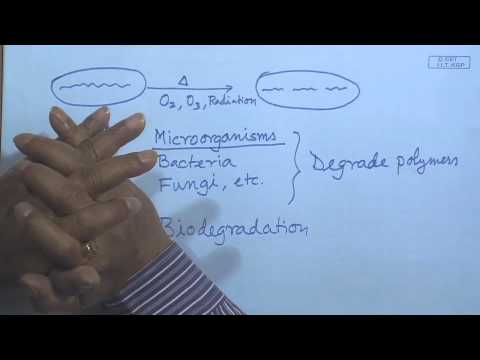
Polymer Environmental Degradation: Mechanisms & Stabilization
@iit
1.8K views•2012-07-10

How a Student's Question Saved a NYC Skyscraper from Collapse
@veritasium
22.8M views•2025-04-26
Related Study Plans & Knowledge Roadmaps
Structured learning paths in Engineering