



















The 12 Principles of Green Chemistry provide a comprehensive framework for designing chemical processes that prevent waste generation, maximize atom economy, use non-toxic substances, utilize renewable feedstocks, minimize energy consumption, and eliminate unnecessary steps through catalysis, ultimately creating products that break down safely in the environment while preventing chemical accidents.
Green Chemistry Principles: Waste Prevention & Design | 12 Principles
Added:Basic chemical stoichiometry and the concept of reaction yield.
Fundamental organic chemistry reaction mechanisms and functional groups.
General laboratory safety standards and the definition of chemical hazards and toxicity.
Introductory environmental science concepts, particularly regarding industrial pollution and waste bioaccumulation.
Calculating Green Chemistry metrics, specifically Atom Economy (AE) and Environmental Factor (E-factor).
Life Cycle Assessment (LCA) methodology for evaluating the cradle-to-grave environmental impact of chemical processes.
Case studies of industrial green chemistry applications, such as the synthesis of ibuprofen or bio-based plastics.
Advanced sustainable engineering practices, including biocatalysis, continuous-flow chemistry, and alternative solvent systems.
4K views30likes8:41Original Release: 2015-09-22
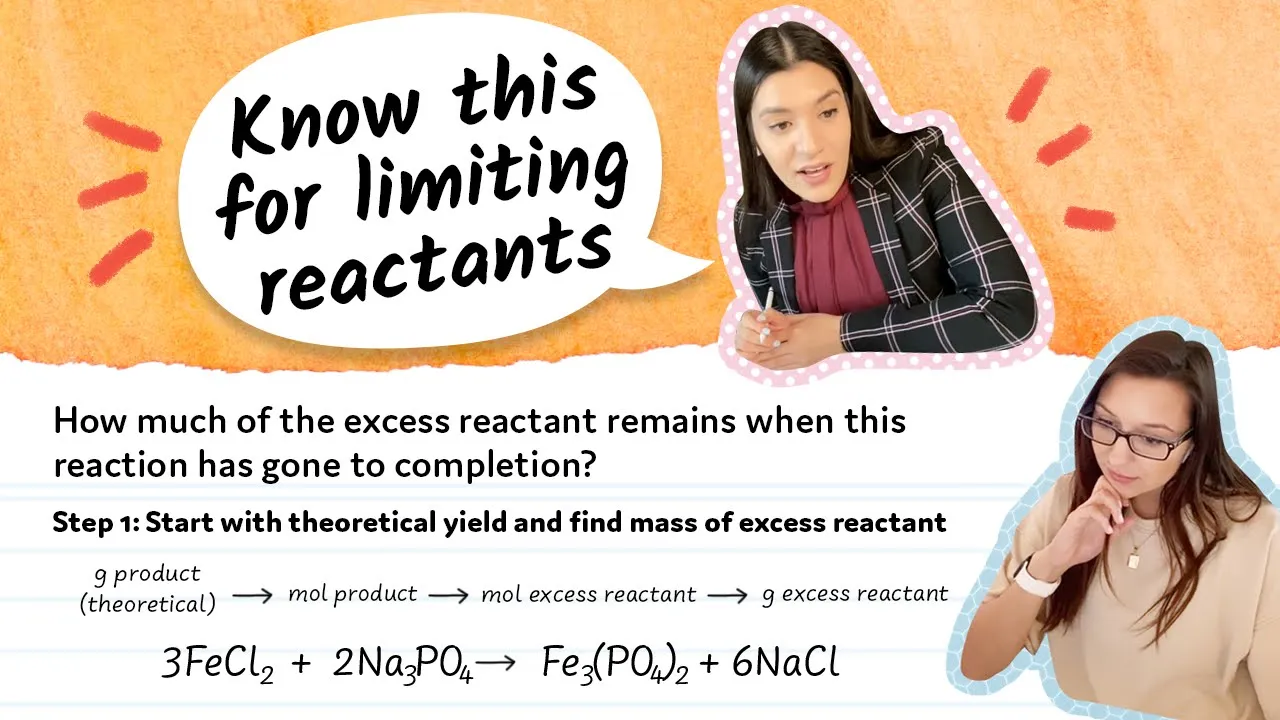
so these are the 12 uh 12 principles and I should say that 12 principles are like any principles of framework aren't um you know don't come from on high on stone tablets or anything else Frameworks are thrown out into the scientific Community to be beaten up and to be ripped apart and put back together and and uh and to see if they have any utility any value um and what is um useful about these is that they're they've been around for coming on 20 years um out there with lots of uh discussion and they are at this point widely used uh and we can talk a lot more about this but let's talk about principle one it's better to prevent waste than to treat or clean up waste after it's formed so the reason that it's necessary to State this is because the entire history of Environmental Protection has been that you know you just treat a controlly waste and all well with the world okay so that has been what the whole whole Industries have sprouted up to clean up after wasteful manufacturing processes wasteful uh end of life uh but there's there's an inherent problem with the create and clean up waste issue and one has to do with the law of thermodynamics okay so we we talk about well we'll make sure that if uh that we'll close our our Loops there won't be any emissions there won't be any uh exposure to people uh workers consumers there won't be any exposure uh to the air to the water these Loops stay closed based on thermodynamics right up until they don't and they dissipate and when we're talking about substances that persist that bio accumulate that build up into our bodies and the biosphere the idea of well it's okay if we can uh create it we'll just clean it up becomes um an experiment that we've run for many many decades and and shown that it doesn't uh doesn't work and uh of course anything I say please feel free to challenge but the other issue is that does it cost money to treat or clean up waste does it cost energy do you have to expend energy to separate the waste to clean it to treat it and does it add performance to a product does it add efficiency to a manufacturing scheme why have we thought that environmental issues cost a lot of money for decades because this has largely been the approach that we've used our approach to dealing with these issues has largely meant that you were going to have a significant expenditure principle two synthetic methods should be designed to maximize the incorporation of all materials use uh that are used into the final product basically if you go to put an atom in you want it to wind up in your product and not into your waist stream it's a concept called atom economy we're going to talk a lot about it and we're going to uh be able to actually measure what's the atom economy of these Transformations principle three practical synthetic methods should be designed to use and generate substances that possess little or no toxicity to human health and the environment so we captured this so you want to use whether it's your reagents your feed stocks um um and all of these Transformations that possess little or no toxicity to human health in the environment and toxicity really is probably better as Hazard more generally principle four the products chemical products should be designed to preserve efficacy of function so not that you have a very nice soap that's that that uh doesn't have any toxicity but it doesn't work as a soap preserve the efficacy of function while uh minimizing uh toxicity okay this is going to be a large section of this class when we start talking about molecular design we start talking about Hazard reduction this is what we're talking about auxiliary substances there's a whole lot of things that go into manufacturing there are solvents there are separation agents there's there's energy that's put in um to uh to bring about separations that we'll talk a lot about and these can make up a huge percentage of the waist stream in Pharmaceuticals it's estimated that 80% % of the waste are the solvents that are used in the manufacturing process so we kind of underestimate this so that they there are ways to not only come up with alternative solvents and other auxiliaries that are less toxic but also ways to eliminate them completely principle six energy energy and the nature of its energy needs to be understood how much embedded energy is going into the harvesting or mining how much of uh how much energy is going into the the manufacturer the separations the isolation the purifications and the nature of that energy is it renewable is it uh is it fossil is it depleting principle seven a raw material this is our our feed stocks question should be renewable rather than depleting rather technically and economically practicable renewable renewable in what kind of time frame oil's renewable you just need a few million years so not on a geologic time frame we're talking on a human time scale if you're if you're not able to renew this on uh your your materials uh on a time frame then they're you're definitionally depleting principle eight this is more subtle it's a actually a in order to get from A to B many times you have to go through a double prime a a prime a double prime a triple prime and you transform it on your way to to be that has been the way for 100 years coming up with ways of instead of going through all of those other steps that generate all kinds of ways use all kinds of material instead come up with ways that way you can eliminate these these steps catalysis we are going to devote a whole Focus to catalysis we'll be discussing what catalysis is and the spoiler alert catalysis allows you to make product with less less material less waste and there's not a petrochemical pharmaceutical specialty chemical company that would be in business today without it principle 10 products should be designed so at the end of their function they do not persist in the environment and they break down into innocuous degradation products I didn't say biodegradation products degradation products this definition leaves open that you want to have you know both natural degradation as well as trigger degradation so that you can break it down into building blocks that can be used for other upcycling purposes so there are ways to break down plastics for instance down into the basic building block monomers so that you can use them as virgin plastic once again um investigating what this means so that they don't you know last um forever or build up in our bodies of the biosphere analytical methodologies um should be developed so that we can test and real time in process in field rather than as has been done for so long after you create the the contamination or after you've generated the waste you then measure it and say oops look what we have to deal with now real time analysis and then principle 12 substances and the form of these substances uh should be used to minimize the potential for chemical accidents including fires explosions releases you don't want to have pollution preven and accident prevention working at opposite goals you have to align these so that accident prevention and there are inherent ways that you can uh engage in chemical safety
Up Next
16:42
How to Calculate Atom Economy in Chemistry
@DrDougYoung
4.1K views•2021-04-29
83:56
Biocatalysis and Catalysis in Islatravir Synthesis | Merck Webinar
@SCIwheresciencemeetsbusiness
675 views•2020-10-08
46:26
Isoprenoids, Rubber, and Polymer Properties | Chemistry
@YaleCourses
5.5K views•2012-04-05

17:31
Edible Water Bottles: A DIY Guide to Sodium Alginate Spherification
@ryan
10.5M views•2019-06-21
Related Study Plans & Knowledge Roadmaps
Structured learning paths in Chemistry
chemistry
Nuclear Chemistry: Decay, Meds & Fuel Cycle
01Introduction to Nuclear Structure and Radioactivity
02Decay Dynamics and Kinetics
03Radiation Interaction and Detection
+ 2 more learning modules
24h5 modules
Explore Roadmap
chemistry
Supramolecular Chemistry: Forces & Machines
01Foundations of Chemical Bonding and Intermolecular Forces
02Introduction to Host-Guest Chemistry
03Thermodynamics and Dynamics of Self-Assembly
+ 2 more learning modules
16h5 modules
Explore Roadmap
chemistry
Photochemistry: Excited States & Reactions
01Foundations of Light-Matter Interactions
02Molecular Orbitals and Electronic States
03Photophysical Processes and Jablonski Diagrams
+ 2 more learning modules
18h5 modules
Explore Roadmap
chemistry
Coordination Chemistry: Bonding & Properties
01Introduction to Transition Metals and Ligands
02Crystal Field Theory (CFT) and Geometry
03Magnetic Behavior and Spin States
+ 2 more learning modules
14h5 modules
Explore Roadmap