![[HÓA 11] Hợp Chất Hữu Cơ Và Hóa Học Hữu Cơ (Sách Cánh Diều, Chân Trời Sáng Tạo, Kết Nối Tri Thức)](https://i.ytimg.com/vi/9l9f6_OlT7Y/maxresdefault.jpg)
![[HÓA 11] PHỔ HỒNG NGOẠI (PHỔ IR) NÂNG CAO, ĐẦY ĐỦ NHẤT, DỄ HIỂU NHẤT - LỚP VIP](https://i.ytimg.com/vi/WBPEAFUXiC4/maxresdefault.jpg)


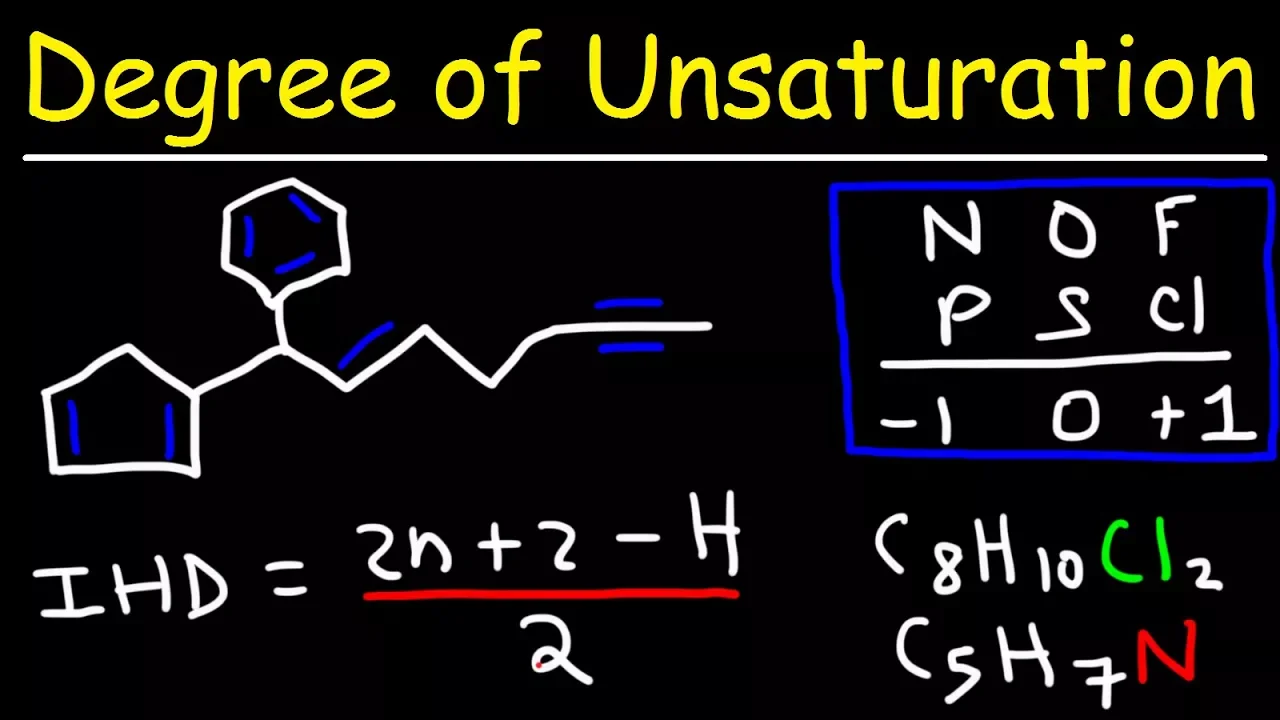







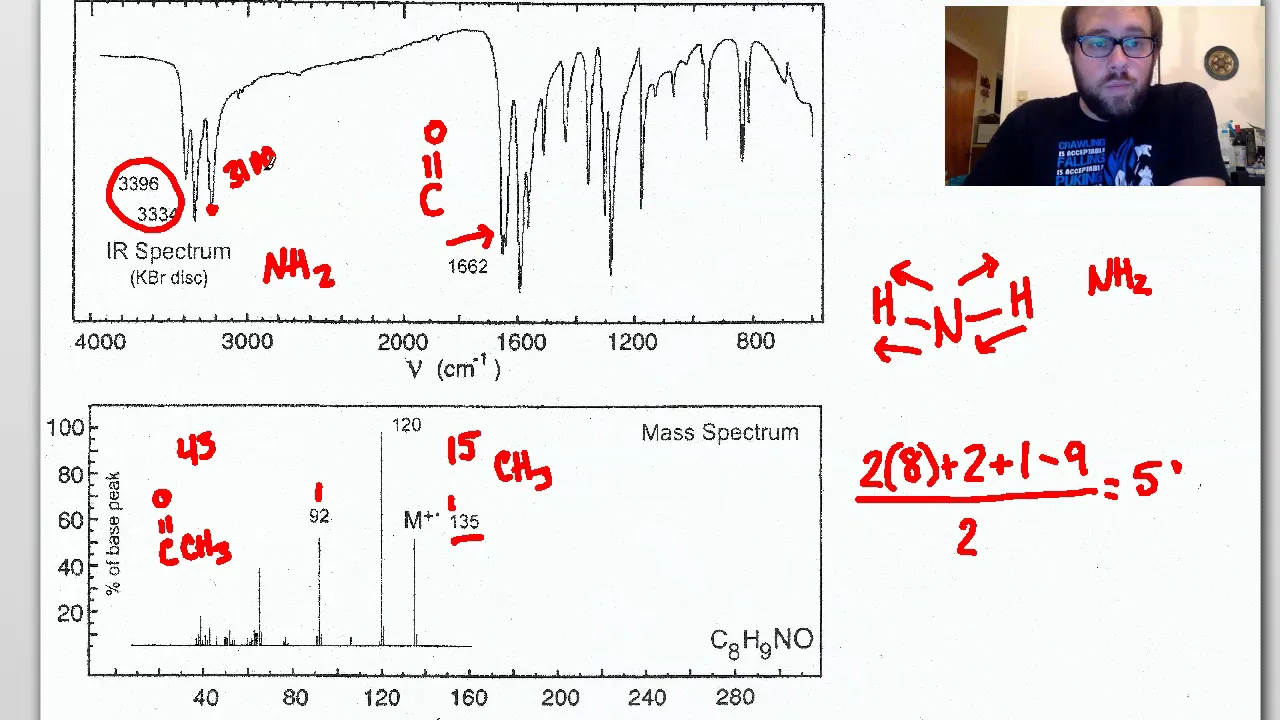
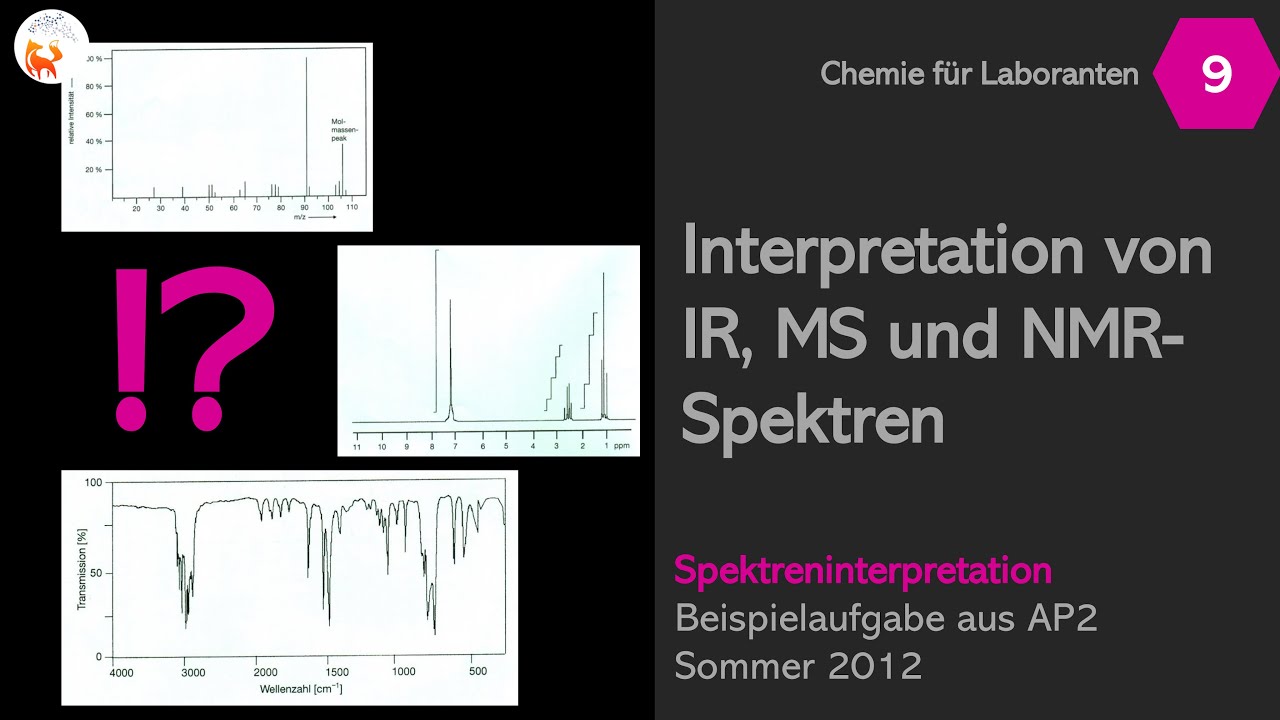
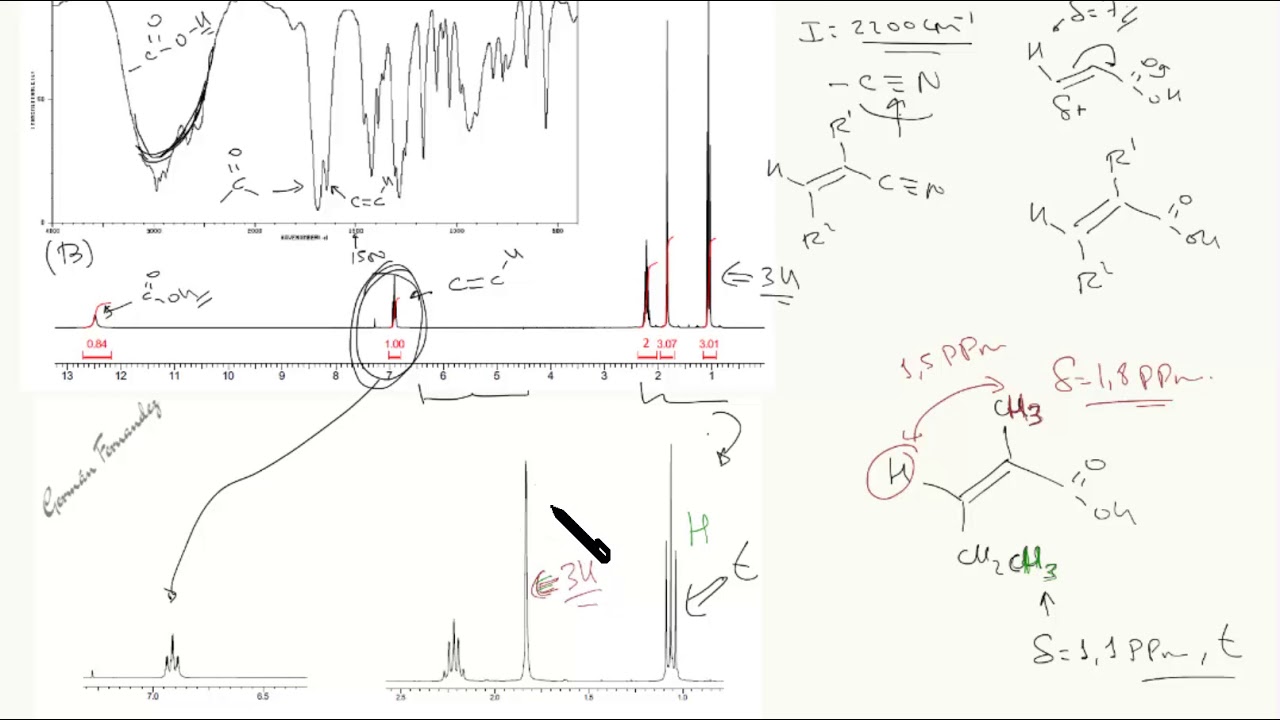




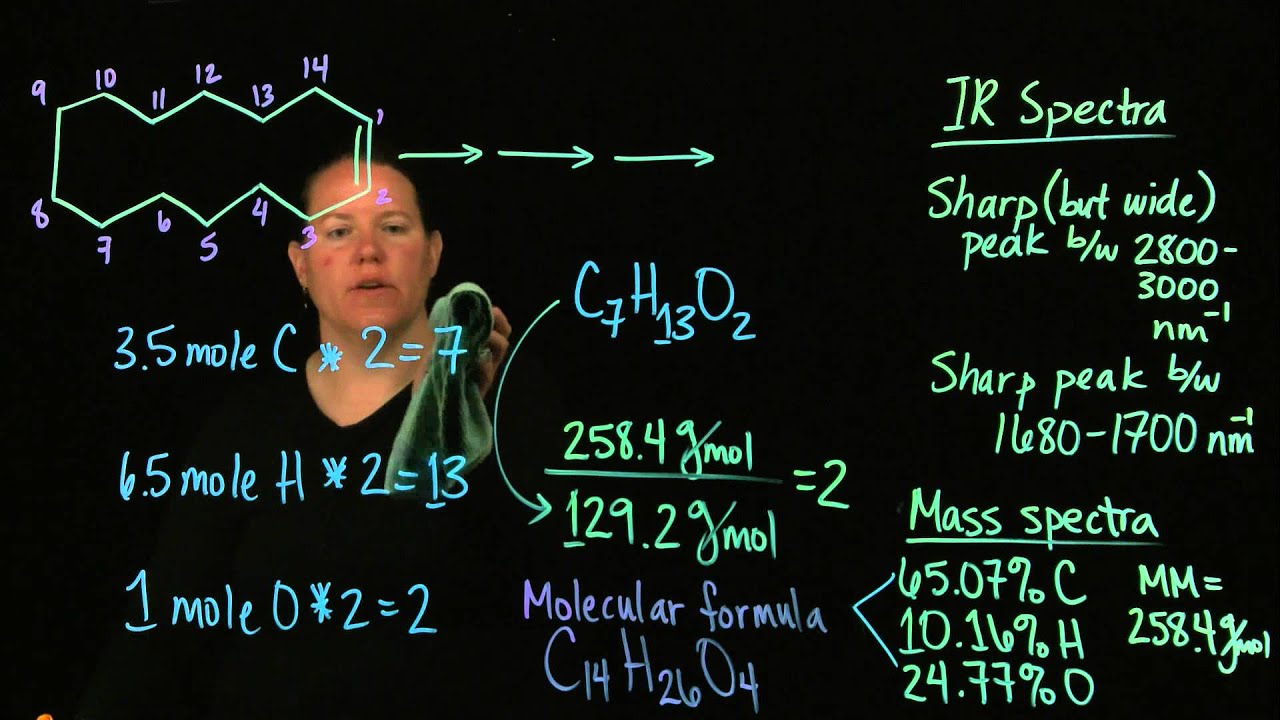


This video demonstrates how to solve combined IR and 13C NMR spectral problems by integrating molecular formula analysis with spectral interpretation: IR spectra identify functional groups through characteristic peaks (e.g., O-H stretch at ~3400 cm⁻¹, carbonyl stretch above 1700 cm⁻¹, C-O stretch around 1100 cm⁻¹), while 13C NMR identifies carbon environments and bonding patterns (sp³ carbons below ~100 ppm, sp² carbons above 100 ppm); together, these techniques allow identification of molecular structures such as alcohols (propanol vs. 2-propanol), ketones (acetone), and esters (methyl benzoate) by correlating spectral data with molecular symmetry and connectivity.
Combined IR and 13C NMR Spectral Problem Solving
Added:Basic principles of Infrared (IR) Spectroscopy, including characteristic absorption frequencies for key functional groups (such as carbonyls, hydroxyls, and amines).
Fundamentals of 13C NMR Spectroscopy, including chemical shift ranges, carbon hybridization (sp3, sp2, sp), and identifying molecular symmetry from signal counts.
Calculation and interpretation of the Degree of Unsaturation (Index of Hydrogen Deficiency, IHD) from a molecular formula.
Familiarity with common organic chemistry functional groups and their corresponding chemical structures.
Integrating 1H (Proton) NMR Spectroscopy, including chemical shifts, integration, and spin-spin splitting (coupling) patterns, for comprehensive structural elucidation.
Using Mass Spectrometry (MS) data in conjunction with IR and NMR to confirm molecular weight and analyze fragmentation patterns.
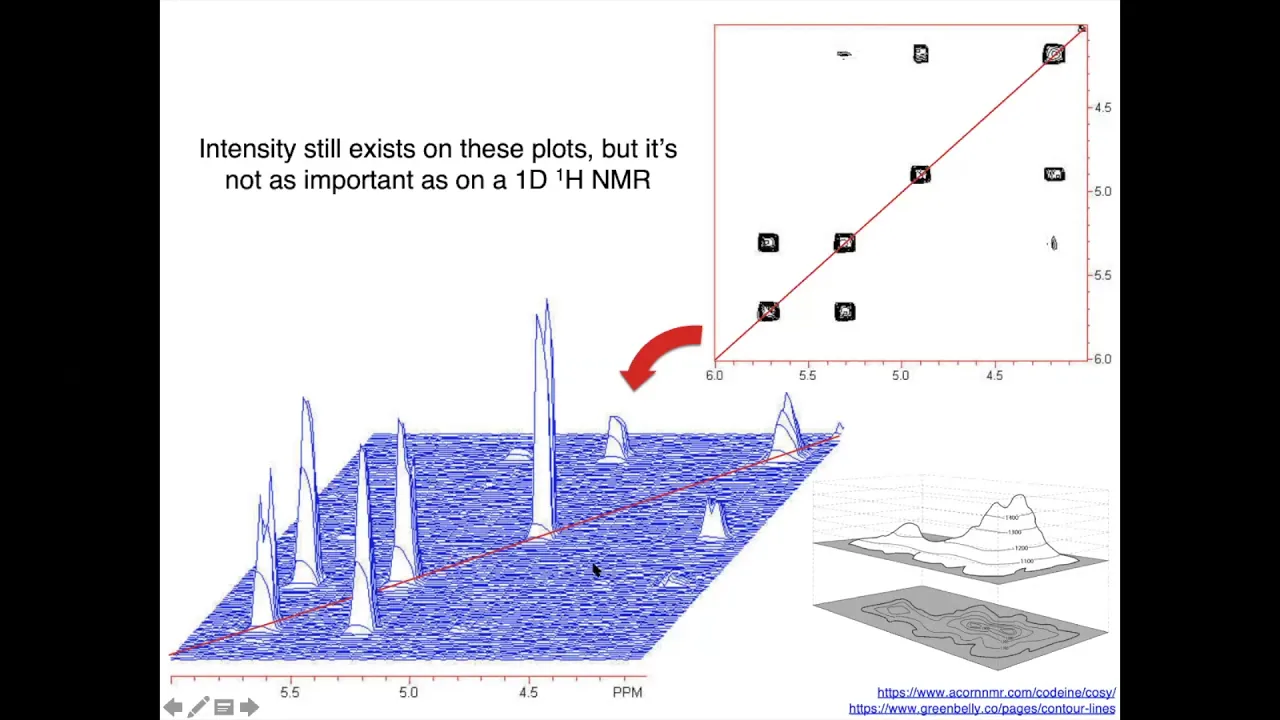
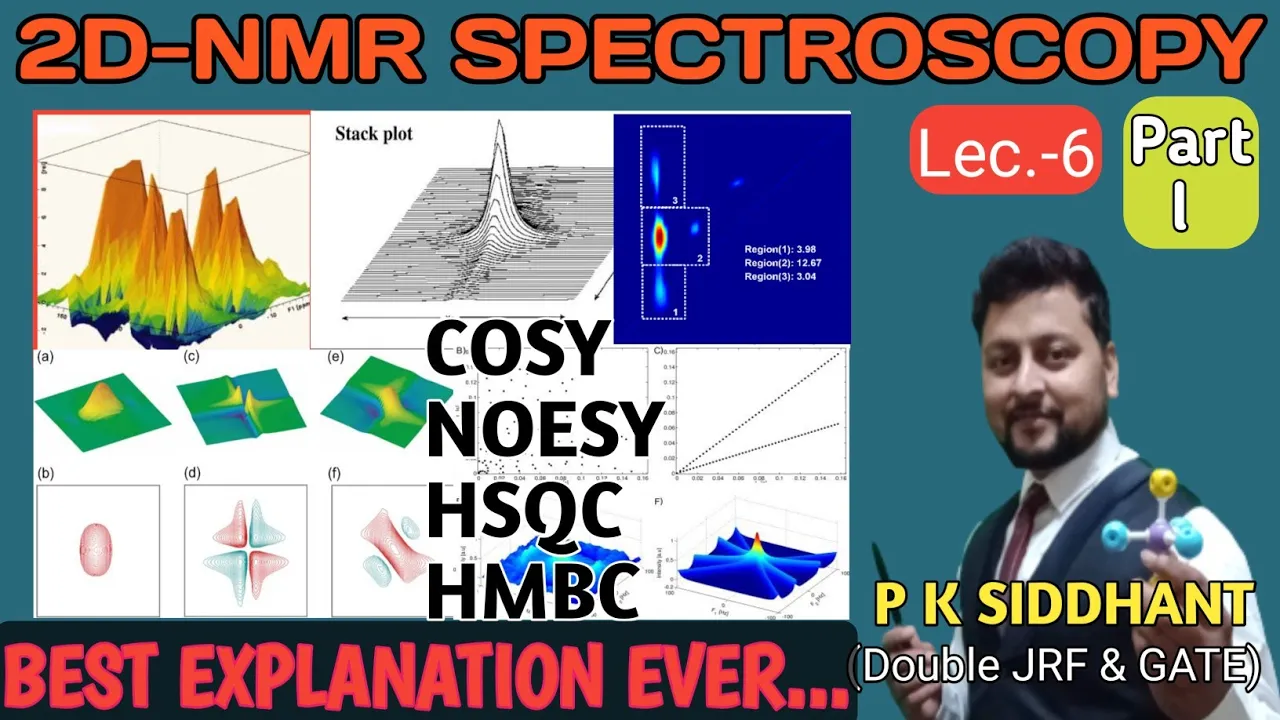
Introduction to 2D NMR techniques (such as COSY, HSQC, and HMBC) for determining the connectivity of complex organic molecules.
Application of multi-spectral analysis in real-world organic synthesis, pharmaceutical drug design, and natural product characterization.
988 views11likes11:54Original Release: 2020-07-21
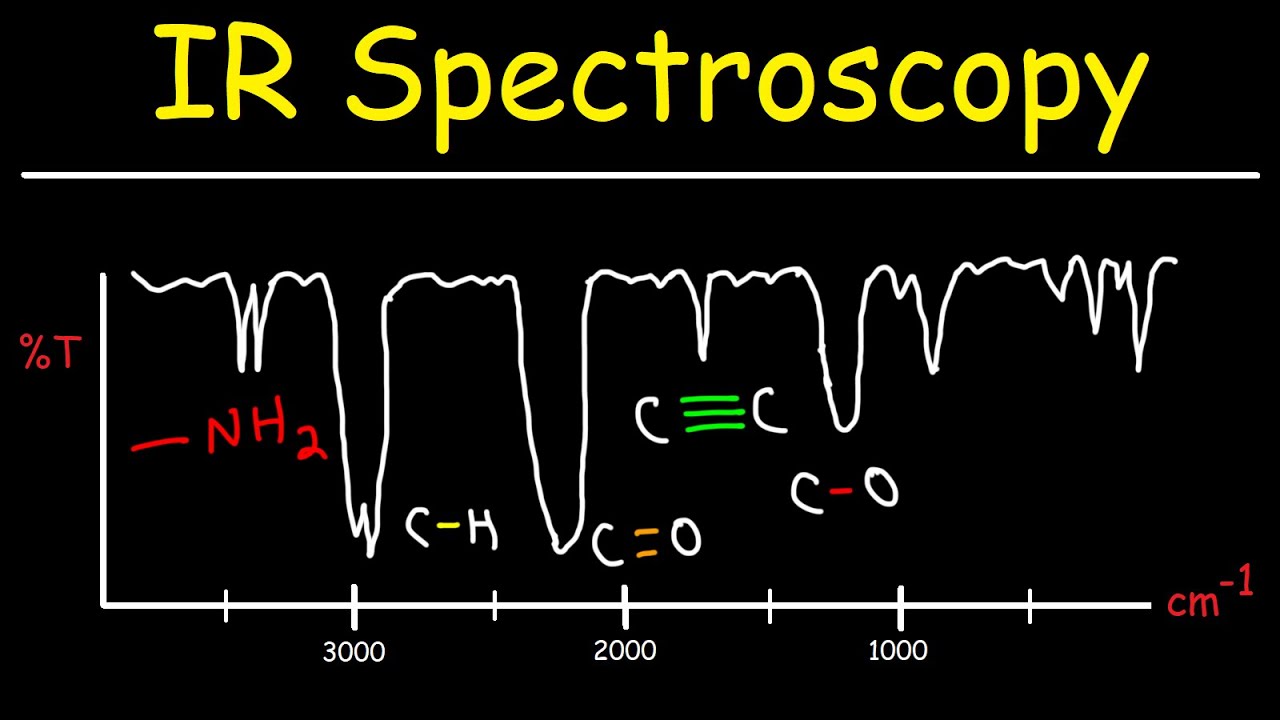
hello we're gonna talk today about how to solve ir and carbon-13 combined and spectral problems so you learned how to do IR previously and how to interpret those spectra and you've looked at carbon-13 and how to interpret those so now we're just gonna do some practice problems when you have both pieces of data and I'm going to do it where you have the tables so that we can practice doing tables like you would be expected to put into your lab report for 201 so we're gonna start with the molecular formula I've got a molecule with three carbons eight hydrogen's and an oxygen so I already know I have an oxygen and I come over to my IR and I'm just gonna start looking through when I see this peak here the big rounded one at 30 it says 3400 so that's our Oh H so we knew we have an H and that fits with our molecular formula then we have some CH stretches remember that everything above o 2,700 is usually bonded to hydrogen so here's an OHA these are CHS but that's not sufficient if it's below 3,000 I need to specify that this is sp3 carbon hydrogens so that fits cuz I don't have any double bonds and two carbon indicated there and then our next big Peaks are here around 1100 and that's pretty classic for a carbon oxygen single bond stretch CO and usually and then everything down here below a thousand we usually ignore fingerprint region for this course so three big Peaks we already have a pretty good idea we have an alcohol of some sort let me look at our carbon 13 and I have at 64 an sp3 carbon because it's p3 everything below about 100 right is sp3 but this is all the way at 64 so it's probably next to a hetero atom something electronegative and in this case we already know we have an oxygen so this must be the carbon that's bonded directly to the oxygen then we have two other sp3 carbons and they're probably bonded to the hydrogen's right so we could just put sp3 carbon hydrogen because we don't know how many hydrogen's so now we're gonna try to pull together structure that fits for this and I have three unique carbons so I have three carbons a propane and I only have two options really I have for propane I only have two possible isomers propanol and for this one I would have three unique carbons but for this one these two methyls would be the same so I must have one propanil for this structure and then we're gonna go to the next one oh and look my IR looks almost the same so again the big rounded Oh H so here I have an H I have carbon hydrogen's below 3000 so we have an OHA OOP we have an sp3 carbon hydrogen and then at 1200 we have our co and again everything below a thousand we're gonna ignore so we have some Co stretches and now we only have two peaks in our carbon so we have some symmetry because we have three carbons but only two peaks and this one is next to the oxygen and this one's a C sp3 carbon so we have C Oh sp3 carbon and so now because we have symmetry this is our other isomer this is the 2-propanol with the symmetry where the two methyls here are both showing up at this peak okay so let's try one one more okay similar now we're going to look again down here and I don't have an O H this is very small don't get hung up on that this isn't a real peak it's probably an overtone this is again my sp3 carbon hydrogen's and then at 1700 we put this in here sp3 carbon hydrogen 1720 it's a classic carbon double bond oxygen and then around 1400 that's just carbon carbon stretches and then we often see this peak around 1200 and for most part I really this is I really don't think you'll need to fill this in for a table but it's usually this carbon carbon um near near carbonyl so I would say don't put this into your table for 201 focus in on the Peaks that you do new then you have two other Peaks above 200 is a carbonyl again and specifically this is either a ketone or an aldehyde and you can specify that in your table because this is not an ester or an M and or an acid this is a ketone or an aldehyde remember those anything with a hetero atom and not a carbon hydrogen show up around here whereas the ketones and aldehydes show up above 200 and then we have an sp3 carbon showing up at 30-something so this is our sp3 and we have symmetry again because I have two carbons showing up but I have three carbons in my spectrum so I'm gonna draw a symmetric carbonyl that's acetone 2-propanol I have a plane of symmetry goes through the middle of the molecule and I have a methyl on both sides that will both show up here at 30 now I'm gonna do one more structure for you it's gonna get a little bigger a little more complicated so we have a molecular formula that's c 8h 802 and i go look at my carbons immediately and oh i don't know what's here there's a bunch of Peaks but they show up between 120 and 140 so I'm going to assume right now that this is an aromatic ring six membered carbon aromatic ring so I'm gonna call that six carbons and then here seven and eight so that gives me my eight carbons so the aromatic ring here and if I look close I think I have one two three four and so that looks to me like possibly some set well I have some symmetry and we're gonna come back and fill this in but I often see four carbons if I either have a one or two dye substituted one for so or a mono-substituted so we'll come back to that because they were both give me a plane of symmetry here if I have a carbon there and if I have a carbon with us or something else over here as long as these two aren't the same so I go look at my IR and I have a carbon double bond to oxygen and I have some different Peaks in here between 1600 and some down below 1500 that looks like an aromatic ring so and then I look over here and I have some sp2 carbon hydrogen and some sp3 carbon hydrogen so above 3,100 are above 3000 these are sp2 so maybe that should be its own column and below 3000 this is an sp3 carbon hydrogen carbon hydrogen bond then we have a carbonyl and then I have an aromatic ring and then I have a carbon oxygen at 1250 now notice we saw something before around this with a ketone but it wasn't big like this and I have an echo at 1100 which is another indicator because that gives me if I have an ester I'm gonna have two different Co stretches the sp2 to carbon oxygen and the sp3 to carbon oxygen so it looks like I have an ester and in aromatic ring this will go back to the carbon to double check but 167 is pretty classic for an ester shift remember ketones and aldehydes showed up above 200 and esters and acids and amides then acid chlorides so things with a hetero atom here show up at 165 it's somewhere between 160 180 so now I've got an aromatic ring I'm coming back to this and fill that in a little more and then I have a carbon at 54 so this is an sp3 carbon probably next to an oxygen sp3 because it's below 100 carbon oxygen so that fits over here if I start to draw this now I've used up all my carbons and my oxygens so I've got a carbon I've got an ester and I have a methyl next to it because that's the only carbons I've got so that means this is a mono-substituted which fits so you can go ahead and call this a mono-substituted you should be as clear as you can in these tables for your lab reports so you had now based on that we came up with a good structure pretty quickly with the IR and the carbon-13 and you saw I went back and forth between them and I used my molecular formula there so there's more problems in the online book there's more if you go through the resources and there's some in your workbook you can practice so take some time go through and practice some of these on your own these are also all in your workbook so you can look at them and practice them again without and check your answers okay have fun doing some spectral problems
Up Next
3:59
Polymer Biodegradability: Hydrolysis of Polyesters & Polyamides | IB Chemistry
@ibchemvids
1.3K views•2024-03-03
83:56
Biocatalysis and Catalysis in Islatravir Synthesis | Merck Webinar
@SCIwheresciencemeetsbusiness
675 views•2020-10-08
10:06
1H NMR: Determining Number of Peaks from Structure
@MSJChem
59.2K views•2017-04-06

17:31
Edible Water Bottles: A DIY Guide to Sodium Alginate Spherification
@ryan
10.5M views•2019-06-21
Related Study Plans & Knowledge Roadmaps
Structured learning paths in Chemistry
chemistry
Nuclear Chemistry: Decay, Meds & Fuel Cycle
01Introduction to Nuclear Structure and Radioactivity
02Decay Dynamics and Kinetics
03Radiation Interaction and Detection
+ 2 more learning modules
24h5 modules
Explore Roadmap
chemistry
Supramolecular Chemistry: Forces & Machines
01Foundations of Chemical Bonding and Intermolecular Forces
02Introduction to Host-Guest Chemistry
03Thermodynamics and Dynamics of Self-Assembly
+ 2 more learning modules
16h5 modules
Explore Roadmap
chemistry
Photochemistry: Excited States & Reactions
01Foundations of Light-Matter Interactions
02Molecular Orbitals and Electronic States
03Photophysical Processes and Jablonski Diagrams
+ 2 more learning modules
18h5 modules
Explore Roadmap
chemistry
Coordination Chemistry: Bonding & Properties
01Introduction to Transition Metals and Ligands
02Crystal Field Theory (CFT) and Geometry
03Magnetic Behavior and Spin States
+ 2 more learning modules
14h5 modules
Explore Roadmap