


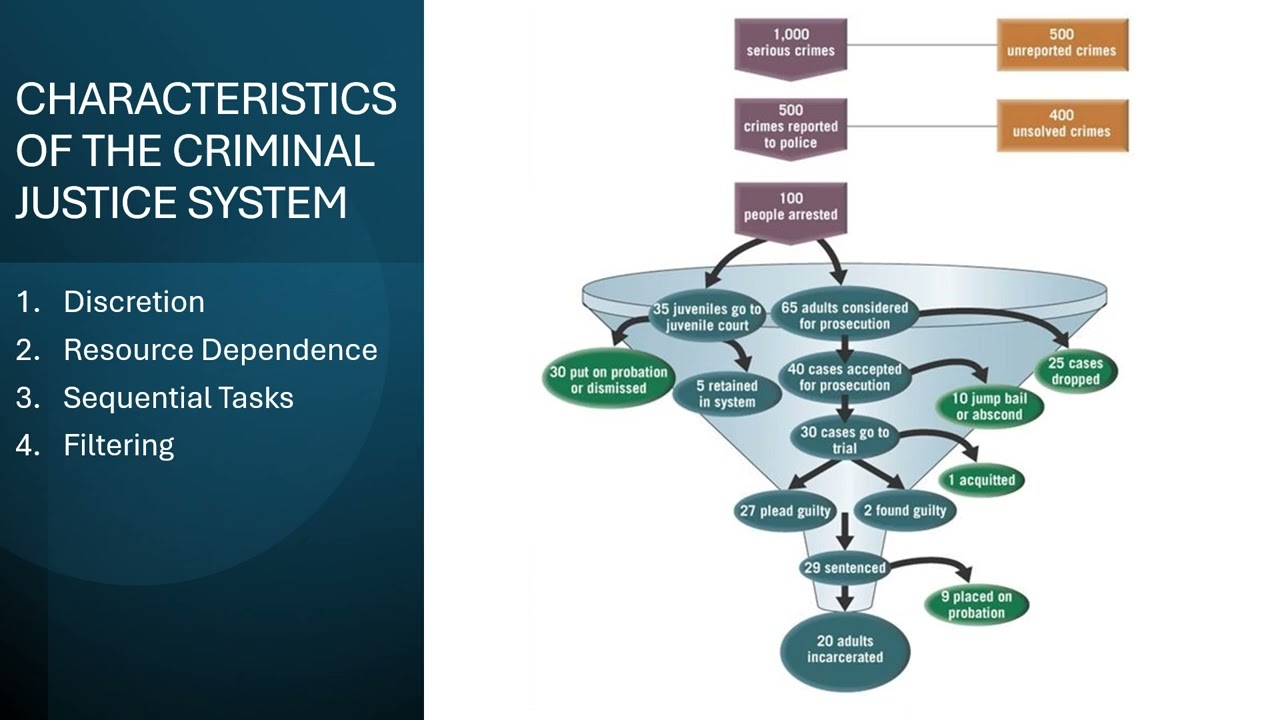































The United States has the highest incarceration rate globally, with 25% of the world's prisoners despite having only 4% of the world's population; this mass incarceration policy has proven ineffective at reducing crime (accounting for no more than 25% of crime reduction), is extremely costly ($75 billion annually), and causes lasting harm to individuals and communities through barriers to employment, housing, education, and social reintegration, demonstrating that being tough on crime does not equate to being tough on criminals.
Mass Incarceration in America: A 40-Year Policy Failure
Added:Understanding the basic structure of the US criminal justice system, including state vs. federal jurisdictions, and the roles of law enforcement, courts, and corrections.
The history and key legislative milestones of the 'War on Drugs' initiated in the 1970s and 1980s, which served as a major catalyst for rising prison populations.
Fundamental theories of punishment in sociology and criminology, specifically deterrence, retribution, rehabilitation, and incapacitation.
An awareness of systemic inequality, racial disparities, and socioeconomic factors in American history and policy-making.
Analysis of alternative justice frameworks, such as restorative justice, transformative justice, and community-based violence interruption models.
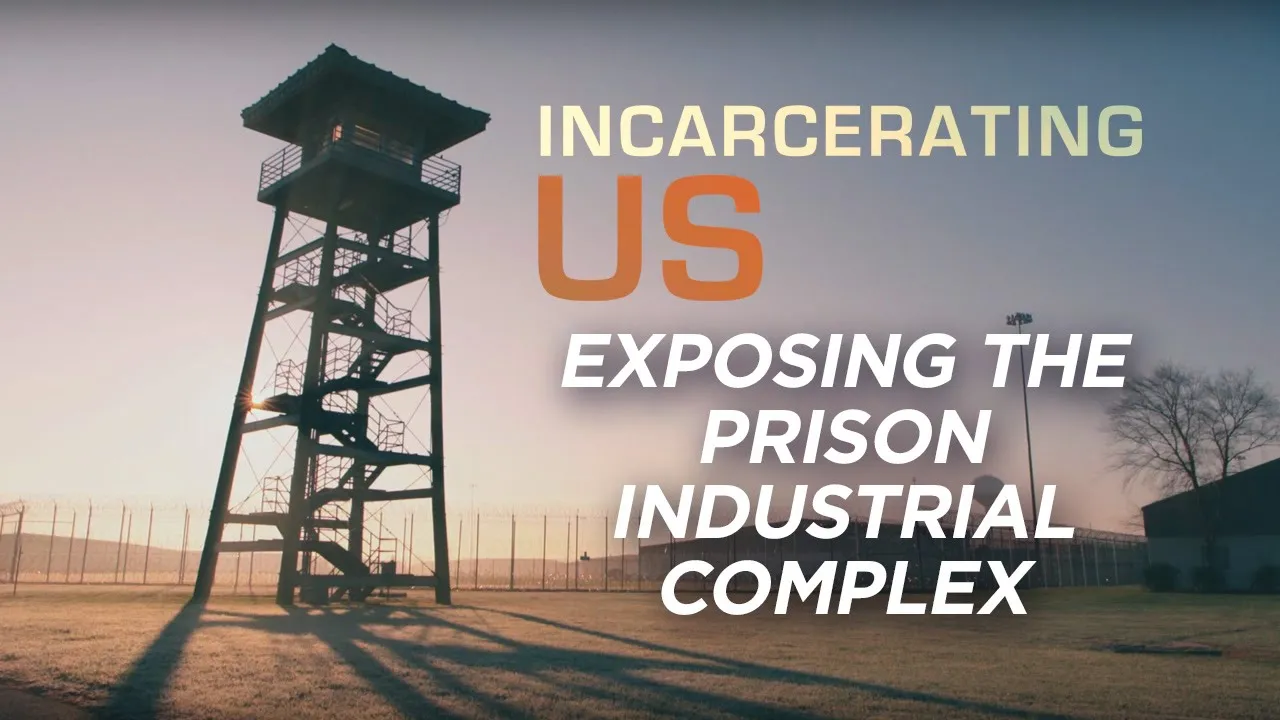
Examination of the 'prison-industrial complex' and the economic incentives behind private prisons and correctional contracting.
The challenges of prisoner reentry, including recidivism rates, disenfranchisement, and barriers to employment, housing, and healthcare.
Study of current policy reform efforts and advocacy, such as the First Step Act, decriminalization of drugs, and bail reform.
2.4M views74Klikes3:41Original Release: 2014-04-05
Good morning, John; it's Friday.
A few weeks ago a company called Visually emailed me, and was like "Hey Hank.
If you could do a high-quality, animated video on any issue in the world, what would you choose?".
Now that was a hard choice, but I went with incarceration in America, because it is messed up.
Now, crime is also messed up; bad things happen to good people, and that's terrible, and something should be done about it.
Well, we send people to prison to be punished, and to prevent them from doing bad things again, and to deter others from breaking the law.
Punishment, corrections, and deterrence.
Now we have this habit of thinking of prisoners as something very external to society; after all, there are literal walls between them and society: walls capped with razor wire and watched over by people with guns.
But millions of prisoners are released each year - today's prisoners are tomorrow's neighbors.
So corrections should probably be the most important piece of the incarceration pie.
Unfortunately, it is not.
We are, however, really good at punishment.
America has about 4% of the world's people and about 25% of the world's incarcerated people.
We have the highest incarceration rate in the world.
Over the last 30 years, that number has skyrocketed, increasing over 400%.
41% of American juveniles and young adults have been arrested by the time they turn 23.
Children as young as 13 years old have been sentenced to die in prison, and our prisons violate international standards.
Solitary confinement increases instability and violence in inmates, and is considered by international law to be torture, but in America, it's not regulated by anyone except the prison officials; no judge, no jury.
Arguably the most devastating form of punishment we enact in this country, and yet there is no appeals process.
And you think it's hard to get a job in America?
Well, we make it intentionally more difficult to get a job once you have a conviction on your record, not to mention just live your life.
Convicts are ineligible for welfare, student loans, public housing, food stamps, and are often socially disconnected from community and family support structures.
So in addition to have high recidivism rates, they have very high rates of homelessness and suicide.
Somewhere along the way, we started to think that being tough on crime meant being tough on criminals.
But that's not the same thing.
Punishment is only one piece of a much larger crime reduction pie, and it's an expensive one; with some institutions paying more than $100,000 per year per prisoner.
Long prison sentences have helped to decrease crime, but no more than 25% of the decrease that we've seen can be attributed to incarceration, and it costs far beyond just dollars: the cost is to people, to our country, to communities, to families, and to ourselves.
The policy seems to be, if you've committed a felony, we just give up on you.
These wars on crime, wars on drugs, they are wars on people; the smart political move is to appear tough on crime because crime is scary, so we increased minimum sentences, we arrested more people, we sent more of them to prison.
That's how we looked tough on crime, but the results are in: it's bad policy!
It's cruel, it's shortsighted, and to continue this policy of mass incarceration would be foolish.
We're living inside of a massive $75 billion per year failed experiment.
2010 was the first year in nearly 40 years that the number of incarcerated individuals in America did not increase.
Policy makers are beginning to realize the magnitude of this failure, but there is a long way to go.
John, I'll see you on Tuesday.
Up Next
85:33
Mass Incarceration in America: Reforming the US Prison System
@lifeismymovie
176.6K views•2022-04-07

12:54
Triumph of Orthodoxy Icon: Byzantine Art & History Explained
@BenCallan
2.1K views•2024-08-06

9:49
FastAPI vs Flask vs Django: Choosing the Right Python Web Framework
@TechWithTim
302.5K views•2024-05-26

1:42
Game of Thrones Opening Credits: A Cinematic Analysis
@gameofthrones
46.3M views•2011-04-18
Related Study Plans & Knowledge Roadmaps
Structured learning paths in General & Interdisciplinary Studies
general-studies
Elevator Engineering: History, Physics & Cities
01From Hoists to Safety Brakes: The Dawn of Vertical Lift
02Hydraulic vs. Traction: The Engineering Physics of Elevators
03Modern Speed, Safety, and Algorithms
+ 2 more learning modules
12h5 modules
Explore Roadmap
general-studies
Rubber: Material Science, History & Geopolitics
01Origins of Natural Rubber & Mesoamerican History
02The Chemistry of Natural Rubber & Vulcanization
03The Geopolitics of the Rubber Boom & Colonization
+ 2 more learning modules
12h5 modules
Explore Roadmap
general-studies
Containerization: Evolution, Logistics & Trade
01Ancient Trade & Bulk Cargo: Amphorae to Barrels
02The Industrial Revolution & Cardboard Packaging
03The Containerization Revolution: Malcom McLean
+ 2 more learning modules
12h5 modules
Explore Roadmap
general-studies
Textile Tech: Evolution, Labor & Global Impact
01Pre-Industrial Textiles: Handloom & Cottage Industry
02Mechanization: The Spinning Jenny to the Power Loom
03The Factory System & Global Labor Transformation
+ 2 more learning modules
10h5 modules
Explore Roadmap