












![Principles Of Chemical Engineering 1 lI Chapter 4 Part 7 [Arabic]](https://i.ytimg.com/vi_webp/nCzX7cLPKiA/sddefault.webp)






This video demonstrates how to calculate reactor volumes for CSTR and PFR systems and batch reactor times for a first-order reaction (A → B) under isothermal conditions, using the mole balance equations and integrating the rate expressions for different kinetic orders: (a) zero-order (-r_A = k), (b) first-order (-r_A = kC_A), and (c) second-order (-r_A = kC_A²). The calculations involve applying the appropriate integrated rate laws for each reactor type: CSTR uses algebraic equations while PFR and batch reactors require integration of differential equations, with the key difference being that batch reactors calculate time instead of volume.
Reactor Volume Calculations: CSTR, PFR & Batch Reactor Example
Added:Fundamental mole balances for ideal reactors (CSTR, PFR, and Batch) and their defining algebraic or differential design equations.
Chemical reaction kinetics, including rate laws, reaction order, and the definition of the reaction rate constant (k).
Stoichiometric tables and relationships that express reactant concentration as a function of conversion (X) for both constant and variable-volume systems.
Basic integral calculus, which is essential for solving the design equations of PFRs and Batch reactors.
Design and optimization of multiple reactor systems, including reactors in series (e.g., CSTR-PFR networks) and parallel configurations.
Non-isothermal reactor design, introducing energy balances to account for temperature variations and runaway reactions.
Selectivity and yield analysis for multiple reaction systems, such as parallel, series, and independent reactions.
Pressure drop considerations in packed-bed reactors (PBRs) using the Ergun equation to see how pressure loss affects conversion.
Non-ideal reactor behavior and flow patterns analyzed through Residence Time Distributions (RTD) and diagnostic models.
46.4K views638likes24:03Original Release: 2016-01-31
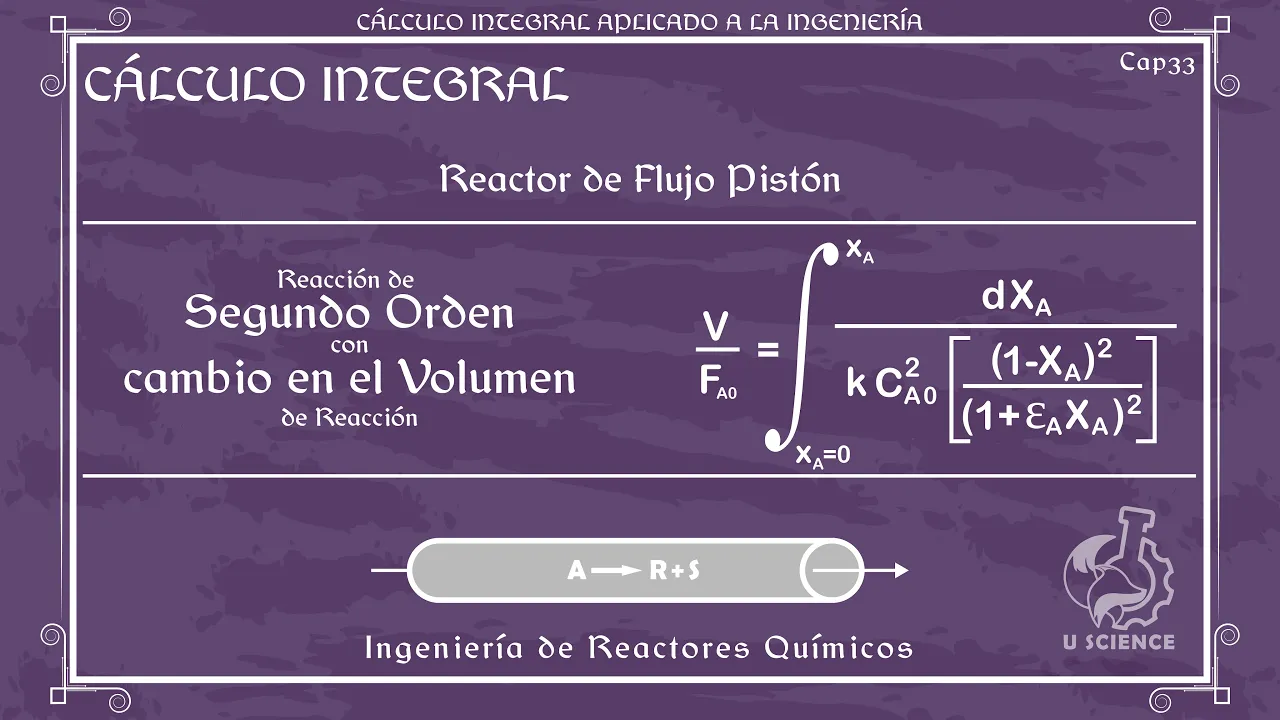
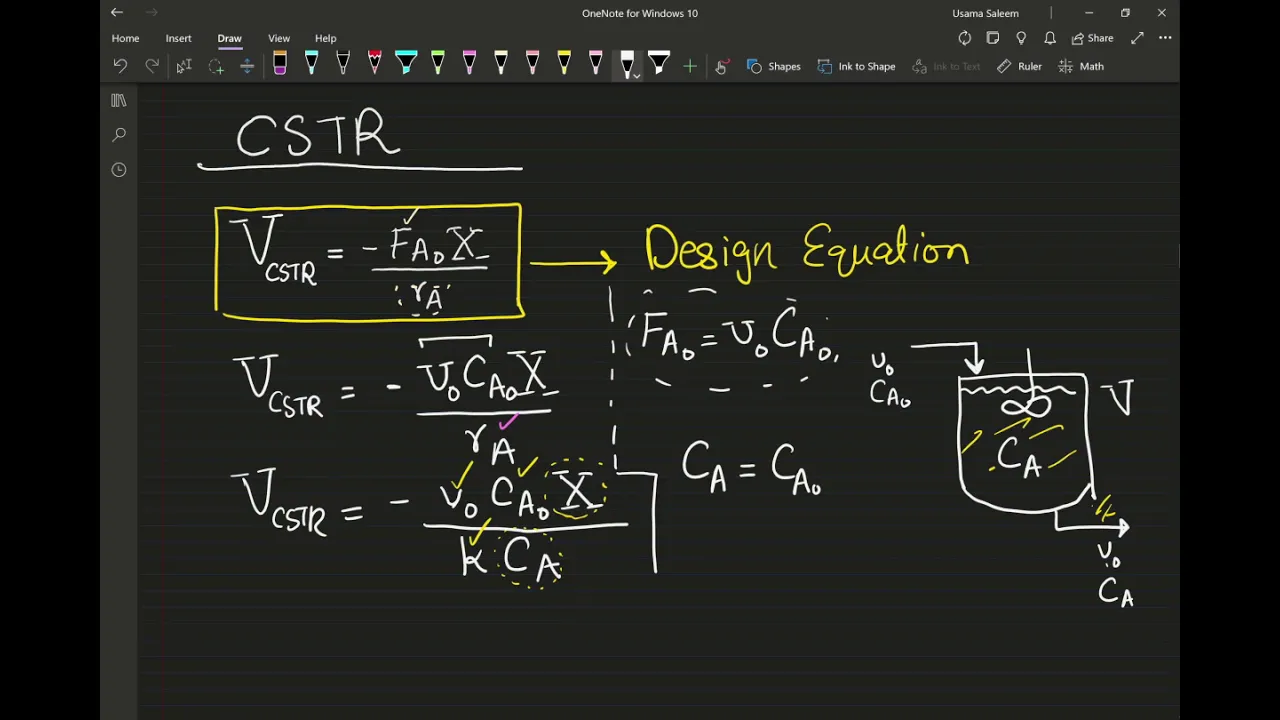
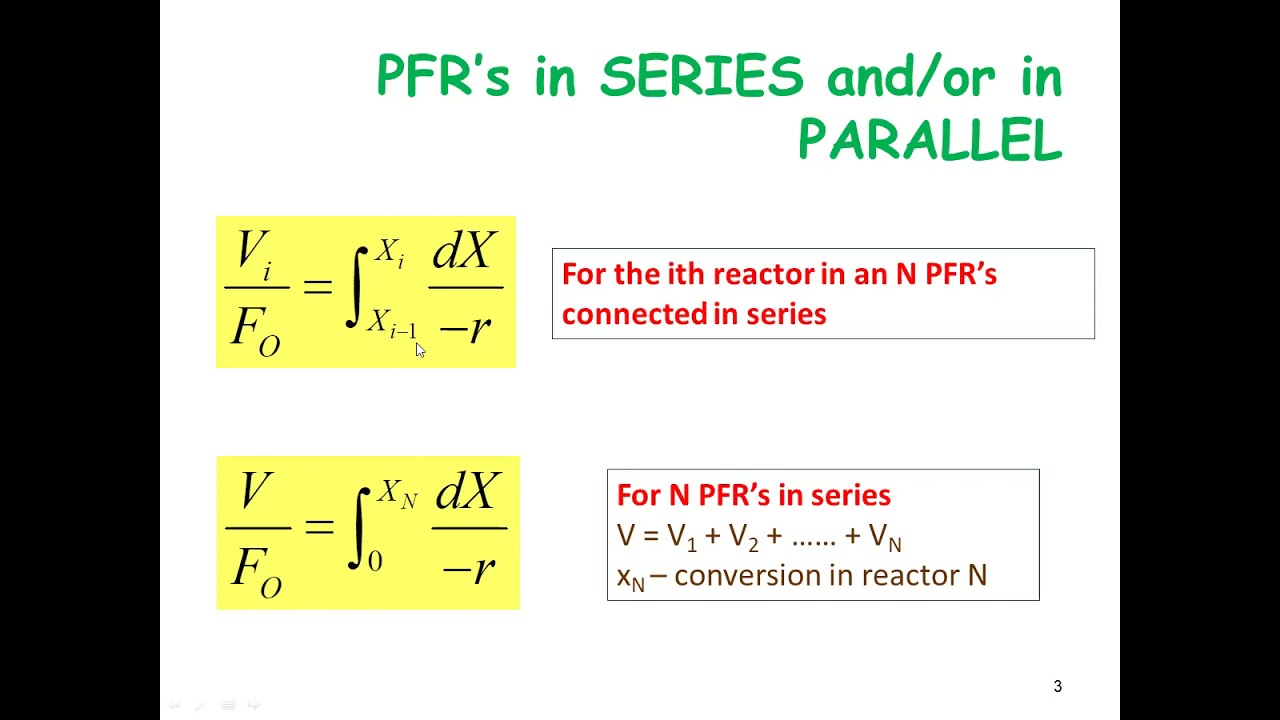
so in my previous videos i've been talking about the mole balance equations for different types of reactors and this is basically chapter one of elements of chemical reaction engineering so in chapter one there's a brief uh introduction to the rate of reaction and then the basic balance mole balance equations for four different kinds of reactors are derived and so these are the mole balance equations summarized here and sometimes i find it easier to look at everything in one place and so anyway you have the batch reactor and this is the differential form of the balance in the integral form cstr is just algebraic pfr and pbr and you have the differential forms and the the integral forms and these are really similar the main difference is for this one you're calculating the volume of the reactor and for the packed bed reactor you're calculating the weight of the catalyst in the reactor and so for this video i wanted to go over problem 1-15 so problem number 15 and chapter 1 of this book the essentials of chemical reactor engineering by fogler i have the fourth edition so this reaction is a to b so you have a reaction going from a to b is carried out isothermally in a continuous flow reactor so first of all you can write down those isothermal i always write down as i'm doing problems i always write down the information it gives you because these problems can give you a ton of information it can get confusing so anyways continuous flow reactor so basically a cstr or a pfr or pbr but it doesn't this is it doesn't say anything about this being a packed bed reactor so and then it says calculate both the cstr and pfr reactor volumes necessary to consume 99 of a so we're consuming 99 percent of a and we're calculating the reactor volumes and so basically what that means is that c a equals 0.01 of ca naught so right away we already have some information and we know that the entering molar flow rate so f a naught is equal to five moles per hour so we can write that down and then it gives the equation gives you the equations for the reaction rates so for a b c so for a it gives the rate as this and then it gives you the it gives you what k or what your constant is and so for the next one r a is equal to k c a and then for the next one our a is equal to k c a squared so basically you're calculating the volumes for a cstr and a pfr in each problem and you're just using different reaction rates so this problem is really just plug and chug once you get the right equation written down and so just one thing to notice with these reaction rates so you can see that they this one doesn't rely on concentration these two rely on concentration and this k is this constant which it gives you a number of what it is in the problem that constant is normally determined from experiments and the other thing to notice is the reason why you have a negative sign here is because this is the rate of disappearance of a a is disappearing if you were writing this equation for b so if you had r b equals whatever it would be positive because you're generating b but because we're looking at a it's negative and so it also gives you the volumetric flow rate so we know that the volumetric flow rate is equal to 10 dm cube per hour so it's a volume per time and it also tells you that your that your molar flow rate f a is equal to concentration multiplied by the volumetric flow rate and this is a really useful equation to just basically memorize and because you'll use it use it all the time and let's see so then using that we know that c a naught is equal to f a naught divided by v naught and so from this since it gives you these two things you can calculate c a naught so we know that f a naught is 5 moles per hour and v naught is 10 dm cubed per hour so then we end up with and it gives you this in the problem so then you end up with 0.5 moles per dm cube and i always recommend writing down the units when you're doing these problems because you if your units don't work out the way they should you know that you're doing something wrong and it i think it just makes it easier so it also gives you okay so that's part d all right so for part a or for a first of all we want to calculate the volume of the cstr necessary for 99 conversion of a given all these parameters so a for a cstr we can just go over here and these equations are summarized in chapter one and if you're curious where this equation came from i derived it in the cstr mole balance video so we can just write down this equation v equals f a naught minus f a over minus r a of all it might be easier to solve this using the concentrations so can rewrite as since we know this we can just plug that in so then we get c a naught b naught minus c a b naught over minus r a so then we know what all these are so we know that we know c a naught that's right here we know that c a equals point zero one of c a naught we know v naught the volumetric flow rate and we know what r is in this case it's just k and so you would actually just do the exact same thing for a b and c so for b it's all you plug in all the same the only thing that's different is r a you know k and you know what c a is so and the same thing for part c so that that problem is pretty much just plug and chug once you get this equation and then for the pfr so and you can still see that so for the pfr we can go ahead and write down our equation so d f a over d v equals r a and that just came from the summary in chapter one and if you're curious how that's derived i derived that in the video on the mole balance for a pfr so then for part a so the cstr is pretty much the same for all the parts but this equation will change slightly depending on what your what you integrate so if we go ahead and plug some stuff in first of all we know that f a is equal to this so we know that c well d c a v naught over d b equals and then r a that equals negative k and the reason why this is negative is because that's the ra is actually negative in this case because we're looking at the disappearance and as opposed to the generation so then see i think you can still see this so then if we rearrange this you get b naught so we can pull b naught out so we get so pulling v naught out and dividing by k we get c and we want to integrate from c a naught to c a d c a equals 0 to b dv and then for the dca the limits are just from the ca naught to the c to the the initial concentration to the final concentration so that's c a naught to c a and so then yeah you can still see that so then taking this integrating this we end up with b equals v naught over k c a naught minus c a and then we should we know everything for this we know the volumetric flow rate we know k x is given we know c a naught and we know c a so then you can just plug everything in and solve that equation so i want to erase some things because the the pfr for part b and c is slightly different because of your integration so now let's erase this real quick mm-hmm all right so for part b once again we can write down the equation for a pfr which is so i'm doing b now so this is d f a d v equals r a and so then we can go ahead and plug in some of the information so we know that d oh dfa so this is d c a b naught oops and that's from this equation dv equals and then r a for part b is minus k c a and so then we can go ahead and rearrange this and integrate so first of all you can oh i'll just write down so d c a v naught over k c a equals dv and first of all we can pull the v naught and k out of the integral because they're cons yeah they don't change so we have v naught over k and then so then we have d c a over c a and we want to integrate from c a naught to c a and then this one we're integrating from zero to v so then taking the integral of this we just end up with basically v and then taking the integral of this we end up with the natural log of c a naught over c a and if you're can't remember how to do that then just google it or look at wolfram alpha and so anyway we end up with v naught over k natural log c a naught over c a equals v and then we're solving for v and we know everything else so we know c a naught we know c a we know v naught and we know k so at this point you can just plug everything in and solve it and then for part c it is pretty much the you start with the same equation the only difference is you have well then for part c the cstr is still the same this one changes because of your integral because instead of for r well i'll just write this down again so r a so then plugging things in for this one you have the d c a v naught over dv equals and then for part c r a was k c a squared so you can see that when we rearrange and integrate this this is going to be integrated slightly differently from how it was in a and b because you have c a squared instead of c a or um just the k so rearranging this we have uh let's see well same thing so divide the k and c a squared over and divide or multiply the dv through and then you can pull the v naught and k out of the integral because they don't they're not dependent on their so they're basically constant so with that so then with that you get v naught over k and once again we're integrating from c a naught to c a d c this is d c a over whoops so d c a over c a squared equals and then this is 0 to v dv and so then integrating this you're going to end up with the 1 over ca minus one over c a naught and once again if you don't remember this integration then just look it up on google or from alpha or calculator and so anyway integrating this and then this is just this when you integrate this you just get v or you just get the volume so v equals v naught over k 1 over c a minus 1 over c a naught and so then you should just be able to plug everything in and solve that because we know v naught you know k we know c a and we know c a naught so then for part d it tells you that to repeat a b and c for a batch reactor so this time we're calculating the time required for the reaction instead of the volume of the reactor since it's a batch reactor and so it's kind of the same thing only we're using a different mole balance because we're using a different reactor and then you and then you're plugging in the like so you're calculating it for each of the reaction rates so for part d first of all write down the differential equation for a batch reactor so d and a over dt equals r a v and one thing you might notice with this is this a batch reactor is written with a change in moles instead of the change in the in the molar flow rate and the reason why is because in a batch reactor you don't have flow you just have something sitting there so that's why that's written differently this the method to solve this one is pretty much the same as the pfr in in a b and c so we want to go ahead and rearrange this first of all we know that the volume is constant because it's a batch reactor and it gives you the volume so v equals 1 000 dm cubed now it also gives you ca naught for this one so because yeah because there's no flow so for this for part d only c a naught well actually that's the same as we calculated before but it gives you that c a naught is 0.5 moles per dmq all right so then we want we want to solve for time so let's go ahead and rearrange those so we could just start with that we could just start with this equation so i'm going to i'm going to do that i'm just going to start with this one so t equals n the moles at well so moles at time one to moles of time zero d and a over minus r a v so then plugging in the information we have for the first one we know that this r a is just k so we have n a 1 n a naught d n a over k v and so then you can just integrate this and you know you know all the information so you know see yeah you know um actually change these to plugging stuff in so you want to use concentration d c a all right so yeah you know what k is you know the volume you know ca and you know ca not so you should be able to let once you integrate this you should just be able to plug everything in and solve it and then it's and this is basically the same method as what i already did with the pfr so and you can do this with all of the problems or all of these so d so you're basically resolving this equation for all of these so for this so for this this is the first part of d where k where r a is k and then for the next one you're going to have an integration that looks like this d c a over k c a so then you just integrate that and then the same thing for the third one that's only you're going to end up with k c a squared so you should be able to once you integrate these just plug everything in and solve it
Up Next

65:36
Molecular Orbital Theory Explained | MIT Principles of Chemical Science
@mitocw
296.3K views•2017-08-03
83:56
Biocatalysis and Catalysis in Islatravir Synthesis | Merck Webinar
@SCIwheresciencemeetsbusiness
675 views•2020-10-08
10:06
1H NMR: Determining Number of Peaks from Structure
@MSJChem
59.2K views•2017-04-06

17:31
Edible Water Bottles: A DIY Guide to Sodium Alginate Spherification
@ryan
10.5M views•2019-06-21
Related Study Plans & Knowledge Roadmaps
Structured learning paths in Chemistry
chemistry
Nuclear Chemistry: Decay, Meds & Fuel Cycle
01Introduction to Nuclear Structure and Radioactivity
02Decay Dynamics and Kinetics
03Radiation Interaction and Detection
+ 2 more learning modules
24h5 modules
Explore Roadmap
chemistry
Supramolecular Chemistry: Forces & Machines
01Foundations of Chemical Bonding and Intermolecular Forces
02Introduction to Host-Guest Chemistry
03Thermodynamics and Dynamics of Self-Assembly
+ 2 more learning modules
16h5 modules
Explore Roadmap
chemistry
Photochemistry: Excited States & Reactions
01Foundations of Light-Matter Interactions
02Molecular Orbitals and Electronic States
03Photophysical Processes and Jablonski Diagrams
+ 2 more learning modules
18h5 modules
Explore Roadmap
chemistry
Coordination Chemistry: Bonding & Properties
01Introduction to Transition Metals and Ligands
02Crystal Field Theory (CFT) and Geometry
03Magnetic Behavior and Spin States
+ 2 more learning modules
14h5 modules
Explore Roadmap