In Missouri v. Seibert (2004), the U.S. Supreme Court ruled that police interrogating suspects without first providing Miranda warnings, then administering warnings after obtaining a confession (the 'question-first' strategy), violates the Fifth Amendment's protection against self-incrimination; such a deliberate strategy aimed at undermining Miranda warnings makes any resulting statements inadmissible in court.
Missouri v. Seibert (2004): Miranda Warnings and Interrogation
Added:Deep Dive
The landmark case of Miranda v. Arizona (1966) and the constitutional requirement that suspects be informed of their Fifth Amendment rights prior to custodial interrogation.
Miranda v. Arizona: The Right to Remain Silent Explained
155.1K
The landmark Supreme Court decision Miranda v. Arizona (1966) established that criminal suspects must be informed of their Fifth Amendment protection against self-incrimination and Sixth Amendment right to counsel before any interrogation, resulting in the familiar Miranda warning that ensures fair treatment in police custody by preventing coercive interrogation practices and protecting individual liberty against government overreach.
Click to watch →

The U.S. Constitution: Rights, Supremacy, and Contract Law (Part 1)
315.8K
Miranda v. Arizona (384 U.S. 436) established that in the absence of other effective measures, the following procedures to safeguard the Fifth Amendment privileges must be observed: the person in custody must prior to interrogation be clearly informed that he has a right to remain silent and that anything he says will be used against him in a court of law; he must be clearly informed that he has a right to consult with a lawyer and to have a lawyer with him during interrogation; and if he is indigent, a lawyer will be appointed to represent him. Where the individual answers some questions during interrogation or custody interrogation, he has not waived his privilege and may invoke his right to remain silent thereafter. The speaker emphasizes that you should not talk to law enforcement, especially BATF people, because they will lie, cheat, steal, and do anything they can to hammer you. The first rule of legal defense is to keep your big mouth shut.
Click to watch →
Miranda v. Arizona: The Origin of Your Rights | US Law Explained
349.7K
The Miranda rights originate from the landmark 1966 Supreme Court case Miranda v. Arizona, which established that law enforcement must inform suspects of their Fifth Amendment right to remain silent and Sixth Amendment right to counsel before interrogation; this ruling emerged after Ernesto Miranda was convicted based on an involuntary confession obtained without being told he could refuse to answer questions or consult with a lawyer, leading the Court to mandate that suspects must be clearly informed of their constitutional rights prior to any questioning.
Click to watch →
Miranda v. Arizona | BRI's Homework Help Series
268.7K
In 1966, the Supreme Court case Miranda v. Arizona established that suspects must be informed of their constitutional rights—including the right to remain silent and the right to counsel—before police interrogation, ruling that Ernesto Miranda's confession was obtained unconstitutionally because he was not advised of these rights during his 2-hour interrogation without a lawyer, thereby creating the now-famous Miranda warning that police recite upon arrest.
Click to watch →
Unhinged Cops Punched and Abused a Woman During a VIOLENT ARREST
38.6K
The Supreme Court established in Miranda v. Arizona (1966) that before initiating custodial interrogation, law enforcement must advise suspects of their Fifth Amendment right against self-incrimination and Sixth Amendment right to counsel. A suspect is in custody when under arrest, transported to a police station in handcuffs, and seated in a holding cell. According to Rhode Island v. Innis (1980), interrogation includes any words or actions reasonably likely to elicit an incriminating response, broadly defined to include any response the prosecution may seek to introduce at trial.
Click to watch →
Deep Dive
The self-incrimination clause of the Fifth Amendment and how it protects individuals from coerced confessions during police questioning.
The Fifth Amendment | BRI's Homework Help Series
19.5K
The Fifth Amendment protects against self-incrimination through the clause 'no person shall be compelled in any criminal case to be a witness against himself.' Accused persons can refuse to testify in their own criminal trials and instead 'plead the Fifth' to remain silent. This right applies to police custody questioning, as established in Miranda v. Arizona (1966), which requires police to inform arrested individuals of their constitutional rights including self-incrimination protection. Confessions obtained without informing suspects of these rights may not be used as evidence at trial. This prevents government coercion of guilty admissions.
Click to watch →

Chapter 6 2020
320
The Fifth Amendment protects against compelled self-incrimination—no person shall be compelled to be a witness against themselves. This right is not triggered before arrest; police may question suspects without triggering Fifth Amendment protections. Once arrested, suspects have absolute right to remain silent. Confessions obtained through physical torture or severe psychological coercion are inadmissible. The Central Park Five case demonstrates dangers of coerced confessions.
Click to watch →

Double Jeopardy Explained Your Rights in Court!
140
The Fifth Amendment protects individuals from being forced to confess or say anything that might incriminate them, whether during police questioning, in court, or before a grand jury. This protection ensures that if someone chooses to speak, it is completely voluntary, protecting against coerced confessions and high-pressure interrogation situations.
Click to watch →
THE 5TH AMENDMENT AND SELF-INCRIMINATION
3K
The Fifth Amendment to the U.S. Constitution protects citizens from self-incrimination by prohibiting compelled testimony against oneself; individuals have the right to remain silent during police interrogations and court proceedings, and any statements made voluntarily under pressure may be deemed involuntary and inadmissible in court, as established through landmark Supreme Court cases including Miranda v. Arizona (1966).
Click to watch →
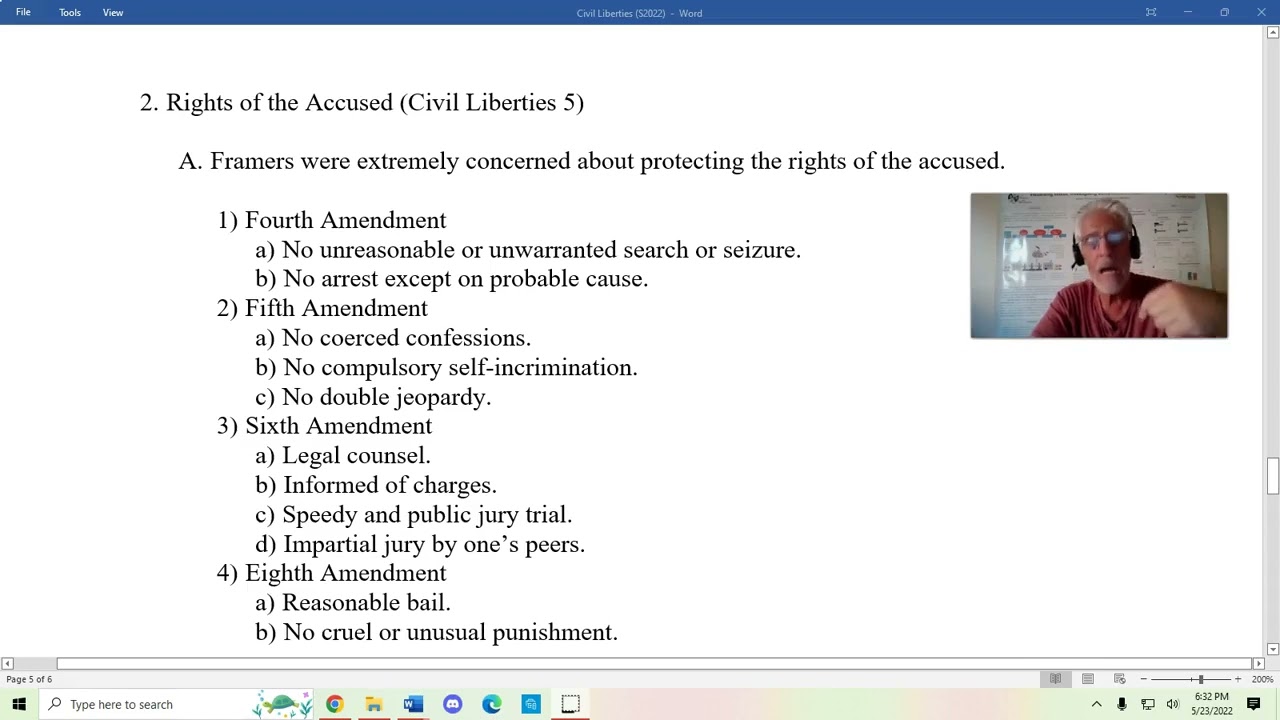
Civil LIberties 5
565
The Fifth Amendment states that there can be no coerced confessions. Police cannot torture, threaten, or do anything that would cause someone to give up information involuntarily. Confessions must be voluntary. Additionally, there can be no compulsory self-incrimination, meaning you cannot be forced to testify against yourself or give up information that could prove your guilt.
Click to watch →
Deep Dive
The legal concepts of 'custodial' status and 'interrogation' that trigger the necessity of reading Miranda warnings.

Delusional TikTok Star Thought He Was TOO FAMOUS To Be Arrested
1.2M
The Supreme Court established in Miranda v. Arizona (1966) that custodial interrogation requires specific warnings: right to remain silent, warning that statements may be used as evidence, and right to an attorney. Interrogation includes express questioning and its functional equivalent—any police words or actions reasonably likely to elicit incriminating responses. In Rhode Island v. Innis (1980), the Court clarified that Miranda safeguards apply whenever a person in custody is subjected to questioning or its functional equivalent. In Berkemer v. McCarty (1984), the Court held that while roadside questioning during traffic stops doesn't require Miranda warnings, once a person is formally arrested and placed in custody, subsequent statements without warnings are inadmissible.
Click to watch →
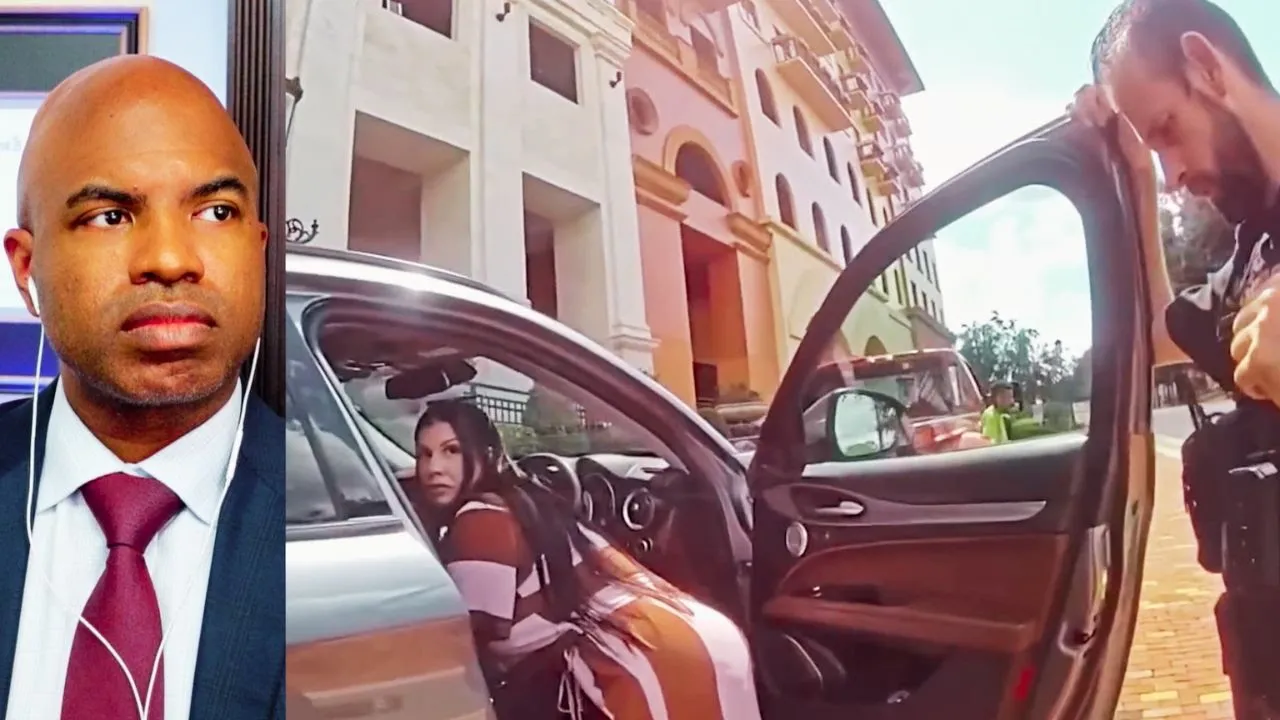
Attorney Reacts: When an Entitled Parker Messes with the Wrong Tow Truck Operator!
205.4K
Miranda rights (the right to remain silent and the right to an attorney) must be read to a suspect when they are in custody and subject to interrogation. However, if a person is not in custody (not detained in a way that restricts their freedom of movement), officers can talk to them without reading Miranda rights. In this case, the officer questioned the woman without reading her rights because she was not in handcuffs and was not formally detained. This illustrates the legal distinction between custodial and non-custodial questioning, which is critical for understanding when constitutional protections apply during police interactions.
Click to watch →
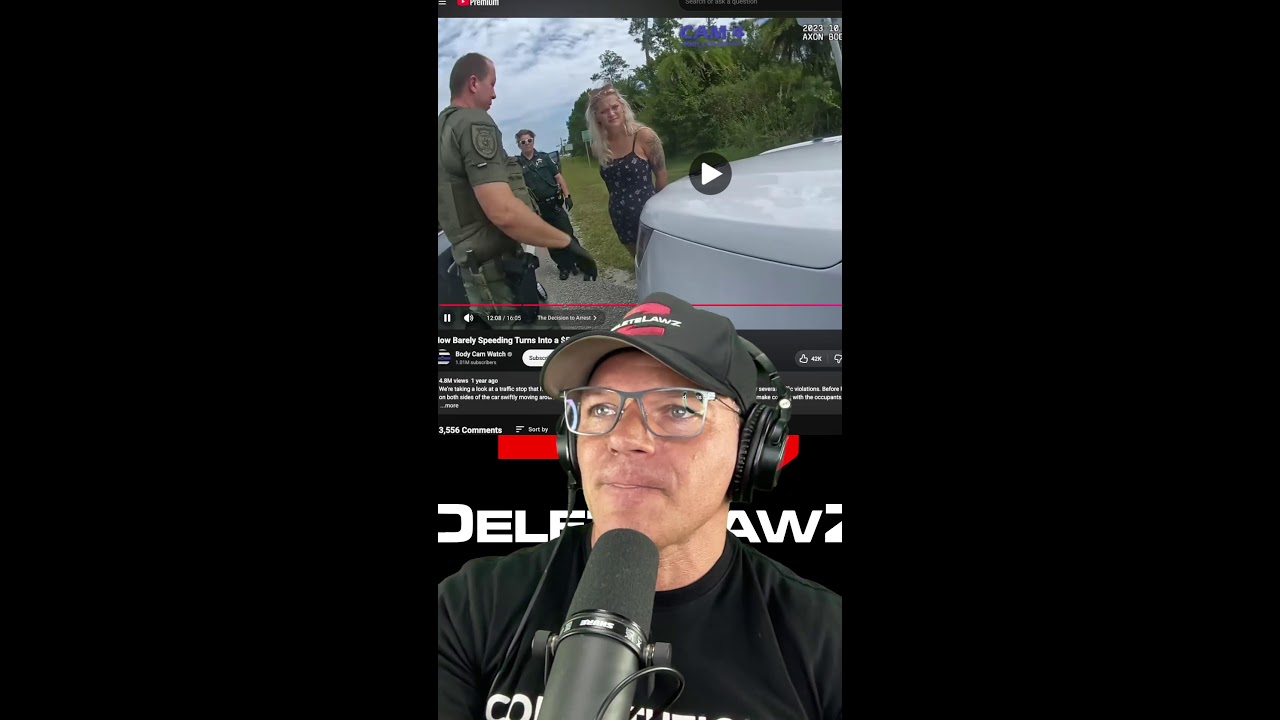
FRIDAY NIGHT VIDEO REVIEW BOARD
385.7K
This segment explains the Miranda warning requirements and when they apply. The video demonstrates how officers can ask questions without providing Miranda warnings until they formally arrest someone. The woman was asked about drugs and contraband without receiving her Miranda rights. The video explains that once a person is in custody and subject to interrogation, they must be informed of their Fifth Amendment right to remain silent and Sixth Amendment right to counsel. This segment illustrates the gap between detention and formal arrest.
Click to watch →

Lawyer Reacts | Todd Chrisley Sues! New Duggar Court Opinions.
115K
Miranda rights apply only during custodial interrogations where a person is not free to leave. Courts determine custody status by examining whether a reasonable person would believe they were free to terminate the encounter. If agents inform a suspect they are free to leave and no threats or promises are made, Miranda protections do not attach. This distinction is crucial because statements made without Miranda warnings can be suppressed, while those made voluntarily cannot.
Click to watch →
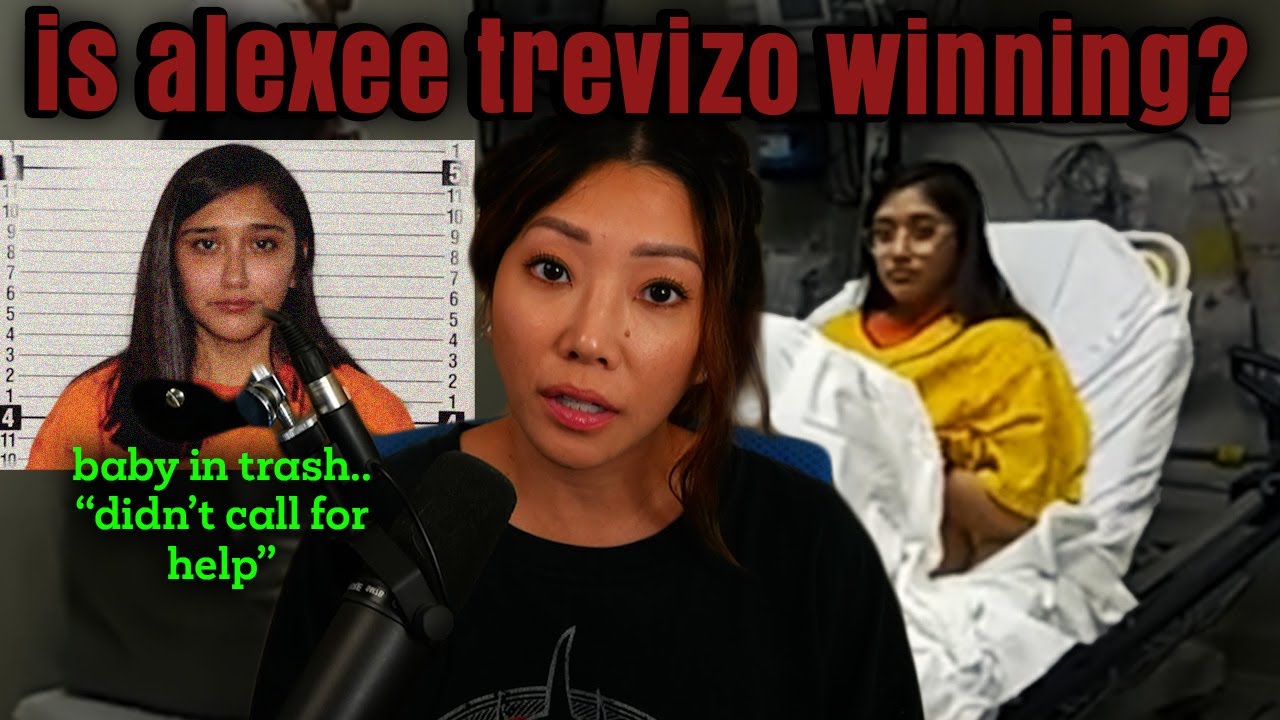
Alexee Trevizo Case FINALLY Moves Forward! (State v. Trevizo supreme court hearing)
47.9K
This segment examines the legal standards for determining when Miranda warnings are required. The state argues that police did not ask questions, so there was no interrogation. The defense argues that the defendant was in custody and should have been Mirandized. The video explains that under Miranda, interrogation includes not only express questioning but also any words or actions by police that they should know are reasonably likely to elicit an incriminating response. The State v. Ibarra case is discussed, where the Court ruled that police presence during medical questioning created a custodial interrogation situation even though police did not ask questions directly.
Click to watch →
Deep Dive
The precedent established in Oregon v. Elstad (1985), which allowed the admission of a second, warned confession even if it followed an initial unwarned statement.

Confession & Statement Sec 164 Cr.P.C (Recent & Relevant cases and All Questions Answered properly)
19.4K
Failure to warn the accused that confession will be used against them does not necessarily render the confession inadmissible. The key requirement is voluntariness. If the confession was made voluntarily, it remains admissible even if the warning was not given.
Click to watch →

Criminal Law I - Interrogations - Part II
271
The Supreme Court ruled in Oregon v. Elstad that police must read Miranda warnings before questioning, not after. If police question a suspect first and then read Miranda later, any statements from the first questioning are inadmissible. To obtain a second statement after reading Miranda, police must explicitly tell the suspect that the first statement cannot be used against them in court.
Click to watch →
Confession Part 3 | Section 22 Proviso 2 of BSA, 2023 | Bhartiya Sakshya Adhiniyam, 2023 Lecture 26.
1.9K
Under proviso (2) of Section 22, if a confession is otherwise relevant, it does not become irrelevant merely because no warning was given to the accused before recording the confession. The accused cannot claim that their confession is inadmissible solely because they were not warned that their statements could be used against them. If the confession is otherwise relevant, the absence of warning does not affect its admissibility.
Click to watch →
Bar Exam,2026; Mcq Cls no- 76; Evi Act Cls no- 05; Sec 27-38; Date- 05.05.2026
219
A confession obtained without warning about self-incrimination is admissible if it would otherwise be admissible. The failure to warn does not render the confession inadmissible if it would otherwise be admissible. This is an exception to the general rule that confessions obtained through threats, promises, or inducement are inadmissible.
Click to watch →
Confession kab relevant hoga? when confession is #relevant? 28 & 29 Evidence Act 1872 #newlaw #bnss
1K
The fifth method under Section 22, second proviso states that a confessional statement is irrelevant if it was made to a magistrate without the required warning. Under Section 164 CrPC (now Section 183 BNSS), magistrates must warn accused persons that they are not bound to make a confession, but if they do, it may be used as evidence against them. If this warning is not given, and the accused makes a confessional statement, it becomes irrelevant. The court cannot allow the accused to claim that their statement was voluntary when the mandatory warning procedure was not followed.
Click to watch →
Prerequisite Knowledge
- Concept 01The landmark case of Miranda v. Arizona (1966) and the constitutional requirement that suspects be informed of their Fifth Amendment rights prior to custodial interrogation.
- Concept 02The self-incrimination clause of the Fifth Amendment and how it protects individuals from coerced confessions during police questioning.
- Concept 03The legal concepts of 'custodial' status and 'interrogation' that trigger the necessity of reading Miranda warnings.
- Concept 04The precedent established in Oregon v. Elstad (1985), which allowed the admission of a second, warned confession even if it followed an initial unwarned statement.
Subsequent Learning
- Step 01The application of the 'Marks Rule' for interpreting plurality Supreme Court decisions, specifically analyzing Justice Anthony Kennedy's narrower concurring opinion in Seibert.
- Step 02The ruling in United States v. Patane (2004) and how it addresses the admissibility of physical evidence discovered as a result of unwarned statements.
- Step 03Subsequent developments in Miranda jurisprudence, such as Berghuis v. Thompkins (2010), regarding the explicit invocation and waiver of the right to remain silent.
- Step 04The evolution of police training manuals and interrogation techniques in response to judicial limits on the 'two-step' or 'question-first' interrogation strategy.
Miranda Rule
Miranda Rule
0:00Playing Section
- 1
Case challenges police delay of Miranda warnings.
- 2
Court rejects question-first tactic as unconstitutional.
- 3
Confession ruled inadmissible due to coerced waiver.
The Dissent's Voluntariness Standard and the 'Deliberateness' Critique
The primary counterpoint to the plurality decision in Missouri v. Seibert is found in Justice Sandra Day O'Connor's dissenting opinion, alongside subsequent legal criticisms of the ruling's fragmented standard. The dissent argued that the Court should have adhered strictly to the precedent set in Oregon v. Elstad (1985). This approach dictates that if the pre-warning statement was voluntary and the subsequent Miranda warning was properly administered, the post-warning statement is admissible, regardless of whether the police used a 'question-first' strategy. Furthermore, critics highlight that because Seibert resulted in a 4-1-4 plurality—with Justice Kennedy's concurrence establishing the controlling 'deliberate circumvention' test—it introduced a highly subjective and confusing standard. Opponents argue that focusing on an officer's subjective intent, rather than the objective voluntariness of the suspect's confession, unnecessarily complicates law enforcement procedures and departs from established Fifth Amendment jurisprudence.
Deep Dive
The application of the 'Marks Rule' for interpreting plurality Supreme Court decisions, specifically analyzing Justice Anthony Kennedy's narrower concurring opinion in Seibert.

Скабрезлость — Американская мечта: жить на улице и выигрывать суды
9.3K
The Marks rule allows a split Supreme Court decision to become precedent when the concurring opinions share common legal reasoning. This rule enables decisions made by minority judges to establish binding precedent by identifying shared legal principles across different opinions.
Click to watch →

Stanford Human Rights Center | Paul Hoffman, Lead Counsel, Kiobel v. Royal Dutch Petroleum Co.
1.2K
Justice Kennedy joined the majority opinion but wrote separately emphasizing that the decision was extremely narrow and did not resolve broader questions about ATS applicability. His concurrence acknowledged that other ATS cases might involve sufficient U.S. connections to warrant different treatment, leaving room for future litigation strategies.
Click to watch →
United States v. Alvarez
1.3K
Justice Anthony Kennedy wrote the plurality opinion for himself, Chief Justice Roberts, Justice Ginsburg, and Justice Sotomayor. Kennedy stated that false statements are not excluded from First Amendment protection solely by reason of their falsity—the Court has never endorsed the categorical rule the government advances. Kennedy noted that the Stolen Valor Act targets falsity and nothing more, and the government has not demonstrated that false statements generally should constitute a new category of unprotected speech. The plurality emphasized the statute's wide applicability to any false statement made at any time, in any place, to any person, which conflicts with First Amendment principles.
Click to watch →
Law for Non-Lawyers: Precedent
13.7K
When multiple justices support the same outcome for different reasons, the Supreme Court uses the 'Marks test' where the narrowest opinion controls as precedent. In McDonald v Chicago, four justices supported incorporating the Second Amendment through substantive due process, while Justice Thomas supported it through the Privileges or Immunities Clause. Since Thomas's concurrence was narrower, it controls, though this leaves unresolved questions about which constitutional provision actually applies. This demonstrates how precedent can be ambiguous and how courts struggle to identify the controlling rule when multiple valid interpretations exist.
Click to watch →
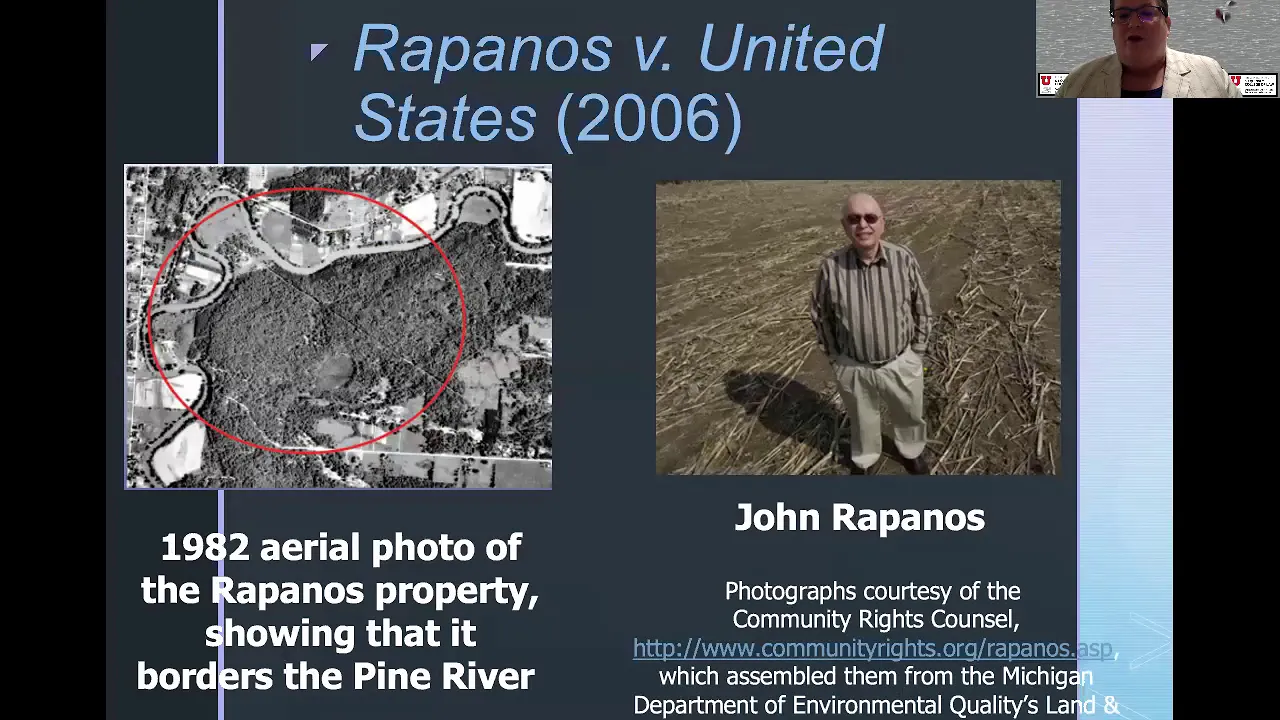
Clean Water Act "Waters of the United States Update
421
This pivotal Supreme Court case created a split decision with no clear majority. Justice Scalia's plurality proposed a 'direct surface water connection' test requiring physical connection to relatively permanent waters. Justice Kennedy's concurrence introduced a 'significant nexus' test requiring that pollution of smaller waters could affect water quality of larger waters. The Court ultimately adopted Justice Kennedy's test as the prevailing standard, with courts of appeals following his approach despite being a solo opinion.
Click to watch →
Deep Dive
The ruling in United States v. Patane (2004) and how it addresses the admissibility of physical evidence discovered as a result of unwarned statements.

United States v. Patane (2004) Overview | LSData Case Brief Video Summary
206
In United States v. Patane (2004), the Supreme Court ruled that failure to provide Miranda warnings to a suspect does not automatically exclude physical evidence obtained from voluntary statements; while the absence of Miranda warnings constitutes a constitutional violation, the Court held that physical evidence discovered as a result of voluntary confessions can still be admitted in court, thereby overturning the lower court's suppression ruling.
Click to watch →
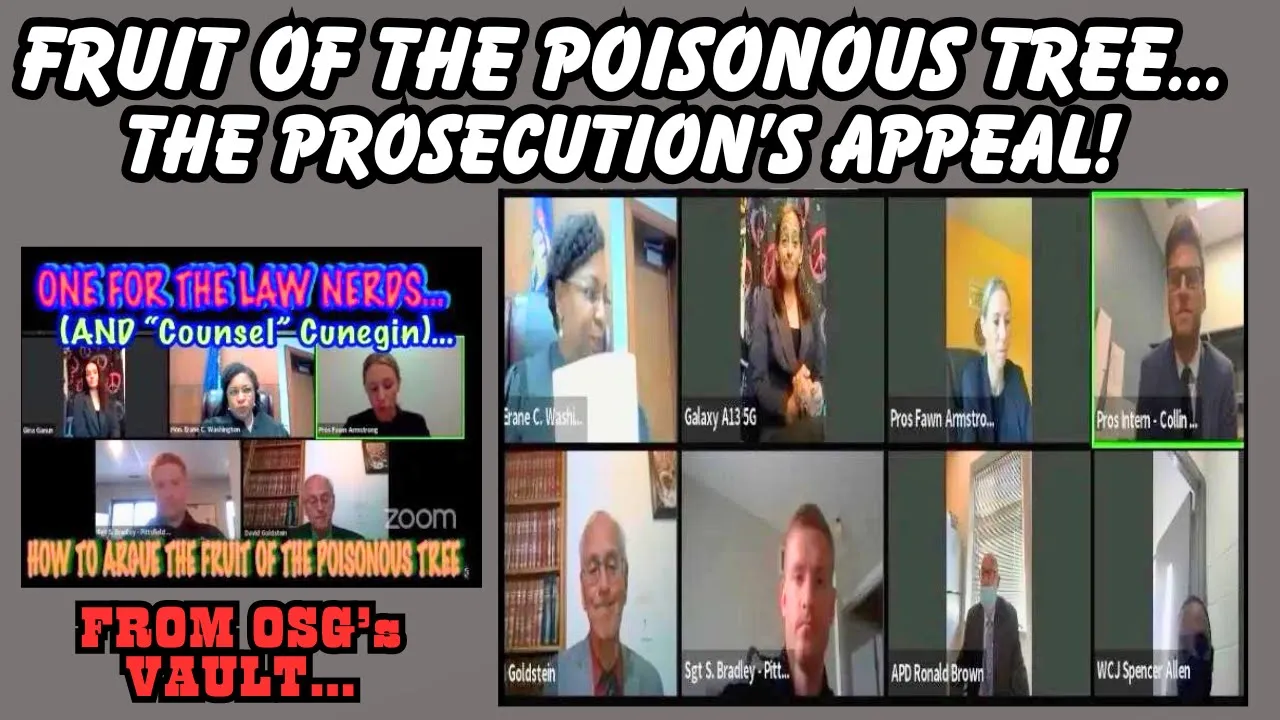
FRUIT OF THE POISONOUS TREE…THE PROSECUTION’S APPEAL!
15.6K
The fruit of the poisonous tree doctrine holds that physical evidence obtained as a result of an unwarned statement remains admissible as long as the statement was voluntary. This principle, established in US v. Quinones, 542 US 630 (2004), means that even if a statement is suppressed, the physical evidence derived from it may still be admissible if the underlying statement was voluntary.
Click to watch →
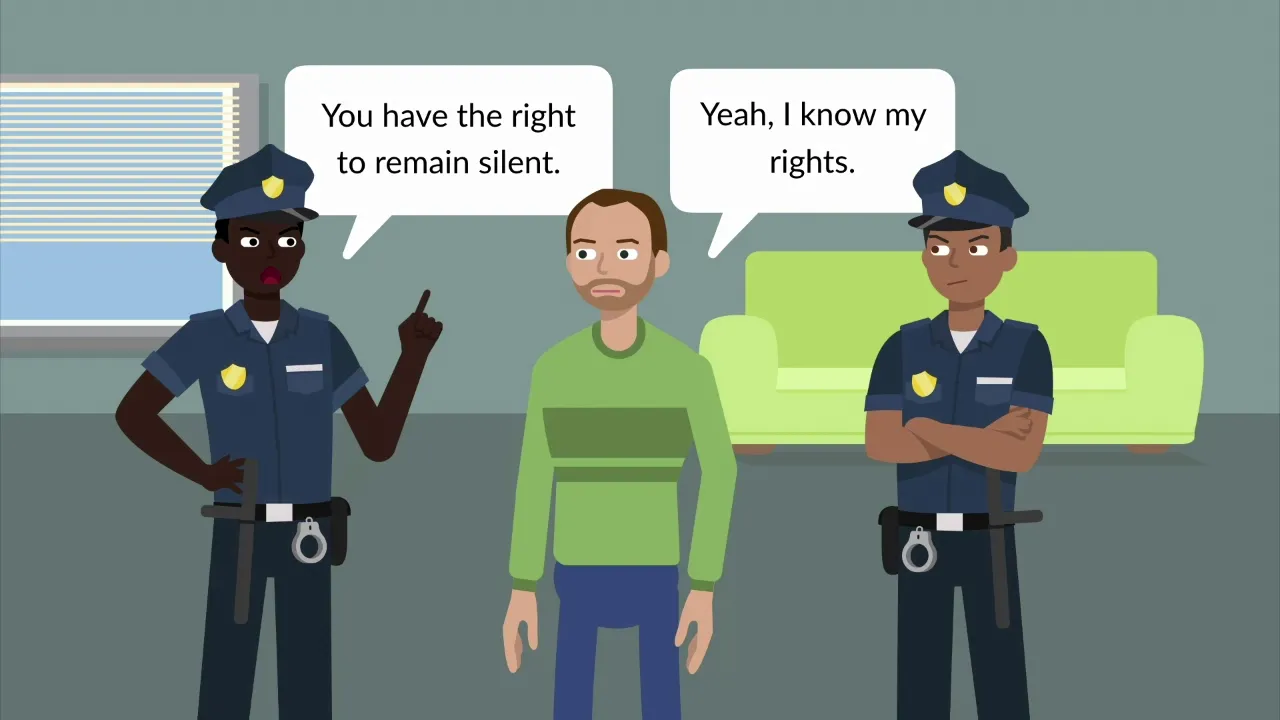
United States v. Patane Case Brief Summary | Law Case Explained
1.6K
In United States v. Patane (2004), the Supreme Court held that physical evidence discovered as a result of an illegally obtained confession is not automatically suppressed under Miranda; instead, such evidence must be evaluated under the Fourth Amendment's independent source doctrine, which allows courts to consider whether the evidence would have been inevitably discovered through lawful means regardless of the initial Miranda violation.
Click to watch →
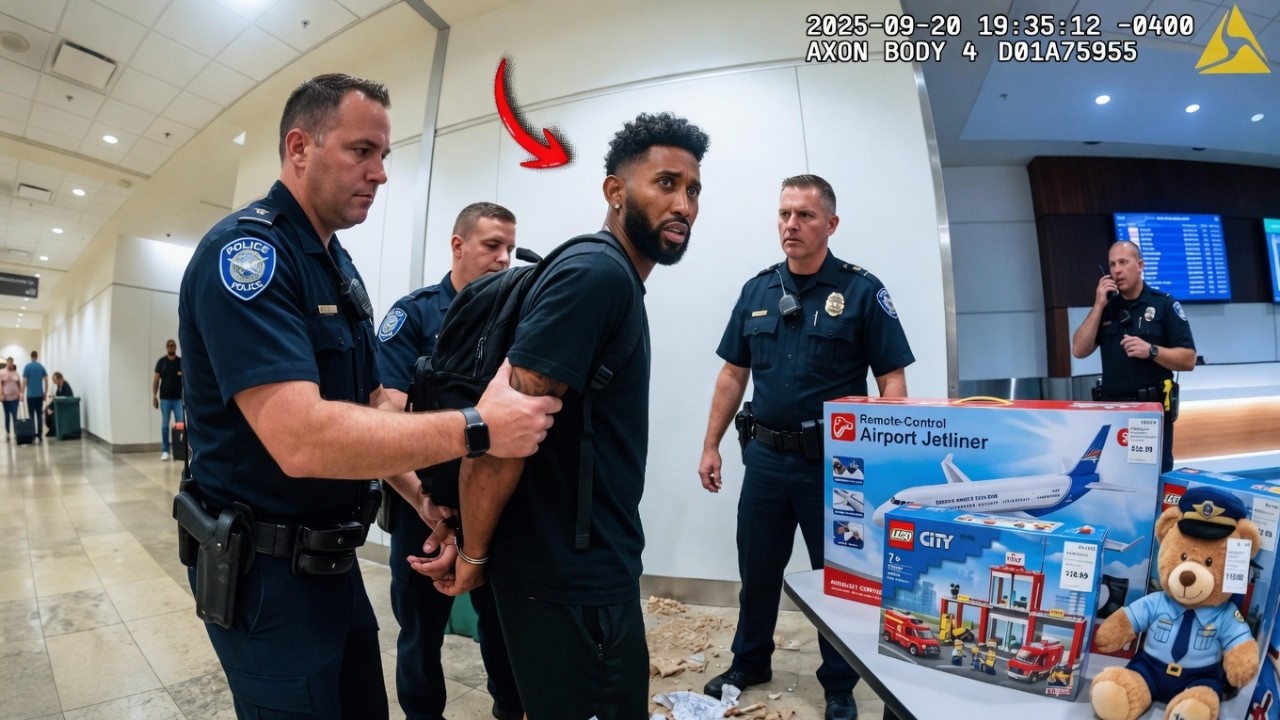
Airport Shoplifting Arrest - Thief's Bag Packed With Stolen Merchandise | Bodycam
118
Constitutional protections apply during police encounters. The Fifth Amendment right to silence was never invoked by the suspect, making every voluntary statement admissible evidence. False exculpatory statements are affirmative evidence of guilty knowledge and strengthen probable cause. Miranda advisement was delayed past the point where de facto custody began, but pre-advisement statements remain admissible under US v. Patane (2004). Search incident to arrest under US v. Robinson (1973) made the recovered items fully admissible. This demonstrates how constitutional rights interact with evidence collection and how false statements can actually strengthen a prosecution's case.
Click to watch →

Brewer v. Williams
1.2K
Justice Potter Stewart's majority opinion contained a footnote suggesting that while neither Williams's incriminating statements nor testimony describing him leading police to the victim's body could constitutionally be admitted, evidence of where the body was found and its condition might well be admissible under the theory that the body would have been discovered in any event even had incriminating statements not been elicited from Williams. This established the inevitable discovery exception to the exclusionary rule.
Click to watch →
Deep Dive
Subsequent developments in Miranda jurisprudence, such as Berghuis v. Thompkins (2010), regarding the explicit invocation and waiver of the right to remain silent.
![[Landmark Cases] Right to Remain Silent: Berghuis v. Thompkins](https://i.ytimg.com/vi/6QTYdbeHJ78/maxresdefault.jpg)
[Landmark Cases] Right to Remain Silent: Berghuis v. Thompkins
3.3K
Under Miranda v. Arizona, a defendant's Fifth Amendment right to remain silent can be waived implicitly through their conduct during police interrogation, not just through explicit statements. The Supreme Court in Berghuis v. Thompkins (2010) held that a defendant must invoke their right to remain silent unambiguously, and that answers to police questions during custodial interrogation can themselves constitute an implied waiver of the right to remain silent, provided the defendant understood their rights and the waiver was knowing, intelligent, and voluntary. The Court emphasized that the prosecution bears the burden of proving that any waiver occurred, and that state courts' factual determinations are entitled to deference unless objectively unreasonable.
Click to watch →

If Cops Ask: "Where You Headed?" - Say THIS Simple Phrase (Might Get You Out Of Jail)
45.2K
Berghuis v. Thompkins, 2010, ruled that the invocation of your right to remain silent has to be unambiguous. The moment you voluntarily start answering questions again, you have waived it. Davis v. United States, 1994, established that a hedged, softened, casual response is treated as no invocation at all. He did not trick you into a confession—he waited, dropped the temperature, asked one soft human question, and let your instinct to be polite finish the job.
Click to watch →

C-SPAN - Miranda v. Arizona
6.1K
The Berghuis case (2010) held that suspects must tell police they are going to remain quiet if they want to invoke their right to remain silent. A suspect sat quiet for 90 minutes and eventually made a statement, and the Court said he had waived his rights because he failed to do so unambiguously. This decision was 5-4 and represents a narrowing of Miranda protections.
Click to watch →

SUPREME COURT: Say These 2 Words and Police Have to Let You Go — Before You Answer Any Questions!
1.3K
Berghuis v. Thompkins (2010) addressed what happens when someone knows they have the right to remain silent but does not explicitly invoke it. The Supreme Court held that simply staying quiet or not answering is not sufficient to invoke the right to remain silent. To actually stop police questioning, one must affirmatively, explicitly invoke the right by saying so clearly and out loud. Silence can be interpreted as ambivalence, and officers can continue questioning, with statements made after extended silence still being admissible.
Click to watch →

$30,000 Missing From Staples Safe: The Detective's Perfect Trap
107
Under Berghuis v. Thompkins, a suspect must explicitly invoke their right to silence or right to counsel. Merely remaining silent is not enough. Anthony never said 'I want a lawyer,' so his subsequent statements were admissible despite incomplete Miranda warnings.
Click to watch →
Deep Dive
The evolution of police training manuals and interrogation techniques in response to judicial limits on the 'two-step' or 'question-first' interrogation strategy.

Cop Delayed Miranda to Get Answers. Now It's Backfiring
24.3K
The two-step interrogation doctrine, established in Missouri v. Seibert, occurs when police deliberately delay reading Miranda rights until after obtaining incriminating statements, then administer warnings to 'cure' the initial unwarned statements. Courts analyze whether the delay was intentional and whether the same subjects were discussed in both phases. Verigin v. People and Phillips v. People are seminal cases addressing this doctrine. The court examines whether the suspect was in custody during the initial questioning phase. If not, the two-step doctrine may not apply, and the court must analyze the totality of circumstances to determine if Miranda warnings were required. The court also examines whether officers had probable cause to arrest the suspect at the time of arrest, as lack of probable cause may result in suppression of evidence and dismissal of charges.
Click to watch →

Police Interrogation Tactics: False Confessions & Legal Reform
7M
The Reid Technique, named after John E. Reid, a former Chicago police officer turned polygraph expert, became the standard approach for police interrogations after physical coercion was declared unconstitutional in 1936. The technique has two major phases: the interview phase where investigators determine if someone is a suspect by analyzing verbal and non-verbal behavior, and the interrogation phase where they attempt to obtain a confession.
Click to watch →
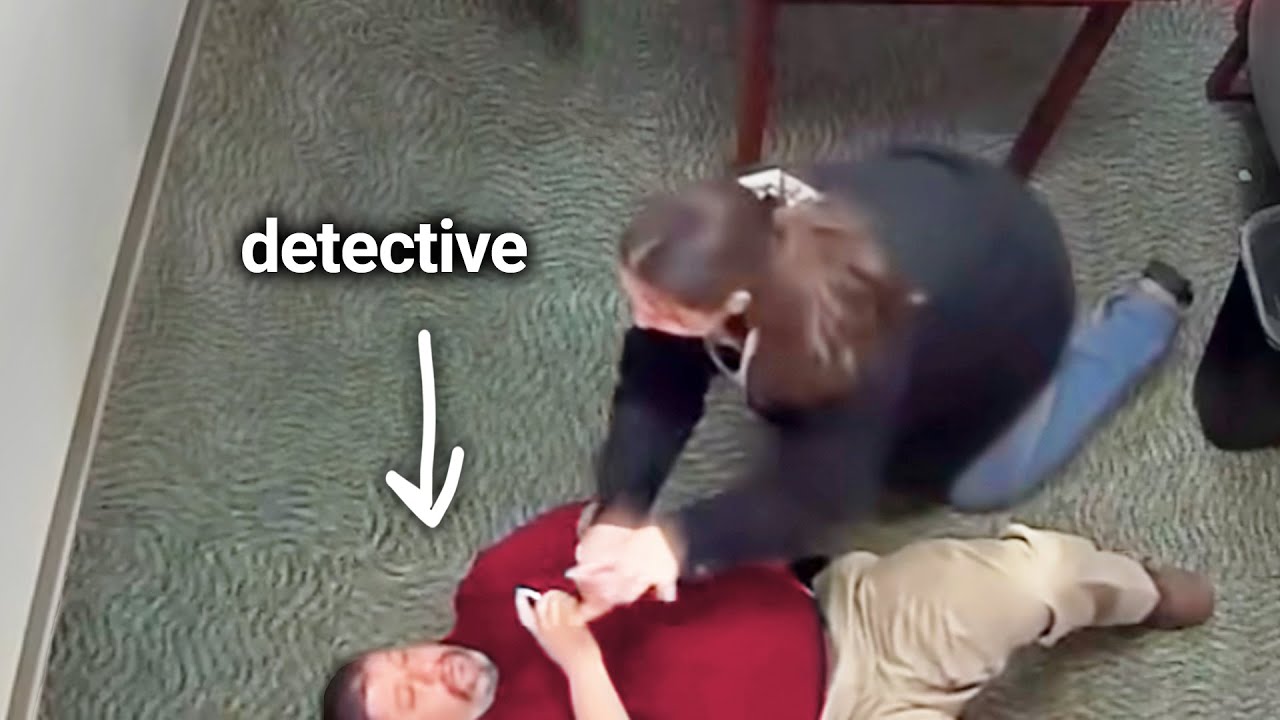
Tricked into acting out her crime
4.5M
The Two-Step Interrogation Method is a controversial police interrogation technique that involves first building rapport and allowing suspects to tell their story without immediate confrontation, then systematically introducing inconsistencies and evidence to break down their false narrative and elicit a confession. This method, demonstrated in the Cheyanne Jessie case where she killed her father and daughter, relies on psychological pressure, strategic questioning, and the alternative question technique to make suspects feel compelled to confess, even when they initially appear cooperative and willing to assist in the investigation.
Click to watch →
Miranda v. Arizona: The Right to Remain Silent Explained
155.1K
Before Miranda, interrogation rooms had a reputation as scary places where coercive tactics were commonly used. The police developed the 'third degree,' an abusive form of interrogation involving beatings and other harsh methods to extract confessions. By 1931, the Wickersham Commission found beatings had become regular parts of police interrogations, causing national outrage. Police interrogation is designed as a psychological process specifically intended to develop admissions of guilt. Training manuals like the Reid Technique instruct police to tell suspects 'We've got the goods on you' and present fabricated evidence. Courts struggled to determine whether confessions were truly voluntary or coerced through psychological pressure. This created uncertainty and inconsistency in evaluating confessions, leading to the need for clear constitutional protections that would apply uniformly across all jurisdictions.
Click to watch →
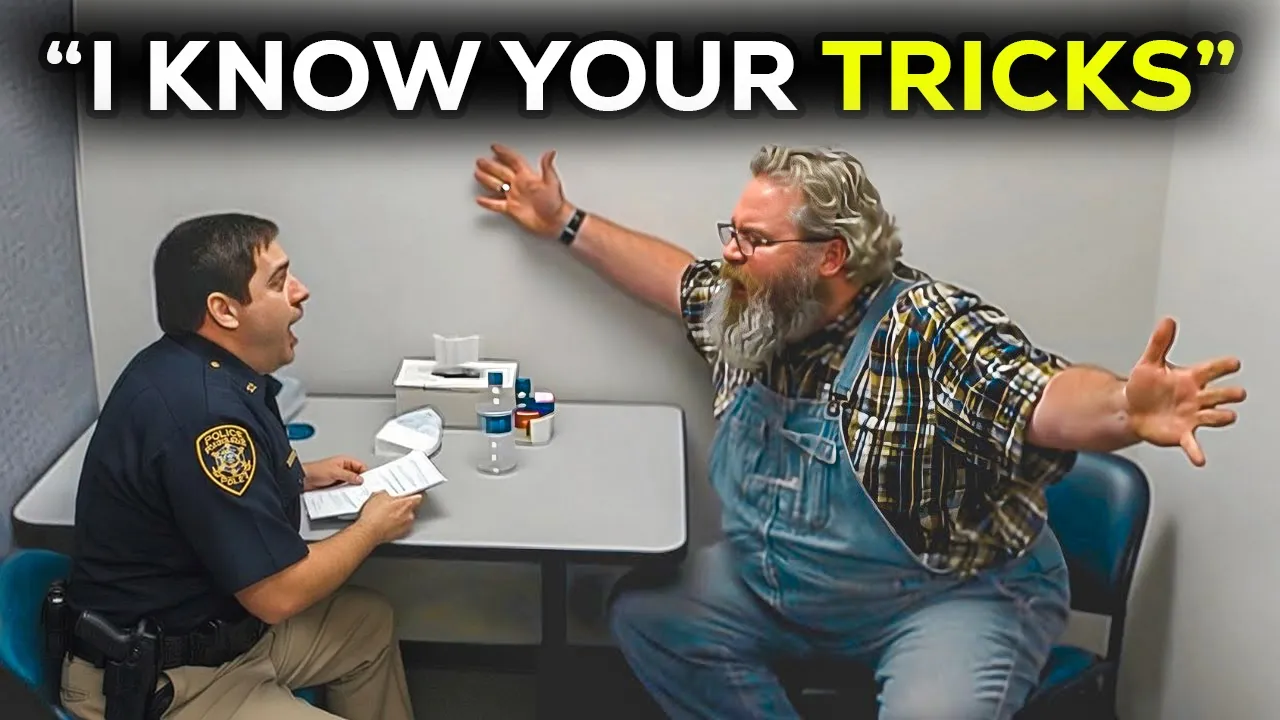
LAWYER: SAY THIS When Cops Use The "Reid Technique" Against You
291.6K
Modern police interrogations function as controlled pressure systems, not simple question-and-answer exchanges. Law enforcement controls the environment, schedule, and exit options while using basic human needs (sleep, food, bathroom breaks, family contact) as bargaining chips. The Reid Technique, developed mid-20th century and popularized through training manuals, breaks interrogations into three stages: fact analysis, investigative interview, and the nine-step interrogation process. The technique prioritizes obtaining court-admissible confessions over discovering truth. The first step creates false certainty by telling suspects they're already guilty, shifting them from defending innocence to negotiating the police narrative. This psychological manipulation exploits human tendencies toward authority conformity and creates environments where truth doesn't emerge naturally but is manufactured through systematic pressure.
Click to watch →
Miranda Rule
Miranda Rule
0:00- 1
Case challenges police delay of Miranda warnings.
- 2
Court rejects question-first tactic as unconstitutional.
- 3
Confession ruled inadmissible due to coerced waiver.
The Dissent's Voluntariness Standard and the 'Deliberateness' Critique
The primary counterpoint to the plurality decision in Missouri v. Seibert is found in Justice Sandra Day O'Connor's dissenting opinion, alongside subsequent legal criticisms of the ruling's fragmented standard. The dissent argued that the Court should have adhered strictly to the precedent set in Oregon v. Elstad (1985). This approach dictates that if the pre-warning statement was voluntary and the subsequent Miranda warning was properly administered, the post-warning statement is admissible, regardless of whether the police used a 'question-first' strategy. Furthermore, critics highlight that because Seibert resulted in a 4-1-4 plurality—with Justice Kennedy's concurrence establishing the controlling 'deliberate circumvention' test—it introduced a highly subjective and confusing standard. Opponents argue that focusing on an officer's subjective intent, rather than the objective voluntariness of the suspect's confession, unnecessarily complicates law enforcement procedures and departs from established Fifth Amendment jurisprudence.
The landmark case of Miranda v. Arizona (1966) and the constitutional requirement that suspects be informed of their Fifth Amendment rights prior to custodial interrogation.
The self-incrimination clause of the Fifth Amendment and how it protects individuals from coerced confessions during police questioning.
The legal concepts of 'custodial' status and 'interrogation' that trigger the necessity of reading Miranda warnings.
The precedent established in Oregon v. Elstad (1985), which allowed the admission of a second, warned confession even if it followed an initial unwarned statement.
The application of the 'Marks Rule' for interpreting plurality Supreme Court decisions, specifically analyzing Justice Anthony Kennedy's narrower concurring opinion in Seibert.
The ruling in United States v. Patane (2004) and how it addresses the admissibility of physical evidence discovered as a result of unwarned statements.
Subsequent developments in Miranda jurisprudence, such as Berghuis v. Thompkins (2010), regarding the explicit invocation and waiver of the right to remain silent.
The evolution of police training manuals and interrogation techniques in response to judicial limits on the 'two-step' or 'question-first' interrogation strategy.
321 views3likes2:09@LSData-CaseBriefsOriginal Release: 2023-07-30
[Music] case briefs and so much more LS status got what you're looking for the Mover a Siebert case heard in 2004 by the Supreme Court of the United States centered around the essential requirement for police to give Miranda warnings before a custodial interrogation if not given any resulting statements could potentially be deemed inadmissible in court the case unfolded as Patrice Siebert found herself in the midst of a police interrogation led by Officer Hanrahan without being given the essential Miranda warnings Siebert eventually confessed to being aware of a murder plot during the interrogation rounds the primary controversy sparked from the glaring absence of Miranda warnings preceding the interrogation siebert's son Jonathan who suffered from cerebral palsy tragically died in his sleep fearing accusations of neglect due to evident bed sores on Jonathan's physique Siebert in the company of her other two teenage sons and their friends plotted to set their mobile home Ablaze along with Jonathan's body with the objective of hiding the cause of his death the state of Missouri argued that a confession obtained via a question first strategy question first disclose Miranda warnings later should be allowed per the precedent set by Oregon V elstad however the Supreme Court ruled against this assertion the court concluded that the use of such a strategy by the police was not just illegal it deliberately aimed to dilute the potency of Miranda warnings applying this verdict to siebert's case her statements made after the belated Miranda warnings were ruled inadmissible in court the court affirmed the employing of this police strategy was aimed at undermining the effectiveness of Miranda warnings thereby making it improbable that Siebert or any reasonable person in her situation would discern the sense of choice conveyed by the Miranda warnings [Music] leave the stress of class [Music]
Up Next

33:29
Criminal Procedure Final Exam Review | 50 Key Cases in 33 Minutes
@GrantSmithEllis
207 views•2025-12-08

4:27
US Secondary Sanctions Impact on EU Businesses and Blocking Legislation
@Bureauvandijk
1.6K views•2019-03-20

5:27
Forensic Phonetics: Speaker Identification in Legal Cases
@nptel-nociitm9240
539 views•2025-03-19
24:42
Police Interrogation Tactics: False Confessions & Legal Reform
@LastWeekTonight
7M views•2022-04-18
Related Study Plans & Knowledge Roadmaps
Structured learning paths in Law
law
Self-Defense Law: Imminence & Castle Doctrine
01Foundations of Self-Defense Law
02Imminent Threat & Reasonable Belief
03The Principle of Proportionality
+ 3 more learning modules
12h6 modules
Explore Roadmap
law
Defamation Law: First Amendment & Actual Malice
01Introduction to civil torts and the First Amendment
02Elements of Defamation: Libel and Slander
03Public Figures vs. Private Individuals
+ 2 more learning modules
8h5 modules
Explore Roadmap
law
Hearsay Rule: Trial Evidence & Exceptions
01Introduction to Trial Evidence & Courtroom Basics
02Demystifying Hearsay: The Core Definition
03Non-Hearsay: Exclusions Under FRE 801(d)
+ 3 more learning modules
14h6 modules
Explore Roadmap
law
Medical Malpractice: Law, Liability & Care
01Foundations of Tort Law and Civil Liability
02The Four Elements of Medical Malpractice
03Defining and Proving the Standard of Care
+ 2 more learning modules
12h5 modules
Explore Roadmap