
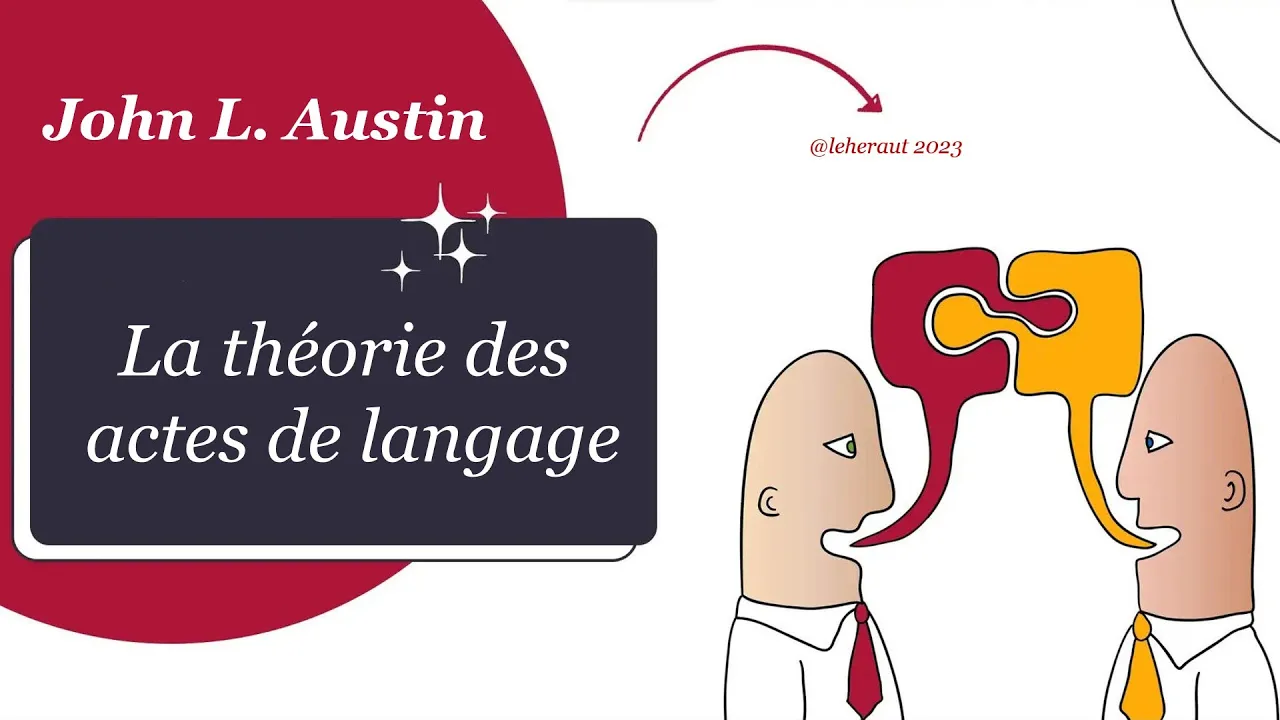











Language is fundamentally a human social phenomenon where speakers perform speech acts—actions like stating, questioning, ordering, or promising—rather than merely describing states of affairs; this challenges the traditional view that language only serves to make true or false claims, as demonstrated by performative utterances that create reality (like declaring war or adjourning a meeting) and the distinction between illocutionary acts (the action performed) and perlocutionary acts (the effects achieved).
Philosophy of Language: Speech Acts & Performatives | Searle Lecture 2
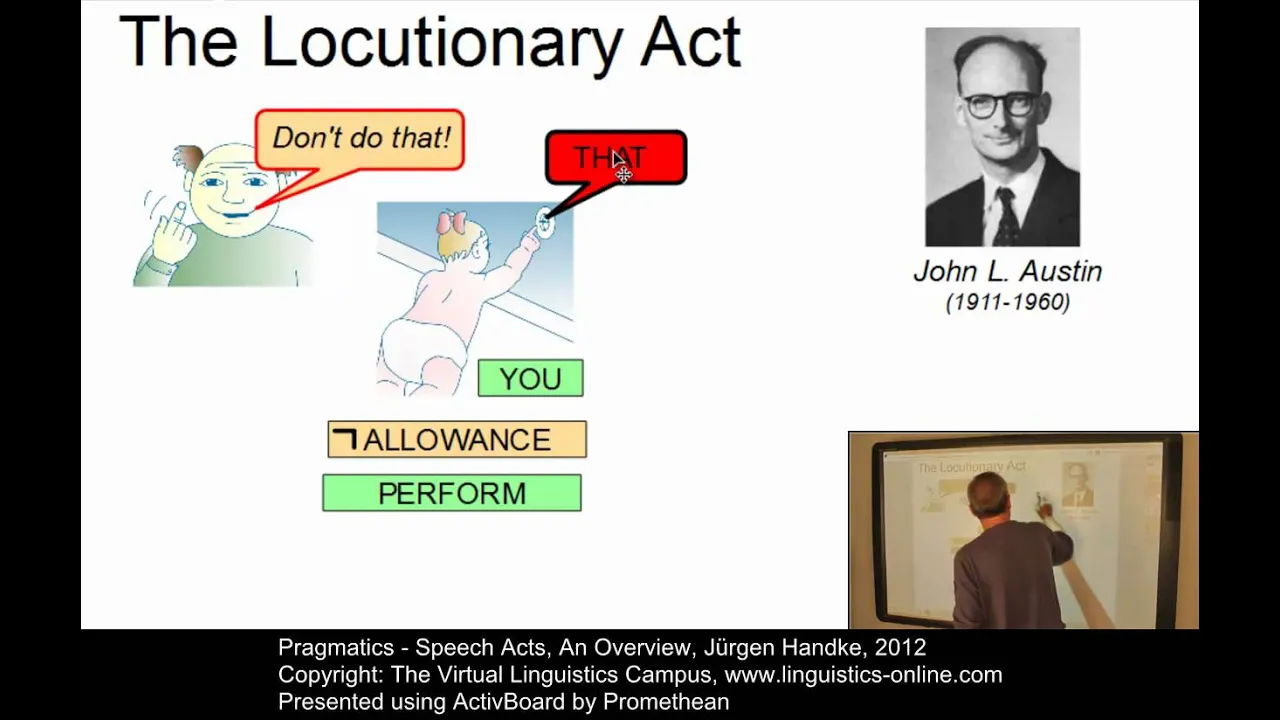
Added:J.L. Austin's pioneering work in 'How to Do Things With Words', which laid the foundational groundwork for speech act theory.
The traditional truth-conditional view of language, which assumes the primary function of sentences is to describe state of affairs (propositions) as either true or false.
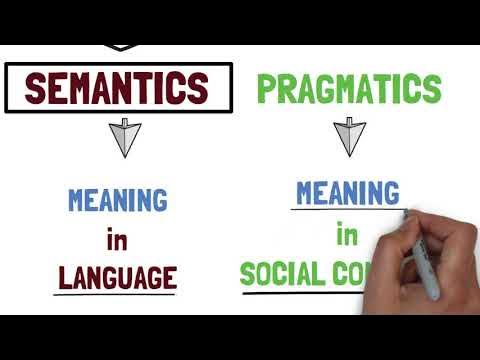
The basic distinctions in linguistics and philosophy between syntax (structure), semantics (meaning), and pragmatics (language use in context).
Searle's taxonomy of illocutionary acts, which categorizes utterances into assertives, directives, commissives, expressives, and declarations.
The concept of 'Indirect Speech Acts' and how speakers communicate intentions that differ from the literal meaning of their words.
Searle's distinction between regulative and constitutive rules, and how they contribute to the construction of social reality.
Applications of speech act theory in modern fields, such as natural language processing (NLP), legal philosophy (e.g., defining hate speech or consent), and discourse analysis.
41.2K views310likes1:18:54Original Release: 2011-10-26
all right well last time I got started and I made various distinctions and later on we'll challenge those in various respects uh but the basic idea I want you to see is that there is a broad distinction in the study of the philosophy of language roughly speaking between what you might call a formalist strand that emphasizes uh the uh the formal mathematical logical structure of language and adherence of that view tend to see ordinary languages as essentially degenerate forms of uh ideal formal languages such as the predicate calculus and they tend to use a lot of formal apparatus uh nowadays it's very fashionable to use something called possible worlds semantics and I'll tell you about that later on there's another strand which I think is uh uh the more powerful strand uh which emphasizes that language is above all a human social phenomenon uh that people get busy and talk to each other and that is ultimately what we're interested in studying is the use of language to perform speech acts that in a broad sense uh the study of language is part of the study of the mind now uh I am an adherent of the second strand I think you don't understand the formal logical apparatus unless you see it uh not as a branch of mathematics but as a look as a way of structuring uh human intentional behavior however I have to tell you that right now at this stage in history much the most influential strand in the philosophy of language is the what I've been calling the formal Strand and by the way these are my uh labels I I don't know that the people in question would label themselves that way but you'll get a feel for the difference when we get into the subject more now I'm not sure how to organize the course but the way I'm going to do it is to tell you first how I think the study of language ought to be done and how I've been doing it for the past 50 years or so and then I'll I then I'll go back and we'll start with Fraga and Russell and pick up the various issues and conflicts between these two strands however it's not like the philosophy of Mind where I think that the guys I'm oppos are basically just hopelessly wrong behaviorism and dualism and computationalism and all that uh whatever else we may say about the formalist guys they have something to say there's some very important insights to be got from that it's just I think that the insights you derive from the formal study are based on a much deeper conception of language which is language as above all a human intentional activity and that's what I'm going to try to get across okay now the reading well we couldn't get a hold of Austin but maybe that's um a blessing and disguise because instead of working through his whole book just read that article uh in Al in Al Martin's book um Al's real name is aloicious and I think that's kind of Cruelty to children I I'd hate to you know I'd hate to go through second grade being named alawi wishes anyway he's a great guy and he calls himself Al uh and he publishes the best book the best collection of readings on the philosophy of language it's a humongous thing and I haven't read all that crap in it so I'm not and I have a principle I won't ask you guys to read anything that I won't read myself okay so I will the stuff I'll assigned I'm either going to read or have read so Reed Austin's um I peace in there on performative utterances all right now last time I blly introduced some of the most contentious issues in the philosophy of language about the distinction between analytic and synthetic and necessary and contingent and and a uh I always get them backwards uh a priori and a posteriori and you're going to hear about about them later and then I also introduced distinctions between speaker meaning and sentence meaning and I'm going to argue that speaker meaning is primary a lot of people think no sentence meaning is primary there's a distinction between syntax and semantics and that's going to be uh crucial and uh with that distinction the distinction between syntax semantics and pragmatics between the form the meaning and the use of language and then in connection with that I introduced two crucial Notions the notion of compositionality and generativity and it is a remarkable feature of human languages and is certainly not possessed uh by uh all animal communication systems that they have both of these features you can tell what the sentence means just by knowing the meanings of the parts and how they are arranged in the syntax and furthermore given that you understand the syntax you can generate an a an infinite number of new sentences sentences that nobody ever heard before and I gave you one or two ridiculous examples and I can't even remember them but you can for fun uh just to annoy your friends uh generate a whole lot of sentences that they hope they would never have heard and never want to hear again uh but anyway those are remarkable features you can Shuffle words around at will and as I said I have the greatest admiration for my dog's intelligence but he he can't do that he can think there's somebody at the door uh but he can't think I wish there were a thousand people at the door or God knows how many people will be at the door next week cuz there were too many people at the door last week uh he can't think any of those thoughts uh he can't even think how much fun it would be to visit the zoo next Sunday because there are a lot of funny looking animals in the zoo that he could bark at so there are all these crazy things that humans can do with language that animals can't do uh and later on I guess we have to talk about some of the animal languages because an enormous amount of of um uh play an enormous amount of philosophical mileage is made out of the bee language and the U various U uh efforts to communicate by dolphins and whales and all the rest of it and I take that seriously I think we ought to reflect serious on that and then there's that damn parrot we ought to think about uh the parrot because people whose opinions I respect think the parrot actually in some sense can sort of talk and understand well okay we'll get into that but right now we're with human beings and their remarkable capacities now there's one distinction I forgot to introduce I just forgot it but you have to you're going to hear more about it later and it's the beginning it's in every logic textbook and it's the distinction between use and mention and clearly we need such a distinction it's just the way that it's described in the textbooks is just I think absurdly wrong but anyway here's how it goes I'll take an example from Quin if I say Boston is in Massachusetts I'll abbreviate it that's a statement about Boston if I say Boston with quotes around it has six letters that's a statement about the word Boston this is a case of using the word Boston and this is a case of mentioning the word Boston so far so good but now comes the absolutely amazing view invented by no less a person and frager and as far as I know repeated in every logic textbook since that says here the proper name of a city occurs here that name doesn't occur at all rather there's a completely new name I'll draw a circle around it and that name is the name of a word so in the first sentence the word Boston occurs but in the second sense the word Boston doesn't occur at all the proper name of the word occurs uh furthermore I if you think that Boston occurred the word Boston occurred in this sentence that would be like think that the word cat occurs in the word catastrophe the word catastrophe isn't about cats and it hasn't got the word cat in it it has a sequence of letters but the word cat does not occur in the word catastrophe Sim no more than the word Boston occurs in number two well what does occur well we can name what occurs with three and that is we we can say well uh uh we can say this one occurs in two in proposition two over here that is you can keep going up with names of names of names of names now I this always seemed to me incredible it seems to me the word Boston obviously occurs here and we put quotes around it to indicate that it's being used and not mentioned however I and I think that's an egregious mistake and it's one reason I never made it through a logic uh a textbook I always got stuck on a page one and if I thought I and I thought if they say outrageously false things on page one God knows what's going to happen later on um uh anyhow uh the first book on logic I ever read was one I wrote uh and well that was with a help of a guy who actually knows something about it uh and most of my friends uh tell me it's a dreadful book but anyway I leave you that you can decide for yourself but anyway I think that this the just to summarize this part there is a an important distinction between using words and and talking about words between using words and mentioning words the way that this is standardly described in the philosophical literature seems to be not just false but it's well I don't want to use technical terms okay I but it's it's off the wall Al devant sounds better in German uh and it to say you can't I the word Boston cannot occur in number two only the proper name of the word occurs now Elizabeth Anam said you know that has a funny consequence it has a consequence you can't be told anybody's name because if you're told that guy's name is Smith you didn't hear the name Smith you only heard the name of the name on the other hand if you're told that guy is Smith you're not told his name you're just told who he is now that's a kind of a faky paradox that philosophers like but it ought to tell us that there's something wrong now oddly enough one of the chief adherence of this view without knowing it discovered a reductio ad absurdum uh but then what what courageous philosophers do when they discover ridic absurdum is they declare it to be a discovery and the discovery is uh that if you put in a free variable uh X has six letters then you couldn't put quotes around uh X or if you say say uh I take this take a let me give you a better example if you take a sentence take socrates's bald and knock out the word Socrates and put in a free variable X then if you wanted to consider this sentence this the the variable now is no longer a free variable now it just occurs as part of a proper name there's no structure to there's no syntactical structure to a proper name so there's no syntactical structure here so and I if you don't understand that don't worry we'll get to it when I tell you about uh free variables and open sentences so Quin said well you have to invent a new kind of quotes and these are these Corner quotes uh to deal with that kind of case where you want the variable to be able to function as a variable and not like the word cat in catastrophe uh but what that tells you is you were making a mistake initially when you said that putting quotes around a word creates a new word the proper name you could invent a proper name of the word Boston call it Bill and then we could say this will be proposition four bill has four letters okay now uh this is an actual name of a word I deliberately introduce bill as the name of the word Boston so both two and four are true and four is true because the word named by the word Bill actually does have oh I'm sorry I'm screwed up here six letters uh has six letters because now bill is the name of the word Boston and Boston does have six letters so you can see in number two that it's true that Boston has six letters you can just count 1 2 3 4 5 six whereas in four you you can't see on the Blackboard that bill has six letters you have to know that bill is the name of the word Boston anyway we're going to talk about reference and when we do I want you to keep in mind that there's a distinction between using a word to refer that's the use of the word and talking about the word and I think the terminology of use and mention is probably a good way to do that but is the standard account is false the standard account says when you put quotes around a word you make a completely no word a completely new word the prop the proper name of the word you put quotes around that seems to be a mistake and it's led to a lot of other mistakes that we'll get to when we talk about how we use language to talk about language okay all of that is just uh clearing my throat to get to the main topic of this lecture which is the introduction of the notion of the speech act um now maybe I should take questions about what I said so far any I mean I'm repeating stuff last time the only stuff I added this time was about use and mention uh any any questions about that I mean we're going to come back to reference you're going to hear more about reference probably than you ever wanted to hear uh because it is the central subject in the uh philosophy of language how do words refer okay and my answer by the way is going to be they don't uh speakers refer using words words don't refer it's speakers it's not the marks on the Blackboard that refer but it's the speakers using the words uh that refer but anyway we're going to get to that all right now all of the stuff that I've said so far about uh necessity and contingency and a priori and a posterior and all that seems to be about the use of language to State the truth and you succeed in this use of language if what you say is true and you fail if what you say is false now Austin who was was a a professor of philosophy in uh Oxford uh as well as wienstein who was a famous Professor of philosophy then in Cambridge um Austin and vidin Stein in their different ways noticed that there's something fishy about the idea that language is only used to make statements it's only used to describe things and a lot of people had argued that unless a proposition was either analytic or synthetic and all synthetic propositions were empirical they would be meaningless and so traditional branches of philosophy like ethics and Aesthetics were declared to be meaningless by a certain School of philosophers called logical positivists I'll tell you about more about them later as well but Austin looked at this and thought there a whole lot of utterances that don't set out to make true or false claims a guy who says the meeting is adjourned or I Now pronounce you husband and wife or I order you to leave the room or I promise to come and see you next week or war is hereby declared such a person doesn't set out to describe a state of affairs if the if the guy says uh the meeting is adjourned it won't make any sense to ask him well how do you know it's adjourned what's the evidence that is adjourned because he wasn't making that kind of a claim he wasn't claiming to describe a state of affairs when he says the meeting is a germed he was creating a state of affairs he was performing an action rather than describing some phenomena and Austin introduced the notion of a performative and the idea of a performative is that there's a class of verbs usually verbs sometimes you get nouns but it's usually verbs which are such that if you utter a sentence containing the verb and you do it in appropriate circumstances then you will perform the ACT named by the verb so you can declare war by saying I Declare War if you're the appropriate Authority Congress has to do it for the United States but congress makes this Collective speech Act Declare War uh and you can pronounce if you're the preacher you can pronounce somebody husband and wife in a course of a marriage ceremony and any speaker can make a promise uh by saying I promise in all of those cases you have a performative verb and the use of the verb in appropriate circumstances will be the performance of the very act named by the verb so a Austin said we need to distinguish between performative utterances which don't set out to be true or false it's not they're not trying to be true or false we need to distinguish them from what he called constative utterances and these are cases where you're actually saying something that's true or false and these would be such things as statements and descriptions and this would be over here this whole class of utterances where you so to speak create a speech phenomenon you create an order or a command or an adjournment or a marriage or a declaration of war just by saying something by making the appropriate utterance so it looked like initially at least that you could make a distinction between between the performative and the constative what are the what's the basis of the distinction well Austin tried to get a precise distinction and it's very interesting why it didn't work because that led him to rethink uh the whole nature of utterances it looks like the way you make the distinction is this on the one hand you say uh conaes over here can be true or false and over here they're not true or false but somehow appropriate or authorized or correct and Austin introduced the technical notion he said these could be felicitous or infelicitous so if I got up in the middle of the academic Senate and shouted the meeting is adjourned well that would be infelicitous CU I'm not in a position to do that so that's the first way of making the distinction performatives are not true of false but felicitous or in infelicitous conaes can be true or false but then uh it seems that for the performative there's a special verb a special sentence form and over here is just any declarative sentence it seems can be used to make a constative and indeed even sentences can containing performative verbs can be used to make statements so if I say I promise to come and see you next Wednesday that's a performative utterance because I'm making a promise but if I say I promise too many things to too many people that's not making a promise that's just making a statement about myself I'm describing myself as performing a certain sort of action so it looks we've got two kind kinds of uh ways of distinguishing the performatives are not true or false constative are performatives require a special verb uh whereas the conaes don't uh and finally it seems the basic underlying idea is that a performative is an action it's a doing or acting as opposed to over here it is a saying you're just talking when you make the conative but in the case of the performative you are performing an action by doing the talking you're adjourning the meeting declaring war making somebody husband and wife giving and bequeathing you're watch Etc okay now it looks like a nice distinction but if you look closely Austin says you can't make it work because all of the features that are supposed to Define the performative are also features of the constative and I'm going to go through that it seems that in order to issue a performative utterance such as the meeting is adjourned or war is declared I or I name this Battleship the battleship pemin uh it seems that in order to do that I have to be in a special position there has to be some U condition conditions under which it's okay but that's true for statements as well uh you can't just say anything uh you have if it's to be a serious uh a correct utterance you have to be in some kind of a position where it is appropriate if I say right now there are 17 people in the next room and you say to me well how do you know what's your evidence I it won't do for me to say it's a free country and if I want to say they're exactly 17 people okay of course I can make these noises but there's something wrong with my utterance if I say at this very instant Barack Obama is combing his hair with his left hand at this very instant and you say well how do you know what's your evidence I free country I can say anything I want well of course but there's something infelicitous about that statement you're not in a position to say that and that's just as infelicitous as you're getting up in the meeting and saying the meeting is adjourned furthermore there are lots of verbs for conaes I if you're very pompous you don't have to say snow is white you can say I state that snow is white or even I hereby state that snow is white um and indeed uh there are VAR varying degrees which one has for making statements and if you wanted to be fully explicit you could introduce one of these constative performative verbs like state or describe or characterize how would you describe Sally oh God don't ask me to describe Sally well I would describe her as a marginal schizophrenic suffer and then so on you give a a description of her and that sounds like a performative cuz you've used the describe there the verb to name the very action that you were performing when you uttered it so it looks like we this doesn't work cu the verbs that are supposed to be over here can also work over here that is you have special vers for statements but now going back here some con statives can be true or false if I say uh I sorry some per performatives some uh performatives can be true or false if I say I warn you that the bull is about to charge and it turns out the bull is a stuffed bull I've been dead for 17 years then my warning is false I will have given a false warning so it turns out just as on this side the conaes can be felicitous or infelicitous some performatives can be true or false and just as there are special verbs for performatives there can also be special verbs for constative finally that leads to the obvious Point namely it is you can't make the distinction by saying all performatives are actions doings and all con conaes are sayings statements because all statements are also actions it's you're doing something whenever you say anything so this is characteristic of intellectual history that what was introduced as a kind of marginal case as a kind of an oddball case tends to swallow the general case because the features that seem to be special of performatives that they could be Ficus or infil had a special verbs and were all actions those three features are features of constative as well and you come up with the with the result every utterance is an action every utterance that you perform is a case of performing an action and hence we need to recast the investigation we need to look at the study of language as the study of speech acts when people talk they are doing something and our task as theorists is to describe the structure of the actions that they are performing uh okay and now that's going to be our next heading for those of you who keep notes uh bless you all the new heading is speech acts uh and I'm now going to tell you some of Austin's investigations about that uh later on I'm going to make some corrections to that but let's take questions I saw a hand up yeah reality I mean it's still doing something different okay now now she raises a deep question and that is all the same doesn't it look like you have to have a special category of utterances that use be performative verbs because you're changing reality when you use the performative verb you're making it the case that the meeting is adjourned I and similarly when you say uh I hereby state that it's raining you're making it the case that you State uh but the answer I think Austin the answer to that would be yeah but you're changing reality when you say it's raining you've made it the case that you made a statement you just didn't say that you made a statement but all the same you did make a statement now that's that this is one of the deep questions we're going to be examining in this course what is the relation between language and reality every utterance changes reality in this respect something now exists that didn't exist before namely that utterance but of course that's true of all actions if I raise my arm then I have changed reality because something that existed exists now that didn't exist before namely the raising of my arm the question though that Austin was confronted with is can we make a clear distinction between the constative class of speech acts and the performative class of speech acts and we can't on the way that he originally tried to with these dis distinctions now I think implicit in what you said is a variation which we can make and that is we can say all the same there is a special class of performative utterances indeed we need to identify three features there's the performative verb there's the performative sentence and there's the performance ative utterance and we use the verbs in the sentences to make the utterances and the definition of the performative utterance is it's an utterance which contains a verb or sometimes a noun but basically there are verbs contains a verb which is such that in the utterance of the sentence you perform the ACT named by the verb so if you say he I order you to leave the room war is hereby declared I give and bequeath my watch to my nephew all of those are cases where you have a verb or verb phrase which is such that in the appropriate sentence under the appropriate circumstances the performative utterance is the performance of an act named by that verb uh okay so it looks like you're still going to need a distinction between those sentences verbs uh and utterances that have this feature and those that don't it just that you can't make that distinction in terms of the true false Distinction on which it was originally based okay yes yeah um one an examples talking about con sentences or statements you you used example the bull yeah warning you that a bull's coming turns out is false yeah but it see something that was kind of funny because it does seem like like it's a performance like I'm warning you yeah then you can say well it's true or false whether there actually is a coming yeah the the point is this I mean I in case you didn't hear the U question at the back I'll repeat it there does seem to be a distinction because it's true that the warning might be false but all the same it's true that you did warn the guy right I mean there was a warning even though the warning was false and Austin would agree to that Austin would say yes you did make a warning but the whole idea was supposed to be that performatives couldn't be true or false and this one can it's clearly performative because it's got all these indices you you performed an act by naming it but you performed an act by saying I warn you and it meets the other test one of the tests he used was this hereby test can you stick in the word hereby and you can you can say I hereby warn you that the bull is about to charge but in that in that case then you've got you definitely performed the act of warning and that was a performative but all the same the resulting utterance the resulting warning can be true or false and that's the point that he was making now at the same time that Austin was doing all this stuff uh Vicken Stein was challenging the idea that language only serves one purpose to describe and wienstein thought we ought to recognize a whole lot of different functions of language and indeed venin says I that they're strictly speaking an indefinite number a countless number of uses of language now I often read in intellectual histories how much Austin was influenced by binstein that is absolutely false I knew Austin very well and he was totally colorblind where Vicken Stein was uh concerned I used to try to get him to argue about viin Stein and he he was a very intelligent man but mostly what he said about viin Stein um wasn't all that smart and they were well he was totally unsympathetic vien Stein was a kind of a mystical middle central European uh who who was full of of deep and profound and often mystical ideas Austin was exactly the opposite a very precise middle uh English middle class Professor who insisted on Precision so when Vicken Stein says there are an infinite number of uses of language well Austin used to say there are philosophers who say that there are an infinite number of uses of language and then they give a list of 17 or 32 and Austin would say this with you know unspeakable contempt I mean my God how could anybody uh Austin once said to me about Oxford there's a lot of loose thinking going on in this town and I remember we shook our heads and we thought all the way out the iFly Road and the Woodstock Road and the Banbury Road maybe all the way to Banbury itself loose thinking and Austin was against all forms of loose thinking however that made it impossible for him to understand uh a lot of things in vien Stein so at one time when I was an undergraduate I insisted on our little informal discussion group that we discuss vien Stein's private language argument and Austin found it very uncomfortable but his technique was to take everything dead literally so he said okay next week everybody has to bring a box with a beetle in it because viin Stein has a famous example of the beetle in the box and then uh well he was being sarcastic we didn't bring a box with a beetle in it but at one point binstein says maybe there's nothing at all in the box and Austin shook his head and said a plain contradiction first he says there's a beetle in the box and now he says there's nothing in that box anyway so I I'm always amused when I read how much Austin was influenced by vidin he was not now more that was somebody else uh and in fact I think maybe the most insensitive remark ever made about wienstein was Austin once said it's all in more it's not all in more it's quite different but in any case I just want you to see uh this was Austin's most important idea was at all utterances are the performance of speech acts okay so let's uh probe that idea let's see how far we can get with that any more questions I want everybody up with this now those are both good questions yes youn about that talk yeah and then you didn't know that there was a bull but there happened to be a bull around yeah would that change anything well here's an interesting uh question and that is the question how about cases where you get it right by accident so to speak uh so for example a standard case of a lie is a case where you say something you don't believe but how about the LIE which unknowns to unknown to you turns out to be true you see now in that case did you lie or not it's like your case did you uh make a true statement or not uh there's a famous a short story by South it's called L the wall and I forget the name of the characters but one of them is captured by the fascists and his name we call him Pierre and they say to Pierre where is Ari and Pierre lies he says Hari is hiding out in the cemetery well unknown to Pier Hari really is hiding out in the cemetery so the fascist police go to the cemetery and they find all and they let Pierre go now did Pierre lie this is supposed to have some deep um existential meaning I I'm not interested in that I don't understand that part but I there is an interesting question here and that is did Pier lie and I would say he did lying consists in saying something you don't believe if it turns out that it's true in spite of your efforts to say a falsehood all the same you did lie on the other hand the guy who made a statement uh where he was totally mistaken uh was having a fantasy but it turned out I that it's true he did say something true even though his statement was in fisus if I say I there is a cat in this drawer I say that just to be saying something just stupidly and I open up and there is a cat in the drawer then I did say something true but it was just a coincidence just by accident those things happen yes what about being under the influence of Mind alter substance yeah and making a similar statement well there are cases of people who say things under the influence of mind altering I have never had one of these unless unless beer and wine count uh I I and they do say strange things there's no question about it the most famous case is William James William James was a famous American philosopher and psychologist maybe well I was going to say the best American philosopher ever but no the third best uh American philosopher ever the second was yeah maybe he's the fourth best I was going to make Pur the second best and and John dwey the third and William James the fourth I'm keeping first place open okay we'll keep first place open um but in any case here's uh um William James had this practice of testing all of these mindbending substances to see if he would get some mystical insight I and he would take these drugs he took a drug that knocked him into a trance and he would have a secretary there to record what he said and he came out of the trance of having been in this drug induced trance and he asked the secretary what did I say what did I say and the secretary read aloud you said hgus hamus woman is monogamous hog hgus man is polygamous uh anyway okay so that's all right that's the effort now we're going to go back to work anyway this is uh uh these are interesting points all right now then let's suppose then that we take the speech act as our Target of Investigation as I think we should well it seems clear that we need to distinguish different kinds of speech acts and I make some distinction that are not quite the same as Austin's but I'll tell you mine and then we'll see how they compare to Austin's it seems to me you have to distinguish I the sheer fact of uttering a sentence and I'll call that the utterance act where it's just a case of uttering a sentence or a word but now typically when you utter a sentence you're saying something if I say it's raining I will have made a statement that it's raining and Austin I introduced a technical term uh for this this type of complete speech act he called these illocutionary acts and I want to say that every successful utterance contains one or more illocutionary acts so if I say it's raining I I the meting is adjourned um I wish it would reain more often in Berkeley all of those utterances are illocutionary acts and this is the act of uttering a sentence or Etc sometimes you don't get a whole sense but that's the the standard case but now Austin pointed out you also need the act of achieving certain effects on people so by saying something I might convince you or persuade you and Austin he was good at inventing these uh terms he called that a perlocutionary Act and the perlocutionary ACT is the act of achieving a certain effect on the hearer if I convince you persuade you annoy you exasperate you uh all of those are cases of perlocutionary Acts whereas if I make a statement ask a question give an order make a promise all of those are cases of illocutionary acts notice that typical for illocutionary acts there will be a performative verb uh I hereby state that it's raining I hereby order you to leave the room uh there is no performative for the perlocutionary ACT uh you can't say you can say Bill uh I I'm telling you that Sally didn't do it Sally's innocent but you can't use the per perlocutionary you can't say Bill I convince you that Sally is innocent or Bill I persuade you you can say I'm telling you I say I'm trying to uh persuade you but there is no performative use of the perlocutionary verbs so you can you can in fact convince you by telling uh you can convince people by telling them something but you cannot use the performative you cannot use the verb convince in a performative form you can't say I hereby convince you that it's raining I hereby persuade you amuse you exasperate you annoy you all of those have to do with further effects on the hearer now it's interesting which verbs will take a performative and which won't so for example there's some verbs that don't don't take a performative occurrence because they imply concealment and the uh illocution the performative always makes explicit what you're saying so you can um tell somebody uh that they got dirt on their face by saying I you got dirt on your face or I'm telling you you got dirt on your face those are performative but you can't say look I hint that you've got dirt on your face or I insinuate that your pants are unbuttoned uh because that's not hinting and insinuating does everybody see this point you cannot use hint and insinuate performatively I hereby insinuate uh that your wife is unfaithful to you or I hearby uh hint uh that you got mud all over your face because that's not a case of hinting or insinuating now English is odd because there are these odd uses of verbs um as far as I know there's no way that you can use the word uh lurk uh in the first person present without modifying what are you guys doing over there oh we're just lurking uh or if I say to you let's go lurk behind the the counter here and I think skull is probably the same let's do some skullking this after sounds funny to me uh so I don't know why you can't do it with lurk and skull but I'm pretty clear that you can't do it with hint and insinuate because that implies absence uh that implies the performative verb implies explicitness where hinting and insinuating IM imply concealment if it you make it fully explicit it's no longer a case of hinting now Austin was struck by insult uh that you can't can't insult Somebody by saying I hereby insult you and he looked at Old dueling practices and found that there were conventional ways of insulting people throwing your gloves at their feet that's a speech act that's a type of illocutionary act but you can't insult Somebody by saying I hereby insult you and Austin was puzzled by that but I think it's because insult is perlocutionary it's got partly perlocutionary meaning to it and you can see this if people will say things like in a in an argument when somebody's being insulting you might say look you can't insult me meaning I don't take you seriously enough for allow to allow you to achieve this perlocutionary effect so I think hint and insinuate do not have a performative use because they're inexplicit but insult seems to me to lack of performative use for a different reason namely I think insulting is partly perlocutionary okay so far so good now it seems to me we need to introduce a crucial distinction which is going to make our investigation a lot easier if you look at sets of utterances like for example um if you consider cases uh like the the contrast between you will leave the room said as a prediction will you leave the room said as a question a and leave the room set as an order it seems to me clearly there's something in common between those cases in every case the idea that you leave the room is expressed and I'm going to introduce a very tricky notion here the notion of a proposition and I'm going to say the proposition that will leave the room is expressed in all three illocutionary acts the prediction you will leave the room the question will you leave the room and the order leave the room or the request please leave the room all of those contain the same proposition the proposition that you will leave the room but they contain it with different illocutionary forces so the basic structure of the illocutionary ACT seems to me to be this you have a propositional Content we can represent that with a p and then that propositional content is presented with different forces with the force of a statement the force of a question the force of an order and now if that's right then it seems to me we're going to need another notion and that is the notion of a propositional act and a proposition itional Act is not a complete speech act by itself but it's the act of expressing the proposition which will occur as part of a complete illocutionary act so the proposition that you will leave the room is expressed in the three different illocutionary acts please leave the room will you leave the room you will leave the room even though in each case you have a different total illocutionary Act notice that the propositional ACT is an abstraction it's not something that can occur by itself but why do we need it then we need it to Mark what is in common to the three different illocutionary acts as well as what is different between cases uh where you have the same type of illocutionary act but different propositional contents so I already you to leave the room and don't come back contains two illocutionary acts the order to leave the room and the order to not come back both of those are orders but the propositional content is different in the two cases so you need a distinction between this F part the force and the P part the propositional content because the same proposition can occur in different FS that was our example of please leave the room you leave the room leave the room but uh you also need the notion I of the a same F occurring with different propositional contents as when you can order somebody to leave the room and order them to not come back so because the two features are discriminable you need a distinction between the illocutionary force which marks the type of speech acts that you are performing the type of act that's being performed and the content of that act the propositional content okay so I introduced the notion then of the propositional act in addition to the illocutionary Act and the perlocutionary ACT where the propositional ACT is always an abstraction from the total illocutionary act now all of that is a going to be crucial for our investigation of language notice that the oldtime behaviorists who thought we could analyze language just by looking at the stimulus responses looking at the effects on people of our of utterances in effect you can't do that because what you get then are perlocutionary acts you look at the effects that utterances have and the idea that the behaviorist had was that you could find out the meanings of words and sentences by looking at what sorts of behavior um what sort of stimulus would prompt the utterance and what sorts of effects the utterance would have it was a hopeless Enterprise from the beginning I if you get your freshman in the psychology course and try to find out what effect on them an utterance uh has you'll find pretty much not any effect they might look puzzled I mean what's common to all occurrences of the word shirt in I'm wearing a new shirt or shirts are cheap nowadays CU they're all made in the same town in China or the Roman Empire contained no shirts now I looked closely and I didn't see any common behavioral response to all those occurrences of the word shirt so it's it's was a fairly hopeless Enterprise to try to do a behaviorist account of language and one of the many things wrong with it is it can't distinguish between the illocutionary and the perlocutionary there's several other things I want you to notice the illocutionary is always intentional you don't make a statement or issue a promise unless you intend to make a statement or issue a promise but the perlocutionary can be completely unintentional you might annoy people or exasperate them or convince them or persuade them without intending to I I I I might convince you that I'm drunk just by behaving in a drunken fashion but it might not be my intention to convince you that I'm drunk whereas if I make a statement it must be the case that I intend to make a statement now it's interesting how we will hold people responsible even in cases where they didn't intend to perform the act because the social situation is such that you you're not supposed to allow it you're not to to give the impression that you're performing a speech act if you aren't so if you left your left turn signal on and somebody smashes the right side of your car uh he will be able to argue in court look he was signaling a left turn and you can argue well I didn't really signal a left turn cuz I didn't intend to well you won't get away with it cuz the law in the case like that requires that you not give the impression that you're signaling a left turn by turning your left turn signal on uh so we'll hold you responsible performing for performing the speech act even in cases where you didn't intend to the trickier case is the auction if you've ever been to auctions it can be very tense in the auction and you don't want to give the impression you're making a bid if you're not making the bid I once attended an auction uh in London at soues and a wonderful Japanese um print came up for auction and the bidding went very fast and it soon reached 1,000 and the woman that I was with saw a picture she admired on the other side of the room and she said look at that picture the auctioner turned to us and said that lady has just bid 1,100 and I thought oh my God I don't have 1,100 uh anyway fortunately the bidding went on that we were not held responsible but if you give the impression that you're bidding at an auction then you will be held responsible for bidding and bidding of course is a type of speech act uh well I'll tell you the kind that it is later uh oh by the way now I wish I'd bought the damn picture it was Hocus eyes the wave and it went I of course I didn't have the money then I was a graduate student but in any case uh it's worth lots more money than than it went for in that remote era okay now there's some tricky Parts uh to this uh one is I say there's a whole proposition but in the case of questions only in yes no questions do you get a whole proposition uh so will you leave the room said as a question just gives the proposition will you leave the room and then you're asked to say yes or no but if I say to you how many people were at the party then the way that that works is the question let this be our Force indicator for questions then it's not question P where you get a whole proposition it's more like this question X number of people were there and what you're requested to do in the case of the question is to fill in the value of x uh what you're supposed to do is complete the proposition position so in the case of all questions except yes no questions you don't get an entire proposition you get a proposition with a hole in it and you're supposed to fill the hole uh why were you so rude to Sally means fill in the blank in the proposition I was rude to Sally because and then you're supposed to give the reason why so in those cases is you don't get an entire uh proposition now there's odd features of all these and I want you to think about one is in general the form of the question determines the form of the answer so if uh if the question is how many people were uh were at the party it won't do to say uh because she was rude to me that's an answer to another uh question but you have to use the form of the question how many people at the party determines the form of the answer I there were X number of people at the party where you have to fill in and again English is amazing because there are odd uh features of English where that's um not true and shall and will the damn modal auxiliary verbs uh always run against the rules here if I say to you shall I marry Sally uh the answer is not yes you shall or no you shall not not or even yes you will or no you will not the question asks for an imperative it asks for advice uh shall I um marry Sally invites yes do marry her or no don't marry her but it doesn't ask the the shell form there does not require that shall or some other some variant like will occurs in the answer now why that should be I don't know uh the modal auxiliary verbs that I uh uh can and could ought and should May and must uh will all of those are very mysterious and and Chomsky once told me he didn't work on those because they were too hard uh and the there's an odd fact that the people I know who do work on modal auxiliary verbs uh the people really devote their lives to them tend to go crazy uh and I I'm not recommending that any of you should do it but if you get the modal auxiliaries figured out uh it might be helpful I there was a guy a wonderful man in our English Department who was very good on these and he used to come to my office and after one session the woman came from the next door office and said what was all that screaming going on in your office and I said that was Julian talking about may and might wait till he gets on to can and could those are really tough verbs anyway okay so what we've got then is a kind of nice picture that what we're interested in where human linguistic communication is concerned is the illocutionary act but the illocutionary ACT is typically performed in the course of uttering a sentence and that's an utterance act and for most illocutionary acts when you perform the illocutionary ACT you express a proposition some times you don't sometimes you just get a a noun phrase Harrah for the 49ers just gives you something of this form where you have the illocutionary force F and then you just have a name the 49ers and indeed sometimes people just uh perform an illocution act with no propositional content at all harah or damn uh or I won't go through the various obscenities uh but there uh I you sometimes know what they're talking about when they say oh and then they uh utter some unfortunate expression I'm not drunk enough to go through the list this morning but in any case I you can fill in your own values uh there but in any case the the kind of stuff that we'll be studying the stuff that's really interesting to us are where you get a proposition or a big chunk of a proposition as in interrogatives as as in questions now of course that's the simple picture and now we're going to find these wonderful complexities you can perform a very large number of speech acts with just one utterance by performing indirect speech acts so you say one thing and you mean what you say but you also mean something else it frequently happens at faculty parties that it gets quite late in the evening uh and the wife says to the husband it's quite late and he said no it's not late at all it's only 2:00 uh and she says no dear it's quite late and it's clear she means one it's quite late two time to go that is a directive three and that's so she she's um uh uh imposing an obligation on him but also she's performing an undertaking because she's saying not only is it late and time to go but there's an element of threat wait till I get you home uh so you have all of these speech acts contained in one speech act you can perform you can utter a single sentence that contains a very large number of implications that implies other speech acts and if you look in if you listen in ordinary conversation I think you'll find that a high percentage of utterances that you hear in ordinary conversations are indirect speech acts um where people say one thing but they mean something much more let's go to the movies tonight is answered uh Often by saying no I have to work on my homework whereas you understand I have to work on my homework as an answer to the suggestion let's go to the movies because it's a reason for not complying with a suggestion okay so we're going to investigate the structure of the illocutionary ACT but before we do that there are two crucial Notions I have to introduce and those are the Notions of the network and the background if you understand any sentence you have to understand a whole lot of stuff that is not contained in the literal meaning of the SS I say how did you get to the campus today and you say we drove uh that might seem the simplest conversation imaginable but to understand that conversation you need a prodigious amount of information it doesn't mean uh we drove a team of six white horses I normally you would take it to mean we drove in a car I and think of what you have to understand in order what it means to say we drove in a car even if you said it explicitly you have to understand that a car is a means of transportation uh that it proceeds along the surface of the Earth uh that you people get inside a car rather than uh strapping themselves to the tire or riding on top of the roof uh and all of that is contained no rather all of that is presupposed by your understanding of the sentence we drov drove but none of it is contained in the literal meaning of the sentence there's nothing in the literal meaning of the sentence to block the even if you made it explicit we drove in Sally's car which is an a 1997 Subaru even if you put all of that there's nothing to block various kinds of misunderstandings and the way we drove is first of all we broke the car into bits and each of us ate their bit and then we ran to the campus and coughed up the various bits no that's not the standard meaning of driving in a Subaru and you don't have to have that made explicit it's all part of the network of information that you have you understand any sentence so I'm arguing only given a certain amount of other information that's what I call a network but furthermore there are a whole series of ability ities you have abilities to move about abilities to cope with cars and other people abilities to understand movement through space and time and I call that uh the background so you understand the sentence we drove or we drove in Sally Subaru you understand those sentences only in virtue of having a network of other mental States as well as a background of capacities and dispositions and ways of coping all meaning and understanding presuppose a network and a background pick up any newspaper take a sentence at random and ask yourself what sort of information do you have to have to understand that sentence what sort of abilities do you have to have uh and by the way this is not innocent because often they will give you in the newspapers and and speeches and so on you will hear sentences where it's assumed you understand the sense where it's pretty clear they haven't the faintest idea what they're talking about uh in the great economic crisis that we're still going through uh certain kinds of metaphors are constantly coming up and they're very poorly explained there was a period when people talked um blly about something called toxic assets do you remember toxic assets well I never knew anybody who got a sore stomach from mortgages I mean and what sense exactly were these toxic and we're told that the financial system is freezing up well it's been pretty hot in this summer what's the form of the freezing and I think expressions like toxic assets and freezing up are really designed to prevent people from having to go through the struggle of actually explaining these are not innocent Expressions because of course conventional economic theory I mean the Standard Market free market mantras make it impossible that there should be such a thing as a toxic asset over any period of time because the market has perfect information the information would eliminate toxicity to keep going with a metaphor all right so you understand the sentence only against a background and within a network uh but that doesn't mean that everything works fine because there's a lot of confusion even within the network and the background now if you're not convinced by that you see a lot of people think no sense just has the meaning it has the simplest way to convince you is to see that the same word with the same meaning can have different applications can determine different conditions of satisfaction relative to different networks and backgrounds by the way I I spent a long time trying to make a precise distinction between the network and the background but I can't do it I mean there isn't a precise distinction for reasons I'll explain later on but the but the basic idea is the network is a set of things you might actually be thinking about it's a set of uh beliefs and desires and other meanings that you understand and the background is a set of abilities that you have ways that you have of coping uh with the environment and with other people uh the background is the biological and social skills that you bring to bear uh the network is the set of thoughts uh that you have whether consciously or unconsciously now the simplest way that I know to get people to see this is to see that the same word will be understood differently given different network and background assumptions so if I take the word cut in Sally Cut the Cake and Bill cut the grass and the barber Barber cut my hair uh and let's say the tailor cut the cloth uh all of those I want to say contain the same word cut and in some sense it has the same literal meaning and you can see that if you contrast this with other sorts of occurrences um if I say uh the Raiders cut the roster or uh the Pres president cut the salaries of the professors that is a different those are different meanings of the word cut I'll get this up higher so you can see it and can everybody see that in uh the last two the word cut is used metaphorically and not literally and there's a simple test that the linguist use it's called conjunction reduction if I say General Electric has invented a new devices it can cut cake it can cut grass it can cut hair and it can cut cloth you can get rid of all of those different occurrence and just say it can cut hair grass cake and cloth but you can't add oh and by the way it can cut rosters and cut salaries that would be a bad joke so you conjunction reduction you get rid of the conjunctions uh you don't have to keep reping uh repeating the word cut all the same you understand it differently in those first four cases and you see this if in case of the imperatives I if uh I ask you uh to Cut the Cake and you slice it with a knife and then I ask you to cut the grass and you run out and stab it with a knife you won't have done what I asked you to do and if I say bill now that you've cut the grass cut the cake and Bill promptly drags in the lawn mower and runs over the cake with it he will not have done what I literally asked him now why not I mean what's the matter didn't he cut in both cases yes he did but and this is the key point you understand any word against a background of ways of doing things social practices that people have and within a network of assumptions within a network of other intentional States and other meanings that you're aware of and I think the simplest way to see that point is to see that just about I think literally any sentence will admit of different interpretations given different background assumptions different background uh practices and within different networks of beliefs it's because we have a set of practices of cutting a cake and grass and hair and cloth that we understand uh the words the way we do the semantic content of the word itself is not sufficient to fix its application what I will later call the truth conditions or the conditions of satisfaction you have to be part of a culture you have to have a a an apparatus that goes beyond just literal meanings uh okay well again another way to see this is I think if the understanding of metaphors uh if you take those F first four sentences they translate pretty much exactly in the other languages uh that I know in French I if you're going to say for example I cut my skin you have to use your reflexive and English doesn't use the reflexive you just say cut my skin you wouldn't say I cut myself my skin I you could say I cut myself but if you had a direct object there you wouldn't have to use the reflexive but these metaphors uh um if I say in English Sally cut two classes last week that doesn't translate in the French Salia class and the French have as typical of them as they have a Nutty metaphor for this they say she well maybe it's not not so bad they say she dried out two classes now I may be out of date but that's what I remember and and frch Franco Phone among you can correct me on this so metaphors it's interesting which metaphors translate and which don't uh metaphors are readily understood Dreadful examples of toxic assets and Frozen Financial systems are readily understood but they don't all translate into other languages okay the point I'm making now oh my gosh look at the time oh I just getting started well anyhow okay the point I'm making now is you understand any sentence within an enormous amount of intellectual apparatus within a network of other I meanings and other intentional States and against the background of capacities now our first question is going to be how are illocutionary acts possible and here is the and in philosophy you've got to allow yourself to be absolutely flabbergasted by what any sane person takes for granted now any sane person takes it for granted that we talk to each other but I want you to be amazed by the fact that I can open this hole in my face and make this racket make this acoustic blast that comes out for an hour and a half and all these remarkable things occur I make statements give descriptions give explanations all of those are illocutionary but I convince people annoy people amuse people bore people exasperate people and sometimes even put people to sleep all of those are perlocutionary verbs and how is it that just by making these noises through my mouth I can do that the first crucial way of answering that question how is it that you get from the physics to the semantics how do you get from the acoustic blast to the speech act the first way of asking that question is what is meaning I just you know there are certain words that are so awful that most of English language philosophy is about them and two such words are mind and meaning notice they do not translate well into other languages um the the French and the German for mind comes out roughly as Spirit es SP or Guist and whenever I write a book called uh mind or with mind in the title The translators scratch their heads or they scratch their Guist and wonder how the hell do we translate this because it looks like you're writing about the philosophy of spirit it looks like it's all spiritual stuff anyway meaning and mind and on Thursday we're going to talk about meaning
Up Next
22:44
How to Do Things With Words by J.L. Austin: Speech Act Theory Explained
@thenatureofwriting9222
6.8K views•2018-04-03

164:01
John of Damascus on Holy Images: A Theological Defense
@BannedBooks
139 views•2026-04-25

75:21
Searle on Frege & Russell: Philosophy of Language 11
@SocioPhilosophy
8.8K views•2011-10-26
4:57
The Myth of Sisyphus: A Greek Legend of Eternal Punishment
@TEDEd
8.6M views•2018-11-13
Related Study Plans & Knowledge Roadmaps
Structured learning paths in Philosophy
philosophy
Frankfurt School: Critical Theory & Culture
01Foundations of the Frankfurt School and Critical Theory
02Horkheimer & Adorno: The Critique of Instrumental Reason
03The Culture Industry and Mass Deception
+ 2 more learning modules
12h5 modules
Explore Roadmap
philosophy
Philosophy of Language: From Frege to Austin
01The Linguistic Turn: An Introduction to Language in Philosophy
02Gottlob Frege: Sense and Reference
03Early Wittgenstein: The Picture Theory of Meaning
+ 3 more learning modules
15h6 modules
Explore Roadmap
philosophy
Feminist Epistemology: Standpoint & Injustice
01Introduction to Epistemology and Feminist Critiques
02Sandra Harding and Standpoint Theory
03Donna Haraway and Situated Knowledges
+ 2 more learning modules
12h5 modules
Explore Roadmap
philosophy
Environmental Philosophy: Ethics & Deep Ecology
01Foundations of Environmental Ethics & Anthropocentrism
02Biocentric Individualism and Animal Liberation
03Ecocentric Holism and Deep Ecology
+ 1 more learning modules
10h4 modules
Explore Roadmap