





















Working memory is the cognitive ability to hold and manipulate information temporarily, serving as the foundation for executive functions like reading comprehension, planning, and decision-making. Dopamine, a neuromodulator produced in the brainstem, enhances working memory by facilitating persistent neural activity in the frontal lobes, which maintain information online. However, this relationship follows an inverted U-curve: individuals with low baseline dopamine levels benefit from dopaminergic enhancement (such as bromocriptine), while those with high baseline levels may experience impaired performance. Working memory capacity itself serves as a behavioral proxy for measuring baseline dopamine levels, with PET scans correlating working memory span (holding 4-7 letters/numbers) to dopamine availability in the prefrontal cortex. Genetic variations in the COMT enzyme, which breaks down dopamine in the prefrontal cortex, also influence individual differences in working memory capacity and response to dopaminergic interventions.
Dopamine's Role in Working Memory | Huberman Lab Clips
Added:Let's talk about working memory.
Some years back, but still now, you use working memory tasks and experiments in your laboratory.
If you would be so kind as to explain what working memory is, and then I'd love to talk about some of the work you've done exploring the role of dopamine in working memory, because this is so critical to everyday life.
And I know dopamine's a bit of a buzzword these days, but the listeners of this podcast anyway are pretty sophisticated in terms of knowing that dopamine is not just about reward; it's about motivation and goal-directed behavior.
And I think dopamine intrigues for a good reason, that it does govern a lot of our, you know, quality of life.
So what's working memory?
Yeah, I mean, working memory, it's interesting, I started studying it about 30 years ago and I don't think I realized how important it was when I started.
But what we mean by working memory is this ability to hold information in mind when it's no longer accessible to us.
So if you tell me your telephone number and I have to put it into my phone, you know, it's no longer there, you just told me, but I'll hold it in my working memory until I can punch it into my phone.
It doesn't have to be something that comes from the outside world.
I could hold up a, you know, I can pull up my own, if I'm filling out a form and I want to pull up my social security number, I can hold that in mind too until I put it down.
So when you think about it, it's a very important, you know, ability that we have that we do very flawlessly.
And what I've learned more about working memory is the working part of it.
It's not just this passive holding information in mind, but it's being able to do things with the information.
It's being able to, you know, when we do a math problem, which we don't do that much now that we have calculators, but if you do that in your head, you're able to sort of manipulate the information and do the different parts of the problem.
Or even if, you know, you're trying to find someone in a crowd and you're holding onto some face, you're able to hold that face in mind and crosscheck it and search.
And so there's operations to working memory.
It's not just, you know, it's not just this passive maintenance.
So when we started to think about working memory in that way, we started to realize how important it is for, you know, I think of it as the foundation for cognition.
Just think about reading comprehension.
You can't understand this conversation if you can't hold in mind what's going on, you know, earlier in the conversation, or when you're reading a book, you know, remembering the sentence before it.
So it just predicts all these abilities that allows us to read, to plan, to organize, and all the sort of executive functions that we're doing, right?
We have to hold in mind rules, we have to hold in mind goals, we have to hold in mind all of these things in order to just carry out behavior.
You know, so it's really come a long way in terms of how people are thinking about it.
I know that Matt Walker said that, like, you know, sleep is our superpower, but I guess one way to sort of use his term, while we're awake, working memory is really our superpower because it allows us to translate, as we said, sort of our knowledge into action by holding this information in mind as we're thinking about what we want to do.
If we're going to think about dopamine in the context of working memory, is dopamine an accelerator on working memory?
Is it a facilitator?
I mean, what is dopamine doing for working memory?
And maybe we could talk a little bit about the circuitry.
I've talked about dopamine before on this podcast, but there's a good chance that some of the people listening to this haven't heard those episodes.
So maybe we could just quickly review the three major circuits for dopamine and the one that's relevant for working memory.
Yeah, let me start with the working memory, the circuitry for working memory, because one of the important things about working memory is the other type of memory is long-term memory.
Working memory's short lived.
It's only as long as you're able to rehearse it and then it disappears.
Whereas what we call long-term memory, remembering what you had for breakfast or your vacation, this is information that gets consolidated and gets put into a more durable form that we call long-term memory.
And the interesting thing about memory is that these are separate systems.
Everything from working memory just doesn't pass into long-term memory.
They're two completely different systems and two completely different parts of the brain that seem to control it.
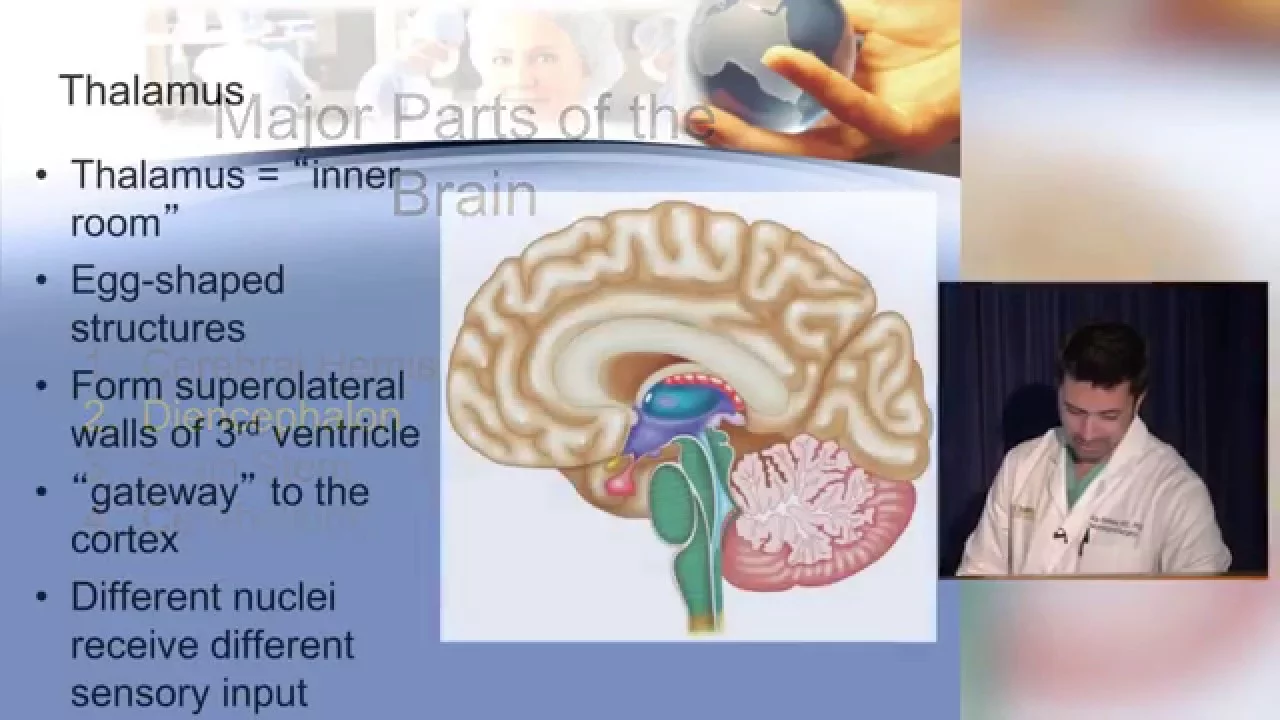
So working memory, the frontal cortex seems to be very important for working memory.
When we are holding information in line, the neurons, the brain cells in the frontal lobes are active and they stay kind of active as long as we're holding onto that information.
And they're more active when the information is relevant.
And if we get distracted, they'll get less active.
So it kind of, the frontal lobes kind of track your, you know, track the memory that you're holding in mind.
Another important thing about the circuitry is that if we're holding in mind, say, digits, you know, the phone number, well, that information's in your back of the brain.
And so the frontal lobes is sort of keeping information in the back of the brain active because it's connected to the visual areas.
It's able to sort of keep that information active.
And so what we've learned is that there's not these buffers in the brain where, you know, if you're holding verbal information, it's in this little buffer, and if you're holding visual information, it's in another buffer.
The whole brain acts as a buffer.
And the frontal lobe can call up any part of the brain and keep that part of the brain active, you know, as it's trying to hold this information in line.
So the mechanism for working memory is just this persistent neural activity within the frontal lobes.
And so then the question is, what does dopamine do?
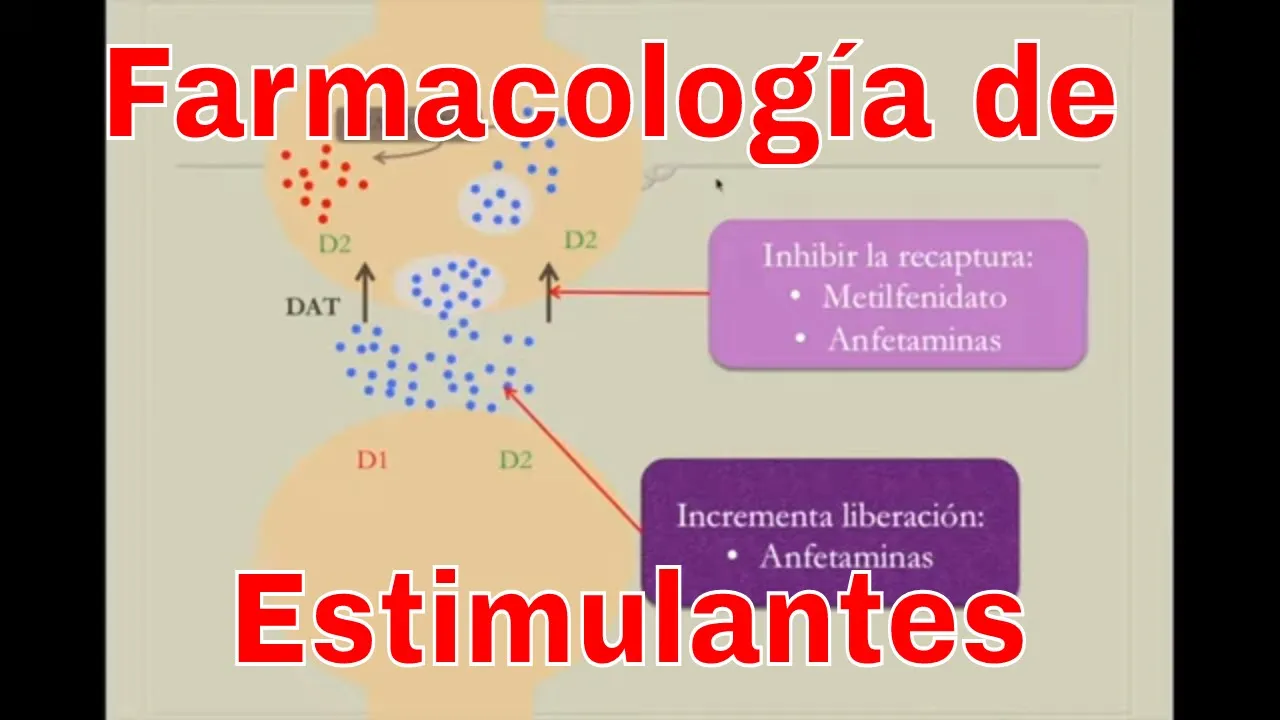
Well, dopamine is one of the neuromodulators that are made in the brainstem and it projects up to different parts of the brain.
There's a system that goes up into what we call the basal ganglia, which is important for motor function.
And there's another dopaminergic system that goes up to the frontal lobes.
And what was discovered was that if you deplete dopamine, working memory drops.
You get a significant impairment in working memory if you deplete dopamine, and if you replace it, then your working memory will be improved.
And so dopamine seems to be a modulator to help this persistent activity stay persistent, you know, during the time that you need to keep this information in mind.
Am I reaching too far to draw an analogy between dopamine's role in working memory, that is, to keep information online, and the other established role of dopamine, which is for movement, for the generation of smooth movement, as evidenced by conditions like Parkinson's where people lack dopaminergic neurons or have damage to dopaminergic neurons and have, you know, challenges in generating smooth movement?
What I'm essentially asking is, can we think of dopamine as facilitating physical movement through one circuit, but also kind of mental movement, thought movement kind of, I'm thinking about, for those just listening and not watching, I'm kind of rubbing my index and middle finger against my thumb, just keeping something online.
It's sort of a movement of thought or information and then you kind of chuck it away and bring out the next information.
Is that- Yeah, I think that's a good way of thinking about it.
And one might wonder, "Well, how can dopamine be important for memory but also be important for movement?"
And it's really simple.
It's just that it's acting on different circuits.
The neurons that go to the motor areas that carry dopamine will, when dopamine is expressed there and boosted there, then it will be involved in movement.
And lack of dopamine in the basal ganglia will lead to neurological disorders like Parkinson's disease that has severe movement difficulty.
But when it's acting in the frontal cortex and expressed in the frontal cortex, then it's going to improve working memory.
So it's just the nature of where the circuits are, where the dopamine is, that's allowing it to have different kinds of actions.
And that's for all transmitters.
The reason why acetylcholine seems to be more important for long-term memory is because it's projecting to the hippocampus, which, as we know, is another area that's important for memory, and that's why acetylcholine doesn't boost your working memory, but dopamine does, and vice versa.
So drilling a little bit more deeply into the role of dopamine in working memory, you did some really lovely experiments showing that if people who have low levels of dopamine increase their dopamine pharmacologically, I think the drug that was used was bromocriptine, that working memory improves.
Conversely, if one depletes dopamine pharmacologically, working memory gets worse.
But as I recall, there was an important baseline that is important because it really mattered in terms of the outcome.
Meaning if somebody already had relatively high levels of dopamine in this circuit, increasing dopamine further with bromocriptine didn't impart a benefit and might have even made their work in memory worse.
So there's a kind of inverted U-shape function to this.
How does one know whether or not their baseline dopamine is low, medium, or high?
Ergo, how do they know whether or not they would want to explore going about increasing dopamine through any number of different approaches?
Right.
Well, most people probably have optimal dopamine, but there's a significant percentage that probably have too little or maybe too much.
Unfortunately, we can't measure it in the blood.
There isn't a blood test that I'm aware of that can measure dopamine because it's stuck in the brain.
Peripheral dopamine in the blood is not a good readout.
It's not a good readout, yeah.
And especially when you're talking about dopamine in areas like prefrontal cortex.
And so we don't have a good readout there.
There's invasive procedures like positron emission tomography where we can inject a radioisotope that tags dopamine and then we can measure how much, we can do a scan that actually shows us how much dopamine.
This scan was originally developed to show Parkinson's disease.
You can diagnose Parkinson's disease by showing that there's less dopamine in patients that have Parkinson's by looking at this scan.
Obviously it's invasive.
You're injecting a radioisotope.
It's expensive and it's not something we could all do.
But we had used it to show that it correlates very strongly with your working memory capacity.
So how much information you can hold online, if you can hold four or five or six letters when I do a span task correlated with how much dopamine we can see in the PET scan.
So that would be a way that we could do it.
So if you were to read out a string of a few numbers or letters and I can remember all of those a few moments later, perhaps, perhaps, my baseline dopamine levels are moderate, in the normal range, whereas if I couldn't keep that online, that might be reflective of lower baseline dopamine levels.
Is that right?
Yeah, it's a very strong proxy for dopamine.
So if your working memory capacity is seven letters or numbers, when I say four, three, seven, one, five, zero, six, if you get the- Four, three, seven, five, zero, six.
Get them all back very quickly, you probably have more baseline dopamine than someone who has five.
So it's a proxy for measuring someone's dopamine.
So that's one way of doing it.
And that's actually how we did it in our original studies.
We actually grouped individuals based on whether their capacity, based on this behavioral measure, was high or low.
And like you said, those that could only hold five or six letters, if we gave them bromocriptine, which was the dopaminergic agonist, we improved their working memory.
We got them into sort of an optimal level.
But those who were already high, we actually made them, we got them worse.
And the moral of that story was that more is just not better.
We're trying to get people optimal.
And so the real question is, you know, if we want to get people optimal, like you were inferring, you have to know what their dopamine is.
Where are you on this inverted U-curve?
Another way of doing it is through genetic studies.
Dopamine, all neurotransmitters have to be broken down and re-uptaked into the brain cell in order to be used again and there's different ways of doing it.
In some cells, it gets transported back into the brain cell.
In other places, there's an enzyme that breaks it down.
Well, there's an enzyme called COMT that breaks down dopamine in the prefrontal cortex specifically.
In a large percentage of individuals, that enzyme is either overactive or underactive.
Probably about 25% of individuals, it's overactive, and another 25%, it's underactive.
So probably half the population.
Now, this is going to vary, depend on where you live and where you come from and things, but maybe half the population either has an underactive enzyme or overactive enzyme.
If you have an underactive enzyme, then actually more dopamine sits around and you actually have more dopamine than others, and if you have an overactive enzyme, it's the opposite.
So we've actually shown that if you would now go and genotype people with a simple saliva test and figure out do they have this genetic what we call polymorphism where just one amino acid gets changed and the enzyme becomes either active or underactive, we can do the same thing as grouping them by their capacity.
Those that have the low dopamine, we will make them better and those who have sort of baseline high dopamine, we'll make them worse.
[MUSIC PLAYING]
Up Next

The Distracted Mind: Neuroscience of Attention & Technology
@samharrisorg
104.5K views•2020-11-28
Deciphering Neural Circuits Controlling Anorexia in Mice | Richard Palmiter
@AllenInstitute
2.3K views•2011-10-10

Blue Light and Circadian Rhythm: Optimize Sleep with Light Management
@HubermanLabClips
114.2K views•2022-08-11
How Exercise Benefits Your Brain: Science Explained
@TED
11.4M views•2018-03-21
Related Study Plans & Knowledge Roadmaps
Structured learning paths in Neuroscience