



















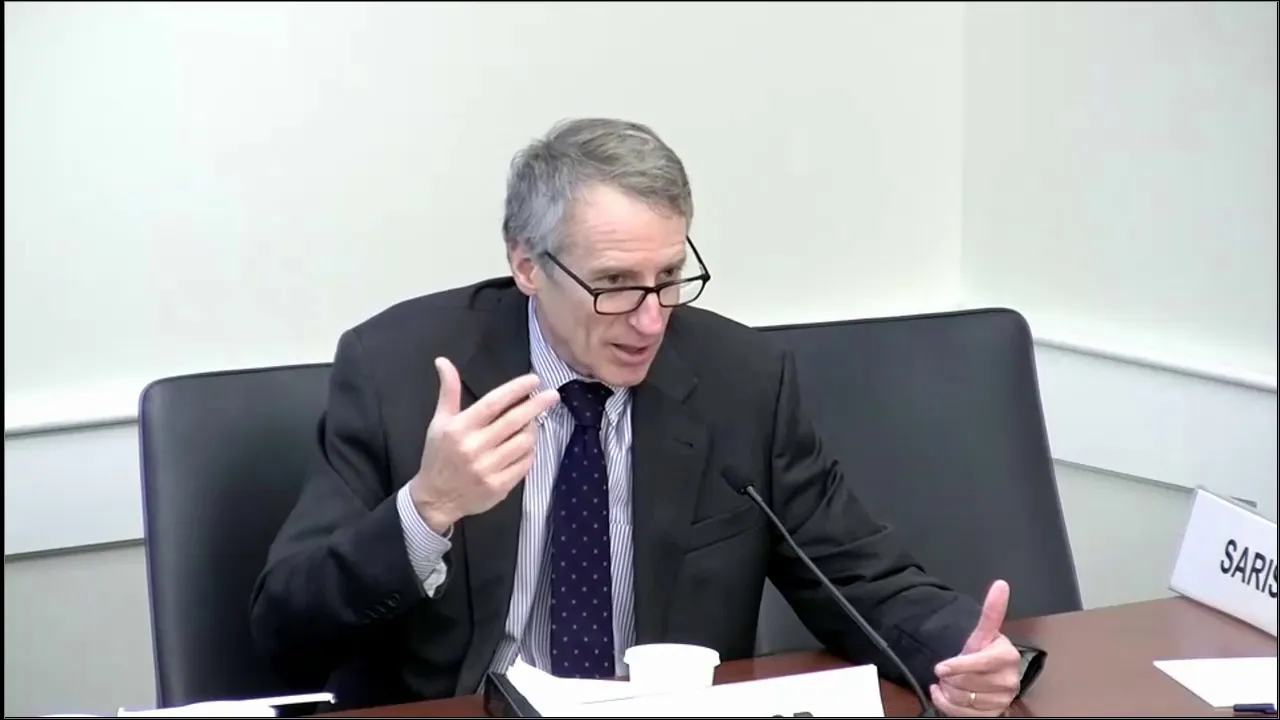
![[Encore] Trump Verdict: A Judicial Travesty | EP303 | The Dr. Phil Podcast](https://i.ytimg.com/vi_webp/FEoeFeTrCUQ/maxresdefault.webp)
In criminal law, first-degree reckless homicide requires proof that the defendant's conduct showed 'utter disregard for human life,' while second-degree reckless homicide does not require this additional element; courts must determine whether a reasonable jury could find that the defendant's testimony and actions demonstrate a lack of utter disregard, thereby warranting submission of lesser included offenses even when the prosecution believes the greater charge is supported by the evidence.
Rittenhouse Trial: Jury Instructions Debate | Legal Analysis
Added:The fundamental legal definition of self-defense, including the concepts of imminent threat, proportional force, and the 'reasonable person' standard.
The concept of 'lesser-included offenses' in criminal law and how they provide alternative verdict options for a jury.
The procedural role of jury instructions in a trial, specifically how the judge defines the applicable law for the jury before deliberations.
The doctrine of provocation and how initiating a conflict can legally negate or limit a defendant's claim to self-defense.
The strategic use of 'all-or-nothing' prosecution tactics versus requesting lesser-included offenses to secure a conviction.
How errors or ambiguities in jury instructions serve as grounds for post-conviction appeals in appellate courts.
A comparative analysis of 'Stand Your Ground' laws versus 'Duty to Retreat' jurisdictions across different state statutes.
The psychological and empirical studies surrounding jury comprehension of complex legal instructions during deliberations.
193.9K views1.3Klikes2:40:25Original Release: 2021-11-12
you'd see there and I saw for us the fear in his eyes when I took his hand [Music] s so I've Got a Friend in here foreign and with the same appearances except uh the jury's not here and uh we're here to talk about instructions and verdicts and the district attorney has requested a multitude of lesser included offenses um are any or all of them opposed I'm looking at I'm sorry I'm looking at their sorry so I have count one just the first degree I'm sorry the the first degree Reckless homicide I didn't see any lesser included on that do you oh yeah they asked for 10 20 did you get the written requests for instructions I did they asked for 10 22 oh yeah there was an email last night did you get that I did okay they asked for 10 22 which is uh is not the standard for first degree Reckless homicide it's uh it's the standard for first degree with a lesser included a second okay um we're not asking for that but I understand okay are you objecting to its giving yes I want to discuss it briefly or just impose or argue object for the record I guess I would just object to the recognition okay all right then um I'm not going to decide right now because I just got your filing this morning which was sent to the clerk in Kenosha they sent him to me directly and I know you're not familiar with that procedure so um and actually I wish less people had my email right now but um but um I think that's probably a common feeling but um [Music] um I will I'm what I plan to do is to send at some point tomorrow I will send you what I expect to deliver as the final instructions and verdicts and uh I would just now uh given the evidence I well I'll leave it I'll leave it there um and then we probably will have what I hope will be a brief discussion on Monday about it and I think she'll have I guess I guess I will talk about it for a minute the difference between first and second degree and you're asking that I said second degree and it's it's in the instruction itself on the bottom of I don't want to say bottom because I don't have them displayed as they would on the page but on instruction the instruction you've requested which is 19 excuse me 10 22.
uh under the heading difference between first and second degree Reckless homicide it says the difference between first and second degree Reckless homicide is that the first degree offense requires proof of one additional element that the circumstances of the defendant's conduct showed utter disregard for human life um and of course the standard for submitting the Lesser is what is that there's ground in the evidence to acquit on the greater and still convict on the Lesser where what where's the absence of evidence of utter disregard for human life George there is a line of questioning on the cross-examination of the defendant in which uh attorney Binger asked I believe in regards to each person shot or shot at uh except for that of Mr McGinnis I suppose uh if the defendant uh I can't remember the exact wording but if he even cared if he killed person the person alluded to so I believe that the defendant denied that he said he had to shoot him he uh he denied that he did not care about their life so I believe the jury could find based on that line of questioning as well as just the evidence in general uh that the defendant did not have an utter disregard for human life as he testified caught he he justified that he essentially had regard for human life because he felt he had to do it and he didn't really want to kill anyone let's hear from the defense dude element three is the circumstances of the conduct showed the utter disregard for human life um and in terms of the evidence in the case I think the testimony was he didn't want to have to do it but he did it to defend himself so as I said in our instructions I I don't think that there has been any evidence offered which would support um the Lesser included on count one so I would ask the court give 10 20 which is the first review Reckless homicide charge along with the self-defense instruction and that'd be that because I think that's what the evidence shows I'm going to do a colloquy with your client um when we get done with all this but don't let me forget please I've discussed it with them yeah but I got to talk to the first one uh well the instructions says in determining whether the circumstances of the conduct and that's a correct point conduct showed utter disregard for human life consider these factors what the defendant was doing he was firing a gun into let's see this is count one so we're talking about Mr Mr Rosenbaum he's firing a firearm four times into a human being with fatal consequences why he was engaged in that conduct how dangerous the conic was well that's self-evident how obvious was the danger of that self-evident whether the conduct showed any regard for life and all facts and circumstances I don't I don't see it and I don't see it help me out where I'm going wrong well judge he was asked if he not only did he how he felt about killing them but if he knew that his conduct would have killed him and that firing they'd gone is on first degree which is what we're not talking about is whether he knew or was practically certain uh and we're talking about Reckless endangered or Reckless homicides so I mean to fire a gun four times into somebody you don't think you'd know or have or be practically certain that that could have fatal consequences I would but the defendant denied that it did that it would um he didn't I didn't hear him deny it he said he was protecting his own life I thought he was when he was being asked repeatedly and correct me if I'm wrong he was asked repeatedly questions along the line that you indicate and he responded I was trying to defend my life he was also asked a lot of questioning you knew he shot four shots that you would kill him and he denied that he would have that knowledge so I I mean I agree that I mean I obviously think that it's utter disregard because that's what we've charged it as um and that's what we have presented to the jury but I believe a reasonable jury and a reasonable juror could based on the defendant's own testimony not find utter disregard for human life and that's the standard not what we think but what a juror could do I wish I knew the exact answer that were given I'm not sure and I I when I say that that doesn't mean I'm I embracing your your interpretation of what that would mean but it um I would want to be sure exactly what was said anyway so um are you able to identify when in the examination because you had a very lengthy examination and you know unless it's Crystal Clear My suspicion would be if if it turned out that the defendant would be acquitted well not acquitted but the jury returned a verdict on secondary reckless endangerment with this description of what constitutes the crime if they returned a guilty verdict over the defendant's objection I would expect to be reversed I'm secretary reckless endangerment yes all right uh homicide I'm sorry so you're saying if the jury finds the Lesser on this chart and the defender objected over the defense objection and you accepted it right you felt it'd be reversed yes unless you can come up with this Crystal Clear language that the defendant and I again we're back to the circumstances of the defendant's conduct showed utter disregard for human life so I I think his thoughts on this subject would be relevant would be if would be a legitimate Factor but when I consider the others what he was doing firing into somebody four times why he was engaged in it there was dispute about that but either it was um it would certainly be Reckless under any circumstances and accept under privileged circumstances how dangerous it was how obvious was the danger and whether the conduct showed any dis any regard for human life and I if anything it seems to me he would have indicated if you interpreted his answer it would be an indifference although he did say at one point that he didn't want to kill anybody but it would be an indifference because when he's asked about is intent what was the question you're seeing again there was a line of questioning on if you if he cared about killing someone or or cared in that in that regard there's a lot of questioning is you knew that firing the gun would could cause death and I I believe he denied or indicated he didn't know I don't remember that did you hey everything that he said I mean the reality is everything was in was an intentional act now they haven't charged it that way and I appreciate that but looking at the looking at the definition uh of utter disregard under the statute I'm not going to repeat I'm going to hold the same ground that you've already done fighting four shots we have evidence that the man grabbed the barrel of the gun so we're talking about a distance of inches not always feet but in some situations inches it is the only logical conclusion would be that a person would believe that that conduct if they were convicted uh would show another disregard for human life if if self-defense isn't accepted there's no other reasonable conclusion that can be drawn from firing a gun somewhere between one and four feet all the way down to inches by the soot on his hand so I think that's what the evidence showed uh and I think that's really the only evidence regarding the utter disregard portion of the statute so can you give the defense is going to stipulate to the third element and that's fine we can go for it that way but it seems they're not arguing it and if we want to go that way then we can conversations with lawyers are always interesting [Laughter] um if they're at what you should believe then obviously there must be some uh disagreement or they might they must be trying to argue it so I I believe that there is a basis I cannot recall at this moment precisely wearing the cross-domination it occurred um obviously it was lengthy and I wasn't conducting it the examination as I recommend as I Rec uh were collected um was that the defendant was repeatedly asked about the question about his thoughts on the subject of the death or survival of uh of the target and invariably responded that he was trying to defend himself and that he'd be killed if he didn't and if anything I I would take it interpret it as an indifference towards the outcome with respect to the uh um Target which will is not identical to utter disregard right right so if he shows if he's indicating he has any difference that would be secondary replica no it would be one factor and I I I don't even if I granted but I I just don't think it's appropriate and as I I'll repeat my statement if I were to give this instruction over the objection of the defense and the jury found a verdict on it I would expect to be reversed well are we in agreement that that element three is present well don't ask me I'm not uh I'm not in a position to agree to anything I'm not going to give that as um on uh or or submit that verdict 1345 and 1347.
second degree reckless endangerment so it's essentially the same issue yeah it is so any additional argument on that interview the same for account three as well Council makes a good point to me that he couldn't even know Mr McGinnis was there so he's firing a weapon who's he admits does not know the capabilities of he admits he doesn't know how the bullets can react that he did not know a female jacket could pass through his Target and he's really showing under disregard for anyone in the line of fire as he fires four shots including Mr McGinnis there's also bystanders there's a house directly behind Mr McGinnis so I believe in in firing four shots and a somewhat I would say wild manner he is showing that there could be an argument that he he says he says it in I believe again that it's utter disregard but a jury could find because he did not know Mr McGinnis was there that he was not showing utter disregard for Mr mcginnis's life and that the second degree uh engagement would be more appropriate defense second here judge um because it stems from and tell me if I'm wrong on this because it stems from the actions involving Mr Rosenbaum which this court believes the proper instruction deals with the utter disregard for human life of Mr Rosenbaum those actions to me are intertwined with the charge involving Mr McGinnis no I don't think so because um I think the instruction anticipates that he could he could have utter disregard free could have utter disregard for the life of Mr Rosenbaum but still be sufficiently aware to realize the risk to Mr McGinnis and then he under the law as I read it he would have the obligation to exercise his conduct Us in such a way as to minimize the risk to Mr McGinnis whether privileged or not he would even if even let's let's talk about his comic being purposeful even though it's not charged uh if he intended to kill um Rosenbaum and whether he was justified in that or not he's still required to to execute his intentions in a way with the minimal or to minimize the risk that Mr McGinnis so if and that's a jury determination I I'm not suggesting I would want to be in that position who would but he would have to decide well I've got to kill this guy but I've got to do a such a way that I don't get anybody else that's really the what the jury's being um asked to determine and uh there are instances that you could imagine where the person actually would have freedom of choice and a conviction could be appropriate um one might not expect that to happen under most self-defense circumstances but um although for an intentional intentional then he'd be guilty because he intended to kill someone else the argument is I think the testimony was the bullet that has endangered McGinnis past through Roosevelt right that it Rosenbaum was shot there's Five Wounds with four shots so he didn't miss so the reason that I'm kind of hung up on the utter disregard for Rosenbaum is if he would have missed I suppose and you could say that shot was a wild shot but he was using steel jacket and ammunition no I'm I'm picking it here it's because that's what we lawyers get paid to do but um uh you know and and of course you know if we were in the Jury Room and we'd laugh at each other for the things that are being said uh but but uh you know in the eyes of the jury they could theoretically theoretically like how many angels fit on the head of a pin they could theoretically think well it does make a difference because he wasn't using uh expanding ammunition he was using um a full metal jacket and he should have foreseen that it might have gone through and that it would endanger someone else if if he's using utter disregarder the jury believes there's utter disregard as it relates to Mr Rosenbaum the the charge as it relates to Mr McGinnis directly relates to the bullet that went through Mr rosenbaum's Hand or head or whatever right so that's why I'm saying if it's that if it's that for Rosenbaum it has to be the same for McGinnis only because there's not a wild shot he didn't he didn't miss he wasn't spraying nobody's alleged anything like that you couldn't say that and your argument couldn't you probably left this on their verdict and you had to argue and you could say I certainly could pardon me I said I could ever show that he essentially missed the third or fourth shot there's a graze wound that then traveled who knows where Apostle George Mr McGinnis so this is not as though all four bullets entered Mr Rosenbaum one skipped right by him and uh basically to contact me and the defendant says he didn't think he was there so a reasonable jury could find that how do you show utter disregard for Mr McGinnis won the defendant claims he didn't even know he was there at this moment to repeat my former statements that have caused some constronation my bias would be in favor of giving the submitting that verdict and giving this instruction but if it shows up on your doorstep your email doorstep tomorrow at some point and it doesn't it isn't in there don't be terribly surprised all right account for so are we so count three it's the essentially the same issue except obviously this time the defendant knew he was there um arguments that I believe firing to shots missing a reasonable jury could find that he was not sure how to disregard he only fired twice instead of four times he did not fire into the individual after already striking him twice as he did with Mr Rosenbaum he did not continue to fire um so I believe the mere fact that he fired twice and did not hit a reasonable jury and again we believe that first three is the most appropriate charge but a reasonable jury could find that because he stopped firing he was not showing utter disregard we are talking now about a jumpsuit what do you call them blue hoodie man what do you mean oh capster um did you want to respond it's the first time I've ever heard that missing someone when you're firing from Point Blank Range means that you're not showing another disregard for human life um so he fires at I mean judge he's on top of him when he when he when he kicks him in the face and you you saw the shots it is difficult to ascertain an argument that a jury would believe because he stopped shooting or missed from Point Blank Range with an AR-15 that he wasn't showing utter disregard for human life I don't think that's a logical argument I think the appropriate uh instruction is 1345 they're either going to accept that it was self-defense and that or they're not but to say point-blank range two shots on a man jumping on you yeah that might not show another disregard for human life because either he missed or he stopped I just don't I don't buy that as logical and I would ask that you just give 13.45.
if if conduct included I think is still there is ground in the evidence for acquittal on the greater and conviction on the Lesser the same set of facts what's the difference between one what you're charging and the Lesser I've seen whatever the difference is My worry is that the defense he was I've asked a couple times if they're just going to agree there's other disregard and they have not agree they have not agree to do that is that they're going to get these instructions and then argue it in their closings and then we are stuck so I would like some sort of limitation why wouldn't they argue in the closings what the instructions are that they will argue that there's not under disregard I'm not hearing that well then then why not agree to it if if they are agreeing that maybe not that's why how would that be what's that they'd be nuts why in the world would they concede an element like that well they're conceding it right now they're not they're just offer they're discussing it for purposes of whether or not the Lesser included should be given and it's they're saying they're not conceding all your evidence they're saying it's hard to believe that this would constitute or not constitute our disregard for human life let me let me repeat the question I just asked you there's this is not I don't think there's a dispute in the evidence as to this individual Mr jump kickman he the the video is claimed to depict and he kicked the accused in the head that the accused turned and fired at him twice and missed on what ground could they convict him of the Lesser without having convicted him of the greater statements and also I think it does make a difference that he shot four times at Mr Rosenbaum after he had already was already crumpling to the ground um that he the Fatal shot was as he was falling to the ground and he stopped shooting at the man in the blue hoodie uh you know again I think the first degree is the appropriate charge but I think a reasonable jury can say why did he stop firing why didn't he uh you know fire at him as he as he went away uh here he might come back and run Adam um so I believe a reasonable jury could find that and frankly if if the defense uh in their closing argument uh tries to quibble with the utter disregard I I've never expressed it before but I think we're gonna ask for lesser included after that because that we're going to ask for lesser included after that if um if they're admitting here that there's no way a reasonable jury could find otherwise if they're agreeing that that's one thing but well if they have agreeing to that then why are you asking for a lesser included well they're not agreeing to it but you're I understand I actually do understand what you're saying I think um but let's do it again let's talk about the incident involving what he was doing what the defendant was doing firing a gun at a human being he hasn't alleged that he wasn't firing at him he wasn't saying I was just trying to scare him off with a couple of shots across his bow he didn't say that why he was engaged in it and he's given his reasons and I I don't think the state disputes them he was doing it to to to prevent the man from attacking him and the state says the man had the right to attack him and the defense said he didn't either way he was doing it for the what he was doing it was purposeful um how dangerous was the conduct well uh the defense is not disputing it wasn't dangerous Behavior I don't think they're going to argue that how obvious was the danger if I didn't deny that it was obviously dangerous he said he he did not know if it was going to kill him he did not know that he denied knowing or that his bullets were more dangerous than other types of bullets he denied knowing that his gun was more powerful than other guns so again I hate the evidence mostly I don't think I don't think that is exactly what stated for example the discussion about what kind of guns are more powerful that wasn't actually yeah I was kind of intrigued about it because it was a close contact and the suggestion was being made by the questioner Mr bigger that um the rifle is uh because because it's a more powerful weapon is was more dangerous or something to that effect and of course in a close contact situation like that it may be that the pistol is a much more desirable weapon um I thought that discussion was focused on that type of issue rather than your claim that the defendant was suggesting his weapon wasn't dangerous it wasn't obvious the angel was an obvious Church it is in his testimony the defendant said essentially I was a dream for my life I didn't mean to kill them uh is that what he said or did he when he was asked did he mean to kill him he said I was just trying to defend my life or words without a favor he said I did not want to kill them did he I don't remember Mr Binger says yes Mr Krause says yes he said I think that's fair at some point or another he did say he didn't want to kill anybody that's true that night but that's not the element of for that for a first degree then that'd be another matter this is reckless and this is reckless endangerment we're talking about the defendant's mind if he had utter disregard no we're talking about how obvious was the danger under their evidence has shown under disregard what we're fighting about is that it's not I'm still struggling with what is the basis upon which the jury could acquit of the greater and convict of the Lesser because that's the standard if they believe the defendant they have a basis for the Lesser included there is a basis I didn't want to kill anyone but I didn't want to kill anyone that he bought the gun because I might even buy into that I might except that that would be uh if we were talking about a charge of count four four because intending to kill is not an element of this crime children disregard if he's firing and not considering you're getting to the ultimate fact and I'm telling you what the factors are in determining whether there's our disregard and you're telling me that one of the factors to be considered on whether it's utter disregard is utter disregard that doesn't make any sense well like I said I believe that defendant's testimony gives a reasonable jury a basis to find a second degree I don't so I will not give that instruction or submit that verdict and the reason is because I do not feel there is a basis in the evidence for acquittal on the greater than the lesson code four number two you're asking for 1017 which is a you're asking for three lessers first you're asking for first degree intentional you're asking for second degree intentional or first degree of record degree Reckless or second degree Reckless yes so now give me the basis for acquittal on each of the greater crimes and conviction of the Lesser well uh the Thirsty potential homicide obviously there's a self-defense uh the jury can find a perfect self-defense and find secondary intentional homicide that if he did not uh reasonably believe the force if it was not what sorry it was not reasonable for the amount of force used uh the defendant again while testifying said he did not mean to kill Mr Huber uh so they could find from that alone that there is not an intent at all and go to the first degree Reckless and then we're left with the argument that we've been having all morning thus far which is uh whether a second degree Reckless showing utter disregard would be appropriate the defendant said he didn't mean to kill him the defendant it gave his reasons why he thought he had to shoot him but again I believe he indicated he uh denied that he knew it would kill him and essentially it's same argument that's been being made all morning but I think it's quite clear that in a self-defense case secondary intentional is appropriate because the jury could very easily find in this case that it was not perfect self-defense as a person who has is running at him uh being told or perhaps even witnessing himself that the defendant has already shot someone in greatly injured them has already shot at another person missing and then gone into try and disarm him the jury could find that it was not perfect self-defense I I are you disputing that no first and second first and second no not intentional or okay yeah okay so then the Reckless the defendant testified directly he did not intend to kill him and he spewed his first degree Reckless no okay all right any objection to the second degree of records for the exact same reasons that we had talked about Mr Huber I'm sorry judge if you already no no that's all right Mr Huber has a uh the evidence was a rifle pointed up against his chest I didn't hear you he is a rightful according to the evidence he has a rifle pointed literally up against his chest so the idea under those circumstances that having an AR-15 pointed uh buttressing up against your chest would not be utter disregard for human life if believed that to me that's where it begins and ends there is no other explanation um so I think first degree second degree lesser included first degree Reckless are all appropriate second-degree Reckless doesn't fit uh did you understand I understand our arguments before um this afternoon we may review the defendant's testimony and if I find a specific thing that I think changes that I will will obviously contact the parties okay I I embrace the argument of uh Mr schwabsy and count five you are and that is the uh shooting of Mr Cross kreutz and that is charged as an intent to kill correct okay so the instruction I requested is attempted first and then attempted second for very much the same reasons as Mr Huber that a reasonable jury could find uh imperfect self-defense as Mr gross crates was actually facing away from the defendant when he fired and then the the next lesser included if they don't find intent is the first degree requisite endangerment so I've requested that and then obviously I have a question secondary reckless endangerment uh which we've rehashed a few times now defense that they don't have an objection to the Lesser included on the second degree attempt um it's the same argument the court heard the evidence and the distance Mr grosskreitz testified that he was about three feet away whatever it was from him um when he was shot uh the gun Mr gross coach pointed the gun at uh the defendant Mr Rittenhouse then fired so I think that first degree attempted first degree well you can't attempt a reckless Act right um I would have told you I would agreed with you uh some years ago but um I I I'm I'm not sure about I don't know the answer and I certainly am going to have to hit the books on that um that was certainly once the law I would have you either are to me you're either Reckless or you're not Reckless I would object to any recklessness because I don't think you can attempt a reckless act so I'll leave it at that and let the court after that well the defendant did testify they didn't want to kill anyone I understand that but I think you I think somebody would say you're the behavior is either it's either Reckless or it's not I don't know how you can attempt to be Reckless or attempt to be negligent I don't know how you can do those things judge remember respond I mean we just basically agreed on the kind of why Mr Huber that Reckless Thomas I was appropriate uh Mr grossbergs did not die so the appropriate charge of this point would be the first bureaucracy endangering safety the jury could easily find that the defendant intentionally shot Mr gross rights which is not I guess a dispute but that he did not mean to kill him the defendant the defendant said multiple times I did not want to kill anyone the jury could also find that shooting someone in the arm if they find that where the defendant was aiming would not be intent to kill but it would be recklessly endangering his safety uh if the jury does not obviously find that it was perfect why couldn't they convict him of both um but why get into a discussion we don't need to resolve we'll have it we'll do it later um I don't know I'm going to think about this one I I'm inclined to agree with Mr Krause um okay um on count six we are not requesting any requisite endangered safety charges so we can skip better bless your soul um now the defense has submitted and I I don't think you submitted anything standard except the standard on that uh our position is they've never raised the affirmative defense right see and obviously argue otherwise but that's why we did not be careful obviously they can argue otherwise but that's why we did not prepare one I don't recall any evidence correct me if I'm wrong as to the third element of the second defensive matter which you cite on the second page on the third page item number three on the third page I don't I don't recall that evidence how can I give that instruction oh because they have the burden of proof liability offense yes at 17 years old yeah if there's an absence in the evidence that's kind of a problem for you know what what do you mean you would need to disprove the affirmative defense we don't believe he was Ever Raised they never gave any evidence as to uh barrel lengths or that it oh yeah there was definitely barrel length evidence on cross-examination of a state's witness whenever it happened it was there yeah well now I know I'm I know I'm not sure there was evidence of the of the uh the length he had the ruler out and he measured the length of the portal that I asked to detective did you yep assuming that to be true then that would then that was less than uh excuse me it was the barrel length was greater than 16 inches I wait a minute either the barrel length was less than 16th or the overall length was less than 26.
that was in the evidence what I asked him was there was there any uh did he believe I want to make sure I have it right so I don't misstate it did he believe that the barrel length was in violation of the law I mean there may be I don't know what laws they're are the possession of a short girlfriend that's the love you can't have it you're talking about okay okay and that's built into okay certainly yeah come on it's not a strange issue in this case I mean we've been talking about it for months and the defense should have measured the Barrel in front of the jury and said the burden of proof that they didn't If they raise it they never raised this issue but did he did he ask the in the detective uh uh whether the state whether it was a what was your question as you were calling and this is going to be dependent upon what the actual evidence was but what do you call it claim it was when he took the gun from the Antioch Police Department did he believe that there was a violation of the laws related to the barrel length that goes to his belief and what and they never specified which law is the issue I understand I don't believe that they have somebody on the authorization uh distributed accomplishment to paint authorization for hunting there's no evidence on whether or not he has a certificate of accomplishment to obtain authorization for hunting uh which is the state's position all along is that he would have to have that well there are play me it's in the alternative and the state has always learned that it is not so we're back well if the court finds they raised it which I don't believe asking a general question on the belief of a uh detective that is not evidence the belief of someone um well I I is a belief or an observation the way attorney Frosty just said it was but it was belief I we we don't give you these that question but I don't believe I have the exact question may become important so I I don't believe that is Raising it and the defense at every opportunity they brought the gun over here most every day the last few days um they could go to any number of witnesses to measure it and raise this issue and they did not they don't have to measure it that's the burden of proof of this and the state I understand that but it wasn't raised well if if he asked the officer and I I will have to see what the transcript says if he asked the detective whether the barrel whether the rifle was compliant or what are you claiming you said I asked him if if there was I believe I I know I asked him about it the questions the question I asked I think I asked him something along the lines of did you believe there was any violation for the barrel length of the gun reads this section applies only to a person under 18 years of age who possesses or is armed with a rifle or a shotgun if the person is in violation of section 941.28 or is not in compliance with the two sections mentioned so it's it's an or it's not an and we don't have to show all three so they may have raised the issue with yeah one of the three you have to show one of the three no no no what am I saying no we have to show you have to show any of the three which the defense has put in issue so the defendant has not put an issue the certificate of accomplishment the defendant has put an issue the length of the barrel judge we can unpack this for a minute so this the exception says if you're it's a violation of the law if you're under 18 and possess a short barrel shotgunner rifle okay that's one way you can be convicted and it says or are in violation of Wisconsin statute I think it's 29 3 36 29 304.
29 304 only applies to people 16 years of age or under way there's been testimony that he's 17.
okay so I've conceded because it's it's he has to be in violation of both 29 304 and 29593 I concede he's in violation of 29593 however 29 304 he's 17.
it doesn't apply to him it can't apply it because of his age we put in his age and we put in the barrel those are that covers the first exception and then it goes to or and it covers the second exception as well I I provided the court and I'm not rehashing it that you had denied the motion for reconsideration this statute doesn't apply to 16 and 17 year olds period the legislative history that I provided to the court it says it in black and white well I Ruled as I did because the motion to dismiss attacks the complaint and the complaint was adequately pled under the law that was not an endorsement of the state's position on the case and where the the to use a trade expression the rubber hits the road here at the trial so now you have to prove everything that the statute requires and I I you do your dispute the fact that you need to prove that the defendant was under 7 18 at the time of the incident you don't that's that's not a dispute that he's under 18 yes and that the barrel length was less than Allowed by law or present that was not within the range permitted by law you don't have to prove it I mean there's no real argument is that they did not raise it I don't think it's really a disputed fact but we believe they did not properly raise this first part of the exception the second part of the second part of the exception they've conceded 29.
go ahead I'm sorry they've conceded the 29.593 portion he did not have a hunting certificate so then we go to 29 304 and if if it is allowed that simply being 17 he is in compliance with that it swallows the whole statute and it makes the statute makes no sense so if the statute makes no sense you're out of luck well if the statute is valid it's clear as day that it says well I would maybe not say that about the exception but the actual law 2A is quite clear sure any first under 18 years of age you possesses the results that's not the whole statute that's not the whole statute our position is that he is not in compliance with 29.304 and 29.593 this was scoffed at when I mentioned it before but 16 year old 7 16 7 year olds can hunt alone in this state if they have the correct certificate okay under 16 cannot and that is what 29.304 is addressing the statute is addressing hunting you know there's been a big part of the statue the title the turtle is social media is welcome by person under 18.
that part of the statue no I learned it in an earlier time when we called it the rubric yeah it says though that's what it says in 2A um the same position is that he is not in compliance with those two um and that they have not raised the circle shotgun issue with the short barrel shotgun issue but they don't really have to because they can try to raise the other part but they have not done that either by his age is raised on the second part that's true so that's it and I just want to make sure I've been losing this argument uh it's not judge there are hunting portions of that statute and there are just simple possession portions of that statute of 29 at 304. I am not focusing and I'm asking that you it doesn't apply the hunting part what this if you read the legislative Bureau what it says is if you're 16 or 17 there is an exception for you to possess a firearm it does say that semicolon done it has nothing to do with hunting nothing I um I'm in my Incarnation now once again I'll tell you what I'm inclined to do is to inform the jury um see yes legislative history only becomes an issue when there's ambiguity there's no ambiguity in 2A it is very clear that 18 year olds are not to possess dangerous weapons so you interpret the statute in a way that makes sense and the way that it makes sense is that simply because he's 17 does not automatically negate 2A and you know I raised it earlier in the case and it hasn't enjoyed a lot of discussion and maybe I'm off the wall I don't think so the penal laws are construed strictly vague laws are who's there who is that Emperor from way back in history um who posted the laws on pillars so high that the people couldn't read them and that's been used by by lawyers and judges for centuries about the requirement that people will be given knowledge of what the law provides and the basic law and and it's chipped away a lot of times with the Appellate Court decisions that are made on the subject of of um and try and have efforts to preserve the the statutes because some of them are quite messy that's not a criticism that's a reality that judges have to deal with periodically most of the statutes are easily enough worked with but the basic rule is that the ordinary people should be able to understand what their laws are so they know what conduct is allowed and what isn't and I've been wrestling with this and now I know that there's a lot brighter judges in this world than me but I've been wrestling with his statute for I'd hate to count the hours that I've put into it I'm still trying to figure out what it says what is prohibited now I have the Good Fortune of having some experience and a legal education how is the ordinary citizen supposed to quaint herself with what this law says so there's testimony that the defendant uh Mr Black Mr Black's stepfather the defendant's mother all knew he could not legally possess this gun that's that's why he was kept up here that's why Mr Black bought it um this today is very clear I'm sorry is that the standard by which the judges interpret a penal statute clear to normal everyday people and it was clear to these normal everyday people because it's very clear that under 18 cannot possess a dangerous weapon people go along and he can't necessarily possess the gun in Illinois we're talking about Wisconsin and we're talking about the law not what dominic Black's father might think responding to your well but the point is you know if they put a if they put a sign out here don't don't jaywalk over to the other side of the street and that's a bad example because we know jaywalking is unlawful supposing they put a sign out there that said don't use your cell phone while crossing the street now if they adopt us a law that says that and people are as I told the jury before ignorance of the criminal law is not an excuse so people are charged to know that as unless it's written on the top of a pillar so why people can't see but people if they're given legal notice that's why they publish them in the newspaper um if people are given a legal notice of what's unlawful then they can conform their conduct to the requirements of the law if they if they don't know what the law is then they're just herded into Obedience of certain standards now I don't know if that's the case with Dominic Black's stepfather her father or whatever it was or the defendant's father or whatever um whether they studied the law they were familiar with what it says or they they were just afraid to break the law because they heard somewhere along the line uh that it was unlawful well I can't I'm not allowed to do that I'm not allowed to say well they should have they should have guessed right I can tell you I've put many hours into it so have you and um how are Ordinary People not supposed to know what they should be afraid might be against the law how are Ordinary People are supposed to know what's against all 2A is very clear I wish it were to me um I'm going to instru my intention is to instruct on what he submitted without page numbers I might add um looks like the third page that starts statutory definition of crime and uh down to where it says or so it'll be exception the state must prove Etc then number one the defendant was under 18 number two and that the dangerous weapon was either a rifle Etc [Music] um and you can search the evidence to find out if you can prove Beyond a reasonable doubt that that's true so that it can go to the jury um all right now um is that it is the 805 or 10 and 815 as well as nine dispute as to those at 805 uh no okay 8 10 and 8 15 are the retreat and provocation instructions so yes well I guess I would ask this first judge as it relates to 815 which is the provocation instruction um is the is the state saying the the presence of Mr Rittenhouse there is in and of itself provocation uh no we are saying that in the incident of Mr Rosenbaum he provoked it by raising his rifle and pointing it at uh individuals um so that is why Mr Roosevelt then gave Chase to him uh the defendant the defendant that had a duty to retreat he retreated instead of giving notice of his uh withdrawal from the fight he turned and pointed his gun again and uh at Mr Rosenbaum and unarmed civilian which he admitted he knew he was unarmed uh and uh and that continued so no the provocation is not his mere presence um it's not his mere presence with a gun we will argue that the video evidence contrary to the defendant's testimony uh shows that he raised his uh weapon at uh in individuals and that is what provoked the attack so yesterday uh obviously you know why we were fighting about what that enlarged photo and I don't think that's what the I think that evidence is uh open to interpretation certainly um I would argue to the court that while Mr Krause can say that's what they believe it shows uh I would submit to you that what the testimony is is Mr rittenhouse's uh shortly before that yelling friendly friendly friendly uh I think if you look at that picture that you saw yesterday it's open to interpretation we know he's wearing a strap from the um the harness over his shoulder um the other thing that if you look at the picture closely he's standing like he would be firing or pointing that gun like he's left-handed so if you look at the picture his left foot is back his right foot is forward and he's open like you're looking at me now so in every other instance where you observed a gun being fired he's firing it from the right side with his strap as this gun hangs this way now they're saying that that photo shows that he was standing and picking the gun up and doing it left-handed I think that photo is open to interpretation as to what it is were we believe that it shows a side mirror of the Duramax uh and part of his strap from his firearm from his sling that's open to interpretation I completely understand that um however you also heard testimony that from this person who from the State Crime Lab who said he couldn't really answer and I don't know what you thought of his testimony yesterday but he really couldn't answer a lot of questions on and that's why color was so important yesterday on how the pixels work he couldn't say how what color those pixels add and I think that's relevant now it is our position and I think the testimony supports the idea that Mr Rosenbaum provoked the attack that Mr Rosenbaum provoked the attack Mr Rosenbaum there's testimony from two people that Mr Rosenbaum threatened to kill Mr Rittenhouse if he caught him alone um you heard the testimony that Mr Rosenbaum yelled gun gun then you know what was said after that uh he's chasing him down he yells there's been testimony that Mr Rosenbaum yells Fu before this happens Mr Rosenbaum has a gun pointed at him in the parking lot and doesn't stop running toward Mr Rittenhouse and if you give 8 15 which is the provocation instruction I would submit to you the only way that Mr Rittenhouse then can be acquitted or found not guilty of the charge is one he exhausts every other reasonable means of Escape two he withdraws from the fight and fight is the language and the instruction and three he provides sorry we'll go ahead finish and then I'm going to tell you why I don't agree ment okay well I'm looking at 8 15 but I'll interrupt you now and tell you okay you said if I give that instruction then the only way no jury may not believe the predicate facts upon which the instruction is based so he could be acquitted as long as the jury does not believe that the defendant's behavior was provocative that's the first line of the instructions say that again one you should also consider whether the defendant evoked the attack the defense is still able to give forward their version of events we have multiple videos in addition to this photograph in addition and also a defense exhibit number 41 which has its circled on there where the defendant is raising the gun at someone uh in front of that Duramax that's an exhibit they have gotten into evidence so there really wasn't much to speak to this until a few days ago um and um and that's fine they they can dispute this fact we believe it's very clear on video that the picture itself is just one little portion but on that drone video both the full version uh and the somewhat zoomed in version that has been provided it's very clear I saw it on my television at home immediately upon watching it so that's our argument is that he provoked it by doing that now as the court has pointed out this is not forcing the jury that there's probably it's not forcing their hand they don't don't have to find provocation it's you should also consider whether the defendant provoked the attack and that is a consideration and that is a point of contention in this case and I believe it's an appropriate instruction for both uh both incidents I interrupted you no that's okay the last thing that I was going to say is it would also require that he give Mr Rosenbaum at adequate notice that he is withdrawing from uh the the fight for the attack I think under those circumstances that's uh impossible to do but more importantly I have found a case it's from Kenosha on provocation and what that means in terms of a self-defense um that is State versus and I'll just spell it it's b-o-u-g-h-n -i-t let's go one more time please b-o-u-g-h-n-e-i-t it's at 97 with second 687 and in that case there was a gentleman in a in a diner and people walked into the diner and he started to harass them he started to he tried to grab the women harassing the women verbally accosting people and one of the men that the women were with came over and said you need to apologize the defendant said let's go outside so they go outside the defendant ends up going to his car picking up a shotgun and shooting the man in the face and the the argument was did he provoke this now there was testimony to everything that I just told you did he provoke that by by starting the fight sexually harassing the women using the language to use and then ask the guy to come outside and the court said he did so the provocation instruction is clearly appropriate I'm not I don't believe there's sufficient evidence in this record to support the idea that Mr Rittenhouse provoked this attack I don't I I don't think that that's there so I understand that it doesn't require that they follow that and say well he did provoke it but I think there has to be evidence to support that um and I don't think that photograph in and of itself which is obviously open to interpretation reports the idea that that they have to or should consider whether or not that was provocation at that point there's fun I agree the photograph alone would not give the basis for provocation the photograph is the last piece of evidence that was submitted on this detective entering he testified to it uh we have pointed it out on videos we pointed out uh to the defendant on the video and he gave what I believe to be a leave an explanation for it um so and again the defense's own exhibit has its circled on there as it happening so I believe there's plenty of evidence that Mr Rittenhouse did raise this rifle and pointed at somewhat off in the distance actually Mr zaminsky and let's not forget also I'm not doing my fault argument on provocation yet the FBI video well let me go back the Corey Elijah and the uh Drew Hernandez actually Frank Hernandez videos shows the defendant walking behind Rosenbaum Mr Rosenbaum on the way to this car Source area at some point Mr Rosenbaum begins running we see that on the FBI playing footage our argument is that Mr Rittenhouse then begins running and following Mr Rosenbaum that he followed he follows is not the whole way from the ultimate gas station then Mr Rosenbaum starts running that provokes the defendant who is actually very slowly and casually walking for quite some time seemingly to then go and follow Mr Roosevelt there he then re and the defenses argument that this is some sort of ambush I don't know how you Amish someone that you don't know they're there but we'll put that aside right I don't know how you Ambush someone you don't know is coming but we're going to put that aside so the defendant runs under the scene and then is seen by testimony and video evidence gently putting the fire extinguisher down he says he dropped it but he places it on the ground and he raises the gun and I disagree about the left-handed uh thing that attorney trophy just said and raises it at Mr zaminsky that is all in evidence it's in a defense exhibit is that really available the state's position is that the running after Mr Rosenbaum probably in itself is enough to evoke the attack but putting that aside certainly uh raising a gun and with no basis for any kind of self-defense there's no one around him at the time except an individual in a wheelchair who's behind him uh he raises his gun I would guess because he thinks there's vandalism going on but we don't know that because the defendant denied that he did it uh and then Mr Rosenbaum approaches he somewhat drops the weapon he keeps two hands on it and then he begins he has a duty to retreat at that point under provocation and then he runs I understand why this instruction is problematic for the defense and for their version of events but that does not change the fact that pointing a gun which is in the evidence is provocation well wait a minute no no I'm sorry well you will see if you can find it which exhibit are you talking about thinking about the compilation video that the defense put into evidence I believe it's 41. I have it on my screen right now on my computer you are then you said uh well then you said uh we'll see if you can match it up with what she's looking at um then you said that the something about the running one person running after another was provocation how is that provocation we're talking now about the uh you're alleging that the defendant was running behind Mr Rosenbaum and that was provocative that he chased in there about the evidence swalking especially in the video that was put in yesterday through Mr Hernandez yeah he's walking within steps Rosenbaum and zaminski are lighting the garbage can on fire he sees my client walking down the street with a fire extinguisher and there's fires down at car Source Mr Rosenbaum knows where he's going he's already threatened to kill him he's sees him coming he's got very distinct purple gloves he goes down he lies in weight there's no chasing going on whatsoever where's the chasing and how hey what areas where is the chasing and how is that provocation well provocation is the raising of the gun oh so because a moment ago you said that the chasing was provocation which of course it could be I believe I'm sorry I believe it adds the provocation that he chased them there and then immediately raised the gun he wants the instruction and he's and he argued what he just said five minutes ago just like we're free not to stipulate to the third element what am I what am I looking at there's a circle I don't believe it's playing yet show me what the pointer what what you're talking about this morning indicates he's pointing a weapon huh I'm just pointing out that this defense exhibit indicates he's pointing a weapon we have much clearer video showing this and it still has Rosenbach we'll take a we'll take a minute I think well I'm I'm just rereading again struggling with a couple of things number one I uh and then of course I haven't seen all the photographs you're relying on but [Music] um you would have the burden to prove Beyond A Reasonable Doubt the the accuracy of what you're saying you have to disproved the defense but um yeah the defense are we back on go ahead the defense's position is that Rosenbaum was yelling gun gun why do you think he was yelling gun gun gun gun because Mr Rittenhouse had he got put now I mean go ahead I'm not trying to interrupt you yeah the course is actually right we would have to prove this we have testimony uh video and photographic evidence of this occurring it is our burden to prove it I agree but the jury should be given the instruction that they should consider it because if he raised this gun it's clear provocation so it's up to us to present the proof which obviously will be a central piece of our closing argument um with the I think three different videos um this defense exhibit which at least indicates that it's there uh and the testimony of the touch of antaranian who indicated he saw this I believe after cross-examination or on cross-examination um and the jury the jury can decide it we don't have to prove it Beyond Reasonable Doubt to the court or to the defense right now we have to uh we had a reasonable doubt to the jury on Monday there is plenty of evidence in the record to indicate that to give this instruction I understand it's problematic for the defense I understand it's problematic for their entire theory of the case that they presented in their opening but that doesn't mean that we shouldn't get it because we have presented evidence of this provocation that the unlawful conduct uh provoked Mr Rosenbaum to attack him if the jury buys our argument uh Beyond Reasonable Doubt fine if they don't that's that's their prerogative they're the fact finders not the people in this room we have presented facts for them to consider they should be given the opportunity to consider those facts in this light I judge I don't think that that photograph Maybe I'm Wrong shows anything well that's the jury though I understand but they're asking out of that photograph to give a provocation instruction no no we're saying there's no other reference I don't know just a minute just a minute there's no other evidence we've talked about the chase thing right but every other thing that's come up about what detective andrewian said what anybody else has said it comes from that photograph that's it no it comes from the Drone the Drone video and the defense attorney the defense knows this which is why they've fought so hard to keep this out this is not some new revelation it's in the police reports there are allegations that he pointed this guy um this is only to demonstrate that a defense exhibit indicates it we're not using this to prove it we're using to show that that even the defense exhibit indicates that this is there we have testimony we have video evidence we have I believe photographic evidence that helps but to say that we're basing on a blurry photograph is completely dishonest they've seen this video and they know what's on it and they know it is problematic for their defense you know I can't rely on what you think they think I understand I'll I'll change my argument but the simple argument is there's plenty of evidence that the state has provided that he raised his gun it was a known part of the discovery in this case we can we should argue be able to argue that and we would argue provocation so the jury should be should consider it and they clearly as they pointed out in their evidence and their opening and their argument today they can rebut that and indicate we have not proved it and that's up to the jury that is not up to us so I believe we should give these the instructor appropriate it's add the following when supported by the evidence and it is supported by the evidence um secret about my second lack of lack of technical awareness in the trial here and and just and I thought of it I I decided not to intervene yesterday I did ask Mr well I'm sure I'm strong some questions to try to better understand what was coming off but um I didn't go further into it and in spite of a temptation to do so when I get messages from some of my friends my few remaining friends uh I have they come as texts and then they start belittling me or whatever in one way or another and and it can be quite lengthy at the exchange that's going on but between them and us and and but I they're entertaining and so I make a I don't know how to save text messages I haven't figured that out and I haven't you know I have a lot of things that I'm doing so that's a low priority for me to figure out how to save a text message and I don't want to leave them on my phone forever I want to off so that it's clean so when I look at it I'm looking just at the fresh stuff so then I I do a screenshot of it and I email it to myself to save it but I found it to my distress but some of them are pretty long and they show up in my email like this like a little ribbon down the center of the page some of them are even smaller than this well then I go to open them up you were talking the other day one of your two about it's just like a cell phone where you can expand a picture and make it bigger well it's not making it any bigger food it's making it bigger but it's nothing but a blur that was my concern that I wanted to ask Mr Armstrong about and I guess I should have for him to explain it better for me as to how that can be reliable because it isn't reliable for me in getting my messages phone now maybe if I reset it to a to a site I could explode it again and or or decrease its size again and I don't know but uh but here you've got a picture which I have to tell you I think it's very blurry and the picture is one of five or six pieces of evidence so I know the defense wants to focus on this picture um but the picture is only one we have three videos or well one unedited completely untouched drone video which I think is where you see it the clearest uh and then we have uh one that is zoomed in and we have one that is slowed down I believe the clearest shot is actually the original drone video so we can present that evidence and they can rebutt it um I think I think you're taking the picture wrong on your phone I'm not tech support I mean I think you're taking the picture wrong and your phone just said it I think so I'm not surprised but um you know these things are in evidence if you watched it on the screen yesterday whether you informed your opinion or not and that was probably is not what Thomas except to the extent that if there's no [Music] if there's no um if it totally if if it's just totally um unclear just totally unclear and then I certainly can't give a provocation instruction based upon a picture of that I can't make anything out of I agree with you the ultimate determination of what it shows is for the jury it is not just it has to be over the threshold you're absolutely not based on the picture it is based on the Drone video and the testimony and this was testimony elicited uh if at least if not by the defense then in response to their questioning uh Kentucky entering and testified he reviewed it and saw it and that was a common uh question in many people in this case the main the the photo is like the fifth or sixth most important piece of evidence the most important piece of evidence on this point is the Drone video itself and that is unedited uh there are some editing copies as well that are helpful but to focus on this Photograph that was almost an afterthought simply because we didn't get it until the day before and we figured it may be helpful at some point it is the photograph is you may not even show that to the jury um it is based on the Drone video and the testimony of detective enter Arabian it is in the record it is we have evidence of provocation I I can't fathom why if there is evidence of in their provocation which we have clearly done why we cannot argue it and why we cannot get that instruction the defense is free to completely call it whatever they want and to attack it but that is why it trial I haven't seen it clearly okay I have oh your honor they're arguing for something saying we've been on notice from the beginning and if they wanted to put on the evidence to prove up provocation all they had to do was call Mr zaminski or Mrs zaminski to rebut the story that we have they didn't put them on because detective antaranian Detective Howard both know he's a liar and they're building their whole prosecution on that without putting them on well they don't have to call it they don't have the provocation and you know we had all these little things going on yesterday and I went back to my office and the whole essence of the problem came down to these two facts in the testimony examiner Armstrong took 20 hours to manipulate that photograph to get that blurry mess up on the screen we had our expert do it right in front of the jury in seconds and it showed what it was and that's where the Hocus Pocus and adding the pixels and all the other garbage comes in and that's what they're building their prosecution on again we're focusing on the picture that is again we're focusing on a picture that I have said repeatedly now is the least uh the least well show me this one what show me the best ones we yesterday before Mr Armstrong was allowed to testify and her bottle we went over this about whether or not the methods he was using were appropriate and we showed you you walked up to the forecast and we showed you exactly what it is we're talking about and I'm not even going to tell you what I thought when I saw it I know it and that's why I let it go to the jury we have so we're asking that's what we're asking is that the jury be allowed to consider the state's evidence is essentially what we're asking I I don't think your honor you would have allowed Mr Armstrong to testify yesterday I don't think you would have allowed him to testify your bottle unless you had made some determination that there was some basis for this when I made a determination was that I thought the jury should make the decision and that's all we're asking um so that's your best picture the one I saw over there no no where's the mass picture please that we'll show it to the fighter effect you're asking me to give an instruction I want to see the best picture uh it's the we need to get Mr stewed over here I think you need the you need it on the big TVs you need another big TV uh no I think the best picture is on the original drone or the normal speed one 23.
[Music] I think using the defense we we've got the exhibits on our um one of our laptops that I think Mr Stu has I've texted him to come on over but I think Ms wisco is uh graciously uh going to be able to play them for you I would recommend watching them on the 4K TV I think that's the best we'll see them so we can set that up there is a the full Drone footage there is the slowed down Drone footage and then of course we have the photographs that Mr Armstrong had yesterday so judge again I would recommend like yesterday coming and watching on 4K TV okay watch it I said this TV it's your TV adds pixels to something unless it's 4K quality it's common sense and judgment Jim yeah are you saying I'm lying I have no idea I'm saying there's no evidence well it's common sense wrong you brought on TV to show these guys so that's what we're doing okay um this is the this is the unedited okay is this Unlimited yeah the judge were going to be focusing your attention right here at the base of this uh sign okay that's where the defendant is going to come into right [Music] foreign our version is much our version is much clearer yeah so what you're showing me now is uh because it doesn't show anything this is your platform yes Mr suit's on his way here Dropbox so your version's clear that means that you do it's just playing weird foreign all right thank you is this the zoom in or the regular so we're looking right here this is the defendant he puts it down he raises it right up right there he has appointed until Roosevelt approaches that he runs around it Again Play it again please can you slow it down that's what you watched yesterday right here is the gun right there's the gun right here it looks very similar to that when he points it here Mr Roosevelt here Stu let me pause it one second in please start playing pause pause right here if you watch it when he goes right up here he puts the fire signature down gently it topples over you know he immediately raises up like this and the gun is right we argue right here uh and he stays in this position like this until you see Mr Rosenbaum come around so Mr Rosenbaum if he is yelling gun gun we would argue it's too Ward all these people that he is pointing a gun at that and that he is chasing him out of the out of the area to avoid danger but if you see right here as they believes with all the Motions taken that's the gun and here's the it's right here you know we can talk about this on closings you want I was just curious what's that I said all right so why'd you play from the beginning one more time you see him dropping right there as Mr Roosevelt approaches or lower it I should say would you like to zoomed in or slow down one I'd like to see the enhanced one now can normal speed or slow speed do that in hand zoom in normal speed do you need a number yeah thank you give me one person so this is slightly cropped in normal speed thank you but the court reported he wants to use the wireless mic oh [Music] foreign this is the defendant right here you can see the AR-15 is on his chest the fire extinguisher you can't see right now if it's blocked by this man in the wheelchair but you'll see him walk up again he will slow he will gently place the fire stickers on the ground although it will fall over and then he will immediately phrase his gut up and point it at the individuals who are over here who I think are right now blocked by this street life but they're the zodinsky's they go right see them lifted right there he's holding it right there until Mr rosenbum approaches you see that very distinct motion of him raising his arms and you see the Black Gun being raised one more time please if that's true he's left he's doing it open to the camera it's okay so here's the gun puts it down and raises it right here he still has it up right there and then he drops it and runs would you like to slow down version slowed down version please so here's the defendant here there's the AR-15 right there play it please so he's coming to frame he drops the fire extinguisher and he raises it right up he has it up right there you see him bring it down and you see him start to run he's pointing it at Joshua zaminski who probably is vandalizing or committing arson but that's another uh we don't believe he has his gun out at that point wait a minute wait a minute he fires it he fires it was I'm sorry I said where's he's got what I meant to say was because it depict Mr zaminsky Mr zaminsky's gun at this point no it does strong shoot in the air oh that's over later over there yeah I've talked about at this point uh I don't believe it shows Mr zaminsky's gut I does it show Mr Smith can you play it again Brian he's kind of here they're kind of hidden by this light post okay that's all right [Music] um foreign then he is supported with fired is it where the zinski's are I it's very hard to see them because they're they're dark against the dark Duramax we only know they're there because the FBI video you can kind of see their their they're blurry we did not try to do any enhancements on that yeah yeah we know from the FBI video we know the idea of your honor that they're in this proximity alongside the Duramax but because they're darker clothed and the Duramax is a dark vehicle and of course other issues with the video it's not and there's polls and things so they're in that vicinity of the FBI video which we can show you does oh so if you play it I think I can play it please Brian I believe they're blocked by the light post but they are right here I think this is one of them here moving it's very very tall in this video but then they they walk down this way this is where he pulled we we don't accept the defendant's story that he had his gun out because in the video you clearly see Mr zaminski pull it out of his pocket fire in the air and then put it right back in his pocket so unless he had the gun out and then put in his pocket in these few feet uh we're not accepting the defendant's story that in fact we believe this contradicts his story that Mr zaminsky head has gotten already out because uh you see um on the next enhanced video you see him pull it out of his pocket and he fired in the air quick and then put it down he keeps it down on his side and he's walking right down the sidewalk killing that dude just shot somebody you can see the gun flew in his hand yeah well this sounds like a great argument um but did you want to make any um observations about this before I make a decision you're going to see you're going to see what you believe that you okay so the question is does that video provide enough information to give an instruction on provocation and your honor how just if you take everything they've said and that's true how does pointing a gun at Summit ski provoke Rosenbaum who they say they don't know each other they there's no evidence of that being called the position Mr Roosevelt is dead and it's defensive others well and it's shooting it's pointing the loaded firearm which is a misdemeanor without any real basis well the evidence is okay the evidence of new people is that Mr Mr Rosenbaum had placed before threatened to kill the accused so is it what is the legal what is the legal effect of a person who if he made such a threat what just legal justification does he have to not put to put the defendant into a position of being a provocateur we are absolutely not we are we are not accepting the evidence that that threat was made uh because there are different accounts of where and when it was made uh and it's like the only five seconds not caught on video all night so but like you said judge it'll be a great argument and I I do not believe that Simply Be Mr Rosenbaum does not give up the ability to be provoked uh because he may have said things an hour earlier um if if this individual now remember there is evidence in the record uh that he was accused of pointing guns at other individuals for property crimes uh the defendant admitted he responded sarcastically to one of them um on the video he sort of sheepishly and quickly walks away after admitting he pointed a gun at someone for property crimes the states belief is that he pointed a gun at Mr zaminski for another property crime and this dangerous Behavior pointing this loaded powerful weapon at someone for at the most perhaps stoking a fire that's already been lit would be provocation the committing this unlawful act would be provocation for anyone to intervene and try to chase him away whether or not it's threats have been made and I know your honor takes these threats seriously but we've also seen thousand thousands of threats to kill that have never been acted upon um this guy Mr osbomb was described as a babbling idiot there's no evidence he ever caused any physical harm to anyone that night um and frankly even if he had threatened he had no means to carry out his threat so uh as you said it's a great argument there's evidence in the record not just by video also by testimony and there's enough evidence to give this instruction if the jury does not uh accept this argument if we do not meet our burden uh that probably is beneficial to the defense but uh it should at least be argued as the evidence does support it and it goes directly in contrast to what the defendant testified to do you want to respond judge it's been hash over I well it's the jury's uh I it's jury's case and I think they should make the critical decisions um oh I um my uh decision will be to submit the case to the jury with the provocation instruction and you can argue uh the strength or lack of strength of the respective evidence um so I will give that instruction and I'll give the you didn't dispute The Retreat did you I think it's I did I don't think if you look at the comments it's not necessary it says right in the comments the committee concluded that while reference to Duty 2 Retreat is arguably unnecessary given the potential relevance of retreat to the reasonable use of force it's advisable to continue to publish it um it is intended to be optional in the sense that it is to be used only when the trial judge concludes that Retreat is an important issue in the case and the jury's understanding will be aided by a statement of rather than the general legal standard that applies so I don't think that under these circumstances there's any I can't say it's unfavored but if you look at the comments there's no reason in my opinion to give it he does retreat there's no argument about that but I don't think it's necessary to be given church I believe that it is appropriate in large part because this was the that there is no duty to retreat was mentioned uh in opening and I believe attorney trophy referenced it in a cross-examination that the defendant had no duty to retreat so I believe that there should be that that's been put out to the jury there should be a fuller explanation of what that means that they can um they can decide and they can see if there was opportunity to retreat we see the defendant uh has plenty of open space in which to retreat he does so right after shooting Mr Rosenbaum um and also uh well yeah no I'll say that the whole everybody was scattering that and that dramatically changes the situation if you look at the FBI video where he ran to there was absolutely no one there before the shooting the FBI video does not pick everybody up the xanon video shows it clear as day there's a hundred people over there bashing on Windows the uh video um to me depicted a large number of people who were engaging in violent activity well property violence but it's still they're using uh clubs and wrenches or whatever else to be doing destruction to those cars that are right in the area which would have been the the path of flight for the accused and I'm wrong about that yeah oh in this video you hear the five gunshots you hear the first gunshot which is Mr zaminski and there's kind of a Flinch of the crowd and then you hear the four shots that Kyle fired yeah let's have a look at it I sure I transformed the impression when I looked at it that this is just to the south of the uh area where the shooting took place and uh that there was a very large group of people in there uh who would were intent on writer's activity I I agree that the southern portion of the locker is the defendant testified that his first instinct was tried head north on Sheridan that he could not because Mr Rosenbaum was there uh but as their testimony is that he was somehow trapped or blocked in these rather Loosely parked cars and you will see I believe in the video that the route the defendant takes after shooting Mr Rosenbaum I don't want to hear about after because after that's a different situation entirely all right watch watch the video Let's watch the video sure you'll put the sound down if it's there so over here across the hospital thank you can you pause it please or go back two seconds the defendant runs here there's no one in that area fire oh they shooting oh my God it seems to me that there's quite a bit of fight from that otherwise congested area after the shots are fired so the prior to the shots being fired there were quite a crowd there what judge I I don't believe there's a crowd where the defendant ended up retreating to but ended up ended up as after the shooting had occurred I I understand so my main my main my main reason for why this instruction or our main reason is that the defense has already stated that there is no duty to retreat that so they've already put that in evidence I imagine they will argue it again in closings so I believe the jury should properly be able to uh instruct on the law and guarding retreat would you want to respond he's arguing the instructions I said he's arguing the instructions I'll keep him you saw the video judge there it's there's hundreds of people with weapons causing damage what happens after doesn't matter because it happens after and I'm trying to do this on the law which is that it's it's unnecessary based on the fact that self-defense is going to be given and the question was the use of force in the situation reasonable that is contemplated by not giving 8 10. that's what the committee says yeah I'm my inclination is to give it but if I find it's adequately covered in the other instructions then I won't okay all right anything else judge I don't I don't know if there's any injury instructions obviously uh this case anyone can pull up any video testimony of anyone testifying um I'm just wondering if the court feels that appropriate or allowable to play portions of testimony to the jury on closings you mean from media sources yes play Court TV well I'm not going to watch I was saying we should talk about it now before anyone well that's a good point I I don't want to specify one uh you know Court TV is certainly do and I might add is to make a job it's trial um in in out of my way and uh and then just keeping things going I think yeah so I'm not saying this you shouldn't follow that I just you could use any source that is carrying it except not one that where they're commenting on it one way or another of course no one would do that at least not if you knew it was good for them um the um so unless there's some objection I don't have any problem with that I don't use it we're not seeking to do it we I just wanted it I just wanted it out there before someone tried to do it I'm happy to agree that we're not going to do it oh okay well let's do that to be blindsided let's do that okay so there won't be anybody doing that uh now but you bring up a good point if the jury goes into deliberation and wants to look at some of this evidence of course one would read the law I think nowadays to say that any scrutiny by the jury should be in the presence of the Court here in the courtroom I I very very strongly disagree with that I think that's antiquated I think that um that's based actually on the case I tried right here that is once again I I was there um stayed against Pucci Franklin Maurice Pucci Franklin and um I'm not going to go into my usual dissertation on that but but um that led to I think the Anderson case about showing videos and things the the law actually developed around recorded statements of the accused as opposed to videos of the actual events but I think the general rule now is supposed to be that we're supposed to do all this under judicial scrutiny and they have to ask permission and we have to supervise one of the things that I find most offensive is that we we've got to scrutinize it to make sure they don't play it too many times so they don't over emphasize some aspect of the evidence I think that's what the cases say and I think how dare us um the founders of the Constitution have a juries they have juries because they don't trust the judges and the judges have spent the last 225 years returning the compliment by telling that while always suspecting that the juries are going to be up to no good If This Were a bench trial and like this I watched it how many times have I watched that video now and you know what I could sit and I could watch it maybe 50 more times and in fact the famous Boston Marathon bomber was resolved because the an agent from the FBI watched the video over and over and over and over again and finally realize what nobody else had caught which was that Mr azania who is now under death sentence uh well temporarily not we don't know what the outcome will be in the Supreme Court but um that everybody else was looking one way and he was looking the other and it took numerous times looking at the video to solve that crime um so for me to monitor how many times the jury looks at something I'm more if we're a bench trial and I looked at it a hundred times and I finally decided I better not look at it anymore because I might Prejudice myself I get reversed because that's an absurd thing to say so I don't want to sit here and monitor how many times they look at something I did at once when the when it was attempted murder case of a police officer and the jurors came down and they're told they can't even discuss it with one another and but they can't resist and so they're saying look at that look at that and then I send them upstairs and they're not looking at it again and I think that's really frightening so I think if they want to see the exhibits we should give them the equipment to see it and let them do what they want with it so that's what I think now let me hear from you judge I agree with you that that is Antiquated I think this is the ideal case where uh have you giving them access or setting them up somehow with the exhibits would be uh would be great um I for I I saw this as a issue I did ask um people at the Department of Justice to look into it not a formal opinion uh they indicated they believe it would be uh reversible error I asked even if there was a stipulation and if the defendant agreed and they thought it would still be reversible error under the uh current law and also and I'm not saying it would be ineffective but they thought it would raise an effective assistance a council claim if there is a conviction um I I do not want this case to be a test case a long established law I agree that the the law is Antiquated and with the explosion technology in the last couple decades it needs to be changed and perhaps we can do so legislatively but as it stands now the state feels that we should follow the procedures as Antiquated they may be defense I'm having a free uh deliberation room okay well I'm not going to cram it down on this case uh one day one day uh with a short trial uh um yeah yeah um this is crazy it's just absurd uh and and I'm the one I guess who's the dinosaur on on um on technology but I I certainly respect it more than our law does um we need to talk about the Lesser included offense instructions Mr um right now is the um the effect of these right now right now the charges against you which are stated in the amended information counts one through six the district attorney has to prove each of them Beyond A Reasonable Doubt uh in order to obtain a conviction on that particular count and um there's something called lesser included offenses and I'm sure your lawyers have discussed it with you but I want to make sure that you understand it and I'm required to do that and um if the district attorney was not able is not able to establish your guilt on the charged offense Beyond A Reasonable Doubt then the jury is instructed that they must acquit you find you not guilty if a lesser-included offense is presented to the jury any of the ones we talked about which are less serious crimes carrying a lesser potential sentences if I allow those then the jury if they are unable to agree that you're guilty of the charge defense will have the opportunity to consider whether you're guilty of the less serious offense and could return that as a verdict as an alternative to instead returning a verdict of not guilty um so you were by having a lesser included offense included your raising the risk of conviction although you are you're there's you're avoiding the possibility that the jury will end up compromising on the more serious crime and you're also increasing the decreasing the risk that you'll end up with a second trial because the jury is unable to agree any question about any of this so far no your honor okay if the jury finds that none of the crimes charged in the sequence charged or submitted has been proved Beyond A Reasonable Doubt then they must put you they must find you not guilty and they cannot convict you of more than one crime on each count okay yes your honor um your lawyers have objected to some of the Lesser included offenses and not others they had a on some of them these they have agreed that they're appropriate you don't have to join in that agreement if you don't want to and you have the legal right to overrule them and we'd have to talk more about it if you've decided to do that but you would have that legal right and say no no no I want to go to trial on just the charge offenses All or Nothing and uh and and make the decision to force the district attorney to prove each case Beyond a reasonable doubt that would be your decision uh have you had enough time to talk with your lawyers about this I have have you had enough time to think about what you're doing yes I have I think what you're doing is the best thing under all the circumstances yes has anybody threatened you or pressured you or forced you in any way no has anybody promised you anything in exchange for this no they haven't is your mind clear today yes are you feeling all right yes have you ever been treated for a mental or emotional disorder but let me ask you this the more important question is is there's any reason for me to be concerned that you uh have some kind of a disability mental or emotional that would prevent you from being fully aware of what your options are and making a rational decision any reason I should be concerned about that no your honor okay um any other question anybody wants asked on this is was I believe because he's in therapy I don't think he has a mental illness or anything okay as a result of this incident okay he has PTSD okay and that does but that doesn't affect his judgment or reasoning power at all so okay anything else before I accept his decision on this no all right um so I'll accept the waiver and and start accordingly along the lines that I've already indicated anything else today George while you were doing the colloquy I looked at my email I got a uh another uh screenshot of someone saying they know someone the jury I forwarded it along um just for transparency reasons to the defense end of the Court one only one now disappointed I didn't get it yet [Music] um well wait a minute oh yeah here it is all right um all right thank you
Up Next

20:34
Self-Defense or Manslaughter: The Tucker Moore-Reed Case Analysis
@DrGrande
141.6K views•2024-11-15

4:27
US Secondary Sanctions Impact on EU Businesses and Blocking Legislation
@Bureauvandijk
1.6K views•2019-03-20
5:27
Forensic Phonetics: Speaker Identification in Legal Cases
@nptel-nociitm9240
539 views•2025-03-19

24:42
Police Interrogation Tactics: False Confessions & Legal Reform
@LastWeekTonight
7M views•2022-04-18
Related Study Plans & Knowledge Roadmaps
Structured learning paths in Law
law
Self-Defense Law: Imminence & Castle Doctrine
01Foundations of Self-Defense Law
02Imminent Threat & Reasonable Belief
03The Principle of Proportionality
+ 3 more learning modules
12h6 modules
Explore Roadmap
law
Defamation Law: First Amendment & Actual Malice
01Introduction to civil torts and the First Amendment
02Elements of Defamation: Libel and Slander
03Public Figures vs. Private Individuals
+ 2 more learning modules
8h5 modules
Explore Roadmap
law
Hearsay Rule: Trial Evidence & Exceptions
01Introduction to Trial Evidence & Courtroom Basics
02Demystifying Hearsay: The Core Definition
03Non-Hearsay: Exclusions Under FRE 801(d)
+ 3 more learning modules
14h6 modules
Explore Roadmap
law
Medical Malpractice: Law, Liability & Care
01Foundations of Tort Law and Civil Liability
02The Four Elements of Medical Malpractice
03Defining and Proving the Standard of Care
+ 2 more learning modules
12h5 modules
Explore Roadmap