





















In homicide cases involving self-defense claims, courts must carefully evaluate whether the force used was proportionate to the perceived threat, as demonstrated by the Tucker Reed case where the defendant claimed self-defense but was convicted of second-degree manslaughter rather than murder, highlighting the distinction between intentional killing and negligent homicide.
Self-Defense or Manslaughter: The Tucker Moore-Reed Case Analysis
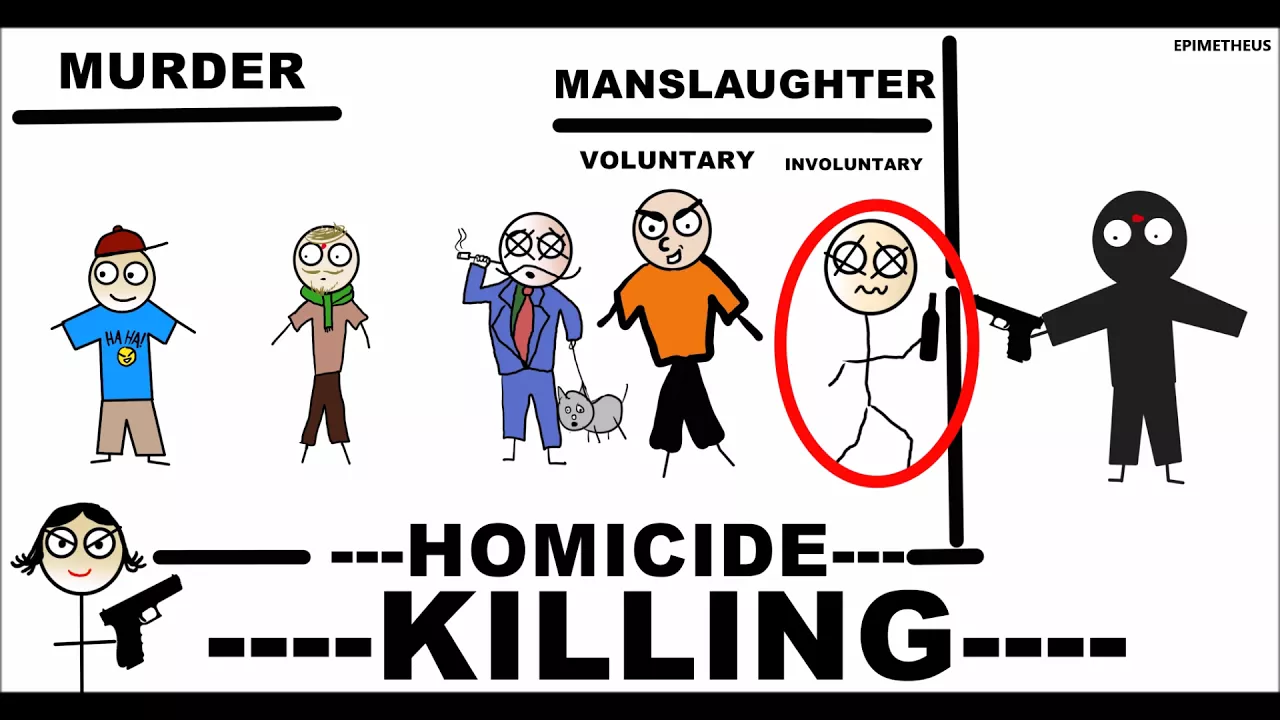
Added:Understanding the legal distinctions between first-degree murder, second-degree murder, and voluntary/involuntary manslaughter.
The core legal criteria for a self-defense claim, including the concepts of imminent threat, proportionality of force, and 'duty to retreat' versus 'stand your ground' doctrines.
Basic principles of criminal procedure, including the burden of proof, the role of criminal intent (mens rea), and how audio/visual evidence is evaluated in court.
Fundamental concepts in forensic psychology, specifically how trauma, family dynamics, and acute stress responses can influence behavior during a crisis.
Analyzing comparative case studies of high-profile self-defense trials to identify patterns in jury decision-making and legal defense strategies.
Exploring the psychological and legal complexities of intra-familial violence, including how a history of abuse affects the legal standard of 'reasonable fear'.
Investigating the ethical and legal implications of media coverage, documentary filmmaking, and public perception on the outcome of active criminal trials.
Examining prosecutorial discretion in charging decisions, specifically how prosecutors evaluate the likelihood of overcoming a self-defense claim before choosing manslaughter charges over murder.
141.6K views5.8Klikes20:34Original Release: 2024-11-15
hello this is Dr Grande today I'll be analyzing the case of Tucker Moore Reed first I'll look at the background of this case move to the timeline of the crime then offer my analysis Ashling Tucker Mo Reid was born on October 15 1989 in losgatos California she went by the name Tucker her father Daniel Reed was an actor her mother Kelly Moore was an attorney and an author Tucker's parents divorced in 2000 at around the same time Tucker's grandparents bought a 150 acre ranch on Thompson Creek Road in Applegate Oregon this is about 20 mi south of Grant's Pass they also bought a house about 15 Mi away from the ranch Kelly Tucker and Tucker's sister moved to Oregon and lived in this house in high school Tucker designed costumes and sets for theater Productions and worked for her High School newspaper in 2010 Tucker enrolled in the University of Southern California and studied cinema theater and journalism she worked for the University's newspaper before dropping out of college in 2012 Tucker along with her mother and her sister published a novel titled Amber house two years later they published a sequel titled never was in 2016 Tucker worked as a reporter for the grants past Daily Career but quit a few months later Tucker had an uncle named Shane Patrick Moore who becomes important to the story Shane was Kelly's brother he was born in 1953 he attended Law School in California but ended up opening a bookstore after getting involved in drugs and destroying his career Shane moved to the family ranch in Applegate Oregon he took care of his parents Tucker's grandparents there was a separate structure on the ranch where Shane lived with two roommates the intent of Tucker's grandparents was for Shane and his sister Kelly to split the ranch 50/50 when they died after the father of Shane and Kelly died the siblings fought over their mother's assets their mother's name was Lori Moore Kelly was in a terrible financial position she had not worked since the late 1990s and desperately needed money Lori mortgaged The Ranch in order to give money to Kelly this didn't make Shane too happy because the value of his inheritance was now decreased essentially Kelly was getting her inheritance early and Shane was getting cut out of the picture in addition to the tension between Kelly and Shane there were problems between Tucker and Shane in September 2015 Tucker directed expletives toward Shane in response he threw a quart of oil at her which struck her in the face thanks to this High Velocity Lube job Shane was arrested and charged with fourth deegree assault a no contact order was issued Kelly tried to convince Lori to put a provision in her will which would prevent Shane from getting an inheritance at all if he did anything unacceptable like if he was physically violent toward Kelly Shane had his own plan for what Lori should do he wanted her to sign a grant deed which would split the ranch 50/50 between him and his sister upon Lor's death Shane contacted a public notary so Lori could sign this grant date now moving to the timeline of the crime on July 26 2016 at 1:40 p.m. Shane Moore called 911 and asked for an officer to come to the ranch in Applegate Oregon he said a public notary was on her way to the ranch expected to arrive sometime between 2: and 2:30 p.m. Shane wanted to make sure that the signing of the documents was peaceful he was worried because his niece Tucker had fired a gun that morning Shane told the operator I don't want any trouble she fired off a gun this morning and I'm thinking she's looking for trouble the police decided that responding to Shane's 911 call was not a good move they were not in the business of mediating dangerous situations at 3:40 p.m. 2 hours after Shane called 911 the public notary who was named Carla called 911 and requested the assistance of the police she also requested Ed an ambulance when I asked what happened Carlo said I didn't see anything all I can tell you is a gun went off the scene appeared to be chaotic the phone was getting passed around eventually someone told the operator that Shane had been shot and was outside the house a man named Carlton not to be confused with Carla the public notary performed CPR on Shane at the direction of the operator Carlton lived on the property as well in response to this 911 call the police decided to render assistance so they were trying something new after arriving they found Shane dead outside the house with a single gunshot wound to the chest the weapon used in the shooting was a Charter Arms five-shot 38 calber revolver here is what the police found during the course of their investigation the public notary Carla was the only person who left the scene after the shooting the police made contact with her and interviewed her here is the story that Carla supplied to the place when Carla arrived at the house there were three people there Lori Kelly and Tucker Shane was on the property as well but again he lived in a separate structure so he was not inside the house where the women were Lori could not find her driver's license which was required to proceed with the signing of the grant deed so Carlton came into the house to verify her identity again Carlton and Carla are two different people Carlton lived on the property and Carla was the notary at some point Tucker's mother Kelly realized that the notary was there for a grant deed and not for a will Kelly may have believed that her plan to have Lori sign the will was what they were going to do that day she grabbed the grant deed and ripped it up telling Lori she was not signing it meaning Lori was not signing it as this was happening Shane was lurking outside the house he was not allowed inside because of the no contact order with Tucker hearing the argument about the grant deed Shane approached the front door Tucker's mother Kelly and Tucker's Uncle Shane started arguing at the door Tucker retrieved a revolver which had been hidden under a napkin on the table she went to the door and confronted Shane Carla heard a gunshot but did not see the shooting Shane yelled you shot me Carla was frightened by this incident and just wanted to get out of the house she called 911 but then found someone else to take the phone and she went to her vehicle on the way to her vehicle she saw Shane on the front porch four or 5 ft from the door Carla entered her vehicle and drove away from the scene the story that Carla provided made it seem like Shane was outside the house when he was shot but of course Carla was not an eyewitness to the shooting again she heard the shooting but did not see it it the police spoke to Tucker's mother Kelly she claimed that Shane had been assaulting her she also accused him of growing marijuana on the ranch and maybe even manufacturing methamphetamine Kelly made it clear that she was not a member of the Shane Moore fan club she was glad her brother was dead Kelly stopped answering questions when it came time to talk about the shooting itself Tucker spoke to the police she claimed that Shane was trying to force his way into the house he had reached his arm into the door as one might see in a horror movie even though it seemed like Tucker may have been justified in the shooting she told the police that she did not intentionally shoot her uncle it was an accident Tucker was arrested on suspicion of first and second degree manslaughter during the next month August she posted bail the police seized Tucker's cell phone but without the passcode they couldn't do anything with it they returned the phone to Tucker in the summer of 2018 when Tucker was still out on bail she decided to take an acting job using the stage name wi Reed Tucker starred in an independent movie titled from the dark she played a tour guide named Valerie fa who along with other employees was stranded in the wilderness one of the employees was a killer in a strange twist the character Valerie shot an innocent person out of fear which one could argue is strangely similar to Tucker's real life situation one day after filming was completed the production company found out that Tucker was facing mans soer charges they contacted the police to let them know about how Tucker was in this movie as a side note calling from the dark a movie is a bit generous its IMDb score is 2.4 out of 10 this seems incredibly High considering the film's quality how this film obtained any score greater than one is a mystery more compelling than its plot moving back to the story at around the same time there was an important development in Tucker's case her attorney voluntarily gave the police a cell phone video that Tucker recorded on the day she killed Shane Tucker had started recording on her cell phone after the notary Carla arrived about 8 minutes into the recording Tucker pointed the camera to the window Shane could be seen walking outside Tucker yelled that Shane was entering the house and urged someone to pick up the Gun Kelly walked toward Shane and told him that Lori was not signing the deed referring to Shane Tucker said he's coming into the house you son of a blank get out of here Tucker walked toward Shane she pointed a pistol at him and shot him in the chest at close range although the actual shooting was not captured on the video the shooting occurred just 20 seconds after Shane approached the door of the House Tucker yelled he wasn't supposed to be around me he's violent and dangerous he threatened my life Tucker claimed that she meant to fire a bullet past Shane's ear as a warning even though Tucker thought it would help her case the video had the opposite effect even though the video was low quality and the cell phone moved around a lot it appeared as though Shane never entered the house on September 4 2018 Tucker was arrested for murder and held without bond in January 2020 she was charged with unlawfully possessing heroin and supplying Contraband these charges were unrelated to Shane's shooting on May 27 2020 Tucker pleaded guilty to Second deegree manslaughter so under this plea bargain the state dropped the murder charge she received 6 years and 3 months in prison the minimum time that must be served is 5 and 1/2 years when factoring in time served Tucker could be released as early as November 25 2024 now moving to my analysis as far as murdering Shane Tucker maintains her innocence she pleaded guilty to manslaughter but that crime does not involve intent that's not the same thing as murder Tucker has a few supporters who believe that she was justified in killing her uncle they believe she was not guilty of any charge not murder not manslaughter not anything the state of course disagrees they beli that Tucker was guilty of murder but they offered her a plea bargain because they were not sure what a jury would think this brings me to the question was Tucker guilty of murder let's take a look at the evidence both for and against the idea that she was guilty starting with the inculpatory factors there is no question that Tucker is the one who shot and killed Shane Tucker claimed that she did not really understand how a firearm functioned however there is evidence that contradicts her claim for example on the day of the shooting Tucker fired the revolver a few hours before the killing she called This a test fire when the police found the revolver there was only one spent case in the cylinder along with four intact cartridges again this particular weapon was a five shot revolver this means that somebody must have reloaded the weapon after Tucker test fired it Tucker's mother Kelly told the police it wasn't her which only leaves Tucker this makes it seem like Tucker was lying about not being familiar with Firearms the cell phone video that Tucker recorded at the time of the shooting proved that Shane never entered the house he was unarmed and he did not appear to be threatening anyone in 2010 6 years before the shooting Tucker claimed that she was the victim of an assault of a sexual nature perpet perpetrated by her boyfriend the police investigated and found no evidence to support this claim despite this 2 years later Tucker published her accusation in a blog she was found liable for defamation and reached a settlement with the boyfriend this makes it seem like Tucker has a preference for playing the victim she believes that if she accuses a person of a crime it will grant her all kinds of Rights perhaps this is what she did to Shane she f accused him to obtain the right to shoot him during a hearing in 2019 Tucker was denied bail in response she threw a temper tantrum left the courtroom and could be heard screaming this makes it seem like Tucker is accustomed to getting her way by being traumatic now moving to the exculpatory factors Shane allegedly assaulted Tucker with a court of oil a no contact order was in place whether Shane was guilty or not this no contact order meant that he could not come near Tucker Tucker's mother Kelly and grandmother Lori said that Tucker fired in self-defense Kelly said that Shane was trying to come into her house and hurt her Tucker could be heard in the 911 call saying I didn't mean to shoot him in the chest even though the cell phone video damaged Tucker's case the fact that she recorded the shooting could be interpreted as supporting her self-defense claim why would she record her herself if she planned on committing murder maybe Tucker really did believe that she was under threat from Shane when considering all the evidence in this case do I believe that Tucker was guilty of murder no I am not convinced Beyond a reasonable doubt that Tucker committed murder it sounds like Tucker became overinvestment the revolver she may have been trying to frighten Shane it's possible she believed she had the authority to do this because of the alleged assault I'm not sure that Tucker intentionally killed Shane second deegree manslaughter is the right conviction under the circumstances there's really no way to know what happened in that house now moving to my final thoughts in this case so this is an interesting video for me because this is a video that I started working on before I went on a cruise with my wife and I always have this tricky decision to make whenever I take a vacation so I have to look at the production cycle for a video and decide where to stop should I stop after a video is recorded and uploaded should I stop when I'm researching the topic so like halfway through developing the outline this is an important decision because it kind of sets the tone for what I might be thinking about during times that are slow on the vacation like when waiting in line at the airport or waiting in line on the ship or waiting in line in any number of places do I want to have a story kind of on my mind or do I want to come home from vacation and start with a fresh story what I decided to do with this particular case was to complete the background and the timeline of the crime and then leave it that I went on vacation and I had this case kind of on my mind and during slow times I thought about it and I made some notes not a lot I didn't want to make it like a working vacation cuz that's not really a vacation at all but I just wanted to be able to capture any ideas I came up with and what I came up with was how there's a theme in the story about how some people do things halfway or even less than halfway it occurs not only with Tucker but with a few people in the story so some examples here when looking at various aspects of Tucker's life we see that she wrote a book but there were two other co-authors was she really a writer more like onethird of a writer she acted in a movie but the movie was beyond terrible calling it halfway to a movie would be generous was Tucker really an actress Tucker dropped out of college she quit working for a newspaper she promoted herself as a civil rights activist but never achieved anything meaningful she accused her boyfriend of a terrible crime but could not produce any evidence against him and in the end Tucker shot and killed her uncle but was only convicted of manslaughter one could argue that's kind of like halfway to murder Tucker is not the only subject of this halfway theme one could bring the behavior of the police into it as well they only responded to half of the 911 calls it's possible that many of Tucker's problems stem from the idea of always looking for an easy way out arguably a few people in the case had the same problem just like they may have suffered from this halfway syndrome we see in this case the story had a collection of bizarre characters involved in a strange dispute over money that they may not have earned so Tucker was really surrounded Ed by a lot of people who were doing things halfway and who seem to be looking for an easy way out so birds of a feather I suppose ultimately it was Tucker who made a decision to use a firearm and the shooting itself is mysterious it may or may not have been intentional or Justified so this all kind of feeds back into that same theme the this whole story sounds like a half-developed plot for a low-budget movie there's just something about this story that just seems Half Baked like it's incomplete we don't know exactly what happened as I mentioned the shooting could have been intentional or not there's no way to know which half to bet on there it could have been Justified or not no way to know what to do there either so it's really just in a sense one of these frustrating cases where there's just not enough information or one could argue there's a lot of information but it's contradictory so either way there's no clear path to figuring out what happened I think with the conviction of manslaughter the state kind of recognized this halfway theme again one could think of manslaughter as halfway to murder this was a case about splitting the difference and just going halfway those are my thoughts in the case of Tucker Reed Moore thank you so much for watching I'll talk to you soon
Up Next

11:31
Law of Tort Explained: Negligence & Fault (Part 1)
@CambridgeLawFaculty
74.9K views•2016-03-02

4:27
US Secondary Sanctions Impact on EU Businesses and Blocking Legislation
@Bureauvandijk
1.6K views•2019-03-20

15:30
Kyle Rittenhouse Case Analysis: Self-Defense vs. Murder
@DrGrande
852.5K views•2021-11-11

24:42
Police Interrogation Tactics: False Confessions & Legal Reform
@LastWeekTonight
7M views•2022-04-18
Related Study Plans & Knowledge Roadmaps
Structured learning paths in Law
law
Self-Defense Law: Imminence & Castle Doctrine
01Foundations of Self-Defense Law
02Imminent Threat & Reasonable Belief
03The Principle of Proportionality
+ 3 more learning modules
12h6 modules
Explore Roadmap
law
Defamation Law: First Amendment & Actual Malice
01Introduction to civil torts and the First Amendment
02Elements of Defamation: Libel and Slander
03Public Figures vs. Private Individuals
+ 2 more learning modules
8h5 modules
Explore Roadmap
law
Hearsay Rule: Trial Evidence & Exceptions
01Introduction to Trial Evidence & Courtroom Basics
02Demystifying Hearsay: The Core Definition
03Non-Hearsay: Exclusions Under FRE 801(d)
+ 3 more learning modules
14h6 modules
Explore Roadmap
law
Medical Malpractice: Law, Liability & Care
01Foundations of Tort Law and Civil Liability
02The Four Elements of Medical Malpractice
03Defining and Proving the Standard of Care
+ 2 more learning modules
12h5 modules
Explore Roadmap