









![Mitochondria [ Cell -2 Part 2 ]- [ Histology ] - د/عبدالوهاب](https://i.ytimg.com/vi_webp/mn3Ld_dFyfk/sddefault.webp)




![REPLAY BIO[K+] SOX B2 | Cadena respiratoria, estrés oxidativo y vía de las pentosas](https://i.ytimg.com/vi/-B1zjQ6Q5rY/hqdefault.jpg)



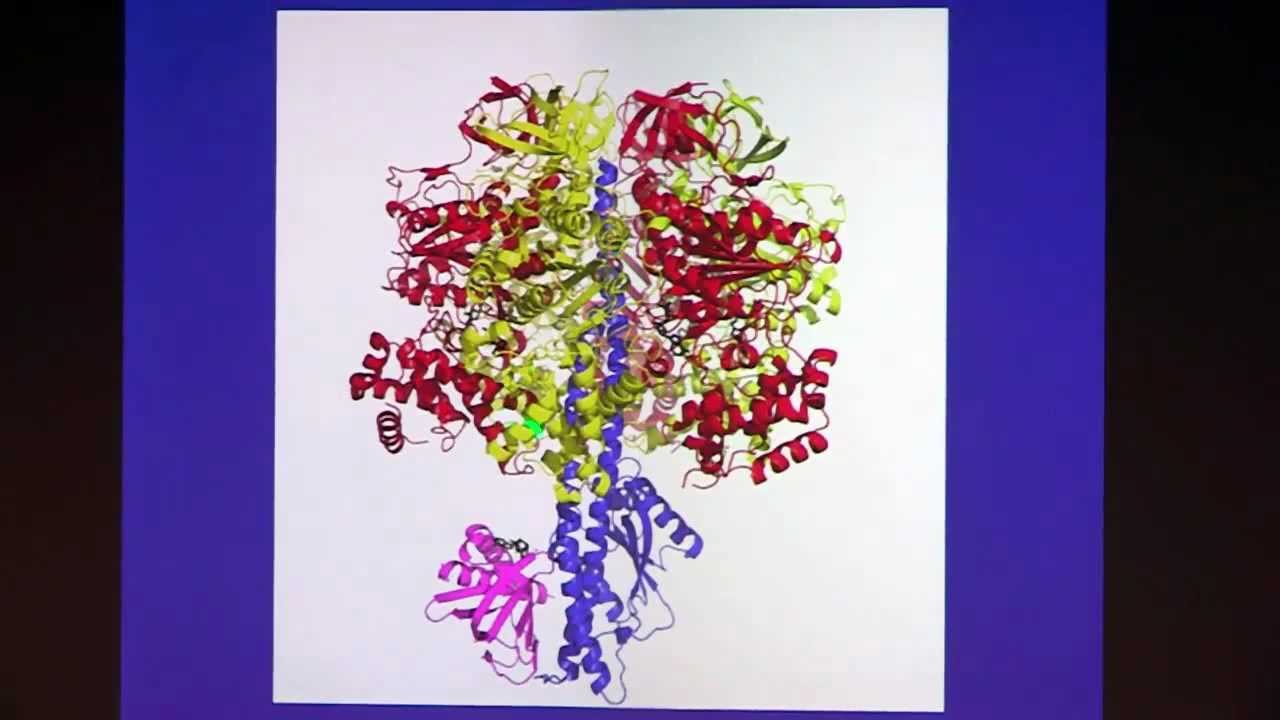


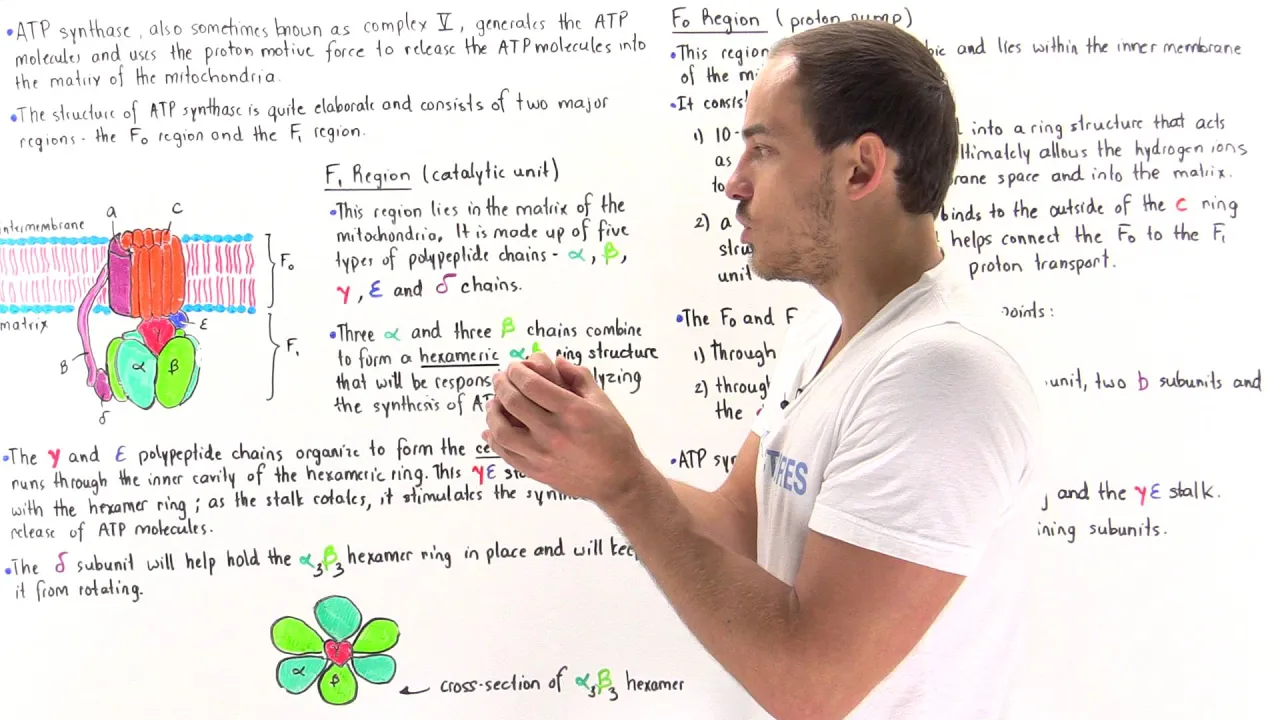
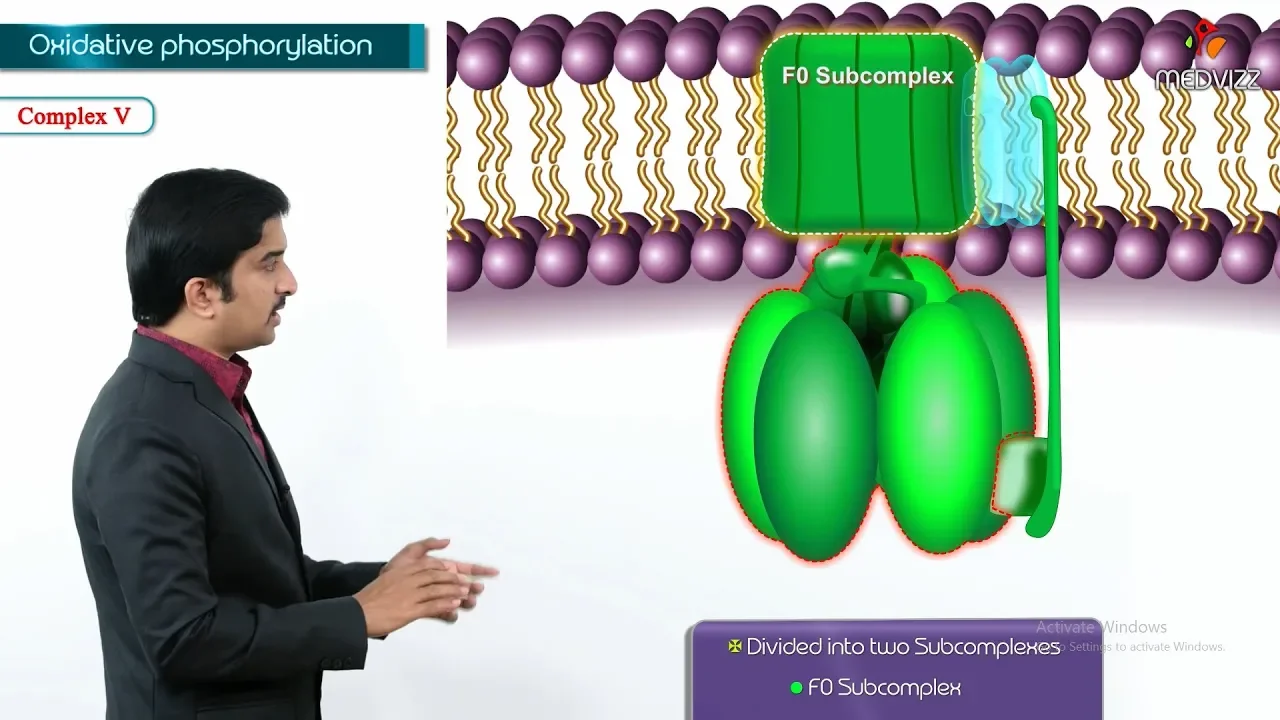
ATP synthase generates ATP through proton movement across its F₀ region, where protons bind to aspartate residues in the c subunit ring, causing rotation that drives the gamma-epsilon stalk and activates the binding change mechanism in the stationary alpha3beta3 hexamer; approximately 4 protons must move through the enzyme to synthesize one ATP molecule.
Proton Movement in ATP Synthase Mechanism
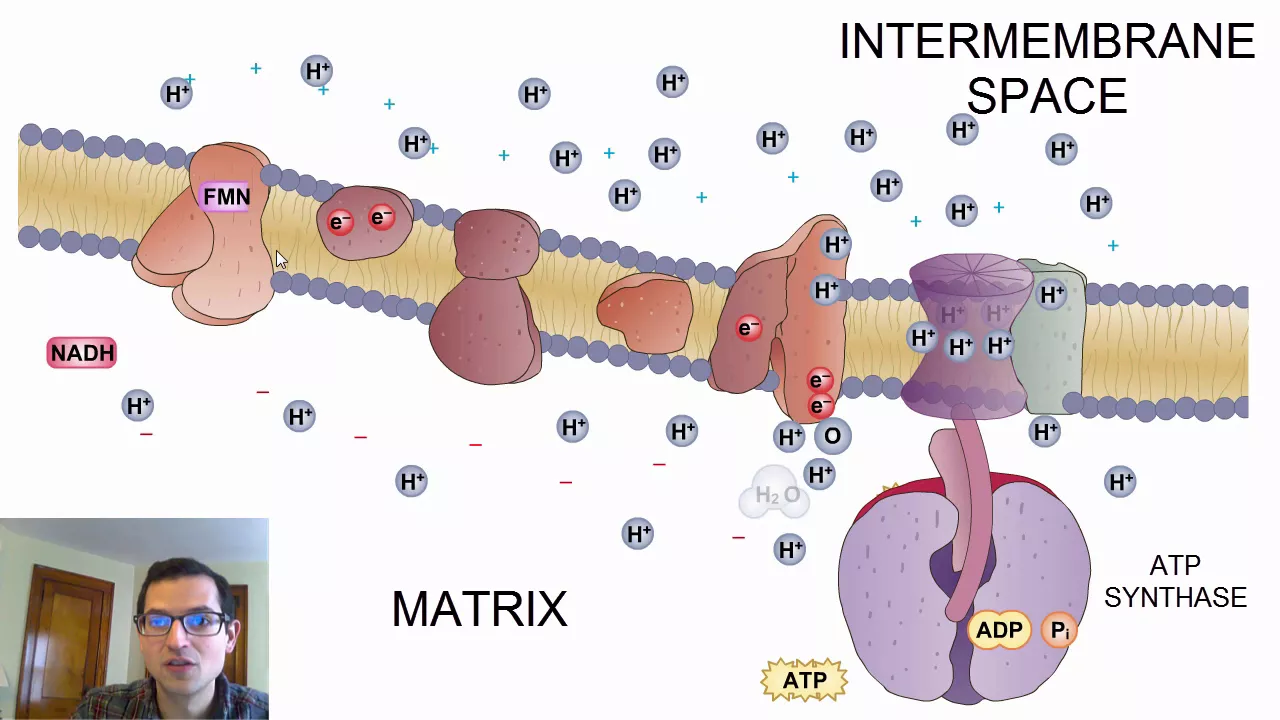
Added:The concept of the electrochemical proton gradient (proton-motive force) established by the Electron Transport Chain across the inner mitochondrial membrane.
The general structural division of ATP Synthase into the membrane-embedded Fo region and the catalytic F1 region.
Basic cellular respiration thermodynamics, specifically how the phosphorylation of ADP to ATP is an endergonic reaction requiring energy input.
The anatomy of the mitochondrion, focusing on the roles of the intermembrane space, inner mitochondrial membrane, and the mitochondrial matrix.
Paul Boyer's Binding Change Mechanism, detailing how rotation of the gamma subunit drives conformational changes (Open, Loose, Tight) in the catalytic beta subunits to synthesize ATP.
Calculation of the P/O ratio (phosphate incorporated into ATP per oxygen atom reduced) and the overall thermodynamic efficiency of oxidative phosphorylation.
The mechanism and physiological impact of oxidative phosphorylation uncouplers (e.g., DNP, Thermogenin) and ATP synthase inhibitors (e.g., Oligomycin).
Structural variations of the c-ring across different species (yeast, chloroplasts, bacteria) and how the number of c-subunits dictates the exact H+/ATP ratio.
145.6K views2Klikes14:42Original Release: 2015-06-11
previously we discussed The Binding change mechanism of ATP synthes and we said that the binding change mechanism is actually the mechanism by which the catalytic structure the alpha3 beta3 hexamer of ATP synthes actually generates those ATP molecules synthesizes those ATP molecules now in this lecture I'd like to focus on two important questions question number one how does the move of the protons across at uh ATP synthes actually help us generate those ATP molecules and question number two is how many protons how many hydrogen ions actually have to move through ATP synthes to actually generate a single ATP molecule and to answer these two important questions we actually have to describe the mechanism of the fnot region of ATP synthes so remember the ATP synthes consists of two different regions one of the regions is known as the F1 region and this is what we focused on in the previous lecture in this lecture we're going to focus on the fnot region now remember that the fnot region actually consists of two types of polypeptide subunits we have the C subunit and we have the a subunit now we only have a single a subunit but for the C subunits we have anywh where from 10 to 14 C subunits that aggregate together to form something called the c ring and it's the c ring as we'll see in just a moment that actually rotates within the ATP synthes and that allows that gamma Epsilon stock to actually rotate and cause The Binding change mechanism that we discussed in the previous lecture so let's focus on the following diagram so we have the inner membrane of the mitochondria this is the The Matrix of the mitochondria and this is the intermembrane space and this entire structure is the fnot region and the fnot region lies within the membrane of the mitochondria within the inner membrane now in this particular case I've drawn 10 of these individual c subunits that form the c ring and we have the a subunit that is found in close proximity to this c ring now if we zoom in onto this a subunit this is basically what we're going to see now even though we don't exactly know what the structure of the a subunit actually looks like this is what we believe the structure looks like so the structure of the a subunit seems to consist of two hydrophilic half channels that do not span the entire membrane of the a subunit one of these half channels is open to The Matrix side while the other one is open to the intermembrane side so we have one of these half channels which only spans half the membrane that is open to the intermembrane side and the other half channel is open to the Matrix side and these two channels as we'll see in just a moment will actually play an important role and allow the movement of the protons from the intermembrane space the high concentration to The Matrix the low concentration now if we zoom in into the center of each one of these C subunits shown in Orange we're basically going to find an aspartate 61 residue and the special thing about the aspartate 61 residue is the side chain actually contains this negative charge and the negative charge can actually grab a proton under acidic conditions so the a subunit this per structure here is positioned to interact with the c subunits at the center of each one of these C subunits is an asp is an aspartate residue that can readily bind protons under acidic conditions so now that we know what the structure of now what we know what the structure of the F1 region is we can actually uh deduce what the mechanism of proton movement looks like so let's take a look at the following three steps and these are the diagrams that correspond to each one of these steps so let's begin with diagram number one so again we have the inner mitochondrial membrane this is the intermembrane space and this is the Matrix of the mitochondria now we know along the Matrix we have a low concentration of protons relative to the intermembrane space because remember complexes 1 three and five uh 1 and four of the electron transport chain basically use the movement of electrons to generate that proton electrochemical gradient so we have a proton Rich environment in the intermembrane space and we have a proton poor environment in The Matrix of the mitochondria so in the first step what happens is we have this hydrophilic half channel is open to the Matrix of the mitochondria and at the Center of that half channnel is this aspartate 61 residue that bears a negative charge and so the proton will move from a high concentration through this half Channel and it will bind onto that aspartate 61 residue found at the center of this C subunit that lies along this half Channel now once that movement actually takes place once the movement takes place and the H+ binds onto this asate residue we we form aspartic acid and aspartic acid is not as hydrophilic as aspartate and so because aspartic acid is actually more hydrophobic that aspartic acid that is formed when the H+ ion binds into aspartate 61 will want to move into the hydrophobic region of the inner membrane of the mitochondria and so this subunit here the C subunit will tend to rotate and let's say the rotation is is in the clockwise Direction and as this C subun rotates it causes the entire C structure to actually rotate with it and so what happens once this uh once this H+ ion moves into this section it binds until the aspartate residue forming the spartic acid because as spartic acid is more hydrophobic it wants to move into the core of the inner membrane of the mitochondria so this rotates and that causes the entire searing to actually rotate and so what happens is this negative charge of the aspartate 61 on this C subunit basically moves into this position shown here and this aspartic acid basically that is found within this C subun moves into this position and now this a H+ ion can move from this area to an area where we have a low proton concentration in The Matrix of the mitochondria and in this fashion we see that the movement of these protons from the high and from the high concentration to the low concentration basically power is the movement of this c ring so once again in diagram one an H+ ion will enter the half channel of the a subunit facing the intermembrane space and it will bind to that aspartate residue of the nearby C subunit and once The Binding takes place it transforms as protate 61 of that particular C subun into a spartic acid because a spartic acid is more hydrophobic it wants to move into the core of that inner membrane of the mitochondria and out of this uh half Channel and so as that rotation takes place it causes the entire SE ring to actually rotate so the entire SE ring then rotate until a c suban with an aspartic acid enters the half channel that faces the proton Poe environment of the Matrix of the mitochondria and once this is found in this position the H+ ion can then move from the hydrophilic environment of this particular Hemi Channel and to the low the poor um uh the environment that contains a low concentration of those H+ ions and so we conclude that the movement of the H+ ions through the half channels Powers the rotation of that entire SE ring and remember from our previous discussion the SE ring is actually directly connected to that gamma Epsilon stock that runs through that Central C ity of that Alpha 3 beta3 hexamer and so what happens is since the c ring is directly connected to the gamma Epsilon Central stalk it causes that Central stalk to actually rotate and when this Central stalk actually rotate it stimulates the binding change mechanism that takes place within the alpha 3 beta3 heximer that actually allows the synthesis and the release of those ATP molecul ules and so ultimately it's the movement of the protons across the Hemi channels across the semi channels of the fnot region that allows the synthesis of these ATP molecules now I have to mention the following important idea so the only thing that rotates in ATP synthes is the seing as well as the gamma Epsilon structure everything else remain stationary so that includes the a subunit so the a subunit of the FN region doesn't actually move so this purple structure that contains the half channels actually remains stationary it's the Searing that actually rotates and as that searing rotates it causes this red section the gamma structure and the blue section the Epsilon structure to actually rotate and even even though the gamma Epsilon Central stalk actually rotates through the central cavity of the of the alpha 3 beta3 hexamer because this a subunit does not rotate and the a subunit is connected to this Delta structure through these 2B subunits this entire Alpha 3 beta3 hexamer doesn't rotate as well so this Alpha 3 beta 3 hex structure remain stationary because it is connected via this structure to this stationary a subunit of the fnot region so the movement of the protons through this ATP synthes rotates the Searing and and that intern rotates the gamma Epsilon stock but everything else actually remains stationary so now we basically answered question one so now we know how the movement of the protons across a uh ATP synthes actually allows it to generate the ATP molecule so once again it's the movement of these hydrogen ions through the half channels of the fnot region that allows the rotation of the Searing and that intern rotates that gamma Epsilon stock and that powers the synthesis of the ATP molecules within the stationary alpha3 beta3 hexamer structure the final question is how many protons actually have to move across the inner membrane of the mitochondria to synthesize a single ATP molecule well as we saw in the previous lecture a rotation of 360° of the gamma Epsilon structure actually produces a total of three ATP molecules why well because in the alpha3 beta3 structure we have a total of three beta structures and each one of these beta structures actually synthesizes a single ATP molecule and so when this gamma Epsilon structure rotates uh 360° it is able to generate the three ATP molecules now as I mentioned in the beginning in this searing structure we have anywhere from 10 to 14 C subunits and that means anywhere from 10 to 14 of these H+ ions can actually move across the seing every time the Searing rotates 360° so 360° rotation of the Epsilon of the gamma Epsilon stock produces 3 ATP molecules we multiply that by the range of 10 to 14 H+ ions that move across the ATP synthes in a single 360° rotation we see that 10 / 3 gives us about 3.33 and 14 / 3 gives us about 4.67 and so this is the range of protons that are needed to actually synthesize a single ATP molecule and so we see that on average about four protons must move through the ATP synthes to actually generate a single ATP molecule so again this range actually describes the number of protons that have to move across the ATP synthes found on the inner membrane of the mitochondria to actually generate a single ATP molecule
Up Next

22:34
Thoracic Cavity Anatomy: A Complete Labeled Guide
@SiebertScience
79.6K views•2024-05-29
50:12
Bacterial Communication: Quorum Sensing and Biofilm Formation Explained
@JHUAAP
12.6K views•2011-06-28

7:47
Post-Translational Modifications Explained: Types & Functions
@AKLECTURES
136.8K views•2014-09-11
7:08
Bacteriophages: Earth's Deadliest Killers and Future Antibiotics
@kurzgesagt
34.6M views•2018-05-13
Related Study Plans & Knowledge Roadmaps
Structured learning paths in Biology
biology
RNAi: Biogenesis, RISC & Gene Silencing
01Molecular Biology Foundations: DNA to Protein
02Introduction to RNA Interference (RNAi)
03Molecular Biogenesis of miRNA and siRNA
+ 2 more learning modules
10h5 modules
Explore Roadmap
biology
Mycorrhizae: Signaling, Biophysics & Ecology
01Foundations of Mycorrhizal Symbiosis
02Molecular Signaling and Root Colonization
03Biophysics and Bioenergetics of Nutrient Exchange
+ 1 more learning modules
11h4 modules
Explore Roadmap
biology
Circadian Clocks: TTFL, SCN & Periphery
01Foundations of Molecular Biology & Gene Expression
02Introduction to Chronobiology and Actograms
03The Core TTFL: Molecular Architecture of the Clock
+ 3 more learning modules
14h6 modules
Explore Roadmap
biology
Population Genetics: Math, Drift & Selection
01Genetic & Probability Foundations
02The Hardy-Weinberg Principle and Baseline Models
03Mathematical Modeling of Natural Selection
+ 3 more learning modules
18h6 modules
Explore Roadmap