Landfills generate two major byproducts during decomposition: leachate (liquid runoff from decomposing garbage) and landfill gas (primarily methane and CO2). Modern landfills use engineered collection systems including retention ponds for leachate treatment and vertical gas wells with vacuum pumps to capture and process these materials before they contaminate the environment; however, when pumps malfunction, leachate accumulation can block gas collection, causing toxic gases to escape into the atmosphere.
Landfill Gas and Leachate Collection Systems Explained
Added:Deep Dive
The basic structure of a modern sanitary landfill, including the function of impermeable liners and clay barriers.
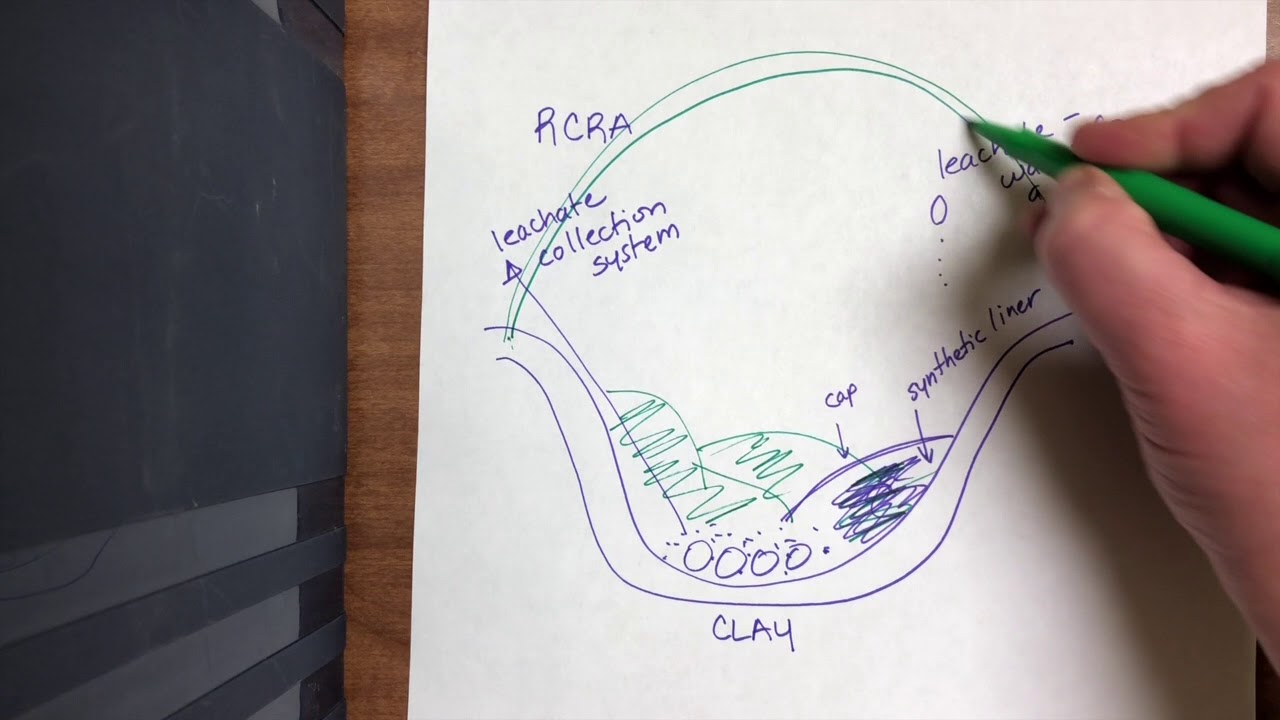
Landfill Sketch Correct One
289
Modern sanitary landfills, regulated by the Resource Conservation and Recovery Act (RCRA), are engineered facilities designed to prevent environmental contamination through multiple protective layers: a clay liner (either natural or imported) that is highly impermeable to prevent water seepage, followed by a synthetic plastic liner for additional protection; a leachate collection system with perforated tubes and gravel that captures and removes contaminated rainwater from the bottom of the landfill; daily and final caps to contain waste and prevent water infiltration; groundwater monitoring systems around the landfill to detect any potential leaks; and methane collection systems that capture gas produced from anaerobic decomposition of compacted waste, which can be safely burned or used to generate electricity.
Click to watch →
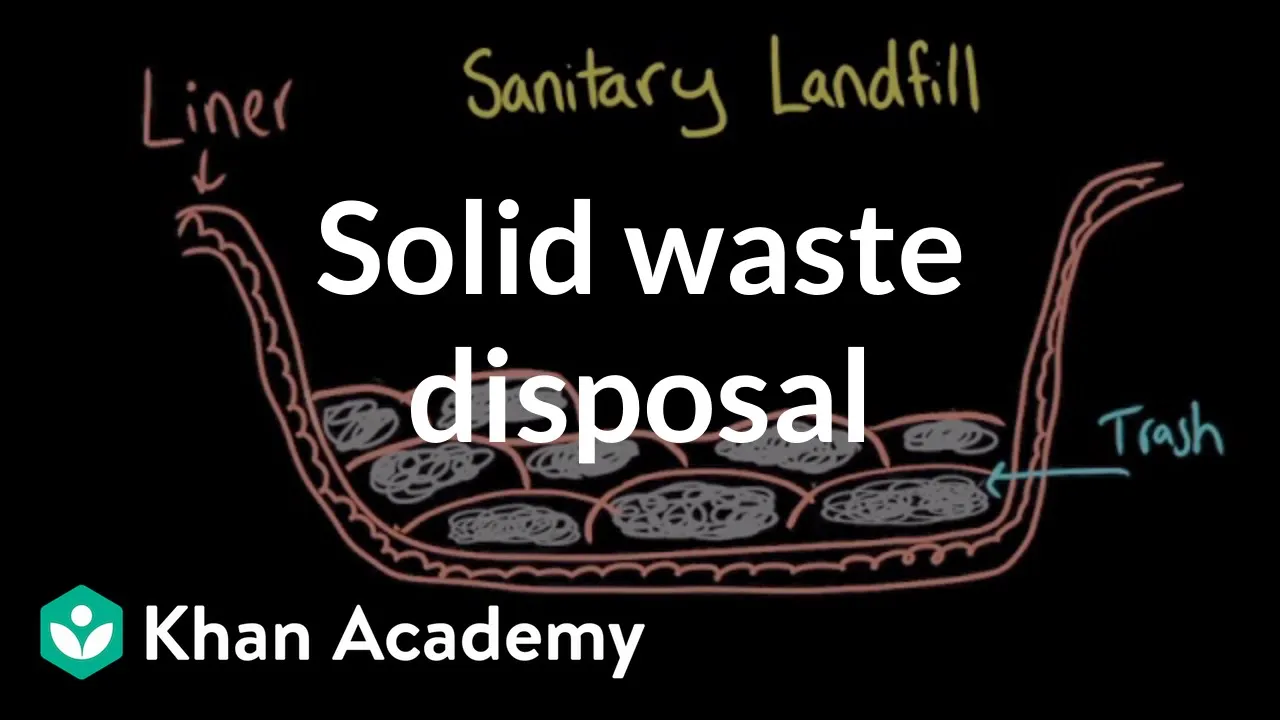
Solid waste disposal| Aquatic and Terrestrial Pollution| AP Environmental science| Khan Academy
28.9K
A sanitary landfill has a liner made of clay or plastic that keeps trash contained. Trash is covered daily with construction debris or low-quality soil and then compacted into cells. The tightly sealed and compacted cells prevent water from entering easily. Some sanitary landfills use double liners and pipes to store and treat leachate. This design prevents waste from spreading into the environment.
Click to watch →

APES 6C Notes- Municipal Solid Waste Disposal
576
Modern landfills have five essential components: (1) A clay liner at the bottom that prevents leachate from contaminating groundwater; (2) Surface water collection ditches to prevent stormwater runoff from entering the landfill; (3) Leachate collection pipes (perforated) to remove liquid that accumulates within the landfill; (4) Methane gas collection wells to capture methane produced during decomposition, which can be used for energy generation; (5) An impermeable cap (often made of plastic or clay) to seal the landfill and allow controlled decomposition while preventing environmental contamination.
Click to watch →
MP SET Environmental Science | MP SET EVS Most Expected Questions Marathon | MP SET EVS Marathon
589
Sanitary landfills are engineered waste disposal systems with multiple protective layers: (1) Clay liner prevents groundwater contamination; (2) Leachate collection pipes remove contaminated liquid; (3) Methane gas collection pipes capture biogas generated during decomposition; (4) Daily cover (soil) is applied to waste and eventually permanent cover with vegetation. This engineered approach contrasts with open dumping, which lacks containment and environmental protection.
Click to watch →

Disposal of Solid Waste | Management
92.5K
A sanitary landfill is an advanced version of traditional landfill designed to eliminate environmental problems associated with conventional landfills. It features a scientifically designed pit with multiple protective systems. At the base, impermeable liners made of plastic or clay prevent groundwater contamination from leachate (polluted liquid). Pipes and pumps are installed to collect and treat leachate produced below the waste layer, preventing groundwater pollution even if leakage occurs. Monitoring wells are drilled around the site to continuously test and monitor groundwater quality. Methane gas produced during waste decomposition is captured through pipes and utilized to generate electricity or heat for residential use. While highly effective, sanitary landfills are very costly due to the need for specialized monitoring infrastructure and methane collection systems.
Click to watch →
Deep Dive
The biological process of anaerobic decomposition, which occurs when organic waste breaks down in oxygen-depleted environments.

Congressman DEMANDS Liz Cheney be THROWN In JAIL After January 6th Report EXPOSES Coverup
171.5K
Anaerobic decomposition is a biological process that occurs in the absence of oxygen and light, resulting in the breakdown of organic matter. This process produces foul odors and is commonly associated with environments like sewers where oxygen is limited. The term describes the decomposition that occurs in oxygen-deprived conditions.
Click to watch →

SFT || 2023 A/L || Sabaragamuwa Province || MCQ Discussion || Sandun Priyankara
14.7K
Composting is an anaerobic process occurring in oxygen-depleted environments with anaerobic microorganisms. The first step involves hydrolysis of complex organic compounds into simpler compounds. Carbohydrates are broken down into simple sugars, and proteins are broken down into amino acids. This process differs from aerobic decomposition which requires oxygen.
Click to watch →

L13 || Quality of Raw Water || PHE ll Regular batch ll Civil Engg.2025-26#environment#civil@11:00AM
1K
Anaerobic decomposition is a two-step process. First, microorganisms must obtain oxygen from molecularly bonded compounds. Only after obtaining oxygen can they proceed to decompose organic matter. This process produces unstable end products (acids, alcohols) and is slower than aerobic decomposition.
Click to watch →

Ecosystem FULL CHAPTER | NCERT Class 12th Botany | Chapter 18 | Yakeen NEET
457.2K
Decomposition is an aerobic process that requires oxygen. If oxygen is not available, decomposition becomes anaerobic and proceeds much more slowly. This is why decomposition is slower in waterlogged soils than in well-aerated soils. Anaerobic decomposition produces different end products and is less efficient at breaking down organic matter.
Click to watch →

Bihar Police New Vacancy 2024 | Chemistry & Biology Practice Set 01 | Bihar Police Science Class
112.4K
Anaerobic decomposition is the breakdown of organic matter by microorganisms in the absence of oxygen. This process is called fermentation and is used in making products like alcohol, vinegar, and bread.
Click to watch →
Deep Dive
Fundamental hydrological concepts, specifically how precipitation percolates through porous solid matter to dissolve and transport substances.
Online Class 4 | Soil Science | Revision Session With Manisha Ma'am | Concepts & MCQ | ACC
30.5K
Percolation is the movement of dissolved substances through soil water downward through the soil profile. It occurs when both macro and micro pores are saturated with water. This process is essential for nutrient transport and water movement in soil.
Click to watch →
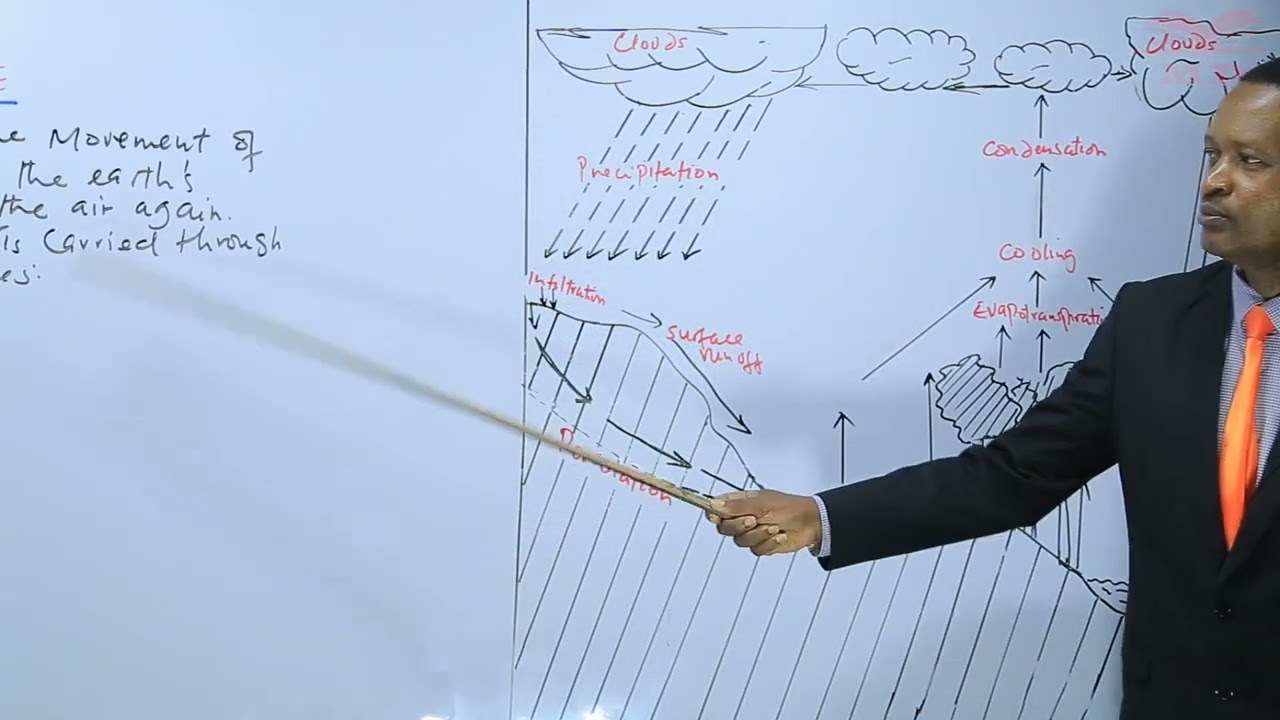
Hydrological Cycle - The Action of Rivers L1
619
When precipitation reaches the ground, some water flows across the surface into valleys, ponds, lakes, swamps, and eventually back to the sea through surface runoff. Other water sips into the ground through pores, cracks, and joints between rock particles through infiltration. This infiltrated water then moves downward and sideways through cracks and joints due to gravity in a process called percolation. Some percolated water may emerge as springs, becoming river sources.
Click to watch →

Hydrology (WRE) Marathon Class for RSSB JEn 2025 Degree Diploma
4.4K
Precipitation is water falling from the atmosphere to the ground in any form - liquid (rain, drizzle) or solid (snow, hail, sleet). Runoff is the portion of precipitation that flows over the ground surface and enters streams, occurring when water cannot infiltrate the soil. Runoff depends on topography (steeper slopes increase velocity), soil permeability (sandy soil allows more infiltration), and vegetation cover (reduces runoff). Interception is the process where precipitation is caught and held by surfaces like buildings or vegetation before reaching the ground. Infiltration is the process where water from precipitation enters and is absorbed into the soil, moving through soil voids to the groundwater table. Percolation is the downward movement of water through soil layers to deeper zones and eventually to the groundwater table.
Click to watch →

Part- 1 | ICAR NET 2021 Full Paper Solution by Siraz Sir | PYQ & MCQ | AGRONOMY ASRB NET 2025
2.1K
Percolation is the downward movement of water through the soil column under nearly saturated and saturated conditions. It occurs when soil pores are filled with water and gravity pulls the excess water downward. Percolation is distinct from infiltration (entry of water from surface) and leaching (movement of water with nutrients).
Click to watch →

Шеин Е. В. - Мелиорация почв - 5. Рассоление и рассолонцевание почв
1.1K
Solute movement in soil occurs through convective transport (movement with bulk water flow) and diffusive transport (movement due to concentration gradients). Diffusion in soil is complex because soil consists of aggregates with intra-aggregate and inter-aggregate pore spaces. Hydrodynamic dispersion causes spreading of solute fronts due to variations in water flow paths. The dispersion coefficient (D*) accounts for this spreading and depends on flow velocity and soil heterogeneity. The combined equation ∂C/∂t = -∂(vC)/∂z + D* × ∂²C/∂z² describes total solute movement.
Click to watch →
Deep Dive
The environmental significance of greenhouse gases, particularly the high global warming potential of methane (CH4) compared to carbon dioxide (CO2).
Fracking-Methan – Todesstoß für das Klima? | Harald Lesch
304.2K
Methane (CH4) is significantly more potent as a greenhouse gas than carbon dioxide (CO2). Each methane molecule is approximately 84 times more effective at trapping heat in the atmosphere compared to a CO2 molecule. Despite having a much lower concentration in the atmosphere (only 1.8 parts per million versus 420 parts per million for CO2), methane contributes 17-20% of the total greenhouse effect globally. This high potency makes even small amounts of methane emissions highly significant for climate change.
Click to watch →

Science Global Warming, Green House Effect,Acid Rain ,वैश्चिक तापन Lec-06 Part-03 By SN Sir Study91
10.1K
Methane (CH4) is more potent as a greenhouse gas than carbon dioxide (CO2) on a per-molecule basis, though CO2 has a much longer atmospheric lifetime. Methane has approximately 25 times the global warming potential of CO2 over a 100-year period. This high potency makes methane reduction a critical priority in climate policy despite its shorter atmospheric lifetime.
Click to watch →

UGC NET Paper 1 | People Development And Environment UGC NET | One Line Questions By Masroor Sir
4.5K
Methane (CH4) has approximately 25 times the global warming potential of carbon dioxide (CO2). This means that per unit mass, methane is 25 times more effective at trapping heat in the atmosphere compared to CO2, making it a potent greenhouse gas despite its lower concentration.
Click to watch →
![BEFORE THE FLOOD - Avant le Déluge | LEONARDO DICAPRIO [FILM COMPLET VF]](https://i.ytimg.com/vi_webp/08qwT3T4F30/maxresdefault.webp)
BEFORE THE FLOOD - Avant le Déluge | LEONARDO DICAPRIO [FILM COMPLET VF]
207.6K
Methane (CH4) is a greenhouse gas that is significantly more potent than carbon dioxide at trapping heat in the atmosphere. While atmospheric CO2 concentrations are much higher, each molecule of methane has approximately 23 times the global warming potential of a molecule of CO2 over a 100-year period. The primary source of atmospheric methane is agricultural livestock, particularly cattle, which produce methane through enteric fermentation during digestion.
Click to watch →

Last 6 months Current Affairs Revision | Environment & Ecology Marathon | UPSC Prelims 2025
19.1K
Methane (CH4) is the second most important greenhouse gas after carbon dioxide (CO2). Although methane has a shorter atmospheric lifetime (about 10 years) compared to CO2, it has a much higher global warming potential (GWP) - approximately 28-36 times more potent than CO2 over a 100-year period. Forests can also act as methane sinks, not just CO2 sinks, through their bark and wood.
Click to watch →
Prerequisite Knowledge
- Concept 01The basic structure of a modern sanitary landfill, including the function of impermeable liners and clay barriers.
- Concept 02The biological process of anaerobic decomposition, which occurs when organic waste breaks down in oxygen-depleted environments.
- Concept 03Fundamental hydrological concepts, specifically how precipitation percolates through porous solid matter to dissolve and transport substances.
- Concept 04The environmental significance of greenhouse gases, particularly the high global warming potential of methane (CH4) compared to carbon dioxide (CO2).
Subsequent Learning
- Step 01Landfill Gas-to-Energy (LFGTE) systems, exploring how captured methane is converted into electricity, heat, or pipeline-quality natural gas.
- Step 02Advanced leachate treatment technologies, including biological reactors, reverse osmosis, and evaporation systems used prior to safe environmental discharge.
- Step 03Environmental regulations and compliance standards, such as the EPA's RCRA Subtitle D regulations governing municipal solid waste landfills.
- Step 04The principles of the circular economy and alternative waste management practices, such as industrial composting and anaerobic digestion of organic source-separated waste.
Landfill System
Landfill System
0:00Playing Section
- 1
Explains landfill leachate and gas collection methods.
- 2
Describes how pumps prevent toxic gas escape.
- 3
Details failure risks like flooding and blocked vacuums.
The 'Dry Tomb' Fallacy and Zero Waste Criticism
While landfill gas and leachate collection systems are framed as safe environmental solutions, critics and zero-waste advocates argue they promote a flawed 'dry tomb' approach to waste management. By sealing waste off from moisture and oxygen, these containment systems mummify trash rather than decompose it, delaying the environmental hazard for future generations who will inherit degraded, leaking liners. Additionally, gas capture systems are highly inefficient during a landfill's early, peak-emission years, allowing substantial methane to escape. Critics argue that investing in these engineering fixes greenwashes a linear economy and distracts from necessary systemic solutions like organic waste diversion, composting, and circular manufacturing.
Deep Dive
Landfill Gas-to-Energy (LFGTE) systems, exploring how captured methane is converted into electricity, heat, or pipeline-quality natural gas.
The Economics of Waste Management and Recycling
1.2M
Landfill gas-to-energy projects capture methane gas produced as organic waste decays inside landfills and convert it into usable fuel and electricity. Methane is highly flammable and historically required safe disposal, but modern projects use this gas to generate power. According to the U.S. Energy Information Administration, landfill gas generates about 10.5 billion kilowatt hours of electricity annually, enough to power roughly 810,000 homes and heat nearly 540,000 homes each year. While this represents less than 1% of total U.S. energy demand, it provides environmental benefits through greenhouse gas reduction.
Click to watch →
Converting Methane Gas to Electricity
48.8K
Landfill methane gas can be captured through drilling wells into the landfill, processed through condensation and scrubbing systems to remove impurities, and then converted to electricity using specialized engines, providing a renewable base-load power source that reduces greenhouse gas emissions while generating affordable energy.
Click to watch →

Tour of the Southbridge Casella Landfill Facility - 2016
3.4K
Modern landfills capture methane gas produced by decomposing organic waste through a network of perforated collection wells, then convert this gas into electricity using a 1.6 megawatt Caterpillar engine that runs continuously 24/7, with the generated electricity fed into the power grid and shared as revenue with the landfill owner.
Click to watch →
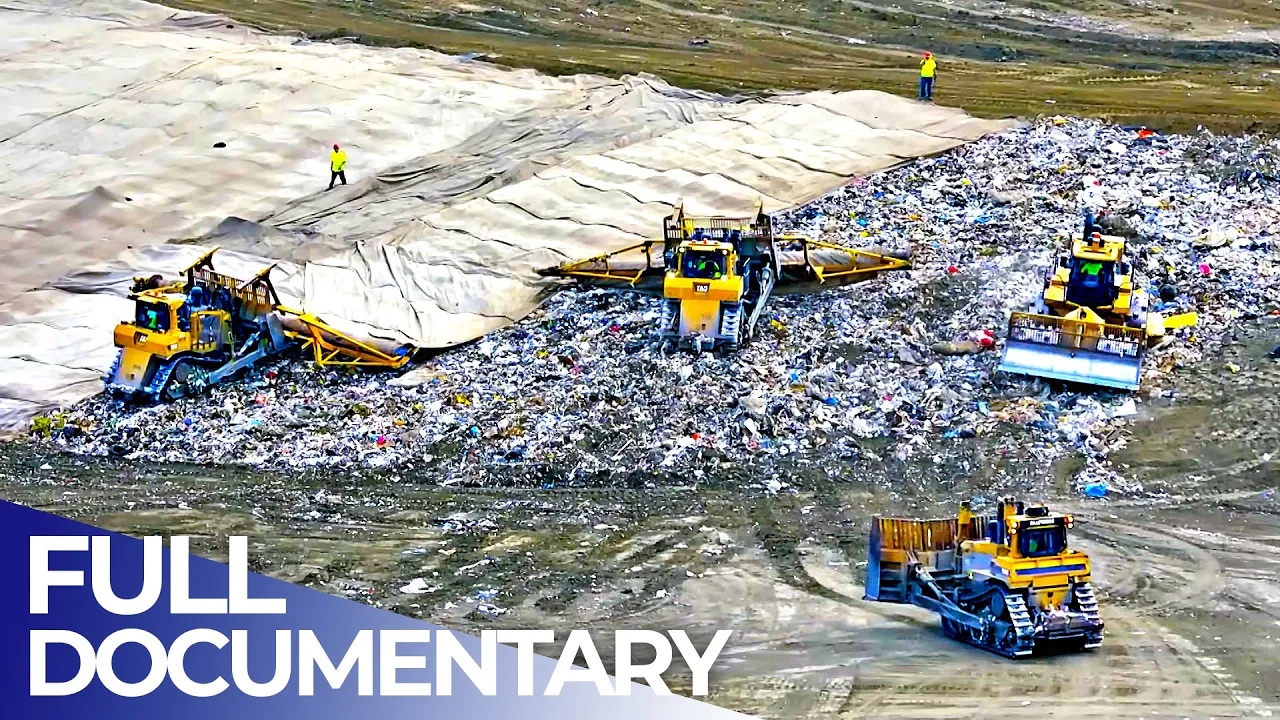
World’s Busiest Landfill: The Hidden Engineering of Mega Waste Disposal | FD Engineering
727.1K
Decomposing organic waste produces methane gas that is captured through a network of 45 miles of underground pipes and transported to an on-site power plant. This advanced technology converts what would be a pollution problem into renewable energy, generating enough electricity to power 26,000 local homes while reducing greenhouse gas emissions.
Click to watch →

Day in the Life :: Landfill
8.3K
Landfill gas-to-energy facilities transform methane produced during organic decomposition into renewable electricity through sophisticated engineering systems. The Buncombe County facility generates power sufficient for 1,100 homes using stationary 20-cylinder engines connected to generators. Raw landfill gas undergoes conditioning through compression to 5 PSI and cooling to 85°F, filtering out particulates before powering the generator. The system produces 480-volt electricity that is stepped up to 13,000 volts for grid integration. SCADA monitoring systems continuously track generator output, cylinder temperatures (maintained above 500°F for proper methane destruction), and process parameters. The facility aims to triple capacity by adding two more generators before operational closure in 2030.
Click to watch →
Deep Dive
Advanced leachate treatment technologies, including biological reactors, reverse osmosis, and evaporation systems used prior to safe environmental discharge.

Tratamento de chorume: desafios e cenários futuros | Webinar AST Ambiente
101
Leachate is an extremely complex effluent with variable composition changing throughout the landfill's life. Treatment strategies vary by landfill size: small landfills use stabilization ponds; large landfills require combinations of physicochemical and biological treatments. Membrane technologies (nanofiltration, reverse osmosis, MBR) have gained popularity, with China installing 175 MBR plants in 2018. No single technology applies to all leachate types, requiring operational flexibility. Reverse osmosis achieves the most restrictive standards but has high costs. Case-by-case evaluation based on documented experiences is essential.
Click to watch →
Lec 34: Leachate collection and treatment
26.7K
Advanced treatment technologies for landfill leachate include reverse osmosis, activated carbon adsorption, and biological treatment processes. Reverse osmosis effectively removes dissolved salts and organic compounds but requires significant energy input. Biological treatment uses microorganisms to break down organic pollutants. Combined treatment approaches often achieve the best results for treating complex leachate compositions.
Click to watch →
Landfill leachate management
8K
Beyond basic biological methods, advanced systems include sequencing batch reactors performing five sequential phases (fill, react, settle, decant, idle) in one unit, offering operational flexibility. Reed beds function as constructed wetlands with impermeable barriers lined with emergent hydrophytes like reeds and cattails, where aerobic bacteria consume organics as leachate flows horizontally through gravel media. Biological aerated filters integrate fixed-film biological treatment with physical filtration in a single unit, eliminating separate sedimentation needs. Additional advanced systems include upflow anaerobic sludge blanket reactors (UASB), moving bed biofilm reactors (MBBR), and aerobic filters. Each system offers different advantages in treating the complex organic and inorganic constituents found in landfill leachate.
Click to watch →

M-19. Landfill leachate management
521
This comprehensive section examines advanced treatment technologies for landfill leachate management. Biological treatment methods include the activated sludge process (microorganisms consume organics in aeration tank, followed by secondary clarification), rotating biological contactors (RBCs with plastic discs alternating between nutrient uptake and oxygen absorption), sequencing batch reactors (SBR performing fill, react, settle, decant, idle phases in one unit), reed beds (planted wetlands where aerobic bacteria oxidize organics), and biological aerated filters (combining biofilm growth with filtration). Physicochemical methods include adsorption using activated carbon to remove toxic contaminants, membrane technology (microfiltration/ultrafiltration for organics, reverse osmosis for polishing dissolved inorganics), chemical oxidation using hydrogen peroxide, ozone, or chlorine to degrade organics, coagulation-precipitation to aggregate impurities, and ammonia stripping using air to convert dissolved ammonia to gas phase. Each method addresses specific contaminants and treatment objectives in leachate management.
Click to watch →

29 Jul 2022 | Landfill leachate collection, treatment and monitoring | Tyson Clingan
1.3K
Evaporation is the most common leachate treatment method at smaller landfills, particularly in rural areas with dry climates. It involves storing leachate in ponds where natural evaporation removes water content. This method only works effectively in climates where evaporation exceeds rainfall. In regions with insufficient evaporation (only a few hundred millimeters additional per year), very large ponds become necessary, which may become impractical. During wet periods, evaporation ponds can quickly reach capacity, requiring contingency plans such as trucking leachate off-site, which is extremely expensive. Enhanced evaporation methods like sprayers and dust suppression during active landfill cell operations can increase effectiveness.
Click to watch →
Deep Dive
Environmental regulations and compliance standards, such as the EPA's RCRA Subtitle D regulations governing municipal solid waste landfills.
The Economics of Waste Management and Recycling
1.2M
The Resource Conservation and Recovery Act (RCRA) of 1976 established Subtitle D regulations requiring all landfills to meet specific design, operation, and lifecycle financial assurance obligations. By 1994, every landfill in North America had to comply with these standards. A key requirement is that landfill owners must maintain financial obligations even after the facility closes, including maintenance fees running around $1 million annually for up to 30 years without generating revenue, making upfront investment critical for profitability.
Click to watch →

April 14, 2011 - A Hearing on "H.R. 1391"
363
Subtitle C creates federally enforceable standards with permit programs ensuring uniform protection across all states. Subtitle D establishes national criteria but relies on state implementation and citizen enforcement, potentially creating inconsistent protections. EPA has more authority over municipal solid waste under Subtitle D than it would have over coal ash, raising questions about regulatory asymmetry. The Bevill amendment determination from 1993 and 2000 remains in place for beneficially used materials, recognizing economic and environmental benefits of recycling. EPA acknowledges that federal hazardous waste designation would consume current disposal capacity within two years, raising compliance feasibility concerns.
Click to watch →

214: Acmar Landfill Case, Clean Water Act Violation - Andrew Bringuel
246
EPA Subtitle D regulations mandate that modern landfills install leachate collection systems consisting of French drains beneath garbage layers to capture liquid waste generated from decomposing refuse. Collected leachate must either be treated on-site before discharge into waterways or transported to sanitary facilities for proper treatment. The Acmar landfill was constructed on an old strip mine atop a large aquifer feeding into Big Black Creek, which served as a drinking water source for one-third of Birmingham, Alabama. Violating these regulations by directing leachate directly into waterways constitutes Clean Water Act violations with significant public health implications.
Click to watch →
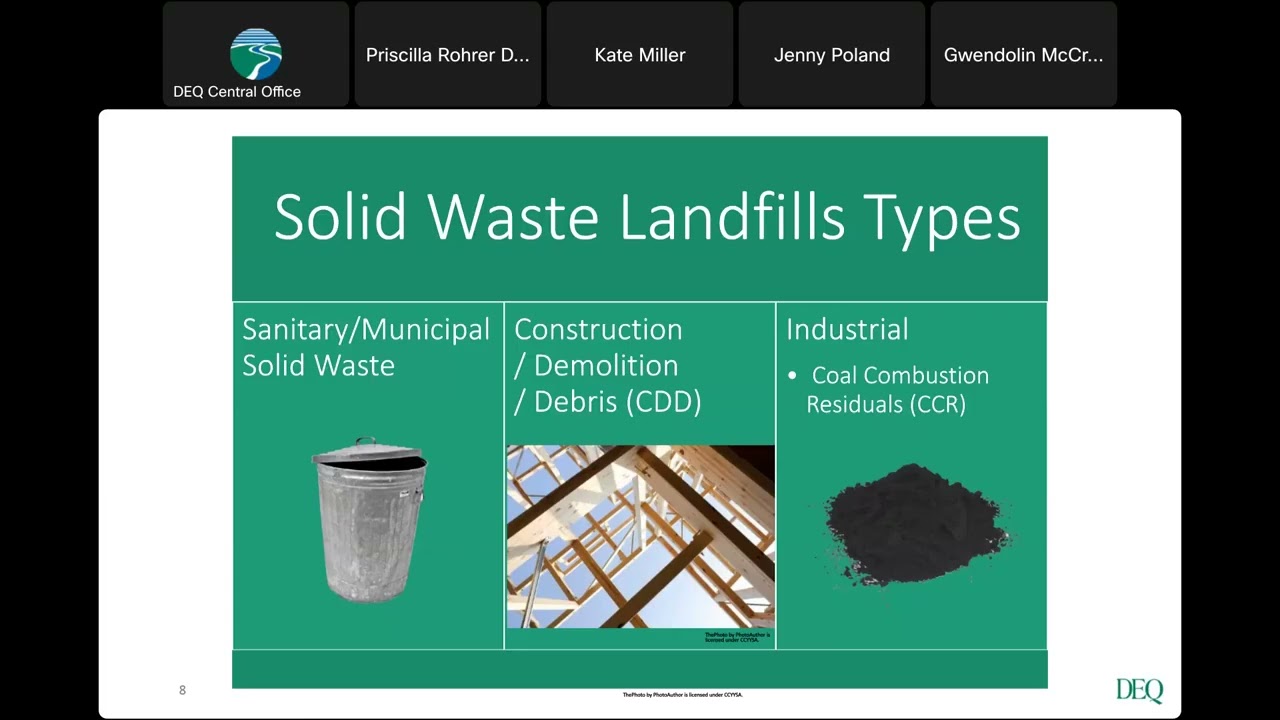
Landfills 101
290
Landfills are regulated under federal RCRA subtitle D (minimum criteria for solid waste landfills, banning open dumps) and state Virginia Waste Management Act. Virginia requires a minimum 25% recycling rate (15% exception for low-density areas or high unemployment). The Virginia Waste Management Board oversees waste management activities, adopts/amends regulations, and requires comprehensive Solid Waste Management Plans from all regions. Plans must consider source reduction, reuse, recycling, incineration, and landfilling. The board accepts public comments on regulatory actions and case decisions, providing public engagement opportunities. Multi-agency reviews during permitting evaluate impacts on parks, wildlife habitats, endangered species, historic sites, and fish and wildlife resources.
Click to watch →

Trash Talk: Inside the Modern Landfill and Recycling Industry with Jason West
149
The Resource Conservation and Recovery Act, specifically Subtitle D regulations enacted in 1993, established the requirements for modern sanitary landfills. These regulations fundamentally transformed waste management by implementing groundwater protections and comprehensive environmental safeguards that distinguish modern landfills from unregulated dumps.
Click to watch →
Deep Dive
The principles of the circular economy and alternative waste management practices, such as industrial composting and anaerobic digestion of organic source-separated waste.

webinar: Come gestire i rifiuti umidi secondo i principi dell'economia circolare
252
Organic waste (approximately 35% of urban waste) should be managed through aerobic composting rather than anaerobic digestion to align with circular economy principles, as composting recovers more material (30% vs 14.62%), avoids combustion emissions, prevents soil contamination from digestate, and creates more local employment opportunities compared to large-scale biogas/biometano facilities.
Click to watch →
Holzernte und Forstarbeit bei der Galle GmbH | Harvester und Forwarder | Traktoren | Bagger
484.2K
Industrial composting facilities demonstrate circular economy principles by transforming organic waste into valuable resources. The process involves collecting green waste and leaf residues, allowing natural decomposition over 6-8 months, and then processing the resulting material into quality soil products. Advanced screening systems separate materials by size, directing fine fractions toward soil production while larger components return to the decomposition process or go to energy facilities. This closed-loop system maximizes resource utilization and minimizes environmental impact.
Click to watch →

BPSC Assistant Sanitary Officer 2025 | Solid Waste Management | Concept Through Questions Session-3
1.7K
Circular economy principles include: (1) Waste from one process becomes input for another process, creating a closed-loop system, (2) All processes related to consumption and production generate waste, (3) In a true circular economy, there is no real waste because everything is continuously reused. For example, organic waste from households becomes compost, which becomes input for gardens, which then generate new organic waste, continuing the cycle.
Click to watch →
CN | Resíduos Sólidos - Parte 2
118
Each inhabitant consumes approximately 9 tons of materials annually, totaling 63 billion tons globally, projected to reach 100 billion tons by 2030. Given finite Earth resources, recycling and revalorizing materials is essential. The EU aims to recycle 50% of waste within 7 years, while Brazil recycles only 3%. The 'Lixo Zero' concept requires using materials intelligently through reincorporation: organic materials return to the biosphere, non-organic to the technosphere. The circular economy transforms traditional linear chains into closed-loop systems. A key concept is the shift from product ownership to service provision: consumers purchase services rather than products, with providers responsible for end-of-life collection. Car sharing systems can replace 9-13 private automobiles. Organic waste management is more challenging than dry waste, with biodigesters for energy production and organic fertilizer production as main destinations. On-site composting in commercial facilities creates closed-loop systems where waste becomes valuable resources.
Click to watch →

Keeping Organics Out of Landfills with Anaerobic Digestion
318
Anaerobic digestion is an effective method for processing organic waste by converting it into renewable energy (biogas) and valuable soil products (digested material rich in nitrogen and phosphates), thereby reducing landfill methane emissions and supporting circular economy principles; this technology can be tailored to handle various feedstocks including food waste, paper, and biosolids, as demonstrated by Veolia's successful implementation at the Disco Road facility in Toronto.
Click to watch →
Landfill System
Landfill System
0:00- 1
Explains landfill leachate and gas collection methods.
- 2
Describes how pumps prevent toxic gas escape.
- 3
Details failure risks like flooding and blocked vacuums.
The 'Dry Tomb' Fallacy and Zero Waste Criticism
While landfill gas and leachate collection systems are framed as safe environmental solutions, critics and zero-waste advocates argue they promote a flawed 'dry tomb' approach to waste management. By sealing waste off from moisture and oxygen, these containment systems mummify trash rather than decompose it, delaying the environmental hazard for future generations who will inherit degraded, leaking liners. Additionally, gas capture systems are highly inefficient during a landfill's early, peak-emission years, allowing substantial methane to escape. Critics argue that investing in these engineering fixes greenwashes a linear economy and distracts from necessary systemic solutions like organic waste diversion, composting, and circular manufacturing.
The basic structure of a modern sanitary landfill, including the function of impermeable liners and clay barriers.
The biological process of anaerobic decomposition, which occurs when organic waste breaks down in oxygen-depleted environments.
Fundamental hydrological concepts, specifically how precipitation percolates through porous solid matter to dissolve and transport substances.
The environmental significance of greenhouse gases, particularly the high global warming potential of methane (CH4) compared to carbon dioxide (CO2).
Landfill Gas-to-Energy (LFGTE) systems, exploring how captured methane is converted into electricity, heat, or pipeline-quality natural gas.
Advanced leachate treatment technologies, including biological reactors, reverse osmosis, and evaporation systems used prior to safe environmental discharge.
Environmental regulations and compliance standards, such as the EPA's RCRA Subtitle D regulations governing municipal solid waste landfills.
The principles of the circular economy and alternative waste management practices, such as industrial composting and anaerobic digestion of organic source-separated waste.
108.7K views1Klikes1:45@wwltvOriginal Release: 2019-11-15
we all know rotting garbage is stinky and it's even worse when it gets left so you can bet the stink is sickening when it rains on a 100-foot tall mound of rotting garbage of course that happens a lot at landfills here in Southeast Louisiana when it rains at any landfill water seeps down through the grass and earth through the garbage heap and collects on the bottom so do liquids that is out of the garbage when it decomposes all that liquid is called reach 8 as the garbage decomposes it emits gases like methane and co2 a layer of gas forms on top of looy chain landfills have a system to collect both the leachate and the gas so they don't contaminate the environment pumps send the leachate to retention ponds where it's treated and stored there are also vertical gas wells running down through the landfill they use vacuums to collect the gas different pumps inside those wells send the gas up and out to a gas plant where it can be processed and sold as usable natural gas now if these pumps are working properly there should be only one foot of leachate under that 100 foot mound of garbage the vacuums that suck the gas into the wells sit right above that normal leachate level but if the pumps are not working like they weren't at Jefferson Parish landfill for years the mound of garbage becomes flooded with we chained that flood of leachate can block the vacuums from sucking the gas into the wells and now that layer of toxic smelly methane and hydrogen sulfide isn't being collected anymore instead it rises up through the landfill and escapes into the air
Up Next
3:48
Circular Economy Explained: Redesigning Progress for a Restorative Future
@EllenMacArthurFoundation
1.9M views•2011-08-28

15:54
Life in Biosphere 2: Sustainable Ecosystems & Human Survival
@TED
334.9K views•2009-06-16
14:30
Microplastics Everywhere: How Plastic Impacts Our Lives
@TEDx
100.9K views•2018-05-08
10:28
Ice Stupa Artificial Glaciers: Solving Ladakh's Water Crisis
@SonamWangchuk66
3.2M views•2015-05-03
Related Study Plans & Knowledge Roadmaps
Structured learning paths in Environmental Science
environmental-science
Ocean Noise: Cetacean Impacts & Mitigation
01Fundamentals of Underwater Acoustics
02Marine Mammal Bioacoustics
03Anthropogenic Noise: Shipping & Seismic Surveying
+ 2 more learning modules
16h5 modules
Explore Roadmap
environmental-science
Road Ecology: Corridors, Overpasses & Fencing
01Foundations of Habitat Fragmentation and Carnivore Ecology
02The Road Barrier: Ecological Impacts of Transport Infrastructure
03Principles of Ecological Corridors and Connectivity Mapping
+ 3 more learning modules
14h6 modules
Explore Roadmap
environmental-science
Ocean Acidification: Kelp Buffering & Shellfish
01Fundamentals of Ocean Chemistry & pH
02Chemical Pathways of Coastal Acidification
03Bivalve Physiology & Calcification Under Stress
+ 2 more learning modules
18h5 modules
Explore Roadmap
environmental-science
Ice Stupas: Glacial Retreat & Water Security
01Foundations of Glaciology & Mountain Hydrology
02Climate Change and Glacial Retreat Dynamics
03The Science of Ice Stupas & Artificial Glaciers
+ 2 more learning modules
14h5 modules
Explore Roadmap