





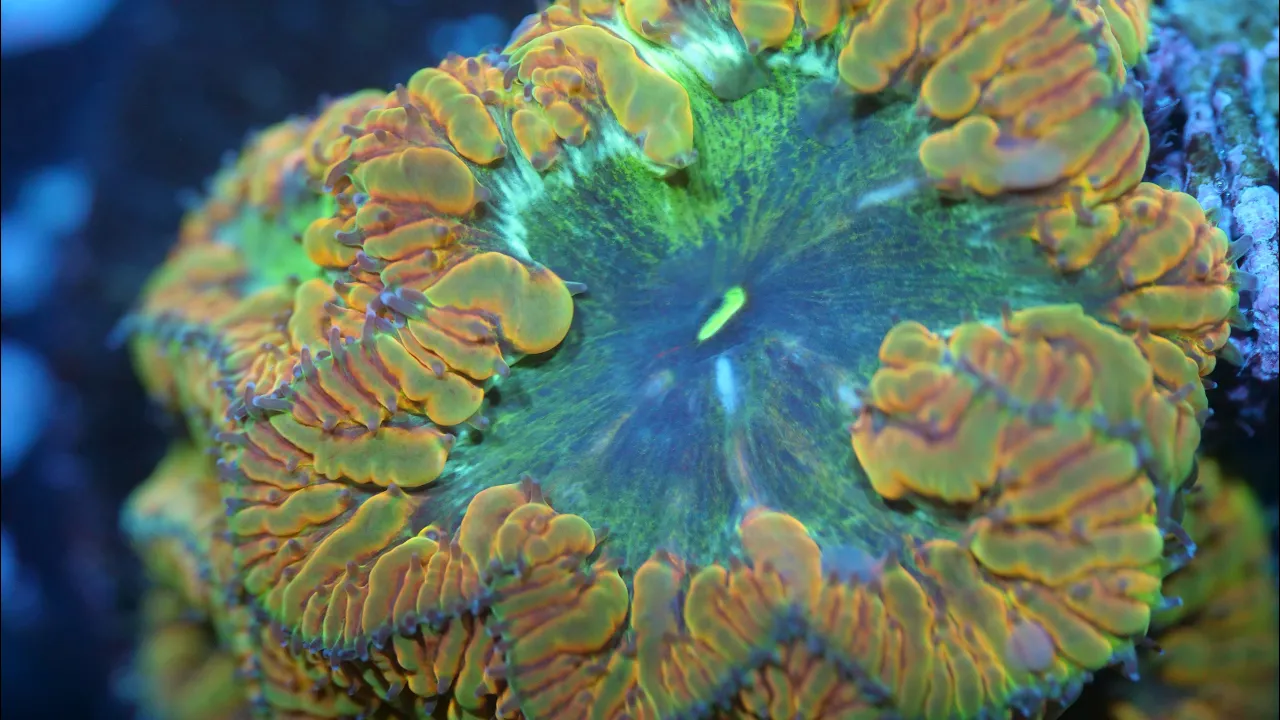


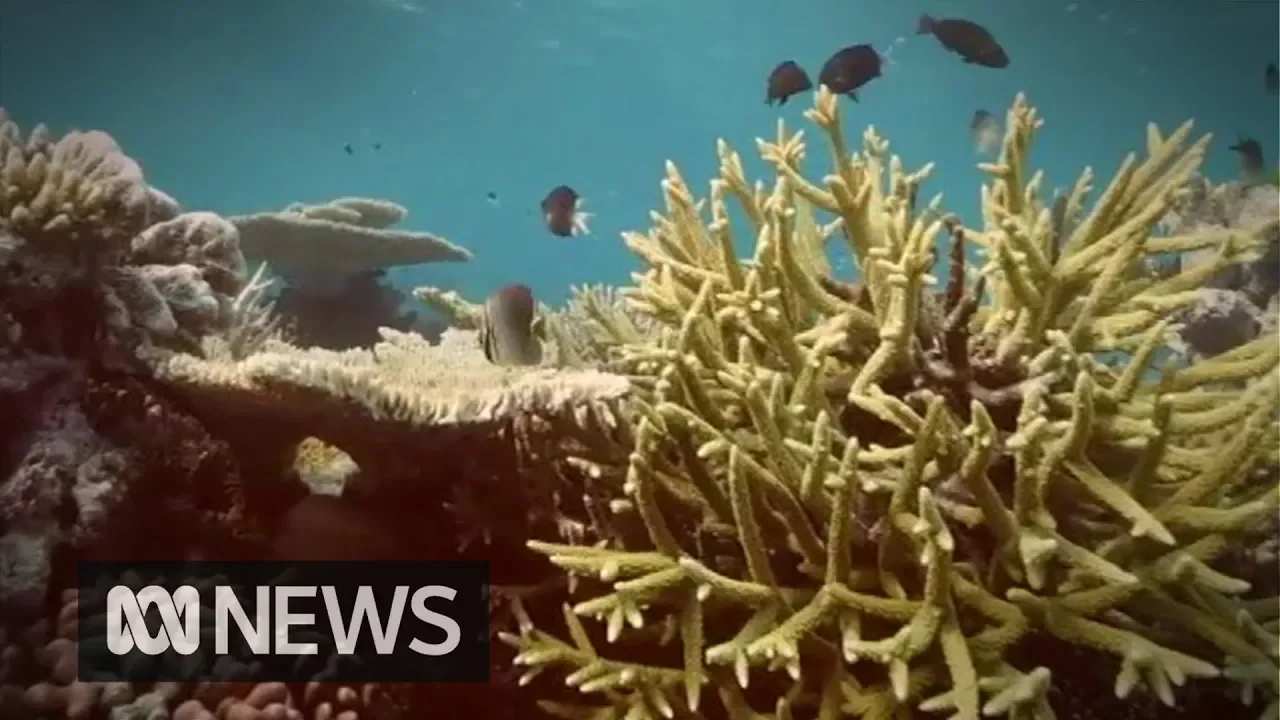





Coral reef ecosystems depend on intricate symbiotic relationships between corals and their algal partners (zooxanthellae), where the algae provide energy through photosynthesis while corals supply nutrients; however, environmental stressors like global warming and ocean acidification disrupt these partnerships, causing coral bleaching and threatening entire reef ecosystems. Additionally, pollution, overfishing, and other local stressors compound these challenges, making coral reef conservation a complex issue requiring both global emission reductions and local management efforts.
Coral Reef Crisis: OSU Science Panel on Bleaching Solutions
Added:The mutualistic symbiotic relationship between coral polyps and photosynthetic microalgae (zooxanthellae).
The basic biological mechanism of coral bleaching, where environmental stressors cause corals to expel their symbiotic algae.
The ecological significance of coral reefs as highly biodiverse marine ecosystems that provide coastal protection and economic value.
Fundamental concepts of marine chemistry, particularly how sea surface temperature and carbon dioxide levels influence ocean environments.
The concept of the 'coral holobiont' and the application of microbial therapies, such as probiotics, to enhance coral health.
Assisted evolution and genetic engineering strategies aimed at breeding heat-tolerant 'super-corals'.
The compounding impacts of ocean acidification on coral calcification rates and reef structural integrity.
Policy-driven marine conservation strategies, including the design of resilient Marine Protected Areas (MPAs) and global climate mitigation frameworks.
102 views1likes42:21Original Release: 2019-06-14
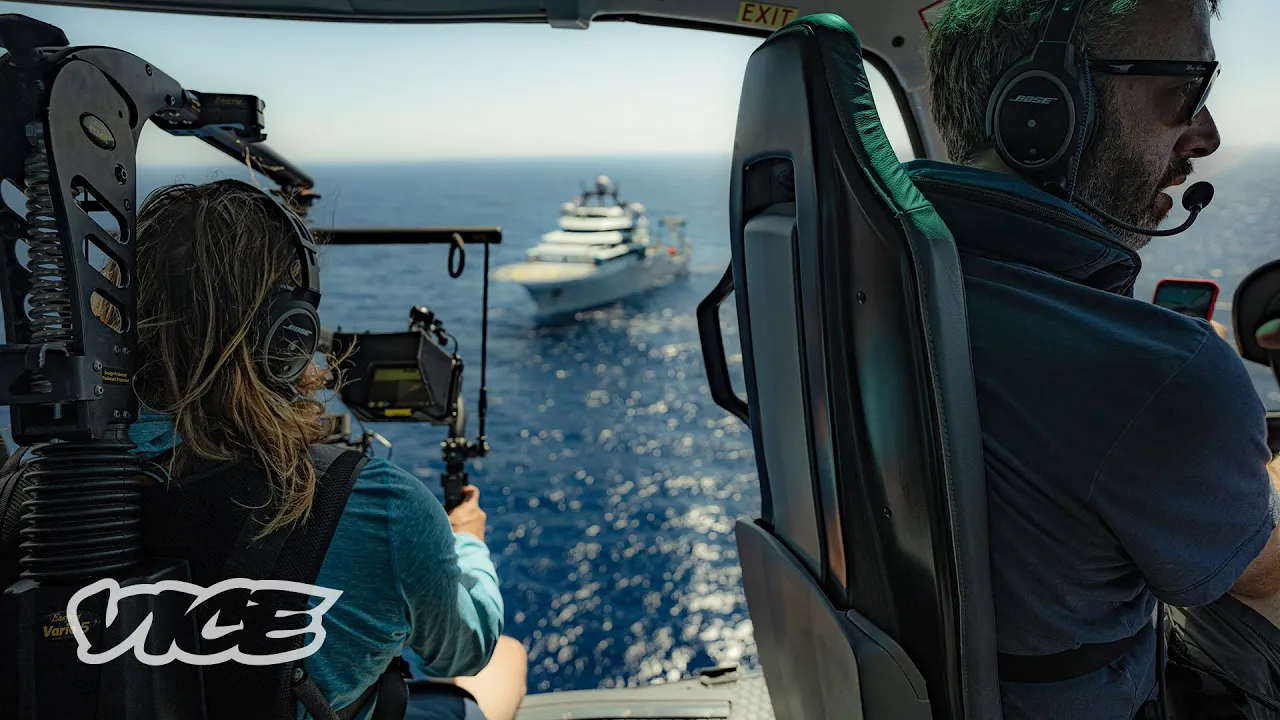
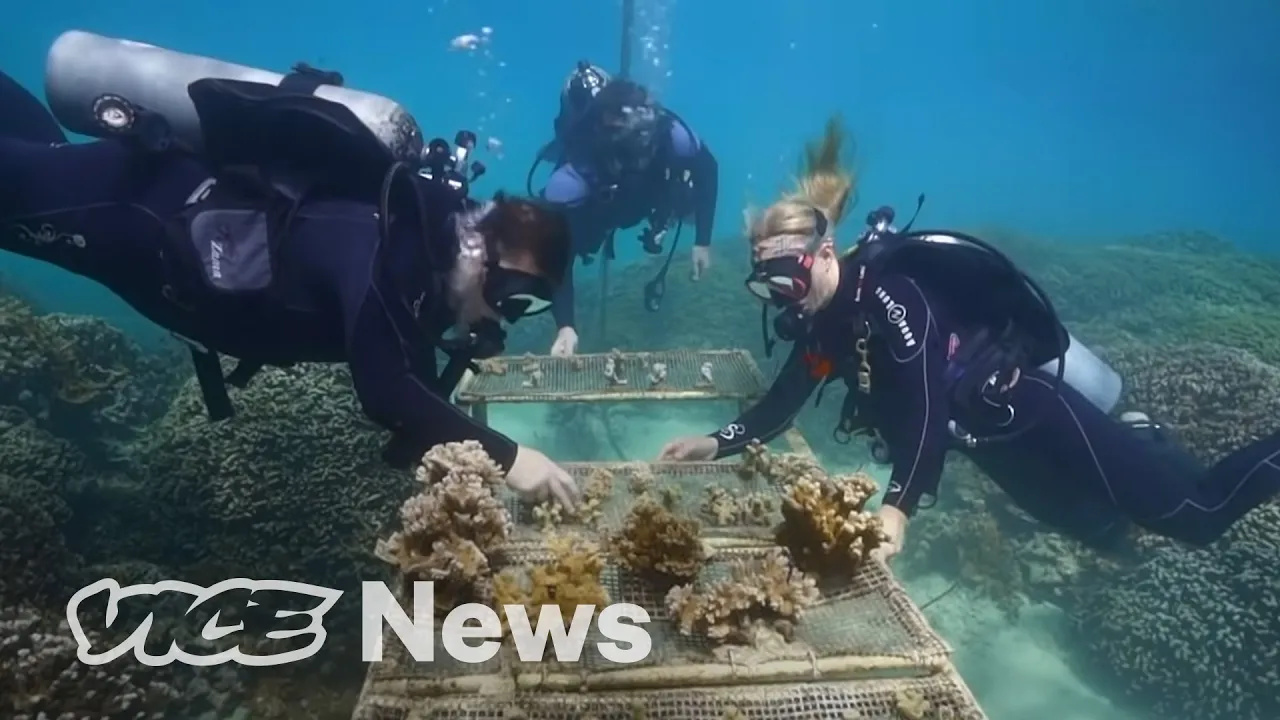
have virginian Becca give us a little bit about the work they do and then we'll get into a question and answer period and I should mention that many of you did send questions in when you registered and I have some of those on paper here so if you guys lag in your questions I'll just start reading those they were terrific by the way okay so we're joined by dr. Virginia Weiss who's a distinguished professor recently named a distinguished professor and the department head in integrative biology she's I should also mention College of Science which is also one of our co-sponsors this evening this afternoon okay dr. Weiss obtained her PhD in 1990 in biology from UC Los Angeles and she began she's been at OSU since 1996 where a group studies the intimate cellular and molecular conversations that transpired between corals and their microbial partners it's quite poetic actually these symbiosis are central to the health the coral reef ecosystems and when the partnerships break down due to environmental stress such as global warming and ocean acidification the entire reef is threatened her current focus includes efforts to build coral gem plasm repositories to preserve coral biodiversity we're also joined by dr. Rebecca Vega thurber she's an associate professor in microbiology at OSU she graduated from UC Santa Cruz in 99 receiving degrees in molecular cellular developmental biology and marine biology in 2005 she received her PhD from Stanford she's been teaching microbiology and conducting research on marine microbial ecology at OSU since 2011 her lab investigates the role in dynamics of bacteria and viruses in marine hosts and habitats in order to better understand the proximate causes of disease habitat degradation and ecosystem alteration in 2016 she won the OSU OSU's scholar of the Year award so welcome to our two panelists so alongside dr. Hughes we've got a great set here and I'm gonna ask Virginia to speak about her work for a little switch to Becca and launch into questions okay great thank you so much Jack right so if Terri studies the Milky Way I study the solar system okay so I am at the absolute opposite end of the biology spectrum of the kinds of work that Harry does but it's foundational to understanding the whole picture so it's a good example of how science even in a specific field is very diverse and that all different people from all different expertise contribute to to the understanding of whatever topic it is so what my group studies is the intimate interaction between the host coral and the dinoflagellate algae that live inside of host tissues they are and it's very intimate because they are inside of host cells in vacuoles so so I think of myself as a cell biologist so there's a lot of detail and understanding what the conversations between those partners is how do they find each other how do they make decisions about which partners are appropriate how does the host tolerate a foreigner inside of its cells how what is the currency and the homeostasis around that currency of energy the algae give the host a bunch of good stuff from their photosynthesis the host returns nutrients to the algae in return there's a lot of regulation that goes on in those processes and then so when I started my career I was very interested in all those things that I just described and right as it was unfolding there were these first Asians of phenomena that we now know of as coral bleaching and I started to study coral bleaching again at that cellular level but it was a completely separate set of phenomena that I was thinking about in my brain okay that was you know a number of years ago but now today we understand that those two sets of things that I described the onset of symbiosis the way the partners are maintaining each other it's intimately related to what's happening with bleaching so what happens with coral bleaching is that there is a stress event the best understood that what we think is happening is that the algae gets stressed by the heat and the highlight that they're in that causes reactive oxygen species just just similar to why we eat our blueberries and cranberries right we have all of these oxygen radicals that are in our bodies that we need to try to manage well the it with coral bleaching that is over that overrides the compensatory mechanisms in that symbiosis that causes all hell to break loose and it's basically an immune response in part a stress response by the host that is causing the breakdown of the partnership so these intimate things that I study have been foundational and it's not just me there are lots of people who study this but it's been foundational in understanding at the very high Milkyway level that teri talks about what's causing these these dramatic mortality events on the reef and so the last thing I'll say about where where I am personally is teri he gets to emote by by taking his plane flights and getting in the water and dramatically changing his research to focus on coral reef stress and so there's a there's an outlet for that that's very demonstrable it's very obvious it's much harder for someone like me who's I'm a laboratory person I don't I don't go diving on the reef how can I contribute to the crisis that we have and so I've really been thinking about that lot a lot over the last several years my group thinks about that a lot and so we're trying to to be mindful about how our foundational information can be more rapidly disseminated so that we can help people who are in the field to understand better about what the causes are and also to think about what are some of the radical very controversial but radical ideas that could be brought to the table to try to help the next chapters for corals in the future be it preserving them by freezing them by freezing germplasm that we could bring back ultimately to seed reefs in the future whether it be dramatic sort of genetic engineering ideas that again it's it's super hard to think about those things and it's very controversial those are the kinds of things that my group is thinking about helping in those efforts by prevent providing our foundational information that we're studying in the lab so I'll pass it over to Becky hi everyone and it's great to be here I'm a microbiologist and I started my work in the mid-2000s when a new technology had come onboard a new technology that allowed us to interrogate basically the smallest organisms and ecosystems that is the bacteria and even biological entities like viruses by looking exclusively at their genomics so I started out by essentially trying to understand what's simply in corals beyond the symbiodinium what might they be doing and how do they contribute to the health of their host animals and we started doing this in a variety of systems but I was really working in a lab that has really focused in four hours lab really focused on corals trying to understand the roles of bacteria and viruses and corals and that's kind of how I began and so for the last 10 to 12 years we've really trying to just establish a catalog of what's there and then we in my lab we do a lot of experiments where experimentalist well we like to go out into the environment or into the lab and change the environmental conditions around these hosts to understand how they shift the components of the microbiology and virology of those animals or in sometimes we do this in the ecosystem and then if we can track how those change and how they're correlated with different alterations and the animals health we can get inference about their potential roles for both good and for bad because generally people think of things like bacteria as bad things they cause disease but we're also starting to learn that bacteria can have beneficial roles we now know they're extremely important in our own animal health and physiology and they're extremely important for regulating biogeochemical cycling in the environment so what is their roles in animal health of the bacteria and if we can understand that can we actually use this as a way to if you will manipulate the host so that it can be more resistant or resilient to environmental change and so that's some of the things we've been doing and I just want to give you a little anecdote when I was in forests lab at the beginning there was a it was 2005 there's already been the 1998 bleaching event and there was a lot of concern for this but this kind of this quiescent time I guess you would say that we had a lot of of wait time before these more catastrophic events that terry has talked about it's Kurt and forest used to always say to me oh you're so naively optimistic coral reefs are in big trouble and you need to be worried about this and it needs to be constantly on your mind about how your work will affect the conservation of race and I really took that to heart and it was true I was really naive ly optimistic and I am an optimistic person and these last few years have really challenged that optimism and it's been hard to work in this field it's been hard because it's emotional and when you're working on something so intimately for so long it becomes very personal and difficult and a couple years ago because I'm a microbiologist and I'm because I'm studying this more mechanistic stuff that's not as necessarily tangible in the same way that that terry has talked about how we say if we just reduce co2 we can affect this massive change what about these bacteria and why do they matter I decided that because I was kind of having a crisis of confidence and about what my work meant that we would do something bigger we go our experiments would be bigger our outreach would be bigger our impact would be bigger and so we've worked with people here to developed videos and even a full-length feature film about the ongoing crisis and not just how it affects the reef but how it affects the people who live on the reefs and that's really been something that I wanted to point out because this isn't just a crisis of ecology this is a this is a social crisis - and like Terry said four hundred million people depend on reefs for their primary nutrition and that is a serious global issue that we need to consider and really act upon before it's too late that's great thanks for sharing so I just like to open her up now to questions and we'll have each of the panelists take the question so do we have a first one there correct I'm a fish ecologist so I'm used more the Terry regime side of things but I was wondering if from these bleaching or thermal anomalies if there's concordant reductions in diversity more than microbial or that could then equally affect or impair any recovery or resilience efforts in the future but I'll let Virginia talk about the symbiodinium ACA and in regards to that but we've done a lot of experiments like I said to change the conditions to see how the micro biology changes and then we had a we did a meta-analysis of our work as well as all of the ongoing microbiology of corals worldwide and what we found is that generally during stress instead of a reduction in diversity you see an increase in diversity and we think that's because if you imagine this is a host and it needs to control its microbiology it doesn't want foreign invaders it wants to regulate that and what we think is happening during stress is not only are there more opportunists coming in new guys new invaders but that the random leave selected from the environment and so that there's all of this new guys coming in and those new guys are bad generally because they want to take advantage of the situation of a reduced health of a host and so that's generally the turn we see and we think that's a bad thing that in this increase in diversity there's also an increase in variability as I mentioned and typically in ecology we think of increased variability in ecosystems as a good thing right we think of it as a bad thing in terms of the microbiology there might be an exception for that in terms of the symbiodinium that they contain because they might contain more thermally tolerant ones so on the algal stories is dynamic and complex part of it is hampered by and again I'm not ecologist and Terry can correct me if I'm wrong but there's still an emerging understanding of just the free-living diversity of the algae that are occurring surrounding corals there's a pretty good understanding of what's what occurs in corals and what's interesting is that some of the the we deist and the loser corals the most losing of corals Harbor the most diverse group of algae that are wimps they're all wimps right when you talk about heat stress and so there is there are phenomena that have been repeated around the globe whereby when a bleaching of that happens not a really severe one where they die immediately but one where they they're stressed and they lose their algae that other types that are more resilient can colonize for some period of time okay and so for a for a while there was a lot of optimism about these new host symbiotic combinations creating coral partnerships that could write or could be new and could write out higher temperatures over time but the reality is much more complex in fact when temperatures go back down again those symbiotic are not as productive they they don't they cause stress in the host there's no clear evidence there's signatures of stress in the host so it's kind of like a Frankenstein coral right and so they get kicked out and the the old unresisted of an overall story there is a lot of interest in understanding if there's a way to manipulate resiliency in algae right and again is it is it smart maybe not maybe it's scary but there's discussion about it and there's where the geneticists are working hard is trying to figure out ways you know developing methods like CRISPR and other things to try to see if we can at least in the laboratory create possibilities of different corals and Wyant combinations that could one day be a part of a solution we're a long way from that but that's something that's there is interest in right now Terry did you want to come in around try a new question element to bear in mind is that reefs are changing incredibly quickly in the wild so it's not just a case of of scientists doing stuff in the lab to replace the wild population the wild population is on the move and the barrier reef has just gone through one hell of a natural selection event it no one's measuring it as far as I know so that we don't know what the change in gene frequency sort of the causes mean we do know that the winners and losers story but within the given population you often see two calls of the same species side by side one of each and diet the others perfectly happy we don't know the genetic basis one impediment to the zooxanthellae approach is that most corals the spawners don't have transmission of cells and fairly from one generation to the next so when they reproduce the sperm obviously and the eggs don't have those infilling in them so they don't inherit them from their mother they have to pick them up usually just at the time of settlement so we can't manipulate those until the composition of a coral in the lab put it out in the wild and have it propagate when that coral dies that belly they may go into the sediment or live on the algae but as you said we know very little that what what wild populations of cells in theory that aren't inside a coral are doing we don't know much that side of their their cycle so I think it's really important that we learn as much as we can about these mechanisms but I think that information is of most use because it tells us what the wild populations are doing I don't see for the foreseeable future a rescue coral being being put out there so there is some work being done in Australia it's sponsored by the Australian Government where the objective is to develop a super coral with invasive properties what could possibly go wrong so you know I'm wearing an ecologist hat so I tend to think about big scales and I think about dispersal and connectivity and stock recruitment relationships and multiple generations I don't think there's gonna be any quick fix and I'm sure no one would argue that and to my mind we need to be very very careful that governments are not sponsoring coral restoration approaches as a smokescreen to allow them to have business as usual greenhouse gas emissions and that is certainly the case in Australia let's let's try another question out there it doesn't sound like a sign we can hear you okay oh okay so I was wondering if the algae themselves are negatively impact by the warmer temperatures and the bleaching events so this is a good example of where there's a lot to study and a lot of stuff just isn't known so there are there are some papers that exert examine that experimentally where corals were caused to bleach and then algal survivorship was measured but they're they're not new studies and the data were somewhat ambiguous so I would say that the jury is out on that in the laboratory you can measure that in model organisms like what we study in my group and yes you can kill algae with that but what's happening in nature is is I again Terry may know more than I do about sort of ecological level demonstration of this but focus has been on the host and really deep understanding of ecological impact you know ecological level impacts on the algae is it's missing as far as I know let's try another question we're waiting for the microphones because this is being WebEx terry has the has the so the loss of branching corals eventually if those squirrels are dying then their becoming coral rubble in you're losing rugosity in the reef has that had measurable effect on biodiversity depend on that because of course is looking after cyclones or after crown of thorns starfish egg breaks those three are different in in the trajectory of what happens afterwards so the picture I showed you of the graveyard was intact coral skeletons still standing right a reef after cyclone looks nothing like that because everything gets broken up so for a time at least the structure is still there even if the coral tissue is no longer covering that now dead skeletons we we know that there's a spectrum of response by fish to loss of corals and the fish people used the same language winners and losers so at one end of the spectrum are generally small fish that are highly dependent on branching corals things like kita Don Ted's the butterfly fish which eat eat coral some of them eat only one species so if the coral does they disappear there are blinis and gobies that are commensurate again sometimes with one species of corals at the other end of the spectrum there are some fish that couldn't care less of all the corals in the world disappeared they tend to be things like roving parrotfish that he doggy so the less coral and morality there's also a time lag between when a coral nursery disappears and when recruitment to the adult fish population stops think of if you were to kill off every newborn baby you wouldn't notice high school enrollments for 12 years so there's a time lag so many commercially important reef fish like groupers even though the adults don't depend on the corals that you've aneil do and so you get a collapse of the adult population with a long time lag our projection is that fisheries on the gray areas will decline by 40% because of the loss of coral cover but it'll be a few more years before fully unfold the top of a dead coral is a terrible place for a baby coral to settle so many of the corals that are now settling settling into suicidal habitat on top on top of the table it's going to fall so a good cyclone would be good thing for many of those intact dead reefs because it would clear it out there is an issue with rubble formed after a mass mortality then because rubbles mobile it's unconsolidated until something glues it together it's also a terrible place for a baby coral to settle so one of the interventions that people do after bleaching events is to stabilize the rubble by putting grids in mobile coralline algae and corals and bryozoans and everything else glues it together okay we have one just right in front here hi thanks I was just wondering how global the twenty the most recent bleaching event was was it up into the Coral Triangle in the Philippines and such that was a map I showed you with $100 so those hundred so those hundred locations we chose them because they cover the whole pan tropical region so 25 of them were in the Atlantic 25 were in three other regions across the in the Pacific and we picked them because we were confident we could get a complete bleaching record from 1980 to the present but to answer your question okay I'm gonna ask one from that was submitted online so I think Terry mentioned the stressors and said something about flooding but what about pollution it says how do we meaningfully reduce pollution of all kinds no chemical etc around the reef what practical actions can we take yes so one of the things our lab studies is the effects of multiple stressors so climate change is clearly the the most impactful of all of the stressors that's occurring on coral reefs and that can't be denied however there are also local stressors that are occurring like pollution and those can take many forms of sedimentation nutrient pollution from fertilizer runoff there can also be types of pollution like plastic pollution that I'm sure many of you guys have been reading about in the news it's big hot topic right now and all these forms of pollution can contribute to either exacerbating the effects of climate change or reducing the resilience in response to climate change and so that's in the that we're studying we're trying to understand if you have overfishing and you have climate change which occurs in many many places simultaneously what are the effects on the coral and it generally you know it's funny because I don't traditionally study bleaching but as things have gotten worse and worse we can't avoid it it's simply the biggest signal in all of our experiments when we're out doing experiments on pollution climate change comes along every summer and killed all our corals it's the biggest signal compared to things like nutrient pollution or overfishing it's just the big hammer that shuts the coffin close sorry that's also kind of a gruesome analogy but it's true but what can we do about it the nice thing I guess if there is a nice thing about local stressors is that at a community organic level we have the ability to as a community fight it as individuals and as populations ourselves right so it's something that we can tackle we can help clean up beaches we can do things like Lobby our government to make sure that local watersheds are clean and things like that so pollution of all kind of something that's much easier to tackle fundamentally right now it doesn't mean that it's the most important though but it is something that we can tackle at all levels including how things go into our water and how we dispose of our trash those kinds of things okay another question out there I got a super long list but I'd rather you guys ask so I've been trying to formulate this question without taking hours to explain the backstory basically with all these rising Netflix documentaries I like saving Atlantis and chasing coral and like public or the media writing new stories about science for me I think it's hard like for me when I try to educate my parents or my friends who aren't scientists per se it's really hard to get across to them and I believe to change our global emissions or to get the government to do something about this issue those hands to hold we need to you know educate them do you think what we're doing now with these Netflix documentaries is changing like or do or are there what are other ways that we can we as scientists or we as educated that educated community can help like help make it faster - yeah to help spread the information quicker and for people to understand and grasp this idea like a really big topic that's really hard to understand yeah that's many questions you're good one sorry the good ones so the the challenge with climate change as we all know is that it's so much bigger than the individual and that is so I have two kids who are Millennials right so they're roughly your age and so seeing them grapple with their future world is it has been very eye-opening for me personally and I would say that they don't have they have a different not just my children but other younger people that I've talked to you they have a different sense of what was and what is going forward and so one thing that I struggle with is trying to just let's make it let's keep it like it is now right we got to keep like it is now whereas I think the younger generation is thinking we need to look forward we need to look forward and one of the major and so forward may not look as good as back but we but for root is where we're going so the challenge there is not to turn the public off and terrify them but also to terrify them right so I don't have I haven't figured out what that balances to find that hope is maybe not quite the right right word but commitment to working on solutions moving forward in my own personal way I feel that as a scientist I have an outsize ability to do that bread compared to people who are sitting in the audience many of them but for people who are sitting in the audience who know things that who are scientists who don't work on corals I think you can be you can talk about being mindful about everyday things that we're doing as Americans we are huge consumers and so we need to think try to be mindful about that and try to make decisions and talk about those decisions and the challenges of those with people around you and bring it into the everyday because if you don't it just gets so big and so hopelessly bleak that people just stopped listening so kind of a long answer but your question was one back here Terry in my experience was talking with people all around the world about climate change and its effects on coral reefs I've taken somewhat two approaches you can talk about the biology in the ecology and you can talk about the society effects and I think people respond differently we're all different ourselves right so and it can't be a single solution because there's different groups of people who are going to respond to different kinds of messages and some people are really motivated by doom and gloom and others are not and so being honest about what the data are I think when people actually see it in front of them and you sit them down maybe the really ones who are really resistant and you'd be like here's the data let me show you let me talk to you about it make it a conversation and make it not adversarial I think people generally have an open mind as individuals I think the next level is really really difficult as individuals I think people want to help as communities when we become tribal and things like that when we become you know adversarial for example politically thought that's what really creates a lot of barriers and I have no idea how to fix that I mean I think it's not just that's not just an issue of like climate change and things like that I mean there's so many issues right now where this adversarial nature between our political groups it's it's stifling and it's created so much issue that if we don't tackle that I don't I don't know how we can tackle anything else change debates and sometimes we have information that's highly pertinent the information we garnered in Australia that I talked about had a there was huge public interest in it not just in Australia but globally so that movie clip I showed you from the helicopter I put that on YouTube and five million people watched it in the first four days so the bleaching event has changed my job description certainly I'm doing a lot more public talks and this lecture tours is part of a commitment I made to myself of not being silent about the demise of the Great Barrier Reef I thought people need to know about it and deliberately crafted a strategy not just for me personally but from the people who work in the center that I direct so we for instance we hired a media person we put a fortnightly press release we put our results before they're published we make our data publicly available we give a lot of interviews and talk to a lot of journalists and that's very time-consuming but I think many of you will agree or you wouldn't be here that the sorts of data we have and the data speaks through is important information that should be part of the public debate so we have a federal election and there are very few Australian voters but don't know that 50% of the calls on the great Barry who died in the last and they know that because we told and that hasn't always been easy there's pushback people who are early in their career often particularly reluctant if you work for a government agency and many it's not good beer to speak out it's the current government is anti-science or which country is that fine so you know as I said at the very beginning I think it's a moral responsibility for citizen scientists and I mean that as meaning scientists - of course our citizens to be vocal because we have a story to tell it's the truth and people need to know okay let's try through one more question yeah have you seen Argos maybe not Lydia has he collected yet but are there any alternative recruiting organisms maybe not our far away builders by our ecosystem builders that could help maintain Carly organisms well that's a good question so in in the coral reef ecology literature we took we talked a lot about regime shifts or alternate states which means the historical condition over reports dominated by coral is replaced by some other ecosystem so looking to the future whatever the warming scenario is there won't be a blank slate underwater off the east coast of Australia there'll be a tropical either but it may well be dominated by sponges or by seaweed if that's the case because it's too hot for the corals then it won't be a coral reef by definition of car it will be a very hidden kind of ecosystem with different ecological fun with different goods and services there probably still be a fishery but it won't fish fishery it didn't it could be a sponge I think most people would make the value judgment that a transition from the current type of ecosystem that looks like that to something with lots of seaweed or and something that's not and so that's why keep the current condition of the reef even if the mix of species changes we wanted to be Carlo dominated with not too much out of the or or other stuff that could replace speak first nothing personally again so cold so soft curls are quite common on any end of specific research they're related to heart calls but they have a different skeletal structure they didn't do so well on bleaching some of the it's a very broad category of species that range from very long-lived to very so the same sort of spectrum that they have a reputation for getting in after the corals die but I think it probably overstated that there are lots of other things that do that I don't see them as a threat to the reef they're quite toxic because they don't have a heart still looking to defend themselves against they don't it's a great Google it and check okay great so thank you for the questions and let's before I thank our panelists I want to invite you to come out look at the booths as you go by and then join us for refreshments and posters next door so thanks again to our panelists [Applause] you
Up Next

5:38
Coral Nutrition Explained: Reef Energy & Feeding Guide
@Redseafish
45.3K views•2012-01-09

12:54
Triumph of Orthodoxy Icon: Byzantine Art & History Explained
@BenCallan
2.1K views•2024-08-06

9:49
FastAPI vs Flask vs Django: Choosing the Right Python Web Framework
@TechWithTim
302.5K views•2024-05-26

1:42
Game of Thrones Opening Credits: A Cinematic Analysis
@gameofthrones
46.3M views•2011-04-18
Related Study Plans & Knowledge Roadmaps
Structured learning paths in General & Interdisciplinary Studies
general-studies
Elevator Engineering: History, Physics & Cities
01From Hoists to Safety Brakes: The Dawn of Vertical Lift
02Hydraulic vs. Traction: The Engineering Physics of Elevators
03Modern Speed, Safety, and Algorithms
+ 2 more learning modules
12h5 modules
Explore Roadmap
general-studies
Rubber: Material Science, History & Geopolitics
01Origins of Natural Rubber & Mesoamerican History
02The Chemistry of Natural Rubber & Vulcanization
03The Geopolitics of the Rubber Boom & Colonization
+ 2 more learning modules
12h5 modules
Explore Roadmap
general-studies
Containerization: Evolution, Logistics & Trade
01Ancient Trade & Bulk Cargo: Amphorae to Barrels
02The Industrial Revolution & Cardboard Packaging
03The Containerization Revolution: Malcom McLean
+ 2 more learning modules
12h5 modules
Explore Roadmap
general-studies
Textile Tech: Evolution, Labor & Global Impact
01Pre-Industrial Textiles: Handloom & Cottage Industry
02Mechanization: The Spinning Jenny to the Power Loom
03The Factory System & Global Labor Transformation
+ 2 more learning modules
10h5 modules
Explore Roadmap