











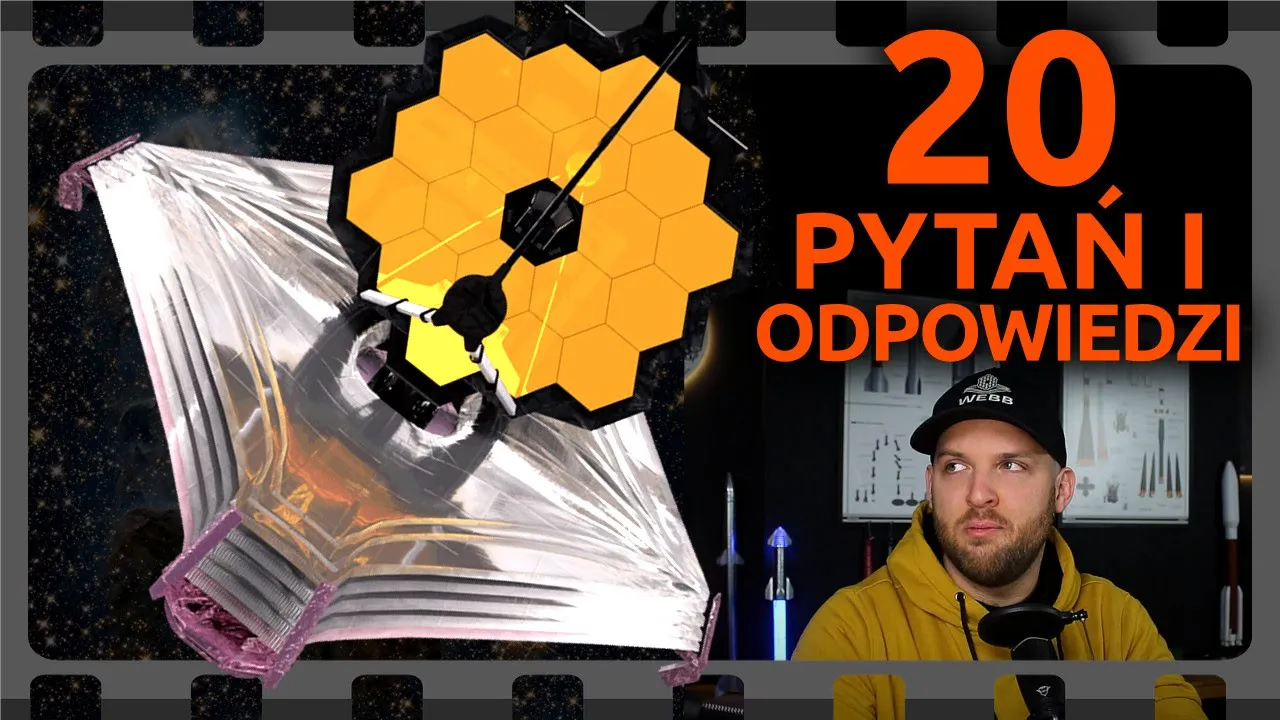

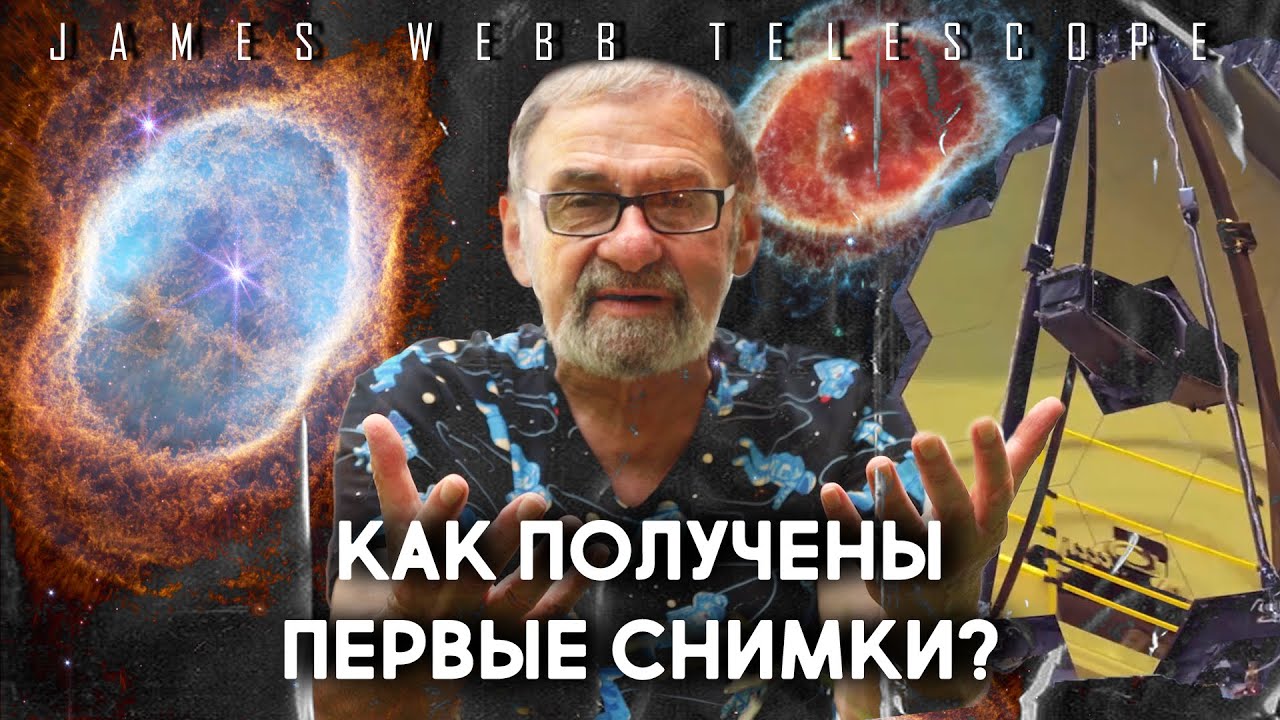


The James Webb Space Telescope is currently at approximately 40% of the distance to the Moon (about 149,000 kilometers) from Earth. As it continues its journey to L2, this distance will increase significantly. The presenter uses JPL Horizons to track the current distance and position of the telescope.
Amateur Astronomy: Tracking James Webb Space Telescope to L2
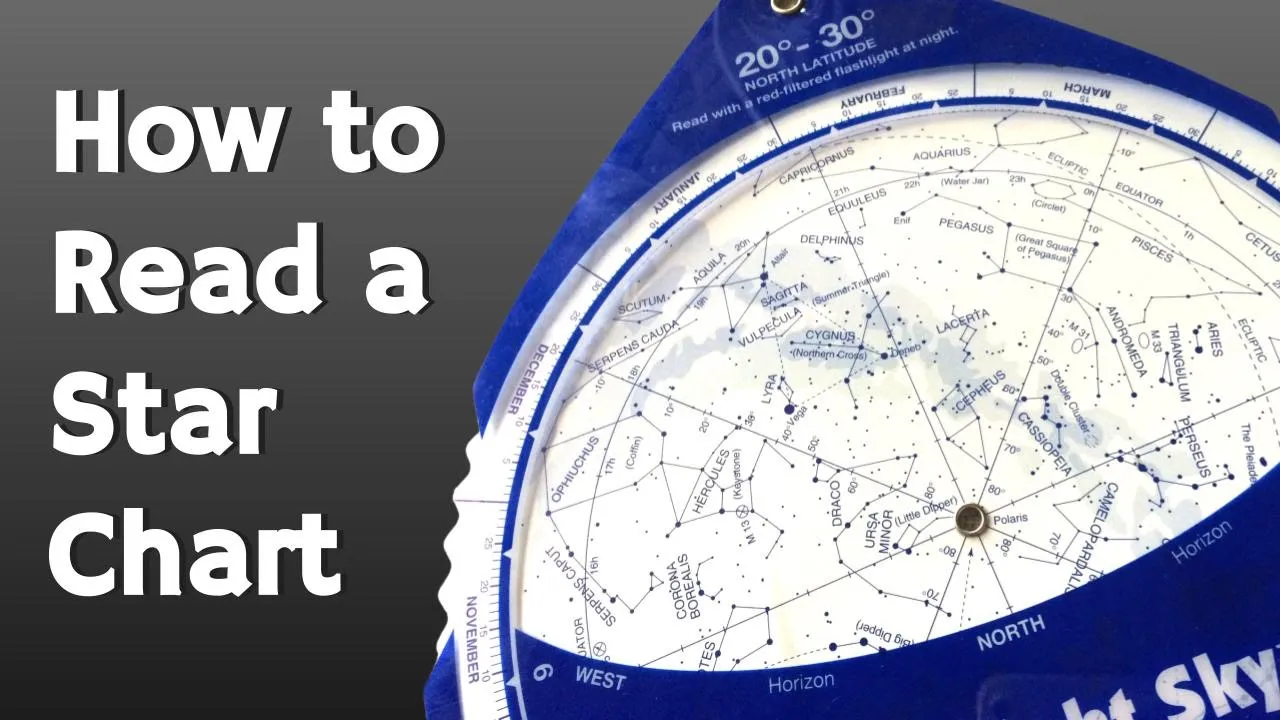
Added:Basic celestial coordinates (Right Ascension and Declination) used to locate objects in the night sky.
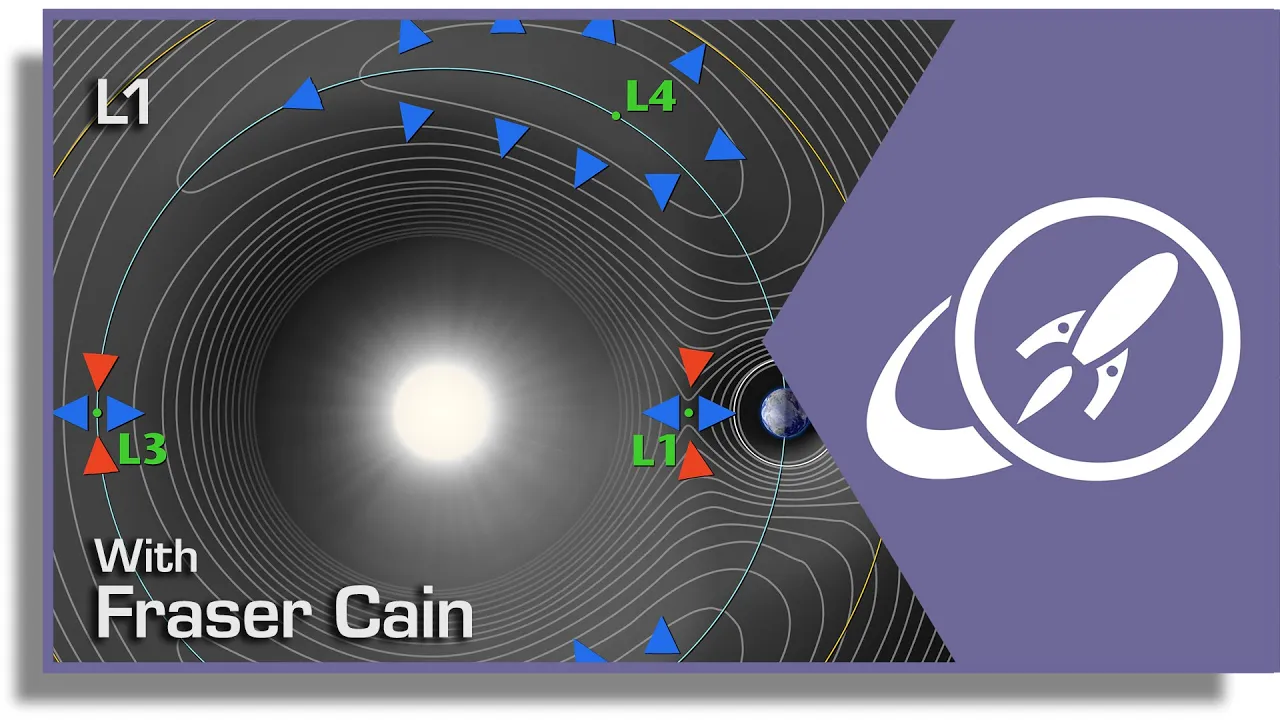
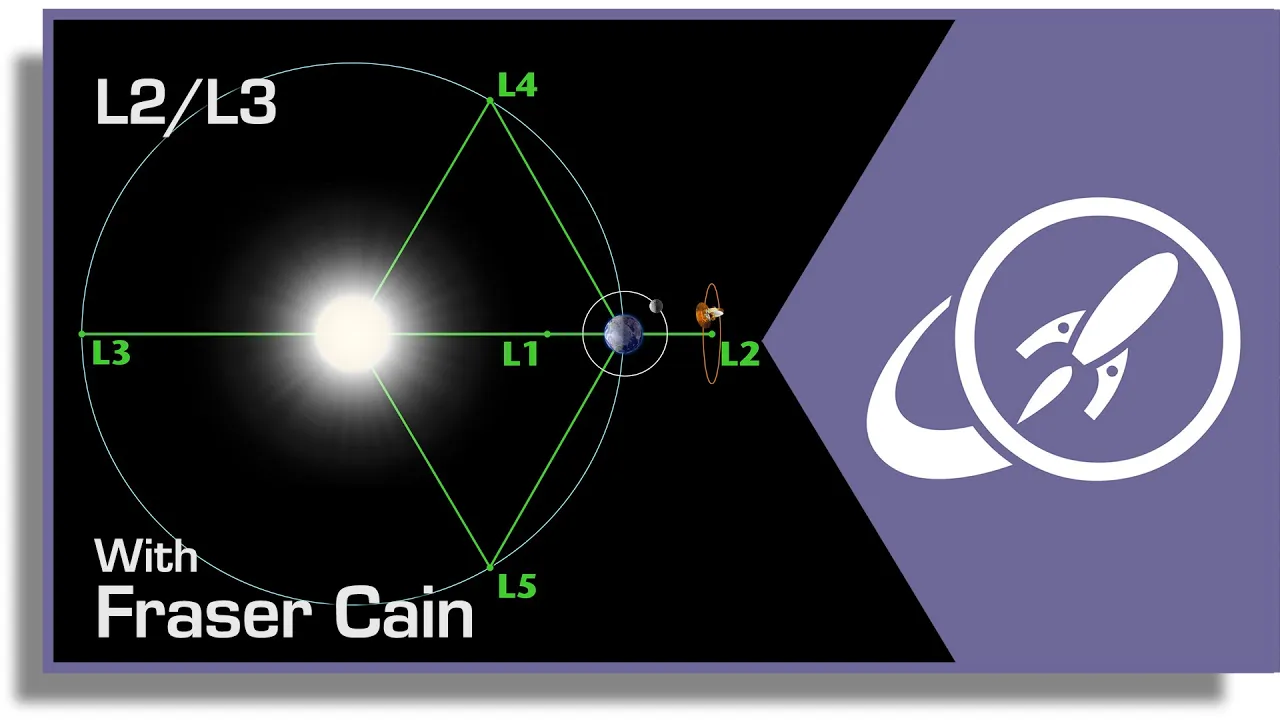
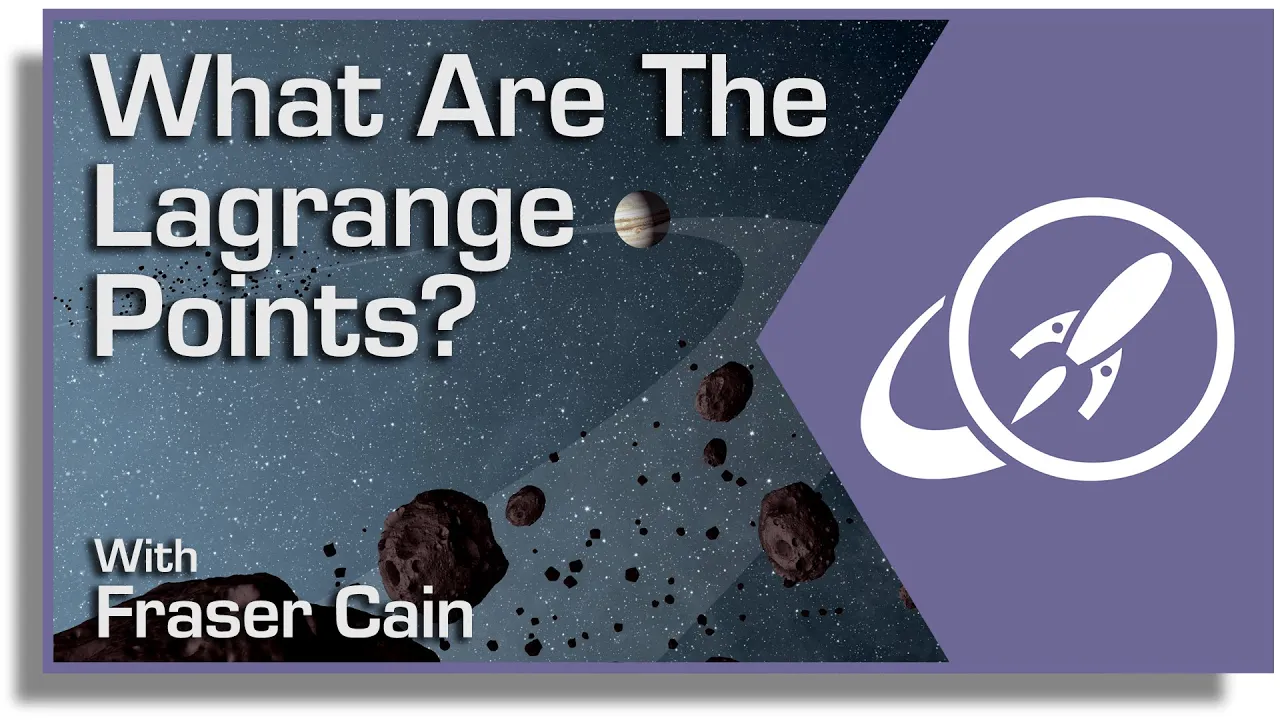
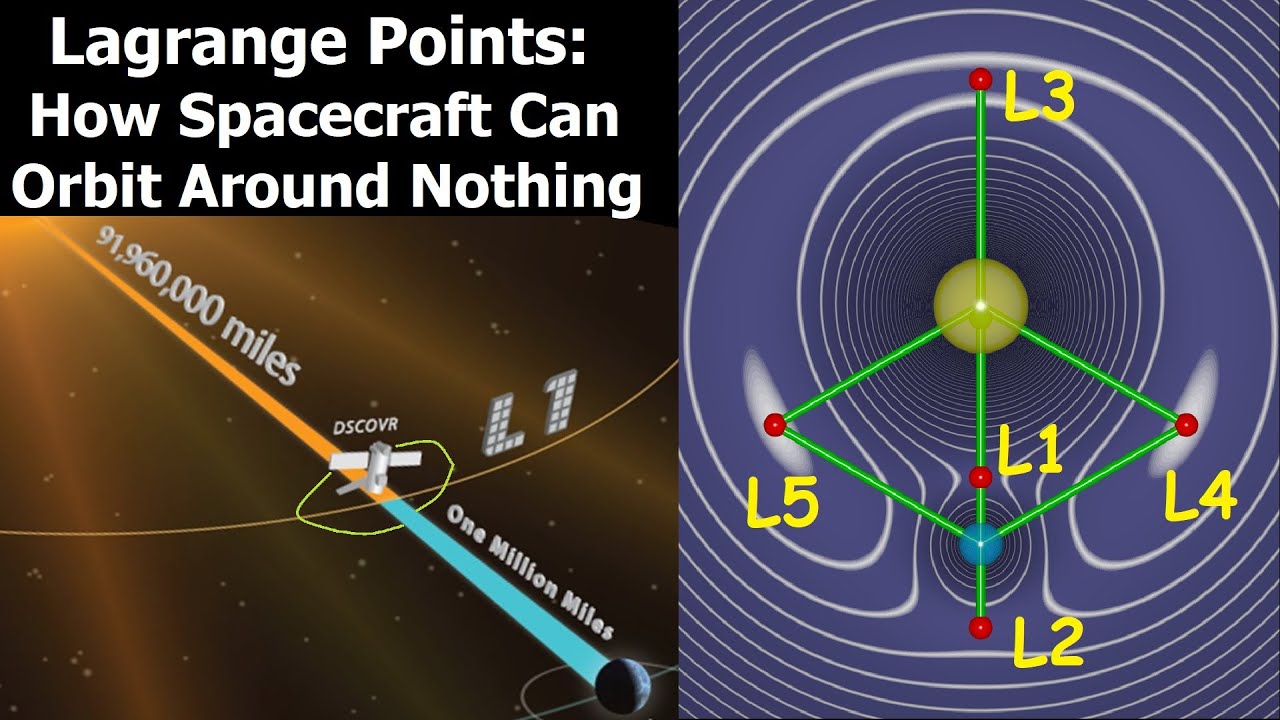
The concept of Lagrange points, specifically the gravitational mechanics and stability of the Sun-Earth L2 point.
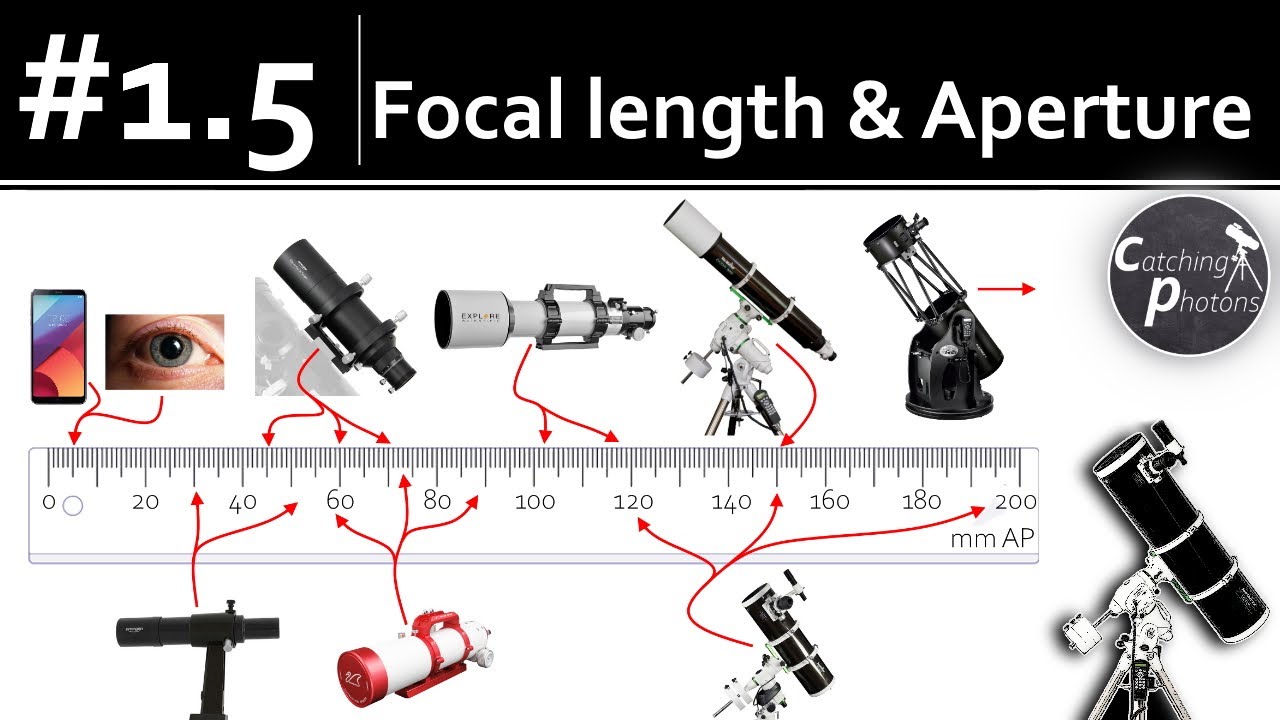
Fundamentals of optical telescopes, including how aperture size (such as an 8-inch telescope) affects light-gathering power and resolution.
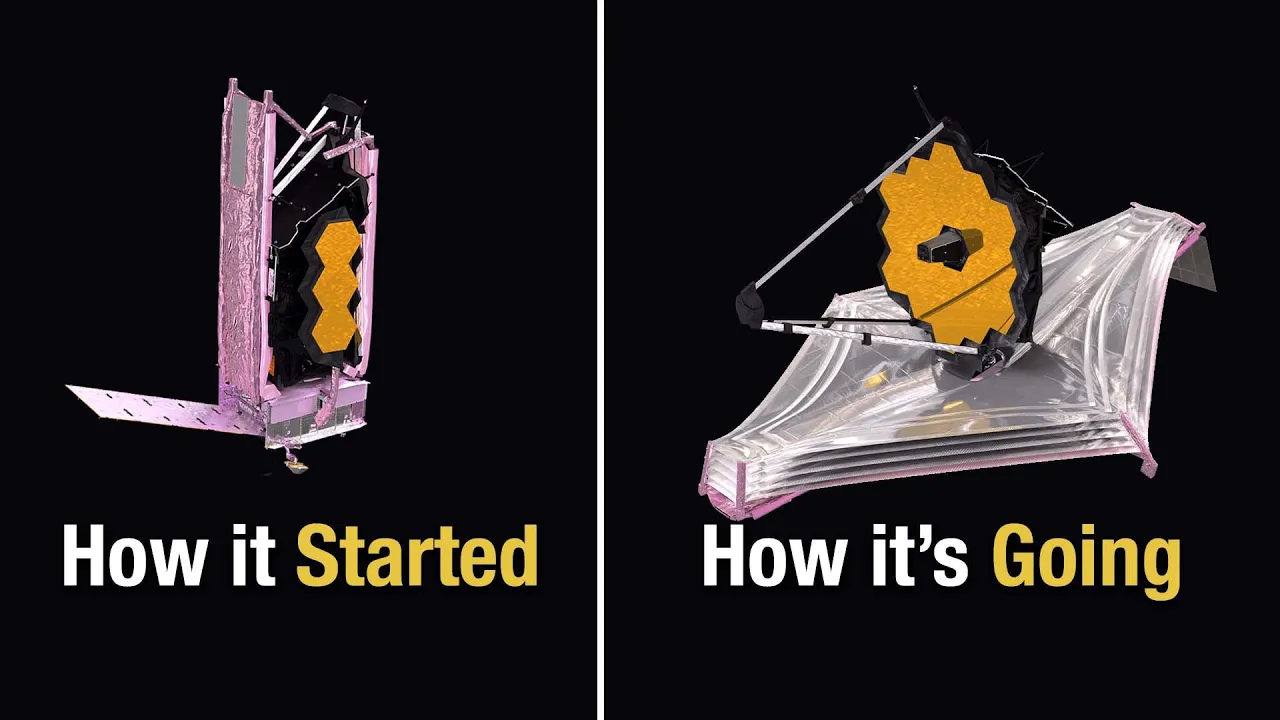
An overview of the James Webb Space Telescope (JWST) mission, its launch, and its deployment timeline.
Advanced astrophotography and image processing techniques, such as frame stacking, tracking moving targets, and sub-pixel alignment.
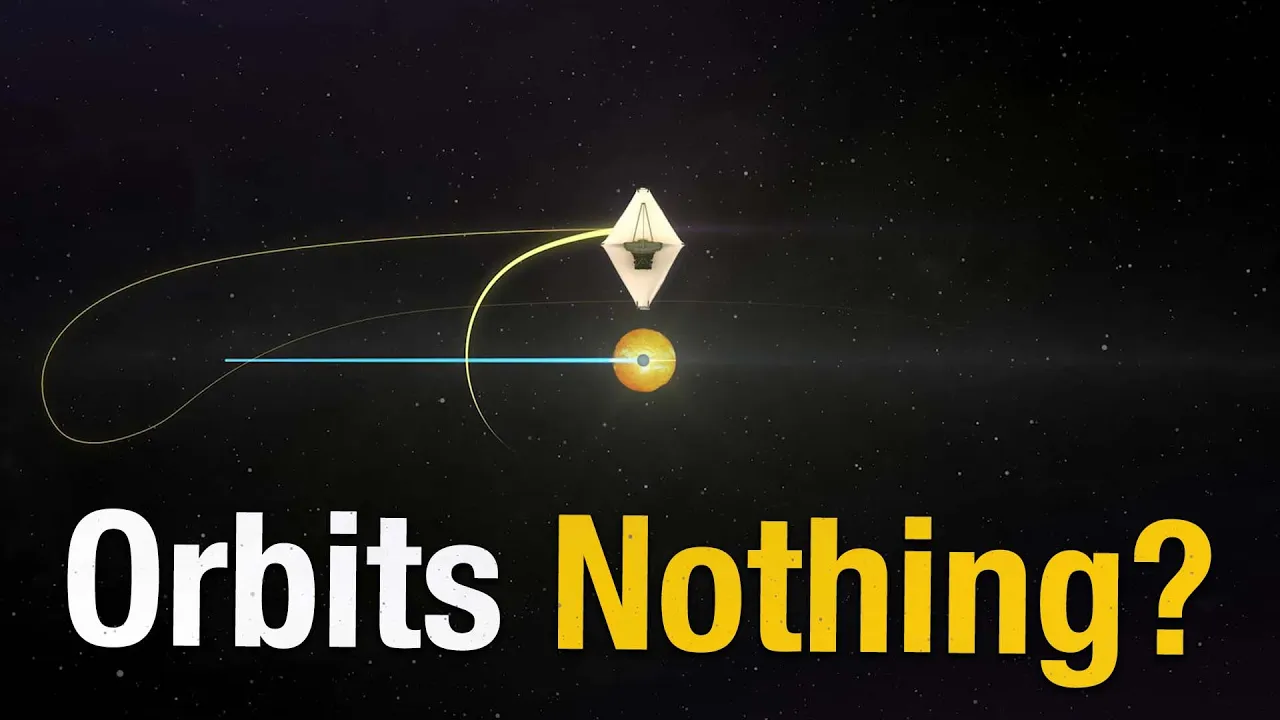
The orbital dynamics of non-Keplerian orbits, specifically halo and Lissajous orbits used by spacecraft at L2.
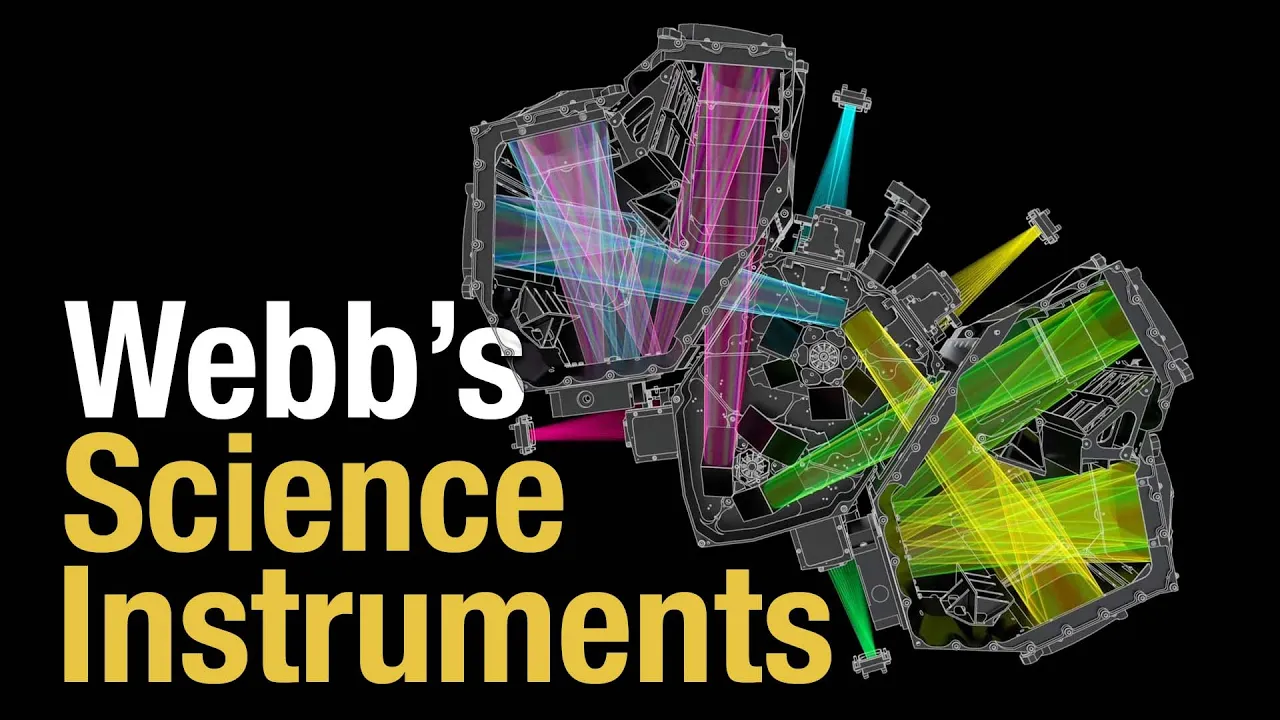
The science goals and operational mechanics of JWST's infrared instruments (NIRCam, MIRI, NIRSpec, and FGS/NIRISS).
Opportunities for citizen science in tracking near-Earth asteroids, space debris, and active interplanetary missions using amateur gear.
404.1K views10.3Klikes0:42Original Release: 2021-12-26
hey guys this is garrett wong also known as instant harry kim from star trek voyager and you're watching astronomy live t-minus 10 9 eight seven six five four three two one zero hi folks welcome to astronomy live right now we're taking a look at beetlejuice beetle guys as some people pronounce it so i'm just trying to double check that we're in good shape that the ccd is not frosting up looks okay i just changed the desiccant earlier today merry christmas to everyone a special christmas present arrived in space for astronomers early this morning here by the eastern time zone that was the launch of the james webb space telescope so yeah i'm deliberately overexposing the heck out of beetlejuice right now just verifying i'm not seeing any signs of ccd frosting up or humidity left in the chamber looks okay to me looks okay to me i think we're in good shape on that okay get some interesting internal reflections there from over exposing it that much so now i'm going to calibrate the auto guider so bear with me a minute i'll calibrate the auto guider and the adaptive optics unit so tonight we're going to try to chase down the james webb space telescope and follow it as it travels away from earth towards its destination a halo orbit around the lagrange 2 point or l2 point why aren't you happy with me about that i don't know let's make sure i take out the slack on the gears okay that's good i'm gonna calibrate the drive and go for it so merry christmas everyone it's a beautiful night tonight a little bit cool good for the camera and a perfect night to do some deep space astronomy yeah the only amateur astronomer you know that probably has the oldest adaptive optics system ever to reach the market the a07 guys who use these systems have generally moved on to newer versions but uh i'm still rocking the original a07 because it's compatible with the st2000 which is also an older camera but still decent still good in my opinion and to be to be sure this was not cheap equipment when it came out the combined cost of this camera and this adaptive optic system outweighs the original retail price of my telescope okay so let's check the settings on the calibration as expected it's asymmetric about the y-axis well i guess about the x-axis technically mathematically speaking but anyway we'll fix that that looks good and then we'll do some adaptive optics calibration calibrate a um hopefully if we find a decent guide star near jwst i haven't planned for that at all i'm just taking a stab in the dark and hoping that uh we find a decent guide star nearby okay let's check the ao calibration looks like normal okay so we should be let's see we are currently 904 pm eastern that's gonna be to yeah 204 universal time okay oh let me make sure i've got the right because i know i don't know i don't yeah i need a parent right ascension declaration okay so we're now 205 reversal time to december 26th okay i'll go ahead by a couple minutes of its current position all right so i'm going to slew the telescope over to jwst now looks like we're still in the constellation orion just eyeballing it it's not too far from beetlejuice and rigel and all that good stuff right let me do something here real quick turn that on for a second okay turn that back on alright so do a one minute image on that ultimately we'll go to one by one binning autoguider tell me tell me something good oh we got a star okay we got a couple stars that's good that's what i like to see we just lucked out on that see if i can get away with 0.2 seconds guiding and it looks like i can it's decent okay so we're guiding it four hertz i'm just gonna double check something before i get carried away make sure i'm gonna save the images and retain them not just discard them yep we are good on that so let's start taking pictures we're going to do one minute exposures to start with and see how that looks hopefully we're above the trees we're close to the tree line but it should be just above the trees i tried to plant it a little bit on that basis and yeah kaiser cube exactly isn't that cool jwst because it's going to be at l2 so for those who don't know the lagrange point 2 is on a line passing through the sun and earth and it extends out behind earth by about a million miles or about 1.5 million kilometers roughly and so because of that and because jwst is going to be orbiting that point it will always be directly behind earth more or less it'll always be on the night side of earth and should be visible from around the world pretty much so it will provide a sort of constant target to telescopes around the world where you'll be able to watch it and use it say to measure its distance with a couple of telescopes taking pictures of it simultaneously hint we might do that tonight just for the heck of things and i think it might already be right here in the frame i suspect that elongated looking star i have a guess that that is jwst maybe jwst passing next to a background star we'll see on the next frame also i need to turn off my christmas lights i'm noticing some significant glare one second right so for half this frame this one minute exposure the christmas lights were still on but after that it should uh it should get better my office light's also on i'm not sure if that's going to create a problem or not if it does no big deal i can go turn it off probably should anyway hey it's jwst and interesting that notice how it was um it wasn't perfectly even in thickness it still isn't i'd say it's thicker on the top right side than the bottom left side which suggests to me it's varying in brightness relatively quickly normally we associate that with a tumbling object well i hope i didn't get it giving anyone a heart palpitation just now uh i'm hoping jwst is not tumbling but it could be rotating or doing something they were going to do a course correction maneuver oh about an hour and a half ago um and maybe it's still reorienting itself it's also got that shiny foil material all over it for the sunshield and the protective material on it that stuff is going to change its brightness very dependent upon the the sun angle and so as it passes by of course it could vary in brightness as well now it's a little more stable maybe but still i'd say yeah it's a couple things to note you know it's moving significantly it's fairly bright to the telescope now um when it gets to its final destination and deploys the sun shield according to the math i did uh the apparent magnitude should be on the order of about magnitude 15 or so definitely within the range of amateur telescopes with deep space ccd cameras like this downright bright to a camera like this to be honest um you don't start to get too challenging objects with this telescope in this camera so you get to about magnitude 18 or so but um not necessarily visible to most small telescopes with just a regular eyepiece could be quite a challenging object to see not out of the realm of possibility though it's about the same sort of brightness as the central star in the ring nebula so for some reference there if you can see the central star of the ring nebula uh there's a good chance you might be able to spot jwst with your telescope but that does require some significant aperture to do but that's all approximate at this point we'll see how it actually pans out hopefully everything goes okay with the deployment and we don't have any issues so i don't know if you guys can see my mouse cursor i'm going to put a box around where it is right here you can see it moving frame to frame quite significantly that box will disappear on the next on the next frame but yeah we have it we have live images of jwst i noticed during the webcast of the launch towards the end when they showed jwst separating from the rocket they said this is the last view humanity will have of jwst as it heads out to l2 and i i took exception to that comment we have a view of it right now live for you here on youtube uh thanks to the telescope my telescope watching their telescope granted it's not nearly as much of a close-up it's just a point light source strike streaking away from us but uh there it is nevertheless which dot does it chuck white ass so it's the one i just put the box around i don't know if you saw that it's uh it's this elongated streak my cursor is pointing at it i'm not sure if that's coming through let me change which window's active i don't know if that's coming through in the stream or not hopefully it is at least now that i changed which uh which window is active should come through text dog object in obs it's not a bad idea i like that idea it's better than trying to fool around with working with my mouse cursor manually text object here we go okay that's way too large i guess i can just shrink it right yeah i can shrink it there good call sam which direction is it in the night sky well right now it's basically in the constellation orion roughly i'm just eyeballing it here but yeah it's probably within the borders of orion it looks like it's uh a little bit below ryan's belt maybe yeah it's near rigel yeah it's a good good point of reference there kaiser cube so now the next question that is on my mind can i get it at the same time right now with itelescope using a i telescope to control a second telescope somewhere else in the world to get simultaneous observations to measure topocentric parallax and directly measure directly measure the distance oh well that's not good hmm so the story is new mexico skies currently closed which is surprising because it looks clear but there is a cloud front there on their horizon they might have had rain or clouds completely blocking them and looks like california's got rain so the answer to that is probably no cloudy in spain it was cloudy in new mexico and they closed the observatory and it's cloudy in california so the observatory is closed so mine's it for tonight but as kaiser cube previously mentioned and uh as we discussed this is going to continue to be a target a viable target for its whole life basically uh so that means it doesn't matter so much because we can get back on it at another at another time we can get back on it a later night and uh do simultaneous observations so we'll save that as something to come back for so we'll return to jwst later at a later night when i can get on it with a second telescope unfortunately right now all of my options are clouded out uh or otherwise closed and so i cannot actually fire up any of the eye telescopes tonight that's a shame but not a huge shame because unlike some more transient events like when we attract perseverance or uh rose um not rosetta um gosh what lucy when we tracked the lucy recently we only had uh really one night where it was close enough for my telescope to see it so with this it's a whole different story it's going to continue to be something we can observe even more frequently than the hubble space telescope which normally for me is a very frequent target of opportunity because because it was launched due east out of florida the orbital inclination brings it over florida again on a fairly frequent basis but for jwst it's even even better because it's going to be basically visible any given clear night at the l2 point where it's or it's going to be orbiting around that point some knights will bring it uh higher up into the northern side of the celestial sphere and some nights will bring it lower into the southern so sometimes will be preferable to others but generally speaking it will be more frequently visible than any other space telescope i've looked at with this telescope ever capture the latest chinese space station not yet that's one i i regret not capturing yet should definitely try that my friend phillip smith has captured some fantastic pictures uh just captured all kinds of detail uh on that space station with his telescope and so if you go look him up you'll see some some great captures of tiangong i can't pronounce it but the chinese space station at least six months before we get photos of jwst yeah it's going to be a long commissioning process i see you're answering uh kaiser souza looks like yeah so don't feel so bad boris about it being cloudy in bulgaria uh even if you can't see it tonight as long as you have a decent telescope and a decent deep space camera or hmm could even try some fun with the cell phone that might be one i've been wanting to make a video about just how deep you can go with a cell phone these days with the astrophotography mode on say a pixel 4 which is what i have or you know any newer iphone you can do some decent entry level deep space work that honestly captures better images than what i captured when i bought my first digital deep space camera which was the mead dsi one back in the day and that that rather low quality camera uh had a low resolution sensor it was it was kind of terrible to be honest and it finally burned up on its own it didn't have a fan or anything that it came with it was just uh passive peltier cooling and it didn't didn't last really the phones we have now with their night modes their astrophotography modes can capture a much better image i would still say this camera beats it uh this deep space camera i have here still is going to capture a much better image than mounting a phone to an eyepiece but nevertheless you can you can dip your toes in the water and and capture some decent images with just what you have in your pocket already and i'm curious to know just how deep you can go like can you get a magnitude 15 uh shot of jwst probably if you have a large enough telescope so i might try that for fun at some point oh kaiser cube asks do i know the angular angular inclination as the orbit goes north and south relative to earth uh i don't know off the top of my head how far i think what you're asking is how far north and how far south and declination will it get i'd have to look i i don't know off the top of my head tianji one ah yeah so you found the the philip smith's picture of that sam yeah he did some really good work on that recently i was impressed any l2 explanations can't seem to grasp ah all right the way i think of it uh might not be the most intuitive but the way i think of it is okay you have the you have the telescope headed directly away from the sun relative to earth right so it's going to be sitting or really orbiting a point that is on a line that passes through the earth and the sun and you might think well how is that a gravitational balancing point but look at it this way earth takes one year to go around the sun once right if you are orbiting a little bit further away than the earth is from the sun you should take a little bit longer to orbit around the sun but if you're at this gravitational balancing point known as l2 the combined gravitational force of earth and the sun working together on your spacecraft will yank you along so that it only takes you one year to go around the sun once even though you're a million miles more distant from the sun than the earth and then that way it stays with the earth as it orbits around the sun and so from our perspective traveling around the sun it appears to be orbiting an invisible point directly away from the sun in our sky and just hanging out with us traveling with us around the sun i hope that helps make some sense of it for you and then a similar vein but sort of in an opposite direction the soho satellite is at the l1 point uh so is discover uh the discover satellite it's basically orbiting the opposite lagrange point closer to the sun than the earth by about a million miles and also because of the combined gravity of earth and the sun acting on it it's at this gravitational balance point where it still takes a full year to go around the sun even though if the earth weren't there it should take less time to go around the sun once because it's a million miles closer to the sun than we are but obviously for jwst it makes more sense to put it at l2 where it's a little bit further from the sun and can get cooler oh looks like i got a shout out from everyday astronaut thanks man thanks tim seems like he might be watching is he in the chat i haven't seen him well that should that's probably gonna break in a few viewers i suspect yeah my twitter notifications have now formally exploded i'm gonna mute that sorry oh that's cool see oh and we have a super chat from tim dodd the everyday astronaut for 19.99 thanks for doing this scott super cool thank you thank you tim appreciate it so glad i could do this for everybody tonight i tell you what my my nerves were a little frayed this morning watching that launch and just holding my breath for the whole thing uh but that that final sight of it separating from the rock it was just absolutely gorgeous so of course i had to put that as the thumbnail uh on this video thanks tim i appreciate it i mean the great news like i say about jwst is honestly it will be a target available to people all around the world constantly and i suspect even with the equipment and technology we now have in our pockets you have what it takes to do it if you have a just a simple eyepiece mounting tool and a telescope that can track i might even try it it's quite a challenge but i might even try it with my four inch neck star scope just this tiny little grab grab-and-go scope that's about 400 bucks and i suspect with this phone and that telescope it might even be possible once the sun shield fully deploys because that will create a nice big reflective surface aimed back at earth did i see the speed change with the burn i didn't see the burn unfortunately i was able to get on it just after 9 pm which it looked brighter in the very first frame i haven't seen that happen since makes you wonder if something happened there where they were altering the orientation of it a little bit during that moment which is pretty cool it might have been a just a random sun flare just naturally by the angle of the sun to the to the telescope uh but whatever the case it was definitely definitely at a moment of brighter uh magnitude there in that very first frame during the webcast here so i'll go back and review that for sure so after this is all done tonight all these frames are going to be put into a time lapse video which i'll post so you can see it moving here against the background stars and uh might take a closer up look at it to see what's going on there in that first frame where it was brighter thanks rent-a-cal yeah i haven't covered the the equipment i'm using right now yet but this is an as you said eight inch lx 200 classic with a f point six three focal reducer on there and an s big st2000 xcm camera which is a single shot color camera true color uh and also has a uh s big s s big a07 adaptive optics unit in use currently guiding it about four hertz and 499 super chat from brandon music thank you very much ah so that's a great question tim can i explain for those of us who are new here how i know it's jwst and how i knew where to look so i downloaded the coordinates uh the ephemeris where it was predicted to be from jpl if you go and google jpl horizons you'll find a website and a web app where you can download the orbital elements and or the coordinates of various nasa spacecraft including jwst and you can you can set your location and get the exact right ascension and declination coordinates for anything that you want to happen to be tracking and so i pulled up the coordinates for jwst put that into the telescope hand controller and basically hit slew and sure enough right in the middle of where the telescope was pointing was this little streak moving relative to the background stars now in a few minutes maybe 30 minutes or so it's going to get closer and closer to the edge of the image and at some point i'm going to have to move it and what you'll see is it should re-center just by me plugging in the new coordinates of the telescope because my telescope will be moving hopefully in the same direction as this object so we will have absolute confirmation at that point i could also solve for the orbit and that's something i will ultimately do is basically solve for the coordinates in every image that i've taken tonight using the stars as a reference point so that's called astrometry and you can go to nova.astrometry.net and upload images including the ones you're seeing here and it will give you the coordinates of every pixel in the image and then you can use that to measure the orbit over time if you know when the picture was taken where the picture was taken in this case florida and you know uh the coordinates based on the astrometry you can solve for the orbit uh i just watched the movie don't look up earlier today as a matter of fact and i thought it was a little bit funny in in the in the intro and the premise to this movie some astronomers find a comet that's on an impact course for earth it's kind of a comedy but um bottom line is they they sit around in a in a lecture uh auditorium sort of uh with the whiteboard and they're trying to figure out by hand what the orbit of this comet is based on the astrometry and the funny thing is like in reality no one does it that way anymore no one uses the method of goss which they reference nobody does it by hand you can just plug it into a program like find orb and get instant results um and that's what any reasonable person would do if they found a new comet so that's that's the beauty of modern technology we can just plug these things in and get our answers right away and that's that's something you do you can do here you can independently solve for the orbit of the telescope and in that way confirm that it matches the orbit that nasa predicted for the telescope so that that'll be the final nail in the coffin as it were on the identification of this object but i'm i'm already 99 sure this is jwst it's the right brightness i was expecting it's moving in the direction i was expecting and it's uh it's uh it's the right um about the right amount of motion in each image but i'm eyeballing that a bit so we'll see some further proof when we re-center the target here in a bit and pull up the new coordinates off jpl uh not tonight so i do have custom tracking software for doing things like this called neo tracker it's designed for for doing this tracking objects near earth objects but for this it's not moving fast enough that it's really necessary uh if it were moving a bit faster where it's covering more of the image in each frame i could use that to dynamically track it where the telescope is moving to keep up with it instead i'm electing to just move to a static set of coordinates and track them the relative motion of the background stars rather than the telescope itself which is why the telescope is streaking and the stars are solid little points that allows me to use the adaptive optics as well the adaptive optic optics depend on a guide star so a random star nearby that it's locking onto and you can see that that star in the top left corner there shifting constantly it's measuring how much the atmosphere is shifting the image how much the telescope motors are shifting the image and it's compensating for that about four times a second right now and that produces a much sharper image that way what focus focal length is this so this is a two meter focal length telescope but with a.63 focal reducer so uh what is that i can't do the math of my head right now uh so the the effective focal length times 2 000 is i should have known that 1260 1260 millimeters and looks like i missed the super chat here from walter bisland for uh 20 chf thank you very much for doing this for us thank you walter appreciate your hard work and everything you do that's uh he does some incredible work uh modeling various things including flat earth predictions and things like that showing how they don't work basically but at a much higher degree of rigor and detail than i could even do oh sam yeah so maybe we're not far enough away but i may be able to try to track it tomorrow if the weather holds up that would be cool if you could track it from where you are actually that might start to produce enough topic-centric parallax to be detectable it you'd be surprised you don't have to be super duper far away our distance might be just enough depends on what camera you're using uh you've got the the next r4sc as well right so now maybe just maybe it's worth a shot anyway wouldn't hurt so what are you looking at danny so you're looking at jwst the giant the james webb space telescope moving against the background stars right now it's that little streak that uh the cursor is pointing out there in the in the field of view and you'll see it moving from frame to frame each frame is a one-minute exposure with a deep space camera an s big st2000xcm on an eight-inch meet alx 200 classic telescope and so we're tracking the stars and allowing these the james webb space telescope to streak through the view and you can see it moving frame to frame there what's one thing i want to see with the web oh that's a great question i i mean the first and foremost thing i want to see with the web is its equivalent of the hubble deep field i think that would be awesome for them to to do that kind of work looking back you know to the edge of time almost to the beginning of formations of galaxies and stars and see what that looks like that cannot wait that is going to be amazing canon m50 no special adapters other than the t adapter well with the t adapter i can like i can lend you uh sometimes we if we meet up i'll lend you a one and a quarter inch nose piece adapter for that t adapter i've got a ton of them grey man media how much do i think the jwst will be able to see in the next year can the telescope see multiple images with each mirror um i'm not sure if they're going to configure it to do that i think it's all going to be pretty much configured for a single image i could be wrong but as far as i know what the way they're commissioning it they're going to try to align those mirror segments to produce a single unified and very crisp image as far as what i think it'll be able to see in the next year i mean again i'm hoping sometime in the next year we can get its first look back as far as it can look well not as far as it can look but at least as far as hubble's look maybe farther into some deep field where we're seeing back to the edge of basically the edge of formation of galaxies in the cosmological time scale i mean just billions of years in the past uh looking back even further than the hubble deep fields that will be amazing that will be that'll be absolutely fantastic to see what is the distance from earth right now great question let's look it up let me look it up off of jpl right now so according to jpl we are now at 2 39 universal time and according to jpl looks like the distance is 0.0009 astronomical units i'm reading that right is that the delta there's the top here yeah that's delta okay so is equivalent to 149 106 kilometers so let's see here that is going to six divided by 384 400 that is 0.3 close to 0.39 times the distance to the moon so almost 40 percent the distance to the moon away and it's gonna get further than the moon much further than the moon um once it gets out to l2 the the ultimate destination it's lagrange point two did they say how long to zero the mirror so yeah it's gonna take about six months uh it's a slow process of gradually cooling down the telescope's instruments cooling down the segments of the telescope getting it down to its operating temperature and aligning and commissioning the mirrors that whole process these mirror segments that it is made of uh are designed to be aligned and moved relative to each other to sharpen the focus and get the best possible image so that whole process is going to take about six months thanks sam yeah i'll add i'll add some spambot text to my block words list later i was not uh not anticipating the shout out so thanks again tim dodd appreciate it we've got almost 2 000 viewers now so i tell you what now that we have almost 2 000 viewers and it's been a bit we've got about 29 images down now i'm gonna hold on yeah i'm gonna go ahead and stop the image taking for just a second and we will move the telescope and make sure that we really are looking at jwst by pulling in the latest coordinates and seeing if it re-centers properly which it should hmm so we are now 2 42 universal time scroll to that okay so we'll go ahead and pull in these coordinates and we're now 243 okay go ahead a couple minutes here pull in these coordinates and see where it ends up okay now the unfortunate thing about doing that is we probably just lost our guide star so let's see what we have to work with on guide stars now ah let's see well can't guide quite as quickly as we could before we do have something there okay we've got we got one we can work with there but we're gonna have to guide a little slower than before see if i can get away with 0.6 seconds that's that's cutting it too close i'll have to go to 0.8 even that's really cutting it close on signal to noise ratio but it is working it is working uh no it's not working okay it's it's going it's going bonkers yikes okay let me try one second guide speed even this it's oof guys okay what's going on there it's bouncing it's bouncing pretty bad might actually is it trying to walk onto a double star let's see that's better yeah hold that steady okay so it's got to be a one second guiding exposure it's not great but we'll make it work all right let's go and take a picture keep an eye on that guiding make sure we're not doing anything bonkers with it so now the question becomes where will jwst show up it should show up closer to the top center of the image here 15 seconds left on the exposure how many miles away is it currently well i just checked the distance a minute ago and it was about 40 percent the distance to the moon or about 149 000 kilometers there it is right where expected so yeah confirmed we have jwst and that's it right there fresh coordinates put it right back where it was at the start of the webcast so we're moving in the right direction it's exactly where we expect jwst to be so just in case it helps i'm going to turn off my office light can we see this telescope after it reaches destination yes that is the goal that is the hope there space for everyone according to my math assuming this uh reflective sun shield is almost completely reflective which it should be uh and its surface area of about 300 square meters even at a distance of one and a half million kilometers it should be apparent magnitude of about 15 which is definitely within reach of a telescope like this with this kind of camera got the coordinates from jpl horizons so if you google jp horizons you can find a website where you can put in your location and get the curtain coordinates of the james webb space telescope as well as other nasa spacecraft all alright so i will be right back in jiffy i'm just going to turn off an office light in case it's causing any issues there any kind of glare but in the meantime i'm not gonna leave you hanging in silence i'm gonna go ahead and fire up some stellar drone for the background here so enjoy i'll be right back [Music] [Music] [Laughter] [Music] [Music] [Music] [Laughter] [Laughter] [Music] [Laughter] [Applause] [Laughter] [Music] [Music] [Music] [Music] [Music] [Music] [Music] [Laughter] [Music] [Laughter] [Music] [Applause] [Music] [Applause] [Music] [Applause] [Music] [Music] [Applause] [Music] [Applause] [Music] [Applause] [Laughter] [Music] [Music] [Applause] [Music] [Applause] [Music] [Music] [Music] [Applause] [Music] [Music] [Applause] [Laughter] [Music] [Laughter] [Music] [Laughter] [Music] [Music] [Laughter] [Music] [Applause] [Music] [Applause] [Music] [Music] [Laughter] [Music] [Applause] [Laughter] [Music] [Music] [Music] [Music] [Music] [Music] all right sorry i was gone so long there i accidentally spilled a drink all over myself and i see the telescope's fighting itself a little bit on the guiding so we're gonna i'm gonna stop that for a second okay in fact we'll reset position on uh jwst maybe we'll get a better guide star in view that's what we'll do so just bear with me i'm gonna pull up the latest coordinates and uh slew the telescope to the current position of jwst also note to self don't don't walk around in the dark when there's telescope cases laying around without a flashlight my flashlight broke earlier tonight and it's left me in the dark literally uh which was not a good combination as it turns out so yeah yeah i totally tripped over one of my own cases fortunately i didn't hit the telescope but i did spill a drink all over myself not good so we're now 302 universal time i think fundamentally the issue there with the guiding and the reason the stars getting are all getting all streaky there is that we didn't have a bright enough guide star to really work with so give me a second here jesus okay okay so we got some new stars to work with here maybe something brighter that we can do a little faster guiding on the a07 really wants a bright guide star to work with yeah that's much better in terms of signal to noise ratio and everything else let's try that yeah that's much better okay i bet that'll hold steady so we'll reset now do a new run of 60 second exposures so now we're back up to 4.4 hertz guiding much much better okay and i apologize i know i've not looked at the chat since i had the little incident tripping over my own case we have a 10 super chat here from cinnamon control great work keep it up question do you expect to see the upper stage as well how do we know this is jwst and not that it's a great question so for one thing we know that um this object is right where the telescope is basically pointing and we'll see when this image comes in it's a little hard to tell here because of the the streakiness of the previous image but uh i i did not see anything else streaking through the image and jwst seems to be ending up right where the telescope is slewing to as we update the coordinates pulling them down from jpl at this point the upper stage is far enough from jwst that i don't really expect to necessarily see it in the same field of view which is only about half a degree wide only about the width of the full moon across the image and this is the only thing i'm seeing here that is moving frame to frame now we'll we'll take a look here and make sure there's nothing else i'll zoom out for this exposure so we'll leave it zoomed out and just verify there's nothing else moving in frame if i used a much wider field of view with a shorter focal length telescope i do expect i would probably be able to pick up the the upper stage but at this point it's separated enough from jwst that uh it will not end up in the field of view of my main telescope if launch occurred you know much later in the day and we were closer to the time of launch then yeah you would still see it but at this point they're getting further and further apart and 1499 from peter uh i'm going to butcher that last name sorry jared jared uh would you be able to see jwst with your eyes looking through the eyepiece or is it so dim you have to have a long exposure camera another great question i haven't measured it here but generally speaking based on what i'm seeing i would say with my telescope i would really struggle to see this by eye through the eyepiece might be possible but it'd be very faint you would have to use averted vision and really be looking closely i suspect just based on how bright it looks relative to the other stars in the frame the brightest stars here in frame would show up in the eyepiece that is kind of borderline maybe though yeah maybe um and that's with an eight-inch telescope if you have you know if you have a smaller telescope it could be a real challenging object um binoculars probably not uh but if you have a decent sized telescope yeah it should be possible with averted vision if you're you know if you know how to not look directly at it but look kind of away from it to get the best sensitivity on your eyes and that's because your a little bit of physiology here for you the uh cone cells of your eyes that provide color to your eyes are less sensitive than the rods but the the density of cones is highest and near the fovea in the center of your vision but the rod density is greater further away from the center of your vision so the peripheral parts of your vision have greater sensitivity to light even though they have lower resolution so if you look away from it a little bit with what they call averted vision you'll see you'll see more sensitivity oh i'm very quiet they say oh my mic's all the way up let me move my mic closer to my mouth hopefully that'll help so i need to also update where jwst it's actually up here see it move frame to frame there i'm not seeing anything else move i'm going to watch more carefully on this frame but i'm not seeing anything else move yeah so in just looking through with your eye yeah just looking through the eyepiece there not not at the image i should have been more specific about that how did i find it i pulled the coordinates from jpl's horizons system if you google jpl horizons you'll go to you'll find a nasa website where you can download the coordinates of jwst for your own location you plug in your location and the time it'll give you the current coordinates uh either in right ascension and declination or altitude azimuth of the uh jwst space telescope looks like we had a satellite streaking through in an earlier frame that i'm looking at uh but that that was about 10 minutes ago on the livestream okay as this image comes in i'm going to look real careful here yeah that's the only thing i see moving i don't spot anything else moving in frame so you know that's that's kind of what i expect i don't really expect that uh we'll see the uh upper stage but at least we have a decent guide star now so i'm going to stick with this field of view for as long as i can because we have a real good guide star to use bright and uh readily visible to the telescope so we can run these fast guiding exposures and a five dollar super chat from blue marble science thanks for all the great work you do go jwst thanks blue marble science appreciate it and now i'll come in here and move my little marker there's jwst right there so yeah as before we've we've moved the telescope several times every single time it's put jwst near the center of the field of view or at least where it's centering up the pointing it's uh the pointing position of the telescope is a little bit north in the field of view it's not directly in the center of the field of view it's been putting objects that it slews to just above center so that's where i expect it to put it in the image and that's where it's been putting it every single time so it's right on target um and it's moving in the right direction at the right speed and all of that tells me that's definitely jwst that's too much to be a coincidence and we'll get more exact science out of it later when i do astrometry on these images and actually solve for the orbit independently and another super chat five dollars canadian from uh cyridus thanks for the stream cool to see for those of us without protractors what general direction are we looking uh we're looking in the constellation orion actually tonight uh near kind of near rigel by the look of it a little bit below orion's belt from what i can tell i'm just eyeballing it based on where the telescope's pointing in the sky how far is it now that's a great question let's uh let's get an updated distance so we are at 3 12 universal time right now current distance.00102 astronomical unit units which in kilometers is 150 284 kilometers now that is also going to be probably distance to telescope not distance to the center of the earth but that is direct line distance between my telescope and the jwst uh there's another great question do other satellites stay parked at the l2 point um oh gosh is gaia at l2 i think i think i'm going to google that but off the top of my head i want to say esa's gaia telescope is also orbiting l2 but i could be wrong let me see yeah sun earth l2 yeah i was right so the gaia mission is an astrometry mission now i mentioned astrometry earlier in this stream but what do i mean by an astrometry mission so gaia is a space telescope designed for measuring the positions of the stars so that other science can be done primarily one of the main products of that mission is an updated and very detailed database on the exact coordinates of the stars that it's looking at and it's looking at a more expansive set of stars than previous missions so that way when you're say tracking an object like jwst tonight and you solve for the coordinates if you use the updated gaia database you get more exact data because you know you have a database that contains more precise coordinates of the stars and that gives you more precise measurements of everything else that you're that you're measuring its position in space one of the other benefits to mission like that is you can you can very precisely measure the proper motion of stars over time how they're traveling relative to our sun as well as parallax how far away they are from our solar system so there's a lot of useful data that comes out of the gaia mission which is also at the l2 point where will jwst settle in the sky after two weeks well it'll be orbiting the l2 point and so roughly it'll be orbiting around the point directly opposite the sun in the sky how many degrees will the orbit measure in the sky that's a great question i should have looked that up before the stream and i i didn't so i'll have to look that up for you later but what i plan to do at the end of all this is take these images that we're collecting tonight solve for the orbit independently propagate that out using uh rebound and linux and show a visualization of that whole process of it traveling out there now of course uh that will simply be sort of newtonian mechanics not accounting for course corrections along the way so i'm not sure exactly how precisely that will line up with its true final orbit around l2 we'll see it'll be fun um i don't think it'll be quite precise because it won't necessarily include any of those course corrections or final burns settling it into its final orbit but um i can also take the elements from jpl the predicted orbital elements of jwst in its final orbit and propagate that out as well and do a visualization of that so i can show that and then translate that into degrees on the sky how wide that orbit will look on the sky where can you go to get that data so the data i'm using to find it is from jpl's horizons uh website so i don't know let me see if i can just drop a link to that in the chat yeah i'm going to drop it in the chat but it'll it'll scroll out pretty quickly uh let me see can i turn on slow mode i think it's i think it's time we have 3400 viewers in chat so i'm gonna have to turn on slow scrolling mode here if i can i haven't ever had to do that before actually question is now how do i do that thanks kaiser cube and another five dollar super chat from uh cyra tess as per scott manley jwst can work 45 degree pitch 5 degree roll 360 degree yaw slow mode okay hopefully that turned on slow mode there we go sorry i'm trying to make life a little bit easier for my moderators as well chances gaia and jwst collide uh well hopefully zero hopefully they manage that uh and really the orbits that they're gonna have around l2 they're pretty large that's a lot of space to work with i mean [Music] it'd be pretty incredible if they actually collided will the general public be able to view images from jwst as after it reaches a million-mile journey yes those images should be provided to the public although as with hubble i would expect there to be a certain embargo period for new images that were requested by various scientists the way it usually works right now with hubble for example is that scientists will have a period of um i think about a year of exclusivity where they are the only ones who can download the images that they requested so that gives them time to study those images and publish their results so that they don't get scooped by other scientists who didn't put in the original proposal didn't put in the work to get that particular object uh imaged by hubble after that it's opened up to the public and everyone can download them and there's actually a website you can go to for viewing the latest uh data the data made available to the public uh most recently within say the last week or two weeks or month from hubble and you can just download whatever's just become publicly available uh ns499 super chat from david stanaway what other things have i tracked well that's a great question quite a number of things so i developed software for tracking low earth orbit satellites like um like the iss oh we've got another satellite right there as a matter of fact just passing above jwst that's that's that long streak you see going through the image there so i've tracked iss hubble a bunch of low earth orbit satellites even some higher altitude satellites like the magnetospheric multi-scale mission but in addition to that i've also tracked a number of deep space missions such as lucy the perseverance rover in fact perseverance rover i tracked it with this telescope as well as a telescope on the other side of the country to get some top eccentric parallax and actually measure the distance directly using simultaneous observations so that was some some fun stuff on that so yeah we do a lot of a lot of satellite tracking around here and even deep space probe tracking here oh and another satellite we must be passing by the geostationary uh band the clark belt i'm guessing i'm just guessing here but based on the sheer number of satellites appearing right now at 10 almost 10 30 at night that strongly suggests we are looking near a bunch of geostationary satellites so i'm gonna just plug in the coordinates right now that's right yeah we're just above the clark belt in the sky but there are some probably satellites in graveyard orbits around here oh that looks like uh aehf 4 is nearby i'm not sure if that's one of them we just saw it's launched in 2018 that's a probably an air force communications satellite i think but i don't know if that's what we were just looking at but yeah there are some satellites at a sort of geosynchronous altitude their inclination isn't necessarily exactly zero uh aehf4 for example has an inclination of about 2.7 degrees so it's not perfectly geostationary it'll form sort of a figure eight in the sky but uh we're getting close to the clark band as this thing uh heads down well actually i mean it's the other thing we have to keep in mind i sometimes forget this myself but because of the a07 and you got this mirror in there you're looking at uh an inverted vertically inverted view it's actually heading away from the clark belt but it's still close enough to it it's not moving fast enough that it's getting way fast enough that you won't see the occasional geosynchronous satellite that's uh nearly zero degrees inclination something like aehf-4 which is not exactly on the clark belt but it's close close to this zero degree inclination built of geostationary satellites technically geosynchronous not just stationary differences so geosynchronous is a satellite that's in orbit high enough that it completes one orbit per day but if its inclination is not zero degrees then it's not geostationary meaning it does not remain over the exact same spot over earth all day long it will actually make a little circuit over the earth it'll travel north and then south and then north again and make a little usually like a little eight figure eight pattern on the ground and correspondingly in the sky and so an example of that would be the solar dynamics observatory it's in a geosynchronous orbit so it completes one orbit per day but it is not geostationary it does move relative to the ground and it moves in the sky but you also have satellites in sort of graveyard orbits that are no longer geostationary they've drifted a bit and they have a little bit of inclination to them and they're usually in a higher altitude than geostationary satellites so they don't actually complete they're not actually geosynchronous anymore really they're slightly less than that they take a little bit longer than a day to complete one orbit usually but they're they're in the same general region of the sky and so you'll see them floating around out there too when you're hanging out in this sort of region it can be real annoying when you're trying to image nebulae and orion and you get run over by a bunch of geostationary satellites depending on the time of year ah sled dog one two three asks can i describe an orbit around the l2 point visualization show a circle around it but that doesn't seem accurate with the ball on top of a hill metaphor ah it's a great question and that gets into more advanced sort of orbital dynamics of how all that works so they don't put it directly at the l2 point for one uh one of the reasons is uh they describe it with a metaphor of a ball on top of a hill you're trying to balance it right at the tip of this hill and any slight deviation from being perfectly balanced is going to cause it to roll off to one side and it will drift away from the l2 point it's not a stable point it doesn't want to stay there as it were it's not really drawn there it's um it will it will drift away under the force of the gravity of the planets and the moon if it's not perfectly balanced so they instead put it in or in an orbit around the l2 point um and so it's more stable that way it's something they can control better uh by giving it some momentum around the l2 point and uh honestly i'd have to look into the dynamics of that better myself to understand it fully mathematically but the way you can think of it in general and this is kind of how i described it earlier is you have this satellite this uh jwst space telescope traveling with the earth around the sun a million miles further from the sun than the earth so it should take longer than a year to complete one orbit but because of the additional gravity of the earth it's at the right distance that it will get drawn along so that it actually does take the same amount of time as earth one year to go around the sun and so it appears to travel with us and so you'll see this often with trojan asteroids at various lagrange points of other planets and even uh earth has uh trojan asteroids and they will not be sitting still at the grange point but they'll be tracing out circuits within the lagrange point so in this sort of gravitational valley uh that is kind of stable uh and they'll have some momentum in within that region and they'll be traveling in an orbit around an invisible point uh under the grange point and it's the same sort of thing here with jwst it's just an artificial object that we're putting there deliberately 20 super chat from sonata systems can i track dart until it impacts its target or has that already happened hasn't happened yet but it's not really feasible for me to track it out to its target whereas i could track the lucy and did track lucy after its launch it was heading away from the sun as it departed earth dart its trajectory actually took it closer to the sun in the sky and made it virtually impossible for me to track it was only barely above the horizon at twilight not really feasible to track it so yeah that one just didn't work out just based on the geometry of the situation conversely this is why it's sometimes very hard to detect asteroids if not impossible to detect them prior to impact at least on the orbit where the impact is going to occur if they're coming at earth from the direction of the sun and they're close to the sun in the sky from our point of view they essentially are coming at us from our blind spot we can't see them with our telescopes that's what happened with chelyabinsk uh back in 2012 i think it was uh and it hit a region in russia with no warning and there really couldn't have been any warning at least on that particular orbit because it was coming at us from the direction of the sun how much room is in l2 in kilometers well that's a good question and that gets into um yeah i'd have to have to look that up actually it's probably a bit of a fuzzy edge not really a hard edge i'm guessing in terms of where you cut that region off and say well it's not really there anymore um and how much you know how much fuel are you willing to spend to stay there it doesn't take a whole lot to stay there uh where they're putting james webb uh but you know it does take a little bit yeah i'd have to get into the math on that i don't know off the top of my head it's one thing to calculate how far away it is but you know in terms of defining a size yeah it's a little bit little bit trickier off the top of my head there could have some fun with that though using rebound so i use rebound to do dynamic simulations of orbits in linux used to use orsa but i couldn't get it to work anymore with modern versions of linux it doesn't seem like it's been updated and maintained uh last i checked so i started using rebound instead which requires a little more coding to do but um also gives you more freedom in that sense that's great wikipedia on describing the looking at the wikipedia and describing halo orbits around the lagrange points but doesn't flat out say well this is you know as wide as you can possibly make it before it becomes no longer stable that's a that's a whole subject for an entire video right there sounds like a scott manley video to me and a 499 super chat from grant barnes someone mentioned six months until sensors cool down is the heat due to space itself or drag heat from launch cheers and happy new year happy new year i mean some of that a lot of that is going to be due to thermal inertia from launch but moreover the sun shield isn't even deployed yet right it's going to be a few days till that happens so [Music] um you know it's still being heated even now by the sun and it's not in its sort of protected configuration where the sun shields fully deployed and it's starting to cool off and they also the flight controllers are going to control that process they don't want it to cool down too quickly you want it to be a gradual cool down process you want some control over that you don't want to thermally shock anything by just smacking it with you know complete cold right away or sucking all the heat out of it really transferring the heat out of it too quickly there's um years ago there was this video this time lapse video i saw i wish i had it handy it's pretty cool but also disturbing in a way showing what happens to a ccd camera if you cool it down too quickly or heat it up too quickly using thermoelectric cooling rock melon makes these uh thermoelectrically cooled video cameras for visual sort of electronically assisted astronomy kind of doing what we're doing tonight but in a faster sense with less processing involved and basically he showed what a lower quality camera would do where the engineer hadn't properly factored in the amount of time they should allow for for the thing to heat back up after turning off the thermoelectric cooling you should stage that shutdown process and not just hit it with a ton of heat from waste heat from the camera as soon as you turn off the thermoelectric cooling and what it did is it actually deformed the ccd from the thermal shock and you saw this in collecting images from it as that process happened it produced what looked like this sort of uh brightness through the image that passed through the image almost like a circular wave from the center emanating outwards as it actually deformed the ccd slightly and started to strain the soldering joint connections and everything else and just damaged it you definitely don't want to do that to your electronics so they're carefully controlling this process of getting it to these extreme temperatures in a staged and controlled fashion and making sure everything is is proceeding properly as designed and a new membership from ashes of owls thank you very much and welcome so just let anyone know who's new here i do um do some coding and develop tracking software for satellites i'm not really using it tonight because it's not necessary but i do have neo tracker sat tracker ufo tracker so uh sat tracker is what i use and developed for tracking low earth orbit satellites like iss hubble and others ufo tracker is a program that i created for tracking rocket launches and so you can use a joystick and also use predictive tracking to follow rocket launches with off-the-shelf telescope hardware it's been tested with celestron next star as well as the meat alex 200 and then neo tracker for tracking near-earth objects including satel or including artificial objects like this or comets and asteroids that are passing close to earth and so uh i make compiled executables available for download to all channel members for free so if you join as a member you can access that so if you have a telescope that can use that you can download those that's one of the perks of channel membership but the source code is also available for free on github so i have a github page you can download the source code and compile it yourself if you'd like but if you want to support the channel and support the work that i do that is much appreciated and thank you very much for joining as a member yeah six degrees kelvin is no joke it says little musk yeah it's really really no joke it's uh some serious business i should update my pointer here jwst has made it down this far field of view is wider than this though we're looking way over here and pull it this way pull it down a bit too no where is it how did i lose it okay it's up there there we go oh thank you ashes of owls my background so oh there's a there's a long story i'll make a long story short so i'm an amateur astronomer um i did take some astronomy classes in college during my undergrad years just for fun took an observational astronomy course which was sort of an upper level undergrad course with a really nice grounding of the mathematics behind observational astronomy um how to tran translate coordinates into different uh reference frames uh calculating sidereal time and all the basic stuff but from that point on i was self-taught on all this i grew up on the space coast watching shuttle launches saw most of the space shuttle launches in person as a kid and always had a fascination with it of course but really got bit by the bug when i saw saturn through a telescope the first time and over the years gradually got better and better telescopes and wanted to learn more and more and did a lot of homework myself going to various university libraries checking out books on how to calculate various aspects of observational astronomy and finally got into programming and applied those skills there and that's that's where you get to have some real fun developing software for things like satellite tracking that's been an absolute blast and and that was one of my goals i i kind of saw a niche a need for something there where there there were programs out there for doing satellite tracking but they lacked one thing that i felt would have made them much more powerful and that was video based guidance so uh brent beauchart satellite tracker back in the day is what i used to use and you could correct for tracking errors with a mouse or a joystick but those were crude methods i felt and i really wanted to develop something that would use video input to automatically correct for any tracking error and that's what i developed with stat tracker and it's been brilliant it's it's worked great you can see the videos on this channel of the space station and others have gotten good results too i'm still working out some bugs with other people's setups and trying to make it cross-compatible with as many telescope types as possible and it's it's been a slow process but i'm gradually making progress there so still very much developing that in my free time but this is not my profession uh i have a phd but it's not in astronomy it's actually neuroscience so yes i'm a scientist but not an astronomer but i also spent a lot of time from a young age and through college and beyond learning more and more about it and uh trying to apply my what skill i have in improving the hobby of amateur astronomy as much as possible especially where it regards uh satellite tracking it's always been a personal fascination of mine and it that itself i feel partly came from seeing images in sky and telescope back in the day of amateurs who back during apollo documented apollo missions traveling to and from the moon with their telescopes taking pictures of them and i thought that was incredible that you could do that that you could see these spacecraft traveling to and from the moon um you know hundreds of thousands of kilometers away and so that combined with the significance the historical significance of those missions inspired me to say you know my generation and the generations to come should also take the responsibility of documenting independently documenting the missions that are yet to come into deep space and beyond as much as possible with modern technology and so that translated into trying to improve the software that's out there for tracking iss tracking now the spacex dragon missions uh all of that and i i i'm proud to say i feel like i have made a contribution there that's been useful and enabled myself and others to start doing our doc you know improving our ability to document those missions and here tonight we have another example of it we have the james webb space telescope the successor to hubble in a lot of ways um and we're able now to document it and independently track it and uh document its voyage out to the l2 point um even after it arrives at l2 we'll still be able to see it but i think it's important again to document it from as early as possible to get those images as it heads out there and you know record that for posterity so that future generations can be reminded of our early steps out into the solar system and we have a couple new channel members thank you very much uh christian and chris sheehan and uh curtis horn thank you very much for joining let's go l2 absolutely what software am i using to do oh electric electronically assisted astronomy e-a-e-a-a i think that's what that stands for in that case uh electronically assisted astronomy so the imaging right now is being done with ccd soft which is definitely definitely older software but it gets the job done and works well with this older hardware the uh st 2000 xcm and s big a07 adaptive optics oh another great question here from uh darren brad um hello astronomy live how often does this image update refresh it's on a one minute exposure so if you look at the bottom right you can actually see the blue bar filling up for each exposure 60 second exposures that's when the image will update at the end of 60 seconds what magnitude would i estimate it to be now that's a good question let me see if i can figure that out roughly based on um let me pull in the latest coordinates that it's at right now and see what it looks like you know you can kind of estimate it just eyeballing it relative to these other neighboring stars so let me see what they're at where some of these neighboring stars are at so we are now 3 47 universal time and pulp sky safari and set it to the same coordinates so coordinates right now to do 519 roughly 5 1950 five hours 19 minutes 50 seconds by ascension and negative 1 degree 46 minutes and 50.8 seconds declination and this is going to be an inverted vertical view okay so i think i see the star pattern i'm seeing in sky safari yeah no that's the one okay so in sky safari i can tell right where we're looking at um jwst is now down here i'm gonna move the cursor over here so i'm seeing these three stars in sky safari jwst is here so that star just to the left of jwst looks like it's roughly the same brightness it's roughly the same size in the image in this case because these are point like light sources size corresponds to brightness and according to sky safari pro that star is magnitude 12.6 so i'd estimate jwst is about the same probably about magnitude 12. and change just a very rough quick estimation there what city am i near uh south of tampa let's say is it farther than the moon now no i don't believe so uh let's get the current distance so we're at uh 350 universal time 157 209 kilometers so we're coming up on approaching uh half distance to the moon but we're actually right now at what are we at 157 209 divided by 384 400 so we're at still about 40 almost 41 percent the distance to the moon oh people are getting buffering what's going on here um hold on heard the scampering behind me there's a nice big bunny there stream status poor i don't know why we got a tumbling satellite there with the repeating dots i don't know if anyone can hear me hopefully uh the stream will come back my uh obs is telling me i'm all green here i should be should be five by five andrew knowles kroll says i am um yeah should be fine but youtube may be having its own problems what is the time it'll take to reach the desired position so i think it's going to take about a month to get in position and get deployed i think but i have to look at the timeline again to see how that relates to just its motion out to l2 there was a pretty good i'm gonna give him a shout out there's there was a pretty good um pretty good animation of the orbit that i retweeted earlier tonight by tony dunn looks like late january it starts to get out to the l2 point but you know it takes a while for it to fully sort of settle in but i'll give you a and complete one orbit of l2 but i'll give you a link here in the chat to tony dunn's animation that shows it quite nicely so for those just joining we're looking at the james webb space telescope we can see other satellites occasionally passing through the field of view like this right here this line this line with these dots in it that's a satellite probably something in a graveyard orbit probably those dots are flares from brief moments of brightness from the sun reflecting off the satellite as it tumbles it's now gone but it was there for a second the cursors on the screen that jwst is pointing right where juwst is and we're occasionally updating the position of the telescope to keep it in the field of view and watching as it moves relative to the background stars as it heads away from earth out to the l2 point it was launched earlier this morning and seems to be going well so far let me see if i can identify what satellite that was not showing up in and it's not showing up in sky safari pro but the skysfire pro's database doesn't include in particular uh a lot of classified satellites and it's not entirely comprehensive so who knows what that was but we are in in the sky we're close to we're in the constellation orion basically and we're close to where the clark belt is so there are geosynchronous satellites and satellites just above geosynchronous orbit in the graveyard orbit that tend to pass through the field of view here relatively frequently make for an interesting time lapse for sure and a new membership from uh trimera b thank you very much for joining appreciate your support so for those of you from joining from everydayastronaut i suspect a lot of people are coming over from his shout out earlier tonight i've worked with him on helping him with some of the rocket tracking that he's done in collaboration with cosmic perspective with telescopes they've used for tracking launches starting with the in-flight abort test prior to the first crew launch of conducted by spacex so it's been it's been fun collaborating with him and hopefully we'll have opportunities in the future for that as well but uh any anyone who joins us a member gets free access to all of uh the compiled versions of my programs including ufo tracker uh which is what cosmic perspective is used and everyday astronauts used on his streams for tracking starship tracking uh various falcon launches things like that so thank you for joining appreciate it have i noticed an impact from the growth of satellite constellations in leo great question david stanway now i have tracked um starlink satellites sometimes deliberately sometimes not deliberately i have noticed that um occasionally you know you'll see satellites streaking through the field of view here tonight it's it's not going to be startling so much especially at this time of night and in the middle of the winter at this latitude you really won't see starling satellites at higher latitudes you can see them around the clock especially closer to summer for me here in florida it's not as much of an impact i've done videos on this before and it very much depends on your location as to how much of an impact it will have and your latitude is a big part of that um nevertheless i have seen starling satellites uh popping up in the background of wide field camera shots when i'm tracking iss occasionally i'll see another satellite uh in the wide field camera the viewfinder camera which i'm using to actually track the space station um for the main camera they don't show up in the main camera but they'll show up in the wide field camera and be like oh okay there's another satellite there just by happenstance what is that well statistically speaking more often it's a starling satellite um it's you know something that's happening with increasing frequency because iss is uh at such an altitude that if it's visible then so are the starlink satellites pretty much and so you know if i assess we're passing over right now for example i wouldn't be able to see it it'd be in earth's shadow this late at night at this latitude in order for it to be passing over it would have to be in earth's shadow pretty much um but then again so are the starling satellites for the most part so as i said it depends on time of year depends on the time of night it depends on your latitude as to whether there's any impact at all for visual astronomy or even ccd based astronomy but if this were summer and especially if i were up at higher latitudes then yeah you you would see significant impact around the clock at this kind of um with this kind of imaging where you're really detecting dim objects like jwst magnitude 12 way dimmer than anything you can see by eye has there been any problems yet not that i've heard hopefully there aren't i'm sorry red's rhetoric just sent me something very funny uh how big are these exposure image files uh data sizes that's a great question so these are sixteen hundred by twelve hundred images so the raw fits files uh but they are also you know one shot color uh fitz files but they are uh gosh i'd say three or four megs a piece maybe maybe a bit more i mean they are much bigger than they would be if you were saving compressed jpegs of course uh but still it's not it's not unreasonable uh let me see i'll i'll just check right now let's see what are we looking at in terms of size file size come on where's directory yeah okay so these are yeah i was probably overestimating it there these are three points about 3.8 megabytes apiece not not too bad really but they are only sixteen hundred by twelve hundred images you know much lower resolution than what you would get today on your cell phone the trade-off is this camera is designed for this job it's thermoelectrically cooled so it's holding a set point temperature which is very important when you're trying to calibrate the image using a dark frame your you want the dark frame calibration image to be at the same temperature as all your other images which you can do when you're actively controlling the temperature it's also a high bit depth image it's a you know raw fits files so the brightness values don't go from zero to 255 like they would on a jpeg they they extend for 16 bits so it's 255 times 255 for the maximum brightness value the other factor is that it's compatible with the a07 and it has a secondary chip built into it for doing the guiding so that star you see up the top left wavering there that is our guide star and it's conducting uh guiding at a rate of 4 hertz so it's making four corrections per second on that guide star trying to keep it centered using a tilt tip mirror system that can respond much faster than the motors of the telescope so all of that um allows for these images where you're imaging for a minute you can image for five minutes ten minutes and the stars will be nice sharp points uh because you're compensating for any errors of the drives you're compensating for any atmospheric uh turbulence that might cause the image to shift a bit and blur the image so you you get a lot of benefit out of doing that that you just can't get out of a standard camera yes i could get higher resolution images if i plugged my slr into this but the images actually wouldn't look as good because even though you might still be able to save raw files with high bit depth sure the camera is not actively cooled it's not thermoelectrically cooled so it's not holding an active set point temperature and i also don't have the onboard guiding capability yes i can auto guide with the refractor riding piggyback on top but then you have to deal with flexure there's a lot of other headaches you have to deal with when you're not doing on-axis guiding and i've had to deal with that before i've tried that that road and that's a road to pain and suffering with this telescope at least with the level of equipment i have that's a road to pain and suffering is what that is uh you you know if you have a really nice telescope you can you can do that but you better not have a cheap little refractor like what i've got with a plastic focusing tube because as the telescope shifts as it tracks across the sky gravity causes that plastic focusing tube to bend even a fraction of a degree that's going to throw off where it's pointing relative to the main telescope well guess what that means your guiding isn't working that means your stars are smearing across your image so there's a lot of pitfalls that on the surface you wouldn't necessarily think of you would think oh well auto guiding is a silver bullet that'll fix it for you right no not not always so easy so through years of experience and many many false starts i finally settled on this as a relatively foolproof imaging setup for this telescope with the sbig st2000xcm the yes big a07 i'm able to get images that frankly this level of telescope has no business getting this is an 8 inch alexander classic on a need standard wedge and mead standard tripod roughly polar aligned tonight i mean guys who've been doing this for years who work with much better equipment would say well that's going to be garbage you're not going to be able to get anything decent out of that because you're going to have way too much periodic air uh the mount's going to be too floppy i mean you're going to have all kinds of flexure issues well this is how you cure all that the ao7 the on-axis guiding with the secondary guide chip on the s big camera the trade-off of course is you're working with a chip that's quite old and lower in resolution yet you know it's still what you'll find on the mars curiosity rover and perseverance rovers they use the exact same ccd chip uh the kodak kai 2020 cm something like that it's the it's the same ccd that you'll find in the panoramic camera of the curiosity rover and i think the z cam on the perseverance rover yes mind crime gets it right stabilization precision is greater than resolution for image quality on such far away objects yes it is that's exactly right i will take stability and precision and excellent guiding over increased resolution any day of the week increased resolution is meaningless if your images are all smeared because you're not guiding correctly or you're having flexure issues and at the end of the day i mean even with a 1600 by 1200 ccd camera you can still make a nice 1080p sort of uh video out of it now it won't be 69 aspect ratio it's a 4x3 aspect ratio so you'll have you know black bars on either side but still it looks decent it looks good can make a nice little time lapse here from tonight's images of the james webb space telescope traveling through space i mean that's pretty cool it's way better than what i used to get when i was starting out with a me dsi imager trying to do this with a basic entry level deep space imager and then i tried an slr for a while and i had to reject half the frames you had to throw half the frames away because the guiding wasn't quite right or there was no guiding in some cases it was just well hope the periodic error is not too bad in this frame and that limited the maximum exposure length dramatically and even with the limited exposure length you still had to reject half the frames from a stacked image because half of them were smeared and now you see consistent frames what what you notice here is you're watching with a good guide star running and we're guiding it you know four hertz the stars don't really change frame to frame it all looks pretty much the same the only thing moving the only thing changing is the james webb space telescope from frame to frame that's what you want to see that kind of uh consistency and 333 from high plains drafter thumbs up thumbs way way up great job thank you so much and another three with a sticker from high plains drafter thank you so much appreciate it go back here see if i missed any super chats earlier i think i've caught up now and a 4.99 from phil karis thank you so much seems like okay so a question from mine crime here seems like the further out the object is away uh the further the obj sorry seems like the further the object away is the more exposure time you can get away with like i can't do a one-minute exposure on the street and see clear faces yeah uh yeah there's some truth to that depending on if the streaking of the object itself is a concern to you or not uh for some people it isn't necessarily as much of a concern like they wouldn't mind running a 10 20 minute exposure of jwst and have it you know streaking through a significant portion of the image in each frame they'll just do fewer total frames over the course of the night and it'll be a longer more obvious streak in the image um i it's i guess sort of a an aesthetic thing kind of like if you do a long exposure in a city and you get nice long streaks going down the street of all the car lights that can be aesthetically pleasing too depends on what you're going for for me i like a nice short streak if if any streaking at all um and capturing a high cadence of images uh to produce a significant number of frames for a time lapse like we just collected our 60th frame just now of the of the current pass um the current set of images that we've been running here for uh this positioning of the telescope so that that'll look nice you know in a time lapse my goal is to get as many as i can tonight really we get a nice clear night it's cool um you don't get a whole lot of nights like that on the weekends these days it seems like in florida so um definitely going to take advantage of it here uh my alex 200 is still on the original mead fork mount uh yeah i mean it does have the advantage of not having to do the equatorial mount flip but you know there are significant disadvantages of that as well with the tracking accuracy and all of that and that again is why i am both limited by but also enjoying the a07 as a solution for all of that the high cadence or the high tempo of corrections that it's able to make really helps compensate for the deficiencies of the mount the disadvantage of course is that only works if you have a really bright guide star that you can guide with pretty short guide exposures you know i'm running 0.2 second guide exposures here so you can't really get away with a a dim guide star uh to do that but i can make that work most nights i'm fine with that limitation for the for the amount that i have invested in this machine uh that's a that's a decent trade-off i'll take it i'm not controlling the jwst i'm controlling my telescope watching their telescope i'm controlling an um an amateur telescope an 8 inch meat alex 200 that is imaging taking pictures of jwst but i'm definitely not in control of jwst i'm just watching we're just spectating tonight somebody said i think the reason for uh accordia accord accrue a croydie acroid um i think the reason for the fermi i think the reason for the fermi paradox is going to be so depressing uh that's one i could dwell on for a long time it's uh it's an interesting paradox isn't it and uh i've always been intrigued by the i think they call it the dark forest hypothesis the idea that uh we don't see aliens as far as we know uh where are they why don't we hear them it's because the ones who speak up get eaten maybe the possibility of you know if you're if you're an advanced alien civilization and you can send significant mass to other neighboring stars or even stars across the galaxy maybe the thought of an upstart is concerning enough that you just decide to exterminate all other intelligent life as soon as you find it and anyone who speaks up gets squashed immediately terrifying right i mean i i don't know if i believe that but it's an interesting thought thought experiment at least yes yes that's a great quote there sean arthur c clarke said we're either alone or not either prospect is terrifying and that bunny's still hanging out behind me and just hear him rustling around back there a little bit yeah kaiser cube says that the degradation of information transmitted because the inverse square law of light is my speculation for why we don't hear them i mean it's true not only is our bubble of radio signals not all that large yet but even if you were at the edge of that bubble you'd have trouble hearing us our transmission power is not that great and the sun itself is pumping out a lot of radio waves so trying to hear that over the over the glare not easy just gonna check on some stuff here sometimes it's a little hard for me to tell if the telescope's focus is shifted or not to a significant degree i'm going to pull up a deep sky stacker and just do a little checking on things hopefully we're not in tough shape i wouldn't want to be in tough shape for one thing we've got a really good guide star right now and i really don't want to change that situation i don't want to rock the boat by going to hunt down a focused star and then come back and not be able to find a decent guide star there's that there's that ao7 limitation speaking up again but i am gonna just quickly check and compare the current images to some of the first images where i know things were in good focus and just see how much things have changed what do we you know what are we dealing with here in terms of image quality and to some extent because we have such a good guide star i'm gonna say if it's well enough i'll leave well enough alone i mean and just tabbing back and forth between the start of this run to the current image i don't notice any significant degradation and focus just within the run now if i go back to the very start i'd still say it's not it's not changed much at all technically could it use a little tweak maybe yeah maybe yeah it it could probably use a small tweak but it's not so bloody obvious that like you're you know you're your own worst critic and i know what to look for but if you didn't know what to look for i don't think you'd notice i'm i'm saying that's well enough i'm gonna leave it better to leave it i think and just complete the run just keep tracking jwst just keep taking images of it so that at the end of it you know you have a nice long run of images of it crossing basically crossing the field of view i think that's the goal so we're gonna stay with it we're just gonna stay with it that's a great question charlie so am i guiding off a star in this image or do i have a separate guide camera it's the same camera but it's also not a star in this image it's a star that's uh above the image the guide camera is above the main imaging chip and so it's not in the field of view of the main imaging chip but it's a piece it's using a little like a miniature periscope basically to pick off a piece of light that is just above the main image and it goes to a guide chip offset from the main chip and that's a totally separate image but it's through the same camera so it's looking through the telescope it's looking through the same telescope not a separate guide telescope and so anything that happens with the main telescope is reflected in the auto guide image and so it's compensating for that uh four times a second yeah kaiser cube if it ain't broke don't fix it that's where i'm at right now yes could it be a tiny bit sharper yeah probably if i if i went off to another star to refocus and then came back and started the new run on jwst but it's really not broken i don't really want to fix it um because then i'll have to go find a new guide store and it probably won't be this bright uh it's running real good right now i'm just gonna keep keep shooting it what will b will be it hit that star yeah it's going to isn't it yeah it's basically obscuring that star that's cool what is the name of the software i'm using the track so i'm just basically i'm just manually putting in the coordinates over time occasionally and having the telescope update to the new position the software used for imaging is ccd soft twenty dollars from um cyridis cyridis uh i'm off to watch a christmas movie with my family die hard it's a great christmas movie so i hope to see you with everyday astronaut again happy holidays thank you very much telescope occultation yes telescope was colting a star seen by another telescope it's a bit meta isn't it guiding starting to bounce around a little bit i don't know if we're getting some i'll be getting some high altitude haze a little bit after attempted after this image to decrease the guiding speed a little bit to compensate and get some brighter images i think it's having trouble finding the center of the guide star a little bit seems like it's maybe bouncing around a little more than i'd like and i might be able to compensate for that okay auto guide stop i'm gonna go to point three seconds autoguide go and start images okay just a brief interruption there and imaging to try to increase the signal on that star for guiding we're now guiding it three hertz instead of four but should still be good enough so let's see just so i keep it straight let me double check how many how many images we were able to collect on that last run because we've now reset the counter on the imaging panel there so looks like 72 is the number so 72 images on that last run and like i said we've now reset the counter but uh that's okay member of the near cam team here to say hi absolutely love what you're doing please keep the phenomenal work thank you so much raphael appreciate it glad you could join us glad you get to see uh a view here of your own uh telescope gotta move the cursor down jwst has obviously moved down a little bit in the last few minutes yeah just looking at the sky condition i don't see any concerns haze wise or anything not sure why but it seemed like the guide star got a little bit dimmer over time or whatnot i would say maybe atmospheric extinction but honestly we're close to the zenith right now what does jwst stand for james webb space telescope does florida have any low light designated areas sort of um chiefland astronomy village is definitely a place which has some strict rules on lighting within the village but technically speaking i mean the broader area there does not necessarily have anything preventing uh the build-up of light pollution over time definitely things have i'd say the quality there of the of the darkness has deteriorated unfortunately over the last couple decades that i've been out there and we have a new member norman reitzel thank you very much for joining appreciate your support how bright is it now it's about magnitude 12 i'm just guesstimating based on the brightness of neighboring stars uh but no that is not bright enough to see by eye or even really with binoculars i'd say you really do need a telescope to see that however that is bright enough to see through the telescope i'd say if i had an eyepiece in there i could see it with this eight inch telescope thank you norman appreciate it yeah about uh six months till fully operational really commissioning phase so we have a member from the near cam team here i i don't want to speak out of turn he he could give a better description of why it takes six months but my understanding is that is uh driven by a desire to gradually lower the temperature of the instruments gradually align the mirrors and make sure everything is set properly what field of view is the image well we're zoomed in here the total field of view of the image to give you some idea we'll just barely fit the full moon from side to side horizontally so it's about half a degree with the field of view uh but as you can see we're zooming in a bit to get closer in on jwst i couldn't tell you exactly what we're looking at here at this magnification but probably um maybe a quarter of a degree maybe a bit more than that thank you so much ta0 software towel software i guess so yeah it will jump from frame to frame a bit uh these are one-minute exposures so it takes a while to get the next picture down and see where the telescope is moved to in the next frame man that guide star is really getting i think it's just the scene i think it's just the atmospheric seeing is so turbulent i think that's what it is i might actually be better off increasing the guiding rate a little bit back to 0.2 but i'm gonna leave it for now yeah the stars are definitely getting bigger now i think the focus is going out quite a bit in the last few minutes so i think at this point we're better off going ahead and doing a refocus on rigel so after this frame we'll do that as much as i don't want to lose this guide star it's it's time to uh it's no longer well enough is what it is and i think that's driving some of the guiding struggles the loss of focus it's probably driving the dimming of this of the guide star as well so we'll stop that so we'll take a break here on imaging jwst for a bit to do some refocus work so we're going to move it over to rigel and refocus so the way we do this is we put a baton off mask on here and this is going to create this uh diffraction pattern in the star you can see it there there's rigel and we want to get the the pattern perfectly symmetrical as much as possible so the center spike should be running directly through the middle of the other two and you can see it's just a little off it's actually not as much as i thought it would be i thought it'd be much worse than that to be honest but i could use a little tweak just a bit okay i don't know if that's the right direction or the wrong direction might be the wrong one no that might have been a good move give it a little more i'm just making tiny adjustments yeah i think that's looking better yeah that's pretty much right through the middle and it's looking good there okay we'll call that good okay so i'm going to turn off subframe put that back to one minute okay so i'll sleep back to jwst now so we are 4 40 universal time okay that should do it question is am i going to find a guide star oh i am oh that's a good looking guide star so we can take that down probably to point one and still be good ooh no no no no no no you did not do good okay let's try point two i might have gotten too too eager there yeah even 0.2 two's a little too eager point three and it's better still kind of a blob must be a double star it's not great yeah it's not a great situation there is it what seemed like a good idea at first turns out to be a terrible idea well we can play a game called hunt in the dark and maybe get lucky i don't know maybe repositioning in the image will give better results i don't know really not problem is this bloody thing is just a gigantic blob because i think there's actually a tight double there that's not well separated and that's not an ideal situation when you're looking for a single single center point of brightness in the software yeah we'll give it a shot we'll see how it goes we'll just try it what's the harm right so one minute exposure well let me double check something real quick just so i don't do something silly and lose the frames i've done that to myself before nope we're good okay laughs jc ims says i just spent the past five minutes looking and this is the only channel i could find even attempting to look for it well thanks uh and thank you for joining us a member so we'll have it here in just a second um if you just join we're just getting done refocusing the telescope and we've been tracking it all night uh since i started webcasting it at nine eastern so we just a little a little bit of refocus work i'm not entirely sure i'm happy with the guide star i've got to work with right now and it's not the best it's barely suitable it's actually a double star and it's making hell for the software trying to auto guide but jwst if i'm seeing it right is visible right there so we've got it so take a dark frame get those hot pixels out of here that's better yeah so basically we're getting along with a barely suitable dark or a barely suitable um double star of a guide star it's a from what i can tell it looks like a poorly separated double star where they're kind of merged together into one big blob and i just refocused the telescope so i know it's not the focus it's just the guide star itself is ugly and the software is struggling to keep a lock on the center of it because it's like well there's two centers here what do you want me to point at it's not expecting that but i don't feel like fishing in the dark for another guide star so you can see j uh james webb just moved there between the last frame and the current frame extra movement because it took a one minute dark frame between the two know thank you lexington felix glad to do this bad scene yeah there's some of that too the adaptive optics are trying to help with that but the bigger issue right now is the guide star itself is itself a double star and that's just not that's just not kosher for what we're trying to do here but i'm trying to make do with it uh looks like i missed from uh a five dollar super chat from too crazy for you all will you be posting a video from all the images if so where yes i will i'll be posting a time lapse um that'll go probably on this channel and certainly on my twitter at astroferg but certainly i i expect i'll be posting on this channel as well so if you subscribe and come back and i'll have a time lapse up sometime tomorrow heck if you stay to the end of the webcast i've got software that auto processes the time lapses now so you might get a special surprise at the very end i'll see if i can fire that up and process the time lapse in fact if you give me a minute here i'll be back in a few minutes and we'll do a quick run of a time lapse from the uh from the frames collected earlier on the last run for the last hour or so and see what that looks like so i'll be back in a minute [Music] [Music] [Music] [Music] [Music] [Music] [Music] [Music] [Music] [Laughter] [Music] [Laughter] [Music] [Music] [Laughter] [Music] foreign [Music] [Music] all right i'm back and i have a time lapse of the previous hour and 20 minute run that we did before we refocused and moved the telescope so i'm gonna load that up now files so i have two versions of it uh one where you get a little bit of variation in brightness which creates kind of a flashing effect a bit uh from not controlling for um just i don't know transients in the camera haze whatever uh any haze will reflect more light pollution back to the telescope uh and alter the overall brightness of the image and that kind of thing so this is what that looks like this is just uh tone mapped and again this is a time lapse of the previous hour and 20 minute run that we did notice james webb space telescope is not actually traveling in a straight line in this image if you look closely it actually curves a bit you want to know why that is well that is really because of topic-centric parallax from the earth's rotation so earth is rotating as we're taking these images and that's altering our position relative to james webb space telescope as it heads into deep space it actually shifts the shifts the the trajectory the apparent trajectory of it a bit and tends to create an apparent curve in things that are traveling in more or less a straight line into deep space not really a straight line it's traveling in its own um when you call it a conic section if as it were but despite that what the curve you're seeing really is is driven tends to be driven by earth's rotation causing parallax over the course of an hour or two of imaging so you can actually see that here which is really cool you only tend to see that in objects that are real still pretty darn close to earth you know at half a distance to the moon or more or more or less uh in that kind of range you tend to see that um as it gets further and further out once it gets past the moon you may not see that as much it'll be interesting to see though once it gets to l2 how long do you have to monitor it before you notice a curve in its apparent position in the sky just from it orbiting the l2 point and in the last few frames before it resets if you watch all the brightest stars you can start to see them get a little bit bigger as the focus starts to shift as the telescopes position is changing as it's tracking the sky the force of gravity increases or decreases on the mirror and that causes a shift in the mirror's position because that's how it actually is focused is by shifting the mirror and so unfortunately gravity can cause the mirror to flop around a little bit and that uh that causes the focus point to shift a bit over the course of long long exposure runs so that's why i took it offline at that point and went back to rigel to refocus and then we came back to jwst so that is that video i'm now going to load up the other one the other version of that and in this one i'm controlling for the median point of the image it blows out the image more because i'm basically straight converting it down to an 8-bit image i'm not tone mapping it properly these images again are high bit depth images the brightness range ranges from 0 to 255 times 255. it's it's 16-bit not 8-bit but i'm just taking an 8-bit section of that histogram a range from 0 to 255 out of the part of it where the median median is located in the image and so that tends to compensate for transient fluctuations in the median brightness of the image but it blows it out so you can see here the the stars are overexposed a bit um and you see more of the the grain of the graininess of the noise of the image because we're we're not really properly tone mapping here but it also doesn't have the flashing effect so there's that you can see the other brief little streaks shoot through those are other satellites like we talked about uh tend to be geosynchronous or close to geosynchronous satellites near the clark belt near the geostationary band and so there it goes there goes jws st in deep space over the last hour and 20 minutes or so so what i'll try to do is i'll try to shrink that down and have that in a corner somewhere right here maybe while we also look at the live image so we have the live image of jwst we also have the time lapse of the last uh hour 20 minutes or so from the previous run that you guys were watching i'm pretty happy with that i'm pretty darn happy with that and yes this is really a live feed on on the right and kind of behind the video what you're seeing is the live image from the telescope and then in the sub window you have the time lapse over an hour and 20 minutes yeah i kind of do like the second one better as well kaiser cube even though it's a little more blown out you don't have fluctuation in the brightness and i think aesthetically that leads to a more pleasing image i'll try to work on tuning up that software i wrote i wrote the code to do that to do this sort of automatic processing of the fitz files i love it because i don't have to sit there trying to manually process each one you know with 80 images in a in a run of time lapse it just handles it all very quickly automatically so i'll try to tune that up a bit and see if i can basically condense a wider portion of the histogram down to the 8-bit image and i think that will help with the quality of it where in relation to the earth and moon is it uh last i checked it was about 40 percent the distance to the moon we'll do a quick check here and see if i can get the current distance my phone battery is almost dead at this point um that's what i've been using to get the coordinates out of jpl so we are now 508 universal time this is a little more distant now let's see what we've got here 166 248 kilometers is the current distance what code did i use for the program python this is this is all python i think i used a little bit of opencv but also mostly numpy uh because i'm working with high bit depth images here opencv tends to work better with 8bit images it's not brilliant for working with high bit depth files so i just load it as a numpy array and do my do my uh most of my work there with that in terms of finding the median of the image and then uh grabbing just that part of the histogram where the median of the image is in the median of a range from 0 to 255 and exclude everything else that's that's basically all there is to it and then you convert that down to an 8-bit image and save it using opencv into a video would have been easier to use matlab i guess if i knew matlab i don't know i've never never played with matlab i'm a python guy all the way python3 yeah so the video you're seeing consists of 80 frames one minute exposures each so every frame you're seeing in that time lapse is one minute uh over a period of 80 minutes so the the picture behind is a still picture it's a one minute exposure uh where i have jwst pointing at where its current position is that's a live image but that's a one minute exposure with the deep space camera and these will all get turned into time lapse videos okay so let me catch up on supers that i missed uh looks like i missed one from uh boy i'm gonna butcher this i'm sorry chatterjee sue uh difference between jwst and hubble telescope well the primary difference um well there's a lot of big differences there one of the most obvious is that hubble is primarily designed to work within the visual spectrum but it also can dip into uv and near infrared james webb space telescope is more dedicated for infrared observations that's why its mirror is gold and gold-coated and of course the other big difference is a much bigger telescope with segmented mirror uh that was folded up and will be deployed in extent and come together and then aligned to produce a total mirror size that's much larger than hubble so the total uh diameter of uh the james webb space telescope will be about six and a half meters and let's see hubble was what was hubble i could never remember off top 2.4 meters yeah i should have remembered that okay yeah i'll drop my link to my github here in the chat for anyone who wants to download my software i don't think i've put oh gosh i should do that i don't think i've put my uh my automatic sort of time lapse maker up yet i haven't really put it into a user-friendly form it's just a python script and i just edit the code as needed for each time-lapse sometimes i have to tweak it a bit so i feel like it's not really ready for prime time for public use yet because you want something that's you know user friendly and may have settings and options but is relatively straightforward to to edit those options not without having to go in and edit bits of code so i haven't really polish the rough edges on that yet um but yeah i do need to do that because it's quite handy it's quite handy to be able to just throw a bunch of fitz files at it and boom there's your time lapse it's nice what would i personally spend jwst observing time on well see this is why this is why they don't ask me this is why this is why i don't have jwst uh james webb space telescope observing time because i would spend it on something stupid frivolous pointless with no good scientific justification whatsoever just because i'm a nerd and and i enjoy pointing my telescope at pointless goose chases that i know are wild goose chases just to make con not just to make content but because i find it entertaining to literally entertain some of these conspiracy theories sometimes it's something i shouldn't even bother with but i can't help it sometimes i just i just enjoy a good hunt for a fake nibiru or planet x whatever planet x i mean there are real theories about a potential you know planet out there yet to be discovered but i'm talking about the sensationalized into the world conspiracy claims that claim that a winged planet is coming towards earth and so for example sometimes on say google earth or uh google space funny called google google sky uh whatever it's called the google sky version of google earth where you can view the sky people will find something they think is nibiru it's the end of the world it's some winged planet coming at us for some reason it's got wings so they'll find some some star out there that has an associated reflection nebula that looks like wings coming off the star and the most one of the most popular uh examples of that is a reflection nebula known as gno5 and it's a ttari type star it's an interesting star on its in its own right it's a young pre-main sequence star i believe uh tatari type star with an associated reflection nebula that is essentially i guess you call it a reflection nebula but it's it's really coming from uh um my understanding is it's coming from the star itself from material coming off jets off the poles of the star they're kind of getting blown back by interstellar wind and it creates the appearance of wings coming off the star and it looks really interesting on google sky and so people latched on to that and said oh oh this is nibiru some even extended the myth to say that oh they previously were hiding this on google sky and then they opened it up and we saw what it was and it was you know a weak star whatever no it wasn't ever hidden on google sky but that's beside the point there's a whole mythology that now surrounds this otherwise ordinary titari star and last i checked hubble still had not taken a picture of it i would love to use jwst to take a picture of this thing just for the heck of it and you know furthermore if you could get it at the right time where it's and i don't i don't know that uh actually i'm pretty sure jwst's like uh pointing limits would not allow for it but it would be cool if you get it where um the distance to jwst forms a nice baseline to measure parallax and just establish look guys this is not in our solar system it's nowhere near our solar system it's another star that'd be cool but again they a wouldn't let me point jw's t probably that close to the sun well maybe you could maybe you could within the limits of pointing because you've got the sun shield you know blocking the sun so you you have to you have to be strategic right in how you point the thing you can't just point it willy-nilly in any direction at any time but if you could maximize the distance to the james webb to serve as a baseline for a crude parallax measurement even with just a million miles a million and a half kilometers it's not a huge baseline for parallax when it comes to other stars but it's enough to at least establish very definitively that hey this ain't local this is not in our solar system right um i think that would be fun but see that's why they wouldn't let me do it my justification is terrible but at least i'm self aware of that right i am aware of this thank you elektra i'm not genius i at least i don't think i am but i have you know occasionally made some some actual contributions in some way like uh sat tracker people would just call it fake if i did yeah they probably would but who cares i enjoy doing it for the fit for the sake of it anyway like one of my favorite moments in amateur astronomy it was actually when i took a picture of wolf 359 which is a relatively nearby star star trek fans know it as the battle of wolf 359 right where the borg destroyed uh 39 federation starships whatever um but the new horizons probe pointed at wolf 359 for a fun little science project demonstration essentially a public outreach opportunity where if you took a picture of wolf 359 they told you ahead of time hey we're going to take a picture of of these stars of some close by stars including wolf 359 uh and here's when to take a picture so that you can receive light that left the star at the exact same time as the light uh that we're going to capture with new horizons and so that's what i did i set up the scope and from my driveway took a picture of all 359 at the exact same moment capturing light that left the star the exact same moment that the light also arrived late at a different slightly different time on earth time but light that had traveled the same amount of time from the star to uh the new horizons probe and so that simultaneous observation in light time allowed us to measure the distance to wolf 359 using simultaneous observations not using parallax where you have to take a picture of a star and then wait six months to take a picture of the same star when the earth's on the opposite side of the sun no instead these are simultaneous observations taking at one moment in time to get an instantaneous reading on the star's distance which is something you can't normally do do unless you've got a spacecraft way out there like new horizons so to me that was really cool to be able to do it that way and to be able to actually measure the distance and sure enough it came out to the right figure uh so that that was really cool of course you know conspiracy theorists flat earthers and space deniers and the like all say it's fake anyway of course they were gonna always say that but that's not the point point is it was fun uh so five dollar super chat from sebastian boltz you think they will point it at tabi's star that's a great question yeah i bet they will uh that's a that's a worthwhile use of jwst time uh tabby's star some thought initially that it might be proof of aliens that it might be a sign of a dyson sphere or dyson sphere forming or a dyson swarm where the star appeared to be getting much much dimmer at odd intervals with an odd light curve shape that might suggest some sort of artificial object around it but more recently i believe the the leading hypothesis is that it's uh natural occurring dust blocking the star at times and in with you know unusual shapes that we didn't expect in terms of the light curve the way the light dips it didn't look symmetrical and clean the way it would if it were a planet right um it had unusual characteristics so certainly uh because james webb is observing an infrared that might tell us more information because uh some wavelengths of infrared allow you to peer through certain amounts of dust and and gas uh so yeah that might be that might be some something useful to do with it unlike what i suggested again i am fully aware my suggestion is pointless but that's not why i suggested it i mean you did ask me what i would do with it personally right okay another five dollar super chat from march rom what do i think what do you think what the most groundbreaking initial discovery will be and how soon do you think we'll have that information wow that's uh it's a great question and probably beyond my expertise to accurately speculate uh there are so many unknown unknowns out there that i couldn't really say but certainly hubble revolutionized astronomy especially when it came to dark energy and universal expansion and change in the rates of universal expansion i expect webb might do the same it might add another layer that we didn't expect on that story and that discovery maybe might happen sooner rather than later after it's commissioned so we'll see how it goes awestruck for five dollars what the heck is that thing moving at supersonic speed on the looped video that is james webb space telescope that is an hour and 20 of footage that is an hour and 20 minutes of footage looped and uh each frame is a one minute exposure and that is where we saw it earlier in this webcast these were images acquired earlier in this webcast that i'm now playing back from a previous run of images where we were collecting frames before we went off and refocused the telescope so i'm just checking on things now just looking around seeing how we're doing here so we've had 35 frames on this run not nearly as many yet but uh just uh trying to get an idea gauge where we're at with things let's see yeah the telescope's kind of not doing as good on the guiding and again that's it's really because the stupid double star nonsense i'm dealing with right now oh okay i guess i should just bite the bullet and hunt for a better guide star we've only burned 35 minutes right now i think it's worth it i think it's worth it yeah that image is blurred a little bit too which i'm not happy about to be honest i i don't accept that as the best it can do it can do better i know it can do better the main thing right now is hunt for a better ride star so one option right off the bat is to just re-center and start a new run i think that's not a bad idea so we'll re-center on the current coordinates of james webb so give me a second here we're at 527 now universal time pull the coordinates and see what we can do okay so gave ourselves a new new field of view to look at with the auto guider and we'll see what we see it's a risk though it's definitely a gamble and the gamble did not pay off at all there are no guide stars now okay so basically we're just gonna go hunting and see if we can find something to be clear i don't necessarily like having to do it this way but at the moment i do not have my fields of views set up in sky safari pro like i should to be able to predict where the guide stars are going to be where the good guide stars are i'm just hunting in the dark which is not smart the other thing i may have to break down and do is go get my phone charger because my phone is very near death it's knocking on death's door and let's see i'm just guessing i'm just guessing we have a guide star there but okay so turn off my marker for jwst because that definitely doesn't apply right now until i find it again but i'm not really looking for it at the moment what i'm looking for is a guide star so i'm gonna do is get a fresh mark of our current position and i'm gonna try to force fit a solution here in terms of the oops okay that's not enough give me 15 seconds on that yeah that's what i'm looking at there okay okay so i can tell yeah dagnabbit my best bet is to shift it to the right so we're just gonna keep moving to the right and hope we run into one of these stars i'm seeing that kind of would work okay can i do this i don't know if i can do this i guess i can do this keep taking images with the main imager while i'm also taking images with the guider which you can't really tell because it's hiding behind the uh hiding behind the video window but just bear with me a minute i'm oh the heck was that something bright streaking through what you doing you guys see that on the webcast there that little zigzag thing the heck is that it's probably satellite passing through something other than james webb moving much quicker than james webb it's probably going to be gone in the next frame yeah it's gone so i'm gonna try to reposition the frame to maximize my chances of picking up a guide star and hope and just basically hope that at the end of that process that i still have james webb somewhere in the field of view not in the ideal spot but somewhere in the field of view like i say it's a gamble okay we have a star i don't know if it's really the one i was hoping for looking for i'm pretty sure it's not okay i'm gonna i'm gonna try to pull some stuff here gosh it's really not really not what i wanted now i may have to live with a sub-optimal guide star again but just one that's not a double star would be a a nice start okay well i'm back to that one that i was looking at a moment ago that i thought well it's not great but maybe it'll do all right let's see what this evening looks like i don't know it's probably awful yeah that's pretty awful that's that's downright horrific okay well what i can do in the meantime just do another focus run on rigel just to make sure we're still good on that we had some initial luck earlier in the night with just fortuitously placed guide stars but eventually your luck runs out when you're just flying blind and hoping you land on a guide star i'm probably not explaining the whole process very well but to give you some idea the guide chip is much much smaller than the main imaging chip so it's looking at a much smaller piece of the sky and consequently statistically speaking your odds of getting a bright star in that tiny piece of sky any random place you happen to go and point the telescope is pretty low it's not impossible but it's just statistically speaking less likely and basically i've just been getting lucky on those odds yeah rigel needs a needs a little focusing tweak here but my luck has kind of run out on this latest field of view so we'll refocus on rigel and then once again re-center on james webb and roll the dice again and see if we can get something going so the focus needed tweaking again anyway that's how it goes as the james webb is now getting lower in the sky gradually over the course of time course of the evening so gravity is now going to shift the mirror to a different position we have to fight that by occasionally refocusing which is what i'm doing right now with the baton off mask trying to get these diffraction spikes symmetrical like that where the sin the center spike is running right through the x formed by the other two okay that's good enough okay now we go back to james webb okay so we are now positioned hopefully back on james webb somewhere in the universe first order of business let's see what the guides oh okay we have a star in the guide camera hooray that's a nice change of pace from the last few minutes so let's give that a 0.6 auto guide that thing and see what happens okay that's nice and bright at 0.6 we can give it we can give it some more we can give it that down to 0.2 maybe it's there but it's not brilliant at 0.2 0.3 might be a better compromise yeah that's a better compromise okay auto save is on okay so show the camera control again autoguider running let's take an image so now we'll start taking pictures of james webb once again or so we hope right so apologies for all that detour there we just refocused the telescope repositioned back on james webb got a new guide star and now we're taking a one-minute exposure to capture a fresh image of james webb space telescope so we have our new image looks like i'd see where james webb is in the frame it's up at the top so i suspect it's right here it's taking a dark frame right now to get rid of all these colorful pixels those are hot pixels they'll be calibrated out by the dark frame in just about 30 seconds but uh i believe that's going to be james webb right there and we'll see if it moves in the next frame and then for those of you just joining us in the smaller window in the bottom left corner that is a time lapse of frames of the james webb space telescope you can see moving there through the frame uh over the course of about an hour and 20 minutes every single frame is a one minute exposure and that was recorded earlier this evening during the webcast so we're starting a new sequence of frames now with the telescope refocused and repositioned hope that brings everyone up to speed on what we're doing here yes we see the james webb telescope in a telescope my telescope here this telescope's in florida this is an eight inch meat lx200 classic with an s big st 2000 xcm single shot color camera this is true color and an s big a07 adaptive optics unit currently trying to guide at three hertz let me move this down a bit well really what i want to do is i want to oh come on i want to move i want to move the guide star window up thank you that's what i want i want you up here come on okay oh so there we go here's the current position of james webb so basically on the right you have the live image from the telescope and the top uh very top of the window in the background you can see the star twinkling there that's a guide star that we're guiding on at three hertz uh with the adaptive optics unit to compensate for atmosphere as well as any uh tracking inaccuracies and then uh in the foreground in the bottom left you have the time lapse from the hour and 20 minutes of frames that we collected earlier in the evening so hopefully we can start a new sequence here of frames to get another time-lapse sequence going in a new field of view so you can see there the new frame just came in and you can see how james webb is the only thing moving there that's what the overall field of view of this frame looks like got a pretty nice blue star there and a wider sort of yellowish star in frame two on this one it's pretty nice i like it oh i think i see somebody asking about my github again uh i haven't put the code for the time lapse software on github yet but i should i need to clean it up more to make it more user friendly make it more um extensible i guess or uh applicable to a wider range of hardware it's really tailored right now for my camera my telescope and the settings that i typically use but certainly i should i want to release it i just have to clean it up a bit so that the user can specify things like okay what do you want the resolution to be well in my case i know what the resolution of my camera is and i just want it to be the native resolution of the camera but some other people with higher megapixel cameras may not want that they may want to scale it down for the initial video on the time lapse or you know take a sub frame of the total frame or something things like that i i would like to add more features to it i can think of a lot of things i would like to do for it i just don't have the time to code everything oh thank you kaiser cube i'm glad you posted my github link there just add our parsing i mean that's one thing andrew like yeah arg parsing is easy enough to add but i'm thinking along lines of like a gui with the ability to point and click and drag and select a sub frame that you want to zoom in on and just do a time lapse of that you know it it could really do with a whole gui interface a tick enter or something and i could add that but it's just time it's just a question of priorities and time so you know maybe a simple arg par solution is the answer where you specify the top left bottom right corner etc etc but then that gets to be a bit ugly where you're specifying this huge long string and in a command prompt interface it's not the most user-friendly way of doing things i just i like it right now because it's dead simple there are no arguments i specify i just feed it a directory filled with the fitz files and boom out pops the video you know a minute or two later it's not the taking it's not automating the taking of the pictures that's all done by ccd soft it's just automating the processing of the fitz files down to it from a you know the 16-bit fits files down to an 8-bit video in some semi-intelligent way where it's at least taking the median of the images and it's compensating for any variations in the median brightness of the image which tends to happen with this camera so it makes for a nicer looking video in the end oh no no i didn't design ccd soft no no the software controlling the camera was not my design oh and we had a 10 super chat from curtis horn thank you very much could that be a course correction jwst just did it was supposed to do one 15 hours after launch uh no the well the curving is actually due to uh the rotation of the earth the initial there was like an initial spot where it was like brighter in a frame at the very beginning of the webcast and i do wonder if that's related to maybe an attitude change after the course correction uh also are you going to try to do again after the sunshield is deployed in two days yeah you bet if the weather's good and i have time definitely definitely would like to do that and a huge super chat wow thank you so much for a hundred and fifty dollars from harris persona thank you so much for james webb and your noble pursuits appreciate it thank you for your support that is very generous of you thank you so much merry christmas appreciate it wow jeez oh my goodness oh thank you did is the white dot in the top left corner top left just moving in real time yeah that's in real time that's a guide star that it's uh tracking so the guide camera is a separate imager within this within the ccd camera that picks off a piece of the light uh just off the axis of the main camera and it uh guides on that but it's looking through the same telescope so it doesn't have to worry about flexure or some of the other pitfalls that you have to worry about when using an off access or a piggybacked auto guide telescope what is that light thingy on the left side of the screen so that is the guide star the pixelated uh light thingy on the left side of the screen yeah uh so uh no no problem there mr so in unix they use the tool use the tool called image magic i'm familiar with image magic uh i think oh no i'm thinking image j sorry to do transmog batch image processing from command line but i'm not familiar with the format you're working with yeah there probably are existing tools to do command line batch processing um it's like it was at the point where i didn't have anything handy for that and it was just easier to code it myself in a few minutes i mean it literally just took me a few minutes to code it um because it's kind of dead simple right now but it seems like something that maybe would be useful to others who also find themselves in the same spot um so i would like to clean it up and brush polish the edges a bit and put it out there just so others can use it thingy is the official term too i mean maybe that's just what i'll call it yeah and two pounds or two yeah pounds right two pounds from uh slick x 666 for a shot in memory of b i assume that's for bull uh absolutely absolutely yeah i always i always i'm gonna be thinking about bull this time of year for sure um to the great the late great bullyingator and uh 19 from minaj uh maria thank you very much and a silly smiley sticker image magic is horrendously complexificated to use uh hi-fi 1970 will we ever see naked eye visible flares off jwst once the sunshield off the sunshield once it's parked i don't know i don't suspect so but it should be bright enough at least to be detectable to amateur telescopes 19 rupees thank you have i found any good websites to track the progress and deployments yeah the official website's great jwst.nasa.gov i think it is i could be wrong but the official nasa website for jwst is fantastic and gives a good timeline as well yeah merry christmas thank you merkster yeah i'll just throw it up there on github and just let people play with it or make comments on it or do pull requests or forks on it or whatever they want to do have fun go to town on it how i'm able to get access to this sort of equipment well this is a telescope i've had for quite a while now this is my uh alex tinder classic uh gosh i've had this scope since uh 2004 uh and the camera more recent edition but still it's an old camera that i bought off ebay years ago um and it's it's also sort of technology from the late 90s early 2000s will the telescope be close enough to be serviced that was a question i was waiting to see not really um it's going to be at lagrange point too far past the moon's orbit it's not really going to be user serviceable equipment um could you throw a capsule out there with sls or maybe even a falcon heavy with some sort of you know souped up second stage or something i don't know maybe but the thing about hubble servicing hubble was serviced by space shuttle which had the great benefit of the cargo the payload bay and that really facilitated that kind of thing um you know crew dragon doesn't have an air lock for the crew you've got to depressurize the whole thing if you want to open that up and it's just not designed for doing that kind of work similar for orion it's a capsule it doesn't have a payload bay it's not really the kind of uh workhorse for that kind of job that the shuttle was and of course the shuttle was not designed to go that far from earth so there's a lot of reasons why it's not designed for user serviceability and it's not really going to ever be it's not as far as i'm concerned i i don't think it's likely to ever be user serviced or astronaut serviced um it's just not designed for it and we don't really have the right spacecraft to do that kind of job out at that distance is the camera internally m mippy in my pi or the old standard oh that's a great question and i don't know honestly don't know what that means not familiar with that two big questions which i'm excited to know from paul of kitten how did the universe look like in the beginning and that's what this telescope's going to start to get at and what was built first the mass of black holes or the galaxies great questions starship would work better that's a good point that's a good point starship would have the kind of internal volume and you open up you know they talk or they show sort of the the alligator looking uh cargo version that opens up on the front end and you could deploy large payloads from that maybe you could also use that for servicing if you somehow combine that with a crew version that starts to look possible at least in theory right but here's the other problem james webb space telescope was designed long before that was on the drawing board and so it was not designed to be serviced by astronauts hubble was designed from the outset to be serviced by astronauts it had that going for it from the beginning that was very much in the plans so without that kind of functionality built in where you have user serviceable bays and instruments that are designed to be removed and replaced it's a real problem you look at the servicing they did recently on ams the alpha magnetic spectrometer on iss again not designed to be serviced by astronauts they found a way around it but man that took a lot of work and that was comparatively simple compared to the concept of going out to jwst and servicing that and you know replacing entire instruments so that's really a challenge five dollars from david miller what is the large reddish star lower left of the frame uh i assume you mean in the real time frames i assume you mean the real time frames uh i can look that up for you hopefully my phone's not dead yet five percent power we can make it happen so uh if i'm looking at this right which i think i am yeah i'm pretty sure that's it yeah that's it that is hd 34764 and for reference that star is magnitude 7.34 basically right at the limit of what the human eye can see with averted vision naked eye under pristine dark skies that is the dimmest possible one of the dimmest possible stars you could theoretically see with averted vision under pristine skies and you can see how bright it looks to the telescope according to sky spark pro it's a 180 parsecs or about 590 light years away other designations of this uh star include sao number 131987 and uh tico tycho number 4752-0116-1 what's up there you go yeah bright to the telescope but extraordinarily dim to our and everything else you're seeing in that frame invisible absolutely invisible to the naked eye yeah you can definitely see that start with binocs but it gives an idea just how damn jwst is yeah absolutely and i think the fact that it's you know kind of right there at the limit of human vision is an excellent uh yardstick so what is jst jwst doing right now it's going to be slowly deploying uh pieces of itself the sun shield the mirrors it's going to be doing that over the next month as it makes its way to the parking orbit and it's going to spend the next six months commissioning slowly lowering the temperature down to almost absolute zero as it gets ready to do observations ah andrew krull says because i have the ability to make intelligent cameras i will email you well thank you appreciate it are there external cameras on jwst uh i don't think so i could be surprised i could be wrong but i don't know of any that are you know i'm i guess you're thinking something like uh the starman tesla um where it had cameras mounted looking at itself from you know some number of feet away where it was getting sort of a selfie shot it's not really i don't think it's really set up for that what app did i use to find that so for the uh for the star name there i looked that up on sky safari pro hi emily how different will the pillars of life look with the jwst probably very different if you look at the horsehead nebula there's a picture of the horse head taken in near infrared by hubble and if you look at that and compare it to any visible light picture of the horse head not just the color but the detail and the the amount of dust that you see is very different in near infrared than invisible light there and so that i think gives you a decent idea of just how different things will look in a different part of the spectrum why did they choose france for launch so the european space agency essentially provided that launch in exchange for a certain percentage of time on the telescope i think they're getting 15 10 or 15 something like that uh and their payment was the launch and if you look at the math on how much this telescope ended up costing that was a damn good investment because uh i think you'll find that the price tag of the telescope if you factor in the percentage of time that they're getting far out that that that value for money far outweighs the cost of that rocket ah kaiserkeeper wonders how soon the trajectory or orbit of jwst will be available in stellarium probably pretty quickly although i guess the question there is does stellarium account for the gravity of uh multiple bodies on on an object so it's got to account for the gravity of at least the the sun and earth and realistically the moon on how that perturbs the orbit which a lot of those programs aren't necessarily set up to do for user added objects they could do a custom solution for that maybe or something but uh normally i would propagate that with a more complex package like uh rebound for um for python was the only rocket that could launch it however i hadn't considered that yeah i mean it did need a awfully big space in the payload bearing even folded up but in addition it was also uh uh i guess uh advantageous from the perspective of it gave an opportunity for europe to um put in commitment on it without having to actually just pay up in cash i mean they could have contributed in you know in terms of other methods to more instruments things like that but certainly the launch was a big part of it if hubble and webb look at the same thing will they see it at the same time or will webb see something younger well if they're looking at the same object right the distance to the object is not going to be significantly different for hubble than it is for james webb james webb's a million miles out more from the sun than earth but you know it's uh that's negligible compared to the light years that it's looking back but it could peer through more dust than hubble and see things that might otherwise be obscured to hubble in addition to being able to look at objects that are far more red-shifted and therefore see objects that hubble can't see because it's redshifted clear out of hubble's uh range of sensitivity on the spectrum all right let me i'm gonna check current images from the new run and just make sure everything's going smooth i haven't even been paying attention to the current images so much in the last few minutes so i'm i'm just gonna dump those into deep sky stacker and take a quick look at them make sure it all looks good we've got 24 images 24 minutes of light from the current run looks good looks good and for the record i think this will be the last run i do however long it takes for uh james webb to pass through the field of view here that'll do it for me for tonight but uh we still got a ways to go on that so far this runs looking pretty good and i'm pretty happy with it guide star is looking decent i think we're doing good what mountain are you am i using uh i i am using a meat alex 200 classic on the original fork mount with an equatorial wedge it's polar aligned with the wedge but uh it's just a mead standard wedge nothing fancy at all uh the skywatcher eq r uh is definitely a popular mount uh paul of kitten how will they park the telescope at the l2 point is there a special maneuver or really only break and reduce speed till it is in orbit so there are some course correction maneuvers along the way and i think a final burn when they get there but um you know most of the work's already been done uh sending it out there by the uh the ariane 5.
so jwst will see all star wars prequels a long time ago and many galaxies far far away is the speed of the telescope up to l2 point controllable well like i said most of the work's already been done by the aryan uh five second stage um the upper stage of that rocket's done its job and now it's just coasting i mean there's little corrections here and there but uh they don't have the ability to dramatically change the the velocity of uh the telescope fortunately it's it's on track it's right where it should be according basically according to my tracking uh seems to be matching pretty well with the prediction of the trajectory so that tells me things are right on course but if they had to make a dramatic change to the velocity they they really couldn't i couldn't tell you off top my head what the delta v budget is of the telescope um we had a we had a guy in here who was on the near cam team he might know but i i don't know off top my head it's not much though it's not like they can do a whole lot of uh makeup work if the rocket hadn't worked right but it did it did its job so it's right where it should be as far as i can tell is the sunshield gonna get holes popped in it by micro meteors probably i mean if you want to see an example of this if you go to the atlantis exhibit at kennedy space center and you see the space shuttle atlantis on display look at the radiators the shiny silvery looking uh steel looking radiators along the inside of the payload bay and look for circular patches you'll see them all over these panels those patches each represent where a micro a bit of micro meteorite orbital debris struck a panel and punctured a tiny hole in it in some cases you can even see the divot of the hole underneath the patch some of the patches look a bit like kevlar weaving others have silvering over them and that tells you the age of the patches in some cases the radiators have been resurfaced with new silvery material on the outside of them and covered over old patches other patches are newer and you'll see quite a number of these patches and that's basically telling you in the lifespan of atlantis how many times in that level of surface area it was hit now the environment in low earth orbit is more vicious for that kind of thing than the l2 point probably but there will still be some flux of damage that probably occurs over time however it's not you know hopefully not going to be enough to be significant to affect the instrument another great example of this that you can see or at least you could have a few years ago i don't know if it's still on display or not they had the uh with pick 2 i think the wide field planetary camera 2 from hubble space telescope that was retrieved off the telescope on display of smithsonian and they cored out where they found damage along the outer layer of this thing and you could see it looked like swiss cheese because they had cored out every spot that they found where they really wanted to study where these impacts had happened and yeah there's a lot of them uh because it was up there you know on its own a lot longer than the shuttle was the shuttle you know would spend a couple weeks up at a time at most but hubble was just up there constantly and yeah it took some serious flux of mmod damage so yeah james webb will be exposed to that but again since it's not going to be in any kind of low earth orbit there's a lot less material up there to worry about and yeah uh kaiser q points out the sunshield has been reinforced the composite material to prevent tearing due to micrometeors jwst engineers saw ahead of this yeah great point wouldn't the asteroids in the l2 hit the james webb space telescope well they've got a pretty good uh idea on on that i think uh no there's no i don't know of any asteroids at the l2 point there's trojans at other lagrange points i don't know of any at l2 so no that should be fine is it true the telescope is made of solid gold no i don't think so it's coated the mirror is coated in gold uh my understanding i think it's a beryllium composite or something uh but it's it's coated with gold for the mirror the red dot the left bottom corner is the indicator of the live stream okay i guess you talk about the youtube uh on youtube itself you know speaking of indicators i need to update my indicator position for jwst it's now here and the live images on the right oh something else moved in the shot yeah we've been getting um we've been getting satellite transits quite often i might have missed it i probably missed it um there are also a couple of residual red pixels from hot pixels uh new hot pixels will form over time on the camera and if they weren't in the calibration dark frame they can pop up out of nowhere occasionally you'll also get a pixel or two that is only in a single frame sometimes it'll make a little pattern in the image of a cosmic ray strike a bit of radiation striking the detector and inducing a charge for a single frame oh are those shooting stars oh you mean in the bottom yeah in the bottom left where you think you see shooting stars those are actually gonna be um satellites some of them are geosynchronous in fact they're all going to be roughly geosynchronous uh it's currently near the clark belt of geostationary satellites and there are some defunct satellites in graveyard orbits higher than that or geosynchronous satellites that are not geostationary they're not at zero degrees inclination so they'll wander a bit north or south of the geostationary belt and we're picking up some of those passing by jwst of course they're much closer to us at this point than jwst which is about half the distance to the moon at this point yeah so they got the the woven meshed uh panels to stop the tears from micrometeorites yeah i mean even if they stop tearing though it'll probably you know poke tiny microscopic holes uh where they strike but the idea is to prevent the whole thing from ripping apart right they can live with some amount of damage i'm sure the idea is to limit the damage so it's not catastrophic coming up on 200 000 kilometers is it okay cool i haven't checked uh jpl lately i should should do that see what it says i'm pulling it directly from the horizons web interface and also i should mention i keep forgetting to mention this uh the numbers i'm pulling are direct line distance between my telescope and jwst not center of earth to jwst which is going to be a slightly different number so we are now 6 23 universal time so according to this we're at 170 175 000 kilometers but that's uh that should be direct line distance between me and jwst yeah it's between observer and the target and i am the observer in this case and also that's from uh horizons which which seems to be giving slightly different answers than uh the official james webb space telescope website i'm not sure which one's more accurate but yeah somewhere in that ballpark yeah nice stellar occultation by the telescope there when it actually work starts so it will start working in about six months after commissioning hopefully all goes well all's got to go well in deployment though and that's a long complicated deployment process do i think sky safari will add jwst maybe but you know any of these apps or programs that want to add jwst have to account for the gravity of the moon the sun the earth all acting on it and if they want to be really accurate they need to also make sure they account for um future correction maneuvers and stuff i mean it's not a trivial problem to solve really because if say you're in skysafari pro and you want to accelerate into the future well if you you can either be approximate and just say well it's going to circle around this point kind of and just ignore physics a bit and course corrections and be very approximate with it which is not helpful or to be really precise you need to account for future correction maneuvers i mean it's it's a tricky problem really uh because it will do a little bit of active station keeping to maintain its orbit around l2 i suppose you could strike some sort of compromise position where you where you basically treat it as if it didn't need to do correction maneuvers and and only account for the minimum number of bodies orbit or about body's gravities on it so that it seems to be more stable than it really is um i wonder about that as a solution no anyway you kind of got me thinking the long lines of as a developer what would i do but uh yeah it's possible it would be smart to include it i'd say because it will be a viable target for amateur astronomers uh for years to come so as long as that sun shield deploys properly it should have a nice bright reflective surface area paul of kitten ass would you be happy if you will discover a new comment accidentally when you're watching the sky with us and how will you name the comet so i actually did discover a comet back in 2016 and it was recovered earlier this year and as such it has now received a permanent number designation when i discovered in 2016 it was given the systematic name p2016 j3 stereo because i discovered it using images from the stereo ahead spacecraft it was a serendipitous discovery that i made while processing raw data from uh stereo hilly spheric imager um and then it was recovered using ground observations this year so when i found it in 2016 stereo ahead was on the opposite side of the sun from earth so i found it before the comet was even visible from earth-based telescopes on that orbit and then it was found in orbit later about four years later or five years five years later earlier this year um using ground-based telescopes and they realized it's the same comet it's my comet come back around again and so because it's been observed on more than one apparition more than one orbit and the orbit is now much better uh established it has received permanent uh a permanent number designation so it's now a permanently numbered periodic comet which is is quite i don't know to me it's quite an achievement uh i didn't expect that i didn't expect it would be seen again necessarily from the ground uh any time in my lifetime i mean it it's just yeah i thought it's quite possible maybe it even disintegrated but it didn't it actually uh survived it did it did actually survive uh perihelion back in 2016 and now it's been seen again so now this year it received initially received again a systematic designation uh p20 was it uh p forward slash 2021 a3 stereo um so that was that was pretty cool to find that out but as a result of all of that as i said it received a permanent number designation so it's now known as 414p uh that's its uh permanent number so let me see i'll pull up a website about it from aerith.net and so this is how this has some uh pictures of it uh yeah here we go here's some pictures of 414p taken earlier this year from telescopes on the ground so there's my comet 414p you don't get to name it yourself uh that's it's named based on a series of rules either a systematic name like p2016 j3 stereo which tells you what year it was found what half month it was found in the sequence in which that half month it was found and then if it gets a permanent number it's a sequential number of uh periodic comets if it's assuming it's a periodic comet which in this case it was as opposed to a long period comment like uh hale bob for example um so this was a periodic comment more like hallie's comment and so that's the first period comet ever realized to be a periodic comet mine is the 414th periodic comet discovered by humans which is just mind-boggling to me that you know there's only 413 others that were numbered before that one um in the periodic comets it's it's pretty cool on the grand scheme of things it's probably one of the biggest things i'll ever discover in astronomy and yet you know it's just a minor period a comet that no one's ever heard of but to me it'll always be special so there you go the jpl horizon site where else can i get coordinates of jdbvst if i want to observe it uh that's a great question i don't know actually that would be my go-to honestly it's jpl horizons curtis um they tend to be the most reliable and the most accurate anyone else i would trust less necessarily uh just because i have experience using jpl horizons and it's it's tends to be um it tends to be the gold standard of things when it comes to ephemeris so i would strongly recommend using jbl horizons if at all possible you can you know you can pull the orbital elements and and calculate it yourself as well from jbl horizons but then you know you got to be careful to include the gravity of these other bodies and not just treat it as a two body problem because that will not accurately reflect the orbit gold plated beryllium yeah that that was my recollection was gold plated beryllium oh my gosh guys i just realized thank you guys for everyone watching who's subscribed tonight i really appreciate it i just noticed my subscriber count jumped up by about close to four thousand tonight um that's huge for me so thank you all for uh coming and checking this out and subscribing for more what would be the average apparent magnitude of jwst well when it gets on station at l2 i did some math on it um assuming the sunshield is kind of uh face on to earth uh and has a reflectivity close to 100 which i mean it's darn shiny so i just guesstimated uh 99 um i came up with an apparent magnitude of 15 uh roughly 15 and change so definitely within the reach of amateur equipment if that's true but you know sun angle is going to matter you know if it's angled a bit maybe it it reflects the sun away from earth uh and isn't nearly as bright it it's gonna depend on the apparent attitude of the telescope you see that guys that is one heck oh gosh did i what happened to it uh somehow i dragged my text off the text box off the screen in my excitement but uh gosh but that that is a cosmic ray streak there very clear cosmic ray streak going through the detector the ccd on on my telescope uh you can see the sequence of the matrix of pixels in the picture the green the red the green the red and then you get a blue in there and it's green and it's red and it's green and it's red and then a blue that is the the rgb matrix of this of the ccd where individual pixels um are getting hit by radiation as it passes through the detector almost perpendicular and so it it leaves this nice streak going through there but it's only hitting a single pixel at a time and the pixel each pixel on the detector is assigned to color it's got a color filter over it and it's either a red pixel a green pixel or a blue pixel uh two-thirds or let's see it's a matrix of repeating matrix of four two green one red one blue if i remember so um yeah you're gonna see a lot of greens in there statistically speaking and uh yeah that's what you see is kind of hitting at the right angle where it's kind of hitting it almost this perfect um angle where it's hitting red and green repeatedly and occasionally hitting up a blue but uh yeah that's a nice example of a cosmic ray streak and a space telescope like james webb space telescope has to deal with a lot more of those than i do i'm at sea level the atmosphere is protecting me not just our magnetic field but our atmosphere shields us at ground level from and especially at sea level from a lot of that radiation if you take an airline flight you're already getting more radiation just because you have less atmosphere shielding you and then you get on the space station and even when you're not passing through the south atlantic anomaly you're still dealing with a lot more radiation and a lot more of these cosmic ray hits so yeah wow that's uh significant so anyway that was just a one frame kind of deal there but uh wow yeah that was uh that was wild now if i could just get my text back i guess i'll have to make a new one i dragged it clear off the screen i think unless i'm blind which is also possible uh we have 10 pounds from stevie b thanks for sharing your knowledge keep it up appreciate it yeah that's a that's what they call it a cosmic ray strike it's just radiation from space hitting the detector and causing inducing a charge across a streak of single pixels how long will i do this well until uh the telescope reaches the edge of field of view um which i don't know i could be i could be in for a long haul here tonight uh but that's okay i don't have to work tomorrow so i'm i'm willing to commit now that means i might not be back tomorrow night for for more but uh since the weather's clear it's cool and uh things are going well right now i don't want to rock the boat and disrupt a good thing so we'll keep tracking jwst here until we get closer to the edges field of view later plus additional images mean more astrometric data for independently solving the orbit do i work in physics no i work in neuroscience actually i just do this as a hobby uh the my telescope is uh what is it 12 it's well it's a two meter focal length eight inch schmidt cassegrain but with the.63 focal reducer i think i'm down to about 1260 millimeters of effective focal length and the images are being recorded with an sbig st 2000 xcm single shot color ccd camera and an s big a07 adaptive optics unit being run by ccd soft oh congratulations bad mom's fitness husband worked on the telescope and was a part of the launch that's great if that tells if this telescope is watching that one which one is watching this one um maybe an alien telescope who knows ah why will jwst be orbiting the lagrange instead of parking it spot on in the lagrange because the lagrange point two is not truly a stable point it won't want to stay there any slight deviation or perturbation will cause it to drift away from that point so it's more stable if it orbits that point instead it works better that way hey rohan bridge so you just joined so what you're seeing on the bottom left is a replay in fact i should put text over that too uh the bottom left reap looping video is a replay of an hour and 20 minutes of images that we collected earlier in the evening and that's a time lapse of james webb i can't type it's too cold okay come here this will make it easier and then uh on the right side behind it we have the live images from the telescope there that probably makes more sense now and then in the top sort of left we have the guide star that the telescope is guiding on at three hertz and that's what's driving the adaptive optics to compensate for atmosphere and any tracking issues to keep the stars nice and tight focus looks like it's maintaining right now which is good i'm paging back and forth between the start of this run and the end of this run the only thing that's changed is the overall brightness level of the image because it's uh it's on its way to setting it's getting lower in the sky over time and that's gonna affect it but looking at the timing of things we probably have another hour until we hit close to the edge of the field of view i do need to think about pausing for a brief second to increase the exposure length of the autoguider as we get further down into the muck um the guide star gets dimmer and it starts to have more trouble tracking so i'm going to pause it briefly to give that a little bump on time give it to 0.4 seconds gets us down to about 2.4 hertz but i'll take it in exchange for the increased signal to noise ratio i guess and another member bob johnson thank you very much for joining in and uh supporting our work here can we see jwst from mars probably not uh that might be a bridge too far certainly not with this telescope but uh i have to do the math on that i i suspect probably not how about a nice looking andromeda uh some other night not not tonight it's getting low as it is i think and uh well basically jwst is the priority for tonight is it going to pick up sounds too well not in a traditional sense but you know they have before interpreted sounds or i guess you could say uh determined uh very very low sounds based on looking at shock waves within nebulae and i've seen that kind of thing before or you could take well that's more of a radio telescope thing but yeah uh not really uh equipped for detecting sound per se but you know if you see a shock wave passing through a medium like a nebula then i guess you could determine some kind of frequency of it but it you know tend to be very low frequency stuff there see one example frame without the guide star system to see how much of improvement it makes yeah at the very end we'll do that i mean it's brutal uh without it maybe not as brutal in a one-minute exposure as like a five-minute exposure but still it's pretty noticeable difference so is there any place in our solar system where we can see jwst after its arrival l2 well earth's the best spot i think for that uh we'll be able to see it from here uh as long as the sunshield opens up correctly and it's sort of face on facing earth which it will um yeah there will be opportunities to see it here from the surface there should be anyway according to my math huh so their mid-course correction lasted till 8 50. it was a 65-minute burn lasted 65 minutes so that went until 8 55 pm eastern time which was just before i started the stream i still think maybe that initial shift in brightness that i saw in that first frame might have been some residual alteration to attitude after their mid-course aggression burn which is pretty cool if that's the case i was just reading uh the twitter for james webb space telescope so uh yeah just uh checking that out all right let me do some stacking on the latest run of images and just see how things are looking up to 63 frames now not quite as many as we have in the current time lapse that's playing but it could be enough to put together a new time lapse and just uh put that up too [Music] maybe i'm too eager but i kind of want to see what it looks like now interesting yeah so it's now curving the other way uh which i assume is also still due to uh top eccentric parallax and now that it's past the meridian and going the other way it's like bending the apparent trajectory the other way i think that's what's going on there that's really cool okay so i'm going to do the same processing that i did the to the first set of images which is all automated with my little python script okay so i'm gonna open up the new time lapse and try to find space on here for that there it is so this is 63 frames at a minute a piece it's actually because of the time it takes to download the images it's actually a little bit more uh in time that it covers so in time that it covers it's actually 72 minutes because of the the space between frames for download and now i'm going to completely cover up the live image aren't i uh let's see going to try to use my real est my screen real estate here a little more intelligently if i can [Music] [Music] that's better i had to free up a little space on the computer too these images aren't huge but this computer has got a fairly small solid state hard drive [Music] oh there goes a satellite streak through the live image [Music] [Music] and had a one dollar super chat from uh dt and for one dollar canadian thank you very much [Music] [Music] and we had a 10 oh wait that was uh yeah i read that before stephen b thanks for sharing your knowledge keep it up that was uh ten pounds thank you so much and if i didn't mention before i think i might have missed it two uh 199 us dollars from brian moon with a red thumbs up thank you so much and one dollar tip from john putnam thank you so much also just a fun note according to my live stream dashboard we've had over 500 000 playbacks of this video which officially makes this video uh my most popular video on the entire channel so thanks guys i love it uh three dollars from john putnam with a fist bump thank you and 49 499 super chat from nemo nova thank you for what you're doing rockin thank you appreciate it i'm enjoying it right along with you guys this is great i didn't need to move that i meant to move grab the wrong window and five dollar super chat from lexmark uh 5.00 new zealand keep it up with a running pair thank you appreciate it a question from david henderson astronomy live are the time lapses you were showing images from when the telescope made a burn ah it's a great question the mid-course correction finished up just before i started unfortunately i tried to get on it as early as i possibly could tonight um it was just above the tree line really from from where i was looking uh but they had finished the burn about 10 minutes before i started the webcast however i did notice the very first picture i took it's oddly brighter there's like a bright spot on it like it flared for a moment and i i do wonder if they were reorienting the telescope maybe adjusting the attitude after the burn and if so it might have changed the sun angle and caused a glint from the sun briefly which i might have caught but that's that's a very speculative uh assumption on my part but it did seem that something was happening there just about 10 minutes after the burn or so and uh 40 gosh i'm forgetting is it rupees uh from uh oh boy i'm gonna butcher that name i'm just gonna stick with the last name saxena uh what if something goes wrong with the telescope while the telescope opens well unfortunately there's not much we can do heading out to lagrange point two it's on its own it has to work it is uh pretty tough if it doesn't people earlier in the chat were speculating maybe starship could make it out there and do something but that's still you know in development and uh it would be pretty tough to get it ready for doing a servicing mission out there on uh you know anytime in the next year or two so that'd be a real tough situation it's pretty much got to work it's not like hubble where we get a free do over with astronaut servicing at the ready and it wasn't designed to be serviced by astronauts either that's the other real tough part of it hubble from the outset was designed to be serviced by astronauts oh and by the way as far as the uh the time lapses go that i'm showing as in relation to the burn these were later than the burn um i didn't run a time-lapse of the very first images that i grabbed because it was a fairly short run but i'll i'll pull that in later uh i don't think i don't think either of these time lapses are from that first run of images so i'll have to i'll have to run that later anyway i need to go get my phone charger because it if it's not dead yet it very nearly is and uh it's it's gonna shut off any second now it's at one percent so i'm going to do that and maybe grab a hot cup of cocoa or something and i'll be back in a minute thanks guys hope you guys continue to enjoy this live stream of the james webb space telescope foreign [Music] [Music] [Music] [Music] [Music] [Music] [Music] [Music] [Music] [Music] [Music] [Music] [Music] [Laughter] [Music] [Laughter] [Music] [Laughter] [Music] [Music] [Laughter] [Music] [Music] [Music] [Music] [Laughter] [Music] [Music] [Music] [Music] [Music] [Laughter] [Music] [Music] [Music] [Music] [Music] [Music] so [Music] [Music] [Music] all right so hopefully uh my little adjustment there has helped quell some of the uh troll and bot activity apologies to the mods who were thrown into the fire tonight but hopefully we've got that under control so just a reminder uh this will be last run of images of james webb space telescope for tonight after it reaches the edge of field of view and leaves then i'm going to call it a night myself but we basically have until that little dashed line reaches the edge of the frame which isn't too far away at this point it's just right there so a little bit more to go and then we'll have our last time lapse of the night and i'll throw that into processing real quick and basically it'll finish up the bottom time lapse on the left hand side and we'll have a more complete cycle there so again i want to thank everyone who has come out tonight and subbed to the channel or just enjoying it for tonight thank you so much gonna get caught up here on uh super chats we had a super chat from uh old soul amber for 499 us dollars what is everyone's opinion on the multiverse well when it comes to the mcu i haven't actually seen the the new spider-man movie yet so no spoilers don't spoils but uh yeah in terms of physics it's an interesting very interesting theory um i mean i think it's i think it's possible oh oh dear i mean it it's not the end of the world but i just realized i need to fix the time lapsing software i ran an old version apparently i thought i fixed this but apparently i ran an old version that had the uh bgr bug instead of rgb but so um the way that opencv handles images if you convert from numpy arrays you have to watch out because the layers are sequenced differently than you might expect opencv handles images is in bgr format blue green red most people think of images as normal image formats as being rgb red green blue it looks at the numbers in the sequence of blue green red and so i've got red and blue flipped in both of these time lapse videos at the moment we will fix that uh at the end here in fact i'm going to start fixing that in the code right now that should be the other way around apparently i did not run the latest version bad astronomy live bad astronomy live so i need to make sure i run the correct version that doesn't have that bug and fix that i just noticed the blue star is the red star and the red stars the blue star in the bottom time lapse they're flipped the other way in color um that's why they looked weird to me it wasn't just because they were blown out it's because the colors flipped ugh all right well it's an easy fix fortunately and i've already i know i've already fixed this before it's the annoying thing as i thought i had it thought i had it fixed but uh that's what i get for not pulling from the correct directory where i store this code i just grabbed it off of an old directory that i had already run it on but it was not the most recent version i didn't check to make sure it was the most recent version and sure enough that came back and bit me so we will fix that okay see where is that issue should just be able to fix it by going like that just reverse the order which looks like it would be the right order which is why i probably had that bug in there in the first place but it's not actually the right order okay technically this should end up overriding the video and if i just reload it it should be corrected yeah that is definitely backwards so strange it's just strange that i had an old version sitting around like that but again i i do have some sort of sense of organization to this thing and i do have a central directory where i keep some of these programs and i didn't go in there and i didn't grab the proper version no i made the mistake of going into a different directory where i knew i could find it i just grabbed it off of there because i thought it was recent enough and it wasn't oh well it's a simple fix like i said not the end of the world yeah yeah you're right andrew kroll bgr's taking the correct order blue's first that's fine it's just backwards from how i normally think of it i always call rgb images but no it's bgr at least opencv certainly demands it yeah the bright star has magnitude of magnitude 7 which is basically the limit of what the human eye can see and that just shows you how much dimmer the james swiss james webb space telescope is than what you can see so in that in that live image there where you see the uh the bright looking star that star is the limit of human naked eye vision and to the telescope of course that is uh that is super bright so the star in the center of the frame is hd34764 that sounds correct but i need to double check the number yeah three four seven six four that's correct yep that's the one are we gonna be able to see it when it's at l2 yeah uh potentially i i hope so it should be according to my math but it will depend on the attitude of the telescope and uh of course the sunshield's got to open up properly but assuming all that's the case and the sun shield is face on to us then yes it will uh it should be visible to the telescope should specify that again it will be even dimmer than you see it now by about three magnitudes at least [Music] what is the name of this bright star left of the sun left of the sun not sure what is meant by left of the sun all right let me see if i can refresh the video okay so that one's corrected now now to correct the other one should be corrected anyway double check it in a minute [Music] could the hubble space telescope see the james webb space telescope oh definitely could in theory i think it'd be hilarious if they if they did that but uh they generally don't pick hubble targets based based on what will get the laughs or the yeah whatever but you know i think they they should consider doing that i mean it'd be cool okay so that's now corrected the color as you can see it's flipped to the color of which one was the yellow star which one was the blue star and that's the way it should look that's the way the images should look so that's now been fixed [Music] and i was also going to double check and make sure that my telescope hadn't opened up while we've been streaming along back in back at the start i checked to see if i could control a telescope somewhere else in the world mexico or california and get some simultaneous observations but no it's roof closed that's a shame yeah it's all roof closed so yeah there was no hope of simultaneous observations tonight but we will try to do that later we will be back on jwst again in the future and one other thing because it was suggested earlier that i turn off the auto guiding altogether turn off the a07 and just show you guys what would happen if i weren't using that what uh what the images would look like the answer is they'd be a streaky miss but we'll see that in person in just a bit and if you stick around to the end we'll also do the final time lapse rendering as i said taking all the images from this last run and dumping it in let's see what are we working with right now so last i left off dumping in image 227 and what are we up to now 276 looks like so we're up to 112 minutes of light spanning a time period of two hours eight minutes roughly so far focus looks like it's been solid for these two hours too so that's good that's really good to see and we're getting close to the end now it's not too much further to go before it leaves the image so the equipment that i'm using tonight is an 8-inch meat lx200 classic with an s big st 2000 xcm single shot color camera deep space camera with an sbig a07 adaptive optics unit performing auto guiding and as for when we can expect to see the first images from james webb uh probably after commissioning in about six months yes and the curve at the top time-lapse is different than the curve and the second time-lapse correct the top time lapse was at the beginning of the webcast and at that time it was still approaching the zenith the highest point well approaching the meridian i should say uh its highest point in the sky and now it's it's receding it's uh heading down to the west and so i believe that shift has altered how uh the topocentric parallax is altering the apparent trajectory bending it into a curve one way as it's rising in the other way as it's setting and the software i'm using for controlling the camera isn't as a ccd soft software i'm using to create the time lapses is just a batch processing script i wrote in python uh james webb is definitely a lot larger than hubble and will have more resolution uh for that reason uh i guess that's true even at the wavelengths or at anyway it's late and i'm tired uh so i'm trying to do all this off top of my head but basically yes however it is specialized for infrared observations whereas hubble uh was really specialized for visual visual wavelength observations and could dip into near infrared and into uv but basically it's gargantuan compared to hubble a lot more light collecting area it's going to be excellent hubble's still up there still working thankfully what is that giant yellow star so uh that was the one i read off earlier oh no i've lost it now somebody had it in the chat earlier who was it who had it in the chat can you put it back in i've lost my position on sky safari at this point and it's 3am and i'm tired and i would like very much if i could find it again in the chat hd 34764 yes there we go can i share the script yes i want to make it public i just i want to clean up the rough edges because it's really tailored for my images my camera settings and everything um i want to make it a little more generally useful for people yeah there we go people posting in the chat again that's the bright star you see in the center of the live images and it looks like i've officially passed 25 000 subscribers now thanks to everyone joining tonight so thank you again uh everyone who's come out and watched i know a lot of you are here from everydayastronaut and i hope you enjoy my content as well yeah fm fm peg to coalesce the frames i mean yeah it's i guess technically i kind of am through opencv i don't know exactly how all that works in terms of how they interact with each other but i mean it does a decent job um ffmpeg might be a better way of trying to get it into a format that twitter is happy with for posting it on twitter because twitter doesn't seem to like the encoding that i use in opencv at the moment for mp4 anyway yeah ooh just ordered your first 8 inch dob any tips on what you should start with and things you can see so definitely start with uh practicing star hops learning how to hop from star to star recognizing star patterns um and you can really do that probably easiest with binoculars to start with uh getting to the andromeda galaxy from the andromeda constellation is uh a pretty easy starting star hop it's one that i learned on and it took me a few tries going from knowing how to do it in binoculars to knowing how to move the telescope where you're dealing with a much more narrow field of view always start with your lowest magnification until you find your your target and then gradually move up if you need to with the dobsonian though you're not going to have tracking um so you're going to want to leave some some wiggle room some room on the edges of your field of view to allow for drift as the earth rotates but dobsonians are a lot of fun they are a great starting scope really easy to operate and good bang for your buck orion's easiest to practice on yeah that's probably true but i would say it was so easy that because you can see it in viewfinder i mean yeah it's a good one to start with just to observe but because you can just straight up see it in the viewfinder really easy like the crappy viewfinder i had back in the day i couldn't see andromeda galaxy with it so it forced me to learn how to star hop in the eyepiece itself to get there um and so i really learned the process that way starting with the andromeda galaxy why does the orange star look like a donut my focus seems to be fine yeah the focus really is fine it's just the way ccd soft handles the raw fits files and the dynamic range it does a goofy thing with changing brightness levels over the course of the star and it gives it that donut sort of look i kind of like it honestly as just as a live preview aesthetic uh gives it a little bit of i don't know pizzazz i i don't know but i guess that's just because i'm used to it and i i've come to find its quirks charming others are probably just annoyed with it but anyway when i process the raw fits files for the time lapse as you see on the left it's not there that's just an artifact of how ccd soft is handling the files so here in a couple minutes when it leaves the field of view i'll dump in all the images and we'll process our final time lapse for the night uh the full last run of jwst traveling from the top of the frame out through the left side of the frame in this nice arcing curve past that nice bright star uh jacob young asks am i diffraction limited by the mirror right now or just at the behest of the night scene it's more at the behest of what's easiest um maybe seeing as a factor a bit tonight but really i would do this anyway just because it's just easiest for keeping the space telescope in there for as long as possible in the field of view and uh just makes for a nice crisp image yeah um don't tend to flirt i don't tend to flirt with diffraction limits until i start doing stuff like uh using a barlow and going real high magnification after the space station if you look back at some of my recent videos i've done some iss tracking and yeah it tends to be seeing limited but on a rare occasion even here in florida i can get some nights of good seeing and really get down to diffraction limits on iss it's it's rare i will admit but it does happen crew one probably the crew one video i got of iss uh with the crew one dragon dock to it is one of the best i've done and really was at diffraction limits i love that shot that i got of of crew one docked iss so if you check back some of my fairly recent videos on the channel you'll see that it was uh iss flying right by jupiter uh that night was fantastic it was a winter night kind of like this one as i recall or it felt like a winter night anyway uh and uh the air was just real steady for whatever reason and uh i was able to get some really high quality shots at four meters full equivalent focal length with a black magic 4k camera which i use for filming rocket launches and satellites and the like yeah i do like to use stellar drone background music um so used with permission from stellar drone how long will jws tv visible well hopefully for its whole life um once it gets out to l2 and it expands the sun shield uh it should still be reflective enough to be visible to amateur equipment maybe not as easily in the eyepiece but uh certainly with a ccd camera like this [Music] but speaking of visibility we're reaching the edge of the image here guys this is probably the last image or two before we call it a night here and like i said before you go stick around we'll have the last complete time lapse uh of the last imaging run and also i'll shut down the auto guiding and just show you what happens when that gets turned off so you can see how effective the a07 is at improving these images and a two dollar super chat from uh ray rye why was earth message deleted and not viagra's i don't know sorry i have not been able to keep up with the level of message deletions that the mods have had to do it's been a hectic night we've had more viewers live viewers tonight than i think any of my other live streams so apologies if your message got deleted by accident or uh just got mistaken for something offensive but the mods have been uh having uh their work cut out for them tonight trying to to manage the crowd so please be patient and uh bear with us as we adjust to our growing community but i again want to thank you all for being here and joining tonight it's been a real pleasure to be able to bring this to you and uh and show you the james webb space telescope ahmed asks astronomy live does jwst have onboard cameras pointed at the spacecraft uh yeah i got this question earlier i think it's uh i think it's in relation to probably something like tesla and the uh starman and the roadster with cameras pointed at starman i don't think they really have anything configured like that for jwst as far as i know i could be wrong but i don't know of anything like that on on the spacecraft i mean it would be cool for outreach purposes and everything but you got to imagine this thing's already massively complex and they want they don't want to add anything extraneous that doesn't need to be there um serving the mission you know serving the purposes of the mission okay now we're on what will almost definitely be the last image of jwst that you see there so by this next frame it will have left the frame i expect and uh that will be it for new images of jwst tonight so thank you again and stay tuned here and for a minute we'll have we'll have the final time lapse up here briefly yep just maybe a hint of a tail of it as it's uh leaving the frame there it's hard to tell if that's noise or if that's actually it um but in any case i'm gonna go ahead and i'm gonna load up these images so we have all of the frames 277 through 292 now included so we have 128 frames of the james webb space telescope from this run spanning a period of two hours 26 minutes that's how long it took to cross from where the telescope put it at the end of the slew down to the end of the field of view the edge of the field of view pretty cool stuff so now i'm gonna stack those images and okay so for now i'm gonna go ahead and turn off auto guiding import the image and we're going to run an image with no auto guiding so this is what happens when you turn off the a07 this next image will be an example of that just so you guys can see how effective the a07 really is so the a07 is now off it's not doing anything and the camera's just running the telescope's tracking unguided and this 8 inch x200 on its original fork mount with a wet a standard mead wedge it's not really equipped for this level of deep space imaging it's really the a07 and the s big features that are enabling these images to look as good as they do by performing adaptive optics and compensating for deficiencies in the gears as well as atmospheric turbulence really really steps up the image quality so watch the stars here as this new image comes in notice how much blobbier and smeared they get yeah see that they're immediately elongated especially along the horizontal axis uh that's the right ascension axis where the telescope is turning to track with the motion of the earth but it sometimes moves a little too fast and sometimes moves a little bit too slow because the gears are not perfect and that leads to elongation of the stars we call that periodic error and this is with periodic error correction running the telescope has a built-in feature to try to compensate for that by playing back a recording of the periodic error corrections over the course of one full rotation of the gears but that is not a silver bullet solution it does not completely eliminated it just minimizes the jerkiness of it kind of and reduces it somewhat but not all the way so that gives you an idea of uh the difference between unguided versus guided exposures and uh what the a07 is doing to enable much better images so uh let's see i've stacked those let me just check the final stack see what that looks like oh yeah that looks nice yeah in the final stacked image uh which i have a way of i guess i don't have a way of easily saving can i save that as a jpeg or something no i can't oh maybe can i say if this is a jpeg please no you won't let me save as an 8-bit yeah that would have been nice but whatever so yeah i don't know how well does it come across in the time lapse but not only can i see that it's curving due to uh presumably due to topocentric parallax and the rotation of the earth but also it's dimming i can tell it's getting dimmer as it's getting further away that's really interesting to me i can really see that now part of that is going to be atmospheric attenuation as well i guess i should account for that but uh part of that is it's it's getting further away so it's getting dimmer and i can see that in the final stacked picture you guys can't see that at the moment but let's see how this looks in the time lapse so let me go ahead and grab all of these [Music] [Music] okay it's rendering the time lapse now [Music] so let me add in the new time lapse [Music] [Music] there we go that looks good so again this is a time lapse spanning from uh 5 42 52 seconds universal time to 808 and 13 seconds universal time or about two hours 26 minutes if my math is right yeah about 25 minutes and some seconds yeah two hours 25 minutes and change when should there be more streams of stuff like this well when i have time and the weather cooperates it's got to be that magical combination of factors but uh yeah i mean perhaps as soon as in is later this week or next weekend depending on how things go with uh time we'll just have to see it's curved because of earth's rotation yeah from parallax from earth's rotation uh deflecting the apparent path of the telescope the james webb space telescope to be exact so a couple super chats i missed i can't quite see this whole one here let me see if i can scroll up and see it in the stream sorry i was busy processing when they came in [Music] five pounds from electron 1024 if telescope can't see visible light spectrum is there any method to see real galaxy colors uh i mean i don't know how much interpolation could help with that but you know it could see [Music] i don't know it can't see natural visible light colors the way we see it right i mean it just can't uh it can see into near infrared and even maybe into i forget i forget what the upper limit is on the spectrum of of james webb but it's not gonna present things in the colors that we normally see however if you code it you know if you recode the colors in such a i mean you're gonna have to anyway because it's gonna see primarily infrared um but you know if you assign the shortest wavelengths to bluish color blue colors and the longest wavelengths to red colors if you're looking in near-infrared like you can process near-infrared images of hubble for example especially with redshift galaxies it looks surprisingly natural you wouldn't necessarily know but of course the real work that webb is going to do is going to be in very distant highly redshifted galaxies that them themselves have different morphologies than what we're accustomed to seeing in the current universe so it's going to be it's going to be pretty wild to see mitch bolomdo for two dollars or sorry two uh two euros thank you for your awesome stream best regards from [Music] not sure hmm is that i don't know what that uh slovakia slovakia sorry i should have known what that was thank you thank you glad you could join us tonight and frank frank new zealand for five thanks man appreciate it got a new impressive subscriber tonight cheers from new zealand appreciate it thanks glad to have you aboard upper limit is pretty much green thanks kaiser cube i wanted to say orange but yeah green interesting okay i was just going off top of my head so yeah it can see into green then so yeah according to kaiser cube i sounds right it sounds plausible um yeah you know if you code that to be the blue end of the spectrum on the image versus red being somewhere down into the infrared you'd be surprised a lot of times especially some of these red shifted galaxies they look surprisingly natural colors um so yeah thank goodness for false color but the funny thing is when the false color corresponds to bluer versus redder wavelengths sometimes it can look uh quite natural other times though we're going to see things that are you know unlike what we typically see technically a lot of hubble images are that way false color images of uh narrowband from narrowband filters and amateurs use those too especially nowadays a lot of amateurs deliberately try to mimic the the hubble color palette and it it produces some beautiful pictures of emission nebula especially [Music] so yeah i think i think we had a very successful night tonight on the whole we captured james webb space telescope and here we see it you know traveling away from earth and [Music] heading out to l2 yeah i think that's uh that's pretty darn cool yeah i think a lot of the brightness dimming i'm looking at the time lapse now i'm noticing the brighter stars too that you can really see with the brightest stars how they shrink as well and that's that's definitely atmospheric continuation as it gets lower in altitude over the horizon uh you get more atmospheric attenuation so overall the image is becoming dimmer and that's affecting james webb space telescope as well so i don't know how much the magnitude's actually dimming there versus how much of that is driven by atmosphere it's interesting to watch nevertheless it's very interesting to see and i do like i have to say i really do like how it splits through that uh pair of blue and and orangish yellowish stars there that nice color duet uh it looks good so i'll have uh you know a more finalized cleaned up uh processed version of these time lapses uploaded to the channel later i intend to run this through some de-noising algorithms and also maybe tweak up the time-lapse software itself to grab a wider portion of the histogram to work with so the stars don't look so blown out and we'll see how that ends up looking but uh yeah i think i think that's great i think this is a some good stuff to work with here so i'm gonna finish up by collecting some flat field calibration frames offline that'll clean up some dust motes that you see some little dark donuts in the image if you if you know where to look you can see them and that will calibrate for that but let me see any any last last-minute questions here in the chat for this evening i'll make sure i get any super chats that might have come in last minute let's make sure we're up to date with everyone okay good uh is the proper motion increasing says kaiser cube yeah you notice that i noticed that too that it seems like it actually accelerates in the time lapse i have a theory about that um i need to see if that's true but i have a theory that because of the decreasing altitude and angle of the telescope as it gets lower in the sky at first the the earth's rotation is causing that path to bend and deflect but at some point it starts essentially contributing to or adding on to the angular velocity of james webb itself causing the apparent angular velocity to seem to increase but it's really earth's rotation now becoming more aligned from my location with the direction that the space telescope is actually traveling in the sky on its own and so that appears to accelerate it i i think that's what's happening there it's going to be interesting to see how uh feindorf handles the astrometry on that if it figures out the correct solution on that um what constellation is it now i believe it well when we were looking it was still near orion uh and that would still be the case it would still be an orion the coordinates you'll have to get for your own location because your location very much matters your coordinates are going to be different than my coordinates because of your position on earth so go to jpl horizons if you google that you can get to the jpl horizons web uh web interface and you can plug in your location and the time and get the exact coordinates of james webb for your location that's what i was doing all throughout tonight so thank you guys thanks for watching thanks for joining uh we had a lot of new viewers tonight and uh thank you all for coming and i hope you enjoy uh we'll come back for more later and we'll track james webb later as well until next time clear skies folks [Music] [Music] [Music] [Music] [Music] [Music] [Music] [Music] [Music] [Music] you
Up Next
4:40
Cosmic Rays: Messengers from Deep Space | Science Explained
@TEDEd
198K views•2014-09-23
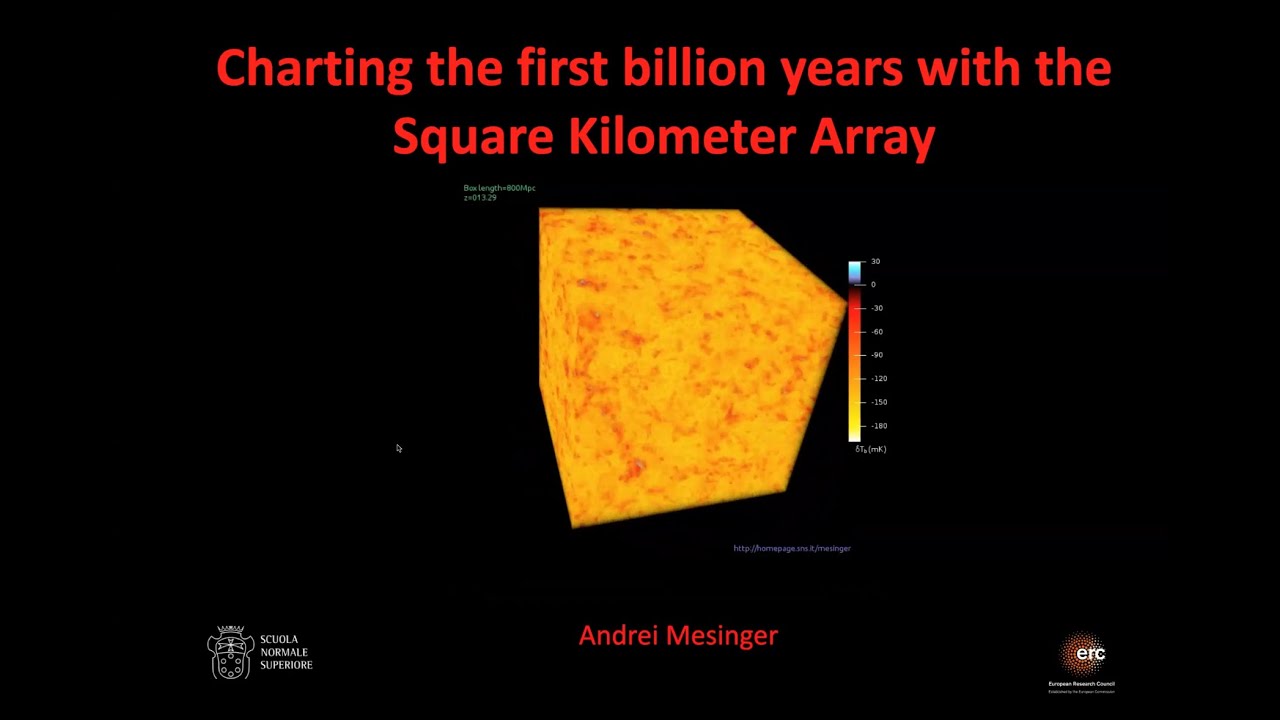
61:17
First Billion Years of the Universe with the Square Kilometre Array
@iaaudc
121 views•2022-05-26

6:25
Kepler's Laws of Planetary Motion Explained (Educational Astronomy Video)
@Peekaboo_Kidz
404.9K views•2023-02-17
6:10
Gamma-Ray Bursts: Cosmic Snipers Explained | Astronomy
@kurzgesagt
15M views•2016-07-31
Related Study Plans & Knowledge Roadmaps
Structured learning paths in Astronomy
astronomy
Reionization: Pop III Stars, IGM & 21cm Line
01Foundations of Cosmology & the Early Universe
02Population III Stars & Cosmic Dawn
03Physical Mechanisms of Reionization
+ 2 more learning modules
17h5 modules
Explore Roadmap
astronomy
Planetary Rings: Dynamics, Roche & Resonances
01Foundations of Gravity and Orbital Mechanics
02Tidal Forces and the Roche Limit
03Structure, Composition, and Collisions
+ 2 more learning modules
10h5 modules
Explore Roadmap
astronomy
Asteroseismology: Stellar Waves, Ages & Cores
01Foundations of Stellar Astrophysics & Wave Mechanics
02Stellar Oscillation Modes: P-modes and G-modes
03Mathematical Framework of Asteroseismology
+ 2 more learning modules
35h5 modules
Explore Roadmap
astronomy
Adaptive Optics: Physics, Engineering & Control
01Foundations of Wave Optics and Wavefronts
02Atmospheric Turbulence & Optical Distortion
03Wavefront Sensing Technologies
+ 3 more learning modules
35h6 modules
Explore Roadmap