













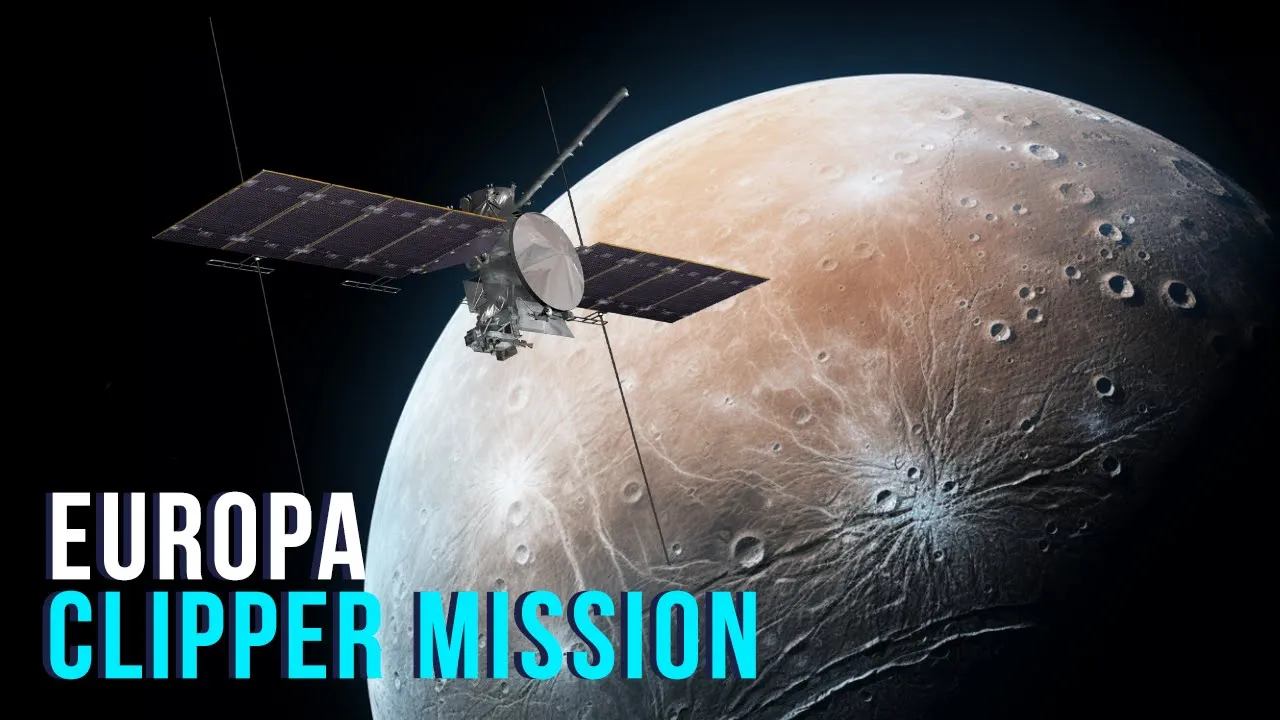








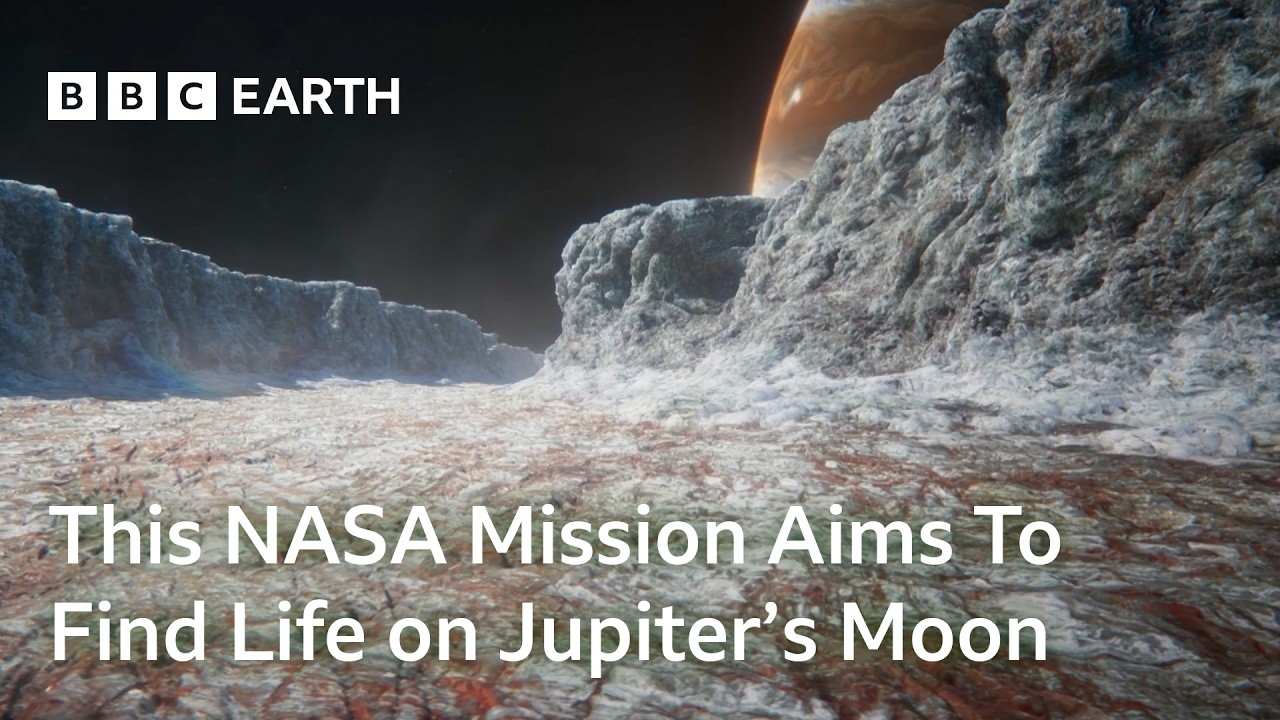





NASA's $5 billion Europa Clipper mission demonstrates how advanced engineering overcomes extreme challenges to search for life in Jupiter's harsh radiation environment; the probe uses a highly elliptical orbit to minimize radiation exposure while collecting data during brief flybys, employs a 1 cm thick aluminum vault to protect electronics, and carries multiple scientific instruments including magnetometers, cameras, radar, and mass spectrometers to investigate Europa's subsurface ocean and potential habitability.
Europa Clipper: Engineering a Mission to Search for Life
Added:The core concepts of astrobiology and habitability, specifically the three ingredients required for life: liquid water, essential chemical elements, and an energy source.
The physics of tidal heating, which explains how gravitational interactions between Jupiter and its moons generate the internal heat necessary to sustain a subsurface ocean on Europa.
The extreme environmental challenges of the Jovian system, particularly Jupiter's intense radiation belts and how they impact spacecraft electronics and materials.
Basic principles of spacecraft engineering, including the trade-offs between orbiters and multiple-flyby mission architectures.
The engineering and operation of specialized scientific instruments, such as ice-penetrating radar (REASON) and mass spectrometers used to analyze planetary plumes and surfaces.
Planetary protection protocols, exploring the strict international guidelines and sterilization techniques used to prevent contaminating alien environments with Earth microbes.
Proposed future exploration concepts for Europa, including landers, melt-probes (cryobots), and autonomous underwater vehicles designed to explore subsurface oceans directly.
Comparative planetology of other candidate ocean worlds in the outer solar system, such as Saturn's moons Enceladus and Titan, and Neptune's moon Triton.
1.3M views44Klikes20:57Original Release: 2024-10-13
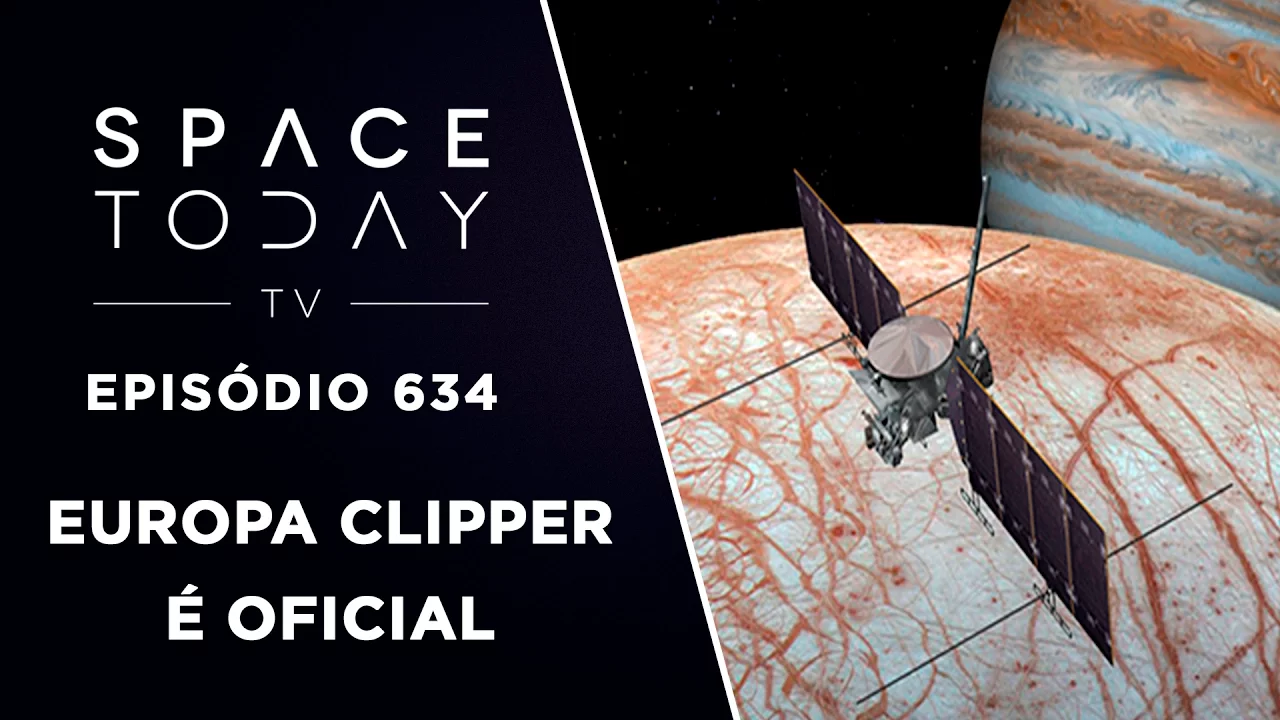
over the past 50 years we've relentlessly searched our Cosmic neighborhood seeking the ingredients of life we sent robotic Rovers to Mars to drill into rocks we skimmed the atmosphere of Venus in search of water and even returned samples of water collected from asteroids despite these successes we've not found the ingredients of life our next hope for finding the origins of Life sits inside this Falcon heavy looking for life in a new environment the icy Moon of Europa at first glance Europa seems like an odd location to look for signs of Life Jupiter is outside the habitable zone of our solar system Europa is a moon just a little smaller than our own moons tend to be Rocky with little to no atmosphere and rarely have a magnetic field strong enough to protect them from solar radiation this is even a harsh environment for an orbiting satellite Europa is solar powered but its panels will receive 4% of the light it would near Earth but its problems don't end there Jupiter's powerful magnetic field diverts and concentrates the sun's radiation and Europa orbits within this radiation belt exposing it to intense radiation that would fry a satellite's Electronics in less than a day so why is NASA spending $5 billion dollar to send a probe in search of the ingredients of Life on Jupiter's icy Moon let's take a closer look at the Europa Clipper Mission and why it might just change how we look for life outside our pale blue dot we have long thought that Europa has the potential for Life stemming from our suspicions of the presence of a large ocean beneath its icy surface the first direct confirmation of water on Europa came from the Voyager probes capturing these incredible images of the moon's surface as they flew by a quarter of a million kilometers away europa's surface was smooth and crater but marked with long ridges formed from what we thought was moving ICE these images ignited scientist imaginations and more missions like Galileo were sent to Jupiter Gathering incredible photos and data however some strange things started to happen to Galileo during its Mission it lost valuable data from close approaches to IO one of Jupiter's other moons high energy electrons penetrated the spacecraft altering a single bit of memory and causing it to enter safe mode Galileo had stayed too long inside Jupiter's radiation belts and its instruments had enured three times the radiation they were designed for this radiation would make Life as we know it impossible on europa's Surface this is why europa's icy shell is so important it protects prots the ocean below from ionizing radiation but strangely this radiation may be key to europa's potential habitability the plasma and charged ions that BMP bar the surface can create strong oxidants like hydrogen peroxide if these oxidants make their way into the ocean below they can react with other molecules creating a slurry of different molecules that life can appropriate europa's close orbit to Jupiter provides it with energy vital for life life in other ways too europa's Ecentric orbit creates an oscillating tidal force that contracts and expands the moon the friction this creates could heat up the water enough to sustain life in a relatively warm ocean so how do we know this ocean exists when we can only see the surface because of europa's strange magnetic field that Galileo detected with its magnetometer the magnetometer consists of a base coil wrapped around a metallic ring core on one half of the Ring The Wire coils clockwise and on the other half it is wrapped counterclockwise another measuring coil is placed on top of this ring to measure the magnetic field running through the core without an external magnetic field the magnetic field generated by these opposing coils would cancel each other out but when placed inside a magnetic field the core has a slight bias in the external Fields Direction this can be sensed by the outer windings and measured as an electri El current allowing us to detect magnetic fields with Precision this magnetometer measured a strange deviation in the magnetic field surrounding Europa that could only be explained by a subsurface ocean full of dissolved ions it detected an induced magnetic field caused by Jupiter's incredibly powerful magnetic field which is 20,000 times stronger than Earth's Jupiter's magnetic field is interacting with this salty ocean and allowing Europa to produce a field of its own but an even stranger anomaly was picked up by Galileo on two of its orbits in 1997 and 2000 as Galileo was nearing its closest approach to the moon the magnetometers picked up a large spike in the changing magnetic field something our models of its magnetic field could not predict it wasn't until 2014 that scientists began to put the clues together hopel took this image of Europa showing a 200 km tall eruption after extensive modeling with modern tools they realized that Galileo likely flew through two of these plumes of ionized salty water this is why the Europa Clipper mission is so exciting Europa is such an audity and there's so much more to learn we don't know how thick the ice really is and whether it's thick enough to protect the inner ocean from the radiation belts we've assumed that the tidal forces generate enough heat to heat the inner ocean but we haven't measured how much the moon flexes and contracts by these are just some of the questions Clipper is being sent to answer but it has been designed for so much more the original plan for Clipper's Journey was to take a direct route to Jupiter aboard the SLS however due to a lack of available launches with the SLS and its expensive price tag NASA switched to the Falcon heavy although this saved NASA $1.5 billion in launch costs the Falcon Heavy's lower thrust means it cannot take the direct threeyear route to Jupiter instead it will be taking a longer route passing by Mars and Earth for Gravity assists the first challenge Clipper will face is inserting itself into its peculiar orbit to avoid the worst of Jupiter's radiation belts it can't simply orbit Europa doing so would decrease the life of the probe from the planned 3 years to a little over a month instead of orbiting Europa Clipper will orbit Jupiter in a highly elliptical orbit every 14 days Clipper will dive into Jupiter's intense radiation Zone speeding up to 4 km/s as it flies by Europa during this Brief Encounter it will focus on collecting vast amounts of data then Clipper will Retreat to a safer region for 10 days shifting its energy use to its communication systems to send back data and await any necessary orbit correction Clipper is designed to resist this brief encounter with the radiation belts tucked inside the main body of the probe there is a large aluminium box this is where all the electronics are stored NASA calls it the Vault the engineers behind Clipper's Vault modeled the radiation that the probe will be exposed to and together with the mission planners balanced the need for close approaches to the Moon with time spent inside the radiation Zone together they work to constrain the thickness of the aluminium Vault walls to 1 cm to minimize weight with space limited inside this radiation Shield the engineers had to play a delicate game of Tetris carefully placing each instrument's chip on different panels Clipper has three magnetometers to investigate europa's magnetic field and gather more information on the nature of the subsurface ocean by positioning them like this we can get a measurement of the magnetic field in all three directions however the engineers needed to cons consider how the metallic structure of the probe could alter the readings to move sensors away from the fairest materials on the spacecraft they created this unique coiled lightweight carbon fiber boom this shape allows the 8.5 M long boom to be compressed into a small container the natural flexibility of the carbon fiber creates enough Force for the boom to deploy itself without the need for any actuators these sensors are spread out along this boom to prevent them from interfering with the each other too they will give us even more data on the strange magnetic fields surrounding Europa and this will give us an even better idea about the nature of the subsurface ocean but scientists are hoping that Clipper can gather material directly from the ocean from orbit by flying through another eruption this time intentionally when passing close to the moon this lid opens to reveal a 25 cm wide collecting area dust particles enter and pass through a series of conducting meshes altering their capacitance this change is detected and used to measure the particle speed helping to pinpoint their origin along Clipper's path the particles move much slower than Clippers 4 km/s as a result the metallic back of the detector slams into the particles with enough Force to break them into base elements and ions an electric field at the back of the cylinder acts like a mirror deflecting these ions into a detector heavier ions take longer to reach the detector than lighter ones and by measuring these time of flight differences we can identify the dust particles building blocks but dust particles are not the only thing that Clipper will encounter the probe will be close enough to the Moon to sample the composition of its tenuous atmosphere too we want confirmation that the radiation raining down on the ice creates gases that are needed for life as Clipper flies low in europa's atmosphere gases enter this tube and are bombarded with a stream of electrons this removes electrons from the gas molecules ionizing them the charged ions are then propelled through an electric field that accelerates them ions with different masses accelerate at different rates heavier ions move slower and lighter ions move faster these paths lead to an electronic detector that count the ions this data will tell us about the compounds present in the gas of europa's atmosphere if Clipper does not pass through the plumes it will still analyze the moon surface surface composition using light two instruments will be used for this analysis that cover the infrared and UltraViolet spectrums we will be measuring europa's gravitational field too you may have seen this picture of Earth's gravitational map it shows where mass is concentrated on Earth this was measured using two identical satellites in a polar orbit one further ahead than the other when the leading satellite encounters an area of stronger gravity it is pulled slightly ahead of the trailing sat satellite this increases the distance between them after passing the anomaly the leading satellite slows down while the trailing satelight speeds up and then slows down over the same spot these changes in distance coupled with precise positioning from GPS instruments allow scientists to create a detailed map of Earth's gravity Clipper will do the same by measuring the changes in speed but the challenge lies in accurately measuring the acceleration and isolating europa's gravitational force all from Earth without a second satellite acceleration will be measured by pinning down the change in velocity of the probe over time we can send an 8 GHz wave to the probe depending on its velocity relative to Earth it will receive a different frequency if it's moving towards Earth the frequency it receives will increase and it will decrease if it's moving away from this shift we can determine the velocity of the probe with an accuracy of 0.1 mm/ second however this method relies on a direct line of sight between Earth and Clipper and the measurements can only tell us the probe's velocity with respect to Earth with Europa orbiting the largest planet in our solar system we will lose sight of it the end goal of these gravitational measurements is to quantify how much the moon squishes and stretches throughout its orbit not just a static Moment In Time the team estimates that they will need almost 10 passes to get the measur below the uncertainty threshold what the public are probably most likely excited to see are the images that Clipper will provide us Clipper is carrying two 8 megapixel sensors one with a wide angle lens and another with a narrow angle lens over multiple flybys Clipper will cover 90% of the Moon allowing us to see details with a resolution of 100 m per pixel which is six times more surface area with five times better resolution than the best images obtained by the Galileo spacecraft while we don't think the ingredients of Life are just sitting on the surface the camera system will inform scientists of the dynamic behavior of the Moon something that is quite unique in the solar system understanding the ways the eye shifts how it piles up or how it gets pushed away could pinpoint where in Europa life could happen while the cameras are busy taking pictures of the surface a radar sounding system will start looking and measuring the thickness of the ice below and any elev ation changes to effectively penetrate europa's ice the radar will use two frequencies a shorter 60 MHz wave and a longer 9 MHz wave the longer 9 mahz waves can travel through the ice without being disrupted by rough patches however radio waves from Jupiter interfere with the signal limiting its use to the side of Europa facing away from the planet the shorter 60 MHz waves are not affected by Jupiter's interference but are more prone to disruption from the the roughness of europa's ice NASA has plenty of experience with this technology with satellites monitoring the thickness of ice sheets here on Earth as the planet warms to power all of these scientific instruments NASA made a counterintuitive decision if you compare all the probes that have gone to Jupiter two of them Stand Out Juno and Clipper are the only ones with large solar panels all of the previous probes were built and launched at the height of the nuclear arms race a byproduct of the nuclear warhead production process is plutonium 238 this isotope of plutonium is not useful for bombs but the trash of the Department of Defense is The Treasure of NASA plutonium 238 is the perfect material to use as a nuclear fuel for space probes its halflife of 88 years makes it radiate fast enough to produce a constant heat Source but not so fast that it would deplete itself on longer missions the radiation it does emit are also large alpha particles that are easily absorbed and converted to thermal energy plutonium is manufactured as plutonium oxide pellets which are a ceramic material each pellet is 5 cm across and 10 cm tall if anything were to go AR during launch the nuclear fuel would not burn up or turn into powder its chunks would break up and simply sink to the ocean floor in 1968 a weather satellite using plutonium to 38 as fuel blew up during launch but its fuel source was recovered from the ocean floor refurbished and put on the next mission but since 1988 when the US stopped its nuclear warhead production NASA has had to rely on its own stockpile of plutonium 238 and has had to buy some from Russia too by the early 2000s when Juno was being built both NASA and the Russian stock Pilots were running low so the little plutonium that was left was prioritized for other missions mainly to Mars and the moon so Juno had to rely on solar panels and use batteries to store what little power there is to survive the regular eclipses behind Jupiter the European Space Agency lacks nuclear power space capabilities so their Rosetta the probe that landed on a comet had to rely on solar power instead seeing both the success of Rosetta and Juno NASA was hesitant to use nuclear power generators on Clipper instead giving it 30 m solar panels plutonium 238 has helped NASA to be at the Forefront of space exploration but the US national stockpile of the material is dwindling the only confirmed plan to use plutonium in a space mission is on dragonfly the flying vehicle that will explore Saturn's moon Titan scientists have been sounding the alarm for the low stock pile of plutonium and in the last 10 years the US government started to ramp up production of the material at the Oak Ridge National Laboratory the current rate of production of 4 G per year would require 10 years to replace the 4.8 kg that the perseverance Rover needed automations in the production process will help ramp up that production rate to 1.5 kg per year this plutonium shortage is a fascinating subject that I will cover in the coming months and if you want to see it before anyone else you can sign up to nebula thousands of you have already signed up to nebula with real engineering through the Curiosity stream bundle but you should know the Curiosity stream has let us know that it will no longer be paying us the bundle Revenue it owes us going forward we have decided to continue to allow your access until the end of the year to honor your purchase but please switch over to a direct subscription to nebula so your support is going where you intended it to go you can even sign up for a limited time to a lifetime subscription that will mean you will never see another reoccurring payment from us in future if you want to see even more content like this but even and better produced you should check out the Battle of Britain our five-part exclusive nebula series breaking down one of the most important moments of World War II nebula helps creators like us fund original programming in the Battle of Britain series we recreated the Central Command room of the Battle of Britain to show in intricate detail how Britain won their most impactful victory of World War II we show you how incoming raids were plotted on the huge Central map with color-coded tiles and how the commander kept track of what's brns were available using a light up board mounted on the walls we spent over a month recreating this room using archived footage and photos an investment of time for a single animation asset that we simply can't afford on YouTube for less than the price of a cup of coffee per month you can get access to all of nebula's Originals along with our entire catalog without any ads you can also easily download videos to watch on the go perfect for your next flight this channel depends on the funding nebula provides us if you've been subscribed to this channel for more than 3 years you have seen the huge increases in production quality that nebula has facilitated growing from 2D animations that myself and Mike taught ourselves how to do to having a full team of incredibly talented 3D artists that rival any TV production this is expensive work and we would love to grow our team even more something we can only do with your support as ad Revenue simply does not cover the bills last year we made a financial loss for 3 months in a row the internet is a volatile place where we depend on the whims of advertisers nebula is our life raft in a volatile sea of social media this is a common theme across creators nebula's goal is to enable and level up our entire roster of creators to remove Financial uncertainty that forces us to rush projects to remove the algorithms that Force us to analyze data points instead of what really matters the audience on the other side of the screen so if you want to check out all of the fascinating exclusive content on nebula like the Battle of Britain Go to
Up Next

11:01
Iron Smelting from Sand: Ancient Bloomery Furnace Technique
@machinethinking
998.4K views•2019-06-13

30:32
Ultrasonic Transducers: Resonant Frequency Measurement and Horn Design
@imajeenyus42
229.9K views•2017-02-22

54:16
Polymer Environmental Degradation: Mechanisms & Stabilization
@iit
1.8K views•2012-07-10

33:39
How a Student's Question Saved a NYC Skyscraper from Collapse
@veritasium
22.8M views•2025-04-26
Related Study Plans & Knowledge Roadmaps
Structured learning paths in Engineering
engineering
Building Acoustic Levitators: Physics & Arduino
01The Physics of Sound and Standing Waves
02Piezoelectric Transducers and H-Bridge Drivers
03Arduino Programming: Generating 40 kHz Signals
+ 2 more learning modules
14h5 modules
Explore Roadmap
engineering
Building Peltier Cloud Chambers: Particle Tracks
01Cosmic Rays & Cloud Chamber Physics
02Thermoelectric Cooling (TEC) Fundamentals
03Custom Liquid-Cooling Loop Design
+ 2 more learning modules
18h5 modules
Explore Roadmap
engineering
Yagi-Uda Antennas: Modeling, Build & VNA Test
01Introduction to RF and Antenna Fundamentals
02Yagi-Uda Antenna Design Principles
03Antenna Modeling and Simulation in 4NEC2
+ 2 more learning modules
18h5 modules
Explore Roadmap
engineering
ECG Monitor Design: Op-Amps, Filters & Noise
01Electronics & Breadboard Basics
02Op-Amps and Instrumentation Amplifiers
03Bioelectricity and ECG Fundamentals
+ 2 more learning modules
18h5 modules
Explore Roadmap