





![Do czego służy CzatGPT [cz.1]](https://i.ytimg.com/vi_webp/oAyqL5FkIBE/maxresdefault.webp)











![16. AI Agents in Action: AutoGen, CrewAI, LangChain, and Swarm Unleashed! [Persian]](https://i.ytimg.com/vi/lxGUMUl32G8/maxresdefault.jpg)




![Introduction to Reasoning LLMs [1hr Talk]](https://i.ytimg.com/vi_webp/AZhUhGsgz4s/maxresdefault.webp)







Prompting is not about typing commands but about strategic thinking—designing clear outcomes and translating them into precise instructions for AI. The three core principles are: First Principles Thinking (breaking down problems to irreducible elements), Chain of Thought (building clarity in layers through iterative prompts), and Metaprompting (using AI as a collaborator to design better prompts). These frameworks enable users to leverage AI effectively by focusing on clarity of thought translated into action, rather than treating AI as a simple command interface.
Prompt Engineering Fundamentals: First Principles, Chain-of-Thought, and Metaprompting
Added:Basic understanding of Large Language Models (LLMs), including how they generate text probabilistically rather than retrieving pre-written answers.
Familiarity with standard conversational AI interfaces such as ChatGPT, Gemini, or Claude.
The core concept of a 'prompt' and the fundamental structure of human-AI interaction (inputs, instructions, and expected outputs).
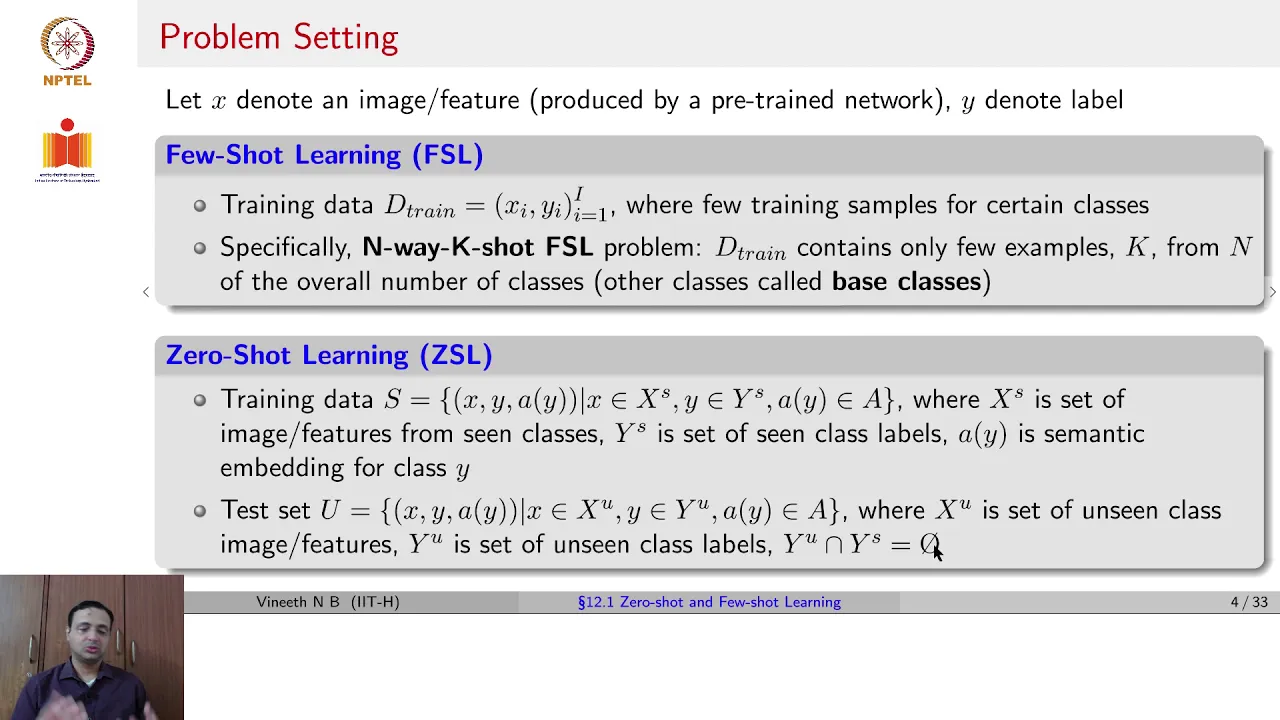
An introductory grasp of zero-shot and few-shot learning as foundational methods for guiding model outputs.
Designing autonomous AI Agents and multi-agent systems using orchestration frameworks like LangChain, AutoGen, or CrewAI.
Implementing Retrieval-Augmented Generation (RAG) to dynamically inject external database knowledge into prompts.
Systematic prompt evaluation, testing, and optimization using automated benchmarking tools and 'LLM-as-a-judge' workflows.
Understanding LLM security vulnerabilities, specifically prompt injection, jailbreaking, and defensive prompting techniques.
671K views27.3Klikes17:49Original Release: 2025-06-01
Most people think prompting is just typing like write me an email or give me 10 ideas. But prompting isn't browsing.
It's not about commands. It's about context and outcomes. And if you don't learn how to think in prompts, you might be left behind by those who do. Listen, most people treat prompting like they treat Google. They ask, they hope, they click around, or they talk to it like with a friend, get poor results, and then blame the AI. But hear me out. Just like copywriting isn't typing, it's persuasion. And coding isn't typing, it's architecture. Prompting isn't typing.
It's thinking. Prompting, in my opinion, is about designing a result in your head and translating it into a prompt that an AI can understand and execute with precision. It's, I believe, a communication protocol between human intention and machine execution. And in 2025, this is the new language of power because if you don't know how to communicate with intelligence, you might end up being managed by it. Look, for a while, I used to worry quite a bit that AI would make people stop thinking, you know, outsource their brain and lose their edge. That if we relied too much on it, our brains would atrophy like any muscle that's not trained enough. But most recently, I've come to realize that AI does not kill thinking. It exposes it. It makes your thought process visible, sharpened, and testable. The difference between the lazy and the leveraged is not the tool. It is how clearly they can define what they want.
Because prompting doesn't replace your brain, it trains it. It trains you to break down goals into systems to map chaos into outcomes and to speak with intention, not noise because that is the game now. It's not typing and it's not commands. It is clarity of thought translated into action. But most people won't get this. They will scroll, ask Chad GPT to do their homework. But the ones who learn how to think in prompts, they will build businesses, products, movements with leverage that no one else sees. Look, every revolution has its interface. Right? In the late 1980s and the early 1990s, it was the spreadsheet, a simple grid that made data legible and that turned anyone who mastered it into a decision maker. Think about this.
People built entire careers on Excel.
And I mean I should know I studied to be an auditor and ended up in consulting. I mean and it's not just consultants, right? CFOs, analysts, operators. It's not just because they were the smartest, but because they knew how to translate information into formula that ran a business. But today, the interface is not the spreadsheet. It's the prompt window. A lot sleeker, a lot simpler, but you know, most of the time what is simple is not necessarily easy. But I believe those who master it will not just automate task, they will scale thinking itself. Because if you've been around, you know what I believe? I believe this is the new leverage and prompting is the entry point to high leverage thinking. So if prompting is thinking, then what kind of thinking actually matters? Because not all thoughts lead to results. Some lead to noise and others to leverage. And that is why the best prompt writers do not just know how to talk to AI. They know how to think in models, in frameworks, first principles, systems thinking. Bear with me. These are not buzzwords from productivity YouTube. Okay? They are literally the raw materials of every great prompt. And I will explain that in a second. So, let me break this down for you. I'm going to show you the exact thinking principles that we use in our business to design prompts that drive real results. How we translate abstract ideas into specific prompts. How we chain prompts to solve more complex problems. How we use meta prompting to build faster and better. Not only that, but I'll also show you a course that teaches you to build the same mental architecture even if you've never touched it before. So, let's get into the first one. Number one, let's talk about first principles thinking. Most people prompt the way they Google, right? They guess and they type before they think. But the most powerful AI users think like scientists. They don't ask themselves, "What's the usual prompt for this?" They ask, "What is the exact outcome that I want and what inputs will get me there?" And the most powerful thinking tool that we have is called first principles thinking. It's one of the oldest and most valuable I believe ways to approach problems. It was used by adders total to define the truth by Charlie Munger to decode complex markets and probably most known by Elon Musk to reinvent entire industries. First principles thinking is about breaking complex things down to their irreductible elements. The truths that don't rely on assumption or analogy and rebuilding from there. and imprompting.
It's your first real edge. Because where most people copy what already exists, first principles thinkers reconstruct better models from the ground up. They don't ask how is this usually done. They ask what is this really made of? Think lowest level components and what outcome do I want instead? That is what makes it so powerful in prompting. Because if prompting is a new language, a new protocol between human clarity and machine speed, then first principles thinking is the grammar. Okay, it helps you reverse engineer complicated outputs and turn vague ideas into clear instructions that actually work for me.
These are the irreductible atoms of a good prompt. The components that we define before writing a single word.
Number one, your goal state. the transformation that you want because you want to turn raw notes into polished LinkedIn post, right? You need to be specific. Source material, what data should the model preserve or transform?
Then think about your constraints, word count, tone, taboo, legal boundaries, you know that process instructions, step-by-step thinking, or follow a rubric or use analogies. We'll come back to this one later. Uh, next we've got validation signals. What does great look like? Give it examples, formats, a checklist, and then last, your iteration plan. How should feedback be handled?
Should the model try again? Highlight edits. But we've noticed that if you miss one, you don't get AI generated brilliance. You get guesswork because from first principles, the model cannot optimize for what it wasn't told to care about. It makes sense, right? So, let me show you how we use this in our business. We were recently hiring for a new accountant. Now, we could have typed the obvious, you know, write a job description for an accountant in a small agency. That's probably what most people do. By the way, did you know that on average people use less than nine words in a prompt? But clearly, had we used that, we would have gotten something fine, generic, copy-pasted from the internet. But we didn't build businesses on default thinking. Instead, we stepped back and used first principles. What outcomes does this accountant need to deliver? What workflows do they own?
What kind of business context are they joining? What kind of human do we want besides us in this new chapter? And what language would resonate with that person? Then, and only then, did we construct the prompt? And it looked something like this. write a job description for an accountant joining a fast-moving media company where AI is heavily integrated into all operations.
The role includes outcome ownership over financial tracking, automation oversight, and cash flow forecasting.
Write in a human tone that would appeal to proactive detail oriented professionals who want to grow with a lean, intelligent team, include three unique differentiators that reflect our culture. I mean, this clearly did not create a job description. It created a ton of alignment, a filtering mechanism as well as a magnet for the right person. And it saved us hours of back and forth revisions because that is the power of thinking first and prompting second. Now, here's the good news. You don't need to figure this all out on your own because Google's Prompt Essentials specialization is a great place to start learning all of these things. It is built by Google's AI division, the exact same team behind Gemini, Workspace AI, and AI Studio.
Google's Prompt essential specialization is a beginnerfriendly course that is designed to teach you how to actually think and communicate with AI and not just play with props. In less than 9 hours, you will learn a five-step framework for writing effective prompts that work across all major AI tools, including text, image, and multimodal models. The framework is task, context, references, evaluate and iterate.
There's no technical background or coding experience required. And the course is divided into four very simple and streamlined modules. Module number one talks about mastering the basics of writing clear and structured prompts.
Module two is about applying prompting to real world work tasks like email, reports, presentations. Module three is about speeding up data analysis and insights with smarter prompts. And then module four is going to take you into unlocking creative uses, role-play expert conversations, and learning meta prompting. Basically using AI to design better prompts. And I'm going to come back to this one in a moment. And by the end, you will have a personal library of reusable prompts. So you are not starting from scratch every single time you use AI. It teaches real techniques like prompt chaining, linking multiple outputs into workflows, like fshot prompting, teaching AI through examples, and metaring. Like I said, getting AI to optimize your own prompts. Now, access is free for 7 days. But if you also want to get a certificate from Google that you can add, I don't know, to your LinkedIn profile, to your resume, or your client portfolio, then you will need to pay $49 per month after your trial ends. So, if you want to master generative AI and prompt engineering, then you can enroll on Corsera today and learn how to speak the language that AI actually understands. By the way, thank you so much Corsera for sponsoring today's video. Okay, now let's talk about the second principle which is chain of thought or how humans and AI build clarity in layers. So, I want to move to this next one because I believe it's really really important. Look, most people mistake intelligence for recollection, having the right answer on demand. But real intelligence is not memory. It's mental architecture. The ability to frame, sequence, and adapt your thinking under uncertainty. Which brings us to this next principle.
Because if first principles was about breaking things down, then chain of thought is exactly the opposite. It's about how you build things back up. This is how humans naturally solve complex problems. We ask a question, we pause, we reflect, and then ask a new better question. And it's not indecision. No, that is cognitive scaffolding. It's how we take vague ideas and we turn them into decisions that actually work. And honestly, this is something I always do with a lot of pleasure. And it's exactly how advanced prompting works. Because instead of trying to squeeze everything into one single overloaded prompt, you layer it. You stack small prompts that build context over time. Each one getting you closer to the outcome. And as I said, we call this prompt chaining.
And here's how it works. Let's say that you're trying to build um I don't know, client onboarding sequence. Instead of asking your LLM, maybe Chad GPT, maybe Gemini, write me an onboarding sequence for a new client. Full stop. You move step by step. Okay. So, number one, maybe you want to ask, what are the top three emotions that a new client might feel in week one? And number two, based on that, you can say, how can we shift those emotions into confidence and clarity? Number three, you can say, "Write the first email to do exactly that, short, empathetic, and personal."
Number four, you can ask the GPT to turn this into a one minute voice note in a friendly founder tone, for example. And then number five, you can say, "What automation would you pair with this to increase response rate?" I mean, each prompt builds on the last. Each decision makes the next one better and smarter.
And it's not about micromanaging the AI, don't get me wrong. It is about cocreating clarity. And now you might be thinking, but aren't we supposed to use long detailed prompts like you just showed us in first principles? Yes. And chain of thought and prompt atoms are not opposites. They're different tools for different moments in your thinking process. Okay? One is framing and the other one is refining. So when you see short prompts here, it's not because we skipped the depth. It's because we built the depth in layers. I hope that makes sense. So, let me give you an example.
In our business, we use this exact method every time we tackle something big. For example, we're launching a new offer or maybe we're building a system for a client or maybe we're writing a new strategy for a YouTube growth project. We never start with give me the answer. Okay? We map the context, define the layers, and then use prompt chaining to design better thinking faster because that is what this is. Prompt chaining is thinking with leverage and if you master this you stop reacting to complexity and you start leading with clarity. Now let's move to the third one because if first principles helps you define the essence of what you want and then chain of thought helps you reason your way there then this next one is about getting a thinking partner. I don't know how to explain it better. Okay. It is not just asking better questions. It's learning to architect thought itself and using AI as a collaborator in that architecture.
Because when you scale your thinking through systems, you stop solving problems one by one. And what you're doing instead is you're starting to build processes that solve them on autopilot. And that's actually what people used to call metacognition, thinking about thinking. And in business, it's the skill that separates task doers from decision makers. I mean, Socratus did it through dialogue.
Coaches do it with questions and you do it every time you pause and ask yourself, "What am I really trying to achieve here?" In the AI era, metacognition becomes metaprompting. As you saw, you stop treating the AI like a venting machine and start treating it like a partner in thought or in crime.
When you met a prompt, you don't start by issuing commands. You start by considering the structure of the task.
So here's how we do it in our business.
Let's say that we want to build um I don't know lead magnet inside Manis or generate a video in in video. What we do is we start by asking one of our custom GPTs. What data or context do you need to do this better? How should this be structured? And can you generate the optimal prompt for this outcome for this tool or workflow? Because the goal is not to guess the best prompt. it is to design it together. This is what makes metaring so powerful and I've mentioned it before and within our community we talk a lot about this and if you want to get better at it, you can learn this in the Google prompt essential specialization course. But look, most people will keep treating prompting like typing. And they will scroll, they will swipe and ask for answers or I don't know, they're going to use chat GPT like Google, never realizing that AI does not reward what you ask, but it rewards how you think. But you you just learn something that most people never will. That prompting is not a shortcut. Prompting is a thinking discipline. It's a new language of power. And those who learn to think in prompts to architect context and outcomes and intelligent workflows, they will not just make it through this shift. They will dominate it. So whether you're a founder or a freelancer or an aspiring strategist, start mastering the way you think because in the AI economy, leverage does not come from doing more.
It comes from asking better. Now, if you want to practice this with a lot of other people who are on exactly the same path as you are, then make sure you join our free community. We're having so much fun in there. We have two free AI challenges every single month. We're doing live calls now. There's a ton of free resources that you can tap into.
And honestly, just hanging out with people and learning from each other proves to be so so so valuable for folks. So, I hope to see you on the other side. And in the meantime, if you like this video, make sure to like it.
It helps us a lot. Subscribe if you haven't done so. And also share with anyone who you think would benefit from learning a little bit more about how to prompt. Until next time, I suggest you go ahead and watch this video over here.
And I'll see you soon.
Up Next
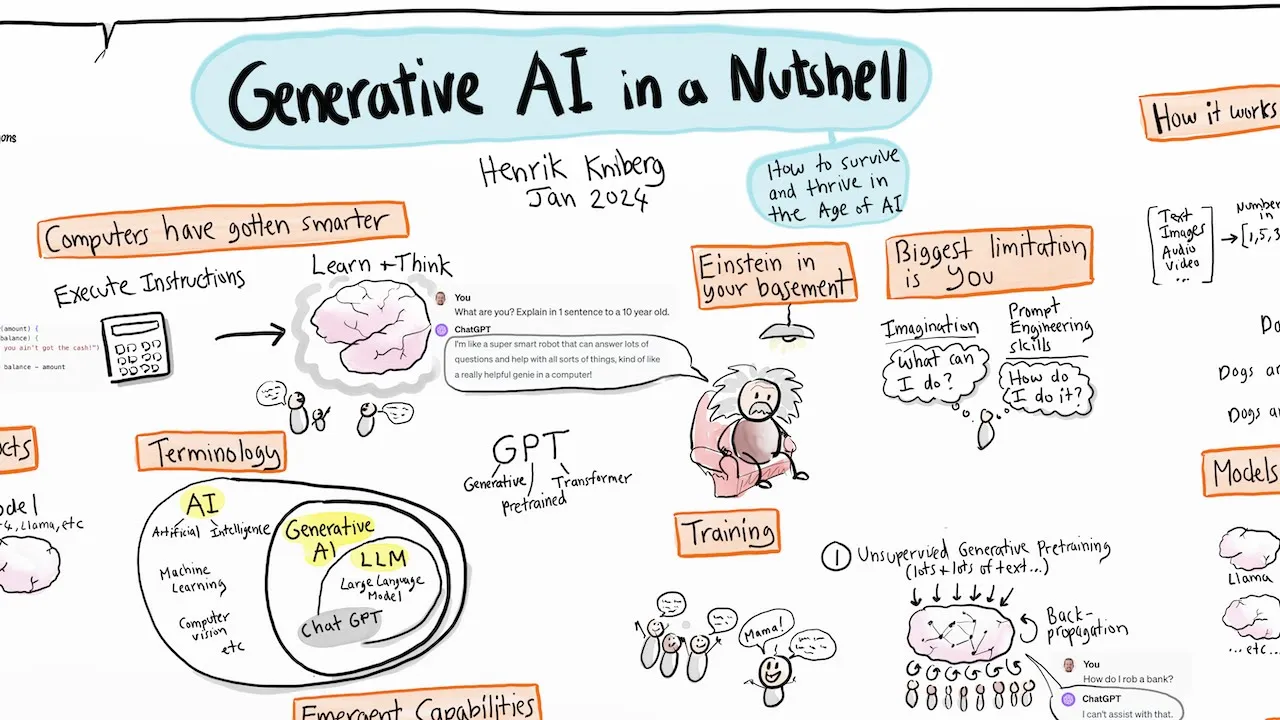
17:57
Generative AI Explained: Survival Strategies for the AI Era
@henrikkniberg
3.7M views•2024-01-20

12:54
Triumph of Orthodoxy Icon: Byzantine Art & History Explained
@BenCallan
2.1K views•2024-08-06

9:49
FastAPI vs Flask vs Django: Choosing the Right Python Web Framework
@TechWithTim
302.5K views•2024-05-26

1:42
Game of Thrones Opening Credits: A Cinematic Analysis
@gameofthrones
46.3M views•2011-04-18
Related Study Plans & Knowledge Roadmaps
Structured learning paths in General & Interdisciplinary Studies
general-studies
Elevator Engineering: History, Physics & Cities
01From Hoists to Safety Brakes: The Dawn of Vertical Lift
02Hydraulic vs. Traction: The Engineering Physics of Elevators
03Modern Speed, Safety, and Algorithms
+ 2 more learning modules
12h5 modules
Explore Roadmap
general-studies
Rubber: Material Science, History & Geopolitics
01Origins of Natural Rubber & Mesoamerican History
02The Chemistry of Natural Rubber & Vulcanization
03The Geopolitics of the Rubber Boom & Colonization
+ 2 more learning modules
12h5 modules
Explore Roadmap
general-studies
Containerization: Evolution, Logistics & Trade
01Ancient Trade & Bulk Cargo: Amphorae to Barrels
02The Industrial Revolution & Cardboard Packaging
03The Containerization Revolution: Malcom McLean
+ 2 more learning modules
12h5 modules
Explore Roadmap
general-studies
Textile Tech: Evolution, Labor & Global Impact
01Pre-Industrial Textiles: Handloom & Cottage Industry
02Mechanization: The Spinning Jenny to the Power Loom
03The Factory System & Global Labor Transformation
+ 2 more learning modules
10h5 modules
Explore Roadmap