






















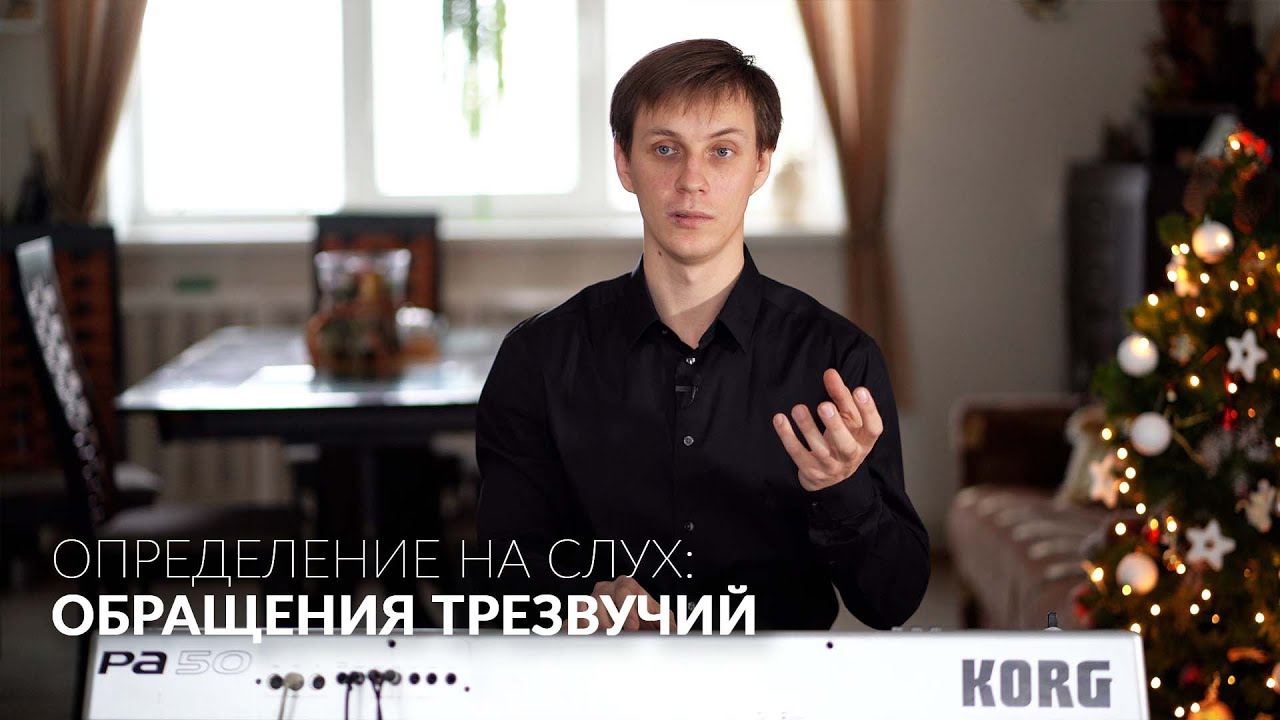
This tutorial explains how to play piano chords by understanding triads (three-note chords built from the root, third, and fifth notes of a scale), demonstrating how to create major chords like C, F, and G by moving the same hand shape across the keyboard, and introducing chord inversions to make playing smoother and easier. The instructor shows how most pop songs use only three to four chords (such as C, F, G, and A minor), enabling beginners to play hundreds of songs with just these basic chord shapes.
Triad Harmony: Beginning Piano Chords for Aspiring Pianists
Added:Familiarity with keyboard geography, including identifying the white and black keys and locating Middle C.
Understanding basic musical intervals, specifically the difference between half steps (semitones) and whole steps (whole tones).
A fundamental grasp of the major scale structure, as triads are constructed using specific scale degrees.
Knowledge of standard piano finger numbering (fingers 1 through 5) to facilitate correct hand positioning and posture.
Mastering chord inversions (root position, first, and second inversions) to enable smooth voice leading and transitions between chords.
Studying diatonic harmony and Roman numeral chord notation to understand how chords function relative to a key center (e.g., the I-V-vi-IV progression).
Expanding chord vocabulary to include seventh chords (major 7th, minor 7th, and dominant 7th) to add harmonic depth and color.
Exploring various left-hand accompaniment patterns, such as arpeggios, Alberti bass, and rhythmic comping, to play songs more dynamically.
Applying ear training techniques to identify major and minor triads by ear and transcribe simple chord progressions from popular recordings.
55.2K views1.2Klikes18:53Original Release: 2019-04-28
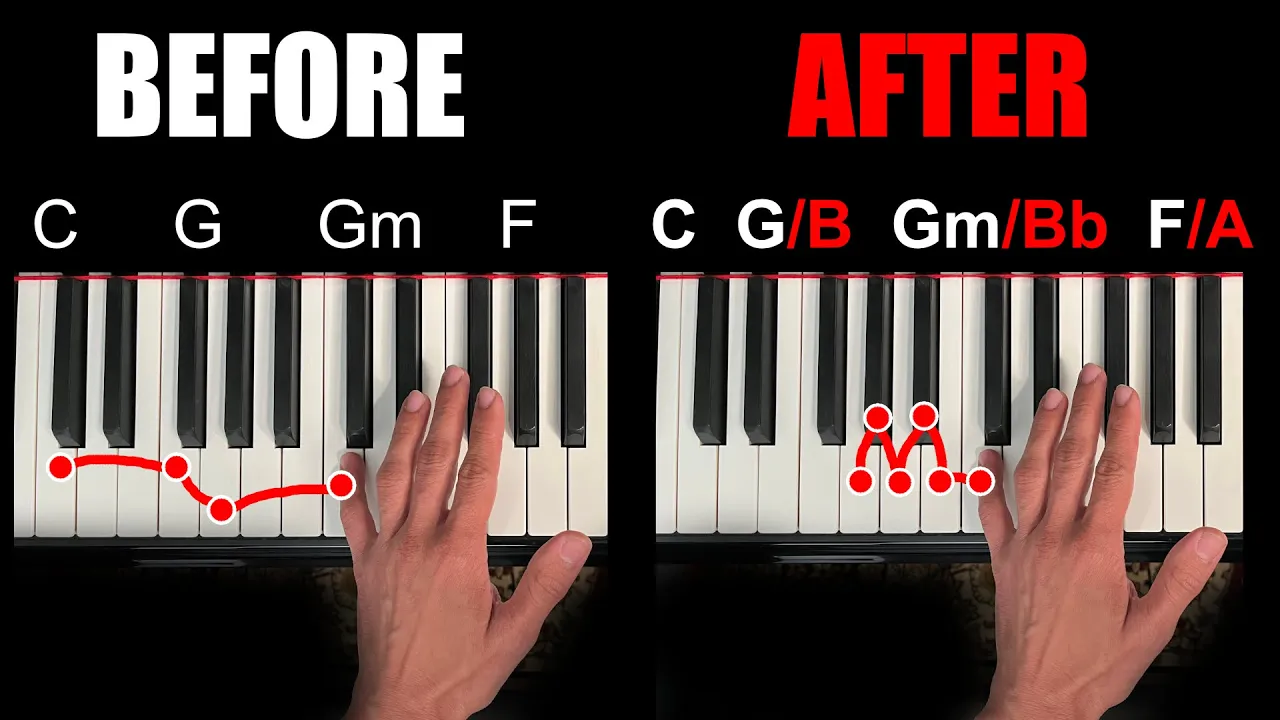
if you're learning piano and you're anything like me you'll want to get playing real songs right away and if you're looking at total beginner piano lessons on YouTube a lot of them are going to be teaching simple melodies everything from classical stuff to three blind mice and if you listen to the radio or the songs that you and I probably both love you'll notice that actually using chords things like this and it is this understanding of how chords work and learning to play basic chords that is going to enable you to play way more songs than you could if you were just focusing on single melodies and also just focusing on sight reading there reading the notes on the page really slows down learning depending on the students goals so what I want to do is show you how chords work get you playing some basic chords and I'm gonna show you three songs in this video that is gonna be your first steps into this world of playing chords so that you can play along to the original recording of songs and also sing along yourself so play that rather than playing the melody kind of singing the melody or the recording that you're playing along too sings banality this is gonna be such a massive lesson for a lot of you guys out there and I'm gonna have a part two part three of this lesson because it's just it's such a big topic too much for one video and it all starts and you can even try this if you only have an iPad or your phone gain anything in front of you but we want to keyboard in front of you whatever that looks like or a piano and we want to find you'll see that is where everything starts in music and on piano and keyboard as beginners so it's kind of our it's our first first note of piano and of music this is the C note that is exactly in the move of our keyboard now the a note that would start the alphabet is actually here and the notes on the keyboard go from A to G but then we can notice that they actually just repeat so if we just take these black notes for a second we can actually see that that exactly repeats here and exactly repeats here and the same lower as well we have this pattern of two three two three and anything that we learn here we can actually move up and down the keyboard really easily way easier than other instruments as well and how we're going to do that is we're going to play a C note just here and then we're going to play the third note from there so counting this is one we go to three and then the fifth as well so this was four and this is five now this might have been something that you've done before but stay with me because there's some really cool tricks that I'm gonna be showing you as we go along and as I say we're gonna be focused focusing on this from a songs point of view that is called a triad or RC triad and we call it the tonic triad news this is the tonic tonic is just a fancy word for the first note of a scale and we have made a triad or chord from this first note as I say this might be something that you've seen before or done before we need to lift fingers two and four so if I numbered my fingers one two three four five fingers two and four notes two and for our players so you have to lift them slightly so it kind of looks like that when I'm holding it down that is how we would play our first chord and what we can do to play all the chords in most songs this is the underlying principle of it is just move this same shape don't even have to move your fingers go to move our hand over by one note that would play our next okay now we can see that the lowest note of that is a D so we're going to just call this an D chord for now and then if we move it over again we can see that that next note is an e so this is our E chord just keeping this basic for now we move it over again we have an F chord move it over again and we have a G chord and we could absolutely keep going like this and play all the chords that are ever going to happen in a song but once we get over this one we're actually back at C again where you see E and G which was the same notes C G just so the only cause that matter to us and in terms of chord names all the ones that we can play like this until we get up to that left C because that actually is the same as the first now the thing that is going to bring this to life so much more and is going to enable us to play our first song right away actually just uses this one chord is C major chord in the right hand and what we're going to do is add a left hand note to it which to start off with is going to be C note in that is the really common thing that happens this would be C chord with a C in the left hand or as we know this in the bass you can see over here on the graphic it's actually the bass clef this is in the treble clef okay so that's why we would call this our bass note and if the root note as well see there in some terms that you in case you've heard some of these things before and trying to connect them but to play our first song what we're going to do is then use the same kind of triad idea but we're going to do it what would be an F chord actually I play the one note at a time down to a F and then back to a again and the great thing is we can just play them all together one note at a time in the left hand but always hitting all the notes in the right hand and we get this [Music] you [Music] some of you may recognize that already that is can't stop the feeling by Justin Timberlake such a great song I got this feelin in Simon it goes at you baby when I turn it on and also nothing I can see but you when you dance there's dance I won't sing anymore for you because I know I don't have the best voice but that is to show you I'm simple this can be to play real songs that you know and love and that you're gonna hear on the radio so how this kind of steps up the level commonly what we do is match the note in the left hand or the bass note to the lowest note or the name of the chord even even better that's really what we do name of the chord in the right hand teases by hand is playing the C major chord but the left hand is played just the C room now in the bass is where we started off with can't stop the feeling now now playing that with our left hand we're going to be changing cord now but what I want to do is get used to just playing three chords because all these chords are simple enough to play but they don't commonly all get used in songs pop songs as you may know actually stick to three or four chords for the majority of the song and it's those chords that we want to stick to okay and in this case those three chords that we're gonna initially learn that I have a 4 chord video if that's what you want to you want to really expand on this kind of topic we have a C chord we have an F chord and what we call that is the 1 4 and 5 in the key of C because the root note and the chords are based off of the first note and what those three chords also are are the only three major chords that we have in this key and this key just think of a key we have piano keys here but when I mentioned key just think of a family of chords of chords that go together and of how real songs are the chords that real songs actually play using just a few chords but those few chords so we have the C F and the G and already we can play so many songs with that as well just briefly kind of shake it up baby now a baby you know is so many so many Beatles songs ok those out the proper we're not doing a proper tutorial on those those out my proper song examples and just showing you the capability of these songs because you get three chords under your fingers and you have so many songs available to you we're just looking at the key of C so then we stick into the very friendly and easy to play white keys it does get tricky when we start to use more of the Black Keys when we're looking at this on it on a beginner piano kind of basis the next thing that I really want you to get used to it's something called inversions it's another technical word I know I'm sorry but what we're actually trying to do is make this sound better and make it easier to play in the most easy way possible so doing this is very simple as a concept but it's actually we're moving our hand a long way all the time [Music] sound great so what we typically do in pop songs in piano music in general is we use this thing called inversions where we can actually keep our hat really still and not move it too much so that it makes it easier to play easier to play faster and just simple are altogether hard thing to get your head around initially and now I'm just really trying to give you guys the concept in this video so that you can go off and learn as many songs and just have loads of fun playing piano in just the simplest way but it is we played this F chord before but we can play this C note because it looks the same as this one can play here instead we're gonna play instead of that top one so we're just going to do this and we could either play C chord still with finger you know thumb and if we think of them as the 1 3 & 5 of thumb our middle finger the little finger or we could play them with the first and the fourth finger to enable an easier transition between this C big concept this might not it come straight forward this mind on enable everybody watching this video to do something new straight away but knowledge of this and knowing that this is in an airport even though in a way that Street triad is massive and will enable you to play more songs absolutely yeah so that's what we're going to use the first C chord to the F chord [Music] finally we'll play that G chord and we'll just move these same notes or these same finger positions again [Music] I can be a real breakthrough for our lots of people because when we're mentioning a C chord or an F chord not always playing in this fashion sometimes when I play this we have a first inversion second inversion so this is kind of known as the second inversion of it because we're just moving our big concept technical language but I hope that's got through to some of you it is so so useful this would enable us for example to go straight onto our second song which uses this new chord which would be the next chord along we're going to play this is an a minor chord let's think about this that was our C major chord that we started off with we'll move it down once and we move it down again and we get to a minor and it sounds sad the other cause that we played the CV sound happy so their major major cheery miner dreary okay we have this type of chord but we can use different notes to play it so it is big big concept I'm just trying to give you as much in one video as I can without overwhelming you but if you're overwhelmed there's some helpful links in the description below that is already so much for those of you that are comfortable with this we're going to play the a minor with an A in the bass we're then going to go for an F chord using this new version of it and then to see I'm just going to do this quickly because this is how to play Sam Smith and stay with me oh won't you stay that is virtually the whole song and I have a full tutorial on it and that would be a perfect jumping-off point if this have been something that's been a lot for you if you want another practical song example of how to do this okay that is such a great example because throughout most of the song we're not moving at all and again that used the chord a minor F using a different inversion of it to see would it still work as playing you know the a minor up here and then the normal F and C of course it would but I'm moving this right hand an awful lot and it doesn't doesn't much like the song anymore this so that's what we're aiming for with this knowledge of inversions that would give us ladies and gentlemen four chords the C the F the G and the a minor and four looked at in this tutorial as I say I have a video showing you how to play ten songs with kind of thoroughly going through each song as well just with those four courts I'm sure I'll make another one again because there are so many other songs that that can do it there's not just ten there there are hundreds and hundreds but one of the most famous songs that uses just these four chords is a song called let it be by the Beatles [Music] very recognizable super fun to play on piano is one of those classic piano pieces again I have a full tutorial for this song but it should be seen as the culmination of all this chord work that I've mentioned so far so it's not something that you can just kind of if you've never played piano before I'm not expecting anyone to be able to just jump straight onto that video and play it within five minutes it's going to take a little bit longer than that to be honest with you but working through these stages that I mentioned so far absolutely will get you to that level and you can do it just using these tutorials that we have on this and the piano YouTube channel so what we have couple of things that we're adding we have the C chord played as we normally would that would be my recommendation G chord played as we normally have done you know the C F and G a minor played in this fashion now and then F lead like this would be my recommendation so we have to see that's kind of our full chord song kind of course after that C to G again but then what we have is this section which where we can even go or even better just and we can see that theory that we looked at right at the start of the lesson where we have this idea happening right in front of your eyes play kind of properly we would just be here so this we're playing an F all kind of comes together to create that such a wonderful melody such wonderful piano playing the other thing that commonly gets done with this kind of song isn't doubling up of the bass note with a la active so see here here now that is a hard stretch to do that is again something you want to train yourself up to my final get used to these a little bit further that will enable this this out [Music] Red's all of this cord practical chord theory and practical skills into practice I have a full tutorial for those three songs that we've looked at so far so Justin Timberlake can't stop the feeling Sam Smith stay with me and let it be by the Beatles those tutorial links and in the description below check out each one of those going through and they are practical examples of this chord theory and then a little bit of work on melodies as well such as the C major scale which I have a video on as well and maybe simple melodies such as happy birthday or something will really enable you to get to grips with the basis and a hope that really helps you let me know if you want a part two to this video and we'll experiment with this more but have fun learning those songs have fun playing piano and use chords to play these kind of pop songs that you love it is absolutely the way forward if that is your goal on piano subscribe to my Andy piano YouTube channel and I will see you again bye for now [Music]
Up Next

7:46
Mastering Smooth Chord Inversions with Arpeggio Exercises
@pianoinaflash
134.9K views•2015-12-01

12:54
Triumph of Orthodoxy Icon: Byzantine Art & History Explained
@BenCallan
2.1K views•2024-08-06

9:49
FastAPI vs Flask vs Django: Choosing the Right Python Web Framework
@TechWithTim
302.5K views•2024-05-26

1:42
Game of Thrones Opening Credits: A Cinematic Analysis
@gameofthrones
46.3M views•2011-04-18
Related Study Plans & Knowledge Roadmaps
Structured learning paths in General & Interdisciplinary Studies
general-studies
Elevator Engineering: History, Physics & Cities
01From Hoists to Safety Brakes: The Dawn of Vertical Lift
02Hydraulic vs. Traction: The Engineering Physics of Elevators
03Modern Speed, Safety, and Algorithms
+ 2 more learning modules
12h5 modules
Explore Roadmap
general-studies
Rubber: Material Science, History & Geopolitics
01Origins of Natural Rubber & Mesoamerican History
02The Chemistry of Natural Rubber & Vulcanization
03The Geopolitics of the Rubber Boom & Colonization
+ 2 more learning modules
12h5 modules
Explore Roadmap
general-studies
Containerization: Evolution, Logistics & Trade
01Ancient Trade & Bulk Cargo: Amphorae to Barrels
02The Industrial Revolution & Cardboard Packaging
03The Containerization Revolution: Malcom McLean
+ 2 more learning modules
12h5 modules
Explore Roadmap
general-studies
Textile Tech: Evolution, Labor & Global Impact
01Pre-Industrial Textiles: Handloom & Cottage Industry
02Mechanization: The Spinning Jenny to the Power Loom
03The Factory System & Global Labor Transformation
+ 2 more learning modules
10h5 modules
Explore Roadmap