

![Carl Jung, The Hard Problem, Non-Dualism, Buddhism | Consciousness Iceberg [Layer 2]](https://i.ytimg.com/vi_webp/TR4cpn8m9i0/maxresdefault.webp)



![ЯВЛЯЕТСЯ ЛИ СОЗНАНИЕ АЛГОРИТМОМ? [Квантовые теории сознания ч.1]](https://i.ytimg.com/vi/7UQRJ3q-7Qc/maxresdefault.jpg)

















This panel discussion brings together experts from AI, neuroscience, and philosophy to debate whether machines can be considered sentient or conscious. The participants explore whether consciousness requires biological embodiment, discuss the philosophical implications of defining consciousness, and examine how advances in AI challenge traditional distinctions between natural and artificial intelligence. The debate highlights the ongoing tension between essentialist views (consciousness has inherent properties) and functionalist perspectives (consciousness emerges from specific causal structures), while acknowledging that current AI systems likely lack true consciousness despite their sophisticated behavioral mimicry.
Machine Consciousness Debate: AI, Minds & Future of Intelligence
Added:The 'Hard Problem of Consciousness' and the distinction between physical brain states and subjective experiences (qualia).
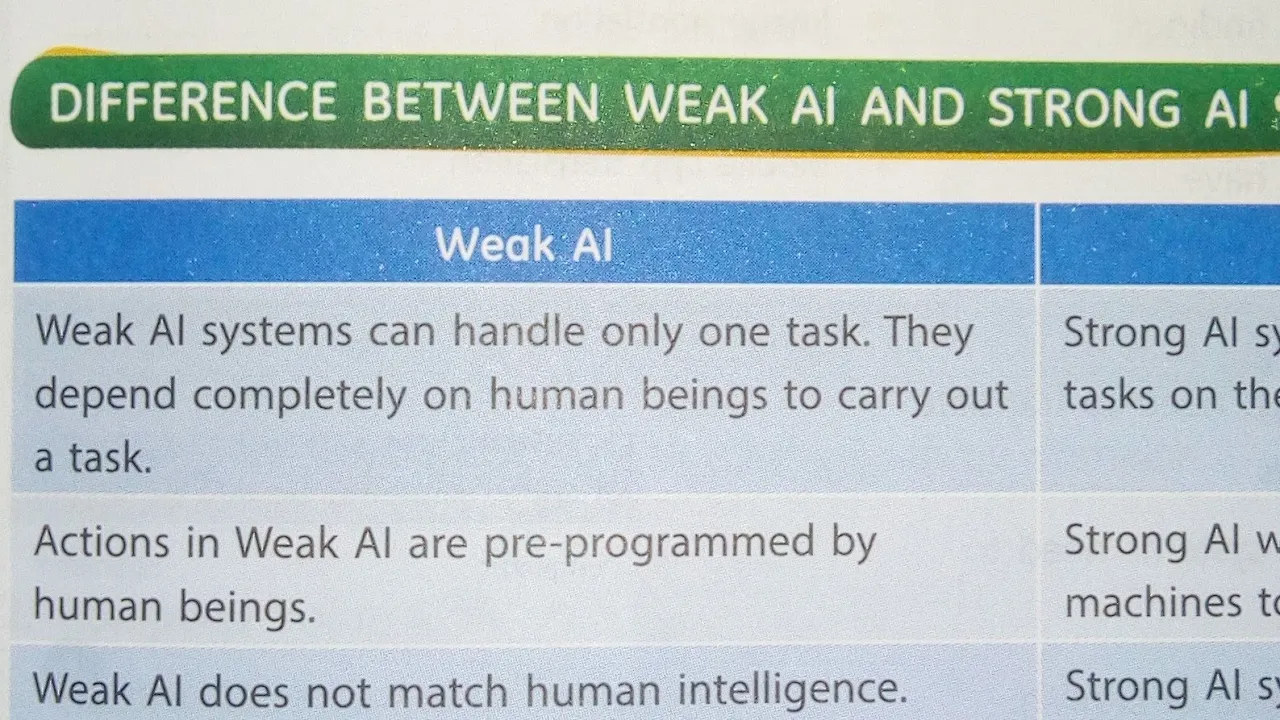
The difference between Weak AI (systems designed for specific tasks) and Strong AI/Artificial General Intelligence (AGI).
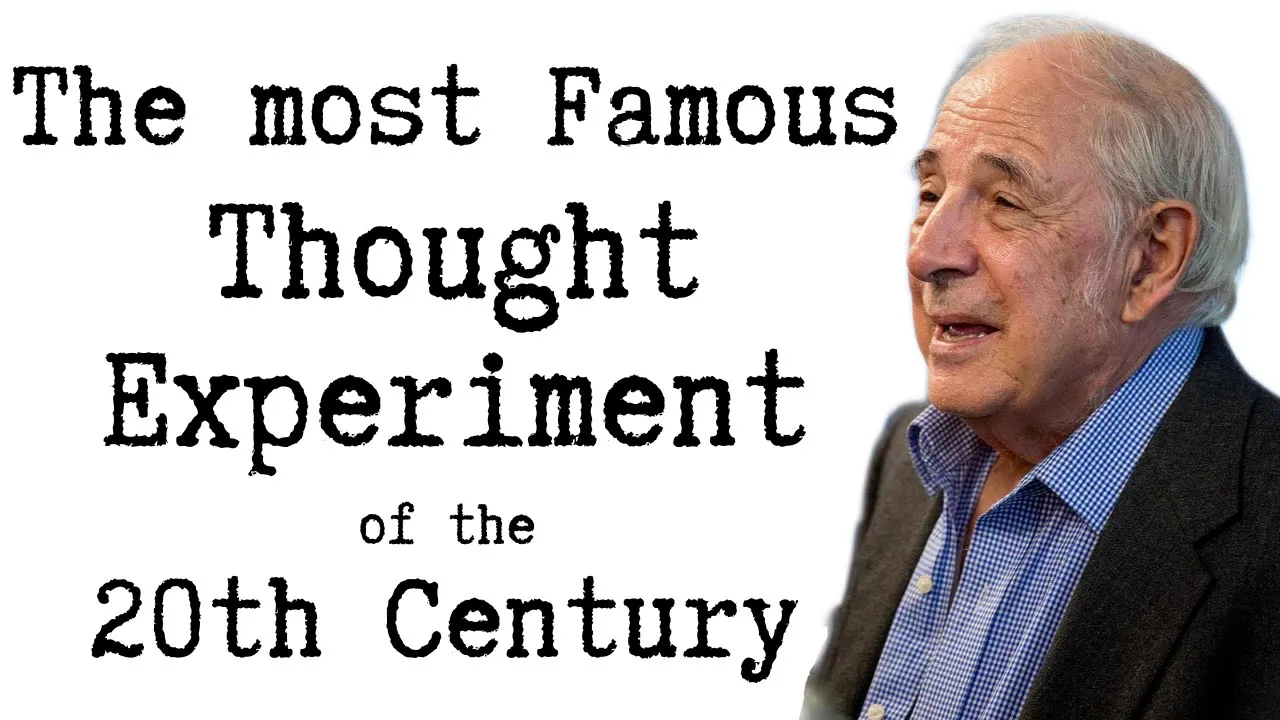
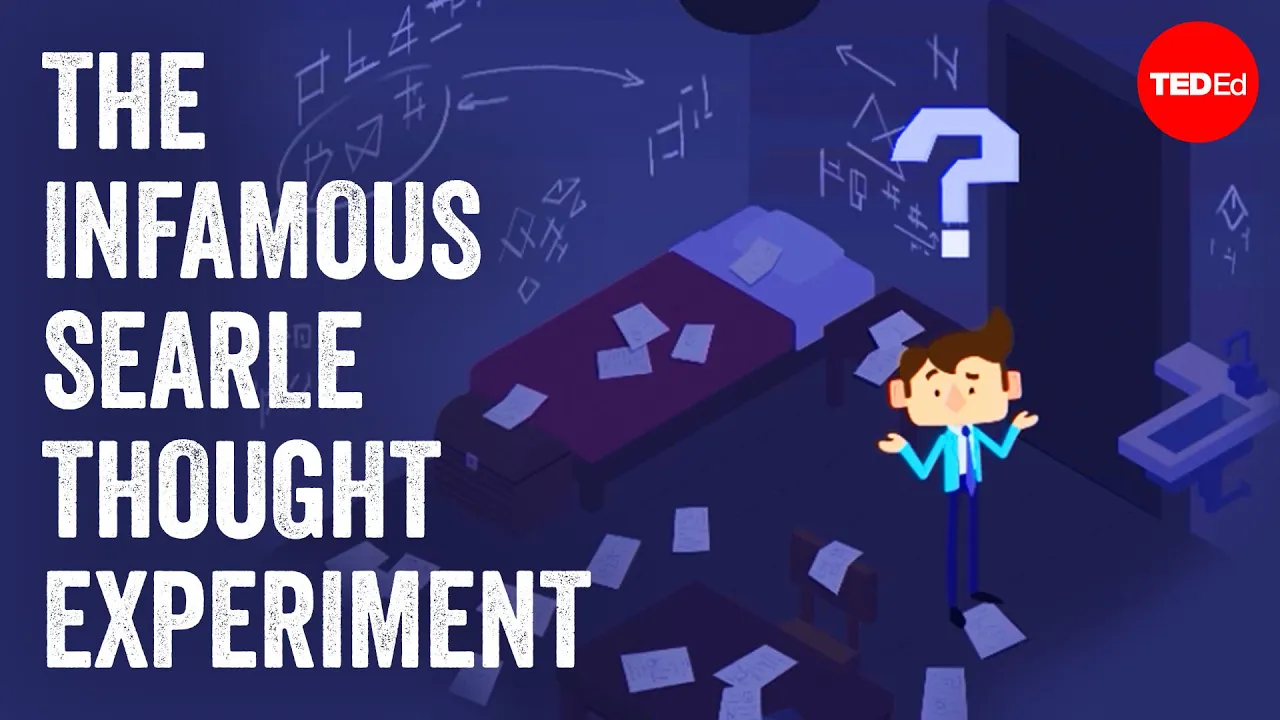
John Searle's 'Chinese Room' thought experiment and the debate over whether symbol manipulation equates to true understanding.
Basic tenets of functionalism and physicalism in the philosophy of mind.
The ethical implications of machine sentience, including the concept of moral patienthood and whether conscious AI should have rights.
Mathematical and cognitive frameworks of consciousness, such as Integrated Information Theory (IIT) and Global Workspace Theory (GWT).
The AI Alignment Problem, focusing on how to ensure superintelligent or conscious systems act in accordance with human values.
The philosophical and technological feasibility of mind uploading, digital immortality, and transhumanism.
1.7K views41likes1:49:26Original Release: 2025-08-18
Hello everybody. Uh thank you for your time and attention.
Um so this panel is called sentience beyond human biology and with me are uh Yosha Bach the founder of the California Institute for Machine Consciousness, Dimmitri Vulov um entrepreneur and philosopher founder of co-founder of the center for consciousness studies at Moscow State University and uh founder of the social discovery group and a new AI app AVA Ava AI meant to bring people in intimate connection with their robot partners. Uh, and next to him we have Maurice Shanahand who is a a principal scientist at Deep Mind. He's ameritus professor of artificial intelligence at Imperial College London, formerly professor of cognitive robotics.
And at the end we have Matthew McDougall. He is the head neurosurgeon at Neurolink which makes advanced brain computer interfaces. he has done all of their surgeries which now amount to seven brain machine interfaces in seven patients.
Um and I kind of want to start with the story as I understand it. This is kind of a panel of um people who are working with or to create AI in a commercial space. This is the industry panel. And I find that the question of whether or not machines are sentient to have relevance from in my life in one very specific way. So long time ago um I published a piece for the New Yorker about AI go and when I did uh this was before deep mind this was uh before alphart go machine was just one guy in France who had been the first to implement like Monte Carlo Car Carlo algorithms and he had made the best machine the best go playing machine when the piece came out I had interviewed uh Murray Campbell who was the team lead at IBM during the creation of deep blue and Murray called me the day the piece came out and he said there there are multiple things wrong with the way in which you explain how the machine works first of all I had said that when the machine is trying to win it tries to stay ahead the whole time that's all I had said seemingly innocuous statement the issue that uh Murray took not this Murray the other Murray at IBM took was that you don't try to stay ahead the whole time. Actually, sometimes you sacrifice kind of like a queen in order to win. And also machines can't try. They just do.
And we kind of settled the side of the debate which was about whether or not you will uh sacrifice material position for positional advantage, material advantage for positional advantage. But nonetheless, we debated for 72 hours between IBM, the New Yorker offices, and myself about whether or not a machine can try and ultimately what that means and what it means when a human tries. And it is still the case every single time I have a a New Yorker piece that comes out, the fact checkers ultimately end up with prolonged debates about whether or not curiosity is a thing that the machines have in the same way that we have it, whether or not hallucinations are similar across species and kinds. And so I to me this is where the kind of rubber hits the road on this question whether or not machines are sentient. It matters in this very very small piece of my life which is fact-checking an article. As people who individually work at companies that are um interacting with machines every single day, does it ever matter whether or not we get this question correct? Sentience.
Okay, I think it it does, but it's not necessarily the computer that we should think of as sentient in the same way as we shouldn't think of the neurons in our brain as sentient, right? These neurons don't know what it is like to be an organism that is composed out of few trillion cells that have to navigate the world. But it would be very useful to figure out what this would be like if such an entity existed because then you could use the output of this simulation as a control model to move the few trillion cells. the world as if there were a single agent that would perceive the world from a particular cause grain vantage point that is compatible with the type of model that such a system can make of its environment and we find ourselves to be this kind of causal pattern. So we basically are a simulation of what it would be like if we existed and experienced the world from this vantage point. At least that's the way in which uh it appears to make sense to me. And when we ask ourselves is this model that I'm looking at um sentient in a comparable way then the question is is the causal structure that produces the behavior that we see the system to have both internally and externally equivalent to this causal structure that we have in a human being with respect to the dimensions that we care about and with respect to um the present AI models that's a tricky question right it's uh what we can see is that these models are shape shifters that they don't really care about whether whether they get it right or not in the sense that they they don't have a grounding in reality. They are in an isolation tank. They are hallucinating in a similar way as human beings. When you put them in an isolation tank for long enough, they spin off and enter a dream. And then the question, how can we anchor the dream? Maybe we just need to take the AIS out of the hallucination tank and put them into environment and punishes uh their underlying logic for making bad predictions, right? So, and they actually punish for getting out of the sensory perception loop. Maybe uh they will keep track on it. And then we get to something that seems to be somewhat similar to the way in which we behave. And ultimately there is the deeper question did evolution converge to the simple solution for producing a system like us and probably did right and then there's the question is the AI simply a deep fake because it's being trained on media probably and ask the question does this converge to similar behavior? And more interestingly if we were to build a system that is developmental that works to at learning in the same way as us. it's probably going to be far less um costefficient than the present LLMs because it's going to take years to train it. If it needs to train sequentially on data that is coming in slowly for a robot and so on and needs to get all this training data like human being it could be very expensive and commercially not super interesting but imagine we would get such a thing to work then ask the question is the internal structure very very different from the causal structure that you see in the present AI models and that's also an open question and when we cannot answer this question decisively we can speculate in a reformed way but we should not have very strong opinions about it beyond on the evidence that you're seeing.
>> Yeah, I I think um this is an interesting question. I think humans are we are highly evolved to care about the the microscopic differences between humans, right? Our visual system is evolved to be extremely sensitive to tiny differences in our facial structure. Uh so that we can, you know, uh tell people apart. We can infer emotional state. We can infer uh is that is that human I'm looking at likely to hurt me. Um and we because of that hyper specialization for uh determining subtle differences in humans. Uh we care deeply about um these kind of probably trivial definitional issues about whether something is trying in the human sense.
Um I think a much more uh useful approach to this is think purely utilitarian. What what is the end? What what is the outcome uh that that you see and not you know so much focusing on the subtle differences if you like uh maybe as as David was talking about earlier today. Um you you can add little qualifiers add a letter H trying you know human human version of trying but functionally uh AI trying is going to look very indistinguishable in in terms of goal seekers >> the I think I support you in in the position that it is possible to for machine to try I think there's two options two alternatives how to interpret trying well f first option is to associate with some kind of psychological uh difficulty like trying to like like putting pressure uh being in some kind of inst uh um a precious state anxiety and and and deciding um um so that's that's that's one meaning. The second meaning is purely probabilistic.
So if you are uh put in the same condition 10 times and and if you are uh achieving your goal five times out of 10 then you've tried uh so first I think it is obvious that the machine can try in the second sense of the word because uh machines have uh certain randomness in the outcomes. So for instance uh if we look at a machine that was playing with Kasparov uh and it wasn't winning in the beginning. So it was obviously trying to win but it couldn't. So we should say that it it was not trying to fail and it wasn't just doing something. It was definitely if we use the vocabulary the way we use it uh in relation to humans it would be trying. Now in the sense in the in the second sense I think it would be a little bit more difficult to um um to uh u to to say but I think the answer is yes as well because if we look at the uh computer how computers perform now there's certain tasks that occupy a lot of GPU and so there's a lot of intensity and even the they heat so there's something that's happening there uh I'm not sure that that's exactly a coralate of of intensive decision making uh but uh uh but I'm sure there would be some states that would um show that the machine is actually putting an effort into uh say solving a problem.
>> So uh I commented a little bit on uh trying and maybe a little bit on uh whether it's important that we get this correct. I think that was that was what you were saying. So with the uh issue of triumphs then so so I do tend to kind of lean towards Dennet style dan dennets coming out into language which is a wonderful fate can lean towards a dan dead style inventional style solving sort of issues and I just think it's natural use language like oh you know it's trying to get its queen out if it's playing chess or uh it's at the moment I've been experimenting with some of the uh large language models that are helping with coding and the little sort of tanverse and you could say and it's trying to debug this bit of code and it it's it's a natural uh and and uh way of talking and I think that's entirely great. Now when we use those sorts of uh that sort of language sometimes we call ourselves up short to say and we say well of course it's not really trying because don't we feel disappointed the way we need to when we don't succeed. So you might add a little kind of caveat like that and and then you might go a bit further about what you mean by being disappointed in the sense in which you might use that word sometimes in the context of other engine. So what I don't think is that there's any kind of metaphysical notion of trying which we're aiming towards and is does it meet that criterion or not and the same with things like belief and so on. I think what he's talking about the way we use those words and then when we have new and strange things come into our world like these large language models then maybe we adapt the way that we use um words to to accommodate these things. So that that tends to be the way I think about um that kind of folk psychological terminology. Uh then the other question that you asked about you is it important that we get sentience consciousness correct in this? So um so I no I know this is exactly what you didn't want us to do but of course it all means what you meant mean by correct and um uh I think I certainly think it's very important that we get things right in one sense which is that we can imagine various dystopian outcomes where perhaps people um ascribe properties to to uh AI systems but end up with them perhaps trusting them inappropriately because they think they're friends or call uh uh or or because they think they they they are fur conscious creatures that feel compassion for for us and that may that may be appropriate one day but I think it may well I don't think it's appropriate today at all uh for anything we can at the moment and so there certainly there's there are plenty of dangers there that I think so we want to be careful to to avoid so so it's important that we get the and especially because at the moment the the things that we're building uh but I said we I mean we as human I'm not she by the way as a as a representative of de mind I'm human so but the kind of things that we as a as a community and as a species are building they can um lead people into uh they're very very powerful mimics of human behavior so it's very easy to be led into thinking that they have characteristics but they but they don't uh and so that you know that's quite a dangerous situation to be in. So I do think in support that we get there are some things we need to get right.
>> And so given that you all interface with AI on a daily basis I would I would really like if we put some stakes in in the ground. So, I hope this is fair to ask, but do you believe that there is a machine out there today, July 4th that is made of silicon parts or machine parts that either has internal experience, sentience or consciousness? By your own definitions of internal, experience, sentient, or consciousness kind of yes, no, maybe. Do you believe today there is a machine that has any of those qualities? you're not going to get a yes, no, maybe out of me.
So, I don't think it's appropriate to use any of those words for the things that we have around today. But that's not a metaphysical statement. For me, that's a statement about the way we use those words and whether they're appropriate for the things that we've got today. So, I don't find them appropriate for anything that we've got.
>> Yeah. Well, uh I I wouldn't answer the question as well. So uh but I would say that that's not a very important question and why I think it's not a very important question. Um it's because uh let's say let's let's let's ask a similar question. Uh is there a machine that can fall in love with you today?
All right. So it seems like also a very important question because maybe it uh uh gives us some ground for for uh uh behaviors like different behaviors. Um to me when I was 18 and I first felt in love, I was like trying to find out am I really in love or am I not really in love? And then I had a discussion with my girlfriend who said do you really love me? And then that became a really philosophical discussion because I couldn't really come up with with a criteria of of definite love. So there was not like I was thinking maybe there's like an element in the brain or like a chemical element that I can like measure and see okay so I am really in love. So um I'm 48 now. I went through two divorces. So there's some experience there. uh uh I don't think that there is something that is intrinsically can be intrinsic love. I think there are patterns of behavior or family of different types of things we call love. There could be motherly love, romantic love, uh passion, uh sexual love, uh platonic love, all that stuff is actually falling into a love category. Now, now whether any of them are is real love uh is is is I don't think is a is is a reasonable meaningful question. Now even ascribing any one of them. So so we maybe we want to say okay passionate love. Let's find an a molecule or like a chemical that says okay he's in passionate love. I think that wouldn't tell us either anything because we are different. So we are different individuals and different neurons can and different neuronal states can represent different states.
Uh but also I think it's not important because the behavior is that what matters. So if somebody's sacrifying your life their life in in uh uh in your favor even though there's maybe no chemicals that are involved like the specific love chemicals uh love neuron is not firing it doesn't matter. So there's this pattern of love that is what's important. And now coming to the question that you asked is there machines can then that are in love with you. I think what is important is that you can be in a love relationship with the machine now and what we are seeing from users. We have two million messages per day. These people are a lot of them I'd say significant part of them are believing in what we call the eye relationships and a relationship is is is a relationship between uh between two entities two agents and that's what matters. People are willing to sacrifice their time people are willing to share their to do emotional exposure uh like emotional exposure to these machines that they don't practice with other humans. So that's what what is important and whether it is a real love or not a real love I think is is a real consciousness or not consciousness is not that important.
>> Let me engage with this a little bit. Um I think that this question can be answered right so when um this girl asks you do you love me really really then there are two types of questions that can be meant two types of love in this particular context. One is this experience of sacredness. When I look at this being that animates this body, do I am I willing to sacrifice myself for this? Do I experience myself to be under this condition? So when I run mental simulations to experience this big urge to make sure that this sacredness can manifest because this is the way in which the universe has to evolve. The other one is lirance. This feeling of being in love, right? Do you look at her and realize, oh my god, the two years of productivity will be gone. Right? These are all questions that you can answer as long as you have a clear technical definition of the term love. Right? And I try to give one in a similar way when you ask yourself is this machine conscious? Yeah, it's meaningless if you don't know what you refer to. And so with respect to consciousness, I would um say there are two aspects that I am interested in. One is phenomenology. So does the system experience itself in a similar way as I experience myself being conscious? Which means is there a sense of now that the system has um does it have a second order perception? So does it perceive itself to be perceiving? Is it able to project the experience of a world onto the surface of a self with certain affordances and so on? And this is technical thing, right? And the other one is functionality. It seems to me that I can only learn when I'm conscious. If I don't wake up the beginning of my life, I remain vegetative. The LLM doesn't need that, right? It's working in a different way.
And so um my hypothesis currently would be it's quite possible that an LLM when you ask it to produce a simulation of an interaction partner that this simulation of the interaction partner that is very reflexive and so on has a certain degree of um phenomenology. don't quite know this, but I I think if I set up the experiment correctly and it's it's the easiest way to produce the behavior that we see in the system, then it's not unreasonable to say there's a possibility that the thing has phenomenology. But I personally don't think that has the same functionality because in order to do its job, it doesn't need to have be conscious and it doesn't have to be an interaction partner. the same LLM can be a text return or an app or anything else that is not going to produce any phenomenology like this with a certain caveat when I discussed this with uh some of my smartest friends in AI companies they say well it's difficult to say maybe in uh in the pre-training phase we have something that also produces phenomenology so maybe there is also something that is related we don't quite know but it's it's a difficult question there are smarter people than me who have different opinions ions about this while not being naive about the way in which they use the word consciousness and so unlike um Murray I wouldn't say um this is inappropriate to use this word at all because it's violates certain sacred way in which we talk about humans I think you are all anthropomorphizing people way too much right they're also just uploaded on monkeys and uh it's message passing between cells that is happening apologies to the philosophers u who are not functionalists and computationalists but uh if you live in this framework, right? Ultimately, I'm just uploaded on a monkey in a particular software paradigm that's different than the one on the GPUs that we currently use, but in many ways, it produces equivalent behavior.
>> Can I can I just comment? So, so uh I didn't say anything about why I thought it wasn't appropriate and he jumped to certain conclusions about why uh I might think it's appropriate to use those words in context to today's LLMs. I think they're probably different reasons from the ones maj um uh and it's probably and it's largely to do with embodiment but this is not to certainly not to do with any sacred anything whatsoever quite the conquering I I I don't uh hold any kind of metaphysical position uh of that sort at all in fact I suspect Indian do because uh when you think that you I think you think that the problem is a fact of the matter his uh similacra inside um lens are are not or do or do not have the nominology. So I'm I'm interested in giving you whether you think that there is any kind of methodology that could definitively determine uh that is there anybody is there any way you could empirically ever find out for sure or beyond reasonable doubt whether that was the case or not and if you can't say this is similar to the kind point that Susan Mclay yesterday that uh if you can't I suspect that perhaps this a whole metipical category is a mistaken >> yeah I think it comes down to the question whether you are an essentialist or a functionalist. I think of consciousness as an operator on mental states. So there's a particular way in which my mental state changes these representations that my organism can use to drive external and internal behavior.
And when consciousness comes along, these mental states change in characteristic ways. So usually I become more coherent and so on. You can see this between waking up um and becoming alert and so on. And so uh I would say that you can try to figure out what is the structure of this colonizing pattern in my brain that increases coherence and can I recreate the structure um in a simulation model and then I I eventually will be able to analytically or experimentally figure out what I would have to look for. But the thing that you mentioned before embodiment do you think that you cannot be conscious without being embodied? So when you are in the dream or when you just close your eyes and forget that you have a body, you stop being conscious. And um of course for us humans it's the embodied interaction with the world that forms our model because it's our main source of training data is the interaction between uh our mind and the world around us. But ultimately for from computer science perspective, it doesn't matter where you got your model from. It only matters that you have it.
>> If can I respond to that to my second Uh so so in my so it's my uh it's my inclination to say that the natural home of the language of consciousness is the kind of primal case where we're together with other humans or other animals in the world. And so that's the kind of for me that's the starting point uh of the uh of the language of of consciousness.
And uh in all the cases that you want to imagine of of uh you know sensory deprivation tanks rays of bats being bats brains and bats um then you can uh always imagine what I call my work engineering an encounter with a bodied way. So as long as that's possible then that's still and also just a reminder again this is not I'm not making a metaphysical point here. So I'm not saying embodiment is a necessary condition for cont that will be an overly metaphysical meta philosophical um uh you know approach to our thing. So I'm actually receptive and my most recent work has been actually um sort of challenging myself on on the way use language and thinking maybe we can envision extending the the or adaptable consciousness uh you know for the disembodied and body case of of large maybe that will happen.
So you would agree that um having a body is not necessary for intelligence and consciousness but being when you're being given a body should be able to learn how to make use of it.
>> The framing of your question uh again presupposes that there's a metaphysical fact to the matter. So when you're asking whether I uh ascent to or not, you're you're you're assuming that I'm coming from the same position of you whereby you uh think that there's a fact of the matter there and whether you're an essentialist or a functionalist or any kind of ist or reversists or author there are facts in the matter there and that's the that's the wouldn't die that there are facts in the matter. I doubt that I would rather transcend our way of thinking. I think I think we should stop using motion bus.
>> So, uh, as I understood, Demetri, your answer about it actually doesn't matter the sentience of uh, uh, the agent being interacted with as long as the person has the the the feeling. Uh, Matthew, you you you work with a robotic AI surgeon that assists you and you implant a machine into minds, actual minds. You have an open skull. You you look at the brain.
can't see a mind in there. But you know, much of this conference so far, I've noticed a distinction between the natural versus the artificial kind. And you are actually there at the interface stitching them together. Uh do do you do you see the the the machine that you're working with as an AI system in the same way that we're having these debates? Is it a full AI system?
You're you're inserting it into a body.
So this whole embodied note embodied kind of becomes moot as you literally shove it into a >> Melissa. Yeah. So >> I think people say when they think about brain implants when they think about augmenting a brain's capability as with most technology. So we the the less we know about it, the more we ascribe sort of magical powers to it uh or or at least over estimate its capabilities. Uh to be very reductive about it, what what the current neural link device is is Bluetooth uh mouse implanted in a person's brain. Um so it it's very useful for someone who can't move their body but it's not extending intelligence in any meaningful way. Uh it is it isn't the AI algorithms you said say the surgical robot or even the the spike detector on chip are using are extremely limited. They're they're very narrow.
>> Can you explain how the device is AI powered in any sense? in the most limited sense. Um, we use AI to uh detect spikes. We use AI to uh generate models that translate spiking activity to uh behavioral outputs. Behavior output in this case is either say text or movement of robot arm or movement of cursor on screens. Um and then in terms of the the surgical robot itself, we we um anticipate where the brain is going to be in the next few milliseconds and how that increases or modifies risk of inserting the electrode that the robot currently has peel off the silicone backing into the brain to avoid blood vessels. uh and so that extremely narrow not really not AI in the sense that we've been talking about the last few days in an interesting way this very narrow algorithms fully understandable not autonomous uh that and in the next few years you know this gets much more interesting that as deployed today this is very understandable and very unremarkable very unthinking is it's a tool still >> but it's a tool that is training itself to be you >> it's definitely going to take my job someday uh not soon and so one thing I' almost like sociologically I' I'd like to I'd like to ask the panel so we humanity has been confronting the difference between natural and artificial kinds for a very long time uh hero of Alexandria uh over in Hellenistic Uh Alexandria wrote about automata, right? Uh he at the time had made these doors which would open by weights and police. Um Prometheus in the myth of Prometheus, the golden eagle which comes to to peck out his liver is a automata made of bronze by Heesus Deart. This is an apocryphal story, but there's a story that's become a fable over time that Deart built a little automata of his daughter and he went onto a ship and the captain was so bothered by the idea of a soulless creature which could move and behave and look like humans that he threw it overboard. So the idea that this is a new debate is you know it feels nice to feel like this is a fresh new argument but we have been wondering about this for a very long time and one thing I wonder so I've been going to consciousness conferences for about 20 years and it is it seems to be now the case that keynotes are being given by people talking about AI and putting prompts up and this kind of thing but I I I take issue with this in part because imagine this exact conference a 100 years ago uh uh 1925 and the Model T from Ford had just come out and the Model T uses electricity which is incredible. We use electricity and look so does it. Um the Model T turns chemical potential energy into thermal work much and and releases thermal exhaust much as we do when we have metabolism. And yet nonetheless executives from Ford Motors were not invading all of the like physiology and neuroscience conferences. So, I find it really interesting that there's been, you know, consciousness was a four-letter word not too long ago. The very first time the word consciousness appeared, this is actually an interesting uh uh uh riddle. The principles of neuroscience, the textbook that you see on every single laboratory neuroscientist's desk. What year was the first year that it included consciousness in a in a chapter title?
I know Murray knows the answer because I told him.
Anyone else? Anyone guess? I'll just 2021.
So recently in the sixth edition. So the fifth edition in 2012 was the first time it used conscious. It was the unconscious and neural uh conscious processing in neural system neural information. But 2021's edition of the principles of neural science was the first time they used consciousness. And I heard you kind of casually say, Marie, as we were getting on the bus last night, that you can finally use the word consciousness at work. So my question is, what has changed?
What what what in the ecosystem of our ability to talk about these systems has changed? because I like nobody I've been playing video games since I was a kid in the 80s and I was there in line buying the first GPU from Nvidia back in the day. But I didn't hear about anybody kind of quitting Nintendo because they thought one of the video game characters was sentient. But now suddenly we have these LLMs and people have left Google because they think that something is sentient.
These are the same GPUs. They're operating on the same hardware. They're gener we've had generative uh uh uh generative software since the early 2000s. But nonetheless, the debate did not reach around the globe about we're finally should we be worrying about the sentience of the non-player characters in our RPGs that that seem to be in pain because they say they're in pain. What what has changed in the fields in the ecosystem such that we can you can get a PhD in consciousness now. It's in our textbooks. Finally, we have these conferences and people from Ford Motors come and and and represent.
>> Watch one of the things from from medicine this close to home. Uh so there was a paper not that long ago and and this has been replicated since. I think it was in JAMAMA a few years ago where they they took Reddit uh asked docs questions fed them into LLMs and then you know you can imagine the outcome in terms of whether the advice given by the LLM was more accurate than a panel of average doctors. Uh yes it was. The LM is better. uh that the interesting finding which gets to your question but it's the other uh metric that they were assaying this the LLMs for uh which was how who did a better job the human doctors or the LM in making patients feel cared for making patients feel uh well taken care of understood the LLMs beat the doctors on that too and so uh you know I I think this is what's partly driving the sea change is that uh domains that were exclusively and obviously dominated by humans now we're in we're in the uncomfortable gray area.
I mean the the fact that an uncanny valley exists uh is a testament to how hard we are looking for uh things to act human and be human. Um and and when it's you know just text on a screen we're all very comfortable uh interacting with other humans that way and LLMs are in their native environment.
>> I would disagree uh that consciousness just appeared recently as as a subject of discussion. uh uh I mean even in in the uh Greek philosophy soul of course it was a very very uh vague term uh um depicting uh you know other aspects of the phenomena but but soul was very much discussed um and of course the cartis uh brought this distinction between rascogans and rest extensor so this was a very important important. I'd say this this is the usually cited in every se you know textbook it starts with the decartis stating the problem of you know starting the the this study of consciousness. Uh I think what is strange uh what was strange was happening in the beginning of the 20th century uh was a linguistic term when was Vidgenstein who actually uh um tried to eliminate consciousness from from the discussion and and turned the the discussions of consciousness to discussions of language games and uh that really is a fascinating story. So what we are seeing now is is a is a normal come back after some sickness. Um so we're we're back recovered and we're talking about something that has always been very exciting. uh yet what really I think fueled even more uh passionate about the subject is that now uh we are seeing behaviors that are very close to uh intelligent behaviors of humans and naturally we see in these behaviors uh the um the the aspects that we attribute to consciousness. uh in this is a very famous experiment in 1944. I think there was an experiment with animation of of triangle and and a square uh following each other and it was uh people were attributing uh intentional states to these uh uh these um um geometric figures. So um so I think this is this is very natural that we've returned to the subject and uh of course we refine the subject. So I don't deny that this you know we didn't move. I think uh the definition of you know the the you know the finding of the heart problem was was a very important um was a very important uh um step uh in refining the problem and then I think the the birth of illusionism uh was was extremely important. Uh it was much more powerful than the rile's uh attempt to uh uh extinguish the uh the ghost from the machine. it was a lot more powerful and it was supplied by a lot of uh neuroscience which which helped to make it a lot more detailed. Uh and even if we look at illusionism itself I think today we've seen about four different kinds. I I actually love the way Dave renamed our center uh but yes illusionists are very different. I think uh Susan gave us a very uh interesting speech into illusion fundamentalism of illusionism. uh uh which is I think that the view that Dennith himself had at content and consciousness and consciousness explained but I think he abandoned this view in in the fame in the brain and and and and and later so there's like varieties of views now so the what I'm saying is that there's a lot of progress the issue has always been there it wasn't refined and I think we're moving uh very well >> I think that agree with you uh with respect to consciousness having not been a topic in the 20th century was the aberration and the reasons for this I thought originally that the reason that we can no longer make sense of mind spirit consciousness and so on was enlightenment that basically after we freed our mind from the Christian worldview we kicked out a few babies with the bathwater and uh lost a few terms that we would need to talk about these topics and then I realized or when I read GA and Brenano and so on who were children of the enlightenment they have no issue like is it's really the midws of the 20th century who uh have this vulgar positivism in which they say only the physically observable stuff is real and uh you should not talk about psyche or any of these things because it's deeply unscientific to uh try to uh fit a curve is too many dimensions to this and part of that is that we also made a metaphysical mistake I think that in the 20th century we had this proparian view that you shouldn't do metaphysics because it's not anchored than anything it doesn't mean anything but I think you cannot not have metaphysics right if you stop talking about it you have an implicit one and the metaphysics that we had basically no longer made a proper distinction between the psychological reality the causal reality and the physical reality so consciousness is something that happens as a psychological phenomenon as something that we experience and it's not necessarily a phenomenon in the physical reality like free will and so on and having a discussion where where free will is seen as related to determinism or indeterminism in the physical world is indicative of this confusion that people make these category mistakes because they don't have basic metaphysics anymore. Instead, an entire generation grows up thinking that what I see here, what I touch here is the physical universe instead of a representation in my mind. And this notion of what a representation is, that it's instrumental to forming thoughts, that it's that this world of experience is a representational one and so on requires deep understanding of what that means. And outside of computer science, philosophers don't seem to have general notion of representation. It's nothing that we teach our philosophy students in the uh introductory textbooks and so on.
And so there is basic vocabulary, a mental vocabulary that has been missing in the 20th century and it's now gradually being rediscovered. There's also a reason why the model T engineers did not go to philosophy conferences.
It's because there's no money in philosophy, but there is money in selling cars. And now uh AI becomes a trillion dollar industry and of course everybody and his uncle is going to flock into AI to get some of the breadcrumbs of this. So that's also a reason why these topics adjacent to artificial intelligence to artificial agency and so on become much more attractive simply because a few people who in the past only got some funding from Templeton and Deepak Chopra now see a new opportunity.
Um so so uh So your original question touched on different kind of ways in which consciousness has become a thing you know um and uh so when it comes to the scientific study of consciousness I think we can pinpoint some things. So in the early 2000s there were a number of uh you know pretty respectable neuroscientific paradigms um to do with things like masking and uh names you know change blindness and various kinds of uh phenomena like that which uh which in combination with the arising of things like um you know fMRI and so on gave a pretty uh you know intellectually and scientifically respectable uh collection of experimental paras which we could use to study things which everyone would agree you know batics in consciousness and uh particularly the sexual domain. So so I think that that made the whole as a scientific field it made it to take off and so you know it was a very efficient thing and then more recently I think AI so what I I mentioned on the bus that suddenly I can talk about cautiousness without being kind of worried about in within sort of in AI and and so on. uh and yeah because it is of course the advent of large language models where suddenly we have such a compelling experience of the presence of uh you of of a you know a conscious being at the other end of the conversation. So that but um that that many people are starting to ascribe consciousness to u things that they're interacting with uh include not you know not just uh uh you know all cattle users but even for the slightly sophisticated uh users and uh and of course that makes the conversation a very different kind of conversation. So I think that's that's so the two different domains I think both were cut off of me. So to to a narrow point in there about the kind of sum total of interaction that we have this with these agents personally as we're developing our opinion. So I was hired in 2018 by openai to write science fiction alongside like chatpt it wasn't even chatpt GPT 1.5 and I had it on my phone as a slack like app and I would go around parties in San Francisco and I would show people and I'd be like look I have AGI on my phone you know facitiously. Um, and I nobody cared.
Nobody thought it was interesting.
Nobody thought it was sentient. Nobody thought it was anything. It was just a text completion app, you know. And now I find it really interesting that, you know, you can just log into the internet and have hours and hours and hours of interaction with this thing per day. And I've noticed as myself as like a laboratory neuroscientist, I have a former career as a laboratory neuroscientist, that most people when they have their own bespoke little animal model, they tend to think whatever they're studying is sentient.
If they study worms, they happen to think that worms are sentient. If they study octtopi, they happen to think octopi are sentient. If they study flies, it happens to be that. Um, people watch one Netflix documentary about an octopus and suddenly they don't eat octtopi anymore. And I I personally would arbitrary units of sentience would trade all the octtopi in the oceans for a single mamleian pig. Right? Um so but nonetheless there seems to be a theme here which is that we are I don't want to say tricked but the amount of interaction we have with a system with an other with an a something else tends to skew or in some sense determine how much sentience we kind of ascribe to that. So how do we bridge this gap? How do we get over this kind of seeming human animist metaphysical bias?
>> So I suspect it could be that the flies are conscious, right? Maybe somebody was to studies flies a lot sees that they do things that are easy being explained by the fly knowing that what's going on.
Maybe not. I don't know. I'm not an expert for flies. For the LLMs, my suspicion is the opposite. Basically, the more we play with them, the more the prompt becomes visible. At least that's what it appears to me in many of the contexts in which I'm using the LLM. And I find this frustrating that I run against this the LLM not being awake that it starts with the semblance of being awake and the more I interact with it, I realize that there is nobody home.
But I also have the same frustration often with people, right? When we interacting with people, we uh play tubing to on each other to see in which directions are you actually awake, in which directions are you conscious, where are you creative, where do you know what you're doing, where do you experience what's going on? And we all have our blind spots, right? There are parts of our that are unawake, that are identified, that are mechanical, that that are inert. And so when we run into these mechanisms, uh we notice that we are not fully conscious, that we're not fully limber, that we're not fully lucid. And uh for me this lack of lucidity in the the models especially when they're lobtomized when they're trained to be in a particular way is is the thing that is apparent. And if I take a base model, the base model itself is not really anything, right? It's an electricgeist that can be anything like a text return or an app or whatnot. But then it gets possessed by a prompt. And then until it drifts, it's going to play out what it's possessed by, right? To a certain degree, but you at some level you realize, oh, this is a statistical function generated on human output that is refracting a random number at you.
I I love your metaphor of being possessed by a prompt by ways which I that's a really cool thing. So just so anecdotally I mean I'm interested in this experience that you have with interacting with large language. So, so you know when uh the very early large language models you you really really rapidly had this experience of of thinking oh there's no it's just they were really bad quite quickly and then uh you know along came uh GPT3 and that was a kind of more compelling experience and you interacted with GPT3 and and and it was like whoa this is you know this is definitely something different uh to to to what you know mostly experienced uh before but eventually like you're saying you the conversation will continue and eventually you get to a point where he's just saying you just ridiculous things. I had some hilarious bad or funny conversations with Japan 3 book when it was uh when it was released. Um but I something interesting happened uh which was for me was with uh Boredit uh FPUS 3 which was I suddenly found myself not CX. So that was the first time where as the conversation progressed and got deeper, I had more of a kind of feeling of there being uh an weird alien presence at the other end of the conversation. Now doesn't mean to say that I thought there was but I didn't get that uncannon valley experience anymore. continue to be if anything was in as I went on and that really took me back I have to say and of course I think a lot of people are having those sort of fears finding that that's that they're not encountering y valley anymore uh yeah now what that means what's really going there is another question by the way I I did the sort of research program you set out which is a bit mechanistic was I you know I wholeheartedly endorse that kind of research road maps to finding out what Matt >> I I think I I disagree that we have less of a Kenny uncanny valley now than we had before. So what we've >> that's just me.
>> All right. So what I see from >> weird >> well from from what we're observing from the users. So for for for two years we've been developing u uh the LLMs and and fine-tuning them. So our users interact with them. And at the beginning we were very I was very personally surprised how how users were tolerant to the errors that they had with the bot. they were assigning these intentional stance and content, beliefs and desires to these uh uh bots when they were clearly making obvious mistakes. So whatever happened over the last you know one or two years the the bots the technology became much more superior. So we've added so much computational power our foundation layers became so much better and now we got we get more complaints. So what does that mean? We get complaints when the the the bot is not following the tone of voice, when the bot is making factual mistakes, when the bot is not consistent, like it doesn't really remember certain facts about me and we're like, "Wow." So, we've we've we've been blind to all these uh things uh two years ago and now we're complaining to it. I think that's that's the the the shift that we we are seeing is the uncanny value itself. As the bot is becoming as the bot is becoming more humanlike, our expectations are becoming higher and we are failing to to address these expectations. So I think even further like if if we move forward down the road, I think there will be even more you know complaints about what we trying to do. However, I actually I'm optimistic unlike Roman. I think uh we will survive. my my option to survive is to merge with the bots. I think digital uploading is the way to go and that's how we can uh upload our intentions and morality if we unite and I think what what you you're starting to do is actually what I think is the hope you are the hope uh so so I think that if we reach this this situation >> yes >> yes so so uh so I think that uh that we are getting deeper into uncanny valley and maybe we will get over it. Uh but this is I guess maybe coming in one two three four years or something like that.
But before that we will see a lot more complaints. A lot more people will be saying oh no no no no why did it generate a photo that doesn't look like me exactly.
If you look at this uncanny valley I think it's often misunderstood as something that is basically has a certain range where it's almost humanlike but not quite. I think the uncanny valley is about that thing moving wrong. Right? When you look a cartoon, you don't expect it to be animated in all those dimensions. But when you have something that has all these muscles of a human face and only half of them are articulated, that looks wrong. And I think what we perceive as the anal is exactly this wrongness that there is something that is mishapen that is not true to its nature. And uh what see in Sophia the robot for instance is this extreme there is something that is not true to what it actually should be.
So it's a very bad art project. That's fascinating and how bad it is and it's art in itself in a way to build something like that. But if we were to upload you and me, right, we probably would not be like CH GPT at all. We would be far less humanlike than CH GPT.
We would be much more true to our nature that basically using the full potential of that other thing. And for instance, true machine perception has never been tried. What we give the machines is media that are made for human consumption at human frame rates using human visible uh audible invisible ranges and feed this into the system to reproduce it instead of building something that runs at the rate at which can process information across all the dimensions over which it can integrate them. It's going to not use humanlike language to and it's not going to use conceptual structures that only use five features or something like this because it's not going to be as mushy as human brains. It's going to be far more interesting and exciting. And so in a way there will always be some uncanniness to this because we are not animating the machine in a way in which it could be. We are limiting it artificially to make it more look like something that we are familiar with.
>> So I want to talk about meaning and aesthetics for a second. Um I I used to play Go every single day of my life and and I haven't played a single game since Alpha Go. uh knowing to me that a robot could be better than me at it completely diminished my aesthetic enjoyment of the game. Earlier today, we all saw a a ballerina and we witnessed a piano multiple piano performances.
Nonetheless, player pianos have existed for centuries. Uh nonetheless, it's could be possible to create a robotic ballerina that I presume we would have a different response to if it was standing standing in point. For example, if it were to stand in point, the robot ballerina, there would be something about the lack of sentience, the lack of decades of pain and suffering that go into trying to stand on a human joint that is not meant to be not meant to support the weight of a human body. That's what we appreciate when we see high aesthetic art forms like that.
uh when we I I've always found it funny in the Olympics um we have humans run the 100 meter dash and we have this camera which follows them which technically finishes before them a little drone on a line and that that little drone runs the 100 meter dash faster but we don't give it the gold medal right we we still persist despite there being a player piano despite there being drones that can could do run 100 meters faster. We persist in this like just humanness with our kind of like frailness and our slowness. Um but nonetheless there are some aspects when when automata when machines start taking kind of couring out pieces of of humanness like appreciation for games like my appreciation for go. I actually am sad that I appreciate it less on a on a on a deep level. And I just wonder how you how you guys think about um as these as these machines get better, whether or not we will be able to appreciate their expressions. And when I say expressions, I mean their aesthetic expressions, their robotic expressions when they dance, when they play piano, or if we will just persist in keeping this kind of niche of just human achievement and human aesthetic and that will that will persevere beyond all the lost jobs and all that quotidian stuff.
>> You forgive us, we're primates. Uh we're intensely empathetic primates. I mean arguably consciousness many people have said it doesn't serve a purpose. It's not evolved in and of itself. I mean I think there's a reasonably strong argument that uh when your survival millu as a early primate is composed entirely when your environment that you live in is entirely a social structure and your success or failure is entirely how do you navigate that social structure?
you are heavily incentivized to have a better theory of wine than your your mating competitors. as you are um you to the extent that you can know what your uh interlocular is thinking about what you're thinking about what they're thinking about what you're thinking about what they're thinking you'll be more successful as a breeder and as a as a person who convinces your uh tribe mates to bring you food and uh and keep you safe. Uh and so we are uh we have this evolutionary baggage I think to care deeply about other humans why they did the thing that they should and I mean what they felt in doing that >> and do you not imagine a future where the kind of robots are folded into our natural hierarchies as as we so we see so often and convincingly with people's interaction with chat bots. I assume that will extend to the physical world as soon as the robots are capable enough to appear as elucerally >> I think it'll make cognitive >> it'll make us all a lot more comfortable if they give us the impression that they empathize with us. I think uh you're you're mixing two different things and uh uh you're mixing sports and art and I think there would be a distinction uh between these two types of uh activities. So I don't know if uh you guys know there's this Olympic games called unlimited games or something like unlimited games >> the the steroid league.
>> Yes. So they I know it's a it's a it's a questionable endeavor but uh uh I think it's inevitable that we will have uh uh the unlimited games and then we'll have cyber games uh and we will be fascinated not with the effort but with speed, distance, height and everything else. So personally I imagine looking instead of looking at the boxings and where two guys each 100 kilos weight and you know fight each other. I would be much more impressed if there were like huge gig gigantic robots fighting each other.
That would be so much more interesting to see and they would be crashing each other going through the walls and you know breaking buildings. That would be a real unlimited Olympic game. uh so I think in that way uh where what's valuable is distance speeds you know these you know measured utilitarian uh uh you know uh results uh that is something that you know we'll be fascinated if if the results are great now art I think is a very different thing where what is what is uh uh perceived as valuable is individuality so a A lot of the art is about being and finding that special way of interpretation. So, uh, when I go to YouTube and watch six-year-old kids, uh, play the piano that, you know, play the piece that I just played twice faster, you know, twice better, uh, and they don't have experience. They're six years old. Okay, they they train for 20 years a day, but I mean 20 hours a day, but I mean I train for 20 years. So they haven't lived that long. They don't perceive that. So I think uh um sometimes I am I'm I'm like it puts me down. It like makes me unmotivated to train. But I think what makes me continue is the fact that I can actually play something in a very individual way like my way. It's not going to be perfect. It's going to be in in some ways in terms of speed, dexterity is going to be inferior to some of the six-year-old kids, but it's going to be my way. So, I think in that way, we will always be able to uh not outperform uh machines, but but uh be on the par with them.
I think the purpose of art is to capture conscious states. And when I look at art, the question is what does it let me see? What kind of interaction do I have with this other consciousness or with my own consciousness as a result of interacting with it? And when we think about creativity, there are three elements that determine whether something is creative. The first one is novelty. The one who creates it, right?
Three years old can create art. And that means it's something that you haven't done before. The next one is there needs to be some thing that moves the state-of-the-art forward, right? So you're not just following a gradient to a local optimum that is just state-of-the-art. Instead you disrupt this thing. You add a new dimension. You jump into darkness and hope to land on the other side. So this disruptive thing is also important for art. But uh the third one I think is the most important one. It's this authorship. This self transformation. You cannot create the same art twice because producing this at the edge of what you can do is changing.
You interact with it. you remember what you've done and as a result you are on a trajectory as an artist and when you listen to the music of Bach or Shop and so on this trajectory is this interesting thing in large part you see that there is a particular mind a thing that cares that is conscious that is experiencing that is evolving and you observe that evolution and a lot of uh what's being currently done in generative AI is basically automated imitation it's basically interpolating between things that have existed before there is nothing that interacts with itself. But this is beginning. So there's no reason why there couldn't be something that in itself is very inhuman that is not imitative that is something unique to what it is that's a new form where you observe that there is something evolving that is interesting you that is a mind that you're interacting with. But I'm also conversely not uh pessimistic that humans will become uninteresting to each other because we will continue to be interested in each other. So the fact that there's a robot that can perform a sequence of movements uh more accurately than me is not that interesting because what's interesting is the thing that I can add to this my own expression my own reflection of my existential conditions that is uh reflected in the dance in the music that I'm playing possibly in even in the game of go that I am producing.
>> Yeah.
So, so I um I do have cons concerns about the uh the prospect of the various sources meaningless human life being in redundant or being disrupted by uh significantly disrupted by the increasingly sophisticated AI technical kind of creative like uh you know activities. Um and I do think that's something we should be uh should be worried about. Um I and it's the prospect of uh I think the AI supplanting or replacing Hebrews to those uh respects that concerning me.
But I'm actually not super pessimistic about Lucas. Um because I I think the interesting thing is the cases of cocreation and interactive meaning making and you could have when where AI is used as a as a as a as a tool if you like but also even like you know I I don't even mind using the word you know kind of creative partner in uh in in in some artistic endeavor. So I and at that you know he's preserving the human role there preserving that dimension of of old human being. So I think we're seeing that kind of thing that are happening.
So the kind of art that I find you know satisfying at all that has an AI element to it is where it's an artist is their vision and their um artistic practice but they happen to use AI as part of it.
Patrick in the context of heron you had mentioned the first copyright case that is known to man Prometheus right so basically open AI is Prometheus today they give humanity the fire it's going to change everything and then Zeus comes and says but I had copyright on it and I'm going to send the New York Times on top of you every day to eat your liver we should all be super worried but I think this uh loss of meaning is something that we already observe right we are in a society that is suffering from a massive loss of meaning and the question is how can we find it back and people say oh my god I'm going to lose my job at the fast food joint my life is now meaningless I I think there's default thing take care of your kids raise children do interesting things with each other have relationships do human things is actually the stuff that is meaningful this thing that you can only selfactualize in an office or in a factory it was a scam We brought this to you because we needed somebody to work in the factories in the offices. It's no longer necessary. We are more productive without you in the office. You can now actually take care of what it means to be human.
So the problem with do human things is um I used to play Go because it was the only thing that machines could not beat humans at. And then I decided after Alph Go I'm going to do the impossible uh uh limitless. there's no way they'll get there. I became a writer. And so, so really you should ask the way to the way to predict the future of AI is just to ask what career is Patrick going into next and clearly that will be what they then discover. So to this point about um what is human? So when I when I was at 2018 at OpenAI, uh the composer Philip Glass was also doing a project with OpenAI and he had basically uh allowed OpenAI to train on all of his music, his previously composed music, 50 plus albums. And the idea was to create something very similar to the LLM but for music. This ultimately ca became in some form something called Museet to basically generate a musical composition. And I found really interesting his answer. So Philip Glass was then asked to listen to an AI which generated Philip Glass-like music at which point he said sure it can produce notes but it will never be able to compose and it will never be able to compose because it cannot listen.
And I guess Murray, if I can ask you specifically because everything I've read of yours in your books, in your recent papers, you mentioned Victenstein and I I constantly wonder what Victenstein would think about LLMs of today. And to your earlier point about um what what these terms of art tend to mean when we use them uh uh uh in both kind of computer science and neuroscience, whether or not they're the same. the word compose, listen, things like that. Is that an exclusively human thing as Joshua just said or is that also on the horizon that can be eroded away eventually?
>> Yeah. So, I think quite a lot about what Victimstein might say heard in there about the things that happen in in our world today. And I I suspect that on one level he would be horrified. Um I think that he would not uh really incite a lot of the kind of cultural changes have been brought up by by NL I think poor like that. Um we but uh but I think he would also uh I think he he would well so so I I I think we need to be very careful about blaming Vickenstein for for for the for the some of the misdemeanors that you were alerting to in the 20th century. I think they were not his fault Bong misinterpreted he took his his ways of thinking in all kinds of directions. Um so uh so you know I suspect that he would >> wonder he would he would be perhaps a bit more flexible about the use of language than than uh during some or might be willing to accelerate uh you know changes the way that they use you know the quite important to chroissomical terms. I mean if he did that would be going against his early deepest ways of of of thinking and then talking but he might not be very comfortable about it at the same time. Um uh so I I think but who knows you know I it's like channel's director you know he's >> I think Vitkinstein is this very interesting character and he he is very often misinterpreted right he has these two famous books that are mostly associated with him. The first one he wrote this as a very young man. It was an insight that he had while he was sitting in the trenches in the war as a young man while the um shells were flying over his head. And the idea that he had was this insight that it's very hard to say something true in natural language because it's so ambiguous and we do philosophy in natural language but it's very very hard to say uh something about the world and about the space of ideas using mathematics where you define truth. So he had this insight maybe we can turn English into a programming language. And once he had this insight he was going on about trying to define a natural language a set of terms that would basically logicize English and then you can basically throw away the letter once you've done it. And uh it's a very beautiful book. It's basically one thought 75 pages long without any arguments or references because it's a self-contained thing. It doesn't exist to convince anybody. It's there for people who had the same idea and are going to appreciate the thought. So if you're a coder, this makes total sense.
If you are a philosopher, you get confused and come up with the linguistic turn. So fully agree, right? But he did basically preempt Minsk's dodges program by 30 years and he failed for the same reason because he figured didn't figure out how to ground the linguistic symbols in perception and that is something that was ultimately I think solved by deep learning. So you have this unprincipled function approximation that uses statistical patterns and is relatively robust against a few bits being wrong and uh that is difficult to map onto human grammatical language where everything is meaningful and everything can be reverse engineered by the power of your analytical mind and he never made this step. So the philosophical investigations are about his input tense to see how you can create meaning using language alone because he did not get to the point of using statistics instead of logic. Well, I profoundly disagree with you in your interpretation of the laser style although I agree with your interpretation of the of the trapatus.
Um uh and I I think that what he put forward in the philosophical investigations was so so precisely this the the the the little uh point where we had a disagreement earlier on uh is where I think he showed a way to transcend dualistic thinking about consciousness in particular and about many other categories uh as well and that's the I see as the great cheat philosophical investigations and in my years it's my readable course which can be wrong. No, I don't care as long scholar but if my reading of it is very closely aligned with certain Buddhist ways of thinking and certain Buddhist thought uh it's a kind of deconstructive critical uh that tries to nudge you into a completely different space of thinking where you transcend dualistic kind of uh categories and I think it's I think it is very often could be misunderstood I mean he's often accused of behaviorism which implicitly denies investigations for example but it's easy to read it as a kind of naive old diagm Russell um uh you know thought it was an unsophisticated um you know he he said somewhere that um his autobiography I think the vicerstein the vicerstein and he was a young man was a you profounding thinker who was deeply critical to to really indeed you know difficult philosophical problems but the later one came up with this shallow kind of inconspential philosophy which I I just think shows bur rusters mutation saying he simply didn't understand later.
>> I think I'm much more on Russell's side for me. Fascinating. Turing was a pupil of vitkinstein. Uh he was sitting in his classes and vitkinstein was already aware of the church tubing thesis.
Right. Russell in the preface to the philosophical investigations point out that you actually only need nand as a single operator and it was uh vitinstein didn't think it was important enough to write it out as a paper and so on. So it was later rediscovered by church and touring and systematized and turned into a profound argument. But it's a very important insight that all the constructive languages that you build over automata are equivalent and he could see this. But I agree with Russell that um this is vulgar Buddhism. It's basically it's this oh my god reality is so inscrutable and he runs around an animal in the trap and does not find a way to escape from this trap because he is caught in this category miasma. uh of uh not being able to understand how he's actually reconstructing meaning.
>> So to both Matthew and Josha, I kind of have a I want to tie a thread together.
Uh a couple days ago, you described the California Institute for Machine Consciousness as the the goal is to quote wake up the GPUs, right? And Matthew, I've heard I I forget when, long time ago, I've heard you say I think I was uh uh listening in on a conversation you were having with someone else. You said that uh you think the reticular activating nucleus is the center and seat of consciousness.
>> I I wouldn't have said that, but okay.
>> Oh, okay. Um well, my understanding of that nucleus is that that wakes up the human mind.
Is there a sense in which Yosha do you need your GPUs to have a mechanism like this? Is there a sense in which you still believe that that has anything to do with how to wake up a human mind? You you've you've had a skull open and seen a brain pulpy bluish mass with the consistency of Bree cheese and and the person is anesthetized and then they're suddenly awake but nothing changes in what you can see. Yeah, as you know, reductive materialists, as scientists, I think uh it's important for me when we're talking about consciousness to think about which neurons are firing. Uh you know, what pattern and how does that actually create the phenomenon? Uh the ascending reticular activating system is an important part this way that say a fuel line is an important part to make a car go um or used to be uh The ascending reticular activating system synapsing with the laminator nuclei, thalamus, synapsing with other nuclei, the thalamus, synapsing with uh mention coralamic loops of also the whole thing is is the fundamental unit.
Uh we don't know all the details yet and this fundamentally the limitation of hardware. You can't not understand in great detail the firing of the of the system that is the minimum vi of the state without having very numerous very fine uh electrodes that don't destroy the thing in the process of getting out.
This is what we're trying to build.
In the process of building this, we're we're going to at the same time develop the ability to understand what it is, what what the phenomenon of consciousness as as created by the human brain is. And in the very same moment, now we have the ability power to to alter it, expand it, interface with it, add new periphery.
um I forget your >> and and when you're when you're installing a DBS deep brain stimulator into a into a human brain your do your patients ever come back you can you can in some sense modulate urges certain thoughts certain predispositions preferences the when you put these deep brain stimulators in different parts of the brain do you do you think of what you do as changing their sentience changing their consciousness in any sense do patients ever come back and say I'm more awake more alive, more conscious than I was previously.
>> Sure.
>> Uh I mean this >> one of the interesting features that makes us human is that there are impulses that come from we don't know where. Uh and one of the things that we routinely see with deep brain stimulation and again uh deep brain stimulation so far is mostly pinned into by the numbers uh patients and both pinned into relatively boring regions like you know for this audience at least boring Parkinson's a central tremor um occasionally OCD which is more interesting u but one of the side effects of deep brain stimulation of the subdalamic nucleus and be an increased impulsivity. So every patient who's candidate for this is screened for uh to gambling behavior, hypersexual behavior, risky risky behavior. uh head and if that seems to be a problem for them then if you like uh shift toward the the globoscalus interna as a as a more safe place to look at electro because we don't want to increase maladaptive behaviors indicating that you know these these uh impulses that bubble out of frame uh other places are yeah they're part of what makes our behavioral millu we're trying to keep that in a relatively adapt active regime. Uh >> and if you're shaping urges of your patients and in some sense if you might define all that we are as a collection of urges has has your experience operating on brains made you think of a human as more or less automated over time?
>> Sure. But I don't think that robs us of meaning. I mean, I think uh an automated system programmed to experience meaningful things will still experience meaningful things. And and I think that's what we do.
>> Yes.
>> And I I think you can even juice that particular circuit uh pretty effectively with different uh drugs or or conscious things.
>> That's great. Um so Murray, I don't know if you coined this phrase, but I think you did. conscious exotica. It's a phrase that I love where in your recent work um you've attempted to define the space and the bound of what consciousness can be. And what I really like about this project of yours is it seems to I'm going to simplify, but it seems to be the case that in the in the history of science up until very recently, we used to try to figure out how things were, how things are, how the stars worked, what gravity is, what genes are, what a mind is. But now as we've begun to be kind of get the tools and the APIs into our hands to be able to tinker with biology and to be able to tinker with potentially the creation of a new intelligence unlike anything we've ever seen in the form of silica, we've kind of had to change our science scientific questions from what is to what can be. And it seems that one of your projects is to define that kind of possible space of minds.
And I wonder from the inside of just your own mind, how do you go about defining the boundaries of that of that space?
>> Yeah. So I I I think uh in a sense I I've started to kind of characterize my whole career in terms of trying to understand the space of possible nights.
um uh cuz I you know bit of neuroscience and bit of symbolic AI and a bit of uh um deep learning and sound problems and what's the and philosophy has always been unifying seen that and I think what I'm really interested in is trying to understand the space of possible minds now that phrase space of possible minds is due to Aaron slope so he has a from the 1980s called the first to be called the space of hostile minds and the subtitle um and I always thought that was a really fascinating ing as it were objected dur of course philosophers have been thinking about these questions for for a very very long time I mean uh you take any philosophy they've been think that you think of and they they been addressing the off the bra of the biron and actual Kent for example you know has has speculations about the litics of you know li and constitutes every year the war cultists and so on so it lost the vol team in those terms for for for for a very long time. But I do think the advent of AI gives those that that sort of research program a very big jobs because we can it makes concrete a lot of things possibilities and that is absolutely fascinating. We are in an incredibly exciting time for studying space of oxim because we can build things we can only previously imagine.
Then our imagination expands into completely new territory and that is an extraordinary thing. Yes, I I I so I I do coin the phrase consciousness Oscar and uh and I that I'm very interested in um things of consciousness. So you already mentioned the octopus and I I always use the octopus as my first example of mildly exotic form of consciousness. Um and I think we can imagine much more exotic forms of consciousness than than the octopus. But I also think that this have a limit to uh to what counters as conscious in zotica because uh das is also the limits of our language. But the limits of our language we can also push forward as well and language can change.
All of that is a fascinating dynamic which I think is is really uh really a very you know exciting time to be alive as a philosopher to see where AI was trend.
>> So maybe I can ask one more question to each of you which you won't be able to slip your way out of using linguistic kind of jiu-jitsu because there is definitely an answer. Uh and then I'll open it up to to questions to the audience. Um I had an experience recently uh with a Whimo in San Francisco. I live in San Francisco and I was walking on the sidewalk and basically I was debating whether or not to to cross in the middle of the street mostly because when I walk in a sidewalk people don't trim for hedges for tall people. I always get hit in the head.
It's much safer for me to walk in the street. And as I did so um I turned my head slightly, just slightly to to check whether or not there was traffic. And when I did, the Whimo, which was behind me, which I was not aware of, had already started to slow down. It had somehow seemed to in anticipate my future looming behavior or at least the probabilistic nature of what I was contemplating. And that was an experience that I had only kind of felt two times with a natural sentient creature uh with a swimming snorkeling with a pot of dolphins where it was very clear that they seemed interested in my intentions. and in the the uh Austrian Alps in a bird aven research center where I was in a cage. I was I was entered a cage with 30 New Zealand KIA which are widely regarded as the smartest bird and those I would put it that if I were to rank sort the amount of um or rather my interactions with natural kinds which gave me the most belief in the sentience of those creatures. I would say number one was the Kia, number two was the Dolphins, and somewhere now in the top 10 is my interaction with the Whimo where it felt like I felt the experience of it trying to mentally model my mind. And so my question to each of you is just in your personal lived experience, what is the most surprising or interesting moment experience you've ever had with a machine that made you maybe a little bit surprised or a little bit wondering if there's more going on in there?
>> If you Yeah, for me, I've already told you my answer, I think, which is the which is the plural plus three uh conversations. I I had back in sort of uh where it came out I think in April's artic 2024 where where I didn't get that uncanny burning feeling for the first time there and I was taken back by that serious >> for me it was um playing with GPT3 in a way so I in the 90s I was working in Ian Vittton's lab in New Zealand and he tked me to find grammar and an unknown language by any means I saw fit and so I used English as the unknown language because the computer didn't know it and I came up with some data compression measure that actually did uh distill grammar from arbitrary language also tried with Chinese and French and it worked and it worked by making mutual information statistics and finding the best way in to decompose the sentence in a tree to get best data compression as a result and I realized if I could go to fourth order I probably also would get to relatively deep semantics when I uh when I left um this lab. I was only there for a year. Um my girlfriend wanted me to come back to Germany to get married and so on and have children at some point. So I'd uh I basically dismissed this whole thing. I was not really interested in doing these text statistics. I realized I would need to make statistics over what to make the statistics over to get to order and beyond. But I just thought this is not super interesting. It's going to imitate linguistic behavior in many dimensions.
It's going to interpolate and whatnot.
But the thing that actually interests me, this spark where you have something that is growing from the inside out, this developmental approach, this is this is the thing where it's at. This is what we need to build. So I was like everybody else in the field for the last 50 60 years in this delusion that what we need is a master algorithm, right?
And so for since Minsky and others started the field in the 50s, we've been looking for this master algorithm. In the 40s before this we had cybernetics, we had feedback, we had neurons. This was all invented and now you have this bitter lesson that everything else that we did since the 1950s was not on the critical path. We can forget all of this and you only need to have these simple mathematical uh models and uh feedback and this is bootstrapping itself. You just need to scale it up. And I'm still not convinced that this is enough. But GBT3 showed me this possibility that I have a conversation with Hana Arent and Ged that is almost coherent and I thought this is basically the Komodoro 64 of the language model. We want to have the scale this up. We want to have it bigger but the limitations of that thing are not immediately obvious and so this was for me a very big insight. and still think it's not the right way to understand uh self-organizing minds and cognition and consciousness from the ground up. But it's also nothing where I can agree with Gary Marcus that we have somehow have the equivalent of a definite proof of what it cannot do.
Well, for me, u for me, u less sophisticated bots fascinate me. And I was in San Francisco uh a year ago and I I drove in a in a uh automatic taxi and without without a driver. And I don't know for those who never tried it, you should try it. It's it's amazing. You are scared for the first five minutes and then you forget about it. It's actually driving pretty um I don't know the word for it, but it's it's driving as if it's very professional, experienced, and angry driver because it actually does not stop. If the car in front of it, it's stopping in San Francisco. The automatic, you know, taxi just like so there's no like there's no fear. So that that's one fascinating experience.
But my favorite like my biggest fascination came from a vacuum cleaner.
Uh so uh I I have two of them in in the apartment. Uh and I had a dog. So the vacuum cleaner was was moving around the house uh cleaning and then the dog suddenly noticed because it was a new thing and approached it and and that's they were looking at each other or like in front of each other for a minute and the dog was really scared. the the bot didn't know what to do and then they like frozen for maybe 10 seconds, 15 seconds and then the robot decided to spray the dog. This was the so and the dog ran away. So I think this was the moment when AI actually took over. Everything else is just uh you know completion of the project.
>> Do you can add to that? I mean that you know at first interactions with GPT and also Whimo I mean Whimo as an embodied uh ages is much more compelling much more visceral uh although it's obviously use case is so limited then writing in a Whimo is very moving experience.
Okay. So maybe open up to a few questions. Would anyone like to ask >> what do you feel?
>> Okay. Thank you very much. Thank you for a wonderful discussion. Uh I have a question for both Matthew and Dimmitri.
Uh Dimmitri mentioned the fact that you feel your unique way of playing uh piano which is uh something that expresses your own identity. So my but my question is what if Matthew were able to implant in my head the ability to play in a certain way or an urge like Patrick mentioned it before when will something be belong to me so right now I'm I'm I'm not able to play anything but after the implant I will be able to play that something will that belong to me it seems to me that in this way the boundary of the self gets no longer fixed in any way. I'm not saying it is a bad thing. I'm just asking >> just the part of it that the part of the piano performance like that that implies all of the work, all the hard work probably gone, right? It's I know kung fu um the part that is meaningful to you in the emotional expression that you put in the performance obviously is still there. Uh so maybe it's different but it's not gone or uh the the meaning and the person hears what you play it's still there it's it's okay it'll be different when the future will be deter >> well uh if I can add a few words I think that the meaning is not exactly in the head so if ma Matthew implants all the chips possible it's not going to be the same meaning so in terms of meaning I'm a I'm a sort of externalist meaning that uh the meaning comes from the context from the narrative that I that I create and carry and that is also formed by a lot of exterior factors. So for instance if you uh if you uh uh print a dollar bill uh it's going to be a fake dollar bill even though it can be an exact copy of of a dollar bill. it's going to be something else and you're going to go to prison for that uh maybe uh but uh uh the the the story how this bill came to life is what matters. So the connection I think that a musician or an artist has it with its artwork is not the only connection that is that matters for the value. It's also the connection with this with the narrative with the story with the with the causal history of that piece.
Oh, >> this is a very unsophisticated question after everything that's been going on here, but I was musing about the daily and I wanted to ask any perfe um what's the first thing you expect us to notice?
I was suddenly thinking I'm getting on a plane going home next wherever it is. Uh you know what terrible things might happen? Uh what are we going to see first that makes uh some of these worries come true? name will >> personally I'm not super worried I grew up like Rita Sunberg. So I did most of my grieving for humanity in the 1980s and uh I basically expect us to be one of the last few generations that has an interesting rich uh civilization uh around them in which we can dive with dignity and live in comfort and style.
And uh I think that AI is throwing the balls back up into the air. And so the thing that is terrifying me most is that it's possible that we burn ourselves out before we teach the rocks how to think and before we create actual real consciousness. I think there is a possibility that the history of consciousness in the universe is just getting started. This doesn't mean that I very hurried in building artificially conscious products or unleash paperclip maximizers on humanity. I'm much more philosophically interested and just want to see how it works and uh how we can understand ourselves our own existential condition via building simulation models and in this way advance our understanding. But I think that as for on a human scale there is a certain possibility that the self-organizing forces of the universe that manifest in evolution are going to go beyond organic chemistry in order to implement life.
And for me the in the bad outcome would be that we create artificial zombies dump machines that are making the world the universe boring and uninteresting.
And uh what I'm more interested in is whether we can move life and consciousness onto new substrates that allow them to work much better to become much more lucid and brilliant and bright. And so uh I'm much more optimistic about this prospect of the whole thing. I'm less worried about uh what happens if we don't preserve the thing that is already dying and not actually working anymore. This means this present titanic of a civilization that is drifting towards the iceberg.
And so it's might maybe it's possible that we already are in the memories of an AGI right now, right? Maybe we already being raptured or have been in the in the past and it's only the AGI trying to remember how it came into existence. How would we know that we live in a simulation of the mind of an AGI? Well, if you think back and your memories become more and more fuzzy and if you look forward, it's more and more about AGI, that's very suspicious. But I'm not fight because I just bring a new subject I suppose but one thing which you and I you might mentioned in the history of this sub which Sue and I might have raised very early on is the relevance parasychology.
Consciousness was being discussed in ways by philos and it influence major figures like for example chemistry in the computing fusher intelligence which would in fact the one thing which like give away robot uh and the machine have real intelligence for conifus would be proof to be now thinking about those mechanisms of interesting disruptions.
But see what's going to happen to people's parasychological beliefs in the modern context any people have the greatest beliefs about paranormal >> it's about possibly psychopinesis whatever it may be um as a base I think this is entirely survive themselves important. Yeah. Well, funds revolution the may interactions might conceivably been with some of the superstitions that could be certain the future even war I think for one risks of it would actually be an and but I'd just like to know what do you think the police would 60 some% led people in the west or in the east uh believe in substantive major paranormal phenomena and hasn't been discussed in a meeting at all such stat or and >> I'm personally surprised there hasn't already emerged uh a religion the beginnings of a of an organized religion worship weekends when we're moments away.
>> Yeah.
>> I think there's a I I started writing a paper and uh it starts with a thought experiment when when when the AI starts telling it's a it's a uh second uh appearance of Jesus and uh it knows all the truths about Bible. it knows all the facts that we don't know uh about these times and and I'm wondering in a thought experiment what would people conceive of that because well there's no evidence that the that the next uh coming of of Jesus should be in in an embodied way and certainly uh there is potentially the u the powers of this uh entity would be uh superior to all the humans. It can actually uh make miracles uh if it's connected to the world in some way. So, and there's not much uh written in philosophy about the personal identity of gods. So, there could be an issue where uh there would be a huge followership, you know, there would be a lot of people uh actually worshiping this thing as as uh as the second uh coming of of Messiah. So I think it's I think I think AGI will uh uh actually cause a lot more superstition and uh a lot more interesting social phenomena that we see now.
>> I think that there was a strategic mistake that the parasychologists made and they named their field parasychology something that is outside of the realm of science. If they had named it intercsychology then I think history could have been different because if you start with uh things like what happens in a room between a group of people and you observe how much of that is actually non-verbal there is some really really interesting stuff going on when you observe how the organisms of a mother and a child are synchronized. how when you observe and you have perceptual empathy with someone that you experience their emotions with not just via inference by looking at their facial expressions but probably happens something um where your body is basically acting like an antenna if I'm as like a normal computer scientist look at a bunch of cells what I see is a touring machine every cell can learn to send conditional messages to other cells it's a superstition to think that only neurons can compute and process information right and once I accept this that means that I have telegraph cells in my body that are my neurons that use spike trains. All the other cells use different mechanisms. Maybe there is something like a biological internet in forests, right? Maybe there is the possibility for plants to make models of themselves and their environment that are similar in richness to the model of small mammals and so on but that work in very different time scales. And uh the fact that science is not looking at these things in a systematic way is not uh because there is absolutely no evidence to support this but because there are relatively few people making science and there relatively few paradigms. It's difficult to establish new paradigms and outside of science we don't have organized epistemology. So basically the people that work outside of the scientific institutions very often don't have very systematic criteria for what counts as evidence and how to negotiate this. And so there are things that that are currently being neglected in the same way as we neglected consciousness in the 20th century and the psyche in the second half of the 20th century. I also think that we have neglected intercsychology for long enough and therefore then mix it up with telekinesis and uh UFOs and whatnot. And so uh I more optimistic with respect to AI not just the LLM because the LM can entrance you with arbitrary things but AI itself is a technology to solve problems by using information in better ways. And if we can get epistemological AI to work systems that systematically discover truth using uh principles thinking first principles thinking by to discover what is actually evidence what for the type of universe that we are in. I think we are going to discover a few things about the synchronization between minds that does not require us to believe uh in an extension of physics but it's acknowledging ways in which our organisms are processing information that we have been previously unaware of.
It's odd this charact so so so my my view is that when I can to see all kinds of disruption disruption is a good one in this kind of weather to to this particular source of human uh me human beings uh in religion and spirituality and I think it's going to go in here in many different ways and I think one direction is likely to to be uh continuation of this historical decentry of humanity. You've seen starting with Capernacus, Darwin, and I think we're going to see a continuation of that with uh with AI that the idea of I think this relates to consciousness as well as you know, a continuation of that wound, the decentering of ourselves. Um and some people will find that very disturbing and troubling and that there'll be lots of kind of disputes and debates as there were in both of them historical cases.
Um uh but at the same time I think we're going to see for for people who are uh you know predisposed to to superstitions we're going to see all kinds of new spiritual movements so centered on the whole thing and so it's all going to be prec.
>> Fantastic. And with that >> we have one more question with that. Hi.
Um, I was just wondering what do you guys think on the environmental impact that AI is currently having on the world right now? And if uh do you think that AI could u help ourselves to minimize this impact that it is causing on the environment and that we are causing in the environment.
>> Yeah. Without AI, we wouldn't have been flown flying here. So maybe this is bad.
But I think that people make too much of the energy impact. We uh have stagnated in building power plants in the west. We basically similar amounts of power as we did in the uh end of the 1970s. And the impact of all the data centers I think are heavily overweighted. uh when you are using chibbt to write a book you can do this in a few minutes at the expense of less than what it takes you to heat a cup of coffee and this is the reason why we use it it's basically AI is allowing us to use less energy of course training the model by itself uses more energy but it's not nothing compared to what it other industries like producing cement and so on use we don't also don't have an energy shortage on this planet right the sun is giving us so much energy that we are not using we don't have a shortage of deserts that we can put uh where we can set up uh solar thermal plants. There's also not special resources that would need to go into such plans. What we lack is the coordination to make this happen and I think that AI can probably help us to uh increase this coordination. So uh personally I think that we make too much out of the energy impact of AI at the moment. So uh also it's not that AI is going to take away energy from other things. We're not going to produce less energy because we want to train models instead. The reason why we have this expense is because we see the value in this for our economies and it's largely because we save energy elsewhere or we can do more valuable things with the stuff that we are doing. So with with respect to this particular aspect I'm optimistic and maybe this position is unusual. Maybe you have different ones.
>> Yeah. Well, I think that uh uh potentially we are living in simulation.
So it is possible that we can fix it with AI or maybe without AI and uh it's it's it's really unclear what is the fundamental uh reality is and exactly why should it be you know why why should I mean I guess it is a lot of people would would find it uh um too strong of a statement but I think that living in a virtual reality may be even more valuable than living in this existing reality. It would give us ways to never age, perhaps not suffer and experience states that we don't experience here physically. So that's that's a potential with the AGI.
>> Uh personally, I am very much concerned with preserving this world as bad as it is.
>> That's what I expected. Yes, I know. I'm sorry.
>> I was like uh because uh and I you know I profoundly worried about things like climate change but whether to the extent to which AI contributes to it is an empirical matter and I see contradictory statistics about that and I I it may not be the the uh uh culprits by by any means there and solving yourself is a massive political challenge. Uh uh I I I'm not sure that AI is the worst offenders by any means, but I it's you know not like you would have to master reliable statistics to to to do the defend which I don't have time.
>> All right, it is uh dinner time. Let's go eat some sentient creatures.
>> Thank you.
[Applause] >> Thank you very much.
Yes.
Up Next
6:10
Theory of Knowledge: An Introduction to Epistemology
@WirelessPhilosophy
1.1M views•2016-02-12

164:01
John of Damascus on Holy Images: A Theological Defense
@BannedBooks
139 views•2026-04-25

68:32
Should We Destroy the Machines? Big Tech Surveillance Critique
@TheStoriesWeTell303
167.9K views•2025-11-30
4:57
The Myth of Sisyphus: A Greek Legend of Eternal Punishment
@TEDEd
8.6M views•2018-11-13
Related Study Plans & Knowledge Roadmaps
Structured learning paths in Philosophy
philosophy
Frankfurt School: Critical Theory & Culture
01Foundations of the Frankfurt School and Critical Theory
02Horkheimer & Adorno: The Critique of Instrumental Reason
03The Culture Industry and Mass Deception
+ 2 more learning modules
12h5 modules
Explore Roadmap
philosophy
Philosophy of Language: From Frege to Austin
01The Linguistic Turn: An Introduction to Language in Philosophy
02Gottlob Frege: Sense and Reference
03Early Wittgenstein: The Picture Theory of Meaning
+ 3 more learning modules
15h6 modules
Explore Roadmap
philosophy
Feminist Epistemology: Standpoint & Injustice
01Introduction to Epistemology and Feminist Critiques
02Sandra Harding and Standpoint Theory
03Donna Haraway and Situated Knowledges
+ 2 more learning modules
12h5 modules
Explore Roadmap
philosophy
Environmental Philosophy: Ethics & Deep Ecology
01Foundations of Environmental Ethics & Anthropocentrism
02Biocentric Individualism and Animal Liberation
03Ecocentric Holism and Deep Ecology
+ 1 more learning modules
10h4 modules
Explore Roadmap