










![[Устарело] Сравнение драйверов шаговых двигателей. Что купить?](https://i.ytimg.com/vi_webp/wKMIlZa2bqw/maxresdefault.webp)



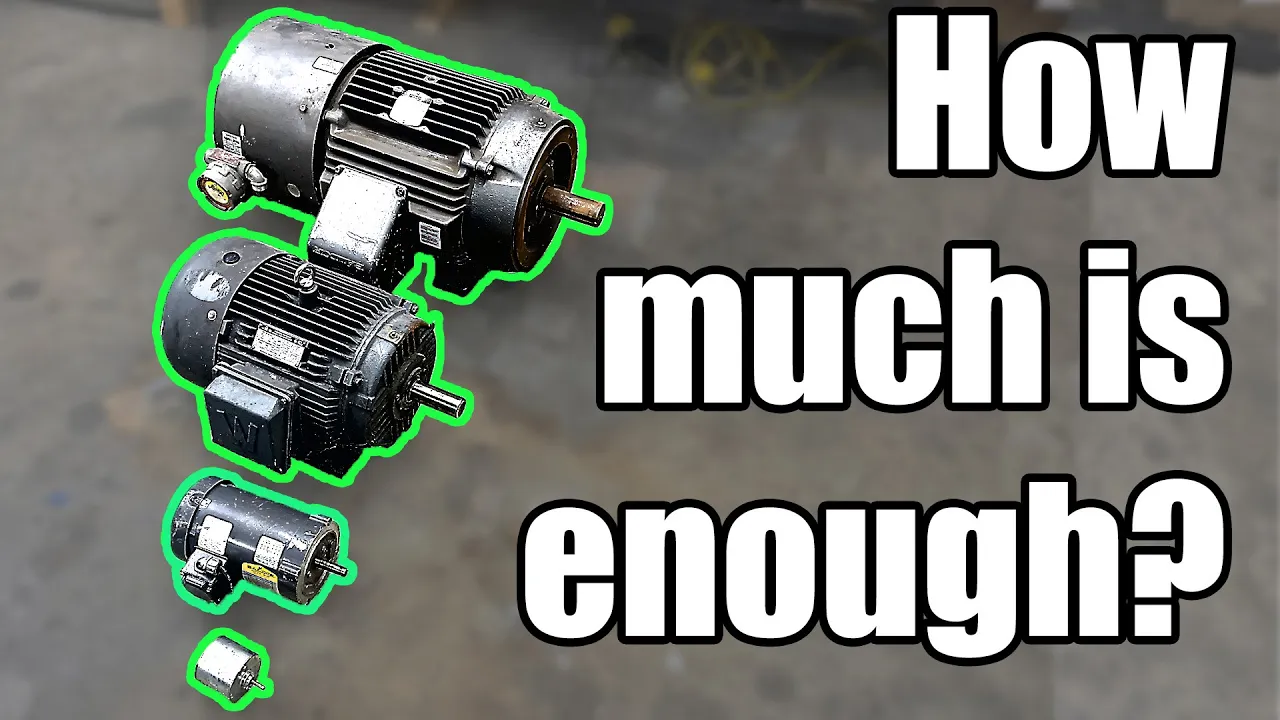
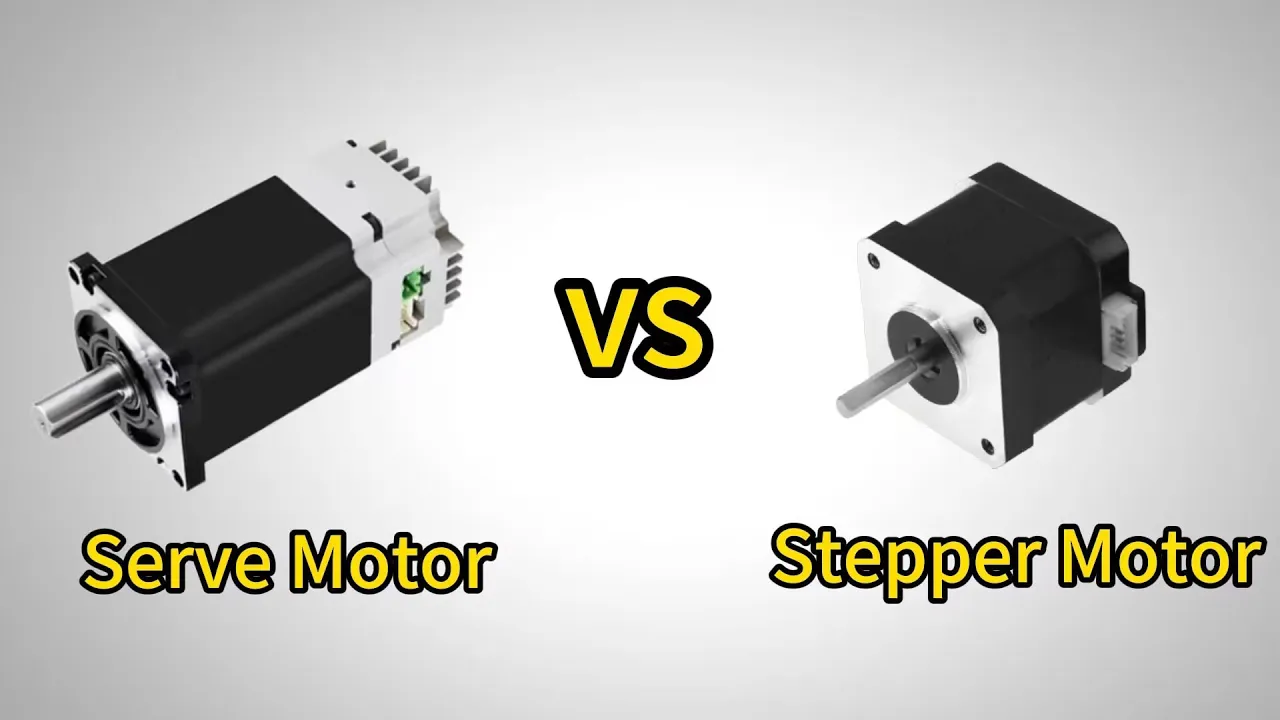
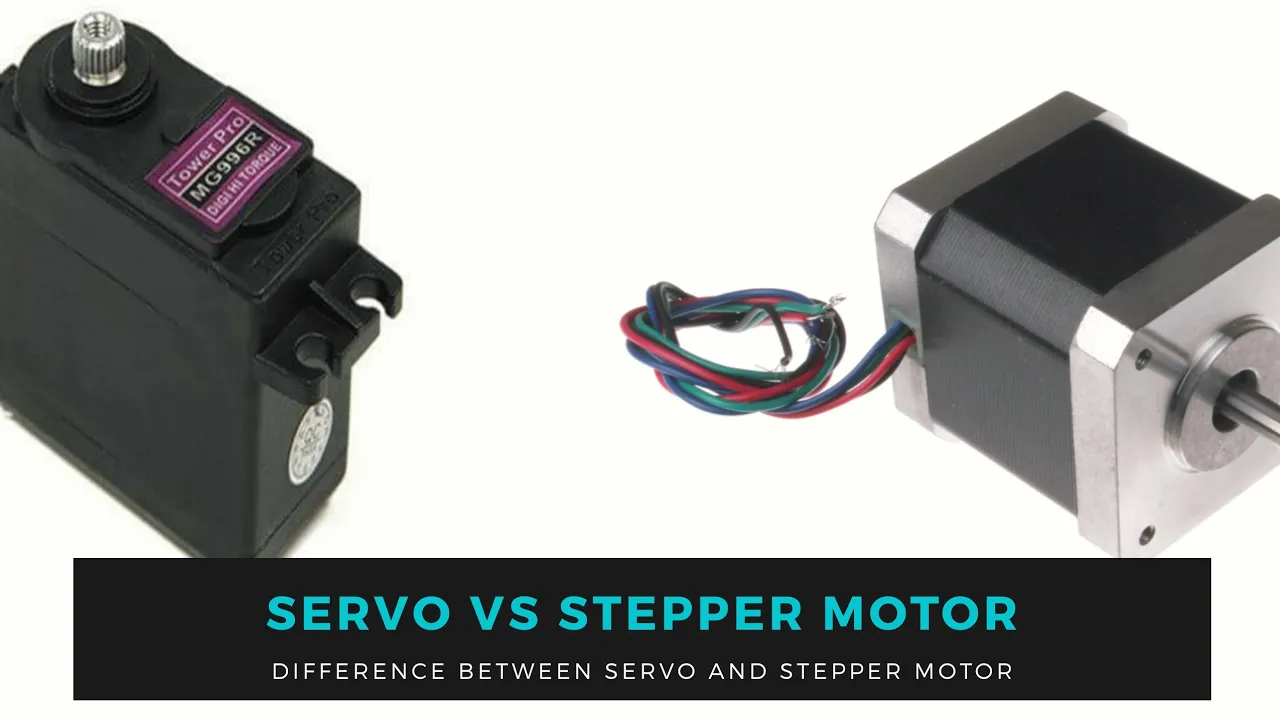
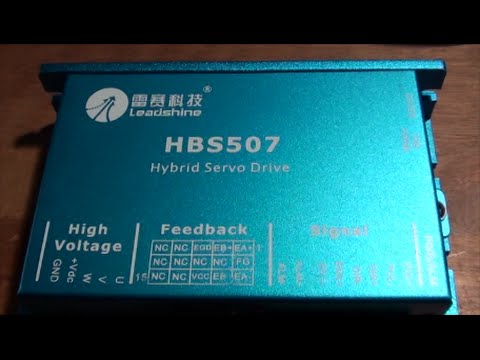
A closed loop stepper motor incorporates an encoder disc with sensors that provide real-time position feedback to the control board, enabling automatic power adjustment based on workload and preventing motor stalling, unlike open loop stepper motors which operate at fixed power settings without feedback; this feedback mechanism allows the controller to dynamically optimize performance for precision applications like CNC machines and 3D printers.
Closed-Loop vs Open-Loop Stepper Motors: A Comparative Analysis
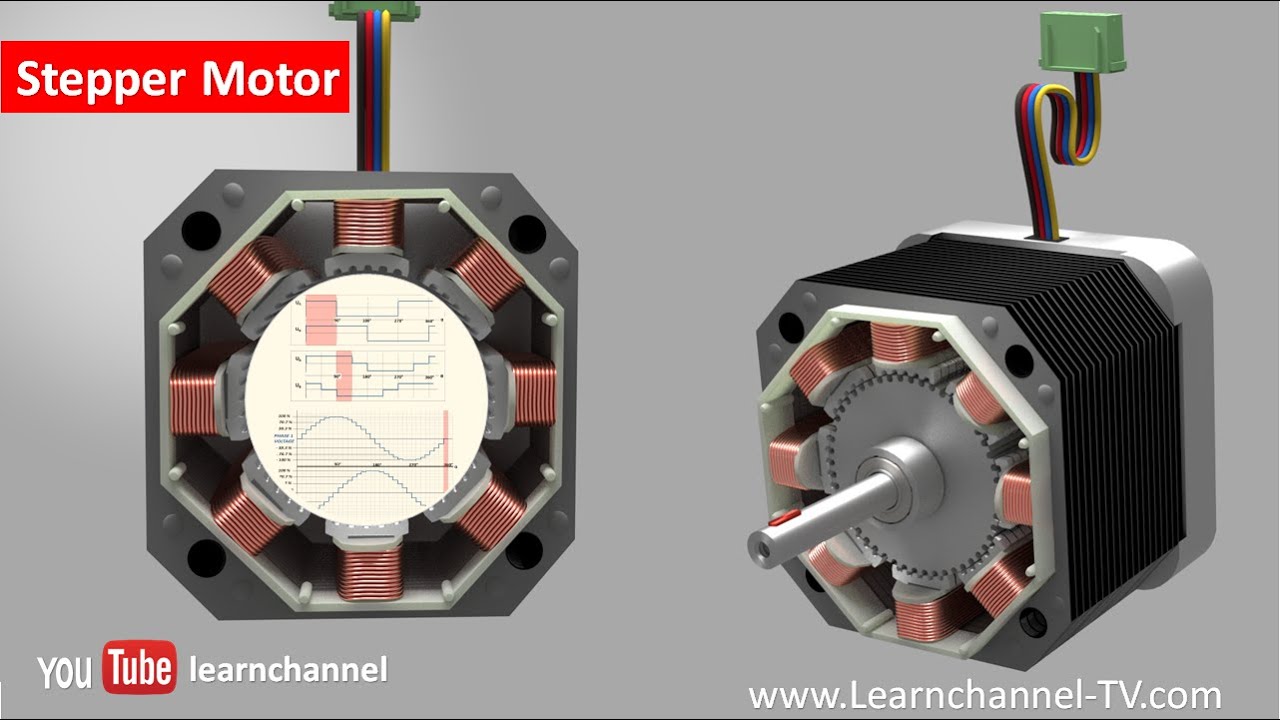
Added:Fundamental working principles of stepper motors, including electromagnetism, stator/rotor interaction, and stepping angles.
Basic control theory concepts, specifically the difference between open-loop (no feedback) and closed-loop (feedback-driven) systems.
Key motor performance parameters such as torque-speed curves, holding torque, and the phenomenon of 'stalling' or losing steps.
The function and operation of rotary encoders and how they measure rotational position and speed.
A comparative analysis between closed-loop stepper motors and industrial servo motors regarding cost, complexity, and performance.
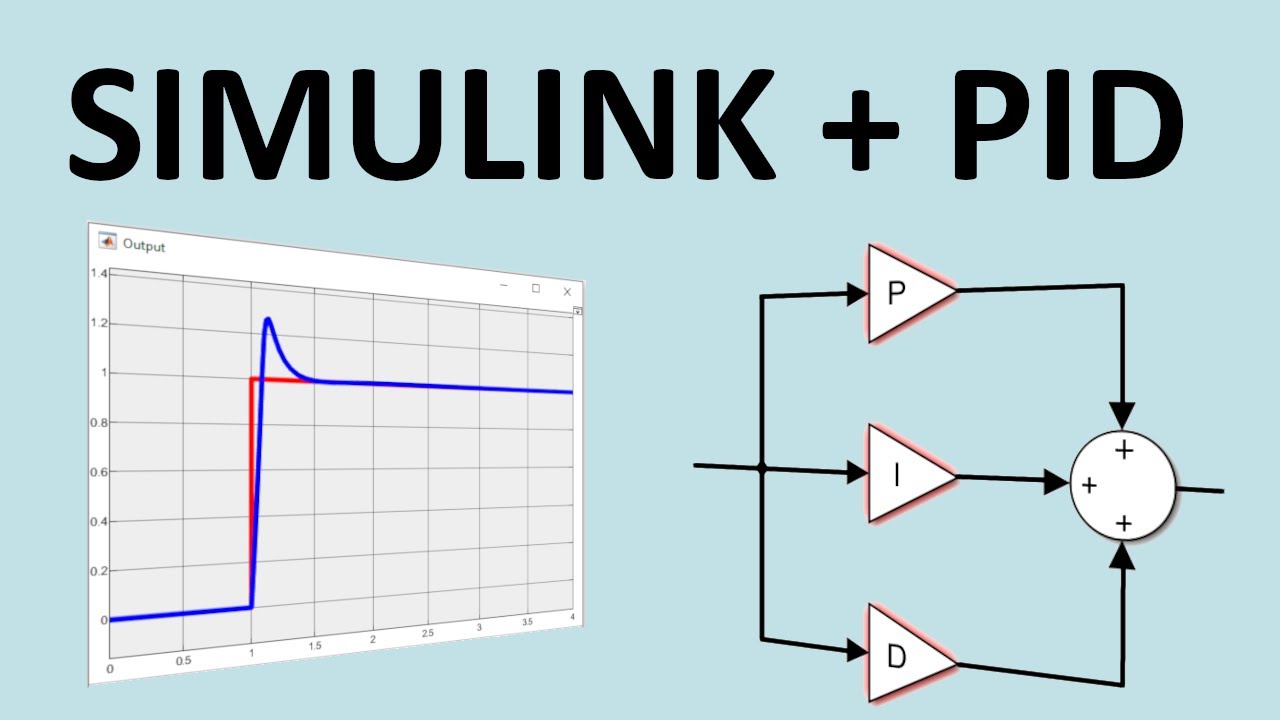
Implementation and tuning of Proportional-Integral-Derivative (PID) controllers for closed-loop motion systems.
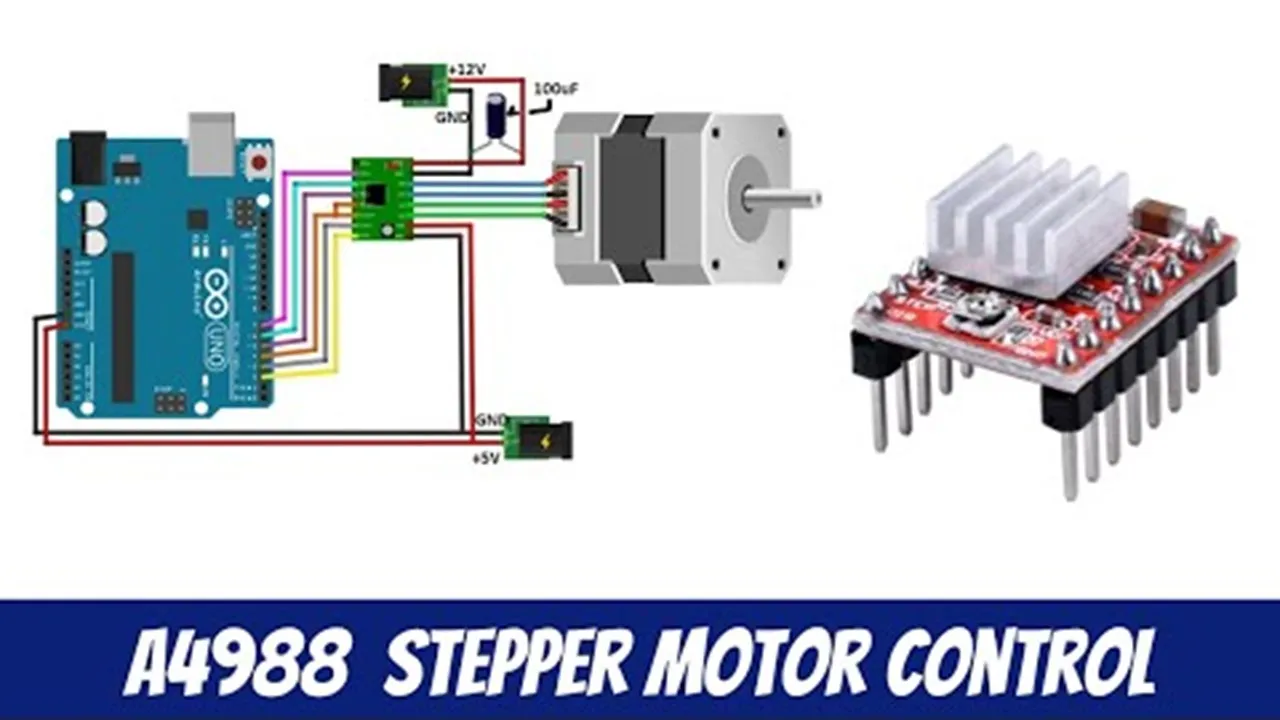
Selecting and configuring microstepping drivers and motion controllers for hybrid stepper-servo systems.
Real-world application design, such as selecting the appropriate motor system for high-precision CNC machines, 3D printers, or robotic arms based on load and budget constraints.
174.6K views1.1Klikes10:03Original Release: 2019-01-01
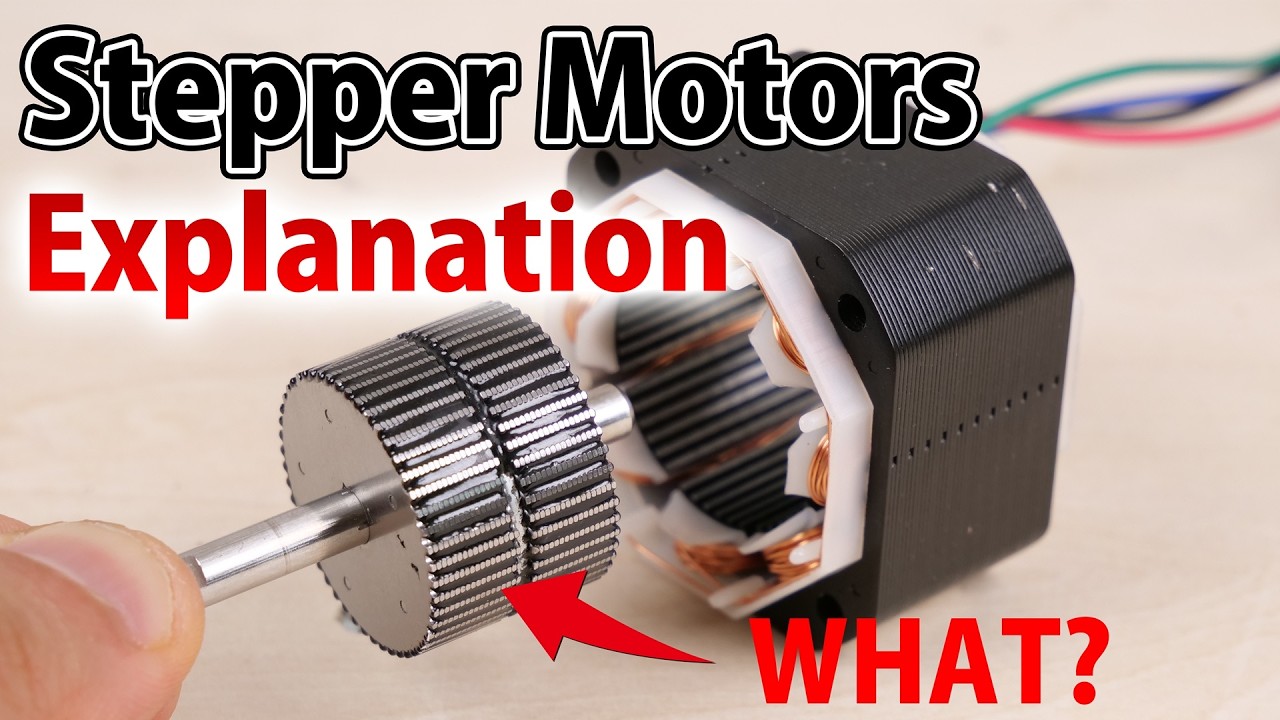
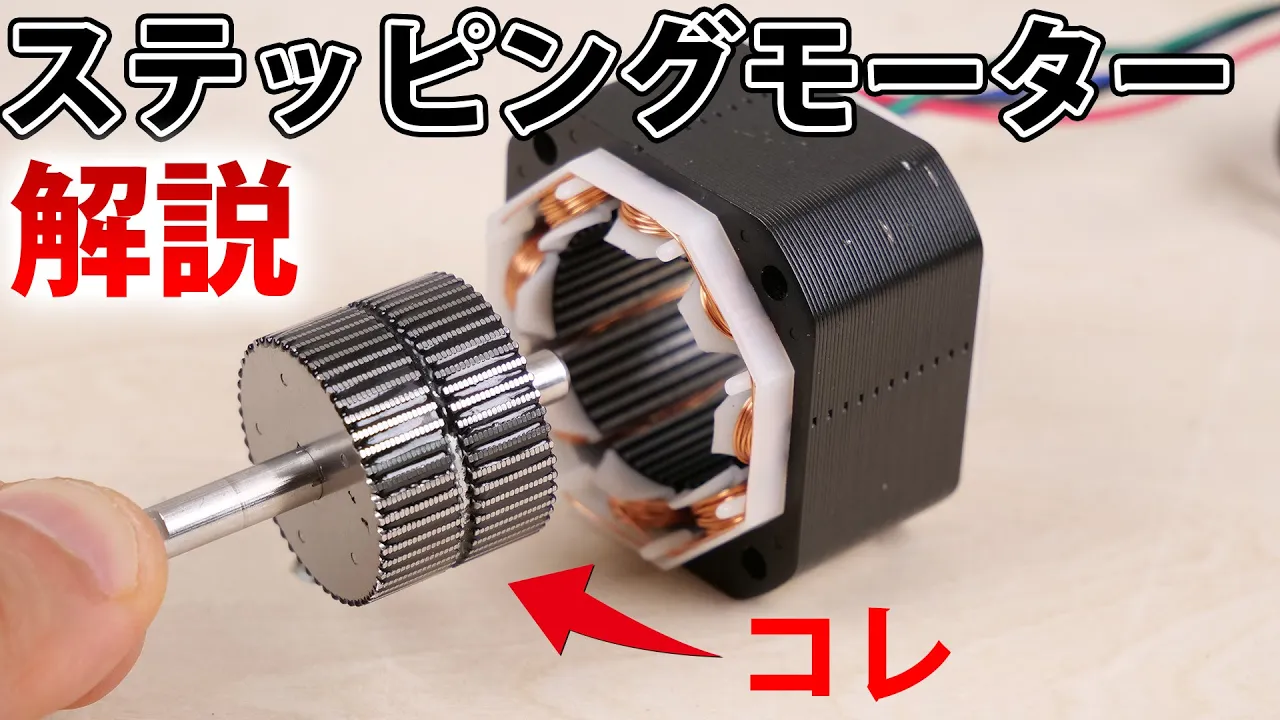
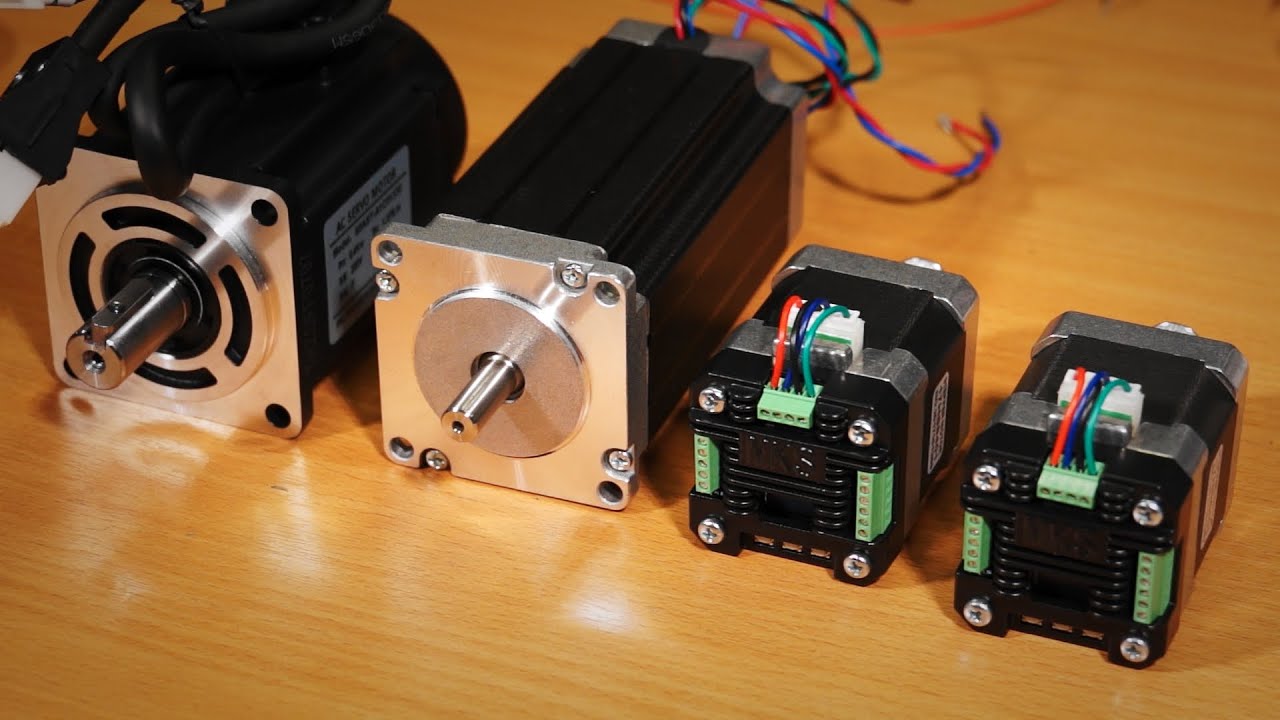
[Music] [Music] both of these mothers will do the job but which one is better [Music] this is a hybrid stepper motor so a stepper motor with some brains attached to it and this is just your regular off-the-shelf stepper motor oh by the size but actually the size is a little bit deceiving because the bottom of this motor doesn't actually do anything cuz this is a hybrid stepper motor otherwise known as a servo both of these are NEMA 23 sized stepper motors with a torque rating for this no joke a 103 Newton centimeter not a meter so that probably crates like 0.1 Newton's got a meter a bad first upper motor and this guy is a 2.2 Newton meter both of these motors work and will get you from point A to point B here's the reason I'm going with a hybrid stepper motor it gives you feedback based on the Mars performance and the controller can handle the voltage to adjust for incoming workloads that are greater than what's currently being provided to the motor in plain English when the motor struggling it gives it more power versus a regular stepper motor where it stopped at whatever power level you set it so you want to set it high enough to do all the jobs without it stalling that's how you normally setup a stepper motor but not too high that it overheats the motor so the more power or the more heat this will throttle the power levels that depending on the work being used so how does it know to do that it uses this little guy on the back it's an encoder disc that rotates in there with the motor shaft a couple sensors read the position of the motor and feed that back to the control board the control board knows where the position of the motor should be and this tells the control board how close the motor is to where it should be and then it does its own Corrections in real time if you've never heard of these type of motors there might be a reason why for that they're more complicated so normal process control board motor the the sir hi Brad servo motor process is control board another control board motor oh and did I miss the extra power supply just for the motor these are sometimes called a closed-loop stepper motor mean by closed-loop is the information comes in it does its thing comes back out so the board knows it's counting the steps as it's making the steps this is an open loop type stepper motor meaning it just gets the controls sent to it and then there's no feedback whatsoever that all adds up I've been a part of the 3d printing scene for a little while and for what I've noticed it's sort of a hobby level for most people and they don't want to spend the bigger bucks on the better equipment so mostly printers are the bare minimum as far as specs goes to get you the 3d positioning that you need so which is the best stepper motor here this one obviously for everything except for your budget if you're on a budget just go where the regular stepper motor call it a day I gotta make motor mounts to mount these bad boys to the large actuators [Music] can I get a chicken pop and an order of the salt-and-pepper wings yeah I need video-editing fuel thank you falling the build so far guys this is what I've got done so 3 5 foot long actuators and the and the printhead actuator so this is a planetary gear reduction I believe a 10 to 1 so that should give me very precise movements here a couple of microns per step that's what I'm hoping here the action readers here took a while this is the one I've been showing in the videos but I just finished these two and they're basically identical except for this one I cheated on instead of using a graduated drill just angle I'll just use an angle grinder and chopped out the slot for it other than that it's vertically virtually identical to all the other ones and they are all wow that's very long yeah now more do is that they're all done ready to go they all are nice and solid missing one thing and that is a motor I've made the little motor mounting plates that connect to the bottom took some measurements and cut it out with an angle grinder and these three plates are identical so I should talk about price what I paid for all of this stuff and what you could expect to pay if you try something like this yourself the in blocks both on this side on the other side the ball screw nut and the ball screw itself here in the states I got them shipped to my house for 120 each so there they go for about 120 144 sets like that each on ebay the extruded aluminum was about 47 dollars for each one each actually your plate ran me about 65 after-tax so this whole setup here leadscrew gantry plate attachment nut underneath there and it end plates and washers all cost about bucks to get this size here so let's talk about speed over accuracy or accuracy over speed and the way I wanted to think about it these are not fast they're not meant to be fast they're meant to be super super accurate they have anti backlash ball nuts which means they're pre-loaded inside of there the preload means that's pushing on both directions of this ball screw at the same time so it does not move back and forth so that's called a pre letter so that eliminates backlash out of the moving of the gantry plate back and forth the travel speed is about 1,500 millimeters per minute and I don't know what that isn't 4 inches per minute I don't have that calculation in the hip so that's not it that's not snappy no that's not meant to be snappy it's not meant to jump back and forth real quick it's gonna take a little bit longer to make prints with this but I'll be saving myself to not have to split this print up into 10 different prints I can print the entire thing in one go and you can also get precision ground ball screws these are not these are just straight off the boat ball screws but still they're as far as I can to have a pretty solid they are extra long so I will be having to run these slower than the normal actuator speed because I'll get screw whip yes that's a turn screw whip okay and that means if it's spinning super super fast it's gonna be off balance lately and whatever way it's off balance it's gonna start to wobble that's called screw whip so if you can't run them too fast or you'll start to get that sort of play in the actuator and when it's moving up and down that means your your gantry plate will slightly move back and forth because it'll be a shorter distance between the end points as it goes up in its arc very my new tiny little bit but that will wreck any surface finish you're trying to go for if you're doing million and 3d printing those are pretty tight tolerances so it'll put the line in the wrong place okay all right now it's time to go pick up my ticket back [Applause] [Music]
Up Next
0:44
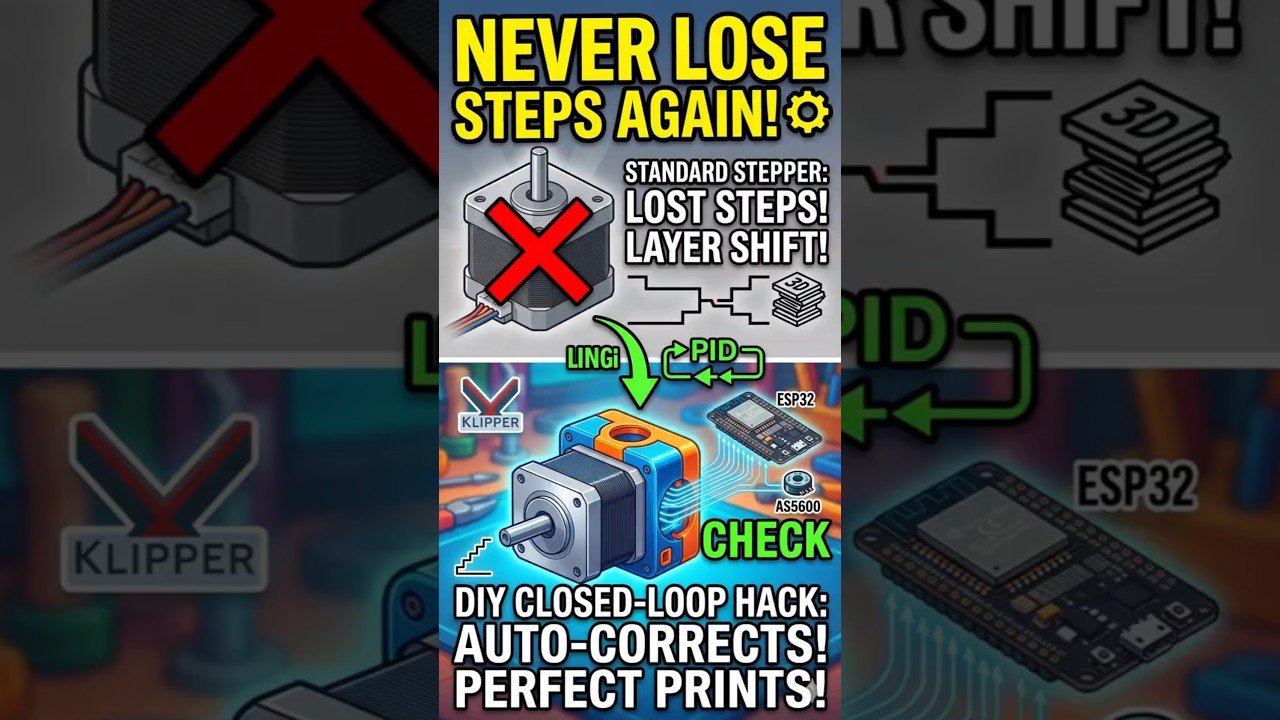
Closed-Loop Servo Control for 3D Printers Using ESP32 and Klipper
@EngineeringRobotic
1.3K views•2026-04-22
30:32
Ultrasonic Transducers: Resonant Frequency Measurement and Horn Design
@imajeenyus42
229.9K views•2017-02-22

54:16
Polymer Environmental Degradation: Mechanisms & Stabilization
@iit
1.8K views•2012-07-10
33:39
How a Student's Question Saved a NYC Skyscraper from Collapse
@veritasium
22.8M views•2025-04-26
Related Study Plans & Knowledge Roadmaps
Structured learning paths in Engineering
engineering
Building Acoustic Levitators: Physics & Arduino
01The Physics of Sound and Standing Waves
02Piezoelectric Transducers and H-Bridge Drivers
03Arduino Programming: Generating 40 kHz Signals
+ 2 more learning modules
14h5 modules
Explore Roadmap
engineering
Building Peltier Cloud Chambers: Particle Tracks
01Cosmic Rays & Cloud Chamber Physics
02Thermoelectric Cooling (TEC) Fundamentals
03Custom Liquid-Cooling Loop Design
+ 2 more learning modules
18h5 modules
Explore Roadmap
engineering
Yagi-Uda Antennas: Modeling, Build & VNA Test
01Introduction to RF and Antenna Fundamentals
02Yagi-Uda Antenna Design Principles
03Antenna Modeling and Simulation in 4NEC2
+ 2 more learning modules
18h5 modules
Explore Roadmap
engineering
ECG Monitor Design: Op-Amps, Filters & Noise
01Electronics & Breadboard Basics
02Op-Amps and Instrumentation Amplifiers
03Bioelectricity and ECG Fundamentals
+ 2 more learning modules
18h5 modules
Explore Roadmap