







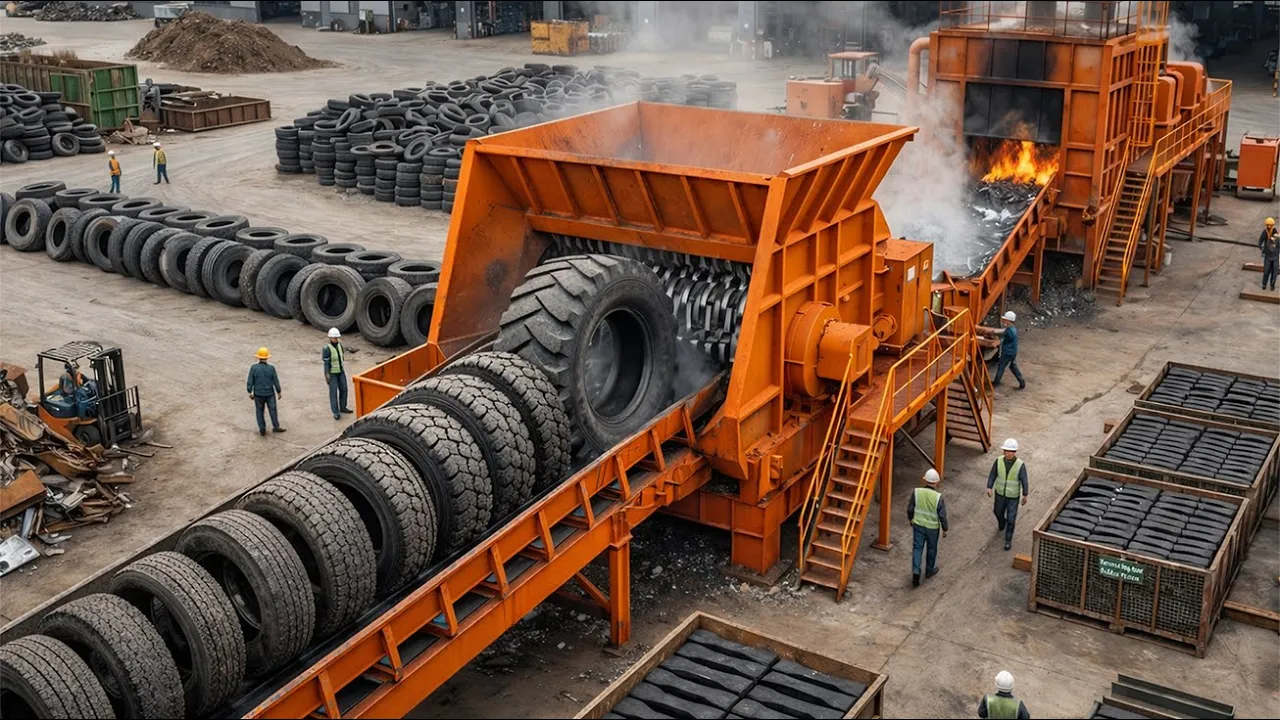


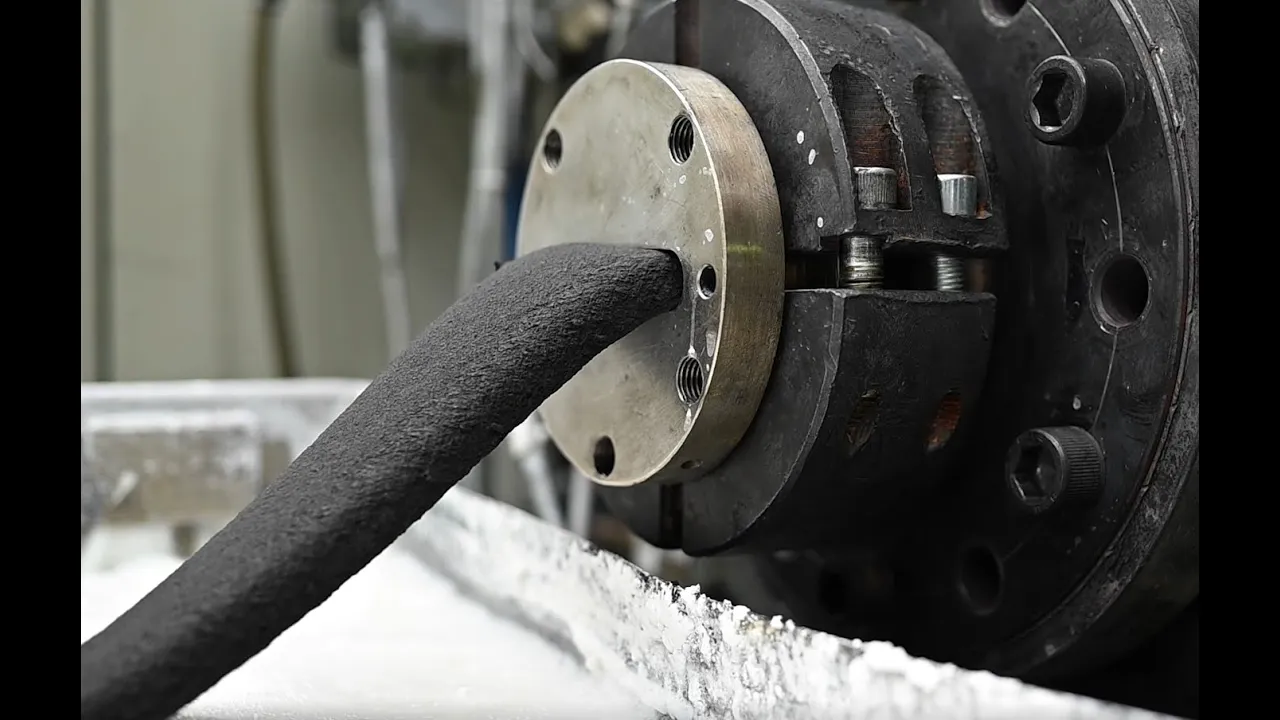

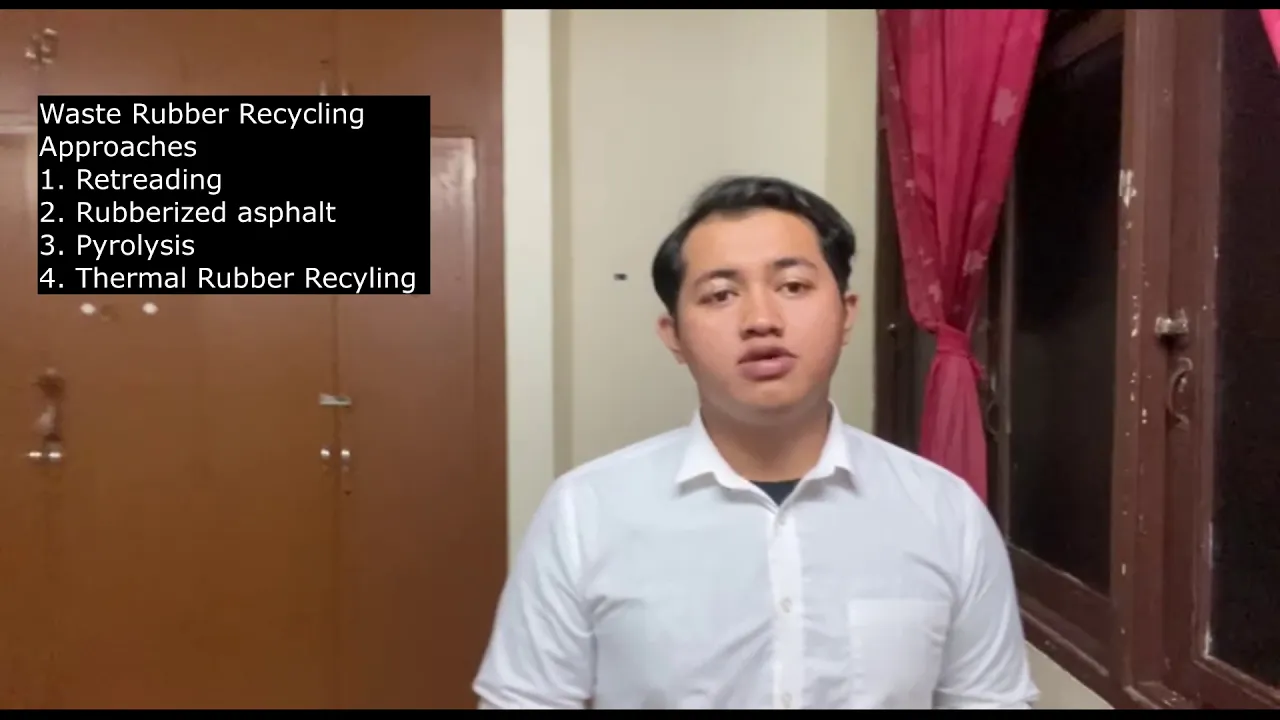





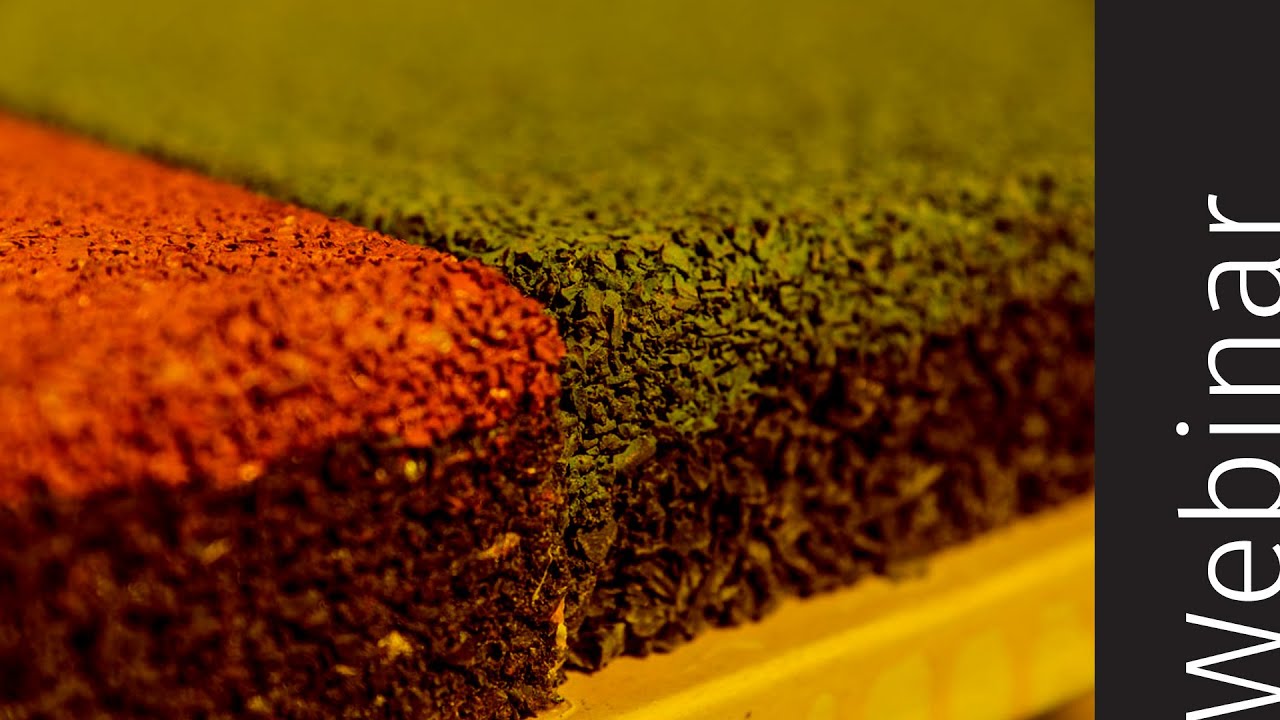

Devulcanization is a chemical-mechanical process that breaks the cross-links in vulcanized rubber (created during manufacturing with sulfur) without destroying the underlying polymer chains, enabling recycled rubber to be used as a functional polymer replacement rather than just a filler material; this technology addresses the fundamental challenge that traditional rubber recycling methods either produce low-value fillers or require harmful chemical processes, offering a sustainable alternative for applications ranging from tire-derived polymers to asphalt modification and thermoplastic elastomers.
Rubber Recycling Technologies: Devulcanization Advances
Added:The chemical process of vulcanization, specifically how sulfur cross-links polymer chains to give rubber its elasticity, strength, and thermal stability.
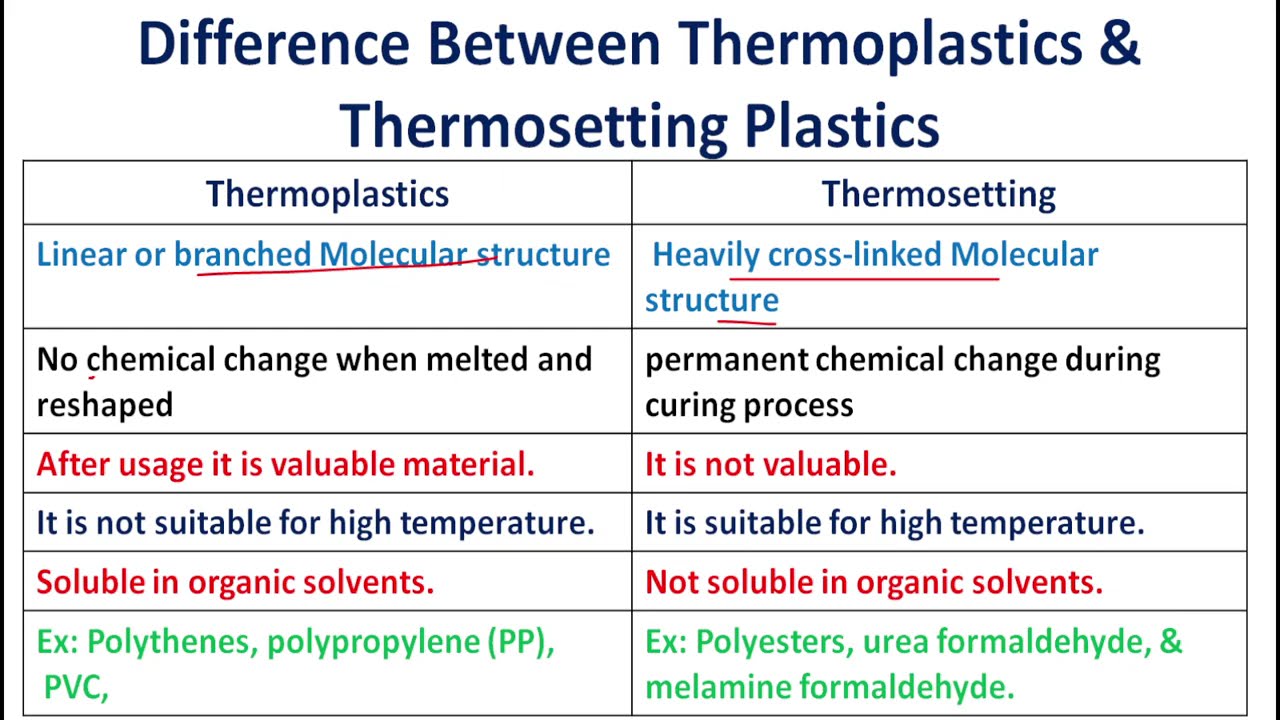
The fundamental differences between thermoplastic and thermoset polymers, and why thermosets present unique challenges in traditional recycling.
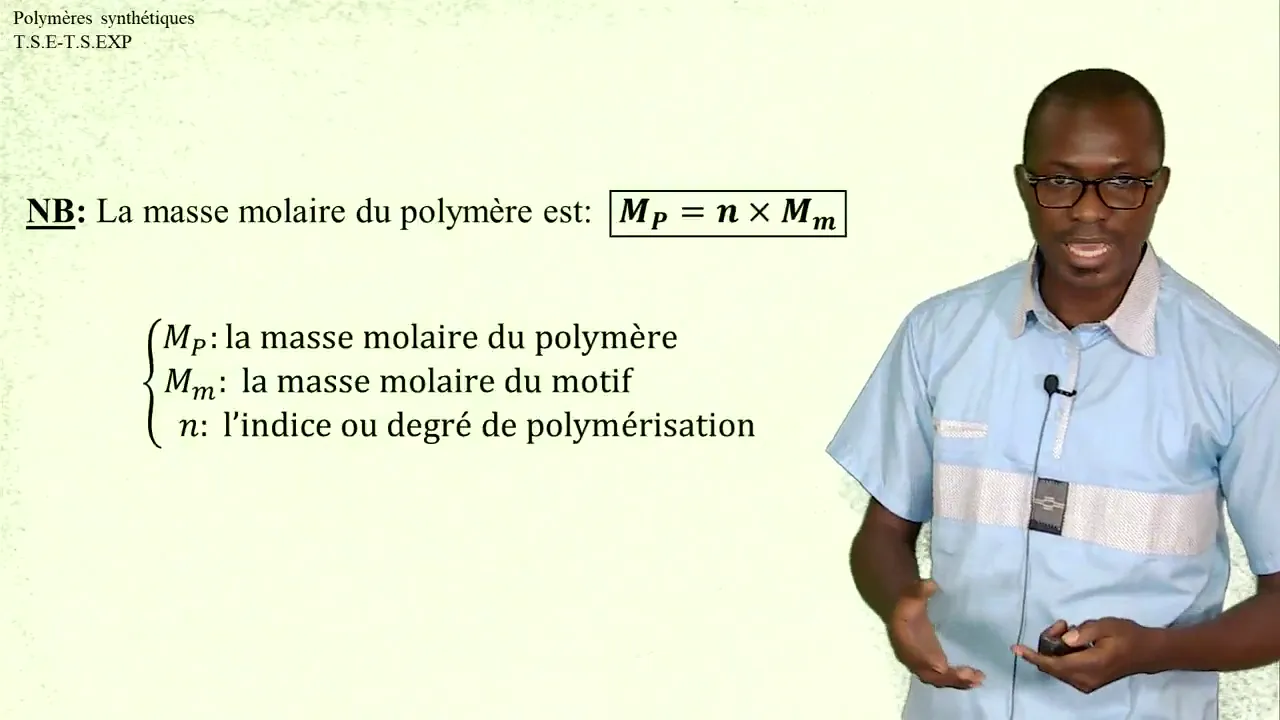
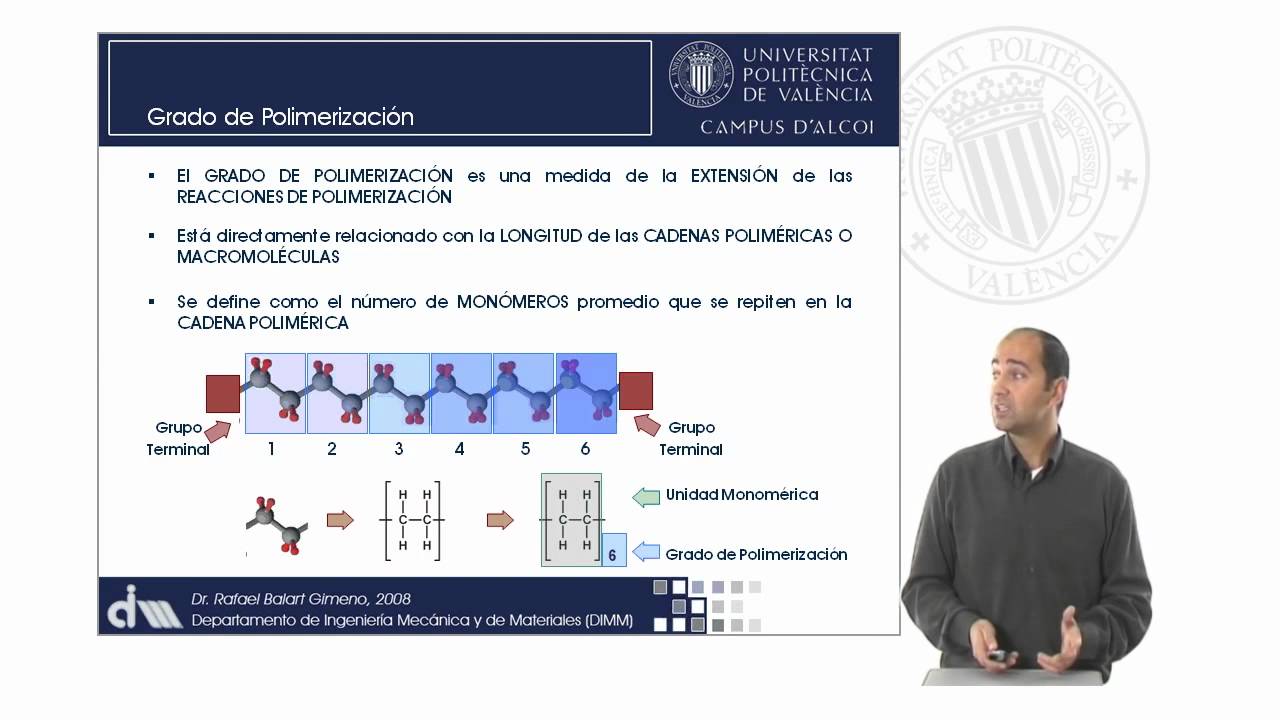
Basic polymer chemistry concepts, including molecular weight, elastomer properties, and the degradation of polymer networks.
Conventional physical recycling methods for rubber, such as ambient and cryogenic grinding to produce crumb rubber, and their structural limitations.
Specific advanced devulcanization modalities, including chemical, ultrasonic, microwave, and biological (microbial) approaches.
Compounding techniques for blending devulcanized rubber with virgin elastomer matrices while maintaining required mechanical and physical properties.
Life Cycle Assessment (LCA) methodologies to evaluate the environmental benefits and energy footprints of devulcanized rubber compared to virgin materials.
Industrial scale-up challenges, market economics, and regulatory standards for integrating recycled rubber into high-performance applications like automotive tires.
894 views11likes1:04:37Original Release: 2022-11-23
Obsession six rubber recycling Technologies our moderator is Ed Boyson principal of boys in Consulting he has over 30 years of multi-disciplinary experience focused on expanding and strengthening the U.S recycling industry and has supported Cal recycles Tire programs since 2006 including leading 14 consecutive annual Market studies Ed's academic background is in physics and Engineering welcome Ed Boyson okay um bear with us everybody it's uh four o'clock it's one hour from now is the reception there's gonna be a bar set up if you're interested in that kind of thing uh it's been a good long day great session and we have one more to go this one's going to be great as well we're going to delve into devulcanization Technologies and uh hang in there with us because uh we're really going to break your crosslinks that is a devulcanization joke um okay we're going to break your cross links try this one we're really going to get devulcanized we're all going to get devulcanized but don't worry we're not going to we're not going to we're still going to live long and prosper you know I don't do good at jokes at parties either so but I did get you guys to settle down so I feel like that was a total success um I'm going to we have three speakers with us today I'll introduce them uh as we go but we're going to start with uh David Parker uh who's the chief executive officer of new rubber Technologies and then we're going to move on to Bob Sheehy who's the co-founder and Executive Vice President of North Shore Rubber and then we'll move on to Eric Sharp who's the president and CEO of Ace Laboratories and it's going to be all about devulcanization David Parker is the chairman of the board and CEO of new rubber Technologies he's operated and invested in industrial technology businesses for 15 years prior to that for 18 years David was a merchant Banker involved in mergers and Acquisitions and corporate Ventures first focusing on the natural resources industry with JPMorgan Chase Securities and then with high technology industry with Montgomery Securities at the Confluence of both of those Technologies or both of those industry experiences David has an interest in developing technological solutions to Industrial challenges generally and more specifically materials recycling businesses David we're going to turn it over to you [Applause] good afternoon and thank you for sticking around till the end of the day the first um slide here intends to make the point that there is a very large challenge that we all have that I think others have made mention of here earlier today and that is that tire generation is outstripping recycling modalities and because tires are anywhere depending on Whose statistics you believe are anywhere from half to two-thirds of rubber production or rubber consumption if you will thank you of the total unless ultimately rubber goes back into tires it's going to be very difficult to get that mismatch in growth rates to homogenize the other third of the market is post-production scrap and I know some of my compatriots are exclusively focused on that end of the industry it's a part of what we do as well but there are lots of different lots of different types of polymers that are out there more rubbers than just go into a tire there's a lot of developed legislation and and Regulatory constructs that revolve around tire collection and processing and use but there's very very little California is sort of leading in this respect but there's very little in the aggregate that determines how all this production post-production waste gets handled and that again is a full third or perhaps even more of the marketplace and that difference in in sort of public policy if you will has some implications in terms of how that waste gets handled or doesn't get handled yet and what's to be done about it so why are we having this challenge with recycling rubber the answer is that it just comes down to its chemistry rubber starts its life as a super viscous liquid and Charles Goodyear discovered that if you impregnate it with sulfur and put it under heat and pressure creates a solid makes us the the very useful material that you all conceive of and all the products that we use every day but it makes it a more difficult material to recycle and uh there's obviously an enormous industry that's grown up around recycling rubber but relative to the original material it's a small portion um the um uh a little more on the let me just describe it using an analogy which might be helpful and I realize I'm talking to people with different knowledge bases in the audience think of of rubber or waste rubber tire like a loaf of bread what granulation does is it turns that loaf of bread into breadcrumbs and what I'm here to talk about today and some of my colleagues are here to talk about today is a subsequent technology that can be applied to that crumb feedstock if you will and that's the ability to take that crumb and turn it into think of it as a little blob of dough and then ultimately to aggregate those Blobs of dough and turn it into a sheet that can be then returned back into an oven and revokanized a second time turned into a solid a second time from a technical perspective uh well before getting to the technical perspective it's worth noting that um while the ability in the addressable market for recycled rubber is small because of this challenge of reverting back into a liquid state to be able to then return to a solitary solid state the second time around and retain the properties that one's looking for in the original application it's worth noting that there is another technology out there that's used offshore largely in Asia and many of you have heard of it it's called rubber reclaim it's a process that has high thermal content some very nasty chemicals carcinogenic chemicals requires pressure in many cases which the combination of that heat and pressure requirement leads to vocs and effluents and all sorts of Nazi stuff which makes it illegal to conduct in North America or Europe that being said China produces about 15 million tons of it a year compare that to some of the numbers that Ed shared this morning in terms of total Tire production here in the states it's a staggering amount and that rubber a very significant portion of that comes into North America in the form of molded Goods or extruded Goods or other Rubber products that we all consume the point of making all the point that I'm trying to make here is that at least demonstrates a set of Market applications that are available to address if there's an alternate way to address it with less environmental impact and that's what devolcanization provides lots of different ways to devocidize we use a chemical mechanical process the chemistry is an FDA approved food and Medicine ingredient if you've eaten pizza or taken a decongestant you've ingested our catalysts uh very safe but the what's important is what it doesn't do it doesn't employ the same thermal content or some of the same chemistry that reclaim does offshore and from a technical perspective and a consumer's perspective what it does is it focuses on Breaking the bonds in rubber that you want to break without breaking the bonds that you don't want to break they all have different covalent bond energies between those bonds so you can actually Target with a level of energy input and what a catalyst does is reduces the amount of energy required to do that but that's the important differentiation from a technical perspective what's meant by devulcanization I.E the reversal of vulcanization that which turned rubber into a solid in the first place we're breaking sulfur sulfur bonds and we're breaking most not all most of the carbon sulfur bonds without touching the carbon chain which is what makes rubber rubber and useful a second time around if preserved so important technical differences important technical benefits important environmental differences and benefits and indeed from a cost perspective something that uh has a has a a large cost performance role to play in the marketplace so um what can the vulcanized rubber be applied to it could be applied to just virgin rubber replacement or reclaim rubber replacement it can also also be used in thermoplastic elastomers by using some Downstream technical capabilities that we and others might have developed as well it can be used as a modifier of of plastic think of impact resistance think of color enters as two of those functionalities it can be used as a selective plastic replacement and by that I mean flexible PVC replacement if you think within the realm of flexible PVC those sorts of products where people are actually looking for more rubberific uh more rubber-like properties be that a coefficient to friction or compression set or what have you so think of solid wheels these aren't car wheels these are Dolly wheels and and Caster wheels things like like that it has a role to play in that segment of the market and indeed has a role to play in the modification of asphalt and when I talk about asphalt it is um that can be bifurcated into both the road applications Paving applications as well as industrial principally Roofing applications So within the realm of traditional rubber replacement which is again the largest of those markets I just described there are different levels of complexity and different levels of of ability if you will to replace virgin content in those applications what I've done here on the left hand side of the page is sort of describe the ascending order of difficulty if you will and what I can tell you is we have lots of applications today where we're replacing 100 of the Virgin polymer content but as we go up that stack that level of substitution decreases and um this is going to be we're on a continuum this is something that's going to continue to evolve over time uh devolcanization Technologies are going to get better and we're going to be able to put more and more rubber into more and more challenging applications but what I am here to tell you is that based on the state of the technology today and that's just not that's not just nrt that's other companies that are here there's an awful lot of addressable opportunities uh that can be met both technically and from an economic perspective today so just to touch on asphalt for a second I'll talk more about Roofing because that's what where we chose to focus because it's a private Enterprise decision-making process if you will what players in that Marketplace are looking for coincides in in some respects with what's sought in the paving World they use some different language but there's a lot of it that's pretty much the the same elastic modulus is a is a ultimately what people are looking for and and some other technical elements but that's a Marketplace that um I think is a nearer term opportunity for participants in the marketplace because of again that decision-making difference in terms of adoption I do think Paving like um tires is excuse the intended pun is a longer Road but it will happen over time they're they're crumb suppliers here sitting in the audience I know that supplied a tire manufacturers it's uh just a question of how much of the content of that tire is actually getting replaced so the vulcanization is a is a technology that opens the door to additional levels of of participation I will say within the asphalt Realm where we've chosen to play and I think where others might it's it's a as a replacement to SBR which is the excuse me SBS which is the the cousin to to SBR rubber very similar in structure but for being a thermoplastic elastomer as opposed to being a rubber which means that it um it it's a liquid below it's glass transitioning temperature uh excuse me above its glass transitioning temperature um so lots of applications available today which uh ultimately allows for a broader use of the material set the there's lots of value to be created and is being created by lots of people in this room there are other things other than technology that create value I.E brand and channel control and those sorts of things but all else equal this does allow rubber to use in a broader set of applications and in some cases or cases equal excuse me other things equal a higher value set of applications closed loop recycling is certainly a different modality that I think we're going to see over time we do take post-industrial waste but we are diverting it to alternate uses and as this industry matures and capital formation happens and we can put big dedicated plants next to Big producers you're going to see a lot of closed loop recycling because it has a lot of appeal for a lot of different reasons um devolcanization I'll conclude by saying that devolcanization is necessary but not sufficient to drive this much broader adoption that I'm describing part of that is a reformulation capability which today largely resides within Compounders and vertically integrated end customers we've pulled that in-house we've decided that vertical integration is really important that because of the imperfection the the deficiency of devulcanization versus a virgin polymer it's important to take that next step and figure out how to compensate for it so that you have a material that has the technical capability and the cost performance capability for that solution set so and the last piece of I think there are a lot of other ecosystem things that need to happen to drive that broad adoption one of those is and I'm starting to hear it from customers they're realizing that and I've heard one recent customer say this way he said we understand we have to now design for recyclability I'll give you a quick example door seals window seals are often attached to metal if a company uses a elastomeric adhesive then there's no contamination and you can recycle there's no there isn't an issue from a devil organization perspective it's a contamination issue so things like that that's the sort of adoption that needs to happen in in the broader excuse me the broader industry around us and we look forward to engaging with uh with folk to see that happen thank you [Applause] okay thank you David next up is Bob Sheehy Bob is the co-founder and Executive Vice President of North Shore rubber as I mentioned with a background in real estate construction and entrepreneurial projects he focuses on several different business areas including Business Development transportation and lost Logistics as well as leading site selection and facility layout Barb has many professional affiliations and he's involved with lobbying executive leadership and membership development Bob you're up uh just use the error okay well thank you all for coming today um I think I'd like to say right off the bat I know it's getting late in the day I don't see the happy R Bar set up yet but oh there it is okay so I'm going to make this uh fairly relatively quick to how usually I go about things but I also want to mention right off the bat um Denise Kennedy in her efforts to discuss with my co-founder Wayne Embry Jr who is our CEO and president um she's been very persistent in involving Us in discussions me coming on a short term to do this presentation thank you so much Denise and a great chance to get in front of like-minded people and somebody very eloquent about devulcanization where I'll be a little more blunt um and yeah yeah and also my associate that's with me today uh Hugo Sandberg who's got over 20 years of experience knows many of you in this Marketplace I'm new to this Marketplace uh in California at least in the last seven years that we Wayne and I started our business um you know it's it's been uh the customers and the prospects have been a last America you run at them and you bounce off and then you come back at them again and I think the one thing that I've learned um not that you're dying to no personal experience for me is be persistent but don't try and be a pest because I don't want to get stepped on but long in the short of it um as we uh look at our presentation here fairly quickly we talk about the problem recycling rubber The Challenge and the solution many people have covered this today so I'm not going to belabor a lot of these points um right here the global scrap problem that we've all discussed for one is global but more importantly just learning today knowing that the California Market is big number four that's pretty impressive uh one out of every six or seven tires that's produced in the united or that's utilized in the United States comes out of this Marketplace um we definitely need to be doing some business uh we're more towards the fresh Coast in Akron Ohio uh we're going to be coming out to the Left Coast uh and look forward to that especially with Denise's help um so industrial scrap along with uh Tire scrap is a very important portion of this we've been involved in both of those areas I will focus a little more on the um industrial scrap problem but Tire scrap is is very very important and we have addressed that in some of our efforts with our company um let's get on here desired okay I'm going to go right to the challenge um so ground and micronized rubber uh which there are you know agreed upon terms ASTM wise um those products generally um as many people have discussed here today are used as the filler portion um they come in they're they needed to be they need to be reused and they have qualities that are very very useful but they're generally added in as a low percentage you know trying to replace materials that are either of the same low cost or also have just enough quality to come into the market uh and come into the product excuse me um uh some of the ways that that has created David talked about that you can imagine if uh we're in China and you're somewhere else in Asia and there's a vat the size of this room all the way up to the ceiling and those um in those markets people are dumping tires that may still have the metal in them and also all sorts of industrial scrap then they throw in the chemicals and the solvents and that creates quite a picture of a pool that's pretty scary and that's that pool then when they drain out those solvents I'm sure they reuse them again and they've got this reformulated type of rubber that has been degraded by by some of its best properties possibly um and after they're done using those solvents um I don't think they're recycling those solvents not at all so getting products that do have that are created without chemicals and solvents I think is obviously very important to all of us um most of those type of processes are also very not commercially viable even though China's been able to figure out how to do this on a great scale uh in the past you know devulcanization uh products and the process more importantly the process just has not been cost effective thus it hasn't really made its way um and the limited amount of savings that you might be able to create from producing a product at a lower price um you know it just really doesn't work and to coin one of Hugo's phrases when you go through a process with old default Technologies and inefficient ones the juice is not often worth a squeeze here as we can say in California with the uh with the oranges and other fruit um what is rubber de vulcanization I think that's been covered very well here today uh the the last part of this uh where we talk about breaking the cross links the process that we use um varies uh simply is we use a mechanical shear and we are preferentially breaking those cross links or those bonds um moving on the solution so North Shore's proprietary technology results in material that can replace the portions of the polymer in a formula um so you're taking out something on a percentage basis that could be as high as 20 percent that is priced considerably higher it is a virgin material so it has to be processed and produced to get to the point where it is useful and we're able to do this at a very high devulcanization rate once again our process does not use chemicals or solvents and to be able to load that material in at a very significant process you know EPDM roofing is the one that usually comes to mind when they're making large voluminous amounts of that we have been testing and have you know come up with customers that and Prospects that want to work with us on this and it has to be a very very um a partnership that is very open everybody has processes procedures and their formulas that are you know they're protected they're protected for a reason because they've spent years hundreds of millions if not billions of dollars coming up with those processes so trying to open that door come in and prove that you as a technology provider and a process provider can work on a one-on-one basis with them and we've had our share of uh situations where we've provided materials that are from either directly from their process and I'll get into more about that on the clms when we bring that material in if they just go ahead and process that material without a collaboration it generally is going to end up in a either a fail or maybe not meeting their um meeting their their goals um so the customer benefits to uh to replacing the polymer portion is very simple environmental savings right off the bat uh potential for a zero waste stream which we hear people talking about the tire companies talking about all these the zero waste streams and of course there's so many large industrial producers this gives them a chance to differentiate themselves to the consumer and as the consumer uh is you know me as a baby boomer on the edge of the back of the baby boom I may not be as amenable to that uh but personally I am uh you know somebody in my age range but younger consumers are as we all know talk to your children talk to your nieces and nephews this is a much bigger deal to them and thank God for that um once again reducing the carbon footprint to produce materials and most importantly a significant cost savings so as much as I want to get up here and say we've got a great process and and a great technology to do this with if we aren't saving the um the producer money pretty much falls on deaf ears very quickly so uh talking about just specifically default in the NSR technology it is commercially proven there are several plants throughout North America Asia and Europe uh maybe I didn't do that right on the map but um uh there has been material going into OTR tires for quite a bit of time now it's commercially proven um once again at a high devulcanization rate one of my prospects years ago in the midwest told me that he couldn't understand how we took Tire uh a tire material devulcanized it handed it off to him for testing where he and his ASTM testing said it reached 99.4 percent devulcanization that was pretty impressive um you know is it the Holy Grail you know I I believe so and we're out here trying to make sure we get in front of everybody to tell us we can do that um once again using no chemicals or solvents um the hike there's a high conversion output meaning that when we are taking material micronized rubber material and putting it through our process thermal mechanical and the output as is very high meaning that we're not doing it in a batch process and we're also doing it with a large amount of material per hour we'll talk about that a little more later once again there's minimal impact on the original formula that the rubber product was created and was self-recured um and this process is also won many sustainability and Innovation reward uh Awards and I can stand up here and tell you this is uh it's it's been an exceptional experience in my career um but we are still uh a process and we are still doing things that um and now I'm going to forget the terminology it's it's is groundbreaking as it is it's also you are really trying to change somebody's thought and their mind pattern on this so that is always a challenge and uh the word I'm looking for is disruptive and the fun the way that I like to look at this is you know with the rubber industry there's so much technology that's gone into this and so many proprietary formulas uh I'd like to kind of use the pun that the a lot of these companies are very elastomeric uh when they talk to you but when it comes to the rubber meeting the road it's still a disruptive technology and there's still that that thought process of well we have to protect ours and uh you know change is going to be hard to do so but that's why we're all here right everybody in this room lastly the processes that we are working with uh they're ISO 9001 certified and certified into the facilities so that takes a while to do once it's done it certainly makes those prospects and and those customers you know obviously it meets their standard let's move on here okay as far as polymers and next I have case studies coming up but some of the polymers that we have created um and we use the term TDP differently we we call that a tire derived polymer so right now North Shore has um several sustainably produced Tire derived polymers one of which is called tdpb and uh the B signifies what the material mainly is in there or is in there and it's a 100 percent re-engineered rubber Master batch compound that we worked with Partners technically to create this um and it's it's made from truck or bus tire so that is a very very valuable commodity in the marketplace for those of you that are collecting that material the truck and Tire buffings are are very great to work with you don't have typically have the problem of trying to break down the whole car tire here where you have fiber in there that people generally don't always recognize but obviously we have this steel belting that is in there and secondly the tdpc is a 100 percent uh re-engineered rubber Master batch compound made from whole passenger tire so in that process we obviously have to remove over 90 say 95 percent of of the um the metal material that is in there from the steel belting which makes it a little tougher to find a little tougher for your supplier to bring that to you and to and to and to manage that so um there's obviously an abundant feedstock that that kind of speaks for itself 300 million plus tires just here in the United States to get to some case studies we've developed uh over the seven years we've been in business um working with many different customers from many different Industries you know trying to find out what is their waste stream I'll talk about that a little more in clms and we've done some studies and put together a proprietary polymers without sacrificing the performance that they need they have ASTM standards and some of them quite frankly have standards that have been around for 20 years and when you asked them when was the last time you tested what your supplier is providing to you what's going in there as we know that every company has to bring down their costs year over year most of them very successful at it that thus they're a they sustain their ability to stay in business sometimes that standard isn't as their standard is a little more flexible but when we're trying to go up against that right away we're trying to meet and exceed that standard which we do and some of our quick examples are OTR retreading conveyor belts which we've created um a proprietary conveyor belt material and looking to make better headwinds into that Marketplace SBR molding uh EPDM molding which is in just a huge variety of products and then EPDM roofing which is one of the things we're very focused on very quickly on our clms services the closed-loop manufacturing service and closed loop Manufacturing in general has grown quite a bit in the last 10 years um you know once again very simple example of that is if somebody is making with with some of our customers are making EPM Roofing they're rolling out this material and on the edges they're typically cutting off the edges to make that square so that when they line it up against the other piece when they're going across that roof they want that to to to fit as perfectly as they can when that material drops to the floor quite frankly you know people look at at that post what I call post-production um scrap as uh you know now what do we do with it well as these businesses mature and as they grow and as they have to buy outside forces you look at their corporate publishings that they say they've got to meet some standards to do something with that the easiest thing to do is have somebody else come pick it up for free or maybe a sell it off for a couple cents a pound and it's out your door hey now I'm done with it well that's harder and harder to do in today's world so we'd like to go in help evaluate the waste stream that they have does this fit with us most importantly is it a sulfur cured product because that is the basis behind uh our the most effective part of our process we designed a program with them to collect that material say from the shop floor try not to mix it with anything else and if they have a specific formula for their product which all of them do we take that material we micronize it to our specification run that through our process and then we're bringing it back to them and selling it back to them at a reduced cost versus the replacement of the Virgin materials that they have so I hope I've painted a clear picture on that and most importantly when you do that you're taking their their scrap stream putting it right back in and they can blend that back into their product displacing it 20 30 40 percent maybe they start out at five to seven percent even at that small amount the percentage of savings to them is large and Money Talks As We Know so um creating a true closed loop system you know maybe one of these uh manufacturers might say well I'll test this I'll bring this product back this this clms product that is mine back into my process but I'll create another product line that'll say green roof or green Tire or you know something in that nature if they're as clever as the people that created uh Tire derived fuel tdf now that to me there's a there's a marketing gimmick right there hey feel good about it let's burn it up Tire derived fuel God bless him so once again some competitive advantages for our process is the high integration rate of um once again very specifically we're not a filler we're not looking to be a filler we're not priced as a filler and we're we won't become a filler for somebody that doesn't make any sense the lower material costs versus virgin rubber I hope I've made that point it meets all applicable all applicable ASTM line call out safety standards um and once again the low carbon footprint the sustainability um slides that we've seen up here especially from like Pirelli where they show these processes in depth it's it's you know great to go out there and explain that to people when you really do see that in a um in a chart it's amazing what what they look like so uh in summary um let's see what haven't I covered here I think I've been over this three or four times I tend to repeat myself but you want to make sure you're getting your point across um trying to be cutting edge with with any technology that's great getting those and finding those early adopters I hope we've got plenty of them in the room whether it's somebody that you know whether it's your company we're here to spread the love just like you are and the facts and get the job done here so um I think that's about all I want to share both Hugo and our here for you know the rest of the conference look forward to one-on-one discussions um and any questions that might come up and thank you again for your time foreign [Applause] are we missing a slide deck in eloquent any time um we are missing a slide deck yeah would you thank you Tommy yeah yeah why don't we uh see if there's a couple questions we have one more presentation from Eric Sharp slightly different perspective I assume you'd like to wait for yourself so anybody have any questions any questions for the two speakers while we wait for the third one to come up we have a question um this comes in from Kelly Moran during devulcanization what happens to the non-rubber tire ingredients like antioxidants other chemical additives and fillers they remain and they remain in the Matrix nothing's separated all of that remains in The Matrix the only thing that's happening from the vulcanization is the cleavage of the sulfur sulfur bonds with disconnected from the internet Tony's here is here probably you probably have it sure it's not on here it's not this one give me two minutes I could probably okay um I have a question curious uh you know we've talked a lot about earlier today about California's business environment there's been other discussion about the need for supply and markets I'm curious you know when you guys look for the ideal conditions to grow devulcanization what does that environment look like what's most important to make it a a particular location and the particular conditions is it the market the supply of tires what are you looking for and and how bullish are you about the future for devulcanization at a broad scale and that any one of you guys who'd like to take that would be fine do yeah I think a lot of it I think a lot of the considerations are the same for the producers of of crumb you've got to be near the tires and you've got to be near your customers and so you've got to be in at a ecosystem that has the right that's servable from a logistics perspective um and that includes regulations from state or provincial authorities it's a I think a lot of the same considerations many of you I go through every day I would also say the you know this is um just a great example of the public-private Partnerships right here at Cal recycle um Wayne and I by CEO and I have been talking about this for quite some time and I don't think there's anything like this in the U.S not even close and I've also been interested in the fact that the first two technologies that we have worked with have also come out of Canada where you have the provinces especially Ontario um putting their money where their mouth is a large amount of waste Tire up there and OTR tires um but how Cal recycles going about this and the breadth of what they're providing it's Way Beyond anything else I've seen and in the other three or four markets that I've been in in my you know 35-year business career this is it's extremely impressive I don't mean to gush about it but private public partnership in all the years I've lobbied in construction retail building business to business this is pretty pretty exceptional um so you know looking to California literally like the next step from Europe the rest of the U.S sometimes needs to be pulled into this and you know I'm from the Midwest sometimes we're a little stodgy there a little slow to react but California you know maybe as I was growing up I looked and I say well gee some of those fads and things they have going on there that's kind of interesting but this is not a fad um you know what is happening in this California market and the friends of mine that have moved from the Midwest to California Oregon Washington or excuse me Oregon um you know it's uh it's impressive what what uh the mindset out here and the ability to drive companies I can tell you North Shore rubber looks forward to being out here all right thanks Bob all right we are ready uh Eric thank you for putting up with that uh Eric Sharp is the founder and CEO of Ace products and Consulting founded in 2015 Ace provides accredited testing and development services to the Rubber and silicon Industries Eric has 18 years of experience in the rubber industry previously holding key roles with Lauren International Edge Tech UK and Portage Precision polymers his work has been featured in Industry Publications and he has presented his research globally at technical conferences he has a passion for innovation technology and developing the Next Generation within the rubber industry Eric it's all yours all right I'll try to go quickly I know the alcohol is ready and I'm what's standing in in between you guys here so uh so yeah so a few updates I should actually update my bio I always forget about that but uh we we did update our name now to Ace Laboratories as we put our focus on there and uh celebrated my 20th anniversary in the industry uh in September but as far as some of the things we do just so you get an understanding of the perspective of how what I'm delivering today we are an independent laboratory uh so you know everything we do is as a third party so we have no bias in this we have various different things of services we are an internationally accredited lab we do testing services on Rubber products so end application so this would be taking things like default and GTR and putting it into molded Goods extruded Goods we can do that and then test and see if it's going to maintain performance versus other control samples and we also have that on the construction side too we have an asphalt lab where we're doing peel and stick Roofing we're doing some pavings we're doing crack filler asphalts and that facility and so we're able to put these types of Technologies into applications and Screen them in those applications the main thing I'm going to talk about today though is in our analytical side on how we're screening the raw default as it's coming out you know of different applications so this has been covered a lot on what devoconization is breaking the bonds we have ourselves taking a big interest in devulcanized Technologies and what it takes to be able to make it work on the landscape I mean I mentioned 80 methods so the patent landscape is much broader than that the technology of devulcanization has been around for a long time so a lot of these patents have actually foreseen their 20-year patent life that's how long that people have been working on devulcanization but we've kind of truncated that down internally to categorize using them by methods because there's a lot of overlapping on this patent landscape and so we've kind of put it into a bucket of 80 different methods that have been put out there and that ranges from difficult different chemical methods the different mechanical methods on how these processes are doing we ourselves have have got samples from almost all these methods and the ones that we weren't able to get samples from we've actually got a pilot line inside our facility and we're making devulcanized based upon the patent literature that they have just to screen though so right now we're in the midst of a large screening process on all the technology that's out there just seeing what the functionality is again this initiative to devulcanize rubbers been around for decades now and the whole initiative before came about because it was always said that unlike Plastics which you can melt down and reuse that rubber could not be reusable and so the first initial ultimate goal on devulcanization was being able to break these bonds and that's what everybody he talks about is the fact that we can break the bonds but now we've done that for two decades it's time to focus on functionality we've got to not just break the bonds but we've got to make it functional to be able to use into products so that's what we've been driving for is finding the functionality side of rubber so here's some of the quick methods on how we do and quantitate this again the whole purpose of devulcanized rubber is that it's no longer a filler that you can use it as a polymer so in Asphalt you're going to you we talked earlier about the pricing of asphalt and they're saying hey when we're putting GTR and asphalt it's making the cost too high well the average cost of GTR is around what 25 cents a pound well when you get into devulcanized Technologies they're shaking out at around a dollar dollar ten a pound so it's even more it's four four times more expensive with default Tech than GTR so if we're just going in there as a filler that's not going to work it has to go in there as a functional replacement for something that's got more cost to it than what it's offsetting like an SBS SBS is you know a dollar twenty five a dollar fifty a pound if you could start cutting back your SBS and putting in something that's a dollar a pound of de-vulcanized rubber and also get to wave the green flag of saying hey we're sustainable on top of that that's where we have to get to to get growth and sustainability in this but how do we measure the fact of this this is actually devulcanized and there's functionality to it before actually putting it into Rubber and and or asphalt and seeing how it functions so quick test here is the swell test there's two different distillations up front we do on every sample we do this first one is for gel content I'm not going to go through this step by step for the sake of time but you're running it through here you're you're diluting it down with the solvent process and what you're being left with is your solids your solids is your gel content that wasn't devulcanized so when you're looking at your gel content then you want that number to be low and you know some if you did a GTR and you put it in there and check gel content you're going to be 80 to 90 percent on a devulcanized rubber you're going to want to see anywhere from a 10 to 20 percent gel content so that's the first one the next one is checking your devulcanization of rubber so again this is another distillation where what we're checking is cross-link density of the rubber and so what you really want to do is run this test where again you're doing a distillation you're measuring the amount of swollen piece of the material running your calculation the weight of the dry rubber by the density of the dry rubber you're telling how much of the solvent did it absorb that's giving you the quantitation of your cross-link density but the biggest thing that you're wanting to do and again these slides are on the drive so if you actually want to go through these calculations the slides are available I'll be here for the happy hour too if you want to talk nerdy so but the big thing you're wanting to do is you're checking the feedstock the GTR that you started with the Crosslink density of that and then the cross-link density of what we're claiming is default so you mentioned uh Bob mentioned earlier about percentage of vulcanization was in a slide a couple times that's what this is you're measuring how much did you reduce the cross-link density of the rubber from the feedstock you started with and then you're going to bring that into a percentage by dividing that times by hundred so here's an example of a very bad one that we did I was trying to pull one that nobody's here for and so this was a water jet technology that they were claiming had percentages of default again so we ran the cross-link density analysis of it came out that there's only a 30 30.6 percent reduction uh in cross-link density if you're going to be paying for that up charge of going through that process being able to get from a traditionally fifth a a traditionally you know 90 down to only 30 percent of your devulcanization taking place is not going to be beneficial so that's not going to gain you a lot over GTR itself so that that Advantage isn't going to be there typically what you want to see for the percent percentage of devulcanization is to be above 80. that's a really good place to be we see around 70 to 85 never seen anybody above 90 almost impossible to get above 95 just because of the content that's inside of the rubber but we typically will grade in that range the other thing to note on this and I didn't get my slide in here with the trend mark on it we do this test as soon as we get the samples but we need to do this test every two weeks for our iteration of time because the problem is right now with current devulcanized technology is you either have to have it a inline process where you devulcanize it and you put it into compound right away or you got to be able to cap it which there isn't a lot of Technology on that right now so the problem is is you will see if I test this today and I get an 80 percent devulcanization rate that will start to come back together those chains will begin to reform again over time because they're not capped because there's nothing stabilizing and functionalizing it and so over time that will continue to increase the problem that runs into is if you got stock and you've developed a compound over something and you developed a formulation based on it and all sudden you get stocked that was maybe set on the warehouse floor for six weeks 10 weeks 12 weeks the amount of functionality you're going to get out of that debug is going to to transition a lot so stabilization of that is very key so that's where you go back and you rerun these tests so when you're starting to develop a compound you're starting to pick a feedstock for this you need to know that it's going to be a stable process that's going to be able to be the same every time you get it in the door so this is very key this is also something we're working on internally of how do we make that stability last longer with Technologies other basic tests that's good to do on any de-vulcanized rubber that you're checking Mooney viscosity the stability on your viscosity is key no matter what application you're going into whether it be back into a rubber compound or into asphalt again viscosity is key in both of those applications so we'll run a viscosity comparison a lot of these GTRs obviously are going to have a very high viscosity because they're basically filler but we want to be able to see this one a stable viscosity this thing's got a mind of its own stable viscosity that is not going to continue to rise over time and one that's going to be able to stay in line consistently now there are some other analytical things if you're evaluating a feed source for the first time that we always recommend doing especially because it doesn't always have to be GTR rubber it can be like we talked about EPDM roofing compounds if you're doing it full circle from a feed Source from down the street or whatever it's good to do initial baselining I know earlier there was a question that came up about the natural Rubber and can you tell if it's a natural rubber or not this would be the first test here an ftir we run this on everything that comes in as far as devulcanized rubber that we're screening we want to know what kind of polymers are in here so we can identify the polymer type by by ftirs one way we also will run a DSC so this will give us the glass transition point of the rubber and by that there's a couple things we're looking at does the G so by the ftir it's going to tell us hey is it natural rubber SBR rubber uh you know poly butadiene whatever it might be uh there's a there's a glass transition point for all of those polymers that are available and so if we run this and we see all of a sudden that the TGs shifted 10 points this way from what we had expected it to be from the ftir that's telling me that there's more than one polymer in there because if you put two polymers in there a different teaching you're going to see that moving around so we run this to be able to tell is it a single polymer system multiple polymer system uh what could be in there the next test that we always run when we're evaluating the feed source is TGA which is a quantitative evaluation so you can see the little pan inside of the Furnace there so that you've got your sample sitting on there you're putting it inside the furnace ramps up in temperature everything has a volatilization point so it's burning off it's weighing the amount of weight as it burns off so we know that hey these types of polymers EPDM Burns off at 400 C so when I see that drop down and it says hey we got a 23 percent drop in weight at 400 C I know there's 23 percent EPDM in there carbon black burns off at 600 c so when I see that 30 percent drop at 600 c I know how much carbon Black's in there so this is how you're getting the quantitative and here's an example of that a quantitative breakdown so that green line there is the weight drop as it's going across at the different temperatures and you'll get your residual content as well the other key in part is the elemental analysis by ICP this is important for a couple reasons one you always want to look at yourself for content and your zinc content so this would be your total sulfur content and then the zinc content that's residually staying over so if you're taking again even if you're doing GTR this is a good test to do because you're putting zinc and sulfur back into the compound and so it's good to know how much is in there because sometimes if you're putting high amounts which you would be doing by devulcanized rubber back into a compound you need to be able to substitute out some of that you're not just going to throw it in for the polymer as we saw on this TGA there's only 34 percent of this compound is actual polymer so if you throw in a devulcanized rubber as a one for one substitution for a polymer you're going to get crazy results you see here that there's 30 percent of carbon black in here so when you put this in it needs to be a partial substitution for polymer number of partial substitution for some of the carbon black that's in there you need to account for the zinc that's going back into the compound understand that there's some free sulfur the free cell or the total sulfur won't react like free sulfur but it can be inhibition if you're putting it into a peroxide cured system or something like that so these are very important the other thing that's important is if this is a chemical process that there could be residual elements in here that you need to be aware of because they could be in Inhibitors to the rest of the makeup of your Chemistry that you have going on with your product whether it's a rubber molded good or an asphalt material you need to know everything that's inside that compound to see if there's any inhibition that could be taking place so it's good to run these screenings that to understand that and to understand the makeup and composition of the material the other thing we always do on any evaluation of devulcanized rubber as we run a gcms tick analysis The Tick analysis is is the broad piece where you just throw it in there and say tell me every Peak that's in this compound if we see something funky then we can test specifically for that material but again this is important to know for understanding is that anything in this material going to cause issues in your new Downstream application or the product that you're trying to put it into you need to do the screening in your initial development of any time you're choosing a feed Source it's very important to know that that feed source is going to stay stable because you don't want to do this every time you change feed sources so anytime you anytime you're selecting your feed Source do all of this work up front to ensure that you know what you're getting how much of that material you're getting is actually polymer filler how do you need to substitute it into your material and the stability of that feed source is extremely important the other thing that GC Mass Spec will help you with is again if there is a chemical process being used on making this and I'm not uh you know biased either way on chemical or mechanical mechanical you know obviously as simple that it doesn't have an added apart a lot of the chemical processes actually use chemicals that are you that are rubber accelerators too so they're all neutral to the process so so it goes both ways but you need to know if there's anything residual in the compound then lastly always good to do an sem analysis on the filler to understand is it carbon black is it precipitated silica you're going to get some of that when you do your TGA but now as we're transitioning through different types of Tire Technologies and there's a lot of push for increasing and further increasing precipitated silica in a compound you need to know is it is it a high carbon black compound that we're using GTR or is it a blend with silica because again you have to account for that on how you reuse it in your final rubber good or or whatever application it might be going into and so you need to know the filler breakdown of it so we've internally generated our Ace ranking score for these and we're continuing to to build out this project but you'll see more on it but the main things that we use for our rankings again is the percentage of devulcanization the gel content the rate of increase over time of gel content the a rate of increase of devulcanization over time the viscosity stability and then the polymer content again if it's highly filled and there's only 20 percent polymer there anyway that's not going to provide a lot of value to you because offsetting that polymer is where you're going to get the cost justification of using devulcanized rubber offsetting the carbon black or offsetting any filler that's not going to give you the cost justification so you need a high polymer content material to really get a high polymer substitution ability in the end application so that was speed trial but again I'll be around for the Social Hour if you have any questions feel free to get my contact information too I love nerdy phone calls foreign [Applause] well take one question who has a question do we have any questions online no well looks like everyone wants to head to the receptions today they'll be around if you have any questions I'd like to on behalf of Cal recycle invite you to our networking reception it'll be in this room and outside we have food and there's a bar over there and thank you for joining us for day one and hopefully we'll see you tomorrow for day two
Up Next

10:44
PDMS Microfluidic Device Fabrication: SU-8 Soft Lithography Tutorial
@microfluidicsandmultiphase8434
66.9K views•2015-05-18

30:32
Ultrasonic Transducers: Resonant Frequency Measurement and Horn Design
@imajeenyus42
229.9K views•2017-02-22
54:16
Polymer Environmental Degradation: Mechanisms & Stabilization
@iit
1.8K views•2012-07-10
33:39
How a Student's Question Saved a NYC Skyscraper from Collapse
@veritasium
22.8M views•2025-04-26
Related Study Plans & Knowledge Roadmaps
Structured learning paths in Engineering
engineering
Building Acoustic Levitators: Physics & Arduino
01The Physics of Sound and Standing Waves
02Piezoelectric Transducers and H-Bridge Drivers
03Arduino Programming: Generating 40 kHz Signals
+ 2 more learning modules
14h5 modules
Explore Roadmap
engineering
Building Peltier Cloud Chambers: Particle Tracks
01Cosmic Rays & Cloud Chamber Physics
02Thermoelectric Cooling (TEC) Fundamentals
03Custom Liquid-Cooling Loop Design
+ 2 more learning modules
18h5 modules
Explore Roadmap
engineering
Yagi-Uda Antennas: Modeling, Build & VNA Test
01Introduction to RF and Antenna Fundamentals
02Yagi-Uda Antenna Design Principles
03Antenna Modeling and Simulation in 4NEC2
+ 2 more learning modules
18h5 modules
Explore Roadmap
engineering
ECG Monitor Design: Op-Amps, Filters & Noise
01Electronics & Breadboard Basics
02Op-Amps and Instrumentation Amplifiers
03Bioelectricity and ECG Fundamentals
+ 2 more learning modules
18h5 modules
Explore Roadmap