
















MHC class I molecules are assembled in the endoplasmic reticulum through a quality-controlled process involving calnexin, ERP57, beta-2 microglobulin, and the peptide loading complex (PLC), which includes TAP and tapasin; these molecules bind viral or self peptides, and only those containing viral peptides are recognized by cytotoxic T cells, triggering cell destruction to eliminate infected cells.
MHC Class I Assembly and Antigen Presentation Pathway
Added:Basic cell biology, specifically the structure and function of the Endoplasmic Reticulum (ER) and the secretory pathway where membrane proteins are processed.
The fundamentals of the adaptive immune system, including the primary roles of T lymphocytes (T cells) in cellular immunity.
The ubiquitin-proteasome system, which is responsible for degrading cellular proteins into the short peptide fragments that are loaded onto MHC Class I.
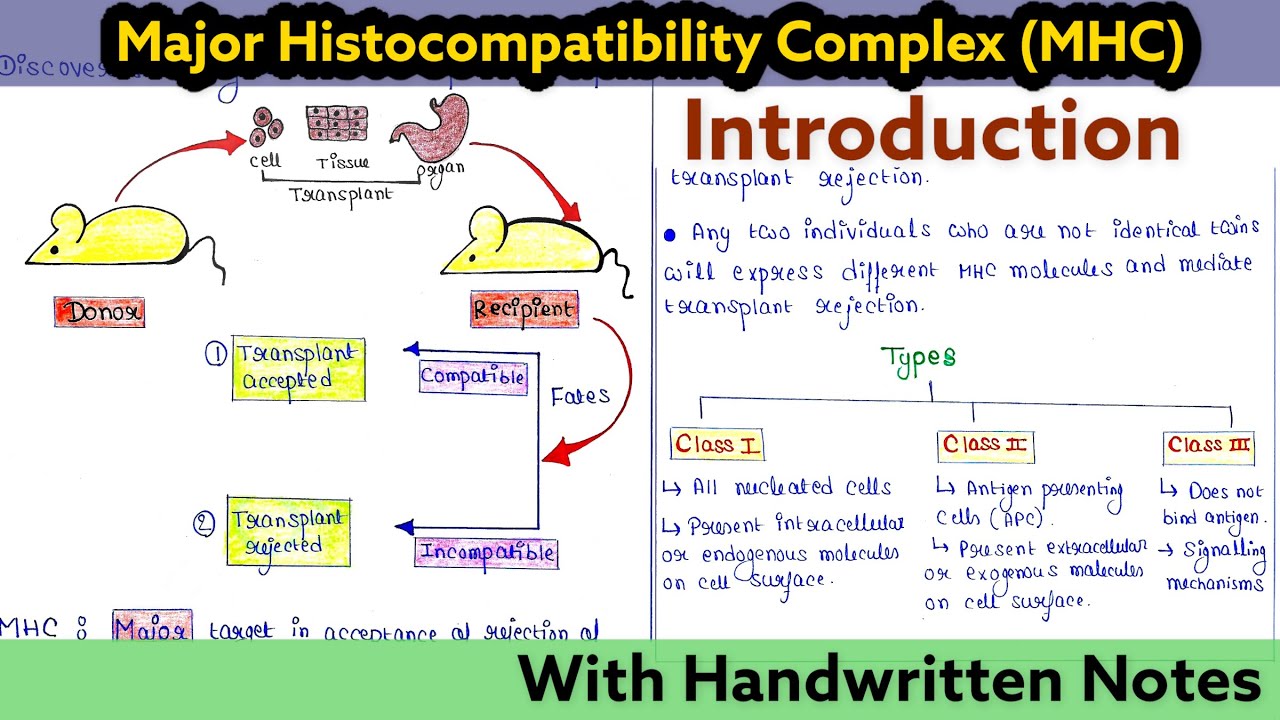
An introductory understanding of MHC (Major Histocompatibility Complex) molecules and their primary function in distinguishing self from non-self.
The MHC Class II antigen presentation pathway (the exogenous pathway) and how it compares and contrasts with the MHC Class I pathway.
The mechanics of T-cell receptor (TCR) binding and how CD8+ cytotoxic T cells recognize the MHC-I peptide complex to initiate target cell apoptosis.
Viral evasion mechanisms, specifically how pathogens like Herpes Simplex Virus or Adenovirus disrupt MHC Class I assembly and presentation to escape immune detection.
Clinical applications of MHC Class I presentation in cancer immunotherapy (tumor neoantigens) and the principles of transplant immunology (graft rejection).
177.4K views2.4Klikes5:19Original Release: 2012-09-14
[Music] cells can signal to the immune system that they have been infected by a virus by presenting viral antigens to cytotoxic tea cells using class one molecules of the major hisst compatibility complex this animation will explore the Assembly of class one molecules an essential part of post defense against viral infection following infection a virus takes advantage of the host cellular Machinery to create proteins required for its propagation within the cytool host enzymes like the proteosome break down some of these viral proteins the resulting viral peptide fragments join self peptides generated from the ter over of normal cellular proteins these molecules diffuse toward the endoplasmic reticulum or ER or they may come in contact with a specialized transporter known as [Music] tap tap functions to transport peptide fragments from the cytool to the ER Lumen it is here within the ER that peptides bind the key protein involved in antigen presentation the class one molecule of the major histo compatibility complex class one molecules consist of a membranebound heavy chain a soluble subunit called beta 2 microglobulin and a peptide fragment derived from either self or viral proteins the Assembly of class one molecules begins with the folding of the heavy chain assisted by the molecular chaperon Calen and an Associated enzyme termed erp57 calnexin stabilizes the heavy chain and prevents aggregation while erp57 catalyzes the formation of disulfide bonds subsequent binding of the beta 2 microglobulin subunit causes a major confirmational change in the heavy chain that creates a peptide binding Groove and is critical for the entry of class one molecu into the peptide loading complex or PLC within the PLC Calin is replaced by Cal reticulum a closely related chaperon that also binds erp57 the remaining components of the PLC are the tap transporter and a remarkable protein called tapin which plays several roles in the stability and function of the peptide loading complex tapin binds erp57 which along with its Associated Cal reticulin chaperon plays an important structural role in stabilizing the PLC tapin also serves as a bridge between the class one molecule and tap which ensures the proximity of class one to incoming peptides finally tapasin stabilizes the tap transporter increasing the flow of peptides into the ER lumen however Recent research suggests that tapin has a more direct role in peptide loading actively promoting the loading of high Affinity peptides into the class one binding Groove tapasin may have the ability to widen the peptide binding Groove to allow a wide range of peptides to be sampled low Affinity peptides dissociate rapidly High Affinity peptides that closely fit The Binding Groove induce a confirmational change tapin responds to this change by dissociating which results in the disassembly of the entire PLC the newly peptid loaded MHC class one molecule proceeds along the cell's secretory pathway and is displayed at the surface where it is examined by receptors on cytotoxic T cells class one molecules containing self peptides are ignored but those containing viral peptide antigens are recognized and Trigger the release of molecules such as granzin and perin which results in killing of the infected cell [Music]
Up Next
20:33
Helper T Cells and Their Role in Immune Response | NCLEX-RN Review
@khanacademy
1.4M views•2010-02-19

48:47
Graphic Medicine: Comics for Collaborative Healthcare Communication
@nationalpatientadvocate
189 views•2023-12-04

10:28
Neuroanatomy: Central and Peripheral Nervous System Divisions Explained
@AKLECTURES
136.2K views•2014-09-20
3:05
Stages of Labor and Vaginal Birth | Childbirth Animation
@nucleusmedicalmedia
52.1M views•2017-08-18
Related Study Plans & Knowledge Roadmaps
Structured learning paths in Medicine
medicine
Abnormal LFTs: Diagnostic Workup & Pathology
01Liver Anatomy and Basic Physiology
02Introduction to Liver Function Tests (LFTs)
03Hepatocellular vs. Cholestatic Patterns
+ 3 more learning modules
12h6 modules
Explore Roadmap
medicine
Analyzing Blood Smears: RBC, WBC & Platelets
01Introduction to Blood Components & Smear Preparation
02Normal Morphology of Blood Cells
03Erythrocyte Pathologies & Morphological Variants
+ 2 more learning modules
12h5 modules
Explore Roadmap
medicine
Mechanical Ventilation: Waveforms & Alarms
01Anatomy and Physiology of Breathing
02Introduction to Mechanical Ventilation & Core Modes
03Ventilator Settings and Waveform Interpretation
+ 2 more learning modules
12h5 modules
Explore Roadmap
medicine
Neuro Exam: Localization & Stroke Syndromes
01Foundations of Neuroanatomy and Vascular Supply
02The Neurological Examination: Step-by-Step
03Principles of Neurological Localization
+ 3 more learning modules
18h6 modules
Explore Roadmap