







![[3분발전소] 태양광발전💡과 태양열난방♨️ 무엇이 다른가요? 태양열발전❌️은 또 뭐죠?](https://i.ytimg.com/vi/UUGF4isb42U/maxresdefault.jpg)






![Voll geladen: neue Speicher für die Energiewende [Ganze Doku] | Harald Lesch | Leschs Kosmos](https://i.ytimg.com/vi/ReXgSAs65QA/maxresdefault.jpg)



![💪TERMODINÁMICA. CICLOS TERMODINÁMICOS de POTENCIA Y REFRIGERACIÓN [👍 RANKINE-BRAYTON-OTTO-DIESEL]](https://i.ytimg.com/vi/8ikvY0SZ17o/sddefault.jpg)
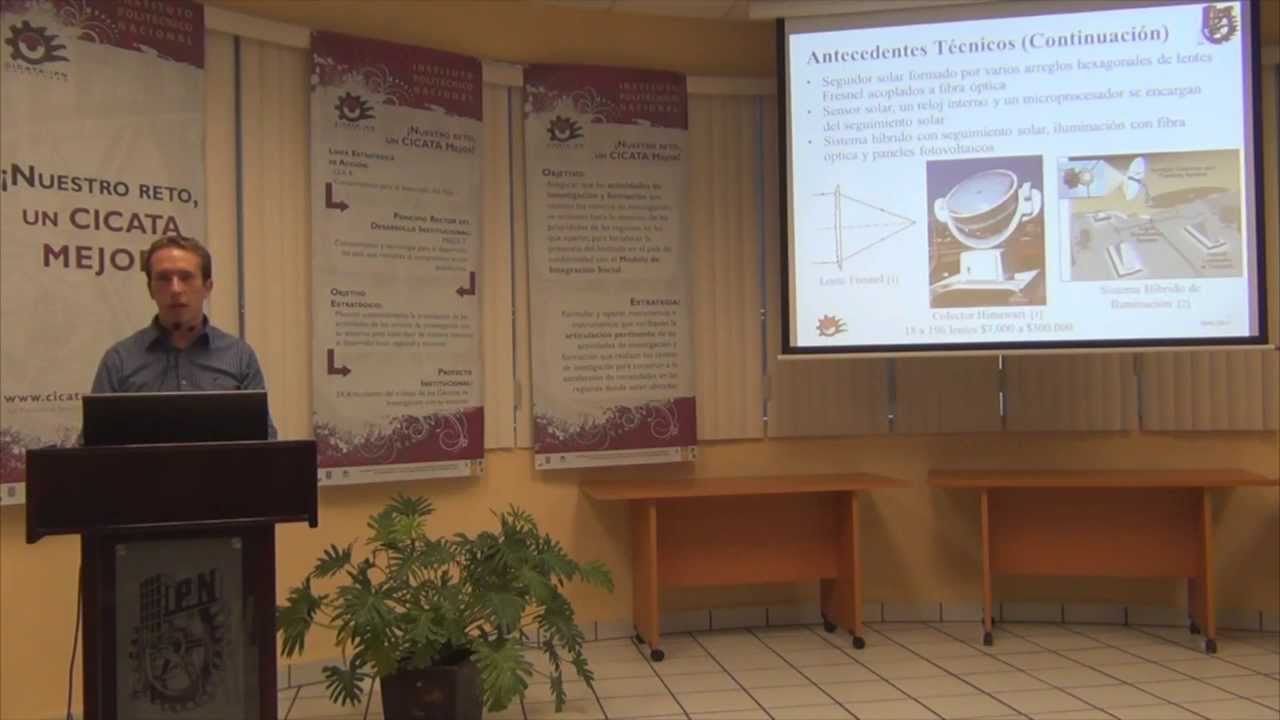


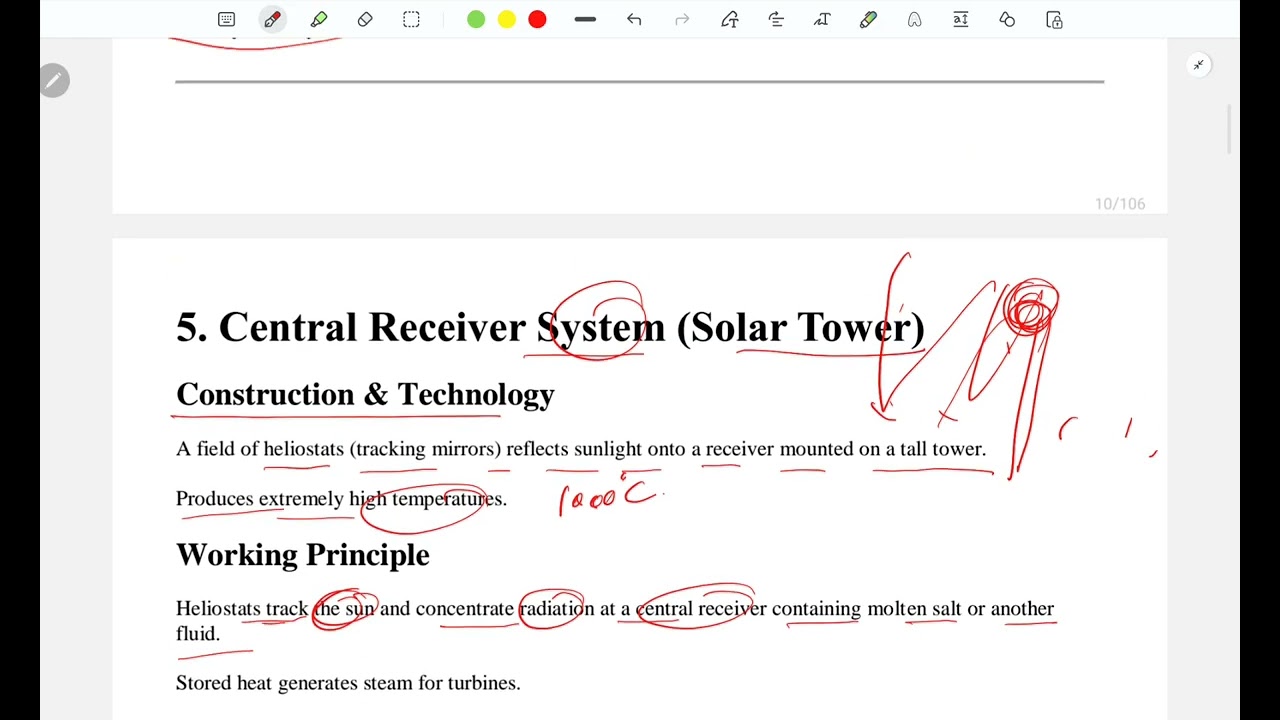
Solar concentrating collectors, which include imaging concentrators like parabolic troughs and non-imaging concentrators like Winston profile designs, concentrate sunlight to achieve higher temperatures than flat plate collectors; parabolic troughs require continuous one-axis tracking (north-south orientation) or can avoid tracking with east-west orientation (requiring larger absorbers), while non-imaging concentrators can capture light from wider angles without precise tracking; large-scale solar thermal power plants utilize either arrays of linear parabolic concentrators or power tower systems with hundreds of heliostats directing sunlight onto a central receiver, though power towers face high installation costs due to expensive mirrors, complex two-axis tracking systems, and structural requirements for wind resistance.
Solar Concentrating Collectors: Types, Tracking & Applications
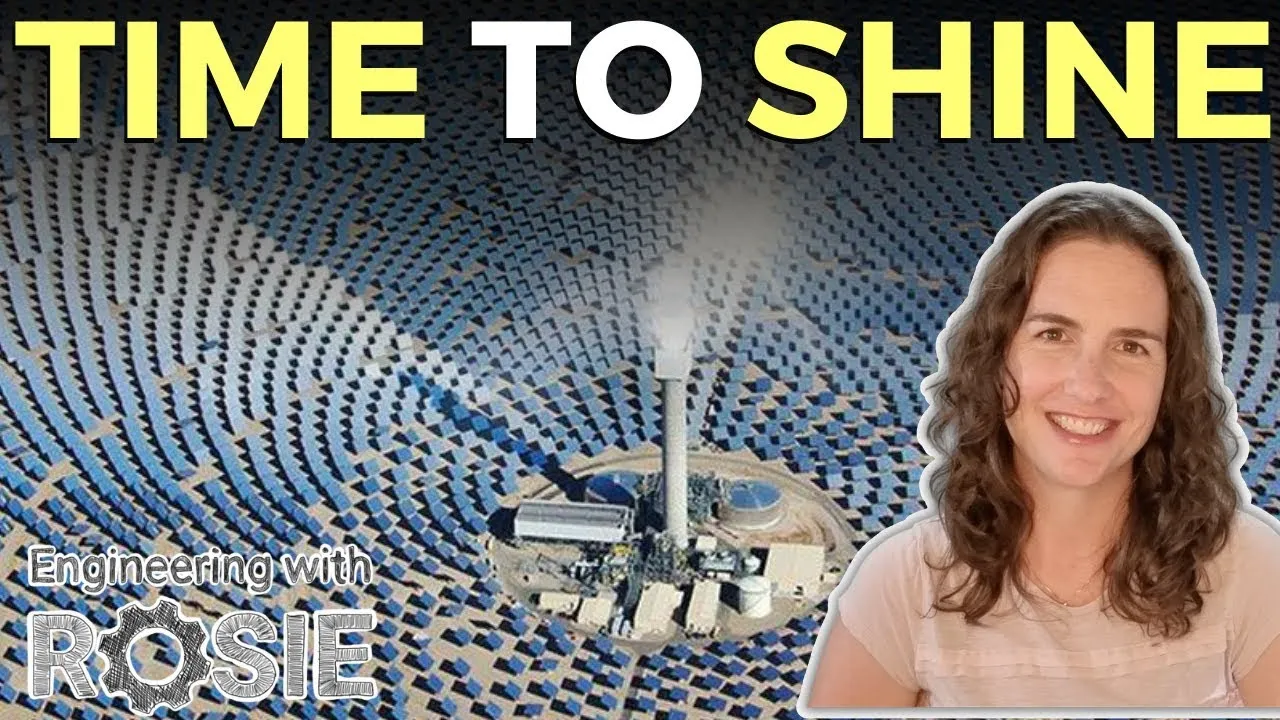
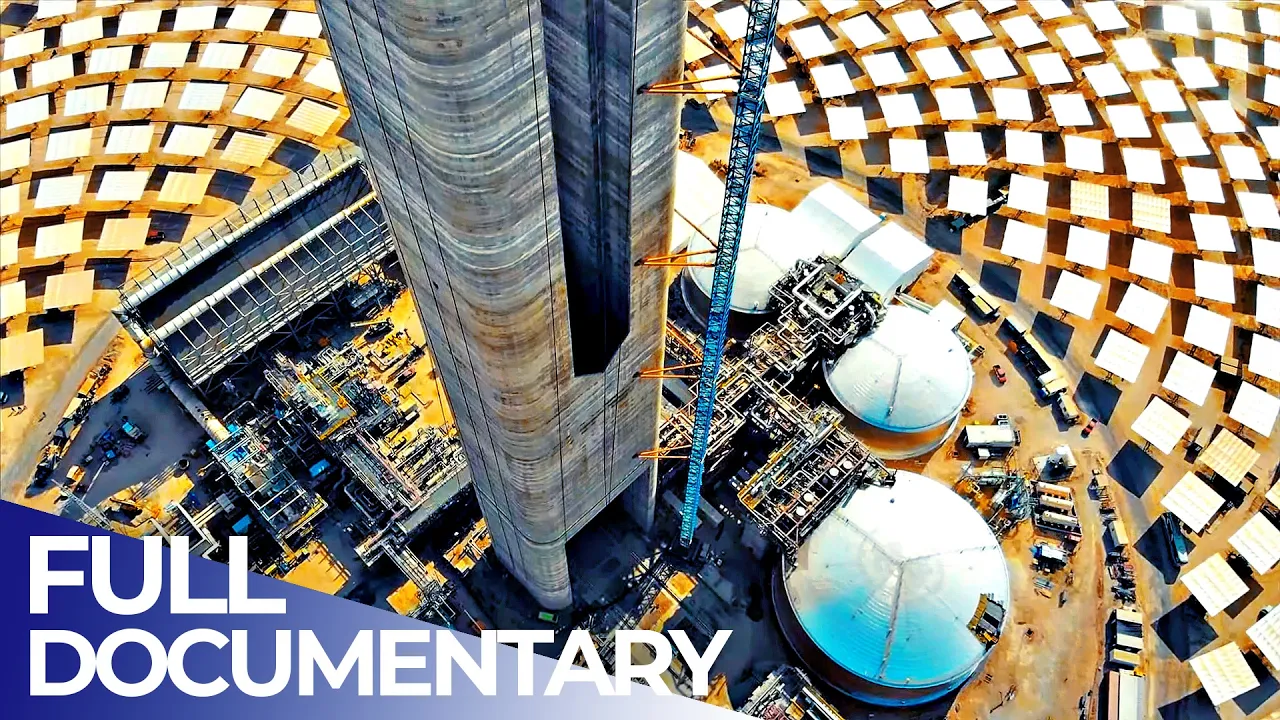
Added:[Music] in the last class we were talking about the solar thermal power conversion and we had just introduced the solar flat blade collectors and we had gun into the solar concentrating collectors and we have seen that uh did I say this there are two types of collectors concentrators the Imaging concentrators and non-imaging concentrators yes so we were essentially talking about the Imaging concentrators and one important class of Imaging Imaging concentrators were the parabolic concentrator so the structure would be where you have the parab trough kind of structure and then you will have the the focus somewhere here and naturally the absorver The Collector has to be placed here which will be in the form of a copper vessel blackened on the outside and held with a Arrangement something like this and the whole thing will then will have to move we'll have to track the Sun so that all the time it faces the sun because the sun's energy is concentrated only at the focus so if the sun goes off then the point at which it concentrates also goes off and therefore if the sun goes off the the main axis then obviously no energy will be concentrated on The Collector so it has to have a very good cracking system we had also uh seen that a simpler Arrangement can be made with a linear parabolic concentrator a linear parabolic concentrator would be the situation where you have the parabola but you have a parabola not in both the directions okay so in that case this shape is a parabola and in this side it is a straight line so it is a you know parabolic cylinder kind of uh Arrangement and naturally the focus will be a line like so and the light will be focused onto to this focal line not on a focus point but on a focal line so in that case this will be the reflecting surface and the concentration will be on the focal line obviously you cannot really focus on a line it will be on a strip because of the slight imperfections on the reflecting surface and so you will have to make a relatively larger absorbing surface this absorbing surface obviously can be very simply constructed out of a copper tube copper tube of the diameter that is dependent on the expected imperfections on the of the uh reflecting surface if it is perfect then it can can be very narrow if it is relatively imperfect depending on the manufacturing process then you will have to have a relatively larger diameter but then how do you make the greenhouse effect on this greenhouse effect means you recall that on the uh absorbing surface the absorbing surface will also emit radiation and in order to arrest that we had put in case of FL Feld collector a glass uh plate which would not allow which would allow the the visible radiation to come in but will not allow the infrared radiation to go out what can be done in this case you cannot of course put a flat plate very simple you put a concentrate cylinder of glass so there would be a concentr cylinder made of glass let me dra in red okay then the arrangement becomes very simple that you have a water flowing through this and you have some kind of a circulation system and it goes through this the manufacturing process would be very simple and even because it is cylindrical in size you can also withstand pressure and therefore it's not impossible to generate steam out of this clear in fact this is the type of the concentrating system that is more popular than this type unless you are really going for very large scale power generation system which I'll come to later so in case your requirement is water of a temperature something like 60 to 80° then flat collectors are okay if you're trying to generate hotter water like 90° or 100° or steam then these kind of collectors are better but if you're wanting to to make a p station kind of thing then obviously this may not suffice and you need to have more uh higher degree of concentration but is clear that if you have a two two-dimensional system that means this is a two-dimensional U Parabola or 3D Parabola actually then you need to have a two axis Tech system that means it has to be able to move this way as well as this way in order to have the complete tracking of the Sun in case of this obviously you need to only move it this way right it's a one one AIS tracking system that is why it is simpler but even people have tried to go for a uh higher degree of Simplicity just imagine that if it is a parabola with one side linear then it can be placed either east west or north south right so can you imagine what would happen if you place this one in the east west orientation and if you place this one in a north south orientation what will happen let us first imagine that you are placing in a north south orientation so here is a north is the south in that case sun rises to the East and goes on and sets to the to the to the west and as a result you will need to tilt it towards this side in the morning and towards that side in the evening so you'll need a continuous Tracking System One axis tracking system over the day okay clear only thing is that since the sun's position in the sky the the plane in which it moves changes with the season therefore during the summer season it will be more or less horizontal in winter season it will have to be more or less at an angle okay so there will have to be an arrangement of changing the Tilt due to the seasonal change of the position clear so for the north south orientation you have to have a 1X is tracking system that works all through the day and the Tilt is decided dependent on the season okay now suppose you Orient it to the east west Direction so in that case imagine that here is the East here is the West H in that case the sun rises in the East goes off and sets in the west so naturally all the time it is moving along the axis and therefore you do not need tracking right you do not need tracking then so that can be a very simple Arrangement where even the requirement for the tracking is eliminated only thing is that the plane in which the sun will move will be dependent on the season and therefore this tilt has to be this tilt not this tilt it is this tilt that has to be decided on the basis of the season is that clear there's another issue here in the early morning the sun will be coming from this side and therefore after reflection there will be a large part of the of the absorber area here which will not really receive the concentrated sunlight rather a some amount of concentrate sunlight will be received here beyond the range of the reflector okay so if you have to have a East West orientation the absorber size has to be larger than the reflector size which is not required in case of a North South orientation so the absorver the the glass Sheed uh all that has to be larger than the reflector size because for much part of the day the light will actually be concentrated away out of the range of the reflector okay so you see here in this kind of system you can it is possible to avoid even though it is a parabolic concentrator it is possible to avoid the tracking system in some cases the tracking systems can be messy essentially if it is a standalone system not much attended to then uh tracking systems are not very wiy in many cases you have to do it in a isolated place with not much uh um uh electricity Supply or unreliable electricity Supply in those cases it is better to have a system without tracking but if you have it in a reasonably well attended place then a tracking system system would be better because it has a larger concentration ratio okay clear so let us enumerate the the two types of tracking system the north south orientation and the East West so what are the points first in case of the north south orientation dayong tracking is required huh continuous tracking all over the day is required in case of the East West orientation continuous tracking is not required in this case tilt of the axis is dependent on the season and in this case tilt of what will you call it this tilt huh did did what yes not not rotation it doesn't rotate it is just tilted tilted and and so actually the this is the the actual plane huh the axial plane has to be tilted in this in in the first case the axis has to be tilted and in this case axial plane has to be tilted huh depending on season next point in case of the north south orientation the absorber area can be the same as the reflector area or length absorber length can be the same as the reflector length and in this case the absorver length has to be larger than the reflector length but which one will be better as far as the overall thermal part performance is concerned which one will absorb more amount of energy the first one the nor Tron you have the disadvantage that you have to track it all the time but the advantage that it gets you more energy so the thermal performance is better so this is how they compare and depending on the specific situations people choose a particular kind of orientation and then the design accordingly okay what would the the reflector be made of you see the reflector in your home is a glass with a uh silver coating can you do this here for various purposes various reasons no firstly how do bend a glass in parabolic shape even if you do and somehow manage to Silver the the other side then the whole thing will be very brittle I mean anything happens it it might break huh so normally these are made of Simply polished steel surface so these are steel surface metal surface aluminium surface in many cases but that is Thoroughly polished so that they are proper reflecting surfaces so naturally uh if the place is such like like a big city like Kata there will be deposition of dust that reduces the uh reflect reflection coefficient obviously you need to clean it it's necessary to clean it okay now how can you put into effect the tracking system in this kind of system as I told you that you need a tracking system in this case also you do but if it is nor south or ation but it's a one AIS tracking system nevertheless you need a tracking system how to actually do the tracking system normally this is done by uh a very simple mechanism for any tracking system it has to be a feedback control that means if it is going wrong then there should be some kind of a generation of a voltage that is proportional to the extent that is it has gone wrong and then on the basis of that a motor is turned and it is reoriented back to the proper position okay now the way it is normally done is by use of small photovoltaic cells what photovoltaic cells are I'll come to that later but assume that there are cells that can generate voltage or current in fact these these actually are current sources so they they they generate current depending on the amount of solar radi ation incident on it so what is done is normally if you have say uh imagine that you have a you have to have a one AIS tracking system and you place a photov volic panel here and some kind of a barrier there so here is one part of the panel for photo voltic cell this is another part of the photo photo voltage cell equal size so normally if the solar radiation is coming from there they will produce equal voltage equal current If instead the solar radiation coming from this side then this will produce the full Voltage but a part of that will be shaded as a result in unequal amount of voltage and current will be generated so all you need to do is to uh subtract these two voltages and use that as the U error signal okay so depending on that voltage depending the voltage generated you will have a uh you will turn a motor in case of a two AIS tracking system a similar thing has to be done also along the other axis that's all so one axis the motor that actually turns it that will be governed by the error signal generated this way and the other axis also it will be the same way okay this is one kind of tracking system where you use actually use a feedback control uh there is another type of feedback control system here you see the voltage that is generated the difference in the voltage that is generated is exactly proportional to the error that means how much away from the the uh exact alignment you have gone if if you if it comes from this side there will be larger difference in the voltage if it is more or less vertical then there will be smaller difference in the voltage in other words I'm saying that the voltage is analog quantity can take any value right and on the basis of that you turn it in many implementation you'll find that people find this not very convenient so they have a uh implementation which is in which either the motor turns or it does not turn so in that case all they do is simply put a very small photovoltic cell here and a very small photov volt cell there okay very small now if the the incident solar radiation Falls this will generate the voltage this will not at all as a result of which uh the motor will turn and when it turns it turns at the same velocity the the turning the speed of the Turning does not depend on the uh the analog voltage that is generated okay the moment it becomes vertical both the the small photovoltaic cells generate the same amount of current and therefore the difference becomes zero and therefore the motor stop this kind of a of a implementation you will find in our Energy Engineering laboratory in electrical department those who are energy engineering students you will see this kind of uh tracking system actually news so this is where you are actually using the the feedback uh to obtain the position there are some difficulties in the sense that if there's a cloudy Sky there is no direction in which the the Sun comes and therefore this fellow finds it difficult to orient it if it's a cloudy Sky it is a it's a diffused radiation and in case of diffused radiation the difference will not be significant at all and therefore in case of diffuse radiation this fellow cannot Orient but of course when the sun again comes out it immediately can can uh uh readjust this position and come to the proper uh position in case of relatively larger establishments larger means where you have a more where you can afford more sophisticated uh control system there uh another type of control system is normally implemented here this was a feedback control system for the feedback control system you do not need to know uh prior to actually doing the control where the sun is the system finds where the sun is and tracks it okay but actually the sun's position is known you can easily calculate what will be the sun's position on 23rd October uh say 2:00 in the in the afternoon so it is only only only a problem of proper calculation which is tractable calculation not a difficult calculation at all and so since you can find out where the sign is going to be therefore you in the many implementations people don't do it by feedback control at all they simply know and therefore they Orient so that is the open loop control it's not a closed loop control open loop control where you know where the sign will be and therefore you can pre-oriented independent of whether there's a cloud cover whether there is a a a a storm nor day doesn't matter you can still Orient because you know where the sun is okay so how to actually find or calculate the location of the sun this comes from uh a simple spherical geometry calculations that are taught in most astronomy textbooks so these are uh okay mathematically it will be a lot lot calculation all right but conceptually very tractable because the position of the earth position of the sun and everything is pretty well known so there are two types of Tracking System One the feedback control tracking that means closed loop tracking to the open loop tracking for the open loop tracking you need to have a computer in order to compute the future position of of the Sun at any point of the day so there are essentially two types of tracking systems close loop and open loop the Clos Loop control system is simpler does not require a computer the open loop control system is more sophisticated requires a computer but uh the the the perform is guaranteed because you know where the sun will be okay so is there any question regarding this tracking systems where you either have a two axis tracking or a single AIS tracking and you either do it by Clos Loop control open loop control understood can you go to the next well in some situations people nevertheless do not like to have a control system that means it has to be a non-tracking system you have seen that it can be a non-tracking system if um say it is east west oriented East West oriented and some seasonal positioning is done it can be a non-tracking system but nevertheless the problem is that if the the orientation is improper say the season has passed but the this orientation has not been changed what will happen it will concentrate but at a point away from the focal plan focal line so out of the observ it will not work so in some situations people uh uh try to think of can we make a reflector which whose shape will be such that any solar radiation coming within that that area will always be concentrated onto the absorver area independent of whether I track it or not in fact such reflectors do exist let us talk about the geometry of such reflectors such reflectors are in general called the non-imaging concentrators these were all Imaging concentrators because ultimately the image of the sun is produced if you stand in front of that you will see a quite distorted but your image you can identify that is me huh Imaging so these will be non-imaging concentrators nonimaging concentrators or sometimes they called wind ston profile here we'll uh consider the flat plate kind of absorbance system so we'll take this as the absorver in that case the constructional feature is this it has to firstly be a parabola all right but where should the focus be there will be a parabola going like this another Parabola going like that and any light that goes in should be absorbed by this one should ultimately after multiple reflection maybe but ultimately it should fall on the absorver so it will be a a a shape like this but that shape will have the focus here so the one that starts from here will have the focus here huh so if you have a focus here then you might imagine a okay and in this side you will have another another uh reflector here whose Focus will be here H so the D part is not there I'm drawing for the sake of understanding how it is done okay so this the are the two parabolas this Parabola has a focus here and this Parabola has a focus here right and then if this is a circular shaped uh absorver then this will also be a trough like thing okay the advantage is that it can be shown that any light that goes into this range even if it like this then it will after a multiple reflection ultimately be uh incident on the absorver area so this is called the Wiston profile H you might easily imagine that there can be two types of structure one is where you have a a a a trough kind of thing the AR that is where you have okay that's also possible so this will then be a okay this will then be a flat plate which will retain all the specialities of The flatfield Collector except that it will have a larger concentration and therefore larger temperature rise so there are two possibilities either you have a three-dimensional trough life structure or a again linear parabolic concentrator but a non-imaging parabolic concentrated so that all the light that enters goes in you might possibly argue that in that case it is not necessary to have any tracking well that's not quite true that's not quite true because supposing the okay let me draw another image where I will use the uh and here okay and this one will be a fine in that case if the light comes from such an angle yes true that it will after multiple Reflections it will come here but what is the concentration Factor con concentration factor is the area seen by the in incident light to the area of the absorver now area seen by the incident light reduces because you are seeing from from a side so obviously the concentration Factor reduces the amount of light that you intercept reduces so that is not really a very cleever idea so simply making it and keeping it just like that will not help it has to be oriented but in that case it becomes more logical to orient it uh if you have a linear one if you have a linear one then it is logical to orient it in a okay what how would you Orient it north south or east west nor South if it is not South this is the AIS if it is not South then East West is that way and then in the morning you it will receive very little amount of light in the afternoon it will again receive very little amount of light that's not a clever idea okay so if you do that then again there is a requirement of somewhat crude but nevertheless a tracking system maybe you can engage somebody to change the the the angle once hour no continuous tracking is required though because ultimately it does concentrate but in order to keep the concentration ratio High maybe somebody some attendant comes and just uh change the changes the orientation that that works or you can Orient it east west if it is east west orientation if it is east west orientation then also that problem is there the uh uh length of the absorb area has to extend beyond the uh reflector area but nevertheless you can do that if you do that then only this orientation has to be changed once a month maybe okay no continuous tracking is required in either case that is why in in many situations this kind of U structure is preferred okay but again how to make how to make making this often poses a problem you have these days uh industrial methods of producing parabolic TRS because all the uh tv antennas huh the ones that that you use in the um the service providers use that is basically this type so same kind of Technology can be used in order to make uh this but how to make this kind of a reflector parabolic reflector with you know it's a truncated Parabola the focus somewhere here so that sometimes poses a a engineering challenge how to produce a manufacturing system that will manufacture this kind of thing okay but nevertheless the concept is clear right is the concept clear the geometry clear okay so tracking is done non-tracking concentrators are done these are the non-imaging concentrators you don't see the image of the sun now all these that I've done essentially refer to relatively smallest systems you might simply add them for example the there are power stations where a larger number of these are Ed that means the water comes goes through one and at a higher temperature goes into another it comes out at a higher temperature finally it goes into steam and you can use that steam to generate power so there are simply by multiplying this kind of uh linear parabolic uh reflectors you can have a larger amount of collection and generation of uh energy but most of the the solar thermal power stations where your your objective is not just to generate steam hot water or something like that ra to generate electricity there you need to have a larger size there if you have to have a a reflector something like this with a absorver somewhere here and this reflector is to span like a square kilometer will be able to make it a reflector this big a square kilometer you will not be able to make it moreover this height will be large this height will be large so there are actually two types of options one if the natural uh uh landscape allows you to have this kind of a height like a a a valley like thing where there was a a a sloping surface where you can put the these absorbers and you can have a tower somewhere here so that it absorbs there that means the other part is not there it is only one part of that which is used and you have place the The Observer somewhere here on top of a tower like say here you make a tower and on top of that let that be the absorver such a power station has in fact been installed in Spain but it is not difficult to see that such locations are rare a a location where this slope will be facing south more or less a flat surface that can be oriented like this very rare So something else has to be done in order to make this kind of a thing so what is the actual challenge the actual challenge is that you need to have if it is a reflector that spans over a square kilometer it has to raise for a larger large length secondly you cannot really make a a a a single reflector like that it will be practically impossible so what to do you can of course break it up like one here another here another here another here and so so on and so forth but still the problem is that you have to elevate now there is a a another another concept um have we come across the fral lens yes what is the FR and lens that if you have to have a lens something like this you cannot really have because this is feasible only in small sizes in large size it becomes bulky huge thing so in order to avoid that what people do is they first say that let that be half of it not the full that also is a is a is a convex lens and then we would say that okay it's not necessary to have this bulk all that is really important are these slopes so you can simply make it like so okay and that is how you make the FAL lens H so this is called the the idea of the it's not pronounced as frel it's pronounced as frel though the spelling is frel so you have to have uh uh have you seen these lenses no you you only read in your books Concepts have you seen those um overhead projectors overhead projectors where you use a transparency and that is projected onto the screen seen that in the seminar rooms yes now next time when you see that look at the top surface of that you will find a a a a a glass and if you look carefully you will find the concentric see there would be concerting lines like this huh and these are actually these groups and that whole thing is like a plate but there's a lens that concentrates onto there so fral lens are actually very easy to manufacture and they're uh used widely now in case of a large power plant a similar idea is used but you cannot have a lens you have to have a reflector so in that case this height again you don't need you can bring it down to the surface only these angles matter and therefore you can have something like this right they will have the same same same role to play so these are plain mirrors these are only plain mirrors that are angled in such a way they all concentrate onto a central tower in that case how will it look it will look like a plane in which there is a big tower on top of it is the Observer area outside is copper blackened and inside there would be those water walls huh in the power plant do you remember yeah there was the the water walls that absorb so inside there would be the tubes that carry water that absorb the heat that is actually absorbed by the outer wall and that generates Steam and that can be used to run a turbine the turbine can be placed at the base of the tower now the reflector should be something like this as you go away the angle has to increase moreover as the sun moves all these where will have to be reoriented huh because in case of the big one what do we have to do if the sun moves the whole thing has to be moved and obviously the whole thing is not constructed the whole thing cannot be constructed so you have the each piece but if you you move each piece then you can still make them concentrate on the on the tower so this is essentially the what is known as the to Tower concept so here is the tower that acts as the absorber and these are the reflectors they pretty large reflectors though and each will have to have a two AIS tracking system normally these tracking systems in such systems it is never a feedback control system it is always that you know the position of the sun and that that gives a signal as to how to orient these individual uh reflectors and such systems have been installed with reasonably large capacity like 100 me megawatt or so uh essentially in desert areas because that requires to to cover a large amount of area desert areas and that has uh even though the installation cost is at present quite high so it doesn't really compete with the existing fossil fuel power plants why is the installation cost High mainly because these uh reflectors you know reflectors as big as this room each will be and that has to be has to have a two aess tracking system that has to stand on a platform that will make it withstand winds huh even storms so that has to have have a reasonably good structure and that increases the overall uh cost of the system moreover mirrors themselves are pretty expensive shiny steel surface they are themselves pretty expensive okay so this is the concept of the Power Tower in India we do not have any of them yet any of the power Tower yet but there are power towers as I told you a a uh a one-sided Power Tower where you have a a mountain is installed in in Spain there are a couple of such power Towers in USA uh Europe doesn't have so much Sunshine so they didn't go for this kind of a system but uh it is basically the uh temperate areas like our that may benefit from this kind of a concept but as yet as I told you the technology is not mature enough to make them economically competitive with the rest of the fossil fuel systems okay see some pictures of the things that we talked about on the computer screen right now you see the picture of a whole power plant made of linear parabolic concentrators these are the linear parabolic concentrators do you see the size here are the people standing and in comparison to that you can see the the size of this linear parabolic concentrators and on the focal line you can see this absorber uh tube going so these are the absorber tubes that go along the focal line and you can see that whole field is covered with such collectors concentrating collectors as a result of which the total amount of energy collected is large sufficient to produce Steam and then to produce produce electricity let's see another picture this one is not all that good though let us see this one so here also you see another picture I'll put it in a slightly lower size yes uh here are the similar large arras of linear parabolic concentrators with these uh the tubes that are going as I told you in the class that these can either be aligned north south or east west depending on the the facilities for tracking that are available uh I don't know what these uh particular power plants operate on but now let us look at some of the power Towers uh here is a here is a Power Tower you can see that these are the reflectors these are standard flat reflectors but very large in size at the middle there is the Tower and on top of it there is this absorber area so all these reflectors reflect onto this absorber area and you can see that this is a desert area in which this power station has been installed thereby utilizing an otherwise completely unusable tract of land uh here is another picture of a power plant of a solar thermal power plant a larger picture where these are the individual arrays of reflectors individual arrays as I told you each one has to be has to have its own tracking system and the whole arrays tracking system the control system is controlled from a central place located somewhere here this is the the control uh place the place where the control systems are located so all these finally concentrate on on to this area this is the absorber area the outside of the absorver is the place where it is concentrated and inside it you will have those water walls the tubes going through the tubes that are attached physically to the outer surface tubes that carry water to make Steam and finally the power plant is stationed at the base power plant means the turbine the generator everything let us look at another picture in which you have another design of the uh of the Power Tower Concept in this case it is not everywhere not in all the directions rather in one side you have the the reflectors the mirrors and in between here there is a large Tower and in the other side the side that you cannot see from this angle here is the Observer area so in one one kind of Power Tower concept you have the reflectors in all the directions surrounding the Power Tower in another concept you have it in one direction mainly these things are useful in the northern hemisphere where this uh face South where these face South and this face North so this way you can have different designs of the Power Tower concept is a standard arrangement of a linear parabolic concentrator as you can see here you have the the parabolic reflector in this case made made of uh Standard Market available material and here we have the copper pipe and the copper pipe is uh covered by a glass uh cylinder at the top which acts as a agent for Greenhouse Effect and this is uh enclosed at this two sides water flows and here also this is a experimental enagement so that at the input end we have a thermometer at the output end also we have a thermometer and it is possible to generate steam by these means as you can see that this uh inclination can be varied and if you vary this inclination you can get it to uh Focus to the Sun that means the sun's Rays should be on the focal plane and this has to be adjusted in order to get it into the focal plane now this can be either aligned in the north south direction or in the east west Direction right now it is in the east west alignment so that uh presently depending on the time of the year you have to have this inclination and that remains more or less fixed over the day
Up Next

Physical Computing: Controlling LEDs, Motors, and Servos via GPIOs
@HomoFaciens
64.6K views•2014-09-14
Ultrasonic Transducers: Resonant Frequency Measurement and Horn Design
@imajeenyus42
229.9K views•2017-02-22

Microfluidics Introduction | Micro & Nanofluidic Devices
@iit
37.1K views•2015-06-22
How a Student's Question Saved a NYC Skyscraper from Collapse
@veritasium
22.8M views•2025-04-26
Related Study Plans & Knowledge Roadmaps
Structured learning paths in Engineering