

























![Solving Barriers to Large-Scale Adoption of 3D Printing // Rize [FirstMark's Hardwired]](https://i.ytimg.com/vi/wSmywdBRHBs/maxresdefault.jpg)





In a comparative strength test, PLA demonstrated higher breaking strength (78.2N average) than carbon-fiber nylon (59.9N average), PETG (41.7N average), ABS (38.3N average), and NylonX (70.3N average), while nylonX showed the least deflection under load (60 thou) compared to PLA (71 thou), ABS (71 thou), and carbon-fiber nylon (69 thou), indicating that material selection for 3D printed parts should be based on empirical testing rather than assumptions about material composition.
3D Printing Filament Strength Test: PLA vs Carbon Fiber Nylon
Added:Introduction to Fused Deposition Modeling (FDM) 3D printing principles and how layer-by-layer extrusion affects part structure.
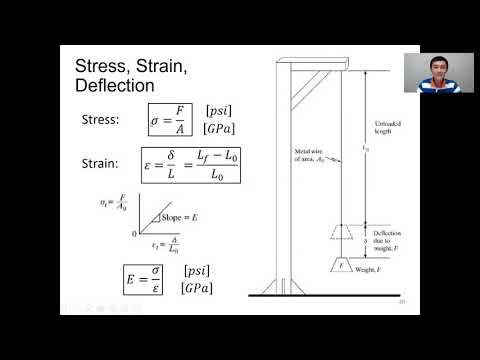
Basic mechanical engineering concepts of stress, strain, tensile strength, and flexural deflection.
An understanding of common thermoplastic polymers used in 3D printing, specifically PLA, PETG, and ABS, including their general physical properties.
The concept of composite materials, specifically how reinforcing fibers (like carbon fiber) alter the mechanical properties of a polymer matrix (like Nylon).
Design for Additive Manufacturing (DfAM) strategies, focusing on optimizing print orientation and infill patterns to maximize part strength based on stress vectors.
Advanced material processing requirements for engineering-grade filaments, such as active filament drying, high-temperature hotends, and wear-resistant nozzles.
Anisotropic behavior in 3D printed parts, analyzing why Z-axis tensile strength often differs significantly from X/Y-axis strength.
Application of material testing data in Finite Element Analysis (FEA) software to simulate and predict the failure points of custom-designed functional components.
709.3K views12.8Klikes14:16Original Release: 2022-10-23
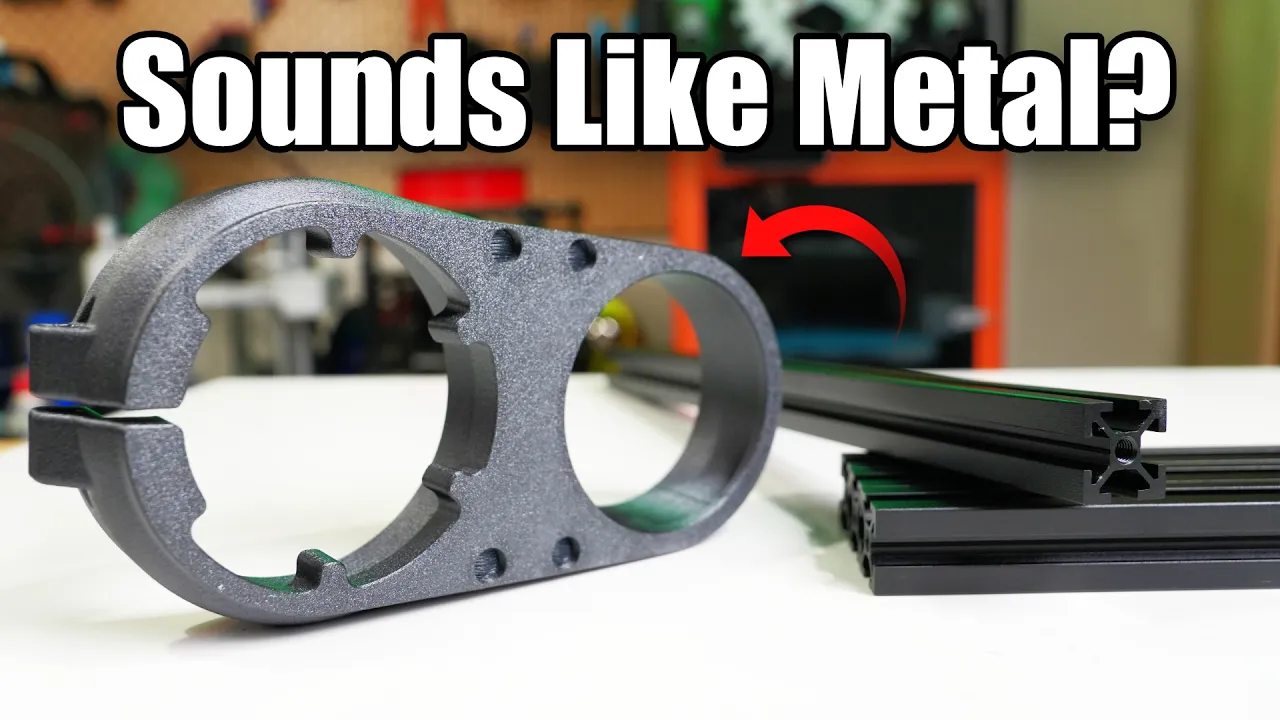
today I have this real world part printed in carbon fiber nylon along with a bunch of other materials and we're going to break them all because science welcome back to Cloud 42 I'm James well in a bunch of previous videos you've seen me using carbon fiber reinforced nylon 3D printing filament for a number of projects and I have gotten no end of comments from people saying that there is nothing special about that filament and that ordinary pla or petg is perfectly adequate for all of those applications well today we're going to put it to the test I've got a part that I designed for a previous video mounting a sound bar to my television here in the shop and we're going to use that part to do some stress testing I have printed it out in a bunch of different materials and we're going to put them to the test so let's get started this is a part that I designed and printed in a previous video to mount a sound bar under my shop TV this material is the Chidi pa-12cf which is one of the many carbon fiber reinforced nylon filaments on the market it's no secret that I love this stuff I love how it prints I love how it looks and so far I've been pretty happy with its performance and we'll see if that changes today I have the same part here printed in a bunch of different materials this one is pla this is the cheaty brand the four on it means that it has four external perimeters the first one I printed only had two so I reprinted it with four to match all of the others this one is pet G or petg if you like this is the e-sun brand this is ABS this is also the e-sun brand and this has been my go-to material for many years for engineering Parts this is the Chidi pa-12 carbon fiber and I really do like the way this stuff prints it's a little more rigid than other nylons that I've used and I do have high hopes for it but we'll test here in a minute and see and this one is nylon X this was a request from viewers there are a lot of people that wanted to see how the nylon X compares to the Chidi pa-12 carbon fiber I want to test two things today deflection under load and ultimate braking strength these parts are all printed with the same settings four outlines four top and bottom layers twenty percent infill and they're all printed to optimize the material properties for this application with the extrusions extending all the way from the screws on one end to the bolt holes on the other so we don't have any kind of cross grain situations where the layers should be easy to break note that there are a lot of other things that we could be testing like creep impact resistance fatigue lifetime but we're going to ignore all of that today in the interest of getting some useful data without making everyone crazy especially me this is the setup I'm going to use for the deflection testing I have a piece of Steel here in the Vise I've milled a slot in the end and put in a couple of threaded holes that match the holes in the part I'll just Mount each part in turn using two screws tighten that down and then put a piece of paracord through the bolt holes on the other end this will give me a repeatable way to apply the same Force to every part just clip on a carabiner and then for weight I have about 10 pounds of weights from the gym that I can just clip on we'll put a dial indicator on the part to measure the deflection and then just load it up with the weights this will give us a nice predictable repeatable way to put the same load on all of the parts and see how they behave since I've already got the Chidi Tech pa-12 carbon fiber part here in the fixture we'll go ahead and test that one first I'm making an effort here to make sure that I have the dial indicator at the same point on every part and then we'll just load it up and see how far it moves now as has been pointed out in the comments many times this material is going to have some creep characteristics and you can see it here so I'm just going to take the deflection after five seconds and we'll just do the same on every part so we're essentially ignoring the creep I'm recording 69 foul of deflection for the pa-12 carbon fiber next up is the PLA and yes I do see the angle on that indicator it's not going to make enough of a difference to matter give this five seconds and it looks like we're going to get to about 71 000 so that is ever so slightly more than the pa-12 carbon fiber so this stuff is almost as rigid in a deflection test next up is the pet G this stuff has a reputation for being tough but also very flexible and it looks like that reputation is deserved let this creep for about five seconds and I'm gonna call that 97 thou that's quite a bit more than the other materials so I'm going to say its reputation is well deserved this is the ABS this has always been my go-to material for machine parts let's see how it fares with the load applied let that creep for about five seconds and I'm going to call that 71 that is almost exactly the same as the PLA and just ever so slightly more than the pa-12 carbon fiber the last up is the nylon X my subjective experience with this stuff is that it is pretty flexible let's see what the weight says wow give it its five seconds and I'm going to call that sixty thou that is actually the most rigid material we've tested today that was a surprise cool the question that motivated this entire video was whether the pa-12 carbon fiber was really that special if it was really that different from other common materials like PLA and abs and it looks like in from our testing at least in terms of deflection under load the answer is no not really it performed just about the same as PLA and abs now the PLA and abs were ever so slightly more flexible but it's not enough of a difference to see in any real application and it is definitely not enough to justify the hundred dollars a kilo price of the pa-12 carbon fiber the petg performed about as expected it's a little more flexible than any of those the real standout for me though was the nylon X that is quite a bit more rigid than I expected and it's something I will consider for the future now I don't really like the way the nylon X prints I don't really like the way it looks but you can't deny it is definitely more rigid next we're going to test the ultimate breaking strength of the parts instead of pressing down like we did for the deflection test I have flipped the part over in the Vise and we're going to pull up with hydraulics until they break I've got the Paracord doubled up that's attached to a crane scale and the crane scale is on my engine hoist I've printed two copies of the parking in each material and we'll just break both of them and take the average first up is my beloved pa-12 carbon fiber we'll just start putting force on it until it pops whether it's cracked but it hasn't fully let go yet force is still increasing uh that was the peak 55.7 Newtons let me put in the second part and let's try again this one's getting a little bit further and there it is 64 Newtons even and that works out to an average of 59.9 next up is the pla let's see how much force this can take this is what everybody in the comments is telling me I should be using instead and so far this is looking really good wow it's looking really good 82.3 Newtons that's a lot more than I expected let's try the other one looks like we already peaked a 74.1 newtons that comes out to an average of 78.2 that's quite a bit more than the pa-12 carbon fiber let's try the pet G this stuff is flexing quite a lot but it also appears to be really strong wow okay 153.8 Newtons P let's put the second one in and break it 36.7 that is way lower I got a third one I'm gonna go ahead and break it and see what happens that's not consistent enough for me to be happy with those results is this one going to be strong or weak looks like week 46.6 if you take the average of all three you get 79 but I'm not sure that's fair I'm going to take the average of the two lower ones 41.7 Newtons and my thinking on that is that because this isn't consistent I don't think you should be designing counting on that really high strength number we got in the one test I think you've got to be realistic and take the two lower ones if you think the higher ones should be counted go ahead and give your argument down in the comments next up is ABS now I have no idea what to expect it's cracked at 37.4 but it's still going but the force is continuing to decrease so 37.4 is the peak we'll call that the result for this test they put in the other one and try it 39.2 Newtons and then it's just decreasing from there so that works out to an average of 38.3 Newtons which is disappointingly low I think this is another filament that I had overestimated so far pla is looking better than anything we've tested let's try the nylon X see if we have any more surprises in store okay I think it's opened up a little initial crack there let's keep going and it fails fully at 69.3 Newtons let me put in the other one and let's try it and that one fails at 71.3 Newtons that's an average of 70.3 that's actually really consistent I'm impressed where does that leave us well surprisingly or maybe not surprisingly to many of you who have commented on previous videos the pla is the strongest in this test it outperformed nylon X pa-12 carbon fiber and pet G and abs by a considerable margin so all of you who left comments on those previous videos telling me I should have been using pla because it is actually stronger you're right at least in this application in this test it sure appears to be now keep in mind we only tested a couple of properties but the PLA and nylon X were also among the best performers for the deflection test so I think those are both excellent choices depending on your application we didn't test heat resistance and I know that's something that pla struggles with we didn't test UV exposure we didn't test creep we didn't test a whole list of other properties that might be important in your application so strength isn't everything but for those of you who said pla was Stronger yeah you're right I'm surprised I will take this information and use it when I'm choosing materials in the future you'll probably see quite a bit more pla here on the channel it certainly is easy to print and if it performs I'm going to use it the one thing I found really disappointing about this test was the performance of the pet G I don't really feel like it got a fair test looking at these parts afterward I can see that where the support material was touching the print there are a lot of little defects in the surface and I wonder if maybe that created a stress Riser on the part that caused it to fail prematurely without doing more testing it's really hard to tell maybe I'll do some more testing in the future but for now this is what I've got I printed these parts and this is how they performed so I think this is a realistic expectation for how they'll perform if I need them to in a real application maybe I'll get a chance to play with this some more and maybe there's a recipe or maybe a different part geometry will work better because I think this material has really got potential it just didn't perform in this test well that settles that right there are no further questions yeah no there were always further questions go ahead and jump down in the comments to see everything that I did wrong and actually if I did something wrong jump down in the comments and tell me about it I just did some very basic testing of a couple of properties that were important for my particular application there are all kinds of other properties that matter depending on what you're doing with the filament like surface lubricity or compressive strength or fatigue Lifetime and those are all things that are important for some applications there is no one best material there is just materials that are a good fit for certain applications so let's have a conversation about it down in the comment section if you enjoyed this video give it a thumbs up feel free to subscribe to the channel and maybe consider checking out patreon patrons get access to downloadable files CAD models and drawings for all of my projects and a little bit of a peek behind the scenes thank you for watching [Music]
Up Next

14:26
Mechanical Refrigeration Principles Explained | Heat Transfer Basics
@PublicResourceOrg
326.8K views•2011-11-01

30:32
Ultrasonic Transducers: Resonant Frequency Measurement and Horn Design
@imajeenyus42
229.9K views•2017-02-22

54:16
Polymer Environmental Degradation: Mechanisms & Stabilization
@iit
1.8K views•2012-07-10

33:39
How a Student's Question Saved a NYC Skyscraper from Collapse
@veritasium
22.8M views•2025-04-26
Related Study Plans & Knowledge Roadmaps
Structured learning paths in Engineering
engineering
Building Acoustic Levitators: Physics & Arduino
01The Physics of Sound and Standing Waves
02Piezoelectric Transducers and H-Bridge Drivers
03Arduino Programming: Generating 40 kHz Signals
+ 2 more learning modules
14h5 modules
Explore Roadmap
engineering
Building Peltier Cloud Chambers: Particle Tracks
01Cosmic Rays & Cloud Chamber Physics
02Thermoelectric Cooling (TEC) Fundamentals
03Custom Liquid-Cooling Loop Design
+ 2 more learning modules
18h5 modules
Explore Roadmap
engineering
Yagi-Uda Antennas: Modeling, Build & VNA Test
01Introduction to RF and Antenna Fundamentals
02Yagi-Uda Antenna Design Principles
03Antenna Modeling and Simulation in 4NEC2
+ 2 more learning modules
18h5 modules
Explore Roadmap
engineering
ECG Monitor Design: Op-Amps, Filters & Noise
01Electronics & Breadboard Basics
02Op-Amps and Instrumentation Amplifiers
03Bioelectricity and ECG Fundamentals
+ 2 more learning modules
18h5 modules
Explore Roadmap