


















![1407- Le crociate iniziarono per fede o per politica? Il Concilio di Clermont [Pillole di Storia]](https://i.ytimg.com/vi/ryXtduv3J7U/maxresdefault.jpg)



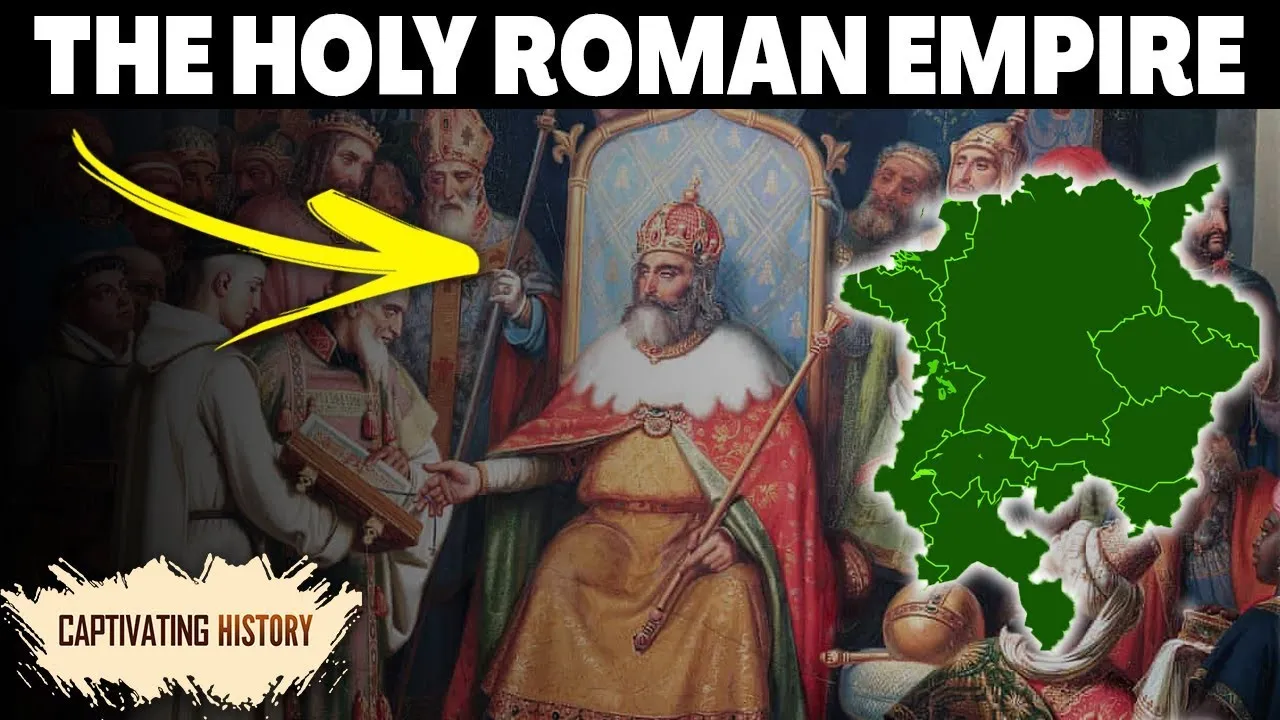
On Christmas Day 800 AD, Pope Leo III crowned Charlemagne as Emperor of the Romans at Saint Peter's Basilica in Rome, marking the restoration of the Western Roman Empire after nearly 325 years and establishing the foundation of the Germanic Holy Roman Empire; this coronation represented Charlemagne's vision of uniting Christendom under a single ruler, with the Frankish king exercising imperial authority over territories stretching from the Atlantic to the Elbe and from the Pyrenees to Denmark, while simultaneously reforming church practices, promoting education, and implementing legal codes that integrated canon law with civil law.
Charlemagne: The Imperial Coronation of Charles the Great
Added:The fall of the Western Roman Empire in 476 CE and the subsequent political fragmentation of Western Europe into various Germanic kingdoms.
The rise of the Frankish Kingdom, particularly the transition from the Merovingian dynasty to the Carolingian dynasty under Pepin the Short.
The geopolitical relationship between the Bishop of Rome (the Pope) and secular rulers, specifically the Papacy's need for military protection against the Lombards.
The status of the Byzantine Empire (Eastern Roman Empire) as the self-proclaimed continuation of Rome, and the controversy surrounding the rule of Empress Irene in Constantinople.
The Carolingian Renaissance, detailing Charlemagne's widespread reforms in education, administration, law, and the preservation of classical texts.
The eventual decline of the Carolingian Empire and its division among Charlemagne's grandsons via the Treaty of Verdun in 843 CE, which shaped the modern borders of France and Germany.
The formal establishment of the Holy Roman Empire under Otto I in 962 CE, tracing the legacy of the 'Emperor' title in Central Europe.
The long-term Investiture Controversy and the ongoing medieval power struggles between the Papacy and secular monarchs over supreme authority in Europe.
123.5K views2.4Klikes32:49Original Release: 2022-01-05
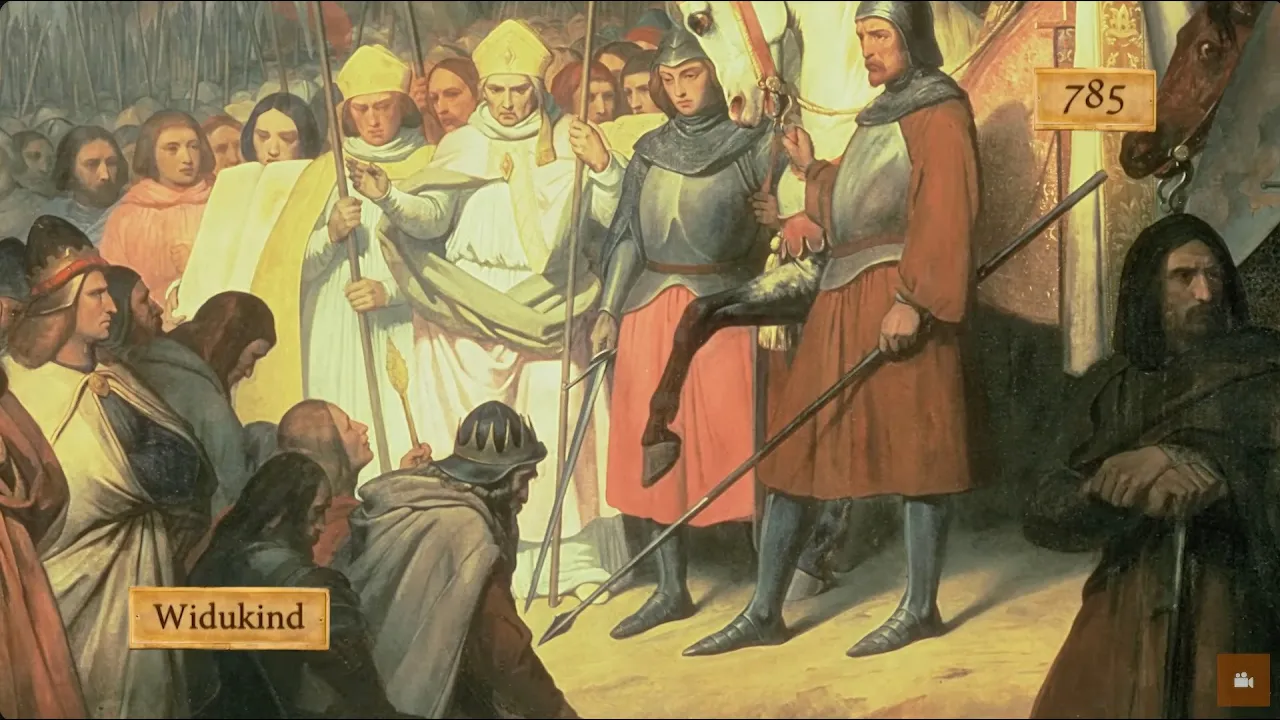
800 a.d the city of rome ancient capital of the old roman empire charles the great king of the franks stands at the altar in the basilica of saint peter's there pope leo iii crowns charles and he is acclaimed by a gathering of romans nobles magnates and high clergy as emperor of the romans this is a remarkable moment centuries after the death of the last western roman emperor charles has managed to reunite much of the old western empire now he is crowned as emperor and for the clergy the frankish nobility and the leading citizens of rome the roman empire is restored for some this was the old roman empire reborn for others this was the dawn of a new empire the germanic holy roman empire undoubtedly charlemagne had brought the west to new heights of power after centuries of obscurity his imperium would come to define the western middle ages we'll learn more today on real crusades history as we explore the imperial crowning of charles the great charlemagne [Music] knights of the cross is a live-action historical drama tv series about the crusades created by real crusades history at last saladin richard the lionheart and all the glory of the crusades era in an historically accurate tv series to learn more visit knightsoftthecross.com and pledge your help to the tv show today learn about how you can be in the show yourself [Music] all the while charlemagne's empire consolidated its hold over other regions by this point the franks occupied a small northerly sliver of what is today spain a piece of territory in the southern foothills of the pyrenees here the franks established a series of highly militarized and self-governing counties to act as defensive buffers against the umayyad moors of spain this was the logical continuation of the policy of charlemagne's grandfather charles martell who had halted moorish incursions into france thus began the early medieval history of catalonia meanwhile the frankish church grew increasingly important in matters of ecclesiastical affairs in 791 a council of frankish bishops met in narbon to consider the theological concept of adoptionism promoted by bishop felix vergel adoptionism held that christ was the adopted son of god the frankish bishops joined the pope in condemning the concept as heresy a synod hell the following year in ratzban by charlemagne denounced bishop felix who fled to muslim spain rather than abandon his teachings in response to the controversy pope hadrian issued a document called the churches of spain and galicia in which he specified that the church in christian-held spain should be treated separately from the church in muslim-held spain the former being free the latter being in bondage and perhaps prone to error due to the influence of moorish rule [Music] as in saxony the pope looked to the franks as the ultimate key to the church's triumph in spain the frankish outpost in catalonia would be the first step toward an eventual frankish conquest of the emirate of cordoba however the umayyads weren't willing to let catalonia go so easily in 793 hisham the first the new emir of muslim spain launched a well-executed attack on the frankish counties driving right into the pyrenees duke william crooked knows of toulouse one of charlemagne's most celebrated commanders suffered defeat in battle the umayyad sacked the region as far as narbonne before withdrawing home loaded with booty he sham's death in 796 allowed alfonso ii the christian king of astorias in northern spain to bounce back in 797 alfonso dispatched an embassy to charlemagne proposing an alliance between the franks and the christian kingdom of astorias alfonso's men presented charles with a beautifully embroidered tent captured from the muslims charles expressed his support though ultimately spain never seemed to become a top priority for the frankish king in 798 alfonso raided deep into moorish territory as far as lisbon and sent some of the booty to his frankish ally alfonso's attitude toward the franks further highlights how widely charlemagne was recognized as the most important monarch in western christendom by 798 his empire was sprawling the whole of saxony west of the l was now firmly under his control the slavic tribes on his eastern border had been subdued and made tributary even the avar horsemen of hungary had been defeated and their leaders baptized england too was now heavily influenced by charles the great with frankish churchmen being dispatched to participate in english councils during this period pope hadrian died replaced by pope leo iii in 795 leo wasted no time encouraging charles to continue his role as champion of the roman church charlemagne responded with a strong expression of agreement it is for us in accordance with the help of divine goodness outwardly to defend by force of arms the holy church of christ in all places from incursions of pagans and the ravages of infidels and inwardly to fortify her with our confession of the catholic faith at aachen charlemagne established his chief residence where the german and frankish languages met here the king built a new city and a lavish palace to serve as his royal capital already his legend was growing and the idea that he would be a new emperor for christendom began to take shape a german poem from 799 describes him as father of europe and likened him to caesar augustus paulinus of aquilia described him as ruler of all christians and alquin habitually referred to him as a new david leo was not so competent as his predecessor pope hadrian had hailed from the roman aristocracy and his political savvy allowed him to master the turbulent politics of central italy but leo had been a humble clerk from a papal treasury he was determined and pious but not a natural leader certain factions of rome's elite resented him as baseborn and even charged him with sexual impropriety in april of 799 a nephew of the late pope hadrian pascal and the papal bursar campus carried out a brutal plot against leo iii while leading a procession through the street a gang of men attacked pope leo they threw him to the ground stripped him and attempted to blind him and cut out his tongue the pope was left lying bloody in the streets while his unarmed attendants fled through the alleys of rome pascal and capulus's men dragged the injured leo into the church of saint sylvester where they proclaimed him deposed and again slashed his eyes and tongue he was then imprisoned in the greek monastery of saint erasmus however that night the pope's chamberlain albino snuck into the monastery and rescued the pope by lowering him down the wall on a road albinus had the pope carried swiftly to saint peter's where it was discovered that leo despite his injuries could still see and speak albinus and the pope's allies rejoiced certain that this was a miracle the duke of spaletto an agent of charlemagne who provided a military force for the pope sent word of the attack to the king of the franks charlemagne asked that pope leo be sent to him at patterborne charles's son prince pepin and the archbishop of cologne accompanied the pope on his journey until charlemagne greeted him at patterborne charles greeted the pope warmly and promised to punish the conspirators behind the attack the scene of charlemagne's greeting of the pope must have been striking the whole of the frankish army fresh from its victories over the saxons was assembled there were trumpet blasts and shields and spears flashing in the summer sun prince pepin guided the pope through the lanes of soldiers to where charles stood awaiting him gloriously in the midst of his highest nobles and bishops the king was clad in his finest armor a golden helmet on his head charles knelt to receive pope leo's blessing then embraced him side by side they entered the church where the pope offered mass afterward a lavish banquet was held in which wine was served in golden goblets one longs to know the private discussions that took place between charles and the pope on this occasion surely charles promised the pope to clear his name and reinstate him in rome but also the two may well have planned for the magnificent coronation ceremony that would soon take place in rome [Music] no one questioned charlemagne's right to demand that the pope be sent to him by now charles had been ruling for some 30 years and he was widely known as charles the great the intellectuals at his court marveled that this frankish prince who had inherited only half of franklin now reigned from the atlantic shores in the west to the bohemian wilderness in the east and from the northern fringe of spain all the way to the el river in the north from calabria in the south of italy to the frontiers of denmark from this vast empire immense wealth as well as prestige flowed into the king's possession but like any capable ruler he nurtured more than military power he grasped the importance of spiritual goods cultivating schools and the arts reforming the church and bestowing on his people a new system of coinage designed to improve trade throughout his vast lands even in the realm of faith charles seemed to go beyond the pope himself often taking the lead in attacking heresy alquin no mere court flatterer described charles as illumined with the light of all knowledge and wise enough to see through all that is mystery and darkness it helped that alkwyn was among the highest circle of the royal court whose advice was most prized by the king charles would listen to al quinn especially in matters of great importance so now when this fiasco involving pope leo arose charles turned to alkwyn for counsel [Music] the motivations for this plot against the pope are complex but do shed some light on the political realities of the period for one many members of the roman aristocracy took issue with leo because he had been the nominee endorsed by the frankish church effectively charlemagne's preferred candidate some of the roman nobility were increasingly uncomfortable with the growing power of the franks and for them leo represented the acceleration of that power historian jeffrey barclaw even speculates that pascal and campulus were in touch with the imperial government at constantinople a natural ally to anyone hoping to counter the power of the franks alkwin urged charles to dismiss the charges against the pope and to support him in no uncertain terms falcon was convinced that the charges of adultery and perjury against the pope must be false we can still read alkwin's letter of advice to charlemagne on the matter of this scandal hitherto there have been three persons in the highest position in the world the first was that apostolic sublimity who rules as the vicar in the chair of saint peter and you have informed me of what has been done to him the second is the imperial dignity and secular power of the second rome constantinople and everyone is talking about how impiously its emperor has been deposed not by foreigners but by his own fellow citizens the third is the royal dignity in which you have been placed by the dispensation of our lord jesus christ so that you are ruler of the christian people your power is more excellent than theirs your wisdom more shining your royal dignity more sublime behold upon you alone rest the salvation of the churches of christ we can see how alkaline urged charles to understand the gravity of his own responsibility the good of the christian order in the world lays squarely on the king's shoulders alkwin also gives us some insight into prevailing western views of the situation in the old eastern roman empire at this time in constantinople the seat of eastern rome the empress irene had been regent from 780 to 790 during which period she was guardian to her minor son constantine vi when he came of age irene initially showed her support and allowed him to take up power but she then entered into conspiracy against him and in 797 her thugs kidnapped the lad and blinded him on the orders of his own mother irene then announced herself to be emperor not empress for charles alquin and other members of the frankish court this was the height of evil and disorder irene who had mutilated her own son could never be rightful ruler but furthermore as a woman she also could not be emperor for the franks the roman empire was vacant one can see where all this was leading the franks including charles himself had very strong opinions about who it was that should take up the title of emperor meanwhile charles acted to settle the papal scandal in october he sent pope leo back to rome along with a 10-man commission to inquire about the charges made against him the pope was also escorted by a large body of frankish warriors to remind the romans that it was charles and no other who would determine the outcome of this matter the commission gathered for the hearings the pope's accusers again leveled their charges but alquin argued that it was improper for the holy pontiff to be subjected to earthly judgment to solve the issue pope leo himself agreed to swear an oath that the charges were false meanwhile the pope's accusers were sent back to franklin to face charles himself in march of 800 charlemagne set out on a tour of his empire from the straits of dover to the spanish frontier it was investigating reports of recent attacks along these shores by norse seafarers vikings as we call them today these were among the first stirrings of the viking age which would come to a head well after charlemagne's death to counter this growing problem charles constructed a fleet to patrol his coastlines he dispatched a frankish force to occupy the balearic islands off the coast of catalonia in modern spain at this point under charlemagne sound and united government there was little opportunity for viking raiders later with the decay of the carolingian order under charlemagne's successors there would be plenty for now charlemagne's vast empire afforded a great deal of stability and tranquility for the bulk of its inhabitants we can see why scholars at the frankish court were tempted to believe that the old pox romana had returned at tour charles the great held a meeting with all three of his sons along with alkwin the new abbott of saint martins charlemagne spent may in prayer perhaps preparing for the momentous event that was about to take place around this time charles's fifth and final wife luthgard died suddenly our sources describe him mourning for her bitterly but this did not stop him from announcing in august that he would travel to rome to see to the affairs of the papacy and of his italian kingdom charles arrived in rome in november accompanied by a large army and an abundance of gifts for the churches of the city there was still grumbling in the streets about pope leo among certain factions of the roman nobility but on the 23rd of december in the presence of king charles pope leo took an oath swearing to the falsehood of the charges of pascal and his other accusers two days later on christmas day 800 crowds of romans franks bavarians lombards goths basques and even some visiting anglo-saxons and greeks all packed into the great cathedral of saint peter's near the front of the altar stood charles's sons and daughters the royal frankish princes and princesses at the front of the altar stood charles himself garbed in a roman tunic and cloak with a belt of gold and jeweled sandals in the midst of mass pope leo crowned charlemagne as emperor the gathered crowd cried out in proclamation of the coronation long life and victory to charles augustus crowned by god the great and pacific emperor of the romans the pope then prostrated himself before charles and kissed the hem of his cloak in the ancient ritual of the roman empire charles winston points out that this procedure acclamation by the roman people was the proper legal form for proclaiming a roman emperor thus charles became emperor of the west the first since ad476 there has been much debate about the circumstances of charlemagne's coronation but for charlemagne's council of nobles abbots and bishops this was the logical development for them the true original empire was roman while the empire based in constantinople no longer had any connection to rome and indeed was now ruled by a woman who could never be a military commander the old roman empire of the west including rome ravenna milan aryl leon paris and trier were now joined together again under charlemagne's rule he was de facto emperor he should be proclaimed emperor by law there is strong reason to believe that this was exactly how charlemagne himself viewed things and that he pursued this outcome in his policy [Music] today there is much debate about charlemagne's coronation much of it sparked by charles's own court biographer einhard einhardt wrote that charlemagne was so surprised and annoyed by the popes crowning him that he would never have entered the church if he'd known about leo's intention this statement flatly contradicts all of charlemagne's own actions in the previous months as he prepared for this momentous event the notion that charles was not expecting to receive the imperial title is simply beyond belief historians have offered many explanations for einhard's bizarre comment perhaps charlemagne wanted the imperial rank but didn't want to receive it from the pope which would imply that the pope was a higher authority the problem with this explanation is that it's potentially anachronistic looking forward to conflicts between the popes and the emperors in the 11th century that did not yet exist in the 9th century another theory is that charles did not want to be proclaimed emperor until he'd received approval from the byzantine emperor in the east certainly in the coming years charles woods strived to win the recognition of the eastern emperor even making considerable concessions to earn the acknowledgment of his brother emperor but charles could never have expected constantinople to recognize him as emperor voluntarily surely a savvy politician like charlemagne knew that he must first gain the title and then bargain for the grudging approval of the byzantine emperors frankish policy certainly supports this thesis other historians have posited that einhard simply wanted to portray his master as modest refusing the imperial title until it was positively imposed on him another explanation is that he may have been revealing his own bias as he like many franks preferred to think of charles as a frankish king not as a roman emperor the jealousy felt by frank's the noble class at the thought of their emperor expanding beyond his tribal kingship was very real and might explain einhard's strange remark in the germanic tradition a chieftain's high-ranking men acclaimed him their leader not a roman pope charlemagne's ascension represented the final death of the old germanic legal assembly where free men gathered together their chieftain the first among equals now the franks would kneel before a man who was not only their tribal leader but a universal emperor [Music] whatever the truth behind inahar's famous utterance charles the great was now emperor and he exercised his powers at once he dispatched his agents throughout the papal territories collecting taxes and taking oaths of allegiance from the local magnates he had coins struck which proclaimed the restoration of the empire and even contemplated a marriage with a byzantine empress irene there can be no question that charles cast his ascension as a new era of greatness to rival that of caesar augustus we get an insight into charlemagne's conception of his empire from an oath of loyalty he required within his domain in the year 802 charlemagne obliged all free men to swear a personal oath of loyalty to him and to his laws he also asked each man to swear to voluntarily strive according to his intelligence and strength to keep himself entirely in the holy service of god and to never bring any harm to churches widows orphans or strangers all regarded by charles as being under his special guardianship charlemagne placed the church's canon law alongside his own law both had to be obeyed in october of 802 the emperor held a great assembly at which both civil and canon law were proclaimed expanded and codified meanwhile in that same year charlemagne's dream of uniting the empires of west and east by marriage came to an absolute end the byzantine empress irene was overthrown in constantinople by her treasure and exiled to the island of lesbos where she soon died the treasurer became emperor nico forest the first irene had been more affable towards charlemagne's court but forest was adamantly opposed to the frankish ruler however charles and nico forest had to deal with one another for at this point their empire shared frontiers charles extended an olive branch to nikki forest offering peace on the borderlands in exchange for recognition as a western emperor to apply a little pressure to the byzantines charles exchanged embassies with their greatest enemy the caliph harun al-rasheed ruler of the vast abbasid caliphate the caliph sent charles exotic gifts the most spectacular being an elephant named abu abbas at the time an elephant was a thing of true wonder for the franks charles used to take the animal with him as he journeyed around his empire and abul became a favorite attraction for both nobles and commoners the caliph syntha franks a beautiful mechanical clock with 12 windows from which figurines of armored warriors marched forth with the striking of each hour that these negotiations produced more than fancy gifts al-rashid granted charles special status as protector of the christians in the holy land charles received the keys to the holy sepulchre and even to jerusalem itself as a fervent christian charles showed an act of concern for the affairs of the holy land and its christian inhabitants perhaps this could be regarded as the first stirring that would one day culminate in the first crusade conducted by charlemagne's frankish descendants during this period charles was intensely active intending to domestic affairs he strove to protect the poor widows and orphans within his empire and he urged the clergy to stick to their vows and act toward the good of the christian people many of charlemagne's decrees during this period have a strong religious tone and the emperor himself almost sounds like a pope or a bishop he urged his people to be not quarrelsome not wrathful not proud not drunken but chased in heart and body humble modest sober merciful peaceful [Music] charles strove to lessen military obligations for the poor poor freemen were exempted from military service this was possible because the vast bulk of charles's domain was now at peace with only the frontiers being active zones of combat on the one hand an empire can provide such stability on the other it requires long years of bloodshed to achieve but to charlemagne's christian subjects it must have been a sort of golden age but not everyone living under frankish rule felt content [Music] in saxony unrest continued this is not surprising given the harshness of frankish rule the penalty for any saxon violating a christian principle was death even for eating meat during lent or cremating the dead in the old traditional fashion to strengthen christian power in saxony charles gave the clergy the right to absolve anyone guilty of violating frankish law making the priests and bishops virtually absolute in their power over life and death for ordinary people this was an obvious formula for abuse of power to rub salt in the wound the saxons already impoverished by decades of war had to pay taxes for the upkeep of christian churches that charles forced them to build thus after three decades of virtually endless war saxon gorillas continued to resist frankish domination the memory of verdan still burned fiercely in many sacks and hearts and at every opportunity bands of saxon warriors would ambush frankish convoys and slay imperial envoys and priests as one indignant frankish chronicler put it the saxons like dogs return always to their own vomit for the saxons however this was justified retaliation against a brutal oppressor and their traditional beliefs were cherished banners of resistance now in his sixties charlemagne personally led one of his final military campaigns once again marching into saxony at the head of a large army he called on his slavic allies to help in quashing the saxons as usual the saxon gorillas melted before the full power of a frankish army this time charles didn't perform a mass execution instead he ordered the dispersal of the saxon peoples throughout his empire the slavs received one whole region of saxony for their service and vast tracts of saxony were virtually depopulated by scattering thousands of saxon men women and children throughout his vast lands and thus breaking their ability to live together and maintain their traditional bonds charles at last broke saxon resistance saxony had been pacified and christianized after three decades of unremitting brutality today it's difficult to quantify the human cost but it was undeniably immense the brutality of charlemagne the conqueror contrasts sharply with charles the family man from our own source material it seems that the emperor enjoyed spending time with his wife and children which isn't necessarily a given among monarchs he was married at least four times outliving several wives and had many concubines charles's favorite wife seems to have been his last lutegard famed for her beauty and poise charles took his wife and children with him as he journeyed throughout his vast domain and they would join him for hunting expeditions after a hunt charles would settle in with his family his frankish warriors and his court clergymen to enjoy a meal of the game killed in the chase during the meal one of the household scholars such as alcon or engelberg might rise to recite a poem or work of literature some of charles's gruffer warriors groaned at this but they knew not to argue with the emperor who deeply prized the literary arts there was little heavy drinking in the hall of charlemagne for he despised drunkenness he preferred instead as alkwen put it the wine of learning at dinner he also enjoyed hearing the reading of histories or augustine city of god his favorite book which he pondered and discussed at length with his court scholars charlemagne doted on his daughters the court poet engelbert gives a striking description of charlemagne's daughters enjoying a hunt with their father's court there was rotrid charlemagne's favorite her pale blonde hair intertwined with ribbons of violet and strings of pearls a coronet of gold circling her head next came the lovely bertha wearing a golden diadem with golden filaments sparkling in her gleaming hair her snowy shoulders covered by an irmine wrap her belt shining in many colors then there was lily white gisla apparelled in a purple gown shot through with mauve her face her hair gleaming with many lights even the teenage theatre was clad in rare emeralds adorning her lovely neck charlemagne's daughters were well educated and accompanied their father along with their brothers at various processions feasts and hunts as the fame of their beauty and grace spread many foreign rulers tried to arrange marriage matches with charles the great's daughters even the byzantine emperor wanted charlemagne to send him a daughter for a marriage alliance the ultimate prestige however charlemagne refused no matter how many offers he received charlemagne would not allow his daughters to marry why is this well the short answer is if they'd married they would have had to have left home but why didn't charlemagne want his daughters to leave home einhard charlemagne's court biographer gives us an answer he states that the old emperor was so fond of his daughters that he simply could not part from them some historians preferring political motivations to personal have rejected this but we shouldn't be so quick to dismiss einhart's insights there's probably a great deal of truth in einhard's statement after all charlemagne did have his daughters with him as often as he could but there may also have been a broader purpose to charlemagne's policy here in refusing to allow his daughters to marry he prevented the formation of foreign cadet branches to his dynasty this prevented future competition for frankish lands charles spent his reign building a vast empire and he did not want it destroyed in a storm of familial conflict already he was worried for his sons were set to each inherit a portion of his empire in keeping with frankish tradition he wanted them to reign as brother kings acting together rather than as rivals this was a tall order but throwing in grandsons from foreign kingdoms trying to grab a piece of the empire would only further complicate things janet nelson points out that charles's daughters served another important function they gave their father political help with the household and the court they were channels of patronage he could control and sources of information he needed they were capable and trusted advisors and supporters although they never married sacramentally charles's daughters did take what we might anachronistically call today common-law husbands high-ranking noblemen loyal to their father one of these men was engelbert the poet mentioned earlier who was a loyal agent of charlemagne throughout his life engelbert was the husband of bertha from these partnerships came many grandchildren and charlemagne's palace was soon filled with rambunctious youngsters calling him grandfather charles embraced all of these children and he enjoyed being their grandfather all the more because none of them could possibly pose a future challenge to his heirs during this early period in medieval europe old traditions of the germanic tribes often lingered alongside the christian law in this environment there might be a layered idea to marriage on the one hand christian sacramental marriage was required for official standing for the bearing of heirs and for the making of political matches but in more intimate circles earlier more tribal ideas of marriage might persist we will see this manifest later in the age of duke robert of normandy father of william the conqueror who took as his companion herleva regarded in many ways as his wife by the norman warrior elite though he never married her sacramentally in the christian church this dynamic may be at play in the matter of charlemagne's daughters [Music] now that you've watched this video on charlemagne learn about how his descendants extended frankish rule to include jerusalem click on the link on your screen to watch our full-length documentary on the first crusade blue
Up Next

33:02
The Great Schism of 1054: Causes and Consequences
@SacredCathedrals
113.5K views•2026-02-19
30:32
5 Legal Successors to the Roman Throne Explained
@UsefulCharts
4M views•2019-10-18
91:57
The Geopolitics of the Ukraine War and the Rise of Global Autocracy
@JordanHarbingerShow
468K views•2025-04-19

17:05
Understanding the Cold War: Superpower Conflicts and the Road to Détente
@OverSimplified
46.1M views•2019-01-24
Related Study Plans & Knowledge Roadmaps
Structured learning paths in History
history
Byzantine Iconoclasm: Theology, Art & Politics
01Foundations of Byzantium and Early Christian Images
02The First Iconoclasm: Leo III and the Crisis of Images
03Empress Irene, Nicaea II, and the Second Iconoclasm
+ 2 more learning modules
9h5 modules
Explore Roadmap
history
Iranian Revolution (Causes, Events & Legacy)
01The Pahlavi Dynasty and the Roots of Discontent
02The Spark of Rebellion and the Rise of Khomeini
031979: The Fall of the Shah and the Climax of the Revolution
+ 2 more learning modules
8h5 modules
Explore Roadmap
history
Mali Empire: Mansa Musa, Trade & Timbuktu
01Foundations of the Mali Empire
02The Trans-Saharan Gold and Salt Trade
03The Reign and Pilgrimage of Mansa Musa
+ 1 more learning modules
6h4 modules
Explore Roadmap
history
1947 Partition: Politics, Borders & Legacies
01Foundations of British India and the Divide
02The Political Negotiations and the Mountbatten Plan
03Drawing the Boundary: The Radcliffe Line
+ 2 more learning modules
8h5 modules
Explore Roadmap