























![[MATCHA ROOM] Ngobrol tentang Biomaterial Bareng Peneliti Indonesia di Kampus Luar Negeri - Part 1](https://i.ytimg.com/vi/OsYL2hKMJPg/maxresdefault.jpg)


Bone exhibits different mechanical behaviors depending on loading direction; under compression, bone shows a linear stress-strain curve with high stiffness and ultimate strength, while under tension, bone is significantly weaker and less stiff with a lower ultimate strength, which explains why bones are designed to withstand compressive forces from body weight but are more susceptible to damage on the tensile side during activities involving muscle-induced bending moments.
Bone Stress-Strain Curves in Compression and Tension | Biomechanics K305
Added:Fundamental definitions of mechanical stress (force per unit area) and strain (deformation ratio).
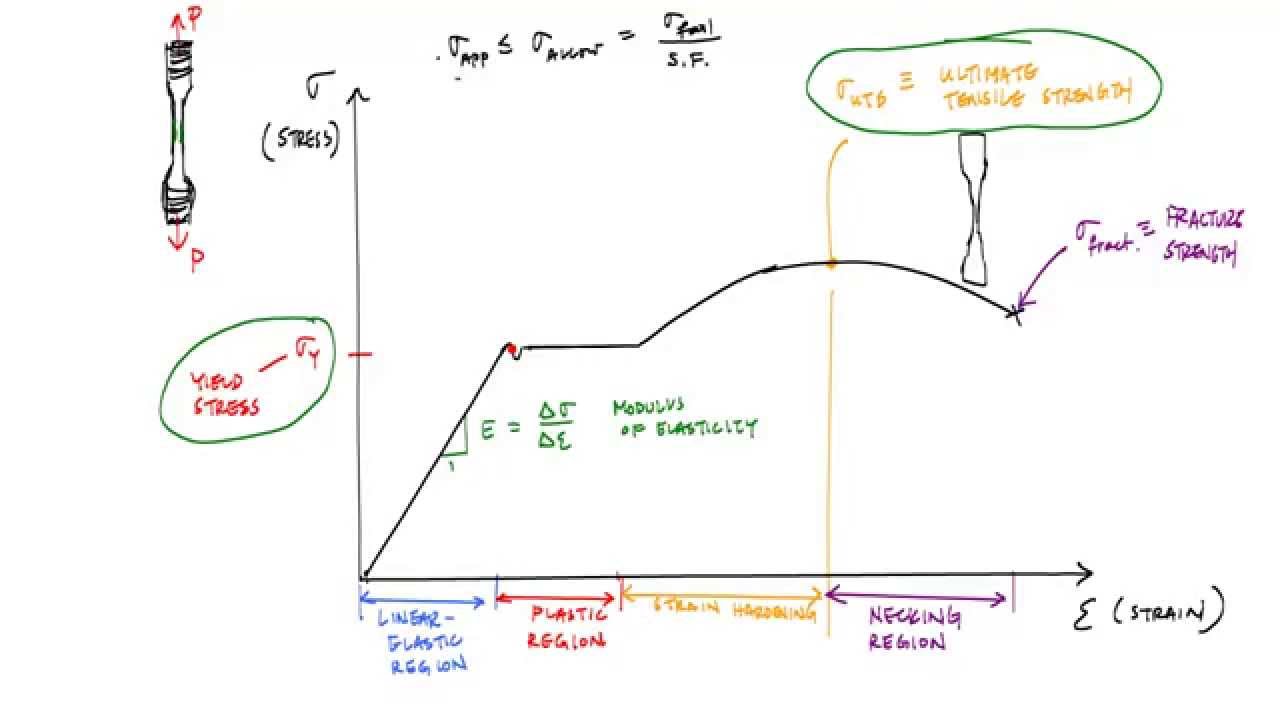
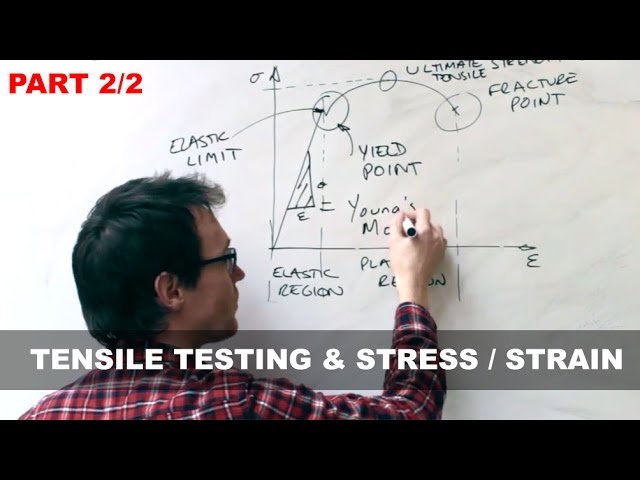
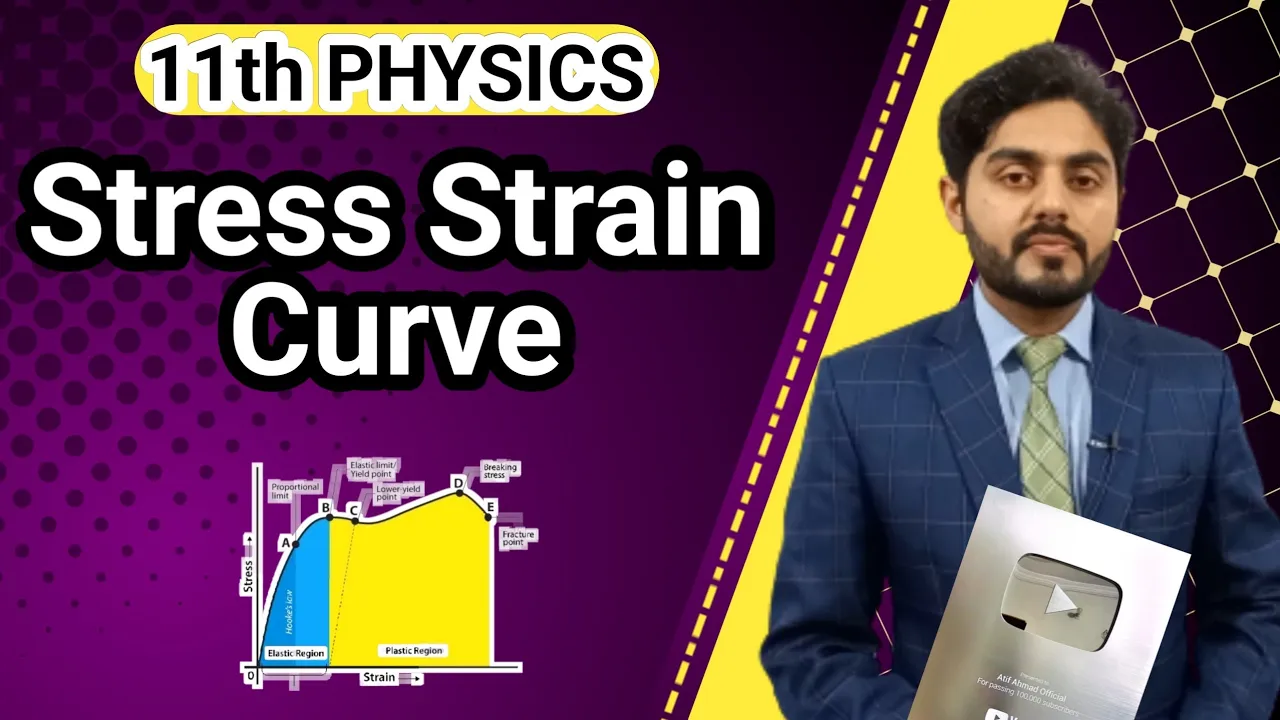
Understanding of a standard engineering stress-strain curve, including the elastic region, plastic region, yield point, and ultimate tensile strength.
Basic bone biology and composition, specifically the structural differences between cortical (compact) and trabecular (spongy) bone.
The conceptual distinction between compressive loading (squeezing forces) and tensile loading (stretching forces).
The concept of anisotropy in bone, exploring how bone strength varies when loaded in different directional axes (e.g., shear vs. longitudinal forces).
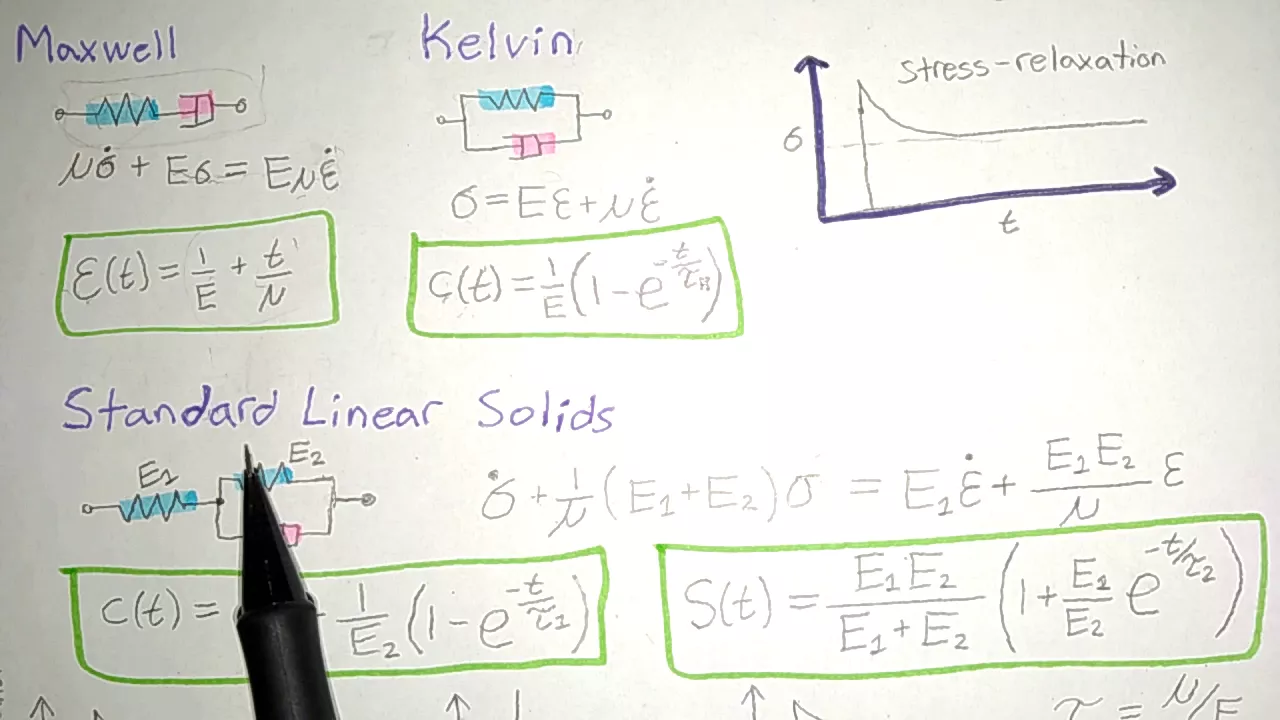
Viscoelasticity of bone tissue, analyzing how the rate of loading (speed of force application) affects bone stiffness and failure points.
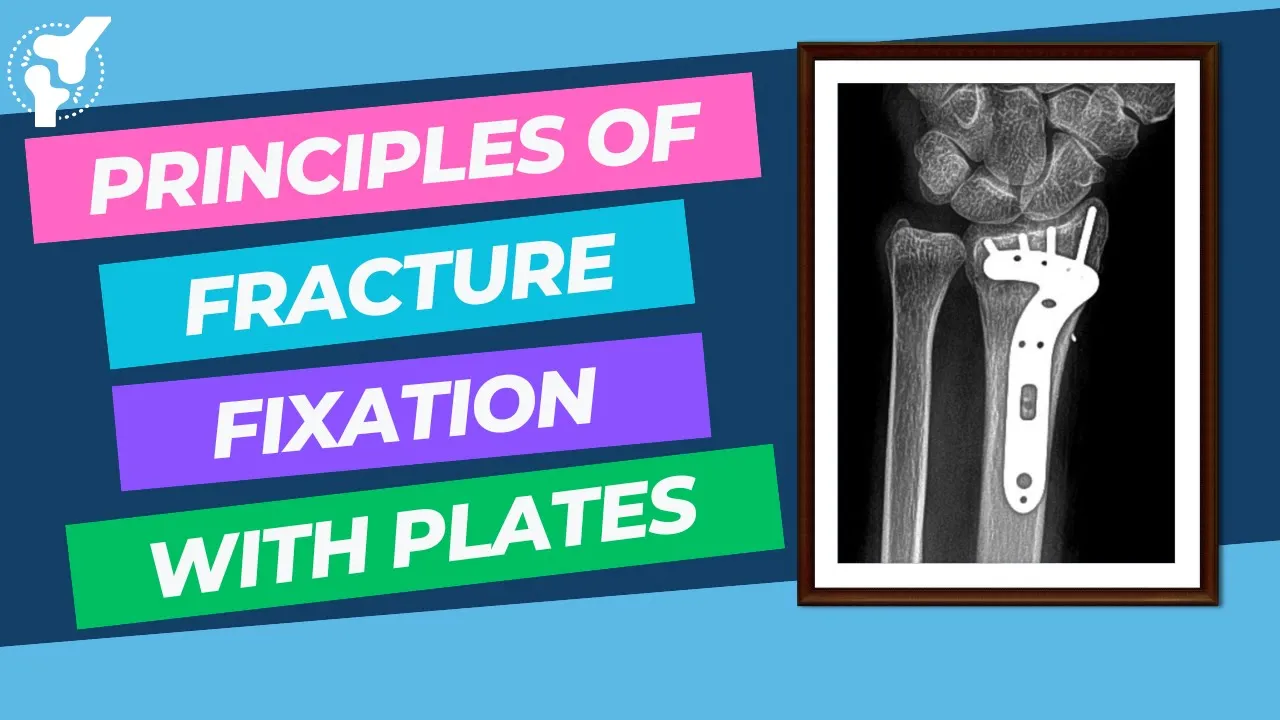
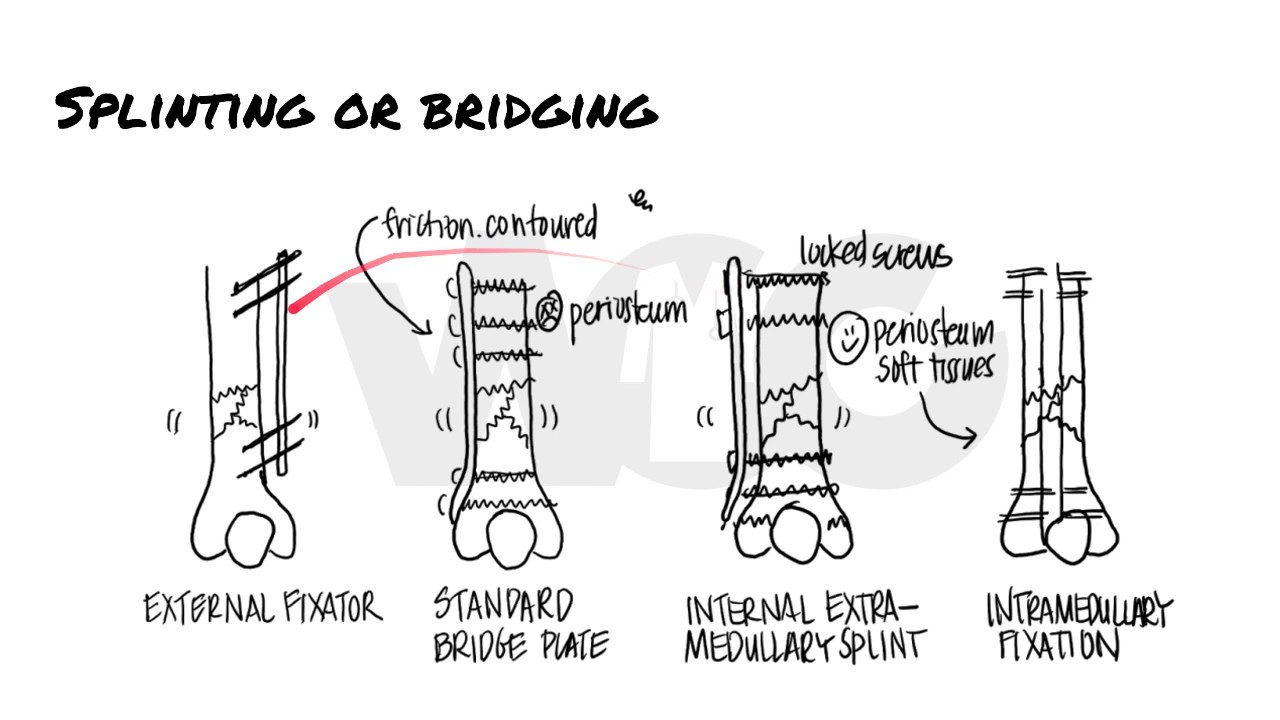
Clinical biomechanics of fracture healing, including how fixation devices (like plates and screws) are placed to minimize tensile stress and promote compression.
Wolff's Law and bone remodeling, examining how bone alters its internal architecture in response to habitual compressive and tensile mechanical loads.
The phenomenon of 'stress shielding' in orthopedic implants, where stiff biomaterials prevent natural bone from experiencing the stress necessary for health.
5.3K views76likes8:29Original Release: 2021-02-15
in this video i want to walk you through what the stress strain curve looks like for bone and there's a few interesting things about it the first of which is that the shape of that curve is going to depend on how we're loading the bone meaning what type of mechanical loading is going into it there's a technical term for this and it's called we can say that bone is an isotropic so an isotropic meaning it is not the same does not have the same and not iso same tropos's response so not the same response meaning it depends how you uh how you load it so let's for starters let's think about what does the stress strain curve look like for compressing bone so maybe you get uh tibia from a cadaver and you put in a mechanical loading system you're going to apply a force to it here you're going to compress it and you're going to study how much does it deform with a little maybe deformation gauge or something so there's a few interesting things about the stress strain curve the first is that there is no toe region meaning down here you just get a linear response right away when we talk about cartilage and tendon we'll talk about why those materials have a toe region and why bone does not but the upshot right now is that bone is going to respond like a very very stiff linear spring up into until a certain point when we compress it and then we're going to get some deformation we'll reach the ultimate strength and then we'll go down here and then it breaks so ultimate strength is up here here's that dividing line between the linear region oops linear region and the plastic region another term you'll see bandied about is something called the physiological zone which is maybe like here we'll just label that physiological and that just means that in normal activities walking and running and so on you are staying down in this area and you don't get up into this area because we know that once you are up here you are sustaining serious damage to the the tissue now this is for compression let me label that and we could think about what would happen if we did the same experiment with the same bone and of course or maybe like a very similar copy of it because we broke it but what would happen if we put tensile force into it like we try to pull it apart two interesting things happen number one bone is less stiff so the slope is lower the ultimate strength is lower and then you just break much more quickly so this suggests two things number one bone is much weaker in and let me label this in tension much weaker in tension than it is in compression and it is less stiff i have over off to the side data from a real experiment showing the same thing so this is an actual cadaver bone showing the actual straining meaning percentage change in length and you'll notice that in tension right the slope is lower and the ultimate strength is is much lower you'll notice also that it looks like the plastic region starts maybe a lot earlier so the place where damage is going to start occurring is going to be sooner than maybe roughly here for uh for compression so this has important consequences in how bones respond to stress but if you think about this it makes a lot of sense because if we go and look at the skeleton and i erase you know the the things i've been drawing all evening if we just look at what kind of loads will bones be experiencing during normal activities it's quite clear that you know the long bones of the lower leg for example will be experiencing lots of compressive forces you've got the body weight up here pushing down and they're going to be compressing this bone and there's not that many instances where the bones are going to have high tensile forces with one let me show you the one case where that um turns out to to be an issue i mentioned in a previous video how a large component of the forces that the body encounters or that the bones encounter are actually not from your body weight but for they're from the force of bone of of muscles so i want to consider the effects of the the calf muscles coming off here now i know there's we've got the soleus which goes off like this and then the two heads of the gastroc which go like this but let's just consider them all one muscle right now and that force is going to be because it's coming off the calcaneus it's going to be transmitted to the tibia so this is going to induce a bend we call it a bending moment but it's going to induce bending in the tibia meaning the tibia this bone is going to have a tendency to want to bend like that obviously it's not this extreme but it does occur there's a great study that i read recently where they had one um a very uh dedicated volunteer who had uh pins surgically implanted temporarily into his tibia like this and then they had him walk and run and do squats and and other exercises in the lab for an afternoon and you can actually measure the deformation the bending of the tibia as a result of this very powerful muscular load from the calf muscles so let me draw out that exaggerated bending and we'll think about areas of compression and areas of tension so while i'm doing this think about what area of the tibia is going to be under tension what area of the tibia is going to be under compression so this is this is the tibia and it's obviously exaggerated bending on the back side here we're going to see compression and on the front side we're going to see tension maybe if you imagine doing this to like a big piece of rubber or something you can see how if you really if you really bent this hard it would tend to pull apart right here and it turns out that while stress fractures from say too much loading in the tibia are more common on the compressive side they are much more serious when they occur on the tension side and the reason there is because the forces you encounter in your daily life tend to pull apart that that side of the bone it's very hard for this area to heal because you keep it's kind of like a paper cut that you keep pulling open the forces that you encounter the tensile forces pull that area apart and bone in tension is much weaker than bone in compression anyways so bones are very interesting material and its mechanical loading properties give us some very useful insights into how uh various types of activities will affect the the loading pattern of bone so hopefully you found that useful i have one more video for you that we're going to touch on a topic for next week and i'll see you in that
Up Next
55:22
OpenSim Tutorial: Musculoskeletal Modeling for Jump Simulation
@ESBiomech
20.4K views•2019-10-16
30:32
Ultrasonic Transducers: Resonant Frequency Measurement and Horn Design
@imajeenyus42
229.9K views•2017-02-22

54:16
Polymer Environmental Degradation: Mechanisms & Stabilization
@iit
1.8K views•2012-07-10
33:39
How a Student's Question Saved a NYC Skyscraper from Collapse
@veritasium
22.8M views•2025-04-26
Related Study Plans & Knowledge Roadmaps
Structured learning paths in Engineering
engineering
Building Acoustic Levitators: Physics & Arduino
01The Physics of Sound and Standing Waves
02Piezoelectric Transducers and H-Bridge Drivers
03Arduino Programming: Generating 40 kHz Signals
+ 2 more learning modules
14h5 modules
Explore Roadmap
engineering
Building Peltier Cloud Chambers: Particle Tracks
01Cosmic Rays & Cloud Chamber Physics
02Thermoelectric Cooling (TEC) Fundamentals
03Custom Liquid-Cooling Loop Design
+ 2 more learning modules
18h5 modules
Explore Roadmap
engineering
Yagi-Uda Antennas: Modeling, Build & VNA Test
01Introduction to RF and Antenna Fundamentals
02Yagi-Uda Antenna Design Principles
03Antenna Modeling and Simulation in 4NEC2
+ 2 more learning modules
18h5 modules
Explore Roadmap
engineering
ECG Monitor Design: Op-Amps, Filters & Noise
01Electronics & Breadboard Basics
02Op-Amps and Instrumentation Amplifiers
03Bioelectricity and ECG Fundamentals
+ 2 more learning modules
18h5 modules
Explore Roadmap