






















Operant conditioning, developed by B.F. Skinner, is a learning process where behaviors are strengthened or weakened based on their consequences; Skinner demonstrated this using his Skinner box apparatus with hungry rats, showing that positive reinforcement (rewarding behavior with food) and negative reinforcement (removing an aversive stimulus like electric shock) both increase the likelihood of a behavior being repeated, while punishment decreases it.
Operant Conditioning & Skinner Box Explained | VCE Psychology
Added:The basic definition of 'learning' within psychological science as a relatively permanent change in behavior.
An introductory understanding of Classical Conditioning (Pavlovian conditioning) to help contrast voluntary versus involuntary behaviors.
The fundamental principles of Behaviorism, specifically the focus on observable behaviors rather than internal mental states.
Edward Thorndike's 'Law of Effect,' which established that behaviors followed by satisfying consequences are more likely to be repeated.
The distinction between reinforcement (increasing behavior) and punishment (decreasing behavior, both positive and negative).
Schedules of reinforcement (fixed-ratio, variable-ratio, fixed-interval, and variable-interval) and their impact on response rates and extinction.
Practical applications of operant conditioning, such as behavior modification therapy, token economies, and animal training.
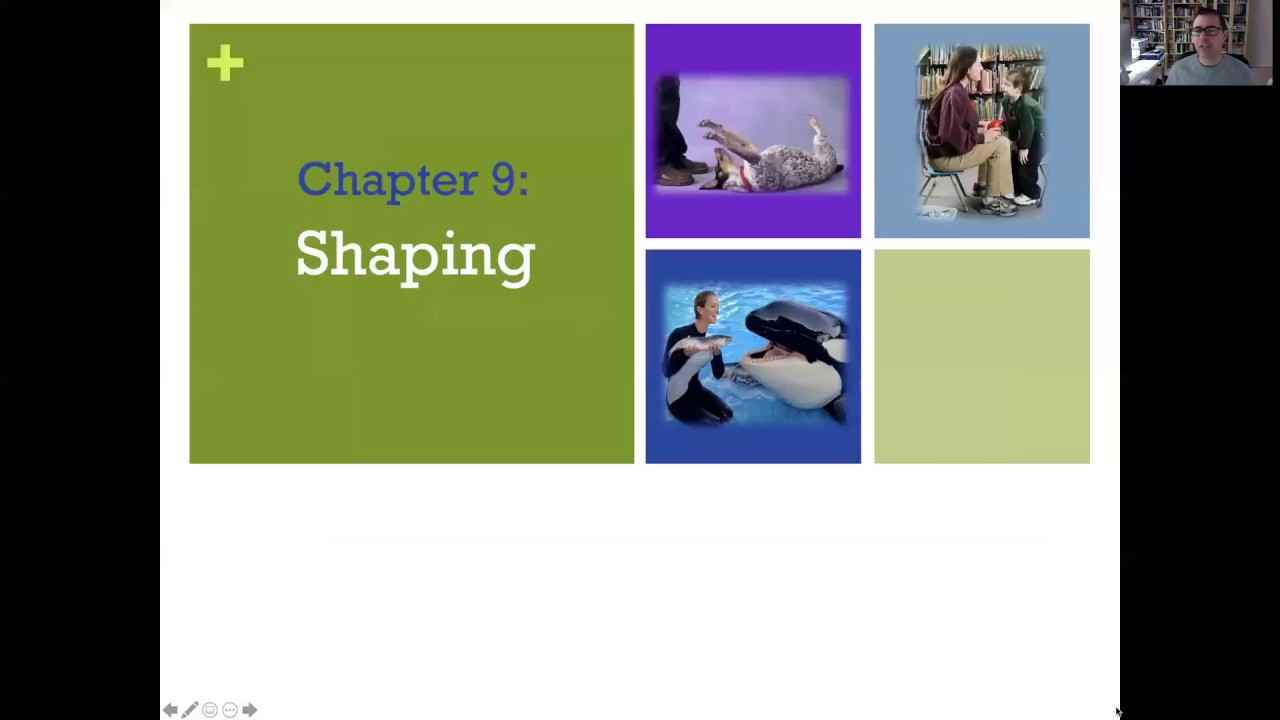
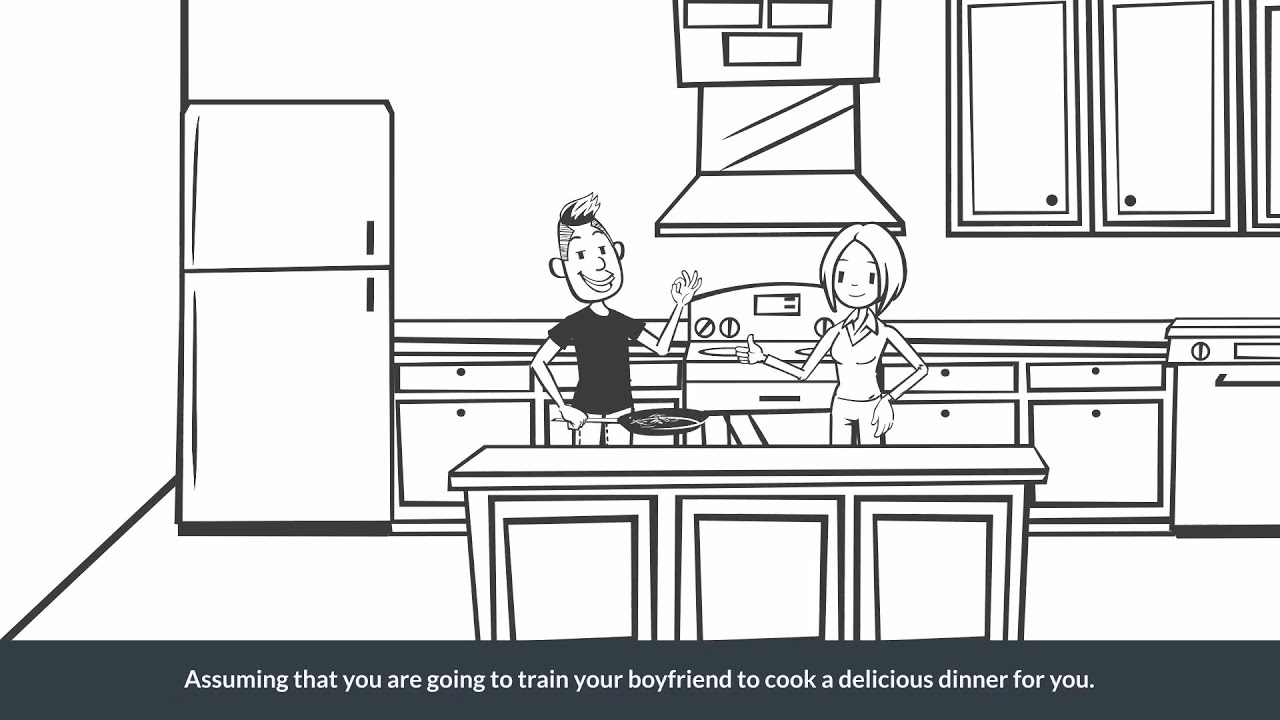
The process of 'shaping' (reinforcing successive approximations of a desired behavior) to teach complex actions.
Ethical implications and limitations of using animal models to study human learning and behavior.
407.5K views1.4Klikes4:09Original Release: 2012-07-20
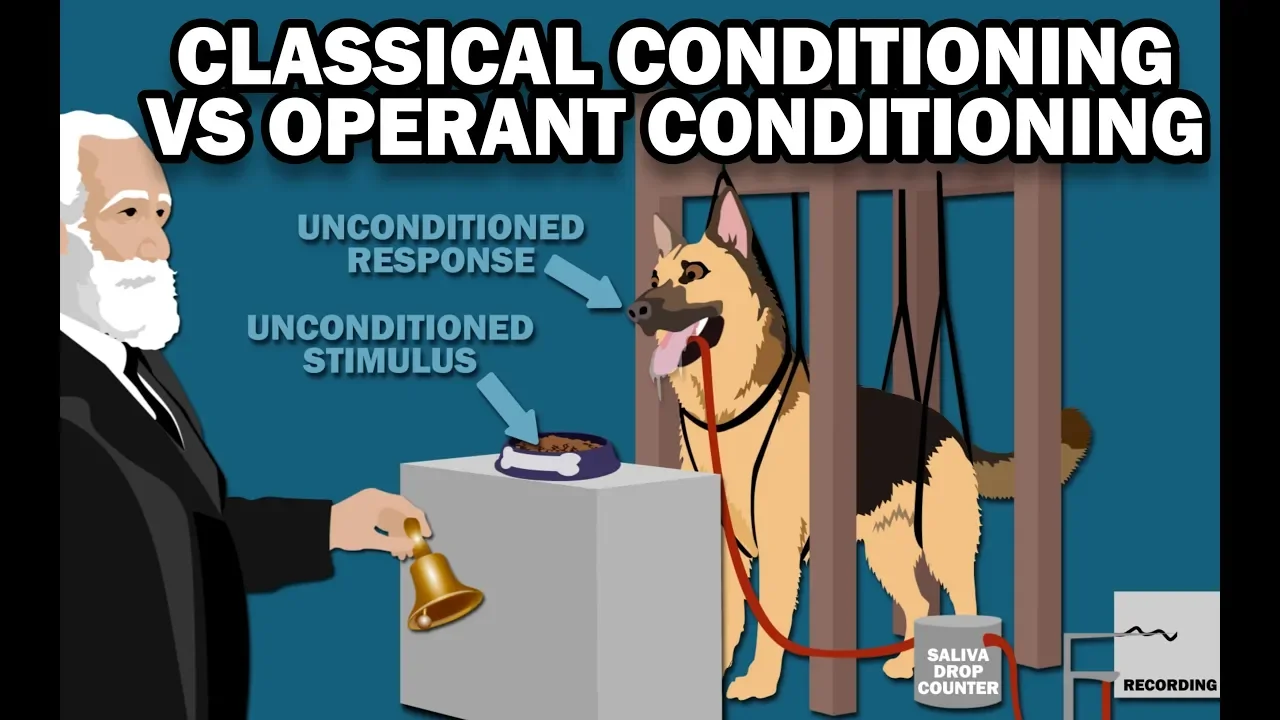
Skinner in the mid 20th century inherited the mantle of the Father Figure of behavioralism from Watson he believed that we can both predict and thus control Behavior thus by manipulating the environment we can change the individual and he firmly believed that by manipulating the environment in the right way in a thoughtful manner we can change individuals for the better inspired by the work of Thorndike and his law and effect he devised the learning theory Opera and conditioning which can be defined as a learning process in which the consequences which follow a response determine the likelihood of the behavior will be repeated in the future so behavior is strengthened when it's been reinforced therefore more likely to recur and behavior is weakened when it's being punished less lik L to occur so Skinner devised the Skinner box to identify how the consequences of actions affected future Behavior so in terms of some of the key aspects of the Skinner box contained a lever that was used for both positive and negative reinforcement the positive reinforcement in the for in the form of food was delivered through a food dispenser after lever pressing there was an electric grid on the floor that would deliver painful electric current there was a light that went flashed was a warning signal to the rat that the electric current was about to come so in order to provide motivation for Behavior Skinner used hungry rats that were placed in his Skinner box and much like the cats in Thorn dark's puzzle box initially the their behavior was random until they inadvertently hit the lever which resulted in the immediate rewarding of a food pallet now it didn't take the long the rats long to learn that lever pressing resulted in the positive outcome of receiving a food reinforcer so therefore the consequence of receiving food which was the desirable stimulus ensured that the lever pressing Behavior would be repeated again this is positive reinforcement now initially skinny used a continuous reinforcement schedule which results in the fastest rate of acquisition I.E every time the rat hit the lever a food pallet would be delivered then later on he went to a partial schedule and I'll go through this in a future YouTube clip and as stated earlier the Skinner box was also used for negative reinforcement so the rat was subjected to an aversive stimulus an unpleasant electric current and again the random act of lever pressing Switched Off the electric current so the consequence of escaping the electric current the aversive stimulus ensured that the behavior would be repeated I.E lever pressing later on Skinner would switch on the signal light just prior to turning on the electric current and again the rat fairly quickly learned the association between the light and the electric current and the lever pressing so the light would be switched on the rat would rapidly hit the lever to remove that aversive stimulus that is the behavior of lever pressing had been reinforced to remove the aversive stimulus thus we have negative reinforcement
Up Next
4:13
Classical vs Operant Conditioning | Psychology Explained
@TEDEd
3.6M views•2013-03-07

68:32
Cognitive Skills for Differentiated Instruction | Teacher PD
@BrainWareLearning
631 views•2017-12-17
3:00
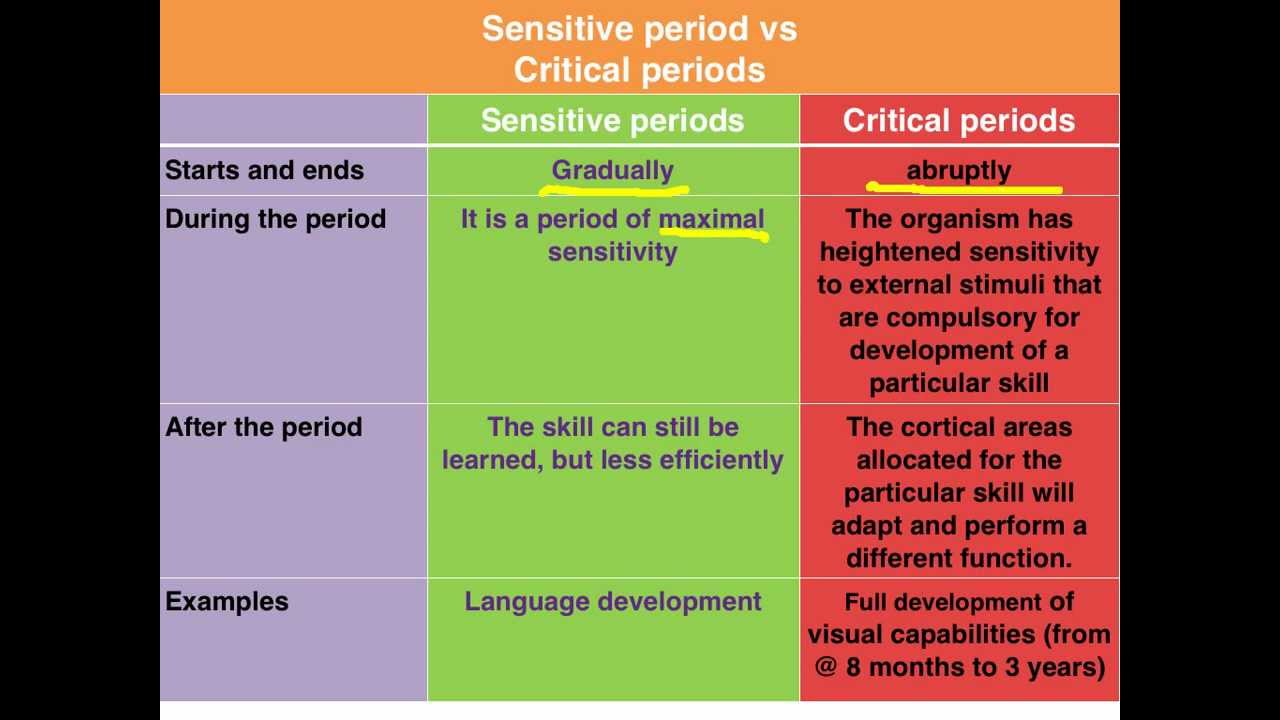
Sensitive vs Critical Periods: Learning & Brain Development
@Psyccounting
79K views•2012-07-14

6:40
The Nocebo Effect: How Beliefs Can Cause Real Harm
@CGPGrey
10.4M views•2013-12-23
Related Study Plans & Knowledge Roadmaps
Structured learning paths in Psychology
psychology
Neuroscience of Creativity: Networks & Training
01Foundations of Creative Cognition
02The Cognitive Neuroscience of Insight & Fixation
03The Triple Network Model of Creativity
+ 1 more learning modules
15h4 modules
Explore Roadmap
psychology
Imposter Syndrome: Etiology & CBT Framework
01Defining the Imposter Phenomenon
02Socio-Developmental Etiologies
03CBT Fundamentals & Thought Distortions
+ 2 more learning modules
15h5 modules
Explore Roadmap
psychology
Adult ADHD: Executive Dysfunction & Scaffolding
01Neurobiology of the ADHD Brain
02The Core Triad of Executive Deficits
03Executive Dysfunction and Emotional Regulation
+ 2 more learning modules
12h5 modules
Explore Roadmap
psychology
Loneliness: Evolution, Neurobiology & CBT
01Evolutionary Origins of Human Connection and Loneliness
02The Neurobiology and Physiology of Chronic Loneliness
03Maladaptive Social Cognition: The Psychological Loop
+ 2 more learning modules
12h5 modules
Explore Roadmap