














![Labor, Slavery, and Caste in Spanish America [APUSH Unit 1 Topic 5] 1.5](https://i.ytimg.com/vi_webp/f1h-9W2Snik/maxresdefault.webp)






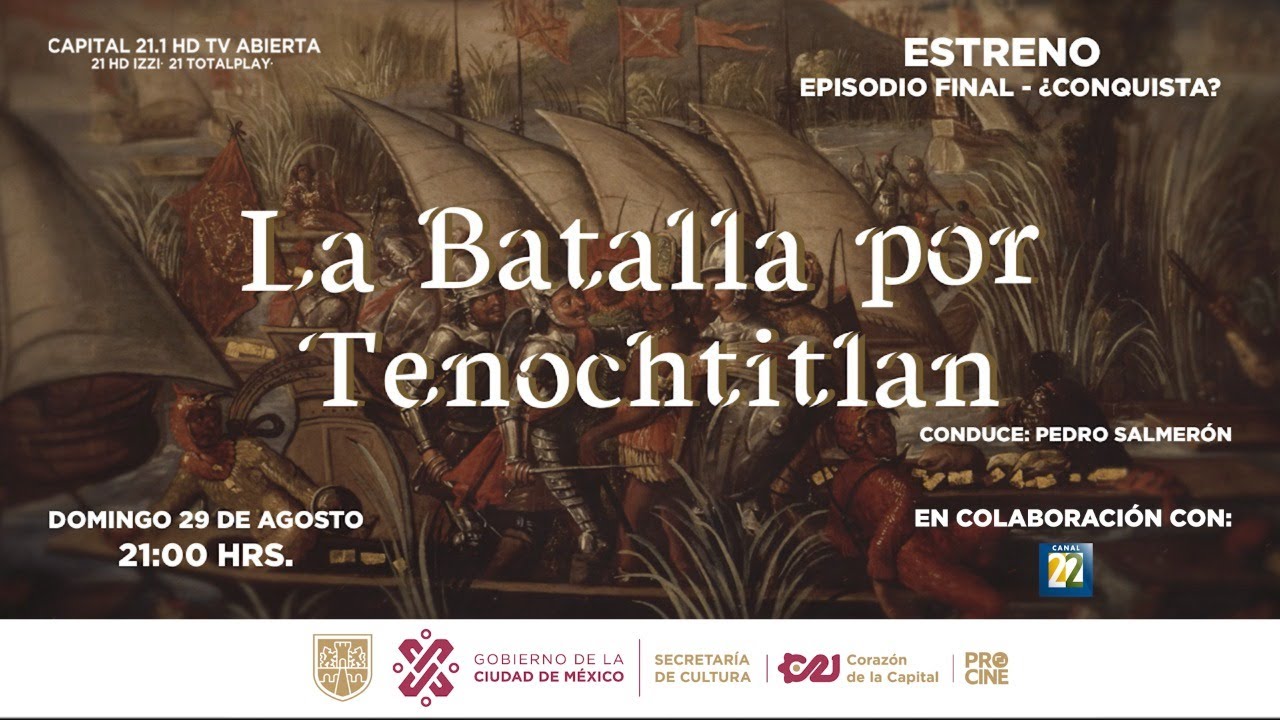


The fall of Tenochtitlan in 1521 demonstrates how internal weaknesses and external disease can destroy even powerful empires; despite being militarily superior and wealthy, the Aztec Empire fell not because the Spanish were stronger, but because the empire was held together by fear rather than loyalty, and when smallpox devastated 40% of the population and the tributary cities saw an opportunity to break free, the empire collapsed in just 93 days of siege warfare.
The Fall of Tenochtitlan: The Aztec Empire's Collapse in 93 Days
Added:The political structure of the Aztec Empire (Triple Alliance) and its tributary relations with neighboring indigenous groups, such as the Tlaxcalans.
The motivations behind the Spanish Age of Discovery, specifically the concept of the conquistador and the pursuit of wealth, status, and religious conversion.
The concept of 'virgin soil epidemics' and the biological vulnerability of Mesoamerican populations to Old World diseases like smallpox.
The unique geography of Tenochtitlan as an island city built on Lake Texcoco, including its reliance on causeways, aqueducts, and chinampas.
The consolidation of Spanish colonial power and the creation of the Viceroyalty of New Spain on the ruins of Tenochtitlan.
The socio-economic impacts of the Encomienda system and the implementation of the casta (caste) racial hierarchy in colonial Latin America.
The cultural and religious syncretism that occurred as indigenous Mesoamerican beliefs merged with Spanish Catholicism over the subsequent centuries.
A comparative analysis of the conquest of the Aztec Empire with the fall of the Inca Empire under Francisco Pizarro.
An examination of historical methodology and bias by comparing Spanish primary sources (such as Cortés's letters) with indigenous perspectives (such as the Florentine Codex).
7.1K views254likes1:55:32Original Release: 2025-10-30
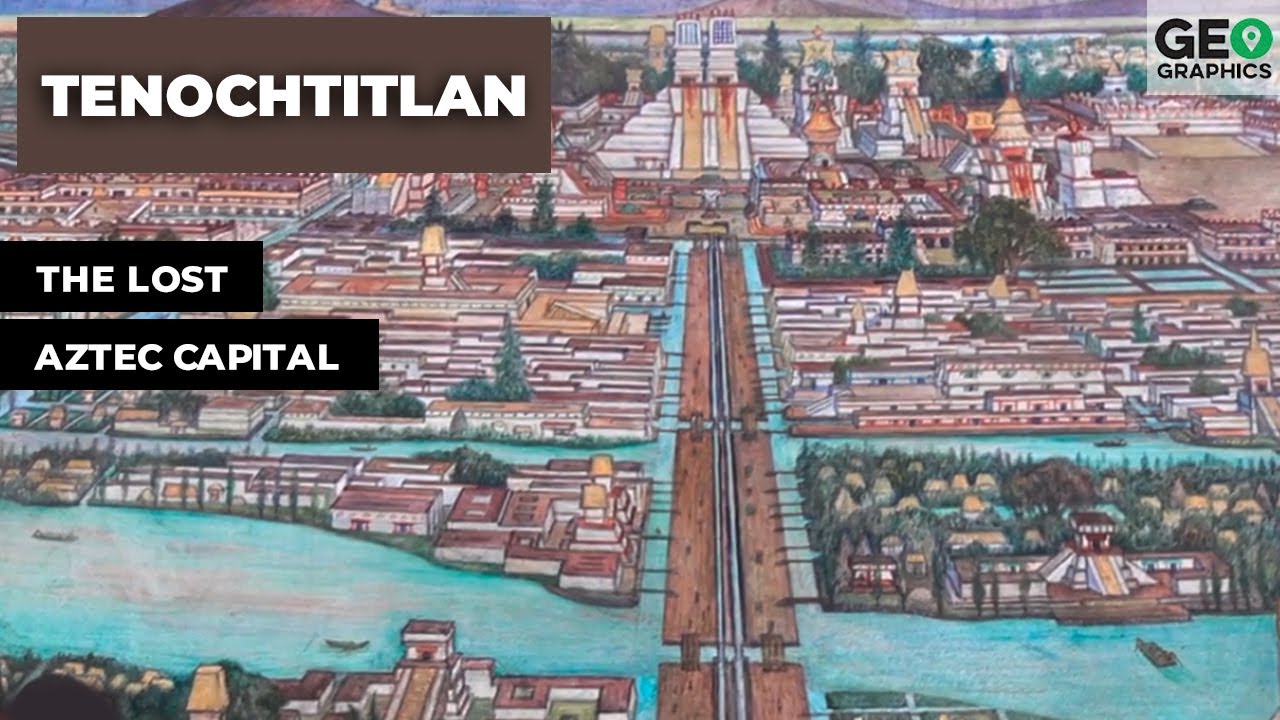
Let me paint you a picture of what Tino Titlan actually looked like in 1519.
Not through legend, not through myth, through the eyes of the Spanish soldiers who walked into it and couldn't believe what they were seeing. Tino Titlan sat in the middle of Lake Texoko, built on a series of islands connected by causeways, massive stone roads that stretched for miles across the water.
Three main causeways linked the city to the mainland. north, south, and west.
Each causeway was wide enough for 10 horsemen to ride side by side, and at intervals along each causeway, wooden bridges could be removed, turning the city into an island fortress in minutes.
The population, somewhere between 200,000 and 300,000 people. To put that in perspective, in 1519, London had about 50,000 people.
Paris maybe a 100,000. Tennos Titlan was one of the largest cities in the world.
The city itself was a grid of canals and streets. Canoes moved through the waterways like taxis. Markets sold everything. Gold, jade, cacao, feathers from tropical birds, obsidian blades sharper than Spanish steel, live jaguars in wooden cages. At the heart of the city stood the Templare, the great temple. A massive twin pyramid 200 ft tall dedicated to two gods. Hitzil Pockley, the god of war, and Talok, the god of rain. Blood ran down its steps daily. Sacrifices were not hidden. They were public. They were power.
South of the temple complex stood the palace of Mocktazuma II, the emperor.
Hundreds of rooms, gardens filled with exotic animals, an avary that held thousands of birds, a private zoo, servants numbering in the thousands. And then there were the chinampers, the floating gardens, long strips of land built on the shallow lake bed anchored with willow trees, layer upon layer of mud and vegetation. These gardens fed the entire city. The Mexica didn't just survive on an island. They engineered abundance.
Fresh water came from the Chipulttop aqueduct, a dual channel system that brought spring water from the mainland hills directly into the city. While one channel was in use, the other was cleaned, ingenious, practical, advanced.
This was not a primitive society. This was a civilization that had mastered hydraulic engineering, urban planning, and agricultural science in ways Europe wouldn't match for another 200 years, and it was about to be destroyed.
Now, here's the thing most people don't understand about the Aztec Empire. It wasn't really an empire in the way we think of Rome or Egypt. It was a triple alliance. Three cities shared power.
Tennos Titlan, Texoko, and [clears throat] Placopan.
Technically, they ruled together. But let's be honest, Tennos Titlan was in charge. The Mexico controlled the military. They controlled the tribute.
They called the shots. And tribute was everything. The Aztec Empire didn't conquer territory to settle it. They conquered it to extract from it.
Hundreds of cities across central Mexico paid tribute to Tenno Titlan. Gold, cotton, cacao, jade, feathers, Mars, warriors for future wars. And yes, people for sacrifice. Some cities paid willingly. Most didn't have a choice.
The Mexico used a simple strategy. Crush resistance with overwhelming force.
Install a local governor loyal to Tennoshtan and demand annual payments.
Miss a payment. The warriors came back and they didn't negotiate. But here's the crack in the foundation. The empire ran on fear, not loyalty. The tributary cities hated the Mexica. They resented the endless demands. They despised the arrogance of Tennoshtitlan's priests and nobles. They mourned the young men and women taken for sacrifice. And there was one group that never submitted, the Claxalins.
Claxcala was a small confederation of cities to the east of Tennachitlan, surrounded on all sides by Mexico territory. For decades, the Mexica had tried to conquer them. For decades, the TLCans fought back. The Mexica could have starved them out, cut off their trade, isolated them completely. But they didn't. Why? Because the Mexica used Tlax Cara as a training ground, a place to blood young warriors, a convenient enemy. The Tax Carins knew this, and they hated the Mexico for it.
Remember that name, Tlax Carala, because when the Spanish arrived in 1519, the Claxalins made a choice that changed everything. They didn't see Hernand Cortez as an invader. They saw him as an opportunity.
So, here's what you need to understand before we go any further. The Aztec Empire was powerful. It was wealthy. It was militarily dominant. But it was also fragile. It was held together by violence and tribute. There was no shared identity, no common loyalty, just fear. And when that fear broke, when the tributary cities saw a chance to escape Tennoshitlan's grip, they didn't hesitate.
The Aztec Empire didn't fall because the Spanish were stronger. It fell because the people the Mexico had spent a century oppressing finally had a chance to fight back. Before we go further, I want to ask something. If this story moves you, if you learn something new about history, please take a moment to like this video and leave a comment. It genuinely helps us reach more people who care about these voices from the past.
Thank you. Now, let me tell you how it all fell apart. April 1519, the coast of what is now Mexico.
Hernand Cortez stepped off his ship onto the beach at Verarac Cruz with approximately 600 men, 16 horses, 13 arabuses, a handful of small cannons, and ambitions that far exceeded his resources. He was 34 years old, a minor Spanish nobleman who'd spent years in the Caribbean colonies, watching other men get rich while he stayed poor. He'd heard the rumors, tales of a wealthy empire in land, cities filled with gold, an emperor who ruled millions.
The previous Spanish expeditions to this coast had traded, explored, and left.
Cortez had different plans. Within days of landing, he encountered the Totten people, a group living along the Gulf Coast who had been paying tribute to the Mexican Empire for generations.
They were farmers, fishermen, and merchants who handed over a portion of everything they produced to Tenno Titlan's tribute collectors. They hated it. When Cortez asked about the empire inland, the Totten didn't just tell him about Tennochitlan's wealth. They told him about its cruelty, about the annual demands, about the young men and women taken for sacrifice, about the arrogance of Mexico officials who treated them like subjects rather than allies. Cortez listened carefully. He was a middling soldier, but a brilliant political opportunist, and he immediately understood something crucial. This empire had enemies everywhere. The Totten became his first allies. They provided food, guides, and intelligence.
And when Mexico tribute collectors arrived at a Totenac town demanding payment, Cortez made his boldest move yet. He told the Totenacs to arrest them. The Totenacs were terrified. No one defied Mexican tribute collectors.
The punishment was swift and brutal.
Warriors would arrive, burn the town, enslave the population.
But Cortez insisted. And when the Totenacs finally seized the collectors and threw them in wooden cages, something shifted. They'd crossed a line. There was no going back. They were committed to rebellion.
Cortez released the collectors secretly and sent them to Mocktuma with a message. The Spanish meant no harm to the empire. They simply wanted to meet the great emperor.
It was a masterpiece of manipulation.
The Tottenax thought Cortez was protecting them. Mockuma thought Cortez was offering friendship. In reality, Cortez was driving a wedge into the Empire's foundation. Then he burned his ships. Well, he actually had them stripped for supplies and run ground so they couldn't sail. But the effect was the same. His men couldn't retreat to Cuba. They couldn't abandon the expedition. The only way forward was inland toward Tennoshitlan. The march began in August 1519.
600 Spanish soldiers, a few thousand Totonac allies, and a translator named Malinsen, a woman who spoke both Nahwatal and Mayan, who would become crucial to everything that followed.
Their route took them through Tlaxa. The Tlaxans didn't welcome the Spanish at first. They attacked them. Multiple battles over several weeks. The TLCans fought fiercely, but they couldn't match Spanish cavalry and steel weapons in open combat. Horses alone terrified warriors who'd never seen such animals.
Men riding them seemed like single creatures, impossible to fight. After taking casualties, the Claxalan leadership opened negotiations. Here's where history pivoted. The Claxalins debated for days. Some leaders argued for continuing the war. These strangers were invaders after all. Others argued for alliance. The Mexica had been their enemies for generations. This was a chance, maybe the only chance, to destroy Tenno Titlan's power. The Alliance faction won. Thousands of Claxalan warriors joined Cortez, not as servants. As partners in a war of revenge against the people who oppressed them for a century, Cortez now commanded a real army. His next move was calculated to send a message to Mocktazuma. He marched on Cholula, a city allied with the Mexica, and massacred thousands of its inhabitants in a single day. Spanish sources claim it was because they discovered a Mexican plot to ambush the expedition.
Indigenous sources suggest it was pure intimidation. Either way, the message was clear. These strangers were dangerous. By early November 1519, Cortez and his Spanish Talaxan army stood at the edge of Lake Texoko looking across the water at Tennoitlan. And Mckazuma II had to make a decision.
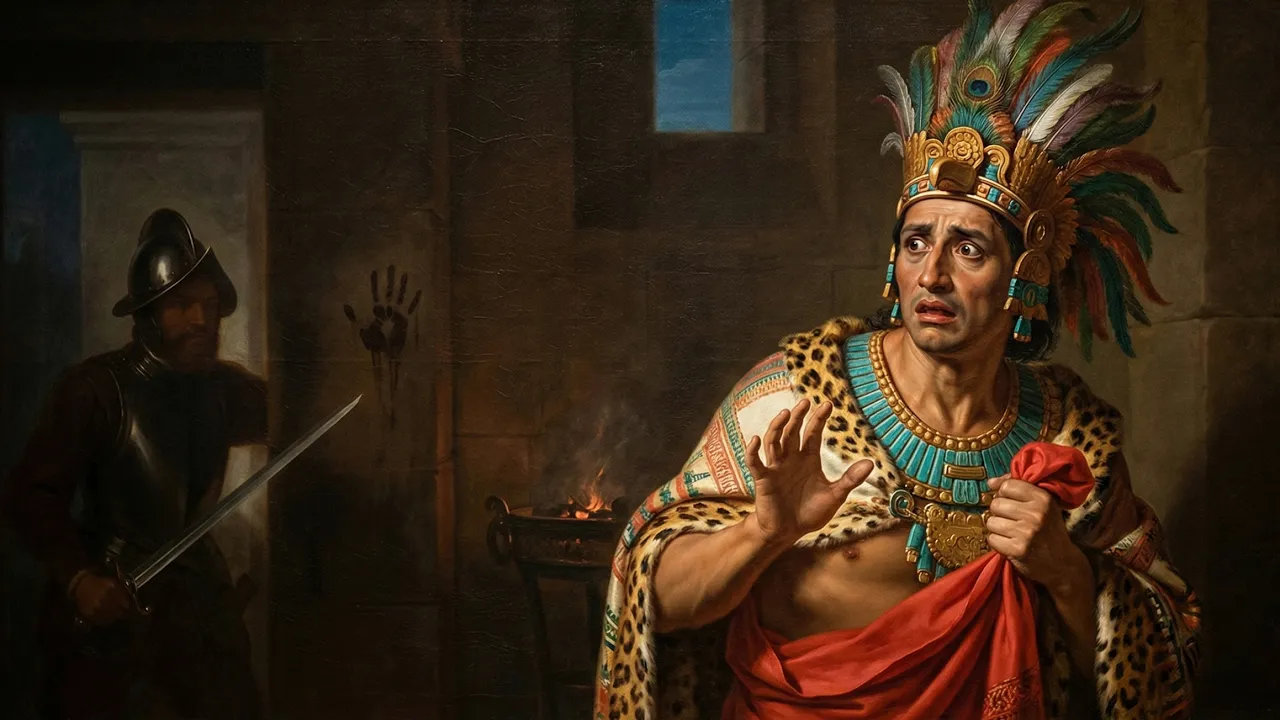
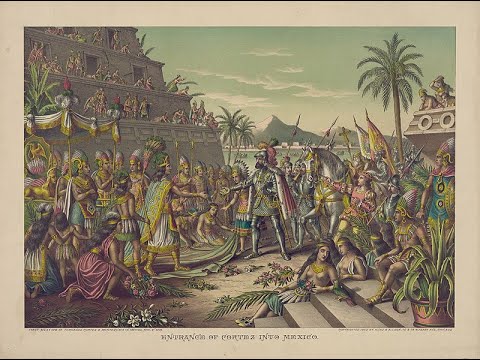
November 8th, 1519, Mocktuma Su, Emperor of the Mexico, ruler of the Triple Alliance, commander of hundreds of thousands of warriors, walked out onto the Estapalapa causeway to personally welcome Hernand Cortez into Tennocitlan.
He was carried on a litter covered in green feathers and gold. Four nobles held the poles. Others swept the ground before him so his feet wouldn't touch bare earth when he stepped down. Cortez rode forward on horseback wearing his best armor. They met in the middle of the causeway. Cortez attempted to embrace Mocktazuma, a Spanish greeting.
The Mexican nobles physically blocked him. You didn't touch the emperor. It was unthinkable. Instead, they exchanged gifts. Cortez gave Mocktazzuma a necklace of colored glass beads.
Mocktuma gave Cortez necklaces of gold and carved shells. One was hung around Cortez's neck by the emperor himself. An extraordinary honor. Then Mockazuma spoke. We have his words recorded by Spanish chronicers through Malinsson's translation.
You have arrived in your city. You have come to sit on your throne. The rulers who have gone before me guarded it and preserved it for your coming.
The Spanish interpreted this as Mocktazzuma believing Cortez was the god Ketzel Kuatal returning as prophesied.
Modern historians are skeptical. This was likely diplomatic language. Flowery court speech meant to honor a guest, not literal belief in divine return.
Mocktuma was a sophisticated politician, not a superstitious fool. But the question remains, why did he let them in?
He had hundreds of thousands of warriors. The Spanish numbered in the hundreds. He could have cut the causeway bridges and left them stranded. He could have attacked them on the narrow causeways where cavalry was useless. He could have simply refused entry.
Instead, he welcomed them. Theories vary. Some historians argue Mocktazuma was gathering intelligence. Bring them inside, learn their weaknesses, then strike. Others suggest he was paralyzed by indecision, caught between nobles who wanted to attack and those who counseledled caution. Still others point to Mexican diplomatic tradition. You negotiated first, fought later. Whatever his reasoning, the Spanish and their claxan allies marched into Tennoc Titlan on November 8th, 1519.
The Spanish chronicler Bernal Diaz del Castillo described what they saw. We were astounded. These great towns and buildings rising from the water, all made of stone, seemed like an enchantment. Some of our soldiers asked whether it was not all a dream. They were quartered in the palace of Axaya cattle, a massive complex of rooms surrounding courtyards, comfortable, spacious, and easy to watch. For days, there was an uneasy peace. Mocktuma gave the Spanish tours of the city. He showed them the Templare. Cortez was horrified by the blood on the pyramid steps, the racks of skulls, the evidence of sacrifice. He asked permission to place a Christian cross in the temple. McKTuma refused. Tensions rose but didn't break.
Then Cortez found the gold. Exploring the palace of Axia Cattle, Spanish soldiers discovered a sealed doorway.
behind it, a room filled with gold objects, jade, feather work, the accumulated treasure of Mexico emperors.
Cortez sealed it back up and said nothing. But now he knew. The rumors were true. There was wealth here beyond imagination. But he was trapped, surrounded by a hostile population of hundreds of thousands. His supply lines to the coast were fragile. His claxan allies were guests in enemy territory, barely tolerated. He needed leverage.
Late November 1519, news arrived from the coast. A group of Spanish soldiers Cortez had left at Veraracruz had traveled to a nearby Mexico town and gotten into a confrontation with the local tribute collectors. Fighting broke out. Several Spanish soldiers were killed. Their heads were sent to Mocktuma as proof.
Cortez heard about this and made a decision that was either brilliant or insane. He marched into Mocktazuma's palace with 30 armed men and demanded the emperor come live in the palace of Axai Cattle for his own protection.
Cortez claimed to investigate the incident at the coast. It was a hostage taking dressed up as diplomacy. Mocktuma's nobles urged him to refuse to call the guards to have the Spanish killed immediately. But Mckazuma agreed. He gathered some personal belongings and walked with the Spanish back to their quarters. Why?
Again, historians debate. Was he coerced at Sword Point? Was he buying time? Was he confident he could manage the situation? Did he believe that cooperating would eventually lead to the Spanish leaving peacefully? We don't know. What we do know is that for months, the strangest situation in history played out in Tennositlan.
Mctuma lived in the Spanish quarters. He still governed. Nobles still came to him for decisions. Tribute still flowed in.
He ate his meals. He met with his advisers. But Spanish guards stood at the doors. And Cortez controlled who came and went. The emperor was a prisoner in his own city. For the Mexican nobility, this was intolerable.
Whispers of rebellion spread. Why didn't Mckazuma order an attack? Why did he allow these strangers to dishonor him?
Was he a coward? Had the gods withdrawn their favor? But Mocktuma counseledled patience?
The Spanish would leave eventually. Why start a war that would cost thousands of lives when diplomacy might work? Then in April 1520, everything changed. A fleet arrived off the coast. Not reinforcements for Cortez, but Spanish soldiers sent by the governor of Cuba to arrest him for exceeding his authority.
Cortez was technically an outlaw. He'd gone far beyond his orders. The governor wanted him brought back in chains.
Cortez made another bold decision. He took most of his soldiers, about 250 men, and marched to the coast, leaving only 80 Spanish soldiers behind in Tennoitlan under the command of Pedro de Alvarado. Alvarado was a capable fighter. He was also impulsive, aggressive, and deeply distrusted by the Mexican.
Leaving him in charge was a catastrophic mistake. Cortez reached the coast, surprised the Cuban expedition in a night attack, defeated them, and convinced most of the soldiers to join him instead. It was a stunning victory.
But back in Tennochitlan, the situation was about to explode. May 1520, the month of Tox Cattle, a major Mexican religious festival honoring Tescat Lipoka, one of their most important gods. The Mexican nobility asked Alvarado for permission to hold the ceremony. With Mocktazzuma's endorsement, Alvarado agreed, but he set conditions. No weapons, no human sacrifice. The Mexica agreed. On May 22nd, 1520, hundreds of nobles, priests, and warriors gathered in the courtyard of the Temple May for the ceremonial dance. They wore their finest clothes, feathered costumes, jade jewelry, gold ornaments. Musicians played drums and flutes. The dancers moved in complex patterns, honoring the gods as they had for generations.
Then Alvarado gave an order. Spanish soldiers and Claxan allies sealed the exits and attacked. They cut down unarmed dancers. They killed priests.
They killed nobles. They looted the gold and feathers from the bodies. The courtyard became a slaughter house. Why did Alvarado do it? Spanish sources claim he discovered a plot that the Mexican were planning to attack during the ceremony and he struck first.
Indigenous sources say it was pure greed and cruelty. The Spanish saw the gold the dancers wore and wanted it. Modern historians leaned toward a third explanation.
Panic.
Alvarado was nervous, outnumbered, surrounded by a population that hated him. He saw the gathering of Mexican nobles and feared an attack. So he ordered a preemptive massacre. Whatever his reasoning, the result was catastrophic. The city exploded in fury.
Within hours, thousands of Mexico warriors surrounded the palace of Axai Cattle. They attacked with stones, arrows, fire. They tried to burn the Spanish out. They cut off food and water. Alvarado and his 80 men were besieged inside their own quarters.
Mckazuma tried to calm his people. He appeared on the palace roof and begged them to stop fighting. He promised justice. He urged patience. His own people pelted him with stones. According to Spanish sources, he was struck in the head and died 3 days later from his wounds. According to some indigenous sources, the Spanish strangled him when he was no longer useful. Either way, on June 30th, 1520, Mckazuma, emperor of the Mexica, ruler of millions, died in Spanish captivity while his city burned around him. Two other rulers of the Triple Alliance, Kakamatsin of Texoko and Tetlap Pancetal of Clakopan also died during this period, either in the fighting or executed by the Spanish. The entire leadership structure of the empire collapsed in days.
Cortez returned to Tennos Titlan in late June to find his garrison under siege, the emperor dead, and the city in open rebellion. He had no hostage, no leverage, no way out.
The Mexico had removed the bridges on the causeways. The Spanish were trapped on an island in the middle of a hostile city of 200,000 people who wanted them dead. Cortez observed one thing, though.
The Mexican didn't attack at night. They fought during the day and withdrew after dark, a cultural pattern, possibly religious in nature. He began planning.
If they couldn't fight their way out, they'd have to run. On the night of July 1st, 1520, during a rainstorm, the Spanish and their Claxalan allies attempted to flee Tenotitlan under cover of darkness. It was about to become the worst night of Hernand Cortez's life.
The night of sorrow was coming, and for the Spanish, it would be a bloodbath.
The Spanish were starving. By late June 1520, Cortez and his men had been trapped inside the Palace of Axia cattle for weeks. The Mexica had cut off all supplies. No food came in, no fresh water except what they could collect from rain or the few wells inside the palace compound.
Every day, Mexico warriors attacked.
They hurled stones from the rooftops of surrounding buildings. The Spanish had to build wooden shields and barricades just across the courtyards. Fire arrows arked over the walls, trying to set the wooden structures ablaze. Spanish soldiers worked in shifts, dousing flames before they could spread. The Mexico strategy was simple. Contain the invaders, starve them out, then kill whoever remained. Cortez had approximately 1 200 Spanish soldiers now, the 80 Alvarado had left behind, plus the men Cortez had brought back from defeating the Cuban expedition. He also had several thousand Claxalan allies who'd been trapped in the city when the rebellion started. They were surrounded by at least 200,000 hostile Mexica. The math was brutal. Cortez tried negotiation. He sent messages requesting safe passage out of the city.
The Mexican leadership, now in chaos after Mckazuma's death, refused. There would be no negotiation. The Spanish would die in Tennotitlan.
On June 29th, in desperation, Cortez brought McDazzuma to the palace roof one final time. The emperor appeared above the walls, still wearing his royal regalia, and addressed the crowd gathered below. He asked them to stop fighting. He promised the Spanish would leave peacefully. He begged for calm.
The response was immediate and vicious.
Stones flew from the crowd, not just at the Spanish guards, at Mocktazuma himself. The people who had once prostrated themselves before their emperor now tried to kill him. Years of resentment at his weakness, his collaboration, his failure to drive out the invaders erupted in violence.
Mocktuma was struck multiple times. The Spanish pulled him back from the roof, bleeding from wounds to his head and body. According to Spanish chronicler Bernal Diaz del Castillo, Mcktazuma died 3 days later from these wounds. He refused food and medical treatment, having lost all will to live after his own people rejected him. But indigenous sources tell a different story. They claim the Spanish strangled Mcktazuma once he was no longer useful as a hostage. His body was then thrown out of the palace to make it appear the Mexica had killed him. We'll never know the truth with certainty.
Both sides had reasons to lie. What we do know is that on June 30th, 1520, Mckazuma 2 was dead. The same day, two other rulers of the Triple Alliance died. Kakamatsin, the ruler of Texoko, who'd been held hostage alongside Mcktzuma, was killed, almost certainly executed by the Spanish. Tetlapanketal of Takapan, died in the fighting. In a single day, all three leaders of the Triple Alliance were gone. The Empire's command structure disintegrated.
Inside the palace, Cortez faced reality.
They couldn't win. They couldn't negotiate. They had to run. His men had noticed something important during the weeks of siege. The Mexico attacked fiercely during the day, but withdrew at night. Combat after dark seemed to violate some cultural or religious principle. Cortez decided to exploit this. He ordered his men to prepare for a midnight escape. They built a portable wooden bridge, a makeshift structure that could be carried and placed over the gaps in the causeway where the Mexico had removed the permanent bridges. The plan was to move fast, cross the gaps using the portable bridge, and reach the mainland before dawn. They divided the treasure Cortez had looted from the palace. Some was loaded onto horses. The rest was offered to the soldiers. Take what you can carry. Many soldiers stuffed their pockets and bags with gold. It was a fatal mistake.
On the night of July 1st, 1520, during a [clears throat] heavy rainstorm, Cortez gave the order. They were going to try to run. Midnight, July 1st, 1520. Rain fell in heavy sheets across Lake Texoko.
Thunder rumbled. Lightning occasionally lit the causeways in brilliant white flashes. Cortez organized his forces for the escape. The vanguard, 200 Spanish soldiers under Gonzalo deanderal, would go first with the portable bridge, then the main body carrying the treasure and the wounded. Then the rear guard under Pedro de Alvarado with the Claxullan allies. They opened the palace gates as quietly as possible and moved toward the western Clacopan causeway.
At first it worked. The city was dark.
The rain muffled sound. The column moved down empty streets toward the causeway entrance. Spanish soldiers carried the wooden bridge. Horses were led carefully to keep them quiet. Men whispered orders. They reached the causeway and started across. The clopen causeway stretched for miles across the lake toward the mainland. It was wide, about 25 ft, but with deep water on both sides, and at several points, gaps had been cut where bridges once stood. Some gaps were narrow, maybe 10 ft. Others were wider, 40 ft or more of open water.
The vanguard reached the first gap. They positioned the portable bridge and began crossing. Men moved carefully in the darkness and rain. Horses balked, but were pulled across. So far, so good. The main body followed. Hundreds of soldiers, thousands of Claxan allies, all moving in a long column across the narrow causeway. They were halfway across when a Mexican woman drawing water from the lake spotted them. She screamed. Within seconds, the war drums on top of the Templare began to pound.
Boom, boom, boom. The sound echoed across the water, across the city. A signal every warrior understood. The enemy was escaping. What happened next was chaos. Mexico warriors poured out of the city onto the causeway behind the Spanish column. Others launched war canoes, hundreds of them, into the lake.
They paddled toward the causeway from both sides. Warriors armed with spears, bows, and obsidian-edged clubs. The Spanish tried to move faster, but the causeway was crowded. The portable bridge, crucial to crossing the gaps, was heavy and unwieldy. At the second gap, disaster struck. Too many men tried to cross the portable bridge at once.
The weight was too much. The structure broke apart and fell into the water. Now there was no way across except through the water itself. Men jumped in. Some tried to swim, but they were wearing armor, carrying gold. The weight dragged them down. Spanish soldiers thrashed in the black water and sank screaming.
Others tried to wade through. Some gaps were shallow enough, chest deep, but the Mexican had planted wooden stakes in the lakeed, sharpened points hidden just below the surface. Men impaled themselves trying to cross. From the canoes, Mexico warriors thrust spears upward at anyone in the water. They grabbed Spanish soldiers and pulled them into the canoes, dragging them away as captives.
The causeway became a killing ground.
Spanish soldiers at the front who'd already crossed kept running. Survival instinct took over. Those in the middle were trapped between enemies in front and behind.
Those at the rear were being slaughtered by the Mexican warriors who'd caught up to them. Horses fell or were pushed into the water. Their screams sounded almost human. They drowned, weighed down by the armor and packs strapped to them. The cannons, heavy iron pieces the Spanish had dragged all the way from Veraracruz, were abandoned. There was no way to move them. The Mexico would later push them into the lake. Bodies began to fill the gaps in the causeway. And then something horrific happened. Spanish soldiers realized they could use the corpses as a bridge. They climbed over the bodies of their dead comrades, using them as stepping stones to cross the water.
The dead became the road to survival.
Cortez himself was in the vanguard and made it across early. But when he heard the disaster unfolding behind him, he turned back.
Spanish sources describe him trying to rally his men, pulling drowning soldiers from the water, fighting Mexico warriors hand-to- hand on the causeway.
At one point, Cortez fell into the water. His own men grabbed him and hauled him out. Pedro de Alvarado, commanding the rear guard, faced the worst of it. Surrounded, overwhelmed, he made a desperate decision. According to legend, though historians debate its accuracy, Alvarado used his lance to pole vault over one of the wide water gaps. A jump so impossible it became known as Alvarado's leap. Whether he jumped or fought his way across, he survived. But most of his men didn't.
The fighting continued through the night.
By dawn, the survivors had staggered onto the mainland at the town of Papotla. They collapsed in exhaustion.
Cortez reportedly sat beneath a tree and wept. The casualties were staggering. Of the approximately 1/200 Spanish soldiers who'd attempted the escape, between 450 and 600 were dead, drowned, killed in combat or captured by the Mexica. All the horses were lost. All the cannons, all the treasure, the gold that had cost so many lives to steal was now scattered across the bottom of Lake Texoko.
The Claxalan allies suffered even worse, thousands dead.
Exact numbers are unknown because Spanish chronicers barely mentioned them. The Spanish would call this Lanos Triste, the sad night, the night of sorrow. It was the worst defeat Hernand Cortees ever suffered, but he was alive and several hundred of his men had survived with him.
Back in Tennoitlan, the Mexica celebrated. They had driven out the invaders. They had killed hundreds. They had reclaimed their city. Victory celebrations echoed through the streets.
But the victory was not what it seemed.
The Mexica had won the battle. But they were looking at the ruins of a victory.
Tennochitlan was devastated. Large sections of the city had burned during the weeks of fighting. The palace of Axia cattle was destroyed. Residential districts near the temple complex were damaged. Bodies Mexica, Spanish Claxan lay in the streets waiting for collection and burial. The nobility had been decimated. The Toxcattle massacre had killed hundreds of nobles, priests, and military commanders. These weren't just people. They were the empire's administrative structure. The men who collected tribute, commanded armies, governed provinces, and maintained diplomatic relations. Dead. And the leadership vacuum was total. All three rulers of the Triple Alliance, Mckazuma, Kakamatsin, Tetlap, Pangan Quetzel, were gone. The Empire needed a new emperor immediately. The Mexican nobility gathered and elected Quit Lawac, Mocktuma's brother.
Quitlawak was about 50 years old, a military commander who'd been one of the loudest voices opposing the decision to let the Spanish into the city in the first place. He'd argued for attacking them immediately. Mocktazuma had overruled him. Now Quit Lawac was in charge and he inherited a crisis. His first priority was pursuing the fleeing Spanish. He sent warriors after them, harrying their retreat. On July 8th, 1520, a large Mexican force intercepted the Spanish at a tumba about 30 mi from Tenno Titlan. The battle of Atumba should have been the end of the Spanish expedition. The Mexico outnumbered them massively. The Spanish were exhausted, wounded, low on ammunition. But in open terrain, Spanish cavalry was devastating. Cortez led a charge directly at the Mexico command group, killed the commander, and captured the battle standard. The Mexican force broke and withdrew. The Spanish survivors staggered into Tlascala, where their allies, remarkably still welcomed them.
Back in Tenno Titlan, Quidlawak focused on rebuilding. He sent messages to all the tributary cities demanding they reaffirm their loyalty. Some complied, others sensed weakness and delayed their tribute payments. He also made a bold diplomatic offer. He sent ambassadors to Tracala proposing a perpetual peace, an end to the decades of conflict, an alliance against the Spanish invaders.
It was a smart move. If the Claxalins abandoned Cortez, he was finished. The Claxalin leadership debated. Some argued for accepting. The Spanish had been defeated.
Why continue supporting them? But others pointed out that the Spanish still had weapons and knowledge the Clax Cullins could use and the opportunity to finally destroy Mexico power, something generations had failed to achieve, was too valuable to abandon.
The alliance with Cortez held. Quitlawak tried to rally other cities, tried to organize a united front, tried to prepare for the inevitable return of the Spanish. But within weeks of taking power, a new enemy arrived in Tenno Titlan. An enemy that didn't care about politics or military strategy. An enemy that couldn't be fought with obsidian blades or brilliant tactics. Smallpox.
The disease came with the Spanish.
One soldier in the expedition from Cuba, the force Cortez had defeated at the coast, was infected with smallpox. His name was Francisco Deia and he died shortly after arriving in Mexico, but the virus survived.
Smallox is hideously contagious. It spreads through respiratory droplets, through contact with infected skin, through contaminated objects, and the indigenous peoples of the Americas had no immunity to it whatsoever.
European populations had been exposed to smallox for centuries. Many people caught it as children. Some died, others survived and carried lifetime immunity.
Europeans had evolved, some biological resistance. The Mexico had none. The first cases appeared in Tennotitlan in late July or early August 1520, just weeks after Lano Triste. It started with fever, headache, muscle pain. Then the rash appeared. Red spots that turned into raised bumps. The bumps filled with fluid and became pastules covering the entire body. Face, arms, torso, legs. In severe cases, the pules merged together.
The skin blackened and the victim died in agony. There was no treatment, no cure. Mexico physicians tried everything. Herbs, sweat baths, prayers, offerings to the gods. Nothing worked.
The disease spread exponentially.
In the densely packed city of Tenno Titlan, with people living in close quarters, sharing water sources, trading in crowded markets, the virus moved like wildfire. One infected person could transmit it to dozens. Those dozens infected hundreds. By September, the city was in crisis. The Florentine Codeex, a collection of nahwar accounts compiled after the conquest, describes the epidemic. It spread over the people with great destruction of men. It caused great misery. Many people died of it.
They could not walk. They could not move. The sick were so helpless that they could only lie on their beds like corpses, unable to move their limbs or bodies. If they did move their bodies, they screamed with pain.
Entire families died. Whole neighborhoods were devastated. The smell of death permeated the city. Bodies decomposing in homes because there was no one healthy enough to carry them out for burial. Farmers in the Chinampampa's gardens died in their fields. Crops went unh harvested. Food production collapsed. The tribute system fell apart. The cities that owed tribute to Tennotitlan were suffering the same epidemic. They had nothing to send even if they wanted to. Famine followed disease. Priests and healers died at higher rates because they were in constant contact with the sick. The religious and administrative infrastructure of the empire crumbled.
Modern estimates suggest that approximately 40% of Tennoshitland's population died during the first wave of the epidemic. If the city held 250,000 people before the outbreak, then 100,000 died within a few months. 100,000 people. The mass graves couldn't be dug fast enough. Bodies were burned in ps that sent smoke over the lake for weeks.
And then in early December 1520, Emperor Quit Lawak developed a fever. Within days, the pastules appeared. The new emperor, who'd taken power only a few months earlier, was dying of smallpox.
On December 4th, 1520, 80 days after his coronation, Quitlawak died. The empire had lost its third ruler in 6 months. A new emperor had to be elected immediately. The nobility chose Cumok, Quitlawak's cousin. Quattmok was only 25 years old. He was the son of Emperor Awizottle and married to Tequichbos, Mocktuma's daughter. He had legitimate royal lineage. He was also a military commander with a reputation for fierceness and courage. He'd fought in the flower wars. He'd opposed allowing the Spanish into the city. and he'd fought during Lenosh Tristeay. Most importantly, he was uncompromising.
Quotemok was crowned emperor in early 1521. While funeral ps still burned in the streets, his coronation speech was brief and direct. Tenotitlan would never surrender to the Spanish, never submit, never negotiate. If Cortees returned, they would fight. The Mexican people rallied around their young emperor.
Despite the devastation, despite the disease, despite the famine, they prepared for war. Because everyone knew Cortez was coming back. In Clcala, the Spanish had been recovering.
Reinforcements had arrived from the coast. More soldiers, more horses, more gunpowder. Cortez had spent months planning something unprecedented. He wasn't going to attack Tennositlan again. He was going to strangle it.
While the Mexica buried their dead and fought disease, Cortez was building ships, warships designed specifically for combat on Lake Texoko.
He was preparing for a siege unlike anything this part of the world had ever seen. A siege that would last 93 days. A siege that would end with the complete destruction of Tenno Titlan. and Quattmok, the young emperor crowned in the shadow of plague, would lead his people through every horrific day of it.
The worst was yet to come. The Spanish survivors reached Claxcala in mid July 1520, broken and bleeding. They'd fought their way there through hostile territory. The Battle of Atumba had saved them from annihilation, but they were still in desperate condition.
Wounded men needed care. They had almost no gunpowder left. Their armor was damaged. Their weapons were dull or broken. And they had no idea if the Claxons would still help them. The Claxalan leadership could have easily turned them away. The Spanish had just suffered a catastrophic defeat. They'd lost most of their men, all their cannons, all their horses, and all the treasure they'd stolen. They looked like losers. But the Claxans welcomed them anyway. Why?
Because the alliance wasn't really about the Spanish. It was about destroying the Mexican Empire.
That goal hadn't changed. If anything, the smallox epidemic ravaging Tenno Titlan made it more achievable. The Tax Carins had suffered their own losses during Lanos Triste. Thousands of their warriors had died on that causeway, but those deaths only deepened their commitment. They'd paid in blood. They weren't going to abandon the fight now.
Cortez spent the rest of July and all of August recovering in Claxcala.
His wounded men healed. He drilled the survivors and he waited for reinforcements. Ships kept arriving on the coast. Some were Spanish vessels that had heard rumors of gold in Mexico and came seeking fortune. Others were sent from Cuba or Hispanola. Cortez intercepted all of them. He [clears throat] gave the new arrivals a choice. join his expedition or be stranded on the coast with no supplies.
Most joined. By September 1520, Cortez had rebuilt his force to about 550 Spanish soldiers. Not as many as he'd had before, but enough. And more were coming. More importantly, he was getting supplies. Crossbows, aquabuses, gunpowder, armor, and horses, crucial for cavalry charges that had proven so effective against Mexico warriors in open battle.
But Cortez knew he couldn't simply march back to Tennot Titlan and try the same strategy again. That had failed catastrophically. The city's island location made it nearly impossible to attack directly. The causeways were death traps, and even if he fought his way in, he'd just get trapped again. He needed a new approach. The answer came from studying the geography.
Tenno Titlan's greatest strength was Lake Texoko. The water protected the city. Walk canoes could attack from any direction. Supplies could be brought in by boat. The causeways could be cut, turning the city into an impregnable fortress. But what if Cortez controlled the lake? What if he could blockade the city, cut off its food supply, and destroy its war canoes? What if he could lay siege to Tennochitlan the way European armies besieged castle cities?
The idea was audacious. No one had ever besieged an island city in the middle of a lake. Not in this part of the world.
The Mexico had never faced anything like it. Cortez called for Martin Lopez.
Lopez was a ship builder from Seville who'd come with the expedition. He'd survived Lenos Triste and made it back to Tlcala. He was a skilled carpenter who understood ship construction.
Cortez asked him a question. Could he build warships designed specifically for fighting on a shallow lake? Lopez said yes. The plan was ambitious to the point of madness. Martin Lopez would design and build 12 brigantines, flatbottomed sailing vessels shallow enough to navigate Lake Texoko, but large enough to carry cannons and soldiers.
Each ship would be powered by both sails and oars, making them maneuverable in all conditions.
They would be built in the mountains of Claxcala, 40 mi from the lake, then disassembled, carried in pieces over the mountains, and reassembled at the lakeside. It sounded impossible, but Cortez had resources now. Thousands of Claxan laborers, Spanish iron workers, and time. The smallox epidemic meant the Mexico wouldn't be attacking anytime soon. Construction began in September 1520. Lopez designed the Brigantines to be approximately 40 ft long and 12 ft wide. Each would carry a cannon mounted at the bow. Each would have 12 oes per side for rowing, plus a sail for when the wind was favorable. The crew would be about 25 men, rowers, soldiers, and a captain. The challenge was finding materials. Timber came from the forests around Claxala. Claxalan workers cut down thousands of trees and dragged them to the construction site. Spanish carpenters shaped the planks and beams.
Iron for nails, brackets, and fittings was salvaged from Spanish ships on the coast. Forges were set up in clax cara to work the metal. Sails were sewn from canvas and whatever cloth could be found. By December 1520, construction was well underway. The skeleton frames of all 12 ships were taking shape. And then Cortez received news that changed everything. Texoko, the second city of the Triple Alliance, located on the eastern shore of Lake Texoko, had turned against Tennosh Titlan. Internal politics in Texoko had always been complicated. Different factions competed for power. Some were loyal to the Mexica. Others resented Tenno Titlan's dominance. With Mocktuma dead and Tenno Titlan weakened by plague, the anti-Mex faction saw an opportunity. They staged a coup, killed the proxica ruler, and installed a new leader, Ixlucho.
Ixl Soitt was about 20 years old from the royal family of Texoko, and he had his own grudge against Tennoshtlan.
His father had been killed in political conflicts with the Mexica years earlier.
He sent ambassadors to Cortez offering an alliance. This was a massive strategic gain.
Texoko wasn't just another tributary city. It was one of the three capitals of the empire. It had a population of approximately 30,000. It had warriors, resources, and most importantly, it sat right on the shore of Lake Texoko.
If Cortez controlled Texoko, he had a base on the lake, a place to launch the Brigantines, a staging area for the siege. Cortez accepted immediately.
In late December 1520, he marched to Texoko with a force of Spanish soldiers and Laxcalan warriors. There was no battle. Ixlucho Chitt welcomed them as allies. Cortees now had his forward base. From Texoko, he could see Tennochitlan across the lake about 8 mi away. Smoke still rose from funeral ps burning the smallpox dead. The siege was becoming real.
Throughout January, February, and March 1521, more reinforcements arrived for Cortez. Ships kept landing on the coast.
Some brought soldiers, men seeking adventure and gold. Others brought supplies. By April 1521, Cortez commanded approximately 900 Spanish soldiers, 90 horses, enough for effective cavalry units, 120 crossbowmen and archubizers, three large cannons and 15 smaller field guns, thousands of clax and warriors, thousands more warriors from Texoko and other allied cities. The indigenous allied forces were crucial.
Spanish chronicers gave wildly different numbers. Some claimed 50,000 allies, others claimed as many as 500,000.
The real number was probably somewhere in between. Conservative estimates suggest at least 75,000 to 100,000 indigenous warriors and laborers joined the Spanish cause. This wasn't a Spanish conquest. It was a civil war with the Spanish as one faction among many. But before Cortez could besiege Tenno Titlan, he needed to isolate it completely. January through April 1521, the Spanish Clax and Texoken alliance began systematically conquering every city around Lake Texoko. The strategy was simple. Take the ring cities one by one, cut off Tennot Ditlan's supply lines, eliminate potential reinforcements, and force the capital into complete isolation. The first target was Chalco, a city south of the lake.
Chalco had been a reluctant tributary to Tennos Titlan for years.
Some factions there wanted to rebel but feared Mexican retaliation. When Cortez marched on Chalco in January 1521 with Spanish troops and indigenous allies, the city's leadership made a quick calculation.
Tennoshtitlan was weak, ravaged by plague, unable to help them. The Spanish-led alliance was strong and getting stronger. Chalo surrendered without a fight and joined the alliance.
Next came Zochimilo in late February.
This was a more difficult target.
Zochilo was a major city built partially on Chinampas, the floating gardens that produced much of the region's food. It was loyal to Tennocitlan and had a substantial warrior force. The battle for Zochilkco lasted several days.
Spanish cavalry charged through the Shenampa fields. Indigenous Allied warriors fought house-to-house.
Mexican reinforcements from Tennotitlan arrived by canoe to help defend the city. But the Spanish Allied forces were too strong. Soilco fell. The Chinampa's gardens were destroyed. A deliberate strategy to eliminate food production for Tenno Titlan. The fighting was brutal. Spanish sources barely mentioned casualties among their indigenous allies, but the numbers must have been in the thousands.
After Zochi Milco came Quid Lawak, another island city in the southern lake. Then Istapalapa, the city at the southern terminus of one of the main causeways to Tennochetlan.
Each conquest followed a similar pattern. The Spanish Allied force would approach. Some cities surrendered immediately, others resisted and were destroyed. In every case, the message was clear. Join the Alliance or be crushed. By early April 1521, Tennoshtitlan was almost completely isolated. Refugees from the conquered and destroyed cities fled north toward Tennostitlan and its neighboring district, Clatalo.
Thousands of displaced people streamed into the capital, bringing stories of defeat and Spanish brutality.
Quite faced an impossible situation. His city was surrounded by enemies. Food supplies were running low. The Shinampas gardens that fed Tenotitlan were destroyed or in enemy hands. The tribute system had collapsed and the population was swelling with refugees who needed to be fed from dwindling reserves.
He sent ambassadors to the few remaining Allied cities begging for help. Some sent token forces. Most did nothing.
The Mexican Empire was falling apart, and the tributary cities that had resented Tennochitan for generations were happy to watch it burn. Cortemok began preparing the city for siege. He organized the remaining warriors. He rationed food. He moved civilians from the outer districts into the more defensible northern section around Platalo. And he waited. Across the lake in Texoko, the Brigantines were almost complete. Put yourself in this moment.
You're the emperor of what was just months ago the most powerful empire in your known world. Now you're surrounded, isolated, starving. Your people are dying of a disease you don't understand.
And an army of your oldest enemies is gathering on your shores, preparing to destroy everything your ancestors built.
What would you have done? Surrendered to save lives? Fought to preserve honor?
Let us know in the comments.
Late April 1521, Pla Cara. The 12 Brigantines were finished. They'd been built in sections.
Hull planks, frames, masts, sails, oes, all designed to be disassembled and transported.
Now came the most ambitious logistics operation perhaps ever attempted in pre-industrial America. Moving 12 ships in pieces over 40 m of mountain terrain from Tlac Scala to Texoko.
Martin Lopez supervised the disassembly.
Each ship was carefully taken apart and marked so it could be reassembled. The pieces were organized into loads that could be carried by porters. The Claxalan leadership provided 8,000 porters for the operation. 8,000 men to carry ship sections, nails, brackets, sails, ores, anchors, and all the equipment needed to rebuild the fleet.
The procession left Takcala in late April. Spanish chronicers described it as one of the most remarkable sites of the entire conquest. A line of thousands of indigenous porters carrying the components of a fleet through the mountains, protected by Spanish soldiers and Plaxcalan warriors.
The journey took several days. The route climbed mountain passes and descended into valleys. Porters carried heavy timbers, iron fittings, and coiled ropes. Others transported the cannons that would be mounted on the ships. They arrived at Texoko to find preparations already underway. Cortez had ordered the construction of a canal, a channel running from the construction site to the lake, approximately half a mile long, 12 ft wide, and 12 ft deep. This canal would allow the ships to be launched directly into Lake Texoko once they were reassembled.
Thousands of workers, primarily from Texoko and Allied cities, had dug the canal over several weeks. It was backbreaking labor done with stone tools and human hands. The excavated earth was piled on the sides, creating embankments.
When the Brigantine components arrived, reassembly began immediately.
Martin Lopez and his team of Spanish carpenters worked alongside indigenous laborers.
The ships took shape rapidly. Hulls assembled, frames erected, masts stepped, sails rigged. Iron fittings were hammered into place. Cannons were mounted at the boughs. Oes were fitted to the orlocks. By midMay, all 12 Brigantines were complete and floating in the canal, ready to be launched into the lake.
Cortez organized his forces for the final assault. He divided his army into four divisions. Naval division commanded by Cortez himself, 12 Brigantines, approximately 300 Spanish soldiers serving as rowers, gunners, and marines.
Each ship carried one cannon and about 25 men. Land division 1 commanded by Pedro de Alvarado 30 cavalry 18 crossbowmen and arabuzzias 150 Spanish infantry approximately 25,000 plaxan and allied warriors assignment attack via the claopan causeway western approach land division 2 commanded by crystal deolid 30 cavalry 18 crossbowmen and arabusias 160 Spanish infantry approximately 20,000 allied warriors Assignment attack via the Coyoakan causeway southwestern approach. Land division 3 commanded by Gonzalo de Sandival 24 cavalry 14 crossbowmen and arabuzias 150 Spanish infantry approximately 30,000 Allied warriors. Assignment attack via the Istapalapa causeway southern approach. The total besieging force was massive. approximately 900 Spanish soldiers, 90 horses, and somewhere between 75,000 and 100,000 indigenous Allied warriors and laborers.
They were preparing to attack a city of approximately 200,000 people, though that number was dropping daily due to disease and starvation. The plan was methodical. The three land divisions would advance up the causeways simultaneously, pressing toward the city from three directions. The Brigantines would control the lake, destroy Mexico war canoes, prevent supplies from reaching the city, and provide naval support to the land forces. The goal wasn't to storm the city in a single assault. It was to slowly, systematically strangle it, cut off food, cut off water, fill in the canals, destroy the buildings, make the city uninhabitable, then force surrender. On May 22nd, 1521, Cortez gave the order.
The three land division commanders led their forces out of Texoko, each marching toward their assigned causeway.
Pedro de Alvarado headed northwest toward Takopan. Christo Deolid headed west toward Coyokan. [clears throat] Gonzalo de Sandoval headed south toward Istapalapa.
Once they were in position, the assault would begin. On May 26th, Alvarado reached the Tacopen causeway and immediately executed the first phase of the siege. His men attacked the Chapultipek aqueduct, the dual channel system that brought fresh water from the mainland springs into Tenno Titlan. They destroyed it completely. Tennotitlan's fresh water supply was cut off. The city's population would now have to drink from wells, sistns, or the lake itself. And the lake water was brackish, unpleasant, and in some areas contaminated by the bodies that had been dumped there after battles and during the plague. Inside Tenno Titlan, Emperor Quuatmok received reports of enemy forces taking positions on all three causeways. He knew what was coming. He gave orders to prepare for total war.
Every able-bodied man would fight. Women and children would support the warriors, carrying supplies, tending wounded, preparing food from the dwindling reserves. The city would not surrender.
On June 1st, 1521, the Brigantines sailed out of the Texoko Canal into Lake Texoko.
Cortez stood on the high deck of the lead ship. Around him, the other 11 Brigantines formed a line, their sails filled with wind. OS dipped into the water. Cannons pointed forward, ready to fire.
From Texoko, approximately 16,000 canoes under the command of Ixil joined the Spanish fleet. This indigenous naval force composed of Tex Koken and other allied warriors formed a vast armada surrounding the Brigantines.
The combined fleet sailed across the lake toward Tennos Titlan. The siege had begun. 93 days of hell were about to unfold. And when it was over, one of the greatest cities in the world would be nothing but rubble and corpses. June 1st, 1521.
The combined Spanish indigenous fleet sailed toward Tennoitlan.
Cortez commanded the lead Brigantine.
Behind him, 11 more warships followed in formation. Surrounding them, approximately 16,000 canoes filled with Texcoin and Allied warriors formed a massive indigenous armada.
Their first objective was Tepolco, a small island in the southern part of the lake that the Mexican used as an intelligence and signal station.
Smoke signals from Tepolco warned Tennos Titlan of enemy movements across the water. If Cortez controlled the lake, he needed to eliminate that early warning system. The Brigantines approached Tepulco with cannons ready. But before they could attack the station, the Mexico fleet appeared. War canoes launched from Tennach Titlan by the hundreds, maybe thousands. Spanish sources give conflicting numbers. They paddled toward the Brigantines in a massive swarm. Warriors armed with spears, bows, and maca whittleles. This was the first major naval engagement of the siege. The Mexico strategy was simple. Overwhelm the Brigantines with numbers. War canoes were small and maneuverable. If enough of them attacked simultaneously from all sides, they could board the ships, kill the crews, and capture or sink the vessels. It should have worked. But two factors decided the battle in favor of the Spanish. First, size and firepower. Each Brigantine was about 40 ft long and mounted a cannon at the bow. They could fire into the mass of approaching canoes, and each shot tore through multiple small craft. Crossbowmen and archabizers lined the sides of the brigantines, shooting down into the canoes. The height advantage meant Mexico warriors had to throw spears upward while Spanish soldiers could fire down. Second, wind. The Brigantines had sails. When the wind was favorable, they could move faster than paddled canoes.
They could ram canoes, capsizing them and dumping warriors into the water. The heavy hulls of the Brigantines crushed lighter canoe frames. The battle lasted several hours. The lake surface became crowded with broken canoes, bodies, and debris. Mexico warriors who fell into the water tried to swim back to the city or to intact canoes. Some drowned, others were pulled aboard by Allied indigenous forces and captured. The Brigantines pushed through the Mexico fleet. Spanish cannons fired continuously.
The noise was deafening. Cannon blasts echoing across the water, men shouting, the crack of wood breaking. By afternoon, the Mexican canoe fleet withdrew back toward Tennoshitlan.
The Spanish had won control of Lake Texoko. Cortez's brigantines destroyed the signal station at Tepulco. They patrolled the lake, sinking any canoes that tried to bring supplies into the city. They established a blockade. From this point forward, nothing would reach Tennach Titlan by water without Spanish permission. The city was now completely surrounded. Enemy forces on all three causeways. Enemy ships controlling the lake. No food coming in, no reinforcements, no escape. The siege was total. The days following the naval victory established the pattern that would define the entire siege. At dawn each day, the three Spanish land divisions advanced up their respective causeways toward the city. The causeways were death traps. Each was a narrow stone road about 25 ft wide, stretching across the lake for miles, deep water on both sides. and the Mexico had cut gaps in the causeways where the wooden bridges used to be. To advance, the Spanish had to fill in those gaps. This is where the indigenous Allied forces became crucial. Thousands of Allied warriors served as laborers, carrying rocks, earth, and rubble to fill the canal openings. They worked under fire.
Mexico warriors in canoes attacked from the water, throwing spears, and shooting arrows at the men trying to fill the gaps. Meanwhile, the Brigantines sailed alongside the causeways, providing covering fire. Spanish cannons on the ships fired at Mexico positions.
Crossbowmen shot at warriors in canoes.
The naval support was essential. Without it, the causeway advances would have been impossible.
But even with naval support, progress was agonizingly slow. The Mexican had planted wooden stakes in the canal gaps, sharpened points hidden just below the water surface to impale anyone trying to wade through. Warriors defended each gap fiercely, and buildings along the causeways gave Mexico defenders elevated positions to rainstones and arrows down on the attackers. The Spanish would fight all day to advance a few hundred ft up the causeway. By evening, exhausted, they'd withdraw back to their camps on the mainland. And every night the Mexica would undo the day's work.
They dig new gaps in the causeways, remove the fill material, reestablish their defensive positions. By morning, the Spanish gains from the previous day were erased. It was frustrating, exhausting, demoralizing. Casualties mounted on both sides. Spanish soldiers were killed by arrows, spears, and stones.
But the indigenous Allied forces suffered far worse. They were the ones filling gaps under fire. They were the ones fighting in the most exposed positions.
Spanish chronicers barely mentioned their casualties, but they must have numbered in the hundreds daily.
Cortez realized this approach wasn't working. They were bleeding men and making no permanent progress.
The Mexica could sustain this defensive strategy indefinitely, or at least as long as their food held out. He needed to change tactics. On June 10th, he planned a coordinated assault designed to break the stalemate. All three divisions would attack simultaneously.
The goal was to penetrate deep into the city, capture key positions, and hold them permanently.
No more withdrawing at night. They'd establish footholds inside Tennoch Titlan itself. June 10th, 1521, Cortez launched his most ambitious assault yet. He sent orders to Alvarado and Sanderval. Fight as hard as possible up your causeways and push toward the center of the city. Keep the Mexica engaged on multiple fronts. Meanwhile, Cortez himself led the main assault from the Zolok fortress, a position the Spanish had captured at the junction of the Coyoakan and Istapalapa causeways.
He commanded about 200 Spanish infantry plus thousands of allied warriors. The Brigantines sailed on both sides of the causeway providing naval support. The attack began at dawn. Fighting was intense from the start. Mexico warriors defended every gap in the causeway.
Spanish and Allied forces pushed forward, filling gaps as they went. The Brigantines fired cannons into Mexico positions along the shore. Smoke from gunpowder and burning buildings drifted across the water. By afternoon, Cortez's division had penetrated deep into the southern section of the city. They fought their way through streets, pushing past Mexico defensive lines.
Allied warriors did most of the close combat while Spanish soldiers with guns and crossbows provided ranged support.
Cortez reached the gate of the eagle, a major entrance to the central temple precinct. He ordered his men to set up a large cannon in the plaza just inside the gate. The gun crew loaded it and began firing into the mass of Mexico warriors defending the area. Each blast tore through the packed defenders.
Bodies flew. The psychological impact was as devastating as the physical damage. The noise, the violence, the impossible to counter weapon. Spanish forces pushed into the temple precinct.
They took control of several buildings.
For a moment, it seemed like they might reach the Templare itself, the great twin pyramid at the heart of Tennos Titlan. Then the war drums sounded from the top of the pyramid. Boom! Boom!
Boom! It was a signal every Mexican warrior understood. All forces converge on the temple precinct. Drive out the invaders. Thousands of Mexico warriors responded. They came by foot through the streets. They came in canoes through the canals. They surrounded Cortez's force from every direction. The Spanish position became untenable. Cortez ordered a retreat. His men abandoned the cannon, too heavy to move quickly, and the Mexican warriors immediately seized it and pushed it into a canal. As the Spanish withdrew, Cortez gave another order. Burn everything. Spanish and Allied forces set fire to buildings as they retreated. The goal was to deny the Mexican cover, eliminate the elevated positions from which they could fire down on causeway attackers. Also, burning buildings created open ground where Spanish cavalry could operate effectively.
Flames spread through the southern districts of Tenoshitlan.
The city that had survived the Spanish occupation and Lanos Triste, relatively intact, was now being systematically destroyed. On the other causeways, Alvarado and Sandaval made progress but couldn't penetrate into the city center.
The Mexican defense was too strong. By nightfall, all three Spanish divisions had withdrawn to their camps. The assault had failed to achieve its objective, no permanent foothold inside the city. But it had accomplished something important. It changed Cortez's strategy. He saw that aggressive pushes into the city were too costly and couldn't be held. But he also noticed that the burning buildings and filled-in canals created lasting changes to the urban terrain. He formed a new plan, patient, methodical advance. Fill every canal permanently. Burn every building, flatten the ground, turn the city into rubble inch by inch, and never ever withdraw from captured ground. It would take longer. It would be grinding, brutal work, but it would be irreversible. Starvation would weaken the defenders over time and as they weakened, Spanish forces would tighten the noose. It was siege warfare at its most ruthless. MidJune, Emperor Cumok assessed the situation and made a difficult decision. The southern districts of Tennot Titlan were being systematically destroyed. Spanish and Allied forces were filling in canals, burning buildings, and slowly advancing.
Defending the entire city was becoming impossible. He ordered the bulk of the remaining civilian population to withdraw to the northern district of Platalo and the precincts immediately surrounding it. Clatalo had its own great marketplace and temple complex. It was more defensible, the canals were more numerous, the streets narrower, the buildings closer together, urban terrain that favored defenders. By concentrating forces and civilians in a smaller area, Cortemok could create a tighter defensive perimeter. Resources could be distributed more efficiently. Defensive positions could be more heavily manned.
But it was also an admission of reality.
The city was shrinking. Territory was being lost. The Spanish strategy was working. The Mexica weren't going to win this siege. The best they could hope for was to make it so costly that the Spanish gave up. SoQuetmok prepared for a defense in depth. Every canal would be contested. Every street would be a battlefield. Every building would be defended until it burned. If Tenno Titlan was going to fall, it would take the invaders months to claim the ruins.
Pedro de Alvarado was getting impatient.
He commanded the division attacking from the Tacapan causeway, the western approach. For weeks, he'd been following Cortez's methodical strategy. Advance during the day, fill gaps, burn buildings, withdraw at night.
Progress was slow, too slow for Alvarado's temperament. He was the same man who'd ordered the Toxcattle massacre. aggressive, impulsive, prone to acting without thinking through consequences. He wanted a dramatic victory, not this grinding attrition. In late June, he decided to force a breakthrough. Without orders from Cortez, Alvarado took half his cavalry, about 15 horsemen, and a contingent of Spanish infantry, and charged up the Tacapan causeway deep into the city. At first, it worked brilliantly. The Mexico defenders seemed to break and flee.
Alvarado's cavalry thundered through the streets, scattering warriors. His infantry followed, pushing deeper into the city than any Spanish force had managed before. They were approaching the Platalo marketplace, a major objective. Alvarado thought he'd broken through. Thought he'd succeeded where the cautious approach had failed. He was wrong. The Mexican retreat was deliberate, a trap. As Alvarado's force pushed into the narrow streets around Platalo, Mexico warriors emerged from buildings on all sides. They'd hidden in houses, on rooftops, in alleyways. Now they surrounded the Spanish. Cavalry became useless in the narrow spaces. Horses couldn't maneuver. Warriors with long spears stabbed at the horses legs and bellies. Riders were pulled from their mounts. War canoes appeared in the canals on both sides, cutting off retreat routes.
Mexico warriors attacked from the water with spears and arrows. Alvarado realized too late that he'd been lured into a killing zone. He ordered a retreat. His men tried to fight their way back toward the causeway, but the Mexica had removed the fill material from gaps the Spanish had completed earlier. Now there were water obstacles blocking the escape route. Some Spanish soldiers tried to wade through the canals. They stepped on the hidden wooden stakes planted in the mud and were impaled. Others were grabbed by warriors in canoes and pulled into the water. The fighting was desperate. Close quarters combat. Steel swords against obsidian clubs. Horses screaming, men drowning. Alvarado himself barely escaped. According to some accounts, he made an impossible leap across one of the wider canals. Though historians debate whether this actually happened or was invented later. What's certain is that he lost dozens of men. Some were killed, others were captured alive and dragged away by Mexico warriors. The Spanish soldiers who made it back to the causeway were shaken and bloodied. When Cortez heard what happened, he was furious. He sailed across the lake personally to confront Alvarado and reprimand him for the unauthorized action. But then Cortez looked at how far Alvarado had penetrated before the trap sprung. He realized that the Tatalokco marketplace was reachable. It could be a strategic objective, the heart of the remaining Mexico defensive zone. Taking the marketplace might break the siege. So despite his anger at Alvarado's recklessness, Cortez began planning a coordinated assault on Platalo.
Late June, the siege was not going as smoothly as Cortez had hoped. Yes, the Spanish were making progress. Yes, the blockade was working. Yes, large sections of Tenno Titlan were being destroyed and occupied. But problems were mounting. First, supplies. The siege had been going on for more than a month. Gunpowder was running low again.
Crossbow bolts were being expended faster than they could be replaced. Food for the Spanish soldiers was adequate, but not abundant. They relied on supplies from Allied cities, and those supply lines were long. Second, morale.
The daily fighting was exhausting.
Spanish casualties were relatively light compared to their indigenous allies, but they were steady. Every day a few more men died or were seriously wounded. The survivors were tired. Some Spanish soldiers began questioning whether the siege was worth it. There wasn't much gold to loot. Most had been lost in Lanose or hidden by the Mexica. Why were they still fighting for what? Third, the Mexica were adapting. They'd learned from the early engagements. They'd figured out that the Brigantines were vulnerable to mass attacks with long spears. Warriors in canoes began using poles with obsidian blades attached to reach up and stab at Spanish sailors on the ships. Several brigantines were damaged in these attacks. Some Spanish sailors were dragged from the ships and captured. The Spanish still controlled the lake, but it wasn't the easy dominance it had been in early June.
Fourth, political pressure from the indigenous allies. Some Claxalan leaders were starting to question the alliance.
The siege was costing them thousands of warriors. The promised quick victory hadn't materialized, and there wasn't much plunder to share. Tennos Titlan was being destroyed, not captured intact.
Cortez held the alliance together through a combination of promises, threats, and appeals to their shared hatred of the Mexican. But the cracks were showing. He needed a breakthrough, something decisive to prove the siege would succeed.
That's why he authorized the massive assault on June 30th, June 30th, 1521.
Cortez launched his largest coordinated assault of the siege.
The plan was to push from the southern causeway deep into the city with all available forces. Once inside, the Spanish would divide into three columns, each advancing along a different street toward the Platalo marketplace. capture the marketplace and the remaining Mexican defensive zone would collapse.
The assault began at dawn. Thousands of Spanish and Allied troops pushed up the causeway. The Brigantines provided covering fire from the lake. By midm morning, they'd fought their way into the city's southern districts, areas that had been contested for weeks, but were now mostly Spanish controlled. Then the three columns split up. One column commanded by Juland de Aldderete, the royal treasurer who'd come with a later reinforcement, made rapid progress. His force moved quickly through streets toward the marketplace. Too quickly. The indigenous Allied warriors with Alderet's column were filling in canal gaps as they advanced, but they were doing it hastily, throwing rubble and earth into the water, not packing it down properly. Speed over quality.
Alderrete's column got close to the Tlataloco marketplace. They could see it ahead. Victory seemed within reach. Then the Mexica sprang their ambush. Warriors emerged from buildings on all sides.
They'd been waiting, letting the Spanish penetrate deep into the city before attacking. Now they swarmed Alderret's column from every direction. The Spanish tried to retreat back the way they'd come, but the hastily filled canal crossings collapsed under the weight of men running across them. Soldiers fell into the water. The gaps were wider than they'd thought. The rubblefill had masked deep water beneath, and the makeshift bridges the Spanish had built to cross the gaps were too narrow for the number of men trying to retreat simultaneously.
It became a disaster.
Men fell into canals and drowned in their armor. Others were pulled down by Mexico warriors in the water. Some tried to climb over their fellow soldiers and caused more people to fall. Cortez was with one of the other columns when he heard that Alderette's force was in trouble. He immediately rode toward the disaster, bringing what men he could.
What he found was chaos.
The canal crossing had become a choke point. Dead and dying men were piled in the water. Spanish soldiers on one side were trying to help comrades across while fighting off Mexican warriors. Men were drowning even as others tried to pull them out. But from the other side of the canal, Mexico warriors were also pulling Spanish soldiers out of the water, pulling them toward the Mexico side, capturing them alive. Cortez tried to organize a defense. He pulled drowning men from the water personally, but the situation was too chaotic. He couldn't control it. Then Mexico warriors broke through the Spanish defensive line and grabbed Cortez himself. Multiple warriors seized him, trying to drag him toward a canoe. If they captured the Spanish leader alive, they could sacrifice him at top the pyramid. A propaganda victory that might break the siege. For a few seconds, Hernand Cortez's fate and possibly the fate of the entire Spanish expedition hung in the balance. A Spanish footman named Christoal de Ola saw what was happening. He charged into the Mexican warriors holding Cortez and fought them handto hand. He killed several. He freed Cortez and then the Mexica killed Oolia.
He died saving his commander. Other Spanish soldiers rallied and pulled Cortez back from the canal edge. The commander was wounded but alive. The retreat continued. By late afternoon, all three Spanish columns had withdrawn from the city back to their causeway camps.
The casualties were significant. A few dozen Spanish soldiers were dead. Dozens more were captured alive. And thousands of indigenous Allied warriors were killed in the fighting. But the worst was yet to come. That evening, from their camps on the causeways and the mainland, the Spanish could see the summit of the Templa pyramid in the center of Tenno Titlan. They could see their captured comrades being dragged up the pyramid steps. They could see the priests waiting at the top and they could see the sacrifices.
One by one, the captured Spanish soldiers were held down on the sacrificial stone. Their chests were cut open. Their hearts were removed and offered to the gods. Their bodies were thrown down the pyramid steps. The Spanish watched in horror. Some of the captured men were friends, comrades they'd fought beside for months. Morale collapsed. Several indigenous allied contingents declared they were leaving.
They'd seen enough. This siege was cursed. The Spanish were going to lose.
Some Spanish soldiers also wanted to abandon the siege. Take what supplies they had and march back to the coast.
Enough was enough. Cortez held the army together through sheer force of will. He made speeches. He promised victory was close. He threatened deserters. He reminded them they had nowhere else to go. If they left now, they'd lose everything. The siege held barely, but everyone knew they were one more disaster away from total collapse.
Early July 1521.
Just when the siege seemed on the verge of falling apart, a messenger arrived from the coast with news. A Spanish ship had landed at Veraracruz. It carried supplies, crossbow bolts, gunpowder, additional weapons, and several horses.
There were also some new soldiers, not many, but enough to replace recent casualties. Most importantly, it carried something psychological, hope. The arrival of supplies meant they weren't forgotten, meant the outside world still existed, meant reinforcements and materials were still coming. Cortez made sure every soldier in the army knew about the ship. He distributed the gunpowder and weapons. He paraded the new horses. He gave speeches about how Spain was supporting their effort.
Morale recovered. The indigenous allies who'd threatened to leave reconsidered.
If the Spanish were getting reinforcements, maybe the siege really would succeed.
The army stayed together and the grinding advance continued.
July 1521.
The siege entered its most brutal phase.
The Spanish went back to the methodical strategy that Cortez had developed.
Advance slowly. Fill every canal permanently. Burn every building. Never withdraw from captured ground. But something had changed. The Mexico were rebuilding less each night. In early June, every Spanish advance would be undone overnight. New gaps would be dug.
Defenses would be reestablished.
Now, in July, the Mexican were leaving the filled canals alone. They weren't digging new gaps. They were simply retreating further into the city.
The reason was starvation. The siege had been going on for 6 weeks. Tennitlan's food reserves were exhausted. The Shinampers gardens were destroyed. No supplies were coming in through the blockade. The city's population, swollen with refugees, was starving. People were eating anything they could find. Bark from trees, leather from clothing and shields. Adobe bricks soaked in water, anything with calories. The brackish lake water they were forced to drink caused dissentry. Disease spread through the weakened population. Typhus.
Continued outbreaks of smallpox among those who hadn't been exposed during the first epidemic. Bodies lay in the streets. There wasn't enough energy or manpower to collect and bury them all.
Warriors were still fighting, but they were gaunt, weak, their movements slower, their strikes less powerful, and the Spanish could see it. Each day's advance met less resistance than the day before. Not because the Mexico weren't trying, but because they were dying. By late July, the Spanish land divisions were making permanent, irreversible progress into the city. The indigenous Allied warriors, who'd been primarily serving as laborers, filling canals, were now fighting as frontline troops.
The Spanish could hold some forces in reserve, rotating them to keep soldiers fresh.
The northern districts around Platalo were now the only major Mexicontrolled area left. Everything south of that was rubble controlled by Spanish and allied forces. Cortez ordered a series of coordinated assaults pushing toward the Platalo marketplace from multiple directions. The goal was to compress the remaining Mexico forces into an evershrinking area. Destroy their room to maneuver. Force a final confrontation. July 27th, 1521. Pedro de Alvarado's division launched a major assault on the Platalo marketplace from the western approach. The marketplace was one of the last major Mexico defensive positions. It was a huge open plaza surrounded by buildings, canals, and the Platalo temple complex.
Taking it would split the remaining Mexican controlled territory in half.
The fighting lasted all day. Mexico warriors defended desperately. They knew losing the marketplace meant losing the siege. This was one of their last stands. But they were too weak, too few, too starved. Alvarado's Spanish soldiers and Taxcalan allies pushed into the marketplace plaza. They fought building to building around the perimeter.
Cannons fired into the defending forces.
Crossbowmen shot from elevated positions. By late afternoon, the marketplace was in Spanish hands. The Mexican defenders who survived withdrew north into the remaining blocks around the Tlatalco Temple and the adjacent residential districts. They now controlled maybe 10% of what had once been Tennochitlan.
Emperor Cuat faced the reality. The city was lost. The question now was how much longer they could hold out. Days? A week? He made one final desperate gamble.
Early August, Quotemok authorized the deployment of a sacred quitzel owl warrior. This was a ritual combatant, a specially chosen warrior dressed in ceremonial regalia designed to terrify enemies and inspire Mexico fighters. The costume was covered in brilliant quitzel feathers, green and iridescent. A wooden frame made the warrior appear massive, towering over normal men. An owl helmet covered his head. Obsidian blades extended from the arms. The quitzel owl warrior was supposed to be an unstoppable force, a living representation of the god's power.
He charged into the Spanish lines in one of the contested districts. At first, it worked. The sight of this massive feathered figure crashing into their formations terrified the Spanish soldiers. They began to fall back. The warrior fought with extraordinary skill and strength. According to indigenous accounts, he captured three Spanish soldiers at once, grabbing them with his arms and dragging them back toward Mexico lines. He delivered the captives to Quartmok, who immediately had them sacrificed on the spot. The ritual was meant to be a message. The gods still favored the Mexica. Victory was still possible. Mexico morale surged. Warriors rallied. The Quetzel Owl fighter pushed further into Spanish controlled territory. For a brief moment, it seemed like divine intervention might turn the tide of the siege. Then, according to the Florentine Codeex, the warrior dropped from a terrace, never to be seen again. He was killed or he collapsed from exhaustion and starvation or he simply disappeared in the chaos of battle.
Whatever happened, he didn't return. And with his disappearance, the last hope of Mexican resistance broke. The warriors were too weak to continue, too starved, too sick, too few. Women and children were being pressed into defensive roles because there weren't enough able-bodied men left. The city smelled of death.
Bodies decomposed in the August heat.
Disease was everywhere. The canals were filled with corpses and filth. Quotemok knew it was over, but he refused to surrender. Instead, he began planning an escape.
Early August 1521, the Mexico could no longer mount an effective defense. The territory they controlled had shrunk to a handful of blocks around the Platalo temple complex.
Maybe a few thousand square ft of what had once been one of the world's largest cities.
The conditions inside this final pocket were beyond horrific. The Florentine codeex compiled from Nahwa accounts after the conquest describes the conditions. There was no more fresh water to drink, only stagnant water in the brine of the lake. Many died from dissentry. The people ate lizards, swallows, corn cobs, salt grass. They ate leather, deer hide, and the rendered hides from shields. They cooked and ate the bitterest of woods and herbs. The streets were choked with bodies. Tens of thousands had died in the final weeks from starvation, disease, and combat.
There was no way to dispose of them. The y living were too weak. So the corpses lay where they fell, decomposing in the August heat. The smell was overwhelming.
Spanish soldiers approaching the final Mexico positions reported having to cover their faces with cloth soaked in vinegar just to breathe.
Disease ran rampant through the weakened population. Dissantry from drinking contaminated water. Typhus spreading in the unsanitary conditions. Smallpox still claiming victims who'd avoided the first epidemic. And starvation, constant grinding starvation. Warriors were skeletal. Their obsidian-edged mccurea whitital felt heavy in hands that had lost muscle mass. Their movements were slow. Their reflexes dulled. Many collapsed during combat from sheer physical exhaustion.
Women and children filled the defensive ranks because there weren't enough able-bodied men left. Elderly people who'd never held weapons in their lives stood on barricades with stones and clubs. Everyone knew the end was coming.
The only question was when. Cortez knew it too. He sent multiple peace offers to Quatimok during the first two weeks of August. The terms were relatively generous. IfQuatmok surrendered immediately, Cortez promised to spare the civilian population. The emperor could retain some ceremonial authority.
The killing would stop. Food would be brought in. All Cuatimok had to do was acknowledge Spanish authority and open the gates. Quite refused every offer.
His response delivered through intermediaries was consistent. He would not surrender. He would not submit.
Tennochitlan would fight until no one was left alive. It's hard to know if this was genuine determination, political calculation, or simple desperation. Perhaps Cortemok believed the Spanish terms couldn't be trusted.
Perhaps he thought surrender would dishonor his ancestors and gods. Perhaps he was buying time, hoping for a miracle. Or perhaps he simply couldn't bear to be the emperor who ended the Mexican Empire. Whatever his reasoning, the siege continued. By August 10th, the Spanish and Allied forces had compressed the remaining Mexican defenders into an area of just a few city blocks.
The Tatalulco Temple stood at the center, surrounded by residential buildings packed with tens of thousands of starving civilians and dying warriors. Cortez prepared for the final assault. He wanted it to be quick and overwhelming. One massive push to overrun the last defenses and end this.
But he also gave one more order to his commanders. Try to minimize civilian casualties. The Mexican people had value as laborers for rebuilding and wholesale slaughter would be hard to justify to the Spanish crown and the church. Take the city. Capture quote. End the siege.
But try not to kill everyone. On August 12th, Cortez finalized his plans and positioned his forces for the assault that would come at dawn. August 13th, 1521.
The final assault began at dawn. All three Spanish divisions launched coordinated attacks on the remaining Mexico positions from multiple directions. Alvarado's force pushed in from the west, Sandival from the south, Olid from the southwest. The Brigantines positioned themselves in the adjacent canals. Cannons ready. The defenders had nowhere to retreat. This was the last stand. The fighting was desperate and close quarters. Mexico warriors, emaciated and exhausted, fought with everything they had left. They threw stones. They swung macahetles with weakened arms. They stabbed with broken spears.
But there were too few of them. And they were too weak. Spanish and Allied forces pushed into the final blocks street by street, building by building. the indigenous allied warriors, claxons who'd hated the mexica for generations, Texokans who'd switched sides, warriors from dozens of tributary cities finally getting revenge, fought with particular ferocity. This wasn't just combat. It was retribution. By midm morning, Spanish forces had taken theatalo temple complex. The great marketplace was fully secured. The residential blocks were being cleared. Tens of thousands of Mexico civilians, mostly women, children, and elderly, huddled in the remaining buildings or tried to flee toward the lake. Many were too weak to run. They simply sat in the streets, waiting for whatever came next. Spanish soldiers and Allied warriors moved through the district, pulling people from buildings, separating potential fighters from civilians. The scene was chaotic. Screaming, crying, smoke from burning buildings, the constant noise of combat and destruction. And then around midday, someone brought Cortez news.
Quartmok was trying to escape. The emperor, realizing the city was lost, had decided not to die in Tennotitlan.
Instead, he'd flee, regroup, and continue resistance from another Mexico city. The fight wasn't over. It was just changing location. Quatimok, his wife Tquitbos, MTuma's daughter, and a small group of nobles and warriors made their way to the northern edge of the city where several large canoes were hidden.
They launched onto Lake Texoko, paddling as fast as they could toward the northern shore. If they reached the mainland, they might disappear into the countryside, rally loyal cities, continue the war. But Spanish Brigantines were patrolling the lake specifically to prevent this. One Brigantine, commanded by a captain named Garcia Holggin, spotted the Imperial canoes. Holggin ordered his ship to pursue. The Brigantine sails caught the wind. The oars dipped into the water.
The heavy warship quickly closed the distance on the smaller, slower canoes.
Cortemok's canoe was surrounded. Spanish crossbowmen on the Brigantine aimed their weapons at the emperor and his companions. Holggin shouted for them to surrender. Quattmok stood in the canoe.
He was 25 years old. He'd been emperor for less than 8 months. In that time, he'd watched his city starve, burn, and die. He'd led a defense that lasted 93 days against impossible odds. Now he was defeated. According to Spanish accounts,Quartmok gestured to the dagger at his belt and said to Holggin, "I have done my duty defending my city and my people. Now do yours and kill me with that dagger."
Holggin refused. He wanted alive.
Capturing the emperor was worth more than killing him. Spanish sailors pulled Quartmok, his wife, and his companions from the canoes onto the Brigantine.
They were bound and taken to Cortez. The moment Quotomok was captured, word spread through Tenno Titlan. The fighting stopped. After 93 days of constant warfare, war drums, screaming, cannon fire, the clash of weapons, the city fell silent. Complete, devastating silence. Mexico warriors laid down their weapons. They had no reason to fight anymore. Their emperor was captured. The city was lost. It was over. Spanish soldiers and Allied warriors stopped attacking. They stood among the ruins, breathing hard, looking around at what they'd accomplished. Tenno Titlan was theirs.
In the hours and days following the surrender, Spanish soldiers and their allies moved through the conquered city.
What they found horrified even the hardened concistadors. Bodies were everywhere, in the streets, in the canals, in the buildings, piled in courtyards. The estimated death toll in the final weeks of the siege was staggering. Spanish sources suggest 40,000 to 50,000 Mexican died in just the last month.
Bernal Diaz del Castillo, the Spanish chronicler, described the scene. The concistadors could not walk without treading on the bodies and heads of dead Indians. The city looked as if it had been plowed up. The roots of every tree and plant had been dug up and eaten. The canals were choked with corpses. The lake water around Tennoshtitlan was contaminated with decomposing bodies.
The smell was so overwhelming that Spanish soldiers had to leave the city at night to sleep in camps on the mainland. They couldn't bear to stay.
The survivors were skeletal, walking corpses. Spanish accounts describe people so thin that their bones showed through their skin. Children with distended bellies from starvation.
elderly people who looked ancient but were probably only in their 40s.
Many survivors were too weak to walk.
They lay where they'd collapsed, waiting to die. The Spanish attempted to provide some relief. They brought in food from Allied cities, maze, beans, water. But many of the starving Mexico who ate too quickly after months of near total starvation died anyway. Their bodies couldn't process the sudden intake of food. The city itself was approximately 90% destroyed. The Great Pyramids still stood, but most residential districts were rubble, burned buildings, collapsed walls, filledin canals. The Chinampas gardens were devastated. Tennitlan, the jewel of the Mexican Empire, one of the largest and most advanced cities in the world, was now a graveyard. And there was no gold. The treasure the Spanish had looted during their first occupation. Most of it was lost at the bottom of Lake Texoko during Lanos Triste.
What little remained had been hidden by the Mexica or distributed before the siege.
The Spanish searched frantically. They interrogated nobles. They tore through buildings looking for hidden vaults.
They found some gold objects, some jade, some valuable feather work. but nothing approaching the wealth they'd expected.
This infuriated the concistadors. They'd spent 3 months besieging the city.
They'd lost men. They'd endured hardship and for what? Ruins and corpses. Cortez faced angry demands from his own soldiers. Where was the gold? Where was the payoff? In frustration and greed, Cortez made a terrible decision. Cortez ordered Quitemok tortured to reveal the location of hidden gold. The method was brutal. The emperor's feet were covered in oil and held over fire. The torture was designed to cause maximum pain without killing him quickly. Quotemok endured this agony without revealing anything. According to some accounts, one of his nobles who was being tortured alongside him cried out in pain.
Quattmok reportedly said to him, "Do you think I am in a bed of roses?"
The torture failed to produce any significant gold. Either there wasn't any hidden treasure or Cortemok genuinely didn't know where it was or he refused to tell even under torture.
Eventually, Cortez stopped. The emperor was more valuable alive as a puppet ruler than dead from torture. Cortemok was kept under Spanish guard. He was forced to order complete Mexico submission. He was paraded through the ruins to demonstrate Spanish authority.
For the next four years, Cortemok lived as a prisoner of the Spanish. He held the title of emperor but had no real power. Cortez kept him alive partly for political legitimacy and partly as insurance against rebellion. Then in 1525, Cortez took Cortemok on a military expedition to Honduras.
The journey was brutal through jungle terrain with limited supplies.
During the expedition, Cortez accused Cuamok of plotting rebellion. Whether this was true or fabricated is unclear.
Spanish sources claimed they discovered evidence of a conspiracy. Indigenous sources suggest it was an excuse.
On February 28th, 1525, Anan Cortez ordered Corttomok hanged.
The last independent emperor of the Mexico died far from home, executed by the man who' destroyed his empire. He was 29 years old. The siege of Tenno Titlan lasted exactly 93 days. From May 22nd to August 13th, 1521. In that time, an estimated 240,000 Mexico died. Most from starvation and disease, many from combat, some from the chaos and collapse of social order. Spanish casualties during the siege were approximately 100 killed. Their indigenous allies lost thousands. Exact numbers are unknown because Spanish chronicers didn't bother recording them. The disparity in casualties tells the real story of the siege. This wasn't a military defeat in the traditional sense. It was death by starvation and disease accelerated by warfare.
The Mexico didn't lose because the Spanish were better warriors. They lost because they were isolated, starved, and ravaged by epidemic disease while surrounded by tens of thousands of their former subjects who saw the siege as an opportunity for liberation. In the immediate aftermath, the Spanish began the work of building a new city on Tennoitlan's ruins. The great pyramids of the Templare were torn down. The stones were used to build a Catholic cathedral on the exact same site. The Palace of the Mexican Emperors was demolished. A Spanish colonial palace was built in its place. The grid of streets was reorganized in Spanish style. The canals were gradually filled in. The lake itself would eventually be drained over centuries.
Mexico City, the capital of New Spain, was built literally on top of Tenotitlan.
The Mexico City wasn't replaced. It was buried. But the Mexico people didn't disappear. Contrary to popular myth, the conquest didn't exterminate the indigenous population. It devastated them. Yes, disease, warfare, forced labor, and social collapse killed approximately 90% of central Mexico's population over the following century, but survivors endured. The Mexico mixed with other indigenous groups and with Spanish colonists, their descendants became the Mexican people. The Nawata language, the language of the Mexica, is still spoken today by approximately 1.7 million people. Mexico symbols became Mexican national symbols. The image on the Mexican flag, an eagle perched on a cactus devouring a serpent, comes directly from the Mexican founding myth of Tenno Titlan. The cultural legacy is everywhere. Mexican cuisine is built on Mexican foundations. corn, beans, chili, chocolate, tomatoes, avocados.
These foods spread from Mexico to the entire world after the conquest.
The Colombian exchange, the transfer of goods, diseases, and ideas between the old world and the new was accelerated by the fall of Tenotitlan.
Gold and silver from Mexico and Peru flooded into Europe, funding wars and economic expansion. Food crops from the Americas transformed European agriculture and diet. But the exchange went both ways. European diseases killed millions of indigenous people. European animals, horses, cattle, pigs transformed American ecosystems.
European technology and weapons changed the balance of power across two continents. The siege of Tenno Titlan wasn't just a local event. It was a hinge point in world history. The moment when the age of exploration became the age of colonization.
When European powers realized they could conquer and control distant continents.
For the Mexican people specifically. The siege became a defining trauma. The Florentine codeex and other indigenous accounts preserved memories of the catastrophe.
The story of Tenotitan's fall was told and retold across generations.
Modern Mexico has a complicated relationship with this history. The Mexico are celebrated as ancestors and symbols of indigenous resistance, but the conquest is also recognized as a catastrophic moment of loss. In 1978, electrical workers in Mexico City accidentally uncovered the Templare while digging. Archaeological excavations revealed the foundation of the Great Pyramid, still buried under colonial and modern buildings. Today, you can visit the Templare Museum in the heart of Mexico City. You can see the stones of the pyramid, the offerings left by Mexico priests, the artifacts from one of the world's great civilizations. And above ground, you can see Mexico City, a sprawling metropolis of 21 million people, the largest city in North America, built on the ruins and memory of Tenno Titlan. The siege was 93 days of unimaginable suffering. It ended an empire. It killed hundreds of thousands. It traumatized survivors and their descendants for generations, but it didn't end the story. The Mexico people survived, transformed, changed, mixed with other cultures, but not erased. Their city was destroyed, but their legacy endures in language, food, symbols, and memory. The siege of Tennositlan wasn't just about Spanish conquest or Mexican resistance. It was about what happens when worlds collide.
When empires built on different foundations meet in violence. When human beings face impossible choices between survival and honor. Quotamok chose honor. He refused surrender. Even when surrender might have saved lives. He led his people through 93 days of hell. And when he was finally defeated, he faced his captives with dignity. The Spanish called him a defeated king. But the Mexica remembered him as the emperor who refused to kneel. This is the kind of history that deserves to be remembered, not as a simple story of winners and losers, but as a complex human tragedy that shaped the world we live in today.
If this story affected you, please like this video and share it with someone who cares about real history. Subscribe to Dark History Class so you never miss these deep dives into the past and leave a comment telling me what moment hit you hardest. Was it Lenoce Triste, the Kettzel warrior, Quatimok's final stand?
I read every comment. Thank you for bearing witness to these voices from the past. Thank you for taking the time to understand that history isn't just dates and battles. It's people making impossible choices under unimaginable pressure. The Mexico people defended their island city for 93 days. They didn't win, but they didn't disappear either. Their story lives on and now you're part of keeping that memory
Up Next

44:52
Engineering an Empire: The Aztecs | Ancient Aztec Engineering & Technology
@HISTORY
3.6M views•2020-07-26

33:02
The Great Schism of 1054: Causes and Consequences
@SacredCathedrals
113.5K views•2026-02-19
91:57
The Geopolitics of the Ukraine War and the Rise of Global Autocracy
@JordanHarbingerShow
468K views•2025-04-19

17:05
Understanding the Cold War: Superpower Conflicts and the Road to Détente
@OverSimplified
46.1M views•2019-01-24
Related Study Plans & Knowledge Roadmaps
Structured learning paths in History
history
Byzantine Iconoclasm: Theology, Art & Politics
01Foundations of Byzantium and Early Christian Images
02The First Iconoclasm: Leo III and the Crisis of Images
03Empress Irene, Nicaea II, and the Second Iconoclasm
+ 2 more learning modules
9h5 modules
Explore Roadmap
history
Iranian Revolution (Causes, Events & Legacy)
01The Pahlavi Dynasty and the Roots of Discontent
02The Spark of Rebellion and the Rise of Khomeini
031979: The Fall of the Shah and the Climax of the Revolution
+ 2 more learning modules
8h5 modules
Explore Roadmap
history
Mali Empire: Mansa Musa, Trade & Timbuktu
01Foundations of the Mali Empire
02The Trans-Saharan Gold and Salt Trade
03The Reign and Pilgrimage of Mansa Musa
+ 1 more learning modules
6h4 modules
Explore Roadmap
history
1947 Partition: Politics, Borders & Legacies
01Foundations of British India and the Divide
02The Political Negotiations and the Mountbatten Plan
03Drawing the Boundary: The Radcliffe Line
+ 2 more learning modules
8h5 modules
Explore Roadmap