















![José Siqueira e João Perini: A Saúde Mental na Atualidade [Ep. 051]](https://i.ytimg.com/vi/94G1shq12P4/maxresdefault.jpg)







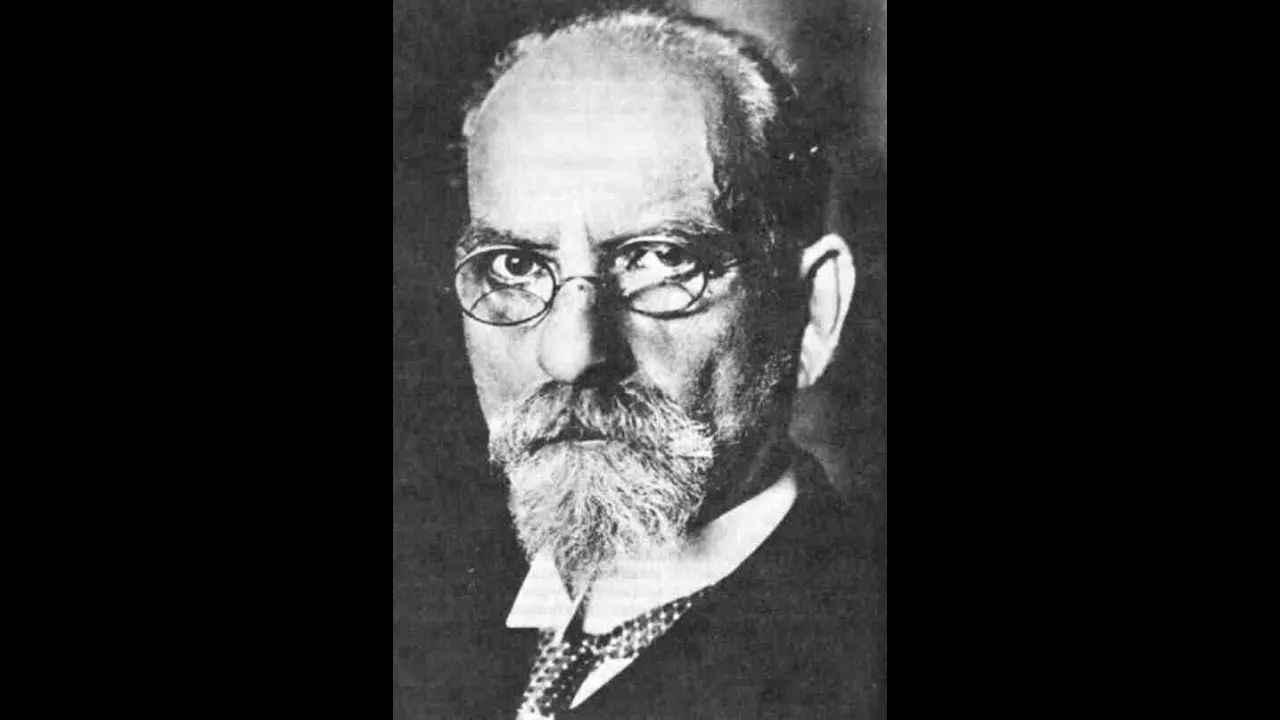

William James argues that consciousness should be studied analytically by beginning with concrete, daily experiences rather than abstract simple ideas, revealing that consciousness is a continuous, flowing stream characterized by four key features: it belongs to personal consciousness, it is constantly changing, it maintains sensible continuity despite changes, and it selectively focuses on certain aspects while ignoring others; this challenges traditional psychological approaches that treat mental states as static units.
William James: The Stream of Consciousness Explained
Added:The historical transition of psychology from a branch of philosophy to an empirical science in the late 19th century.
Wilhelm Wundt's structuralism and the method of experimental introspection, which William James's functionalism reacted against.
Basic philosophical conceptions of the mind, such as René Descartes' dualism and John Locke's associationism.
An overview of William James's role as the 'father of American psychology' and his functionalist approach to the mind.
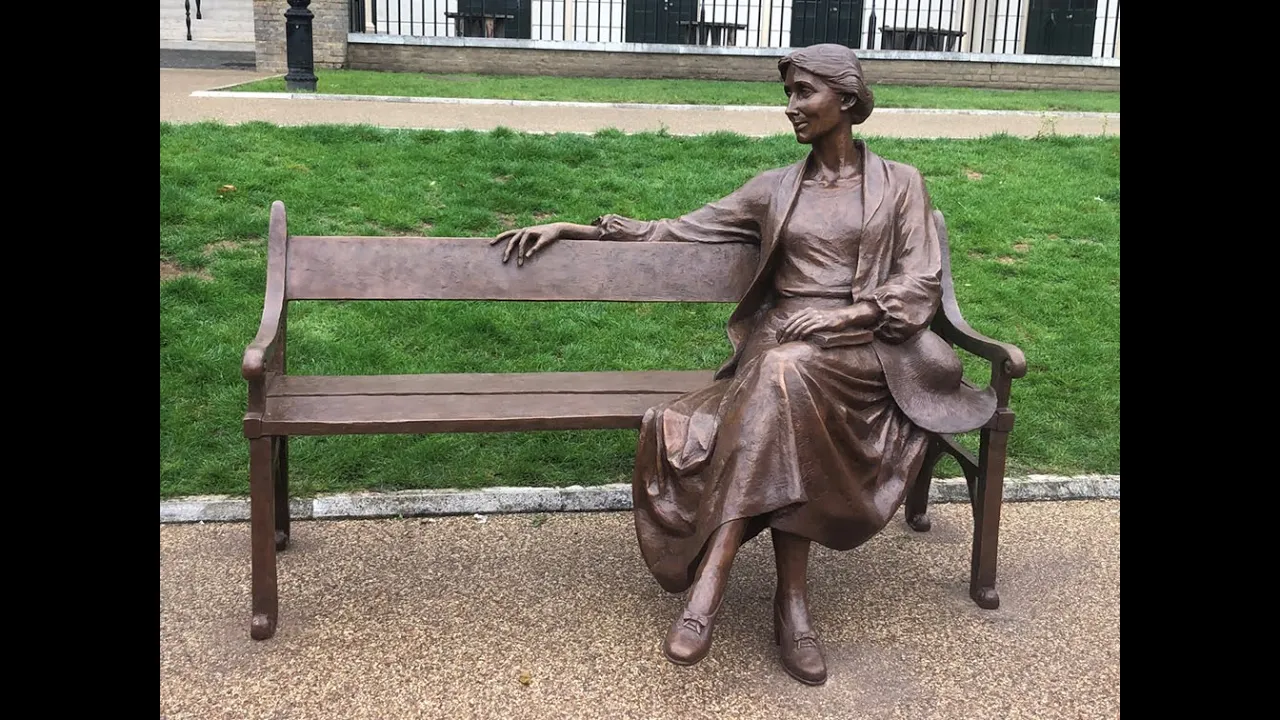
The adoption of the 'stream of consciousness' as a literary narrative technique by modernist writers like James Joyce and Virginia Woolf.
William James's theory of emotions (the James-Lange theory) and his philosophical framework of pragmatism.
Modern cognitive psychology and neuroscience perspectives on the continuous nature of perception, attention, and the brain's default mode network.
Phenomenology in continental philosophy, particularly the works of Edmund Husserl and Maurice Merleau-Ponty regarding subjective experience.
5.5K views132likes42:43Original Release: 2020-08-13
so i'm going to read from william james's principles of psychology which is a very large work a book published in 1890 i'm going to read a section from it on the stream of consciousness the order of our study must be analytic we are now prepared to begin the introspective study of the adult consciousness itself most books adopt the so-called synthetic method starting with simple ideas of sensation and regarding these as so many atoms they proceed to build up the higher states of mind out of their association their integration or their fusion as houses are built by the agglutination of bricks this has the didactic advantages which the synthetic method usually has but it commits one beforehand to the very questionable theory that our higher states of consciousness are compounds of units and instead of starting with what the reader directly knows namely his total concrete states of mind it starts with a set of supposed simple ideas with which he has no immediate acquaintance at all and concerning who's alleged interactions he is much at the mercy of any plausible phrase on every ground then the method of advancing from the simple to the compound exposes us to illusion all pedants and abstractionists will naturally hate to abandon it but a student who loves the fullness of human nature will prefer to follow the analytic method and to begin with the most concrete facts those with which he has a daily acquaintance in his own inner life the analytic method will discover in due time the elementary parts if such exist without danger of precipitate assumption the fundamental fact the first and foremost concrete fact which everyone will affirm to belong to his inner experience is the fact that consciousness of some sort goes on states of mind succeed each other in him if we could say in english it thinks as we say it rains or it blows we should be stating the fact most simply and with the minimum of assumption as we cannot we must simply say that thought goes on four characters in consciousness how does it go on we notice immediately four important characters in the process of which it shall be the duty of the present chapter to treat in a general way one every state tends to be part of a personal consciousness two within each personal consciousness states are always changing three each personal consciousness is sensibly continuous for it is interested in some parts of its object to the exclusion of others and welcomes or rejects chooses from among them in a word all the while in considering these four points successively we shall have to plunge in media res as regards our nomenclature and use and use psychological terms which can only be adequately defined in later chapters of the book but everyone knows what the terms mean in a rough way and it is only in a rough way that we are now to take them this chapter is like a painter's first charcoal sketch upon his canvas in which no niceties appear when i say every state or thought is part of a personal consciousness personal consciousness is one of the terms in question its meaning we know so long as no one asks us to define it but to give an accurate account of it is the most difficult to philosophic of philosophic tasks this task we must confront in the next chapter here a preliminary word will suffice in this room this lecture room say there are a multitude of thoughts yours and mine some of which cohere mutually and some do not they are as little each for itself and reciprocally independent as they are all belonging together they are neither no one of them is separate but each belongs with certain others and with none beside my thought belongs with my other thoughts and your thought with your other thoughts whether anywhere in the room there may be a mere thought which is nobody's thought we have no means of ascertaining for we have no experience of its like the only states of consciousness that we naturally deal with are found in personal consciousnesses minds selves concrete particular eyes and use each of these minds keeps its own thoughts to itself there's no giving or bartering between them no thought even comes into direct sight of a thought in another personal consciousness than its own absolute insulation irreducible pluralism is the law it seems as if the elementary psychic fact were not thought or this thought or that thought but my thought every thought being owned neither contemporaneity nor proximity in space nor similarity of quality and content are able to fuse thoughts together which are sundered by this barrier of belonging to different personal minds the breaches between such thoughts are the most absolute breaches in nature everyone will recognize this to be true so long as the existence of something corresponding to the term personal mind is all that is insisted on without any particular view of its nature being implied on these terms the personal self rather than the thought might be treated as the immediate datum in psychology the universal conscious fact is not feelings and thoughts exist but i think i feel no psychology at any rate can question the existence of personal selves thoughts connected as we feel them to be connected are what we mean by personal selves the worst a psychology can do is to interpret the nature of these selves as to rob them of their worth consciousness is in constant change i do not mean by this to say that no one state of mind has any duration even if true that would be hard to establish what i wish to say to lay stress on is this that no state once gone can recur and be identical with what it was before now we are seeing now hearing now reasoning now willing now recollecting now expecting now loving now hating and in a hundred other ways we know our minds to be alternate alternately engaged but all these are complex states it may be said produced by combination of simpler ones do not the simpler ones follow a different law are not the sensations which we get from the same object for example always the same does not the same piano key struck with the same force make us hear in the same way does not the same grass give us the same feeling of green the same sky the same feeling of blue and do not we get and do we not get the same olfactory sensation no matter how many times we put our nose to the same flask of cologne it seems a piece of metaphysical sophistry to suggest that we do not and yet a close attention to the matter shows that there is no proof that an incoming current ever gives us just the same bodily sensation twice what it got twice is the same object we hear the same note over and over again we see the same quality of green or smell the same objective perfume or experience the same species of pain the realities concrete and abstract physical and ideal whose permanent existence we believe in seemed to be constantly coming up again before our thought and lead us in our carelessness to suppose that our that our ideas of them are the same ideas when we come sometime later to the chapter on perception we shall see how inveterate is our habit of simply using our sensible impressions as stepping stones to pass over to the recognition of the realities whose presence they reveal the grass out of the window now looks to me of the same green in the sun as in the shade and yet a painter would have to paint one part of it dark brown another part bright yellow to give its real sensational effect we take no heed as a rule of the different way in which the same things look and sound and smell at different distances and under different circumstances the sameness of the things is what we are concerned to ascertain and any sensations that assure us of that will probably be considered in a rough way to be the same with each other this is what makes off-hand testimony about the subjective identity of different sensations well nigh worthless as a proof of the fact the entire history of what is called sensation is a commentary on our inability to tell whether two sensible qualities received apart are exactly alike what appeals to our attention far more than the absolute quality of an impression is its ratio to whatever other impressions we may have at the same time when everything is dark a somewhat less dark sensation makes us see an object white helmholtz calculates that the white marble painted in a picture representing an architectural view by moonlight is when seen by daylight from ten to twenty thousand times brighter than the real moonlit marble would be such a difference as this could never have been sensibly learned it had to be inferred from a series of indirect considerations these make us believe that our sensibility is altering all the time so that the same object cannot easily give us the same sensation over again we feel things differently according accordingly as we are sleepy or awake hungry or full fresh or tired differently at night and in the morning differently in summer and in winter and above all differently in childhood manhood and old age and yet we never doubt that our feelings reveal the same world with the same sensible qualities and the same sensible things occupying it the difference of the sensibility is shown best by the difference of our emotion about the things from one age to another or when we are in different organic moods what was bright and exciting becomes weary flat and unprofitable the bird's song is tedious the breeze is mournful the sky is sad to these indirect presumptions that our sensations following the mutations of our capacity for feeling are always undergoing an essential change must be added another pre another presumption based on what must happen in the brain every sensation corresponds to some cerebral action for for an identical sensation to recur it would have to occur the second time in an unmodified brain but as this strictly speaking is a physiological impossibility so is an unmodified feeling and so is an unmodified feeling and impossibility for to every brain modification however small we suppose that there must correspond a change of equal amount in the consciousness which the brain subserves but if the assumption of simple sensations recurring in immutable shape is so easily shown to be baseless how much more baseless is the assumption of immutability in the larger masses of our thought for there is an obvious for there for there it is obvious and palpable that our state of mind is never precisely the same every thought we have of a given fact is strictly speaking unique and only bears a resemblance of kind with our other thoughts of the same fact when the identical fact recurs we must think of it in a fresh manner see it under a somewhat different angle apprehend it in different relations from those in which it last appeared and the thought by which we cognize it is the thought of of it in those relations a thought suffused with the consciousness of all that dim context often we are ourselves struck at the strange differences in our successive views of the same thing we wonder how we can ever we wonder how we ever could have opined as we did last month about a certain matter we have outgrown the possibility of that state of mind we know not how from one year to another we see things in new lights what was unreal has grown real and what was exciting is insipid the friends we used to care the world for are shrunk into shadows the women once so divine the stars the woods and the waters how now so dull and common the young girls that brought an aura of infinity at present hardly distinguishable existences the picture so empty and as for the books what was there to find so mysteriously significant in gerta or in john mill so full of weight instead of all this more zestful than ever is the work the work and fuller and deeper the import of common duties and of common goods i am sure that this concrete and total manner of regarding the minds changes is the only true manner difficult as it may be to carry it out in detail if anything seems obscure about it it will it will grow clearer as we advance meanwhile if it be true it is certainly also true that no two ideas are ever exactly the same which is the proposition we started to prove the proposition is more important theoretically than at first sight seems for it makes it already impossible for us to follow obediently in the footprints of either the lockheed or the herbartian school schools which have had almost unlimited influence in germany and among ourselves no doubt it is often convenient to formulate the mental facts in anatomistic sort of way and to treat the higher states of consciousness as if they were all built out of unchanging simple ideas which pass and turn again it is convenient often to treat curves as if they were composed of small straight lines and electricity and nerve force as if they were fluids but in the one case as in the other we must never forget that we are talking symbolically and that there is nothing in nature to answer to our words a permanently existing idea which makes its appearance before the footlights of consciousness at periodical intervals is as mythological and entity as the jack of spades within each personal consciousness thought is sensibly continuous i can only define continuous as that which is without breach crack or division the only breaches that can well be conceived to occur within the limit of a single mind would either be interruptions time gaps during which the consciousness went out or they would be breaks in the content of the thought so abrupt that what followed had no connection whatever with what went before the proposition that consciousness feels continuous means two things that even where there is a time gap the consciousness after it feels as if it belonged together with the consciousness before it as another part of the same self that the changes from one moment to another and the quality of the consciousness are never absolutely abrupt the case of the time gaps as the simplest shall be taken first when paul and peter wake up in the same bed and recognize that they have been asleep each one of them mentally reaches back and makes connection with but one of the two streams of thought which were broken by the sleeping hours as the current of an electrode buried in the ground unerringly finds its way to its similarly buried mate across no matter how much intervening earth so peter's present instantly finds out peter's past and never by mistake knits itself onto that of paul paul's thought in turn is as little liable to go astray the past thought of peter is appropriated by the present peter alone he may have a knowledge and a correct one too of what paul's last drowsy states of mind were as he sank into sleep but it is as it is an entirely different sort of knowledge from that which he has of his own last states he remembers his own states whilst he only conceives paul's remembrance is like direct feeling its object is suffused with the warmth and intimacy to which no object of mere conception ever attains this quality of warmth and intimacy and immediacy is what peter's present thought also possesses for itself so sure as this present is me is mine it says so sure is anything else that comes with the same warmth and intimacy and immediacy me and mine what the qualities called warmth and intimacy may in themselves be will have to be matter for future consideration but whatever past whatever past states appear with those qualities must be admitted to receive the greeting of the present mental state to be owned by it and accept it as belonging together with it in a common self this community of self is what the time gap cannot break in twain and is why a present thought although not ignorant of the time gap can still regard itself as continuous with certain chosen portions of the past consciousness then does not appear to itself chopped up in bits such words as chain or train do not describe it fitly as it presents itself in the first instance it is nothing jointed it flows a river or a stream are the metaphors by which it is most naturally described in talking of it hereafter let us call it the stream of thought of consciousness or of subjective life but now there are peers even within the limits of the same self and between thoughts all of which alike have this same sense of belonging together there appears a kind of jointing and separateness among the parts of which this statement seems to take no account i refer to the breaks that are produced by sudden contrasts in the quality of the successive segments of the stream of thought if the words chain and train had no natural fitness in them how came such words to be used at all does not a loud explosion rend the consciousness upon which it abruptly breaks in twain no for even in our awareness of the thunder the awareness of the previous silence creeps and continues for what we hear when the thunder crashes is not thunder pure but thunder breaking upon silence and contrasting with it our feeling of the same objective thunder coming in this way is quite different from what it would be worth of thunder a continuation of previous thunder the thunder itself we believe to abolish and exclude the silence but the feeling of the thunder is also a feeling of the silence as just gone and it would be difficult to find in the actual concrete consciousness of man of feeling so limited to the present as not to have an inkling of anything that went before substantive and transitive states of mind when we take a general view of the wonderful stream of our consciousness what strikes us first is that is the different pace of its parts like a bird's life it seems to be an alteration of flights and perchings the rhythm of language expresses this where every thought is expressed in a sentence and every sentence closed by a period the resting places are usually occupied by sensorial imaginations of some sort whose peculiar peculiarity is that they can be held before the mind for an indefinite time and contemplated without changing the places of flight are filled with thoughts of relations static or dynamic that for the most part obtain between the matters contemplated in the periods of comparative rest let us call the resting places the substantive parts and the places of flight the transitive parts or the stream of thought it then appears that our thinking tends at all times towards some other substantive part than the one from which it has just been dislodged and we may say that the main use of the transit of parts is to lead us from one substantive conclusion to another now it is very difficult introspectively to see the transitive parts for what they really are if they are but flights to a conclusion stopping them to look at them before the conclusion is reached is really annihilating them whilst if we wait till the conclusion be reached it so exceeds them in vigor and stability that it quite eclipses and swallows them up in its glare let alone try to cut a thought across in the middle and get a look at its section and he will see how difficult the introspective observation of the transitive tracks is the rush of the thought is so headlong that it almost always brings us up at the conclusion before we can arrest it or if our or if our purpose is nimble enough and we do arrest it it ceases forthwith to be itself as a snowflake crystal caught in the warm hands in the warm hand it is no longer a crystal but a drop so instead of catching the feeling of relation moving to its term we find we have caught some substantive thing usually the last word we were pronouncing statically taken and with its function tendency and particular meaning in the sentence quite evaporated the attempt at introspective analysis in these cases is in fact like seizing a spinning top to catch its motion or trying to turn up the gas quickly enough to see how the darkness looks and the challenge to produce these transitive states of consciousness which is sure to be thrown by doubting psychologists that anyone who contends for their existence is as unfair as zeno's treatment of the advocates of motion when asking them to point out in what place an arrow is when it moves he argues the falsity of their thesis from their inability to make to so preposterous a question an immediate reply the results of this introspective difficulty are baleful if to hold fast and observe the transitive parts of thought's dream be so hard then the great blunder to which all schools are liable must be the failure to register them and the undo emphasizing of the more substantive parts of the stream now the blunder has historically worked in two ways one set of thinkers have been led by it to sensationalism unable to lay their hands on any substantive feelings corresponding to the innumerable relations and forms of connection between the sensible things of the world finding no named mental states mirroring such relations they have for the most part denied that any such states exist and many of them like david hume have gone on to deny the reality of most relations out of the mind as well as in simple substantive ideas sensations and their copies juxtaposed like dominoes in a game but really separate everything else verbal illusion such as the upshot of this view in contrast to the sensationalists the intellectualists on the other hand unable to give up the reality of relations extramentum but equally unable to point to any distinct substantive feelings in which they were known have made the same admission that such feelings do not exist but they have drawn an opposite conclusion the relations must be known they say in something that is no feeling no mental state continuous and consubstantial with the subjective tissue out of which sensations and other substantive conditions of consciousness are made they must be known by something that lies on an entirely different plane by an actus purist of thought intellect or reason all capitalized all written as he says with capitals and considered to mean something unutterably superior to any passing perishing fact of sensibility whatever but from our point of view both intellectualists with their universals and sensationalists with their sensory atoms are wrong if there be such things as feelings at all then so surely as relations between objects exist in rirum natura that is in physical things themselves so surely and more surely do feelings exist to which these relations are known there is not a conjunction or a preposition and hardly an adverbial phrase syntactic form or inflection of voice in human speech that does not express some shading or other of relation which we at some moment actually feel to exist between the larger objects of our thought if we speak objectively it is the real relations that appear revealed if we speak subjectively it is the stream of consciousness that matches each of them by an inward coloring of its own in either case their relations are numberless and no existing language is capable of doing justice to all their shades we ought to say a feeling of and a feeling of if a feeling of butt and a feeling of by quite as readily as we say a feeling of blue or a feeling of cold yet we do not so when veteran has our habit become of recognizing the existence of the substantive parts alone that language almost refuses to lend itself to any other use consider once again the analogy of the brain we believe the brain to be an organ whose internal equilibrium is always in a state of change the change affecting every part the pulses of change are doubtless more violent in one place than in another the rhythm more rapid at this time than at that as in a kaleidoscope revolving at a uniform rate although the figures are always rearranging themselves there are instances during which the transformation seems minute and interstitial and almost absent followed by others when it shoots with magical rapidity relatively stable forms thus alternating with forms we should not distinguish if seen again so in the brain the perpetual rearrangement must result in some forms of tension lingering relatively long whilst others simply come and pass but if consciousness corresponds to the fact of rearrangement itself why if the rearrangement stop if the rearrangement stop not should the consciousness ever cease and if a lingering rearrangement brings with it one kind of consciousness why should not a swift rearrangement bring another kind of consciousness as peculiar as the rearrangement itself consciousness is always interested more in one part of its object than in another and welcomes and rejects or chooses all the while it thinks the phenomena of selective attention and of the of deliberative will are of course patent examples of this choosing activity but few of us are aware how incessantly it is at work in operations not ordinarily called by these names accentuation and emphasis are present in every perception we have we find it quite impossible to disperse our attention impartially over a number of impressions a monotonous succession of sonorous strokes is broken up into rhythms now of one sort now of another by the different accent which we place on different strokes the simplest of these rhythms is the double one tick-tock tick-tock tick-tock dots dispersed on a surface are perceived in rows and groups lines separate into diverse figures the ubiquity of the distinctions this and that here and there now and then in our minds is the result of our laying the same selective emphasis on parts of place and time but we do far more than emphasize things and unite some and keep others apart we actually ignore most of the things before us let me briefly show how this goes on to begin at bottom what are our very senses themselves but organs of selection out of the infinite chaos of movements of which physics teaches us that the outer world consists each sense organ picks out those which fall within certain limits of velocity to these it responds but ignores the rest as completely as if they did not exist out of what is in itself an indistinguishable swarming continuum devoid of distinction or emphasis our senses make for us by attending to this motion and ignoring that a world full of contrasts of sharp accents of abrupt changes of picturesque light and shade if the sensations we receive from a given organ have their causes thus picked out for us by the confirmation of the organs termination attention on the other hand out of all the sensations yielded picks out certain ones as worthy of its notice and suppresses all the rest we notice only those sensations which are signs to us of things which happen practically or aesthetically to interest us and we therefore give substantive names in which we exalt to this exclusive status of independence and dignity but in itself apart from my interest a particular dust wreath on a windy day is just as much of an individual thing as just and just as much or as little deserves an individual name as my own body does and then among the sensations we get from each separate thing what happens the mind selects again it chooses certain of the sensations to represent the thing most truly and considers the rest as its appearances modified by the conditions of the moment thus my tabletop is named square after but one of an infinite number of retinal sensations which it yields the rest of them being sensations of two acute and two obtuse angles but i call the latter perspective views and the four right angles the true form of the table and direct the attribute squareness into the table's essence for aesthetic reasons of my own in like manner the real form of the circle is deemed to be the sensation it gives when the line of vision is perpendicular to its center all its other sensations are signs of this sensation the real sound of the canon is the sensation it makes when the ear is close by the real color of the brick is the sensation it gives when the eye looks squarely at its looks squarely at it from a near point out of the sunshine and yet not in the gloom under other circumstances it gives other color sensations which are but signs of this we then see it looks pinker or bluer than it really is the reader knows no object which he does not represent to himself by preference as in some typical attitude of some normal size at some characteristic distance of some standard tint etc etc but all these essential characteristics which together form for us the genuine objectivity of the thing and are contrasted with what we call the subjective sensations it may yield us at a given moment are mere sensations like the latter the mind chooses to suit itself and decides what particular sensation shall be held more real and valid than all the rest next in a world of objects thus individualized by our mind's selective industry what is called our experience is almost entirely determined by our habits of attention a thing may be present to a man a hundred times but if he persistently fails to notice it it cannot be said to enter into his experience we are all seeing flies moths and beetles by the thousand but to whom save an entomologist did they say anything distinct on the other hand a thing met only once in a lifetime may leave an indelible experience in the memory let four men make a tour in europe one will bring home only picturesque impressions costumes and colors parks and views and works of architecture pictures and statues to another all this will be non-existent and distances and prices populations and drainage arrangements door and window fastenings and other useful statistics will take their place a third will give a rich account of the theaters restaurants and public halls and not besides whilst the fourth will perhaps have been so wrapped in his own subjective broodings as to be able to tell little more than a few names of places through which he passed each has selected out of the same mass of presented objects those which suited his private interest and has made his experience thereby if now leaving the empirical combination of objects we ask how the mind proceeds rationally to connect them we find selection again to be omnipotent in a future chapter we shall see that all reasoning depends on the ability of the mind to break up the totality of the phenomenon reasoned about into parts and to pick out from among these the particular ones which in the given emergency may lead to the proper conclusion the man of genius is he who will always stick in his bill at the right point and bring it out with the right element reason if the emergency be theoretical means if it be practical if we now pass to the aesthetic department our law is still more obvious the artist notoriously selects his items rejecting all tones color shapes which do not harmonize with each other and with the main purpose of his work that unity harmony convergence of characters as mr tane calls it which gives to works of art their superiority to works of nature is wholly due to elimination any natural subject will do if the artist has wit enough to pounce upon some one feature of it as characteristic and suppress all merely accidental items which do not harmonize with this ascending still higher we reach the plane of ethics where choice reigns notoriously supreme an act has no ethical quality whatever unless it be chosen out of several all equally possible to sustain the arguments for the good course and keep them ever before us to stifle our longing for more flowery ways to keep the foot unflinchingly on the arduous path these are characteristic ethical energies but more than these for these but deal with the means of compassing interests already felt by the man to be supreme the ethical energy part excellence has to go further and choose which interest out of several equally coercive shall become supreme the issue here is of the utmost pregnancy for it decides a man's entire career when he debates shall i commit this crime choose that profession accept that office or marry this fortune his choice really lies between one of several equally possible future characters what he shall become is fixed by the conduct of this moment schopenhauer who enforces his determinism by the argument that with a given fixed character only one reaction is possible under given circumstances forgets that in these critical ethical moments what consciously seems to be in question is the complexion of the character itself the problem with the man is less what act he shall now resolve to do than what being he shall now choose to become taking human experience in a general way the choosings of different men are to a great extent the same the race as a whole largely agrees as to what it shall notice and name and among the noticed parts we select in much the same way for accentuation and preference or subordination and dislike there is however one entirely extraordinary case in which no two men ever are known to choose alike one great splitting of the whole universe into two halves is made by each of us and for each of us almost all of the interest attaches to one of the haves but we all draw the line of division between them in a different place when i say that we all call the two halves by the same names and that those names are me and not me respectively it will at once be seen what i mean the altogether unique kind of interest which each human mind feels in those parts of creation which it can call me or mine maybe a moral riddle but it is a fundamental psychological fact no mind can take the same interest in his neighbor's me as in his own the neighbor's me falls together with all the rest of things in one foreign mass against which his own me stands out in startling relief even the trodden worm as lotso somewhere says contrast with his own suffering self contrasts his own suffering self with the whole remaining universe though he have no clear conception either of himself or what the universe may be he is for me a mere part of the world for him it is i who am the mere part each of us dichotomizes the cosmos in a different place descending now to finer work than this first general sketch let us in the next chapter try to trace the psychology of this fact of self-consciousness to which we have thus once more been led i'll pause there you
Up Next

73:05
Creative Reading Seminar: Burroughs on Conrad & the Picaro | Naropa Lecture 2/3
@NewThinkable
26.8K views•2013-03-07

68:32
Cognitive Skills for Differentiated Instruction | Teacher PD
@BrainWareLearning
631 views•2017-12-17

9:55
Thinking, Fast and Slow: Daniel Kahneman Animated Book Summary
@FightMediocrity
2.3M views•2015-06-05

6:40
The Nocebo Effect: How Beliefs Can Cause Real Harm
@CGPGrey
10.4M views•2013-12-23
Related Study Plans & Knowledge Roadmaps
Structured learning paths in Psychology
psychology
Neuroscience of Creativity: Networks & Training
01Foundations of Creative Cognition
02The Cognitive Neuroscience of Insight & Fixation
03The Triple Network Model of Creativity
+ 1 more learning modules
15h4 modules
Explore Roadmap
psychology
Imposter Syndrome: Etiology & CBT Framework
01Defining the Imposter Phenomenon
02Socio-Developmental Etiologies
03CBT Fundamentals & Thought Distortions
+ 2 more learning modules
15h5 modules
Explore Roadmap
psychology
Adult ADHD: Executive Dysfunction & Scaffolding
01Neurobiology of the ADHD Brain
02The Core Triad of Executive Deficits
03Executive Dysfunction and Emotional Regulation
+ 2 more learning modules
12h5 modules
Explore Roadmap
psychology
Loneliness: Evolution, Neurobiology & CBT
01Evolutionary Origins of Human Connection and Loneliness
02The Neurobiology and Physiology of Chronic Loneliness
03Maladaptive Social Cognition: The Psychological Loop
+ 2 more learning modules
12h5 modules
Explore Roadmap