














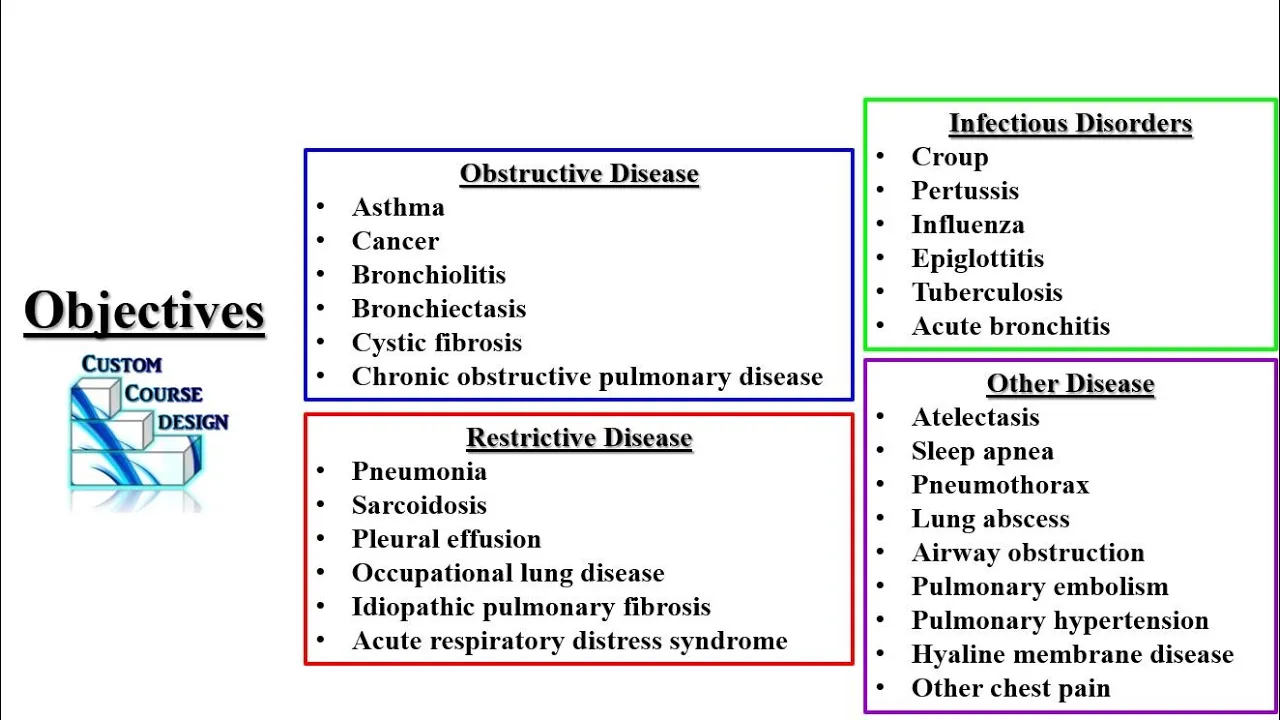



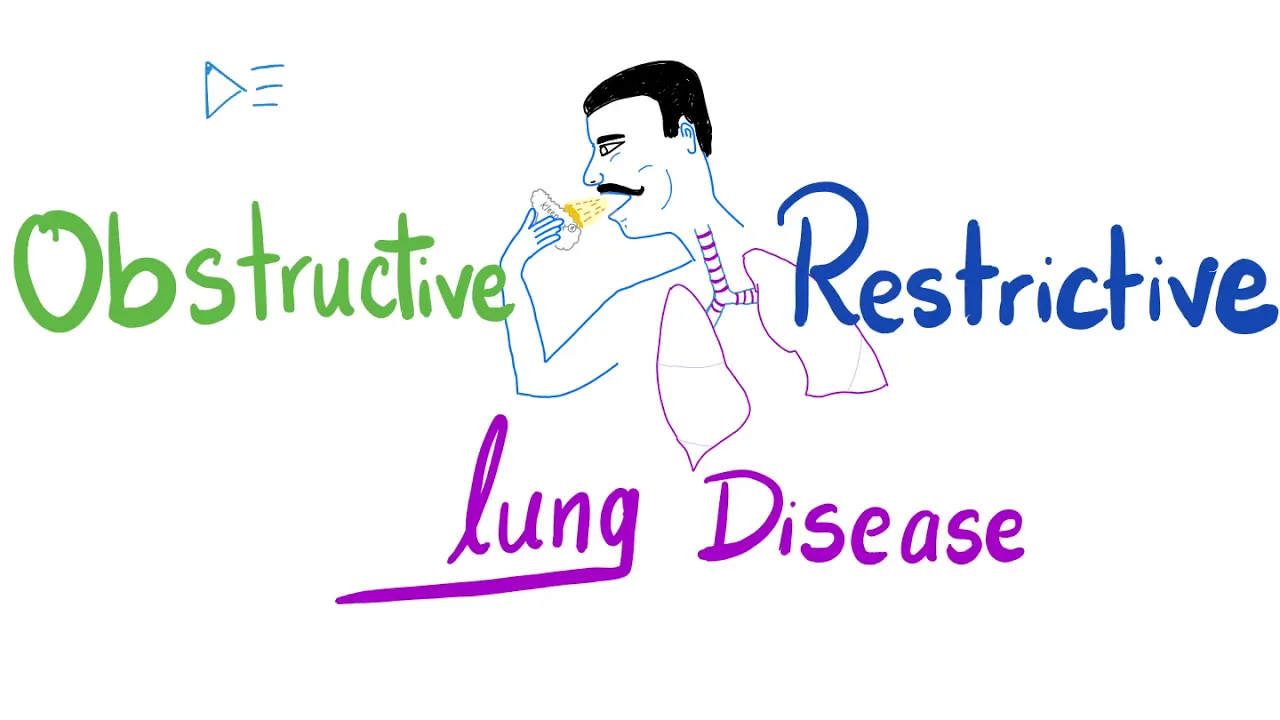


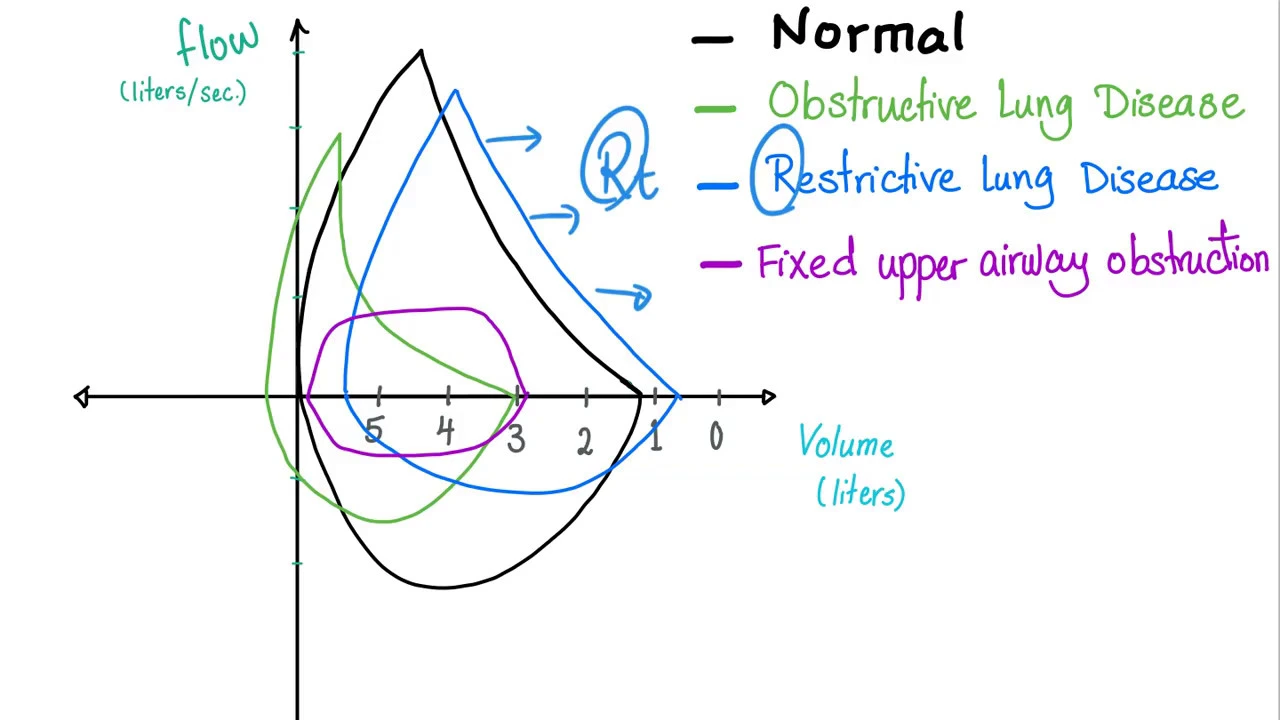






Obstructive lung disease is characterized by a FEV1/FVC ratio less than 0.7, where it is harder to exhale air (e.g., COPD, asthma), while restrictive lung disease has a ratio greater than 0.7, where it is harder to inhale air (e.g., interstitial lung disease, pulmonary fibrosis); the mnemonic O-B-U (out, below, upper) helps remember that obstructive disease decreases the numerator (FEV1) more than the denominator (FVC), whereas the mnemonic R-I-E (R-in, inferior, elevated) helps remember that restrictive disease decreases the denominator (FVC) more than the numerator (FEV1).
Obstructive vs Restrictive Lung Disease: Key USMLE Differences
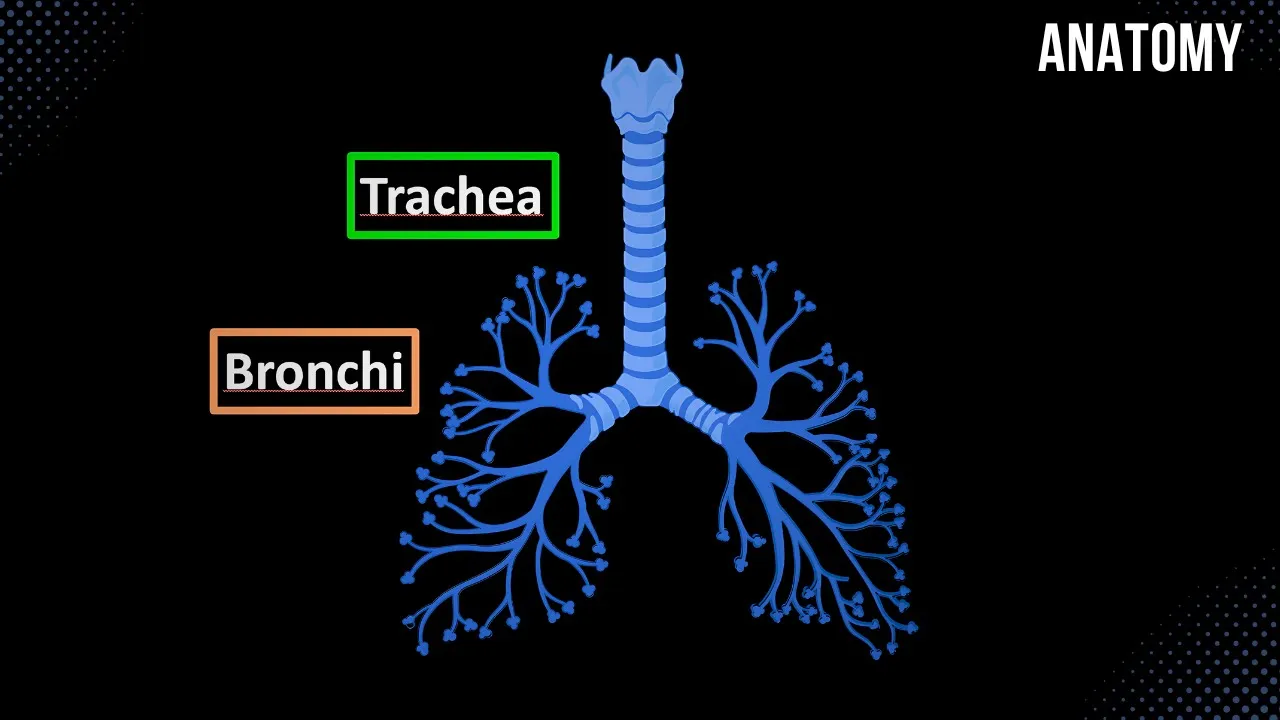
Added:Basic anatomy of the respiratory system, including the airways, alveoli, and chest wall.
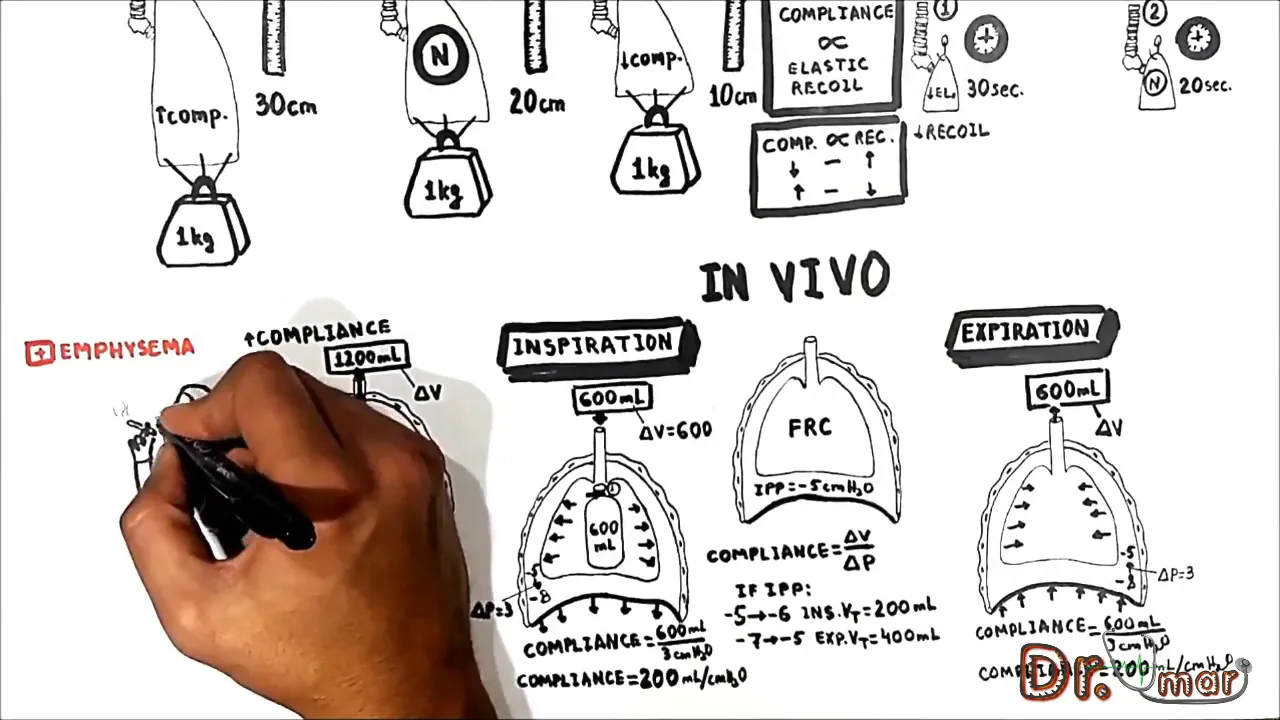
Fundamental mechanics of ventilation, specifically the concepts of lung compliance and elastic recoil.
Definition of standard lung volumes and capacities, such as Tidal Volume (TV), Residual Volume (RV), and Total Lung Capacity (TLC).
An introductory understanding of spirometry and what the terms FEV1 (Forced Expiratory Volume in 1 second) and FVC (Forced Vital Capacity) measure.
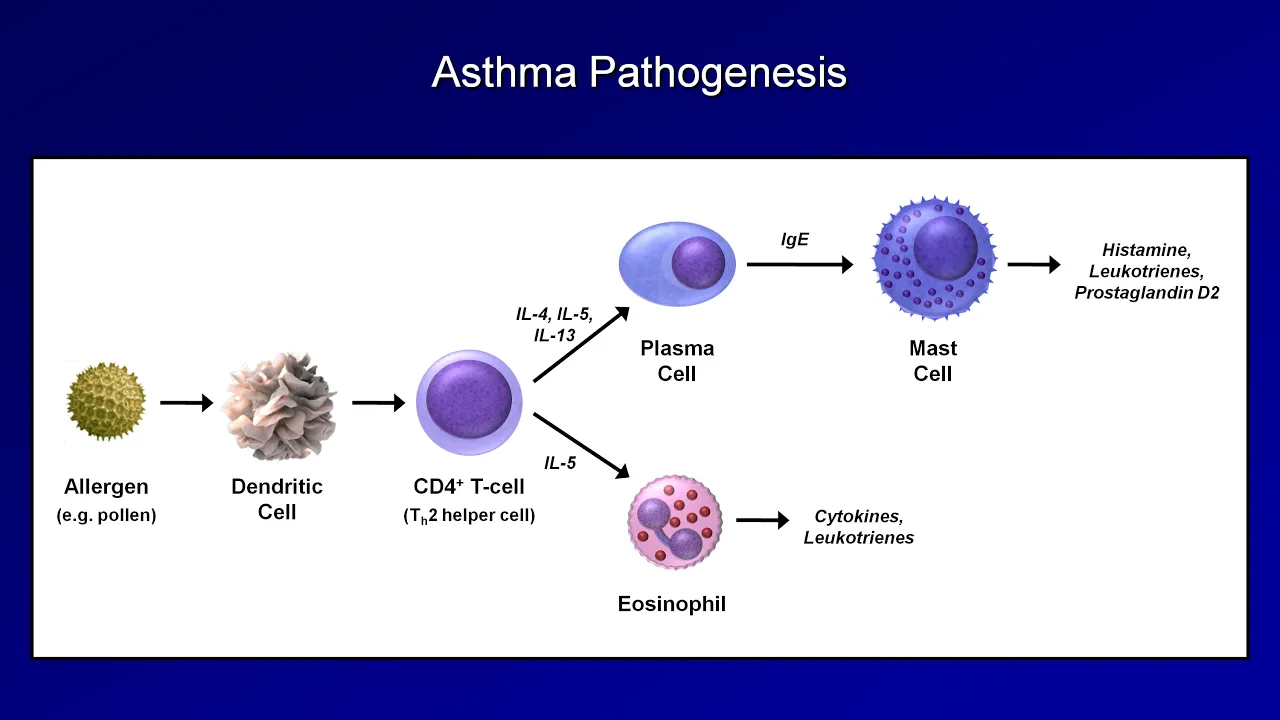
In-depth pathophysiology and clinical presentation of specific obstructive diseases (e.g., Asthma, COPD, Bronchiectasis).
Classification and causes of restrictive lung diseases, distinguishing between intrinsic (parenchymal) and extrinsic (extrapulmonary) etiologies.
Analyzing flow-volume loops on spirometry to visually diagnose ventilatory defects.
Using DLCO (Diffusing Capacity of the Lungs for Carbon Monoxide) testing to further narrow down the differential diagnosis.
Pharmacological and clinical management strategies for both obstructive and restrictive pulmonary pathologies.
392K views6.6Klikes9:26Original Release: 2016-12-04
now it's been some time since we've made a video but we wanted to make one that was really high-yield an obstructive versus restrictive lung diseases is a top five question for step one literally we've pulled hundreds of students that have responded to our informal poll on our Channel and we found that lung diseases in differentiating between obstructive versus restrictive is in the top five most popular questions asked on USMLE step one so it's really important to have a mastery of this content and as such we're going to explain everything you need to know and all of the really high yield facts that will help you navigate what is actually a pretty simple question it just takes some getting used to so let's get started so there are two flavors of lung diseases there's obstructive and restrictive and all that does is it refers to a pattern that the lungs behave so for example obstructive lung disease fev1 to fvc ratio is less than 0.7 now let's take a step back fev1 and fec are different parameters that are used in pulmonary function testing fev1 over fvc ratio as a ratio in itself is what's used to categorize numerically if the lung disease is an obstructive pattern or a restrictive pattern so if this ratio is less than 0.7 it's said to be obstructive okay now fev1 is something to keep in mind because what that basically means and you should be familiar with the different pulmonary function tests but fev1 is the ability to exhale as much as you can in about one second so this ratio is less than 0.7 in obstructive lung disease it's harder to get air out and examples of obstructive lung disease are COPD and asthma so chronic bronchitis emphysema asthma these are all examples of an obstructive lung disease now I'm giving you normal physiology right now and after I go over obstructive versus restrictive I'm going to give you the pneumonic that's going to help you remember all of this next we have restrictive lung diseases the fev1 to fvc ratio is greater than 0.7 so in obstructive it was decreased but in restrictive its increased in restrictive it's harder to get air in so it's harder to to inhale than it is to exhale in obstructive it was harder to exhale but in restrictive harder to inhale and some examples of restrictive lung disease include interstitial lung disease environmental pneumoconiosis and a RDS so anything where you'll get pulmonary fibrosis honeycombing of the lung asbestosis silicosis a RDS all of that is an example of restrictive lung diseases so now I want to give you the pneumonic that's going to help you really differentiate between these two so first we're gonna write out the words obstruct and restrict and what we're gonna do is we're gonna pick the letters in each word that are different I've highlighted them here you can see that the other letters not highlighted are the same in both words so we're picking out the unique letters in obstruct and restrict these letters all stand for something very high yield in obstruct the O stands for out it's harder to get the air out in other words it's harder to exhale the B stands for below because the PF T's ie fev1 / FV see that entire ratio is down or below the entire ratio is down and the reason that the entire ratio is down is what the U stands for it's upper or the numerator the upper number in the ratio is the reason that drives obstructive pattern fev1 is down more than the denominator and that entire mathematical relationship is what creates a decrease in this ratio so let's think about this we said that obstructive lung disease the fev1 fvc ratio was less than 0.7 or less than 70% the reason that this is down is because the numerator is lower than the denominator so think it just think of basic math here it's like having 1 divided by 2 if the numerator is smaller than the denominator then the entire ratio is decreased because 1/2 would be 0.5 and we said that this is less than 0.7 that is exactly what's going on here so what is high yield what's high yield is to know why the ratio is down and that the ratio is just down also you need to know that it's harder to get air out let's jump down to restrict the R stands for R inside it's harder to get the air inside so I just wrote R inside that's my pneumonic there's no other way to remember it with the R R inside it's hard to get air R in or R inside e since were elevated the PFT s are elevated so this ratio is greater than 0.7 R greater than 70% and the reason that's what the I stands for it's the inferior number or the denominator now think about this if both the numerator and the denominator are decreased and I'm telling you that is what happens in restrictive lung disease it's still hard to blow a lot of air out in one second but the FV C is decreased so much more than the fev1 that the entire ratio as a mathematical ratio is increased so let's think about this if the numerator is 4 but the denominator is 2 then the entire ratio is still greater than 1 think about it the ratio the numerator is still gonna be down the denominators still gonna be down but the denominator is down so much more that you're actually increasing the ratio because when you divide by a smaller number you have an increased ratio so I really want you to understand the difference between obstructive and restrictive as it relates to this ratio because that's usually what they try to get you with on step one they'll describe a patient and the question stem they'll say something like the patient has airway hyper responsiveness mucus plugging and the symptoms are relieved by albuterol they'll give you the results of maybe a methacholine challenge test basically what they're doing is they're describing in this clinical vignette a patient with asthma so the first step is that you identify that their obstructive pattern based on the presentation the second step is being able to identify what the ratio will be so oftentimes they'll give you those like three column charts where you're picking based on columns and you have to pick what fev1 will do what fvc will do and what the entire fev1 / fvc ratio will do so I really really really want to stress how this ratio works and what is driving it so just to be really complete I'm gonna harp on it a little bit more and go over it one more time first thing we did with this mnemonic was you wrote obstruct and restrict we highlighted the letters in obstruct and restrict that are different from one another that's the O being you and obstruct and the re and I and restrict the O stands for out telling you that it's harder to get air out in an obstructive lung disease the lungs look hyper-inflated if you ever look at a chest x-ray they're gonna be hyper inflated because it's harder to get air out there's gonna be increased space between the ribs because there is so much air being trapped inside the B stands for below the PF T's duck dropped below or they decrease what is driving it the upper that's what u stands for the upper number or the numerator so the fev1 is decreased and the fvc really doesn't change that much so you have a small numerator over an unchanged denominator that's going to give you a decreased ratio in restrict the R stands for R inside it's harder to get air R in or inside so the person can't really breathe in the e stands for elevated the PFT s are going to be elevated the entire ratio is going to be elevated and the reason is the inferior or denominator number that's what the I stands for the inferior number in this ratio so think about it you have a numerator divided by a smaller denominator that gives you an increased ratio so you need to know this you need to know just this you need to know examples of the different types of diseases so that you can understand which type of pattern they're talking about and then take it a step further by being able to tell them exactly what these numbers are going to do once again your obstructive is gonna be COPD which includes chronic bronchitis and emphysema and asthma your restrictive will include any type of interstitial lung disease any type of pulmonary fibrosis secondary to drugs like amiodarone or nitro furin toen etc you know your drug side effects by the way any type of environmental pneumoconiosis such as asbestosis silicosis Beryl iosys and a RDS no the examples and then take it a step further mentally and ask yourself what does the fev1 do what does the FBC do and therefore what does the fev1 / fvc ratio do this mnemonic keeps it simple and this mnemonic is high-yield I guarantee you I would bet every single dollar I've taken out in medical school loans that you're gonna be asked at least three questions about this three I'm giving you free points here guys it's high yield study it and know it well good luck
Up Next

18:32
Flow-Volume Loops Explained: Obstructive vs Restrictive Patterns
@doctorbhanuprakash
603 views•2026-01-17

32:45
Memory and Long-Term Potentiation | Physiology | MBBS Exam Prep
@doctutorialsmbbs
307 views•2025-08-27
9:08
Upper vs Lower Motor Neuron Lesions: USMLE Neurology Review
@DirtyMedicine
658.6K views•2016-07-31
3:05
Stages of Labor and Vaginal Birth | Childbirth Animation
@nucleusmedicalmedia
52.1M views•2017-08-18
Related Study Plans & Knowledge Roadmaps
Structured learning paths in Medicine
medicine
Interpreting PFTs: Spirometry & DLCO
01Respiratory Anatomy and Physiology Foundations
02Spirometry: FVC, FEV1, and Flow-Volume Loops
03Lung Volumes and Plethysmography
+ 2 more learning modules
12h5 modules
Explore Roadmap
medicine
Abnormal LFTs: Diagnostic Workup & Pathology
01Liver Anatomy and Basic Physiology
02Introduction to Liver Function Tests (LFTs)
03Hepatocellular vs. Cholestatic Patterns
+ 3 more learning modules
12h6 modules
Explore Roadmap
medicine
Analyzing Blood Smears: RBC, WBC & Platelets
01Introduction to Blood Components & Smear Preparation
02Normal Morphology of Blood Cells
03Erythrocyte Pathologies & Morphological Variants
+ 2 more learning modules
12h5 modules
Explore Roadmap
medicine
Mechanical Ventilation: Waveforms & Alarms
01Anatomy and Physiology of Breathing
02Introduction to Mechanical Ventilation & Core Modes
03Ventilator Settings and Waveform Interpretation
+ 2 more learning modules
12h5 modules
Explore Roadmap