



















On April 12, 2024, Hungarian voters rejected Prime Minister Viktor Orbán and his party, giving the opposition a supermajority and replacing him with Peter Magyar, a center-right politician committed to reestablishing democracy and rejoining the European Union. This election was significant globally because Orbán had been a model for radical right movements seeking to undermine liberal democracy, which is defined as a government that protects individual freedom through business regulation, social safety nets, civil rights protection, and a rules-based international order. The term 'liberal' became an epithet in the 1950s through the machinations of the radical right, who labeled mainstream political beliefs as dangerous. Orbán's defeat demonstrated that illiberal democracy is not an unstoppable force and showed that voters can reject leaders who combine corruption with policies that harm citizens.
How Hungary's Election Reshaped Democracy: An Explainer with Heather Cox Richardson
Added:All right. So today is and and maybe not just today, maybe this whole going forward is going to feel more and more unsettled. And I want to start when I say that with April 12th, which was last Sunday, two days ago, because on April 12th, voters in Hungary returned rather uh than putting the party of the prime minister, Victor Orban, back in control of their parliament and therefore guaranteeing that Orban would be able to be a prime minister, continue to be prime minister for he he's been there 16 years going forward.
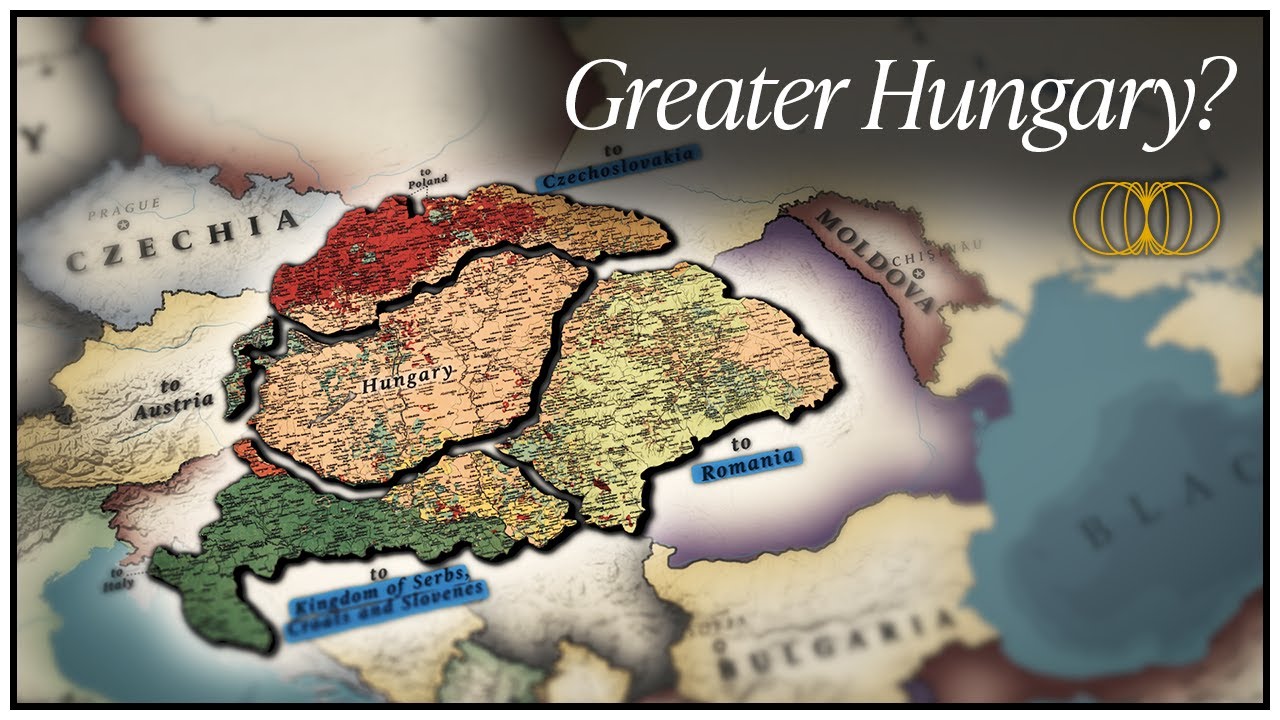
They rejected that party and they gave the opposition party a super majority and so they will be able to get rid of um Victor Orban and replace him with uh with I always pronounce the first name wrong. Um Peter, it's not that's not quite right. And um Majar is his last name. It looks like Magar, but it's pronounced Majar. So he will be the new leader of Hungary. and he is somebody who wants to retie Hungary to the European Union and wants to reestablish the democracy that Victor Orban destroyed. He is a centerright character in Hungary, but this is an incredibly significant election for the world, not just for Hungary, of course, uh, and for the United States, because people on the radical right who are trying to get rid of what they call liberal democracy, and I'll explain that in a second, have looked as a model or as the model to Hungary under Victor Orban. Now, I'll explain that a little bit in a second, but let me step back to what liberal democracy means. The word liberal in the United States became an epithet by the machinations really of the radical right in the 1950s. And I'll explain that, but liberal democracy comes obviously from the word liberal. And that liberal refers to the freedom of the individual.
And in uh sort of western political theory, the idea of a liberalism initially meant that you wanted to have a small government so that it would not infringe on the rights of the individual.
But beginning in the United States in the 1890s really and going into the early 20th century, people like Theodore Roosevelt, who becomes president, he's the Republican Roosevelt, unlike his um later relative Franklin Delanor Roosevelt, who's a Democrat. Um uh Theodore Roosevelt recognizes that with the rise of giant corporations like the rise of industrial factories that in fact you can't have individual freedom and the ability for individuals to be whatever they want without having a strong government that regulates business and and does a number of other things as well. But he was really interested in regulating business and providing health care and education and so on. So the term liberalism changes as a political term in the United States in the period of the Roosevelt. So the late 19th to early 20th century to mean that in order for individuals to be able to do whatever they you know want to work hard and be whatever they want to be, you need to have a big government. So when we talk about liberal democracy, what we're talking about is a government that protects individuals and individualism.
usually by the 21st century by regulating business by providing a basic social safety net by um by um in uh putting in infrastructure by protecting civil rights and by protecting the rules-based international order. So when you talk about a liberal democracy that's not a democratic democracy, you know, like it's not a political partisanship. It's not a place on the political spectrum. you're describing a certain kind of government.
All right? So, the idea of liberalism which was embraced by Republicans and independents and Democrats all in the United States, especially after World War II, that becomes sort of an epithet from the radical right during the 1950s, especially after the publication of a book in 1954. Oh boy, this is a rabbit hole, but some of you like those. Uh, called McCarthy and His Enemies, in which William F.B. Buckley uh William F.B Buckley and his junior and his friend uh and brother-in-law El Brent Bazelle argued that McCarthy might have been a little rough around the edges, but what he did was right. And McCarthy was the senator from Wisconsin who had the, you know, said everybody that he didn't like basically was a communist and, you know, basically just blacklisted a whole bunch of people and created sort of a witch hunt. If you if you read um The Crucible in high school, that was sort of a veiled reference to McCarthyism. Anyway, uh what they said in that book was that they were the only true people trying to protect America.
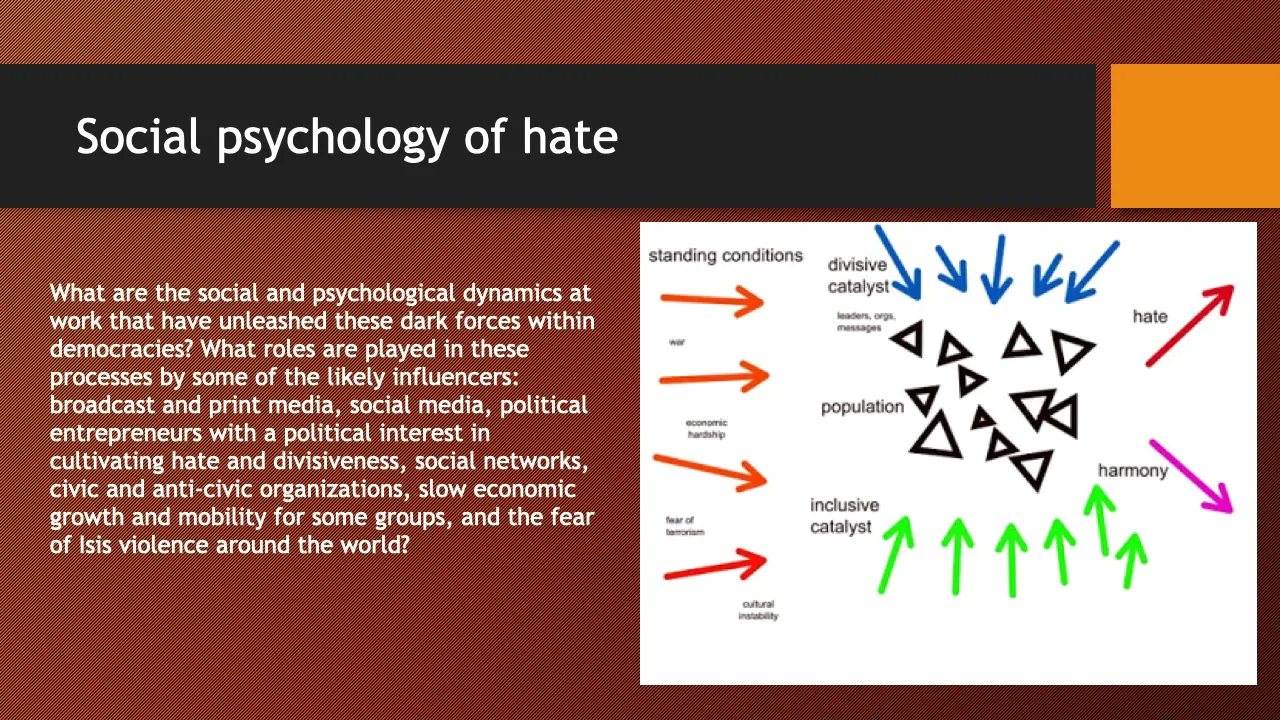
And they called themselves conservatives with a capital C to look like a political party, even though they weren't really conservative at all. They were trying to overturn something. And they said that anybody who stood against them was a capital L li liberal and that was designed to make them look as if they were something like the communist party that this was something to stand against. And going forward from that period that was 54 um the this idea that the you know the media is liberal and the professors are liberal and colleges are liberal and so on that was a way for that radical right to basically take the middle what everybody believed and turn it into something that you could sell to voters as a bad thing. All right. So when when people like Victor Orban and his acolytes here in the United States make war on liberal democracy, they couched it in such a way that they said, "We're going to return the world to this great place that it used to be in." And just so you know, there's no great place that the past ever was. that is we all have nostalgic memories about the past. But human beings have been complaining about how bad things are compared to their childhoods probably since before they discovered fire. Like you can just go through history there whole books on this where they're like, you know, here's the Greeks complaining about the kids and here's the, you know, Romans complaining about the kids and here's the I don't know whomever complaining about the kids. That's just part of human nature. But what they argue with those people who are destroying who want to destroy liberal democracy is that liberal democracy by by being based on the idea that everybody is created equal and everybody has the right to be treated equally before the law destroys countries. First of all, by welcoming immigrants because the idea that somebody can come to the to a country, you know, a week ago and it's not really that way, but you know, 10 years ago and become a citizen equal to someone who's been here for a longer time. That will weaken the true nature of the of a country. And of course, uh, Orban is articulating this in Hungary.
Um, but they don't want immigrants and they don't want women to be equal to men. They don't want um LGBTQ plus people to be equal to heteronormative people and they don't want um the idea of uh any religion to be equal to Christians. So what Orban argued for was illiberal democracy. that is there was sort of um this idea that if you got rid of equality before the law, you could somehow get rid of this equality that was in their mind destroying a traditional society.
But what it comes down to in Hungary and what it certainly will come down to in the United States is that Orban and his cronies used the the votes that they got from people to put themselves in power and then to enrich themselves while the actual economic growth and the conditions of people in the country went got worse and worse and worse and worse.
All right.
So in the United States the MAGA Republicans have tied themselves very close to Orban. Turns out that Orban's government was in fact funding um apparently funding institutions like the Conservative Political Action Conference, that sort of trend setting conference uh that started in 1974. So this is quite recent. Um an Orban acolyte took over the Heritage Foundation and turned it into a Trumpian MAGA um institution when it used to just be a Republican right-wing think tank.
Now it's a MAGA think tank. and um and they quite literally used Orban's own laws to write uh the things like the project 2025 and in places like Florida, u Governor Ronda Santis, the Republican governor of Florida, quite literally lifted things like the don't say gay law from Hungary and brought it to Florida.
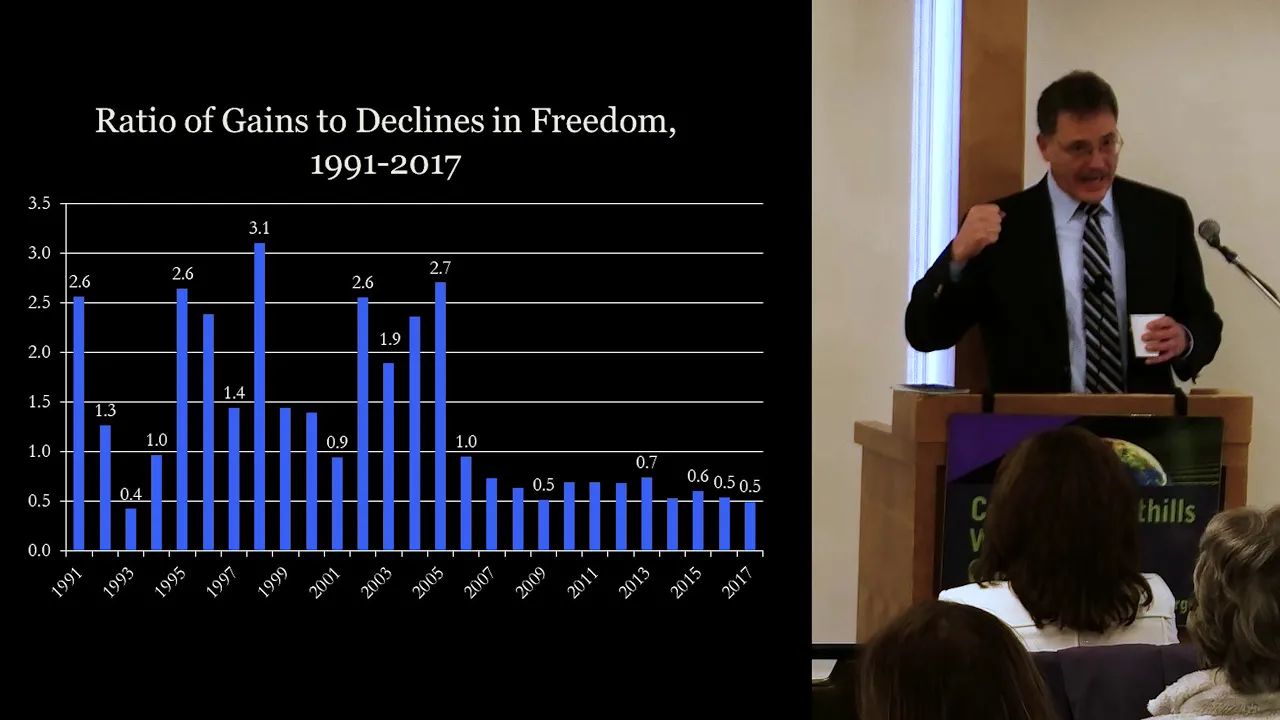
So, they've tied themselves really closely to this idea of illiberal democracy or Christian democracy as they call it. And this includes JD Vance as well. Quite literally he wrote the introduction for a book by Kevin Roberts who is the head of heritage, the Heritage Foundation who is such an acolyte of Orban. And of course we also know that Orban is very tightly tied to Vladimir Putin to the point that in a recently released conversation between the two of them from October of last year has Orban saying um I'm at your service. let me know what I can do. All right. So, you have all those things sort of out there now. And this was the idea that Orban and those people who were like him were going to take over the world. They were going to they were on this march and God was on their side and so on. And they were they were really going to be able to get rid of the liberal democracy that on which the United States of America was founded. But that also has been such a driving force for peace and prosperity since World War II. Again, never flawlessly. But if you think about the fact that that system has lifted more than a billion people out of poverty since World War II, you know, there's reasons that a lot of people care deeply about this. But they have acted as if liberal democracy was on the ropes. And you certainly have heard people like Vladimir Putin saying exactly that. Even um Xihinping of China has said something similar. Certainly Orban has said so. And you hear this when JD Vance or Pete Hegith go talk to European allies after all saying, you know, Europe is is fading. You've poisoned yourselves with immigrants. You know, Donald Trump has been saying openly to European allies, you know, your countries are falling apart. And I know why. It's because of immigrants and so on. They have presented themselves as this unstoppable juggernaut that is going to destroy the kinds of liberal the kind of liberal democracy that people like me advocate for.
And then on Tuesday, I'm sorry, s Sunday. Okay, I don't know what just happened there, but it was a pretty good breaking place. Sorry. Sorry about that.
I left you with what happened on Tuesday. And the reason that that was such a I keep saying Tuesday. Um what happened on Sunday and because today is Tuesday. The reason that was such a big deal was because as part of his attempt to get rid of liberal democracy and establish what he called illiberal democracy, Orban had really rigged the system pretty dramatically. in part by changing the constitution so that people from his party had a real leg up after elections in part by sort of you know gerrymandering is a US word but sort of rigging the the districts and also by controlling about 80% of the media so that voters really didn't get a very good picture of what was at stake in an election. All that is to say that it certainly seemed to a lot of people as if Orban had really cemented himself in power in the same way that illiberal uh Christian Democrats or or dem Christian democracy is a different kind of party thing but um people who are trying to establish this illiberal democracy or tear down liberal democracy would be able to keep themselves in power even though in places like the United States we know that when people knew about project 2025 only about 4% % of Americans actually wanted that to be instated. And yet, nonetheless, that's what the Trump administration is doing.
Anyway, on Sunday, Hungarian voters replaced Orban and his party with a supermajority in the parliament and put a new prime minister in place. And what that did was really important because first of all, it proved that this idea of illiberal democracy was not some juggernaut that was working alongside God that was going to keep on spreading.
And it it killed that idea of its inevitability. And that was a really big deal.
It also meant that the parliament in Hungary is going to have enough people in it who disagree with illiberal democracy to uh undo to unwind a lot of what Orban and his party did to make uh the democracy fairer going forward. As I said, the the new uh Majar prime minister is a center right, not center, you know, not center left or left politician. He's a center-right politician, but he has committed uh both to reestablishing democracy and reestablishing fairness in in Hungary, but also to turning Hungary back toward Europe, which as Europe says is where you we've always wanted you to be. But that does a couple of other things.
First of all, it means that Orban, who has been working for Putin to bottle up aid to um to Ukraine, is not going to be there any longer. So, more aid is going to flow to Ukraine. But also crucially, it means that any of the corrupt deals or any of the machinations that Hungarian officials might have had going on with Russia might very well get exposed now, including uh some of the things that might be exposed, including some of the ties between Orban and the American rightwing. So what happened that election on Sunday was a big deal and it was even though Hungary is a small country in central Europe and all that it it was a really big deal for the right-wing movement. Now now what does that have to do with American politics today? So what's happened since then is Trump has increasingly melted down. So if you remember on Sunday, one of the one of the things that he did was he out of the blue started posted this long screed attacking the pope. Now the pope uh uh Leo the 14th um is the first USborn pope in history. And Americans feel pretty good about that. Uh because, you know, he's he's for many people who are Catholic or who care about that institution, it's a really big deal. And he has embraced, Leo has embraced a sort of um uh labor justice and social justice kind of papacy. and he has taken a stand against the kinds of holy war rhetoric that defense secretary Pete Hexith and members of the administration have been embracing without using their names. He simply is is preaching in the the style of a of a Catholic pope.
But Trump again took to social media to attack the pope, which again is a dicey thing when you recognize that a lot of the power of the radical right and its its ability to to win elections has come from Catholic voters. So within minutes of doing that, Trump then posted an AI generated v uh picture of himself and it was a weird picture. It was AI generated. So, you know, they're always a little odd anyway, but it showed him as if he himself were Jesus. He's in robes. There's golden light bathing him.
There's light coming from his hands. He appears to be saving a man in a in a hospital bed or in a bed. And he's surrounded by people. There are American symbols in the background like a flag and a couple of eagles and the Lincoln Memorial and the Statue of Liberty. And then in the sky there are things coming out of the sky and some of them appear to be human and some don't. And I don't know, somebody said they look like X-Men. I don't know those well enough to know what they are. Clearly AI generated. And similarly, there are what appear to be fighter planes, but those two are kind of AI blurs, if you will.
They don't they're not like you can say what kind of fighter jets they are. But this depiction of himself as Jesus on Orthodox Easter, Sunday was Orthodox Easter, has created this huge backlash among MAGA Republicans who, you know, take offense at the idea that he is comparing himself not only to a God, but certainly using the iconography of Jesus to the point that Trump took it down on Monday under pressure and then went on to say that only the fake news media thought he was depicting himself as Jesus. He really just thought it looked like he was a doctor. And that I mean that you just can't get there. That's that's that's a man who's flailing. And it also shows I think the degree to which he is um losing control of his base and also losing control of reality. I mean, there are many things that people don't do in the United States, um, or that that they do now that they didn't used to do. I am reminded of when, um, John Lennon said to reporters that the Beatles were more popular than Jesus and people went out and burned Beatles records and so on.
You could get away with saying that today, but you you don't get away with depicting yourself as Jesus, certainly as a leader, without real questions about your mental health. Right? So in this moment when that movement that embraced Orban, Orbanism, MAGA and that Trump really rode to popularity on the heels of somebody like Orban who was out there before he was. Trump really appears to be melting down. And what's happened on the heels of that is a couple of things. First of all, we have the issue of Iran and this war that Trump launched against Iran. Uh when when presidents before him have declined to do so, recognizing both that it would involve Iran hitting back at other countries and also at the closure of the Strait of Hormuz through which u um the world's oil and natural gas and fertilizer and so on travels. And that's exactly what happened. Now, I'm going to go down a little bit of a rabbit hole here. People asked me to talk about the New York Times article that talks about how Benjamin Netanyahu, the prime minister of Israel, had really pushed Trump into this. Certainly, Netanyahu has been pushing for American presidents all along to be striking Iran. And all other American presidents told him no because they knew exactly what was going to happen. Trump was the first one to be stupid enough, I'm sorry, to listen to that. But this idea somehow that Netanyahu is some sengali who forced Trump to do something is is doing two things. One, it's trying to absolve Trump of the responsibility for making this insane decision. And two, it's anti-semitic. Trump is the leader of the United States of America. He is responsible for whatever decisions he makes. There is no passing the buck, which is one of the things that bothers him. He's always been able to pass the buck in the past. Don't buy that. And also don't buy this this new um sort of sane campaign about J. D. Vance saying he was against this war. JD Vance is in favor of whichever way the wind is blowing because he wants to be he wants to be president. So if this war had turned out to be incredibly um uh to to do incredibly well to be very popular and to accomplish you know whatever goals it was that Trump imagined he could JD Vance would have been the first one out there saying hey was I was all for this. So this idea that he is that you're seeing sort of sane washed in places that you know he was against this war. Of course he's against this war now that we're going to our seventh week and it's clearly a disaster. But all that to be said, Trump is responsible for this war. There is no pass in the buck on this one. The the rising price of oil, of diesel, of um liquid natural gas, the rising price of fertilizer, the incredible shocks around the world because of this uh these strikes on Iran. That's all Trump. He made that decision. He was certainly he certainly was talked to not only by Netanyahu but also by Muhammad bin Salman NBS of Saudi Arabia who had also had a lot of influence I'm sure because MBS is uh responsible for the Saudi sovereign wealth fund that's put more than $2 billion into uh Jared Kushner's um uh equity funds. So he's got this this Iran issue out there and rising the rising prices associated with that as well. So he doesn't really have a lot of options.
He tried to bully um other countries into opening the straight of Hormuz.
Then he announced last week that we'd reached a ceasefire. We'd reached a two-eek deal with Iran and we were the US and Iran were going to be jointly managing the straight of Hormuz. And then uh it turned out that Iran wanted no part of that. And so then he declared a blockade of the straight of hormones.
And that's problematic on so many legal levels. But the big picture of that is that he is making the calculation that the extraordinary economic pain that will result to Iran from his blockade of the straight of Hormuz will be more painful to Iran and they will be less able to withstand that than the United States of America. So he is inflicting more pain with the idea he's going to do what he called making Iran cry uncle. You know basically he's just trying to dominate Iran and that's really not the way you do international negotiations. So right now that's his solution and it's a really poor solution because it will also affect all the other nations in the world and it puts the United States military in the position of trying to stop ships from other countries going through the straight of hormone when theoretically we are behind the idea of um of uh freedom of the seas. So, he's got that going on. And with all that going on today, Congress came back into session. And now, of course, things have changed since Sunday because the Democrats in Congress have the wind at their backs and they are um furious about a number of things. But one of the things that happened today was that Jamie Rascin, who's a representative from Maryland, a Democratic representative from Maryland, who is the top Democrat on the House Judiciary Committee, introduced a bill that has 50 Democratic co-sponsors to establish a commission, a nonpartisan commission to investigate the president's mental acuity or rather his um ability to discharge the powers and duty of the office of the president of the United States. And what that is is is a a political move because the 25th amendment which provides for a system for removing a president who is incapacitated in one way or another. It says there's two really two ways to do it and I'm not going to go the other day I talked about how it takes place but I won't do that do that now. But what it says is that either a majority of the cabinet with the vice president or a majority of an independent commission set up by Congress can judge that the president is unable to discharge the powers and duties of his office. So by introducing a bill to create that commission, what Rascin and the Democrats are doing is forcing the Republicans to deal with the fact that the president of the United States is cuckoo for cocoa puffs because what they have been doing is, you know, when he does something incredibly erratic, somebody like House Speaker Mike Johnson says, "Oh, I don't know. I didn't see it. I don't know what you're talking about." or with the depiction of himself as Jesus. Johnson said, "Well, I thought it was wonderful that he took it down, that he that he showed respect for people by taking it down." That's not really the point, right? So, this will force Republicans either to say, "Yeah, we got a problem," which they really do, or we all really do. um or to be the ones who were responsible for leaving a mentally incapacitated president in the White House with all that that might entail because just a week ago, I think it was a week ago today, he was threatening to u to annihilate uh civilization, death to a civilization.
Uh you know there I believe it's 90 million people live in Iran and and he's not going to get better, he's only going to get worse. So there is that out there and there is also the fact that um today was the day that Attorney General Pam Bondi, former Attorney General Pam Bondi was supposed to testify before the House uh oversight and reform committee about the way in which her Department of Justice or the Department of Justice when she was in charge of it um released the Epstein files because Congress required by law that the DOJ release those files no later than December 19th with very limited redactions and instead they have released fewer than half of them with very heavy redactions. And so she was supposed to testify under oath about that and today she didn't show up. and she didn't show up because the Department of Justice, which is now under um acting attorney general Todd Blanch, who has not been confirmed by the Senate, but who was literally Trump's own personal lawyer, has said that because the House committee subpoenaed her as attorney general uh and not in her personal capacity, the fact she's no longer attorney general means she doesn't have to testify. and and um Representative Jasmine Crockett, who's a Democrat from Texas, went on social media and said, "This is ridiculous. Of course, she has to, and we're going to go after her for contempt of Congress." I will point out that Jasmine Crockett was a prosecutor and a and quite a successful one before she went into the House of Representatives. So, my money's on Jasmine Crockett for this one. But what you're seeing here is uh a presidency that is in in a and a movement that's in real trouble. And you're seeing resistance to that government pick up steam. And one of the things that people are really paying attention to now is the fact that the um the party that has ousted Orban did so by emphasizing his extraordinary corruption which the corruption of the Trump administration is so off the charts that it tends to get overlooked because we're talking billions of dollars. We're talking cryptocurrency. We're talking kickbacks from billionaires. We're talking um you know money flooding into the Trump family organization through its world financial uh world liberty financial coins and so on.
That's a really big deal because people understand corruption and they don't like it. So that's one thing. But that corruption then dovetales with a series of policies that hurt everyday people.
And that happened in Hungary and it's certainly happening here where Trump got elected in 2024 by promising to bring prices down and in fact has done just the opposite especially with energy prices. His promises never added up on paper anyway. But now if you look at the cost of uh gasoline and we're just now getting into the period where that um those higher costs are going to show up in uh in products in food and and products that are transported with energy or that need energy in order to be produced like farming or fishing for example. This summer's going to be really grim because of that because it's not going to go away immediately. So you've got that going on. You've got the corruption. you got the higher prices, but then you also have so what is sort of my the thing that always speaks to me and that's that one of the big things that worked in favor of um Majar and uh and his party was that they reminded Hungarians in in the countryside where they might not have been paying much attention before or been wedded to Orban that they didn't have to live like that, that they could be proud to be Hungarians and they could remember that their country had done exciting and wonderful things including resisting the Russians in the past or the Soviet Union and they could have pride in their country and they could have a say in their government and they could be part of rebuilding Hungarian democracy and with that promise uh more than 80% I believe it was of Hungarian voters turned out so that model has so many echoes here in the United states that, as I say, it's given such wind to the sales of those of us trying to protect democracy.
um and and such concern to those who are wedded to MAGA or to the Republicans that the Senate Majority Leader John Thun, a Republican of South Dakota, is openly talking about a replacement for Samuel Alo this summer, suggesting that they are very concerned about even holding the Senate, that they expect to lose the House, but now they're even concerned about losing the Senate. And the other place I think you can see real changes which I forgot to mention in the corruption part is in the last few days.
Eric Swallwell, a Democrat of California, and um I always forget his first name, uh Tony uh Gonzalez of Texas both resigned from Congress. and they resigned from Congress after fairly openly known, it turns out, um, uh, sexual harassment of underlings, AIDS and and and women. And that, um, is, I think, perhaps a sign of returning um, oversight of our elected leaders. And there are other discussions as well of other Congress critters. But that very quick, you know, Tony Gonzalez had been um had been there for a while. There have been a lot of calls for him to step down because of his record um with AIDS and he was hanging on. He was a Republican. You know, they wanted to keep his vote and so on. Swallwell, who seemed to be a rising star in the Democratic party when this this news came out, he was out of office in a matter of days. And that suggests that the American people are going to be just suggests because it's, you know, everything happens so quickly it's a little hard to digest it. But it suggests that we are going again to be concerned about the oversight of our elected officials. And that really matters because with the the oversight of elected officials at early stages, not even as late as becoming a a representative, but certainly not as late as a cabinet member or a a a president, you'll get earlier winnowing of the real bad eggs so that the the system will clean the corruption. You will be much cleaner of corruption.
That's why you want at least two parties in a system so you have that really robust oversight. And we had that of course after Watergate and and the dismantling of the protections that we put in place after Watergate has been a key um goal of the radical right since then. And maybe we're coming back to a time when we focus on that because of what clearly will be an increased focus on corruption. So, it's been a really busy week, but if you feel like, you know, when you try and look at the news and figure out what's happening, it's a little bit hard to kind of get your teeth into it because it seems scattered. It seems a little bit like, oh, here's Pam Bondi, here's Eric Swallwell, here's here's Iran. What's going on over there? Is the blockade really a blockade? because some ships are coming out and so you know and overall I think the choppiness is a reflection of the new world we live in after Sunday and the reality that we are now in the United States gearing up for the midterm elections and everything that that's going to bring. And on that front, I'm just going to urge you to keep on uh speaking up, keep on calling and showing up and writing and participating in organizations that do things that you care about. Uh, and keep talking about what kind of a world you want for your future.
Up Next
Physical Devastation of the South After the Civil War, 1865 | Reconstruction Era History
@ChronoscapeExploring
177 views•2026-03-21

The Great Schism of 1054: Causes and Consequences
@SacredCathedrals
113.5K views•2026-02-19
The Geopolitics of the Ukraine War and the Rise of Global Autocracy
@JordanHarbingerShow
468K views•2025-04-19

Understanding the Cold War: Superpower Conflicts and the Road to Détente
@OverSimplified
46.1M views•2019-01-24
Related Study Plans & Knowledge Roadmaps
Structured learning paths in History