






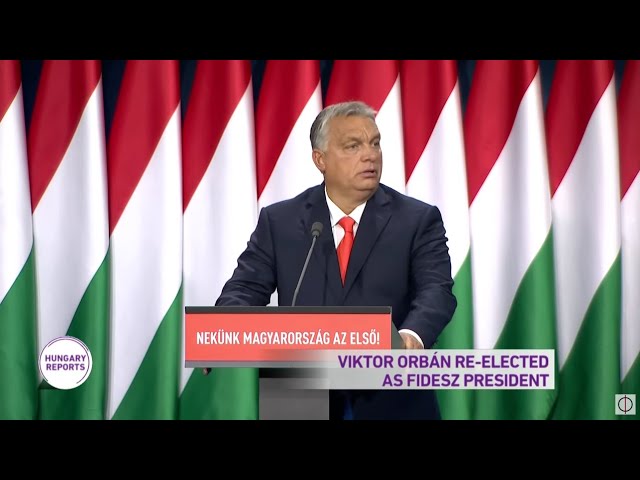



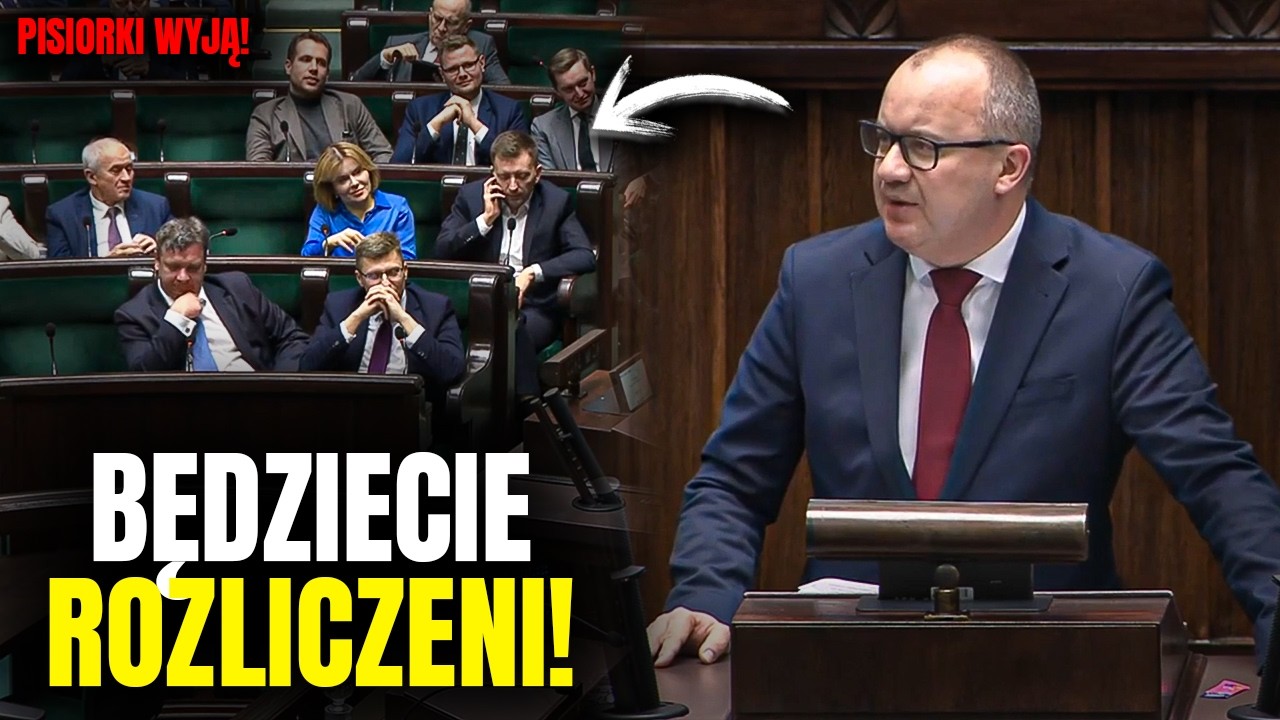







Hungary's transition from a representative democracy to Viktor Orbán's illiberal democracy demonstrates how a single election with a supermajority (2010) enabled constitutional changes that allowed Orbán to install loyal judges, curtail civil liberties, and manipulate electoral systems through gerrymandering, while simultaneously undermining independent media through economic pressure and government advertising control, ultimately creating a system where elections exist but lack genuine democratic competition.
Hungary's Autocracy: A Blueprint for Illiberal Democracy
Added:The core distinction between liberal and illiberal democracy, focusing on how a regime can hold popular elections while systematically undermining civil liberties and the rule of law.
The historical context of Central and Eastern Europe's post-Cold War transition, specifically Hungary's shift from a Soviet satellite state to a democratic European Union member.
The concept of democratic backsliding, particularly how modern authoritarianism often arises legally through constitutional manipulation rather than violent military coups.
The political platform of Viktor Orbán and his party, Fidesz, including their emphasis on Christian nationalism, anti-immigration sentiment, and state sovereignty.
Comparative analysis of democratic erosion in other global contexts, such as Poland under the PiS party, Turkey under Erdoğan, or India under Modi, to spot recurring patterns.
The mechanisms and limitations of the European Union in enforcing democratic norms and the rule of law among its member states, including Article 7 proceedings and funding suspensions.
A deep dive into institutional capturing techniques, specifically the restructuring of the judiciary, electoral laws (gerrymandering), and the consolidation of independent media.
Strategies for democratic consolidation and resistance, investigating how civil society, independent media, and united political coalitions can successfully challenge entrenched illiberal regimes.
579.9K views23.3Klikes57:52Original Release: 2022-11-09
(authoritative music) (logo whooshes) - Sweet Hams. It's me.
It's your Cody. You wanna do a news?
Well, let me look and see what we got.
Here is some news.
Looks like someone wrote, "Talk about the nation of Hungary," and (sniffs) peanut butter?
I really hope it's peanut butter.
Well, heck, this show does need to be a bit more worldly, I guess.
I was gonna talk about the midterms, of which I definitely know the results because we record these live, but sure, Hungary.
Why not?
- Did someone say the nation of Hungary?
Because that is exactly what this show needs.
- Okay. Hi.
Yes. I just said that.
I am so concerned that you agree.
- Listen, blank-eyes.
Everyone is talking about Hungary.
Hungary features stunning architecture, vital folk art, thermal spas, and Europe's most exciting capital after dark.
I took that sentence from "The Lonely Planet Guide to Hungary" because it is a sentence that is true, and what could be better than visiting Hungary?
Oh, I know. How about living in Hungary, huh?
Signing an apartment lease in Hungary.
- Uh... - Hungary!
- Hungary?
- Sign a lease to live in the apartment that I own in Hungary!
- There it is. Of course, you're a landlord.
You are such a landlord.
- Wow, suck-up, but no, no, don't give me too much credit.
I'm only a landlord for sport.
- What?
- I make passive income from the oppression of the poor for sport.
I mean, I'm not a monster in the boring, played-out sense.
Anyway, keep on rocking with this surprisingly great-for-me topic.
Also, you look tired.
Okay, bye.
(thunderous music) (static sizzling) - Here's some news.
Hungary is helping Russia with their invasion of Ukraine, right?
Remember Ukraine and how Russia invaded them?
It's kind of a slow burn over there, but could turn into a super-hot burn at any point.
Anyway, I'm not a war guy myself.
I'm not a war-boner, big throbbing missile, play a lot of "Sid Meier's Civilization" with one hand, if you know what I mean, wink-wink, nudge-nudge, splooge-splooge kind of guy.
That's not me, but to quickly recap, pretty much everyone is on Ukraine's side.
They have so much international goodwill, Switzerland might step up and help them with troops.
That's right, we're all so mad at Russia, globally, that the Swiss army wants to do more stuff than sell knives, but also, maybe not.
The war part is still basically Ukraine's whole job.
The rest of the world, not wanting, like, a third world war, can mostly just do economic stuff against Russia.
For example, this country, the United States, in addition to continually giving tons of money and weapons to Ukraine to the point that even Brandon got frustrated is hammering Russia with our ferocious, effective Dark Brandon sanctions on everything from Russian industry to Russian gold sales to Russian energy, and Dark Brandon's eye lasers are extra-mega pew-pewing the energy sector.
A lot of Russia's whole economic deal is the exporting of oil and gas.
Oil and gas are the Earth's favorite drugs, and Russia, they're mostly pushers, so in theory, if the world sticks together and messes up Putin's oil pump, that messes up his money pump, and his country can't afford to keep pumping their war pump.
That's the idea, the phallic, phallic idea, except not everyone is on board, in particular, China, which is buying more Russian energy than ever, but at least in global freedom land, in the Dark Brandon-verse, we're ready to do whatever it takes to help Ukraine.
The U.S. is on board.
Canada and Japan are on board, and our pals in the European Union are partially on board.
Hang on.
It appears I said one additional word that time.
What was that word?
Partially, as in the European Union, the place that's basically next door to the Russian army now is only partially helping out.
Why is that?
- The time of recording this interview, the European Commission's still trying to get all 27 EU states on board with an oil embargo.
We're led to believe that Hungary is the one country that's holding out on this.
- Hey! It's that country we're gonna talk about.
That was back in May, the result being that the EU eventually issued an oil embargo, with the exception of Hungary.
You see, this past April, Hungary had an election, sort of, kind of, this hand motion right now and for that entire sentence.
We'll cover why it's not an election later.
That's enough now, hand!
I'll see you after the show.
Anyway, the pretend election was yet another victory for Hungarian leader Viktor Orbán, whose name I'm going to say 100 billion times before this showdy is ovy, over.
Here's what he looks like if you're curious about that sort of thing.
(crowd cheering) - [Newscaster] A fourth term for Viktor Orbán, who likes to think of himself as the strongman of Europe.
His supporters are elated.
- Strongman, you say. Nothing ominous about that.
Immediately after winning, Orbán bought a nyet-load of Russian gas, and he made a point of buying it in rubles, which are Russia's preferred currency, i.e. their currency.
Hungary did this even though Russia invaded a country that Hungary borders, and even though Hungary is in the European Union, and even though that purchase is basically a Russian military victory.
This led the European Union to wonder what to do about Hungary and Orbán.
Their first and most obvious idea was to boot Hungary out of the EU, except they can't actually kick anybody out once they're in, but most of the EU members tried to use a rule called Article 7 to suspend Hungary's membership rights, which would require every other EU country to agree, except for several years now, Hungary has loudly protected Poland from a similar punishment, so naturally, Poland has their back, and now, even though Poland does not like the whole Russian tanks moving west kind of thing, Poland is protecting Hungary's right-wing, pro-Russian government because that's what tag-team partners do, no matter their differences, just like the Rock 'N' Sock Connection.
Those two countries, specifically Hungary, single-handedly punched holes in all of the EU's Russia sanctions.
If your Twitter avatar has turned blue and yellow at any point recently, that could matter to you.
That's stuff you want to know.
Also stuff you want to know is that Hungary is a unique flaw in the overall unity and effectiveness of the European Union and the NATO alliance.
For example, they're the one member of the NATO alliance that is vetoing a program to promote democracy.
It's gotten so bad that recently, the entire rest of the EU voted to censure Hungary and declare Hungary a, quote, "systemic threat to the rule of law."
That's huge news.
I also lied when I said it's recent news.
It happened way back in 2018, and you likely didn't know that because the United States media didn't really bother covering it.
The point here is that Hungary and Europe are basically one of those married couples that's not legally divorced or separated in a way that frustrates them both.
Also, one half of the couple is openly banging other guys, such as Russia.
I would compare this relationship to the events of the recent erotic thriller "Deep Water," a film I already brought up last week and will bring up any time I want!
And trust me when I say that Hungary and the EU are exactly like this sexy film, at least in that no one is paying attention to either things.
Not to neg you, my super-attractive viewer, but I'm guessing Hungary isn't exactly a country you think about, and by you, I mean also me, but as I alluded to, there sure seems to be something fishy going on with their elections, and they super-don't seem on board with the whole democracy thing, so for that reason, we should probably actually explain what's going on over there and why it matters.
I mean, it extremely matters if you're in Europe, but you Yanks might not feel particularly affected by the goings-on of a country all the way in... It's somewhere in there, right?
Hey, fun fact: whenever an American acts like they can't be bothered to know about Europe, it's actually just because our education system is bad and no one taught us where anything is.
Not me, though.
I'm super-smart and totally not reading off a teleprompter and using my brain, and brain alone, I will now explain the history of Hungary from memory, from all those things I know.
Let's do a graphic.
(rustic music) Oh boy, here we go!
Get your history grease out because this is gonna be a doozy, so beginning with the Magyar people in the early BC times.
- Nope. Cutting this off.
It's boring, and it's not the point.
- But they got their history grease out.
- Listen, all we need to know is that Hungary is a democracy, probably, okay?
'Cause, you know, a place is a democracy if it is a nice place to be in, and Budapest is the greatest city I have ever visited and analyzed and purchased a two-bedroom in.
Even your precious journalism likes Hungary, Cody.
Look, look, here's a journalism describing Budapest, quote, "The capital on the Danube does not feel autocratic.
"The atmosphere is relaxed, not repressive.
"No paramilitaries are marching.
"If anything, one might come across "a small demonstration against the government, "politely escorted by police.
"The ruling ism would appear to be not authoritarianism, "but hedonism: from the beautifully restored thermal baths "to the beer gardens in the old Jewish quarter, "affluent natives and an ever-growing number of tourists "just seem to be enjoying themselves."
Yeah, and that's from the "New York Review of Books," the four most liberal words ever combined.
- Wow, you really wanna offload that apartment, don't you?
- Why, do you know anyone?
- I feel weird saying this, but we should probably do ads.
- Ooh, yes! Okay, begin ad.
Hi, there. Are you looking to get away from it all?
Perhaps the country you live in no longer wants you there because of a crime you did.
Well, I'm here to tell you about Katy Getaway Rentals, the only rental company that takes cash and won't do a background check.
Cody, do you think it's okay to mention murder, specifically?
Okay, wait, let's start again, but with more murder talk.
- I meant actual ads.
I'm cutting to the actual ads right now. (electrifying music) (logo whooshes) Hello, businessperson.
I'm Cody, also a businessperson. My business?
For $20 a month, I will write you a little note predicting how you're going to die.
You only get one word a month, so you have to keep spending.
What's my secret? I just make up the predictions.
It's a lie. Also, I use stamps.com.
They give you access to the USPS and UPS services you need to run your business right from your computer.
No holiday hassle.
No Better Business Bureau or FBI stopping you on the street.
All you need is that computer and a printer, and you can print postage whenever to go wherever you want.
Legally speaking, I am a psychic.
I realize now that I shouldn't have said I lie in my predictions.
Anyway, stamps.com isn't just easy and convenient to use, but can give you major discounts on USPS and UPS shipping rates.
We all love the post office.
We root for the post office, but if you're running a small business with a lot of mail, then stamps.com is designed for you.
I predict that you'll love it.
I'm really a psychic. Like, legally, I'm a psychic, okay?
Just, that's what the law says about me, my psychic powers, you, you're thinking, "I agree.
"I believe you."
Sign up with promo code MORENEWS for a special offer that includes a four-week trial plus free postage and a free digital scale.
No long-term commitments or contracts.
Just go to stamps.com, click the microphone at the top of the page, and enter code MORENEWS.
(Cody's sinuses crunching) (electrifying music) (logo whooshes) Wow, products and services.
We love those.
Anyhoo, it looks like Katy is gone for the moment, and we should probably take advantage of that fact and keep talking about Hungary, which, going back to that "New York Review" article, seems to heavily present as just another fun European destination.
I mean, would some kind of anti-democracy have Will Smith dancing on it?
♪ Kiki, do you love me ♪ - [Announcer] Will Smith takes a viral dance challenge to new heights.
He's doing the shiggy on top of the landmark Chain Bridge in Budapest.
- No way this is legal.
- Wow, that looked fun, really fun.
Clips like that make me want to get on a plane, get my vacation on, and come back with a souvenir that makes my friends ask me why the manufacturer printed the Italian flag sideways.
I mean, look at that Fresh Prince dancing on top of public infrastructure he broke into or got permission to enter.
We don't know. Either way, don't worry.
That was in 2018, so Will Smith had not hit anyone yet.
Also, do worry.
That was in 2018, the exact year when the entire EU voted to censure Hungary as a "systemic threat to the rule of law," end quote.
See, it turns out that Hungary might be the world's prototypical example of something called an illiberal democracy.
This is going to be the phrase of the day.
Write it down with your history grease.
Illiberal democracy is a system where there are votes, there are elections, there are vibes of democracy, but there are no real opportunities for anyone but one strongman to hold power.
You probably know that system from Vladimir Putin's Russia.
That's the famous one, and yet Hungary is even more of one, and hey, that's why we need to talk about Hungarian history real, real quick.
I am so sorry, but the grease is out.
Hungary, you see, is a multi-ethnic modern state with ancient roots involving tribes of Magyar peoples.
The land that is now Hungary spent centuries as part of various empires.
You know how it is with brief periods of independence or getting divvied up.
By the mid-1800s, Hungary was an independent kingdom under the Habsburg monarchy.
In 1848, that changed.
Hungarians were one of many European peoples to hold a democratic revolution and form a democratic government, but then that got crushed by authoritarians.
In Hungary's case, the authoritarians were the combined forces of Austria, Russia, and a lot of guys in this facial hair zone.
They remained an Austrian-run place through World War I, a war that was awful for them.
I mean, war tends to be awful, but this was especially not good for them.
3.8 million Hungarians fought for the Austrian and German side.
More than half of them, about 2 million, got killed, wounded, or taken prisoner.
All of that mass death and dislocation helped make life in Hungary a real boner, so boner-y that it was ripe for revolution.
That paved the way for Hungarians, led by this guy, to form a post-war communist government.
Surprise!
Hungary was one of the first communist countries ever, but Hungary only did communism for, like, a few months.
Then this guy threw the communist guy in jail and formed a republic.
That made the rest of Europe quite happy, happy enough to draw up a treaty making Hungary an independent country.
Then this guy overthrew the independent republic and made Hungary a fake kingdom, which was really his personal military dictatorship.
That guy, named Horthy, ruled Hungary all the way until 1944.
World War II ends the next year, and Hungary is located east of Germany, so the Allies let the Soviets run it.
The Soviets tried to make Hungary communist, but lots of Hungarians remembered the 1919 communism and also did not like the 1919 communism, so Hungary gently tries to do its own thing.
In 1956, Hungary tries democracy.
The Soviets end that democracy by sending in tanks.
Hungary stays in the Eastern bloc until 1989.
Then it becomes a democracy, for the first actual time, in 1989, and I know, ha-ha-ha-ha, we put a picture of a Taylor Swift album next to me because the album is called "1989," her birth year.
So random, right? Wrong, (beep)!
That seemingly random reference is also a very good point about how young and recent and from our lifetimes Hungarian democracy is.
That is my good point.
(authoritative music) (logo whooshes) I don't need your help, monkey!
So Hungarian democracy started in 1989 with their first free elections in 1990, and congratulations, that's modern times, so we have completed Hungarian history time.
You can now eat your grease.
Sound off in the comments if we missed anything in our summary of a nation's entire history condensed into a few minutes.
Hit us with your favorite György Klapka facts that I glossed over.
Dunk on our brisk erasure of Premier János Kádár because I certainly did not do a thorough job of summarizing Hungarian history.
How could I? That's not the point.
All I'm going for is one point, which is that across its history, Hungary has switched back and forth between closeness with European powers to their west and closeness with Russian power, which makes sense, right?
They've been integrated into all kinds of empires from the Roman Empire to the Soviet Union.
They've experienced both relationships, usually forced on them.
They also occasionally got to pick, so tya-ha!
And when Hungarian democracy started around 1989, the first several elections hinged on picking that answer.
Did Hungary want to choose a closer relationship with Russia to their east or choose a closer relationship with the united, peaceful Europe to their west?
For about 20 years, Hungarians got to pick.
They voted with their hands and hearts and other body parts.
They also have one of those parliamentary governments where whichever party has the most seats is also the prime minister.
That prime minister job went back and forth.
For example, in their 1998 election, the Fidesz Party won the most seats.
Fidesz is a pro-Russian party and a conservative party and a party that pushes a lot of (beep), hateful (beep).
Fidesz was the winner of the 1998 Hungarian election.
That made their leader the prime minister, and their leader, way back in 1998, was Viktor Orbán.
Hey, I know him. Remember him from now?
Viktor has a long history in Hungarian politics, specifically, a long history as a loser.
Fidesz won in 1998, but it lost the election before that and the election after that and the election after after that.
Viktor Orbán led most of that, like the loser he was.
He has lost a lot of elections. Why?
Because he's not actually super-appealing and because Hungarians, surprise, are like Americans.
They pick different parties and positions year-to-year based on how things are going, and they pick by voting, or at least they used to because in 2006, the guy who barely beat Viktor Orbán in that election was the leader of the Socialist Party, and that guy made a mistake right after their victory, a huge mistake, a mistake so colossal, it pretty much made Viktor Orbán prime minister for life.
This guy's name is Ferenc Gyurcsány, and right after the election, Gyurcsány gave a speech to his party's biggest meeting.
Somebody taped it, and somebody leaked it, if you can even call a speech at a huge meeting leakable.
Anyway, it got out there, and that meant Gyurcsány told the whole country the following about his recent campaign, quote, "We lied "throughout the last year and a half, two years.
"It was totally clear that what we are saying is not true.
"You cannot quote "any significant government measure we can be proud of "other than at the end "we managed to bring the government back from the brink."
Wow, okay, well, at least that's the end of... Oh, God, no, there's more quote to quote.
Here it comes.
"We lied in the morning. We lied in the evening."
(beep), (beep), darn!
That's me, not the quote.
Also, it probably sounds worse in Hungarian, but in fairness, Gyurcsány did say some good stuff too, stuff like how important it was to not apologize for leftist ideas and to stand up to Viktor Orbán.
At the time, this was on the heels of a campaign where Orbán barely lost, partly because many center-right Hungarians considered Orbán too extreme to support.
They were right, but many Hungarians were also right to hold nationwide protests against Gyurcsány after hearing the stuff he said he did, and while there's a tactful, smart, and adult way to respond, Gyurcsány did none of those things.
Instead, he refused to step down for three entire years, even though the entire problem was stuff he personally said, and unfortunately for him, in the next election, the people of Hungary seemed to remember that famous Maya Angelou quote: "When a Hungarian center-left party selfish leader "tells you who they are, believe them the first time."
I think that's how that goes.
I know that's how it goes!
In the run up to the 2010 election, Hungarian polls showed that Gyurcsány killed his party.
They were gonna get waxed.
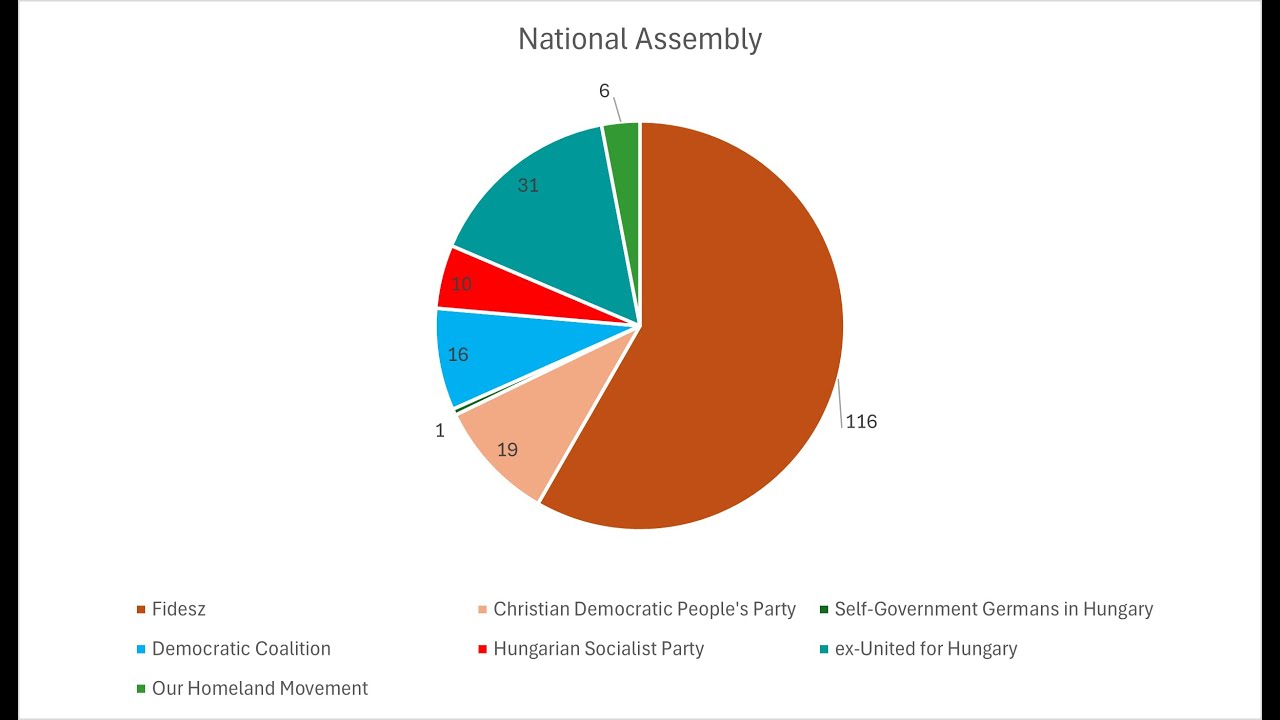
Gyurcsány had also stayed in power too long, which meant his party lost the chance to change images by switching to a new guy, so in 2010, Orbán ran against Gyurcsány's last-minute replacement plus a bunch of third-party and fourth-party no-names, and Orbán's party won the next election in a landslide with a 2/3 supermajority of parliamentary seats.
That fraction I just said was the end of Hungarian democracy.
Orbán used those 2/3 of seats to rewrite the Hungarian constitution because that's the support he needed to do that.
One election driven by one incumbent being one selfish asshole was all it took.
That's why I spent so damn long explaining this because (sighs) I mean, I don't know, maybe it's something we Americans should think about: how a single election brought on by political stubbornness and hubris collapsed democracy for this country seems relevant.
A lot of relevant details to this story, you know?
Stuff like how Orbán's new constitution empowered him to install a wave of new judges.
Sound familiar?
And curtail civil liberties.
Sound familiar?
And make repressive changes to Hungarian election laws super-fast and before the next election.
Sound familiar? 2024.
Thanks to Orbán's interference in voter registration systems and the proportionality of representation in Hungary and other changes that were so egregious, Hungary's Socialist Party boycotted the votes on them.
Thanks to all of those changes, Orbán proceeded to win three more elections in 2014, 2018, and 2022.
Three more elections that were not really honest elections.
In that new system he created, votes do happen, but the votes don't totally matter.
Wow! Whoopsies.
I put up the wrong picture of an article about an aggressively gerrymandered legislature that props up conservative white nationalism.
I'm about to switch it to a more relevant article any minute now, yeah?
There we go!
There is the Hungarian gerrymandering information I was looking for.
So many relevant things.
Viktor Orbán used his wins to further rewrite the Hungarian constitution again and again and to aggressively mega-gerrymander Hungary beyond what he already g'mandered.
Also, he did that in ways you and I don't understand because how is Hungary even subdivided? Into states?
No, apparently it's into 19 counties.
What a fun factoid about a dying democracy.
(authoritative music) (logo whooshes) Hungarian elections are still a thing that happened, but they're only a little competitive now, and Viktor Orbán runs hard on the kind of nationalist, anti-immigrant, anti-Semitic, anti-gay, and anti-trans positions that do lock down a big chunk of the vote in modern democracies.
You know, the kind that start with the letter U and then end with the letter, I don't know, A, for example.
Probably an S somewhere in the middle too.
Good news: Those positions do not lock down the whole vote, though.
They basically never get the whole vote, especially if you factor in the voter suppression those types of parties usually put in place to make their hateful (beep) seem more popular than it is.
Still, a non-majority, but nonetheless, huge number of people will vote for that stuff, so if you tilt your nation's systems to make those people get enough votes to win, you'll never lose power, and that, my friends and enemies, brings us back to the phrase of the day: illiberal democracy.
See, people like to imagine that an authoritarian government shows up like the movie "V for Vendetta" or the comic book based on the movie, that it's this sudden change where armored soldiers goose-step in the streets looking for thoughtcrimes and idea misdemeanors, but in the case of Hungary and other places, perhaps places really close to where we live, it's a bit more subtle, something the "New York Review" might call "relaxed, not repressive; "no paramilitaries are marching," as if that's the official test of a democracy.
so anyhoo, let's discover how that illiberal democracy works in practice in the distant and unrelatable nation of Hungary, but first, as a breather, advertising, which is good.
A perfect segue is coming soon off of the advertising.
I'm gonna segue it so good. Just you wait.
(electrifying music) (logo whooshes) - Hey, 'sup?
It's me, Katy Stoll, or should I say Katy Swole?
They don't call me the wrench-hands for nothing.
I had to earn that title in a series of arm-wrestling competitions, and while, yes, it was technically a child's event, I still won, okay?
And when I need to toughen up, specifically, in an ad, I use AG1 by Athletic Greens.
You know, sometimes we just don't have time to eat right, what with being a respected brute such as myself.
AG1 gives you all the vitamins you'd normally take in a balanced meal or in a series of pills and puts them all into a single drink.
It's comprehensive and convenient daily nutrition for everybody.
Look here, look at me drink it.
Mm-hmm. (gulping) (old-timey music) Down the old Katy-hatch, huh?
Ah! Ah-hah!
Just one tasty scoop of AG1 contains 75 vitamins, minerals, and whole food sourced ingredients.
It's good for any lifestyle, such as vegan or keto or paleo and only has a single gram of sugar.
Listen, if you take a multivitamin already or have certain nutritional gaps in your diet, you should really look into AG1.
Who knows?
Maybe they'll make you strong enough to beat a child at arm wrestling, maybe.
A crying, heartbroken child while their parents watch on, shaking their heads.
You can have that for yourself.
Anyway, to make it easy, Athletic Greens is going to give you an immune-supporting free one-year supply of vitamin D and five free travel packs with your first purchase if you visit athleticgreens.com/morenews today.
Again, simply visit athleticgreens.com/morenews to take control of your health, and give AG1 a try.
(electrifying music) (logo whooshes) - Advertising. Money.
Money funding media. Segue.
Ads are not the only way to fund media.
Thank you, again, Patreon supporters and all those college kids I sell pills to, but ads are one of the key types of money.
Segue!
And news comes down to money, so this whole next chunk of Cody of Showdy News looks at the money behind Hungarian News.
Segue!
It's one of many elements of what life looks like when a democracy ends unofficially.
How does a country stop doing democracy while still holding elections and having campaigns and Pokemon going to the polls?
After all, Hungarians, as far as we can kind of tell, still love democracy.
In a 2016 poll, 95% of Hungarians said it's very important or somewhat important to have frequent and honest elections.
Another 95% said the same about women's rights mattering, and yet... Hold on a second.
Let, let's, let's, let's take a look at who is serving his fifth term as prime minister of Hungary.
Says... Says Viktor Orbán.
That's a... That's a fun name I haven't heard in at least a couple of seconds.
95% of Hungarians polled in 2016 supported the basic definition of feminist principles, yet Orbán's government is so anti-feminist, it produced this video in 2020.
(presenter speaks in Hungarian) - Right! I can't speak Hungarian.
That's a video encouraging women to stick to roles as childbearers and caregivers, to stop competing with male work colleagues, to stop asking for equal pay to men, and to not give up their, quote, "privileges over some misguided fight for emancipation."
95% of Hungarians believe in women's rights and also elected the government behind that video four times in a row and counting.
How does that happen?
Well, one way is the collapse of democracy's responsiveness to the popular will.
Another way is the collapse of independent media, which collapsed because Viktor Orbán collapsed it.
People in Hungary love a free press.
In polls, 91% of respondents said very important or somewhat important about media freedom and about internet freedom, but in 2016, Orbán's government engineered the shutdown of the largest newspaper in the country that his friends don't control.
I mention those friends because since 2010, Orbán has not just been mega-rewriting Hungary's constitution; he's also been recruiting rich conservatives to buy up Hungarian media in order to shut that media down.
That tactic is why 2,000 people turned out in Budapest in 2016 to protest the shutdown of Hungary's biggest remaining not-pro-Orbán newspaper.
The protestors knew this newspaper got bought up by Lőrinc Mészáros, an Orbán ally who was so close to Orbán he was literally the mayor of Orbán's hometown.
In 2018, a similar shutdown happened to another non-pro-Orbán paper.
You'd think they'd be thriving, scooping up the readers jilted by their competitor's closure, but that 2018 paper shutdown came from its owner choosing to close it because their ad revenue collapsed.
Why did it collapse?
Well, it turns out government advertising is a major revenue source in Hungarian media, and Orbán turned that faucet off for that critical newspaper.
He also did something similar in 2020.
That's when an Orbán ally took over the advertising sales unit of Hungary's number one news website and then sabotaged that unit.
This prompted the resignation of the site's editor in chief and over 70 staff members in protest.
Orbán's done one of these three types of moves to literally hundreds of Hungarian media outlets.
He's not technically censoring them.
He's just squeezing them out economically using the tools of capitalism because, again, you don't need a bunch of soldiers marching around in order to inflict your authoritarian will.
It turns out you just have to have money, which is why I promise that with enough Patreon support, I, Cody Johnston, will take over a small town of my choice.
(electrifying music) (logo whooshes) So again, not technically media censorship.
However, there is also full-on Hungarian media censorship now that Viktor Orbán is really feeling himself.
For example, this 2021 Orbán law banning gay content in children's media, and, of course, a lot of other LGBTQ bans that we'll get to, but that niche, gay media censorship, is the exception to this more frequent media sabotage because media sabotage seems to go over better because Hungarians dislike censorship.
They love press freedom, and maybe one day they'll actually get it.
I really can't stress how simple it was to end democracy in this country.
There was basically one step, one super-majority in one election followed up with a swift reshaping of government in parallel with a sneaky sabotage of the media and the other cash-driven parts of society.
That's all happened since 2010, a year within your lifetime unless you're, like, six?
This change is also something we can see shifting in polls, those same 2016 polls where Hungarians expressed a love of democracy, feminism, and press freedom also polled some wildly un-European attitudes towards migrants, migrants who are Hungarians, fellow human beings, human beings fleeing tragedy and death to the nearest safe location.
For many of them, that's Croatia, Serbia, and the other Mediterranean countries directly south of Hungary.
Hungarians don't want those refugees to proceed into Hungary, or at least, they might not want that.
We will never know.
We'll never know how much of that is influenced by the entire Hungarian media becoming a megaphone that repeats Orbán's ideology.
We'll also never know how Hungarians would actually vote on that as a policy.
Speaking of, one of Orbán's favorite post-democratic democracy moves is a referendum.
Just a few weeks after the publication of those polls I cited, Orbán's government held a referendum on migrant policy.
Orbán declared victory, but observers declared a mulligan.
You see, Orbán's anti-migrant position won 98% of the votes in the referendum, which is, frankly, too many votes.
98% of people don't agree on anything.
Something was up, probably many things.
For starters, there was a wildly low turnout, turnout far below the necessary 50% of overall voters to make the referendum binding.
The referendum was, legally, a mulligan, and instead of following his own referendum rules, Orbán ran with the fake-y result.
He said the extremely high proportion of no-voters still gave him a mandate, "to ensure that we should not be forced to accept in Hungary "people we don't want to live with," end quote, end very racist quote.
Orbán has used his unearned power to build a giant wall-type fence on Hungary's borders with Slovenia, Croatia, and Serbia to keep refugees from those places from entering Hungary.
He also called refugees poison and said literally every single migrant posed a public security and terror risk.
This is, of course, a lie.
You could even describe it as a Big Lie in capital letters.
It's not even a lie Orbán stuck with all the way.
In 2022, when his Russian friends invaded Ukraine, Orbán opened that part of the Hungarian border, welcoming those specific refugees.
He said it's because, quote, "We are able to tell the difference "between who is a migrant and who is a refugee," end quote, and a very cool quote about him being able to tell which people should and should not cross his border, and gee, I wonder how he's able to tell that.
(electrifying music) (logo whooshes) In 2022, Viktor Orbán finally dropped the mask completely and said Hungary must not become mixed race.
Oh, sorry, that's the wrong article.
That's an article about a U.S. senator saying that the Supreme Court was wrong to strike down state laws that banned interracial marriage.
Sorry, this is not a U.S. news episode, I'm pretty sure.
This is a Hungary episode, so here is that news story about Viktor Orbán saying out loud that he does not want Hungary to contain multiple races of human beings.
Yes, that is a for-real thing he said out loud.
That is his policy. He said so.
He said so in a speech in Romania, a speech he gave a couple weeks before his keynote speech at CPAC?
CPAC, GPAC, GPAC?
I assume CPAC is a Hungarian-language acronym for some kind of Hungarian political event and not the single biggest idea-drafting event for United States Republicans.
Whoops, again, my paper here says CPAC is that United States thing, a thing Viktor Orbán still got to speak at because apparently, opposing race-mixing is not a faux pas in the Republican Party.
Interesting.
You see, in Hungary, that kind of comment leads members of your own party to resign their job and call you a Nazi, but in the U.S. state of Texas in front of a tiny crowd because almost all Americans do not agree with a handful of wealthy freaks who go to CPAC, anyway, within the context of Freak-PAC, a speaker's open hatred towards so-called race mixing gets you applause, especially if it's counterintuitively paired with a drive to increase Hungary's domestic supply of infants.
Wow, that is... Wow.
Don't wanna jump to conclusions, but it seems like these Republican fellows I'm reading about here are a bunch of racists.
White nationalism and Christofascism are Viktor Orbán's whole deal.
CPAC celebrity, Viktor Orbán.
His anti-gay law in 2021 didn't just ban LGBTQ content in Hungarian children's television.
It also banned gay concepts in Hungarian classrooms and generally targeted Hungarians who wish to say gay.
It was a do-not-say-gay law, if I may speak Floridian for a moment.
In a democracy, you need your big, huge laws to have at least a little popular support, but Orbán's don't-say-gay law is so unpopular he couldn't even do his national referendum trick to legitimize it.
His 2022 anti-gay referendum lost despite definitely getting the votes of his most hardcore freaks, but his unpopular law is still on the books because if you're Orbán's government, who cares?
You can make gay illegal and racially pick and choose your refugees and fund billboards depicting George Soros as a puppet master, wink-wink, anti-Semitic wink, or say, "Europe must not succumb to the Soros network," because Viktor Orbán does his anti-Semitism the professional, dog-whistle-y way.
Orbán can do all that because he's way past caring what anybody else wants.
Hey, do we have a video of Orbán depicting George Soros as a puppet master?
♪ Sending out an SOS ♪ (crowd laughing) ♪ Sending out an SOS ♪ - Yeah! (crowd cheering) - Oh, darn, sorry.
That was from a GOP convention from back in May.
Totally not the same situation.
Anyway, on the subject of conventions and junk, Viktor Orbán does a limited amount of actual campaigning for the office he's basically going to hold for life.
What campaigning he does do seems to be focused on demonizing specific targets, in particular, George Soros.
For whatever reason such as, I don't know, anti-Semitism, George Soros is an easy target for conservatives making stuff up, and apparently, it's extra-mega-easy to do this stuff in Hungary.
Orbán loves criticizing George Soros as a spooky foreign influence because after all, he's not even from the... Okay.
Says here George Soros was born and raised in Hungary, specifically.
Out of all the countries in the entire world, he's from Hungary.
Wow.
Also, he is old, so he was born there in the 1930s, lived through Nazi occupation, and had to survive the Holocaust by going into hiding as a child, like Anne Frank, another child-type person, but then, George Soros lived to adulthood, an adulthood he spent making money, yes, and then, using a lot of that money to support charitable causes and global health and education, but then, also living to see his home country lose its own democracy and lose that to a guy who, and this is pretty wild, had an education and opportunities that George Soros personally subsidized, really.
You see, they say Viktor Orbán grew up a poor rural kid, and Orbán's whole life changed in the mid-1980s when he got accepted by a new college in Budapest called István Bibó.
It was a wildly underfunded college that stayed in operation thanks to a fairy godmother-style visit from George Soros who bankrolled its language courses, bankrolled its study-abroad program, bought them a photocopier, and funded a student journal whose editor in chief was young, apple-cheeked Viktor Orbán, so it's very cool that Orbán went on to kill every form of Hungarian independent media in part by withdrawing government funding for advertising, which was sometimes advertising that demonized George Soros.
It's very cool, and not at all uniquely (beep).
On the bright side, and it's not the bright side; I just wanted to give you a quick morsel of hope.
Viktor Orbán is trying to destroy George Soros's entire philanthropic life's work by doing stuff like undermining the entire Hungarian educational system and closing a new Budapest college Soros founded because, as we all know from reading the very good editorial section of the "New York Times," woke college campuses are basically the number-one threat to society.
Hungarian quasi-dictator Viktor Orbán feels this exact way.
Along with a free and independent media, a basic state of intellectual freedom is one of the few ways Hungarian people could choose to agree to vote Viktor Orbán out, so he's terrified of that because he's not yet a dictator for life, but he's working on it, starting with being a real weirdo.
You see, Viktor Orbán is a soccer fan, and he's a diehard fan of the soccer team in his tiny rural hometown of Felcsút, Hungary, a rustic, remote hamlet of less than 2,000 people, which is now dwarfed by a 4,000-seat soccer stadium that landed in it like a (beep) UFO.
(majestic music) What in the heck?
That (beep) monstrosity also landed a total of 20 feet from the country house of Viktor Orbán, which is all pretty convenient.
It's also tax-deductible, which is also convenient.
Orbán's government threw a change into their tax code that makes investment in sports tax-deductible, which helped him buy a lasting upgrade to his favorite sports team and a perfect metaphor for his totalitarianism.
If you buy a man a visit from Dennis Rodman, he Rodman's for a day.
If you buy your favorite sports guys an entire stadium, you Rodman for a lifetime.
Grease that down in your notebooks.
Okay, so what now?
What do we do about Hungary's backslide and collapse into non-democracy?
Their next election is in 2026, a fact I will forget almost instantly, and a fact, whatever it was, that, as discussed, has almost no bearing on Hungarian politics.
Orbán's political party, Fidesz, has such a crushing grasp on power in Hungary that the latest election featured completely new opposition parties because the previous opposition parties were that (beep).
My answer to what we do about this specific situation is... Duh, I don't know.
Not sure if you noticed yet, but I'm not Hungarian.
I am United Statesian, except here, in the United States, Viktor Orbán is sort of running for president?
Don't get me wrong.
He's super-not, but as discussed, he's the keynote speaker at the main conference of the party that could be in charge of this country within a few Novembers.
Viktor Orbán got the Ronald Reagan slot on that lineup.
I wanted to check for more evidence of this kind of thing where Viktor Orbán is secretly influencing the Republican Party, so I did a crafty, sneaky, illuminati maneuver known as looking into the public statements of American Republicans, and surprise, they can't stop talking about how hard Viktor Orbán gives them thick, girth-y rod-mans.
Recent Republican president and true American patriot Steve Bannon praises Orbán constantly, describing him as, quote, "the most significant guy on the scene right now."
On the scene.
Bannon also planned to work for him on Orbán's Hungarian election campaign despite Bannon being, deep down under all those shirts, a United Statesian.
Orbán has also hosted visits from former Vice President Mike Pence and former Attorney General Jeff Sessions and many other officials with no earthly reason to go across half the earth to visit Hungary.
One of Bannon's most key subordinates, the Saudi Arabian golf enthusiast and 9/11 truther Donald John Trump officially endorsed Viktor Orbán's campaign for prime minister in 2022.
On the one hand, this makes sense because Trump was, apparently, an American president.
On the other hand, he is no longer the president and has never had a huge enthusiasm for international policy details, or, let's be honest, policy details, or, let's lay it all on the table, details.
Point is, it's notable that Donald Trump bothered to discuss a Hungarian election at all.
It's literally not his job to care anymore, if ever.
Since when has any United Statesian paid any attention to Hungary?
Surprise!
They've paid huge attention since the election of Viktor Orbán.
Their main media figure, Tacko Snarlston, made an entire documentary about how great Viktor Orbán is.
He even titled it, "Hungary vs. Soros: The Fight for Civilization," end quote, start your engines, anti-Semites.
Republicans watched this documentary in droves despite possessing the same streaming access to every good show, just like you and me.
They watched that instead of everything, instead of watching "The Bear" or "Andor" or my fan-film combination about a blue milk cantina.
(electrifying music) (logo whooshes) So yeah, this is why Hungary is something we needed to talk about.
On the government front, Viktor Orbán is a direct source of ideas for bills to draft and pass and make laws.
Most prominently, so far, that's happened with the so-called "Don't Say Gay" law in the U.S. state of Florida, a law that's been unfairly called "Don't Say Gay" in the sense that that's not the literal text on the top of the first page, but is otherwise what it's going for.
According to an interview with conservative blogger Rod Dreher, Florida Republicans are telling anyone who will listen that they got the idea from Viktor Orbán.
Also, Dreher said this during a panel about American conservatism held in the city of Budapest, Hungary because I cannot overemphasize how much influence a quasi-dictator in Hungary holds over a major United States political party, and, like, it's (beep) weird no one is paying attention, pretty (beep) scary when you see an authoritarian speaking and then a bunch of Republicans in the corner taking notes, maybe something we should flag.
This is two parties shipping ideas back and forth in a two-way exchange of authoritarianisms to the point where Hungarian conservative politicians are now calling stuff woke.
To be clear, they are not saying a Hungarian word that means the same thing as woke.
They picked up the English word woke from us.
Not the original meaning of the word, mind you, but the GOP's definition of woke, for the exact same purpose as them, as in anything the left does that they don't like.
Like how Florida passed a law that says if you talk about race in schools or in workplaces, you are doing a thoughtcrime.
Now, that is an American law full of freedom is what I would say if I read that law and loved freedom for America, and when they drafted that very free law that is great for freedom, they backwards-acronymed a name for it that spells out WOKE because Florida is our most Hungarian state thanks to Florida governor Ron DeSantis.
He is quietly Hungarian' it up, even though he is as American as a baseball smashed into apple pie on paper.
Did you know he's fully a Little League World Series champion in baseball?
And he's probably eaten pie at some point.
Ron DeSantis is also, maybe, our next president.
To be clear, nobody really knows.
DeSantis gets written about that way because he has the most support among Trump supporters without being The Guy, and he clearly wants to run.
- You talk about Joe Biden a lot.
I understand. You think you're gonna be running against him.
I can see how you might get confused, but you're running for governor.
You're running for governor, and I have a question for you.
You're running for governor.
Why don't you look in the eyes of the people of the state of Florida and say to them, if you're reelected, you will serve a full four-year term as governor.
Yes or no?
(audience clapping and cheering) Yes or no, Ron?
Will you serve a full four-year term if you're reelected governor of Florida?
It's not a tough question. - Is it my time?
- It's a fair question. He won't tell you.
- We've talked about him a lot because of the fascist-ass vibes he gives out, but if we take a closer look, he's barely ever won an election.
Ron DeSantis wields humongous power in Florida despite winning one election for governor by a margin so close they had to do an automatic recount to what is up with Florida and recounts?
Just learn to count! (beep) After DeSantis barely won that election, he and his legislature rewrote Florida's election laws multiple times over before he has to face reelection in the fall of 2022, which I'm guessing is why he won?
Did he win?
And blast us in the comments if Ron DeSantis won, and like and subscribe, and I'm sorry if you live in Florida.
He even signed that first bill in a secret room that the media was not allowed to enter.
Very normal baseball apple pie stuff.
DeSantis also props up his just-the-assholes voter base by hitting the exact notes Orbán hits about how the gays are actually a dangerous groomer threat and how the immigrants are coming for our jobs and way of life and so on.
Viktor Orbán and Ron DeSantis are both victims, you see?
And that's why it's necessary for them to completely reshape their entire society and the lives of millions of people after winning just one election.
Who else will protect Florida's humble golfer retirees?
- Fine, fine.
- It's not fine.
- No, I mean fine, stop talking. You win.
- We both know I've never won.
- Well, you are winning, Cody, because you're ruining the most magical place on earth for me, okay?
Disney World is off-limits.
That's where I go to steal from lockers.
I love Disney World.
Disney World is the ultimate landlord for sport.
They are the landlord of all of central Florida for profit and for fun, and I wanna be like that in Hungary.
Why can't I be the Disney World of Hungary?
Like, like offshore totalitarianism?
- I see: the politics version of one of those Swiss banks.
- Cody, you dull rube.
Those Swiss banks are more of a wealth management partner, and you would know that if you used one.
- Hanging up.
(phone chimes) I mean, let's be honest, I can never hang up, so yeah, Hungarian democracy seems borked and possibly borked for good, and there's nothing much we can do in America, as individuals, to help it, but, of course, as I keep pointing out, this video isn't just about Hungarian politics.
If you haven't noticed, the illiberal democracy is exactly what the GOP has been teeing up to do for years now, attempting to dismantle our voting system, stacking the courts, attacking the press, and courting anti-immigrant, anti-LGBTQ, and a general bigoted religious fundamentalist base of voters who, while not enough to win elections, can be, if you change the system enough.
They are not the popular party and, in fact, seem to have very few solutions beyond crossing their arms and shaking their heads, so in order to stay in power, they are looking to a guy who cheated at the Democratic process to become the unofficial emperor of a country, and all they need is a single window of opportunity, but there's some sunshine in this sad-sack basement because much like how the GOP are taking notes from Hungary, democracies are feedback loops for other democracies.
Our federal and state governments influence each other, such as when President Barack Obama successfully passed the federal version of his landmark health-care law from when he was the Republican governor of Massachusetts, but this also happens internationally.
There are countless good influences crisscrossing borders all the time, usually in under-reported ways, such as the Scottish Parliament passing a law in 2020 making menstrual products free, ending period poverty, offering a basic necessary service to approximately half their population because why would you do it any other way?
That law directly inspired a 2022 state law in California, so there actually is something we can do to help Hungary by making our country better because if we do, we'll make the world better, ideally, and other countries are already returning the favor.
Canada is out here writing gun control legislation in response to our tragedies that we could theoretically find and replace into a good American law.
Ireland passed a new constitutional amendment allowing abortion in 2018 thanks to the influence of many other democracies, such as America, so if Viktor Orbán and Vladimir Pután can spread the authoritarian hollowing-out of a democracy, the Scots and Irish and Canadians and every other group of people can spread their own positive ideas just as fast.
Ideas spread now due to Internet and so on, so we should advocate for any good idea, wherever we live, in the hopes it'll spread far and wide down the line.
We should pay attention to slippery shifts from democracy to non-democracy, especially if they're ever wrapped in patriotism or wrapped up in a sudden made-up crisis, usually involving immigrants.
We should pay attention to countries besides the big, famous ones.
We've all heard of Vladimir Putin and his devious deconstruction of Russian democracy that existed for, like, a few drunken seconds.
We hear less about littler countries like Hungary where more than 20 years of fledgling democracy got choked out by one leaked speech and one Orbán supermajority.
It's not your job to fix the world.
You're not at fault if Viktor Orbán demonized another Jew or closed three more universities while you were sitting around watching this showdy, but the first step, the starting step, is to know more about what's happening in the world because guys like Orbán and DeSantis are counting on all of us to not do that.
- That's right.
- I didn't need validation, but thank you.
- Learning is important, even if we're perfectly happy in our day-to-day lives.
- Precisely.
- Sitting at a sidewalk café.
- Most of them are now, due to Covid, right?
- A sidewalk café in the old town, the old town of Budapest.
- Okay, I see where this is going.
I'm hanging up.
- Oh, so you want to be evicted, then?
- Wait, what? No.
- Yeah, did a little deal while you were blabbing on about Dennis Rodman's dick or whatever.
Listen, buddy, nothing to worry about.
I am tough, but I am fair.
- You've already put a polling station in my living room.
What more do you want from me?
- Oh, not much.
Just get that rent in on time, and we're gonna have to touch base about getting your deposit.
- I gave a deposit.
- Yeah, no, not to me, though.
Listen, I gotta go, but I'll send you my Zelle info. Ta!
(Cody gasps) (phone chimes) I am going to hunt him for sport.
(authoritative music) I'll make it fun, though. I think he'll like it.
- And that's the end.
Of democracy? No, of just the video, silly.
Everything. It's fine.
Make sure to like and subscribe the video and to the channel.
We've got a patreon.com/somemorenews for early access to videos add free and so on, and we also have a podcast called Even More News that you can listen to on all the podcast apps, and this show, as a podcast, if you prefer that way of consuming your media.
We have merch in the description, and there, you can get stuff with stuff on it so.
Cut away.
Up Next
85:59
Democratic Backsliding in the US: A Panel Discussion | UC Berkeley
@BerkeleyEconomySociety
898 views•2025-10-21

24:30
BRICS Pay and de-dollarization: A New Financial Order Emerges? | 55 chars
@DannyHaiphongYT
164.6K views•2024-10-22
7:33
Government Surveillance Methods: 10 Ways You May Be Watched
@BeAmazed
1.6M views•2017-04-09
10:19
Explaining the Saudi-Iranian Proxy Conflict in the Middle East
@Vox
18.2M views•2017-07-17
Related Study Plans & Knowledge Roadmaps
Structured learning paths in Political Science
political-science
Economic Statecraft: Sanctions & Chokepoints
01Foundations of Geoeconomics and Economic Statecraft
02The Mechanics of Weaponized Interdependence
03International Sanctions: Types, Implementation, and Efficacy
+ 2 more learning modules
12h5 modules
Explore Roadmap
political-science
Central Bank Independence: Politics & Policy
01Foundations of Central Banking and Monetary Policy
02The Time Inconsistency Problem & Inflation Bias
03The Delegation Model and Designing Independence
+ 2 more learning modules
12h5 modules
Explore Roadmap
political-science
Consociationalism: Power-Sharing & Stability
01Democratic Dilemmas in Divided Societies
02Introduction to Consociational Democracy
03The Four Pillars of Consociational Design
+ 2 more learning modules
12h5 modules
Explore Roadmap
political-science
Rebel Governance: Legitimacy, Economy & State
01Foundations of Rebel Governance and Statehood
02Establishing Political Legitimacy and the Rebel Social Contract
03Wartime Economies and Rebel Resource Management
+ 2 more learning modules
14h5 modules
Explore Roadmap