





























This video explores how early attachment experiences shape human development, beginning with Harry Harlow's famous monkey experiments demonstrating that physical comfort and touch are essential for healthy attachment beyond mere survival needs. Mary Ainsworth later identified three attachment styles—secure, insecure ambivalent, and insecure avoidant—through her strange situation experiment, showing how caregiving quality affects children's emotional security. The video also covers Kohlberg's three-level theory of moral development, which describes how moral reasoning evolves from self-interest (preconventional), through conformity and social approval (conventional), to abstract ethical principles (postconventional) throughout life. These foundational experiences in attachment, self-concept, and moral reasoning collectively establish the groundwork for healthy psychological development in adolescence and adulthood.
Attachment Styles and Moral Development in Child Psychology
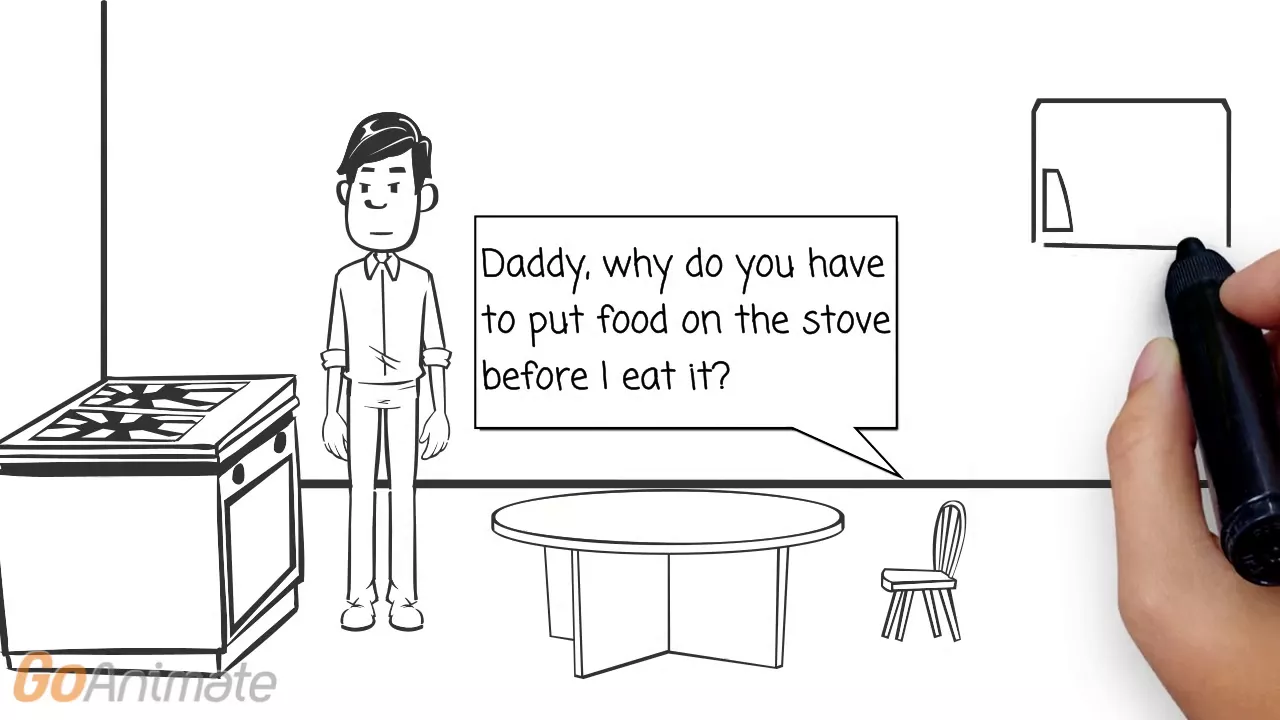
Added:So you’ve probably seen a little kid react to a sudden bang or a terrifying clown or some strange Santa at the mall, right?
Yeah, not pretty.
That child probably immediately reached for a parent, looking for comfort, and that same kid might freak out if she was separated from her adult of choice, especially is she was in an unfamiliar environment.
It’s called attachment and if you’ve ever seen a clingy kid you know why it’s called that.
They attach.
For a long time psychologists assumed that this was just an intense innate survival instinct; I mean it makes sense that babies would be attached to their food source and bigger kids would stick around to the people who helped them survive.
But in the 1950s American psychologists Harry and Margaret Harlow came along with a barrel of monkeys, complicating and illuminating our idea of bonding with caregivers in what has to be one of the saddest psychological experiments of all time.
The Harlow’s were breeding Rhesus macaque monkeys for their research on learning.
Part of the process involved separating babies from their mothers right after birth, which, yeah, pretty cruel already.
They began noticing that baby monkeys were very attached to the blankets they had in their cages, so they set up an experiment.
They created two artificial mothers.
One was a bare wire cylinder with a feeding bottle attached; they called that Wire Mother, and the other was a cozier cloth and foam wrapped cylinder without a feeding bottle: Cloth Mother.
It took no time at all to see the baby’s preference.
They overwhelming preferred the comfy cloth mama, clinging to it whenever they seemed to be anxious or in need of comfort, and sometimes they fed from the Wire Mother with the baby bottle while standing on the cloth one.
This discovery that attachment wasn’t just about getting breakfast surprised a lot of people.
It turns out that contact and touch are vital to attachment, learning, emotional well-being, and psychological development.
As the brain and mind develop in infants so too do they’re emotions and social behavior.
Caregivers can greatly influence this development, and most psychologists will tell you that how a child is raised early on can have a huge effect on how they view the world, other people and themselves, not to mention how they react to stressful situations or sort out moral dilemmas.
I mean, it’s a big complex challenging world out there and wire monkey baby mama just ain’t gonna cut it.
[Intro] Touch.
You can convey all sorts of emotions through touch.
A hug, a slap, a pat on the back, a poke on the side all convey meaning.
Babies learn a lot through touch.
It’s how they feel security and trust.
You can imagine how all those poor macaques, who were separated not just from their mothers, but everyone, grew up to have some social issues as adults.
That is maybe putting it too mildly.
Those monkeys showed many signs of being really disturbed, from trouble eating, to rocking back and forth in a trance, to even engaging in self-mutilation.
Most of the macaques used in this study never recovered, and those who were forced into pregnancy didn't know how to care for their own offspring.
Although the Harlow's research taught us a lot, it was inhumane and would never pass today's ethical standards.
Monkeys, like humans, need to be loved.
And loving touch and care are tremendously important, but familiarity is also key to attachment.
When you're little, a hug from a stranger is not the same as a hug from your mom or your grandma or your dad or your zookeeper or whomever you're most comfortable and familiar with.
The unfamiliar can cause anxiety.
And for some critters, all these factors need to come together sooner rather than later.
Some baby animals experience a critical period in early life when certain things have to happen for normal development to occur.
For ducks and geese, that critical period occurs just after hatching when they accept the first moving object they see as their mother.
This so-called "imprinting process" can be difficult to reverse, which can make things a bit awkward if that moving thing is a golden retriever or a person or a beach ball.
Thankfully, human babies don't imprint.
The world would be a lot different and a lot more bizarre if they did.
Human babies do, however, feel a lot more comfortable around people, things, and settings that they're familiar with.
They form emotional attachments, but not all attachments are created equal.
In the 1970's, American psychologist Mary Ainsworth created the "strange situation" experiment to observe children's different attachment styles.
She'd put a one-year-old kid and their mom in an unfamiliar room, like a playroom at the lab and then observe the child playing with the mother.
Eventually, the child would encounter something potentially stressful.
Like, a stranger would come in and interact with the child and then the mom would leave.
If the kid freaked out, the stranger would try to comfort them.
And then mom would come back and the stranger would leave.
Different children responded differently to the strange situation.
Ainsworth measured and observed 4 different categories of behavior, including separation anxiety, the child's willingness to explore, stranger anxiety, and reunion behavior, or how the child reacted when the mom returned, which was what she was particularly interested in.
Ainsworth broke this behavior down into three main attachment styles: secure, insecure avoidant, and insecure ambivalent.
About 70% of her subjects showed secure attachment and could happily explore their new digs and interact with the stranger, so long as their mom was nearby.
If mom left, they might freak out a bit, but they greeted her return in a happy and positive way.
About 15% of the kids demonstrated insecure ambivalent attachment.
They were afraid of the stranger, cried more and explored less, and had a major freak out when mom left, only to act all salty and mad when she returned.
The last 15% or so showed insecure avoidant attachment.
They were fine with the stranger, kinda indifferent actually, didn't cling to mom, didn't seem bothered when she left, showed little interest upon her return.
Ainsworth observed that sensitive, attentive mothers usually raised securely attached kids, whereas less responsive mothers who often ignored their children, or super-anxious mothers who obsessed over every little thing, often raised insecurely attached toddlers.
And then of course, on the extreme, the poor monkeys with their unresponsive, fake moms, they became absolutely terrified in unfamiliar situations.
Attachment is vital.
It builds the foundation for our sense of basic trust and quite possibly for our adult relationships, our motivation to achieve and our willingness to be bold, like that toddler playing with new toys in a strange room.
Given what those messed-up monkeys taught us, it should be no surprise that disruptions in attachment can bring a world of pain.
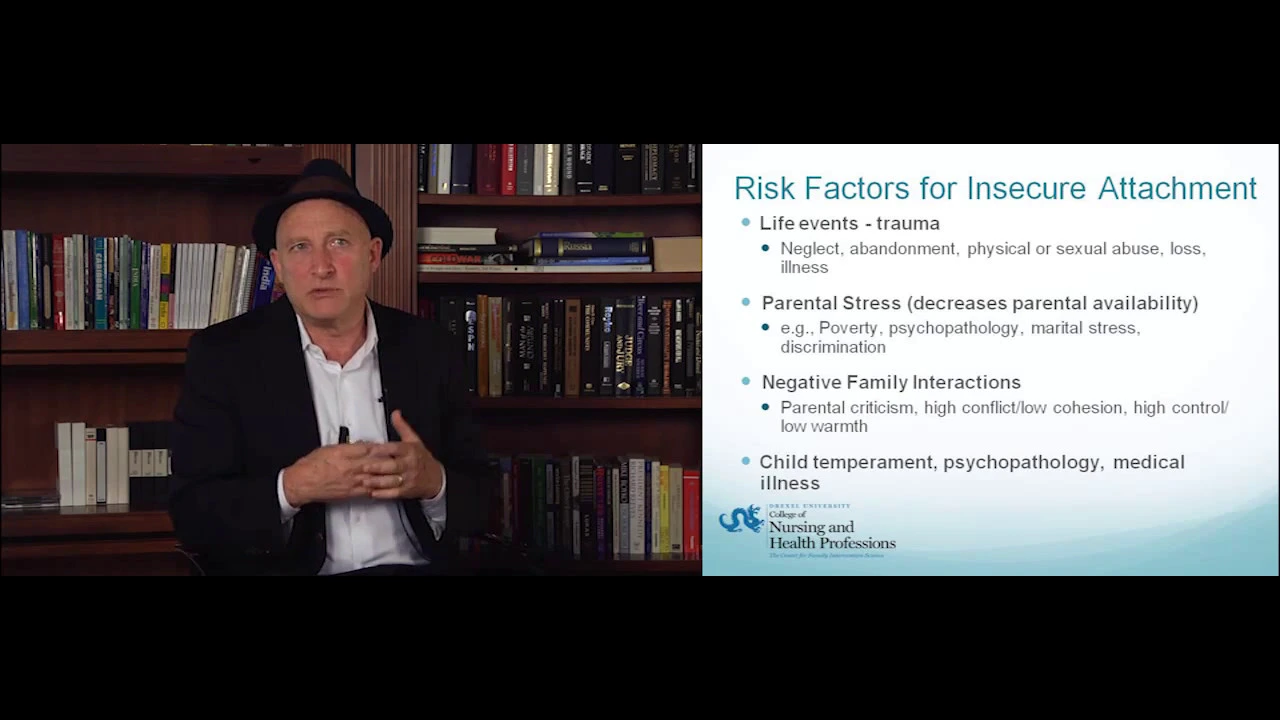
Babies raised under abuse or extreme neglect are often withdrawn and frightened, and many parents who've engaged in abusive behavior were abused themselves as children.
Young kids exposed to extended abuse, trauma, and neglect are at higher risk for psychological disorders, health problems, and substance abuse as adults.
Studies of children raised in understaffed Romanian orphanages, for example, found that they scored lower in cognitive tests and were twice as likely to exhibit symptoms of anxiety as their counterparts raised in quality foster homes.
It's certainly true that some kids can show remarkable resilience, but disrupted attachment and care, often further complicated by social and economic marginalization of all kinds, can leave life-long scars.
So if one of infancy's major social achievements is forming positive attachments, then one of the biggest achievements in childhood would have to be achieving a positive sense of self.
This self-concept, or an understanding and evaluation of who we are, is usually pretty solid by about the time we turn 12.
Charles Darwin proposed that our self-awareness begins when we can recognize ourselves in a mirror.
This self-recognition typically doesn't occur in humans under 15 to 18 months.
And by the time that tot's heading to kindergarten, their self-concept is rapidly expanding.
They probably know their age, hair color, and family name.
Perhaps they know they're good at drawing and not so good at tree climbing, and they're noticing the differences and similarities they share with other people.
Kids with positive self-images are more happy, confident, independent, and sociable.
So, how can we instill these values and security in kids?
And how does parenting affect development?
Whether your parents were aloof or affectionate, strict or lax, and whether they spanked you or preferred to talk it out, one model of parenting would probably categorize them into one of three major styles, all related to control.
The authoritarian parent makes rules with consequences and expects you to follow them because "I said so!" and tends to not be very warm to their child.
Whereas the permissive parent often caves to their child's demands and exerts little control over any of the child's behavior.
The authoritative parent, meanwhile, seeks to find a balance between the two.
They are demanding, but always explain the reasons for their rules, and are loving and responsive.
And, of course, research indicates that finding that culturally appropriate sweet-spot between too hard and too soft is the best way to go.
Now, in addition to that growing sense of self, two other important landmarks of childhood and adolescence are the ability to discern right from wrong and the formation of individual character.
When those two things combine, they give us morality.
Last week, we talked about Jean Piaget and his three-tiered model for cognitive development.
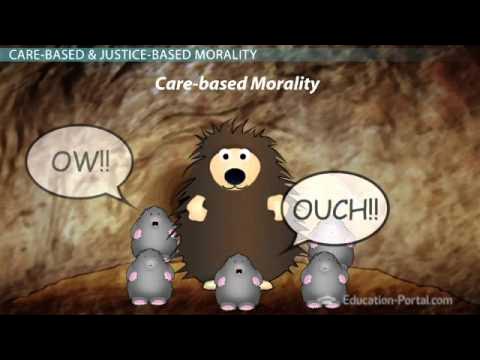
Well, American psychologist Lawrence Kohlberg modified and expanded on that, and blew it up into his own three-level theory of moral development, which emphasized the notion that our moral reasoning continues to develop throughout our lives.
Kohlberg outlined his theory by posing a series of moral dilemmas to children, teens, and adults, and then analyzing their reasoning behind the judgments.
One of his most famous questions is known as the Heinz Dilemma.
A woman is dying of cancer; there's a special new drug that might save her, but the pharmacist wants to make a big profit, so he charges a lot of money for it.
Her husband, Heinz, can't afford it and has tried everything, from fundraising to begging the pharmacist, to no avail.
So, he steals the drug.
Was he wrong?
Kohlberg was less interested in people's answers than in the reasoning behind their choice.
He ended up organizing his subjects' responses into three basic levels of moral thinking.
Kohlberg found that if the subject was younger than nine, they were likely in what he called the preconventional morality phase.
In this phase, kids are concerned with self-interest, but they're also starting to judge people individually, based on their needs and point of view.
So, Heinz needed the medicine, and stealing it best served his needs.
But in the second phase, in early adolescence, our moral compasses seem to shift, during what Kohlberg called the conventional morality phase.
Here, his subjects put an emphasis on conformity and worry about what would happen to Heinz if he was seen as a criminal.
This phase seems to worry "what would people think?".
From adolescence on, Kohlberg believes, some people exist in the postconventional morality phase.
This is a more complex adult morality, when we begin to account for differing values and basic rights.
Laws are important, but some situations, like saving your beloved's life, might overrule them.
This phase tops out with reasoning based on universal ethical principles and more abstract reasoning.
Heinz was right to steal the medicine because people have a right to live.
Critics of Kohlberg's set up question his emphasis on moral thinking rather than moral action, arguing that there's a big difference between reasoning out what you should do and actually doing it.
But one thing's for sure, what we experience during our first years on this planet, the nature and quality of our attachments, our sense of self, and our moral development, they all set the stage of our adolescence and adulthood.
Today, your developing brain learned about Ainsworth's three styles of secure, insecure avoidant, and insecure ambivalent attachment.
And about authoritarian, permissive, and authoritative parenting styles.
You also learned about developing self-concept and Kohlberg's stages of morality.
Thanks for watching, especially to all of our Subbable subscribers who make Crash Course possible.
To find out how you can become a supporter, just go to subbable.com/crashcourse.
This episode was written by Kathleen Yale, edited by Blake de Pastino, and our consultant is Dr. Ranjit Bhagwat.
Our director and editor is Nicholas Jenkins.
The script supervisor is Michael Aranda, who is also our sound designer.
And the graphics team is Thought Cafe.
Up Next
Understanding Attachment Styles Through Inner Child Work | Trauma Education
@patrickteahanofficial
106.2K views•2021-01-02

Cognitive Skills for Differentiated Instruction | Teacher PD
@BrainWareLearning
631 views•2017-12-17
Classical vs Operant Conditioning: Learning Theories Explained
@crashcourse
4.3M views•2014-04-21

The Nocebo Effect: How Beliefs Can Cause Real Harm
@CGPGrey
10.4M views•2013-12-23
Related Study Plans & Knowledge Roadmaps
Structured learning paths in Psychology